Model of resilience

As we have reveled in the summer-like weather of this extraordinary spring, we face, on the one hand, a looming overload of our health system as COVID variants lead to an especially worrisome wave, while, on the other hand, we enjoy a sense of huge optimism every time we see another friend’s vaccination selfie. There is a race between the spread of the virus and the distribution of the vaccine.

There will be time to reflect on the responses of governments around the world, but, for now, we thank again the medical professionals and other frontline workers, which in the circumstances includes retail and restaurant workers and anyone whose position puts them in front of the public so that the rest of us can live with comparative ease.

We are now in the second round of annual events held virtually. We have celebrated Passover with online seders two years in a row and likewise have marked simchas and solemn occasions through our devices. This is becoming something close to routine.

The past couple of weeks have been especially packed with virtual community events. It is remarkable how meaningful and moving ceremonies like Yom Hashoah (Holocaust Remembrance Day) and Yom Hazikaron (Israel’s Memorial Day) can be even when mediated through technology. Joyous occasions like Yom Ha’atzmaut (Israel’s Independence Day) were different but delightful.

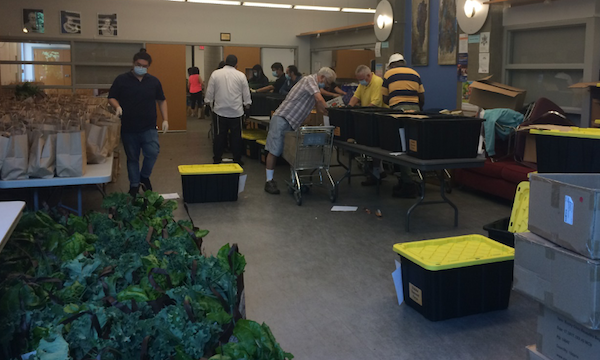
On Sunday, Jewish Family Services held a virtual grand opening and tour of their new food hub, dubbed the Kitchen, a centre for sustainable food, education and community-building around this most central of human necessities. (See story next issue.)

What was inspiring about the JFS event, in addition to the project itself, is the resolve and optimism demonstrated by the very act of launching the facility in the midst of a pandemic. It is a bit of wonderful audacity, or chutzpah, to start a new initiative like the Kitchen and to see it through to a physical opening, despite the challenges thrown at the organization by COVID.

Of course, there are countless similar examples, in our community and others, of people doggedly pursuing great causes in the face of the crisis we are in. There is the small miracle that this pandemic hit us at a time when we have the technology to see and talk to people worldwide in real time. But the technology is only as good as the people operating it. On a dime, schools, synagogues, arts and cultural institutions, education and advocacy agencies, as well as families, adapted as best they could under sometimes nearly impossible circumstances. The quality of so many of these efforts has been remarkable.

What makes things like the Kitchen so significant is that it was not an existing program that went virtual, but a fresh concept in community well-being that was envisioned and created. Sunday’s Chanukat Habayit was the culmination of that foundational work and the beginning of what should be decades of programs and services.

If there were a model of behaviour to inspire clients of Jewish Family Services, and all of us, that demonstration of resilience and determination in times of difficulty is an ideal one.

COVID’s impacts on mental health

(image from bastamanography)

Purim 2020, which took place in early March, brought with it added significance. For some, it represented the last time they gathered in a Jewish setting in person, outside the home. For others, it was the first “live” service to be canceled as a result of SARS-CoV-2. In the days that ensued, lives changed as the perils of the coronavirus became apparent. School, work and religious services all moved online; personal contact with friends and family became exceedingly limited; travel, for most people, ceased.

Among the societal issues compounded by the pandemic have been increased isolation, drug dependence, and food and job insecurity. Underlying these problems has been COVID-19’s effect on mental health, including within the local Jewish community. As a result, numerous groups have stepped up their efforts to help the most vulnerable, and all those who have been impacted by the pandemic. During the past weeks, as the first anniversary of COVID-19 came and went, the Jewish Independent spoke with several people at the forefront of handling the Greater Vancouver Jewish community’s response.

At Jewish Family Services (jfsvancouver.ca), efforts to tackle mental health issues have widened, as more people have been seeking the agency’s support. Early on, JFS opened a crisis line that runs seven days a week, from 9 a.m. to 9 p.m. (604-588-5719 or communitycare@jfsvancouver.ca, with the promise to respond within 24 hours).

“People are struggling, without a concrete end to the restrictions, and so demand for emotional support and learning different coping skills has surged. Our crisis line is always there for people who need immediate help and, for many community members, this is the easy way to connect with a counselor. If someone wants to remain anonymous, that is absolutely an option, we do not require a caller to identify themselves,” JFS chief executive officer Tanja Demajo told the Independent.

From its launch at the start of the pandemic to August 2020, the JFS Community Crisis Line received 955 calls, serving 494 individuals. Case workers spent 2,052 hours on the line. Additionally, 166 individuals accessed free programs offered by the JFS mental health and wellness team via telehealth and video conference – a 40% increase compared to pre-COVID times.

“Many are struggling with the added role of being a caregiver in the pandemic context, as well as dealing with their own emotions, so our workshops and support groups provide a community where people are able to vent, talk and support one another. We also connect people with friendly callers. These services have been a lifeline for many of our clients,” Demajo said.

A report released by the JFS client advisory committee last summer highlighted many ongoing concerns. One alarming quote from a client cited in the report reads, “COVID-19 has been depressing and frightening for me. My anxiety has been through the roof and I’ve had an increased number of panic attacks and migraines. My chronic health conditions have increased in severity and I have new ones. My nightmares and terrors have also increased.”

Prior to the pandemic, some JFS clients were already battling with mental health issues, often severe, which have been aggravated by the need to now cope with unaccustomed fears and anxieties. Some people, according to JFS, have refused to go outside, whether it be to the grocery store or outside for a walk. This problem is often felt by seniors, who, like everyone, need exercise and who confront serious health conditions such as heart disease, diabetes and high blood pressure.

Many housebound JFS clients depended on family and friends visiting for social and emotional connection before COVID hit and have been feeling deeply alone since the pandemic began. Irritability and anger are rising. Senior clients who were used to spending significant time with their grandchildren are missing them desperately. “I miss hugging my grandchildren,” is a common refrain.

Since mid-May of last year, there have been weekly depression and anxiety support group meetings with JFS’s mental health outreach therapist, Kevin Campbell. Run on Zoom, the 90-minute sessions teach coping skills and allow a safe place to talk and share. The group focuses on cognitive behavioural therapy and mindfulness techniques. JFS also has an active seniors caregivers support group led by Lily Shalev.

Not all COVID-19 developments in connection to mental health are grim, JFS notes. Due to technological developments, some of those experiencing isolation are able to access telehealth, work from home, get home deliveries and view a variety of educational and cultural offerings online, including many synagogue activities.

Jewish Addiction Community Services Vancouver (jacsvancouver.com), an organization that helps community members navigate the troubles of various substance abuse issues, has held one-on-one meetings on Zoom ever since COVID started.

“Clients seem to like this kind of individual counseling better, as it allows for greater intimacy, even though it is on Zoom,” said Shelley Karrel, manager of counseling and community education at JACS. “What people liked most about the group meeting was the getting together physically.”

To help those who would prefer to meet in person, Karrel has arranged for one-on-one socially distant coffee meetings. “What JACS has done is to make ourselves more available to someone when they want to talk, and to be able to schedule a meeting fairly quickly. As a registered clinical counselor, I am able to offer clients tools and exercises for managing their symptoms and for exploring the root causes when the issues of anxiety and depression are evident. Some of my clients are finding AA meetings helpful online. And, like with our clients, some are not using that medium for the same reason – it’s not personal enough.”

For ongoing support, JACS has a monthly email that lists many resources for people, if they want to reach out for specific help. JACS is also beginning a new program, Sustaining Recovery, that offers additional support in the form of a structured plan to help someone develop goals and be able to keep track of their progress. This plan, JACS finds, is very useful in creating accountability and support.

Inclusion services at the Jewish Community Centre of Greater Vancouver (jccgv.com/inclusion) continues to provide a number of targeted social and recreational programs intended to engage, educate and provide meaningful lifelong learning opportunities, as well as engage individuals with diverse needs. The programs are rooted in Jewish values and the principles of social connection, community building and belonging.

“Social isolation is a prevalent issue for individuals with diverse abilities [and] this reality was exacerbated by the COVID-19 shutdown,” explained Leamore Cohen, coordinator of inclusion services. “These communities have been particularly impacted by the loneliness, uncertainty and economic hardships caused by the global pandemic, leaving these individuals at higher risk for numerous health challenges. The work we do in the inclusion services department creates the needed awareness of the individuals we support. But, now more than ever, community members are looking to us for routine and engagement at a time when they are most vulnerable.”

As people have settled into life with COVID-19, “these individuals continue to be shut in and vulnerable to mental health challenges,” she added. “In response, we offer a hybrid of virtual and in-person programming throughout the week that is both accessible and safe. In-person programs adhere to best COVID practices, and our virtual offerings allow for those who are unable to attend in person to access programming and community virtually.”

The Bagel Social Club, for example, met weekly in pre-COVID times as a means to increase avenues for integration, self-reliance and wellness. The program has shifted to weekly social clubs over Zoom and a weekly Relax and Just Breathe class, which includes gentle stretching, breathing exercises and visualizations.

As the lockdown took effect last year, Jewish Federation of Greater Vancouver (jewishvancouver.com) began convening multiple stakeholder groups to determine the pandemic’s impact on many aspects of Jewish communal life. A common thread during these discussions involved concerns about the impacts of increased social isolation on seniors, families and youth. Federation also hosted several webinars on mental health for community members, related to the impacts of COVID-19.

“Through this work, we were able to identify a number of key initiatives that we could support both financially and organizationally,” said Shelley Rivkin, vice-president of global and local engagement at Federation. “These include over $170,000 in emergency funds to Jewish Family Services, part of which was used to support the emergency care line; funds for Jewish Seniors Alliance to expand their peer support program; and the organization of several webinars with community psychologists directed toward young adults, families and teens.

“The Jewish Community Foundation, Federation’s endowment program, has also supported a number of projects to enable community agencies to undertake mental health initiatives,” she added. “Support for mental health issues for both agency employees and leaders was also identified as a priority for the community recovery task force when they launched their first grant round. It will continue to be highlighted as we move into the next grant round.”

Last December, youth workers voiced concern about the mental well-being of youth and young adults. Consequently, Federation hosted a roundtable with key leaders to ascertain how community members in this age range are faring, especially when faced with so many disappointments and cancellations over the past year. Based on these conversations and others, Federation will be collaborating with these agencies to develop a community mental health strategy for children and youth.

Sam Margolis has written for the Globe and Mail, the National Post, UPI and MSNBC.

Community milestones … Philipp, Solomon, Sachs & Zwarych

On March 2, Lianna Philipp and Michael Solomon were recognized with the Jewish Federation of Greater Vancouver’s 2020 Young Leadership Awards, for their commitment and dedication to the Jewish community and the value of tikkun olam.

photo - Lianna Philipp
Lianna Philipp

Philipp chaired Jewish Federation’s Axis steering committee from 2018 to 2020. Her outstanding leadership and devotion to the community have contributed to Axis’s many successes, and the implementation of programs that support Jewish Federation’s strategic priority of engaging the next generation. Philipp continues her leadership with Jewish Federation as a member of the board of directors, the Axis steering committee and the Ben-Gurion Society donor group. She also serves on the boards of Temple Sholom Synagogue and the Jewish Museum and Archives of British Columbia.

photo - Michael Solomon
Michael Solomon

Solomon has been a driving force in the community as a dedicated volunteer with Jewish Family Services (JFS). In that capacity, he has made a tremendous contribution to several of JFS’s most vital initiatives, especially during COVID, such as their food security program. Solomon serves as an ambassador for the Jewish community, bringing his positivity and organizational talents to staff and his fellow volunteers.

* * *

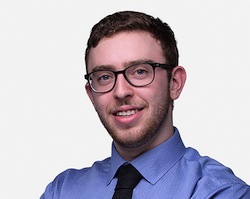
photo - Michael Sachs
Michael Sachs

The Jewish National Fund, Pacific Region, has hired Michael Sachs to serve as its executive director, effective April 5. The volunteers on the recruitment and selection committee were Bonnie Belzberg, Harvey Dales and Jonathon Leipsic.

Sachs brings a great deal of experience as a community lay leader, most recently serving as the president of the Bayit and volunteering with the Jewish Federation of Greater Vancouver, Centre for Israel and Jewish Affairs, Tikva Housing Society, Kehila Society of Richmond, and others. He was recognized with the Jewish Federation’s Young Leadership Award in 2017, as well as the Jewish Independent’s 18 under 36 Award. Moreover, he brings a wealth of experience from the business sector, as he served as the vice-president of sales and operations for ERL Diamonds.

* * *

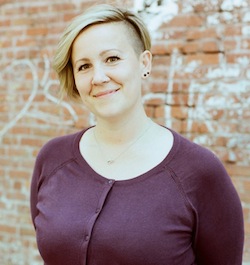
photo - Janelle Zwarych
Janelle Zwarych

Janelle Zwarych is Jewish Family Services’ new director of food security. Zwarych has a background in psychology and mental health. Most recently, she was the director of resource development and communications at the KidSafe Project. There, she was instrumental in creating a COVID emergency-response food program for Vancouver’s most vulnerable children and youth, while also raising operational and emergency funds.


Importance of food security

Plans are for Jewish Family Services to open a food centre in the Mount Pleasant neighbourhood this year. (photo from jewishvancouver.com)

The Tu b’Shevat More Than a Bag of Food program – a day of giving, of cooking and of education on food security in the age of COVID-19 – concluded with a panel discussion on the importance of good food, supply chain challenges, and the ensuing impacts and issues facing the Vancouver Jewish community.

The Jan. 28 program was presented by Congregation Beth Israel and Jewish Family Services (JFS), and the discussion event featured Mara Shnay, founding member and chair of the JFS client advisory committee; Cindy McMillan, director of programs and community partnerships with JFS; Dr. Eleanor Boyle, an educator and writer on food and health; Krystine McInnes, chief executive officer of Grown Here Farms, a company that supplies more than 1.5 million families with produce in Western Canada; and Dr. Tammara Soma, assistant professor at the School of Resource and Environmental Management at Simon Fraser University.

Moderator Bernard Pinsky began by highlighting the connection of the Jewish community and providing food. “Feeding the needy is an act of chesed,” he said.

“For people who are food insecure, it is not about having enough for food,” explained Shnay. “It is about not having enough money for anything – to buy a new pair of shoes, to replace a phone, to go to the dentist or to take one’s kids to the movies, and it is about living in that kind of poverty. In Vancouver, housing security is inextricably linked to food security. The income of many JFS clients is less than their rent,” she emphasized.

COVID-19 has exacerbated the circumstances of many JFS clients, particularly seniors, who are at higher risk of contracting the disease and, therefore, should refrain from using public transport or going to stores. Consequently, shopping has become increasingly expensive for them.

McMillan said the food needs within the Jewish community more than doubled in the past year, with children comprising 20% of those seeking food services. The number of Jewish families and seniors living in poverty has been rising for several years in the Lower Mainland, well before the pandemic started, she added.

To help combat the challenge, JFS will open an as-yet-unnamed food centre in the Mount Pleasant neighbourhood in the spring of 2021. “There will be a community kitchen, a place for social gathering, opportunities for general food knowledge, cooking classes, meals and a warehouse with increased storage for dry goods and perishables,” said McMillan.

The centre will also have a market-style food pantry for people to choose their food according to their customs and cultures, and the offerings will extend to outlying communities in the Greater Vancouver area through a pop-up van. The centre’s emphasis will be on supplying healthy food in a dignified manner to those in need, she explained.

Boyle spoke of food security in a wider sense – “We have food security when everyone is confident they can put adequate, healthy food on the table,” she stated.

There are systemic problems in Canada, she pointed out, as the country exports half the food it produces. “Food is treated like any other consumer good, like cars or shoes. It is run largely by private industry and, for business, social good is not a priority, profit is,” Boyle argued.

She advised involving government in the food industry, as is done in other sectors, such as education, transportation and health. More money, she suggested, should go to those who have trouble buying food, perhaps in the form of guaranteed income. The federal government could also pay farmers to grow certain amounts of healthy foods, like lentils, which would be available at below-market rates to everyone. This would in turn enhance food security and health for everyone with no stigma attached to buying this food; rich and poor would be paying the same price at the grocery checkout, said Boyle.

“There needs to be a shift from big agriculture to a more diversified local system,” she continued. “We created these current systems, and they should work for us. Change can happen. We will need to face down climate change and make food systems more sustainable,” she said, urging support for local food that is sustainably produced, as well as for people to waste less food and to eat a more plant-based diet.

McInnes elaborated on Boyle’s points by listing a number of problems in the supply chain, the agriculture and retail sectors, and government policy. “We are in a game in which corporate interests win and farmers lose, and consumers don’t understand that they are playing the card of the unwitting party that made it all happen,” she claimed.

Reeling off some concerning figures, McInnes reported that 85% of the space in grocery stores is controlled by four or five companies, that retail mark-up of local produce is 150% to 200% on average and that 92% of Canadian farmers do not have a succession plan.

Soma, meanwhile, spoke of food as spirituality and food as a right. She questioned, from an ethical perspective, the policies of big agriculture, which, for example, kills male chicks because they cannot produce eggs.

“Food as a right is not a secular concept, it is an act of spiritual justice to promote equity,” said Soma. “Food is a means of building relationships and a means of showing that you care and love someone.”

She added, “Without food security, we will not have peace and we will not have unity. The further the distance between the food and the one who eats it, the more the waste. There is a loss of connection.”

To watch the food security panel discussion or the Hilit Nurick and Rabbi Stephen Berger cooking session that took place earlier on Jan. 28 (and to download their red lentil soup recipe), visit bethisraelvan.ca/event/tubishvat5781.

Sam Margolis has written for the Globe and Mail, the National Post, UPI and MSNBC.

Community milestones … JFS, Krell, Hart, Rappoport, Broca & Gottlieb

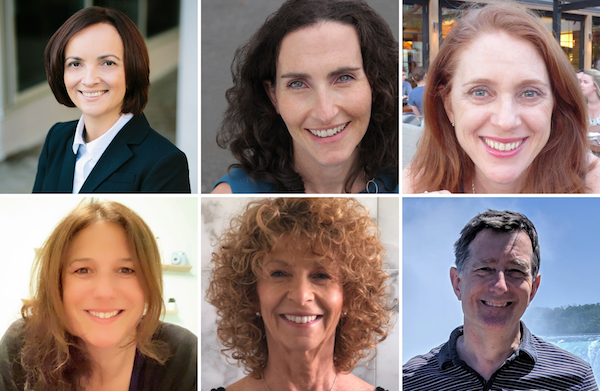
Clockwise from top left: committee members Tanja Demajo, Michelle Dodek, Michelle Gerber, Stan Shaw, Renee Katz and Simone Kallner. (photo sextet from JFS)

Jewish Family Services has formed a food security committee. This team will be responsible for leading the transition plan of the JFS’s Jewish Food Bank to its new and dedicated facility near Main and East 3rd Avenue in Vancouver. The committee, which reports to the board of directors, will be focused on supporting the Food Security program development project as a steering committee for the move into the new facility; and assisting as content advisors on an ongoing basis in the areas of food programs planning, security, building management, partnerships and community engagement, and communication.

Committee members have served on the Jewish Food Security Task Force and sit on several committees in the community. The committee co-chairs – Simone Kallner and Stan Shaw – also serve on the JFS board.

This year, a Food Security Project website will be launched to keep people apprised of the committee’s work. It will also contain upcoming town hall meetings, with the most current community stakeholder engagement and input opportunities.

* * *

Created in 1967, the Order of Canada is one of our country’s highest civilian honours. Its companions, officers and members take to heart the motto of the order, “desiderantes meliorem patriam” (“they desire a better country”). Appointments are made by the governor general on the recommendation of the Advisory Council for the Order of Canada and, on Dec. 30, it was announced that Dr. Robert Krell was among the 61 new appointees.

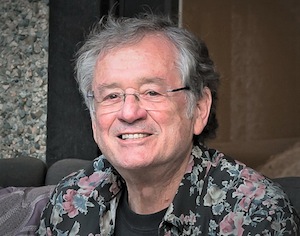
photo - Dr. Robert Krell
Dr. Robert Krell (photo courtesy)

Krell was appointed Member of the Order of Canada for “his contributions to our understanding of mass ethnopolitical violence, and for his advocacy on behalf of Holocaust survivors.”

A professor emeritus of the University of British Columbia, department of psychiatry, Krell’s research and interests are the psychiatric treatment of aging survivors of massive trauma; and antisemitism, racism and prejudice education.

Krell was born in Holland and survived the Holocaust in hiding. The Krell family moved to Vancouver, where he obtained an MD from UBC and eventually became professor of psychiatry. In his psychiatric practice, Krell was director of child and family psychiatry and also treated Holocaust survivors and their families, as well as Dutch survivors of Japanese concentration camps.

Krell established a Holocaust education program for high school students in 1976 and an audiovisual documentation program recording survivor testimony in 1978 and assisted with the formation of child survivor groups starting in 1982. He served on the International Advisory Council of the Hidden Child Gathering in New York in 1991, and he is founding president and board member of the Vancouver Holocaust Education Centre, which opened in 1994 and which teaches 20,000 students annually. He has authored and co-edited 10 books, 20 book chapters and more than 50 journal articles. He continues to write and speak on Holocaust-related topics.

* * *

With thanks to HaShem, Schara Tzedeck Synagogue members Alexander Hart and Kathryn Selby are honoured and delighted to announce the engagement in Jerusalem of their son Shmuel Hart to Reut Rappoport, daughter of Rabbi Jason and Meira Rappoport of Alon Shvut, Gush Etzion, Israel.

* * *

An article on the mosaic work of Lilian Broca has been published in the international peer-reviewed academic magazine Journal of Mosaic Research, out of Izmir, Turkey. It can be found at dergipark.org.tr/tr/pub/jmr (click on English version or translation if necessary), scroll down to article 18, which is “From Virtue to Power: Explorations in Female Heroism – The Mosaics of Lilian Broca,” and click on PDF on the upper lefthand side. The article was written by Angela Clarke, PhD, of the Italian Cultural Centre here in Vancouver.

* * *

Jerusalem-born, Montreal-based composer and vocalist Ayelet Rose Gottlieb released the album 13 Lunar Meditations: Summoning the Witches on Jan. 12, the first new moon of the new year.

image - 13 Lunar Meditations CD coverA collaborative project, this double-vinyl release includes poetry by more than 20 women and girls from around the globe, a choir of improvising vocalists conducted by DB Boyko, and features vocalist Jay Clayton. Through a multicultural approach, 13 Lunar Meditations is an acoustic exploration focusing on the moon, our relationship with it and its effects on us.

“The moon speaks to the universal and to the intimate female presence,” Gottlieb shared on her inspiration, from her personal journey as an artist and mother. “In this difficult time we live in, having a connection with each other, with the world around us and with the universe may be the most radical act of resilience.”

In 2015, Boyko commissioned Gottlieb to compose a new song-cycle for her VOICE OVER mind Festival in Vancouver. Gottlieb composed the first draft of this song-cycle for her own quintet and Boyko’s improvisers’ choir. Later that year, the piece was presented again at John Zorn’s the Stone, in New York City, where Clayton joined in for the first time.

Gottlieb’s song-cycle traces the phases of the moon, from birth to full glory and all the way back to emptiness. The compositions range in musical expression from wild and experimental, to melodic, rhythmic and light. All are laced with improvisation and rooted in jazz with Turkish and Armenian undertones. Primarily sung in English, also interwoven are Hebrew, German, French, Turkish, Arabic, Spanish and Japanese.

Gottlieb invited more than 20 women and girls to write texts on their personal relationship to the moon, which inspired her compositions. Ages 4 to 70, these contributors represent a global community from diverse backgrounds and nationalities – from Australia to Morocco, a poet, a gynecologist, a lawyer, an energy healer, a sex worker, a grandmother, and others.

Supported by Canada Council for the Arts and a Kickstarter campaign that concluded at 109%, the album was recorded in Montreal. On it, Gottlieb, Clayton and Boyko are joined by Coeur Luna, Turkish violinist Eylem Basaldi, guitarist Aram Bajakian, contrabassist Stéphane Diamantakiou and drummer Ivan Bamford.

The album and accompanying lunar calendar and box set of 13 postcards (with art by Sarit Evrani, designed by Dan Levi) are available for purchase at ayeletrose.com and ayelet.bandcamp.com.

For more about Gottlieb, see “A life of music-poetry” (2019) and other articles on jewishindependent.ca.

Demand almost double

The Vancouver Jewish Food Bank is now distributing more than 10,000 kilograms of food every month. (photo from BI and JFS)

According to the Community Food Centres Canada report Beyond Hunger: The Hidden Impacts of Food Insecurity in Canada, “Even before COVID-19, nearly 4.5 million Canadians struggled to put good food on the table for themselves and their families. In the first two months of the pandemic, that number grew by 39%, affecting one in seven people.”

Demand on the Vancouver Jewish Food Bank has almost doubled since the start of COVID-19. The organization is now distributing more than 10,000 kilograms of food every month; supporting seniors, families and individuals. While some of us have been impacted by food scarcity during COVID-19, those most in need live in a state of constant worry about where their next meal will come from.

The 1996 World Food Summit defined food security as: “when all people, at all times, have physical and economic access to sufficient, safe and nutritious food to meet their dietary needs and food preferences for an active and healthy life.” To this end, Jewish Family Services and Congregation Beth Israel are hosting More Than a Bag of Food on Jan. 28, bringing organizations and people together for a Tu b’Shevat program on food security in our community and beyond.

Vancouver Talmud Torah and Richmond Jewish Day School students are raising awareness about the food bank and reaching out to recipients. King David High School is hosting a cooking demonstration with Hilit Nurick and Rabbi Stephen Berger at 4 p.m. on Jan. 28, which will feature local ingredients and discuss the need for healthy food for everyone. Hillel BC is running an online quiz, with prizes, and a deep dive into information around food security.

At 7:30 p.m. on the 28th, there will be a Zoom panel including Dr. Tammara Soma, assistant professor, School of Resource and Environmental Management, Simon Fraser University; Dr. Eleanor Boyle, educator and author; Krystine McInnes, director and chief executive officer of Grown Here Farms; Mara Shnay, chair of the JFS client advisory committee; and Cindy McMillan, director of programs and community partnerships at JFS. Lawyer Bernard Pinsky will moderate the discussion.

“This is an important conversation,” said McInnes. “The stakes are very high. The pandemic has thrown into sharp relief just how vulnerable we are, given the way our society is organized. ”

Food systems produce and deliver based on historic demand. With the advent of COVID-19, the system has been stretched, leading to empty grocery shelves and desperate food banks. International supply chains are no longer reliable, with Russia and Vietnam limiting the sale of wheat and rice outside of their countries. Canadian food production plants have been hard hit by pandemic outbreaks and the lack of international workers. This is particularly problematic when food production is concentrated at large facilities; for example, two plants in Alberta provide 70% of Canadian beef.

“We are going to talk about initiatives from local to global,” said Boyle, “and panelists will let audience members know about some of the creative approaches to food security that are being taken at the Jewish Food Bank, as well as what’s going on around the world to try to shift agriculture and diets toward being better for climate and public health.”

To register for the cooking event and/or the food security conference, visit bethisraelvan.ca/event/tubishvat5781.

Jewish Housing Registry live

The Ben and Esther Dayson Residences, located west of the River District, is one of the residences managed by Tikva Housing, which is responsible for long-term housing solutions in the Jewish community, while Jewish Family Services works with those who require immediate assistance in finding a place to live. (photo from Tikva Housing)

On Dec. 2, Jewish Family Services (JFS), in partnership with Tikva Housing, announced the launch of the first-ever Jewish Housing Registry.

There are six agencies involved in the project: JFS, Tikva Housing, Vancouver Jewish Building Society, Yaffa Housing Society, Haro Park Centre Society and Maple Crest Apartments, each playing a role in addressing the issues of homelessness in the Jewish community in a variety of ways, including advocacy, financial aid and subsidies, and housing placement. Each agency has their own application processes, manages their own wait lists, and collects and stores their client data independent of one another even though their work often crosses over. Consequently, housing needs in the community are difficult to determine accurately. For applicants, a lot of time is spent completing similar applications for different housing providers.

The idea for the registry sprouted from a conversation almost 10 years ago among leaders of the Jewish community, including JFS, Jewish Federation of Greater Vancouver and spearheaded by Tikva’s executive director at the time, Susana Cogan (z’l). With the housing registry in British Columbia not set up to collect data on cultural background, and tenant selection priorities based primarily on the housing needs of applicants, a gap focused on community building was missing. The purpose of this new registry is to improve operational efficiencies and also fill that gap – addressing specific cultural needs of our community, which can be fostered within Jewish housing developments; a priority not currently being addressed through any other agencies in the province.

“It’s exciting to see the partnership between different agencies come to fruition,” said Tanja Demajo, JFS chief executive officer. “This is a unique opportunity for us to use the database as a tool to integrate data, help us meet clients’ specific needs and have a better understanding of the issues of homelessness in our community. Having an opportunity not just to house clients, but also support them by building a Jewish community, is what it means for people to ‘create a home.’”

Tikva’s director of operations and housing development, Alice Sundberg, added, “It is commonplace for applicants to register with multiple housing agencies in the Jewish community, resulting in duplicate records, leaving the JFS housing coordinator having to complete a number of similar application forms from each agency. By having this centralized database, that step only has to be completed one time. We look forward to having up-to-date information available in real-time. It will be a huge improvement administratively and will help us better meet the housing needs of applicants.”

Phase I of the registry launched on Dec. 1 for JFS and Tikva to use, and Phase II will launch shortly for Yaffa Housing, Haro Park Centre Society, Maple Crest Apartments and the Vancouver Jewish Building Society.

“We also want to acknowledge that this registry was made possible because of a grant from the Jewish Community Foundation. With their support, JFS and all the other agencies using this software will be better positioned to serve those in need in a timelier manner. Having more accurate data will also serve us in future projects related to housing advocacy and assistance,” said Demajo.

Tikva Housing is responsible for long-term housing solutions in the Jewish community, while JFS works with those who require immediate assistance in finding a place to live. JFS also provides emotional support and assistance to clients residing in buildings managed by Tikva Housing.

For more information about the registry, contact Maya Dimapilis, JFS director of development and communications, by email at mdimapilis@jfsvancouver.ca or by phone at 604-637-3306.

Making safe, inclusive space

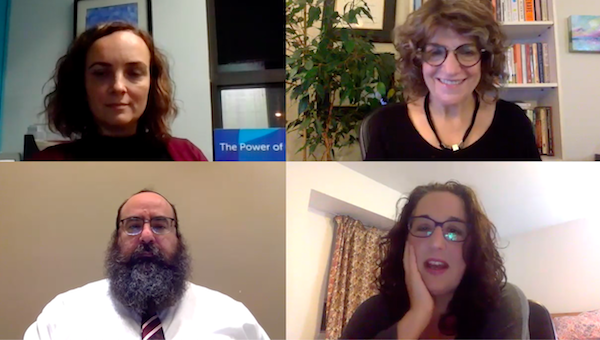
Clockwise from the top left: Tanja Demajo, Shelley Karrel, Amanda Haymond Malul and Rabbi Yechiel Baitelman participate in a JACS Vancouver panel discussion Oct. 15.

“When someone comes through the door and says, ‘I’m an addict. I’m a recovering addict,’ do they feel judged or do they feel accepted? Do they feel that we are putting them in a box, giving them a label?” asked Rabbi Yechiel Baitelman in a recent community discussion. “We have to identify the illness, there’s no question about that. But, is that the only way to view a human being? I think to respect every human being for their humanity, that’s what people are really craving – respect and love.”

Baitelman, director of Chabad Richmond, was one of three panelists on the topic Building Safe and Inclusive Spaces for Those Affected by Addiction and Mental Illness. He was joined by Tanja Demajo, chief executive officer of Jewish Family Services (JFS), and Amanda Haymond Malul, a community member in recovery, in the Oct. 15 event presented by Jewish Addiction Community Services (JACS) Vancouver. JACS Vancouver’s Shelley Karrel moderated the conversation.

Haymond Malul would like to see more community discussions on addiction and people being taught acceptance. She spoke of the need to “have support from the religious leaders of the community, from every single agency in the community, to start talking about it – make it acceptable, educate.” (See jewishindependent.ca/help-repair-the-world.)

And we need to ensure that what we are teaching is in line with our actions, said Demajo. “If we talk to children about acceptance, but we don’t actually practise that, that’s creating double standards where we talk about certain things, but that’s not what people experience,” she said. This could be damaging, she said, to people who “really need that support and want to trust.”

We must see each member of the community as a human being, said Baitelman. Love is important, but, he said, “Love is on my terms, respect is on your terms. If I love you, it’s more a reflection of who I am. But, if I respect you, it’s more of a reflection of how I see you, what you are about – and I think that’s really important. Respect the humanity. If you can love them, that’s even greater. But respect is more fundamental.”

When Karrel asked panelists for tangible ways in which people could be more accepting and inclusive, with love and respect, Demajo said agencies are overwhelmed with the number of people needing support. She said it is up to each of us to connect on a personal level with others, accepting that it will take time for them to trust us enough to share.

“You have to build a relationship, and a relationship is not built overnight,” said Demajo. “I had a client who I often think of, a person who spent a number of years [in the] Downtown Eastside being homeless, not having pretty much anything in his life…. He would come to see me … and we would speak about books, because he was a huge reader and I love reading. It took him six months until he really started talking about things that were going on in his life and what he actually needed, and we started working from there. Now, he has a regular life. He has a home. He brought his family back. He is working. So, things are in a place that he wanted … a number of years ago. Recovery is a process of being vulnerable and, so, if social services don’t have the time to invest in people, I think we are setting ourselves up for a really huge failure.”

All panelists agreed that having a drop-in centre with people who understand is absolutely essential and that, while professional support would be ideal, it is not essential. To be kind, respectful and loving, you do not need to be a professional, they said.

While there are recovery clubs in the general community, Haymond Malul said it would be great if there were also one in the Jewish community – “having a safe place for people to come and be able to drop in, and know that this is the Hillel House of Recovery,” she said.

However, having a community place might inhibit some people from coming out, due to fear of being exposed, warned Demajo. “The other piece is that I do feel that what Amanda has done tonight, speaking of her own experience and being in the community, and [talking about] some of the things that were helpful for her, is important to start with; having those opportunities to open up the conversation – not just for me, in a professional role, but from a personal place – because that is where the relationship happens. I do believe that is the core of whatever we come up with – the core is the relationship.”

Each of us is deserving of respect, regardless of our achievements, successes, failures or addictions, stressed Baitelman. “The fact that you were created by G-d makes you worthy of the highest form of respect and no judgment,” he said.

“Why would I not be involved with somebody who’s in recovery?” asked the rabbi. “After all, these people are accountable. They’re working on character development and are improving certain areas of their lives that they have the courage to acknowledge need to be corrected. They’re actively making amends with people around them. They are working on a conscious relationship with G-d rather than on other forms of success that society often judges success by. This is really an achievement.

“How many of us would like to change even one iota of our character, and people in recovery have changed more than one iota. They have made an incredible change, which is so admirable and should command respect. I think that’s part of the attitude that should be helpful in the broader community, and how we act with people, and the stigma.”

Karrel closed the discussion by giving a brief synopsis of JACS and its services. “We are working to diminish the stigma of addiction,” she told the Independent after the event. “Let’s keep this conversation going so we all feel we belong in our community.”

Rebeca Kuropatwa is a Winnipeg freelance writer.

A shidduch like none other

Brad Chenkis shows off a couple Sonovia masks. (photo from Tikva Housing)

It all began when Boris Chenkis, owner of After Five Fashions, was watching Israel Daily TV (ILTV) and saw an interview with Liat Goldhammer, the chief technology officer of an Israeli startup called Sonovia. She was talking about a new fabric-finishing technology for textile manufacturing developed at Bar-Ilan University, explaining that the technology could repel and kill bacteria located on clothing. Because it was in early January, a few weeks before COVID-19 became a worldwide pandemic, Chenkis just listened with interest.

On ILTV March 18, Dr. Jason Migdal, a microbiology researcher in Israel, discussed how the Sonovia technology mechanically impregnates metal nanoparticles into masks that destroy microorganisms in fabric. This was verified by two independent labs. It was also durable and washable. Now Chenkis was very interested.

With COVID becoming widespread, Sonovia had positively impacted Israeli doctors and health professionals by providing them with the technologically advanced masks. On May 12, Chenkis saw another interview about the Sonovia mask technology on ILTV – and an opportunity to get involved.

During his teenage years, Chenkis lived in Israel, studying and working at Kibbutz Rosh Hanikra. With this connection to Israel that never left his heart, he wanted to support an Israeli startup and so he purchased some masks to keep his family, friends and community safe. Soon after, he received an email from Sonovia, offering him an opportunity to help distribute the masks in Canada. Chenkis said yes. The masks were shipped from Ramat Gan to Vancouver and, within days, he was delivering hundreds to friends and family.

One of those who received the Sonovia mask was Yosef Wosk. Being both pleased and impressed with the technology, Wosk, like Chenkis, saw an opportunity to help not only the community here but also Israel. Wosk wondered how the masks could be made available locally to community members who might not be able to afford them, as they cost $65 each.

Wosk spoke with Shelley Karrel, chair of Tikva Housing, who contacted Tanja Demajo, chief executive officer of Jewish Family Services Vancouver. The need for the masks was confirmed and the shidduch almost complete.

Working with Chenkis’s son, Brad Chenkis, and with Wosk’s help, Tikva has acquired and will distribute 500 masks to residents of Tikva Housing, as well as clients of Jewish Family Services. It’s a win, win and win – tikkun olam, tzedakah and chesed.

For more information about the Sonovia masks, contact Brad Chenkis directly at inquiry@afterfivefashion.com.


Try to make the world better

Jewish Family Services Innovators Lunch committee, left to right: Sherri Wise, Tamar Bakonyi, Candice Thal and Shannon Ezekiel. (photo from JFS)

On May 14, Jewish Family Services held its 15th annual Innovators Lunch at the Hyatt Regency downtown. The sold-out event was hosted by CBC broadcaster Gloria Macarenko and featured keynote speaker Lane Merrifield of CBC’s Dragons’ Den. Attended by 620 donors, partners, sponsors and volunteers, it raised an unprecedented $380,000 towards programs and services designed to improve quality of life for 2,000 Lower Mainland residents.

This year’s theme at JFS is “community.” At the luncheon, Richard Fruchter, the agency’s chief executive officer, spoke of JFS’s mission to provide life’s necessities: “food, shelter, accessibility and emotional stability.”

The audience was shown a video presentation created by Michael Millman, which revealed the wide-ranging benefits of JFS’s work. A single mother spoke candidly and with feeling about her struggles. “Before I reached out to JFS, I struggled with everything. We lived on almost nothing,” she said. JFS staff provided housing, food and food vouchers, as well as trauma counseling. JFS partner agency Tikva Housing provided the family with a townhouse in a new development. “It’s a beautiful place, right on the Fraser River … a lovely home for us to have for many years,” she said, adding, “JFS has given us a life. A way to be happy. It’s just been a huge blessing for us.”

A senior with disabilities spoke about how a spinal cord injury felled him at the age of 36. JFS has helped him remain independent with its Better at Home program. In the video, Cindy MacMillan, director of senior services at JFS, explained that a grant from the United Way made it possible for the senior to remain at home. Now he has a housekeeper come in to look after his home, and also enjoys companionship with weekly visits from a JFS volunteer. “It’s working out, I look forward to them!” he said.

photo - JFS board member Jody Dales spoke about her own family’s struggles
JFS board member Jody Dales spoke about her own family’s struggles. (photo from JFS)

“It’s helped him realize that people in his community care about him,” said MacMillan. “It’s really Jewish values in action, in the broader community. Those values of caring and healing happen every time we make a match with a volunteer.”

JFS board member Jody Dales gave a passionate speech about her own family’s struggles. Dales saw her grandmother turn away help when she was struggling with poverty. Having survived the Holocaust, her grandmother still felt that others needed the help more than she did, Dales explained. As a result, Dales said she applauds anyone who comes forward to seek support. Rather than being a sign of weakness, she said, “Only the courageous are able to say, ‘Help me.’” She acknowledged that people tend to experience “a sense of shame in asking for help. But nothing is certain. It could be any of us at any time.”

Dales also explained how big a difference can be made by even a small donation and told the audience, “Let your empathy guide your decisions.”

Merrifield, co-creator of Club Penguin, an online community for kids, spoke about building community in the business world. Designed to be a safe, collaborative environment for play and learning, Club Penguin is founded on an ethos of mutual reliance and philanthropy. Eventually sold to Disney for $350 million, Disney recruited Merrifield to lead the project, ensuring that Club Penguin maintained the integrity of its original goal, “inspiring change in the world.”

Merrifield urged people to work towards social entrepreneurship, where human concerns guide business decisions. Rather than focusing on capital investment, he advised the audience to “invest in people because that’s what keeps us healthy. Revenue is not what you chase for its own sake,” he said. “It is the by-product of creating a great product with a great team.”

photo - Keynote speaker Lane Merrifield, left, and JFS chief executive officer Richard Fruchter
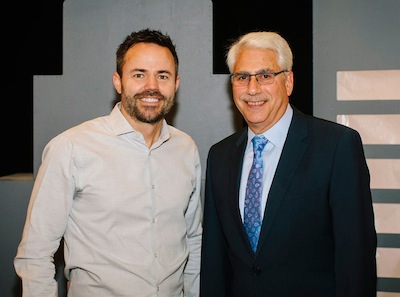
Keynote speaker Lane Merrifield, left, and JFS chief executive officer Richard Fruchter. (photo from JFS)

Right from the beginning, the business plan for Club Penguin was based on philanthropy. A portion of subscriptions went to families that live on less than $51 per day, he said. But “there was no fanfare,” said Merrifield. “We didn’t want this to look like a gimmick.” In the first year, the company gave away hundreds of thousands of dollars.

Merrifield spoke of the need to galvanize the community of kids, teaching them to invest in their community with a “coins for change” program. This virtual fundraiser even allowed children to “ring bells” to attract the attention of other subscribers. Over one billion digital coins were donated annually, for a range of humanitarian causes. Self-organizing kids formed virtual marches, becoming activists in their own right; held candlelit vigils and themed parties.

Merrifield brings the same spirit of social responsibility to his work on Dragons’ Den. He and his fellow panelists (“dragons”) hear pitches by entrepreneurs who are looking for investment and choose which ones to support. Merrifield said he looks for companies that “use recycled materials, hire disabled applicants, plant trees, and make an effort to reduce waste in their packaging and lower their fuel costs.” So far, he has not been disappointed. “Most companies have pretty good answers and that gives me hope,” he said.

On the subject of giving back, Merrifield encouraged people to consider donations – such as those to JFS – not as losses to oneself, but as “investments in the future, to individuals who continue to pay it forward.”

He also asked the audience to engage everyone they could to further the cause of fearless generosity. “Use your collective strength and influence to create change for good,” he said.

He advised, “Pool your talents and leave this world far better than it was when we came into it.”

Shula Klinger is an author and journalist living in North Vancouver. Find out more at shulaklinger.com.