Klein speaks on climate crisis

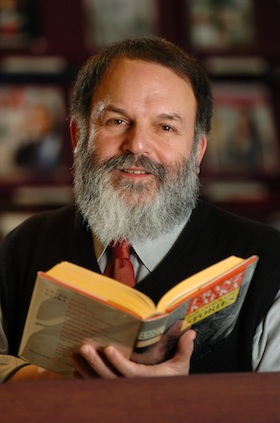
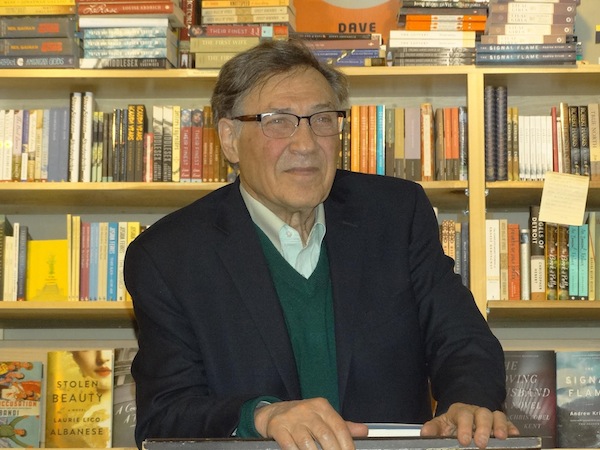
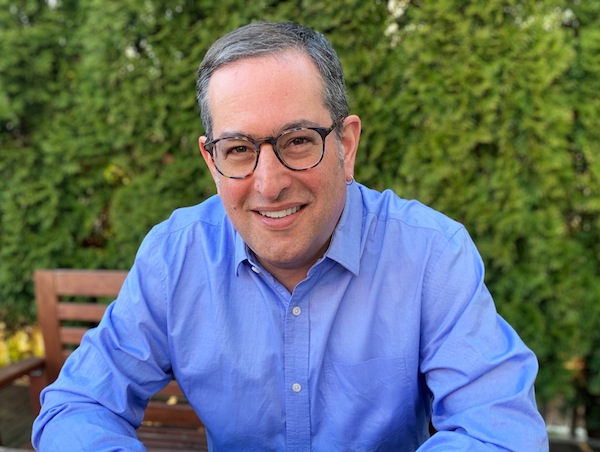
Seth Klein brings his book A Good War: Mobilizing Canada for the Climate Emergency to the Jewish Book Festival on Feb. 22. (photo by Erica Johnson)

At this year’s virtual Cherie Smith JCC Jewish Book Festival, which runs Feb. 20-25, Seth Klein is among the many writers featured. He will talk about his new book, A Good War: Mobilizing Canada for the Climate Emergency, which came out last September.

Klein was the founding director of the B.C. office of the Canadian Centre for Policy Alternatives (CCPA), a position he held from 1996 to 2018, and was also a founder of the B.C. Poverty Reduction Coalition. He is a board member with the nonprofit Dogwood and an advisory board member for the Columbia Institute’s Centre for Civic Governance. He is a founder, advisor and instructor for Next Up, a leadership program for young people committed to social and environmental justice, as well. He spoke with the Independent in advance of his Feb. 22 book festival presentation.

JI: How did you come to write this book?

SK: When you spend 22 years at the CCPA, you’re forever in this place of what you think should happen versus what our governments are prepared to consider, but never more so than in the case of the climate emergency, where we all live in this harrowing space. I wanted to write a book that would tackle that, that would convince particularly our political leaders, specifically those who say they get it, to be more daring than they have been to date in tackling the emergency.

Originally, the book was to have a single chapter on the Second World War, as an example of rapid economic transformation, but the more I delved into that story, the more I saw parallels between the war and the current crisis – not just on the economic front, but well beyond that. I saw parallels in terms of the role of civil society, the mobilization of the populace, the role of Indigenous people and the need to take care of those who make sacrifices; for example, those working in the fossil fuel industry, who need a just transition, modeled after the care for returning soldiers. I also saw cautionary tales around the squashing of civil rights, the things we don’t want to repeat. To speak to a parallel to which the Jewish community has the most connection: the response to refugees.

JI: Can you say a little more about that last point?

SK: Despite Canada rallying to fight the good fight in Europe, we slammed the door on Jewish refugees before, during and after the war. Years ago, I heard Cindy Blackstock, the amazing Indigenous child welfare advocate, give a very simple definition of reconciliation: reconciliation means not having to say “sorry” twice – you learn from what you did. Canada’s behaviour towards the Jewish community during the Second World War was shameful. I believe that the issue of global climate refugees is going to be one of the defining issues of the next 50 to 100 years. We’re going to have to decide who we want to be this time.
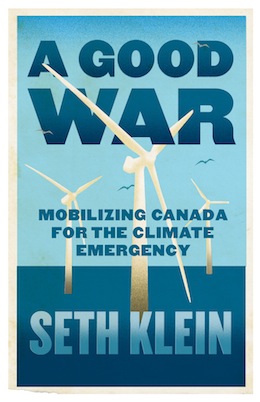
image - A Good War book coverJI: You write that the Mackenzie King government resisted entering the Second World War until the last moment and, even after joining, was slow to ramp up efforts to what was needed. You note that the first nine months of the war are called by historians “the phony war,” and write that we seem to be in the “phony war” stage in our fight against the climate crisis. Can you elaborate on that?

SK: The comparison is really strong. The “phony war” is the period between when they declared war and when things got real. At the beginning of the war, the threat was not clear and present to most Canadians. The fall of France was the moment that the popular zeitgeist shifted. Today, we have the Trudeau government passing a bill acknowledging the climate emergency one day, in the summer of 2019, and then, the next day, re-approving the Trans Mountain pipeline expansion. That is what I call “the new climate denialism.” It manifests in all these governments who say they get it but don’t act like they actually do. In our province, it manifests most clearly in having the most robust climate plan in the country, which we do, and, at the same time, doubling down on fracking and LNG – and you can’t make the math work. That’s the phony war.

JI: What are the assumptions that block government progress on climate action?

SK: The measures that have been adopted so far are largely grounded in what are called “neoliberal” assumptions, which state that society should self-organize according to individual economic interests – the “free hand of the market,” as opposed to the idea that government should function to ensure what is in the best interests of all, so change is left to be voluntary. That’s not working now, and it wouldn’t have worked during the war. When something is an emergency, you don’t make it voluntary.

JI: There is an incredible parallel to COVID-19.

SK: Yes! How do you know when a government knows it’s in emergency mode? These are the four markers: 1) You spend what it takes to win; 2) You create new economic institutions to get the job done, like C.D. Howe, the Liberal cabinet minister [in King’s government] who created 28 new crown corporations to get the job done; 3) You move from voluntary, incentive-based measures to mandatory ones as needed; 4) You tell the truth about the nature and the extent of the crisis and what you have to do.

We did all four of those things in the war. In COVID, we can quibble about the extent that our government has done all four of those things, but I would argue that they have. We’re spending – though it still doesn’t hold a candle to what we did in the war, by the way, but we’re spending. We shifted to mandatory – we locked down the whole economy for some time. We’ve created audacious new programs like CERB that, 10 months ago, none of us would have imagined. Is it too slow sometimes? Yes, but they’ve shifted the mindset. And we have briefings every day, which tell us the truth about the severity of what’s happening. Yet, when it comes to the climate emergency, none of our provincial or federal governments hits any of those markers.

JI: You also describe some cautionary lessons from our wartime experience. Can you elaborate on those?

SK: Aside from the response to refugees, there were all kinds of shameful things, such as War Measures Act stuff, like interning political activists and making political parties illegal, and, most shamefully, the wholesale internment of Japanese-Canadians. There was also the poisoning of Indigenous lands by the very crown corporations whose formation I was so impressed by. These are all examples of state over-reach. The point in recalling these things is to go eyes wide open into the next emergency. To some extent, we have, in fact, already learned as a society – [Brian] Mulroney replaced the War Measures Act with the Emergencies Act, which has safeguards against those types of things. We need the leaders of today to be as bold and innovative as the leaders we had then – and we also need them to be different.

JI: What was the scale of the economic transformation during the war, and how did they pull that off? What are a couple of highest priority steps in your “battle plan”?

SK: The same four steps I’ve already outlined: spend what you have to spend to win, create new economic institutions, move from voluntary to mandatory as required, and rally the public by telling the truth. During the war, they increased government spending tenfold. When C.D. Howe was pressed about the amount of money being spent, he simply said, “If we lose the war, nothing matters.” He carefully controlled all of the supply chains to prioritize the war, including recruiting private businessman, big names like H.R. Macmillan, J.W. Woodward, who abandoned their private interests and served for years as “dollar-a-year men” to serve as controllers and head up these crown corporations because, in an emergency, you don’t leave the allocation of scarce resources to the market – you prioritize what has to be done.

Remember, from 1942 to 1945, the sale of private automobiles in the U.S. of A., the heart of car culture, was illegal. That didn’t happen due to the goodwill of the automakers. They were told. They were busy making stuff for the war effort, making money, but they didn’t decide what to make. We need to approach the climate emergency like C.D. Howe approached the war. We need to conduct an inventory. How many electric buses do we need, how many heat pumps, how many solar arrays, how many wind farms? And, if there is a gap – and there is – we need to decide how we’re going to fill it. Through contracts with the private sector? OK. And, if that’s not enough, we create a new generation of crown corporations to expedite what needs to happen.

JI: Do you think we can rise to the climate emergency in time?

SK: I am trying, in the book, to walk a line. I think, too often, for years, climate communication has been polarized between Pollyannas and pessimists. The leaders we most remember from the Second World War walked a careful line between telling the truth about the severity of the crisis and still imparting hope. Can we do this in time? We don’t know. The reminder I offer to readers is that Canada had a population of 11 million people in the Second World War and over one million Canadians enlisted. You know what they didn’t know? Whether they could win. We know how the story ended, but they didn’t [when they volunteered]. They did what they had to do anyway, and that’s what we have to do.

Matthew Gindin is a freelance journalist, writer and lecturer. He has been published in Philosophy Now, Tricycle, the Forward and elsewhere. He blogs on Medium and is master teacher at Or Shalom Synagogue in Vancouver.
Jewish Poland in 1932

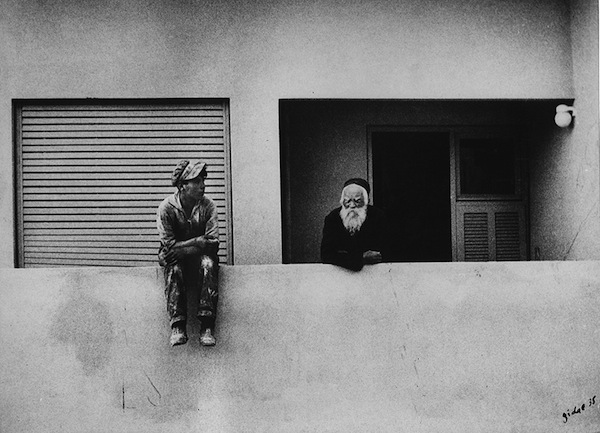
This photo, called “Generations,” was taken by Tim Gidal in Tel Aviv in 1935. (courtesy Zack Gallery)

The current show at the Sidney and Gertrude Zack Gallery, Invisible Curtain: The 1932 Polish Photographs of Nachum Tim Gidal, was organized in partnership with the Cherie Smith JCC Jewish Book Festival, which runs Feb. 20-25. Gidal (better known as Tim Gidal or Tim N. Gidal) was a renown photojournalist of the last century and the exhibit’s images come from the new book Memories of Jewish Poland: The 1932 Photographs of Nachum Tim Gidal. (For a review, click here.)

The driving force behind the book’s publication was Yosef Wosk, who wrote its preface. Wosk approached Zack Gallery director Hope Forstenzer and Jewish Book Festival director Dana Camil Hewitt about a year ago, Forstenzer told the Independent. “He suggested we have a Tim Gidal show at the gallery to coincide with the festival and his newly published book,” she said.

Both Wosk and Forstenzer curated the exhibit. “Together, we chose about 50 images for the show, as many as the gallery could fit. It couldn’t include all the images in the book, of course,” said Forstenzer.

photo - A self-portrait by photographer Tim Gidal, taken in 1974
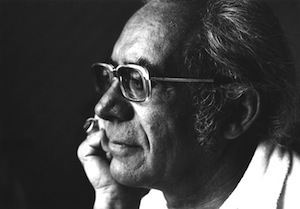
A self-portrait by photographer Tim Gidal, taken in 1974. (courtesy Zack Gallery)

The history of the photographs is best described by the photographer himself in the book’s introduction. In 1932, Gidal, then 23, traveled with two friends to Poland from his hometown of Munich, Germany. It was his first trip abroad. “My knowledge of the political, economic and social conditions of the Jews in Poland didn’t seem to square with my feelings about their spiritual life,” he wrote. “So I decided to go and see for myself.”

Gidal, who passed away in 1996, took numerous photographs of people and places, as he went from shtetl to shtetl on his three-week “little odyssey.” He wrote: “I encountered spiritual and material heights and depths: material well-being and abject poverty, rejuvenation and dissolution. Some were rich, but many more were very poor. It was a hopeless poverty, endured with an incredible humility. I met men of faith and hypocrites … atheists, socialists and communists, Zionists and Bundists, Orthodox and assimilationists. We also experienced the all-pervading Jewish humor.”

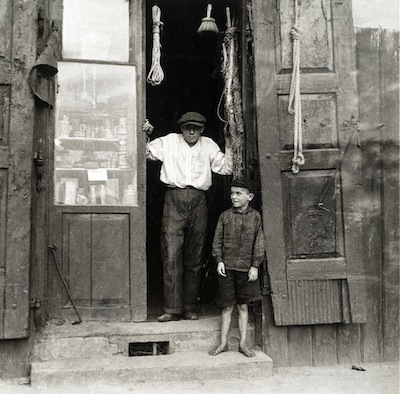
photo - Tim Gidal’s cousin Gershon in the doorway of the family’s rope shop, in Lowicz, Poland. The photo was taken by Gidal in 1932
Tim Gidal’s cousin Gershon in the doorway of the family’s rope shop, in Lowicz, Poland. The photo was taken by Gidal in 1932. (courtesy Zack Gallery)

Everything the young photographer experienced was reflected in his images, including those now on display at the Zack. We see children laughing and women looking far older than their real years. We see ancient eyes and tired, worn hands. We see educated men reading in front of a synagogue, and broken windows and peeling walls the next street over. And we know something Gidal didn’t know at the time, which makes this book and the show all the more poignant: not many years later, most of these people would be murdered in the Holocaust, and they and their entire way of life would be lost. But, in Gidal’s photos, his subjects remain alive. According to Wosk, “Each photograph is a monument, a letter in light.”

Gidal’s 1932 Polish photo essay comprises only a small portion of the master’s body of work. His photography journey spanned almost seven decades and encompassed most major players and momentous events of the 20th century.

One of the pioneers in the field of modern photography, Gidal made his debut in 1929 with his first published photo report. He was a proponent of the style of the “picture story” and he captured most of his subjects unaware, instead of staging elaborate scenes. Very few of his subjects posed for his photos, and every image tells a story.

Four years after his trip to Poland, Gidal moved to Palestine. During the Second World War, he served as a staff reporter for a British army magazine. A wanderer and a chronicler of life, he traveled a lot and lived in the United States for awhile. He taught and illustrated books. He exhibited widely.

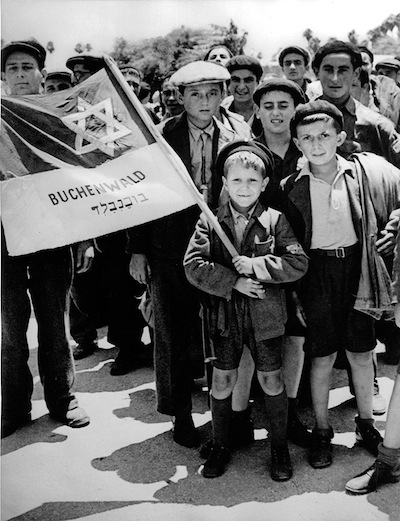
photo - Tim Gidal took this photograph of Buchenwald survivors arriving in Palestine in 1945. It is one of the images featured in the exhibit Invisible Curtain, on display until Feb. 25
Tim Gidal took this photograph of Buchenwald survivors arriving in Palestine in 1945. It is one of the images featured in the exhibit Invisible Curtain, on display until Feb. 25. (courtesy Zack Gallery)

A portion of the Zack exhibition is dedicated to Gidal’s artistic photography after 1932. The pictures demonstrate his technical progress, as well as his breadth of interests and subjects. There is a lyrical photo, “Generations,” taken in Tel Aviv in 1935 and another – a dramatic portrait of the youngest survivors of Buchenwald, taken in 1945 upon their arrival in Palestine. There is a photo of Mahatma Gandhi at the All-India Congress in Bombay in 1940 and the fascinating picture called “Handshake,” taken in Florence in 1934, which shows two men shaking hands in front of a wall covered with multiple posters of Mussolini.

Half a century before Photoshop was invented, Gidal experimented with his images, compiling them in different combinations and creating something unique, like his triptych of Winston Churchill of 1948 or the Rhomboid photomontage of 1975.

As a photo reporter, Gidal used his camera to record the 20th century in all its glorious and painful contradictions, and his early 1932 Polish photographs serve as a symbol of his multifaceted canon.

Invisible Curtain opened on Jan. 5 and the exhibit will continue until Feb. 25. To see the show’s digital equivalent, visit online.flippingbook.com/view/891736. To book an appointment to see it at the gallery, email Forstenzer at gallery@jccgv.bc.ca. To attend the virtual book launch on Feb. 11, 7 p.m., and to see the full book festival lineup, visit jccgv.com/jewish-book-festival.

Olga Livshin is a Vancouver freelance writer. She can be reached at olgagodim@gmail.com.

Hope in the presidency

There is no perfection in human affairs. We are imperfect beings and our creations are always flawed. But this does not stop us from striving for perfection, knowing that our reach should exceed our grasp.

The preamble to the United States Constitution begins with, “We the People of the United States, in Order to form a more perfect Union …” and then sets forth the things that the founders agreed to aspire toward, knowing that perfection is unreachable but that aiming for a “more perfect” future is still an ideal to pursue.

This idea is central to Judaism also, that the world was created imperfect and unfinished because it is the role of humanity to complete that work – or, rather, to advance in the direction of completion/perfection even knowing it is unattainable.

This theme appeared also in the poem by Amanda Gorman, the first United States National Youth Poet Laureate, at the inauguration last week of President Joe Biden. “Somehow we’ve weathered and witnessed / a nation that isn’t broken / but simply unfinished,” she said.

That day, Inauguration Day, felt to many like a collective swerve away from an abyss. After the violence at the Capitol two weeks earlier, after four years of chaos and cruelty at the top of the U.S. administration, and at what we hope is the beginning of the end of the pandemic of our lifetimes, it felt like a move in the right direction, a reversal from the trajectory of spiraling rancour. The violence at the Capitol on Jan. 6, so horrific and deadly, may have been the wakeup call that enough Americans needed to recognize the destination to which the “Trump train” was always headed.

The most fundamental component of a democratic society – the peaceful transition of power – was assaulted on Jan. 6, a day most of us never dreamed we would see, an experience that people in autocratic societies know too well but we hoped we never would. We may never know how close the United States came to genuinely losing its democracy but we can hope that the shock of the violence and the widespread refusal to accept the outcome of a properly run election opened enough eyes to the dangers of that approach. As President Biden said, “enough of us have come together to carry all of us forward.”

Regardless of party affiliation, the transfer of power seemed to many like a return to the project of a more perfect union.

By the skin of their teeth, the Democratic party held the House of Representatives and reclaimed the White House and the Senate. The new Biden administration better reflects the diversity of the country’s racial, religious, gender and other components, not least of which is exemplified by the first female vice-president and the first one who is not white.

The refusal of the outgoing president and his wife to adhere to longstanding decorum and decency and their petulant retreat to Florida before the inauguration was a slap in the face for the very idea of democracy itself. To the credit of the vice-president, Mike Pence, he stepped up where the president would not. So, too, did all the living former presidents, three of them in person at the inauguration and the fourth, Jimmy Carter, calling Biden the night before the inauguration to offer wishes of support. This was a powerful show of respect for the office that Trump never exhibited when he held it and which he further despoiled while leaving it. But he is gone now from there, ideally forever, and we trust that a less divisive and corrupt government will carry that country forward.

It is notable that our hopes for 2021 focus so much on a vaccine. The idea of this science – that injecting a dose of a virus into a body to develop an antibody to a more destructive manifestation – might be extrapolated into our body politic. The virus of extremism, tyranny and violence that we saw on Jan. 6 may have inoculated some Americans to combat the spread of such threats. As we strive for herd immunity in our public health, we can perhaps seek a similar degree of protection in our public life. There will always be bad people and bad ideas. Ensuring that they are kept in check and not permitted to reach pandemic levels is as close to perfection as we can possibly attain. We can hope that, in the spirit of Biden’s words, enough people will come together in defence of the great values that country was founded on to carry all of us forward.

Tu b’Shevat when it’s -30°C

As I went through my undergraduate and graduate school years, I cobbled together several different part-time jobs. One of my favourites was teaching Jewish music at weekend religious schools. This time of year, Tu b’Shevat (aka the New Year of Trees), songs were part of the lesson plan. Often, the kids I taught were just learning Hebrew for the first time, so I taught in English, too. One of my all-time hits was “The Garden Song,” which started with “Inch by inch, row by row, I’m gonna make this garden grow. All it takes is a rake and a hoe and a piece of fertile ground.” My second chart-topper was “Inchworm, inchworm, measuring the marigolds, won’t you stop and try to see how beautiful they are?”

Now, as I write this, I feel transported to a warm, sunny day in my garden, which is good, because it was -30°C with the windchill when I walked my dog in Winnipeg this morning! It’s good to be in touch with both the long-term hopes and dreams of summer and the realities of where we are. Holding that paradox, of both frostbite weather and sunny heat at once, is a great metaphor for where many of us are these days.

As a dual U.S.-Canadian citizen, I’ve been in knots over the unrest “down south” and the U.S. presidential transition. As well, I’m worried about the pandemic and about how poorly vaccine roll out has gone so far in Manitoba, and in Canada overall. I’m both thrilled to hear that all my children’s grandparents have gotten their first vaccine shot in the States, and also so sad to know that our local “adopted” Manitoba grandparents, both over 80, have no idea when they’ll get theirs.

Many people who have been sick with COVID-19 have struggled with challenging effects afterwards, including significant mental health issues. The anxiety and mortality struggles are pretty serious concerns for many of us, even if we haven’t gotten sick. One way my household has succeeded in coping is in burrowing in at home – into learning, good books, art and other DIY projects, building Lego and cooking. Everyone here, from age 9 and up, has kept busy with work and learning. We try to keep positive things in mind as much as we can.

I’ve been thinking about all of this, as I’ve considered what my plans are for the next days, months and even the year. In early January, I celebrated a birthday and the one-year anniversary of starting to study Daf Yomi, a page of Talmud a day. I am proud of finding the time to do this, however brief and poor my attention span may be sometimes. While I struggled with finding good (quick) resources for study, I found an Instagram page, posted by a rabbi, which seemed to summarize each page of study.

Hurray! I thought, I can review this in a glance while I help my kids with remote school lessons. Of course, anything that is in my Instagram feed has to then be kid-safe. Imagine my surprise when my account dumped two Daf Yomi posts with very scary images at me. One showed a person with a plastic bag over her head, struggling to breathe. The other showed someone’s hands, coated and dripping with blood.

Normally, I would simply unfollow this kind of thing without comment. However, these posts about Talmud were written by a rabbi, so I messaged her. “Hey!” I said, “I am so pleased to be doing Daf Yomi. I followed your posts, but I have to unfollow. These images on Tractate Pesachim 57 & 59 are too graphic. I don’t want my kids to see them.”

I got a response that left me, well, reminded that rabbis are just people, and that some of them may miss the mark at times. It was a “sorry to offend” kind of message. She indicated that she was a visual learner, that these posts were meant for those over 18 and that, to her, these seemed essential as an artist/interpreter, and she was guessing others felt the same. While she congratulated me on taking on Talmud study, I was also “othered,” as she, an artist, felt that dedicated followers would prefer this gory imagery in their social media feed.

I was disappointed. Although I am way past age 18, I am choosing, over and over, to focus on what I can gain positively from the talmudic text, even during a hard time. The talmudic rabbis, in parsing what had happened in Temple sacrifice, were trying to understand ritual events that had occurred a long time before. It was a disruptive period in history. Things weren’t stable. In fact, they weren’t actually doing sacrifices or actively harming people who didn’t observe properly. They were ironing out Jewish law for centuries to come, by confronting the past and figuring out the future through discussion, debate and study.

They did this by examining one small thing at a time. Much like the “Inchworm” song, Jewish rabbinic tradition teaches us to examine what is in front of us and to find solutions to challenges. I am distraught when I have to “hold” overwhelming images of rioting in the U.S. Capitol, the pandemic illness and deaths, and even a gory Instagram feed in my mind. Instead, I’m choosing a different path. It’s one that focuses on the next kids’ snack and meal, the next dog walk, and the next time I pick up the warm handknit mitts from the radiator as I face a cold morning outside. Inch by inch, row by row, we will get to sunny days in the garden ahead.

Sometimes, we do best when we embrace the ritual of “one thing at a time.” It’s one wintertime walk and, even, to knit each stitch as it presents itself on the needle to make more mittens. We’ve got a lot on our plate these days. Even so, we must eat only one bite at a time. It’s a metaphor and a paradox that the talmudic rabbis knew well. It might be a cliché but, for us, it also works.

Joanne Seiff has written regularly for CBC Manitoba and various Jewish publications. She is the author of three books, including From the Outside In: Jewish Post Columns 2015-2016, a collection of essays available for digital download or as a paperback from Amazon. Check her out on Instagram @yrnspinner or at joanneseiff.blogspot.com.

Gidal’s photos speak volumes

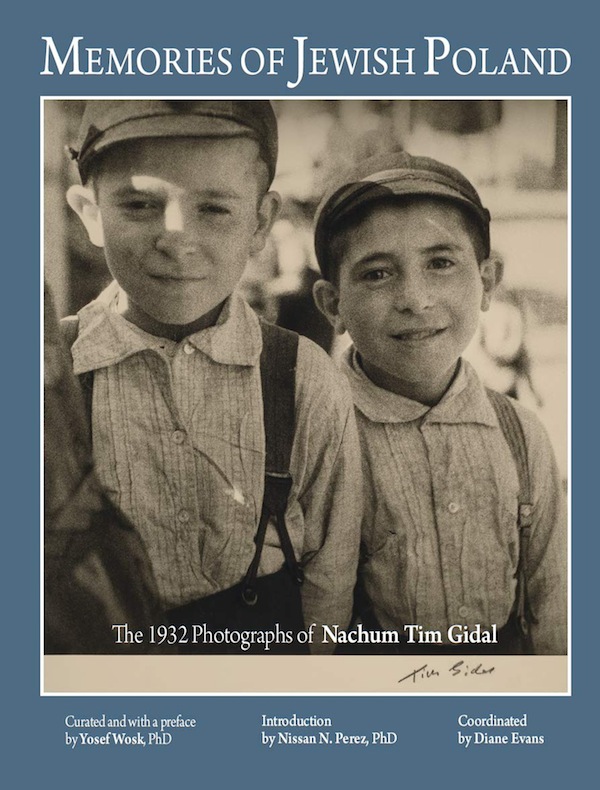
The book Memories of Jewish Poland: The 1932 Photographs of Nachum Tim Gidal lets the photos do most of the talking. And they speak strongly and with passion of a lively, bustling and diverse community, the vast majority of whom were killed in the Holocaust.

“Of the 3.3 million Jewish residents of Poland before World War II, only 380,000 were still alive by 1945,” notes the book’s curator, local scholar, writer and philanthropist Yosef Wosk, in the preface. Wosk will help launch the release of Memories of Jewish Poland on Feb. 11, in a “prologue” event of the Cherie Smith JCC Jewish Book Festival, which opens Feb. 20. He also helped organize Invisible Curtain, the current exhibit of Gidal’s work that is being co-presented by the festival with the Zack Gallery.

photo - Yosef Wosk will launch the book Memories of Jewish Poland: The 1932 Photographs of Nachum Tim Gidal on Feb. 11 at a virtual Jewish Book Festival event
Yosef Wosk will launch the book Memories of Jewish Poland: The 1932 Photographs of Nachum Tim Gidal on Feb. 11 at a virtual Jewish Book Festival event. (photo by Joshua Berson)

Wosk was friends with Gidal, who he met in Jerusalem, where Gidal lived. Born in Munich in 1909, Gidal had made aliyah in 1936, but then lived in various places before returning to Jerusalem in 1970; he passed away in 1996. It was not only Gidal’s dying wish that the 1932 Polish photos be published in book form, but that they be allowed to “speak for themselves.” And that request has been honoured. In addition to Wosk’s brief preface, the book opens with some notes written by Gidal for a 1984 exhibit and includes an introduction to Gidal’s work by photography historian, researcher, author and curator Nissan N. Perez, founder of the Israel Museum’s photography department. At the end, there is a list of the plates included in the book and a brief biography of Gidal. A map of Poland, indicating the locations in which the photos were taken, bookends the commentary and photographs.

“This book illustrates the largest number of photographs from Gidal’s Polish photo essay ever assembled. It is not, however, a catalogue raisonné: more than 20 images are not included,” writes Wosk. The reproductions included in the volume are taken from prints in Wosk’s collection and that of the Israel Museum. Wosk thanks Diane Evans, “master teacher, photographer, bookseller and friend in photography,” for serving “as a patient, experienced and disciplined midwife in giving birth to this book.”

Gidal – born Ignaz Nachum Gidalawitsch – was motivated to travel to Poland “by his desire to know more about his family’s background,” writes Perez. The photographs Gidal took were “actually a rather small chapter of his oeuvre at the beginning of his outstanding career, an exercise in perfecting his vision.”

“He gains the interest of the viewer not by staging elaborate scenes, but by capturing expressions and gestures that can only be described as both intimate and straightforward,” explains Perez. “As he said in one of the many meetings conducted toward the exhibition in 1995, ‘My photographs, I like to think, are variations on the everlasting tragicomedy of human life.’”

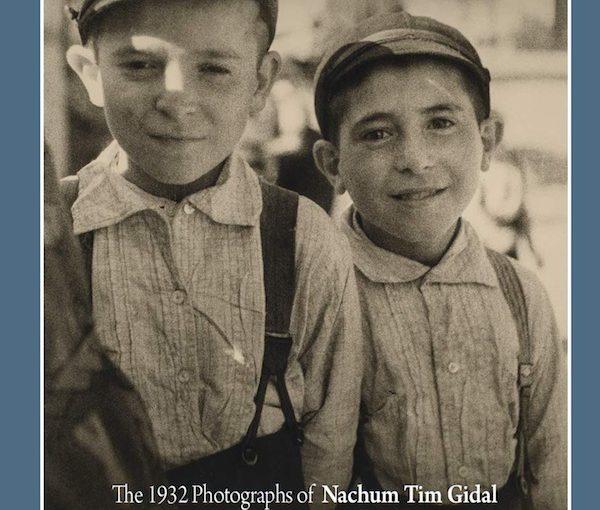
image - Memories of Jewish Poland: The 1932 Photographs of Nachum Tim Gidal book cover

The images in Memories of Jewish Poland are prime examples of Gidal’s ability to capture images of life as it is happening, in all its unromantic but beautiful distinction.

“In the heterogenous assembly of the Polish galut (diaspora), I myself became immersed in the flow of Jewish life from the past to the future,” wrote Gidal for the 1984 exhibit. “When we left Poland after three weeks, I had passed through an invisible curtain, which had separated East and West. Now the curtain had opened, and I was made to feel the unifying presence of Jewry.”

A selection of Gidal’s 1932 Polish photos is currently on display at the Zack Gallery (for the full story, click here). The Memories of Jewish Poland book will be launched at a virtual Cherie Smith JCC Jewish Book Festival prologue event Feb. 11, 7 p.m. For tickets to the prologue and other Jewish Book Festival events, visit jccgv.com/jewish-book-festival.

Interview insightful, fun

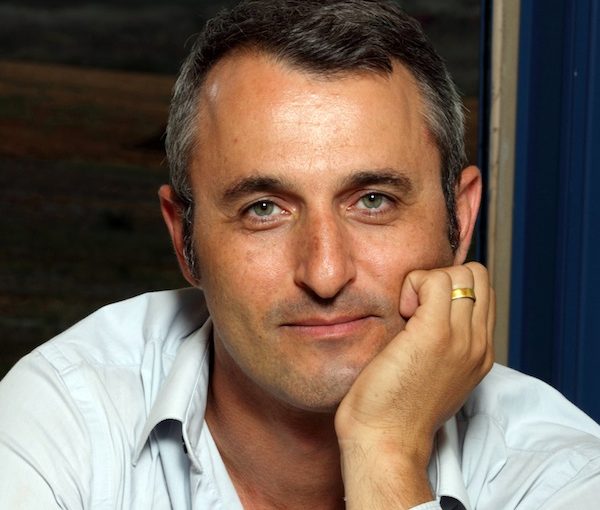
Israeli writer Eshkol Nevo, whose latest novel is The Last Interview, opens the JCC Jewish Book Festival Feb. 20. (photo from JBF)

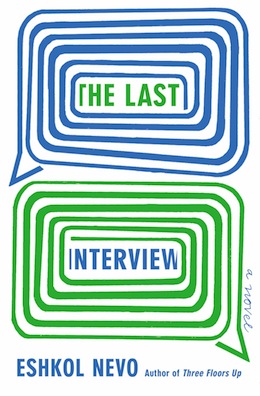
This year’s Cherie Smith JCC Jewish Book Festival opens online Feb. 20, with Israeli writer Eshkol Nevo, whose latest novel, The Last Interview, brilliantly sprinkles facts amid a lot of fiction and interjects humour into much pathos. It entertains, of course, and, as all good books do, it raises many salient points that will get readers thinking – and feeling – about, in this case, storytelling, marriage, truth, parenting, friendship, lies, family, identity, media, politics and relationships. So, life.

In The Last Interview, the protagonist, who is suffering from a chronic form of depression and writer’s block, responds to an interview sent to him “by an internet site editor who collected surfers’ questions.” He later notes, “It was supposed to be only an interview, nothing else, but slowly – it seems I can’t do it any other way – I’ve been turning it into a story. I was supposed to leave Dikla and the kids and the dysthymia out of it. And all of them are in it.” This inability to stop himself from telling stories about others in his published writing is an Achilles’ heal in his personal life, but a boon to his professional one.

His interview answers are sometimes short and direct:

“How do you manage to deal with the loneliness that’s part of writing?

“I don’t.”

But, most often, they are quite involved, going into more detail, retrospection and introspection than the questioners would ever have expected. We learn about his failing marriage, but also its sweet beginnings. We are privy to his feelings about his best friend, who is dying of cancer. We see how he struggles to be a good father to his three kids. We hear some of his travel adventures. We witness his attempts to extricate himself from an unwanted speech-writing gig. We share his discomforts with the Israeli-Palestinian situation. We find out a bit about his motivations for writing:

“If I don’t write, I have nowhere to put my memories, and that’s dangerous. I have a problem. I don’t forget anything. My forgetting mechanism is completely screwed up. All the partings, the deaths, the unexploited opportunities. They are all trapped in my body, and writing is the only way to release them … if I don’t occasionally unburden myself of the weight of some of those memories, I won’t be able to breathe. No air will enter my body. Or leave it.”

Part of his current creative block – “I was supposed to be writing a novel this year. Instead, I’m writing answers to this interview” – is that he and his wife are becoming more distant. “I can’t say that I became a writer to win Dikla’s heart, but I can assume that with another, less stimulating woman, I wouldn’t be writing.” He notes that, since his first letter to her, “In fact, everything I’ve written since then, eight books, is one very long letter addressed to her.” At the end of a lengthy response to the question, “All of your books are written in the same style. Have you ever thought of writing something completely different? Maybe science fiction? Fantasy?” he says that genre wouldn’t make any difference: “In any case, it would turn out that, once again, I wrote about an impossible love.”

image - The Last Interview book coverWhile the overall mood of The Last Interview is solemn, there are many funny parts. One especially hilarious section is the writer’s response to the question, “When will they produce a film adaptation of your latest book? When I read it, I could actually imagine the movie.” As the writer shares the details of an encounter with a filmmaker of a similar opinion, the conversation cynically – but with the ring of truth – moves from flattery to the many ways in which the movie will ultimately be unrecognizable from the book, yet concluding nonetheless with the filmmaker enthusing, “The minute I finished it, I said to my wife: This is a movie!”

With a writer as intelligent, sensitive and amusing as Nevo and an interviewer as experienced as the Globe and Mail’s Marsha Lederman, the book festival’s opening event should be well worth attending. For tickets to it, and for the full lineup of events, visit jccgv.com/jewish-book-festival. The festival runs to Feb. 25.

Fairy tales still relevant

Jack Zipes gives the lecture Resurrecting Dead Fairy Tales on Facebook Feb. 17. (photo from MISCELLANEOUS Productions)

Some fairy tales are timeless in that they still have lessons to impart. For example, The Pied Piper, a story dating back to the Middle Ages, “is a tale of plague, greed, betrayal, conformity/confinement with allusions to child abuse,” explained Elaine Carol, co-founder and artistic director of MISCELLANEOUS Productions.

MISCELLANEOUS’s Plague project will have participating youth, along with professional artists, interpreting the Brothers Grimm’s The Pied Piper “from an intersectional, anti-racist, anti-oppression, queer feminist perspective.” In preparation, Carol told the Independent, “we have been reading our way through the mountain of brilliant writing by Jack Zipes, asking him many questions – even our film editor of Resurrecting Dead Fairy Tales is now reading two of his hundred or more published books.”

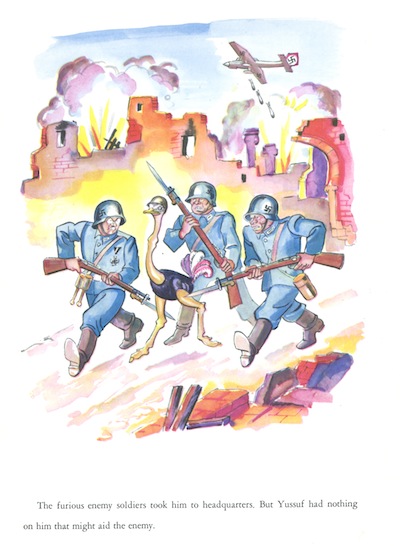
image - In Yussuf the Ostrich, political caricaturist Emery Kelen tells the story of a young ostrich who helps defeat the Nazis in northern Africa during the Second World War.
In Yussuf the Ostrich, political caricaturist Emery Kelen tells the story of a young ostrich who helps defeat the Nazis in northern Africa during the Second World War.

Zipes’ recorded Facebook Watch talk, Resurrecting Dead Fairy Tales, will be streamed Feb. 17, followed by a live Q&A with Zipes. Some of the lecture will be part of the documentary being created about the youth-centred theatre project, which will include various workshops and an eventual stage production at the Scotiabank Dance Centre in 2022.

“I have also been working with young professional artists Tiffany Yang, who was a youth in our Monsters production, national and international tours, and Julia Farry, our production assistant/outreach worker,” said Carol. “Tiffany has translated four indigenous Taiwanese folk tales that are stories of plague – mostly in coastal communities, including animal wonder tales of fantastical fishes and other fascinating narratives. Julia has translated three Japanese folk tales focusing on plagues. There are many plague stories that we still hope to collect, including the facts of disease spread by European settlers to the Indigenous people of Turtle Island, as research materials for our project-in-development.

“We are currently collecting these tales to bring to our youth cast after it is deemed safe to work with them in person,” Carol continued, “as we will be using theatre, hip hop/streetdance, contemporary dance, marimba and world music, urban music, performance art, etc., to co-create a new play. This play will be used as a vehicle for the youth to discuss their own experiences of living in a world pandemic.”

Zipes’ lecture was filmed in Minneapolis by MISCELLANEOUS Productions’ professionals. The professor emeritus of German and comparative literature at the University of Minnesota is an expert on folklore and fairy tales. He is a storyteller himself and the founder of the publishing house Little Mole and Honey Bear.

“My parents and grandmother always told me tales of different kinds,” Zipes told the Independent. “When I began studying for a PhD at Columbia University, I wrote my dissertation on ‘The Great Refusal: Studies of the German and American Romantics in the 19th Century.’ My interest in fairy tales grew as I realized that these imaginary tales hold more truth than the so-called realistic future. And I also was angered by Bruno Bettelheim’s book about fairy tales in which he imposed a Freudian interpretation on readers. Since then, I have been trying to reveal how relevant fairy tales are to our lives.”

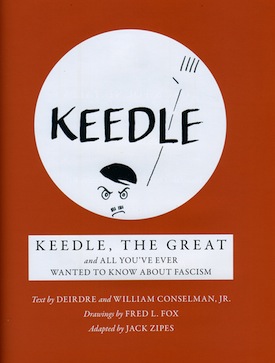
image - One of the fairy tales Jack Zipes has resurrected is Keedle, The Great, first published in 1940
One of the fairy tales Jack Zipes has resurrected is Keedle, The Great, first published in 1940.

The examples given in the lecture’s press release are from two books Zipes has translated and published: “For example, in Yussuf the Ostrich, well-known political caricaturist Emery Kelen tells the story of a young ostrich who helps defeat the Nazis in northern Africa during World War II. In Keedle, The Great, first published in 1940, Deirdre and William Conselman Jr. sought to give Americans hope that the world can overcome dictatorships. To the authors, the title character Keedle represented more than Hitler, but all dictators then and now.”

Zipes said, “I don’t think that my being Jewish accounts for my interest in fairy tales. My Jewishness makes me a bit meshuggah, and this is why I try to think out of the box and have developed a storytelling program for children without sanitizing the fairy tales. The best of folk and fairy tales have never been sanitized, and I use tales to tell so that children will be enabled to tell their own miraculous tales.”

“My Jewishness is complex,” said Carol, “because I am mixed-race Sephardic-Romani and Ashkenazi. One of one million reasons I love Jack Zipes and think his work is crucial is his lucid critique of the Disneyfication of fairy tales and folklore.”

Resurrecting Dead Fairy Tales starts at 5pm on Feb. 17 and is intended for older youth and adult audiences. On the day and time, click here for link to watch.

BGU plans new school

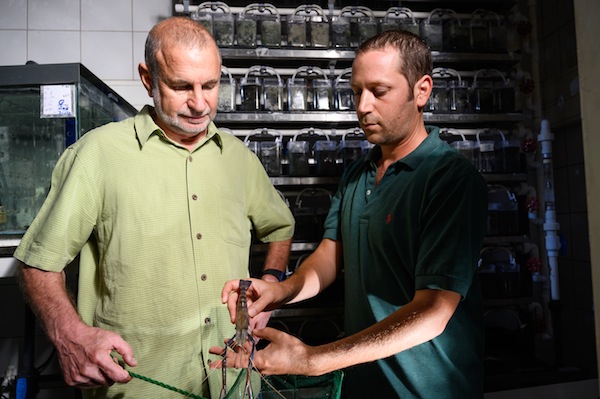
Ben-Gurion University’s Prof. Amir Sagi, left, and Dr. Amit Savaia have found a way to use shrimp to fight a deadly parasitic disease in Nigeria. (photo from BGU)

This year, Ben-Gurion University of the Negev plans to launch a new school that will specialize in climate change research, mitigation and environmental sustainability. It will also offer a graduate program with a cross-section of specialties.

BGU’s three campuses house an enrolment of 20,000 students and a faculty of 4,000. Its areas of expertise range far and wide, and, among other things, the university has become known as a go-to place for figuring out how to address one of the 21st century’s biggest threats: climate change.

For BGU president Daniel Chamovitz, the university’s growing reputation isn’t that much of a surprise. “Because what have we been doing in the last 60 years?” he asked rhetorically. “We have been learning how to survive – not to survive, how to thrive in the desert.”

photo - Prof. Daniel Chamovitz, president of Ben-Gurion University
Prof. Daniel Chamovitz, president of Ben-Gurion University. (photo from BGU)

Chamovitz’s own expertise is in genetics and plant biology. Originally from Aliquippa, Pa., he is most recently known for his studies in plant development and for his book What a Plant Knows: A Field Guide to the Senses, which has been published in 18 languages.

The realization that the university already has a strong foothold in environmental and sustainability research, Chamovitz said, is what led to its new mandate to become the world’s authority on climate change and sustainability.

A long history

For Prime Minister David Ben-Gurion, the Negev was always Israel’s greatest untapped resource. It was the place, he predicted, that the Jewish homeland would sow their greatest accomplishments. A desert that spans more than 60% of the country’s land mass, the Negev would hold the answers to Israel’s most pressing problems of the day: how to grow enough food to feed a nation, generate sufficient energy to power cities and harness enough water to turn brown deserts green.

But building a sustainable nation, he warned, one that could benefit from a desert that receives less than 200 millimetres of rainfall per year wouldn’t be simple. “It is incumbent upon Israel’s scientists to reveal the secrets of nature that are unique to our land,” he said. The Negev, he insisted, was the perfect environment for an institute of study that could solve the world’s most basic – and challenging – problems of existence.

Ben-Gurion’s visionary thinking was the catalyst for many of Israel’s earliest environmental accomplishments, including desalination and energy generation using seawater, steps that would be critical to Israel’s much-needed water technology. Both projects were developed in the 1960s, at a research facility in the town of Be’er Sheva, a Bedouin settlement at the northern tip of the Negev. The institute that gave rise to these early innovations would eventually become BGU.

BGU’s new school

Two years ago, when he was hired as president of BGU, Chamovitz told the Jewish Independent he had conducted a “bottom-up” assessment of all of the departments and their areas of specialization. He wanted to know what their strengths and weaknesses were.

“[We] identified over 150 researchers dealing with various issues of sustainability and climate change,” Chamovitz said. “And, in every discipline. Not only in our institutes of water, energy and desert agriculture – that’s the low-lying fruit – but also in engineering and in civil engineering, where we develop energy-efficient building material and methods.

“It was clear to everyone that the field of sustainability and climate change was what sets Ben-Gurion University apart from every other university in Israel.”

That brand-name recognition helped secure a new partnership with Royal Bank of Canada, which is sponsoring the new school’s first graduate fellowship program. The investment by RBC will fund two fellowship positions for students specializing in climate change or sustainability-related research and, in doing so, help launch the program.

This isn’t the first time that RBC has partnered with the university. In 2018, RBC and BGU entered into a cybersecurity partnership, in which the bank invested $2 million toward research programs in BGU’s department of software and information systems engineering.

In this case, the partnership aligns with RBC’s own long-term sustainability goals and its Tech for Nature program, which it launched in 2019.

photo - Martin Thibodeau serves as the president of Royal Bank of Canada’s British Columbia region
Martin Thibodeau serves as the president of Royal Bank of Canada’s British Columbia region. (photo from Royal Bank of Canada)

“The research being conducted also aligns with RBC’s interests as we recognize that innovative technologies offer immense potential to help solve environmental challenges,” Martin Thibodeau, B.C. regional president, RBC Royal Bank, told the Independent. “The most pressing environmental concerns of our time are negatively impacting the planet at a rate that often outpaces the solutions designed to address them. RBC is leveraging its capabilities in technologies such as artificial intelligence and blockchain, as well as its convening power, to build solutions and the type of multi-partner coalitions needed to address and solve our shared environmental challenges.

“Our commitments align with the United Nations Sustainable Development Goals and, through our partnerships, we aim to develop multi-sector, multi-partner solutions to achieve progress on these challenging issues. We’re both proud and excited to partner with BGU through CABGU to address these important issues,” Thibodeau said.

“We are in awe of the grassroots contributions that RBC makes to our Jewish community and the positive role that RBC plays and has played in strengthening so many local community organizations in British Columbia and across Canada,” said David Berson, executive director of the B.C. & Alberta chapter of the Canadian Associates of Ben-Gurion University, which worked as a liaison with RBC and BGU to secure the partnership.

“[We] are incredibly excited that corporations such as RBC see the importance of partnering with Ben-Gurion University, [and] that their investment [will] pay back to society tenfold,” Chamovitz said. He likened RBC’s partnership to an educator who invests in students’ goals, which, in time, benefit generations to come.

A new learning model

Climate change is a multidisciplinary problem, said Chamovitz, one that takes the expertise of not only hydrologists, biologists and engineers, but geneticists, geologists, legal experts and others. Education, therefore, must be tailored to meet the broad range of knowledge required to understand climate change. That doesn’t mean graduate students won’t specialize in their research and their studies, Chamovitz said, but they will be expected to have a multidisciplinary background that connects with the challenges of creating a sustainable world and addressing climate change.

photo - Microbial eco-genomics deals with the study of relationship between organisms, including microbes and their environment
Microbial eco-genomics deals with the study of relationship between organisms, including microbes and their environment. (photo from BGU)

“The one requirement would be their willingness to work interdisciplinarily and to take courses in other fields. Otherwise, they don’t need the school,” said Chamovitz. “They could just go into the school of engineering [for example] or school of ecology. And, you know, for some people, that’s the better track.”

Chamovitz said it’s companies like RBC that are making this new branch of education possible, adding that the university has seen an increase in inquiries from companies and communities across the world that are attempting to address climate change challenges. Last year, for example, a company located in Chennai, India, reached out to see if BGU could assist in building a local agricultural research institute. Chamovitz said the institute’s future researchers will be trained first at BGU before returning home to Chennai to begin their new jobs. The university has also struck up a three-way partnership with the city of Dubai, in the United Arab Emirates, and Arizona State University, in Tempe, Ariz., to address issues relating to global warming in Dubai.

“We have similar collaborations in western China, which are also in arid places. And we are really excited about developing relationships in Canada,” said Chamovitz, who recently visited Vancouver to meet the presidents of Simon Fraser University and the University of British Columbia, which both offer studies in climate change and sustainability.

The two Israeli RBC fellowship students have already been selected. Shir Eisenstein will be doing a master’s in material engineering, looking for new materials that help harness sustainable, renewable energy. Nadina Levitt, who is also pursuing a master’s, will be enrolled in the department of geography and environmental studies and studying sustainability models for smart cities. Both students demonstrated a key requirement for upper-level studies when it comes to BGU’s approach to this new specialization: innovation.

“One of the problems in higher education is this need for prerequisites,” Chamovitz noted. “What we are looking for is not prerequisites, but ingenuity.”

The university is expected to complete the formalization process and approval for the new school of sustainability and climate change in February and be open for enrolment this October.

For more information about BGU and the programs it offers, visit in.bgu.ac.il/en. For more about CABGU, contact Berson at bguvancouver@bengurion.ca or 604-266-2680, or visit bengurion.ca.

Jan Lee’s articles, op-eds and blog posts have been published in B’nai B’rith Magazine, Voices of Conservative and Masorti Judaism, Times of Israel and Baltimore Jewish Times, as well as a number of business, environmental and travel publications. Her blog can be found at multiculturaljew.polestarpassages.com.

Hope amid challenges

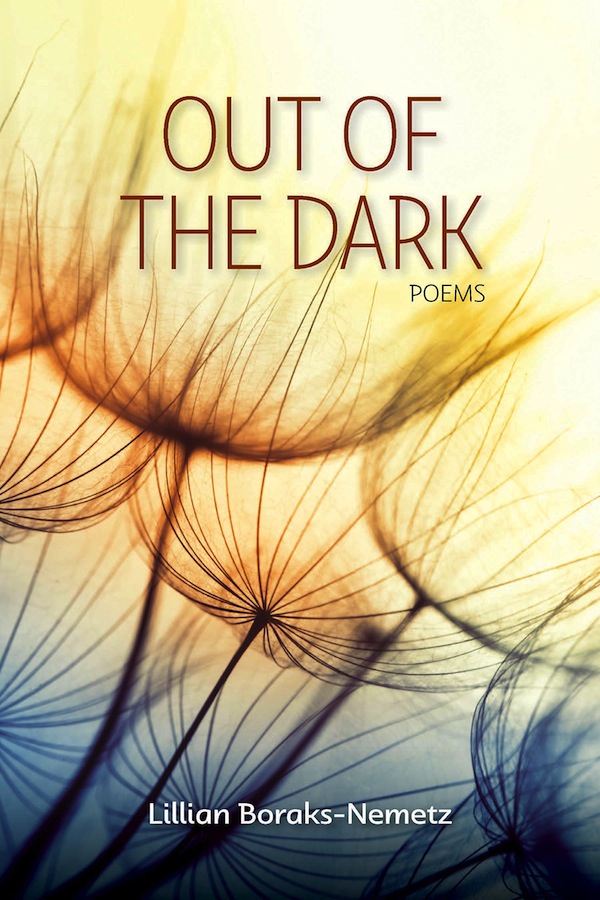
Lillian Boraks-Nemetz’s latest collection of poems offers comfort, even though she does not shy away from the tragedy of her Holocaust experience and ever-present memories of that period. From the very title, Out of the Dark, she gives hope. If she can still see beauty and love, then we can, too.

An established and award-winning writer, Boraks-Nemetz has published many books and her poems have appeared in literary anthologies. A child survivor of the Warsaw Ghetto, she is an eyewitness to some of the most cruel aspects of humanity and openly wrestles, in these poems, with the death she has seen, with the hiding she was forced into and can’t completely shake the habit of, with the stark contrast of her life before coming to Vancouver and the world she has created here. While deeply marked by suffering, she makes space for the pain that others experience.

image -Out of the Dark book cover

Out of the Dark is divided into three sections: Survival, Flickers in the Dark, and Into the Light. Even the most sombre first part, which includes poems about those murdered in the Holocaust, the impacts of war and the existence of antisemitism, starts with a poem called “Flowers of Survival,” in which a daughter recalls the words of her father, from whom she has been separated, forever: “‘Let the wind thrash us if it will // And the foul earth open to swallow us,’ you said, / ‘for in the end / neither the violent wind nor / the foul earth will succeed.’”

In midsection of the book, Boraks-Nemetz gives voice not only to her sadnesses and joys of making a new life in Vancouver, but of the immigrant experience in general. She writes of the difficulties of living in another place, both with regards to location but also in her mind and body, as well as in time, so different is British Columbia than Poland, so changed is Warsaw now from how it was during the war, so renewed a person is she, yet, she advises, in the poem “Identity,” “when they tell you / forget the past – let it go / they are in error // your past is your memory / and memory – a bridge / to you.”

As people are marked by what happens to them, internally and externally, so is nature, and Boraks-Nemetz has included several poems about its splendour, what it has witnessed and how we humans are threatening it, despite its strong will to survive.

There are many poems in Out of the Dark that are dedicated to family, friends, poets and others, but the bulk of them are in the final section. Boraks-Nemetz seems to be saying that, despite our capacity as humans for brutality and destruction, we need one another and we are the only ones who can fix what we have wrought, and make the world a better place.

Courage of journalists

Journalists in Canada do not face the sorts of threats – sometimes life-endangering ones – that colleagues in many other countries do. But other factors impinge on the right of Canadians to diverse and thorough reporting of contentious issues, says an academic on the subject.

Robert Hackett, professor emeritus of communication at Simon Fraser University, spoke on the civil courage of journalists as part of the annual Raoul Wallenberg Day in Vancouver. The virtual commemoration, sponsored by the Wallenberg-Sugihara Civil Courage Society Jan. 17, featured a number of recorded events, including the screening of two films.

In recent decades, there has been a return to “partisan media,” said Hackett.

“Media, going back a couple of hundred years, were initially partisan media, reflecting the viewpoint of particular factions or parties,” he said. “We see that returning with a vengeance since the 1980s, with Fox News and so on.”

The internet has lowered attention spans and the “growing entertainment orientation” of the news media has changed the way reporting is done. Contradictory forces have upset the journalism sector in recent decades, he said. On the one hand, concentration and monopoly have placed control of “legacy media” – daily news, for instance – in fewer and fewer hands, reflecting a narrowing of perspectives. On the other hand, digital media and journalism startups have led to a fragmentation of public attention.

As the revenue structures of journalism have become strained due to competition for advertising avenues, resources for newsroom staff have declined, with commensurate impacts on the quality of reporting. Journalists who are expected to pump out several stories a day are unable to do the sort of investigative work common a generation or two ago and so rely on media releases. General reporters have replaced beat reporters with deep contacts and extensive background knowledge in an area of expertise. These structural changes have been accompanied by growing cultural skepticism toward expertise and even the definition of truth, said Hackett.

“It’s a different cognitive world,” he said. “We no longer seem to even have a shared reality.”

Some of Hackett’s recent research, in conjunction with the Canadian Centre for Policy Alternatives, has focused on fossil fuel industries and their influence on Canada’s press. He sees Canada’s largest print media company, Postmedia, as a booster of fossil fuels.

While Canadian journalists are fortunate not to face some of the life-threatening risks of reporters in many other places, there remain serious challenges to the ideal of a free media.

“There is still a certain degree of legal harassment and risk, especially for freelancers who don’t have a big organization behind them,” said Hackett. “The cost of a lawsuit for defamation, even if it’s a spurious lawsuit, is prohibitive. It’s intimidating. I know for a fact that freelancers have said they aren’t proceeding with stories because of fears of being sued.”

In addition, he added: “We don’t have effective shield or whistleblower laws, by and large, that would allow journalists to protect their sources.”

The online event, marking the 16th annual commemoration of Raoul Wallenberg Day in Vancouver, also featured two documentaries.

A Dark Place was produced by the Organization for Security and Cooperation in Europe’s Representative on Freedom of the Media. It follows female journalists around the world and the threats they receive online in reaction to their reporting on contentious stories. Threats of rape and murder, as well as other forms of intimidation, are almost ubiquitous. One study said that 60% of female journalists have experienced some form of online harassment or threats, according to the film. A panel discussion featured the film’s director, Javier Luque, and Arzu Geybulla, an Azerbaijani journalist who endured harrowing harassment and accusations of being a “traitor” for coverage of conflicts in the Caucasus.

The other documentary, Mohamed Fahmy: Half Free, by filmmaker David Paperny, follows Egyptian-Canadian journalist Mohamed Fahmy, who was jailed in Egypt for his reporting on the Arab Spring uprising in Cairo. Fahmy’s experience is one of many that journalists face daily in conflict zones and under repressive regimes, risking their freedom and their lives to report on events. Fahmy spent 438 days in an Egyptian prison before being pardoned by the country’s president, Abdel Fattah el-Sisi. Fahmy is now an adjunct professor at the University of British Columbia.

Alan Le Fevre, a director of the Wallenberg-Sugihara Civil Courage Society, welcomed participants to the annual event, which highlights the Second World War heroism of Raoul Wallenberg and Chiune Sugihara.

Wallenberg, a Swedish diplomat in Hungary, issued “protective passports” that identified bearers as Swedish subjects awaiting repatriation, thereby preventing their deportation from Hungary to death camps in Poland. Wallenberg disappeared in 1945 after the Soviets invaded Hungary. In 1957, the Soviet Union released a statement dated 1947, saying that Wallenberg had died of natural causes that year. Reports that Wallenberg was seen alive after 1947 have added to confusion and controversy around his fate.

Sugihara was vice-consul of the Imperial Japanese legation in Lithuania. At risk to his career and his life, Sugihara issued thousands of transit visas permitting Jews to travel through the Soviet Union to Japan and across the Pacific. Ostensibly, because a destination was required for a transit visa, the holders were destined for Curaçao. Many of those who escaped ended up on the West Coast of North America and there are several Vancouver families who owe their lives to “Sugihara visas.”