Israeli ventilation invention

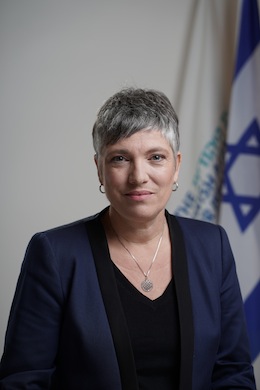
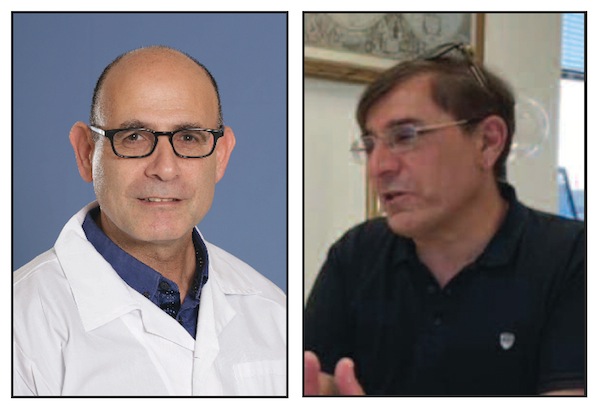
Prof. Ori Efrati, left, and Dr. Michael Cohen. (photos from IMP)

With the arrival of the coronavirus vaccine, there has also been a spike in morbidity, clearly indicating that we’re not out of the woods yet. In fact, hospitals in Israel have warned that they are steadily approaching maximum capacity, as the numbers of severely ill COVID patients breaks all records.

When COVID-19 first erupted in March 2020, health authorities warned that a surfeit in severely ill coronavirus patients would overwhelm the system due, in large part, to a lack of ventilation machines – the standard of care for coronavirus patients whose condition deteriorates to pneumonia. In the ensuing months, Prof. Eyal Leshem, director of the Centre for Travel Medicine and Tropical Diseases at Sheba Medical Centre, explained that, in addition to the shortage of ventilators, one of the most pressing issues is the lack of highly trained intensive-care-unit staff to monitor patients attached to those devices.

An innovation by Yehonatan Medical addresses both of these issues.

Yehonatan Medical, in collaboration with Prof. Ori Efrati, director of the pediatric pulmonary unit at Sheba Medical Centre, devised a first-of-its-kind ventilation system that can treat multiple patients.

“Conventional ventilators, aside from being very costly, are limited in that they can only be used with one patient at a time,” explained Efrati. “Their capacity factor and programming functions were designed for single-patient use, and there is also the danger of cross-contamination.”

The new ventilation system resolves issues that corona ICU wards have been grappling with as the number of severely ill patients rises.

“We were able to use the relatively simple and inexpensive BipaP non-invasive ventilation machine as the basis for the advanced ventilation technology,” said Efrati. “Thanks to the high-power output and built-in disinfecting mechanism, the new system can safely treat three to five patients simultaneously.”

Moreover, a system that can treat multiple patients at one time necessitates fewer ICU-trained staff. Thanks to the remote interface, the medical team can monitor patients from a safe distance.

“This tremendous breakthrough is nothing less than a game-changer when it comes to caring for large numbers of corona patients,” Efrati added.

Dr. Michael Cohen, an engineer and scientist and the founder of Yehonatan Medical, said, “All in all, we’re talking about a system that delivers personalized care in a multi-user format.”

Additional features based on artificial-intelligence technology include the ability to have a hierarchy and classification of alerts; the ability for automatic parameter correction according to set criteria; respiratory rehabilitation for the patient by adjusting to changes in the patient responsiveness; and more. The streamlined, relatively low-cost system can be implemented in makeshift clinical settings, such as field hospitals, as well as in step-down units within the hospital, in the internal and other wards.

Yehonatan Medical is the medical department of Mofet Etzion, a company that for more than two decades has developed various security and military innovations for the Israel Defence Forces and foreign armies. Cohen has developed dozens of life-saving innovations, including in the area of cardiology, in collaboration with cardiologists and cardiothoracic surgeons from Israel, the United States and Canada.

“Some of the insights for the development of this revolutionary ventilation system were provided by cardiologists who helped us to devise the various accoutrements and sensors,” Cohen said, making specific mention of Dr. David Adams, professor and system chair of the cardiovascular surgery department at Mount Sinai Hospital in New York; Dr. David Tirone, chief of cardiac surgery at Toronto General Hospital; and Dr. Gideon Cohen, cardiothoracic surgeon at Sunnybrook Health Sciences Centre in Toronto. The development of the system itself took place in Israel, marking the first time that an invasive ventilation machine has been built in Israel.

The advanced ventilation technology is currently in advanced phase trials at the MSR Medical Simulation Centre at Sheba, where it is being tested on artificial lungs, and is expected to be ready for mass marketing in the coming months.

– Courtesy International Marketing and Promotion (IMP)
Books foster identity

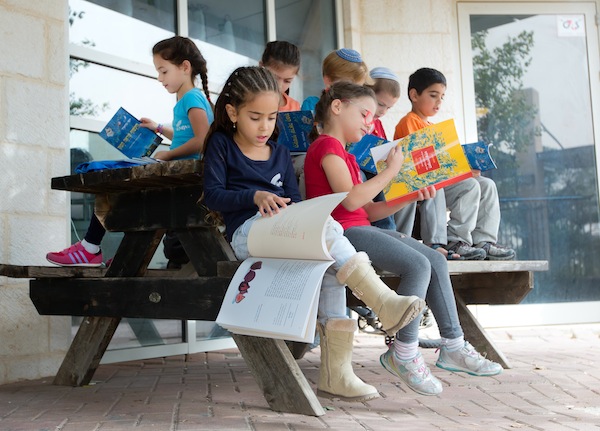
Sifriya Pijama has created approximately 100 books in Hebrew and Arabic. (photo by David Salem)

Keren Grinspoon Israel promotes literacy through the gift of books to young children in Israel. Last fall, KGI was chosen by the U.S. Library of Congress as a Literacy Awards Program Best Practice Honoree, “in recognition of the organization’s long-standing achievement in promoting literacy and the development of innovative methods and effective practices in the field.” This past December, KGI’s founding director, Galina Vromen, retired, and the organization welcomed Andrea Arbel to its helm.

photo - Keren Grinspoon Israel’s new executive director, Andrea Arbel
Keren Grinspoon Israel’s new executive director, Andrea Arbel. (photo by David Salem)

The Harold Grinspoon Foundation started PJ Library in 2005 in the United States. According to its website, the program now sends “free books to more than 230,000 subscribers throughout the United States and Canada” and “is an expanding global community linked by shared stories and values that spans across five continents and more than 670,000 subscribers.”

The program reached Israel in 2008, when the foundation’s director of special projects, Vromen, moved back to Israel. She said Harold Grinspoon jumped at the opportunity to extend the program. “He basically said, ‘OK … if you’re going back to Israel, see if you can start PJ Library there,’” Vromen told the Independent. “We were giving away about a million and a half dollars’ worth of grants each year there. He said, ‘I don’t think I need a full-time person to watch over those grants in Israel … so I can assure you full-time employment for six months.’” The job lasted much longer than that, of course.

According to Vromen, the PJ Library book delivery system needed to be different in Israel, as mailboxes there are too small for books. But, on the plus side, unlike in North America, where Jewish populations are spread out, in Israel, you can reach practically every Jewish kid through the public school system.

In 2009, a pilot program was launched with Israel’s Ministry of Education, starting with 3,500 children in the Gilboa region.

“People knew me [in that area] and I came to them and said that we wanted to do a book program,” explained Vromen. “They asked, ‘What books?’ And we answered that we didn’t know yet. So, they basically said, ‘Well, if Grinspoon says he’s going to do it, he’s going to do it.’ And they gave me a lot of support.”

After the first year, the numbers increased to 40,000 children, with funding being split between the foundation and the ministry. The program – called Sifriya Pijama – continued to expand and, eventually, in 2014, the foundation started a program in Arabic.

“Harold Grinspoon, when he started PJ Library, he was inspired by Dolly Parton – a program called Imagination Library, which was really one that served inner-city families, gifting books,” said Vromen.

In Israel, Sifriya Pijama gives kids a shared experience, as they start learning to read.

“Whether it’s a religious or secular school, they get the same books, with the same parent suggestions, for teachers to implement the program within the classroom and, so, it has become quite a bridge-builder,” said Vromen. “I think that children coming from religious homes and those from secular or non-religious homes in Israel don’t normally read the same books or authors. It’s not like in America, where everyone grows up reading Dr. Seuss.

“So, in that way, we’ve managed to make it so that kids now, across the board, are really experiencing the same kind of books. And, with the Arabic program, one could say … What’s a Jewish foundation group dedicated to Jewish education doing running a book program with the Ministry of Education in Arabic? But, the truth of the matter is that, for Israel’s Arab minority, language is an issue.”

Spoken and written Arabic differ. Formal Arabic, which is found in books, unifies Arabs around the world, and the books for kids in formal Arabic begin to build language skills, said Vromen. Just like Sifriya Pijama, Maktabat al-Fanoos is a program about identity, she said.

Many PJ Library books in North America focus on Jewish holidays and Jewish values. The books in Israel focus less on holidays and more on values, like hospitality, taking care of the sick, and honouring your parents.

“We have a book about a bear that is sick and someone takes care of him, and then they all get sick and he takes care of them,” said Vromen. “That’s a perfectly good story for the programs. Another good example is a story we have about a mother koala bear who is very, very busy, but the little koala bear wants to play with her all the time … and the little koala bear learns to do things by himself, eventually deciding to make mud pies, and they come together at the end. It’s a cute little story and a way of discussing an important issue that, when you’re 4 years old is a big concept … giving mom a little bit of mom time and you needing to play by yourself for now … explaining values to a child in a child’s world.

“What’s really important is choosing books that open up a conversation,” said Vromen. “This is a book you can have a conversation about between parents and children. Basically, we’re trying to create opportunities for parents and children.”

Since the program in Israel is school-based, however, the education process starts with the teacher introducing the book to their class, reading it aloud a couple of times. Often, there is an activity included. Then, eventually, the kids take the book home.

“Each child takes home a copy and they keep it,” said Vromen. “There are eight books per year, per child, for three years in preschool. There are four books in first grade and in second grade. And so, by the time the child goes into third grade, they already will have received 32 books from us over the years.”

While most schools are either Jewish or Arab, a small minority are mixed. In mixed schools, the program starts by delivering four Hebrew books in the first half of the year, then four Arabic books in the second half of the year.

So far, the program has created approximately 100 books in Hebrew and Arabic, with nearly 30 of them being translated into English and other languages.

COVID-19 posed a challenge in Israel when schools were closed, but the younger kids were the first to be sent back to school, so the program has more or less caught up on the missed books and is now running as normal.

“For the Arab program, about 90% of the books they receive are the only children’s books they have in their home. In Hebrew-speaking families, it’s about 47%,” said Vromen. “We’re the largest book-giving program in Arabic in the world.”

The program reaches about “70% of Hebrew-speaking children,” she added. “So, we’re talking about 80% of children in public schools in Israel – that’s quite extraordinary.”

Late last year, Vromen retired and, on Dec. 1, Andrea Arbel stepped in to lead KGI, after having worked for 18 years at the Jewish Agency.

“I relate to PJ Library on several spheres – as a published author who believes in the positive power of the written word on children; as someone who cares about strengthening Jewish culture in Israel and overseas Jewish communities; and as a mother of three who understands the critical importance of nurturing young minds and how much these efforts put children on a successful trajectory,” said Arbel.

Together with KGI’s leading partners and other supporters, Arbel is hoping to expand Sifriya Pijama and Maktabat al-Fanoos in both scope and depth, and to widen their sphere of influence on the broader community in new ways. For more information, visit hgf.org.

Rebeca Kuropatwa is a Winnipeg freelance writer.


Getting rid of landfill garbage

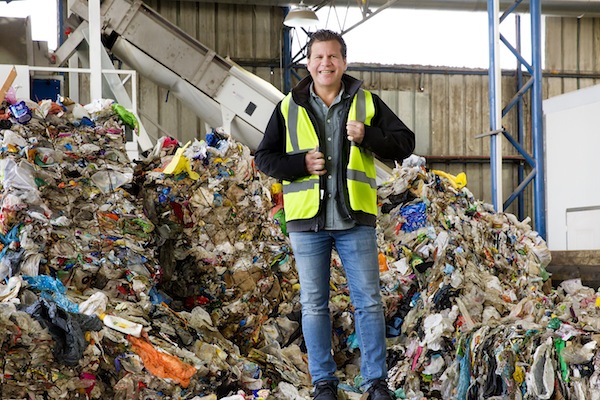
UBQ chief executive officer Tato Bigio in the factory at Kibbutz Tse’elim, in the Negev. (photo from UBQ)

Garbage is piling up everywhere – in landfills and elsewhere on the ground, in oceans and other bodies of water, and even in outer space. And there is growing awareness that our attempts at reducing garbage through recycling has not worked as first imagined – only a small percentage of what we put in our recycling bins ends up being recycled. However, a new Israeli company offers some hope for improvement.

Based in Kibbutz Tse’elim in the Negev, UBQ is producing plastic pellets out of household garbage. The name UBQ is not an acronym, but an abbreviation of the word ubiquitous, conveying that the problem of garbage is everywhere and ever-present. The company launched in 2018, after six years of research. Its chief executive officer, Jack “Tato” Bigio, recently spoke with the Jewish Independent via Zoom from his office in Tel Aviv.

Originally from Peru, Bigio came to Israel in 1984, when he was 18, to attend the Hebrew University of Jerusalem. In the following years, he went from corporation to corporation, developing his business and management skills, until, in 2012, he joined UBQ.

A concept was proposed: to take household waste, such as paper, cardboard, plastics, diapers, food scraps, etc., and turn it into a thermoplastic composite material. This, Bigio explained, “means turning all this waste into a new plastic that can replace conventional plastic materials made out of oil, to make end products.”

Thermoplasticity is a characteristic of a material that is affected by heat – that is liquid when hot and solid when cool, such as sugar or wax.

“UBQ is a plastic that has mechanical properties … very similar to common plastics made out of oil,” said Bigio.

The UBQ process is able to take any garbage stream and, instead of it going to landfill, converting it – upcycling it – into UBQ plastic, regardless of the exact mix of garbage collected.

“The waste balance will be different in different places, depending on the way they handle the source [garbage],” said Bigio. “If the proportions are a little different, the reaction process of UBQ knows how to handle these differences.

“One of the incredible things we’ve developed is kind of a reactor. Once we know what is in the source of our waste, we can manage a process where different percentages are balanced out in the end material.”

While the exact process, which produces no waste itself, remains a protected secret, Bigio said, “There is enough water in the waste, so we don’t need water. And we will convert the waste, 100% of it, into UBQ material. We don’t use any additives or any chemicals, no accelerates or enzymes. It’s just a very incredible system that involves physical and chemical reactions with temperature … sheer forces, conditions like oxygen, certain gases…. It’s a very green and low-temperature conversion, which makes it really hard to believe.”

All of UBQ’s factory and office trash is recycled in the making of the plastic.

The location of the initial UBQ factory was selected for a number of reasons.

“We chose that kibbutz, which is in the south of Israel, because we wanted to develop this amazing technology in a perfect place to be able to enjoy the practices of being revolutionary – not only in the material and science, but also in the engagement of different communities,” said Bigio. “Today, we have Bedouins, Russians and Israelis working together at UBQ.”

UBQ plans to open more plants around the world, beginning in Europe. And, soon, consumers around the world will have more opportunities to choose between products made from conventional plastic and those made from UBQ plastic.

“Waste is an unlimited source of material,” said Bigio. “So, if you buy a product made with UBQ, you will not only be enjoying the product you buy – if it’s a box, or chair, or table – but, by buying it, you will be making good with the environment. You’ll be saving waste, you’ll be saving carbon emissions, and it doesn’t cost a penny more than regular plastics…. We’ve come out with a technology that makes our material competitive to regular plastics.

“One of the reasons for it is that we use waste, and waste is a negative cost – they pay us to take waste. The other benefit of UBQ is that it works in temperatures that are very low compared to regular plastics. We work at 200°C; regular plastic made out of oil is between 800 to 1200°C. Also, we don’t use any water, because there is enough water in the waste.”

Though it might take a few years before Canadians have the option of buying things made with UBQ plastic created from our own garbage, products made out of UBQ plastic produced in the Israeli plant are already finding their way into local stores. UBQ products can be recycled just like other plastics.

UBQ opened a second and much bigger plant in the Netherlands, and the list of countries interested in having plants includes Japan, Australia, Singapore, Thailand, Argentina and Chile.

“It will take some time until we reach all these markets, but we expect to be, in the next 10 years, phenomenally dominating the plastic market,” said Bigio.

Right now, landfill waste is something Bigio said “pollutes oceans, rivers, natural environments, and is killing animal life … at the end of the day, it creates a lot of harm to human beings. If you really care about the future or [coming] generations, you better start working on helping make a difference.”

Bigio encouraged others to think innovatively to find new ways of reusing existing materials. “It’s just a matter of wanting to do it,” he said. “Governments, multinational companies … individuals can choose to do the right thing.”

For more information, visit ubqmaterials.com.

Rebeca Kuropatwa is a Winnipeg freelance writer.

Olive trees have long history

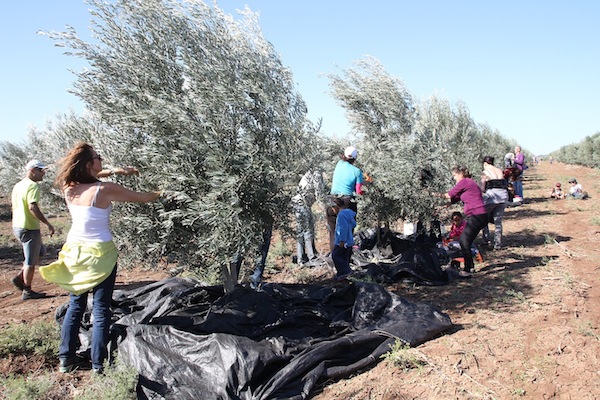
Volunteers help pick olives on a windy day in the fair trade grove of Emek Yizrael. (photo from Yoram Ron)

For thousands of years, olive trees have grown in Israel. Neolithic pottery containing olive pits and remnants of olives have been discovered in Israel’s Mount Carmel region, proving that early people produced olive oil by pulverizing the ripe olives in small pots. Some ancient trees reportedly still exist – in the Palestinian village of al-Walaja, residents claim they have the world’s oldest olive tree, supposedly 5,000 years old. More realistic is Beit Jala’s claim to an 800-year-old olive tree.

Olives for making oil are picked around December or January, so it is probably no coincidence that Chanukah comes so close to the picking season. As you know, Chanukah’s miracle revolves around the story that a very limited amount of olive oil burned in the Temple menorah for eight nights.

While the olive branch is a symbol of peace, the olive harvest in both Israel and the Palestinian territories is a challenging time. For Palestinian olive growers, extremist settlers and Israeli government policy have turned their harvest into an uncomfortable, if not a physically and economically dangerous event. Documented cases show some settlers assaulting Palestinian farmers – threatening them, driving them off their own land, physically attacking them or throwing stones at them. Sometimes, settlers vandalize Palestinian vehicles and damage farming equipment. In other cases, settlers jump-start the harvest, stealing the fruit from hundreds of trees. In the saddest of cases, settlers vandalized hundreds upon hundreds of Palestinian olive trees, in what appears to be a gross violation of Deuteronomy’s 20:19 bal tashchit precept. In this law, we may not uproot or cut down a fruit tree if we do not have an acceptable reason to do so. In the early part of last year’s harvest, the Office for Coordination of Humanitarian Affairs reported that 25 Palestinians were injured, more than 1,000 olive trees were burnt or otherwise damaged and large amounts of produce were stolen.

Since the construction of the separation barrier, some Palestinian olive growers have ended up with their groves located on the other side of the barrier and farmers must obtain special permits and go through special gates to get to their trees. The B’Tselem Organization has documented situations in which Israeli soldiers have blocked the access gates or held farmers up, and there have been reports that soldiers have used anti-riot material on the growers.

In a few cases, the separation between olive groves and homes means that growers have to travel some 25 kilometres round trip. Moreover, the growers are given fixed times to get to their trees and, sometimes, the periods available are not long enough to finish all the picking. Related, Palestinians are sometimes put into a situation in which they have to pick their fruit while the olives are still strongly attached to the branches. Olive picking is largely a manual procedure, so, to dislodge the unripened olives, growers either hit the trees with a rod or shake the trees very hard. This can result in damage to both the trees and the olives.

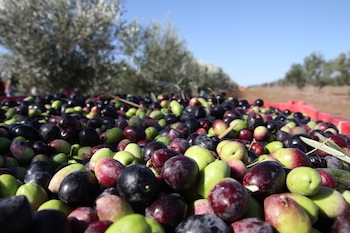
photo - Two men loading freshly picked olives in the organic grove of the Galilee’s Kfar Deir Hanna, November 2020
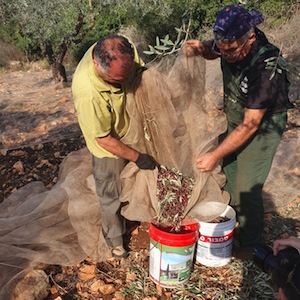
Two men loading freshly picked olives in the organic grove of the Galilee’s Kfar Deir Hanna, November 2020. (photo by Itiel Zion)

The current pandemic has caused financial havoc all over the world, including in Israel. This harvest season, Jewish Israeli olive growers have had tons of olives stolen. In the Emek Yizrael area, the Border Police found about 10 tons of olives in a nearby sheep pen. The olives had already been bagged and the gathering containers were standing to the side. The alleged thieves live in Zarzir, a village some 10 kilometres from Nazareth. Shomer Hachadash (the New Guard) tries to prevent these incidents using dogs and heat-sensing drones for nighttime surveillance. Some very bold olive thieves have even been spotted in daylight hours.

Despite this gloomy picture, however, there are promising things happening in Israel’s olive industry. Kfar Kanna’s Sindyanna is an olive oil producer. The Galilee operation is a certified fair trade establishment. In addition, it is a nonprofit organization with strong social and political commitments. Their olive oil bottles proudly say that the oil is produced by Jewish and Arab women in Israel.

Sindyanna aims to improve the working conditions and livelihoods of local Arab women, a clearly marginalized group. For example, Sindyanna provides employment training for Arab women. On the political level, Sindyanna is committed to inter-religious understanding by contracting Muslim, Jewish and Christian women. Moreover, the growers who sell their olives to Sindyanna, like the population of the Galilee itself, are a mix of ethnic groups.

Hadas Lahav, Sindyanna’s chief executive officer, said the company strongly affirms sustainable farming. Over the years, it has built strong connections with local farmers, buying olive oil directly from about 100 individual farmers and large family groups. Some of the farmers are organized into large family companies, like Al-Juzur’s seven families of the Younis clan. In Deir Hanna, the 2,500 organic olive trees belong to the Hussein family. In the Birya Forest, there are 10,000 organic olive trees maintained by Hussein Hib.

In the Jezreel Valley, there is a non-organic grove that belongs to Sindyanna in cooperation with the landowners, the Abu Hatum family from Yafi’a. In Iksal, the non-organic groves belong to the Dawawsha family. In Arabeh, the non-organic olive groves belong to the Khatib family and, at Moshav HaYogev, they belong to the Ashush family.

photo - Close-up of freshly picked olives in Sindyanna’s fair trade grove in Emek Yizrael
Close-up of freshly picked olives in Sindyanna’s fair trade grove in Emek Yizrael. (photo from Yoram Ron)

As Lahav pointed out, with olives, there are good years and less good years. The 2020 harvest was significantly smaller than the 2019 harvest. In a way, it was fortuitous that 2020 produced less fruit, as, with COVID-19, few permits were given to seasonal pickers entering Israel from the West Bank.

The olives picked for Sindyanna’s products are Coratina (this olive tree is highly adaptable and produces abundantly in hot dry climates, including rocky soils), Barnea (this olive was bred in Israel for oil production, but is also used for green or black table olives) and Souri (olives that are native to Israel and have been the major variety cultivated traditionally under rain-fed conditions in northern Israel). On average, in irrigated groves, a tree produces five kilograms of olive oil and, in a non-irrigated grove, a tree produces three kilograms of olive oil. The olive oil is kosher.

Here are some factoids about Sindyanna. Many of us are familiar with Dr. Bronner’s soaps, but did you know that Sindyanna of the Galilee’s organic olive oil is an essential ingredient in Dr. Bronner’s Magic Pure-Castile Soaps? KKL-JNF is also involved with Sindyanna of the Galilee – in KKL-JNF’s Birya Forest, the organic olive grove was once part of the now-defunct Qabba’a village. Not too long ago, another organic grove in Wadi Ara (planted on a former Israeli army firing range) was threatened by the construction of high-tension wires; following the protests of local farmers and the village council, the course of the power line was diverted.

Sindyanna of the Galilee sells its olive oil on Amazon and, this year, it will start selling its olive oil on select Canadian websites and in certain food stores.

Deborah Rubin Fields is an Israel-based features writer. She is also the author of Take a Peek Inside: A Child’s Guide to Radiology Exams, published in English, Hebrew and Arabic.

Cookin’ old school meatloaf

As if the pandemic weren’t enough, I’m supposed to think of something tantalizing and healthy to cook every night? Right. Roger that. My motto is: go with the tried and true. Or, given the times we’re in: go with the tired and true. Translation: something my mom used to make in the 1960s and ’70s. Something delicious but notoriously unhealthy.

Let’s face it, back then, the general public didn’t know bupkas about heart-healthy diets, Keto or low cholesterol. Not even doctors’ families. Nobody measured their BMI (body mass index) at the gym, because no one went to the gym. No one had their goal weight etched in their brain. It was a kinder, gentler time. Albeit with lots more spontaneous and fatal heart attacks and strokes. But still.

Back to the task at hand. It was a dark and stormy afternoon. I was tired. Really tired. Of cooking. But we have to eat. So, I did what any self-respecting accidental balabusta would do: I pulled out my mother’s old National Council of Jewish Women Cookbook. It’s a miracle that it isn’t falling apart after all these decades doing yeoman service. As I was searching for something simple and doable within 30 minutes, I happened upon a dog-eared page. One my mother had probably marked for good reason. Which is ironic, since the standing joke in my family was this – as soon as my mom cooked anything that my dad loved, she never made it again. We’ve speculated on the rationale for years. Was it intentional? Happenstance? Payback for something? Maybe it had to do with the electric can opener my dad gave mom for her birthday one year; or was it their anniversary?

The dog-eared recipe, thankfully, was – drum roll, please – Meatloaf. Yes, Virginia, you heard correctly, Meatloaf. I capitalize it because, well, it deserves the recognition. There is no problem in this world that can’t be solved by a good meatloaf. (Alright, maybe athlete’s foot and world wars, but, otherwise….)

In sync with the majority of the recipes in that cookbook, it called for an envelope of onion soup mix, undoubtedly a staple in those days. Chip dip – sour cream and onion soup mix. Spinach delight – onion soup mix. Apricot chicken – onion soup mix. Being a culinary rebel (ha!), I decided to go rogue and omit the onion soup mix. I had to draw my own line in the sand. And I swapped Panko for breadcrumbs. This recipe makes a moist, dream-of-a-1960s dinner. Once again, you’re welcome. You may be excused from the table.

MEATLOAF

2 lbs ground beef (extra lean)
1 1/2 cup soft breadcrumbs (or Panko)
2 eggs
1/2 to 3/4 cup water
1/3 cup ketchup (or, as they called it in the ’60s, catsup)

Preheat the oven to 350°F. In a large bowl, combine all the ingredients and place the mix into a greased loaf pan. (I covered the top with more ketchup – I know, very radical). Bake for approximately one hour.

It doesn’t get much easier than this. Seriously. Both Harvey and I kept cutting little pieces off, to even out the end. We were insatiable! We easily ate half of this two-pound loaf in one sitting, and polished off the rest the next day in sandwiches. What can I say? We’re dyed-in-the-wool carnivores.

To switch it up a little, and marry old school to multicultural, I also made Greek lemon potatoes. While I could eat meat and potatoes every night of the week, I don’t. And don’t go getting all judgy on me, either – there was broccoli in attendance.

The Greek lemon potatoes were a new thing for me (the making part), and I only made the Greek kind because I had a bunch of fresh rosemary leftover from baking focaccia the day before. (It was delicious!) Plus, we had a truckload of lemons in the fridge getting overripe from neglect (scurvy in our future?). I have to say, the potatoes were simple and simply delicious. Again, Harvey declared them “guest-worthy.”

GREEK LEMON POTATOES
(from recipetineats.com)

2.5 lbs potatoes (about 4 large russets)
1 1/2 cups chicken broth
1/2 cup olive oil
1/3 cup fresh lemon juice
5 cloves garlic, minced (I used 4)
2 tsp salt (I used 1 tsp)
dash of pepper
1 tbsp dried oregano (I used 2 tbsp fresh rosemary instead)

Preheat oven to 400°F. Peel the potatoes and cut into semi-thick wedges. Place in a roasting pan with all the other ingredients; toss well. Roast covered with foil for 40 minutes. Remove foil and turn the potatoes. Roast for another 25 to 30 minutes until the liquid is mostly absorbed by the potatoes. If you like your potatoes a bit crispy, leave them in for another five minutes or so.

They end up super-moist, soft, lemony and fabulous. Oh yeah, and garlicky. Harvey said they were even better than the ones at Apollonia, our favourite Greek restaurant. It was hard to refrain from eating the whole darn batch, but we showed the teensiest bit of restraint. After all, we wanted some left over for the next day. They’re like potato candy, if you will. Except better.

Sometimes, the most obvious recipes are the best. I often consult that Council cookbook. Who better to advise on such Jewish delicacies as honey-glazed cocktail franks, deviled tongue canapes and fruited rice salad? I rest my case.

There’s no question that the NCJW of Canada does many admirable things to enhance the community through education, social action, furthering human welfare and more. Far be it from me to make it sound like all they did was produce a cookbook. But, thank you, NCJWC for having done so – the meatloaf alone is worth the price of admission. And, of course, kol hakavod for all the great work you do.

Shelley Civkin, aka the Accidental Balabusta, is a happily retired librarian and communications officer. For 17 years, she wrote a weekly book review column for the Richmond Review. She’s currently a freelance writer and volunteer.

Fruits for the holiday

The holiday of Chamisha Asar b’Shevat or Tu b’Shevat is not mentioned in the Torah but makes its first appearance in the Talmud, where it is called Rosh Hashanah l’Ilan (New Year of the Tree).

Jewish literature of the sixth to 11th centuries identifies Tu b’Shevat as the day on which the fate of the trees and fruit is decided. The holiday gets its name from when it occurs. “Tu” is an acronym for the Hebrew letter tet, which in the Hebrew system of counting is nine, and the letter vav, which is six, thus adding up to 15, the day on which the holiday falls in the month of Shevat.

The date was chosen when the rabbinic schools of Hillel and Shammai (from the time of the Second Temple) argued about the dates. Hillel said it fell on the 15th of Shevat; Shammai said it began on the first. Hillel’s opinion prevailed because it was thought that, by the later date, the winter rains in Israel were almost over.

Tu b’Shevat links Jews to the land of Eretz Yisrael. In the time of the Second Temple, on the 15th of Shevat, Jewish farmers would estimate their obligatory tithes for tax collectors, as well as other contributions that Jewish law required. In effect, Tu b’Shevat was the beginning of the new fiscal year.

Part of the celebration is a seder with certain foods.

In her book The Jewish Holiday Cookbook, Gloria Kaufer Greene mentions that the drinking of four cups of wine at the seder symbolizes the changing of seasons. She suggests that the first cup is chilled, dry, white wine, to symbolize winter. The second cup of wine is pale, perhaps a rosé, and signifies spring and the early thaw. The third cup of wine is deeply coloured, like a dark rose, and represents the late spring and the blossoming trees. The fourth cup of wine is rich and red and stands for the fertility of summer.

In between drinking, one eats fruit in order of “ascending spirituality.” After the first cup of wine, one eats fruit with inedible coverings, like almonds, avocado, banana or melon, to represent the body covering the soul. After the second cup, one eats fruit with pits, such as plum, prune, date, apricot, olive or carob, to symbolize the heart being protected. After the third cup of wine, one eats fruit that can be eaten in its entirety, such as berry, apple, pear or fig, because they are closest to the pure spiritual creation.

In Encyclopedia of Jewish Food, the late Rabbi Gil Marks lists different ethnic dishes for the holiday, including borleves, Hungarian wine soup; salata latsheen, Moroccan orange salad; dimlama, Bulgarian vegetable and fruit stew; savo, Bukharian baked rice and fruit; gersht un shveml, Ashkenazi barley with mushrooms, fruit strudels and fruit kugels; and schnitzelkloese, German fried dumplings with fruit. Food customs associated with Tu b’Shevat are fruits and nuts connected to Eretz Yisrael, such as the seven species mentioned in Deuteronomy 8:7-8 – barley, wheat, figs, dates, grapes, olives and pomegranates.

Here are a couple of my fruit recipes. The first is one that a friend gave me about 40 years ago.

CREAMY FRUIT SALAD
6-8 servings

2-3 cut up apples
1-2 peeled, cut-up oranges
2-3 cut-up bananas
1/4 cup coconut
1/4 cup chopped nuts
3/8 cup sour cream or 3/4 cup lemon yogurt
1 1/2 tbsp sugar or whipped cream
1/8 cup orange juice
3/8 cup vanilla yogurt
raisins (optional)

Combine apples, orange and bananas in a bowl. Add coconut and nuts. Combine sour cream or lemon yogurt, sugar or whipped cream, orange juice and vanilla yogurt. Pour over fruit and refrigerate.

I have altered this recipe at times and use pareve whipping cream to make it pareve, leaving out the sour cream/yogurt.

HOT SPICED FRUIT
4 servings

6 peaches, pears or apricots, halved
1/2 cup red wine
2 tbsp sugar
dash cloves
1/8 tsp cinnamon
dash cardamom
3/4 tsp grated orange peel

Combine wine, sugar, cloves, cinnamon, cardamom and orange peel in a saucepan. Add fruit and cook 15-20 minutes. Drain and reserve liquid. Chill fruit. Serve with vanilla ice cream. Spoon sauce on top.

Sybil Kaplan is a journalist, lecturer, book reviewer and food writer in Jerusalem. She created and leads the weekly English-language Shuk Walks in Machane Yehuda, she has compiled and edited nine kosher cookbooks, and is the author of Witness to History: Ten Years as a Woman Journalist in Israel.

קנדה חסמה רכישה סינית של מכרה זהב בארקטיקה

(photo: TMAC Resources via nunavutnews.com)

ממשלת קנדה חסמה את החברה המולאמת הסינית שאנדונג מרכישת מכרה זהב במדבר הארקטי בקנדה. זאת במסגרת החלטתו של ראש הממשלה, ג’סטין טרודו, לעמוד איתן אל מול ההשפעה הגוברת של סין על המדינה ובייחוד על האזורים הצפוניים שלה.

מדובר בהחלטה השנייה של טרודו שהטיל וטו על עסקה ביוזמת סין מאז שנכנס לתפקידו לפני כשלוש שנים. בכך הוא נסוג באופן חלקי ממטרת מדיניות שהציב בתחילת דרכו לטפח קשרים כלכליים אדוקים יותר עם סין.

הווטו עשוי לפגוע ביחסים בין המדינות, שהם בלאו הכי מתוחים לאחר שקנדה עצרה את סמנכ”ל הכספים של וואווי, מנג וואנגז’ו, שהיא גם בתו של המייסד. וואנגז’ו נעצרה בוונקובר לפני שנתיים בחשד לפיהם חברת וואווי, הפרה את הסנקציות הבינלאומיות האמריקניות נגד איראן. לאחר מכן סין עצרה שני קנדים בהאשמות שהפרו את חוקי ביטחון המדינה, וטרודו תיאר את המעצרים כנקמה על מעצרה של המנכ”לית מווואווי.

שאנדונג (מהחברות גדולות בעולם לכריית זהב) רצתה לרכוש את חברת טמאק, אשר בבעלותה מכרה שנמצא כמעט מאתיים ק”מ ק”מ צפונית למעגל הארקטי, תמורת כמאה וחמישים מיליון דולר.

בכירים לשעבר בקהילייה הצבאית והביטחונית הקנדית יצאו נגד העסקה. הם טענו שהיא תעניק לסין גישה גדולה מדי לאזור הארקטי, אזור בעל רגישות בגלל חשיבותו הגדולה כנתיב מסחר ומקור למינרלים בעלי ערך.

על פי החוק בקנדה, הממשלה צריכה לבדוק כל רכישה בידי ישות חיצונית השייכת למדינה כשלהי, ויש ל הזכות לבלום עסקאות כאלה על בסיס שיקולי ביטחון לאומי.

בשגרירות סין באוטווה הגיבו כי על קנדה לספק סביבת שוק הוגנת וללא אפליה ליוזמות מכל המדינות, כולל סין. כל פוליטיזציה או התערבות בתירוץ של ביטחון לאומי היא שגויה, אמרה עוד בשגרירות.

בפעם הראשונה שממשלתו של טרודו הטילה וטו על עסקה עם סין הייתה לפני כשנתיים. אז קנדה בלמה את הרכישה של קבוצת אקון ע”י חברת סי.סי.סי.סי מתוך שיקולים של ביטחון לאומי.

ההחלטה לגבי שאנדונג משקפת החשיבה מחדש של ממשל טרודו בנוגע למדיניות מול בייג’ינג. דיפלומטים בדימוס וחוקרי מדיניות חוץ מתלוננים, שקנדה התמקדה זמן רב מדי בהגנה על אינטרסים מסחריים כמו יצוא מזון, כורים ושירותים פיננסיים, ולא הצליחה לראות שהתוקפנות של סין כמעצמה בעולם תחת שלטונו של הנשיא, שי ג’ינפינג, המגיעה הרבה מעבר לזה.

על כולנו להיות מעט יותר חכמים בהבנת הכלים שהממשלה הסינית מוכנה להשתמש בהם, שאינם לפי הנורמות אליהן אנו רגילים מול בעלות ברית החושבות כמונו, אמר טרודו.

שר החוץ של קנדה, פרנסואה־פיליפ שמפאן, הבטיח מדיניות חדשה לגבי סין אבל הזהיר מפני אימוץ גישה לוחמנית, כפי שהציעו כמה מיריביו הפוליטיים הניציים של טרודו. בואו לא ניגרר לפיתוי של רטוריקה קשוחה וחסרת אחריות אשר לא תייצר תוצאות של ממש, אמר.

אם תשים קנדה קץ לפרשת הסגרת וואנגז’ו זה עשוי לתת לה את כוח ההינף לדרוש מסין יותר. עורכי הדין שלה דיברו עם בכירים במשרד המשפטים האמריקאי בשבועות האחרונים, לגבי הסכם על פיו היא תודה בחלק מן ההאשמות נגדה. בתמורה התובעים יסכימו לדחות ואולי אחר כך לבטל את כתב האישום, אם היא תשתף פעולה.

עסקה בנושא וואנגז’ו עשויה לגרום לסין להחזיר לקנדה את שני העצורים הקנדיים, מזה כשנתיים. מייקל קובריג, דיפלומט קנדי שהיה בחופשה ומייקל ספאבור, איש עסקים קנדי. מעצר שניהם נחשב כאחד הגורמים להאצת השיחות בנושא של וואנגז’ו מול ארה”ב.