A long life working, helping others

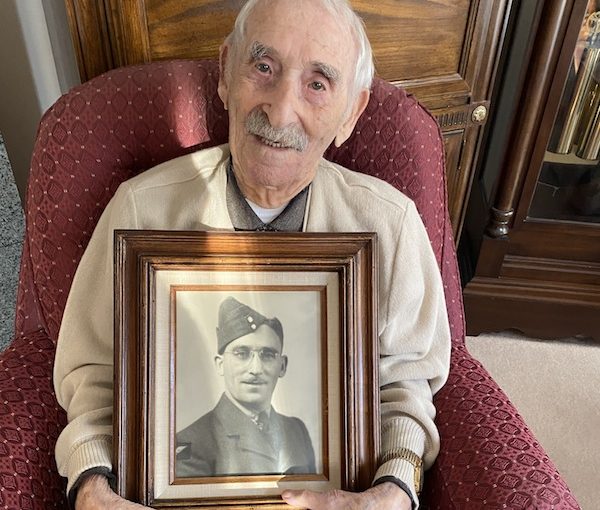
At 109, Richmond resident Reuben (Rube) Sinclair might be Canada’s oldest Second World War veteran. (photo from Reuben Sinclair)

A Richmond resident is almost certainly Canada’s oldest Second World War veteran. Reuben (Rube) Sinclair received a special recognition on Remembrance Day, though, because of confidentiality issues, Veterans Affairs Canada can’t confirm he’s the oldest service member. But, at the age of 109, basic statistics suggests that, if Sinclair isn’t the oldest, he’s got to be close.

The centenarian spoke with the Independent virtually via Zoom about his life and what advice he might have for aspiring super-seniors like himself.

Sinclair was born in 1911 on the family farm near Lipton, Sask. Lipton was one of many “colonies” created by Baron Maurice de Hirsch in Canada, Argentina and Palestine to resettle oppressed Jews from Europe. Sinclair’s father, Yitzok Sinclair (born Sandler), traveled from Ukraine, via Liverpool and arrived at Ellis Island Jan. 4, 1905, on the SS Ivernia. He made his way to Saskatchewan, where he was given land by de Hirsch’s Jewish Colonization Association. However, the land was poor and so the newcomer worked for the Canadian National Railway long enough to save up and buy a better plot and build a house. When he was settled, he sent for his wife, Fraida (born Dubrovinsky), and their two young sons.

Reunited in Lipton, the family grew to include not only Samuel and Sol, who were born in the old country, but the only sister, Clara, then Rube and the youngest, Joe.

The last survivor of his birth family, Sinclair has fond memories of the farm life. He and the other two youngest did chores while the older two headed to university. Samuel became a medical doctor and Sol was a professor of agriculture at the University of Manitoba.

“There was a whole colony of Jewish families,” Sinclair said. “My parents had one of the largest farms – 16 quarter-sections [more than 2,500 acres]. I remember we had 42 horses. We had milk cows. I had my jobs. My job was to go collect the eggs from the chicken house and, when I was 12, I was already driving our car.… Always things to do on a farm.”

Yitzok donated a few acres to the community and helped construct a school, which doubled as a synagogue. On Shabbats and Jewish holidays in winter, the boys would sleep in the hayloft so the local men could stay in the house and not walk home in the freezing Saskatchewan weather.

“My father was a leader in the community,” he said.
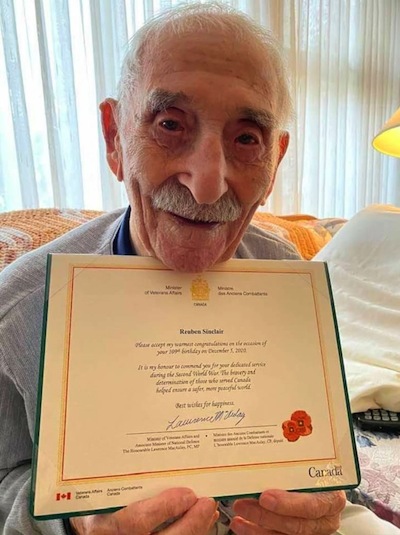
photo - Reuben Sinclair holds a birthday message from Veterans Affairs Canada
Reuben Sinclair holds a birthday message from Veterans Affairs Canada. (photo from Reuben Sinclair)

Sinclair joined the Royal Canadian Air Force during the Second World War and was stationed in North Battleford, Sask. In the days before radar was commonplace, he taught Allied pilots how to take off and land in the dark using a “standard beam approach,” which involved a navigation receiver that allowed the pilot to line the aircraft up with the runway when preparing to land.

“In the air force barracks, I was on the top bunk,” he said. “I always got the top bunk because the younger generation would come home drunk and I wouldn’t sleep in the bottom bunk.”

One day, he encountered a barrack-mate in tears. Sinclair recalls the conversation: “They’re sending me to Vancouver, he said, and my family is all here around Brandon, Manitoba. So I said, that’s no problem. When they want a person to go to Vancouver, they don’t care who the person is. Vancouver wants one person. So, I said, don’t cry. We’ll go see the commanding officer. I told him that my wife has got family in Vancouver and I’d be glad to go instead. He said they don’t care, all they want is one person. So, I was the person who went to Vancouver at that time and I’m still here,” he recalled with a laugh.

Joe, the youngest of the five siblings, had served in the army and after the war joined Rube in British Columbia. They started Sinclair Bros. Garage and Auto Wrecking, in Richmond, just across the two old Fraser Street bridges from Vancouver.

“My job was to go out and find old cars and we had a tow truck,” Sinclair said. “I’d bring them in and my younger brother would wreck them. We opened a wrecking company.” They also bought surplus army vehicles to fix up and sell.

The business soon became a sort of family compound. A small house adjacent went up for sale and the Sinclairs bought it, bringing parents Yitzok and Fraida to the coast. Then sister Clara and her husband Morris Slobasky bought a general store that was next door.

Because of his wartime experience, Sinclair developed migraine headaches and was told to go to a drier climate. He thought Arizona sounded good, but his wife, Ida, had siblings in the Los Angeles area and a brother-in-law offered him a job in a furniture store in Anaheim.

In 1964, Rube and Ida packed up the three kids – Nadine (now Lipetz), Karen and Len – and moved to Southern California.

“He put me in charge of the furniture store,” Sinclair said of his brother-in-law. “I knew nothing about furniture, but I learned pretty quick.”

Soon he was in business for himself again.

“Then my boss that I worked for in Anaheim, his wife wasn’t very well and she spent a lot of time in Palm Springs,” Sinclair recalled. “So, he said, instead of me going back and forth, I’ll move to Palm Springs and you can have the store, just pay me for the inventory.”

In 1994, Ida had a stroke and the couple moved back to British Columbia. She passed in 1996. Rube still lives in their Richmond condo.

Rube and Ida were active in their communities. In Los Angeles, they raised more than a million dollars for City of Hope, a cancer hospital and research facility. Both were active members of Schara Tzedeck Synagogue here, he especially in the Men’s Club, and he is proud of his lifetime honorary membership in the shul. In addition to their three adult children – Nadine is in Vancouver; Karen and Len in California – he has six grandchildren, 16 great-grandchildren and one great-great-grandchild.

Asked if he has any advice for others, Sinclair didn’t hesitate.

“That’s easy. I always say, if you have a problem, don’t worry; you’ll lose your hair. Fix it. If you have a problem, fix it. Don’t sit back and worry. Worry is not going to help.”

Any bad habits?

“I don’t think so,” he said after a thought. “I spent most of my life working and, in my spare time, working for people less fortunate. That was my enjoyment in my spare time.”

Two years ago, the City of Richmond named Sinclair an “honoured veteran.”

Recalled daughter Nadine: “He was part of the Remembrance Day service in Richmond and they made a big deal about it. They sent a limo and he sat with the mayor and the Silver Cross Mother. They gave him a wreath and then they walked him around. He was up on the dais with the mayor and the head of the RCMP as the soldiers all walked by. It was a very big deal for him.” Last Remembrance Day, he received a certificate from Veterans Affairs.

If, by some chance, Sinclair is not

Canada’s oldest veteran of the Second World War, he seems determined to attain that title.

“I’m not going anywhere,” he said. “I still have some unfinished business.”
Camps plan tentatively

Normally, this issue of the Independent would feature our third Camp Guide of the season, with several camps advertising their summer sessions, and several articles on various topics related to Jewish camp. But COVID-19 seriously affected last summer’s programming and it’s making this year’s planning difficult, to say the least. Camp Hatikvah and Camp Miriam – which are overnight camps – have been particularly impacted by the pandemic.

With record camper enrolment, 2020 was slated to be Camp Hatikvah’s best year ever. By the third week of March, however, it became apparent that the summer wasn’t going to go as planned. By the end of May, the Provincial Health Officer had announced that overnight camps would be prohibited from operating and Camp Hatikvah had to cancel its upcoming season.

“It was devastating,” said Liza Rozen-Delman, the camp’s director. “My heart immediately broke for the 700 participants and 80 young counselors who were signed up for our programming. After such a hard few months in lockdown, I knew everyone was hanging on to the hope that they would still get to go to camp. The fact that this was no longer a possibility was so hard for everyone. I just wanted to fix this for kids but was helpless to do so. It was a very difficult time.”

The cancellation also created a financial crisis, as there was no program revenue to cover fixed costs, such as insurance fees, site maintenance and administrative expenses. Camp Miriam faced financial issues as well, and the Jewish Federation of Greater Vancouver provided emergency funding to both camps last April.

“Our community made it clear that we would not face this challenge alone,” said Joanna Wasel, Camp Hatikvah board president. “They knew we were in trouble and they immediately felt the call to action.” By the first week of June, Hatikvah had raised enough money to cover all of their 2020 fixed operational expenses.

“This was one of the hardest years in the camp’s history and yet, in a strange way, it was also one of our most meaningful,” said Wasel. “The way the community stepped up for us is an incredible affirmation of the value of our work and the impact Camp Hatikvah has had on generations of people. It has touched us beyond words and we will be forever grateful.”

“Last spring, as the reality of the pandemic hit, it was as if the rug had been pulled out from under us,” said Leah Levi, registrar of Camp Miriam. “We were scrambling to figure out how to provide what we do each summer on Gabriola Island – the fun, magic, community, friendship and Jewish experiences that our campers have come to expect from us. It was very overwhelming and we were sort of lost, until our youth staff stepped up and started planning for what was possible: day camps in Vancouver, Victoria and Portland, and even online programming for those who couldn’t attend the day camps. We rented space with the JCC’s Camp Shalom at Vancouver Talmud Torah, and in Victoria at the JCC. Donors and the Vancouver Jewish Federation backed our plans with financial support and, as they say, the rest is history!”

The camp’s staff, who are all between the ages of 17 and 22, got “to spend the summer being mentors and learning valuable leadership skills,” said Levi. “Parents and kids were grateful that we gave them a break from each other and a fun, unplugged, Jewish, social experience during COVID. For over 200 campers, COVID-19 took a backseat for six-and-a-half hours a day, and they were able to enjoy a physically distanced ‘normal.’ Even though they weren’t on Gabriola Island, campers and staff alike felt that they were at Miriam. As one camper put it, ‘We learned that Camp Miriam is not a place, it’s a feeling and we can take it anywhere.’”

For this coming summer, Camp Miriam has opened registration for three two-week sessions on Gabriola.

“All registrations are considered ‘pre-registrations’ and everyone is on a waitlist,” said Levi. “We will only accept campers when we have permission from the B.C. health authority, as their decision made last spring to not allow overnight camp still stands…. If we do not get permission to open … we will offer similar programming as last summer.”

Hatikvah translates to “the hope” in English and, while COVID is still raging, Camp Hatikvah remains hopeful they will be able to operate this summer, too.

“We are full for the upcoming season,” Rozen-Delman said. “Kids need camp, perhaps now more than ever, and we are going to do whatever we can to get them back there this summer.”

Acknowledging that much of the situation is out of their hands, Rozen-Delman is planning for a variety of scenarios. “And, while it is hard to face so many unknowns,” she said, “we are determined to find creative solutions to whatever challenges lay ahead.”

A moving documentary

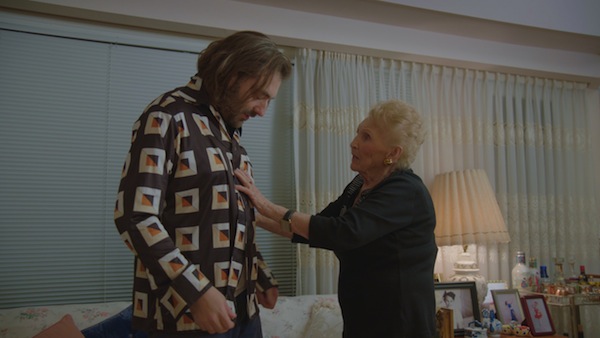
A scene from the documentary Martha, in which director Daniel Schubert is given a more appropriate shirt by his grandmother, Martha Katz. (Courtesy NFB)

Two very different scenes in the National Film Board of Canada’s short documentary film Martha – which will be released on International Holocaust Remembrance Day, Jan. 27 – combine to highlight the joy and pain that is life. Directed and co-written by Daniel Schubert, a grandson of the film’s subject, Martha Katz, there is a funny and relatable interaction where his grandmother questions his choice of shirt for the filming and provides him with a more appropriate one. This lighthearted exchange contrasts with the heart-wrenching tour that Katz takes with her grandson through the Holocaust Museum LA.

Born in Berehove, Czechoslovakia, Katz is 14 years old when she’s taken to the ghetto, then to Auschwitz. Both of her parents and two of her brothers were murdered in the Holocaust; she, along with two other brothers and two sisters, survived the concentration camps. She speaks, with emotions near the surface, about some of her experiences. The documentary is a mix of seemingly spontaneous moments, while other parts are scripted reenactments or prepared questions being asked and answered.

“My original idea for the documentary,” Schubert told the Independent, “was to track Martha and her two sisters’ incredible journey together through the ghettos and, eventually, Auschwitz. After Auschwitz, they were even forced to work at a German bomb factory together in Allendorf, manufacturing the bombs. The fact that Martha and her two sisters managed to stay together and survive through all of the horrors of the concentration camps, to me, was a miracle. I thought that would make an amazing documentary.

“But, as we developed it at the NFB, we realized that a more traditional cinéma vérité documentary could be a viable way to tell her story, too. I did not know many of the facts beforehand, so many of the things she told me in the film came as a surprise. My grandmother and I have a warm and loving relationship and I thought, why not show that on screen as I find out all of these amazing things?

“The other thing about my grandmother,” added Schubert, “is she’s hilarious. She’s the classic Jewish grandmother and I wanted that to come across. I wanted this to also be a real picture of a grandmother and her grandson and how we naturally interact.

“We also decided that in between these cinéma vérité moments would be cinematic vignettes narrated by my grandmother herself. There were many more amazing things she went through, but, due to time constraints, I picked those stories.”

One of the stories is how, after the war, in Vienna, his grandmother met and married Bill Katz, who had been in a labour camp. The couple went to Winnipeg, with $200 they had saved up. They had two children – Jack and Sharon – and struggled financially. It was his grandmother who suggested they go into business for themselves. She went to night school, then saw an ad for a grocery store for sale – she bought it, learning on the job. There are some wonderful photos and video in this part of the film.

photo - Martha Katz saw an ad for a grocery store for sale – she bought it, learning on the job
Martha Katz saw an ad for a grocery store for sale – she bought it, learning on the job. (photo from NFB)

It was her goal in life for her two children to have whatever they wanted and she talks about her happiness at having had them. “We had to have a life again,” she says, stressing that this doesn’t mean she doesn’t think about the Holocaust all the time, because she does – “I hope it should never happen again. That’s all.”

“Bringing her to the museum was a bit of a tough decision, but she encouraged us to go,” said Schubert. “The intention was to see whether there was anything new that she and I could both learn about the atrocities committed. And, as it turned out in the film, there was; specifically, about the excruciating length of time the gas chamber took, in some cases, to exterminate those poor victims trapped inside, including my great-grandmother and her young son. Suffice to say, it took way longer than expected, and neither of us knew how long they may have had to suffer inside.”

It was for health reasons that Katz, who is now 90 years old, moved to Los Angeles.

“My grandmother suffered from chronic bronchitis since the war and, because of Winnipeg’s frigid winters, the doctors advised her to move somewhere warmer, or else her life could be at risk,” explained Schubert. “My grandfather’s brother lived in Los Angeles, so they helped them get settled there. They came to Winnipeg from Europe in 1948 and moved to Los Angeles in 1964.”

The 22-minute documentary is dedicated to the memory of Katz’s older sister, Rose Benovich. The statement at the film’s end notes: “Her courage in Auschwitz is the reason I am alive today.”

Demand almost double

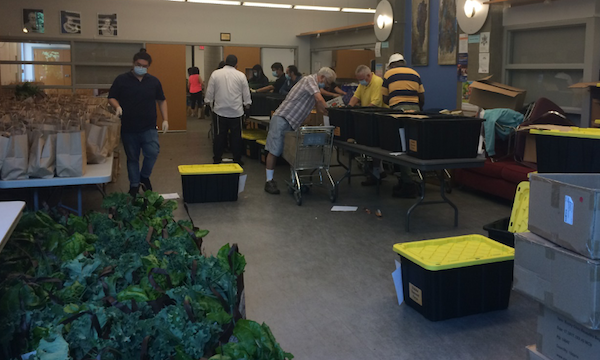
The Vancouver Jewish Food Bank is now distributing more than 10,000 kilograms of food every month. (photo from BI and JFS)

According to the Community Food Centres Canada report Beyond Hunger: The Hidden Impacts of Food Insecurity in Canada, “Even before COVID-19, nearly 4.5 million Canadians struggled to put good food on the table for themselves and their families. In the first two months of the pandemic, that number grew by 39%, affecting one in seven people.”

Demand on the Vancouver Jewish Food Bank has almost doubled since the start of COVID-19. The organization is now distributing more than 10,000 kilograms of food every month; supporting seniors, families and individuals. While some of us have been impacted by food scarcity during COVID-19, those most in need live in a state of constant worry about where their next meal will come from.

The 1996 World Food Summit defined food security as: “when all people, at all times, have physical and economic access to sufficient, safe and nutritious food to meet their dietary needs and food preferences for an active and healthy life.” To this end, Jewish Family Services and Congregation Beth Israel are hosting More Than a Bag of Food on Jan. 28, bringing organizations and people together for a Tu b’Shevat program on food security in our community and beyond.

Vancouver Talmud Torah and Richmond Jewish Day School students are raising awareness about the food bank and reaching out to recipients. King David High School is hosting a cooking demonstration with Hilit Nurick and Rabbi Stephen Berger at 4 p.m. on Jan. 28, which will feature local ingredients and discuss the need for healthy food for everyone. Hillel BC is running an online quiz, with prizes, and a deep dive into information around food security.

At 7:30 p.m. on the 28th, there will be a Zoom panel including Dr. Tammara Soma, assistant professor, School of Resource and Environmental Management, Simon Fraser University; Dr. Eleanor Boyle, educator and author; Krystine McInnes, director and chief executive officer of Grown Here Farms; Mara Shnay, chair of the JFS client advisory committee; and Cindy McMillan, director of programs and community partnerships at JFS. Lawyer Bernard Pinsky will moderate the discussion.

“This is an important conversation,” said McInnes. “The stakes are very high. The pandemic has thrown into sharp relief just how vulnerable we are, given the way our society is organized. ”

Food systems produce and deliver based on historic demand. With the advent of COVID-19, the system has been stretched, leading to empty grocery shelves and desperate food banks. International supply chains are no longer reliable, with Russia and Vietnam limiting the sale of wheat and rice outside of their countries. Canadian food production plants have been hard hit by pandemic outbreaks and the lack of international workers. This is particularly problematic when food production is concentrated at large facilities; for example, two plants in Alberta provide 70% of Canadian beef.

“We are going to talk about initiatives from local to global,” said Boyle, “and panelists will let audience members know about some of the creative approaches to food security that are being taken at the Jewish Food Bank, as well as what’s going on around the world to try to shift agriculture and diets toward being better for climate and public health.”

To register for the cooking event and/or the food security conference, visit bethisraelvan.ca/event/tubishvat5781.

Graveyards and Gardens premières

(photo from Music on Main)

On Jan. 28 and 29, Music on Main hosts the world première livestream of Graveyards and Gardens, co-created and co-produced by Caroline Shaw (composer and recorded sound) and Vanessa Goodman (choreographer). A PuSh Festival Partner Presentation, the performance takes place among 400 feet of orange sound cables and an arrangement of plants – nature and technology being another synthesis the artists explore. Things begin with a long passage featuring an array of sounds – some come from tape decks, some from a record player, some from old Edison wax recordings – and this production is, among other things, a powerful display of the creative process.

New York-based vocalist, violinist, composer and producer Shaw, the 2013 Pulitzer Prize for Music winner, was Music on Main’s composer-in-residence from 2015-2016. Vancouver choreographer Goodman is the artistic director of Action at a Distance Dance Society.

There are 4:30 p.m. and 7:30 p.m. offerings of Graveyards and Gardens. Tickets ($15) are on sale at showpass.com/graveyards-and-gardens.

More than meets eye

Catalina Beraducci plays Noemí Goldberg in the Topic film Noemí Gold. (photo from Topic)

For his first feature film, writer and director Dan Rubenstein has done well. Noemí Gold, which is currently streaming exclusively on Topic, is a quietly engaging story that touches upon serious issues, though never delves into them. While the story is somewhat scattered and doesn’t always make sense, the acting is strong and the glimpse into Argentine culture interesting.

The title role is played by Catalina Beraducci, who is perfect for the part. Noemí Goldberg, 27, has accidentally become pregnant from a tryst with an egotistical artist of questionable talent and character. She is an unassuming person, recently graduating with her master’s in architecture, though she doesn’t appear to have a job. When she seeks a doctor who can perform an abortion – which was an illegal procedure in Argentina until just last month – she has some trouble raising the money she’ll need to go to Uruguay to get one.

Noemí has a couple close friends – eccentric roommate Rosa and party-girl Sol – both of whom help in small but important ways. Also in Noemí’s court is her grandmother, though we find out later in the movie that their relationship has had its complications. Lastly, while all this is going on, Noemí’s cousin, David, comes to visit from Los Angeles, where his family moved when he was 7, for tragic reasons we eventually find out.

David and Noemí were once close, but, for most of the movie, their interactions are strained. David works for an energy drink company and his job is, literally, to post photos on Instagram of himself enjoying the drink in various places and while doing various activities. (He is the only one in the film who has a job, it seems.) Social media plays a prominent role in the narrative as a whole – and, hopefully, younger viewers will take it not only as a representation of themselves in film but as a critique of how much time they dedicate to promoting the fun they are ostensibly having versus actually having fun.

Women’s rights, religion (via a discussion with and seduction attempt of two young Mormon missionaries), what constitutes art (one amusing scene features an objectively poor dancer filming her own performance using a camera on a selfie stick, while being cheered and applauded by an adoring audience), the importance of forgiveness, the challenges of being a good friend, the imperfection but necessity of family, and many other topics run through Noemí Gold. There are no pronouncements and the laidback pace could fool one into thinking there is not much of substance in the film, but they’d be wrong.

Critical to take a stand against hate

Since time immemorial, no matter what calamity occurred in the world, if there was a problem plaguing humanity, Jews were used as the convenient scapegoat.

Earlier this year, as the coronavirus pandemic spread across Europe and then throughout North America, conspiracy theorists claimed that Israel and Jews around the world were secretly involved in spreading and even engineering the deadly disease. While these conspiracies are baseless and seem almost comical at first glance, thanks to the power and ubiquity of social media, even the most bizarre falsehoods can find fertile ground and poison the minds of millions of people almost instantaneously.

Unfortunately, the pandemic continues to rage across Canada and the world and, though the claim that Jews are behind COVID-19 remains utterly fictional, that hasn’t stopped a dangerous new crop of antisemites from spreading their toxic bigotry.

Not only is Canada not immune to the age-old virus of antisemitism, but British Columbia has also been infected. As was reported in the Georgia Straight, an anti-mask activist in Vancouver, Marco Pietro, who organized and participated in a number of rallies protesting coronavirus restrictions and policies, released a Holocaust denial video on social media. The two-minute-long video features Pietro saying that the Holocaust is a myth perpetrated by fake survivors to scam money out of the wider, unsuspecting public. He also claimed that Mein Kampf – Adolf Hitler’s antisemitic manifesto – didn’t contain any objectionable material, and that the coronavirus pandemic is a plot used by Jews in a quest for control. Pietro also said that concentration-camp survivors are liars and accused “a bunch of Zionist Jews” of “setting up” Hitler.

Meanwhile, on Nov. 15, a speaker at an anti-mask rally in Vancouver condemned “satanic, talmudic” people. The Canadian Anti-Hate Network (CAHN) reported that the No More Lockdowns group (which now goes by the name “Human Rights Movement”) produced an event in Vancouver organized by antisemitic conspiracy theorist Raoul Taylor van Haastert, who has decried the “Zionist media” and stated “our WWII history is a lie.” CAHN’s report cited Vancouver neo-Nazi Brian Ruhe, who, in an antisemitic post that went viral, shared his beliefs about “Rothschild-Zionist-communist control” that is being covered up, claiming that Jews control the media.

Let there be no doubt, there’s no evidence whatsoever that the Jewish people or the state of Israel are behind the coronavirus pandemic or any of these other odious libels. Conversely, the evidence supporting the Holocaust’s veracity is so overwhelming and indisputable that, to deny its occurrence, far from being a legitimate disagreement on historical facts, is rather merely an attempt to deny the Jewish people’s collective suffering at the hand of the Nazis to further an antisemitic agenda.

Most British Columbians would rightly brush off Pietro’s and Ruhe’s words as illogical rants of mad men, but, tragically, as bothersome and as offensive as their statements are, antisemitic acts are at or near all-time highs across Canada, including in British Columbia.

Earlier this year, B’nai Brith Canada’s annual audit of antisemitism logged more than 200 such incidents in British Columbia alone, ranging from harassment to vandalism. In one such incident, for example, Camp Miriam, on Gabriola Island, was vandalized with graffiti, including a swastika and other images. The image and symbol that represented the Nazi regime that murdered six million Jews in Europe less than 100 years ago is today being used to attack young Jewish summer campers. One can only imagine the long-lasting psychological damage inflicted on young people as a result of such an incident – and multiply that by more than 200 incidents last year alone.

Such antisemitic conspiracy theories, as espoused by Pietro, Ruhe and others must be forcefully repudiated and condemned by all. Thanks to social media, even the most bizarre lie can have a worldwide impact, and that’s why it’s so critical to take a public stand against antisemitic hate and propaganda. As history has taught, while antisemitic words are bad enough, the paramount concern is that they can often morph into violence. Enough is enough.

Mike Fegelman is the executive director of HonestReporting Canada (honestreporting.ca), a nonprofit organization working to ensure fair and accurate Canadian media coverage of Israel.

I owe a Dutch family my life

The following article was published in the Globe & Mail, as “A Dutch family hid me from the Nazis: I owe them my life,” in advance of Remembrance Day, Nov. 11, 2020. It is reprinted here with permission, in recognition of International Holocaust Remembrance Day, Jan. 27.

I can never pass Remembrance Day without reflection. This year, we marked the 75th anniversary of the liberation of the Netherlands. It meant freedom for Dutch men, women and children after a brutal five-year occupation by German military forces. More than 5,000 Canadian soldiers rest in Dutch soil and are mourned and remembered there annually. They were our liberators and will never be forgotten, for Canadians and Canada are seared into the collective memory of the population. I myself saw Canadian tanks chasing German half-tracks down the streets of The Hague. On May 4, 1945, I was looking out the window of my mother’s small apartment, where she had been hiding. A man across the street opened his door one day too early. He was shot by a retreating German soldier. I was dragged away from the window. I was not yet 5 years old.

Unlike most Dutch children who began their lives anew after the war, I was a Jewish child hidden with Albert and Violette Munnik and their daughter, Nora, from November 1942 to May 1945. I became Robbie Munnik and was returned to my parents, who had miraculously survived, the only survivors of their families of origin. My grandparents, aunts, uncles and numerous cousins had all been murdered. For Jews, the postwar world offered precious little solace or hope: it was a world of death and of mourning. Liberation did not feel particularly liberating. Within that depressing atmosphere, I made the transition from Robbie Munnik back to Robbie Krell.

For this Remembrance Day 2020, I want to honour the memory of my Christian Vader, my second father.

When my mother passed me on to Moeder (Mother), who agreed to take me for a few weeks while she secured a hiding place, Vader accepted me without hesitation. Did he know of the risk to his family, hiding a Jewish child? If not in 1942, certainly he did by 1943. But, unlike many in this situation, he did not dwell on possible consequences. He simply set about loving me.

Early in my hiding, they allowed Nora to take me out, but that was a mistake. A woman recognized me. She happened to know my mother and asked Nora why she was looking after me. Vader contacted her immediately to ensure she remained silent. From then on, I was housebound. He read to me and made toys for me. His brothers and a sister all kept the secret of my presence. One slip could lead to betrayal. I was beyond lucky. Vader worked hard, loved deeply and enjoyed his hobbies, which included playing the piano by ear and carving wood and shaping metal. He was talented.

The danger increased. Only after the war would we learn that more than 80% of Dutch Jews were deported and murdered, primarily in Auschwitz and Sobibor. Of 108,000 souls sent to the death camps, only about 5,000 returned. And of about 14,000 children in hiding, more than half were betrayed, as was Anne Frank and her family in Amsterdam.

Because of his modest nature, Vader stands in danger of being forgotten. Of course, not by me. Unlike so many, including princes and popes, presidents and prime ministers, industrialists and intellectuals, he defied the Nazis and accepted the risk of my presence. So, while the names of the Nazis that murdered us linger on, as do the names of leaders who either did not lift a finger, or worse, actively prevented Jews from reaching safe havens, he might have been forgotten. So, I choose to remember him. In the hour of need, he included me in his life then and thereafter. His only reward was that I called him “Vader” and that he had, in addition to his daughter, a son.

In 1965, he and Moeder were brought to Vancouver by my parents to attend my graduation from medical school. My fellow graduates were drawn to him especially. He spoke no English, but the twinkle in his eyes spoke volumes. He was a people magnet. When they returned for my wedding in 1971, he fell ill shortly after and was briefly hospitalized at St. Vincent’s in Vancouver. There, he enchanted the nurses. When I came to visit, everyone on staff already knew him. They flocked to him. He radiated good humour and optimism. He did not know from anger, fear or bitterness. He hoped that I would not be consumed with anger over the Holocaust of my people, and that I would not turn away from Judaism or from Israel. And then, in 1972, he died. I do not know what he would have thought about the resurgence of antisemitism, the BDS movement and the antipathy toward Israel. But I can guess. And so can you.

But Vader will be remembered because Albert, Violette and Nora Munnik have been inscribed among “the Righteous” at Yad Vashem, the official site of Holocaust remembrance in Jerusalem. A tree planted as a seedling in 1981 grows at the site of the plaque bearing their names. And, in Vancouver, at Vancouver Talmud Torah Jewish day school, a sanctuary has been named in their memory and the entire story of their heroism lines the walls.

So, this year my memory is not consumed by what took place in Auschwitz and Sobibor, where so many of my family perished; this year, I will concentrate on remembering Albert Munnik, my Christian Vader, on Remembrance Day, and the Canadian troops that freed us.

Dr. Robert Krell is professor emeritus, department of psychiatry, University of British Columbia, distinguished life fellow of the American Psychiatric Association and founding president of the Vancouver Holocaust Education Centre.

Kindness a blessing to share

I was crying in front of the computer screen during a funeral service livestream. Again. It wasn’t my first of this pandemic. Even if the person didn’t ostensibly die of COVID, he’d been ill alone, unable to see family for long stretches because of it. And, because of COVID, I couldn’t be at the funerals in person, which were all in the United States. In normal times, I’d be rushing across the continent to be at these services with my family.

The person being eulogized, Rabbi Laszlo Berkowits, was a family friend, and was close to my parents. I called him “uncle” as a kid. He and his family were always part of our family’s holiday celebrations and gatherings. I played with his kids at his house. Their phone number was my elementary school’s emergency contact for me.

Rabbi Berkowits (Uncle Larry) was my family’s rabbi. He was also a Holocaust survivor. For a person who spent his teenage years in concentration camps, including Auschwitz, my Uncle Larry’s positivity, joy and ability to find the good in others were amazing. He had an incredible, long career, supporting and inspiring others to make positive change.

At the funeral, his family and friends (including my pediatrician) talked about how my Uncle Larry felt so grateful for the kindness of others, including the kindness of strangers. Without that help, he wouldn’t have survived the Second World War. Without the assistance and loving kindness of strangers – in Sweden, the United States and beyond – he wouldn’t have regained his health, gone on to serve in the U.S. military or received a full scholarship to become a rabbi. He wouldn’t have had the opportunities that truly enabled him to make such a difference in so many others’ lives.

This pandemic makes me think about how important that effort, to be kind and to reach out to one another, is for all of us right now. A year ago, the CBC Manitoba webpage ran a piece I wrote, “Mom’s emergency granola bar is there when you need it – no matter who you are.”

The article was about how I try to carry around snacks (granola bars) for my kids, just in case they need one, but that, sometimes, the best option for me is to offer that extra snack to someone else on the street, who is hungry, instead.

The thing is, since the pandemic started, like many Manitobans, we haven’t been out and about nearly as often. I don’t carry around snacks now because my kids are remote schooling. We’re working and learning at home, trying, like most of us, to reduce the number of people who might get sick or die from COVID. On a daily basis, I am not physically handing out those granola bars to anybody other than my kids.

A week ago, I got the most amazing email from a single mom friend who is a grocery store cashier in a city more than 200 kilometres away. She works very hard to keep her family afloat. She’d been waiting until her break to write me: “A man came through with 25 boxes of granola bars. No judgment – they were on sale! Then, he tells me he read an article about someone and their child or children who handed a person a granola bar and it stuck with him. So, now he has granola bars in his car and always hands them out to panhandlers and people who need them when he can.”

I could imagine her hearing this at the grocery store, her jaw dropping in surprise. She told the man that we were good friends and that she would tell me about this. The man said to pass along that, she wrote, “he has been doing this since the week he read your article and to thank you! Simple acts of kindness are what is keeping him going these days.”

When I read her email, I cried. It had been “one of those pandemic days” – where the news, the work and learning struggles at home, had all felt so hard. We’re all tired of worrying, so concerned about our loved ones. In fact, I’d been feeling badly that I couldn’t do more for others, write more, donate more, while juggling things on the stay-at-home front.

Another email from my friend arrived. She’d mentioned this man’s purchase to one of the grocery store owners. He’d said, if she sees this man again, the store would give him a discount on these purchases. Then he printed out the story to pass along, too.

I felt so grateful to this anonymous stranger who was carrying around all these granola bars to feed others, and continuing this kindness when I couldn’t. I wanted to thank him, but I also respect just how many anonymous givers might be out there. It takes all of us to beat this pandemic. Next year, I hope to host my amazing essential worker friend and her kids for a big celebratory Chanukah dinner again.

I’m so heartened to hear that the kindness my Uncle Larry encouraged in others is continuing to be passed along. I carry with me his constant reminders to be an upstanding person who does the right thing, who helps others, shines a light for others, even if he himself isn’t here anymore.

My Uncle Larry would say, “Be the best. Be a blessing.” He’d add something like, “We never know how long we’ll be here on earth. It’s our job to do good for others whenever we can – right now.”

At his funeral, another longtime family friend, Sam Simon, spoke, reminding us: “Be that stranger whose kindness is a blessing to someone so that they, too, can become a blessing to the world.” I am sure the biggest blessing of all would be if more people took that to heart.

Joanne Seiff has written regularly for CBC Manitoba and various Jewish publications. She is the author of three books, including From the Outside In: Jewish Post Columns 2015-2016, a collection of essays available for digital download or as a paperback from Amazon. Check her out on Instagram @yrnspinner or at joanneseiff.blogspot.com.

Aliyah despite COVID

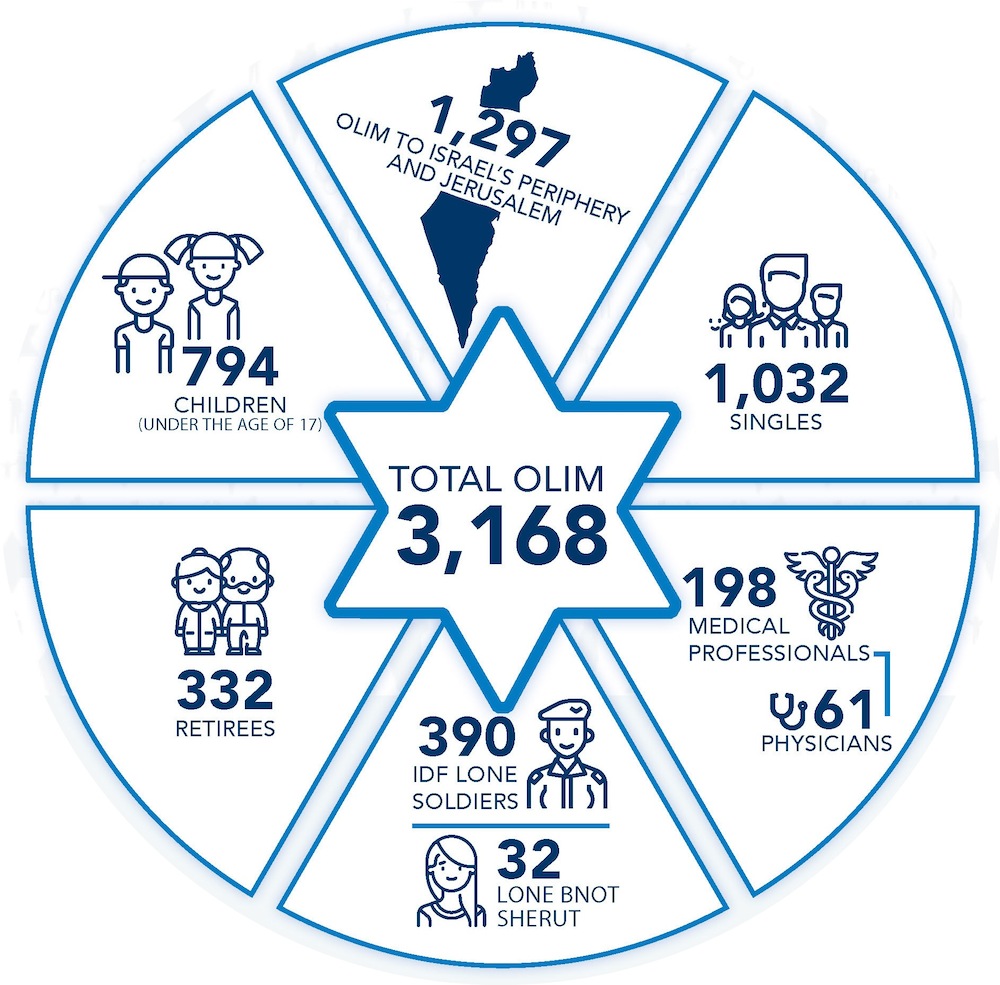
The breakdown of Nefesh B’Nefesh 2020 aliyah. (image from Nefesh B’Nefesh)

Despite a challenging and tumultuous 2020, 291 individuals from Canada decided to make aliyah and move to Israel with Nefesh B’Nefesh (NBN) over the past year. The Canadians were among the 3,168 individuals who moved to Israel from North America in 2020 – 2,625 since the COVID-19 pandemic hit.

Founded in 2002, Nefesh B’Nefesh, in partnership with Israel’s Ministry of Aliyah and Integration, the Jewish Agency for Israel, Keren Kayemeth LeIsrael and Jewish National Fund-USA, has assisted in easing the aliyah process for more than 65,000 olim since its inception. With the help of its partners, NBN assisted nearly 90% of the total number of olim that arrived in 2019.

Since January of 2020, Nefesh B’Nefesh olim have most often hailed from New York, New Jersey, California, Florida, Ontario, Illinois, Massachusetts, Maryland, Pennsylvania and Texas. Altogether in the past year, 811 families chose to move their lives to Israel, along with 1,032 singles and 332 retirees. There were 61 physicians among a total of 198 medical professionals who arrived in Israel in the last year, most of whom joined the frontlines in Israel’s fight against the coronavirus. And 390 young men and women stepped off the plane with the desire to serve Israel as lone soldiers.

In addition to the olim who arrived throughout 2020, Nefesh B’Nefesh received 6,704 aliyah applications, in contrast to 3,035 in 2019 – marking a 126% increase in interest in aliyah.

image - The breakdown of Nefesh B’Nefesh 2020 aliyah
The breakdown of Nefesh B’Nefesh 2020 aliyah. (image from Nefesh B’Nefesh)

“From the earliest days of the Jewish state, no matter how trying or difficult the circumstances, aliyah has always continued in order to preserve what was once a distant dream for our parents and grandparents,” said Rabbi Yehoshua Fass, NBN co-founder and executive director. “As we look back at the challenges everyone faced in 2020, we are extremely proud of what we have accomplished together. We look forward to watching each oleh grow and build their new lives in Israel, and eagerly look ahead to 2021, a year with the potential to exceed all expectations in aliyah.”

“I welcome the dozens of new olim who chose to leave everything, especially during the time of a global epidemic, and fulfil their dreams of building new homes for themselves in Israel,” said Minister of Aliyah and Integration Pnina Tamano-Shata. “Many will surely remember 2020 as a challenging and complex year, but the olim who arrived [recently] from across the U.S. and are part of the last group of olim this year, are enabling it to be shaded in more encouraging and optimistic colours.

“Despite COVID-19, the Jewish nation is thriving and aliyah is continuing,” Tamano-Shata continued. “In the past year, more than 20,000 olim from 80 countries around the world made aliyah.”

“The thousands of new olim from North America and around the world, during a year of a global pandemic, lockdowns and almost complete paralysis of international air travel, emphasizes how much the longing for Zion is deeply ingrained in the hearts of the Jewish people around the world,” said Isaac Herzog, chair of the Jewish Agency.

The top 10 cities in Israel that new olim chose as their homes this year were Jerusalem, Tel Aviv, Beit Shemesh, Ra’anana, Haifa, Herzliya, Netanya, Modiin and Be’er Sheva. The olim most commonly worked as educators, physicians, nurses, social workers and lawyers, as well as in the fields of marketing, sales and business. The average age of an oleh this year is 30, with the oldest being a 97-year-old and the youngest being only 35 days old.

When the pandemic began in earnest in March 2020, Nefesh B’Nefesh adapted its various programming and transitioned into holding virtual meetings, webinars and informational sessions. The online seminars have allowed the organization to reach a much wider audience and have included a wide range of subjects, from choosing communities and special webinars for medical professionals, to how to pack and ship for aliyah.

The ongoing support after aliyah provided by NBN has meant that 90% of its olim have remained in Israel, leading to tens of thousands of new Israelis who go on to make significant contributions to the country.