Skip to content
  • Home
  • Subscribe / donate
  • Events calendar
  • News
    • Local
    • National
    • Israel
    • World
    • עניין בחדשות
      A roundup of news in Canada and further afield, in Hebrew.
  • Opinion
    • From the JI
    • Op-Ed
  • Arts & Culture
    • Performing Arts
    • Music
    • Books
    • Visual Arts
    • TV & Film
  • Life
    • Celebrating the Holidays
    • Travel
    • The Daily Snooze
      Cartoons by Jacob Samuel
    • Mystery Photo
      Help the JI and JMABC fill in the gaps in our archives.
  • Community Links
    • Organizations, Etc.
    • Other News Sources & Blogs
    • Business Directory
  • FAQ
  • JI Chai Celebration
  • JI@88! video

Recent Posts

  • Last hostage home
  • New bill targets hate crimes
  • Concerning actions
  • Recipes not always required
  • Survivor urges vigilance
  • Seniors profoundly affected
  • Farm transforms lives
  • Musical legacy re-found
  • A range of Jewish literature
  • A concert of premieres
  • Variety telethon on Feb. 22
  • Victoria club’s many benefits
  • Avodah dedicated to helping
  • Artists explore, soar, create
  • Life’s full range of emotions
  • Community needs survey closes March 29
  • Jerusalem marathon soon
  • Historic contribution
  • Chronicle of a community
  • Late-in-life cartoonist
  • Cashflow vs growth portfolio
  • My new best friend is Red
  • ישראלים רבים ממשיכים לתמוך בטראמפ ועדיין אינם מבינים במי מדובר
  • עשרים ואחת שנים בוונקובר
  • Supporting the Iranian people
  • The power of photography
  • A good place to start
  • When boundaries have shifted
  • Guitar virtuosos play
  • Different concepts of home
  • Broadway’s Jewish storylines
  • Sesame’s breadth and depth
  • Dylan Akira Adler part of JFL festival
  • Mortality learning series
  • A new strategy to brighten up BC
  • Sharing latkes and light

Archives

Follow @JewishIndie
image - The CJN - Visit Us Banner - 300x600 - 101625

Tag: immigration

Different concepts of home

The current show at the Zack Gallery – Finding Home – unites three very different artists: Jeannette Bittman, Andrea Dillingham-Lacoursiere and Eri Ishii. Sarah Dobbs, the gallery curator, told the Independent how the show came together.   

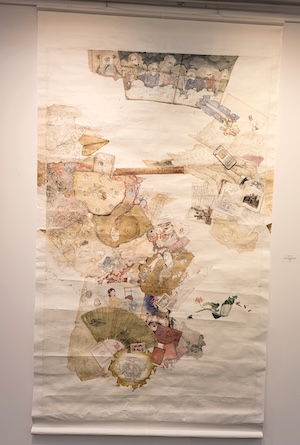
“All three artists submitted independent proposals for solo exhibitions,” said Dobbs, adding that, in their own unique way, all three artists “engaged the ideas of place, displacement, immigration and the evolving notion of home.… Their works differ significantly in style and approach, but their practices intersect conceptually. Andrea’s work is rooted in a specific geographic place. Eri’s practice explores internal and emotional landscapes. Jeannette’s work centres on the table as a focal point of Jewish life and tradition, and as a site that reflects the dynamics, rituals and emotional complexities of gathering. Together, their works expand and complicate the idea of home, from the physical to the psychological and to the communal.”

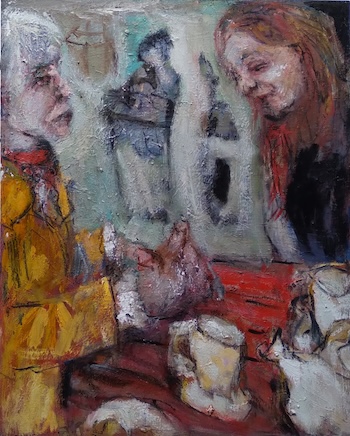
photo - “At Work” by Jeannette Bittman
“At Work” by Jeannette Bittman. (photo by Olga Livshin)

Bittman’s images are all domestic scenes. People, young and old, gather around a table, eating and chatting. The colours are muted, the faces indistinct, less important. The table and the food are the points of connection, the common joy and purpose.

“A table is of great significance in everyone’s life,” Bittman told the JI. “It is the place where we eat, but, maybe more importantly, where we meet others and ourselves. The table and gathering around it are critical to Jewish life and culture. Family meals are crucial for family and child growth. Gathering with friends often occurs around a table. Self-reflection, recollection and reminiscence, as well as dreams, occur around a table.” For her, a table is the essence of home. 

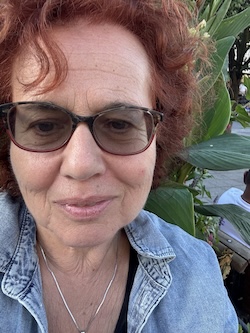
photo - Jeannette Bittman
Jeannette Bittman (photo courtesy)

“As an artist, I’m intrigued by human emotions and want to represent them through my art,” she said. “Initially, I focus on the realistic expressions of the models. Then, I explore, using colour, shade and form to go deeper. I try to capture the feeling rather than reality … I search for the mood. I rarely have a finished product in mind and become fascinated with the multitude of possibilities. It’s often challenging for me to stop at one.”

Ishii, meanwhile, ponders the outdoors in her paintings. A girl is running along a forest trail in “Runner.” Three girls are gazing across a river in “Three.” A young woman contemplates a peaceful pond in “Bridge,” while dappled sunlight plays all around her, and water ripples beneath the pilings of a little bridge. 

All of Ishii’s images are quiet and introspective, uplifting in their tranquil greenery. One could almost hear the breeze whispering in the boughs and the wavelets muttering at the shore. “I am essentially a figurative painter,” said the artist. “My main interest is the inner world of my figures. I want to create works that have emotional resonance.”           

For Ishii, home is a complex concept, an inner rapport rather than a particular geographic region. “To me, home means belonging, community and a sense of identity. As an immigrant, I have experienced that these things are fluid and shifting. I have two homes: the place where I spent my formative years – Japan – and the place where I chose to build my life – Canada.”

photo - “Runner” by Eri Ishii
“Runner” by Eri Ishii. (photo by Olga Livshin)

About her pieces in the Zack show, she said, “I made them at different points of my life. ‘Bridge’ and ‘Three’ are parts of a series that explores storytelling in paintings. They were inspired by film stills from a British mystery. ‘Runner’ and ‘Picnic’ are made more recently. ‘Runner’ revisits the running series from 20 years ago. The series investigated the transient nature of life and posed questions concerning where we are running to, as well as what we are running from. ‘Picnic’ is the most recent of my works. It explores family relationships. It was inspired by a photo I saw in a recipe book that showed a family enjoying a feast.”

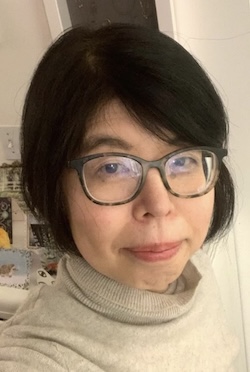
photo - Eri Ishii
Eri Ishii (photo courtesy)

Like many artists, Ishii is fond of mentoring others. “Teaching is rewarding in more external ways, as opposed to painting,” she said. “I love being part of people’s journeys, as they tackle challenges of making paintings. It is my way of giving back what I learnt, whereas painting is more internal, as I try to explore what is going on inside of me.”

Ishii’s creative explorations could happen anywhere in the world. “I deliberately made them non-specific,” she said. “I wanted to keep them open to viewers’ imagination.”

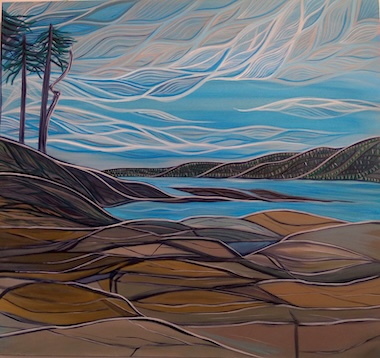
Dillingham-Lacoursiere, on the other hand, dedicates her landscapes to one very specific location: Lasqueti Island in the Strait of Georgia, an off-grid, ecologically conscious community, and her home. Her panoramic vistas are bright and intense. The sharp colours of land, ocean and sky echo the lines of nature and emphasize the artist’s fierce emotional link to the place. While Ishii’s paintings are murmurs of lyrical fulfilment and Bittman’s delve into the kernel of her Jewishness, Dillingham-Lacoursiere’s paintings are screams of defiance, a rebellious statement of the artist’s soul.

“I used to equate home with a soft place to land, with treasured collections and memories that serve as reminders of our lives, our ancestors,” she said. “When I moved from Alberta, I left a five-bedroom house, my family, most of my friends, a community that had taken me a lifetime to build, but it wasn’t easy [there]. Reconciling the beauty of the prairies with a mindset and values that never fit meant it was an uphill battle. I was tired of trying to make myself fit into the place I called home but had never felt like it.”

photo - “Home” by Andrea Dillingham-Lacoursiere
“Home” by Andrea Dillingham-Lacoursiere. (photo by Olga Livshin)

Here, in British Columbia, she said, “Now, home for me exists in small ways. It’s my favourite tree. It’s reading poetry on a Sunday morning, with coffee in my favourite mug…. I’ve worked with First Nations communities for over a decade, and it was in those circles, around those fires and in those sweat lodges, that I learned women are the keepers of the home. In that sense, I am my home, and I can offer refuge, perhaps especially to myself.”

photo - Andrea Dillingham-Lacoursiere
Andrea Dillingham-Lacoursiere (photo courtesy)

Dillingham-Lacoursiere has been painting landscapes for about 10 years. “I had avoided painting landscapes my whole life, until 2016. At the time, I was in the throes of a crisis of conscience, at the confluence of my job and my community,” she shared. “I had spent a year at the helm of a project that was deeply honouring the unfinished lives of the missing and murdered Indigenous women and girls of this country. The next project I was asked to lead at the museum and art gallery where I worked was the Canada 125 celebrations. The cognitive dissonance I felt pulled me in ways I could not have expected.”

Her response was artistic.

“It led me to an exhibit focused on landscapes of our national parks system. It is a system constructed to outwardly give a sense of national pride, but, at the same time, to commodify some of the most beautiful natural spaces … as escapes for those that could afford it,” she said. “That exhibit was called Reflections on My Reconciliation. People really connected with my art and my message. And it began the unravelling of what I thought it meant to be Canadian for me.”

Finding Home opened Jan. 7 and runs until Feb. 2. Every visitor will be confronted with the question, “What does home mean to you?” 

Olga Livshin is a Vancouver freelance writer. She can be reached at [email protected].

Format ImagePosted on January 23, 2026January 21, 2026Author Olga LivshinCategories Visual ArtsTags Andrea Dillingham-Lacoursiere, art, Eri Ishii, exhibits, Finding Home, immigration, Jeannette Bittman, painting, place, Sarah Dobbs, Zack Gallery
Vive la différence!

Vive la différence!

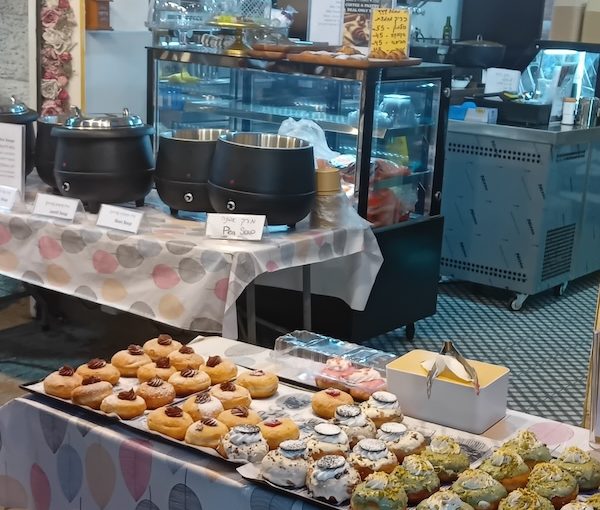
French is one of the main languages one hears on the streets of multicultural Jerusalem today, along with Hebrew, Arabic, English and Russian. More than 2,170 French Jews moved to Israel in 2024. The number in 2025 is projected to exceed 3,000. The wave of aliyah – driven by antisemitism and violence targeting Jews – has resulted in the establishment of scores of new patisseries, boulangeries and charcuteries – all kosher. Seen here is Foodies on Yoel Moshe Salomon Street. Nearby is Napoleon, one in a cluster of gourmet restaurants in Kikar Hamusica (Place de la Musique), established by former Parisian Laurent Levy, who is building Le Grand Hôtel.  

Format ImagePosted on December 5, 2025December 4, 2025Author Gil ZoharCategories Celebrating the HolidaysTags aliyah, France, Hanukkah, immigration, Israel, sufganiyot

תגובתי לכתבה על ישראלים שרצו להגר לקנדה ולא קיבלו אותם עם שטיח אדום

הכתבה

אכן יש אנטישמיות בקנדה כמו במרבית המדינות בעולם לאור מה שישראל עשתה בעזה. לפני כניסת צה”ל לעזה (לאחר השבעה באוקטובר) טענתי שהפעולה הצבאית שם תגרום נזק אדיר לישראל. זה כולל גם את הישראלים והיהודים בעולם. לישראלים בארץ לא היה אכפת כלל ממה שצה”ל עשה בעזה ונעשו דברים חמורים ביותר וחפים מפשע נהרגו. למרות השבעה באוקטובר זה לא היה צריך לקרות. עכשיו כאמור רואים את המחיר

מי שמתלונן שקר קנדה הוא טיפש מטופש. הרי ידוע שקנדה היא מדינה קרה והרבה יותר קרה מישראל. הישראלים ברובם לא יכולים לסבול קור ואין להם אפוא מה לחפש בקנדה

“ישראלים רבים שהיגרו חשבו שמחכים להם פה עם שטיח אדום”. באמת? למה? זו מחשבה אווילית המתאימה לישראלי הצפוי שחושב שכל העולם מתנהל סביבו, שכולם צריכים לקבלו בחום ואהבה? האם מישהו המתין לי בנחיתתי בוונקובר עם שטיח אדום והתחיל להחמיא ולדאוג לי? כל מה שעשיתי היה בזכותי בלבד, ללא עזרה של חבר או בן משפחה. אם הייתי ממתין לשטיחים אדומים בוודאי שהייתי נכשל כאן. האם לבנו של אחי ואשתו המתין מישהו בנחיתתם בארה”ב? הם עשו שיעורי בית כנדרש, לפחות לאישה הייתה עבודה מראש, הם ידעו מה צריך ללמוד וכיצד להתקדם מקצועית, ללא שום “ישראליות” שיכולה רק להזיק

“ישראלים רבים לא מבינים שהם מהגרים” – נכון מאוד. הם לא מבינים שבקנדה כמו כל מדינה מערבית, אין מפעילים קשרים אישיים, לא מפתיעים בביקורים לא מתוכננים, לא “קופצים” לפגישה עם מנהל סניף הבנק ללא תיאום מראש, ולא נתונים לך שום חשיבות כיוון שהגעת בישראל – על מה ולמה

כל מי שהיגר לקנדה (ובכלל לכל מדינה אחרת) עליו לדעת מראש מה כולל תהליך ההגירה, הדרישות המדויקות, הניירת הנכונה, ומה צריך להציג בפני השלטונות. כמובן צריך לדעת פחות או יותר כמה זמן זה יקח. אני למשל ידעתי שכדי לקבל את האזרחות הקנדית עלי לשהות בקנדה במשך שלוש שנים. ולכן לא עזבתי את המדינה באותה עת למעט פעם אחת לעשרה ימים, ולכן נאלצתי להמתין לאזרחות שלוש שנים+עשרה ימים. אם זה לא היה מתאים לי הייתי עוזב. מה שמתלונן שלא יהגר

אכן צריך “ניסיון קנדי” בכל עבודה רצינית. זה ידוע מראש ומי שאינו יודע זאת הוא פשוט לא רציני. ומה עושים: אפשר להיות עצמאי, להתחיל לעבוד כשכיר בעבודה פשוטה ולהתקדם, להשלים לימודים בקנדה ועוד

אכן קנדה יקרה מאוד אך לא יותר מישראל. הכל מתייקר בכל מקום בעולם ומי שיש לו בעייה אם זה שלא יהגר למדינה מערבית

נכון בתקופת הרפר היה טוב יותר לישראלים לעומת כיום. המלחמה של ישראל בעזה כאמור גרמה נזק איום לישראל שהיא כיום אחת המדינות השנואות בעולם. ולכן גם ישראלים ויהודים בעולם משלמים מחיר כבד. זה נורא ואיום אך בישראל לא מבינים זאת. כמובן שמי שמדבר עברית ברחוב ומסתובב עם סמלים יהודים וישראלים נמצא בסכנה גדולה יותר

לישראלים קשה לפצח את התרבות הקנדית או בעצם כל תרבות שהיא לא ישראלית. הישראלים לא מבינים שבמערב לא אוהבים את ההתנהגות הישראלית, השחצנות, הוולגריות, הבלתי אמצעיות, הספונטניות ללא גבול, להתקשר בטלפון לאחרים בכל שעה, וכאמור לפגוש אחרים כולל חברים ללא תכנון מראש

בסיכומו של דבר: מי שרוצה להגר לקנדה או לכל מדינה אחרת במערב מוטל עליו לעשות שיעורי בית רציניים ביותר. מי שרוצה להתנהג כישראלי מצוי במערב עדיף שלא יהגר

Posted on November 26, 2025November 13, 2025Author Roni RachmaniCategories עניין בחדשותTags Canada, immigration, Oct. 7, קנדה, שבעה באוקטובר, תהליך הגירה

מדוע עזבתי את ישראל ואינני חושב לחזור ארצה

היום השאלה האם להמשיך ולגור בישראל, לעזוב או לחזור ולגור בה או לעשות עלייה -היא רלוונטית יותר מאי פעם. מצד אחד ישראל נמצאת במצב בטחוני, כלכלי וחברתי לא פשוטים, ומצד שני האנטישמיות ופגיעה בישראלים וביהודים היא ממשית ביותר

אני עזבתי את תל אביב ועברתי לגור בוונקובר שבמערב קנדה לפני למעלה מעשרים שנה. אני יכול רק להצטער שלא עזבתי שנים קודם לכן בעת היותי צעיר יותר כי זה היה חלום חיי. חברו לחלום ההרגשה שהפכתי להיות זר בישראל ולכן העדפתי להיות זר בחו”ל. בנוסף, המצב הבטחוני של ישראל גם הוא הטריד אותי. אילו הן שלוש הסיבות המרכזיות שהביאו אותי לעזוב את ישראל. כבר בראשית שנות השמונים (אחרי השירות  הצבאי) התחלתי לחלום על מעבר לחו”ל ולצערי רק כעבור עשרים שנה הגשמתי זאת

לקום ולעזוב לחו”ל זה דבר לא פשוט שכרוך בהרבה מאוד סיכונים. וצריך גם אומץ רב והאמת שזה היה חסר במקרה שלי. רק בסוף שנת 2004 כאשר קיבלתי את הניירת ההגירה לקנדה החלטתי שהפעם אני לא נותן לעצמי שום הנחות ותירוצים – מדוע שלא לעזוב. כעבור שלושה חודשים סיימתי את כל ענייני בתל אביב ועליתי למטוס שהביא אותי לוונקובר, בה אני חי עד היום

בשנות השמונים והתשעים רציתי לעבור לאירופה (תחילה ללונדון ולאחר מכן לאמסטרדם). בראשית אלפיים זכיתי בגרין קארד ואז החלטתי לעבור לניו יורק. אך היעדר האומץ כפי שציינתי והעבודה שכל כך אהבתי בתחום המדיה: “החזיקו” אותי בישראל. עבדתי בעיתונות במשך שבעה עשרה שנים והיה לי מאוד קשה להיפרד ממנה. בשנים האחרונות למגורי בישראל קיבלתי הצעות מפתות מהעורכים המובילים בעיתונות אך דחיתי את כולן, כי אחרת הייתי מתקשה עוד יותר קשה לעזוב. משה ורדי הציע לי לעבוד בידיעות אחרונות, אמנון דנקנר – מעריב, גיא רולניק ואיתן אבריאל – דה מרקר (שהיה מופרד אז מהארץ) וחגי גולן – גלובס

לבסוף הצלחתי להתגבר על כל המכשולים הנפשיים ועזבתי את ישראל לטובת קנדה. מרבית בני משפחתי וחברי הבינו אותי, ותמכו בצעדי. כמובן שהיו בודדים שלא ראו בעין טובה את “ירידתי” מישראל ולאורך הזמן היחסים ביננו הפכו לקרירים ואף נותקו. הגעתי לוונקובר, ובשנותי הראשונות עבדתי כמחפש מידע בחברה כלכלית. לשמחתי במשך מרבית שנותי כאן כתבתי (כפרילנס) עבור ידיעות אחרונות ווינט על מה שקורה בקנדה. לפני למעלה מאחת עשרה שנים הצטרפתי לחברה הפיננסית המספקת הלוואות סאב-פריים, ואני משמש מבקר החברה ואף עובד מהבית בשמונה השנים האחרונות

עוד שגרתי בישראל ראיתי עתיד שחור למדינה שהופכת להיות יותר דתית-חרדית-ימנית-לאומנית. אז התחלתי לקלוט שאין לי יותר מקום במדינה בה נולדתי וגדלתי ושהייתה בית מצויין במשך שנים. לצערי המציאות השתנתה לרעה וכאמור התחלתי להרגיש זר בישראל. מצאתי את עצמי שייך למיעוט שהוא וקטן וכיום ההבדלים בין שני המחנות עצומים ולא ניתנים לגישור. מלחמת ששת הימים עם הניצחון הגדול הביאה את תחילתה של תנועת ההתיישבות בשטחים הכבושים. וכך גם החל לגדול המחנה המשיחי. ומטבע הדברים לדתיים וחרדים יש הרבה ילדים והמספרים מנצחים. מציאות זו לא מתיישבת עם עקרונותי ודרכי ועל כן מצאתי לי בית חדש בקנדה

כיום אני מנותק כמעט לחלוטין מהוויה והתרבות הישראלית ורק השפה העברית מקשרת אותי לישראל. הקשר עם בני משפחה וחברים בישראל עדיין חשוב לי אך במקביל המרחק ביני ובין המדינה הולך וגדל. ישראל לא תשוב עוד להיות ביתי

Posted on October 29, 2025October 22, 2025Author Roni RachmaniCategories עניין בחדשותTags immigration, Israel, politics, Vancouver, הגירה, ונקובר, ישראל, פוליטיקה
New fall lecture series

New fall lecture series

White Rock South Surrey Jewish Community Centre’s first-ever Fall Speaker Series, starts Oct. 29, with a talk on Jewish immigration to Canada. (image designed by Chloe Heuchert)

On Oct. 29, I will help launch White Rock South Surrey Jewish Community Centre’s first-ever Fall Speaker Series, which will also feature presenters from the Jewish Genealogical Society of British Columbia and the Jewish Museum and Arch-ives of British Columbia over the coming months.

For my presentation, I will give an introduction to the history of the Jews in Canada and some of the adversities they have had to face. I start off with the first known Jewish settlers, who came here in the 1760s, following Britain’s conquest of New France. So, Jews first came to Canada when it was under the British colonial rule. While there were no legal restrictions on them, the opportunities for integration into public life and to hold public office were limited. 

One of the earliest Jewish settlers was Aaron Hart, a fur trader who lived in Trois-Rivières, Que. The Hart family was influential over generations and laid the groundwork for Canada’s first Jewish community, in Montreal, in the late 1760s. 

Most formal Jewish communities – which grew into the ones we inhabit now – were established in major Canadian cities during the 19th century. Most of these Jewish Canadians would have been small business owners, farmers and traders. While small in number, they established the first synagogues and communal organizations.

During the latter half of the 19th and early 20th centuries, a significant surge of Jewish migration from Eastern Europe occurred. Between 1880 and 1920, Canada’s Jewish population grew from a few hundred to tens of thousands. These individuals found jobs as garment workers, shopkeepers and tailors, among other things, contributing to the industrial economy. They formed organizations, published English and Yiddish newspapers, held social gatherings, etc. In the larger community, Jewish immigrants were regularly at the forefront of labour, social justice and human rights movements, in part because of their own experiences with marginalization. 

While Jewish immigrants had thriving communities, they also faced adversity. Antisemitism dates back millennia, before there was even a word for it. In the context of the first Jewish settlers in Canada, Jews were often treated with suspicion and faced social exclusion. Certain professions, institutions and clubs were closed to them. Different publications and political figures depicted Jews as a threat to Canadian morality and economic stability. Restrictive measures were put in place in the 1910s and 1920s, as Jews were seen as “undesirable.” The 1923 Immigration Act severely restricted Jewish and other immigration. (Most notably, it effectively banned Chinese immigration.)

Antisemitism continued to be prevalent during the interwar years, becoming more organized and explicit. Hotels, social clubs and resorts often displayed signs barring Jews and there were several groups advocating for even more restrictive policies. The government of William Lyon Mackenzie King was antisemitic and, during the Second World War, only permitted a small percentage of Jews into Canada – the attitude of “none is too many,” in reference to Jewish immigrants, applied. Many Jewish boys and men were put into internment camps and the government imposed strict financial responsibility requirements on those wanting to sponsor others to enter the country or be freed from internment. While immigration policies began to loosen after the Holocaust, antisemitism is an ongoing challenge in Canada. 

White Rock South Surrey Jewish Community Centre’s new speaker series was created to highlight and celebrate Jewish heritage and identity in Canada. Its goal is to engage the community in exploring Jewish genealogy, culture and history, while encouraging intergenerational dialogue and a personal connection to the past. Ideally, it will serve as a platform for education, reflection and preservation of Jewish life in Canada, inspiring attendees to delve into their own histories and contribute to the broader communal narrative.

To register for any of the series talks, go to wrssjcc.org. 

Chloe Heuchert is an historian specializing in Canadian Jewish history. During her master’s program at Trinity Western University, she focused on Jewish internment in Quebec during the Second World War.

Format ImagePosted on October 24, 2025October 23, 2025Author Chloe HeuchertCategories LocalTags Canadian Jewish history, education, history, immigration, speakers, White Rock South Surrey Jewish Community Centre, WRSSJCC
Victoria’s new market

Victoria’s new market

The grand opening of Essential Kosher on March 26. Cutting the ribbon are Rebbetzin Chani and Rabbi Meir Kaplan, centre, and Essential Kosher co-managers Zev Kantorovich, left, with wife Andrea and daughter Stephie, and David Franco, second from the right, with his wife, Claudia, and son, Jacob. (photo by David J. Litvak)

Victoria’s observant Jewish community can now do one-stop shopping – at a new kosher market.

Essential Kosher opened March 26. The brainchild of Rabbi Meir Kaplan of Chabad of Vancouver Island, the market is co-managed by two Mexican Jews, David Franco and Zev Kantorovich, who came to Victoria with their respective families to embark on a Canadian adventure together.

Until now, Jewish residents of Victoria had limited options in purchasing kosher food. They could buy challah from Chabad before Shabbat, a selection of kosher products from Fernwood General Store, and products with hechshers (kosher certifications) in various local supermarkets. Kosher meat and poultry would have to be shipped in from places like Omnitsky’s in Vancouver.

photo - Essential Kosher in Victoria, adjacent to Chabad of Vancouver Island, is open Sundays to Fridays
Essential Kosher in Victoria, adjacent to Chabad of Vancouver Island, is open Sundays to Fridays. (photo by David J. Litvak)

Kaplan said he conceived of the idea of a kosher market after concluding that “no affordable kosher food was available on the island, which made it very difficult for people to keep kosher in Victoria and the rest of Vancouver Island.

“The idea became a reality once we realized that we had a space next to the synagogue that could accommodate a market, and we had two Jewish families who moved here from Mexico and who were looking to do something for the community,” he said. “It turned out be a great opportunity and a match made in heaven for all of us.”

Both the Franco and Kantorovich families had established businesses in Mexico. 

Kantorovich’s grandfather, Kiva, migrated from Russia during the Second World War and, starting from scratch, opened a hardware store in downtown Mexico City. The store survived for more than 70 years and could have continued, but, after managing it for 30 years, Kantorovich decided to sell the business, hoping for a fresh start someplace else.

Franco had a company that sold plastic bags used for food packaging but decided to leave Mexico, he said, because of “the growing insecurity and increasing crime rates” and out of a desire “to look for a better place for our son to grow up.” 

The two families chose to move to Victoria because Franco’s wife, Claudia, and Kantorovich’s wife, Andrea, both had an opportunity to pursue master’s degrees at Royal Roads University. While the Franco family had never been to Victoria before, the Kantoroviches had fallen in love with the city when their cruise ship to Alaska stopped there for a day. This short stay was the catalyst for the two families, who are close friends, to move to Victoria together.

The families were invited by Kaplan for a Shabbat dinner, and their connection to Jewish life in Victoria began.

The Chabad community “has been especially kind to us, even though we are not Orthodox,” said Franco. “They include all kinds of Jewish families in their programs and events and make everyone feel at home.”

Franco likes that the Victoria Jewish community is growing, and offering more educational opportunities and activities for children. He remarked “how warm and welcoming people have been here.

“Back home, people tend to be a bit more distant or indifferent,” he said.

Mexico City’s Jewish community is much larger than that of Victoria.

“Victoria feels calm, friendly and full of nature,” said Franco.

Initially, Franco and Kantorovich were thinking about opening a business on their own, however, Kaplan convinced them to open a kosher store “because the community really needed one and he also explained how kosher supplies were missing.” 

The three of them decided to run the store together.

“Rabbi Kaplan supports and guides the store, and we manage the store on a day-to-day basis,” said Franco.

The market, which is open Sundays to Fridays, offers a variety of kosher items, including meat, cold cuts and poultry, Chalav Yisrael dairy products, grape juice and gefilte fish, Israeli snacks and fresh baked challah every Friday, which is baked by Rebbetzin Chani Kaplan, with her family sometimes sharing baking and cooking duties with her. Soon, customers should be able to shop online, and additional products will be available. Opening just prior to Passover, Essential Kosher offered customers kosher-for-Passover items.

For more information about the market, visit chabadvi.org or email [email protected]. 

David J. Litvak is a prairie refugee from the North End of Winnipeg who is a freelance writer and publicist, and a mashgiach at Louis Brier Home and Hospital. His articles have been published in the Forward, Globe and Mail and Seattle Post-Intelligencer. His website is cascadiapublicity.com.

Format ImagePosted on July 25, 2025July 29, 2025Author David J. LitvakCategories LocalTags Chabad of Vancouver Island, Chani Kaplan, David Franco, Essential Kosher, food, immigration, kashrut, kosher, Meir Kaplan, Victoria, Zev Kantorovich
Two Yiddish-speaking Bluenosers

Two Yiddish-speaking Bluenosers

Writer Adina Horwich only met Yehuda Miklaf and his wife Maurene in Jerusalem, even though both Adina and Yehuda are from Nova Scotia. (photo by Adina Horwich)

So, this guy walks into my Yiddish group one fine Sunday in Jerusalem – this is not the beginning of a joke. In the group, we welcome anyone who is into Yiddish, with any background, and, on that day, Yehuda was introduced to us. We went around the room asking him questions. I asked where he hailed from. Little could I have anticipated his answer: Nova Scotia.

“I don’t believe it!” I said. “So do I!” Then, “From where, exactly?”

“Annapolis Valley.”

 “Oh,” I paused, thinking to myself, I’d be hard-pressed to find any Jews there. 

Later, Yehuda’s story was revealed when the teacher matched us up to work together.

Yehuda, an Esperanto speaker and aficionado, has only recently started to learn Yiddish, while I have been at it for 15 years. I started off with little but the smattering I heard as a child. Yehuda happened upon it by the by, via a friend in the hand-printing scene, where he is an active, prominent member. With the characteristic zeal that he tackles so many projects, and lots of gumption, he has taken to Yiddish very well. 

The sight and sound of us two old-time Bluenosers (nickname for Nova Scotians) hacking a chainik in Yiddish, is too precious. But, most of all, I like when Yehuda slips into the down-home accent I grew up with. That is when I really kvell.

Né Seamas Brian McClafferty, Yehuda was born in the mid-1940s to a father with Irish roots and a mother with origins in Quebec. The youngest of eight, he had an idyllic childhood, as a small-town Catholic youngster in Annapolis Royal, which today has a population of only 530.

In his last year of high school, Yehuda attended a Fransciscan seminary in upstate New York, his first foray away from home. With his fellow students, he passed a building with Hebrew letters, which intrigued him. A friend he asked about these unfamiliar markings promptly replied: “That’s just Hebrew.” Yehuda had never seen, much less met, any Jews. 

He completed his last year of high school and then spent a year of silence and meditation at the novitiate in the Adirondacks. The following year, he furthered his studies towards the priesthood, commencing a rigorous and intense program that sounds like a yeshiva govoha (Torah academy of higher learning).

Discipline and training, mostly in silence, hours of meditation and living under austere conditions, Yehuda carried on through to the second of four years. He heard a lecture about the Torah, which was demonstrated by a small model scroll, and delved deeply from then on, backed by the church’s ecumenical approach of spirituality and faith. He availed himself of the library to his heart’s content and took to reading the Hebrew Bible over and over again. He didn’t know it at the time, but his first steps towards life as an Orthodox Jew were taken, while he was encouraged to become a scholar of the “Old Testament.”

Over the four years of study, Yehuda began to have rather different ideas about how he wanted to live his life.

Returning to Canada in the mid-1960s, he spent time in Toronto and in Nova Scotia, taking road trips home to tend to his father who had taken ill. Things grew clearer.

Yehuda absorbed every mention of things Jewish. It was an emotional attachment. In 1966, after having left Christianity, he discussed his evolving beliefs with a Jewish friend, who said: “You sound more Jewish than me. I’m surprised that you haven’t converted.”

The conversion process was long but not arduous. Yehuda took a class in Toronto and eventually went to the mikvah. 

He and his wife Maurene – who he met through his roommate in Toronto – visited Israel, as tourists, for an extended vacation. They had not intended to make aliyah, but, smitten with Israel, as so many of us are, did so three years later.

After making aliyah, Yehuda had to “rinse and repeat,” so to speak, as often happens with conversion. Israeli rabbinic courts do not automatically accept even the most stringent diaspora Orthodox ones, and Yehuda had to go through it again, studying for a year and then going to the mikvah. The converting rabbi gave him the option of choosing a name and Yehuda suited him, since that’s where the word Jew comes from. Miklaf (literally, “from parchment”) was a good abbreviation of McClafferty, he thought, and could not have been more fitting for his chosen profession of printer and bookbinder.

Like most new immigrants at the time, they started out at an absorption centre and had a routine klita (absorption/integration), including Hebrew language studies at ulpan. Maurene got a job in high-tech and Yehuda opened a studio. He started out by binding the original of David Moss’s My Haggadah: The Book of Freedom, and branched out into printing.

The couple attends an Ashkenazi shul but try not to be pigeonholed as being from one background (Sephardi or Ashkenazi). Early on, Yehuda tasted some traditional Ashkenazi delicacies and learned how to make potato kugel, for which he’s now famous, along with kneidlach.

Yehuda still has two siblings in Nova Scotia and visits his longtime friends in Annapolis Royal.

Our paths from the Atlantic led us to meet in Jerusalem, where we raised our families. The Miklafs have two children and several grandkids. Their daughter was a high school friend of my daughter’s, and both women have been living in the same community, and they see each other now and again.

Ma’aseh avot siman l’banim – the deeds of the fathers are a sign for the children – or, in this case, Ma’aseh horim siman l’banot, the deeds of the parents are a sign for the daughters. 

Adina Horwich was born in Israel to Canadian parents. In 1960, the family returned to Canada, first living in Halifax, then in a Montreal suburb. In 1975, at age 17, Horwich made aliyah, and has lived mostly in the Jerusalem area. She won a Rockower Award for journalistic excellence in covering Zionism, aliyah and Israel for her article “Immigration challenges.”

Format ImagePosted on July 25, 2025July 24, 2025Author Adina HorwichCategories IsraelTags aliyah, Canada, conversion, education, immigration, Israel, Jerusalem, Judaism, Nova Scotia, Yehuda Miklaf, Yiddish
Ex-pats make good in Israel

Ex-pats make good in Israel

Former Montrealers Shmarya and Lainie Richler opened their first Muffin Boutique in Jerusalem in 2014; their second, in 2023. (photo by Adina Horwich)

My interview with Muffin Boutique owners Lainie and Shmarya Richler took place on the afternoon following the US airstrike on Fordow and other Iranian nuclear facilities. It was 2 o’clock on Sunday and the couple took time out from their breathlessly busy schedule to sit with me at their Talpiot location, minutes from Haas Promenade, aka Tayelet Armon Hanetziv, in Jerusalem.

I have been coming to this coffee shop almost every Tuesday afternoon for almost a year. As a participant in the Anglo Women’s group, which was initially supported by the local community centre, we are encouraged to meet and eat. Facilitated by Helena Flusfeder and Rachel Beenstock, we enjoy a hot or cold beverage, salad, bagel with a variety of spreads, a slice of cake or a muffin, good company and laughs. Another of the members is native Montrealer Paula Dubrow, Lainie’s mother.

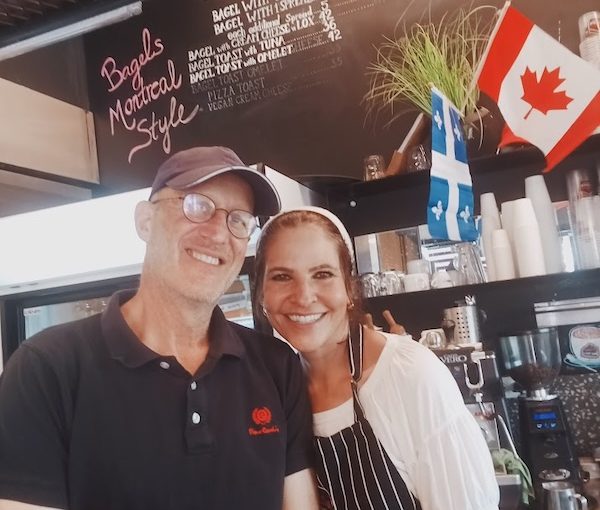
photo - A Canadian flag flies beside the province of Quebec’s fleur-de-lis
A Canadian flag flies beside the province of Quebec’s fleur-de-lis. (photo by Adina Horwich)

The café, which has indoor and outdoor seating for about 30 people, was busy, while the rest of the city felt deserted. I introduced myself, sharing my own Montreal experiences as an adolescent from 1969 to 1975. While the younger Richlers used to live in the very Jewish neighbourhoods of Côte Saint-Luc and adjacent Hampstead, I had lived in the suburbs, with a much smaller Jewish presence.

Shmarya hails from the large and prominent Richler family, most famous of whom was his first cousin, author Mordecai Richler. Shmarya’s mother, a survivor from Hungary, immigrated after the Second World War. Lainie’s paternal grandmother was English, as was my paternal grandfather.

We discussed their decision to make aliyah. It was always in the cards, they said, both having been raised in Modern Orthodox and Zionist homes. They studied at Jewish day schools and attended Tifereth Beth David Jerusalem Synagogue in Montreal. As teens, both were active in the Bnei Akiva youth movement, which is where they met and later started dating. Lainie studied and completed a master’s in psychology, while Shmarya majored in commerce. They married and had three children.

In 1995, they moved to Israel, living at first in Beit Shemesh, later and currently, in Efrat. Two more children were born here.

Lainie had intended to work in her field, but, as is wont to happen for immigrants to many countries, ran into the profession’s licensing body demands that, for her credentials to be recognized, she would need to take further studies. Since Lainie was trying to acclimatize to life’s challenges with a newborn, she preferred to shift her focus to that and raising the other children. 

She became involved in various exercise classes, giving them at community centres and other venues around Gush Etzion. Nutrition was a subject that had captured her interest, too, so she delved into that, taking a training course and becoming a certified alternative nutrition counselor.

Shmarya worked at first for a foreign company, then at a few Israeli startups, in high-tech, but the sector was continually growing and the jobs became increasingly demanding.

Needing to support a family of five kids, while coping with the everyday adjustments of aliyah, the couple began to wonder what to do. Their vision for retirement had been to run a B & B in the Galil or Golan. They thought, why not bring that idea forward, adapting it to their current situation.

Friends and family were skeptical, saying they were unrealistic, out of their depth; many a naysayer told them it would never work. But Lainie was determined to give it a go. She had always loved baking and cooking, informally making and selling muffins to friends and neighbours. She improved by testing many a recipe and soliciting feedback.

Shmarya was reluctant at first, but soon agreed. He took a  government-sponsored course at MATI (Jerusalem Business Development Centre), which trains and assists people interested in starting a small business. He was mentored by someone who took a serious interest and fully backed the couple’s plans, believing they could and would succeed.

photo - A Quebec licence plate – sporting the Quebecois nationalist slogan “Je me souviens” (“I remember”) – is prominently displayed behind the counter
A Quebec licence plate – sporting the Quebecois nationalist slogan “Je me souviens” (“I remember”) – is prominently displayed behind the counter. (photo by Adina Horwich)

Their first shop opened in 2014 on Jerusalem’s fashionable and ever-popular Ben Yehuda Street, a key menu component being Montreal-style bagels. And the store is replete with Canadiana. A Quebec licence plate – sporting the Quebecois nationalist slogan “Je me souviens” (“I remember”) – is prominently displayed behind the counter. It brings a half-smile to my face.

The second location, where I was conducting my interview, opened nearly two years ago. Scheduled to open Oct. 10, 2023, just days after the tragic events of Oct. 7, the opening was delayed – but only by a couple of weeks. When the doors opened on Oct. 23, the Richlers could barely keep up with the crowds. Locals warmly welcomed a chance to reaffirm their lives.

Ever since, this has been the local go-to café – the place is open 11 hours a day. Behind the register, a Canadian flag flies beside the province of Quebec’s fleur-de-lis.

photo - Both Muffin Boutiques prominently features the Richlers’ Canadian roots
Both Muffin Boutiques prominently features the Richlers’ Canadian roots. (photo by Adina Horwich)

Shmarya runs between the two branches, overseeing operations, keeping an eye on inventory, dealing with suppliers, expenses and all matters related to the running of the business.

Lainie is in charge of getting the daily, on-site baking up and running, with the help of a dedicated and hardworking staff. The restaurant serves coffee and breakfast from 8 a.m., while also accepting orders from their dairy menu for events, be they an office party or a family simcha. This aspect of the business comprises some 30% of its income. Everything is prepared fresh daily, using only natural ingredients, under Lainie’s expert watch and Badatz Mehadarin hechser (kosher certification).

Many employees have worked at both of the locations, most are native or near-native English speakers. This is vital, as the clientele is largely Anglo olim (immigrants). 

Every effort is made to maintain a family atmosphere – two of the Richlers’ children regularly work the counter – with friendly, personal service.

When you come to Jerusalem, do pay a visit to the Muffin Boutique, either at 16 Ben Yehuda or 13 Daniel Yanovsky, and have a nosh. Tell them Adina sent you! 

Adina Horwich was born in Israel to Canadian parents. In 1960, the family returned to Canada, first living in Halifax, then in a Montreal suburb. In 1975, at age 17, Horwich made aliyah, and has lived mostly in the Jerusalem area. She won a Rockower Award for journalistic excellence in covering Zionism, aliyah and Israel for her article “Immigration challenges.”

Format ImagePosted on July 11, 2025July 10, 2025Author Adina HorwichCategories IsraelTags aliyah, bakery, coffee, food, immigration, Israel, Jerusalem, Lainie Richler, Muffin Boutique, restaurants, Shmarya Richler, tourism

Privileges and responsibilities

When we moved to Canada for my husband’s academic job in 2009, we had work permits. Mine stated I couldn’t work with children or do farmwork. I’d previously been a teacher, but, with this work permit, I only taught adults. I volunteered at friends’ farms, but these skills couldn’t offer income. I did a few Jewish community events, leading family services, for instance, but I didn’t want to jeopardize my status.

I felt all the upheaval was worthwhile. We lived in a college town in Kentucky before moving to Canada. We drove 121 kilometres each way to attend a congregation with a rabbi. The town we lived in had about 20 Jewish families and a lay-led small Reform congregation. While my husband’s professor job was good, I’d lacked job prospects there. It was lonely without much of a Jewish community. When my husband was offered a Canada Research Chair in Manitoba, moving north made sense.

We’re law-abiding folk. We followed all the visa requirements. However, when trying to get Canadian permanent residency, the process required a chest X-ray. Pregnant with twins in 2011, I had to wait until after I gave birth. This stalled things. Meanwhile, we never thought committing a crime was a good choice while in Canada on a visa or a residency permit. (Or now, as citizens.)

Canadian permanent residents have all the rights of citizenship except voting and running for public office. If you’re convicted of a crime, permanent residency can be revoked. At each stage, whether work permit, permanent residency or citizenship, it’s important to obey the laws of the place you’re living in.

Later, as a permanent resident, I pitched book ideas to publishers at a Winnipeg library event. The publisher asked if I was a citizen. If not, they said they couldn’t read my manuscript. Their government funding was “only for citizens.” Afterwards, I researched it and emailed the publisher – Canadian presses can publish eligible permanent residents’ work using the same government funding. I received no reply.

By then, I realized my non-citizen experiences were normal and considered acceptable. Citizenship means something. Those born in Canada often don’t understand their privileges. Newcomers will mention their credentials and the hard effort it took to enter Canada. Canada loves successful, educated immigrants. Yet, upon arrival, those credentials often aren’t recognized, meaning we’re not eligible to do the same work here. It might take years to requalify the “Canadian” way.

I recalled all this when the US government began to detain foreign university students before deporting them. The outcry has been fast and furious. How dare immigration take Mahmoud Khalil away from his pregnant wife? Yet, as a parent, I thought, “Why would anyone on a visa or residency permit risk illegal behaviour? They might be forced to abandon their family!” 

Perhaps protesting international students never reviewed their visa terms. In the United States, green card holders aren’t allowed to try to change the government by illegal means. Those who trespassed on or vandalized university campuses, threatening resistance in support of groups deemed terrorists by both the United States and Canada, took big risks.

Some US international students knew they’d violated their visa regulations. Some students “self-deported.” A Cornell graduate student, Momodu Taal, left the United States on his own.

Cornell University emphasizes that actions have consequences and that, with privilege, comes responsibility. I heard this repeatedly during my undergraduate years at Cornell. However, when a Columbia University grad student, Ranjani Srinivasan, left the United States for Canada, CBC’s headline read, “Grad student who fled US says claims about her alleged support of Hamas are ‘absurd.’” Why did Srinivasan flee if the allegations were absurd and didn’t violate the law?

Long ago, my husband attended graduate school in Britain. As an American, he had to register his identity and contact information at the local police department. Though he didn’t break any laws, the trek to the station and the US passport stamped “ALIEN” were a sobering reminder of status. 

It isn’t popular to take responsibility for one’s actions. Even expecting law enforcement to enforce the laws against some illegal activity isn’t common. Hate crimes against Jewish Canadians soared out of control in 2024. According to a recent B’nai Brith Canada audit, few cases are prosecuted. According to 2023 statistics, 72% of these types of hate crimes went unsolved. 

Perhaps those fleeing the United States have seen this statistic. It’s now common in North America to protest on city streets, waving Hezbollah or Hamas flags. Protesters use words like “intifada” and “resistance” while claiming this is a right to free speech. These words and the actions that followed resulted in the deaths of thousands whose identities differed from the Islamist groups who “resisted.” Sometimes, Jews in Israel (or Canada) are the targets. Targets include Israeli Druze, Christians or Bedouin, too. In neighbouring Syria, minority groups targeted by Islamists are slaughtered, but without Canadian news coverage comparable to the Israel/Gaza conflict.

As but one example of many incidents across the country, it’s apparently legal to protest and yell “baby killers,” an antisemitic trope, outside of the Winnipeg Jewish community centre. That same building complex contains a daycare, school and programming for the elderly. In April 2025, protesters claimed they did this because two Israeli soldiers came to speak about their experiences on Oct. 7, 2023, and their military service in Gaza.

But, wait a moment, Canadian soldiers who speak about their military service in Afghanistan don’t face protesters. Do protesters stand near mosques when a relevant guest speaks, to protest violent upheavals in Syria, Nigeria or Sudan? No, it’s only about Israel, where half the world’s Jewish population lives. Protesters openly spout hatred against Canadian Jewish citizens, about 1% of the Canadian population, but not other minorities. 

Immigrants, like foreign students, don’t get all the rights of citizenship. Citizenship is a “membership” and has its privileges. Freedom of expression isn’t absolute in either the United States or Canada. In both countries, discrimination, hate speech, incitement to violence and defamation are illegal. 

Canadians must remember the responsibilities that accompany the privileges. Let’s enforce Canada’s laws against hate. Behaving properly towards one another and treating all Canadians as worthy of respect are Canadian values. Hate speech, and valorizing terrorist groups and their flags, aren’t. 

Joanne Seiff has written regularly for the Winnipeg Free Press and various Jewish publications. She is the author of three books, including From the Outside In: Jewish Post Columns 2015-2016, a collection of essays available for digital download or as a paperback from Amazon. Check her out on Instagram @yrnspinner or at joanneseiff.blogspot.com.

Posted on May 30, 2025May 29, 2025Author Joanne SeiffCategories Op-EdTags citizenship, freedom of expression, freedom of speech, immigration, law, responsibilities, rights
Film Fest starts soon

Film Fest starts soon

Sabbath Queen is a film about the life of Amichai Lau-Lavie, part of a rabbinic dynasty going back 38 generations. (still from film)

The 36th annual Vancouver Jewish Film Festival runs April 24 to May 4, beginning with opening night film Midas Man, which “offers Beatles fans a fresh look at the pivotal role Brian Epstein played in the band’s meteoric rise.” An enormous range of dramatic and documentary films, features and shorts, fill out the festival’s run, and the Independent reviews some of them here.

Tradition!

Hester Street, based on Abraham Cahan’s 1896 Lower Eastside immigrant novel Yekl, was released in 1975, about the same time as Fiddler on the Roof. The movie approaches some of the same topics of assimilation and tradition, without the song and dance.

Yankl (now Americanized Jake, played by Steven Keats) transforms from a yeshivah bocher to a shmatte sweatshop worker. Along comes Gitl, the wife who had waited behind in Russia, and young son Yossele who, payos cut off, becomes Joey.

The 50th anniversary of the film’s release reminds us that the 1970s were a time of nostalgia and of Jewish narratives that both idealized and lamented the American dream. In Hester Street, which is in black-and-white for mood, the boarder Bernstein (Mel Howard) represents tradition and continuity, contrasting with Jake in the fight of money versus learning, of getting ahead versus getting an education. Bernstein’s presence in the home of the primary couple puts Gitl in a predictable three-cornered bind both romantic and cultural.

Hester Street, which is filmed in black-and-white for mood, confronts the themes of tradition and assimilation
Hester Street, which is filmed in black-and-white for mood, confronts the themes of tradition and assimilation. (still from film)

Younger viewers might take some time to recognize Gitl (Carol Kane) as the kooky landlady from Unbreakable Kimmy Schmidt. Meanwhile, the tough-talking landlady in Hester Street is recognizable as Doris Roberts, who contemporary viewers will recognize as the buttinsky mother-in-law from Everybody Loves Raymond.

There are subversive components of the film, including the role of divorce in perpetuating traditional values. Subversion twists again and indeed Gitl assimilates in her particular ways. As the last line in the film declares ambivalently, “We mustn’t be too quick to say this or that.”

Director Joan Micklin Silver was a pioneering woman in male-dominated 1970s Hollywood. 

Kosher queen

Tradition, continuity and modern times are absolutely the themes of Sabbath Queen, a film by Sandi DuBowski about the life of Amichai Lau-Lavie.

The scion of a rabbinic dynasty going back 38 generations, Amichai is the son of politician, ambassador (“and we suspect a spy”) Naphtali Lau-Lavie and nephew of Israel Meir Lau, former chief rabbi of Israel. Filmed over 21 years, the documentary follows Amichai as he is ordained as a rabbi, via the Conservative movement’s Jewish Theological Seminary. But choosing the Conservative movement over orthodoxy is the least of Amichai’s rifts with his traditional family.

In 1993, Amichai was outed as a gay man in a news report and, it seems, he never looked back. After fleeing to New York a couple of years later and getting involved with the Radical Faeries, a queer, shamanistic spirituality group, “one vodka too many” leads to his alter ego emerging “out of my head like Athena.” 

The drag queen Hadassah Gross – a Hungarian sex advisor, kabbalist, matchmaker and widow of six rabbis – was born. Amichai describes his drag persona as “something between channeling and performing” and it is all about exploring the intersections of feminine and masculine. (“What the goyim call the yingele and the yangele,” says Hadassah.)

“Artists are the new rabbis,” he declares, but eventually seems to decide that being an artist is not enough and he seeks his rabbinical smicha, in large part, it seems, to combat his brother and the larger establishment on Orthodox dogma.

He becomes the spiritual leader of a decidedly unorthodox congregation called Lab/Shul. And, when his officiating of interfaith partnerships clashes with the Conservative movement, the rabbi faces the consequences.

Amichai’s brother, father and mother have their reservations, to put it mildly, about Amichai’s activities.

“We’re pushing a lot of boundaries here,” he acknowledges. Or, as his Orthodox rabbi brother puts it, not entirely sympathetically, “He’s playing with Judaism.” 

One feels invasive as the camera goes close up on Amichai at his father’s funeral and that sense of voyeurism repeats throughout the film, as does the feeling that the documentary’s subject is something of an emotional exhibitionist.

The relationship between Amichai and his immediate family represents the larger cultural dissonance between queer and other nonconforming Jews and the orthodoxy of the tradition, though there is an astonishing, uplifting conclusion to some of these challenges by the film’s ending.

A family affair

I first saw A Real Pain on a flight home from Israel last month. Selecting a Hollywood treatment of two cousins doing a Holocaust road trip to their grandmother’s hometown in Poland, I girded myself for cringe-inducing, inappropriate or otherwise disappointing fare. My expectations were pleasantly upended. This is a profound, beautifully presented film that hits the right notes in so many ways.

I am not the only one impressed. Unbeknownst to me when I chose it, the script and the acting were already grabbing accolades worldwide. Costars Jesse Eisenberg (who won the BAFTA Award for best original screenplay) and Kieran Culkin (who won both an Oscar and a Golden Globe for best supporting actor) deliver moving and multidimensional characters. 

David (Eisenberg) and Benji (Culkin) are the proverbial odd couple but what I had somehow anticipated to be slapstick comedy turned out to be deeply touching. As we find out more about Benji’s story, his erratic behaviour makes more sense.

Moments that could come off as didactic – almost documentary-like scenes at the Polin Museum and the Monument to the Ghetto Heroes, among others – somehow work even when you think they shouldn’t. The British tour guide James (Will Sharpe) is repeatedly challenged by Benji and acknowledges his own shortcomings as a non-Jewish facilitator, inviting viewers to ponder insider/outsider roles in the immediate and larger story.

If you ever wondered what corner Baby from Dirty Dancing ended up in, here she is – Jennifer Grey – playing a supporting role as one of the members of the cousins’ small tour group.

Spousal secrets

It is hard to write about Pink Lady without giving too much away. A seemingly ordinary religious Jerusalem couple with three happy kids and an involved extended family are upended when the husband is subjected to violence and blackmail. 

Director Nir Bergman’s Hebrew-language feature film sees Lazer (Uri Blufarb) and Bati (Nur Fibak) pondering the most existential questions of how God challenges even his most dedicated adherents. A deeply serious film with both laugh-out-loud incongruities and eye-covering discomfiture, Pink Lady is a slice-of-life with deep theological questions.

Oct. 7 revisited

image - Of Dogs and Men, which deals directly with the attacks of Oct. 7, 2023, is a blend of fiction and documentary
Of Dogs and Men, which deals directly with the attacks of Oct. 7, 2023, is a blend of fiction and documentary. (still from film)

At least two films in the festival deal directly with the attacks of Oct. 7, 2023.  

Of Dogs and Men is a blend of fiction and documentary. Director Dani Rosenberg’s film follows 16-year-old Dar (Ori Avinoam, also cowriter) as she sneaks back into Nir Oz, her vacated kibbutz, in search of her missing dog Shula. 

While the quest for the dog may be a stand-in for the larger search 

Israelis have undertaken as individuals and collectively to discover the fate of missing people – Dar’s mother’s fate remains unknown – it is hard not to wonder if the choice to centre a (missing) dog in the story is not meant to invite dissonance among overseas viewers. Given the indifference and even celebration with which some people worldwide have responded to the Oct. 7 attacks, is the tragedy of a lost dog a statement on the qualitative value the world places on Jewish life?

Dar tags along with a woman who rescues animals in the abandoned and war-torn areas.

“Aren’t you afraid of dealing with those dogs?” she asks the woman.

“Look what human beings did. So, I should be afraid of dogs?” the woman responds. “There’s no creature more awful, crueler than human beings and I still live among you.”

Through the imagery of destruction and the litany of names of victims, the film breaks down distinctions between Israeli and Palestinian victims.

The documentary 6:30 provides a harrowing, minute-by-minute narrative of Oct. 7 events from different locations and perspectives. The interviews with survivors just a week after the attacks show raw emotion.

Some of the Nova festival-goers thought they were hallucinating as the hellish day unfolded. Several people, including first responders, speak of detachment, of a disconnect between what they were seeing and what they could believe. In retrospect, one survivor wonders if his liberation is real or if he died and that is what he is now experiencing. Others talk of the emotional burdens they will carry forever.

Linor Attias, a United Hatzalah volunteer who arrived at Kibbutz Be’eri in a mass casualty event vehicle, notes with pride that Arabs and Jews were united among the rescue workers trying to save the lives of victims. She loaded people into ambulances, where they released piercing shrieks of agony, having held them in for hours of silence in order to save their lives.

“That howl of pain cuts through the soul,” she says.

The most chilling thing about the film is realizing, amid all these horror stories, that these are the testimonies of the lucky ones.

Full details and tickets are available at vjff.org. 

Format ImagePosted on April 11, 2025April 10, 2025Author Pat JohnsonCategories TV & FilmTags drama, history, identity, immigration, Israel, movies, New York, Oct. 7, thrillers, Vancouver Jewish Film Festival

Posts pagination

Page 1 Page 2 … Page 10 Next page
Proudly powered by WordPress