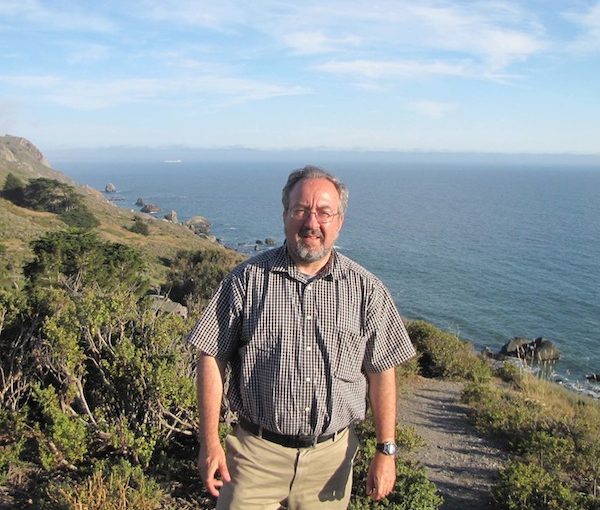
University of Victoria’s Prof. Dan Russek spoke about Jewish writers in Argentina and Mexico, as well as Jorge Luis Borges’ Jewish-related writings. (photo from Dan Russek)
Dan Russek spoke on 20th-century Latin American writers, both Jewish and those who have been influenced by Jewish themes, at a Jan. 10 Zoom event organized by Congregation Emanu-El in Victoria.
Entitled The Golem Dances the Tango, the talk began with discussion of four Jewish authors – Alberto Gerchunoff and Ana Maria Shua of Argentina and Margo Glantz and Myriam Moscona of Mexico – before examining Argentine Jorge Luis Borges’ Jewish-related writings.
Gerchunoff (1883-1950) painted an idealized version of Jewish life in the Argentine countryside in his writings, with religious Jews as peasant farmers in a new land, explained Russek, an associate professor in the University of Victoria’s department of Hispanic and Italian studies.
In his best-known work, The Jewish Gauchos of the Pampas, a series of vignettes, “Gerchunoff was keen to find parallels between peasant life in Argentina and the Bible, and explore the interaction between Jews and the local residents,” Russek said. In one story, El Episodio de Myriam, a Jewish girl from a pious family elopes with a non-Jewish boy, causing uproar in the community.
Shua represents a more modern writer, less attached to traditions, said Russek. In her 1994 novel The Book of Memories, an anonymous narrator tells the story of the Rimetka family. “Gossip reigns supreme in this fictionalized account of a family. One feels as though we are witnessing a family dinner, perhaps a seder,” Russek explained. The narrator presents different and sometimes contradictory accounts, he said, creating a “series of foibles and misadventures with no end.”
Mexico’s Glantz incorporates much of her family story into her most-recognized book, The Genealogies, published in 1981. The daughter of immigrants from Ukraine, her father, Jacobo Glantz, was a promoter of Jewish intellectual life in Mexico, and once penned a poem about Christopher Columbus in Yiddish.
The Genealogies “is a form of literature as transcription and personal document,” Russek said. “It is a family story centred on her parents and her own coming of age. In Glantz, we see an adoption of Jewish culture but not of Jewish faith nor a strong sense of belonging.”
Moscona, a poet, journalist and translator, was the most contemporary writer of the four. Born in Mexico City to Ladino-speaking Bulgarian immigrants, her autobiographic novel Tela de sevoya explores her quest to find her cultural and linguistic heritage.
Russek then discussed Borges, a Judeophile who had several Jewish friends, from his time studying in Geneva, as well as literary mentors, such as Baruch Spinoza and Franz Kafka. Borges credited his English Protestant grandmother for providing a passion for Israel through a love of the Bible, and recognized Judaism as a pillar of Western Civilization.
In 1934, early in his literary life, Borges wrote an article called “I, A Jew,” which was a defence against an attack from a fascist magazine accusing him of hiding his Jewishness. In it, Borges says he would not mind at all being Jewish.
Borges lauded Israel in his poetry. In his 1969 collection In Praise of Darkness, he views Israel as a place that transcends Jewish history and the stereotypes associated with Jews. Two of the poems were written after the Six Day War and herald Israeli heroism on the battlefield.
In “Israel, 1969,” Borges writes, “You shall forget your parents’ tongue and learn the tongue of Paradise. / You shall be an Israeli. / You shall be a soldier. / You shall build the homeland with swamps, you shall erect it in deserts.”
Jewish characters and themes appear in “The Secret Miracle” and “The Death and the Compass.” And Borges had an abiding interest in kabbalah, which is documented in his essays and lectures. About his story El Aleph, Borges wrote: “In the kabbalah, that letter [aleph] signifies the En Soph, the pure and unlimited godhead; it has also been said that its shape is that of a man pointing to the sky and the earth, to indicate that the lower world is the map and mirror of the higher.”
Russek concluded with Borges’ poem “The Golem,” from the 1964 book El otro, el mismo. “Despite the logical structure of the poem, the theme deals with magic, myth and religion. The main philosophical/theological subject is the relationship between the creator and its creatures,” Russek said.
Russek is the author of Textual Exposures: Photography in 20th-Century Latin American Narrative Fiction and the upcoming Exercises in Urban Mysticism, a book of illustrated poetic prose. He coordinates Victoria’s annual Latin American and Spanish Film Week at Cinecinta.
Sam Margolishas written for the Globe and Mail, the National Post, UPI and MSNBC.
Starting in February, a few B.C. Chabads are offering Journey of the Soul: A Fresh Look at Life, Death and the Rest – In Peace, a six-session online Zoom course from the Rohr Jewish Learning Institute (JLI) that answers the question, What happens when we die?
“Participants will embark on a journey that will enlighten them and put them at ease with the topics of life and the afterlife. Practical and powerful, thoughtful and relatable, Journey of the Soul teaches a Jewish perspective on life, that begins before birth and lasts well after a person’s passing,” said Rabbi Yechiel Baitelman, director of Chabad Richmond and a local JLI instructor.
“Death is both mysterious and inevitable,” added Baitelman. “Understanding death as a continuation of life reveals the holiness of life, while putting everything in a dramatically new context. The soul is on one long journey that is greater than each particular chapter.”
According to Baitelman, Journey of the Soul considers what happens to the soul at birth and again at death. It ponders whether there is a better place after this one; whether our loved ones continue to connect with us; the Jewish understanding of reincarnation; and how to relate to an afterlife even if we’re not spiritual. Journey of the Soul is designed to appeal to people at all levels of knowledge, including those without any prior experience or background in Jewish learning. It is open to the public.
Doctors and most mental health professionals can earn CME or continuing education credit by attending the course – visit myjli.com/continuingeducation for more information and a complete accreditation statement.
“The discounted cost of $40 per person takes into account COVID-19, and the fact that so many people have faced illness, job loss, reduced incomes and other challenges. While this is far below the regular price of the course, we ask you to please consider adding a donation of any size to help defray the course costs, if you are able to,” added Baitelman about the fees to attend the Chabad Richmond series. “And feel free to try the first class for free with no commitment.”
Chabad Richmond offers Journey of the Soul starting either Feb. 3 or 4, 7:30 p.m., and running weekly until March 10 or 11, respectively (chabadrichmond.com or 604-277-6427). The course is also being offered by Lubavitch BC Feb. 2-March 9, 7:30 p.m., with Rabbi Dovid Rosenfeld (lubavitchbc.com or 604-266-1313); and Feb. 3-March 10, 7 p.m., with Rabbi Meir Kaplan (chabadvi.org or 250-744-2770). The series cost varies.
As the winter blues threaten to sink in, and COVID continues to be a part of life, Canadian Associates of Ben-Gurion University of the Negev (CABGU) has been looking for ways to keep people engaged through a series of virtual events. Each event seeks to offer insights, share research and encourage discussion about varied topics.
For the art lover, A Virtual Art Tour, scheduled for Feb. 7, 8:30 a.m., offers participants a guided stroll through one of the few public art collections in Israel’s Negev Desert. “Ben-Gurion University is home to one of southern Israel’s most dynamic and innovative fine arts collections,” said Maayan Amir, the collection’s curator and senior lecturer in the department of art. “Many of the pieces featured in the collection can be found scattered throughout the Be’er Sheva campus, enlivening the landscape while complementing it as well.”
On the medical front, questions have been raised during the pandemic about ethical decision-making. How do medical personnel make life and death decisions? What type of protocol is followed and how should the vaccine be distributed? Three top doctors from Israel and Canada will participate in a moderated discussion on Feb. 10, 4:30 p.m., sponsored by the Dr. Edward Feldman Memorial Fund. The event is a collaborative initiative between CABGU and the Israel Medical Association. Among the speakers are Dr. Yoram Singer, director of the Negev Home Palliative Care Unit at Ben-Gurion University; Dr. Sandy Buchman, medical director of the Freeman Centre for Advancement of Palliative Care at North York General Hospital; and Dr. Elliott Malamet, lecturer on Jewish ethics and philosophy at Hebrew University.
CABGU also offers monthly lunchtime webinars on STEM-related topics called Webinar Wednesdays. Coming up on Feb. 3, 9 a.m., BGU professor and president Daniel Chamovitz will be joined by Sigal Abramovich from the university’s department of earth and environmental sciences for a discussion about the impact that climate change is having on the environment. Research from BGU that looks at the role cannabis can play in supporting people with autism will be the focal point of a webinar on March 3, 9 a.m.
Register for any of these webinars at bengurion.ca.
Josh Epstein and Amanda Sum in do you want what i have got? a craigslist cantata, written by Veda Hille, Bill Richardson and Amiel Gladstone, and presented by the Cultch and Musical Stage Company. (photo by Emily Cooper)
Welcome back the cast of wild and wacky characters from the Craigslist community as they attempt to buy and sell online, all the while longing and searching for human connection – this time with a fresh, new perspective on social isolation, and livestreamed from all around the Cultch. The production features the original songs “300 Stuffed Penguins,” “Chili Eating Buddy,” “Decapitated Dolls,” and more. Joining actors Epstein and Sum in the cast are Meaghan Chenosky, Kayvon Khoshkam and Andrew Wheeler. Showtimes are Feb. 5-6, 4:30 p.m. and 7:30 p.m., and Feb. 7, at noon. Tickets ($25/$29/$58) can be purchased from 604-251-1363 or thecultch.com/event/a-craigslist-cantata.
Left to right: Richard Leipsic, David Asper, Leonard Asper and Gail Asper. (photo from CFHU)
The Canadian Friends of Hebrew University has received $5 million from the Asper Foundation. This gift upholds a tradition of exceptional philanthropic support and collaboration between the Asper Family, based in Winnipeg, Man., and the Hebrew University of Jerusalem Israel (HUJI). It will allow Asper HUJI Innovate to expand its footprint and professional-led startup accelerators to develop significant external partnerships.
The Asper Foundation was founded in 1983 by Israel Asper (1932-2003) and Babs Asper (1933-2011), who believed that philanthropy is a driving force behind positive change in people’s quality of life. It supports major initiatives in the areas of Jewish charity, as well as culture, education, community development and human rights locally, nationally and internationally.
A portion of the recently donated funds will be used to establish an annual Asper Innovation Prize, valued at $35,000 US. The prize will be awarded during a juried competition, intended to encourage and recognize outstanding and promising student-led startups. The public event will also be used to showcase the university as a central force for global innovation within the Jerusalem ecosystem. (Jerusalem is currently ranked sixth in the new Global Startup Ecosystem Report).
“It was the entrepreneurial spirit and wisdom of our late parents, Israel and Babs, that established ties with the Hebrew University close to 60 years ago. We are very proud of our longstanding partnership and connection to innovation that began with the creation of the Asper Centre for Entrepreneurship in the Jerusalem School of Business Administration, in 2001,” said Gail Asper, president of the Asper Foundation. “We are excited to witness, through Asper HUJI Innovate, new generations of students and academics lay the groundwork for advancing ideas, for generations to come.”
The Asper HUJI Innovate platform encourages the entire university community, including students, faculty and alumni, and the Jerusalem community at large to develop their innovation and entrepreneurial capabilities. Established in 2018, it was created as a platform to ensure that graduates are best prepared for the challenges brought about by disruption, inherent in an evolving workplace.
“The HUJI Innovate program is highly prized by the entire university, and the Asper Foundation’s agreement to name and support the centre will surely lead to a great leap forward in the Hebrew University’s entrepreneurial enterprises,” said Prof. Asher Cohen, HU president.
The Hebrew University itself was founded in 1918, and officially opened its doors in 1925. It is ranked internationally among the 100 leading universities in the world, with six campuses, 200 majors and programs, and more than 5,000 courses.
“For over 100 years, the Hebrew University of Jerusalem has upheld the vision of its founders, including Albert Einstein, Martin Buber and Sigmund Freud, being at the forefront of creating Israel’s most significant and cutting-edge research, leading to inventions that serve our global community,” said Rami Kleinmann, president and chief executive office of Canadian Friends of Hebrew University, which was founded in 1944 by Canadian philanthropist Allan Bronfman.
CFHU provides support for the Hebrew University of Jerusalem to maintain its standing as one of the world’s leading academic research institutions, as well as aid in its continual pursuit to impact real change. CFHU is headquartered in Toronto and has six chapters across Canada, including here in Vancouver.
“This incredible gift will positively impact thousands of students, faculty and alumni,” said Kleinmann, “essentially shifting the course of research and engagement between the university and myriad business communities at large – it is extraordinarily profound.”
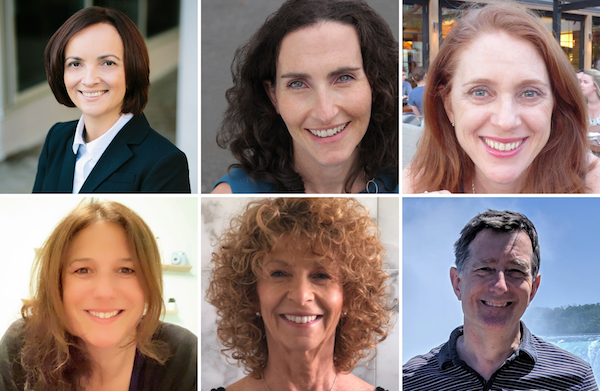
Clockwise from top left: committee members Tanja Demajo, Michelle Dodek, Michelle Gerber, Stan Shaw, Renee Katz and Simone Kallner. (photo sextet from JFS)
Jewish Family Services has formed a food security committee. This team will be responsible for leading the transition plan of the JFS’s Jewish Food Bank to its new and dedicated facility near Main and East 3rd Avenue in Vancouver. The committee, which reports to the board of directors, will be focused on supporting the Food Security program development project as a steering committee for the move into the new facility; and assisting as content advisors on an ongoing basis in the areas of food programs planning, security, building management, partnerships and community engagement, and communication.
Committee members have served on the Jewish Food Security Task Force and sit on several committees in the community. The committee co-chairs – Simone Kallner and Stan Shaw – also serve on the JFS board.
This year, a Food Security Project website will be launched to keep people apprised of the committee’s work. It will also contain upcoming town hall meetings, with the most current community stakeholder engagement and input opportunities.
* * *
Created in 1967, the Order of Canada is one of our country’s highest civilian honours. Its companions, officers and members take to heart the motto of the order, “desiderantes meliorem patriam” (“they desire a better country”). Appointments are made by the governor general on the recommendation of the Advisory Council for the Order of Canada and, on Dec. 30, it was announced that Dr. Robert Krell was among the 61 new appointees.
Dr. Robert Krell (photo courtesy)
Krell was appointed Member of the Order of Canada for “his contributions to our understanding of mass ethnopolitical violence, and for his advocacy on behalf of Holocaust survivors.”
A professor emeritus of the University of British Columbia, department of psychiatry, Krell’s research and interests are the psychiatric treatment of aging survivors of massive trauma; and antisemitism, racism and prejudice education.
Krell was born in Holland and survived the Holocaust in hiding. The Krell family moved to Vancouver, where he obtained an MD from UBC and eventually became professor of psychiatry. In his psychiatric practice, Krell was director of child and family psychiatry and also treated Holocaust survivors and their families, as well as Dutch survivors of Japanese concentration camps.
Krell established a Holocaust education program for high school students in 1976 and an audiovisual documentation program recording survivor testimony in 1978 and assisted with the formation of child survivor groups starting in 1982. He served on the International Advisory Council of the Hidden Child Gathering in New York in 1991, and he is founding president and board member of the Vancouver Holocaust Education Centre, which opened in 1994 and which teaches 20,000 students annually. He has authored and co-edited 10 books, 20 book chapters and more than 50 journal articles. He continues to write and speak on Holocaust-related topics.
* * *
With thanks to HaShem, Schara Tzedeck Synagogue members Alexander Hart and Kathryn Selby are honoured and delighted to announce the engagement in Jerusalem of their son Shmuel Hart to Reut Rappoport, daughter of Rabbi Jason and Meira Rappoport of Alon Shvut, Gush Etzion, Israel.
* * *
An article on the mosaic work of Lilian Broca has been published in the international peer-reviewed academic magazine Journal of Mosaic Research, out of Izmir, Turkey. It can be found at dergipark.org.tr/tr/pub/jmr (click on English version or translation if necessary), scroll down to article 18, which is “From Virtue to Power: Explorations in Female Heroism – The Mosaics of Lilian Broca,” and click on PDF on the upper lefthand side. The article was written by Angela Clarke, PhD, of the Italian Cultural Centre here in Vancouver.
* * *
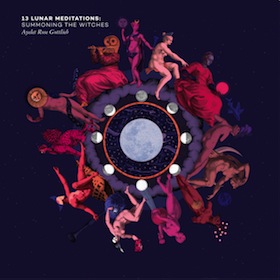
Jerusalem-born, Montreal-based composer and vocalist Ayelet Rose Gottlieb released the album 13 Lunar Meditations: Summoning the Witches on Jan. 12, the first new moon of the new year.
A collaborative project, this double-vinyl release includes poetry by more than 20 women and girls from around the globe, a choir of improvising vocalists conducted by DB Boyko, and features vocalist Jay Clayton. Through a multicultural approach, 13 Lunar Meditations is an acoustic exploration focusing on the moon, our relationship with it and its effects on us.
“The moon speaks to the universal and to the intimate female presence,” Gottlieb shared on her inspiration, from her personal journey as an artist and mother. “In this difficult time we live in, having a connection with each other, with the world around us and with the universe may be the most radical act of resilience.”
In 2015, Boyko commissioned Gottlieb to compose a new song-cycle for her VOICE OVER mind Festival in Vancouver. Gottlieb composed the first draft of this song-cycle for her own quintet and Boyko’s improvisers’ choir. Later that year, the piece was presented again at John Zorn’s the Stone, in New York City, where Clayton joined in for the first time.
Gottlieb’s song-cycle traces the phases of the moon, from birth to full glory and all the way back to emptiness. The compositions range in musical expression from wild and experimental, to melodic, rhythmic and light. All are laced with improvisation and rooted in jazz with Turkish and Armenian undertones. Primarily sung in English, also interwoven are Hebrew, German, French, Turkish, Arabic, Spanish and Japanese.
Gottlieb invited more than 20 women and girls to write texts on their personal relationship to the moon, which inspired her compositions. Ages 4 to 70, these contributors represent a global community from diverse backgrounds and nationalities – from Australia to Morocco, a poet, a gynecologist, a lawyer, an energy healer, a sex worker, a grandmother, and others.
Supported by Canada Council for the Arts and a Kickstarter campaign that concluded at 109%, the album was recorded in Montreal. On it, Gottlieb, Clayton and Boyko are joined by Coeur Luna, Turkish violinist Eylem Basaldi, guitarist Aram Bajakian, contrabassist Stéphane Diamantakiou and drummer Ivan Bamford.
The album and accompanying lunar calendar and box set of 13 postcards (with art by Sarit Evrani, designed by Dan Levi) are available for purchase at ayeletrose.com and ayelet.bandcamp.com.
בריטניה החלה בשבוע שעבר לערוך ניסויים קליניים בתרסיס לאף למניעת התפשטות חיידק הקורונה, שמיוצר על ידי חברה בוונקובר “סנוטיז”. החברה בבעלות הישראלית, ד”ר גילי רגב, שמשמשת גם המנכ”לית שלה. קנדה השלימה כבר את השלב הראשון בניסויים הקליניים שלה ואילו ארה”ב אמורה להתחיל בניסויים דומים בימים הקרובים. בישראל לעומת זאת שוקלת מערכת הבריאות להגדיר את התרסיס של “סנוטייז” כמכשיר רפואי ולא כתרופה, כך שהתהליך לאישורו יהיה הרבה יותר מהיר.
התריס לאף של “סנוטיז” מבוסס על תרכובות שנמצאות במזון ויוצרות תחמוצת חנקן בכמות קטנה. הוא אמור לסייע במניעת מעבר נגיף הקורונה דרך האף ומערכת הנשימה. לדברי ד”ר רגב החברה קוראת למוצר חומר חיטוי לאף – בדומה לג’ל חיטוי לידיים למניעת התפשטות הקורונה. לדבריה מאה איש שהשתתפו בשלב הראשון של הניסויים הקליניים בקנדה והשתמשו בתרסיס, ואף אחד מהם לא חלה בנגיף.
ד”ר רגב למדה באוניברסיטה העברית בירושלים וסיימה את הדוקטורט בביוכמיה. לאחר מכן עברה לוונקובר והיא הקימה כאן את “סנוטיז” ביחד עם ד”ר כריס מילר לפני כארבע שנים.
קנדה רכשה פי חמישה חיסונים מהנדרש אך חיסנה רק אחוז מהאוכלוסייה
סיפור כשלון שמעורר תמיהה מתרחש בקנדה. המדינה שרכשה מראש יותר מנות של חיסונים נגד הקורונה מכל מדינה אחרת (כמעט פי חמישה מהנדרש), ומערכת הבריאות הציבורית שלה נחשבת מצויינת ומתוקצבת כראוי. אך למרות זאת, בקנדה התחסנו עד כה רק כאחוז אחד מכלל האוכלוסיה. ממש מביש.
לדעת המומחה, ריאן אימגרונדל, קנדה נתנה כל כך הרבה תשומת לב לאחסון הזריקות בהקפאה, ולא מספיק תשומת לב לשלב שבו הן יוצאות מההקפאה ועוברות לזרוע של האזרחים. הרשויות היו מודאגות לגבי דרישות האחסון, ונראה שהם “שכחו” שהזריקות היו אמורות למעשה להינתן לאנשים.
מומחה למחלות זיהומיות באוניברסיטת טורונטו, ד”ר איזק בוגוך, הסביר מדוע ישראל הצליחה להפיץ את החיסון בצורה מסיבית הרבה יותר. לדבריו ישראל היא מדינה קטנה והאוכלוסייה מרוכזת הרבה יותר מאשר קנדה. כידוע קנדה היא המדינה השנייה בגודלה בעולם מבחינת שטח. האוכלוסיה של קנדה מפוזרת באזורים שונים ומרוחקים זה מזה. צריך שרשרת אספקה (בטמפרטורות הנמוכות) לשמירה על החיסונים, וזה מסובך באזורים מרוחקים, כפריים ונטולי שירותים. זה אתגר מאוד גדול בקנדה.
אמזון לא עוצרת: רוכשת לראשונה מטוסי ארוכי טווח להעברת משלוחים מקנדה
ענקית המסחר האלקטרוני האמריקנית אמזון ממשיכה לגדול בתקופת משבר הקורונה, ורוכשת לראשונה מטוסים ארוכי טווח להעברת מישלוחים לאירופה ואזורים מרוחקים נוספים. עד כה החברה רק החכירה מטוסים להעברת המישלוחים.
אמזון חתמה לפני מספר ימים על הסכמים לרכישת אחד עשר מטוסי בואינג שבע שש שבע/שלוש מאות: שבעה מחברת התעופה האמריקנית דלתא וארבעה מחברת התעופה הקנדית ווסט ג’ט. מטוסי הנוסעים יוסבו לקרגו ויוכנסו לשימוש ע”י אמזון.
זו אגב הוכחה נוספת שחברות התעופה מקטינות את צי המטוסים שלהן לטיסות ארוכות טווח, נוכח המשבר הקשה שפוקד את ענף התעופה.
אמזון החליטה לפני כשנתיים להטיס בעצמה את מטעניה לכל רחבי ברחבי העולם, והיא מחזיקה כיום בציא ענק של שמונים מטוסים מוחכרים. עתה החברה כאמור רוכשת מטוסים והציא שלה יגדל אפוא לתשעים ואחד מטוסים. לפי הערכות אמזון מתכוונת להמשיך ולהגדיל את ציא המטוסים שלה למאתיים, בדומה למתחרה האמריקנית שלה להעברת מטענים – חברת יו.פי.אס.
אמזון מעסיקה כיום קרוב למיליון עובדים ברחבי העולם ושווי השוק שלה נאמד ביותר מטריליון דולר.
Israel’s Operation Tzur Israel, bringing olim from Ethiopia to Israel, began Dec. 3. (photo by Kassaw Molla)
It’s been almost 40 years since Israel coordinated the first airlift of Ethiopian Jews to Israel in 1984. The Beta Israel people, a citizenry of more than 100,000 at the time, were facing starvation in the midst of Ethiopia’s civil war. By the end of Operation Moses, some seven weeks and 30 clandestine flights later, more than 8,000 men, women and children had been airlifted to Israel. Since that time, Israel has rescued more than 30,000 Beta Israel from northern and central Ethiopia.
The impetus for saving Ethiopia’s fractured and often-persecuted Jewish populations goes back to 1921. Rabbi Abraham Isaac Kook, the then-Ashkenazi chief rabbi of British Mandatory Palestine, made an appeal for Jews to rescue the “holy souls of the House of Israel” from “extinction and contamination” in Ethiopia. His urging would be repeated by numerous other rabbis, including a former Sephardi chief rabbi, the late Ovadia Yosef, who, five decades later, declared the population eligible for aliyah to Israel. Nonetheless, there are thousands of Ethiopian families still waiting for their turn to move to the Jewish homeland.
Descendants of Beta Israel
The Jewish enclaves of Gondar City and the Ethiopian capital of Addis Ababa are home to the descendants of those first refugees of the 1980s and 1990s: grandchildren and great-grandchildren, fathers, mothers and children who were born while their parents waited for Israel to fulfil its stated promise to provide a new home. Their primitive living conditions, say aid workers, are often the product of circumstance. In a 2014 interview, Rabbi Sybil Sheridan (now Romain), a co-founder of the aid organization Meketa, told me that the Beta Israel moved to Gondar City from their ancestral farmlands decades ago due to persecution, with the implicit understanding that their next home would be in Israel.
“They gave up their things, they gave up their jobs, they left thinking they would actually be on the next plane,” Sheridan said. For many, those years of waiting for the next plane have resulted in a week-to-week existence, hinged on the assurances of a future that will reunite them with their now-Israeli families.
In 2003, the Israeli government announced that 20,000 Jews would be allowed to move to Israel, but that plan was later dropped when the Ethiopian government objected to the mass emigration. In 2015, when it became evident that Jewish populations were still at risk from persecution, the Knesset declared it would rescue 9,000 Ethiopian Jews, and would complete the airlifts by 2020. Fewer than 1,000 individuals have been admitted during that time.
In October 2020, Prime Minister Binyamin Netanyahu announced that 2,000 olim would be airlifted to Israel by the end of 2020. The deadline for Operation Tzur Israel (Rock of Israel) has been extended to the end of January 2021, and is gradually being fulfilled. Last month, roughly 700 olim arrived from Gondar and Addis Ababa. Another two airlifts this month have brought the total to roughly 1,500.
Israel’s Operation Tzur Israel has brought approximately 1,500 Ethiopians to Israel so far. (photo by Noga Melsa/Ministry of Absorption and Immigration)
Family members and aid groups in both countries say the 2,000-person limit is not enough. Those waiting in Israel to see their relatives say they are worried for their families’ safety with the risk of civil war and the coronavirus pandemic. Aid organizations argue that the country’s economic shutdown in March is still causing widespread unemployment. While Meketa and Struggle to Save Ethiopian Jewry (SSEJ), two aid groups that work to support the communities, have been shipping in food to the community synagogues, they warn that families are still at risk from famine.
Avi Bram, a trustee for Meketa, said conditions in Gondar are worrisome. “The community is in a very bad situation. Many, not all, but many are in a very, very poor and unsettled standard of living, especially now because of the pandemic.”
Bram said the original mandate of Meketa, which was established in 2013, was to reinforce independence for the community through training, conversational Hebrew classes and small business micro-loans. It was never designed to be a supplemental food program. But the aid is critical at this time. “It fills a humanitarian need,” he said.
SSEJ representative Jeremy Feit said the organization does what it can to support impoverished members of the Addis Ababa community. It arranges medical assistance for children under 5 and seniors, and hot meals for malnourished children and pregnant and nursing mothers.
“The end goal of the work is to limit needless suffering and deaths, while urging Israel to evaluate their claims and allow those eligible to make aliyah as soon as possible,” said Feit.
Aid groups Meketa and Struggle to Save Ethiopian Jewry provide emergency food to Ethiopian Jewish communities waiting for aliyah. (photo from Meketa)
Mengistu (no last name given), who lives in Ethiopia and has relatives in Israel from a previous aliyah, said the communities are facing increasing danger. “On one side, there’s coronavirus,” said Mengistu. On [another] side there’s the war,” coupled with endemic unemployment and famine.
According to Mengistu, the changing criteria for airlifts are only inciting more stress at home.
“[They] said they would bring 2,000 people at the end of this year,” Mengistu said. “We don’t know if they applied their decision [because] every time they decide [on a quota], they change it.
“So, who are they going to bring? Are they going to bring children? Are they going to [separate] brothers and sisters and leave [some] with their parents? Two thousand people, it’s nothing,” Mengistu said, “compared to the [actual number of] the people still in Ethiopia.”
A stalwart proponent
In May of last year, Pnina Tamano-Shata was appointed minister of absorption and immigration by the Likud-Blue and White coalition. The 38-year-old Ethiopian-born Israeli came with life experiences that made her an ideal candidate for the position. She and her family had immigrated during the 1980s rescue Operation Moses, during which an estimated 4,000 refugees died en route. She knows firsthand the conditions that today’s Ethiopian Jewish communities are forced to endure while they wait for aliyah.
She also isn’t bashful in her support for immigrant rights or services. In October, she negotiated an agreement with the Israeli nonprofit Shavei Israel to airlift approximately 700 Bnei Menashe Jews from North India. As part of the agreement, Shavei Israel would cover all transportation costs. The new immigrants will quarantine at a moshav before settling into their new homes and reuniting with their families.
Israel’s Minister of Absorption and Immigration Pnina Tamano-Shata is the first Ethiopian-born woman to hold a Knesset seat. (photo from Ministry of Absorption and Immigration)
As well, she has put forth a vision and a budget for how to finally resolve the humanitarian crisis in Ethiopia.
In August, Tamano-Shata proposed a plan that would allow, in her words, for Israel to “close the camps” in Gondar and Addis Ababa. Approximately 4,000 of 8,000 olim would be airlifted to Israel by year-end and the rest would follow by 2023. The NIS 1.3 billion ($380 million US at the time) proposal received support from all sides but was never adopted. The Netanyahu government later endorsed a limit of 2,000 by Dec. 31, with assurances of more immigrants at a later date.
Still, Tamano-Shata says she is committed to seeing the aliyah to its end. “[To] my dismay, we were unable to approve the national budget which was supposed to include the outline for the aliyah of those remaining in Ethiopia,” Tamano-Shata told the Jewish Independent in a recent email interview. “However, this does not prevent me from continuing to push for a comprehensive solution for this issue.”
To Mengistu, like many in Ethiopia’s Jewish enclaves, Tamano-Shata’s words are a hopeful sign. “Because now the help for the aliyah is Pnina,” said Mengistu. “She’s one of us. So maybe she will understand the situation and the [reason for] the protests [in Israel.] Maybe things will change.”
With Israel now set to face a fourth election in just two years, Tamano-Shata’s future as the next minister of absorption and immigration is yet to be determined, but her motivation to see the end of what is arguably Israel’s greatest humanitarian crisis remains firm. In 2016, the then-new minister was recognized by humanitarian activist Martin Luther King III for her efforts to establish better protections for Ethiopian immigrants in Israel. Last year, she toured the Addis Ababa enclave and handed out baskets of food to residents. She said she is committed to the rights of Israel’s olim, “despite the policies of lockdowns, shutting of flights and closing of the skies that exists in many countries due to COVID-19.”
At this point, all eyes are on Tamano-Shata. Few doubt that she will meet her stated commitment of 2,000 olim by Jan. 31. But can she, as well, engender better trust between Israel and those waiting for aliyah?
In a recent interview for the podcast One Jewish Family, Ambanesh Biru, former chair of the Gondar Jewish community, summarized the views of a hopeful community that knows its safety may rest in the Israeli government’s understanding of their predicament.
Don’t forget about the Ethiopian Jewish community, said Biru, “especially those [anticipating] aliyah. Because all of the Jews in Gondar and Addis Ababa came from villages expecting they would be going to Israel right away, not to live in Gondar [for the rest of their lives]. So, if anybody comes and talks about aliyah from Israel, please do your best [to follow through].”
Jan Lee’s articles and blog posts have been published in B’nai B’rith Magazine, Voices of Conservative and Masorti Judaism, Times of Israel, as well as a number of business, environmental and travel publications. Her blog can be found at multiculturaljew.polestarpassages.com.
In his December presentation, Michael Geller showed this photo of a building in Paris, where modular housing was added atop an existing apartment building to provide more units.
An old adage says that investing in real estate is always a good idea. “Buy land, they’re not making it anymore,” said Mark Twain. But local housing guru Michael Geller rejects this notion.
“I think sometimes you have to create land,” Geller said. Looking at Vancouver from above, he said, you see a lot of green and a lot of blue. But you also see a lot of grey. Making better use of parking lots, rooftops, the top levels of parkades and underused space around existing buildings are among the ways Geller imagines we can create more space for housing.
Geller spoke at Tikva Housing Society’s annual general meeting, held virtually on the first night of Chanukah. Tikva is a nonprofit society that provides access to affordable housing, primarily for Jewish low- to moderate-income adults and families. Its vision is “a safe, stable and affordable home for every Jewish person who needs one in Greater Vancouver.”
A screenshot from Michael Geller’s presentation at the Tikva Housing Society annual general meeting Dec. 11. It was one of eight ideas he suggested to create more space for housing.
In honour of the eight nights of Chanukah, Geller offered up eight ideas, including building houses like we build cars – in factories. Also, taking the concept of laneway housing to new heights by allowing the construction of housing on parking lots. And designing apartments that can be divided into two studio suites or opened up to create family accommodation. Plus, matching people who live alone, or in a couple, and have extra bedrooms in their house to connect with people who need housing.
He showed one instance of a high-rise complex in West Vancouver where two new low-rise buildings were constructed amid the landscaped gardens around the older buildings.
Geller was an early adopter of the concept of modular housing, having written a thesis on the subject in university. Modular housing consists of units manufactured and moved as completed (or mostly completed) structures to their temporary or permanent sites. He showed a photo of a building in Paris, where modular housing was added atop an existing apartment building to provide more units. The top levels of many urban parkades might make ideal locations for modular housing, he said, since few people park there unless the entire structure is full.
In European countries – Geller is doing work in Russia at present – families use space for more than one purpose, allowing better utilization of limited footage. Student accommodations, he suggested, could be developed by transforming a living area into a second bedroom through a pocket door or similar. Larger apartments could be made more flexible with extra external doors and tiny kitchenettes that allow one apartment to become two smaller ones – or those two smaller ones to be easily retrofitted for a growing family. He called these types of lock-off suites, “a mortgage helper in the sky.”
Identifying new municipal, provincial and federal lands for affordable housing is another option.
“I really like golfing at Langara,” Geller said. “But, I must say, if you were to take a 40-foot strip off that golf course all the way along Cambie Street, you could create a lot of land, which could be used for affordable housing and some market housing to support the non-market housing.”
He admitted that some of his golfing friends might think this is a terrible idea.
Many of Vancouver’s older residents are “over-housed,” according to Geller, meaning that one or two people might live in a three- or four-bedroom home. Not everyone would be comfortable sharing their home with erstwhile strangers, he admitted, but some would.
“They might want to share with another senior, they might want to share with a younger person who is willing to help around the house, to pick up prescriptions, to pick up food, to drive them to see friends,” he said.
Another idea Geller mooted was “the Tikva Suite.”
“Maybe we should start a program where we basically approach every member of the Jewish community who owns an apartment building and say, rent us a suite, give us a suite, and the clever accountants in the community can work out some way so there can be a tax receipt for this and that way you can have a suite in every one of those buildings,” he said. “It’s a dream, but many of the dreams I’ve had over the last 50 years actually do materialize. They take awhile, but this is not such a crazy idea.”
Geller is a planner, real estate developer and retired architect with five decades of experience in the public, private and institutional sectors. He is adjunct professor at the Simon Fraser University Centre for Sustainable Development.
Beginning with a seven-unit building in South Vancouver in 2007, Tikva Housing Society has grown to support the housing needs of 288 individuals. The society provides housing directly through three complexes – with another under construction – as well as through rent subsidies. The AGM heard that the society has net assets of about $2.6 million.
At the meeting, outgoing chair Shelley Karrel announced the launch of a new Jewish Housing Registry, an online platform for people who are looking for housing. It is a partnership between Tikva, Jewish Family Services, Jewish Federation of Greater Vancouver and the other Jewish housing societies: Vancouver Jewish Building Society, Yaffa Housing Society, Haro Park Centre and Maple Crest Apartments (which is under the auspices of Royal Canadian Legion Shalom Branch 178). The registry will provide a single source for housing applications and will also provide partners with a more accurate way of determining the scope of the community’s housing needs. (See jewishindependent.ca/jewish-housing-registry-live.)
The 2011 Census reported 26,250 people in Metro Vancouver’s Jewish community, of which more than 16% reported incomes below the low-income cutoff, giving Vancouver the second highest rate of Jewish poor in Canada. Average rent for a two-bedroom apartment in Metro Vancouver is more than $2,000 a month and the vacancy rate is about one percent.
The violence at the U.S. Capitol on Jan. 6. (photo by Tyler Merbler/flickr)
Elect a clown, expect a circus. That has been a recurring meme over the past four years. As the reality show that is the Donald Trump presidency staggers into its final few days, the full fruit of the president’s years of bellicosity and violent language expressed themselves at the U.S. Capitol Jan. 6. Incited by the president, who repeated his utterly baseless claims of a stolen election, thousands of people marched on the seat of America’s democracy, smashed windows, stormed the building, threatened lawmakers and defaced and desecrated the premises.
Some observers, including many Republicans, expressed shock at a turn of events that was almost entirely predictable. After years of the most irresponsible rhetoric imaginable from the so-called leader of the free world, and after two months of undermining the most sacred facet of American democracy, the peaceful transition of democratically elected administrations, violence was a surprise only to those who have not being paying attention – or who observe through ideological blinders.
It seems to be a turning point. A growing, though still far too small, number of Republicans are finally saying they have had enough of the outgoing president’s petulance and possibly criminal irresponsibility. Listening to some, it appears they were looking for an opportune moment to break with their leader, and the violence – which killed five people – provided the ideal opening.
It is not enough for apologists to pretend that these elements are in any way peripheral to Trumpism. He has encouraged, abetted and refused to condemn the most evil strains in the American body politic, from the Ku Klux Klan to Proud Boys, referring to “very fine people on both sides” at Charlottesville – when one side was white supremacists with a sprinkling of neo-Nazis and anti-democratic thugs. Faced with the destruction his words and his supporters wrought at the Capitol, Trump uttered the least a president could possibly say, calling on the rioters to go home, while also repeating the lies that led to the violence in the first place. Then he added: “We love you. You’re very special.” He just can’t help himself.
Among the insurrectionists at the Capitol were overt Nazis, including at least one wearing a shirt with “Camp Auschwitz” emblazoned on it and another with the acronym “6MWE,” meaning “six million wasn’t enough.” These are the very special people Trump loves. Jews and others who were taken in by an embassy move and other ostensibly “pro-Israel” acts should know now the fire with which they were playing.
There must be accountability. At the top, those who abetted and encouraged the worst actions of the past years should be held criminally liable, if that is the extent of their culpability. At a lesser level, those who tacitly or explicitly permitted what has happened – Republican senators, congress members and party officials – will ideally suffer at the ballot box at the next opportunity. Among ordinary people, including some in Canada who have expressed support for this extremist and white nationalist approach, we should seek introspection around how we may have been drawn into a political disease that we should have recognized for what it was – yet let proceed along a path that almost inevitably led to the loss of human life and the shattered glass at the U.S. Capitol last week.
We might also hope that leaders of other countries will look at the American case as an instruction in the dangers of oratorical brinksmanship, division and scapegoating. One of Trump’s greatest allies, Israel’s Prime Minister Binyamin Netanyahu, is in an election (again) and it will be illuminating to see if his style softens at all. In Europe, where far-right populism is seeing a resurgence, perhaps the warning shots from Washington will inspire a little more moderation.
Barring more violence on Inauguration Day, God forbid, this chapter will soon be behind us. Joe Biden was not everyone’s first choice for president, he was more of a compromise pick. Based on decades of experience, he has been charged with picking up the pieces of a society shattered by four years of negligent and confrontational executive leadership. It doesn’t hurt that he has a grandfatherly demeanour and a history of consensus-building. While the outgoing president will not attend the swearing in – more proof that he abhors the core principles of democracy – beside Biden will be Kamala Harris, the first woman and the first Black and Asian person to assume the vice-presidency.
No humans are perfect. The Biden-Harris administration will make mistakes and we will criticize them. But we can rejoice in the arrival of a new future, led by people of goodwill, intelligence and moderation, who know the difference between right and wrong, between neo-Nazis and very fine people.