Were you part of the pandemic sourdough bread baking craze? I’ve been baking bread for around 40 years, but I’m not a sourdough baker. Maintaining the starter was something I couldn’t manage. Although I’ve made many kinds of bread, including weekly challah (twin teens eat a lot!), I found using store-bought yeast was fine. Besides, my biology professor husband disliked the colourful, dangerous things he saw growing when I tried to maintain a starter long ago. He supports our bread habit as we buy one pound of dried yeast at a time.
My approach isn’t exact. However, I produce bread that rises and tastes good even without a recipe. I don’t use all the technical terms that I saw on the internet during the pandemic bread-baking phase. I stick to basic ingredients and easy methods. Bakers have used these successfully for thousands of years.
All this seemed familiar when I started studying the Babylonian tractate of Menachot. Menachot delves into the exact ways the rabbis thought meal (grain) offerings should be measured, cooked, burnt and sacrificed in the Temple in Jerusalem. The rabbis who discussed this mostly lived long after the Temple was destroyed. They’d never seen Temple offerings but they still discussed detailed recipes and techniques for proper sacrifice.
I remember the many online discussions about sourdough science. These were often people who, while baking beautiful pandemic sourdough, had never made bread previously, as I had. Of course, all of us would be shamed before our ancestors who, using a wooden bowl ripe with wild yeast, turned out bread consistently, day in and day out, to feed their families.
You might think, well, this isn’t for me if I don’t bake bread. Perhaps you never have worried about the ancient grain offerings in Jerusalem, or the “shrewbread” that became our modern equivalent, challah. All these discussions came to a head in Menachot, page 18a.
A question arises about whether a specific offering is fit (acceptable) and why. First, we learn about a meaningful teacher-student relationship between Rabbi Elazar ben Shammua and Yosef the Babylonian.
Yosef the Babylonian learns something from Rabbi Elazar ben Shammua that doesn’t seem entirely right to him. He questions his teacher several times. After multiple repetitions of a simple answer, Rabbi Elazar ben Shammua finally gives Yosef the Babylonian more information. He recalls another contradictory teaching from Rabbi Eliezer that agrees with what Yosef the Babylonian remembers.
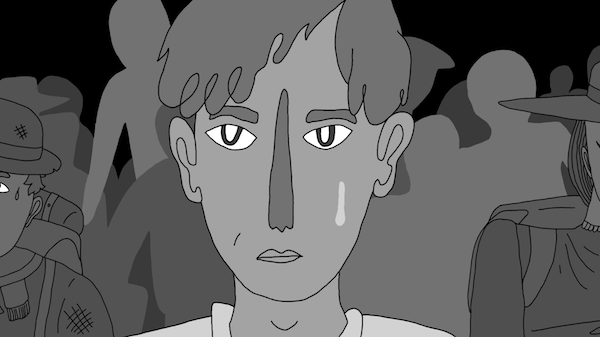
Yosef the Babylonian erupts in joy. Both men are emotional, moved by the experience they’ve had, where careful analysis brings them important understanding and resolution. Yosef the Babylonian is relieved – he had worried that what he’d remembered was a mistake because he couldn’t find anyone else who recalled what Rabbi Eliezer had taught. Rabbi Elazar ben Shammua cries, filled with wonder. They celebrate Torah study, which maintains an intellectual genealogy of teachers and students by the historic transmission of knowledge. It’s a careful recounting of discussion and disputes, rather than just a simple, reflexive answer.
Menachot 18a, like bread-baking, shows that, if we get bogged down in the technical details, we can also be swept up in the transformation that occurs when we get everything – that we study or bake – right. This story is about mistakes, forgetting, misinformation and complex opinions. This tractate might describe how to do defunct sacrifice recipes correctly. It’s also about how we transmit important knowledge. We need to keep the facts straight, without forgetting anything, and synthesize complex opinions.
This is relevant today. We’re struggling daily to keep track of what’s happening in the world. Is it legal? Is it ethical? How does it affect us? In an age of “instant” information, diminished international reporting, social media disinformation campaigns and simplistic interpretations, it’s no wonder that we need to work hard to figure out what’s happening. It’s just as important now to do one’s own footwork. We must ask questions and analyze information carefully, just as when Yosef the Babylonian sat with his teacher, Rabbi Elazar ben Shammua, sometime between 135 and 170 CE.
We can get swept up in the technical aspects of our lives, whether it’s sourdough baking or legal proceedings. Yet, we also have that practical compass that guides us. I know intuitively, after decades of practice, how to throw together flour, salt, water and yeast, when to add sweetness, oil or eggs, and why. It’s a gut feeling, as deep as my internal moral compass that reacts when I see something wrong happening. Perhaps it’s how Judaism, my family or my community has shaped me, just as environment shapes all of us. Perhaps it’s an innate sense of the worth of each human being, as we are made in the image of the Divine. We know when things are going off the rails, and when we need to keep asking the hard questions to make change.
You could infer that all this refers to the current US upheaval, but it also relates to many other issues. For instance, at home, recent research found that Canadian Jews weren’t wrong about the CBC’s bias in reporting on the Israel-Hamas war. Statistical analysis indicates that yes, headlines, interviewer choices and perspectives lacked objectivity. If you, like me, questioned the CBC’s reporting over the last two years, just like Yosef questioned Rabbi Elazar ben Shammua, this information is reassuring.
Farther away, Israelis care passionately about democracy. Israelis ask their government tough questions, including protesting its poor record in protecting Arab citizens and its failure to provide a sufficient inquiry concerning Oct. 7. Regarding Iran’s upheaval, the Islamic regime’s repression means protesters risk murder, injury, torture and rape. Brave questioning of authority and pursuit of truthful information aren’t specific to one culture or country.
Yosef the Babylonian doubted himself. He repeatedly nudged his teacher. He worried that he’d made a mistake, but then bravely sought clarity to understand the bigger picture. We, too, can be so persistent that authority figures, like our teachers and government officials, must answer with thorough responses. Let’s not get bogged down in the technical details. It’s not whether you say that your bread dough rests, or uses an autolyze. Rather, listen to your gut. Go for the big questions. Think hard. Act to take the moral high ground. We all deserve something better. Let’s hope soon to break bread together, in peace and safety, with emotional, deep discussions.
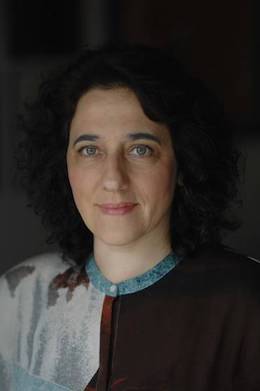
Joanne Seiff has written regularly for the Winnipeg Free Press and various Jewish publications. She is the author of three books, including From the Outside In: Jewish Post Columns 2015-2016, a collection of essays available for digital download or as a paperback from Amazon. Check her out on Instagram @yrnspinner or at joanneseiff.blogspot.com.