Skip to content
  • Home
  • Subscribe / donate
  • Events calendar
  • News
    • Local
    • National
    • Israel
    • World
    • עניין בחדשות
      A roundup of news in Canada and further afield, in Hebrew.
  • Opinion
    • From the JI
    • Op-Ed
  • Arts & Culture
    • Performing Arts
    • Music
    • Books
    • Visual Arts
    • TV & Film
  • Life
    • Celebrating the Holidays
    • Travel
    • The Daily Snooze
      Cartoons by Jacob Samuel
    • Mystery Photo
      Help the JI and JMABC fill in the gaps in our archives.
  • Community Links
    • Organizations, Etc.
    • Other News Sources & Blogs
    • Business Directory
  • FAQ
  • JI Chai Celebration
  • JI@88! video

Recent Posts

  • Story of Israel’s north
  • Sheltering in train stations
  • Teach critical thinking
  • Learning to bridge divides
  • Supporting Iranian community
  • Art dismantles systems
  • Beth Tikvah celebrates 50th
  • What is Jewish music?
  • Celebrate joy of music
  • Women share experiences 
  • Raising funds for Survivors
  • Call for digital literacy
  • The hidden hand of hate
  • Tarot as spiritual ritual
  • Students create fancy meal
  • Encouraging young voices
  • Rose’s Angels delivers
  • Living life to its fullest
  • Drawing on his roots
  • Panama City welcoming
  • Pesach cleaning
  • On the wings of griffon vultures
  • Vast recipe & story collection
  • A word, please …
  • מארק קרני לא ממתין לטראמפ
  • On war and antisemitism
  • Jews shine in Canucks colours
  • Moment of opportunity
  • Shooting response
  • BC budget fails seniors
  • Ritual is what makes life holy
  • Dogs help war veterans live again
  • Remain vital and outspoken
  • An urgent play to see
  • Pop-up exhibit popular
  • An invite to join JWest

Archives

Follow @JewishIndie
image - The CJN - Visit Us Banner - 300x600 - 101625

Month: April 2022

Helping Ukrainian refugees

Helping Ukrainian refugees

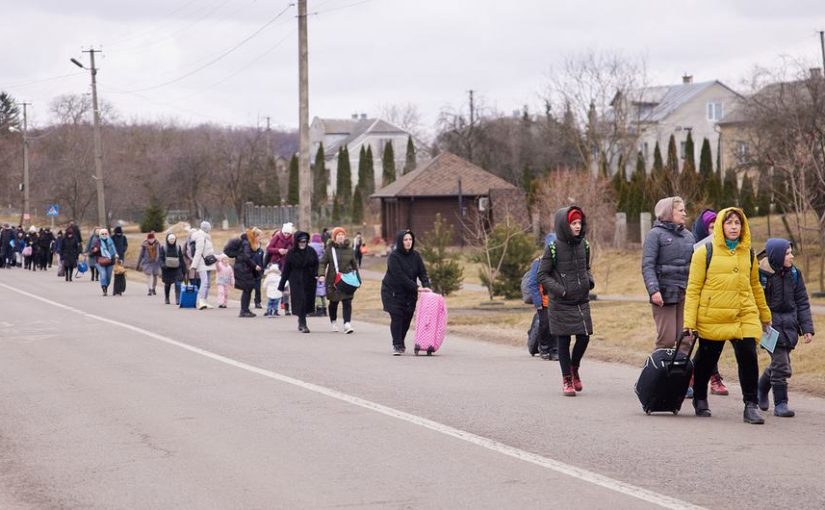
On March 5, in western Ukraine, children and families make their way to the border to cross into Poland. (photo © UNICEF/Viktor Moskaliuk)

A friend described to me once what Warsaw looked like in the aftermath of the Second World War. A small boy then, he remembered vividly the ripped apartment buildings, whole sides of buildings missing. When you raised your head, he said, you could see a bed up there, one leg hanging over the precipice, the chimney, a chair stuck in half fall. The lives turned into ruins and exposed.

The “noble” war, as Russian President Vladimir Putin calls it, has killed thousands. Other thousands have been taken into filtration camps by Russians. The war has uprooted the lives of millions. It has separated wives from husbands, children from fathers. It has laid bare what is usually concealed from the eyes of a stranger: human attachments and loves, support for one another and acts of kindness. But also, the seismic faults running through so many families; their discontents, their arguments, and the way they cope with them in the time of crises.

Inadvertently, I became privy to the lives of many simply because I happened to be there at the time of their great vulnerability and need. Those I met (and, with rare exceptions, these were women with children) were going through the horrors and desolation of war. All, without exception, were traumatized. All needed practical help, advice, information and, above all, empathy.

But what they also needed, I discovered, was to talk about what they had gone through. That need was spontaneous and raw. They broke into stories easily and without invitation on my part. Each story was different, yet many followed the similar pattern: destruction and loss of property or homes; weeks in basements with scarce water, food supplies and electricity; the howl of air raid sirens; separation from loved ones and concern about their well-being; screams of traumatized children; and, then, finally evacuation, finally escape, over many days. Escape on foot, by trains, buses or sometimes cars, with detours necessitated by rockets and missiles; crossing rivers on boats where bridges were blown up.

I heard repeated gratitude to Ukrainian volunteers who facilitated the escapes, relaying families from one safe place to another; informing about the dangers on the way and how to bypass them. I heard stories of churches that sheltered families overnight; of people harbouring strangers in their homes; of volunteers who organized food that awaited fleeing families at different points of their long and hazardous journey to safety. I learned a new word – humanitarka, meaning clothing (and perhaps food) that poured into Ukraine from the West as humanitarian aid.

And I heard stories of the brutality of Russian soldiers towards civilians. I heard stories of looting, torture and rape. I heard stories of Russian soldiers leaving villages and shooting in their wake every cow, every chicken, so that the owners would be left with nothing; gratuitously smashing all the preservatives Ukrainians traditionally prepare for winter. I heard how Russian soldiers pretended they would allow villagers to run to safety, only to shoot them in their legs, and finish them off later like hunted animals. I heard stories of booby-trapped corpses, of Russians abandoning their dead.

In the two-and-a-half weeks I volunteered with the Joint Distribution Committee (JDC) at a border crossing and in a refugee shelter several kilometres away from the Polish border with Ukraine, I met people of all walks of life – I met the Ukrainian Nation.

I met a grandmother who escaped missiles with her six grandchildren and made it to Poland while the parents of the children had perished.

I met a man, a welder, looking after his old and infirm mother. They couldn’t possibly live with any family, the man explained, because his mother became psychotic and incontinent, and he regularly had to clean up after her. The welder was now trying to bring to Poland his former wife with her new husband and their three children, one of whom was his.

I met 60 elderly Baptists from Zaporizhzhia who were on the way to Amsterdam, where a sister Baptist church was going to shelter them. Zaporizhshia is the site of the largest atomic plant in Europe and it had been overtaken by Russian soldiers. It’s the city where my relatives live. Talking to these refugees, I realized that my aunt had been concealing the truth from me all along: the rockets are falling 10 kilometres away from the city.

I discovered that the most painful subject and the last thing that came up in conversations was the fact that women had had to leave their loved ones behind. The worry for their soldier sons and husbands, their parents, grandparents and siblings, was a deeply hidden, yet constant, heartbreak. It was a breaking point for many. I will not forget those eyes, dozens and dozens of women’s eyes: blue, grey, greenish; eyes magnified by tears at the thought of the separation from loved ones. When a collective image of Ukraine comes to my mind, it’s women’s eyes. Embarrassed to cry in front of me, a stranger, they tried to look away. The older sister would often say to the younger, “Enough already, just stop it!” while breaking into tears herself.

Another move that caused tears was my offering of money to refugees, the generous donations that I had received while I was still in Vancouver. In Canada, I had packed lots of envelopes to put the money into, for a civilized handout. How naïve I was! In the chaos of a refugee centre, it was quickly handing over money from hands to hands. A scared look and the initial refusal to accept was universal. I had to come up with some strategy to overcome the mutual embarrassment. “This is not my money,” I would say. “This is from Canadian friends, people like you. Canadians care about you. They want to help you. But they can’t be here. They asked me to do it for them. Please take it.” A grateful look. Tears. A hug.

The refugee centre was a temporary shelter. Refugees could spend several nights there and then move on: to some city, some country.

The vast majority of the refugees I met were determined to return home once the war was over. But they had made it to Poland and many would have liked to stay there while the war was raging. Poland was familiar; it has cultural and historical ties with Ukraine, especially with the western part of Ukraine.

In the post-Soviet times, before this war, thousands of Ukrainians had gone to Poland for work: a member of the European Union, Polish standards of living and salaries were higher than Ukrainian. Besides, the Polish language was closer to Ukrainian than any others of the countries that came forward to help. It would be manageable somehow; it could be learned, if not by everybody, at least by the younger people. But Poland couldn’t take in any more refugees. Posters in the refugee centre read in Ukrainian: “We are happy to welcome you, but our cities are full. Our small rural communities are cozy and peaceful. Consider moving there.” But even small villages were full and couldn’t afford to welcome any more people.

The women who arrived at the refugee centre accepted with resignation the fact that they would have to be on the move again. The way they decided where to go next somewhat surprised me: it wasn’t on the basis of a better financial package or living conditions. Rather, the criteria was proximity to Ukraine. The first question that women asked me about various countries also seemed unusual: they wanted to know if they would be able to find work quickly. I would talk about the hardships they had just endured; the necessity to rest, to take a break, to look around first. But that didn’t register. They have worked all their lives, they said. They are used to work. Living for free at somebody’s expenses was a no-no.

Most of the Ukrainian women I met were mild-mannered and perhaps less assertive, less forceful, compared to North American ones. All were both surprised and grateful for the help and goodwill they’d seen from so many. They couldn’t praise enough what the Poles did for them. They were deeply touched by the smallest acts of kindness. And none took the help for granted. “If this happened to other nations and we, Ukrainians, would have to do this for somebody else, would we have done the same? I am not sure,” said one woman.

Few discussed the wider political implications of the war. They didn’t talk about Putin or his goals, or the future of their country. Their concerns were more practical and immediate: food, clothing and the well-being of their children, their elderly mothers.

But I remember one woman, Nina, and her fiery indignation: “What have we done to Russians? What do they want from us? We didn’t bother anybody. Nazi? What Nazi? We live peacefully with our neighbours: gypsies, Jews, Ukrainians, Russians. We all speak Ukrainian and Russian!”

Another, older, woman, while waiting for the bus to Germany, was even more emphatic: “You tell me why Russians believe Putin’s propaganda? Why do they have the mentality of slaves? We Ukrainians may have our problems. But we’re free people. Russians are slaves! Slaves.” (The word “slave” in Russian usage has strongly negative connotations, implying the qualities of subservience, fear, and the desire to please the master.)

I thought about these words. I don’t have an answer to her question. Nor do I have any convincing arguments against her harsh indictment.

* * *
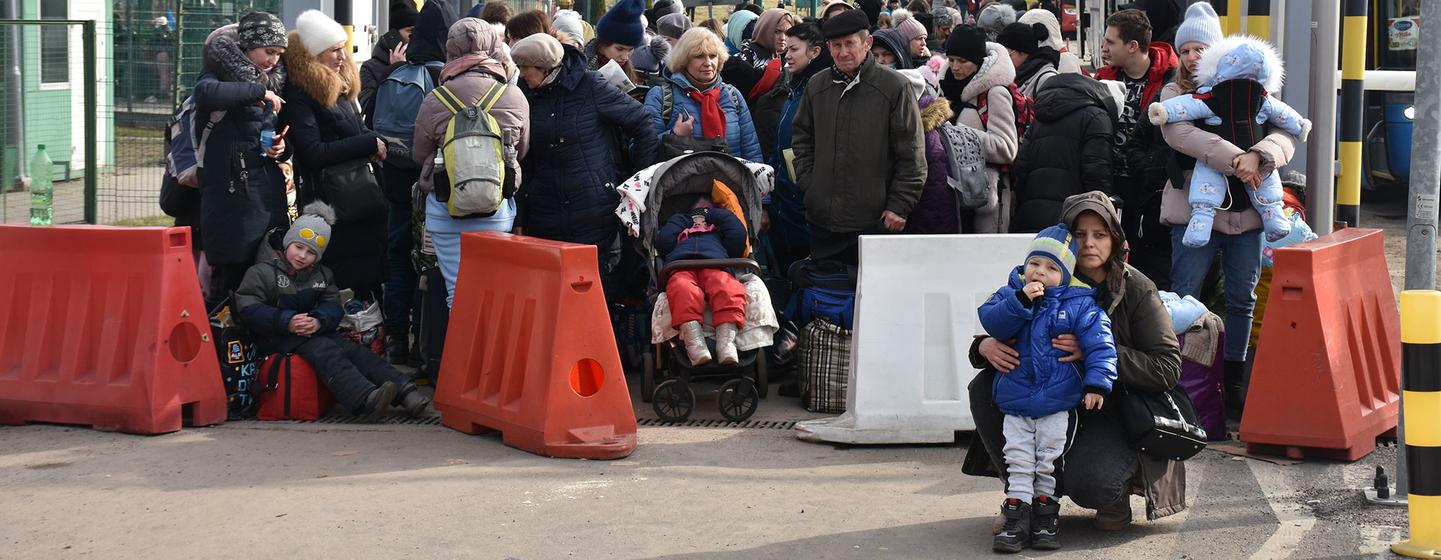
photos - Refugees entering Poland from Ukraine at the Medyka border crossing point
Refugees entering Poland from Ukraine at the Medyka border crossing point. (photo © UNHCR/Chris Melzer)

I’m still trying to comprehend and, in some way, come to terms with what I experienced over 16 days. It began when I flew into Warsaw from Vancouver and was picked up at the airport by a JDC representative. Together with two volunteers from the United States, we were driven to the Polish-Ukrainian border, where a small group of Holocaust survivors was to arrive. The drive took four to five hours and, by the time we got to the border, it was totally dark and bitterly cold.

Arrangements had been made with Germany that it would take in the Holocaust survivors. The German Red Cross ambulance bus had traveled 13 hours. I learned later that everybody in the ambulance was a volunteer – the driver was a history teacher, the three women were professional nurses donating hours and hours of service.

I wondered how it was possible to find a few Holocaust survivors in a warring country and bring them to safety. It turned out that the Jewish Agency had used the lists of survivors receiving financial assistance before the war to contact and evacuate them.

What struck me most at the time was the sight of several empty white canvass stretchers on the dirt next to the bus. It started to drizzle; the Germans stacked the stretchers and covered them with a tarp. The stretchers, soon to be filled with people, were a menacing sign of the proximity of war, invisible yet close. When the bus from Ukraine finally arrived, one body was carried out on a stretcher. So emaciated and skeletal was this body that, for a moment, I wondered why they were transporting a corpse with the living. When I looked closer, I saw that it was a woman, wounded and emaciated to an extreme degree but alive. For the next while, the Germans administered an IV to the seemingly unresponsive body. I overheard a conversation between two nurses: one wondering if the woman would be able to make it to Germany. They asked her a question – I translated – was she in pain? The woman shook her head. The Germans proceeded to take care of others.

Six other women got off the bus with some help from the Red Cross people and us.

One lady clutched her battered black purse that was overflowing with some papers. She refused to board the ambulance bus. A nurse and I held her up against the bitter wind, while she told us that her son was waiting for her here, around the corner, that he was going to pick her up. We finally figured out what she meant: her son was in Germany and she believed that she had arrived to Germany, not Poland. Efforts were made to contact her son right there, and somebody got him on the phone or they said they did, I’m not sure. But somehow the matter was settled: the woman agreed to board the ambulance.

None of these old and frail women escaped with any possessions to speak of: a handbag, a sack, was all they managed to take. But that little something was now the focus of their attention; a symbol of their lost nests, and they feverishly clung to it.

One woman finally settled on a stretcher inside the ambulance, her purse sitting on top of her chest. Another plowed through her handbag in search of a watch, the only item left from her late husband, she said; she couldn’t find it, believed it was stolen and was distraught.

Yet another was worried about her frequent need to urinate. A nurse and I led her to the blue booths on the side of the road. She whispered in my ear, asking if I could take her alone: the nurse had accompanied her to the booth before; it was too embarrassing to need to go again.

None of the Holocaust survivors seemed to be clear about what was going on and where they were going next. Finding out that there would be another 13 hours of travel to Frankfurt on top of the hours of travel behind her, one of the passengers refused to go. “I won’t be able to take it,” she said. “I lived through German occupation once and now it’s the Russians. I’ve had enough.”

The last to arrive (I think in a separate bus) was a man. With nothing in his hands, he seemed to be unperturbed by the lack of any worldly possessions. He came from Kyiv. “I didn’t want to leave. But I’m an invalid. I live on the third floor and can’t go downstairs into the basement during the air raids,” he explained. “My son was worried and decided to pack me off to Germany. One way or the other, what difference does it make for me after all I’ve lived through? I remember the Germans. They didn’t do to us what the Russians are doing.”

For almost anyone, this would be the most stunning statement. The Nazis, the Germans, and their allies, committed terrible atrocities during the Second World War (“the Great Patriotic War,” as it was officially called in the Soviet Union, where I grew up). They were inhuman in their cruelty; they were beasts. I still remember the games of my childhood that we played in our yards: the good guys were Russians, the bad ones were Nazis, the Fritzes, as we called them.

I thought about it as I was watched the German nurses taking care, with utmost attention and patience, of the elderly Ukrainian Jews, the Holocaust survivors, escaping Russian atrocities in the 21st century.

Marina Sonkina is a fiction writer, and teaches in the Liberal Arts Program 55+ at Simon Fraser University. She immigrated to Canada with her two then-young sons, as the Soviet Union was breaking up. When Russia attacked Ukraine, she applied as a volunteer with the Jewish Joint Distribution Committee. She arrived in Poland early this month and was a frontline responder for 16 days, offering refugees medical and psychological support.
Format ImagePosted on April 22, 2022April 21, 2022Author Marina SonkinaCategories WorldTags JDC, Joint Distribution Committee, Poland, refugees, Russia, Ukraine, volunteering, war
The scarcity of water

The scarcity of water

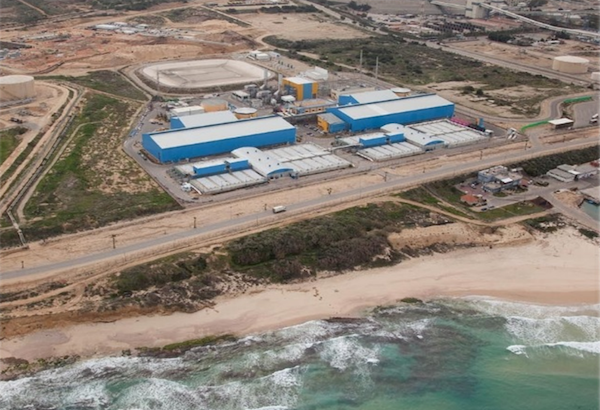
The seawater desalination plant in Ashkelon, Israel. (photo from © VID)

The Consulate General of Israel in Toronto and Western Canada marked World Water Day on March 22 with a webinar entitled “Squeezing Water from a Stone.” Dr. Alex Furman of Technion – Israel Institute of Technology in Haifa and Dr. Roy Brouwer of the University of Waterloo focused on Israeli and Canadian perspectives of water conservation and management.

Furman, director of the Stephen and Nancy Grand Water Research Institute at Technion, provided an overview of water management in Israel, describing how a land that is 60% desert – and uses more than 100% of its water – still has water left for use.

“The issue of water scarcity in the future is going to grow as the population grows and we need more water to feed people and for agriculture,” Furman said.

Israel’s population, which has expanded tenfold in the past 75 years, continues to climb. Further, its Western standard of living, including such things as daily showers, presents a further strain on the country’s water supply.

Israel recognized the need for innovation in this area several decades ago. Starting in the 1980s, it began treating wastewater for reuse in agriculture and, in the 2000s, the country started major desalination projects. Desalinated water now constitutes a large amount of the water consumed in Israel, but is not a completely win-win scenario. For example, a detrimental consequence of desalination is that the process also removes essential minerals, such as magnesium.

Another area where Israel is taking the lead is in water-saving technology, such as drip irrigation. Agricultural use of water in Israel has decreased in the past 30 years, a period over which agricultural production increased.

“Instead of irrigating the land, we irrigate the plant. Drip irrigation is providing water for what the plant needs. It’s not the amount of water that is important but the precision in how water is applied,” Furman said.

Concurrently, Furman added, Israelis are doing more to reduce water usage in the home, and the country has developed educational campaigns to inform its citizenry on ways to minimize water consumption.

“We are a very fast-growing country that requires a lot of water and requires the development of new water resources at all times,” Furman said.

Brouwer, an economics professor with an academic interest in water resources, highlighted the broader need for collective international partnership in looking at solutions for water issues through interdisciplinary cooperation, policy expertise and innovation.

“Water disregards boundaries and so must we,” he said, employing the motto of his department at the University of Waterloo.

The working definitions of water security, as put forward by the United Nations, Brouwer explained, are to have stable, peaceful and reliable access to adequate quantities and acceptable quality water. This, in turn, should sustain livelihoods, human well-being, socioeconomic development, protection from pollution and other water disasters, and preservation of ecosystems.

“From an economic point of view,” he said, “we need water to produce all kinds of things.”

As examples, Brouwer showed how much water is needed for basic clothing items: 10,000 litres of water are used to produce a kilogram of cotton, which, therefore, means 2,500 litres are required to make a 250-gram T-shirt and 8,000 litres for an 800-gram pair of blue jeans. For a morning cup of coffee, the equivalent of 1,000 cups of water are needed – from growing the bean, processing it and transporting it to the consumer.

Pressures on the international water supply are further exacerbated as countries such as China, Brazil and India achieve a higher standard of living and demand more goods like Western clothing and coffee.

“We expect that water stress will continue into the future,” Brouwer said, noting that two billion people in the world currently live in areas where water is scarce, including in the Middle East and in Northern Africa.

Global demand for water is, according to Brouwer, expected to grow one percent per year until 2050. By that time, 45% of global output would come from countries experiencing water scarcity. Tel Aviv, along with Sao Paulo, Cape Town and Karachi, is among the cities in the world most at risk of experiencing water shortages.

In a chart, Brouwer showed the skewed distribution of water usage around the world – from the average American, who uses 156 gallons per day to a French person who uses 76, an Indian at 38 and a Malian at three. Canada is the second-largest consumer of water per capita in the world. The average Israeli consumes 40% less water than their Canadian counterpart.

In his final remarks, Brouwer said the widely held view of water abundance in Canada may be a misperception when water quality and access to clean and safe drinking water are taken into consideration.

He concluded that water has value, but that its price is not reflective of its true value. Attention, he said, should be paid to both increasing water supply and policies that reduce water demand, and that water pricing is one way to raise awareness for essential water services.

Technion Canada partnered with the consulate on the World Water Day initiative.

Sam Margolis has written for the Globe and Mail, the National Post, UPI and MSNBC.

Format ImagePosted on April 22, 2022April 21, 2022Author Sam MargolisCategories WorldTags Alex Furman, Canada, Consulate General of Israel, economics, environment, Israel, research, Roy Brouwer, science, Technion, University of Waterloo, water

Celebrate Israel with joy

In the coming days, we celebrate the 74th anniversary of the rebirth of Jewish sovereignty in the land of Israel. By press time, we were still anticipating the first local in-person celebration in three years, a coming together that, if all goes to plan, will be cause for great joy.

Those immersed in the daily news from Israel can lose sight of the forest for the trees. We celebrate the scientific advances, the medical breakthroughs, the cultural triumphs coming out of the small but astoundingly creative Jewish state. Yet it may be only on occasions like Independence Day that we step back to observe the big picture.

The creation and flourishing of the Jewish state is a modern miracle – not only because every advancement has taken place within the context of a nation routinely under siege, but because these accomplishments would be exceptional even in the most conducive situations. There may be no other country that emerged in the postwar period of decolonization that has created a greater model for national development – lessons (like the oft-referenced act of making the desert bloom) that were widely shared with other emerging countries until after 1967, when the anti-Zionist movement snuffed out much of that international cooperation.

As a result of that anti-Zionism, our Zionism sometimes takes on a defensive tone. Young Israelis, traveling after their military service, meet young people from around the world in hostels and on hiking trails and are expected to justify their nation’s policies. Never mind Israelis, Jews in Canada and elsewhere are subjected to litmus tests to determine whether they are, by the standards of the interlocutor, a “good Jew” (anti-Zionist) or a “bad Jew.” (Of course, Zionists also engage in the good Jew/bad Jew game.)

Anti-Zionist voices dismiss claims that hyper-criticism of Israel endangers Jews in countries where mobs condemn the Jewish state in ferocious terms. These dismissals are disprovable through statistics. One could claim that the spike in antisemitic incidents in the Western world is unrelated to the precipitous rise in anti-Israel activism. But is there another case of a group of people in Canada or the United States or Europe telling people that their inflammatory rhetoric risks real-life violence only to have those concerns dismissed as a coincidence or as a trick to divert attention from alleged “war crimes”?

Aside from the physical dangers created by anti-Israel rhetoric, the insistence that none of this is aimed at Jews outside Israel is nonsense. Intent does not trump effect. The vast majority of Jews have familial, historical, religious and/or emotional connections to this land and the agitation against Israel is felt by Jews everywhere, no matter their views or feelings about Israel. Whether the mobs intend to strike fear in the Jews along the parade route is irrelevant – they do. Does this scenario constitute antisemitism? Well, if you seek the destruction of the world’s only Jewish state while striking fear in Jews worldwide and chanting “anti-Zionism is not antisemitism,” you have already demonstrated a spectacular indifference to the well-being of Jews everywhere. Does it really matter what we call that?

The trope that Israel was a consolation prize from the world to the Jews for the Holocaust is perhaps the most common misconception surrounding the history of the region. The world gave Israel nothing but a vote at the United Nations. After that, the Jews of the Levant were left to their own devices to build a state while under internal and external bombardment from neighbours.

Where the creation of the Jewish state intersects with the history of the Holocaust is in the collective global renaissance that the proclamation of the Jewish state meant for Jewish people. As the scope of the Shoah became known, Jews turned collective horror and grief into the constructive project of building a new country. Whether that was direct – fighting in the War of Independence or tilling the soil on a kibbutz – or indirect – supporting Zionist organizations abroad – this was an almost universal mobilization by the Jewish world. The agony of all the irredeemable losses of the past was channeled into reviving Jewish life in a sovereign state. Fairly or not, when Israel is attacked, it is received not, as the perpetrators insist, as “criticism of government policies,” but as an assault on the memory of all those who redirected what could have been existential collective despair into something redemptive.

As we begin the 75th year of Jewish sovereignty, let us situate the celebration in the biggest picture possible: despite all the naysaying, the war of words and the war of bullets and blades, the achievements of Israel are a source of pride for almost every Jew. Israelis, with the support of people like we who will gather at the Vogue Theatre on May 4, have made the desert bloom with agriculture, music and dance, science, medicine, high tech, art and almost every imaginable outlet of human creativity.

This is worth celebrating with unbridled joy.

Posted on April 22, 2022April 21, 2022Author The Editorial BoardCategories From the JITags antisemitism, Holocaust, Israel, Yom Ha'atzmaut, Zionism

Happy 74th birthday, Israel!

Like many Jewish kids who go to religious school twice a week, my understanding of Israel and its history was, well, simplistic. That changed when I was 16.

I went to live, on my own, on Kibbutz Beit HaShita for a year as part of their “American school” program. It was transformative for me in many ways. Among other things, I learned that Hebrew was a living, dynamic language, Jews were a diverse and complex people and that the land’s history was complicated. Also, I found out that, even far away from home, if, heaven forbid, something went wrong, there were, as Mr. Rogers described, helpers all around me. It was like all these strangers were distant relatives, a feeling I’d never experienced before.

I was a teenager, speaking in my third language, at a bus stop late one night in Jerusalem. I was scared I would miss the bus and not make it back to my class or back to the kibbutz. The motherly woman at the bus stop engaged me in small talk. “Oh,” she said, “You sound like you come from Beit HaShita. My cousin lives there. Don’t worry. If you miss the right bus, you can spend the night on my living room couch.” I felt alarmed at the time, but the bus arrived and I got home safely. I still remember that kind person’s offer – and it’s been more than 30 years.

For several reasons, I’ve never been back to Israel. I’ve wanted to go but life got in the way. Also, I did a lot more learning, in undergraduate and graduate school, and the complexity of the political situation felt intense. I navigated the opinions expressed in the Arabic classes I took and those of friends from all over the world. Due to antisemitism or facing someone who “hated Israel,” it sometimes felt hard to explain where I’d lived. I didn’t feel OK about some of Israel’s policy choices at times. I believed (and still do) that Palestinians deserved their own state, much the way many Israelis do, but I wasn’t Israeli so I didn’t vote there. It wasn’t my place to shift their politics. I just didn’t want to erase Israel. Yet, I also wasn’t sure if my very limited travel money should be spent on that tourism industry.

All this began to change after my twins were born. Winnipeg is a city of immigrants. Many newcomers I met in the Jewish community here spoke Hebrew and had lived for awhile in Israel, even if they were born elsewhere. After many years of only using prayer Hebrew, my brain woke up. Modern Hebrew sometimes began coming out of my mouth again. Suddenly, I was standing at the coat racks outside of the preschool classroom, trying to help a 2-year-old new to the school from Israel and, whoa, the preschooler Hebrew just came out of my mouth at a quick pace. My twins were stunned!

After the May 2021 war in Israel and Gaza, I spent time unfollowing and changing my social media habits. I wanted less hate and more nuanced news sources. Some of that news now arrives in Hebrew first, with occasional other languages mixed in. I got back in touch with my Hebrew study partner from university days, who lives in Jerusalem. When we streamed services from synagogue or made a seder, I felt more connected to those prayers about the state of Israel than I had in a long time.

The recent deaths in Israel, caused by terrorists who killed civilians, border patrols and police officers, Jews, Druze, Christians, Israelis and even Ukrainian workers, hit me hard. It felt again like I was losing cousins and friends. Even amid the isolation of pandemic times, I keenly felt the loss of these Israeli souls.

Birthdays are funny things. There are years when my own birthday comes and goes without much fanfare. I make myself a chocolate cake, some relatives or friends call, nothing much happens. I’m not much for big parties. Even before the pandemic, sometimes my early January birthdays were frigid and unremarkable. This year, though, I anticipate Israel’s 74th with a more deeply felt celebration.

I’m not likely to be part of a big event on Yom Ha’atzmaut and, for now, my travel budget remains small. Rising antisemitism in the world makes me worried though. It reminds me of how we need to ensure this safe place for future generations. I am in awe of just how much Israel has accomplished so far – in technology, education, medicine and more.

This is a year when I feel a big need to celebrate Israel and its continued existence amid adversity. Sometimes, bad things happen. Finding a space for gratitude helps remind us of what we do have – places to call home.

Happy birthday, Israel! Wishing you and all your inhabitants a happy, healthy and peaceful year to come. May you grow in mitzvot and success this year – and wishing you many, many productive years to come.

Joanne Seiff has written regularly for CBC Manitoba and various Jewish publications. She is the author of three books, including From the Outside In: Jewish Post Columns 2015-2016, a collection of essays available for digital download or as a paperback from Amazon. Check her out on Instagram @yrnspinner or at joanneseiff.blogspot.com.

Posted on April 22, 2022April 21, 2022Author Joanne SeiffCategories Op-EdTags antisemitism, Arab-Israeli conflict, Israel, Palestine, Yom Ha'atzmaut
Fundraiser for Ukraine

Fundraiser for Ukraine

Among the works for sale is “Spring Time” by Yuri Padal.

On April 3, at Art Works Gallery, Art in Aid of Ukraine was launched. Artists and communities in Vancouver, standing in solidarity with the Ukrainian people, came together for the opening of the exhibit and sale. The opening featured local speakers, as well as guests via video link from Toronto and Ottawa. Among the speakers were members of Parliament, the consuls general of Ukraine and Poland, Ukrainian Canadian Congress leadership, and others.

The fundraiser is a non-partisan grassroots event highlighting the role of community engagement; the humane power of art and the critical importance of defending the democratic process. Donations and partial proceeds from artwork sales will go to the Ukraine Humanitarian Appeal of the Ukrainian Canadian Congress and the Ukraine Emergency Relief Fund of the Jewish Federation of Greater Vancouver.

The featured artist, Yuri Padal, was born in 1949 in Kyiv, and studied under the direction of Glushenko. Padal now lives in Vancouver. His works connect to the universal energies of beauty, colour, freedom and positive balance.

For other participating artists, visit artworksbc.com. Art Works Gallery is located at 1536 Venables St., and the fundraiser runs to April 27.

– Courtesy Art in Aid of Ukraine

Format ImagePosted on April 22, 2022April 21, 2022Author Art in Aid of UkraineCategories LocalTags art, Art Works Gallery, fundraising, Jewish Federation, Ukraine, Ukrainian Canadian Congress, war
A celebration of dance

A celebration of dance

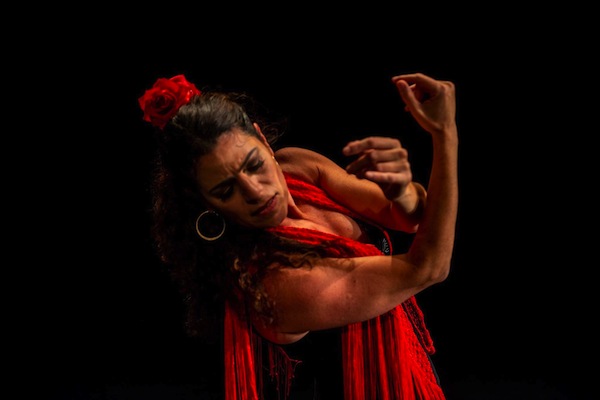
Liat Har Lev premières a new work at the Dance Centre on April 29, as part of the centre’s celebration of International Dance Day. (photo by Chris Randle)

International Dance Day is April 29. To celebrate the occasion, the Dance Centre is presenting a day of free events, including a performance and workshop by choreographer Liat Har Lev.

Born in Ashkelon, Israel, to Ashkenazi parents from Romania, Har Lev said her parents decided to immigrate to Canada in 1982 because they wanted a safer haven for their children.

While dancing has always been a part of her life, flamenco came later.

“I remember my first jazz dance class at the age of 10,” she said. “Moving in space and creating shapes to the sound of music was natural. I felt alive and so vibrant.”

She first encountered flamenco at the Kino Café, which used to be on Cambie Street in Vancouver.

“I was mesmerized by the force, strength and intensity of the dancers and musicians,” she said. “It was a projection of who I am, an instant connection. Flamenco is a challenging art form in terms of rhythm, physicality and expression. I never stop learning and evolving. It challenges my mind and body and allows me to express deep sorrows and great joys.”

photo - Liat Har Lev
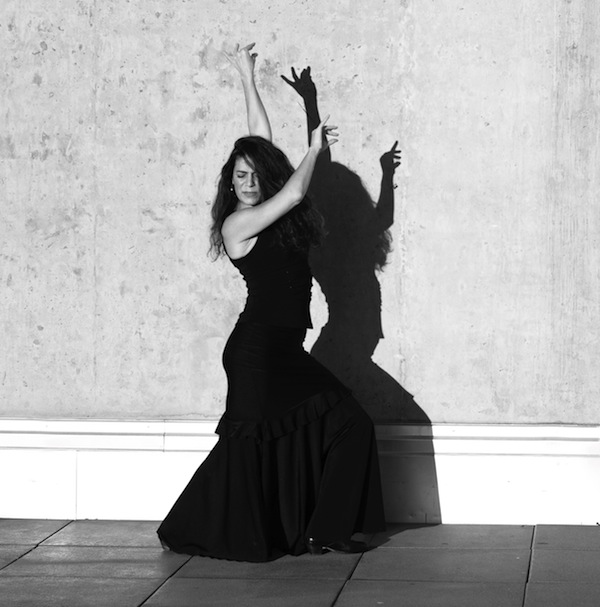
Liat Har Lev (photo by Catalina Torres)

One of the highlights in her dance journey, she said, “was the first time I stepped on stage to perform my first flamenco solo. It boosted my confidence and opened the door for opportunities.”

On the Dance Centre’s website is a profile of Har Lev. In an interview with the centre, she says, “I believe that dance performance exists to communicate and teach. It is an embodied language that has different forms, shapes and expression. As an expressive dancer, the source of the inspiration for my choreographies and performances comes from the need to express a story, to invite people to move and think deeply. My work is inspired by the human condition and personal experiences. I take pride in collaborating with local dance artists and musicians and I strive to create new works.”

The Dance Centre profile includes a video of Har Lev’s We Shall Not Forget, which she began choreographing with the support of the centre’s 12 Minutes Max program. It is a powerful commemoration, dedicated to the victims of the Holocaust.

“We Shall Not Forget was inspired by my ancestors that perished in such a horrific way,” she told the Independent. “It was a calling for me to honour and remember them; a message from them through me. This tragedy left a big scar and a lesson to humankind.”

On International Dance Day, Har Lev will première a new work, Tientos. The program description says it “explores themes of personal integrity, internal conflict and the freedom of resolution, expressed through the flamenco dance forms of tientos and tangos.”

A work-in-progress, it features live music and singing. It is a collaboration between Har Lev, who choreographed and dances the piece, singer Maria Avila, guitarist Peter Mole, drummer Matteo Bebbo Sampaolo and choreography facilitator and dramaturg Carmen Romero. The performance will be followed by a brief introduction to flamenco workshop, led by Har Lev.

At the presentation, the artists will be collecting non-perishable food items for the Greater Vancouver Food Bank. So, if you’re heading downtown to see the show or attend the workshop, try and remember to bring an item to donate.

International Dance Day was started by UNESCO in 1982, with the date commemorating the birthday of Jean-Georges Noverre (1727-1810), who is considered the founder of modern ballet.

For the full local International Dance Day lineup, visit thedancecentre.ca.

Format ImagePosted on April 22, 2022April 21, 2022Author Cynthia RamsayCategories Performing ArtsTags Dance Centre, flamenco, food bank, International Dance Day, Liat Har Lev, music
25 years since deadly crash

25 years since deadly crash

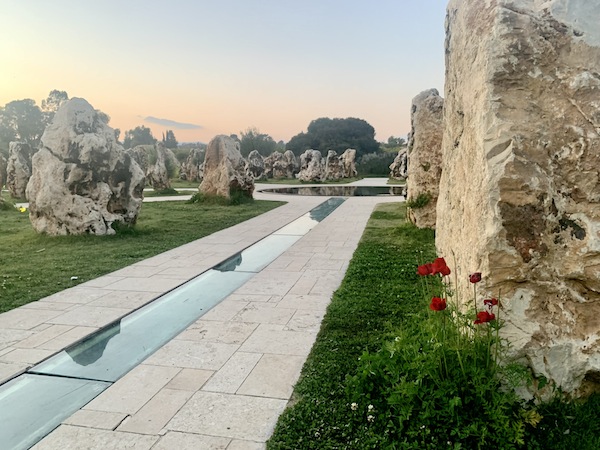
The monument for the 73 Israel Defence Forces soldiers killed in the 1997 helicopter accident over She’ar Yashuv in northern Israel. (photo by Geoffrey Druker)

This year’s community Yom Hazikaron commemoration on May 3 will mark the 25th anniversary of Israel’s worst air disaster.

On the evening of Feb. 4, 1997, two Israel Air Force helicopters collided into each other. One crashed in Moshav She’ar Yashuv, the second near Kibbutz Dafna. All 73 people on board the helicopters were killed, including eight air crew members. No one on the ground was hurt.

“The presence of Israeli forces in southern Lebanon, following the 1982 operation, led to ongoing battles with the Hezbollah,” explained Geoffrey Druker, who leads the annual Yom Hazikaron (Memorial Day) ceremony, which this year takes place at the Rothstein Theatre. “Many IDF convoys going into southern Lebanon were ambushed and hit by IEDs, so the IDF started flying in its troops.”

photo - The 73 boulders surround a small pool
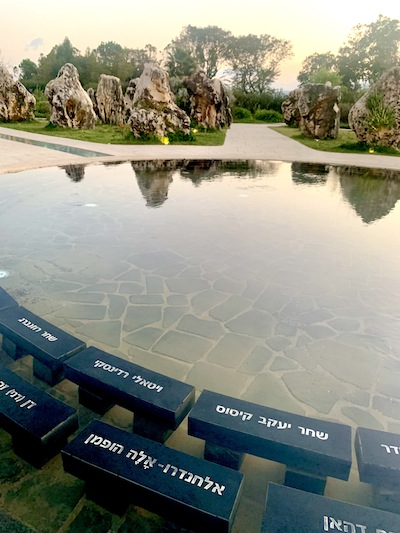
The 73 boulders surround a small pool. (photo by Geoffrey Druker)

Druker said the accident was devastating. “It was the largest helicopter crash in all helicopter aviation,” he said. “Until, in 2002, a Russian helicopter downed by Chechens killed 127.

“The accident increased the pressure to withdraw from southern Lebanon,” he added, “which happened in May 2002.”

Jewish Federation of Greater Vancouver’s Gesher Chai (Living Bridge) programs connect Metro Vancouver’s Jewish communities with Israel’s Galilee Panhandle communities. One of those connections is that King David High School’s sister school in Israel is Har Vagai, which is located on Kibbutz Dafna, where a part of one of the helicopters fell. In 2017, KDHS Grade 8 students traveled to Israel and spent time with their Har Vagai peers.

photo - Another perspective of the memorial
Another perspective of the memorial. (photo by Geoffrey Druker)

“The students visited the memorial and documented their meeting there, and the video was shown at our Yom Hazikaron ceremony here,” said Druker. “The memorial site is located in the ravine where a helicopter fell, not far from Kibbutz Dafna. On the site are 73 boulders, each the height of a person and all names are recorded on the site – a very moving memorial site.”

The 73 boulders surround a small pool. Among those remembered are three soldiers from our partnership region: Sgt. Tomer Goldberg, from Moshav Dishon; Staff Sgt. Tsafrir Shoval, from Kibbutz Baram; and Staff Sgt. Alejandro (Ale) Hofman, from Kibbutz Merom Golan, who was a graduate of Har Vagai. Hofman was 19 when he died.

In addition to that physical memorial, Druker said, “An annual conference is held in memory of the fallen, attended by the bereaved families. Students from the region participate in the conference. It’s attended by groups of soldiers and, over the years, the prime minister, the president, minister of defence and the chief of staff have attended and spoke at the conference.

“Every year, they focus on another topic, not necessarily on loss and grief – the bereaved families choose to have educational and other topics of interest. This year was about solidarity in times of COVID-19. Due to COVID, only 400 people attended this year, and the chief of staff spoke on behalf of the country’s leadership.”

Druker added, “An interesting point about that conference – the organizers do not adhere to official protocol because that might take away the decision-making from the bereaved families, regarding who can speak and what elements must be included. The wife of the then-chief of staff when the accident happened, Tali Lipkin-Shahak, has taken part in all the events. She personally is committed to be with the bereaved families.” (Amnon Lipkin-Shahak died from cancer in 2012.)

The local Yom Hazikaron ceremony will pay respects not only to the 73 who died in the helicopter accident 25 years ago, but all of Israel’s fallen soldiers and victims of hostile acts.

The commemoration at the Rothstein Theatre on May 3 starts at 7:30 p.m. and registration is required for those wanting to attend in-person, as seats will be limited: jewishvancouver.com/zikaron. The ceremony also will be broadcast live.

Format ImagePosted on April 22, 2022April 21, 2022Author Cynthia RamsayCategories LocalTags Galilee Panhandle, Geoffrey Druker, Gesher Chai, Har Vagai, helicopter crash, IAF, IDF, Israel, KDHS, Kibbutz Dafna, King David High School, memorial, Yom Hazikaron
Art Vancouver fair returns

Art Vancouver fair returns

“I Cast to Earth a Seed,” by Lisa Wolfin.

Art Vancouver returns after a two-year COVID-imposed hiatus. Artists and galleries from across Canada and the United States – as well as from countries including Argentina, Cuba, Iran, Kenya, Mexico, Taiwan and Zimbabwe – are scheduled to exhibit at the Vancouver Convention Centre May 5–8. Several of the artists are members of the Jewish community, and they spoke with the Independent about their art and the return of the event.

The international fair, first held in 2015, is the main annual event of the Vancouver Visual Art Foundation, which was formed in 2017. The foundation has not let the pandemic quash its momentum.

“The creation of Art Downtown was introduced as a safe space during COVID, where people could have a place to get out and enjoy arts and culture,” Art Vancouver founder Lisa Wolfin told the Independent.

The summer outdoor festival invites artists to create art in various public spaces in downtown Vancouver. People can come and see the creative process in action and speak with the artists. The artists’ works are exhibited, and available for purchase.

“There is an area where people can sit down, get their hands full of colour and learn how to make art at no cost, as this is sponsored by Opus Art Supplies, giving people an opportunity to try things they may have never done before,” said Wolfin. “Live music is part of the festival. Each week, there are two new musicians, including singers, guitarists, bands, and duets, in all genres.”

During the pandemic, the foundation also offered online art classes. Since the easing of health restrictions, in-studio classes have started.

“People from all over B.C., Canada, the United States, Costa Rica, and as far away as Australia, [have] registered for the classes,” she said. “The instructors are professional local artists, teaching in a variety of different styles – florals, landscapes, abstract, graphite, neurographic, impressionism and figurative are some of the subjects demonstrated, with acrylics, watercolours, oils, markers, palette knives and metallics … [being] some of the materials we use.”

Wolfin herself has taken more than 100 classes over the last two years.

“There are stations all over my art studio with different mediums waiting to be experimented with,” she said. “In every class I took, I received a golden nugget that has added to my repertoire and moved my work in a different direction…. Each instructor had their own style and colours that they preferred, which took me out of my comfort zone and back to kindergarten to start all over again, being open to trying new things.

“Neurographic art is a new direction my work has shifted into,” she continued. “Russian psychologist Pavel Piskarev coined the term neurography, or neurographica, in 2014 – it helps us engage more neurons. By this, he specifies how using the simplest tools to draw, through this technique, is a link between conscious and unconscious. This connection is made by the brain cells called neurons being activated in a way that brings forth awareness and mindfulness…. This is a healing project for people of all ages, no artistic abilities are required, only the interest in creating an artwork that is not only intuitive but greatly beneficial to our emotional and calming states…. Neurographical art is a way to transform the stress, fear and chaos of our world into something more calming and peaceful. Art is always about expression and finding that inner peace.”

While still undecided about exactly which art pieces she’ll be showing at Art Vancouver, Wolfin described a new tree series she has been working on.

“I start out with acrylics using bright colours instead of the neutral and natural colours found in nature, including various mediums and acrylics because they create more depth and richness to my work, which is meant to be more realistic,” she explained. “Life is colourful. I look deeply into the forests and feel the colours, then transfer what I pick up onto the canvas. Next, I add Posca paint pens, dabbing colours all over the canvas for an added dimension. Then I go over the canvas with oil pastels and add another texture to it. The pastels skip over the gaps in the weave, leaving little dots of another medium. Lastly, a layer of resin is poured over the canvas and spread out to create a luscious thick layer of gloss which intensely brings out the layers of the colours, making the colours pop.”

She also has been creating florals with KrinkNY paint markers. “Because the tips are much thicker than a paintbrush, I have had to loosen up and go with the flow of the paint,” she said. “This paint mixes with itself when you go over it and it gets wet again. You can blend as you paint, and it is a challenge to get what you think you want [based on the] traditional way of painting.”

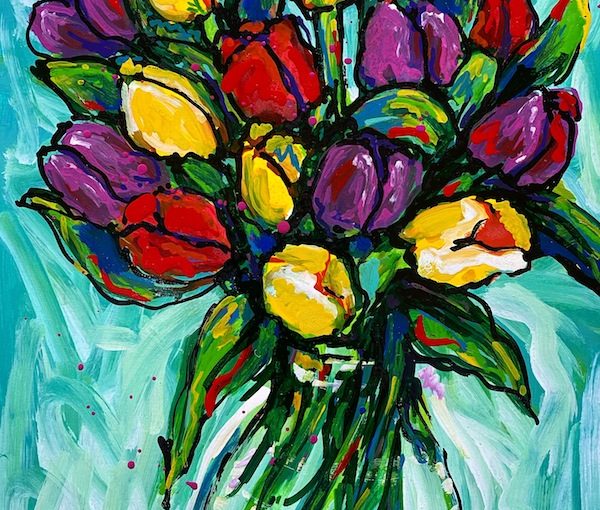
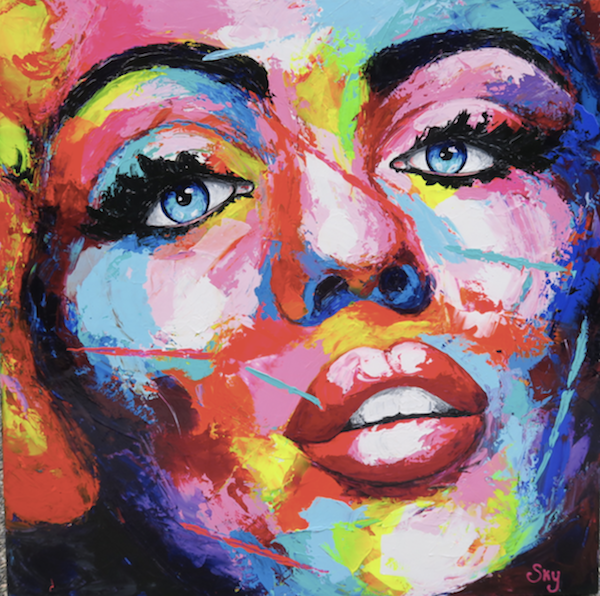
Artist Sky Lilah also has used the pandemic years to branch out. “I am continually striving to do something new,” she said. “Over the past few years, I have started to teach online art classes, for youth and adults. I have done a series of abstracts with the theme being on consciousness. For Art Vancouver 2022, I am doing a new series of mixed media, with the focus on love, thoughtfulness and manifestation. I have also been spending more time creating a unique fashion line and hand-painted clothes.”

The work she’ll be bringing to Art Vancouver is a new style of mixed media, she said, “with the focus being on my family – making unique pieces based on each member, including components from their past, present and future. I am fascinated by time and consciousness and how our minds create our reality.”

In addition to her art, Lilah will be bringing to Art Vancouver a personal development workbook that “includes self-awareness exercises and creative exercises to help one further develop themselves and live their best life,” she said.

photo - One of the works Sky Lilah will be bringing to Art Vancouver
One of the works Sky Lilah will be bringing to Art Vancouver.

“My personal development practice always influences my style of artwork,” she added. “The constant strengthening of my creative muscle, I believe, helps me in all areas of life.”

Lilah is excited by Art Vancouver’s return.

“I love the thrill of prepping for a show, and the impact that the show has on the community is so rewarding. It is always a pleasure to connect with each attendee and hear different perspectives from the art world.”

“When creating the pieces for the Art Vancouver exhibition, I was on Cloud 9,” said Taisha Teal, explaining the title of one of her series of works.

“When I create art, I am in the flow,” she said. “I am in a meditative state where time does not exist. On Cloud 9 has a deeper meaning – of being in another space in time, in the ninth dimension of pure bliss and happiness. When I am in the studio, I am at peace. There is no stress. It is where the magic happens. My name, Taisha, also means number nine in Hebrew; so the title felt pretty perfect.”

During the pandemic, Teal said, “I had the chance to really experiment with new materials and the courage to play around with no judgment.”

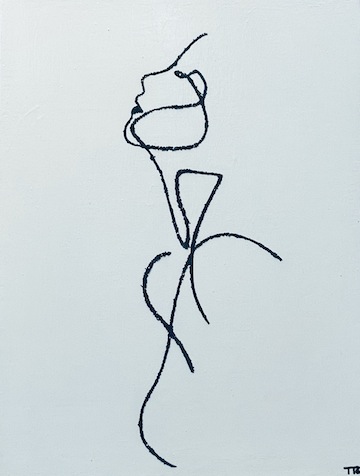
photo - “I am fearless,” by Taisha Teal, part of her series called the Naked Line Ladies
“I am fearless,” by Taisha Teal, part of her series called the Naked Line Ladies.

The Naked Line Ladies, also known as her “sparkle ladies,” are women in her life “promoting body positivity and female empowerment,” said Teal. Reminders, she said, “that you’re beautiful no matter what, and your body is the only one you’ve got…. We’re embracing our uniqueness, celebrating who we are.”

About her Spraypainted Hearts series, Teal said, “Infinite hearts, infinite strength. There is enough love to go around.”

And the Abstract Alcohol Ink collection is dedicated to her travels. “During this pandemic, I have felt very stuck,” she said. “I have been reminiscing about the places I’ve been and the colours I’ve felt along the way. This abstract series has really helped my mental health in overcoming the chaos in this pandemic. Not having to create the perfect realistic image, I use colours and gestural marks to create a piece that resembles places I have been.”

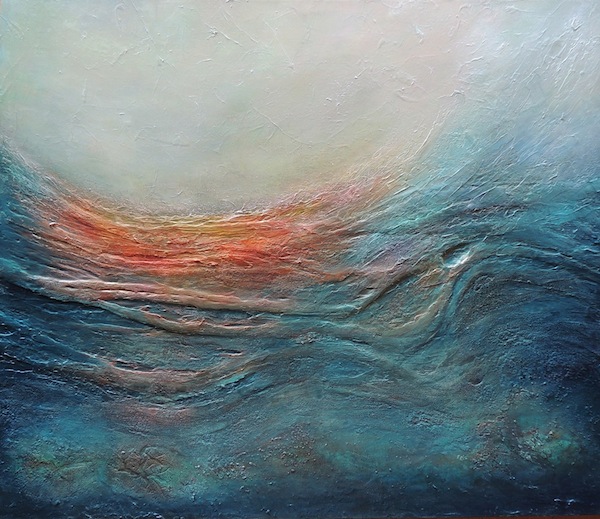
Artist Monica Gewurz also has been doing more abstract work over the pandemic, focusing more on the feelings generated by the landscape than its literal appearance.

“During the lockdown,” she said, “I continued to explore new techniques and tools, incorporating heavy textures and thin veils, to capture moments that uplift and refresh. We have all been held back from so many important things in life and, hopefully, these paintings can bring some uplifting and beauty to people’s lives.”

Gewurz is planning on bringing a new collection of more than 30 works to Art Vancouver.

“I paint primarily in acrylic,” she said, “but combine this with a variety of other media such as gesso, mediums, glazes and inks. I also like to use materials that excite me, like gold leaf and unusual acrylic mediums.”

photo - “Exposed,” by Monica Gewurz
“Exposed,” by Monica Gewurz.

During the pandemic, Gewurz said she has taken several online courses and “successfully increased the number of virtual juried exhibitions in B.C. and the U.S.” She also has “participated in numerous art shows conveying the climate change and our large carbon footprint in our planet. I am now being recognized as an eco-artist in the U.S.,” she said.

The environment is a top concern for Gewurz. For example, a piece of hers, “Ebbing,” was chosen for “the label of Safe Haven fortified wine of the 40 Knots winery,” she told the Independent in an April 2020 interview. “A portion of the wine sales goes to support salmon habitat restoration. I donated the artwork.”

Gewurz is one of 11 artists – with her painting “SOS” – in the year-long touring exhibit Diving In: The Art of Cleaning Lakes and Oceans’ Art Tour, an environmental art campaign initiated by the Sea to Sky Arts Council Alliance with Divers for Cleaner Lakes and Oceans, Return-It and local artists. It showcases “stunning pieces of art by selected artists created from a range of objects recovered through clean-up dives at local lakes and ocean sites.”

For a professional artist, said Gewurz, “it is important to exhibit at high-calibre international art exhibition shows. Art Vancouver provides me with a platform to display my works as well as sell them – this will be my fifth time exhibiting there.”

Grateful for the opportunity, she said, “To showcase my work in person was something I truly took for granted. Over these last few years, I have found a new appreciation and gratitude for events like this. To be able to connect, converse and exhibit amongst other creative people in my hometown is such a great opportunity.”

Given the continuing pandemic, safety won’t be lost in the excitement.

“We have a larger room in the Convention Centre West building so we can create a safe, socially distanced exhibition with more space between the aisles,” said Wolfin, acknowledging the work of the women-led organizing team of the event and the many volunteers.

The art exhibit is but one of the weekend’s activities. There will be a talk on non-fungible tokens (NFTs), for instance.

“There will be a whole section with NFTs for people to enjoy and learn about this whole new direction in the arts,” said Wolfin. “Art classes are going to feature non-traditional art mediums so anyone interested can try their hand in art…. Opening night starts off with The Face of Art, our runway show that puts a face to the artwork. Friday night will have an all-new art game feature – teams of three people will compete with each other for one hour to build a sculpture out of Lego…. Saturday night is Art Masters, a one-hour painting competition where the artists are given a theme and one hour to create using non-traditional tools, as there are no paintbrushes included!”

For fair updates, visit artvancouver.net. For tickets, got to artvancouver.eventbrite.ca.

Format ImagePosted on April 22, 2022April 21, 2022Author Cynthia RamsayCategories Visual ArtsTags art, Art! Vancouver, clothing, COVID, environment, Lisa Wolfin, mixed media, Monica Gewurz, neurography, painting, Sky Lilah, Taisha Teal
Presenting Mixed Repertoire

Presenting Mixed Repertoire

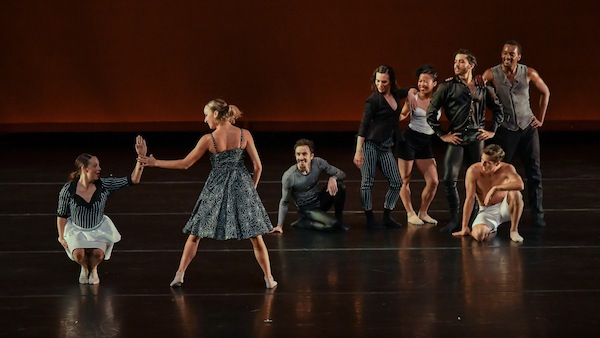
A Million Voices, choreographed by Matthew Neenan, is described as a “lighthearted and whimsical ode to Peggy Lee’s iconic jazz standards.” (photo by Rob LatourRob Latour)

Los Angeles-based BODYTRAFFIC returns to Vancouver for their DanceHouse debut, May 5-6, at the Vancouver Playhouse. The company, which is led by artistic director Tina Finkelman Berkett, will present Mixed Repertoire – A Million Voices, The One to Stay With, SNAP and PACOPEPEPLUTO.

“It is an immense privilege to present BODYTRAFFIC’s DanceHouse debut this spring, which also represents the company’s return to Vancouver since 2015,” said Jim Smith, artistic and executive director of DanceHouse, in a press release. “This is a masterful program of short works that effortlessly showcases BODYTRAFFIC’s singular ability to take on any dance genre, moving from hip hop to ballet to jazz and back again. Beautiful, virtuosic, political, and with a dash of much-needed lightness, this evening of dance will leave audiences breathless and wanting more.”

photo - Tina Finkelman Berkett
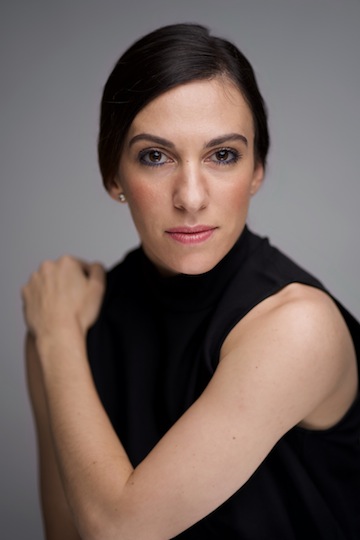
Tina Finkelman Berkett (photo by Guzman Rosado)

“We love coming to Vancouver,” Berkett told the Independent. “The audiences are always so welcoming and so curious. There always feels like a supportive energy for the work we are sharing. I loved that program that we offered back in 2015 [at the Chutzpah! Festival]. Typical to BODYTRAFFIC programming, it was packed full of works by choreographers who I believe in wholeheartedly.”

As for the May program, Berkett said, “The works the company will offer on May 5 and 6 showcase the versatility and virtuosity of our dancers. The program offers singular choreographic voices, some emerging and some established. Baye & Asa and Micaela Taylor are newer voices in our industry and are certainly taking the dance world by storm; I’m so excited to share their works. As always, the program will offer the audiences a chance to enjoy and be entertained.”

According to the press release, the 90-minute show will open with A Million Voices, from Matthew Neenan, which premièred in 2018. “A lighthearted and whimsical ode to Peggy Lee’s iconic jazz standards, this infectious piece featuring seven dancers reminds us that, even during our toughest moments, life is always worth enjoying.”

The One to Stay With by choreographers Baye & Asa was commissioned by BODYTRAFFIC and premièred only just last month. “Inspired by Patrick Radden Keefe’s 2021 book The Empire of Pain, about the Sackler family’s role in ‘Big Pharma’ and the current opioid epidemic,” The One to Stay With is a work for eight dancers. It “tackles ideas of power, greed and deceit, punctuated by a lively score of Russian waltzes and Romanian folk songs.”

SNAP, from Micaela Taylor, which BODYTRAFFIC premièred in 2019, features six dancers in a “hip hop-infused choreography [that] urges audiences to ‘snap out of’ pressures to conform, encouraging us to embrace the individuality of our own selves as well as those around us.”

The final piece, PACOPEPEPLUTO, by Alejandro Cerrudo, which premièred in 2011, features three male dancers, “who each perform an athletically charged solo set to a Dean Martin classic.”

BODYTRAFFIC was co-founded in 2007 by Berkett and Lillian Rose Barbeito. It is now under the sole artistic direction of Berkett, who started her career at Aszure Barton & Artists, with which she became a feature dancer, as well as Barton’s assistant and an instructor.

“I never dreamt of having a dance company,” Berkett told the Independent. “When I was a young dancer, I had a very different idea of what my future would be. I thought I’d join a repertory company – not start one! But life led me to Los Angeles and eventually to launching BODYTRAFFIC to fulfil my dreams as a dancer.”

Before moving to Los Angeles from New York and co-founding BODYTRAFFIC, Berkett was a founding member of Mikhail Baryshnikov’s Hell’s Kitchen Dance.

“Jewish values are a part of everything I do,” Berkett said when asked how her being Jewish influences her outlook and choices. “Family, community, charity, honour, respect, curiosity and a commitment to learning are also central to who I am and the work I do.”

BODYTRAFFIC’s May 5 and 6 shows at the Playhouse start at 8 p.m. Tickets (from $35) can be purchased at dancehouse.ca.

Format ImagePosted on April 22, 2022April 21, 2022Author Cynthia RamsayCategories Performing ArtsTags BODYTRAFFIC, dance, DanceHouse, Jim Smith, Playhouse, social commentary, Tina Finkelman Berkett
Fostering literacy, education

Fostering literacy, education

Aaron Friedland will be the keynote speaker at this year’s King David High School Golden Thread Gala. (photo from goldenthreadgala.com)

King David High School’s Second Annual Golden Thread Gala takes place May 12. For an event that celebrates the story of KDHS, who better to represent King David’s success than one of its alumni. The night’s keynote speaker will be Aaron Friedland, Class of 2010.

Friedland is a National Geographic Explorer, a sustainable development practitioner and a PhD candidate.

In 2010, while Friedland was attending King David High School, he and his family visited Uganda’s Abayudaya Jewish community on a voluntourism project that would change his life and inspire the Walking School Bus. The Walking School Bus’s mission is to enhance access to education in low-income communities globally.

His research in the field of econometrics is focused on the intersection of economics and education, and his research-based interventions have helped more than 35,000 learners in Uganda and India improve their literacy – and literacy is the number one predictor of academic success.

Friedland also founded Simbi Foundation, an organization that creates solar-powered learning labs from shipping containers, in Uganda and India, providing access to quality educational tools in low-resource communities and UNHCR refugee settlements. His foundation was also the winner of the MBR Prosperity Grant to build BrightBox solar-power classrooms. Each BrightBox includes a shipping container with solar panels, laptops, projectors and digital aids, as well as all the installation costs at its destination. In 2016, Friedland received the Next Einstein Award for his work in furthering access to education.

This year’s Golden Thread Gala committee is co-chaired by Heidi Seidman and Sherri Wise; sponsorship chair is Brett Sandler. Committee members are Cyndi Ankenman, Dalia Bressler, Chana Charach, Nicole Ginsberg, Alain Guez and Margaret Hemingson. The development team is comprised of Esther Mogyoros, Justine Folk and Michele Zychlinski.

The event, which will be held at Congregation Beth Israel, will be emceed by KDHS head of school Russ Klein and Howard Blank will be the auctioneer. There will be a live and silent auction, as well as dinner and entertainment, a portraiture studio and more.

For tickets and other information, visit goldenthreadgala.com.

– Courtesy King David High School

Format ImagePosted on April 22, 2022April 21, 2022Author King David High SchoolCategories LocalTags Aaron Friedland, education, fundraising, Golden Thread Gala, Howard Blank, KDHS, King David High School, Russ Klein, tikkun olam

Posts pagination

Page 1 Page 2 … Page 4 Next page
Proudly powered by WordPress