Skip to content
  • Home
  • Subscribe / donate
  • Events calendar
  • News
    • Local
    • National
    • Israel
    • World
    • עניין בחדשות
      A roundup of news in Canada and further afield, in Hebrew.
  • Opinion
    • From the JI
    • Op-Ed
  • Arts & Culture
    • Performing Arts
    • Music
    • Books
    • Visual Arts
    • TV & Film
  • Life
    • Celebrating the Holidays
    • Travel
    • The Daily Snooze
      Cartoons by Jacob Samuel
    • Mystery Photo
      Help the JI and JMABC fill in the gaps in our archives.
  • Community Links
    • Organizations, Etc.
    • Other News Sources & Blogs
    • Business Directory
  • FAQ
  • JI Chai Celebration
  • JI@88! video

Recent Posts

  • Story of Israel’s north
  • Sheltering in train stations
  • Teach critical thinking
  • Learning to bridge divides
  • Supporting Iranian community
  • Art dismantles systems
  • Beth Tikvah celebrates 50th
  • What is Jewish music?
  • Celebrate joy of music
  • Women share experiences 
  • Raising funds for Survivors
  • Call for digital literacy
  • The hidden hand of hate
  • Tarot as spiritual ritual
  • Students create fancy meal
  • Encouraging young voices
  • Rose’s Angels delivers
  • Living life to its fullest
  • Drawing on his roots
  • Panama City welcoming
  • Pesach cleaning
  • On the wings of griffon vultures
  • Vast recipe & story collection
  • A word, please …
  • מארק קרני לא ממתין לטראמפ
  • On war and antisemitism
  • Jews shine in Canucks colours
  • Moment of opportunity
  • Shooting response
  • BC budget fails seniors
  • Ritual is what makes life holy
  • Dogs help war veterans live again
  • Remain vital and outspoken
  • An urgent play to see
  • Pop-up exhibit popular
  • An invite to join JWest

Archives

Follow @JewishIndie
image - The CJN - Visit Us Banner - 300x600 - 101625

Month: April 2025

Don’t miss Jewish film fest

Don’t miss Jewish film fest

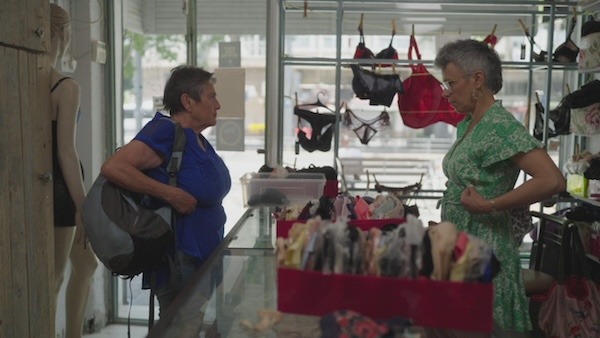
Full Support shines a positive, life-affirming light on Noa’s Bras, in Jaffa. (photo by Tulik Galon / Go2Films)

The Vancouver Jewish Film Festival is now underway, with screenings at Fifth Avenue Cinemas through May 1, then at the Rothstein Theatre May 2 and 4. There are numerous films being presented, from documentaries to mysteries, dramas and more.

Being supportive

It may seem like a strange thing to say, but women should put Noa’s Bras, in Jaffa, on the itinerary of their next trip to Israel. If you don’t need a bra, you can go try some on, just for the experience of being well taken care of. At least, that’s how it seems a visit would go, from watching Michal Cohen’s documentary, Full Support.

Full Support shines a positive, life-affirming light on this store to which women come in need of varying sizes, looks and fits. Some brave clients share their stories with the filmmakers, and the result is a moving portrayal of women of all ages, socioeconomic backgrounds and life circumstances. Among them are cancer survivors, victims of abuse, divorcées; one woman wants something sexy, another just wants something comfortable, a preteen looking for her first bra comes in with her mom. The staff – maybe one or two of whom are proprietors? (it’s not clear) – are knowledgeable, respectful and helpful. It is amazing to see the staff literally size up a client from across the counter and then know which of many, many boxes they must go to for the bras they’re looking for. The store apparently offers 189 sizes!

Outside the store, the camera catches men walking by the shop, some even peeking in, then almost running away with embarrassment. There are other moments of humour, as well as many touching moments, including when one of the store clerks pops into the tailor next door for him to sew up this or that and we find out that he and his wife are waiting for a permit to visit their daughter in Nablus.

Full Support is an interesting, thoughtful and funny film. 

– CR

A murder mystery

photo - In Highway 65, a demoted Tel Aviv detective, Daphna (Tali Sharon), finds herself assigned to investigations in the hick town of Afula
In Highway 65, a demoted Tel Aviv detective, Daphna (Tali Sharon), finds herself assigned to investigations in the hick town of Afula. (still from film)

Family secrets are the theme in Highway 65, in which a demoted Tel Aviv detective finds herself doing slashed tire and lost phone investigations in the hick town of Afula. 

Daphna (Tali Sharon), the downgraded cop, is a shlubby Columbo with appalling table manners but proficiency at her job. The lost phone – a seemingly innocuous investigation – leads to something much larger. The phone’s owner, Orly, has been missing for a week and no one has reported her absence. 

It’s a small town where everyone knows everybody’s business and outsider Daphna finds herself in the midst of a perversely convoluted family drama, crossing personal and professional boundaries with nonchalance. 

The family is marking the 10th yahrzeit of the missing woman’s husband and Daphna’s investigation puts a serious crimp in the commemoration. The family has an ominous mafia feel to it and the film jolts the viewer with an instant of truly shocking violence that illuminates the narrative and ultimately fingers the culprit.

Fans of quality Israeli TV will recognize Sharon from her role as Hodaya in Srugim, about Orthodox singles in Jerusalem. The male lead, Matan, is played by Idan Amedi, a singer-songwriter and actor known for playing Sagi Tzur in Fauda. Amedi was seriously injured during reserve duty in January 2024, when six fellow soldiers were killed in Gaza.

– PJ

Relentlessly talented
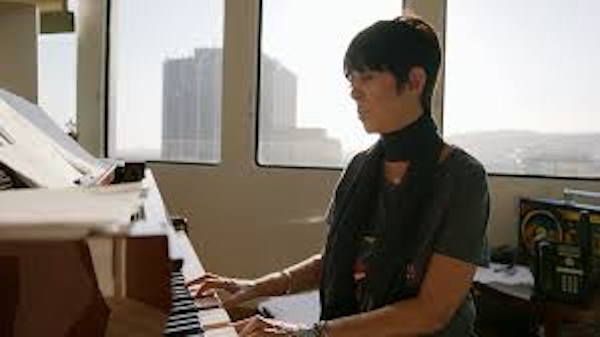
photo - Diane Warren: Relentless introduces audiences to the seemingly chaotic genius of songwriter Diane Warren
Diane Warren: Relentless introduces audiences to the seemingly chaotic genius of songwriter Diane Warren. (still from film)

Everyone knows a song that was written by American songwriter Diane Warren – everyone. For more than 40 years, she has been writing hits in multiple genres. From “Rhythm of the Night,” performed by the band DeBarge; to “When I See You Smile,” for Bad English; to “I Don’t Want to Miss a Thing,” sung by Aerosmith; to multiple songs performed by Beyoncé, Michael Bolton, Cher, Celine Dionne, Meat Loaf, Whitney Houston and so many others. Her writing has earned her a long list of awards and 16 Academy Award nominations – while she has yet to win an Oscar for a particular song, she was recognized with an honorary Oscar in 2022 for her achievements.

The documentary Diane Warren: Relentless, directed by Bess Kargman, introduces audiences to the seemingly chaotic genius of Warren, who was born in Van Nuys, Calif., into a middle-class Jewish family. The third daughter of David and Flora Warren, she is much younger than her sisters and knew, from a young age, that music – rather than something more conventional – was the path she wanted to follow. 

Her parents struggled with how to parent Warren. Her dad was supportive of her music dream, at least, but her relationship with her mother was troubled till the end. Warren grew up feeling an outsider both at home and at school. It is not clear when she was diagnosed, but having Asperger’s syndrome contributes to both Warren’s genius and her struggles. She also shares that she was molested as a child, in the context of having written “Till It Happens to You,” which Warren wanted Lady Gaga, also a survivor of sexual assault, to sing.

A lot of Warren’s collaborators lend their views to this documentary, and their respect for Warren is clear, even when there are hurt feelings. For example, she gave both LeAnn Rimes and Trisha Yearwood the song “How Do I Live,” but both versions ended up being a hit.

A master of romantic songs, Warren has no romantic partner, only a love for creating music – something she is driven to do and will continue to do as long as she is able.

Relentless is a fascinating look at a fascinating person.

– CR

Quest for the past
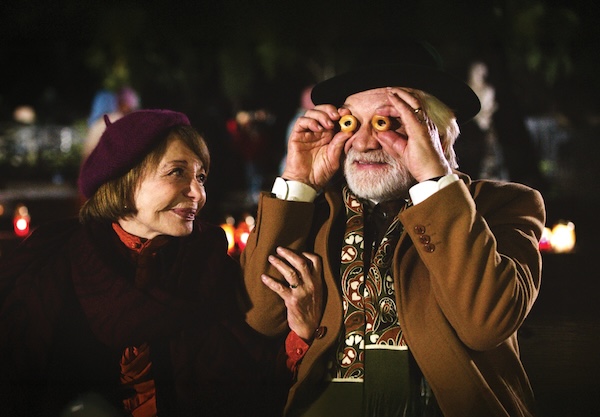
photo - The Property closes the Vancouver Jewish Film Festival May 4
The Property closes the Vancouver Jewish Film Festival May 4. (still from film)

One probably wouldn’t expect lots of yuks in a film about a grandmother and granddaughter traveling from Israel to Poland to reclaim property lost during the Holocaust. But the first great guffaw in the closing night film of the Vancouver Jewish Film Festival, The Property, comes early, with the frustrated chaperone of ill-behaved high school students shouting, “You don’t deserve to be taken to the concentration camps!”

Dark humour and subtle situational absurdity shine a light on serious paradoxes, twists of fate, loss and possible redemption. The film by Dana Modan, based on a graphic novel by her brother, Rutu Modan, centres around distinctive characters and intersecting personal and world history.

The trip’s mission seems straightforward, but Savta has a secret – and a secret agenda. Secrets abound, actually, but the conundrum, as the granddaughter observes drily, is that no one really cares.

Ostensibly, the family is returning to Poland to regain physical property stolen during the war – an apartment building – but it becomes clear almost immediately that the grandmother is after something else. The viewer’s assumptions about her motivations will be subtly upended. 

The grandmother, Regina (Rivka Michaeli), and granddaughter, Mika (Sharon Strimban), spend much of their time in Poland doing their own things, but their experiences – past and present – imitate the other’s. History and the present day seem to merge, then diverge, when Mika stumbles into a too-authentic immersive experience at a museum that is the essence of dark humour, as is the interaction with a museum curator who takes her work just a tad too seriously.

Family secrets, though, are the heart of the film, as are the complex interactions between Jewish and non-Jewish Poles across generations. 

Beginnings and endings and the sense that the past keeps repeating are a thread throughout The Property.

“How many times can you start a life all over again?” asks the grandmother at one point. But Mika’s experience suggests it’s all a big repetitive cycle anyway. 

– PJ

For tickets to the Vancouver Jewish Film Festival, visit vjff.org.

Format ImagePosted on April 25, 2025April 23, 2025Author Pat Johnson and Cynthia RamsayCategories TV & FilmTags Bess Kargman, Diane Warren, Full Support, Highway 65, Michal Cohen, Rivka Michaeli, Sharon Strimban, Tali Sharon, Vancouver Jewish Film Festival, VJFF

A wordless language

In her lab at the Hebrew University of Jerusalem, Prof. Sigal Ben-Yehuda and her team have observed that bacteria can exchange molecules, genetic material and survival strategies through tiny structures called nanotubes. These findings suggest that, rather than acting independently, bacteria are capable of molecular communication.

This microbial interaction is at the heart of Ben-Yehuda’s research, pointing to a microscopic network built on exchange and cooperation. She will present this work in Vancouver April 29, as the featured speaker at the Dmitry Apel Memorial Lecture, hosted by the University of British Columbia.

photo - Prof. Sigal Ben-Yehuda gives the Dmitry Apel Memorial Lecture at the University of British Columbia on April 29
Prof. Sigal Ben-Yehuda gives the Dmitry Apel Memorial Lecture at the University of British Columbia on April 29. (photo from Hebrew University)

Ben-Yehuda described herself as a scientist driven by questions. “I am fascinated by how bacteria make decisions, communicate and sense one another,” she told the Independent.

That interest has guided her career – from a PhD in microbiology at Tel Aviv University to postdoctoral research at Harvard. Since 2004, she has been a professor at the Hebrew University, where, two years ago, she became head of the department of microbiology and molecular genetics at the Institute for Medical Research Israel-Canada.

Ben-Yehuda’s research into bacterial communication did not begin with a specific hypothesis. “It began with a set of microscopy observations that raised the idea that bacteria can mysteriously share intracellular molecules,” she said. “That curiosity turned into a deeper investigation, which led to the identification of bacterial intercellular bridges that the group termed ‘nanotubes,’ that mediate this form of communication.”

Ben-Yehuda explained that these structures “allow bacteria to transfer molecules and DNA between cells – effectively creating a biological highway for the exchange of antibiotic resistance.”

This resistance develops when bacteria evolve to survive drugs that once killed them, posing a major challenge in treating infections. Ben-Yehuda’s findings could shape new approaches to combating infections by targeting the bacterial links rather than individual cells.

While centred on the microscopic world, Ben-Yehuda’s work speaks to something larger – an approach to science that begins with curiosity and unfolds through observation. This open-ended inquiry is exactly what the upcoming seminar seeks to celebrate.

The Dmitry Apel Memorial Seminar was created in memory of UBC PhD student Dr. Dmitry Apel, who passed away in 2013. His family, notably his mother, Dr. Maryana Apel, and sister, Dr. Sabrina Apel, sponsor the lecture that honours his devotion to pure science, which was driven by a curiosity about how the world works.

Prof. Yossef Av-Gay, a professor in the UBC Faculty of Medicine’s division of infectious diseases, who, among other things, also holds an adjunct professorship at the medical school of Ben-Gurion University of the Negev, invited Ben-Yehuda to speak.

“I thought that Sigal would be an inspiration for young scientists,” he said. “She discovered nanotubes – a great new discovery in microbiology. Having a strong microbiology department at UBC, focusing on similar fields as Sigal’s department at Hebrew University, I saw this as a chance to spark cross-continent collaborations. The Apel family has close ties to Israel, so it felt like a perfect fit and a great opportunity to bring Sigal to Dmitry’s memorial seminar.”

As a department head, Ben-Yehuda works to support early-career researchers. 

“My main goal has been to support the younger faculty members,” she said. “I’m committed to helping them create strong research groups and establish themselves – and their labs – as leaders in their fields.

“As for my lab, my approach has been to encourage curiosity-driven research, which depends on the scientists and their progression. I encourage independence and creativity.”

Although this will be Ben-Yehuda’s second visit to Vancouver, it will be her first time speaking at UBC. Hosted by microbiologist Av-Gay, her visit will include meetings with faculty and colleagues, along with the hope of having time to explore the city and its surroundings.

As for her hope of what people will learn from her lecture, Ben-Yehuda said, “An important takeaway is that connection matters. Whether you’re a microbe or a human, being part of a community can enhance resilience and adaptability. Also, cooperation – far from being a soft or secondary trait – can be a powerful survival strategy. It reminds us that strength often comes not just from competing, but from collaborating, and highlights community strength.”

For more information on the Dmitry Apel Memorial Seminar and Ben-Yehuda’s talk, visit mbim.ubc.ca/events/dmitry-apel-memorial-seminar-2025. 

Uriel Presman Chikiar is a student at Queen’s University and serves as executive vice-president of external relations at Hillel Queen’s.

Posted on April 25, 2025July 21, 2025Author Uriel Presman ChikiarCategories Israel, LocalTags Dmitry Apel Memorial Lecture, Hebrew University, Institute for Medical Research Israel-Canada, microbiology, molecular genetics, research, science, Sigal Ben-Yehuda, UBC, University of British Columbia, Yossef Av-Gay

It’s important to vote

You may have received anxious emails or other messages from friends in the last few days. Throughout the community, there is concern about a Vote Palestine campaign for Monday’s federal election. Emails and social media posts are flying.

However wrongheaded you may think this advocacy campaign is, its proponents are doing exactly what they should be doing during an election campaign. They are highlighting the issues that are important to them and encouraging others to support them. You may disagree with the approach and policies, but there is nothing fundamentally different in what they are doing from what plenty of Jews and community organizations are doing right now. 

The Vote Palestine campaign is an initiative of several groups of usual suspects, including Independent Jewish Voices and other anti-Israel groups. The platform, which federal election candidates can choose to endorse, calls for a two-way arms embargo on Israel; ending Canadian support for settlements (whatever that means); combating anti-Palestinian racism and protecting pro-Palestine speech; recognizing the state of Palestine; and funding Gaza relief efforts, including through UNRWA, the controversial UN body that has been at the centre of this conflict for almost 80 years.

By press time, 124 New Democrats, 44 Greens and 13 Liberals had endorsed this platform. Given that there are 343 electoral districts in the country and the three largest parties are running candidates in almost every seat, the number of endorsers should be, frankly, a bit of an embarrassment for the campaign’s organizers. Almost all the endorsers are candidates for the New Democratic and Green parties. Of the Liberals who have signed on, just one is in British Columbia: West Vancouver-Sunshine Coast-Sea to Sky Country incumbent MP Patrick Weiler.

Most of the candidates who have endorsed the campaign and its platform are unlikely to be elected. That, though, is largely beside the point. The issue, we believe, is not the Vote Palestine campaign, but our community’s overwrought reaction. It is a symptom of a particular sort of impulse that seems to believe people do not have a right to raise issues in an election campaign in the manner that the Vote Palestine organizers are doing. 

Though they may not have come across your social media feeds or in other ways to capture your attention, there are probably scores of organizations right now campaigning for or against policies that are important to you. Many organizations are encouraging Canadians to vote based on candidates’ positions on such things as the climate crisis, taxes, housing, and the cost-of-living. Agree or disagree with the positions, many of these campaigns fulfil an important civic purpose, assuming they comply with our country’s election laws around third-party advocacy spending. 

The next time you receive an email or catch wind of some sort of advocacy campaign that you disagree with, here is how you should respond: take the anger and energy that you would otherwise direct into sharing your outrage with your friends and family and redirect it instead to something positive, a result you desire and hope to achieve.

Here are a few ideas …

Find out which of your local candidates share your values on the issues most important to you. If you find one that suits you, express your support. Get a lawn sign to let your neighbours know who you support. Donate to their campaign. 

Offer to volunteer – it’s not too late! Election day is the most intense time in a campaign. You can drive voters to the polls or otherwise help your preferred candidate. (Check out cjpac.ca for more info.)

Ensure that friends and family go out to vote. Contact them over the weekend to make sure they plan to cast a ballot. 

On Monday, message or telephone everyone you know who agrees with you on the issues most important to you and make sure they have voted. Suggest they block out at least an hour or maybe two or even three – advance voting statistics tell us Canadians are deeply engaged this election, so high turnout is expected. Prepare for lineups. Bring water and snacks for yourself and your neighbours in line. 

Check the voting card you received in the mail to confirm your polling place so you know where to go on election day. If you did not receive a card in the mail, go to elections.ca right now and ensure you are registered to vote. 

Democracy is threatened in countless places around the world. Voting is a right and a privilege we should never take for granted. 

Meanwhile, as we know from the flurry of messages making their way around the community in the past few days, people who may disagree with you are planning to vote. They are organized and ready to mobilize. The most important thing you can do in response is to make the trek to your polling place and mark a single X on a ballot. 

Posted on April 25, 2025April 23, 2025Author The Editorial BoardCategories From the JITags democracy, free speech, Palestine, politics, voting

Flying camels still don’t exist

We’ve been getting a lot of weird phone calls lately. The caller ID says it is from our credit card company or the bank. Yet, the person on the phone seems a little off. What we realize, before giving away any important information, is that it’s likely some new kind of scam. The person calling knows our names, or knows where we shop or bank. Maybe that person has seen our mail. Maybe they work at the store and noticed our info when we ordered online. Maybe the information has been sold to them. No matter, it becomes clear it’s a scam. We hang up. Later, we might log on and check our accounts. Is everything fine? Is someone stealing money or information? 

This is well worth asking because, sometimes, there is theft happening. If you read the news, there are often articles saying “Caution! Look out! There’s a new scam out there, beware!” Like everything we read, it’s helpful to think critically about this. Criminals are always upping their game to catch new victims. This isn’t a new phenomenon.

I’ve just started studying a new tractate of the Babylonian Talmud, Makkot. So far, it’s mostly about how a court of law rules and doles out punishment. I’ve learned about “conspiring witnesses.” That is, witnesses who arrange in advance to lie about something to the court. For instance, imagine there was a crime in Saskatoon and there were witnesses to it. The conspiring witnesses might swear that, in fact, the criminal was in Winnipeg that day, and not in Saskatoon. It’s clear to the court that the conspiring witnesses were lying, due to the testimony of others. How should the court punish those conspiring witnesses? How are they held accountable for lying?

This topic continues for awhile, but my absolute favourite moment happens on Makkot 5a. The situation is as follows, in summary:

Rava says: If two witnesses came and said, So-and-so killed a person in Sura on Sunday morning and two other witnesses came to court and said to the first witnesses, on Sunday evening, you were with us in Nehardea – if one can travel from Sura to Nehardea from the morning and arrive by the evening, fine, nobody is misleading us. If not? They are “conspiring witnesses.”

The Gemara (later commentators) say: This is obvious. Don’t be concerned that these witnesses traveled via “flying camel” – that is, using a magical or impossible way to travel with great speed. You don’t have to take that kind of thinking into account.

In practical terms, Sura and Nehardea were both places in Babylon with Jewish academies of learning, but they were far apart. Nehardea was destroyed in 259 CE. More than 1,766 years ago, the Mishnah described this. Later rabbis advised students not to be taken in by somebody lying outright in court. After all, these lying witnesses didn’t travel by “flying camels.”

It often feels like that we’re struggling with ever new and complicated scams. The pace and amount of information via the internet and social media is astounding. Yet, I sometimes hear the most interesting things close to home, in the old-fashioned way people have always communicated. When is that? Well, when I’m visiting with friends, having a cup of coffee after lunch on Shabbat, or at synagogue. 

Both world news and “true accounts” are only as good as the people who tell them and how much trust we have in those sources. If those sources rely on witnesses who like to offer bald-faced lies, well, that’s not a good source. If we have trouble with the veracity of someone’s account, we must ask: What flying camel did you ride in on?! How were you in two places at once, that you witnessed both these things?

Jewish tradition is amazing. We have these ancient sources to remind us that “there’s nothing new under the sun.” The bigger point is a modern one: we must get out of our usual news bubbles or coffee klatches. We are so easily lulled into believing some versions of the “truth” when we trust our sources without question. For example, some Canadian news outlets suggest that Israel is targeting specific Gazan locations with a vengeance. Yet these same outlets fail to mention the Hamas rocket fire that came from that location just before the Israeli response. So, if the story conveniently fails to mention why the Israeli army is firing at a specific location, the news article may not be an objective source of war coverage.

In the Winnipeg Free Press newspaper, I read about a new lecture series created by professors supposedly concerned about freedom of expression. Their invited speaker, a professor from York University, brought up the suspension of her colleague, who had been charged with “vandalism of a bookstore.”  Notably, the article did not mention which bookstore. My household strongly suspected it had been the incidents targeting Indigo, when Jews and Israelis were targeted by protesters. Further, the article didn’t mention that freedom of expression doesn’t mean freedom to commit crimes against businesses. 

The article’s tone was matter of fact. A person could read such an article and feel that the professors were rightfully concerned about the loss of freedom of expression. To me, it seemed like the example given before, of the distance between Sura and Nehardea. If you don’t know the particulars, such as the distance between these two locations, you can miss the absurdity of the situation. In the guise of defending free speech, the professors wanted readers to bemoan the suspension of a professor who was charged with vandalism – a crime.

Sometimes, when someone presents a news story or a court defence that seems so smooth and practised as to be suspicious, well, perhaps that’s because it is. Likewise, the tidbits we gain at Kiddush lunch after services may also vary in their reliability. We may have faster transportation and cellphone connections today, but, sometimes, things still aren’t as they seem. As much as things change, much is still the same. Yes, a juicy bit of news is an interesting truth to ponder, but a lie is still a lie. We still have conspiring witnesses to contend with and, even now, we still don’t have flying camels. 

Joanne Seiff has written regularly for the Winnipeg Free Press and various Jewish publications. She is the author of three books, including From the Outside In: Jewish Post Columns 2015-2016, a collection of essays available for digital download or as a paperback from Amazon. Check her out on Instagram @yrnspinner or at joanneseiff.blogspot.com.

Posted on April 25, 2025April 24, 2025Author Joanne SeiffCategories Op-EdTags courts, Gemara, law, newspapers, reporting, Talmud
Productive collaboration

Productive collaboration

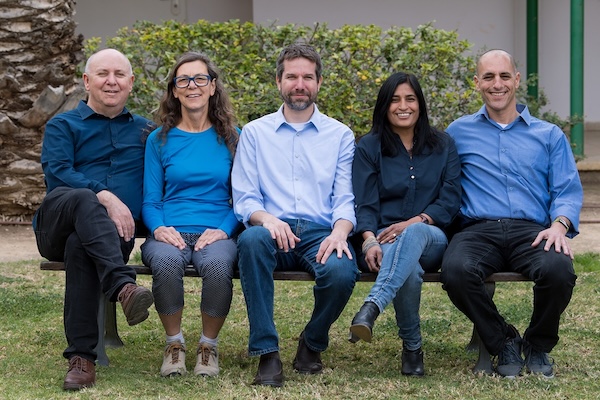
The Azrieli National Centre for Autism and Neurodevelopment Research team includes, left to right, Dr. Gal Meiri, Prof. Hava Golan, Prof. Ilan Dinstein, Mazal Malka and Prof. Idan Menashe. Dinstein and Menashe will be in Vancouver in May to meet with colleagues from the University of British Columbia. (photo from azrielifoundation.org)

When the International Society for Autism Research convenes in Seattle April 30 for its annual conference, researchers from all over the world will be flying in to learn about and share the latest research on this multifactorial disorder. Two of them, Idan Menashe and Ilan Dinstein, who head up the Azrieli National Centre for Autism and Neurodevelopment Research (ANCAN) at Ben-Gurion University, will be coming from Israel. When the conference wraps up, they will be in Vancouver to continue a three-year collaboration with autism researchers at the University of British Columbia and Simon Fraser University, and meet with various people, including community members.

Menashe and Dinstein were part of a group – that included Dr. Tim Oberlander from UBC’s School of Population and Public Health and Grace Iarocci, director of SFU’s Autism and Developmental Disabilities Laboratory – that published a paper in 2023 on whether oxytocin is associated with an increased risk of autism in offspring.

“Oxytocin is a neuropeptide hormone that plays a key role in social behaviour, stress regulation and mental health,” begins the paper’s abstract. “Synthetic oxytocin administration is a common obstetrical practice and, importantly, previous research has suggested that intrapartum exposure may increase the risk of neurodevelopmental disorders, such as autism spectrum disorder.”

The study supported the conclusion that “induction of labour through oxytocin administration does not increase the risk of autism spectrum disorder in the child.” However, Menashe and Dinstein’s own studies in Israel found an association between autism and the use of general anesthesia during caesarean sections.

“Having a C-section with general anesthetic increases the risk of diagnoses of autism in offspring by 60% compared to natural birth,” Menashe told the Independent. Because general anesthesia in C-section is infrequently used, that risk is low, but consistent, he added.

Menashe, Dinstein, Oberlander and Iarocci are excited to reunite in Vancouver in May because they all have access to population health data that allows them to compare their results. Such comparisons are especially valuable given that autism rates are increasing the world over.

Menashe said the rate of autism is 2% in Israel and Canada, and more than 3% in the United States. “We know a big portion of this increase is due to increased awareness among parents and caregivers, but we don’t know if that explains everything,” he said. 

Autism is highly heterogeneous, he continued. “Every child is different and no two children present exactly the same autism symptoms. We believe the causes of autism are also very heterogeneous, and that’s what makes research so complicated, but also so interesting.”

Because of that heterogeneity, research requires collection of data from large populations. At the Azrieli National Foundation for Autism Research, Menashe and Dinstein work with nine clinical centres to collect data.

“A major advantage we have in Israel is our access to families’ medical records,” Menashe explained. “We ask families from those clinics to participate in genetic studies, through which we try to identify the genetic causes of autism.”

Menashe, Dinstein, Oberlander and Iarocci meet monthly by Zoom to discuss their findings. By collaborating, the four researchers can compare Israeli findings to those in British Columbia.

“The comparisons make our research more powerful,” Iarocci said. “They allow us to see what’s the same and what’s different cross-culturally.

“Our goal with autism is early identification, early diagnosis, and offering interventions that are effective,” she continued. “When we collaborate, we can compare very large data sets and, without those comparisons, you can’t really answer these questions meaningfully.” 

“We’ve had a very productive collaboration so far, and what makes it especially important is the cross-jurisdictional research we can do,” Oberlander said. “There are few jurisdictions in the world that can do this effectively, but Israel and BC are two of them. It’s a wonderful collaboration, a great model, and we’re looking forward to seeing them in Vancouver in May.”

While here, Menashe and Dinstein will participate in an invite-only parlour meeting on May 4. Those interested in attending should contact David Berson, executive director, BGU Canada, British Columbia & Alberta, at [email protected]. 

Lauren Kramer, an award-winning writer and editor, lives in Richmond

Format ImagePosted on April 25, 2025April 24, 2025Author Lauren KramerCategories Israel, LocalTags autism, Ben-Gurion University, BGU, Grace Iarocci, Idan Menashe, Ilan Dinstein, research, science, SFU, Simon Fraser University, Tim Oberlander, UBC, University of British Columbia
Candidates share views

Candidates share views

Parm Bains, incumbent MP and Liberal candidate in Richmond East-Steveston, and his Conservative opponent, Zach Segal, spoke at Beth Tikvah April 15. (photo by Alan Marchant)

Liberal and Conservative candidates made their pitches to the Jewish community in a candidates’ forum at Beth Tikvah Congregation April 15. 

Parm Bains, incumbent member of Parliament and Liberal candidate in the riding of Richmond East-Steveston, and his Conservative opponent, Zach Segal, who hopes to unseat Bains as MP on April 28, shared their visions, and those of their parties, to a crowded sanctuary at the Richmond synagogue.

Both candidates spoke of their lifelong roots in Richmond.

Bains explained that his engagement with at-risk youth and combating gang violence first emerged through coaching sports. He became a community liaison for the provincial government under premiers Gordon Campbell and Christy Clark. 

Segal worked in Ottawa during the Stephen Harper administration for the ministers of defence and transportation. He credited the former Conservative government for making Canada a “moral compass in the world.” However, he suggested that Jewish Canadians are wondering if there is a better tomorrow in Canada, not just because of rising antisemitism, but because of challenges around housing, affordability and community safety.

On the issue of antisemitism, Bains pointed to his Liberal colleague Anthony Housefather, who is the government’s special advisor on Jewish community relations and antisemitism, and urged members of the community to ensure authorities are made aware of every incident of antisemitic bias and hate.

“You have to report it,” Bains said. “If it’s reported, it’s a data point that we can take action on.”

Both candidates spoke of the challenges in enforcing existing anti-hate laws. 

Bains said it is crucial that police understand the definition of hate crimes and that they are educated to enforce the laws as they stand.

Segal condemned an “explosive rise in antisemitism” and credited it in part to “a horrible lack of moral leadership.” The intimidation of Jewish people and the employment of incendiary language has been tolerated by federal leaders and others on the basis of free expression, he argued.

“This is hate speech,” Segal said. “This is inciting hate and it is illegal.”

Police have said they don’t have the support to go after perpetrators, said Segal, adding that funding to increase security at Jewish institutions, for example, is a Band-Aid solution that deals with the symptoms and not the causes. He said that his party’s leader, Pierre Poilievre, has been “rock solid” in condemning hate rallies and marches. He said that a Conservative government would “close loopholes” that allow hateful events like the annual Al-Quds Day rally in Toronto to continue unchecked.

Existing laws need to be enforced, said Bains, and he suggested there is a need to understand why police are not calling for charges and Crown prosecutors are not pursuing them.

“Why is there a reluctance?” Bains asked. “Where does that leadership need to come from?”

Canada has seen some of the “most obscene” anti-Israel activism of any Western democracy, Segal asserted, citing Charlotte Kates, who was arrested in November, and her Samidoun Palestinian Prisoner Solidarity Network, which had been declared a terrorist entity shortly before her arrest, “years after Jewish and other community leaders sounded the alarm on them,” Segal said.

Segal also took exception to the fact that Canada instituted a military embargo on Israel before it recognized the Iranian Revolutionary Guard Corps as a terrorist organization.

“We were literally being tougher on Israel than Iran,” he said.

Bains said Israel has a right to defend itself and the hostages need to be freed. Canadians, however, want to play a role as “honest broker” and in peacekeeping. “Right now, Canadians want to see the violence stop, the bloodshed stop,” he said.

Segal condemned the Liberal government for resuming funding for UNRWA, the United Nations Relief and Works Agency that functions as a quasi-governmental body in the Palestinian territories, some employees of which participated in the Oct. 7 pogroms.

“That is out of step with our allies in the Western world,” Segal said. Where the Harper Conservative government voted against one-sided resolutions of the United Nations, under the Liberals, said Segal, Canada has again begun supporting demonizing resolutions against Israel.

Both candidates called for more affordable housing, supports for seniors and economic opportunities for young people.

The candidates asked to speak were selected based on independent polling information which showed the Liberals and Conservatives to be the two parties leading or competing in both Richmond ridings. The Beth Tikvah Community Awareness Committee, which sponsored the event with support from the Centre for Israel and Jewish Affairs and the Canadian Jewish Political Affairs Committee, chose to give those candidates likely to form government or be in the official opposition the opportunity to address the issues. 

Rabbi Susan Tendler opened the event with reflections on reconciliation and noted the significance of the event taking place during Passover, the celebration of freedom, while Jews remain captive in Gaza. 

Format ImagePosted on April 25, 2025April 24, 2025Author Pat JohnsonCategories LocalTags democracy, federal election, hate crimes, Parm Bains, politics, Richmond, terrorism, Zach Segal
Art Vancouver underway

Art Vancouver underway

“Warm Blossoms” by Lauren Morris. (image courtesy Art Vancouver)

image - “The Watchers” by Lisa Wolfin
“The Watchers” by Lisa Wolfin. (image courtesy Art Vancouver)

Jewish community members Sky Lilah, Lauren Morris, Taisha Teal, Talin Wayrynen and Lisa Wolfin are among the artists participating in Art Vancouver International Art Fair, which runs until April 27 at the Vancouver Convention Centre. Tickets: artvancouver.net.

– Courtesy Art Vancouver

Format ImagePosted on April 25, 2025April 24, 2025Author Art VancouverCategories Visual Arts
Guns & Moses to thrill at VJFF 

Guns & Moses to thrill at VJFF 

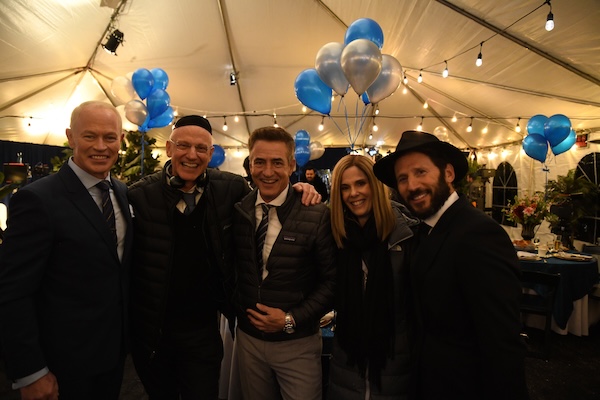
Filmmakers Salvador and Nina Litvak with Guns & Moses cast members Neal McDonough, left, Dermot Mulroney, centre, and Mark Feuerstein, right. (photo from Pictures from the Fringe)

Los Angeles filmmaker and author Salvador Litvak (no relation) will be in the city for this year’s Vancouver Jewish Film Festival to promote and talk about his and wife Nina Davidovich Litvak’s latest movie, Guns & Moses, which screens April 27, 4 p.m., at Fifth Avenue Cinemas.

The action thriller features a Chabad rabbi who becomes a detective and gunfighter to investigate a murder at his synagogue. This will be the third movie by the Litvaks and their production company, Pictures from the Fringe. Their previous films are When Do We Eat?, about “the world’s fastest seder gone horribly awry,” and Saving Lincoln, which is based on the true story of Abraham Lincoln and his friend and bodyguard Ward Hill Lamon.

Between movies, Salvador Litvak became the Accidental Talmudist – in fact, his last event in Vancouver was an Accidental Talmudist Shabbaton at the Kollel. He and his wife co-manage accidentaltalmudist.org, which has more than one million followers. Last year, he published a bestselling book, Let My People Laugh: Greatest Jewish Jokes of all Time.

Salvador Litvak grew up in New York but was born in Santiago, Chile. 

“My mother’s family, both my mother and grandmother, were Holocaust survivors who came to Chile from Hungary and my father’s family ended up in Chile fleeing the pogroms in the Ukraine about 1905,” he told the Independent. As immigrants, he said, “we got to this country and my parents wanted me to go to Harvard to be a doctor and, since I was 5, I said OK, but, eventually, I figured out that I didn’t want to be a doctor and I didn’t want to be a lawyer because I enjoyed writing and creating very much.”  

He said, “Eventually, I talked my way into UCLA film school, where I arrived in the 1990s, attended the MFA director’s program, and said thank G-d I didn’t miss this because this is what I was meant to do.” 

Pictures from the Fringe’s first feature film, When Do We Eat?, about a dysfunctional family’s Passover seder, was inspired by the fact that there were no Jewish holiday movies and the Litvaks wanted to “create a Jewish version of It’s a Wonderful Life.” Both filmmakers are baalei teshuva, or returnees to Judaism, and were “in the early stages of their journey,” said Salvador Litvak. They infused the movie with a “tremendous amount of spirituality, Torah and Chassidut,” but, he noted, “now that we’re Orthodox, we admit that it’s a little edgier than we would like.” However, he said, “All of the deep stuff in it, the Torah, the love, in addition to the raucous humour, stands the test of time.”

Litvak said his journey as the Accidental Talmudist and the establishment of accidentaltalmudist.org have helped When Do We Eat? gain new popularity and provide a built-in audience for Guns & Moses, which was partially inspired by a tragic shooting in California on April 27, 2019.

The couple had “built a large audience interested in authentic Jewish content, and we are filmmakers, so we knew that our next movie would be somehow Jewish. I wanted it to be an action thriller because I love action thrillers,” he said.  

The Litvaks watched a thriller a day for three years to “learn the genre inside out,” he said. “While we were immersed in that, there was a tragic murder, a shooting at a Chabad synagogue in Poway, Calif., where a young white nationalist came in and murdered a woman named Lori Gilbert-Kaye, injured the rabbi, and would have killed a lot more people if his gun had not miraculously jammed and members of the congregation rushed at him and then he fled. 

“I went down the next day and attended Lori’s funeral and interviewed the rabbi and congregants and got to know what happened there personally, and I said there is something in this that can become an action thriller with a murder/mystery structure,” he said.

image - Guns & Moses posterAnd so, Guns & Moses – about a Chabad rabbi who becomes an investigator and gunfighter after witnessing a tragic shooting at his synagogue – came into being. It was filmed in 2022.

Litvak said he knew that a movie about Jews under attack who fight back “would always be relevant, but we had no idea how relevant it would be” after Oct. 7, 2023.

One of the important themes of the movie, said Litvak, is that Jews are in danger and need to protect themselves and be responsible for their own safety. For him personally, that has meant joining a Jewish self-defence organization called Magen Am (which means Shield of the Nation) and going through extensive training (including learning how to use a gun) so that he can protect his own synagogue in case of an attack like the one in Poway. In the movie Guns & Moses, the character of Rabbi Mo Saltzman goes through the same training that Litvak went through.

In Guns & Moses, Saltzman is played by actor Mark Feuerstein, who starred in the hit series Royal Pains and appeared in the movie Defiance, among other things. The cast includes American-Israeli actor Alona Tal as the rebbetzin, Christopher Lloyd as a Holocaust survivor, as well as veteran actors Neal McDonough and Dermot Mulroney, Jake Busey, Craig Sheaffer, Mercedes Mason, Mark Ivanir (who also appeared in When Do We Eat?) and young actor Jackson Dunn, who Litvak believes will become a star. Litvak praised his cast, who only had 20 days to film Guns & Moses.

Litvak is looking forward to coming back to Vancouver, where he has visited many times because he has family here. The city is “very dear to my heart,” he said, and he loves the people and feels at home as soon as he lands here.

For tickets to Guns & Moses and other Vancouver Jewish Film Festival screenings, visit vjff.org. 

David J. Litvak is a prairie refugee from the North End of Winnipeg who is a freelance writer and publicist, and a mashgiach at Louis Brier Home and Hospital. His articles have been published in the Forward, Globe and Mail and Seattle Post-Intelligencer. His website is cascadiapublicity.com.

* * *

Editor’s Note: Guns & Moses’ North American release date is July 18. For more information, visit collider.com/guns-and-moses-trailer-release-date.

Format ImagePosted on April 25, 2025May 16, 2025Author David J. LitvakCategories TV & FilmTags Guns & Moses, movies, Nina Litvak, Salvador Litvak, thrillers, Vancouver Jewish Film Festival, VJFF
Spark honours Siegels

Spark honours Siegels

Camp Solomon Schechter’s Spark event in Vancouver on May 4 honours the Siegel family’s generational connections to the camp. (photo from campschechter.org)

Once again, Camp Solomon Schechter (CSS) is hosting one of its three annual Schechter Spark events in Vancouver – on May 4, at the Tap & Barrel Bridges location on Granville Island.

The fundraising and community-building events hosted by the camp each year run simultaneously in Vancouver, Seattle and Portland – the camp’s main hub cities. This year’s Schechter Spark will honour three families – one tied to each location – who have generational connections to the camp. In Vancouver, former Beth Tikvah and Beth Israel spiritual leader Rabbi Howard Siegel, Ellen Siegel and their growing family will be celebrated.

Rabbi Siegel, originally from Spokane, Wash., first attended CSS in 1961, when it was located on Whidbey Island. His experiences there led him down a path toward the Conservative rabbinate, a Jewish family and a life of Jewish service that took him to Vancouver, as well as many communities in the United States. In 1968, he convinced his then-girlfriend, Ellen Kushner, to join him as a camp counselor. The couple returned again to CSS in 1970, this time at its new (and current) Tumwater, Wash., location – Howard as educational director and Ellen as camp nurse. 

Ellen Siegel credits the camp for helping her perfect her independence as a health practitioner, while Howard Siegel built his future rabbinate under the mentorship of Portland’s Rabbi Joshua Stampfer and Vancouver’s Rabbi Wilfred Solomon.

The Siegels’ three children also attended CSS and their oldest daughter, Ronit, began her relationship with husband Tadd Berger while they were summer staff together in the 1990s. Naturally, they sent their three children to CSS, and all three have been both campers and staff.

The Seattle and Portland Sparks will recognize the Schiller families and Atkins families, respectively, with more than 500 participants expected to attend between the three locations.

“As we celebrate another year of impact, Spark is a time to honour our past, celebrate our present and invest in our future,” said CSS executive director Zach Duitch. “We look forward to gathering with our beloved community to share stories, laughter and our collective commitment to Jewish camping.”

Camp Solomon Schechter has been a cornerstone of Jewish life in the Pacific Northwest for more than 70 years. Spark endeavours to embody the spirit of camp, bringing its values to life through an evening of joy, generosity and togetherness.

Schechter Spark in Vancouver is a free event with online registration, and will include appetizers, drinks and a few camp-style special presentations. For more information or to register, visit campschechter.org/spark or contact Leah Conley, [email protected]. 

– Courtesy Camp Solomon Schechter

Format ImagePosted on April 25, 2025April 24, 2025Author Camp Solomon SchechterCategories LocalTags Camp Solomon Schechter, Ellen Siegel, fundraising, Howard Siegel, philanthropy, Schechter Spark, summer camp
An almost great movie 

An almost great movie 

Coexistence, My Ass! follows Israeli activist and comedian Noam Shuster Eliassi as she develops her show of the same name. (photo from DOXA)

Coexistence, My Ass!, directed and produced by Amber Fares, is almost a great documentary. But it fails to ask at least two key questions that would have made for a more in-depth portrayal of an interesting and complex human being. 

Coexistence, My Ass!, whose May 4 screening at the DOXA Documentary Film Festival already has sold out, is about comedian Noam Shuster Eliassi, who was born in Wahat Al-Salam / Neve Shalom / Oasis of Peace, a village in which Jewish and Palestinian Israelis have chosen to live together. It has been considered a model of coexistence and  Shuster Eliassi grew up amid the idealism it represented, and speaks Arabic fluently. She and her best friend (to this day), Ranin, a Palestinian Israeli living in Oasis of Peace, were among the kids trotted out as the generation who would bring peace. 

Shuster Eliassi’s mother is Jewish Iranian and her father is Jewish Romanian. The couple met in high school (in what country is not revealed), so basically grew up together. They decided to live in Oasis of Peace and became, says Shuster Eliassi in her act, what most Israelis love to hate most: woke, progressive leftists. “They believe in the radical idea that Israelis and Palestinians deserve the same equal human rights! Crazy. So radical.”

It seems important to know why Shuster Eliassi’s parents left their respective countries to live in Israel, but especially her mother. With Iran as the main funder of Hamas’s – and other terrorists’ – murderous activities, and the fact that tens of thousands of Jews had to flee after the 1979 revolution, it seems that Shuster Eliassi’s mother’s experience is crucial to understanding Shuster Eliassi. But this question, if ever asked, doesn’t make it into the film.

Shuster Eliassi is an intelligent and accomplished person. By age 15, she had graduated, so to speak, from being one of the kids giving flowers to visiting celebrities (who would often mistake her, because of her dark skin, for being Palestinian – and with such good Hebrew!) to speaking around the world about coexistence and the possibilities for peace. At 21, she got a full scholarship at Brandeis University for being a peace activist. She even met the Dalai Lama, who, she quips, didn’t think she was Palestinian –  “He just thought I was Indian.”

At 25, Shuster Eliassi landed a “peace worker’s dream job” – a position at the United Nations. We don’t learn much about what her job entailed, but there are clips of her speaking about the West Bank and Gaza as being the biggest prisons in the world, and how “the occupation” affects Palestinians and Israelis. Career-wise, she was on a wave of success, she says in her show, when she saw Ukrainian President Volodymyr Zelenskyy’s TV program, made before he was elected, about a comedian who becomes president. Zelenskyy, of course, then did become president, so Shuster Eliassi observes that, if she wanted to take her political career seriously, she needed to start writing jokes.

photo - Comedian Noam Shuster Eliassi in performance
Comedian Noam Shuster Eliassi in performance. (photo from DOXA)

This takes us to where the film begins, with her at Harvard in 2019, where she’s been asked to deliver a peace-building project. She tells them that Coexistence, My Ass! will be that project, and she’s accepted.

In the documentary, we see the development of Coexistence, My Ass! and how Shuster Eliassi’s views change as the political situation in Israel deteriorates and the violence increases. Her parents are often her sounding board, as are friends and fellow comedians. We witness the results of a hate crime – the school in Oasis of Peace was set on fire in September 2020. We see moments of happiness, most unexpectedly, perhaps, when Shuster Eliassi returns to Israel from the United States with COVID and must be quarantined in a hotel, where sick Jews and Palestinians are being isolated from the general population.

“And everyone is radically getting along. This is a 5-star oasis of peace. If they continue getting along, my comedy career is over. Just kidding, you’ve read the news, I have material for years. Netanyahu has my back,” says Shuster Eliassi in her act. “Somebody give him a beeper,” she adds sheepishly, referring to Israel’s taking out of Hezbollah with exploding pagers in September 2024.

Months before Oct. 7, 2023, Shuster Eliassi was disillusioned and would get into yelling matches with Jewish Israelis protesting the Netanyahu government and dangers to democracy because their protests didn’t also explicitly call for equal rights for Palestinians. Whereas pre-COVID, she says, “My biggest responsibility is to speak to my people…. The Jewish audience is where we have to work,” the purpose of Shuster Eliassi’s comedy ceases at some point to be a way to encourage peace and becomes a form of resistance.

After Oct. 7, when some of Shuster Eliassi’s family and friends abandon their belief in coexistence because they feel peace with Palestinians isn’t possible, Shuster Eliassi goes the other way, giving up on coexistence because she feels – though doesn’t state explicitly – that peace with Jewish Israelis is not possible. 

Moria, a comedy writer, advises Shuster Eliassi that people need to hear what Shuster Eliassi has to say, but it can’t just be “genocide, genocide!” The role of a comedian, says Moria, is “to bring people together. To unify. We can’t stop the killing, but we can unify people. To get people to see the world through your eyes.”

“No, that’s not what I’m doing,” responds Shuster Eliassi, who explains that her goal isn’t to unify, it’s “to voice resistance to this insane show of force that has swept everyone up blindly.”

Shuster Eliassi’s friend Ranin reluctantly retains hope for coexistence because, otherwise, she tells Shuster Eliassi, there is no place for Palestinians and Arabs within Israel. For Shuster Eliassi, though, by the end of the film, there seems to be no place for Jews in Israel. She only sees fault with Israel, and somehow thinks that Hamas wouldn’t want to kill all Jews if Israel had dealt with “the occupation.”

If memory serves, Hamas is only mentioned once in the documentary, in a clip from Shuster Eliassi’s show, where it is part of a joke, perhaps one told before 2023, it’s not clear. Why Hamas plays little or no role in Shuster Eliassi’s view of the evolving situation is the second of those two key questions that would have made Coexistence, My Ass! a better film. 

While Shuster Eliassi laments that Israelis – even the coexistence crowd – are not able to meet Palestinians where they’re at, she is unable to meet her fellow Jewish Israelis where they are at. While she is comfortable performing at a Palestinian festival where she’s greeted by a man wearing a “Palestine vs the world” T-shirt that, on the back, has a Palestinian flag over all Israel, she isn’t comfortable with Israelis who would fill out that same map with no Palestinian territories. While she is correct that peace is only possible between equals, she only sees one oppressor – Israel. Not Hamas. Not any other international party, like Iran. Just Israel. 

Many of the people at the sold-out screening of Coexistence, My Ass! will think it’s the most amazing film ever because, despite attempting to be fair – and it seems like Fares honestly did try to present multiple sides – it ultimately heralds their anti-Zionist beliefs and justifies them. Others will be disappointed that Coexistence, My Ass! ends up being just another anti-Israel film, which will, no doubt, win more awards than it has already, despite its critical flaws. 

Format ImagePosted on April 25, 2025April 24, 2025Author Cynthia RamsayCategories TV & FilmTags coexistence, comedy, Gaza, identity, Israel, Israeli-Palestinian conflict, Neve Shalom, Noam Shuster Eliassi, Oasis of Peace, Oct. 7, politics, storytelling, Wahat Al-Salam, war

Posts pagination

Page 1 Page 2 … Page 4 Next page
Proudly powered by WordPress