Skip to content
  • Home
  • Subscribe / donate
  • Events calendar
  • Business Directory
  • FAQ
  • News
    • Local
    • National
    • Israel
    • World
    • עניין בחדשות
      A roundup of news in Canada and further afield, in Hebrew.
  • Opinion
    • From the JI
    • Op-Ed
  • Arts & Culture
    • Performing Arts
    • Music
    • Books
    • Visual Arts
    • TV & Film
  • Life
    • Celebrating the Holidays
    • Travel
    • The Daily Snooze
      Cartoons by Jacob Samuel
    • Mystery Photo
      Help the JI and JMABC fill in the gaps in our archives.
  • Community Links
    • Organizations, Etc.
    • Other News Sources & Blogs
  • JI Chai Celebration
  • JI@88! video

Recent Posts

  • Legal help for students
  • Revisiting myth of Lilith
  • Wrong person rebuked
  • Canada’s mixed messages
  • Questions for museum
  • Symposium on antizionism
  • Making soccer political
  • CJPAC lauds Pulver’s impact
  • City recognizes Vrba’s legacy  
  • Organ donation saves lives
  • Theodore’s March premiere
  • A healing Shabbaton
  • Supplying healthy food
  • A chime of metal tags
  • Yellowknife seder a first
  • Ishai energizes, unifies
  • A Lag b’Omer to remember
  • Expanding the healing
  • Hannah Senesh – a unique hero
  • Community milestones … May 2026
  • Sharing her testimony
  • Fall fight takes leap forward
  • The balancing of rights
  • Multiple Tony n’ Tina roles
  • Stories of trauma, resilience
  • Celebrate our culture
  • A responsibility to help
  • What wellness means at JCC
  • Together in mourning
  • Downhill after Trump?
  • Birth control even easier now
  • Eco-Sisters mentorship
  • Unexpected discoveries
  • Study’s results hopeful
  • Bad behaviour affects us all
  • Thankful for the police

Archives

Follow @JewishIndie
image - The CJN - Visit Us Banner - 300x600 - 101625

Month: April 2025

Video shares Spiers’ legacy

Video shares Spiers’ legacy

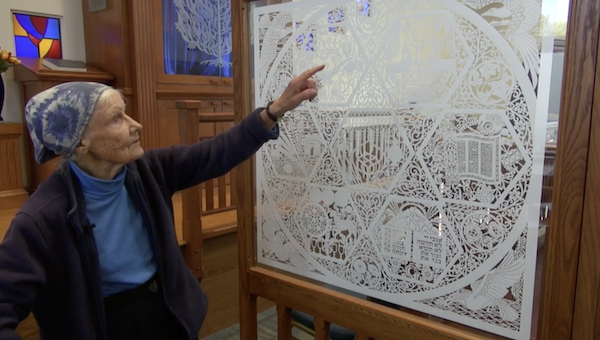
Artist Naomi Spiers explains the first panel of her wood-framed paper-cut mechitzah (partition) at the Chabad of Vancouver Island location in Victoria. A new video by David Cooperstone highlights some of Spiers’ creative path. (still from film)

Salt Spring Island sculptor Naomi Spiers, who celebrated her 90th birthday in March, is the subject of a new film, Naomi Spiers: A Legacy, released in January by Vancouver videographer David Cooperstone. 

Available on YouTube, the film follows Spiers’ path from her artistic beginnings and initial work in Ontario, through to her experiences abroad and her designs found on the mechitzah (partition) at the Chabad of Vancouver Island location in Victoria.

Born in Toronto in 1935, Spiers was allowed to have a penknife, and she carved her pencils into totem poles as a child. “I carved anything I could find and, when I was 14, I got a summer job with a potter,” she recalled. “Later, I got my hands in clay and started making all kinds of things.”

image - Naomi Spiers
Naomi Spiers (still from film)

Spiers went to the Ontario College of Art (OCA), where she studied sculpture. At the end of the four-year degree, she won a scholarship to study at the University of Edinburgh College of Art. Afterward, she returned to the OCA to assist a former instructor teaching first-year sculpture. 

There, she met Reuven, a fellow artist who, along with his two brothers, had immigrated to Canada from the United Kingdom in 1952.

“I was very impressed by his talent and very astonished when he asked me to marry him,” Spiers said. 

The couple opened a studio in Collingwood, Ont., on the shores of Lake Huron, and had various shows during their time there, with Reuven, whom Spiers said “was born knowing how to draw,” receiving several large commissions. 

She, meanwhile, created sculptures for the Catholic Church. Though not born into a Jewish home, Spiers came from a background steeped in biblical stories. She had to memorize many of them and, because of that, she was able to make works of a religious nature.

After several trips to British Columbia, she and Reuven moved to Salt Spring Island. Reuven did house renovations, while Naomi taught at Cariboo College (now Thompson Rivers University) in Kamloops. The two would see each other on weekends in Vancouver, where, on one occasion, they met an Israeli doctor who invited them to stay at a kibbutz.

The couple fell in love with Israel and moved there in 1987, eventually settling in Safed. They refurbished a centuries-old home – with no electricity, plumbing or windows – and set up a gallery: he painting, she sculpting.

It was in Safed that Naomi began to develop an interest in paper cuts, after seeing an exhibition in Jerusalem. At this point, a light went on in her head, and Spiers thought to herself, “I could do that.”

“It was quicker and cheaper than sculpture and people used to ask me to do family trees and things like that. I sold quite a lot of them,” she said.

Their time in Israel turned out to be very successful professionally. Naomi would have liked to have remained there, but Reuven’s physical constraints necessitated coming back to Canada.

Upon their return, the couple bought and renovated another property on Salt Spring Island. In 2009, Reuven, however, became ill and passed away. Within a short period, it was decided that a monument be established in his honour, and thus the Chabad mechitzah saw its beginnings.

With the help of Reuven’s brother, Martin, who assisted with the woodwork, the five paper-cut panels that form the partition got underway, each with its own theme.

The first panel in the Victoria shul shows the seven fruits of Israel – the ones that could be offered at the Temple. The second features the 12 tribes of Israel, with the symbolism being taken from inscriptions in the Hebrew Bible. 

In the middle of the partition is a Star of David panel, with hexagons that depict various Torah tales. This is followed by a panel based on the Jewish calendar – here, for example, the month of Adar takes the viewer to a scene from the Book of Esther. 

The last of the panels represents the Jewish holidays: a shofar, apples and bees making honey for Rosh Hashanah; a tent for Sukkot; a menorah and oil for Hanukkah; noisemakers and masks for Purim; four cups of wine and matzah for Pesach; and the 10 Commandments for Shavuot.

“My dear brother-in-law Martin built all this lovely woodwork,” Spiers said. “It wasn’t something he had ever done before, so we went around the house and looked at things that Reuven had made and tried to get the same style he would have done if he were doing it.

“Martin went ahead and built them,” she said. “I think they’re very nice and they matched the other furniture in the shul, and they were his monument to his brother – they were very close. Between the two of us, I think we did a good job of it.”

Chabad of Vancouver Island’s Rabbi Meir Kaplan, who first met the Spierses in 2008, shortly before Reuven’s death, lauded Naomi’s work, calling it “a stunning piece of art” and “the nicest mechitzah ever created.”

image - Naomi Spiers’ five-panel paper-cut mechitzah she created for Chabad of Vancouver Island in Victoria
Naomi Spiers’ five-panel paper-cut mechitzah she created for Chabad of Vancouver Island in Victoria. (still from film)

Spiers had approached Kaplan with her ideas after her husband’s death and, with his encouragement, she proceeded. After seeing the first panel, Kaplan said, “I was blown away. How can you do this with paper?

“As the project progressed, the works became more complex, with more wisdom and more meaning. This has become one of the masterpieces of our organization,” he said. “Local community members are proud of it and always are looking at it, trying to find some additional details and meanings in this beautiful design.” 

Kaplan, who advised Spiers on religious aspects during the years-long project – he traveled to Salt Spring Island on several occasions – noted that visitors to the Victoria Chabad have been deeply impressed by the artwork, as well. He hopes that the panels will be part of the synagogue’s decor for centuries to come. 

Spiers estimates that it took roughly a year to create each panel. At the time she started, Chabad of Vancouver Island had not yet moved into its present location at 2955 Glasgow St. 

Acknowledging that she always likes to have a project in the works, Spiers said she would like to contribute more to the community, possibly to the new school that opened across the street from the Chabad Centre last fall.

“It was an honour creating a video about Naomi Spiers, with the focus on the incredible mechitzah she created for Chabad of Vancouver Island,” Cooperstone told the Independent. “In doing this video, I discovered her amazing talent as an artist. The intricate, detailed paper cutting which Naomi spent five years creating is a marvel to look at and appreciate. I hope this video will be an everlasting legacy to this remarkable woman.”

Cooperstone has made several videos about community members, including The Naiman Family Concert with Vancouver Jewish Folk Choir (2017), Yosef Wosk Book Launch (2023) and L. Cohen, a JCC Interview with Michael Posner (2024).

The music for the Spiers film comes from Tzimmes, the Vancouver-based ensemble. Andrea Zeitz helped to put the film together and Cooperstone gave special thanks to Michael and Dvori Balshine for bringing the film to fruition. 

Sam Margolis has written for the Globe and Mail, the National Post, UPI and MSNBC.
Format ImagePosted on April 11, 2025April 10, 2025Author Sam MargolisCategories TV & FilmTags Chabad Vancouver Island, David Cooperstone, Meir Kaplan, Naomi Spiers, paper cutting
Women’s leadership summit

Women’s leadership summit

BC emissaries joined the Kinus Hashluchos in February. (photo from chabad.org)

Some 4,000 Chabad-Lubavitch women emissaries and lay leaders from around the globe gathered in February in New York for the 35th annual International Conference of Chabad Women Emissaries, the largest Jewish women’s leadership gathering in the world. BC shluchot (emissaries) who attended were Chanie Baitelman (Richmond), Malky Bitton (Downtown Vancouver), Matti Feigelstock (Richmond), Raizy Fischer (Vancouver), Chana Gordon (Richmond), Fraidy Hecht (Okanagan), Chani Kaplan (Vancouver Island), Riki Oirechman (Vancouver) and Blumie Shemtov (Nanaimo).

While the yearly conference has a celebratory atmosphere, uniting women leaders from Alaska to Zambia, this year’s gathering came during a particularly challenging time for Jewish communities worldwide. From local wildfires to ongoing war in Israel and rising antisemitism on college campuses, the women on the frontlines of Jewish communal service are confronting urgent realities.

photo - The Kinus Hashluchos in February included a visit to the Ohel in Queens, NY, the resting place of the Rebbe, as well as the nearby grave of Rebbetzin Chaya Mushka
The Kinus Hashluchos in February included a visit to the Ohel in Queens, NY, the resting place of the Rebbe, as well as the nearby grave of Rebbetzin Chaya Mushka. (photo from chabad.org)

The conference, known as Kinus Hashluchos, ran from Feb. 19 to Feb. 23, uniting women leaders from all 50 US states and more than 100 countries for five days of workshops, networking and spiritual renewal. The conference is annually timed to coincide with the anniversary of the passing of Rebbetzin Chaya Mushka Schneerson, of righteous memory, the wife of the Rebbe, Rabbi Menachem M. Schneerson, of righteous memory.

The Thursday morning saw the emissaries visit the Ohel in Queens, NY, the resting place of the Rebbe, as well as the nearby grave of Rebbetzin Chaya Mushka. The women came to pray for their families, communities and humanity at large, carrying countless prayer requests from people around the world.

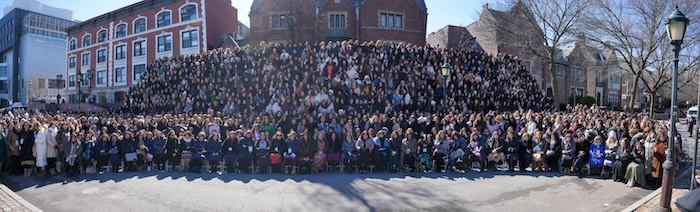
Friday morning featured the iconic “class picture,” with thousands of women gathered in front of 770 Eastern Parkway, the headquarters of the Chabad-Lubavitch movement in Brooklyn, NY.

The capstone of the conference was Sunday’s gala banquet, held at the New Jersey Convention and Expo Centre in Edison, NJ. This year’s theme, “connection,” highlighted the bonds that unite Jewish people worldwide with each other and with their Creator. 

– Courtesy chabad.org

Format ImagePosted on April 11, 2025April 10, 2025Author CHABAD.ORGCategories WorldTags Chabad-Lubavitch, Kinus Hashluchos, leadership, New York, women
New draw to Ben-Gurion site

New draw to Ben-Gurion site

In 2023, Ben-Gurion University of the Negev opened a new home in Sde Boker for the David Ben-Gurion archives. (photo from Ben-Gurion University)

For visitors to Israel – and for Israelis looking for an engaging getaway – there is a relatively new destination in the country’s south.

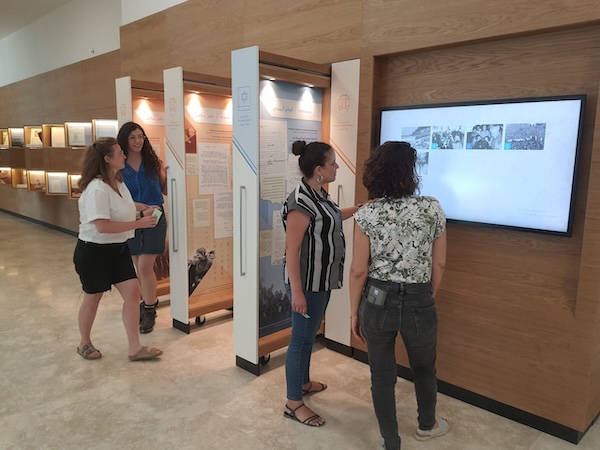
In 2023, Ben-Gurion University of the Negev opened a new home for the David Ben-Gurion archives, with a dramatic exhibition hall to attract visitors. In addition to the many artifacts and documents on display, the exhibitions include interactive activities that allow visitors to speculate how the first prime minister would have responded to various scenarios.

Ben-Gurion was Israel’s first prime minister and the dominant political figure for the country’s first decade-and-a-half, during which time he served concurrently as minister of defence. In addition, no individual is more associated than Ben-Gurion with Israel’s development of the Negev and the entire south of the country.

The new archives facility rounds out a network of Ben-Gurion-related sites in the Sde Boker area, where Ben-Gurion built a desert home and enjoyed his retirement.

David Berson, Ben-Gurion University Canada’s executive director for British Columbia and Alberta, says the facility makes Sde Boker even more of a must-see for visitors to Israel. 

There had been an archive at the Sde Boker campus, allowing deep research into Ben-Gurion’s papers and other materials, but these were photocopies because the university did not have the archival capacity to accommodate the originals in the environment they required. The originals were held in Tel Aviv at an Israel Defence Forces archive.

“Everything was there, but it was a reasonable facsimile, as we like to say,” said Berson.

That changed with the opening two years ago of the purpose-built Ben-Gurion Heritage Archive, which includes a 280-square-metre (more than 10,000-square-foot) exhibition hall.

“All the real, genuine archives have been transferred there,” Berson said. “The exhibition hall is basically an interactive tale of David Ben-Gurion’s heritage and questions about things like the ultra-Orthodox serving in the army, his relationship to the diaspora, the Altalena affair, all sorts of different things, as well as his correspondence with Hebrew school students from all over the world, leaders, his perspectives on religion, etc., etc.”

The facility is a partnership between BGU and the Ben-Gurion Heritage Institute, an educational and commemorative organization committed to keeping Ben-Gurion’s ideals alive, especially his emphasis on developing the Negev. Among other things, they operate the museum at Ben-Gurion’s kibbutz home and other educational programming.

The Ben-Gurion Promenade, a project designed to honour his legacy and connect significant landmarks associated with his life, takes visitors on a 3.5-kilometre walk from his residence at Kibbutz Sde Boker to his burial site overlooking Nahal Zin, and taking in the new archives and exhibition hall. The accessible path is lined with native desert plants and interpretive signs about Ben-Gurion’s life and vision.

photo - The David Ben-Gurion archives includes a 280-square-metre exhibition hall
The David Ben-Gurion archives includes a 280-square-metre exhibition hall. (photo from Ben-Gurion University)

The archives are part of a larger complex that also houses the Ben-Gurion Research Institute for the Study of Israel and Zionism, and the Azrieli Centre for Israel Studies. 

Ben-Gurion’s eponymous university has three campuses in the country’s south.

The main Marcus Family Campus, in Beersheva, is home to the university’s faculties of engineering and sciences, health sciences, humanities and social sciences, business and management, computer science and cybersecurity, among others, and several advanced research institutes. It is adjacent to the Soroka University Medical Centre, where BGU medical students train. The campus is also home to the 10-year-old Advanced Technology Park, which is a joint venture of BGU, the City of Beersheva and real estate development company Gav Yam. The park is part of a national effort to develop the Negev region into a global centre for cybersecurity, defence technologies and tech innovation.

At the Sde Boker campus, about 30 kilometres to the south of Beersheva, specialties include desert studies, environmental science, hydrology, solar energy, sustainability and climate research, and arid agriculture. It is also home to the Jacob Blaustein Institutes for Desert Research.

The Eilat campus, at the country’s southern-most tip, on the Red Sea, specializes in marine biology and biotechnology, hospitality and tourism management, regional development studies, and interdisciplinary undergraduate programs that allow students from the south to do their initial studies in the area before completing their degrees at the Beersheva campus or elsewhere.

Sde Boker has always been a sort of pilgrimage site for Ben-Gurion fans and history buffs. But, because tourism to Israel has plummeted in the past year-and-a-half, most of the visitors so far have been comparative locals, Berson said, including leaders of the security services and military, educators and other Israelis.

When tourism picks up, Berson hopes the archives will make Sde Boker even more of a destination on the visitors’ map.

“It’s a wonderful national treasure,” said Berson. “But it’s also something that’s not on people’s radar screens abroad. We really want to encourage people to come and visit there, put it on their itineraries.” 

Format ImagePosted on April 11, 2025April 10, 2025Author Pat JohnsonCategories Israel, TravelTags archives, Ben-Gurion University, David Ben-Gurion, history, Israel, Israeli history, Sde Boker, tourist attractions, travel
Hebrew U marks 100

Hebrew U marks 100

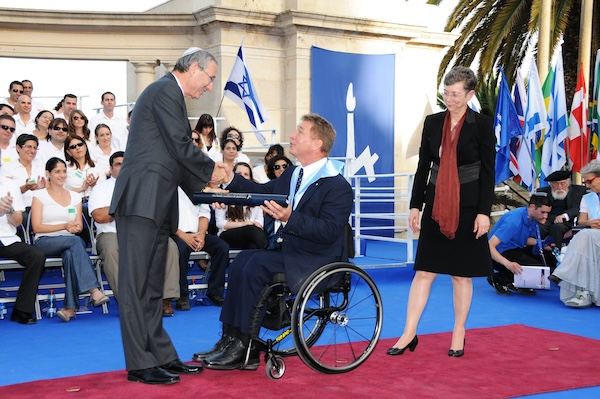
Canadian Paralympic athlete and wheelchair racer Rick Hansen, known for his work to break down barriers for people with disabilities, receives an honorary doctorate from Hebrew University from then-Hebrew U president Menahem Ben-Sasson. In December 2010, Hansen visited Hebrew U as part of the 25th anniversary celebration of his “Man in Motion” tour. (photo from Hebrew University)

The Hebrew University of Jerusalem turned 100 this month. Opening officially on April 1, 1925, the university preceded the birth of the state of Israel by more than two decades.

“There was no country yet,” said Dina Wachtel, vice-president, community affairs, for the Canadian Friends of the Hebrew University. “It’s the first daughter that gave birth to her mother.”

The history of the campus on Mount Scopus has been tumultuous, like that of the country its alumni have helped shape. 

During Israel’s 1948 War of Independence, Mount Scopus became an isolated enclave, and the university was forced to relocate its main activities to facilities in West Jerusalem. In 1954, a new campus was established in the Givat Ram neighbourhood, followed by the creation of additional campuses, including at Ein Kerem, home to the institution’s medical sciences faculty, and, at Rehovot, where the agriculture department is headquartered.

photo - Allan Bronfman, national president and founder of the Canadian Friends of the Hebrew University, with Dr. Albert Einstein, honorary president of the Hebrew University, on Sept. 19, 1954, at a Princeton conference called by Einstein to launch a $30 million dollar capital building project for the university, which was in exile from its campus on Mount Scopus in Jerusalem
Allan Bronfman, national president and founder of the Canadian Friends of the Hebrew University, with Dr. Albert Einstein, honorary president of the Hebrew University, on Sept. 19, 1954, at a Princeton conference called by Einstein to launch a $30 million dollar capital building project for the university, which was in exile from its campus on Mount Scopus in Jerusalem. (photo from Hebrew University)

After the 1967 Six Day War, Hebrew University regained access to Mount Scopus and began to restore and expand the original campus. Today, it is one of Israel’s leading research institutions, ranked among the top universities globally, and it remains a symbol of intellectual and cultural renewal in the country.

“Even the word ‘incredible’ is too small to describe the impact of the Hebrew University on the establishment of the state of Israel and on the state of Israel,” Wachtel said. “Most of the Supreme Court judges are graduates of the Hebrew University faculty of law, which was established in 1949. We have eight Nobel Prize laureates – all of them from 2000 and after.” A ninth laureate, Albert Einstein, a founder of the university, won the Nobel for physics in 1921. 

The university was established by the intellectual giants of the last century, said Wachtel. These included Einstein, as well as Chaim Weizmann, the Zionist leader who would become the first president of the state; philosopher Martin Buber; American Reform Rabbi Judah Leon Magnes, who served as the first chancellor and later president of the university; founder of psychoanalysis Sigmund Freud; Ahad Ha’am, dubbed the father of cultural Zionism; poet Chaim Nachman Bialik; and Herbert Samuel, British High Commissioner for Palestine, among many others.

Einstein, Wachtel noted, left his entire intellectual estate to the Hebrew U and the university is in the process of constructing a new Daniel Libeskind-designed archive for his fonds on Givat Ram’s Edmond J. Safra Campus, adjacent to the Knesset, the Supreme Court and the Israel Museum.

“I think it will be the next tourist attraction in the city of Jerusalem,” she said. 

Celebratory events will take place in Israel in June, concurrent with the Hebrew University’s board of governors meeting in Jerusalem. Happenings will include a special event at the home of Israel’s president, a special show at the Tower of David Museum, and other ceremonies.

photo - Gail Asper, left, a Hebrew University honorary doctorate recipient and a member of the executive of the board of governors of Hebrew U, with then-Hebrew U president Menahem Ben-Sasson and guest speaker Chelsea Clinton at the 2015 CFHU Einstein Legacy Awards in Toronto
Gail Asper, left, a Hebrew University honorary doctorate recipient and a member of the executive of the board of governors of Hebrew U, with then-Hebrew U president Menahem Ben-Sasson and guest speaker Chelsea Clinton at the 2015 CFHU Einstein Legacy Awards in Toronto. (photo from Hebrew University)

The university has been a hub for groundbreaking research, reflecting the institution’s commitment to education, scientific advancement and societal impact.

Marking the centenary, Hebrew U’s current president, Prof. Asher Cohen, credited the thinkers who initiated the school, the groundbreaking for which began in 1918.

“They and many others founded a pioneering academic institution to cultivate future leaders in research, science, public service and society – for the benefit of Israel and all humanity,” Cohen said in a statement. “From the moment this vision became a reality, the university has upheld excellence in research and education as its highest priority. Today, it continues to be a hub of knowledge, innovation and groundbreaking research across diverse fields, nurturing generations of leaders, scholars and thinkers.”

Prof. Tamir Shafer, rector of the Hebrew University, contextualized the university in Israeli society.

photo - NBA superstar Amar’e Stoudemire visited Hebrew University in 2013, meeting with students at the Rothberg International School, and with the then-president of Israel Shimon Peres
NBA superstar Amar’e Stoudemire visited Hebrew University in 2013, meeting with students at the Rothberg International School, and with the then-president of Israel Shimon Peres. (photo from Hebrew University)

“As a leading research institution,” Shafer said in a statement, “the Hebrew University sees itself as responsible for educating future generations, conducting groundbreaking research across nearly all fields of study, fostering extensive international engagement in both research and teaching, building strong ties with advanced industries in Israel and abroad, nurturing a diverse academic community, and maintaining deep social involvement in Jerusalem and throughout Israel.”

Diversity is a cornerstone of the institution’s success, according to Prof. Mona Khoury-Kassabri, vice-president of strategy and diversity.

“At the Hebrew University, we believe that diversity is not a substitute for excellence but a driving force that enhances it,” she said. “Our commitment to inclusion ensures that students and researchers from all backgrounds have equal opportunities to thrive, contribute and shape the future of society. By fostering a multicultural environment, we enrich both scholarship and community, proving that true innovation emerges when different voices are heard and valued.”

The centenary will also be celebrated with special events in Canada, some of which will be announced soon. Check cfhu.org for updates. 

Format ImagePosted on April 11, 2025April 10, 2025Author Pat JohnsonCategories IsraelTags anniversaries, CFHU, Dina Wachtel, Hebrew University, history, milestones
A theme of “Am Israel Run”

A theme of “Am Israel Run”

The Jerusalem Winner Marathon encompassed multiple races, from a full marathon to a 5K circuit and a 1.7K family run. (photo from Jerusalem Municipality)

On April 4, approximately 40,000 runners participated in the 14th International Jerusalem Winner Marathon, which broke all previous records for participation. Held under the theme “Am Israel Run,” the event paid tribute to the Israel Defence Forces, security forces and emergency responders, serving as a powerful symbol of resilience, hope, strength and the enduring Israeli spirit.

The winner of the marathon in the men’s category was Bohdan Semenovych, 39, from Ukraine, with a time of 2:22:47. The winner in the women’s category was Salgong Pauline Gepkirui, 37, from Kenya, with a time of 2:51:58.

photo - The full marathon
(photo from Jerusalem Municipality)

Among the runners were around 15,000 IDF soldiers – both reservists and active-duty personnel – and members of Israel’s security and emergency services. The marathon drew about 1,800 international participants, all of whom ran along a course that passed landmarks including the Knesset, the Old City walls, Sultan’s Pool, Mishkenot Sha’ananim, Mount Zion, the German Colony, Rehavia, the Armon Hanatziv Promenade, Ammunition Hill, Sacher Park, Mount Scopus, the Mount of Olives, and other notable places.

photo - The 5K marathon
(photo from Jerusalem Municipality)

Among the participants this year was the mayor of Jerusalem, Moshe Lion, who ran in the five-kilometre race.

The 14th International Jerusalem Winner Marathon featured six race categories: the full marathon, half marathon, 10K, 5K and 1.7K family run. Additionally, the event included the Community Race, an exclusive feature of the Jerusalem Marathon.

The event was organized by the Jerusalem Municipality, in collaboration with the Jerusalem Development Authority and with the support of the Ministry of Jerusalem and Heritage, the Ministry of Culture and Sports, and the Ministry of Tourism. The event’s main sponsor was Toto Winner, and Saucony partnered in the event. Additional sponsors included Hapoel Centre, Eldan, Cinema City, Reidman College and Bezeq Business. The marathon was produced by Electra Target. 

– Courtesy Jerusalem Municipality

Format ImagePosted on April 11, 2025April 10, 2025Author Jerusalem MunicipalityCategories IsraelTags Jerusalem Winner Marathon, marathons, Oct. 7

Posts pagination

Previous page Page 1 … Page 3 Page 4
Proudly powered by WordPress