המכביה העשרים

טקס פתיחת משחקי המכביה יערך באצטדיון טדי בירושלים בשישה ביולי. (צילום: Lyulyev Danny)

נבחרת קנדה למשחקי המכביה העשרים תגיע עם למעלה משש מאות ספורטים ותשתתף בשמונה ענפים שונים. והם: כדורגל, טניס, שחייה, כדורעף חופים, טריאלתון, סופטבול, כדור בסיס ורכיבה על אופניים. נבחרות הנוער והצעירים של קנדה למכביה יתחרו בשלושה ענפים: כדורסל, כדורגל והוקי.

כוכב נבחרת הבוגרים הקנדית הוא ג’וש בינשטוק (בן השלושים ושש) שנחשב לשחקן כדורעף החופים מהטובים בעולם, ומיקומו הוא תשע בטבלה העולמית. הוא השתתף כבר בשתי מכביות ונשא את הדגל הקנדי בטקס פתיחת המכביה הקודמת. בינשטוק זכה פעמיים באליפות של קנדה למשחקי כדורעף חופים. יש סיכוי שגם ברון נוסבאום (בן העשרים וארבע) שנחשב לכוכב חדש בכדורעף החופים של קנדה, יגיע אף הוא למכביה בישראל. נוסבאום הגיע למקום השלישי באליפות העולם עד לגיל 19.

בין הספורטאים מוונקובר ניתן למנות את כריסטופר קייפ (בן הארבעים וארבע) שישתתף בריצת חצי מרתון במכביה. קייפ שהחלים מניתוח קשה לפני כחצי שנה מקווה להשיג תוצאה מכובדת בריצה של שעה ו-45 דקות.

ספורטאי בולט נוסף בנבחרת הקנדית הוא המתאבק משה קליימן. הוא הספורטאי הקנדי הראשון שגדל והתחנך בישיבה. קליימן שגר באינגלווד שבניו ג’רסי משמש מאמן כושר במקצועו. הוא נעזר בתרומות מהציבור למימון נסיעתו לישראל.

image - Maccabiah 2017 logoהמכביה העשרים תתקיים בין הארבעה בחודש יולי ל-18 ביולי, ומרבית המשחקים מטבע הדברים יערכו בירושלים. מדובר במכביה הגדולה ביותר שנערכה אי פעם וישתתפו בה למעלה מעשרת אלפים ספורטאים וכעשרים ושתיים אלף מלווים (בהם חברי משפחה וחברים, חברי משלחות של שמונים מדינות מרחבי העולם. בסך הכל יתקיימו כשלושת אלפים תחרויות בארבעים ושבעה ענפי ספורט שונים (בהם: כדורגל, כדורסל, טניס, אתלטיקה, כדור בסיס, רכיבה על אופניים, הוקי, שחייה, ג’ודו, קט-רגל, קארטה, גולף, טריאלתון, סופטבול וכדורעף). במכביה יוענקו אלפיים ומאה מדליות מזהב, כסף וברונזה לספורטאים המצטיינים.

טקס פתיחת משחקי המכביה יערך באצטדיון טדי בירושלים בשישה ביולי, וכן טקס הסיום יתקיים בו ב-17 בחודש. תחרויות המכביה יערכו בכל רחבי הארץ אך מרביתם יתקיימו כאמור בירושלים, בסימן חמישים שנה לאיחוד העיר (לאור החלטת ממשלת ישראל). משחקי הנוער והצעירים של המכביה בהשתתפות כשלושת אלפים בני נוער יערכו כולם במתחם הספורטן בחיפה.

ממשלת ישראל העבירה עשרים ושישה מליון ש”ח למימון משחקי המכביה העשרים, כאשר תקציב השיווק של האירוע יעמוד על 5.5 מיליון שקל. יו”ר מכבי התנועה העולמית הוא יאיר המבורגר, מנכ”ל מכבי התנועה העולמית הוא אייל טיברגר, יו”ר המכביה העשרים הוא עו”ד אמיר פלד, יו”ר הטקסים והאירועים של המכביה הוא נעם סמל ומנהל הקריאייטיב של המכביה הוא איתי בלאיש.

את לפיד משחקי המכביה העשרים זכה להזניק הג’ודאי הישראלי אורי ששון (שזכה במדליית ארד במשחקים האולימפיים שנערכו בריו דה ז’ניירו אשתקד). הוא העניק את הלפיד לנשיא ראובן ריבלין ב-26 בחודש דצמבר. אחרי האירוע בבית הנשיא בירושלים יצא הלפיד למסע בן שישה חודשים שיסתיים בטקס הפתיחה של המשחקים, כאמור באצטדיון טדי בשישה ביולי.

מכבי התנועה העולמית מקיימת את המכביה מדי ארבע שנים מאז שנת 1932. מדובר במפעל הציוני-יהודי בתחום הספורט הגדול ביותר בעולם. בתנועה העולמית חברים כארבע מאות אלפי חברים משישים מדינות שונות.

יצויין כי שלושת הקריטריונים המהותיים המאפשרים לספורטאים להשתתף במכביה הם: לפחות אחד מההורים הביולוגים של הספורטאי הוא יהודי. המשתתף לא פעיל בשום דת אחרת מלבד היהדות. אם המשתתף התגייר התהליך נעשה רק על ידי אחד מהמוסדות המוכרים.

Continuing to bring hope

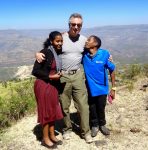
Fantaye, Gary Segal and Tesfaye in 2015, on a return visit by Segal to Gojam, Ethiopia. (photo from Gary Segal)

Thirty-seven spine surgeries, six nursing/midwifery scholarships, development of Sebi Sarko Rural Health Centre and the establishment of a pediatric program reaching more than 14,000 children living in rural areas. That’s part of what has been accomplished with the $1 million-plus that was raised in Vancouver five years ago at An Evening to Bring Back Hope.

The 2012 event honoured Dr. Rick Hodes, medical director of Ethiopia for the American Jewish Joint Distribution Committee (JDC) and senior consultant at Mother Teresa Mission. It also established a partnership between JDC in Ethiopia and the University of British Columbia Branch for International Surgical Care. With the monies raised in 2012, UBC Branch has developed curriculum with Hodes and engaged in spine-disease research in Ethiopia; as well, there have been physician and nurse exchanges between UBC-Vancouver General Hospital and Ethiopia’s Gondar Hospital.

This year, on June 8, An Evening to Bring Back Hope honours both Hodes and spine surgeon Dr. Oheneba Boachie-Adjei, and raises funds for the continuation and expansion of their work, as well as that of JDC and UBC Branch. Boachie, president and founder of FOCOS (Foundation of Orthopedics and Complex Spine) in Accra, Ghana, has performed most of the complex surgeries on Hodes’ spine patients since the two doctors starting working together in 2006.

The fundraising event includes a symposium and lunch at Congregation Beth Israel, at which attendees will be able to ask JDC staff questions about JDC’s humanitarian work and philanthropy, and a gala dinner at Vancouver Convention Centre-East. Event partners are JDC, UBC Branch and the Jewish Federation of Greater Vancouver. As in 2012, gala chairs are Gary and Nanci Segal.

“I am very pleased that Dr. Boachie will also be a focus of attention at the event,” Gary Segal told the Independent. Hodes, an observant Jew, and Boachie, a devout Baptist, “together work tirelessly to treat the sick and poor of all religions and ethnicities.”

“I truly believe that in today’s world filled with negativity, intolerance and discord, this cause and message of inclusion and multiculturalism resonates louder than ever,” said Segal.

Segal first met Hodes as part of a Federation/JDC trip to Ethiopia in 2007. He spent more time with Hodes on a family trip in 2008. “The more time I spent with Rick in clinic and at his home with his very large family of adopted and fostered children that all needed Rick’s help, the more heroic and inspiring Rick and his life story became to me,” said Segal. When hosting Hodes and his extended family of 18 children (at the time) for dinner, Segal learned that Tesfaye – whose spine had collapsed from tuberculosis – could not be operated on in Ghana, and thought, “I knew that I had to do whatever I could to save Tesfaye’s life.”

According to the fundraiser’s website, Segal “spent almost a year pursuing the possibility of bringing Tesfaye to Vancouver for spine surgery and, finally, on his 18th birthday, May 20, 2009, Tesfaye arrived in Vancouver and was welcomed into the Segal home. On June 12, ‘Team Tesfaye,’ led by surgeon Dr. Marcel Dvorak at VGH … successfully perform[ed] delicate 14-hour life-saving surgery.”

“For decades,” Segal told the Independent, “I have always given of my time and money to help a variety of community organizations and causes – I grew up with wonderful examples of this in both my mother and father. Helping Tesfaye was a unique experience, where the ‘giving back’ became such an intimate, personal and integral part of my life.

“On my 2010 trip back to Ethiopia after Tesfaye’s surgery, I retraced and revisited what his life was like before surgery. Understanding Tesfaye’s courage, dignity, perseverance and optimism – that he kept in the direst, most uncomfortable and debilitating of situations – motivates and inspires me daily, and always keeps my problems in perspective.

“Seeing the transformation in Tesfaye’s life and what it has meant to his family and entire village, further inspired me to found this Bring Back Hope initiative,” he continued. “One of the highlights of my life was that 2010 trip to Tesfaye’s remote village in Gojam – a typical village with mud huts, no electricity or running water – as the entire village celebrated his miraculous rebirth for three days, with feasting, chanting and Agew shoulder dancing. Seeing ‘up close and personal’ the impact of changing even one individual’s life, it became my vision to introduce Rick’s story to more people by holding a large dinner of caring people from different faiths and backgrounds, and to hopefully raise a lot of money to change more lives. Thus, the Bring Back Hope initiative was launched through the inaugural Evening to Bring Back Hope 2012.”

But his efforts extend beyond the events. “I never imagined before meeting Tesfaye that, one day, I would have a whole extended family in Ethiopia become part of my family,” he said.

It was hoped that Tesfaye’s sister, Fantaye, would be joining her brother at this year’s Bring Back Hope. Unfortunately, she won’t be able to make it – but for “good news” reasons, said Segal, “as she is about to graduate from Grade 12 at a high school in Ethiopia’s capital city Addis Ababa and the national exams she has to write to qualify for university only end on June 8.”

“I met Fantaye in February of 2010,” explained Segal, “when I flew over to Ethiopia to accompany Tesfaye on the journey out to his remote village in Gojam to be with him to experience his family and village seeing him standing upright for the first since he was crippled with TB of the spine at 8 years of age…. Tesfaye, living in the capital Addis Ababa since he was 12, heard that his mother wanted Fantaye to get married; he was concerned she was too young, being only 12 years old, and feared the husband’s family would force her, once she was married, to stop going to the village school. At his request, I asked his mother, Yeshi, to wait until Fantaye was older and completed school, but, sure enough, she was married a few months later, at the age of 12.”

When Segal returned to Ethiopia in December 2012 on a Bring Back Hope-related trip, he found, to his “surprise and delight,” that, “through Tesfaye’s persistence and insistence, Fantaye had left her husband and village to join her brother in Addis Ababa and live with him and go back to school. This took a lot of courage on the part of a then 14-year-old girl, going against the wishes of her family and entire village. At the same time, it took Tesfaye’s courage of conviction as to what was right for his sister for this to happen; I attribute this to Tesfaye understanding the greater world outside the village and Fantaye seeing the transformation of Tesfaye.”

Even after 27 years working with JDC in Ethiopia, Hodes still finds inspiration from his patients.

“The courage which Ethiopians live with who have spinal deformities is simply inspiring,” Hodes told the Independent. “Kids who are in pain but still go to school, kids who are teased at school but persist, kids who have no parents and are self-supporting as young teens but go to school and come for treatment.

“And the love which they show for each other is exemplary. I have a single mom who has a paralyzed son who has simply devoted her entire day – every day – to caring for this boy, who is now improving. In fact, I just brought him to Ghana five days ago for intensive physical therapy to see if we can jump-start his improvement.

“I bought a bag of cookies for a young boy with a bad back. He put them in his pocket. ‘Why don’t you eat it?’ I asked. ‘Later,’ he said, ‘I want to share it with my brother.’

“I have another mom who has a son who had a complex heart problem giving him very little oxygen. This boy could not walk more than three steps and the mom has made sure that he moves forward in life by carrying him, piggy-back, everywhere. She carried him to school, carries him home, brought him to Addis Ababa every month for phlebotomy, to remove the extra blood his body produces. And now he’s able to walk, after corrective heart surgery in India.

“I had an orphan boy with no relatives at all,” continued Hodes. “He came to Addis Ababa, supported himself by shining shoes, went to school and slept in a taxi at night until someone took him into their home. He, too, has had surgery and is now back in school.

“When I’m having a tough day – I frequently feel overwhelmed – it’s patients like this who keep me going, and remind me why I’m here.”

Hodes’ International Life-Saving Surgery Program 2016 annual report describes that year as “game-changing.”

“This was the first year that the Ethiopian government gave us support – they paid for the air tickets of 22 patients to Ghana for spine surgery,” explained the doctor. “They are continuing the air ticket support this year.”

Also in 2016, he said, “Our contract with the Ethiopian government ended its standard, three-year period and the program closed for evaluation. It was given an unprecedented five-year renewal.

“We have moved into new facilities at a government trauma hospital called AaBET [Addis Ababa Burn Emergency Medicine and Trauma] Hospital, where we see patients five days a week. We have started discussions to send two Ethiopian doctors to Canada for spine training. We now have several teams coming to Ethiopia to operate – in fact, we have three different spine teams coming this month, and will get at least 40 surgeries done inside Ethiopia!”

In addition to treatments, there have been discoveries. “We have described some new deformities, which we are now defining with Greek letters,” said Hodes. And, he added, “We believe we’ve made a major discovery about spine deformities caused by neurofibromatosis.”

In 2016, Hodes said there were 359 new spine patients, with 111 surgeries conducted on 105 patients. “We got two spines done in the U.S., and helped two patients go to India for heart care,” he said. “So far this year, we have 101 new spine patients.”

Hodes said the price for spinal surgeries ranges from $13,000 (or a little less) to $21,000, averaging about $18,000. For hearts, he said, “some patients need procedures (done in the catheterization laboratory) where a balloon is blown up to expand a narrowed valve or close a hole in the wall of the heart. Those cost around $2,000. Surgery costs depend on the complexity of the case, and generally run from $5,000-$10,000.

“If we get surgery done in North America, it’s at no cost to us, other than an air ticket. We just had two boys return from complicated surgery in Texas, and another from California.”

Hodes stressed, “I cannot sufficiently thank the people of Vancouver who are helping me. Their help is, quite literally, life-saving.”

For tickets to the gala ($500, with tax receipts issued for eligible portion) and sponsorship information, call Mercedes Dunphy at 604-710-4491 or Nanci Segal at 604-813-5550. For more information on the initiative, visit bringbackhope.com.


Negev a family affair

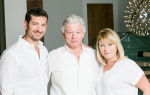
Left to right, Negev Dinner 2017 honourees Michael Averbach, Gary Averbach and Shannon Gorski (née Averbach). (photo from Jewish National Fund, Pacific Region)

“The important thing that I want to say is that I’ve accepted this honour because I’m sharing it with my kids,” Gary Averbach told the Independent about this year’s Jewish National Fund of Canada, Pacific Region, Negev Dinner, which will pay tribute to Averbach, his son Michael Averbach and daughter Shannon Gorski.

“Ultimately, it came down to my father being recognized,” said Michael Averbach. “He was apprehensive. Initially, he didn’t want to do this. He’s a very humble man and doesn’t like to be in the spotlight; in fact, he’s quite the opposite. But, he also understands it’s for a greater good and it will help build JNF, help fundraise and go towards a need in Israel.”

Even though the dinner on June 4 is sold out, community members can still support the Averbachs’ chosen project: the Tzofei Tzamid, the Israeli Scouts.

The Israeli Scouts run programs for kids 9 to 21. Their 80,000-plus members include more than 2,500 children and youth with disabilities.

Gorski and her father visited Israel in late February. She described the Scouts as “a rite of passage for Israelis.” In the program, she said, children with severe Down syndrome, kids with visual or hearing impairments or who are on the autism spectrum, “all of these children are being able to work side-by-side with their Israel Scouts’ peers and fully participate in the programs the Israeli Scouts offer. And that is what my family, alongside the JNF Vancouver community of supporters, are funding – the ability of the Israeli Scouts program in Raanana, to ensure that they have the proper resources and equipment when they take the Israeli scouts into the wilderness, as well as their own facility, to make it accessible for all.”

She said the organization’s mission “really resonated with my own philosophy, and that is one of inclusion … providing opportunities so that kids can develop skills, and leadership opportunities and life-preparedness. I see Israel already as such a leader in a lot of innovative ideas … and, when I got to see what they were doing in the area of youth services, they also are [excelling in that]…. When my father and I were there – to be able to see firsthand how happy these children were and how they were included, and listening to the testimonies of the parents, who are so appreciative and happy themselves, because what makes a parent happy is to see their child happy.”

Gorski, Gary and Diane Averbach’s eldest child, and Michael, their youngest, live in Vancouver, while their middle son, Blake, splits his time between Israel and Quebec City. The three Negev honourees are being celebrated for their many local community contributions.

Born in Vancouver to Louis and Betty Averbach, Gary Averbach – who is chief operating officer of Belmont Properties – has been involved in various capacities with JNF, the Jewish Community Centre of Greater Vancouver (JCCGV), the Jewish Federation of Greater Vancouver, the Jewish Community Foundation of Greater Vancouver (JCF), Congregation Beth Israel and the Jewish Museum and Archives of British Columbia, among others.

Shannon Gorski, managing director of the Betty Averbach Foundation, has worked with marginalized people and at-risk youth for most of her life. In the Jewish community, she has served on the boards of JCCGV, Hillel BC and Richmond Jewish Day School (RJDS); chaired galas and events, such as JCCGV’s Israel at 60, Beth Tikvah’s 40th anniversary and RJDS’s 18th gala; and sat on committees of JCF, King David High School and the Bayit.

Michael Averbach, who owns Averbach Mortgages and also works with Belmont Properties, has chaired the JCC Sports Dinner for many years (he co-chaired it this year with James Dayson), has co-chaired a Vancouver Talmud Torah Gentleman’s Dinner, is on the executive board of the Ohel Ya’akov Community Kollel and is active with Federation.

“We had a reception last night,” Gary Averbach told the Independent the morning after a Negev Dinner-related cocktail party at his home, “and I heard it enough times, that people understand, it’s so great your kids are carrying on your tradition. That’s the message I want to go out: how lucky I am to have kids that have carried forward what I believe in.”

The first Jewish organization Averbach got involved with was JNF, he said, and it is the only Israeli organization with which he has been heavily involved. “The local community, and especially things involving Jewish youth, means the most to me,” he said.

“I think it’s great what the JNF is doing now,” he added. Funding groups such as the Israeli Scouts, he said, “is a great step and it really makes the JNF more relevant to a lot more people all over, but certainly in Vancouver.”

Gorski said she has spoken to Israelis now living here about how integral the Israeli Scouts were to them. “In fact,” she said, “one individual in the community, who’s very active with youth in the community, said to me, ‘The Israeli Scouts saved my life.’ I was so, so moved by that.”

After she and her father visited the Israeli Scouts, Gorski joined JCCGV’s Bagel Club in Israel as a chaperone on their Birthright-style mission – “for many of these Jewish persons with different abilities and challenges,” she said, it was their first trip to Israel.

While she’s never been formally connected to the Bagel Club, Gorski said she has a step-uncle who is a participant and she was on the hiring committee for the current leader of the program, Leamore Cohen.

Worried about being away from her two children for so long, she asked them if they were OK with her leaving. She said her older son said, “What are your talking about? I’m excited for you. You’re going to Israel, and you’re going to do something that’s so important.

“That’s another reason why I get connected,” she said. “My father has been such a mentor to me and has instilled in me the importance of modeling behaviours of tikkun olam and just giving generously of your time. He used to say, when I was first asked to be on different boards, which he had been on, i.e. the JCC and involved with Federation, I basically said to him, ‘My biggest concern, Dad, is that I don’t have the capacity, the deep pockets that perhaps they think I do because of yourself,’ and he said, ‘You know what, the community, when they look at people to sit on their board and to participate and to volunteer … they look for the three Ws: wealth, wisdom and work. It’s not all three, it can be one…. They don’t just want the wealthy people.’ And he used to say it’s easy for somebody to write a cheque.

“He’s so humble,” she continued. “Every time that they would ask him to speak, he would always put the credit to those who were the worker bees, the people who were behind the scenes, who were doing the work, they were the ones who deserved the accolades…. For me, that’s been a lot of why I have focused on the Jewish community, but not just the Jewish community…. The fear among the older generation, which I’m entering into, is that, will the next generation be able to carry on and give with the three Ws … is Vancouver in good hands, is the Jewish community in good hands, is Israel in good hands?”

For his part, Michael Averbach – who has four children – has focused his attention mostly on the Jewish community. He was inspired, in his early 20s, by his father’s work on the campaign for JCCGV’s redevelopment. Achieving the goal, Averbach said his father “was so elated, so excited. He screamed out, ‘Yabadabadoo!’ It was the first thing that came to his mind, he was so happy.” Witnessing this reaction, he said, “I caught the bug. I got involved.”

Calling the JNF tribute “a huge honour,” he added, “If we can encourage other young philanthropists and people in the community who are thinking about getting involved to get off the fence and push forward, find something that resonates with them, then this is all very much worthwhile.”

Gorski echoed these sentiments. She said many of her peers “thought the JNF was restricted to selling trees … and, if you go to the Negev Dinner, you see a large demographic of the older generation and not a lot of young people.” With her brother and her joining their father in being honoured, she said, they have managed to share with their peers more about what JNF does – in Israel and around the world – and many “are coming to the Negev Dinner for the first time.”

While in Israel, Gorski organized a get-together for the Bagel Club with madrichim (counselors) from the Israeli Scouts. “They made friendship bracelets, they made pita over an outdoor fire, they were all conversing. It was a really fun evening,” she said. And, as it turns out, some of the Israeli Scouts will be in Vancouver around the time of the Negev Dinner, and some of them will be joining the festivities.

She also shared that it is JCCGV head Eldad Goldfarb’s hope that, along with Cohen of the Bagel Club, which is for adults, and Shirly Goldstein, who is the centre’s youth director, they will be able “to create a program of the two different groups – youth, and adults with special needs – working together with the same sort of philosophy that the Israeli Scouts follow, doing similar types of activities.”

The June 4 Negev Dinner at Four Seasons Hotel will also see Richmond Jewish Day School head of school Abba Brodt presented with JNF’s Education Award. For more information or to donate, contact JNF Pacific Region at 604-257-5155 or van@jnf.ca.

BDS loses in SFU vote

SFU’s Teaching Support Staff Union voted 186 for and 227 against including a BDS campaign in the union’s bylaws and policies. (photo from RestfulC401 (WinterforceMedia) via commons.wikimedia.org)

The Vancouver Jewish community had another victory over the boycott, divestment and sanctions movement last week, this time at Simon Fraser University.

The university’s Teaching Support Staff Union (TSSU), a union for teaching assistants, seasonal instructors and non-full-time staff, held a referendum May 15-19 on whether to include a BDS campaign against Israel in its bylaws and policies. The motion was defeated, with 186 TSSU members voting for BDS and 227 voting against it.

When Rabbi Philip Bregman, executive director of Hillel BC, first heard about the referendum, he and his team at Hillel BC were in the midst of fighting BDS at the University of British Columbia. “It was like whack-a-mole,” he said. “We were fighting two battles at the same time and, when we weren’t dealing with UBC, we were dealing with SFU!”

Bregman estimates TSSU has around 600 members and a key part of Hillel BC’s strategy was reaching those members. That was a challenge, given the fact that TSSU would not give Hillel BC access to its membership list. Instead, Hillel BC had to research each SFU faculty individually to find out who its teaching assistants were, and then communicated with them via email. “It was like we were fighting ghosts – we had to try figure out who the part- time professors and TAs were in order to reach their members,” he said.

Bregman and his team also sent a letter to SFU faculty members, explaining how dangerous it was for an academic institute to be boycotting other academic institutions. “We were trying to show members of the TSSU that this was not a smart thing for them to do,” he said.

The week of the referendum, Bregman and his team were on the SFU campus with a sign requesting that TSSU members approach them and have a conversation – and many of them did. TSSU tried to counter Hillel BC’s arguments, but their counter-arguments were weak, Bregman said.

Still, Bregman was certain the BDS campaign would be voted into policy. “The TSSU held all the cards. They wouldn’t let us know who their membership was and most of the information they sent out was pro-BDS,” he said.

On its website, however, amid the wording of the resolution and other background information, TSSU included four documents that laid out reasons why members should vote no to the BDS motion.

While the administration at SFU did not issue any statements about its position on the BDS referendum, it did reach out to Bregman. “They called me to ask what was happening on their campus,” he said. “I told the university administration that SFU would get a black eye if this thing passes. It really would have been catastrophic for the university.”

Lauren Kramer, an award-winning writer and editor, lives in Richmond. To read her work online, visit laurenkramer.net.

Life arising from destruction

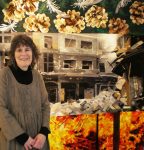
Barbara Heller in front of “Regeneration,” the work she created in collaboration with botanist Elena Klein. (photo by Olga Livshin)

Through the art of weaving, internationally acclaimed local artist Barbara Heller explores the world – and she doesn’t shy away from controversial topics. Themes of politics and destruction, renewal and society attract her exactly because of their complexity.

Heller’s road to the tapestry arts wasn’t straightforward. Her first bachelor degree was in psychology. “I started a master in psychology and, as part of the program, I had to keep an art journal,” she recalled. “It made me happy, much more so than psychology, so I decided I wanted to go to an art school. But, at that time, an art program would be mostly about ideas, concepts. If I wanted to learn techniques, I needed a program in art education.”

After earning a certificate in art education, Heller taught printmaking for awhile, but an allergy to the chemicals used pushed her to seek another form of artistic expression. She took some evening classes in tapestry-making, and loved it. She started showing her work at craft markets and art fairs.

“Tapestry-making is a slow, time-consuming process,” she told the Independent. “Sometimes, a large tapestry takes a year to complete. But the meditative aspect of weaving fits my personality. I need slow. I need time to think, to contemplate what I am doing. When I make a tapestry, I can stop at any moment, which was convenient when I was younger. I rented my studio on Granville Island the same year I got pregnant, 36 years ago.”

She continued her art while raising her son.

“With a tapestry, I’m creating the canvas along with the image, and I like that,” she said. “Dealing with mistakes is much harder than in a painting, so I go slowly to get it right the first time. It is almost a dialogue between me and the tapestry on my loom.”

In the beginning, Heller taught tapestry, but she doesn’t do so any longer. “I learn by doing,” she said. “It’s the best way to learn. I often find it hard to explain in words all the concepts and ideas that go into my weaving. I still make presentations and lectures at the professional conventions and shows, for the experienced artists, but I don’t want to explain the alphabet to the beginners anymore. I want to have more time for my tapestries.”

Her latest creation, “Regeneration,” took a year to complete. This large tapestry, made in collaboration with botanist Elena Klein, is part of the group show Connections that opened on May 11 at Craft Council Gallery on Granville Island. The concept of the show was collaboration, an exchange of ideas between three textile artists and their non-artist friends.

photo - “Tzimtzum” or “Transcendence,” by Barbara Heller
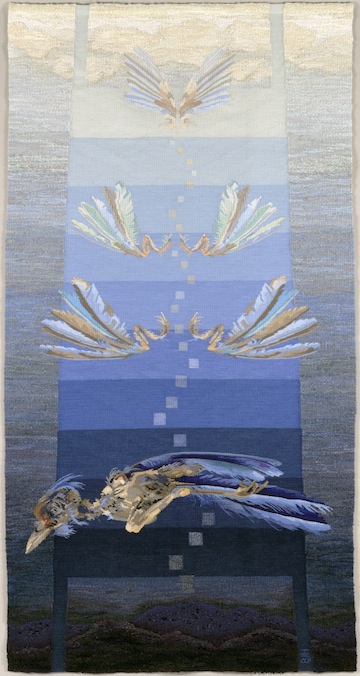
“Tzimtzum” or “Transcendence,” by Barbara Heller.

“For a long time, I had this image in my head of bombed-out buildings in Syria,” Heller said. “I wanted to use it for a tapestry, but I didn’t know where to go with it. Then, I met with Elena, and we talked. That’s how I found out that certain species of pine trees drop cones that don’t release their seeds unless a forest fire occurs. The seeds then germinate in the earth newly cleared of large trees by the fire. Suddenly, the image of my tapestry took shape.”

The tapestry has three distinct sections. The bottom layer is flames, blazing with red, yellow and orange, gorgeous and deadly. The middle part is what comes after, and these grey ruins could almost be anywhere in the world. The aftermath of a fire, whether man-made or natural, is the same: ash, devastation, fear. But hope won’t be denied, and the top part of the tapestry represents rebirth: a green field with the pinecones scattered around. The artist’s message is clear: new growth will come out of the wreckage. Life will reassert itself.

The same message of life arising from destruction or death manifests in another of Heller’s large tapestries, “Tzimtzum” or “Transcendence.” In 2016, she was invited to submit a piece to the 15th International Triennial of Tapestry in Lodz, Poland. “I wanted to work on an image with birds and wings, starting with tragedy, but ending with hope,” she said.

The tapestry depicts a stylized ladder. The darker blue rungs at the bottom incorporate a dead bird, a recurring image for the artist. From that low point, the ladder climbs, punctuated by several pairs of wings, with the shades of blue gradually lightening towards a white radiance. “The ladder has many interpretations,” Heller says in her artist’s statement. “It can be seen as a metaphor for our life, as a link, a liminal space between birth and death, heaven and earth … matter and spirit…. For me, they [the rungs] are stepping stones on the path of spiritual attainment, of transcendence.”

After six months in Poland, the tapestry came home, and it is currently on display at Christ Church Cathedral on Burrard Street, as part of the show (in)finite. The exhibition, featuring 30 Canadian textile artists, opened on May 25 and runs until June 4, with an opening reception on May 27. The show Connection on Granville Island continues until June 22.

Olga Livshin is a Vancouver freelance writer. She can be reached at olgagodim@gmail.com.

When peace comes

Speaking at the Israel Museum in Jerusalem Tuesday, U.S. President Donald Trump quoted Theodor Herzl. “Whatever we attempt there for our own benefit will redound mightily and beneficially to the good of all mankind,” Herzl said.

This is not Herzl’s most famous quote, but the words were well chosen. In seven decades, Israel has contributed such an immense amount to the knowledge and culture of the world that Herzl himself could probably not have foreseen it in his wildest imagination – and he had a wild imagination.

The only barrier to the great redounding of which Herzl spoke has been the rejection of Israeli people, knowledge, technology and existence, first by those who would have benefited most – the country’s nearest neighbours in the Middle East – and latterly by many around the world, from the United Nations to college campuses across the West, where boycotting all things Israeli has become almost a rite of passage.

Trump also said Tuesday: “I had a great meeting this morning with President Mahmoud Abbas and I can tell you that he is ready to reach a peace deal.”

The president’s reputation is founded on his deal-making abilities and this is perhaps why he made it his first order of foreign business to travel to the Middle East, site of the world’s most elusive deal. But, telling an audience of Israelis, and global observers who have far deeper knowledge of the situation than Trump does, that Abbas is ready to reach a peace deal displays a degree of naiveté, to say the least.

Herzl’s vision of Israel as an oasis of excellence sharing its knowledge and advancements with neighbours was unquestionably imbued with the colonial attitudes of his era. But it was also founded on assumptions of enlightened self-interest.

“Israel is a thriving nation,” Trump said, “and has not only uplifted this region, but the entire world.” True enough, but it could have done so much more uplifting if others in the region had not rejected most of what the state has had to offer.

When the Arab Spring had its limited expression, it seemed that the peoples of the region might finally be rising up against not just the leaders who oppressed them, but the very scapegoating ideologies and miseducation that kept them down. One by one, most of the oppressors regained the upper hand and the greatest hope for Israeli-Arab peace – that the people and leaders would see coexistence as synonymous with self-interest – faded again.

If Trump thinks he has the magic beans to succeed where so many have failed, may he go from strength to strength.

Community milestones … May 26/17

photo - Dr. Richard RosenbergThe B.C. Civil Liberties Association is very pleased to honour the decades of service of  with a special Lifetime Achievement Award.

Rosenberg is a professor emeritus of computer science at the University of British Columbia and a member of the BCCLA for nearly 30 years. His work focused on the implications of the internet for such important civil liberties areas as privacy and anonymity, free speech, access and ethics.

Rosenberg has focused his work on the developments of national and international privacy policies, particularly with respect to electronic media, in Canada, the United States and Europe, as well as national and international approaches to the regulation of free speech on the internet. As such, his work has been critical to promoting and protecting privacy rights.

The award was presented at BCCLA’s annual general meeting on May 11 at Vancouver Public Library.

* * *

photo - Julia IvanovaThe 2017 DOXA Documentary Film Festival awards were announced on May 13. Among them was Jewish community member Julia Ivanova’s Limit is the Sky, which received the Colin Low Award for Canadian Documentary (presented in partnership with William F. White). Jury members Tammy Bannister, Lisa Christiansen and Josh Cabrita said of the film: “In 20 years, if someone asks you, ‘Tell me about Fort Mac,’ you can tell them to watch a documentary that is both timely and timeless….”

Limit is the Sky follows six young Canadians, including refugees from the Middle East and Africa, who come to Fort McMurray, the capital of the third-largest oil reserve in the world. “Fort Mac” becomes a testing ground for these young dreamers as they struggle with their own perceptions of money, glory and self-worth amid plummeting oil prices, an unpredictable economy – and then a devastating wildfire. Limit is the Sky is produced by Bonnie Thompson and executive produced by David Christensen for North West Studio. It also received the 2016 Multimedia Award from the Petroleum History Society in Calgary.

Presented by the Documentary Media society, a Vancouver-based nonprofit, charitable society, DOXA ran May 4-14. Those who missed seeing Limit is the Sky during the festival can now purchase or rent it from the National Film Board at nfb.ca or from iTunes.

* * *

photo - Rabbi Yechiel BaitelmanRabbi Yechiel Baitelman of Chabad of Richmond will be honoured by Oholei Torah Educational Institute, Chabad’s flagship Brooklyn school, on May 28 for his outstanding achievements in Jewish outreach and communal activity. The school has more than 7,000 alumni around the world.

Celebrating their 60th year of excellence in Jewish education, Oholei Torah called on community members worldwide to nominate 60 alumni who have shown an exemplary dedication to implementing the school’s ideals, specifically in furthering Jewish education and strengthening Jewish life. Baitelman was nominated by his peers for his enthusiastic and unwavering commitment to his Jewish community of Richmond and beyond.

“Oholei Torah Educational Institute prides itself on its training of devoted rabbis and inspired community leaders,” said Rabbi Joseph Rosenfeld, director of Oholei Torah. “Rabbi Baitelman truly lives up to the school’s ideals, and has dedicated his life to furthering Jewish awareness and Jewish education.”

With his profoundly sincere, caring attitude and inclusive approach, Baitelman inspires countless Jews from all levels of Jewish observance, with his welcoming outreach programs and thought-provoking classes. He encourages those around him to continue learning and embracing their Judaism through a wide range of educational programs and services – weekly Torah classes; Smile on Seniors lunches featuring entertainment and speakers; six-week Rohr Jewish Learning Institute classes; Simple Truths women’s learning; Land & Spirit, Israel Experience; National Jewish Retreat; Mom and Tot program; Hebrew school; Light of Shabbat kosher meals delivered to the homebound; CTeens club for Jewish youth; Minyanairs Club; and many other programs.

Information about the dinner at which Baitelman will be honoured can be found at oholeitorah.com. The community of Richmond and all of Chabad wish him yasher koach!

* * *

photo - Abba Brodt

The Jewish National Fund of Canada, Pacific Region, is pleased to announce that Abba Brodt is the recipient of JNF’s Education Award. We wish Brodt a hearty mazal tov on this well-deserved honour for his dedication and leadership in educating the next generation within the Jewish community. Brodt will receive the award at this year’s Negev Dinner on June 4 at Four Seasons Hotel Vancouver.

Brodt is head of school at Richmond Jewish Day School, a position he has held for five years. Under his watch, RJDS has grown 40%; it is now a school of 105 students from kindergarten to Grade 7.

A trained social worker and former director of community planning for and campaign associate of the Jewish Federation, both in Montreal and Vancouver, Brodt switched into education in 2008. While working in a variety of roles in Jewish day schools, Brodt, or Mar Abba, as his students call him, completed a master’s at Yeshiva University’s Azrieli Graduate School of Jewish Education and Administration.

Brodt’s goals as a Jewish educator are to help educate and inspire the next generation of Jewish leaders and visionaries. He believes that the best Jewish education blends a love of Yiddishkeit, content and skill development, while promoting and developing the following three attributes in students: critical thinking, creativity and compassion.


Mystery photo … May 26/17

Beth Israel Sisterhood luncheon, 1983. (photo from JWB fonds, JMABC L.09853)

If you know someone in this photo, please help the JI fill the gaps of its predecessor’s (the Jewish Western Bulletin’s) collection at the Jewish Museum and Archives of B.C. by contacting archives@jewishmuseum.ca or 604-257-5199. To find out who has been identified in the photos, visit jewishmuseum.ca/blog.

This week in Israel … May 26/17

U.S. President Donald Trump and First Lady Melania Trump lay a wreath during a visit to Yad Vashem, the World Holocaust Remembrance Centre, on May 23. (photo from IGPO via Ashernet)

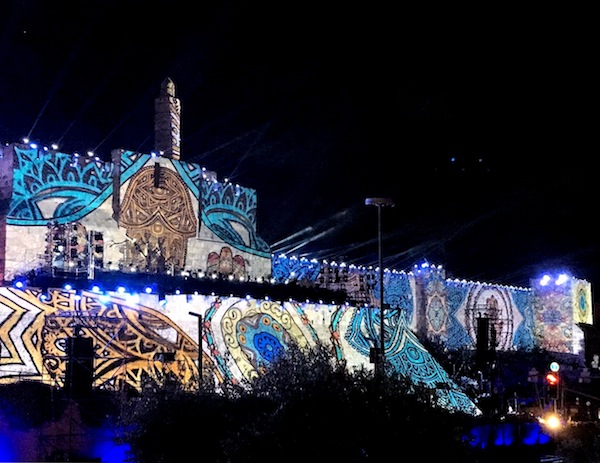
photo - On May 21, Israel celebrated 50 years since the reunification of Jerusalem. The images projected on the Old City Wall were part of the festivities
On May 21, Israel celebrated 50 years since the reunification of Jerusalem. The images projected on the Old City Wall were part of the festivities. (photo from Ashernet)
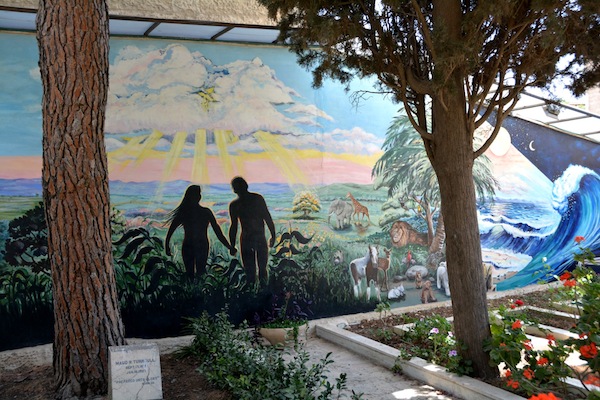
photo - A mural by Patricia Solveson depicting the Garden of Eden adorns the wall of the Alliance Church International Cemetery in Jerusalem’s Emek Refaim neighbourhood, also known as the German Colony because, in the latter part of the 19th century, many German Templers lived in this part of the city
A mural by Patricia Solveson depicting the Garden of Eden adorns the wall of the Alliance Church International Cemetery in Jerusalem’s Emek Refaim neighbourhood, also known as the German Colony because, in the latter part of the 19th century, many German Templers lived in this part of the city. (photo from Ashernet)

שדה התעופה ממשיך לגדול

שדה התעופה הבינל של ונקובר ממשיך לגדול: כ-22 מיליון נוסעים עברו בו אשתקד. (צילום: Eviatar Bach)

שדה התעופה הבינלאומי של ונקובר (ווי.וי.אר) שנמצא בסיי איילנד שבריצ’מונד על אדמת הממשלה הפדרלית, ממשיך לרשום גידול מתמיד בפעילותו. בשנת 2016 עברו בשדה 22.288 מיליון נוסעים ומדובר בגידול של 2 מיליון נוסעים (שהם 9.7 אחוזים) לעומת שנת 2015, שבה עברו בשדה 20.315 מיליון נוסעים. נתון זה הופך את השדה לשני בגודלו בקנדה אחרי פירסון שבטורונטו, שאשתקד עברו בו לא פחות מ-44.335 מיליון נוסעים. יצויין שהחברה הלאומית של קנדה אייר קנדה אחראית ל-62 אחוז מהגידול בכמות הנוסעים אשתקד בווי.וי.אר.

חמישים וחמש חברות תעופה נוחתות וממריאות בווי.וי.אר ומקשרות את ונקובר ומחוז בריטיש קולומביה, עם למעלה מאה עשרים וחמישה טיסות ישירות, ליעדים ברחבי העולם. חברות התעופה ביצעו בסך הכל 280 אלף המראות ונחיתות בשני המסלולים של השדה הבינלאומי ב-2016. למרות הפעילות הרבה של השדה לא מתקיימות בו המראות ונחיתות של חברות תעופה ישראליות.

אשתקד רשם השדה הכנסות של 489.7 מיליון דולר, ההכנסות מהשכרת נכסים בשדה עמדו על 50.6 מיליון דולר, הוצאות התפעול עמדו על 358.5 מיליון דולר ואילו שווי הנכסים של השדה נאמד במילארד וחצי דולר.

שדה התעופה הבינלאומי של ונקובר נפתח לציבור ב-1931 ובשנת הפעילות הראשונה שלו נחתו בו 1,072 נוסעים. הנמל רשם גידול בהדרגה בעקבות תקופת מלחמת העולם השנייה (בשנות הארבעים של המאה הקודמת), התפתחות בטיסות הסילוניות בינלאומיות (בשנות השישים של המאה הקודמת), ובעקבות תערוכת האקספו שחשפה את ונקובר לכל העולם וביקר לסינים של הונג קונג (בשנות השמונים של המאה הקודמת). אז גם נפתח הטרמינל החדש שמחולק כיום שלושה אגפים: טיסות מקומיות, טיסות בינלאומיות וטיסות לארה”ב. ומאז הטרמינל הישן (הדרומי) הפך נמל הבית של חברות תעופה מקומיות קטנות, טיסות של מטוסי ימיים והליקופטרים. ווי.וי.אר זכה לפיתוח הנרחב ביותר לקראת אולימפיאדת החורף של ונקובר שנערכה ב-2010.

הנהלת השדה הכינה בראשית השנה הנוכחית תוכנית פיתוח לעשרים השנים הקרובות – עד לשנת 2037. התוכנית כוללת השקעה גדולה של 5.6 מיליארד דולר בהרחבת הטרמינלים של ווי.וי.אר, מסלולי ההמראות והנחיתות, מערכות מיחשוב והבקרה וכבישי הגישה והגשרים לשדה התעופה וממנו. בהתאם לצפי של התוכנית ב-2025 יעברו בשדה 25 מיליון נוסעים ואילו בעוד עשרים שנה יעברו בו כשלושים וחמישה מיליון איש מדי שנה.

ווי.וי.אר ממשיך לזכות בפרסים והכרות בינלאומיות. שדה התעופה זכה (בחודש מרץ) זו השנה השמינית ברציפות בתואר שדה התעופה הטוב ביותר של צפון אמריקה. זאת בעקבות בחירה של 13.8 מיליון נוסעים מרחבי העולם שבחנו 550 שדות תעופה שונים (ב-39 פרמטרים שונים ובהם: בידוק, ביטחון, ביקורת גבולות, נוחות, יעילות, אפשרויות התחבורה ועוד). שום שדה תעופה בצפון אמריקה לא הצליח לזכות בתואר זה במשך שמונה שנים ברציפות. ואילו מלון פרמונט שממוקם בטרמינל הבינלאומי של ווי.אר זה בתואר המלון הטוב ביותר, מקרב בתי המלון בשדות התעופה של צפון אמריקה.

כדי לשפר את השירות לנוסעים הנוחתים, במהלך האביב הנהלת שדה התעופה תציב תשעים עמדות בדיקת מסמכים אוטומטיות לא מאויישות (קיוסקים), למעבר גבולות מהיר יותר. הנוסעים יסרקו בעצמם את המסמכים שלהם ואת כרטיסי הנחיתה למשטרת הגבולות. זאת, בדומה לקיוסקים המותקנים עבור בעלי הכרטיסים (נקסוס) למעבר מהיר לקנדה וארה”ב.

בשדה התעופה הבינלאומי של ונקובר יש כיום שתיים עשרה מישרות פנויות שמיועדות לעובדים של ווי.וי.אר וכן לעובדים חיצוניים. המשרות בתחומי הכספים, שירות לקוחות, טכנולוגיה ושירותים מסחריים.