Celebrating Nursing Week

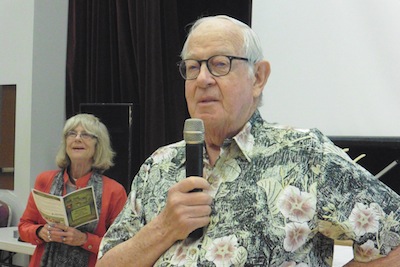
Left to right, Nicole Encarnacion, Rebecca Fernandez and Jennifer Belen were among those fêted at Louis Brier Home and Hospital on May 9 during Nursing Week. (photo by Dolores Luber)

“I think one’s feelings waste themselves in words; they ought all to be distilled into actions which bring results.” – Florence Nightingale

The Dr. Irving and Phyliss Snider Campus for Jewish Seniors – the Louis Brier Home and Hospital and the Weinberg Residence – held a party on May 9 to celebrate National Nursing Week.

Louis Brier chief executive officer David Keselman, at the helm for nine months now, initiated the celebration – the first time in its history that Louis Brier has marked the occasion. There are plenty of reasons to celebrate the profession daily, but National Nursing Week presents the chance to give back to these integral members of society. International Nursing Day, May 12, is the anniversary of the birth of Florence Nightingale, who is widely considered the founder of modern nursing.

photo - Chief executive officer of Louis Brier Home and Hospital David Keselman with, left to right, Leonora Calingasan, Rebecca Fernandez, Flora Hayward, Nicole Encarnacion and Jennifer Belen
Chief executive officer of Louis Brier Home and Hospital David Keselman with, left to right, Leonora Calingasan, Rebecca Fernandez, Flora Hayward, Nicole Encarnacion and Jennifer Belen. (photo by Dolores Luber)

In coordination with Angela Millar, executive leader, resident care services, at Louis Brier, the festivities honoured and expressed appreciation and affection for the nurses who support and care for the home’s 215 residents. The continuum of care includes assisted living and multi-level care. Louis Brier provides 24-hour nursing services for residents who require personal assistance or full nursing support, and also has a separate unit for those residents living with moderate to severe dementia.

Louis Brier’s goal is “excellence in geriatric nursing care.” As a teaching facility, Louis Brier regularly hosts students from accredited nursing schools, which helps them keep on top of current best practices.

Nicole Encarnacion, clinical care coordinator and educator, was my guide to the festivities, to the nurses, staff and residents. The Nursing Week event on May 9 had the theme of “This is Nursing: Unexpected Places, Real Impact.”

The home’s commitment to resident and family-centred care was evident throughout the facility. The entry hall was splendid with posters and banners created by residents and staff. The nurses were dressed in their formal white uniforms, with black, navy blue or green stripes on their caps. They were excited and pleased to be singled out, paid attention to and appreciated for their service. Millar gave out 30 certificates honouring their years of nursing, the longest being 39 years of service. Three nurses were given special consideration with a bouquet of flowers. In every corner, there were expressions of affection, cooperation and goodwill, hugs, smiles and group photos.

Dolores Luber, a retired psychotherapist and psychology teacher, is editor of Jewish Seniors Alliance’s Senior Line magazine and website (jsalliance.org). She blogs for yossilinks.com and writes movie reviews for the Isaac Waldman Jewish Public Library website.

Trump supporters meet

Left to right, Larry Elder, Dennis Prager and Hugh Hewitt at the Unite Inland Empire Conservative Conference on April 30. (photo by Dave Gordon)

Eight hundred supporters of U.S. President Donald Trump gathered in a Los Angeles-area venue recently – before the controversy this week over Trump’s sharing of classified information with Russia – to hear four major U.S. media figures discuss why, in their opinion, the president had thus far made impressive executive choices.

The April 30 event – the fourth annual Unite Inland Empire Conservative Conference – was entitled Trump’s First 100 Days.

Panelists were talk radio hosts Larry Elder, Hugh Hewitt and Dennis Prager and senior editor-at-large of Breitbart News, Joel Pollak.

Trump was praised by all speakers for his Supreme Court choice of Neil Gorsuch, his strike on Syria, his efforts to overturn Obamacare and the newest Iran sanctions. The two Jewish speakers – Prager and Pollak – told the Independent that the president has, in a very short time, done much for Israel.

Appointing a U.S. ambassador to the United Nations who is critical of the world body’s treatment of the Jewish state should be seen as significant in itself, Prager said. “Why isn’t Nikki Haley enough for a Jew?” he asked.

The author of seven books, including the recently released Ten Commandments: Still the Best Moral Code, Prager said Trump should divest the United States entirely from the UN, however.

“It is a morally bad organization. It does more harm than good,” he said. “You can have aid agencies without the UN. Think we need UN peacekeepers? You can talk about Rwanda. What good has the Security Council done? It is the most anti-Jewish institution in the world. What more do you need to know? My whole life I have understood Jew-hatred as the barometer of the world’s health.”

In terms of reported rising Jew-hatred in the United States, Prager said some of it is fabricated and some is an imminent threat.

“All of the Jewish centres’ bomb threats – this was hysteria – all because of a black radical and a disturbed Jewish kid in Israel. It wasn’t 40 antisemitic incidents; but maybe one or two.”

To those who accuse the president of attracting those who bear ill will towards the Jews, Prager added, “It’s a world of lies that Trump has increased antisemitism and that he is an antisemite and that he has let antisemites in his administration.”

The true menace, he said, was “the transformation of the university to the most Israel-hating institution in America. Jews don’t want to acknowledge this because they adore the university.”

Antisemitism might be among the reasons Trump has waffled on his promise to move the U.S. embassy to Jerusalem, Prager said, adding, “I 100% excuse him on it.”

It is Prager’s belief that Israel may be reticent, at this point, to deal with the potential blowback.

“The Arab world is a passion-based, hate-filled world,” he said. “The hatred of Israel is the food of the Arab world. There’s no joy in saying this.”

However, it was important that Trump said that while campaigning, argued Prager. “I believe [the promise] didn’t say, ‘I am going to open an embassy in Israel.’ It said, ‘I care about Israel,’ unlike the previous president.”

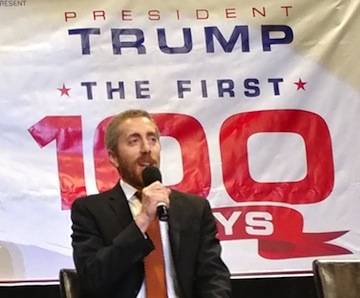
photo - Joel Pollak, senior editor-at-large at Breitbart News, addresses the conference
Joel Pollak, senior editor-at-large at Breitbart News, addresses the conference. (photo by Dave Gordon)

Meanwhile, Pollak thinks that the president may follow through with moving the embassy to Jerusalem at some point in the future.

“I don’t see it as a back pedal,” said Pollak. “David Friedman [U.S. ambassador to Israel] is going to live in Jerusalem, even though the embassy is in Tel Aviv. It indicates which of the two cities the U.S. considers is Israel’s capital.”

In terms of the peace process, the new administration will not be mirroring that of Barack Obama, who “took the Palestinian side, and that was destabilizing,” said Pollak.

On the UN, Pollak said it was a forum for enemies to hash out their differences, but its Human Rights Council – where many dictatorships have representatives – should be dismantled.

In agreement with Prager, he said the pressing danger to U.S. Jews is the surge of university-based antisemitism.

“Students are being exposed to anti-Israel activities that they’re ill-equipped to counter,” said Pollak. “It has gotten so bad that now discrimination is happening on religion, not just for supporting Israel.”

Last year, U.S. campuses saw a 45% increase in anti-Jewish sentiments, according to Tel Aviv University researchers and the AMCHA Initiative, which investigates antisemitism on college campuses.

The issue will worsen, Pollak said, as more young people remain ignorant of the Holocaust – a tragedy all-too-often invoked and misused by those who compare the Final Solution to the Palestinian situation.

For attendee Evan Sayet, author of Kindergarten of Eden, the “single most important thing” for American Jews to do is to rebuke government-funded universities, “twisting the screws against the lies and antisemitism in the guise of academia.”

He said, “You might not think of American campuses, because it doesn’t seem like an existential threat. You might think academia is just a place of words. Obviously, this is the next generation who are infused with antisemitism. It bodes ill for the Jews. Antisemitism is an evil that is placated in the Arab world and, now, other places in the world, including Europe.”

Dave Gordon is a Toronto-based freelance writer whose work has appeared in more than 100 publications around the world.

B.C. election roundup

In his pre-election interview with the Jewish Independent, B.C. Green party leader Andrew Weaver acknowledged his ideal scenario might be to hold the balance of power in a minority legislature.

The results of the May 9 election were in fact so tight that the outcome will not be known until at least May 24, and even then additional recounts may hold up final determination of what the new government will look like. Pending the counting of absentee ballots and at least two judicial recounts, the results have the incumbent B.C. Liberals under Premier Christy Clark with 43 seats, the NDP under John Horgan 41 and the Greens with three seats.

For Jewish community members running in the election (and profiled by the Independent prior to the vote), the results were a draw. New Democrat George Heyman, MLA for Vancouver-Fairview, was re-elected, defeating another member of the Jewish community, Liberal Gabe Garfinkel.

Green candidate Michael Barkusky was defeated in Vancouver-Quilchena. And, in Coquitlam-Maillardville, New Democrat Selina Robinson was re-elected, defeating her Liberal challenger by about 2,500 votes – a comparative landslide compared with her 2013 margin of 41 votes, which was the closest race in the province.

Vancouver-Langara Liberal MLA Moira Stilwell did not seek re-election.


Unceremonious end

(photo by Andrew Shiva / Wikipedia)

Israel’s government shut down the country’s public broadcaster last week, an act so contentious that it has the potential to bring down the government and spark fresh elections.

The Israel Broadcasting Authority was widely viewed as a dysfunctional and wasteful structure that Israeli observers from across the spectrum agreed needed reform. But the manner in which the deed was done – which involved both blatantly political motives and insensitivity to long-time employees – has turned the situation into a potential political firestorm.

The country’s press council expressed fears that media freedom in Israel is “at risk.” The country’s president, Reuven Rivlin, weighed in, saying, “Without public broadcasting, there is no democracy.… Without public broadcasting, the state of Israel isn’t the state of Israel.”

The incident inspired beastly analogies from journalists, with one saying, “They not only killed us, but they gave us a donkey’s funeral,” and another commentator declaring: “One does not close an institution the way one drives a stray dog out of the house…. One does not give an ignominious burial to what used to be the leading light of Israeli broadcasting.”

“This is a blow to the most important part of democracy – the news,” said Yitzhak Herzog, the opposition leader.

From the government side, there was little effort to deny the evidence of political interference.

“It can’t be that we’ll set up a broadcasting authority and not control it,” said Miri Regev, the Likud culture minister.

Neither does it appear to be an ad hoc effort to change the media dynamic in support of the Netanyahu government. Prime Minister Binyamin Netanyahu appointed himself communications minister and, in forming his coalition, he exacted from every party the promise to support whatever changes he introduced regarding the media.

The fact is there is still a state broadcaster in Israel. A new entity was created to replace the IBA, and some of the IBA’s staff – apparently somewhat less than half –have been hired by the new national agency that will replace the defunct broadcaster. But many of Netanyahu’s critics suspect the new channel is designed specifically to be more amenable to intervention from those with political power.

The print media in Israel has also experienced a shakeup that raises questions of political interference. American billionaire Sheldon Adelson has invested millions to produce the free daily Israel Hayom, which quickly rose to become the largest-circulation daily in the country, at least partly because it is free. Adelson is a strong supporter of Netanyahu, and the paper has been accused of being a mouthpiece for the Likud government.

Netanyahu has a relationship with the media that bears some resemblance to that of Donald Trump, the U.S. president. He picks personal quarrels with reporters with whom he disagrees and even used the term “fake news” recently in referring to CNN and the New York Times, echoing a familiar refrain from the head of the American government.

It was not only the action of shutting the IBA that has caused outrage, but the crassness with which the whole thing was handled.

The 49-year-old flagship TV news program was given one hour’s notice before its final airing, leaving on-air personalities in tears as they said their goodbyes. The program – and the channel – was slated for closure May 14 and the show was planning a farewell episode for Sunday night with nostalgic and historical clips and reflections. The sudden decision to shut it down on May 10 was seen as an unnecessary indignity.

Officials in the prime minister’s office insisted Netanyahu did not know that the abrupt end was planned and agreed that is was disrespectful.

Canada’s public broadcaster has not been above political interference – successive governments have cut funding in what is one of the most destructive forms of interference – but there has been nothing to compare with what has happened to Israel’s state broadcaster.

Israel has a reputation for a disputatious and vibrant media and public discourse. It will not be felled by one government. But recent developments are not encouraging and their impacts will be closely watched to see what effects they have on politics and society in Israel. There are also, of course, independent private media outlets in the country and, we may see – in the way that the loss of one sense results in greater acuity in another – the private broadcasters rise to keep the government effectively in check.

Embassy location secondary

When President Donald Trump heads to the Middle East, the world will be primarily watching closely to see if he makes any of his trademark gaffes that set off a cultural land mine in Saudi Arabia or Israel. But the more important question is whether he will use the trip to actually make policy.

The expectation is that, at some point during his visit, Trump will announce the convening of a new Middle East summit. Trump appears to believe in the “outside-in” approach to peace talks, in which Arab states like Saudi Arabia would play a role in trying to encourage and even muscle the Palestinians into negotiating in good faith with Israel at a peace conference. But whether or not that dubious plan is put into action, Trump’s presence in Jerusalem is also being scrutinized for any hint that the United States is prepared to acknowledge his stay at the King David Hotel will be time spent in Israel’s capital.

Though Trump repeatedly pledged during the 2016 campaign he would move the U.S. embassy from Tel Aviv to Jerusalem, it hasn’t happened yet. It’s still possible he could do it, perhaps even when he’s there only a day before Israel celebrates Jerusalem Day – which this year marks the 50th anniversary of the city’s reunification during the Six Day War. But few in the know think this is going to happen.

In recent weeks, Trump has been listening to his more mainstream advisers, such as Secretary of State Rex Tillerson and Secretary of Defence James Mattis. This has led him to take a more realistic attitude toward NATO and the conflict in Syria. It’s also likely to mean he will heed their warnings that an embassy move would set off riots in the Muslim world rivaling those occurring in reaction to a Danish newspaper publishing cartoons of the Prophet Muhammad. That’s a price that not even Trump may be willing to pay to keep a promise.

If so, then those pro-Israel activists who pushed hard to pin down Trump on the embassy issue last year will probably write it off as just a noble effort that failed. But by putting the question of Jerusalem’s status back on the national agenda and then failing, they will have made a mistake that could set back Israel’s cause and boost efforts to re-partition the capital.

Read more at jns.org.


Jonathan S. Tobin is opinion editor of JNS.org and a contributing writer for National Review. Follow him on Twitter at @jonathans_tobin.

Caring for our seniors

Louis Brier Home and Hospital. (photo from cjnews.com)

“Louis Brier offers our residents variety in programming and services, as well as safe and quality care. Residents and families remain the primary decision-makers for the care received, as resident and family-centred care is at the core of our goals. All care is governed by our Jewish and professional values and standards of excellence,” Angela Millar told the Independent.

Millar is the director of quality and risk management, accreditation and resident experience for the Louis Brier Home and Hospital and Weinberg Residence. She was responding to questions from the Jewish Independent about the 2017 British Columbia Residential Care Facilities Quick Facts Directory, published by the Office of the Seniors Advocate (OSA). The directory “lists information for 292 publicly subsidized facilities in British Columbia that offer residential care services to seniors,” including Louis Brier.

The information was “gathered primarily from residential care facilities, health authorities, the Ministry of Health and the Canadian Institute for Health Information.” The data on licensing incidents and complaints is from the 2015-16 fiscal year, while the “inspection data was a snapshot taken on Dec. 7, 2016.” The 2017 OSA report can be found at seniorsadvocatebc.ca and the most recent inspection information from Vancouver Coastal Health at inspections.vcha.ca.

Millar explained, “Louis Brier is an affiliate of Vancouver Coastal Health, providing residential care for seniors. Vancouver Coastal Health provides an annual operating budget and Louis Brier Home and Hospital also receives donations from the Louis Brier Jewish Aged Foundation, which provides music and art therapy, Jewish culture and synagogue, kosher food and supplementation of medical equipment.”

The OSA directory mentions the Louis Brier Jewish Residence Society, as well as separate resident and family councils.

“The resident council represents the seniors who live at Louis Brier, ensuring they have a voice in how their home is run,” said Millar. “The council is supported by staff and meets monthly to discuss concerns, develop suggestions and plan activities. The executive director of resident care services and the chief executive officer attend meetings to provide updates, answer questions and develop plans to address concerns where needed.

“The family council is an independent group of family members and friends who meet monthly to support each other and advocate for the seniors residing at Louis Brier. A staff member liaises with the council and senior management team, who are often invited as guests. The family council acts as a forum to share experiences, learn and exchange information.”

In the 2017 OSA directory’s statistics on care services and quality, Louis Brier performed better than the B.C. average in percent of residents receiving physical therapy (34.3% versus 13.2%) and occupational therapy (10.3% versus 7.6%) but not in percent of patients receiving recreation therapy (1.1% versus 27.9%). With different percentages, Louis Brier fared similarly in the OSA’s 2016 report.

Noting that the data collected for the OSA report is “a snapshot at one time in a period,” Millar said, “I believe that the data is collected utilizing a seven-day observation tool throughout only one week in a quarter. Of course, my personal concerns are related to the validity and reliability of the data that is reported and thus the ability to generalize or glean valuable information from that data.

“My concerns aside, data collection is only looking at therapeutic interactions of the rehab team with residents – one PT/OT [physical or occupational therapist] per four residents and one rec therapist per eight residents – unfortunately rehab and rec resources [do] not abound, and our aim is to maximize the outcome and benefit to as many residents as possible given the resources that we have. As such, many of our programs and interventions are designed to accommodate larger groups of residents and most likely beyond the guidelines of the seniors advocate data collection parameters. It would help to understand how these parameters have been established and whether they have been evaluated for reliability in terms of producing valid data to help draw conclusions in relations to quality of care and residents’ outcomes.”

Millar emailed the home’s May recreation calendar, which can be found at louisbrier.com/events, “as an example of the plentiful and very rich programming that we are proud to provide our residents.”

In the 2017 directory, Louis Brier fares better than the provincial average in many areas: there were no substantiated licensing complaints and no reported incidents of disease outbreak or occurrence, abuse or neglect, food poisoning, medication errors or missing or wandering persons. With respect to falls with injury or adverse event, there were 5.1 per 100 beds, compared to a B.C. average of 11.9; and, in the category of other injury, 1.4 per 100 beds at Louis Brier compared to a provincial average of 1.6.

There is only one measure in which Louis Brier fared lower than the provincial average in the 2017 directory. In the year examined, there were nine reported incidents of aggression between persons in care at Louis Brier, or 4.2 per 100 beds, as compared to the provincial average of 1.5 per 100 beds; the 2016 OSA directory lists zero such incidents at the home.

With respect to four other quality measures, Louis Brier fared better or comparable to the provincial averages in three areas – percentages of residents diagnosed with depression, residents receiving depression medication and use of daily physical restraints. However, with respect to the percent taking antipsychotics without a diagnosis of psychosis, 40.8% of Louis Brier residents who were taking antipsychotic medications had not received a diagnosis of psychosis, compared with the B.C. average of 26.9% in the 2017 report, and 41% versus 31% in the 2016 report. As well, the OSA directory reports that, while 16.2% of Louis Brier residents had been diagnosed with depression, 48.1% of residents were receiving depression medication; in the 2016 directory, the respective figures were 21.1% diagnosed and 52.3% receiving depression medication.

“Your specific question with regards to prescription of specific treatments, medications and diagnoses is not something that can be responded to in a simple way…. While nursing staff are responsible to deliver care to the residents every day of the year, they, however, have limited control on what and how medications are prescribed and why,” said Millar. “Nurses advocate on behalf of the residents and may raise questions and awareness, however, changing physician practice or implementing best practices as it is related to the medical field and residential care are an entirely different area for discussion and attention. To understand and evaluate whether medications and treatment are prescribed appropriately requires a comprehensive approach by both the nursing and medical staff. We are certainly committed to ensure our residents receive safe, quality care and are continually monitoring medications and treatments as possible.”

Millar explained, “Louis Brier is regulated by the Community Care and Assisted Living Act, as well as the Hospital Act, which is enforced by Community Care Facilities Licensing.

“Currently the facility is showing its commitment to quality care by preparing for an Accreditation Canada Survey in May of 2018. Accreditation Canada will assess our organization against standards of excellence with regards to leadership, long-term care, medication management, infection control and governance.”

She described Accreditation Canada as “a significant wealth of information and resource for organizations in their quest to improve and achieve the highest level of care and quality possible within the industry” and invited the Independent and its readers to the Louis Brier Accreditation Fair on May 23 “to learn more and see how you can get involved.”

Millar noted that Louis Brier also has “just developed a quality and risk portfolio including a director of quality and risk management [QRM], manager of QRM, an infection control practitioner, as well as a QRM coordinator. Within this team, there are also individuals responsible for resident experience, including social work, volunteer coordinator and the manager of the companion program.”

As for staffing levels overall, Millar said, “I believe that there could never be enough staff and resources; however, we do have to work within our funding boundaries, given what we have. We can say with great confidence that Louis Brier has, most likely, more resources in terms of rehab and recreation staff than many other organizations (mainly because we are so greatly supported by the Louis Brier Foundation): we have over 300 volunteers and over 100 companions that help us deliver outstanding care to all of our residents. To that end, Louis Brier shares a common goal with the seniors advocate – of providing safe, quality care to our elders. Furthermore, Louis Brier certainly supports the efforts and intention of the seniors advocate in evaluating and advocating for additional resources to be allocated to the long-term care sector to help providers support and deliver excellent care to our seniors.”


Judaism’s importance

Rabbi Lord Jonathan Sacks speaks at Congregation Schara Tzedeck on April 28. (photo by Cynthia Ramsay)

“There is one thing about Judaism for which we were mocked for centuries, whose wisdom is just becoming clear in the 21st century,” Rabbi Lord Jonathan Sacks told a packed Schara Tzedeck synagogue on April 28, after describing the world as “a terribly dangerous place” in which religion has “returned in some of its most violent and aggressive forms.”

“We did not try to conquer or convert the world,” he explained. “Why? Because we believe that God made a covenant with Noah before he made a covenant with Abraham and, therefore, you don’t have to be a child of Abraham to be in a relationship with the Holy One, blessed be He.

“We believe that the righteous of every nation have a share in the World to Come and, therefore, we never sought to conquer or convert the world. Christianity and Islam sought to become, and did become, world powers, and they achieved great things, but right now their clash, which is threatening in some ways to take us back into the age of crusades, is so dangerous because our powers of destruction are so great.”

Sacks was introduced to the crowd of approximately 700 people by Schara Tzedeck Rabbi Andrew Rosenblatt, who talked about Sacks’ importance as an embodiment of the ethos of Modern Orthodoxy, which Rosenblatt said combines fidelity to Orthodox tradition with openness to the world. He commented on Sacks’ ability to bring Jews of all kinds together, quipping, “Tonight, we have here rabbis from all stretches of Oak Street.”

That was far from the only joke of the evening. When Sacks, who lives in London, England, took the stage, he asked the audience to forgive him if he rambled a bit, saying, “In my body clock it is now almost two in the morning and I am feeling very much like the man who once dreamt he was giving a speech in the House of Lords and woke up to discover that he was.”

After saluting the relative unity of the Vancouver Jewish community, Sacks took up his theme, which was the value of Judaism to both Jews and non-Jews, and the need for Jews to move confidently in the world as ambassadors of Jewish wisdom.

He noted how often it seems that non-Jews appreciate our strengths more than we do, and then he focused on seven things he felt Judaism has to offer the world: a sense of purposeful identity; a strength of community; the centrality of family; the prioritization of the intellect; a belief in the dignity of difference and an acceptance of religious and cultural pluralism; the sacred value of protest; and the importance of hope.

Sacks spoke of the essential human need for identity, pointing out that Moses’ first question to God was, “Who am I?”

Of community, the rabbi cited research showing that “regular attendance at a house of worship extends your lifespan by seven years.” He followed this up with a joke, saying that he told his wife, Elaine, “Maybe it just feels as though your lifespan has been extended by seven years.”

With regards to family, Sacks shared the story of taking Penelope Leech, a childcare expert in the United Kingdom, to a Jewish school in London on a Friday morning. There they watched a mock Shabbat, complete with “5-year-old abba and ima, 5-year-old baba and zaida shepping naches [feeling proud].”

Sacks said Leech asked one of the boys, “What do you not like and like about Shabbes the most?” The boy responded, “What I don’t like is not getting to watch TV! What I do like is it’s the only time Daddy doesn’t have to rush off.”

Leech apparently told Sacks, “that Sabbath of yours is saving their parents’ marriages.”

To illustrate Judaism’s appreciation of the intellect, Sacks told the well-known story of Nobel laureate physicist Isidor Isaac Rabi, who said his mother had made him a scientist by asking him every day when he came home from school not ‘what did you learn today?’ but ‘Izzy, hot du fregn a gut kashya [did you ask a good question]?’ What do we teach our children?” asked Sacks. “The Four Questions. Do you know how rare that is, to teach your children to question?”

Addressing one of his favourite themes, the dignity of difference, Sacks said, “You will meet with more diversity on a city street in one hour today than an 18th-century anthropologist would in a lifetime. We have to live with difference; we have to learn to respect difference. We have learned that the miracle of monotheism is not ‘one God, one people, one book’ – the miracle of monotheism is that it is the unity up there creates diversity down here.”

On his sixth point, Sacks said, “Many faiths teach the virtue of acceptance – yes, there’s injustice and suffering in the world, but in Olam Haba, in the World to Come, it will be OK; or, in Nirvana, where you escape from the sufferings of the world. Judaism is a religion not of acceptance but of protest.” Rather than accepting the pain and injustice in the world, God tells us to be partners in making the world a better place, he said.

And, lastly, Sacks described Judaism as “the voice of hope in the human conversation.”

“Optimism is the belief that things are going to get better,” he said. “Hope is the belief that, if we work hard enough, we can make things better. It takes no courage, just a kind of naiveté, to be an optimist. It takes great courage to have hope. Let us go out and do what we are called to do, to be Hashem’s ambassadors to the world. Let us, and not only non-Jews, recognize the value of what it is we’ve got.”

Sacks’ talk, which was sponsored in part by Cathy and David Golden to mark their 30th anniversary, was followed by services and dinner.

Matthew Gindin is a freelance journalist, writer and lecturer. He writes regularly for the Forward and All That Is Interesting, and has been published in Religion Dispatches, Situate Magazine, Tikkun and elsewhere. He can be found on Medium and Twitter.

Yom Hashoah at KDHS

The Sir Charles Tupper Secondary School Grade 11 history class for which King David High School teacher Anna-Mae Wiesenthal (middle row, second from the right), did a presentation on the Holocaust. Their teacher, Bonnie Burnell, is to Wiesenthal’s left. (photo from Anna-Mae Wiesenthal)

“They were in awe of the Holocaust survivor,” said Bonnie Burnell, a teacher at Sir Charles Tupper Secondary, describing the reaction of her students to survivor Robbie Waisman’s talk at a Yom Hashoah assembly at King David High School (KDHS) on April 24. “Looking at him as he spoke at the podium, they could scarcely imagine him on the inside of a Nazi concentration camp.”

Students from Prince of Wales Secondary School and, of course, from KDHS also joined the assembly, which was organized by KDHS teachers Anna-Mae Wiesenthal and Aron Rosenberg, and included Cantor Yaakov Orzech chanting El Malei Rachamim.

The multi-school initiative was led by Wiesenthal, who is currently pursuing a master’s degree in Holocaust and genocide studies. Last year, she went to Austria and Poland with the Sarah and Chaim Neuberger Holocaust Education Centre of Toronto. In addition to teaching about the Holocaust at KDHS, she has been giving presentations at various public schools. She told the Jewish Independent that students have been very engaged and have asked many questions. This outreach led to the recent assembly at KDHS, where other schools’ students were invited to attend.

photo - Holocaust survivor Robbie Waisman addresses the assembly for Yom Hashoah at King David High School on April 24
Holocaust survivor Robbie Waisman addresses the assembly for Yom Hashoah at King David High School on April 24. (photo from Anna-Mae Wiesenthal)

“My students, in general, were impressed with the ceremony and glad that they had made the decision to come,” Burnell said. “We have had a real focus on racism in our curriculum this year, and this visit definitely adds something of central importance to that subject.”

Wiesenthal, who has taught at KDHS since 2006, became interested in focusing more on Holocaust education after attending an educators seminar at Yad Vashem in 2012.

“I feel Holocaust education is about giving voice to the millions of victims who were murdered simply because of who they were, and honouring their legacy and our history,” explained Wiesenthal. “It is about remembering the vibrancy of Jewish life both before and after the war. It is about preserving memory for future generations and across cultures. It is about taking the knowledge of unprecedented horrors, and keeping them in front of us so that we remain vigilant about our humanity in the face of genocides today.”

Wiesenthal also admitted to being inspired by a possible kinship with renowned Nazi hunter Simon Wiesenthal. Her great-grandfather, Mattityahu Wiesenthal, was a Russian boy saved from forced conscription in the Russian army by being “thrown across the river” from Russia into the town of Skala in Austria-Hungary, as many boys were at that time. As an orphan in Skala, he was taken in by Moshe Efroyim Wiesenthal, who supported many such refugee orphans, and the young boy took the family name Wiesenthal to honour his patron. Wiesenthal does not know if Moshe Efroyim was directly related to Simon Wiesenthal, but the latter remains one of her heroes, and she has been in touch with his granddaughter, Racheli Kreisberg.

Wiesenthal also recently initiated a pilot project at the Vancouver Holocaust Education Centre (VHEC), in which KDHS students trained as docents (museum guides) lead other students through the exhibit.

Another project was an art exhibit at KDHS, where her Jewish History 11 class viewed a video of a Holocaust survivor’s testimony, chose an aspect of the testimony that stood out for them and then created a work of art based on that aspect. Each work was accompanied by an artist’s statement, a picture of the survivor and why the student chose the testimony they did. Contributions included painting, sculpture, writing and music. “The quality of expression was very moving,” said Wiesenthal.

Rabbi Stephen Berger, head of Judaic studies at KDHS, said he is thrilled with the work Wiesenthal has been doing.

“She shares her passion with her students and fulfils the talmudic dictum, ‘Words that leave from the heart, penetrate the heart,’” he said. “Our school and students benefit immeasurably by having her as a teacher of history and Holocaust studies.”

Matthew Gindin is a freelance journalist, writer and lecturer. He writes regularly for the Forward and All That Is Interesting, and has been published in Religion Dispatches, Situate Magazine, Tikkun and elsewhere. He can be found on Medium and Twitter.

Docs cover range of topics

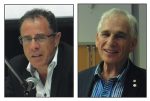
The Jewish Seniors Alliance Spring Forum featured Dr. Saul Isserow, left, and Dr. Larry Goldenberg. (photos by Binny Goldman)

“If I had known I was going to live so long, I’d have taken better care of myself” – Eubie Blake

Approximately 120 people attended the Jewish Seniors Alliance Spring Forum on May 7 at the Peretz Centre for Secular Jewish Culture. Called Ask the Doctors, it featured Dr. Saul Isserow and Dr. Larry Goldenberg, who were ready to answer the audience’s many questions.

JSA president Ken Levitt welcomed the crowd, thanked them for giving up a sunny gardening day to attend the workshop and support the JSA, whose new motto is “Seniors, Stronger Together.” He explained that, in joining together and striving for common causes, we are stronger.

photo - Jewish Seniors Alliance first vice-president Gyda Chud, left, president Ken Levitt at the JSA’s Ask the Doctors forum on May 7
Jewish Seniors Alliance first vice-president Gyda Chud, left, president Ken Levitt at the JSA’s Ask the Doctors forum on May 7. (photo by Binny Goldman)

Gyda Chud, first vice-president of JSA, introduced Isserow, who is the director of cardiovascular health at Vancouver General Hospital and of cardiology services at the University of British Columbia Hospital, as well as the medical director of Vancouver Coastal Health’s Healthy Heart Program, among other things. She also introduced Goldenberg, whose many credentials include the founding of several programs, such as the Vancouver Prostate Centre, where he is director of development and supportive care, and the Canadian Men’s Health Foundation; he is also a professor in the department of urologic sciences at UBC. Goldenberg was inducted into the Order of British Columbia in 2006, awarded the Order of Canada in 2009 and received the Queen’s Diamond Jubilee Medal in 2012.

Isserow’s topic was How to Stay Away from the Chevra Kadisha (the Jewish Burial Society). He started his talk with humour – saying that the man who asks the best question will win a finger up his tuches (bum) by Goldenberg, referring to a prostate exam – and used humour throughout to make the sad facts of aging more palatable.

Using slides to illustrate his points, Isserow stated that hardening of the arteries starts when we are young. He likened the process to a bagel, which begins to harden on the perimeter. When the blockage reaches the centre of the “bagel,” that is when the heart attack occurs. To keep things in perspective, he described life as “a sexually transmitted disease with 100% mortality.”

He discussed many risk factors: age, obesity, genetics, hypertension and smoking. He strongly suggested that diet and exercise could halt or reverse immediate risks but, unfortunately, there are no reliable warnings and heart attacks come out of the blue.

Movement is strongly encouraged, said Isserow. Just walking 10 minutes a day is a start to reducing the risk of diabetes and obesity. Walking one hour a day can reduce the risk of heart disease by 35%, he said, and the Mediterranean diet of fresh vegetables and fruit, healthy fats and whole grains, can improve health by 27%.

Isserow presented studies showing that aspirin reduces heart disease significantly. Although statins may be necessary, there are possible side effects, such as aches and pains, he said. He ended his talk by saying that health is up to the individual: walk once a day, eat well and take medications as required, when the risk is high.

Goldenberg said that one reason men die 4.4 years younger than women is the “I will not, cannot, Sam I am” syndrome, paraphrasing lines from the children’s book Green Eggs and Ham by Dr. Seuss. Many men are unwilling to reduce their drinking, smoking and/or poor eating habits, he said.

The government is trying to develop expertise in communicating effectively with men about their health, connecting with them in a way that creates the space, freedom and encouragement for positive changes in their health awareness, attitude and behaviours, said Goldenberg.

Doctors are increasing awareness with the slogan of “precision, prevention and preemptive,” he said, recommending precision and personalized communication in telling men what you want them to hear. Get males to engage in their health discussions, he suggested.

In an effort to increase engagement, Goldenberg initiated the website dontchangemuch.ca. He gave a few examples of small changes that would help: ordering half a salad and half fries, parking the car further away from your destination and walking an extra block or two.

He also referred to the Canadian Men’s Health Foundation’s youcheck.ca, “a health awareness tool built specifically for men,” according to its homepage, and he spoke of “manopause” – aging and a lower level of testosterone lead to a lower libido, crankiness, fatigue and the onset of heart and bone disease. Low testosterone has an impact on the body but there is no consensus as to solutions, said Goldenberg. Doctors need to monitor any symptoms that seem worrying, he said, adding that men need women to guide them and to emphasize that their behaviour can be changed.

An active question period followed. In no particular order, some of the responses included the following.

Aspirin can reduce blood clotting, as can diet and exercise. If you are doing all things right but your CT scan shows calcified plaque, then focus on diet, exercise and statins. People should have a base line for everything – having a colonoscopy or, for men, a test for PSA (prostate-specific antigen) levels, for example – and be aware of family history.

Tiredness could be the result of sleep disturbance, low mood or loneliness, but heart health should be checked. Beta blockers can cause fatigue because of a reduction of blood flow.

Stress management is critically important and stress levels can be related to many things: mental and physical well-being and reduction of cholesterol. Sex is healthy for overall well-being.

After the session ended, Larry Shapiro, second vice-president of JSA, presented the doctors with tokens of appreciation. Continuing with the humour that had been present all afternoon, he said, “Vive la différence!” referring to the many differences between men and women and their approaches to health.

Chud said she had seen a sign in the Weinberg Residence saying, “Never live in a community where there are no doctors,” and she wanted to add “a community without Drs. Isserow and Goldenberg.”

Stan Shear videotaped the forum, and JSA staff and volunteers deserve kudos for putting it all together.

Binny Goldman is a member of the Jewish Seniors Alliance of Greater Vancouver board.


Soccer unites people

The Tibet Women’s Soccer Team will compete at the 2017 Vancouver International Soccer Festival as special guests and as ambassadors of peace. (photo from One Team United)

One Team United for Peace and Development Society recently announced that the Tibet women’s soccer team will compete at the 2017 Vancouver International Soccer Festival (VISF) as special guests and ambassadors of peace. This is the first Tibetan women’s team of any sport to compete internationally.

The Canadian embassy in New Delhi, India, has granted the team travel visas to Vancouver for the 13th annual festival, which takes place June 30 to July 12. The team of 15 Tibetan women welcomed the successful invitation following the Feb. 24 disappointment when they were denied tourist visas by the U.S. embassy in New Delhi to attend the Dallas Cup in Texas.

After a video of the young athletes reading a letter in front of the embassy asking for help went viral, politicians, athletes, attorneys and human rights advocates around the world reached out to the team and urged for a reversal of the decision. The story appeared on many television and radio programs and in various newspapers in the United States and the United Kingdom. However, the decision to deny entry remained firm.

“At Vancouver’s One Team United for Peace and Development Society and the VISF, we believe that soccer has an incredible power which can be used to build bridges between cultures, strengthen communities, create long-lasting friendships and bring our global community closer together,” said Adri Hamael, founder and executive director of the society and its showcase VISF event. “Our invitation to the Tibet women’s soccer team is extended in the spirit of this mandate. I am deeply touched by the team’s inspiring story. As a father of a little girl, for me it is about affording girls and women the opportunity to compete and be treated as equals.”

The Tibet team will be co-sponsored by VISF 2017 and the One Team society. Among the supporters of the team’s visit is Simpson Thomas & Associates. Jewish community member Bernie Simpson is on One Team United’s board of advisors.

“My friendship with Bernie started years ago,” Hamael told the Independent. “I am a Palestinian Canadian, Bernie is Jewish, however, Bernie and I share a common goal: to help others and create a better world…. Many speak about making a difference, few dedicate their lives and resources to making it a reality – my friend Bernie is one of the few.”

In addition to competing in the soccer tournament July 7-9, the women’s team will participate in friendly matches with local soccer teams and will be invited to enjoy the many cultural and sightseeing opportunities Vancouver has to offer.

During the team’s stay in Vancouver, they will be working with Canada’s Sport Hall of Fame inductee Andrea Neil. A pioneer of women’s soccer in Canada, Neil spent 20 years with the national team as a player and assistant coach. Currently, she works in the Vancouver area with former men’s national team player Nick Dasovic at Dasovic-Neil Coaching, where they provide individualized soccer programming and training to elite athletes.

For more information, visit oneteamunited.ca.