Skip to content
  • Home
  • Subscribe / donate
  • Events calendar
  • News
    • Local
    • National
    • Israel
    • World
    • עניין בחדשות
      A roundup of news in Canada and further afield, in Hebrew.
  • Opinion
    • From the JI
    • Op-Ed
  • Arts & Culture
    • Performing Arts
    • Music
    • Books
    • Visual Arts
    • TV & Film
  • Life
    • Celebrating the Holidays
    • Travel
    • The Daily Snooze
      Cartoons by Jacob Samuel
    • Mystery Photo
      Help the JI and JMABC fill in the gaps in our archives.
  • Community Links
    • Organizations, Etc.
    • Other News Sources & Blogs
    • Business Directory
  • FAQ
  • JI Chai Celebration
  • JI@88! video

Recent Posts

  • Story of Israel’s north
  • Sheltering in train stations
  • Teach critical thinking
  • Learning to bridge divides
  • Supporting Iranian community
  • Art dismantles systems
  • Beth Tikvah celebrates 50th
  • What is Jewish music?
  • Celebrate joy of music
  • Women share experiences 
  • Raising funds for Survivors
  • Call for digital literacy
  • The hidden hand of hate
  • Tarot as spiritual ritual
  • Students create fancy meal
  • Encouraging young voices
  • Rose’s Angels delivers
  • Living life to its fullest
  • Drawing on his roots
  • Panama City welcoming
  • Pesach cleaning
  • On the wings of griffon vultures
  • Vast recipe & story collection
  • A word, please …
  • מארק קרני לא ממתין לטראמפ
  • On war and antisemitism
  • Jews shine in Canucks colours
  • Moment of opportunity
  • Shooting response
  • BC budget fails seniors
  • Ritual is what makes life holy
  • Dogs help war veterans live again
  • Remain vital and outspoken
  • An urgent play to see
  • Pop-up exhibit popular
  • An invite to join JWest

Archives

Follow @JewishIndie
image - The CJN - Visit Us Banner - 300x600 - 101625

Month: March 2019

Cohen dusts off tap shoes

Cohen dusts off tap shoes

Andrew Cohen takes on the lead role of Don Lockwood in Royal City Musical Theatre’s Singin’ in the Rain, which runs April 4-20. (photo by David Cooper)

“I’m excited for audiences to see Singin’ in the Rain. The film is a classic, and I hope we’re able to bring that same charm and excitement to the Massey Stage,” Michael Wilkinson told the Independent. “It is on the older side of the musical theatre canon, but I think our production – especially Andrew Cohen as Don Lockwood and Tessa Trach as Kathy Selden – do such a beautiful job at bringing these characters to life in 2019, while still keeping the familiarity and charm of the characters and story.”

Royal City Musical Theatre presents Singin’ in the Rain at the Massey Theatre in New Westminster April 4-20. For those unfamiliar with the story, Don Lockwood and Lina Lamont are silent film stars, dashing and beautiful, but their stars will fade unless they can make the transition to talkies, the new technology of the time. The studio decides to change the couple’s latest silent film into a musical but, the problem is, Lamont has a horrible voice – even listening to her talk is painful. The solution? Have her voice dubbed by aspiring actress Kathy Selden.

Filled with humour, eminently singable and memorable music – “Good Mornin’,” “Make ’em Laugh,” and, of course, “Singin’ in the Rain,” to name a few – and incredible choreography, Singin’ in the Rain is one of the most popular musicals of all time, while also being an insightful commentary on the film industry, the impacts of technology and the nature of fame.

Cohen said he was asked to audition for the role of Lockwood last fall, while he was away doing Fiddler on the Roof in Saskatchewan.

“Gene Kelly made this role, this music, famous. He is in every neuron of this show. But I am no Gene Kelly (though I sure do wish I had his moves),” Cohen told the Independent about making such a famous character his own. “I think any actor preparing to take on an iconic role like Don Lockwood needs to find where the character lives within themselves rather than trying to mimic the character’s originator.”

And Cohen has more than the chops necessary to step into Kelly’s shoes. Since the Jewish Independent featured Cohen and his wife, Anna Kuman, in 2017, when they premièred Circle Game: Reimagining the Music of Joni Mitchell – which they co-created and co-directed – the couple has been working on different projects around the world.

“We were on the mass choreography team for the Fifth Asian Indoor and Martial Arts Games opening ceremony in Ashgabat, Turkmenistan, that had us work with a cast of 8,000, not to mention aerialists, horses, dogs, camels,” said Cohen. “It was a crazy experience! I then joined the stage management teams for the Gold Coast Commonwealth Games and the Sydney Invictus Games opening and closing ceremonies, getting to work at the Sydney Opera House and along the stunning shores of the Gold Coast.”

Cohen also premièred the new musical Les Filles Du Roi, for which he had to sing in English, French and Kanienké:ha (Mohawk). “Last winter,” he said, “I reconnected to my ancestral roots in the shmatta trade by playing Motel Kamzoil the Tailor in Fiddler on the Roof at Persephone Theatre in Saskatoon. Also, being the show’s music director, this production boasted a cast full of actor/musicians and was extended four times due to popular demand.”

While he’s very excited to return home and “dust off” his tap shoes for Singin’ in the Rain, Cohen won’t be in town long. He’s “heading to Toronto, Tel Aviv and Europe this spring for a tour of the new Canadian show Charlotte: A Tri-Coloured Play with Music that chronicles the life of renowned Jewish painter Charlotte Salomon.”

Singin’ in the Rain marks Cohen’s debut with Royal City Musical Theatre.

“Both my wife and my brother have worked with them before,” he said, “but this is my first time with RCMT, so it’s lovely to get to join the club, especially since RCMT is a theatrical institution for large-scale classic musicals. Seldom do audiences (and actors alike) get to revel in the grandeur of the art form in this town than at the Massey Theatre every April.”

Cohen’s fellow Jewish community member, Wilkinson, certainly enjoys this annual tradition.

“It’s the community that keeps me coming back,” he said. “Obviously performing is very fun, but I’ve also made some great friendships through RCMT. It has become something to look forward to in April, and it’s the people that make it such a wonderful environment.”

Wilkinson is in his final year of studies at the University of British Columbia’s Institute for Gender, Race, Sexuality and Social Justice, so he’s not sure how long he’ll be able to continue performing with RCMT, but he feels “very fortunate to have been a part of five productions over the last few years.” As part of the ensemble in Singin’ in the Rain, he has more than one role.

“The Quartet,” he explained, “is a part of the number ‘Beautiful Girl,’ which is a big showgirl number that is the first ‘talkie’ by Monumental Pictures (the film production studio in the show). Typically, the number only has the tenor soloist and the female ensemble, but our director and choreographer, Valerie Easton, has added four of the male ensemble to create a quartet and have some fun partnering moments in the number. It’s really just a quick snippet of the show, and many of us in the ensemble jump around playing multiple parts. I’m also playing Rod, who is the head of the publicity department at Monumental Pictures, which has been a fun bit role.”

Wilkinson’s favourite scene, he said, “would have to be the number ‘Broadway Rhythm,’ which happens about halfway through Act 2. It’s around eight minutes long, and there is some amazing dancing and singing throughout the number. I think the audience will really enjoy it, especially once we have rehearsed it to perfection!”

For Cohen, the biggest challenge so far with the role of Lockwood has been “the sheer amount of material to learn. Don sings and dances a lot. In Act 1, he barely leaves the stage,” said Cohen. “Prepping for this show has been like training to do a marathon – every day a little further, more lines down, going over and over songs and dance breaks. That said, I grew up tap dancing but haven’t had the chance to tap professionally in a long time. It’s a real privilege getting to tap with some of the amazing tappers in this company.”

Cohen said, “It’s very exciting, seeing it all come together with the sets and the lights and the orchestra. How often do you get to sing with a real 18-piece orchestra?!”

For tickets to RCMT’s Singin’ in the Rain, visit ticketsnw.ca or call 604-521-5050.

Format ImagePosted on March 29, 2019March 27, 2019Author Cynthia RamsayCategories Performing ArtsTags Andrew Cohen, Michael Wilkinson, musical, RCMT, Royal City Musical Theatre
Hoffman’s new Crave special

Hoffman’s new Crave special

Comedian Robby Hoffman in action. (photo from Bell Media)

Onstage, her energy is barely contained. She delivers lines in a clipped, almost angry fashion, sporting a tight bun and dark clothes. From contemplating pizza’s puzzling popularity, to sharing how one customs officer saw the fire in her that she never knew she had, to musing about what it’s like to be the seventh of 10 children, the fashion choices of antisemites, her sexual prowess and the cost of duotangs, Robby Hoffman is very funny. It is no wonder that Robby Hoffman: I’m Nervous is among the new stand-up comedy specials Bell Media released last month on Crave.

Produced with Just for Laughs and Counterfeit Pictures, Robby Hoffman: I’m Nervous was filmed last September at Toronto’s Longboat Hall during the JFL42 comedy festival.

“It’s huge deal. It was always a dream of mine to have a special, to have a TV special specifically, and to do an hour,” L.A.-based Hoffman told the Independent in a phone interview from London, England, where she was doing gigs, and visiting her girlfriend, writer and director Ally Pankiw, who was there for work. In contrast to her stage persona, Hoffman was relaxed and chatty on the phone.

A lot of comedians self-produce amazing albums or routines in smaller increments of time, said Hoffman, but, “for me, in stand-up, it always felt like the pinnacle to have an hour…. It was a really great way to cap off all the work I’ve been doing since I started, and, to have an hour that was sharp, it felt like everything. And to do it with Just for Laughs, name of all names, it was everything and it was incredibly fun.”

Hoffman’s numerous writing credits include The Chris Gethard Show on TruTV, which just wrapped up last year, episodes of PBS’s Odd Squad (which has won an Emmy for writing), and CBC’s Workin’ Moms and Baroness von Sketch Show. Most recently, she wrote for eight episodes of the series Mind Fudge. The Crave special allowed her to jump back into stand-up full-time.

“To be doing stand-up night after night until this hour was great. And I had never recorded the hour all at once,” she said. “I was doing it in small increments of 10-minute spots, 15-minute spots, seven-minute spots, so when I recorded the hour, it was the first time I had done that hour. I had to nail it, working through all the themes … making sure it all cohesively worked, even though I only really worked on it in portions. So, agonizing over the different portions coming together and working on the transitions from different themes so that they flowed.”

And they do flow, somehow, despite the vast diversity of topics. She said that (apparent) randomness is a signature of hers. She uses it both to take audiences off guard, but also as part of the joke. As well, she uses it to prepare people for what’s coming. For example, she drops hints along the way to warn the audience well in advance that she will be talking about the Holocaust, so that, when she gets there, they will have been with her for some time. Then, she said, when “we’re really in the thick of it together … I’ll reward you with hand-job material or whatever.”

While Hoffman said she doesn’t have any red lines when it comes to comedy, she said, “I talk through my own experiences only. I’m never going to step into a territory that I don’t feel is mine to speak about. But, beyond that…. If it’s something within my realm of what I could talk about and you tell me not to talk about it, that’s what I want to talk about more. For instance, the Holocaust is taboo, and some people are really offended by [jokes about] it. I feel, as a Jew, I’m reclaiming it and, if you’re telling me not to talk about it, I’m going to.”

She said, “I think that Jewish people can talk about Jewish experience. I think black folk can talk about black experience. I don’t think there’s anything off limits within the Jewish community for me. I do think everything is off limits to me with regards to communities I’m not a part of or I don’t have a firsthand experience. My comedy is very firsthand – I’m not doing observational humour that are these one-liners that can relate to anyone. My comedy is unique, such that I’m the only person who could say my comedy…. You hear of big comedians having writers – I don’t feel like that would work for me simply because my comedy is so personal. I’m the only person who can write my own comedy.”

And Hoffman’s background is unique, indeed. Born in Brooklyn, she grew up in Montreal, where her mother raised her and her nine siblings as a single parent, having divorced Hoffman’s father and having left the Chassidic community. Hoffman came out as lesbian in her late teens, left home at 18 and kept kosher until about the same time. She started her working career as an accountant.

“I wanted to have a Plan B,” she explained, “and I knew that the arts was always something free, that if I wanted to do it, I could do it on my own, and I could find a way that wasn’t with the structure of school to do it. But a financial backup plan was not something as easily attained for me, so I went into accounting. I thought, well, I can always get a good job.”

With a laptop from her employer and a regular paycheque every two weeks, Hoffman said, “I felt like a billionaire. I can’t even explain what it was like…. It was just the best to be able to sleep at night. Being worried about money is not something a lot of my peers thought about. I felt very alone in that sort of stuff.”

Once she “felt safe and comfortable,” that’s when her “creative juices went wild,” she said, and that’s when she discovered stand-up.

“I didn’t grow up with it, I wasn’t somebody who had the albums and all this stuff, but, once I knew about it, I immediately thought, ‘Oh, I feel like I could do that.’ I don’t mean to say, ‘Oh, it looks easy.’ A lot of people think they could do it – I felt like it was me. I felt, ‘Oh, my God.’ It felt like me already. And I got started immediately.”

Thinking that all stand-ups wrote, she started writing. Noting that it was only later that she realized how little comedians also write, she said, “I wrote a pilot and, even though it never got made, it did get me rep and it got me writing on other shows and it started my writing career. But it’s amazing how many times I’ve been the only active stand-up and writer in a writers’ room, which I didn’t know.”

Hoffman is driven by her love of the work.

“What’s so incredible about doing what I do and making a living doing what I do is … I never imagined it possible. I didn’t know these careers as careers. I didn’t know writing was even a thing, let alone what you got paid for a script, nothing like that. But waking up and not dreading where I go to work every day is still something I don’t take for granted.”

She started as a writer’s assistant. “I was first one in, would get there early, have my coffee, enjoy. I was last one out. I was never more motivated – and it’s still to this day. I would have to be literally on death’s door not to go into work because I love it so much.

“I’m also really lucky in that the shows that I do work on, I choose to work on them for a certain reason. There’s something about them that either gives me growth or it gives me a challenge or I really just love it. And it’s a pleasure to work creatively all day, every day, and to be valued for it.”

As for what lies ahead, Hoffman said, “I have so many goals. Think of the biggest goal you can imagine, and that’s what I have for myself. Yes, my own show. Yes, who knows, my own studio. I don’t even know where it could go. I just want to try for the biggest, best thing. I want my life to be as much as I want it to be. There’s no limit on wanting that for yourself. There shouldn’t be a limit on dreaming. I never want to lose that.

“I almost, for a second, lost my childhood curiosity and dreaming and spirit, for a second, because, when you are poor and you want to be normal, and you want to make ends meet, you do give up a lot, and I was never somebody who was able to dream. We weren’t told to dream, we weren’t taught to dream, we weren’t taught we could be anything we wanted to be, almost nothing. There was not a lot of encouragement, so I gave that all to myself…. I always want to tell myself to reach for the biggest, best, whatever that is, and that changes for everyone. Within my career and within my capabilities, I want to continue growing forever.”

Format ImagePosted on March 29, 2019March 27, 2019Author Cynthia RamsayCategories TV & FilmTags comedy, Robby Hoffman, stand-up

Trump’s empty gesture

When U.S. President Donald Trump tweeted last week that Israeli control over the Golan Heights should be recognized as legitimate sovereignty, it was like sending a box of cherry cordials to his friend Binyamin Netanyahu. In other words, the gesture was sweet, cheap and filled with empty calories.

Israel handing the Golan back to Syria is not on anyone’s agenda. A strategic position at the confluence of Syria, Lebanon, Jordan and Israel, the area was taken by Israel from Syria in the 1967 war and remains, ostensibly, a disputed territory, like the West Bank. But it’s different. For one thing, Israel effectively absorbed the Golan into Israel proper in 1981, though for critics that makes no difference. More importantly, the Golan has strategic significance in ways that differ from the strategic significance of the West Bank. Notably, most of the Syrian population that had lived there fled during the war and both the Jewish and non-Jewish populations of the Golan have remained comparatively small since. So, while still a matter of international dispute, the Golan does not evoke the same issues as the population-dense West Bank in terms of a large non-citizen population living under military rule.

More to the point, who, in their right mind, would think that handing any land, anywhere, over to Syria at this point in history would be a reasonable idea? That country has been catastrophically ripped apart by civil war. If anyone sincerely thinks that Syria deserves the Golan back, they couldn’t possibly think this would be an appropriate time to make such a move.

But up pops the U.S. president to kick a sleeping dog, declaring American recognition of the Golan as part of Israel. It was a typical Trump triumph: it cost him nothing, it rewarded his pal Netanyahu as the Israeli leader arrived in Washington and it set Trump’s enemies into a raging fury, which seems to be one of the few coherent identifiable objectives of most of the president’s actions.

As the BBC reported: “Syria said Mr. Trump’s decision was ‘a blatant attack on its sovereignty.’” If the tragedy of Syria were not so sorrowful, this response would be laughable. “We interrupt this civil war, which has cost hundreds of thousands of lives and displaced 12 million people to haughtily contest the recognition of what has been, for all intents, the status quo for half a century.” Suffice to say, the Golan is the least of Syria’s worries right now.

Yet the gambit was just another trinket Trump has offered to Netanyahu as the latter enters the final days of a tight reelection campaign. The U.S. president makes no pretense about his support for Netanyahu’s continued leadership of Israel. As we discussed in this space two weeks ago, the politicizing of the American-Israeli relationship has potential benefits only for cynical American politicos. Israel (and Jewish Americans) will not win when Jewish people’s identity and connections to the Jewish state are exploited for partisan ends.

But neither is this a case where Jewish people are standing by, uninvolved and without agency. The Israeli government – the prime minister in particular – has encouraged this sort of partisanship overtly at least since he snubbed then-president Barack Obama by accepting a Republican invitation to address Congress. More egregiously, Jewish Americans, including some leading individuals and agencies, have exacerbated the political divisions. Some have created the “Jexodus” movement, inviting the roughly 75% of Jewish Americans who usually vote Democratic to move over to the Republicans. Such a campaign probably has more legs on social media than it does in the real world, but more worrying examples abound.

It is true that AIPAC, the American Israel Public Affairs Committee, was among those groups to speak out against Netanyahu’s courtship of a far-right Israeli extremist party recently. But, that aside, its conference earlier this week in many ways cast aside the group’s traditional bipartisanship. Vice-president Mike Pence and other elected officials delivered overtly partisan speeches. Many leading Democrats, including several who are vying for their party’s 2020 presidential nomination, stayed away from the gathering. A better response would have been to attend and speak frankly about the genuine divisions that exist among Israelis, Diaspora Jews, Americans and the various constituencies, including disaffected young Jews and upstart alternatives to the perceived rightward drift of AIPAC, such as J Street. By ceding the platform, Democrats fed a narrative that reinforces the unhelpful partisan divide.

Regardless of who wins next month’s Israeli election or next year’s American election, Jews and Zionists in the United States, Canada, Israel and everywhere will need to either heal this divide or play into the charade that one side of the political spectrum is friend and the other foe. We need to reject partisanship and return to a time when standing with Israel is a logical extension of Western democratic, pluralist values. The alternative is to accept a new world where standing with Israel, and potentially with Jews, is weaponized by one set of partisans to hammer another.

Posted on March 29, 2019March 27, 2019Author The Editorial BoardCategories From the JITags Golan Heights, international relations, Israel, Netanyahu, politics, Syria, Trump, United States

Dig more deeply into identity

The Torah portions at this time of year, in Leviticus, are sometimes described as a hard sell. Leviticus’s detailed narrative about what is pure and safe, what’s diseased or leprous, and how priests can tell the difference isn’t light reading. It can be hard to interact with this kind of text.

At the same time, these details saved us as a people on numerous occasions. Keeping things clean, considering what was healthy, diseased or spoiled – historically, these things may have protected us from scourges like the Black Death. Analyzing the details of something difficult and complicated helps us find greater truths or safety, which are not always obvious from the outside, just as we continue to wrestle with diseases or challenges we don’t understand today. Whether it’s something described in Leviticus or a new kind of virus, smart people have to work to figure these things out.

In order to keep myself “working” and intellectually active, I do lots of reading and thinking about things I encounter. However, I don’t have much time to do this while juggling my household, kids, dogs and work responsibilities. I listen to audiobooks while I do household tasks. This gives me a chance to think about something bigger than, for instance, chopping salad or changing bedding. We all have a lot of boring waiting, obligations and chores to get through. Engaging my brain and listening to a book makes me feel a lot better about this grunt work.

I used to think I had to finish everything I started, but if it’s too violent or scary, I now shut it off. I recently found a new category of book to “shut off.” It doesn’t have an easy label, like “mystery” or “non-fiction.” Maybe it should be called “superficial.” Here’s what I mean.

I was listening to a memoir that contained recipes. In itself, this was a quirky choice for an audiobook, but I like food and cooking. Beyond that, the premise was larger. The author had been editor of a publication that had gone out of business. The memoir was supposed to describe how she found new direction through her cooking. I don’t write mean book reviews, even when I’ve been asked to review something, but I just can’t recommend this book.

I got very nearly to the end when I had to give up. Why? The primary reason was that the author is described, in her biography, as a Jewish person. However, her book rhapsodized about the food she made for Christmas and Easter and, even further, about the true glory of pork and shellfish. OK, I figured, maybe her husband isn’t Jewish. But I did more research. He was.

I could live with the idea that this writer didn’t keep kosher. Heck, lots of Jews don’t. I could even live with the idea that she’d decided, for whatever reason, to celebrate Christian holidays, if only there had been some explanation of why. She rhapsodized about matzah brei (but why?!) and yet she didn’t tell her readers why she ate it in the springtime. After awhile, I even started to feel cranky about how she used way too much butter in every recipe. Time to shut it off!

At its heart, I told myself that, while using the majority culture’s touchstones, like Christmas and Easter, might make a book more saleable, it seemed like a betrayal far worse than cooking with non-kosher foods. When I thought about it longer, I concluded that the whole thing was vacuous. She’d never actually explained how the cooking had helped her heal or get over such a big professional loss. At that point, it didn’t matter how the book ended. I was done.

Awhile back, I had a writing gig on a national platform. My proud husband boasted about it to our Montreal friends. The articles paid less than what I published locally and were poorly edited, but my earnest “voice” came through. That seemed OK. Then the editor told me that she would only get in touch again after she assessed how my previous posts had done. (The ones that, while earnest, had been poorly edited.) I never heard back. I guess they weren’t successful in her eyes. Instead, I saw parenting posts on that platform that celebrated Jewish writers who extolled how they proudly chose to be secular or why they weren’t comfortable investing in their religious or cultural identities.

All around us, hate crimes are rising. Minorities – like Jews – are being harassed. Just because it hasn’t happened to you yet doesn’t mean it won’t. So, why not ask Jewish writers to dig deeper and figure out what that identity actually means? When the Gestapo killed Jews during the Second World War, they didn’t ask, “Are you assimilated? Secular? Do you celebrate Christmas?” No. Why not embrace or at least learn about your real background?

I felt angry. My time is so limited that I hate wasting these spare moments on reading something so intellectually lazy. In between raising kids and walking dogs, figuring out our taxes (in two countries) and the rest of life’s details, well, I might as well get more sleep instead. If an entire memoir, written by a well-known figure, sounds so tone deaf, it bothers me that she makes a living selling these books.

Worse, my articles might have been seen as too earnest, too religious and too detail-oriented, and were tossed in favour of someone who was happy to express his apathy and ignorance about his Judaism. It’s like the (non-Jewish) editor said, “Well, gee, we want the Jewish perspective, but only if it isn’t too Jewish.”

Leviticus is a hard slog. Yet, every year, we go through all of the five books of Moses and we try to dig deeper to find something new. There are many commentaries on Leviticus. Some explain it, and others try to give modern examples for how to relate to its narrative. These are all worthy intellectual exercises, much like choosing to listen to books while doing mind-numbing chores.

What’s not worth it? Let’s not waste time on empty-headed accounts from people who determinedly embrace their ignorance. If you want to stay committed to your identity – Jewish, political or other – keep learning and growing so you can express it with pride.

Joanne Seiff has written regularly for CBC Manitoba and various Jewish publications. She is the author of three books, including From the Outside In: Jewish Post Columns 2015-2016, a collection of essays available for digital download or as a paperback from Amazon. See more about her at joanneseiff.blogspot.com.

Posted on March 29, 2019March 27, 2019Author Joanne SeiffCategories Op-EdTags books, identity, Judaism, lifestyle, philosophy

CIJA fights online hate

“We were saddened, horrified and deeply angered by the murderous terrorist attack in Christchurch, which was clearly motivated by hatred of Muslims that was at least in part fomented online,” Martin Sampson of the Centre for Israel and Jewish Affairs (CIJA) told the Independent. “This is another disturbing example of how terrorists and mass murderers make use of social media – both before and after attacks – to spread their heinous message.”

On Friday, March 15, 50 Muslims were murdered by a white nationalist terrorist at two mosques in Christchurch, New Zealand. On Oct. 27, 2018, 11 Jews were murdered at Tree of Life Synagogue in Pittsburgh, Penn. Both perpetrators had been active in spreading hatred online. In the case of Tree of Life Synagogue, the shooter had written a post announcing his intentions hours before the attack.

“This issue has been of interest to us for some time,” said Sampson. “We included it as a core federal priority in our Federal Issues Guide, which was released in September of 2018. The horrific shooting at the Tree of Life Synagogue in late October, and the fact that the assailant had been highly active in promoting antisemitism on social media – it is reported that he posted more than 700 antisemitic messages online in the nine months or so prior to the attack – underscored the urgency of the issue and the need to increase awareness about the connection between online hate and offline violence. This is why we launched notonmyfeed.ca.”

The goal of CIJA’s #notonmyfeed campaign is to reduce the spread of online hate speech. “In any democratic society that values freedom and individual rights, no right is absolute,” said Sampson. “Striking a reasonable balance between preserving free speech and protecting Canadians from those who systematically demonize and slander entire communities is a challenging, complex task, but not an impossible one.”

CIJA is calling for a comprehensive response that addresses hate in a variety of forms, not just antisemitism, he said. “We can preserve free speech while protecting Canadians from those who deliberately promote hostility – and even glorify violence – against entire communities.”

Sampson said there is a direct link between online hate speech and violence. “In countless cases – such as in the case of individuals who have been radicalized to participate in terrorism or hate crimes – online propaganda has been a significant factor,” he said. “This is a complex issue. Understanding it and developing tools to counter it is why we are calling on the government of Canada to take the lead by launching a national strategy to tackle online hate, working in partnership with social media platforms and internet service providers.”

Some people contend that, if online hate speech foreshadows offline violence, there may be some value in monitoring it, rather than forcing it underground. As well, if kicked off one social platform, those inciting hatred can just move to another one.

“In cases of ignorance, inappropriate statements or offhand comments that are bigoted, counter-speech is clearly the best response, and these types of online behaviours are not the focus of our calls for a national strategy to tackle online hate. In cases of propaganda being systematically produced by extremists – particularly when it includes the glorification of violence – allowing it to continue can in some cases pose significant risks to public safety,” said Sampson about these concerns. “Moreover, allowing such behaviour to take place on social media platforms often violates the basic terms and conditions of those sites. Social media platforms should enforce their own existing policies.”

The movement to boycott, divest from and sanction Israel over its treatment of Palestinians is controversial, with some seeing it as a legitimate tactic opposing human rights abuses and others seeing it as a form of discrimination rooted in antisemitism. “It is neither the focus of our policy position on online hate, nor can I perceive any scenario in which BDS would be implicated or affected by a national strategy to tackle online hate,” said Sampson, when asked whether BDS was one of the intended targets of CIJA’s campaign. “To be clear – we strongly oppose BDS and work to expose and counter the real agenda of the BDS movement, but that is a very separate challenge and completely distinct from our call for a national strategy to combat online hate.”

Asked if CIJA has any plans for addressing hate speech in the Jewish community itself, Sampson said, “Our position on online hate is that a national strategy should address hate in a variety of forms, not just antisemitism. This is why we have mobilized a coalition of communities, including the Muslim community, to join us in this effort. We believe every online account should be held to the same standard, regardless of the identity of the person who runs the account. When it comes to the Jewish community, we strive to set an example in how we manage our social media accounts, allowing debate and diverse opinions in the comments section of our posts, while having a zero tolerance policy toward bigotry and hateful comments.”

Matthew Gindin is a freelance journalist, writer and lecturer. He is Pacific correspondent for the CJN, writes regularly for the Forward, Tricycle and the Wisdom Daily, and has been published in Sojourners, Religion Dispatches and elsewhere. He can be found on Medium and Twitter.

Format ImagePosted on March 29, 2019March 27, 2019Author Matthew GindinCategories NationalTags antisemitism, BDS, boycott, Centre for Israel and Jewish Affairs, Christchurch shootings, CIJA, hate, interfaith, internet, Martin Sampson, New Zealand, Pittsburgh shooting, racism, Tree of Life
Milestones … Shapira, Or Shalom, Baumel Joseph, Respitz & Krug

Milestones … Shapira, Or Shalom, Baumel Joseph, Respitz & Krug

Adi Shapira brought home a silver medal for British Columbia in the 2019 Canada Winter Games. (photo by Peter Fuzessery Moonlight Canada)

From Feb. 15 to March 3, Red Deer and central Alberta hosted the 2019 Canada Winter Games. Among those taking home a medal was Adi Shapira.

Winning the silver in the archery recurve, individual female event, Shapira said in a Team BC article, “It is an amazing reward for all the training I have been doing and it is just an amazing accomplishment.”

photo - Adi Shapira prepares for a shot
Adi Shapira prepares for a shot. (photo from Team BC)

According to the Canada Winter Games website, Shapira, “who had taken up archery following a school retreat in grades 8 and 9, fought hard in the gold medal match, but Marie-Ève Gélinas, came back to win the gold for Quebec.”

Shapira, 16, is part of the SPARTS program at Magee Secondary School, which is open to students competing in high-performance athletics at the provincial, national or international level, as well as students in the arts who are performing at a high level of excellence. Last November, she won the qualifying tournaments against other female archers ages 15 to 20 to represent the province of British Columbia in the February national games.

* * *

photo - The 2019 Stylin’ Or Shalom fashion models
The 2019 Stylin’ Or Shalom fashion models. (photo from Or Shalom)

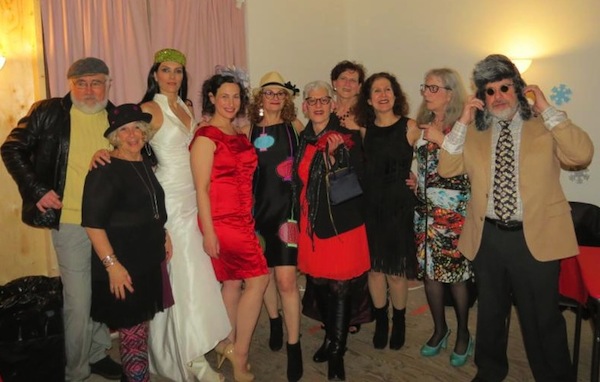
Stylin’ Or Shalom on Feb. 20 was not just a beautiful evening: the event raised $1,600 for Battered Women’s Support Services so that they can continue their important work.

Models for the fashion-show fundraiser were Ross Andelman, Avi Dolgin, Val Dolgin, Carol Ann Fried, Michal Fox, Dalia Margalit-Faircloth, Helen Mintz, Ana Peralta, Avril Orloff and Leora Zalik. About 50 people attended and, between cash donations and purchases from the My Sister’s Closet eco-thrift store, this year’s show raised about $600 more than did the inaugural Stylin’ Or Shalom event held in 2017. In addition, many people brought clothing donations, which will be sold at the store, generating further funds for the organization.

* * *

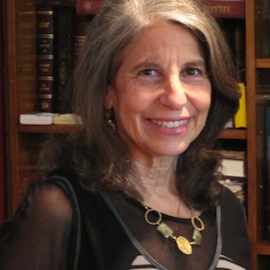
The Association for Canadian Jewish Studies has announced that Dr. Norma Baumel Joseph is the 2019 recipient of the Louis Rosenberg Canadian Jewish Studies Distinguished Service Award. Joseph brings together the highest standards of scholarship, creative and effective dissemination of research, and activism in a manner without rival in the field of Canadian Jewish studies, as well as being a respected voice in Jewish feminist studies more broadly.

photo - Dr. Norma Baumel Joseph
Dr. Norma Baumel Joseph

Joseph’s scholarship is remarkable for her mastery of both traditional rabbinic sources and anthropological methods. Her work on the responsa of Rabbi Moses Feinstein, including an award-winning article published in American Jewish History 83,2 (1995), is based on a close reading of some of the most technical and difficult halachic texts. Her mastery of these sources is also apparent in articles on women and prayer, the mechitzah, and the bat mitzvah. She has used her knowledge of halachah in her academic work on Jewish divorce in Canada, including an article in Studies in Religion (2011) and is a collaborator in a recently awarded grant project, Troubling Orthopraxies: A Study of Jewish Divorce in Canada.

As a trained anthropologist and as a feminist, she realizes that food is also a text and she has made important contributions to both the history of Iraqi Jews in Canada and to our understanding of the history of food in the Jewish community. Her Social Sciences and Humanities Research Council of Canada (SSHRC)-funded research has resulted in recent essays such as “From Baghdad to Montreal: Food, Gender and Identity.” Her ongoing reflections on Jewish women in Canada, first appearing as early as 1981 in the volume Canadian Jewish Mosaic, are foundational texts in the study of Jewish women in Canada.

Joseph has chosen to disseminate her research and wisdom in a variety of ways. Her undergraduate and graduate students at Concordia praise her innovative student-centred teaching. Recently, she instituted a for-credit internship at the Alex Dworkin Canadian Jewish archives, which has been beneficial to both the student and the archive. She is in demand as a lecturer in both professional and lay settings. Her work in film has reached a wide audience. In Half the Kingdom, a 1989 NFB documentary on Jewish women and Judaism, she explores with sensitivity the challenges – and rewards – of being both a feminist and an Orthodox Jew. She served as consultant to the film, and was a co-author of the accompanying guidebook.

Since 2002, Joseph has also committed herself to public education by taking on the task of writing a regular column on Jewish life for the Canadian Jewish News. Her views are based on a deep understanding of Judaism and contemporary Jewish life and are worthy of anthologizing.

Joseph is a founding member of the Canadian Coalition of Jewish Women for the Get and worked for the creation of a Canadian law to aid and protect agunot. As part of her Women for the Get work, she participated in the educational film Untying the Bonds: Jewish Divorce, produced by the Coalition of Jewish Women for the Get in 1997. She has also worked on the issue of agunot, as well as advocated for the creation of a prayer space for women at the Western Wall among international Jewish organizations.

Joseph helped in the founding of the Institute for Canadian Jewish Studies at Concordia, and convened the institute from 1994 to 1997, when a chair was hired. She was also a founder and co-director of Concordia University’s Azrieli Institute for Israel Studies. In 1998, she was appointed chair of the Canadian Jewish Congress National Archives Committee, and has remained in the position since then, under the new designation of chair of the advisory committee for the Alex Dworkin Canadian Jewish Archives (CJA). In this capacity, Joseph has been a forceful and effective advocate for protecting and promoting the preservation of Canadian Jewish archival material and for appreciating the professionalism of the staff. She has lent her time and experience to multiple meetings and interventions at various crucial junctures in the recent history of the CJA, during which she has balanced and countered arguments that would have led to the dissolution or extreme diminishing of the archives as we know it. Her work on behalf of the archives has drawn her into diverse committees and consultations. Notably, she contributed her expertise to the chairing of a sub-committee convened by Parks Canada when their Commemorative Places section was in search of Canadian Jewish women-related content. Her suggestions made during the 2005 meetings have resulted in several site designations over the course of the past 12 years.

Joseph has had a unique role in Canadian Jewish studies and Canadian Jewish life, and is richly deserving of the Louis Rosenberg Award.

* * *

photo - Janie Respitz of Montreal won the prize for best interpretation of an existing Yiddish song at the final Der Idisher Idol contest in Mexico CityIn February, Janie Respitz of Montreal won the prize for best interpretation of an existing Yiddish song at the final Der Idisher Idol contest in Mexico City. She performed “Kotsk,” a song about a small town in Poland, which was the seat of the Kotsker rebbe, the founder of a Chassidic dynasty in the 18th century. The win included $500 US.

Respitz holds a master’s degree in Yiddish language and literature and, for the past 25 years, has performed concerts around the world. She has lectured and taught the subject, including at Queen’s University and McGill University, and is on the faculty of KlezKanada, the annual retreat in the Laurentians.

Respitz was among nine finalists, both local and foreign, who were invited to perform at Mexico City’s 600-seat Teatro del Parque Interlomas before a panel of judges and a live audience.

The competition is in its fourth edition, but Respitz only heard about it last year. She submitted a video of her performing “Kotsk” in September and received word in December that she was in the running.

A Yiddish song contest in Mexico City may seem odd, but the city has a large Jewish community, many with roots in eastern Europe, much like Montreal. The winner for best original song was Louisa Lyne of Malmo, Sweden, who’s also a well-established performer of Yiddish works.

– Excerpted from CJN; for the full article, visit cjnews.com

* * *

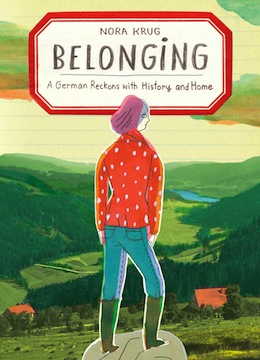
On March 14, at the New School in New York, the National Book Critics Circle (NBCC) announced the recipients of its book awards for publishing year 2018. The winners include Nora Krug, who was given the prize in autobiography for Belonging: A German Reckons With History and Home (Scribner). “Krug creates a stunningly effective, often moving portrait of Krug’s memories and her exploration of the people who came before her,” said NBCC president Kate Tuttle.

image - Belonging book coverKrug’s drawings and visual narratives have appeared in the New York Times, Guardian and Le Monde diplomatique. Her short-form graphic biography Kamikaze, about a surviving Japanese Second World War pilot, was included in the 2012 editions of Best American Comics and Best American Nonrequired Reading. She is the recipient of fellowships from the Maurice Sendak Foundation, Fulbright, the John Simon Guggenheim Memorial Foundation, the Pollock-Krasner Foundation, and of medals from the Society of Illustrators and the New York Art Directors Club. She is an associate professor at Parsons School of Design in New York and lives in Brooklyn with her family.

The National Book Critics Circle was founded in 1974 at New York’s legendary Algonquin Hotel by a group of the most influential critics of the day. It currently comprises 750 working critics and book-review editors throughout the United States. For more information about the awards and NBCC, visit bookcritics.org.

Format ImagePosted on March 29, 2019March 27, 2019Author Community members/organizationsCategories Local, WorldTags ACJS, Adi Shapira, archery, art, Association for Canadian Jewish Studies, books, Canada Winter Games, Janie Respitz, music, National Book Critics Circle, NBCC, Nora Krug, Norma Baumel Joseph, Or Shalom, sports, tikkun olam, women, Yiddish
Mystery photos … March 29/19

Mystery photos … March 29/19

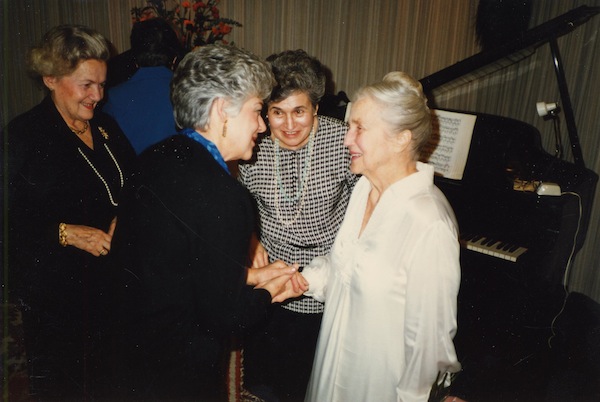
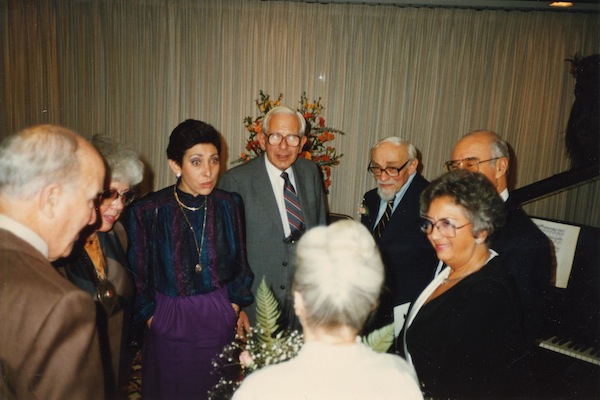
Photographs from an unidentified event, possibly a University of British Columbia event, likely in honour of Harry Adaskin, 1985. In the photo immediately below, of the women socializing by the piano, Shirley Kort is second from the right. (above photo JMABC L.13770)

photo - Shirley Kort is second from the right
Shirley Kort is second from the right. (JMABC L.13761)
photo - from an unidentified event
(JMABC L.13765)

If you know someone in these photos, please help the JI fill the gaps of its predecessor’s (the Jewish Western Bulletin’s) collection at the Jewish Museum and Archives of B.C. by contacting [email protected] or 604-257-5199. To find out who has been identified in the photos, visit jewishmuseum.ca/blog.


Format ImagePosted on March 29, 2019March 27, 2019Author JI and JMABCCategories Mystery PhotoTags Harry Adaskin, history, Jewish museum, JMABC, UBC, University of British Columbia
תוכנית מימון חדשה לרוכשי דירות בפעם הראשונה

תוכנית מימון חדשה לרוכשי דירות בפעם הראשונה

אף על פי שהמחירים והמכירות ירדו ברוב הערים אשתקד, המחירים עדיין עלו בכשישים וארבעה אחוזים בוונקובר – בחמש השנים האחרונות.

החל מחודש ספטמבר הקרוב תופעל לראשונה תוכנית מימון לרוכשי נדל”ן בפעם הראשונה, שהכנסותיהם מגיעות מקסימום למאה ועשרים אלף דולר בשנה. סכום המשכנתא המובטחת יגיע למקסימום של ארבע מאות ושמונים אלף דולר.

סוכנות הדיור של קנדה תשקיע כמיליארד ורבע מיליארד דולר קנדי, במשך שלוש שנים, כדי לקנות בתים שמיועדים לרוכשי דירות בפעם הראשונה. וזאת כחלק מתוכניתה של ממשלה הליברלית בראשות, ג’סטין טרודו, להפוך את הדיור לזול יותר עבור הבוחרים הצעירים יותר במדינה.

על פי מסמכי התקציב הפדרלי שפורסמו בשבוע שעבר, רשות המשכנתאות והדיור הקנדית תעניק עד עשרה אחוז למימון בתים חדשים, ועד חמישה עשר אחוזים עבור בתים קיימים, כדי להפחית את עלויות המשכנתאות עבור רוכשים, בעלי הכנסה נמוכה עד בינונית. המימון יחול על המשכנתאות המבוטחות, אשר נדרשות אם הקונה מסוגל לשלם מקדמה על הנכס בשיעור של לפחות עשרים, שהוא מעוניין לרכוש.

במהלך זה שר האוצר ביל מורנאו, מבקש בעצם להרגיע את החששות בשוק הדיור הקנדי, לאחר עליית המחירים והשינויים בשנים האחרונות, שדחף את האופציה של בעלות על נדל”ן אל מחוץ להישג ידם של קנדים רבים, במיוחד הצעירים אשר עושים את צעדיהם הראשונים בשוק העבודה. אף על פי שהמחירים והמכירות ירדו ברוב הערים אשתקד, המחירים עדיין עלו בכשישים וארבעה אחוזים בוונקובר – בחמש השנים האחרונות (והגיעו אל מעל מיליון דולר ​​בממוצע לבית), ואילו בטורונטו הם עלו בכחמישים ושישה אחוז באותה תקופה. כך עולה מנתוני אגודת הנדל”ן של קנדה.

תוכנית חדשה זו של הממשלה שמעריכה כי כמאה אלף רוכשים נדל”ן חדשים ינצלו אותה, במשך שלוש שנים, עשויה לשמש נתון חיובי לשוק הנדל”ן, דבר הנחוץ כך כך צמיחה, כיוון שמורגשים סימנים ברורים שהכלכלה הקנדית נמצאת בתקופה של האטה.

תוכנית ההלוואות מבוססת למעשה על הרעיון של קבוצות קטנות שלא מטרות רווח בקנדה, שכבר היום מציעות הלוואות דומות עבור אנשים בעלי הכנסה נמוכה. התוכנית החדשה, שתקרא “תמריץ לקונה הבית בפעם הראשונה”, תושפעל בחודש ספטמבר ותהיה זמינה לקונים בפעם הראשונה, בעלי הכנסות שנתיות של עד מאה ועשרים אלף דולרי. סכום המשכנתא המבוטחת יגיע עד לארבע מאות שמונים אלף דולר.

כך למעשה רוכש בית חדש בסכום של ארבע מאות אלף דולרי שיעביר תשלום של עשרים אלף דולר כמקדמה (המהווה חמישה אחוז מסכום הרכישה), עשוי לקבל ארבעים אלף דולר (עשרה אחוז), כתרומה מסוכנות הדיור. לפיכך התשלום החודשי שלו עבור המשכתנא, יקטן מכאלפים דולר בחודש, לכאלף שבוע מאות וחמישים דולר לחודש, בהתבסס על משכנתא לעשרים וחמש שנים, כשאר הריבית של המשכנתא עומדת על שלושה וחצי אחוזים, לפי הדוגמה בתקציב.

“המהלך מטורף ויגרום לביקוש גדול יותר בשוק הנדל”ן שגם כך הוא תחרותי ביותר”, אומר אחד מבעלי חברות הנדל”ן המקומיות. הוא מוסיף: “מדוע הממשלה משחקת את תפקיד של אמאו ואבא ורוכשת בתים לכולם? זה לא הפתרון למחירי הבתים הגבוהים, אלה ניסיון לטפל בסימפטום פשוט על ידי זריקת כסף למשלמי המיסים כדי שירכשו בתים”.

בשלב זה זה ידוע כי אגודת הדיור הקנדית תיהנה מכל רווח במחיר הבית, או לחלופין פוטנציאלית תספוג חלק של מכל הפסד. נכון לעכשיו, לא ברור אם על בעל הדירה להחזיר את סכום ההלוואה במולאה, או את נתח ההון על בסיס הערך של הבית כאשר הנכס נמכר. פרטים אלה יפורסמו בחודשים הקרובים, אומרים גורמים במשרד האוצר הקנדי.

Format ImagePosted on March 27, 2019March 27, 2019Author Roni RachmaniCategories עניין בחדשותTags Bill Morneau, Canada, federal budget, financing, housing, ביל מורנאו, דיור, מימון, קנדה, תקציב הפדרלי
Exhibit starts with friendship

Exhibit starts with friendship

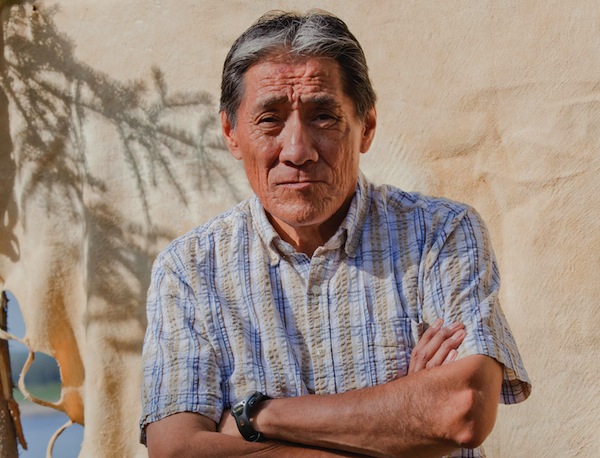
Linda MacCannell’s photograph of John T’Seleie. (photo from Drew Ann Wake)

The new show at the Zack Gallery, Crossed Paths – which explores the connection between the Jewish and the Dene peoples – has its roots in the federal Mackenzie Valley Pipeline Inquiry.

“In the 1970s, I was a CBC reporter in the Northwest Territories,” show curator Drew Ann Wake told the Independent. “When the government proposed a pipeline through the area, they sent Justice Thomas Berger to investigate the impact of the proposed pipeline [in 1974]. He talked to over 30 native communities to get their input. When he was finished, he issued a report recommending the government settle all the claims on land that the pipeline would pass through before construction started…. They are still settling those claims. The pipeline hasn’t been built yet.”

As a journalist, Wake accompanied Berger and his team on that historic trip. She taped numerous interviews with the local people participating in the inquiry.

“Ten years ago, I found those old tapes,” she recalled. “Only audio tapes; it was so long ago. I thought it would be interesting to go back and talk to all of them again. And let their children and grandchildren listen to their elders’ voices.”

photo - Linda MacCannell’s photograph of Michael Jackson
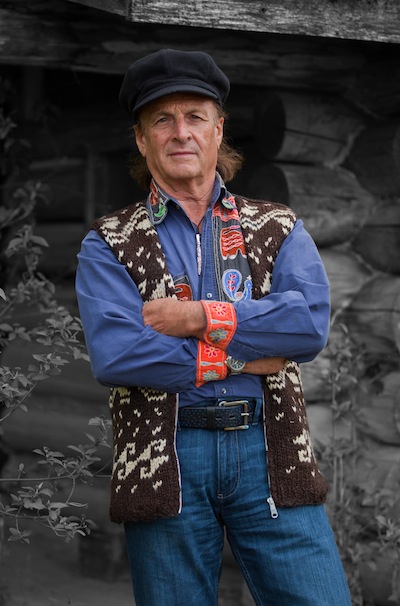
Linda MacCannell’s photograph of Michael Jackson. (photo from Drew Ann Wake)

She invited a friend, photographer Linda MacCannell, to create portraits of some of the participants of the Mackenzie Valley negotiations. Over several years, they traveled to the villages Wake had visited with Berger. MacCannell took photos and Wake filmed her interviews. “We created a show of Linda’s portraits and the stories I collected and went on the road. By now, we’ve exhibited this show in 50 galleries across North America,” said Wake.

MacCannell’s large-scale portraits of various members of the Dene First Nations, who live along the Mackenzie River, constitute the heart of the exhibit at the Zack.

“Two years ago, we gave a presentation at the grunt gallery, an artist-run centre in Vancouver,” Wake explained. “We showed the films. After the presentation, a man approached me. He introduced himself as Michael Shumiatcher, a local artist and educator. He said he knew Justice Berger at the time of the inquiry. Michael was a high school student then, and Berger was his best friend’s father.”

Shumiatcher suggested they work together and present the exhibit to schools around the province. Wake liked the idea, and invited him to join her on her next trip north. Also joining the summer 2018 trip were artist Melenie Fleischer and her husband, cellist Eric Wilson, as well as composer Daniel Séguin.

“Daniel saw the video I made of the drummers the previous year,” Wake explained. “He wanted to write new music to incorporate the traditional drums.”

The group traveled to Fort Simpson, N.W.T., to study the drumming culture of the Dene in more depth.

“Séguin wrote a piece of music, called Dehcho, for cello and the drums,” Wake said. “That is how the local nations call the Mackenzie River – Dehcho. Wilson performed it at the local gallery presentation of our show. The gallery was packed. People sat in the hall and stood on the stairs. He had to repeat his performance for all who wanted to hear it.”

As well, Fleischer and Shumiatcher produced several paintings.

One of Fleischer’s, a herd of bison, is suffused with wild, tumultuous energy. “They were huge,” she said of the animals. “They looked up casually and continued grazing and drinking water in the shallow puddles. We were cautious and maybe even scared as we huddled close in the van to take our photographs. Thrilled at our first encounter with the ancestors of the ancient bison depicted on the cave walls of Altamira, Lascaux and others, I knew then that I was going to paint bison.”

A painting by Shumiatcher depicts Wilson blowing a shofar on the shore of the Mackenzie River. Fleischer and Wilson brought the shofar on the trip as a gift.

“Once we got our invitation from Chief Gerry Antoine to come to Fort Simpson and collaborate with Liidlii Kue First Nation on our cultural exploration of music – cello and drums – we were very excited. We were in New York at the time, and I wanted to bring Chief Antoine something special,” said Fleischer. “All I could think of was that our nation was thousands of years old, as were the indigenous people. With that in mind, we went looking for a ram’s horn from Israel, a shofar.”

They visited several Judaica stores in New York. “It was funny,” said Fleischer, “my husband Eric blowing shofars outside the stores, on the sidewalk. He is a cellist and very particular about sound.”

The next step for the group was to approach the Zack Gallery for a joint show. The Jewish artists’ paintings complement MacCannell’s photography, showing another facet of the northern experience. Just as power and serenity dominate the portraits and the photographer’s triptych of the river landscape, the paintings add a touch of awe at nature and its symbiotic relationship with humankind.

The Zack exhibit also includes traditional clothing made by several Dene artists. “Last year, we won a grant from the Canada Council [for the Arts] to commission northern artists,” Wake said. Of the pieces on display, each has a story. In some cases, the stories are real; they happened to the artists’ family members. For others, the stories are purely imaginary or are based on local folklore. Regardless, every story has a link to the tapes Wake collected in the 1970s and the people she interviewed.

Linda Wolki, known for her needlework, created a traditional yellow coat after she listened to the recording of her mother telling Wake how she hunted seals when she was young. “The woman’s story was amazing,” Wake said. “She was out hunting in the snow and cold, and four polar bears decided to chase her. She laughed.”

A pair of embroidered moccasins, made by Agnes Mitchell, is displayed in a plexiglass case next to the pair her father wore for years. The embroidery on the old moccasins – made by Mitchell’s mother – and the new ones is equally elaborate.

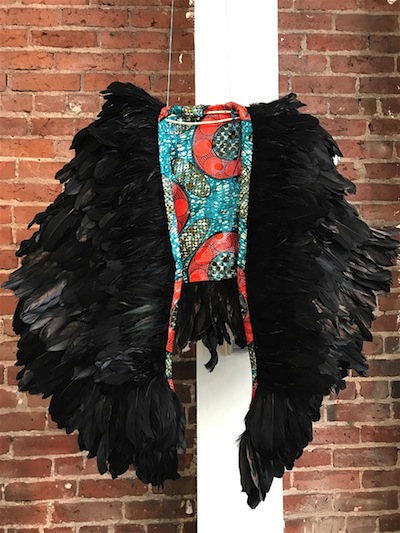
“One story I asked an artist to illustrate was an ancient northern legend about an abandoned woman,” Wake said. “The tribe abandoned that woman in the forest because of her sharp tongue. She only had a few coals for her fire, but she survived. She made herself two cloaks – one of raven feathers and another of rabbit fur – and many more objects.”

Artist Jeneen Frei Njootli has brought the cloaks to life. Her creations, a black cloak of raven feathers and another of white rabbit fur, hang in a corner of the Zack, one above another, as a tribute to her people’s tenacity and their drive to survive in the harshest conditions.

photo - Raven cloak made by Jeneen Frei Njootli
Raven cloak made by Jeneen Frei Njootli. (photo from Drew Ann Wake)

“We were very proud to learn that recently Jeneen Frei Njootli was chosen as one of the five finalists for the Sobey Art Award, an annual prize given to the most promising Canadian artist under 40,” said Wake, who then pointed to a blue coat on display. Smiling, she said, “And that coat belongs to Michael Jackson. But not the Michael Jackson of pop music. Our own Michael Jackson, a Vancouver lawyer who, in the 1970s, was part of Justice Berger’s team.”

When Wake started working on this show, one of the new interviews she conducted was with Jackson. “He worked with many First Nation people,” she said, “and I asked him how come he was so empathetic to their plight. He said it was because he was Jewish. When he grew up in London, England, he experienced antisemitism. He knew hunger as a child in post-World War Two Britain. It made him sensitive to others suffering from discrimination. Made him want to help.”

During the Berger inquiry, Jackson befriended one of the local men, John T’Seleie, who organized his community to meet with the inquiry’s lawyers.

“Their friendship has lasted for decades. They’re still friends,” Wake said. “As a child, T’Seleie was a student at a residential school. Like many others at residential schools, he suffered. As an adult, he became an advocate for his people.”

The portraits of these two friends hang side by side on the gallery walls, and the film Wake made of her interviews with them is also part of the exhibit.

“That’s how our entire show started, so many years ago,” she said, “with those two and their friendship: a Jew and a Dene.”

Crossed Paths is at the Zack until April 7.

Olga Livshin is a Vancouver freelance writer. She can be reached at [email protected].

Format ImagePosted on March 22, 2019March 25, 2019Author Olga LivshinCategories Visual ArtsTags Drew Ann Wake, First Nations, Mackenzie Valley, paintings, photography, Zack Gallery
Glory tour starts soon

Glory tour starts soon

The original cast of Glory. (photo by Barbara Zimonick)

I hope Glory inspires audience members to look up the Preston Rivulettes and learn how amazingly driven, committed, skilled and bad-ass these female hockey players were,” Advah Soudack told the Independent.

The Rivulettes were entered into the Canadian Hockey Hall of Fame in 1963. According to the website of the Rivulettes Junior Hockey Club, “The team played an estimated 350 games between 1930 and 1940, tying three and losing only two. In that 10-year span, the Rivulettes were 10 times the winners of the Bobbie Rosenfeld Trophy that was presented each year to the champions of Ontario. They were also six-time winners of the Eastern Canadian championship and the Elmer Doust Cup that went with it. They won the trophy each time they competed for it. The team’s crowning achievement was capturing the Lady Bessborough Trophy as Canadian champions no less than six times.”

“Their determination, their courage, their fight and their passion” were what inspired Tracey Power to write Glory, which starts its touring run March 29-30 at Kay Meek Arts Centre in West Vancouver.

Power was also interested in 1930s Canada, which “presented many personal challenges, a national depression, the growth of international hatred that would ultimately become the Second World War, and how those international relations greatly affected Canadian multicultural relations, antisemitism and sexism, to name just a few.

“Through hard times,” she said, “we often turn to sport or entertainment for escape, for community and for strength. For me, the women on this team and their coach represented not just a team of hockey players, but a country fighting to survive.”

Glory premièred last year, and the touring production brings with it some changes, including two new actors, Andrew Wheeler as the team’s coach, Herb Fach, and Soudack as the character Marm Schwartz.

photo - Tracey Power
Tracey Power (photo from Gateway)

“The choreography grows and strengthens with every run,” said Power of other changes. “I’m a huge believer in trying new ideas, and the more detailed we can be in our storytelling, the more exciting it will be for our audience. There may be some new text ideas that come out of rehearsal. I’m always open to a new play exploring new territory each time we go back into rehearsal.”

Kate Dion-Richard reprises her role as Helen Schwartz.

“Tracey reached out to me a couple of years ago to play the part of Helen in a workshop and reading for the show,” said Dion-Richard. “A few months after the workshop, I auditioned formally for the role. That included reading a couple of scenes, as well as taking part in a group dance call. The dance was a new style of ‘swing-skate’ that Tracey had created, which incorporated swing dance moves of the 1930s with hockey skills and plays.”

It is not an accident that Jewish community members have been cast as the real-life Jewish sisters.

“Marm struggles with being able to get the education she wants because of quotas universities had at the time; she fights back against antisemitism and must find ways to deal with her anger both on the ice and off. Helen is confident in her femininity and struggles to figure out how such an aggressive sport fits within the expected view of a woman of that time. It has always been important to me to have Jewish actors play these roles,” explained Power.

“During the development of the play,” she said, “the conversations we had were instrumental in bringing the characters’ truths to the stage. I am not Jewish, but it’s my duty as the playwright to understand the souls and bones of these women and what they went through. I’m extremely thankful to Kate Dion-Richard, Gili Roskies [who played Marm last year] and Advah Soudack for being so open and honest with me about their own Jewish history.

“Bobbie Rosenfeld was one of the most famous Canadian athletes of the 1920s/30s,” she added. “She was an Olympic gold medalist and, among many other sports, played hockey for the Toronto Pats. She inspired many women to follow their athletic dreams – including Hilda Ranscombe, who was the Hayley Wickenheiser of the Preston Rivulettes – and, much like Marm, she also fought against antisemitism in her sport and life.”

“The awareness of, frustration and personal experience with antisemitism are a big part of Marm’s storyline and journey in this show,” said Soudack. “I personally have not experienced the extent of antisemitism that Marm experiences in this story, however, my close family members have, and I can understand and imagine what it would be like. I feel that I bring my strong sense of Jewish identity to the role of Marm, with all its deep-rooted traditions and expectations. I also share and connect with the concern and, at times, discomfort Marm feels with being Jewish in a world where antisemitism lingers right around the corner.”

photo - Kate Dion-Richard
Kate Dion-Richard (photo from Gateway)

Dion-Richard, whose Jewish side of the family is from London, England, grew up hearing stories of living through the war from her grandparents. “Those stories stay with me and in many ways is why this role is so close to home,” she said. “Although Helen is Canadian, the antisemitism felt in Canada in the 1930s was strong and I am able to connect to that through my family’s experiences. Also, on a lighter note, I married a man who isn’t Jewish and so did my character, so that’s a nice similarity.”

And there are other connections for Dion-Richard, who was a hockey fan before taking on this show. “My large extended family of Richards are huge Montreal Canadiens fans due to our distant cousin Maurice Richard (‘The Rocket’),” she shared, “and I grew up on the West Coast, so the Canucks were frequently on the television at home. I have definitely become more of a fan since doing this show – especially of women’s hockey. The Canadian women’s team is incredible and I’d love to meet them and chat about their experiences as women in a traditionally male-dominated sport. I’d also love to know if they know about the Rivulettes!”

Soudack admitted to not having been much of a hockey fan before she started her research and work on Glory. “My husband is a big fan, so I always hear him talking about it, and get dragged onto his computer to watch videos of amazing plays and goals,” she said. However, since Glory, she has become more interested in the game. “I recently went to Thunderbird Stadium to watch the UBC Women’s Hockey playoffs,” she said. “Their commitment, drive and talent were inspiring. I was moved to tears as I sat there, thinking of Hilda, Nellie [Ranscombe], Marm and Helen, realizing and deeply understanding why they loved the game so much.”

photo - Advah Soudack
Advah Soudack (photo from Gateway)

About sports and the relevance of the Rivulettes’ experiences for today’s audiences, Soudack said, “It still feels the same, in regard to women not having the same opportunities and not really being seen as equals to men in athletic ability. I find it sad that young girls can fall in love with a sport and be exceptional at it, like Hilda Ranscombe; however, there is no future career they can look toward. Once the war was over, women’s opportunity to play sports vanished, whereas the men’s opportunities and careers took off.”

“Women not only had to fight for ice time – often having to play and practise in the very early hours or very late hours of the day; essentially when the men didn’t need the ice – but they also had to fight to be taken seriously,” said Dion-Richard. “Many of the reports of the women’s hockey games included remarks about the apparent lack of femininity within the game and some even questioned the sex of the players because of how aggressive the women were. Also, women were unable to be professional hockey players. The men were paid and the women weren’t. As a woman living in 2019, I still see the need to fight for equality with pay, representation and respect.”

Directed by James MacDonald, Glory has some minor profanity and is recommended for ages 9+. The Western Canada Theatre production – which includes Katie Ryerson as Hilda and Morgan Yamada as her sister, Nellie – heads to Gateway Theatre in Richmond April 4-13 after the March 29-30 Kay Meek shows, then to Capitol Theatre in Nelson April 16, Vernon’s art centre April 18 and Coquitlam’s Evergreen centre April 23-27. It also travels to Ontario, where it plays in several communities over the course of a few months.

“I’d love to add that this show has something for everyone,” said Dion-Richard. “The Canadian history is so important to know, as well as the fight for respect and equality that these women pushed for. They really paved the way for all of us and I hope we can show how grateful we are to them for that. This is a show that could be a link for people who don’t normally go to the theatre. It fuses sport and theatre with Canadian history, and the story is as relevant today as it was in the 1930s.”

Format ImagePosted on March 22, 2019March 20, 2019Author Cynthia RamsayCategories Performing ArtsTags Advah Soudack, cultural commentary, dance, history, Hockey, Kate Dion-Richard, Rivulettes, Tracey Power, women

Posts pagination

Page 1 Page 2 … Page 6 Next page
Proudly powered by WordPress