Dylan Akira Adler part of JFL festival

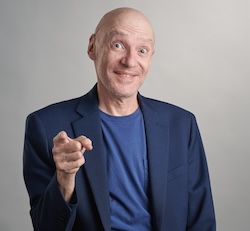
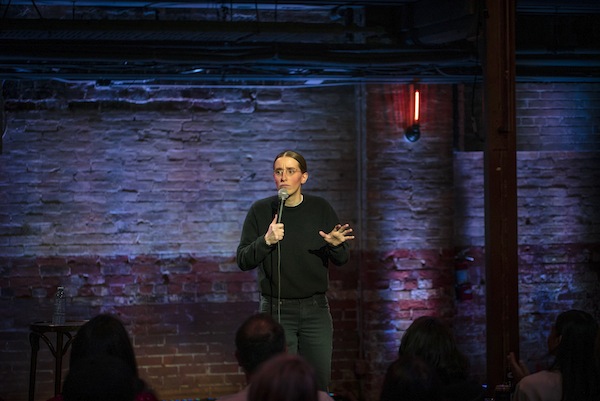
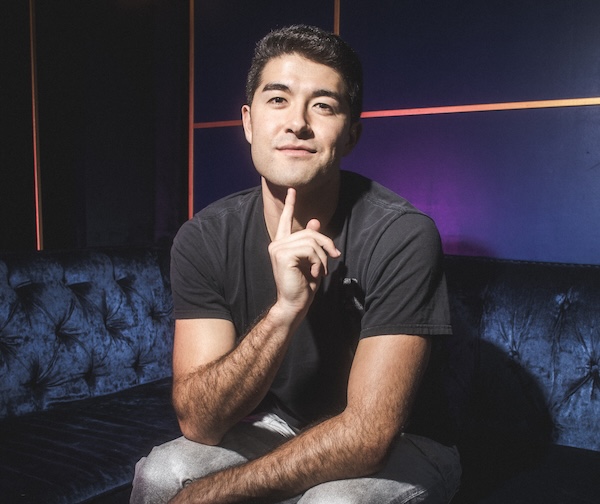
Jewpanese comedian Dylan Akira Adler performs Feb. 18-19 at Revue Stage. (photo from Jewpanese Project)

“Soy vey” and “mazel tofu” are just two of the word mashups created by Jewpanese comedian Dylan Akira Adler, who is coming to Vancouver’s Just for Laughs with his show Haus of Dy-Lan, Feb. 18-19 at Revue Stage. He will likely open for Atsuko Okatsuka’s Feb. 21 performances at Queen Elizabeth Theatre as well, also part of JFL, which runs Feb. 12-22.

Born in 1996, Dylan grew up in a predominantly white San Francisco neighbourhood, where both he and his identical twin brother thought they were Asian Buddhists, until his mom explained they were also Jewish, like their dad. 

Adler’s obaachan (Japanese grandmother) didn’t experience incarceration during the Second World War, but her uncle’s family was sent to Heart Mountain in Wyoming. At 14, Adler’s ojiichan (Japanese grandfather) had signed up to be a kamikaze pilot, but the war ended a month before he was old enough to enlist.

Adler’s mom was born in Tokyo, but, because of the air pollution, the family moved to California, where they grew carnations. Meanwhile, his dad was born in Los Angeles into a Polish and Ukrainian Jewish family that fled the 1800s pogroms. His parents met at University of California, Berkeley, “where Jews and Asians procreate to make kids who put on one-man shows about being biracial,” as Adler jokes.

Adler was interviewed for the Jewpanese Project in October 2022. At the time, he was a writer on James Corden’s show, where he also had his late-night stand-up debut. Since then, he has been touring as the opening act for Okatsuka, as well as with his own show. The Canadian tour of Haus of Dy-Lan includes stops in Toronto, Ottawa and Montreal. I caught up with Adler this month, in anticipation of his Vancouver visit.

CT: On Dec. 1, 2025, I dropped a 68-page report on the Jewpanese American experience, one finding of which was: “The two most common ways for Jewpanese couples to meet were through either academic settings or chance encounters, often with the help of mutual friends.” How does it feel to now have one of your most popular jokes backed by research?

DAA: It makes me feel very good and scholarly…. I just know a lot of other Asian and Jewish couples who met at UC Berkeley because my parents are friends with them. They’re like my secondary aunts and uncles and their half-Asian and -Jewish kids are like our cousins.

CT: How does your Jewpanese identity inform your comedy? And how has it evolved over time?

DAA: My Jewpanese identity definitely informs my comedy. I love talking about the difference between spending time with my mom’s family and my dad’s family. But I also love to subvert expectations. My mom and her family don’t behave like a typical “Japanese” family because they are very loud and crazy. 

CT: In your 2022 interview with me, you mentioned that you had yet to go to your ancestral homelands (Japan, Poland and Ukraine) and that you hadn’t been out of the United States at that point. Where are you now on that journey?

DAA: I’d never been out of the country until 2025 and, that year, I went to 20 different countries. It completely changed my life. I’ve officially caught the travel bug. This year, in April, I’m going to go to Japan with my family and meet relatives I’ve never met before. I’m truly so excited. We’re going to Kyoto, Osaka and Tokyo. I don’t have plans to go to Eastern Europe yet, but would absolutely love to.

CT: Tell me more about Haus of Dy-Lan. Who is this show for? What should we expect?

DAA: I will be performing parts of my solo show Haus of Dy-lan along with some newer material during this tour. There will absolutely be material about being half-Japanese and -Jewish. I love talking about my racial identity because some people are already trying to figure it out when I walk onstage, so it addresses that curiosity. In the audience, you can expect there will be Asians, mixed-race baddies, queers and some straight women who forced their boyfriend to come to the show.

CT: Atsuko Okatsuka, who is an incredibly hilarious Japanese-Taiwanese-American comedian, is a major mentor in your comedic career right now. What Jewish influence do you also have guiding you in your journey?

DAA: Atsuko is the absolute best. She is so brilliant and kind and I truly am so grateful to have her as a friend and mentor and even surrogate mother. When it comes to Jewish influences, I’ve always admired Joan Rivers, Chelsea Perretti and Rachel Bloom, to name a few. 

CT: Do you remember when you shared with me that you made contact with your Jewish ancestors, while on a healing psychedelic trip on bufo (toad venom)? Have you been in contact with them since? How is that work coming along? 

DAA: I was actually just thinking about that this morning. It’s true, in 2022, I did a toad venom psychedelic trip, and I woke up in a village in Eastern Europe and felt my ancestors’ inherited trauma but also their light and resilience. I haven’t done it since, and I am still on a healing journey for myself. But I’ve always been very interested in ancestors and how we are profoundly affected by people who we may have never met in our lifetime. I want to continue that work and figure out a way to incorporate it into a creative project in some way. 

For tickets to one of Adler’s JFL shows and/or for Okatsuka’s performances and those of other Jewish community members, go to jflvancouver.com. 

Carmel Tanaka is the creator of the Jewpanese Project, an international community initiative at the intersection of being Jewish and Japanese. Check out the archives of oral history interviews and a research report on the Jewpanese American experience at carmeltanaka.ca/jewpanese-project-archives. She is still collecting interviews from Jewpanese Canadians.

Granirer returns to Carnegie

From Oct.31 to Nov. 8, the Heart of the City Festival features more than 100 events – music, stories, poetry, theatre, ceremony, film, dance, readings, workshops, discussions, art talks, history walks and more – all rooted in Vancouver’s Downtown Eastside (DTES). Among the performers is award-winning counselor and stand-up comic David Granirer, founder of Stand Up for Mental Health, which teaches stand-up comedy to people with mental illness as a way of building confidence and fighting stigma. 

photo - Counselor and stand-up comic David Granirer will perform, with other comedians from Stand Up for Mental Health, on Nov. 5, as part of the Dowtown Eastside Heart of the City Festival
Counselor and stand-up comic David Granirer will perform, with other comedians from Stand Up for Mental Health, on Nov. 5, as part of the Dowtown Eastside Heart of the City Festival. (photo from Heart of the City Festival)

On Nov. 5, 4 p.m., at Carnegie Community Centre’s theatre, Granirer, with comedians from Stand Up for Mental Health, will look at the lighter side of taking meds, seeing counselors, getting diagnosed and surviving the mental health system.

The festival kicks off on Oct. 31 at Carnegie’s theatre with a Halloween event. Dress in costume, walk the red carpet, enter the costume contest to win a prize, and gear up for disco-ball dancing with DJ Maxi and crew spinning tunes. Hosted by Lance Lim of the Pigeon Den Art Collective, there will be masquerade magic and community fun for friends and families alike, refreshments provided.

Some other highlights in the upcoming festival are:

• Gerardo Avila’s theatrical performance Spirit Encounters celebrates Día de Muertos and features shadow puppetry, comedy, flamenco and Mexican dancing and music.

• Indigenous Cultural Exhibition with dancing, drumming and community, featuring Two-Spirit grass dancer Larissa Healey and Powwow dancer Pavel Desjarlais.

Finding My Own Voice, a new folk opera work-in-progress presentation by Beverly Dobrinsky.

• Theatre in the Raw presents staged readings of two award-winning plays from their Biennial One-Act Playwriting Contest.

For more about this year’s festival, visit heartofthecityfestival.com. 

– Courtesy Heart of the City Festival

Jacob Samuel’s new special

Jacob Samuel self-produced his newest comedy special, Big Talk. (Chelsey Stuyt Photography)

Jacob Samuel’s second comedy special, Big Talk, premiered on YouTube last month and already it has racked up more than 20,000 views. The Vancouver-based comedian filmed the 52-minute special in front of live audiences at the city’s China Cloud Studio. In addition to writing and performing, Samuel gets producing, directing and editing credits. 

Much of the material in Big Talk was worked out over five years, a period punctuated by Samuel’s winning a 2021 Juno Award for best comedy album for his first special, Horse Power. And that win was not the first time the comedian was recognized for his work.

At 25 years old, Samuel submitted some of his original single-panel cartoons to The New Yorker magazine, which published some of them – a notable achievement, especially at such a young age. Several other publications have featured his humorous illustrations, as well, including the Jewish Independent. He has published two books of single-panel cartoons.

Samuel has been performing stand-up for years – at clubs, on stages, television and radio, at festivals. He’s a regular on CBC Radio’s The Debaters.

His drive to perform started early in life.

“Honestly, I’m still trying to convince myself I can competently tell a joke,” he told the Independent. “Growing up, my parents and their friends revered clever comedians. I always felt that being funny was a difficult thing that people valued. As far as I can remember, I have always been driven to get up and talk in front of people even though I wasn’t naturally great at it – when I was young, I had some minor speech impediments.”

As for his gutsy New Yorker submissions, he said, “It seemed like a fun thing to try. I’ve always had a certain misplaced confidence about going after things … I’m not sure why. I think I was blessed with a certain level of obliviousness and an audacity to go for things that I found interesting/exciting.”

Samuel’s new special shows off his rapid delivery and finely honed comedic timing, and the material supports his affable relationship with the audience. The jokes in Big Talk run the gamut, covering the joys and challenges of welcoming a new puppy, the mental health benefits of knitting, the absurdity of the Honda Odyssey, being newly married (Big Talk’s jokes are “officially approved” by his spouse), and other very funny bits.

Being successful requires more than just comedic writing talent and good timing.

“Being a comedian now is like running a small business,” he said. “I have a manager now, but I still manage much of my booking, touring, and sometimes I even produce my own shows. So, I spend just as much time doing ‘comedy admin work’ as I do writing and performing material. You can’t really advance your career now by being exclusively an ‘artist.’ I maintain many comedy spreadsheets, which maybe sounds like an oxymoron.”

Even after all the commercial elements have been satisfied, there are still obstacles to confront. Being an artist who is driven to perform does not mean there are no pre-show jitters, Samuel shared. “The fact that people are coming to see me now actually makes me a bit nervous because I hope I’m as good as what they expect.”

Big Talk feels more personal than Samuel’s previous work, while also featuring plenty of material about everyday human struggles and absurdity.

“I still feel like my comedy is pretty observational but maybe I’m digging more into my personal life subconsciously now,” he acknowledged. “I think maybe I’m gravitating towards more personal material because that is what people tend to connect with more. Maybe I’m getting more inspired to do personal material because, as I get older, I think I’ve gotten a better sense of myself. I think it’s a natural part of maturing, to go from observing the world around to becoming more self-conscious. Having said that, I still love observational comedy. I think my favourite type of comedy weaves both together.”

The use of social media has its benefits, like building an audience, but it comes with costs, too. 

“The pressure to produce more content has grown exponentially…. Many of the comedians who are now gaining the most fans are just churning out content,” said Samuel. “So, I do feel more pressure to do that, to keep up, but I’m pretty good at keeping it to a reasonable level so as to not burn out. I need to make sure I’m still having fun writing and performing, so I limit how much I’m going to indulge those pressures.”

But he can’t completely avoid them, as social media has the power to make or break projects in this era.

“The benefits of social media are pretty enormous, in that you can gain an audience without having to go through any gatekeepers,” said Samuel. “The risk is that you start ‘creating for the algorithm only’ and start trying to make content based on what you think will go viral as opposed to what you find funny. Then I think you just end up sounding like other comedians who are doing the same.”

Asked about the potential impacts of artificial intelligence, Samuel said. “If you asked me this a year ago, I would say I was not at all afraid of AI. It seemed that it would write jokes that were very basic, crude and pretty unfunny. However, since then, it’s gotten a lot better. I think AI can be useful in comedy but I’m also pretty worried about it. I was playing around with AI a few weeks ago and it’s getting pretty good at writing comedy that is formulaic or follows a basic structure. I’ve heard of some other comedians using it to see if their idea is creative enough – if the AI can think of it, then it’s not. It could also be useful as a brainstorming tool. I think AI will change comedy, but I don’t think it will put comics out of business because people crave human connection. Will it make comedy worse or better? It could go either way.”

AI is not the only complexity these days.

“I don’t think any topics are beyond the pale … but some are a lot harder to make an audience laugh at than others,” said Samuel. “When people complain that certain topics should not be joked about, it’s often that the jokes they’ve heard about that topic just were not clever or nuanced enough. I think the more intense and heavier the world is, the more important comedy is…. Comedy is a great way to cope with uncertainty, but I’m also concerned about the increasing amount of comedy that is just feeding off of and confirming disinformation and catering to specific groups’ political views rather than challenging them.”

Asked about what it is like to be a Jew in comedy, particularly during the events of the last couple of years, Samuel said, “I’m not sure I have a great answer…. I don’t think it’s really impacted my career. It has impacted how I feel about being a Jewish performer. I do think that it’s more important now to talk and joke about being Jewish. I definitely feel like a form of antisemitism that was previously contained has now been unleashed in several forms. My only response to that as an individual is to find more ways to joke about being Jewish on stage and not to shy away from talking about being Jewish.”

Big Talk is dedicated to the memory of Samuel’s mother, who passed away in 2021.

“It probably wouldn’t surprise people to know that my mom was my biggest supporter,” he said. “I’m sure she would’ve become a full-time press agent for this special. When I published my second book of cartoons, in 2017, she managed to get a copy to the prime minister somehow (true story). Justin Trudeau sent me a signed letter about it – he was more popular then….

“My mom made a significant professional contribution to Canada’s Jewish community,” added Samuel. “She was the executive director of Toronto’s Jewish affordable housing agency for two decades and was very proud of her work and the impact it had on helping people access affordable housing.

“When I won the Juno Award, I was in the midst of dealing with my mom being very ill. It was the most difficult thing I’ve ever had to deal with. Although I don’t talk about it explicitly, I developed most of the material for this special in the wake of losing my mom. Building this act was something I could work on to process my grief. There’s also something about losing a family member that makes you want to take action in life. It definitely contributed towards my drive to produce this show as an actual comedy special and take the risk of self-producing and self-releasing it.”

Big Talk can be seen on YouTube, which is “the only place to watch [it,] unless someone reading this owns a streaming network and wants to make a deal,” Samuel said.

As for the near future, Samuel has another “special” to produce.

“My wife and I are expecting our first child very soon,” he shared. “So, I’m going on a hiatus from touring and performing for a few months. After that, I will probably be back on the local circuit, likely with some new material about how relaxing it is to have a new baby.” 

Bringing joy to people

Ira Pettle, middle, with actors Dave Francis and Cedar Lynn Dobbin. (photo from Ira Pettle)

Laugh Out LIVE! will be hitting the road in the fall. On the list of cities and towns it will be visiting are Pemberton, Squamish, North Vancouver and Bowen Island, with classes on the North Shore coming this winter.

Known as a children’s entertainer for the last 25 years, Ira Pettle began producing Laugh Out LIVE! in December 2021 in Whistler with funny woman and partner, Rebecca Mason.

“Comedy has always been on my radar. Laughter is the best medicine and it lights me up to bring joy to others. Being raised on SNL, In Living Color, and a countless number of comedy films, TV shows, actors and the like, I feel like I’ve always known this was one of the paths for me,” Pettle recently told the Jewish Independent.

Currently, Laugh Out LIVE! brings stand-up, improv and sketch comedy shows to packed houses at various venues in Whistler, including the Maury Young Arts Centre, Rainbow Theatre, Whistler Conference Centre, Dusty’s Bar & BBQ, and the Garibaldi Lift Co. Bar & Grill (GLC). Pettle performs in all three shows. 

The Marquee Variety Show is devoted to a mix of different comedic acts and can involve improv, sketch, musical comedy, film and parody. The Improv Battle pits teams against each other weekly “to claim unscripted victory,” and Stand-Up Standoff is a monthly competition where the best comics win $500 in prize money. There are also opportunities for writers, theatre technicians, stage managers and filmmakers on the show’s website. 

Pettle began his improv and sketch career at the Second City Conservatory program in Toronto but was drawn to comedy from an early age.

“As a kid, I was always drawn to and fascinated by comedy. Watching The Carol Burnett Show, and SCTV (Second City Television) with John Candy, Eugene Levy, Andrea Martin, Catherine O’Hara, Rick Moranis … those were the most influential comedy shows for me as a young, aspiring performer,” said Pettle, who lists Jerry Seinfeld, Mel Brooks, Gene Wilder, Adam Sandler and Bob Einstein as the Jewish comics he has been most influenced by.

Pettle has a master’s of education and has taught improv, acting and music to thousands of kids, teens and adults. In 2022, his debut children’s album, A Little Bit, co-written with Juno Award-winning singer/songwriter Norman Foote, was nominated for children’s artist of the year at the 2023 Western Canadian Music Awards. His next record is slated for release this winter.

Known as “DJ Ira” throughout the Sea-to-Sky Corridor, Pettle is a sought-after family entertainer. As a key player in the BC performing arts scene, he was named the 2019 Champion of Arts and Culture at the Whistler Excellence Awards, with another nomination at the 2023 awards.

“I discovered very early in my life that I was a performer,” he said. “An entertainer. I remember as a kid, the joy I felt bringing a smile to someone or soliciting a laugh. In those early days, it was my coming to the dinner table on all fours, pretending I was an ape, making my mom giggle, or going to the Blue Jays baseball game when I was 14 with my buddies and pretending to fall down the stadium stairs, getting 500 people sitting in the stands to simultaneously gasp.”

Today, when he’s not entertaining children or performing comedy, Pettle leads a number of improv, stand-up comedy, public speaking and presentation workshops. He uses improvisation as a tool to “release tension, awaken joy and return to the present moment.”

Many of the performers on his improv stage started out taking classes with him. 

Pettle grew up in Toronto and says that learning about Judaism was a huge turning point in his life. 

“Having been raised Reform, and being the grandchild of a Holocaust survivor, I was always told how important my Jewish roots were,” he shared. “But, because my family’s religious practices were very surface level, I was confused and became deeply confronted by what I was told versus what I was doing in my daily life as a ‘Jew’ and, through a series of divine interventions, became committed, for the first time, to seeking out a deeper understanding of my Jewish roots.”

Pettle eventually found out about the yeshivah Ohr Somayach and studied with them in Israel.

“I felt ready (and passionately interested) in making a clear choice on whether to declare myself Jewish definitively and pursue/develop a more conscious connection to Judaism, or allow my Jewish roots to remain as is, or simply fall by the wayside/disappear. I needed to dive deep into the learning at the source.”

Pettle’s connection to Judaism was affirmed and, with a renewed and more solid understanding of his cultural roots and heritage, he remains, he said, “very honoured to be Jewish.”

To contact Pettle regarding his work as a kids entertainer, go to irapettle.com. For Laugh Out LIVE! inquiries, contact him via laughoutlive.com. 

Cassandra (Cass) Freeman is a Vancouver improviser and journalist.

Heart of the City tribute

Actor Kieran Sequoia (Breaking Bad, Disney’s Night at the Museum) is one of the performers in The Keep It Raw Cabaret: A Tribute to Jay Hamburger, co-presented by the Heart of the City Festival and Theatre in the Raw on Nov. 9 at Russian Hall (photo by Katie Keaveny)

Guided by the theme “Threads of Connection,” the 21st annual Downtown Eastside Heart of the City Festival takes place Oct. 30-Nov. 10, with more than 100 events throughout the Downtown Eastside and online. Several members of the Jewish community are involved.

The festival opens Oct. 30, 2 p.m., at Carnegie Community Centre Theatre with co-founders Terry Hunter and Savannah Walling as they reflect on their 21-year history with the festival, express gratitude to fellow artists, residents and organizations, and “pass the paddle” to new leadership. Special guests include, among others, Bob Baker/S7aplek (Squamish Nation); Chinese-Canadian rap artist Gerry Sung (Scope G), who is also a cast member of Props Master’s Dream, which is part of the festival offerings; Pavel Rhyzlovsky (accordion) and Leonard Chokroun (violin), from Strathcona’s Ukrainian Hall; and grass dancers Larissa Healey and Pavel Desjarlais. 

Jewish community member Itai Erdal is the lighting designer for The Prop Master’s Dream, which takes place Nov. 2, 2 p.m. and 7 p.m., at Vancouver Playhouse (tickets: bit.ly/3B8rO0w).

This fusion opera produced by Vancouver Cantonese Opera is inspired by the true-life story of Wah-Kwan Gwan (1929-2000), a little-known Chinese opera performer and prop master born to a local Chinese father and Indigenous mother. The Cantonese Opera cast is joined by Sung and Haudenosaunee/Irish actress and singer Cheri Maracle, and features projections by filmmaker Anthony Lee.

photo - Counselor and stand-up comic David Granirer will be joined by comedians from Stand Up for Mental Health on Nov. 2 for a Heart of the City Festival show at Carnegie Theatre
Counselor and stand-up comic David Granirer will be joined by comedians from Stand Up for Mental Health on Nov. 2 for a Heart of the City Festival show at Carnegie Theatre. (photo from Heart of the City Festival)

Also on Nov. 2 – at Carnegie Theatre, 4 p.m. – is Funny Side Up: Stand Up for Mental Health. Counselor and stand-up comic David Granirer will be joined by comedians from Stand Up for Mental Health, to look at the lighter side of taking meds, seeing counselors, getting diagnosed and surviving the mental health system. Jewish community member Granirer’s Stand Up for Mental Health teaches stand-up comedy to people with mental illness. This event is one of the festival’s many free offerings.

On Nov. 9, 8 p.m., at Russian Hall, the festival honours Jewish community member Jay Hamburger, who died earlier this year. Hamburger was a beloved teacher, political activist, radio host and artistic director of Theatre in the Raw, which is co-presenting the event (tickets: bit.ly/4eqs3Cu).

The Keep It Raw Cabaret: A Tribute to Jay Hamburger features choral singers, stand-up comedy, staged theatrical surprises, a taste of Hamburger’s original poetry and writings, and more. Among the participants are Jewish community members Stephen Aberle and Hamburger’s son, Sylvan Hamburger.

The Heart of the City Festival is presented by Vancouver Moving Theatre in association with the Carnegie Community Centre and the Association of United Ukrainian Canadians and a host of community partners. The festival works with, for and about the Downtown Eastside community to carry forward the area community’s stories, ancestral memory, cultural traditions, lived experiences and artistic processes to illuminate pathways of resistance and resilience. For the full lineup and other information, visit heartofthecityfestival.com. 

– Courtesy Heart of the City

Laugh for good causes

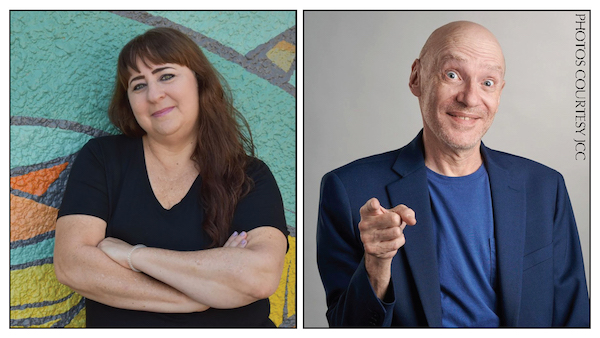
Helen Schneiderman headlines and David Granirer emcees the Stand Up for Mental Health show at the Jewish Community Centre of Greater Vancouver on June 1. (photos from JCC)

“There are many comedy shows out there, but not many like this one,” Kyle Berger told the Independent. “I keep saying that this will be the ‘feel-good comedy of the year,’ but it really will be. These comics will show us that we can laugh at just about anything and feel inspired at the same time – with all proceeds going to incredible causes. I can’t wait!”

Berger is the sports coordinator at the Jewish Community Centre of Greater Vancouver and the delegation head of JCC Maccabi. He is also a stand-up comic and a producer with Rise of the Comics. It is in all these capacities that he is participating in the Stand Up for Mental Health comedy show at the JCC on June 1, 7:30 p.m.

A joint fundraiser for the Stand Up for Mental Health (SMH) Comedy Society and JCC Maccabi Vancouver, Berger is producing the event, with the support of Stand Up for Mental Health, and will be performing a set himself. “It will be a huge honour for me to share the stage with this crew,” he said.

“This crew” includes SMH founder, counselor and comedian David Granirer.

“Stand Up for Mental Health is my program teaching stand-up comedy to people like myself with mental illnesses as a way of building confidence and fighting public stigma,” Granirer explained. “We have been around since 2004 and have trained approximately 300 comics and done hundreds of shows for government, corporations, the military, correctional facilities, medical schools, etc.”

photo - Kyle Berger
Kyle Berger (photo from JCC)

Berger attended one of those performances last year, in which SMH Comedy Society showcased “their students’ incredible talents, and I absolutely loved it,” he said. “I knew some of the SMH Comedy board members from working together in the comedy scene and made the connection right away. They are always looking for venues and new audiences and I knew I wanted to do something with comedy as a JCC Maccabi Games fundraiser, so inviting them to team up seemed like a no-brainer to me.”

Also performing next week will be Helen Schneiderman, who headlines the show.

Schneiderman’s comic career began in 2018, when she took a comedy course at Langara College that was taught by Granirer. She said she did it, “mainly to get off the couch. I didn’t expect to love it so much, nor to continue doing it after the class. But, once I got my first few laughs, I was hooked. Over the past couple of years, I’ve gotten more comfortable sharing my experiences and perspectives, and I try to remember to always have fun up there.”

Being able to do stand-up comedy has influenced how Schneiderman navigates through life.

“I now see the world through ‘funny glasses,’” she said. “Every interaction and experience has the potential to be a joke – not always a good joke, but a joke nonetheless. My day job is delivering leadership training and so I get to have a captive audience, even at work.”

In addition to her day job and other involvements, Schneiderman has been on the board of SMH Comedy Society for four years, and board president for the past two years.

“I’m involved with the organization because it’s doing really important work to tackle the stigma of mental health,” she said. “It’s a fantastic program, and I am in awe of the comics who share their stories with so much vulnerability and smart humour.”

People can find out more about SMH at smhsociety.org. Post-pandemic, the society is once again holding live classes and shows, as well as continuing to put on Zoom shows. The pandemic, said Granirer, “made me realize that, by being creative on Zoom, we could reach people all over the English-speaking world. It also made me realize how much people need to have in-person contact in order to maintain their mental health.”

One of the reasons SMH is teaming up with JCC Maccabi Vancouver for this show, he said, is “because they’re a great organization and exercise is crucial to maintaining good mental health.”

The decision to partner was easy for Berger.

“As the delegation head for Vancouver’s JCC Maccabi squad, I am always looking for ways to raise money for scholarships so that anyone who wants to participate in the JCC Maccabi Games experience can do so,” he said. “At the same time, producing and performing stand-up is another hobby and passion of mine, so it always makes sense to me to raise money through laughter. I always love the opportunity to work with other causes or charities, and this one was a match made in heaven.”

The June 1 Stand Up for Mental Health show is being presented by JCC Maccabi Vancouver and Life is Still Funny, which Berger described as “a group of local comedians who might be considered, well, not particularly young, but still quite young at heart! Made up of locals like Helen, Ray [Morrison], as well as recent Canada’s Got Talent contestant Syd Bosel. They are all involved with SMH Comedy Society.”

In addition to Schneiderman, Berger and Granirer, Morrison will perform, as will a few SMH students. Tickets are $20 (plus fees) and are available at eventbrite.ca. There will be a cash bar and a raffle draw at the show. Berger said half of the proceeds will go to SMH Comedy Society and half to JCC Maccabi Vancouver.

The comics rise again on Feb. 20

Kyle Berger, left, and Scotty Aceman, co-producers of Rise of the Comics. (photo from Rise of the Comics)

The outer limits of the laugh-o-meter will be tested on Feb. 20 at the Jewish Community Centre of Greater Vancouver’s Rothstein Theatre, when a group of Canada’s top funny people step on stage for A Night of Shticks & Giggles, presented by local comedy producer Rise of the Comics. This will be the third Shticks and Giggles show to raise money for the JCC Maccabi Games.

Headlining the event is Julie Kim, a two-time Canadian Comedy Award nominee for stand-up, who has performed at comedy festivals around the continent and appeared on CBC’s The Debaters and Laugh Out Loud. Her YouTube videos have amassed millions of views and, in 2018, she released her debut comedy album, Outside Voice.

Among other topics, Kim’s routine delves into modern parenting and various cultural issues, sometimes involving life seen from an Asian perspective. Yuk Yuk’s comedy club co-founder Mark Breslin called her “smart, funny, with enough self-awareness to deconstruct her life in a very sophisticated way.”

Other acts in the show, which Rise of the Comics describes as its “best line-up to date,” include Robert Peng, who bills himself as “an unemployed engineer who turned to stand-up comedy out of desperation”; New Zealander Sophia Johnson, “the one who keyed your car but probably shouldn’t have told you that”; Sean McDonnell, who Canadian comedy star Norm MacDonald has praised as “a fantastic talent”; and Brett Nikolic, a maven on Mountain Dew-flavoured weed.

Rise of the Comics is the brainchild of Vancouver stand-up comedian Scotty Aceman, who will also be on stage at Shticks & Giggles. Starting off as a weekly 30-minute program on Shaw Cable with the same name in 2015, the show has highlighted the work of many stand-up comedians who got their start on the local scene, such as Dino Archie and Ivan Decker, who has appeared on Late Night with Conan O’Brien.

Aceman, a University of British Columbia and B.C. Institute of Technology graduate, switched to comedy five years ago, after a 20-year stint in a sales job with Rogers in the corporate wireless phone department.

“Leaving the cellphone business after 20 years was a tough call,” he said. “But you have to chase your dreams. People would ask me, ‘What about my dignity and respect?’ I’d say dignity and respect went out the window the minute I had a Thursday morning bar mitzvah!”

In 2019, Aceman brought in Kyle Berger as co-producer of Rise of the Comics. Berger, sports coordinator at the JCCGV, will be the master of ceremonies for the Feb. 20 Shticks & Giggles.

Before joining the crew, Berger, in his role as JCC Maccabi Games delegation head, had hired Rise of the Comics for a fundraiser. He credits Aceman for allowing him to get his stand-up feet wet, with a debut performance at the Charqui Grill in Kitsilano in 2018.

“Stand-up was one of those things on my bucket list to do by the time I turned 40,” Berger told the Independent. “Scotty (and my then-girlfriend, now fiancée) were both big helpers in getting me up there on stage for a five-minute routine. My fiancée had had enough of me saying I was going to do it.”

Berger said, “Scotty’s reputation within the local comic community is a great asset. Nowadays, Rise of the Comics does all sorts of things, including parties in people’s living rooms. And, last year, we were hired by the Chutzpah! Festival to put on a show.”

Rise of the Comics currently works with a roster of more than 50 stand-up performers of all styles and experiences, and tailors its shows to any situation. They have created performances at such diverse venues as Hy’s Steak House, the Jericho Arts Centre and Ronald McDonald House, among others. Their gigs can cover everything from clean to dirty, social commentary to observational, but always, they say, with an emphasis on the funny.

Berger promises that he and fellow Shticks & Giggles comedians are likely to make mention, in one way or another, that their show is backed by the foundation created by Dr. Neil Pollock, a leading Vancouver male sexual health and circumcision expert, and his wife Michelle.

The show starts at 7:30 p.m. Tickets are $20 and can be purchased at m.bpt.me/event/4499277. For more information about Rise of the Comics, visit riseofthecomics.com.

Sam Margolis has written for the Globe and Mail, the National Post, UPI and MSNBC.

Loves making people laugh

Esther Povitsky performs at the Biltmore Cabaret on Feb. 22 as part of JFL NorthWest. (photo from JFL NorthWest)

Chicago-born comedian, actor and writer Esther Povitsky is one of several Jewish community members performing in the Just for Laughs NorthWest comedy festival, which takes place around Metro Vancouver Feb. 13-25. Her credits include being co-creator and star of the show Alone Together, a recurring role on Crazy Ex-Girlfriend, parts on programs such as Brooklyn 99 and Parks and Recreation, stand-up on The Late Late Show and Comedy Central, as well as host of the podcast Glowing Up. The Jewish Independent spoke with her in advance of her Feb. 22 show at the Biltmore Cabaret.

JI: When did you first start doing stand-up and what motivated you to do it?

EP: I love comedy. I love watching it, I love laughing and making people laugh. I also liked the idea of being able to do something creative where I only relied on myself.

JI: Before you started stand-up, what were you working toward education- or career-wise?

EP: I thought I was going to be a professional dancer, and majored in dance in college.

JI: What is it about performing that you most enjoy, in stand-up and in acting?

EP: Having an excuse to drink too much coffee.

JI: When did you move to Los Angeles, and was it for a specific job or more opportunity for work in general?

EP: I did not have any specific jobs lined up! I moved here to pursue stand-up and worked as a babysitter, worked at a gym, a juice bar, and other random gigs.

JI: You describe your stand-up as just being you. Being Jewish on your dad’s side, where/how/does Judaism, Jewish culture or community fit into that, or your comedy series?

EP: I feel that I was raised very culturally Jewish and it’s a big part of my personality and who I am.

JI: In an interview you talk positively about the immediacy of seeing what works and what doesn’t onstage. How do you handle the highs and lows of comedy?

EP: I try to keep busy, stay active, spend quality time with friends and family, do puzzles, watch TV. I try to really focus on doing as many “normal” things as possible.

Povitsky’s Vancouver show is 19+. For tickets and the JFL NorthWest lineup, visit jflnorthwest.com.

Hoffman’s new Crave special

Comedian Robby Hoffman in action. (photo from Bell Media)

Onstage, her energy is barely contained. She delivers lines in a clipped, almost angry fashion, sporting a tight bun and dark clothes. From contemplating pizza’s puzzling popularity, to sharing how one customs officer saw the fire in her that she never knew she had, to musing about what it’s like to be the seventh of 10 children, the fashion choices of antisemites, her sexual prowess and the cost of duotangs, Robby Hoffman is very funny. It is no wonder that Robby Hoffman: I’m Nervous is among the new stand-up comedy specials Bell Media released last month on Crave.

Produced with Just for Laughs and Counterfeit Pictures, Robby Hoffman: I’m Nervous was filmed last September at Toronto’s Longboat Hall during the JFL42 comedy festival.

“It’s huge deal. It was always a dream of mine to have a special, to have a TV special specifically, and to do an hour,” L.A.-based Hoffman told the Independent in a phone interview from London, England, where she was doing gigs, and visiting her girlfriend, writer and director Ally Pankiw, who was there for work. In contrast to her stage persona, Hoffman was relaxed and chatty on the phone.

A lot of comedians self-produce amazing albums or routines in smaller increments of time, said Hoffman, but, “for me, in stand-up, it always felt like the pinnacle to have an hour…. It was a really great way to cap off all the work I’ve been doing since I started, and, to have an hour that was sharp, it felt like everything. And to do it with Just for Laughs, name of all names, it was everything and it was incredibly fun.”

Hoffman’s numerous writing credits include The Chris Gethard Show on TruTV, which just wrapped up last year, episodes of PBS’s Odd Squad (which has won an Emmy for writing), and CBC’s Workin’ Moms and Baroness von Sketch Show. Most recently, she wrote for eight episodes of the series Mind Fudge. The Crave special allowed her to jump back into stand-up full-time.

“To be doing stand-up night after night until this hour was great. And I had never recorded the hour all at once,” she said. “I was doing it in small increments of 10-minute spots, 15-minute spots, seven-minute spots, so when I recorded the hour, it was the first time I had done that hour. I had to nail it, working through all the themes … making sure it all cohesively worked, even though I only really worked on it in portions. So, agonizing over the different portions coming together and working on the transitions from different themes so that they flowed.”

And they do flow, somehow, despite the vast diversity of topics. She said that (apparent) randomness is a signature of hers. She uses it both to take audiences off guard, but also as part of the joke. As well, she uses it to prepare people for what’s coming. For example, she drops hints along the way to warn the audience well in advance that she will be talking about the Holocaust, so that, when she gets there, they will have been with her for some time. Then, she said, when “we’re really in the thick of it together … I’ll reward you with hand-job material or whatever.”

While Hoffman said she doesn’t have any red lines when it comes to comedy, she said, “I talk through my own experiences only. I’m never going to step into a territory that I don’t feel is mine to speak about. But, beyond that…. If it’s something within my realm of what I could talk about and you tell me not to talk about it, that’s what I want to talk about more. For instance, the Holocaust is taboo, and some people are really offended by [jokes about] it. I feel, as a Jew, I’m reclaiming it and, if you’re telling me not to talk about it, I’m going to.”

She said, “I think that Jewish people can talk about Jewish experience. I think black folk can talk about black experience. I don’t think there’s anything off limits within the Jewish community for me. I do think everything is off limits to me with regards to communities I’m not a part of or I don’t have a firsthand experience. My comedy is very firsthand – I’m not doing observational humour that are these one-liners that can relate to anyone. My comedy is unique, such that I’m the only person who could say my comedy…. You hear of big comedians having writers – I don’t feel like that would work for me simply because my comedy is so personal. I’m the only person who can write my own comedy.”

And Hoffman’s background is unique, indeed. Born in Brooklyn, she grew up in Montreal, where her mother raised her and her nine siblings as a single parent, having divorced Hoffman’s father and having left the Chassidic community. Hoffman came out as lesbian in her late teens, left home at 18 and kept kosher until about the same time. She started her working career as an accountant.

“I wanted to have a Plan B,” she explained, “and I knew that the arts was always something free, that if I wanted to do it, I could do it on my own, and I could find a way that wasn’t with the structure of school to do it. But a financial backup plan was not something as easily attained for me, so I went into accounting. I thought, well, I can always get a good job.”

With a laptop from her employer and a regular paycheque every two weeks, Hoffman said, “I felt like a billionaire. I can’t even explain what it was like…. It was just the best to be able to sleep at night. Being worried about money is not something a lot of my peers thought about. I felt very alone in that sort of stuff.”

Once she “felt safe and comfortable,” that’s when her “creative juices went wild,” she said, and that’s when she discovered stand-up.

“I didn’t grow up with it, I wasn’t somebody who had the albums and all this stuff, but, once I knew about it, I immediately thought, ‘Oh, I feel like I could do that.’ I don’t mean to say, ‘Oh, it looks easy.’ A lot of people think they could do it – I felt like it was me. I felt, ‘Oh, my God.’ It felt like me already. And I got started immediately.”

Thinking that all stand-ups wrote, she started writing. Noting that it was only later that she realized how little comedians also write, she said, “I wrote a pilot and, even though it never got made, it did get me rep and it got me writing on other shows and it started my writing career. But it’s amazing how many times I’ve been the only active stand-up and writer in a writers’ room, which I didn’t know.”

Hoffman is driven by her love of the work.

“What’s so incredible about doing what I do and making a living doing what I do is … I never imagined it possible. I didn’t know these careers as careers. I didn’t know writing was even a thing, let alone what you got paid for a script, nothing like that. But waking up and not dreading where I go to work every day is still something I don’t take for granted.”

She started as a writer’s assistant. “I was first one in, would get there early, have my coffee, enjoy. I was last one out. I was never more motivated – and it’s still to this day. I would have to be literally on death’s door not to go into work because I love it so much.

“I’m also really lucky in that the shows that I do work on, I choose to work on them for a certain reason. There’s something about them that either gives me growth or it gives me a challenge or I really just love it. And it’s a pleasure to work creatively all day, every day, and to be valued for it.”

As for what lies ahead, Hoffman said, “I have so many goals. Think of the biggest goal you can imagine, and that’s what I have for myself. Yes, my own show. Yes, who knows, my own studio. I don’t even know where it could go. I just want to try for the biggest, best thing. I want my life to be as much as I want it to be. There’s no limit on wanting that for yourself. There shouldn’t be a limit on dreaming. I never want to lose that.

“I almost, for a second, lost my childhood curiosity and dreaming and spirit, for a second, because, when you are poor and you want to be normal, and you want to make ends meet, you do give up a lot, and I was never somebody who was able to dream. We weren’t told to dream, we weren’t taught to dream, we weren’t taught we could be anything we wanted to be, almost nothing. There was not a lot of encouragement, so I gave that all to myself…. I always want to tell myself to reach for the biggest, best, whatever that is, and that changes for everyone. Within my career and within my capabilities, I want to continue growing forever.”