A virtual community

With COVID-19, we now must connect online.

As the world continues to grapple with the coronavirus (COVID-19) pandemic, Jewish organizations across Metro Vancouver are finding new ways to connect with the public.

Last week, schools and most businesses and places of worship closed their doors to support the provincial government’s directives for new social-distancing policies. For everyone, this change has required the adoption of different ways to address daily needs, like shopping, study and religious practice. It has put increased demand on organizations and businesses to think out of the box when it comes to staying in touch with and supporting their membership, clients and connections. Here’s some of what the community is doing.

New lesson plans

Schools have shifted their classes to online attendance and are creating lesson plans that allow students to study virtually and independently. Some schools, like Richmond Jewish Day School, have sent out private communications to parents, outlining class schedules and continued services. Others are using their websites or other online services to keep families apprised and facilitate the learning curve that students, parents and teachers will inevitably face using the technology.

Students at Vancouver Talmud Torah will have independent study periods and be able to use social media to connect with their teachers and peers. The school is using Google Classroom for study plans and assignments and its website notes that students who are experiencing problems, need to discuss study plans or want to connect with other class members will be able to do so during the teacher’s virtual office hour each day. For families that don’t have a computer available, the school says students will be able to sign out a laptop to use at home (one laptop per family, as inventory is limited).

King David High School’s new multimedia program launched a week ago, and it uses Zoom video services, Moodle and Google Classroom to connect with at-home students. According to KDHS’s website, the school is doing its best to keep schedules and study periods the same as they were prior to the shutdown. It is using classes prior to Passover break (April 3) to test and refine the online structure.

Shalhevet Girls High School is also working hard to keep schedules standardized and reflective of the lesson plans it offers, and students can still connect with one another during the “lunch and shmooze” hour.

Take-out and online

On March 21, the City of Vancouver ordered all in-house restaurant service to cease. Restaurants that provide take-out and delivery services have been permitted to remain open.

Many of Vancouver’s kosher restaurants already provide take-out or delivery services to the public. Omnitsky Kosher, Nava Creative Kosher Cuisine and Maple Grill have enhanced their takeaway and catering services. Some provide service through the DoorDash online app or Uber. Most are urging customers to order with sufficient advance notice.

A staff person at Maple Grill said that ordering ahead is necessary for very large orders, “but we always have take-out between 4 and 8 p.m. for smaller orders.” Patrons should keep in mind that seating – even while waiting for orders – will be closed in all restaurants during this time.

Nava, which has a take-out restaurant at the Jewish Community Centre of Greater, has requested 24-to-48-hour notice on all orders. According to Susie Siegel, although the JCCGV is currently closed, customers can pick up orders by calling or emailing their order ahead of time. Sabra Kosher Bakery also will be open for take-out and larger Passover orders.

Other restaurants that have relied largely on their in-house service have found it challenging to meet the requirements of the city’s precautionary ban. Café FortyOne has announced that it has “made the difficult decision to temporarily close to protect the health and safety of customers and staff.”

Restaurants – including non-kosher establishments like Market Meats – are also accepting orders for Passover and most have cut-off dates for orders. While many kosher restaurants are scheduled to close on April 8 for the week of Passover, customers may wish to call ahead to confirm deadlines for orders and take-out during the current shutdown.

Meanwhile, stores are also struggling. Buchan’s Kerrisdale Stationery on West 41st Avenue, which has a selection of Judaica, among many other items, is now offering delivery service. And Olive and Wild, on Main Street, which offers a variety of Judaica, Passover items, art and home décor items, is transitioning its services to better serve customers who aren’t able to shop in-person.

Simon Zaidel, who co-owns Olive and Wild with his wife Bella, admitted that the COVID-19 alert hasn’t been easy. The owners have added an online store to their website and Zaidel said patrons can either pick up their orders, have them delivered or, for those outside the Lower Mainland, request delivery by Canada Post. He added that the store is currently providing a discount to offset any delivery costs.

Safeguarding the vulnerable

Jewish Family Services, like many organizations, is shifting its services to meet increased at-home demands. Kassidy Taylor, JFS marketing and communications manager, said the organization realizes that the current health concerns are financially and logistically difficult for people of all ages. Its Emergency Care Campaign allows families and individuals to reach out for help with food, deliveries and other social support.

“It is for anyone who needs a meal or grocery delivery, counseling, emotional support or just a friendly phone visit,” Taylor said. “We are trying to support as many people as possible.”

Taylor added that, for many seniors and other individuals, having to stay at home has cut them off from food banks and various resources that don’t deliver. “We are just trying to fill in the gaps as we can,” she said of JFS’s focus.

Individuals needing assistance can contact JFS through its website or by calling the agency’s hotline, 604-558-5719. As well, the emergency care program is in need of volunteers, and those wishing to donate are welcome to contact JFS as well. “There is a lot of need right now,” Taylor said.

On another front, healthcare facilities have been taking successive steps to address the impacts of the COVID-19 outbreak. On March 17, Vancouver Coastal Health announced the closure of all adult day centres, such as the L’Chaim Adult Care Centre at the JCCGV, in an effort to protect seniors and healthcare workers from the virus. Care workers are monitoring participants by phone to ensure that medications, food and support are coordinated as necessary through VCH case managers. More information is available by logging onto the Lower Mainland Adult Care Centre Association’s website and clicking on the appropriate care centre’s link.

As of March 17, Vancouver Coastal Health also restricted visitors to Louis Brier Home and Hospital, Weinberg Residence and other care homes to “compassionate visits” that meet specific limited guidelines for continued care and end-of-life support. VCH stresses the rules are a precautionary measure to keep patients and staff protected.

Most of the community’s organizations have instituted changes to address social distancing and other limitations brought about by the outbreak. Links to each one and an overview of temporary changes are accessible through the Jewish Federation of Greater Vancouver’s website.

Virtual davening

Few Jewish organizations have been as impacted by the call for social distancing than Vancouver’s religious institutions, which have been faced with myriad challenges. Restrictions on attendance (at press time, it was limited to 50 people) and other issues have forced synagogues to rethink how best to both continue regular religious services and provide social and educational support to their members, many of whom are seniors and required to stay at home. It’s also forced organizations across Metro Vancouver to change programs and services for Passover. Most religious institutions have already canceled or transitioned upcoming holiday celebrations to Zoom online services.

On March 21, rabbis from Vancouver Lower Mainland institutions issued a joint statement to congregants outlining the synagogues’ new guidelines for attendance. Many of the congregations have transitioned to online religious services via Zoom video to ensure that their members can stay connected, supported and engaged in religious life.

Congregations Schara Tzedeck, Beth Israel, Temple Sholom and others are providing daily and/or weekly minyanim online, along with classes and “meetings” throughout the day.

Most congregations are also working to fill the gap when it comes to much-needed social interactions for teens and younger members. Synagogues have found ways to both address concerns about halachah and ensure that members struggling with the impact of isolation are supported.

Both Schara Tzedeck and Beth Israel issued new cemetery guidelines earlier this week, calling on members and guests to adhere to practices that help safeguard both the participants and others who may be at risk from exposure to the virus. Cemetery facilities are closed to the general public. Burials are, in most cases, limited to family members, with some allowances to ensure that there will be enough attendees for a minyan so mourners can say Kaddish, and unveilings have been canceled to April 30 at least. Congregants and those interested should contact the synagogues in charge for more information on the revised guidelines.

Helping those in need

Many Jewish organizations are also finding ways to help those most vulnerable get financial aid if needed. The Hebrew Free Loan Association has announced that it will lend up to $2,000 to individuals or families impacted by loss of a job or other economic problems stemming from the coronavirus outbreak. Organizations, like Or Shalom, for example, are accepting donations within its congregation to help those struggling from illness or loss of income.

***

For the most comprehensive list of community resources and organizations, visit jewishvancouver.com/covid-19-updates.

Jan Lees articles and blog posts have been published in B’nai B’rith Magazine, Voices of Conservative and Masorti Judaism, Times of Israel, as well as a number of business, environmental and travel publications. Her blog can be found at multiculturaljew.polestarpassages.com.

Gymnast excels at her sport

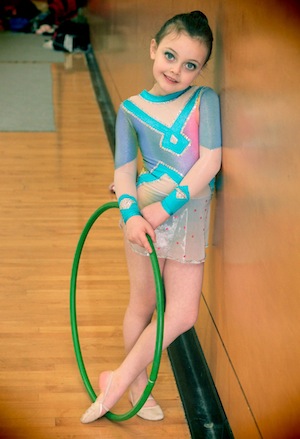
At the B.C. Winter Games in Fort St. John last month, Belle David received a silver medal for her ball routine and placed fourth all around. (photo from Danica David)

Local athlete Belle David started the year off with success after success after success in her chosen sport: rhythmic gymnastics.

The 10-year-old gymnast competes provincially at level 3B (ages 9-11). At the Queen of Hearts invitational competition in Vernon Jan. 24-26, she received an all around first place, a gold medal in the ball routine, a silver medal in the free routine and a bronze in rope. At the Olympia Cup in Burnaby Feb. 7-9, she received a bronze medal in rope, as well as a special award for Miss Dance Jr. And, at the B.C. Winter Games in Fort St. John Feb. 20-23, she received a silver medal for her ball routine and placed fourth all around.

“The most fun part of rhythmic gymnastics is the competitions,” Belle told the Independent in a recent interview. “The most difficult part of rhythmic gymnastics is the long practices.”

Admitting that she gets a little nervous when she competes, she said, “but I have a lot of practise with competitions and that practise helps my nerves.”

Belle trains three times a week for four hours each time at rhythmic gymnastics and she also trains in ballet twice a week. “Altogether, I train for rhythmic gymnastics over 14 hours a week (including mandatory ballet) and, combined with my other sports, I do 25 hours a week.”

The restrictions that have been implemented by various levels of government to try and manage the spread of COVID-19 have brought changes in that regimen, however.

“Belle’s coach has set an individual stretch and strengthen program for each athlete,” Belle’s mother, Danica David, told the Independent. “The coach has sent a video, 26 minutes long, of basic training exercises she expects the athletes to follow, along with detailed plans for each gymnast. Belle is expected to film herself training and send in the film to the coach to check in daily.

“Mentally, Belle is processing the end of the season coming early. When there are still three competitions left, it’s disappointing, after all her hard work, but she will keep practising at home. She said, ‘I feel like there’s nothing to do and nowhere to go.’”

In Grade 4 at David Oppenheimer Elementary School, Belle said her favourite subject is art. Interviewed before the pandemic forced closures, she said, “I socialize at school and at practice because I don’t have time for friends outside of practice. I mostly do my homework early in the morning before school.”

photo - Belle David at her first rhythmic gymnastics competition, at age 6
Belle David at her first rhythmic gymnastics competition, at age 6. (photo from Danica David)

Belle started dance classes at the Jewish Community Centre of Greater Vancouver when she was 4 years old and began taking rhythmic gymnastics classes when she was 5.

“I love sports,” she said. “I love baseball, dance, rikudei ’am [folk dances], swimming, skating and artistic gymnastics.”

She also makes time for community and cultural activities.

“I celebrate all the Jewish holidays and I keep Jewish traditions,” she said. “Our family hosts holiday parties and I enjoy PJ Library events and books.”

After three years performing in Goh Ballet’s The Nutcracker, Belle said, “I took a break this year to really enjoy Chanukah with my ima, abba, grandma, brother and friends. When I danced in The Nutcracker, sometimes I performed in two shows a day during the run and I missed the Chanukah fun. This year, we did Chanukah bowling, skating, the party bus and menorah parade and, as always, we lit candles and opened presents each night of Chanukah.”

Belle said she wears a red-string kabbalah bracelet on her left wrist, including in competitions, that her mom blesses.

Family is important to Belle and one of her ambitions centres around her grandparents in Israel.

“I have a short-term goal to learn the apparatus hoop,” she said. “I have a long-term goal of making it to the Grand Prix Holon.

“The Grand Prix Holon takes place in my home city (Holon) in Israel,” she explained. “I would like to compete for Canada or Israel. It’s an international competition and it’s across the street from my savta and saba’s apartment. All my family could come and see me compete. This is my dream.”

Belle’s family moved from Israel to Vancouver almost seven years ago, said her mother.

“I was born in Canada and her dad was born in Israel – we met in India,” David said. “Belle was born in Israel and she has a brother born in Canada, named Omri, he is 6 years old. Their father, Ofir, has never been able to move permanently to Canada because of the nature of his work but he visits often. We live in a multigenerational household in Vancouver with my mother, who was a former competitive athlete. She finds great joy in supporting her grandchildren to pursue athletics – it’s a family passion that skipped a generation. Belle and Omri have seven cousins in Israel and a large extended family that they miss very much.”

In Israel, David said they didn’t have access to activities like they have here. “In our town,” she said, “private country clubs dominated and we had no access without costly memberships. When we came to Canada, Belle was interested in trying everything, sports, arts, activities of all kinds, and, through the JCC and local community centres, it was affordable.

“Belle’s grandmother really encouraged rhythmic gymnastics, as she was involved in the sport herself as a teacher,” continued David. “Belle participated in a rhythmic gymnastics camp at age 5 and she was hooked. When I came to pick her up, her face was red and she looked exhausted. I expected her to want to quit but exactly the opposite – she loved the challenge. The coach had been a Russian-Israeli who spoke Hebrew and Belle felt right at home. She continued camp during the summer. In the fall, she was asked by a club to enter the competitive rhythmic gymnastic training stream.”

As the parent of athletes, David said her “biggest challenge has been being a witness to the highs and lows of the sport without holding any attachments to them. The same goes for their achievements. What Belle achieves is hers alone. It is her self-discipline and motivation to grow in sport that encourages us to support her in any way we can.

“The biggest joy for me,” said David, “is to see that Belle is a wonderful sister, modeling hard work and perseverance to her brother. Belle is self-determined: she chooses her goals and achieves them in her own time. She chose to sacrifice social time and other opportunities to train two years for the winter games. It wasn’t always easy on the family or her but she followed through. I admire her drive – when I was 10 years old, I couldn’t even keep my hamster alive.”

David described herself as “hopelessly non-competitive and uncoordinated” and, therefore, said it is hard for her “to truly invest in the competitive aspect of the sport. Judging and performance can alter from competition to competition and a place on the podium is never guaranteed.

“I find my niche in the esthetic aspect of the sport,” she said, “and support Belle by adding Swarovski crystals to her bodysuits and finding the most complimentary apparatus. These athletes place a lot of pressure on themselves and, after the long hours and hard work, people question why we subject our children to the intensity of the competitive sport. In my opinion, most of the kids at this level of sport are progressing from an inner motivation and they have cultivated a sense of belonging through sport.”

We must continue to ask

Probably every action or event has unintended consequences. The more significant the initial act, the more dramatic the consequences, for better or worse.

Significant historical events illustrate a few of these. Income tax, for example, was an outcome of the First World War, which was, like all wars of course, cataclysmic to individuals and countries.

The Depression resulted, again among many other things, in public acceptance of vast government interventions into the economy through programs like the New Deal in the United States, and similar initiatives in Canada and elsewhere.

The Second World War, one of the worst human catastrophes ever known, was accompanied by a universe of social and economic changes, including the effective nationalization of critical industries to support the war effort. That period of social upheaval – during which personnel of all races served side by side and women entered the workforce in large numbers to fill the places of men at war – contained the seeds of social revolutions to follow, including the civil rights movement and the transformation of the role of women in society. The war was also a direct antecedent to formal decolonization in the developing world.

In other words, some terrible events can result in transformative consequences. This is not to play the ethics game and ask, if we could reverse history and prevent this act, would we do so, knowing that some positive byproducts would likewise be erased. It is merely to draw attention to the consequential moment in which we find ourselves.

The terror attacks of Sept. 11, 2001, are perhaps the freshest parallel for most of the current generation. On that day, we understood that everything had changed but we could only imagine in what ways. Wars would soon begin that continue to this day and, closer to home, social schisms between groups, including the rise of Islamophobia, emerged.

Political debates shifted dramatically to erstwhile largely dormant issues like government surveillance, balancing collective security with individual rights, the use of enhanced interrogation – torture, that is – and the thing that affects most of us most obviously: massive changes in airport security processes.

Since then, we have seen the rise of social and economic inequality and the attendant antisemitism and xenophobia it has engendered. Such shocks to the system produce reverberating impacts, often felt by more vulnerable and marginalized groups, Jews included, and we know that the consequences of any one shock can compound the waves of others in ways expected and unexpected.

We have plenty to worry about right now, with the immediacy of the pandemic. But we should also make time to consider potential unintended outcomes from this experience.

We have seen already, as we mentioned here a very long week ago, a vast outpouring of social unity. On social media, Vancouverites are coming together in mutual support. At 7 p.m. each night, for example, many are joining together to cheer frontline healthcare workers in a small but meaningful act of solidarity and hope. Most people, with notable exceptions that are being rightly called out, are responding appropriately to the advice of experts.

But consider the small, perhaps less obvious ways this experience could impact us. When it’s all over, will we be more reticent to shake hands, to hug? Will we be more attuned to the reality that we are each a part of an inseparable collective humanity, regardless of human-created boundaries?

More substantively, might we see the early reports of decreased air pollution due to this situation continue for the weeks or months this endures and realize that substantive progress on climate change is possible if we recognize the difference between essential and non-essential carbon-consuming activities? Could the once-unimaginable international coordination we are witnessing rekindle our collective hope in unified action for any number of good causes? If we can come together against a threat to us all, could world peace be less remote a dream than we might think?

Conversely, we should be cognizant, as well, that the vast power of the state – our state, every state – to effectively shut down entire societies and economies represents a unique global event. It is done in this case, of course, for the right reasons. But could a less-than-benevolent leader, tasting this level of control, envision ways to use it for their own purposes and against the common good? Might one use coronavirus as justification to delay or cancel elections?

There are a great number of question marks in this week’s editorial. The point here is not to play Nostradamus but to remind ourselves to question. At Passover, in whatever virtual or altered form we celebrate this year, we will ask questions for which we know the answers, and have been pondering for millennia. As this unprecedented time of humankind proceeds, we should remember to continue asking. How will this experience change us? What good might come of it? How can we ameliorate the terrible things that seem to be nearing their peak? Who might be trying to exploit this situation for ill and who is modeling the best of human kindness?

For more information and updates from the B.C. Centre for Disease Control and Canada’s public health authorities, visit covid-19.bccdc.ca and canada.ca/en/public-health/services/diseases/2019-novel-coronavirus-infection/prevention-risks.html, respectively.

Nature’s riot of colour

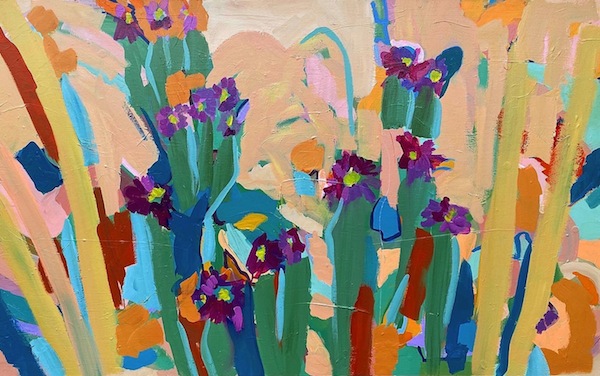
“Desert Spring” by Jessica Ruth Freedman.

A harsh critique early in her career didn’t stop Victoria-based Jessica Ruth Freedman from doing what she loves – painting – and becoming a successful artist.

“I was born in Montreal, and then my brother and I were whisked away to Kibbutz Ein Dor in the Galilee,” Freedman told the Independent. “After a few years there, we returned to reside in Calgary. I attended what was then called the Calgary Hebrew School-Talmud Torah. I was filled with the love for Jewish lifecycle events, food, and being part of a community. Apart from a fabulous school experience, one episode of failing an art assignment in kindergarten stands out. We were told to pick a rock and paint it like a ladybug. Creatively, I painted it black on red, rather than red on black, so that the white dots would stand out better. I sadly was singled out as an art failure in front of the whole class!

photo - Jessica Ruth Freedman was to participate next month in the Art Vancouver fair, which has been postponed
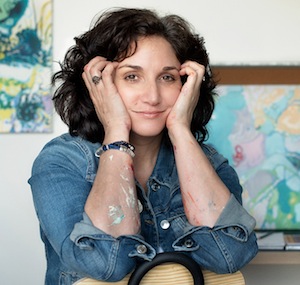
Jessica Ruth Freedman was to participate next month in the Art Vancouver fair, which has been postponed. (photo from Jessica Ruth Freedman)

“Fast forward a few years, a career as a contemporary dancer, yoga teacher and accountant, [then] I returned to my love of painting,” said Freedman, who has a bachelor of arts, with a major in dance and a minor in fine arts, from Simon Fraser University. “At this time, I had moved to Victoria to chase the warmer weather and, after a few holidays in nearby Hawaii, I was hooked on representing the juxtaposition of botanicals versus the urban in my artwork.”

Freedman is one of the artists participating in Art Vancouver, which has been postponed from its scheduled dates, April 16-19, because of COVID-19.

“These days, the traditional way of selling art through a gallery is changing,” she said. “Many galleries are shutting their doors due to increasing rents and a growing online marketplace. Art fairs give individual artists an opportunity to connect directly with new collectors. I also love the communal spirit of the artists working and showing together. There is a lot of sharing of process and information that goes on at these types of events. Since I live on the West Coast, Art Vancouver is the best art fair to participate in, and Vancouverites are a knowledgeable art bunch.”

She said she likes to create fresh work for each art fair. “I consider carefully the city, people, environment and sizes of artwork,” she said. “At this Art Vancouver, I will be debuting some non-traditional materials in my paintings, all while keeping the abstract botanical theme. My aim is to always create work that uplifts and inspires, and I attempt to do this through colour, theme and design.”

Freedman works in acrylic, ink and mixed media. She has exhibited internationally and her work is in private and public collections around the world. On her website, she notes, “My journey through life can only be described as an artistic DIY.” She says she “was always the child who wanted to be left alone to explore and discover” and yet that it is her “path in life to share my art to celebrate connection, serenity and humour and to share this journey together.”

“Many artists will agree that one needs to look inward to find the source of creation,” Freedman explained of her need for both solitude and community. “Even realist painters rely on an internal compass based on technique and free expression. As a Jewish person, I honour the spirit of creation within me, and I also pay tribute to the concept of tikkun olam, the repair of the world. I feel fortunate to explore the creative side of myself for a living, but I also feel it’s necessary to do good work in the world. This might mean volunteering for Jewish events, donating my paintings to charity auctions, or just being a positive person with a solution-focused outlook.”

For Jewish community members who come to see her work at Art Vancouver, the dates for which will be released in the near future, Freedman said, “Surprisingly, a fair amount of Hebrew – my first language – appears in my paintings. If readers come visit my booth, I’ll look forward to pointing it out!”

Though she paints the natural world, Freedman noted a certain irony – she is not very good at caring for actual plants. “I am lucky that I can send my husband out to purchase plants – I paint them and he cares for them,” she said. “I am mostly fascinated by the riot of colour, of chaos, that Hashem has let loose in the natural world. The process of growth and decay, while natural, is obviously hard on us humans but is a natural part of life. I am also very interested in urban design that incorporates the natural world in ways that increase sustainability, beauty, communication and wonder.”

For more information on Freedman, visit jessicaruthfreedman.com. For more on Art Vancouver, go to artvancouver.net.

NCJWC Vancouver plans, learns, noshes and welcomes newcomers

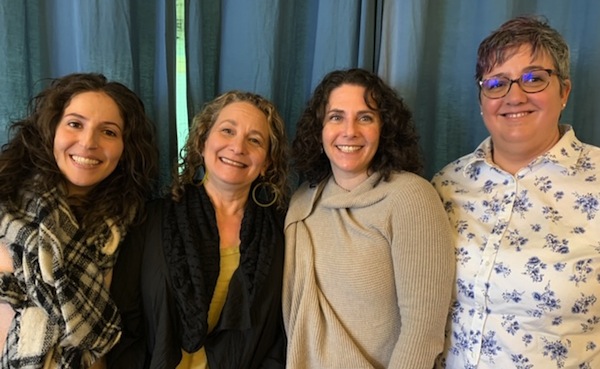
Books for Kids volunteers at NCJWC Vancouver’s 96th AGM, left to right: Jodi Seidelman, Rhea Lazar, Gail Gumprich and Tanya Hebron. (photo from NCJWC Vancouver)

On International Women’s Day, March 8, National Council of Jewish Women of Canada, Vancouver section, planned, learned, noshed and welcomed newcomers.

Sunshine was all around the room at NCJWC Vancouver’s 96th annual general meeting, which took place at the Jewish Community Centre of Greater Vancouver in the Snider Senior Lounge.

Members were welcomed by president Catherine (Cate) Stoller and the new board was installed by Shirley Hyman, Limmud Vancouver program chair and longtime volunteer for NCJWC.

The new executive board is Stoller (president), Fran Ritch (treasurer), Jackie Krystal (co-treasurer), Linda Arato (recording secretary), Anne Lerner (vice-president, social action), Ricki Mintz (vice-president, engagement), Marnie Weinstein (vice-president, marketing and administration) and Rochelle Garfinkel (member-at-large). Appointed board members are Rhea Lazar (chair, Books for Kids program) and Sandy Hazan, Sarah Morel Shaffer and Jane Stoller (co-chairs, Operation Dressup).

After the AGM, Anna-Mae Wiesenthal, a Jewish history teacher at King David High School and a PhD student in Holocaust studies, gave a presentation on the “othering” of indigenous peoples in Canada during the settler colonial period and of Jews in Germany during the Holocaust.

Stressing the strong connection between NCJWC’s social action in the Jewish and non-Jewish communities in British Columbia, council’s advocacy nationally against antisemitism, its support for family services in Israel and its international role supporting human rights, Cate Stoller cheered the passing of the baton between generations. For more information about the Vancouver section of NCJWC, visit ncjwvancouver.org.

Writing for Israel at UN

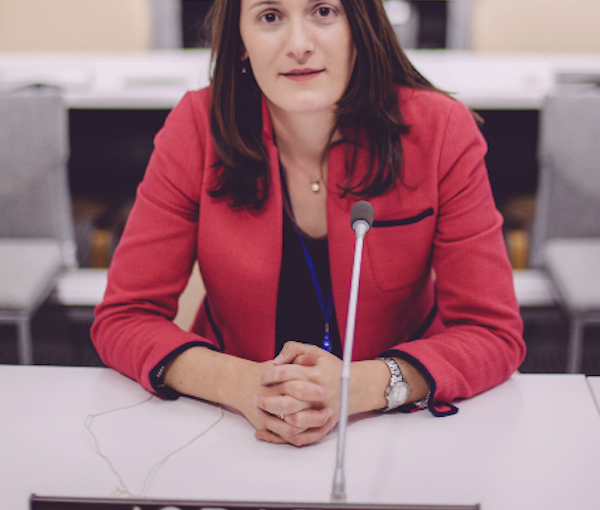
Aviva Klompas recently published the book Speaking for Israel: A Speechwriter Battles Anti-Israel Opinions at the United Nations. (photo from Aviva Klompas)

Aviva Klompas came close to writing a declaration of war. In early 2013, after an Israeli post was fired upon by Syria – one of a number of attacks – Klompas was tasked with penning a condemnation that would be submitted to the United Nations.

Still relatively new as director of speechwriting for Israel’s Permanent Mission to the UN in New York City, she recalled the criticism she received: “Be more direct. Be more assertive about things,” she was told. “I thought to myself, ‘channel outrage.’ I tried to do so. I wrote this very stern letter, and I took it to the ambassador to review.”

Klompas, who spoke with the Independent recently, said she then learned the art of diplomacy, and how words might set off an international firestorm.

“To be clear,” Ambassador Ron Prosor, then Israel’s permanent representative to the UN, told her, “you don’t have any authority to declare war.” And it was off to a rewrite.

Thankfully, there weren’t any other close calls, but there are many other fascinating stories – many of which Klompas has brought to light in Speaking for Israel: A Speechwriter Battles Anti-Israel Opinions at the United Nations (Skyhorse, 2019). The book is a candid examination of how the Israeli delegation – and Israel as a whole – is perceived and treated in the international body.

image - Speaking for Israel book coverDuring Klompas’s time at the UN, several major events occurred, including but not limited to the Iran deal, countless anti-Israel resolutions, Palestinians’ bid to join the International Criminal Court, the kidnapping and murder of three Israeli teenagers, and 50 days of war between Israel and Hamas in Gaza. She wrote the book, she said, to show the tireless work of those who advocate for the Jewish state and who rarely get their due.

“It always feels like it is an uphill battle by the nature of the bias at the UN,” she said. “There are people who show up every single day and never say, ‘Why are we doing this? We should leave the UN.’ I’ve never had a single colleague make that suggestion. They came to work and did the job. I think, it’s a little bit my story, but it’s really our story.”

Klompas was director of speechwriting from 2013 to 2015.

“It’s very few people that make the headlines – the ambassador, maybe the deputy ambassador, maybe the foreign minister – but what about everyone else that is doing it day in and day out?” she asked.

About her work, the Toronto native said it advanced Israel’s policies and informed public opinion. Being successful at it, she said, required overcoming some challenges. For one, there was a culture clash.

“Certainly, Israelis are much more direct in their feedback, which is for better or for worse. At first, it is startling, but then you get to understand that it’s not personal,” she said.

Learning how to write in someone else’s voice was difficult, too. Prosor has “a very distinct style,” she said, describing him as “extremely articulate, funny, charming and intelligent. To be able to write for somebody like that takes time.”

In addition, Prosor took a different approach to diplomacy, when “so many speeches can be dry and not entirely lively,” said Klompas. “He’d be all too happy to break out into song in the middle of a speech, whether it be a song about African nations, which got him a standing ovation from some of the African nations in the General Assembly, [or] he would sing John Lennon’s ‘Imagine.’ In a speech about women, he sang Aretha Franklin’s ‘Respect.’”

Klompas gave him the nickname “the Singing Diplomat.”

“Ambassador Prosor felt it was very important to be heard and, to be heard, you have to be different,” she explained. “He knew he had to capture attention to get people to listen.”

In the beginning, she would have to write up to 20 drafts of a speech before she got a sense of the ambassador’s voice and style. Sometimes, there wasn’t much time to tweak.

“It’s pretty stressful,” she said. “You can get a phone call any time of day or night, weekend, and be told the Security Council is convening a special session, come down to the office, we have to get writing. You could have a couple of days’ notice or a couple of hours’ notice. And emergency sessions tend to get a lot of publicity.”

Klompas, who is now associate vice-president of Israel and global Jewish citizenship at Combined Jewish Philanthropies in Boston, said there were poignant takeaways from her job as a speechwriter.

“You can’t be easily deterred by situations that seem unfair or unreasonable. You need a courage of conviction to deflect the constant attacks and brush aside the fact that systems and processes aren’t as simple as one might hope,” she said. “I’d say that my experience gave me a greater sense of what happens behind the scenes in international diplomacy, and the ways in which Israel is working to find equality in the family of nations.”

Dave Gordon is a Toronto-based freelance writer whose work has appeared in more than 100 publications around the world.

Baking under quarantine

These “quarantini” cookies were baked by Lynne Altow and her aunt, Alexandra Altow. When Queen’s University closed earlier this month, Lynne stayed at her uncle David and aunt Alexandra’s house in Toronto on her way home to Vancouver, where her parents, Lisa and Andrew Altow, and grandparents, Bill and Debby Altow, live. Debby shared this photo with the Independent.

Beauty of spring in Israel

Spring. Every year, it returns like a miracle and Israel is carpeted with wildflowers. There are nearly 3,000 types of wild plants in this tiny land, a wonderful profusion, among the most abundant on earth. Israel boasts a variety of different ecological systems – deserts and marshes, high mountains, dense forests and open fields, with wildflowers to suit each habitat.

Wildflowers are protected in Israel and nature reserves prohibit the picking of any flowers, even the most common, which helps them to propagate over wider areas. In turn, this brings the sunbirds, which feast on their nectar.

The Song of Songs, which we read every Passover, is a most beautiful love poem. King Solomon wrote it as a dialogue between a young shepherd and his beloved: “Rise up, my love, my fair one and come away / For lo, the winter is past / The rain is over and gone / The flowers appear on the earth / The time of singing is come / And the voice of the turtle is heard in the land.”

The flowers he refers to, nitzanim, still carpet the fields – shiny red poppies flaunting scarlet beauty in the grass.

In Jerusalem Forest, delicate cyclamens bloom in the crevices between the rocks. Called Solomon’s Crown (in Hebrew), they lift their pink, cream or lilac heads on slender stalks. Clumps of wild violets, the dew shimmering like diamonds, add their touch of magic.

Israel’s rainy season, mid-October to late March, leaves a bequest of green. Sharon Valley is dotted with tulips and narcissus. “I am the rose of Sharon, a lily of the valleys” – it is believed that King Solomon was referring to the magnificent black tulips of the Galilee.

In spring, even the weeds in Israel are pretty – the milk vetch, which is a thistle, adds purple blooms to the roadside. The rockrose is abundant in forest glades and the orange ranunculus bursts into bloom. Like its velvety cousin, the anemone, it is a protected wildflower in Israel.

The perfume of daffodils – which suffused the winter – still wafts on the breeze and the white, cream, yellow and blue noses of lupins are pushing through the soil. Oleanders are in bud, growing wild by the banks of the River Jordan and near streams in Galilee, promising a burst of summer beauty. And the blue statica reminds us that we, too, have a Mediterranean coast like the famed Riviera. This lovely sea plant flowers from mid-spring to mid-summer, when its corolla drops off and only the sepal remains.

Who says Israel has almost no natural resources? When you see the splendour in the grass of the land’s spring glory, the wildflowers glowing like jewels, you’ll echo the poet’s words: “Had I but two loaves of bread / I would sell one of them / And buy white hyacinths to feed my soul.”

Dvora Waysman is a Jerusalem-based author. She has written 14 books, including The Pomegranate Pendant, which was made into a movie, and her latest novella, Searching for Sarah. She can be contacted at dwaysman@gmail.com or through her blog dvorawaysman.com.

בעידן הקורונה

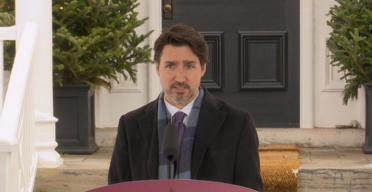
ראש הממשלה, ג’סטין טרודו

הממשלה הקנדית מגבירה מאמצים כדי למנוע את התפשטות נגיף הקורונה שמשפיע קשות על החיים כאן. ראש הממשלה, ג’סטין טרודו קרא שוב לקנדים שנמצאים בחו”ל לחזור הביתה לפני שיהיה מאוחר מדי. זאת כיוון שקנדה סגרה את הגבולות שלה כמו מדינות אחרות. בעשרים ואחד בחודש נסגר הגבול בין קנדה לארצות הברית, לאחר תיאום ממושך עם הממשל האמריקני. הגבול נסגר בשלב זה לחודש ימים ומעתה רק סחורות יכלו לעבור בין שתי המדינות השכנות.

קרוב לשלושה מיליון קנדים חיים כיום מחוץ למדינה ולא ידוע כמה מהם מעוניינים לחזור הביתה. טרודו מזכיר להם שוב לחזור לקנדה כל עוד אפשר כאשר חלון האפשרויות הולך ונסגר. למי שמתקשה כספית לרכוש כרטיס טיסה – הממשלה מציעה הלוואות של עד חמשת אלפים דולר לעזור להם. הקריאה להחזיר את הקנדים נשמעת בקול רם לאור הגידול המשמעותי במספר החולים והמתים בעולם, מווירוס הקורונה. בקנדה מספר החולים כבר חצה את השניים עשר אלף.

טרודו אומר לקנדים: “אם אתם בחו”ל, הגיע הזמן שלכם לשוב הביתה. אם רק הגעתם, עליכם לבודד את עצמכם למשך שבועיים. ולבסוף כל הקנדים, עד כמה שניתן, צריכים להישאר בבית. ביחס לאזרחי קנדה שנמצאים כעת מחוץ למדינה אני יודע שהחדשות האלו יעוררו חששות”.

כחלק מהמגבלות שהטילה קנדה בכדי להיאבק בהתפשטות וירוס הקורונה, הוחלט שכל מי שמרגיש סימפטומים הקשורים לנגיף הקוביד-תשעה עשר, לא יוכל להיכנס לקנדה. בנוסף, חברות התעופה הונחו למנוע כניסה ועלייה למטוס של כל מטייל שנראה כי סובל מסימפטומים של הנגיף.

בד בבד, ראש הממשלה טרודו אמר כי הממשלה בקנדה תתמוך באזרחים קנדיים שנמצאים כעת בחו”ל באמצעות תכנית מיוחדת שתכסה את העלויות של החזרתם לקנדה, או שתשלם על הצרכים הבסיסיים של אזרחים קנדיים בזמן שהם ממתינים לשוב ארצה.

ראש הממשלה טרודו הדגיש כי הממשלה הפדרלית בוחנת צעדים נוספים למניעת ההתפשטות, ובין היתר שוקלת אמצעים קיצוניים יותר כמו החלת חובה אזרחית לבידוד עצמי. טרודו: “נקטנו במספר צעדים עוצמתיים ואנחנו לא מסירים אף אופציה מהשולחן. אנחנו בוחנים באופן יומי את הצעדים הבאים שאנחנו עלולים לקחת או שלא כדאי שניקח, והשיחות בנושאים אלה נמשכות”. טרודו עצמו היה בבידוד בביתו באוטווה הבירה לאחר שאשתו סופיה טרודו לקתה בקורונה, לאחר שביקרה בבית קנדה בלונדון בריטניה.

בין ארה”ב לבין קנדה יש את אחת ממערכות הסחר הבילטרליות הגדולות ביותר בעולם והכלכלות שלהן שזורות זו בזו. הגבלה קפדנית על תנועה בין הגבולות תיצור בעיות משמעותיות עבור תעשיית הרכב, כמו גם להובלת מזון ותרופות. לדברי נשיא ארה”ב, דונלד טראמפ, סגירת הגבול בין קנדה לארה”ב בהסכמה הדדית ובאופן זמני לתנועה לא חיונית, לא תשפיע על המסחר בין שתי המדינות. טרודו הוסיף: “הממשלות שלנו מכירות בחשיבות המכרעת לשמירה על קווי האספקה בין שתי המדינות, המבטיחים שמזון, דלק ותרופות מצילות חיים יגיעו לאנשים החיים משני צדי הגבול. קווי האספקה, כולל משאיות עם סחורות, לא יושפעו מהצעדים החדשים”.

טרודו שחשף חבילת סיוע למשק, לעסקים, גופים קטנים ולמרבית העובדים שהופכים למובטלים, בגובה של יותר משמונים ושניים מיליארד דולר. סכום הסיוע צפוי לגדול משמעותית ככל שהמשבר הבריאותי והפיננסי ימשכו. כבר ידוע על יותר מחצי מיליון תושבים שפנו לקבל דמי אבטלה, לאחר שאיבדו את מקום עבודתם. צפוי שגם מספר המובטלים יגדל משמעותית לאור משבר הקורונה, כאשר המדינה הולכת ונסגרת לכל פעילות.

Family history informs his art

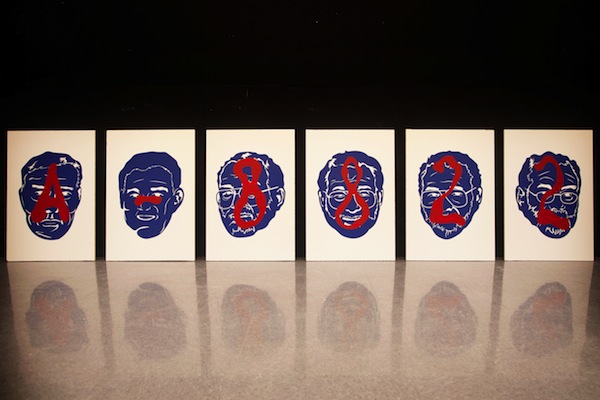
Much of artist Seth Book’s work has been influenced by his maternal grandfather, who was a Holocaust survivor, including “A Series I Don’t Want to Continue” – “One work to symbolize each character tattooed on his arm, and each million Jewish people that were massacred,” explained Book. (photo from Seth Book)

“My art began as solely for the enjoyment of creating work that was esthetically pleasing, but it has since changed to serve a didactic purpose and to provide awareness to social issues and histories that are important to me and my family,” Seth Book told the Independent. “A significant part of my work is to keep the legacy of my grandfather, survivors, and Jewish history alive.”

Book is a member of the third generation. “My mother’s father was a Holocaust survivor, originally from Romania. He went through a few camps, Auschwitz being one of them. Since seventh grade, I have completed a significant amount of research on his story, directly with him while he was alive, as well as after his passing, and, like many other survivors, he had an unbelievable journey,” explained Book, whose work will be on display at Art Vancouver April 16-19, in the unlikely event that the spread of COVID-19 is under control by then and the fair is allowed to take place.

“His presence in my early life has been extremely impactful on the way I live and see the world,” said Book of his grandfather, “and this is what has influenced my art. I truly believe that, in school, work and life in general, I have gotten my tenacity, conscientiousness and resilience from my zaide. As I learned more about his life and what he fought so hard to build for my family, he became a strong source of motivation and drive to succeed in my life. I still uncover bits and pieces about his life after the Holocaust.”

While his art for the past few years has been primarily concerned with his grandfather, the Holocaust, survivors in general, and present-day antisemitism, Book said the past year has been “transformational.”

“My connection to my grandfather allowed me to begin my work at this starting point relative to my own history,” he said, “but it has since expanded to include broader focuses, such as the current generation living on the legacies of survivors, as well as generational trauma and current events affecting the global Jewish community.”

Book, who works at a branding agency doing graphic design and writing copy for clients, is set to finish his bachelor of fine arts degree at the University of British Columbia. His coursework has allowed him to learn about and use many different mediums, he said, “including drawing, digital media, photography, painting and metalwork.”

Born in Vancouver, Book has lived in the Dunbar area his entire life. He attended Vancouver Talmud Torah from preschool to Grade 7, and then went to St. George’s School for his secondary education. He continued his involvement in the Jewish community via Temple Sholom, he said, “where I participated in the confirmation class in 10th grade and then taught at the Sunday school in 11th and 12th grade. I was also lucky enough to travel to Israel with my family on the Temple Sholom trip after my bar mitzvah.”

He was well-versed in diverse media long before his university years.

“Growing up, I was always interested in creativity: building structures, doing crafts, colouring, and especially playing with LEGO,” he said. “I recall being hilariously picky with colours and colouring inside the lines when drawing with other kids as early as preschool; I always find it funny to this day how much it bothered me as a toddler to see other toddlers using odd colour combinations or messy drawing.

“This interest in art was then supplemented by Colette Leisen’s art class all throughout VTT – it was probably my favourite in elementary school. This carried on into various art classes in high school, including drawing, animation, graphic design, ceramics and painting.”

photo - Seth Book
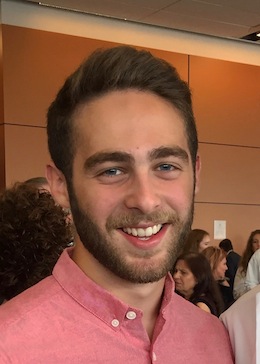
Seth Book (photo from Seth Book)

Book said it is hard to define his artistic style because he has always been interested in finding new mediums and approaches. But he has less need for such definition since he began university. Since then, he said, “I have been able to let go of that and continue exploring what interests me rather than being labeled as a ‘painter’ or a ‘photographer.’ I always find that different mediums have such an incredibly unique ability to succeed in accomplishing a piece better than others. In other words, certain mediums are more effective than others in conveying certain ideas or concepts for varying projects. That being said, I try to use the best option I can for each work, trying not to limit myself in expertise. I can always try and learn! I did not work with metal until late 2019, and have already created two works using it, and I am very satisfied with how they turned out.”

Book, who has a background in business management in addition to his art training, said he first heard about Art Vancouver through a summer internship program he took part in a couple years ago, and has kept in close contact with the team there since. “I have loved working with the organizers and enjoyed attending the event every year,” he said. “I quite like the efforts they make to advance the art scene in my hometown and can’t wait to be a part of it as an artist this time.”

Hopefully, he will get that chance, but, even if Art Vancouver is canceled or postponed because of COVID-19, Book is an emerging artist whose works will available at other venues at other times.

He was able to tell the Independent about two pieces he was planning on bringing to the art fair. While he had not firmly decided on all the pieces yet, he said, “I selected the works from my portfolio which I have found to be the most striking, the works that I have received most compliments about, as well as the works which I feel represent my wide practice the best when shown together.”

One of those creations is called “A Series I Don’t Want to Continue,” which comprises six digitally rendered vinyl decals adhered to six two-foot-by-three-foot melamine sheets.

“A series opens an idea and simultaneously closes it,” reads the work’s description. “The values in between the first and last work tell a story or convey some sort of meaning through the relationships formed with the works in between.”

It continues, “A series of works in any media all relate to one another through consecutive nature. Labeling a group of entities as part of a series can bind them together, locking them out from further creation or reproduction. This is where the concept of my work integrates itself reflexively within the format of a series work. Through this work, I explore the contained value of past events, and particularly the Holocaust, in relation to my grandfather’s story.

“When he passed away, the evaluation of his extreme tenacity and hard work to establish our family and provide futures for generations to come was recognized more than ever. ‘Never again,’ the words that often cross our mind, could not be stronger upon recounting the horrors he endured. Never again, but also never forget. These events happened. They must be taught and preserved, but they are contained, and must never grow…. One work to symbolize each character tattooed on his arm, and each million Jewish people that were massacred. There will not be a seventh work in this series.”

The other piece that Book wanted to bring for sure to Art Vancouver is called “Untitled Crowd (The Stars, The Blues, The Ashes).” The 22-inch-by-30-inch ink-on-paper work is also related to the Holocaust. The description reads, in part, that the Nazis’ attention to detail was “dual-edged.”

“On one hand,” it notes, “they kept extremely particular and accurate data records of the prisoners murdered. Ironically, on the other hand, the attention to human detail was nonexistent. When Jewish people were funneled through various camps, they were stripped of their belongings and identities. They were nothing but a number.”

In “Untitled Crowd,” Book writes, “I attempt to discuss this specific lack of attention and elimination of one’s person. Each work is a recreation of real people who either survived or perished during the Holocaust. In order to illustrate the lack of respect and attention given to these unfortunately abused people, I spent a specifically short time on depicting them in the piece. Each face was dedicated about six minutes, to correspond with the six million lives lost. The faces are all overlapping with one another to represent not only the crowds of people who were murdered and their brutal living conditions, but also the morphing of individuals into a mess of numbers and bodies rather than human beings.”

The piece’s three parts carry added symbolism. “The first work is done with shades of mustard yellow to signify the yellow stars Jewish people were forced to use as identification, and the shades are more distinct in overlapping to show not all identity had yet been lost,” writes Book. “The second work is completed with shades of blues to represent the blue-striped pyjamas prisoners wore, and the difference in tone decreases to create a more homogenized look as they lost identity. The final work uses the greyscale to convey the ashes of those perished, and the gaining age of survivors around the world.”

For more on Book, visit his website, sethbook.ca. For more on Art Vancouver, see artvancouver.net.