Skip to content
  • Home
  • Subscribe / donate
  • Events calendar
  • News
    • Local
    • National
    • Israel
    • World
    • עניין בחדשות
      A roundup of news in Canada and further afield, in Hebrew.
  • Opinion
    • From the JI
    • Op-Ed
  • Arts & Culture
    • Performing Arts
    • Music
    • Books
    • Visual Arts
    • TV & Film
  • Life
    • Celebrating the Holidays
    • Travel
    • The Daily Snooze
      Cartoons by Jacob Samuel
    • Mystery Photo
      Help the JI and JMABC fill in the gaps in our archives.
  • Community Links
    • Organizations, Etc.
    • Other News Sources & Blogs
    • Business Directory
  • FAQ
  • JI Chai Celebration
  • JI@88! video

Recent Posts

  • Story of Israel’s north
  • Sheltering in train stations
  • Teach critical thinking
  • Learning to bridge divides
  • Supporting Iranian community
  • Art dismantles systems
  • Beth Tikvah celebrates 50th
  • What is Jewish music?
  • Celebrate joy of music
  • Women share experiences 
  • Raising funds for Survivors
  • Call for digital literacy
  • The hidden hand of hate
  • Tarot as spiritual ritual
  • Students create fancy meal
  • Encouraging young voices
  • Rose’s Angels delivers
  • Living life to its fullest
  • Drawing on his roots
  • Panama City welcoming
  • Pesach cleaning
  • On the wings of griffon vultures
  • Vast recipe & story collection
  • A word, please …
  • מארק קרני לא ממתין לטראמפ
  • On war and antisemitism
  • Jews shine in Canucks colours
  • Moment of opportunity
  • Shooting response
  • BC budget fails seniors
  • Ritual is what makes life holy
  • Dogs help war veterans live again
  • Remain vital and outspoken
  • An urgent play to see
  • Pop-up exhibit popular
  • An invite to join JWest

Archives

Follow @JewishIndie
image - The CJN - Visit Us Banner - 300x600 - 101625

Month: April 2023

Teapacks brings happiness

Teapacks brings happiness

Israeli music pioneers Teapacks perform at the Queen Elizabeth Theatre May 14 (photo from Teapacks)

“We will bring a lot of Mediterranean happiness, with a lot of Jewish chutzpah,” Israeli singer-songwriter Kobi Oz told the Independent about Teapacks’ upcoming concert here on May 14. The event at Queen Elizabeth Theatre is the culmination of the community’s many Israel @ 75 celebrations.

Teapacks will sing about 30 of their hits, spanning their more than 30 years of composing and performing. Plus, said Oz, there will be many “duets with our fabulous female lead vocalist Shani Yizhari, one Arik Einstein cover, one Moroccan song and our version of Hatikvah.”

Teapacks was established some 35 years ago. Named after the correction fluid Tipp-Ex, Oz has explained the choice to be related to the band’s aim to “erase boundaries between people,” but the English transliteration of the name was changed relatively early on to Teapacks to avoid infringing on the trademark. (The Hebrew remains the same.)

Oz and Gal Peremen (bass) are founding members, and Rami Yosifov (guitar) is basically one, too. The rest of the band is Yizhari (vocals), Motty Joseph (drums), Shahar Yampolsky (accordion and synthesizer) and Adam Mader (violin, mandolin, flute and trumpet).

“We are good friends,” Oz told the Independent. “Playing in a band like ours is like riding a bike – you cannot unlearn it. We are like a mobile circus, very different from each other but something funny and worth dancing is always happening when we start making music together.”

photo - Teapacks members are good friends
Teapacks members are good friends. (photo from Teapacks)

Teapacks is credited by many as having led the way in making Middle Eastern music popular in Israel.

“Teapacks is basically a get-together of three kibbutz members from the northern Negev, with me from Sderot, a small town populated with Israelis who made aliyah from Morocco,” Oz explained. “From the start, we tried to make music that would go with each other’s taste – I brought the rai [Algerian folk] music influence and they came with rock and Israeli folk. Mizrahi Oriental music was ‘underground music’ and wasn’t played on the radio as often as it should be. Teapacks offered a sound that was suited to ’90s playlists, with refreshing ethnic lines and sound – Teapacks opened the door to [Israeli singer] Sarit Hadad with two smash hit duets.”

Oz said the band “started as a funny electronic pop band. With time, we became more acoustic, with social awareness messages, incorporating an elegance – accordions with oud and rock beats.

“We were pioneers in Israeli hip-hop from 1992, but our 1999 Disco Menayak album was filled with sampled tracks from old Israeli vinyl [recordings],” he said. “Our last three albums are all about blending these styles and creating the right balance between electronic and acoustic instruments, hip-hop and Israeli and North African folklore.”

About performing in the Diaspora for Yom Ha’atzmaut, Oz said, “I believe the Jewish people is one big cultural fabric, in Israel and all over the world. We know that music is a great way to celebrate this deep connection. For us, it’s like singing for our families. A lot of politicians are trying to tear us apart, inside and outside Israel. We believe that our music is the right dance floor for a lot of people longing to be together.”

The concert event at the Queen Elizabeth Theatre on May 14 starts at 6:30 p.m. The program will include the national anthems of Canada and Israel and a prayer for Israel by the Jewish day schools (Vancouver Hebrew Academy, Vancouver Talmud Torah and Richmond Jewish Day School). Local Israeli dance groups will perform, there will be a few speeches, a surprise video and Teapacks. The night’s emcees are honorary co-chairs Jonathan and Heather Berkowitz.

For tickets ($18 plus fees; children under 5 are free), go to jewishvancouver.com/israel75.

Format ImagePosted on April 28, 2023April 26, 2023Author Cynthia RamsayCategories Celebrating the Holidays, Local, Performing ArtsTags Israel, Jewish Federation, Kobi Oz, Mizrahi, rock and roll, Teapacks, Yom Ha'atzmaut
Reflecting back 80 years

Reflecting back 80 years

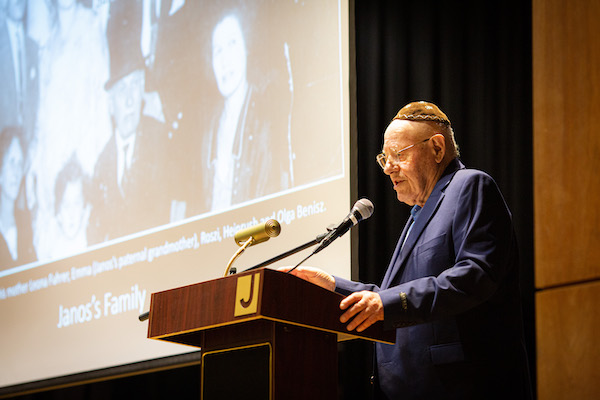
At the community’s commemoration of Yom Hashoah, child survivor Janos Benisz spoke about his experiences during the Holocaust. (photo by Rhonda Dent)

Over the past year, Janos Benisz has watched the news of Ukrainian parents fleeing to Poland and elsewhere in Europe to find safety for their families. While “overjoyed” for the families finding refuge today, he cannot help but reflect back eight decades to his own family’s catastrophic history in that violence-ravaged region.

Benisz was born in the summer of 1938 in the Hungarian city of Esztergom. He is one of the very few children to survive the Nazi concentration camps and is now one of an even smaller number of survivors alive to share their stories of survival. He spoke April 17 at the annual Yom Hashoah Commemoration presented by the Vancouver Holocaust Education Centre, on the 80th anniversary of the beginning of the Warsaw Ghetto Uprising.

Benisz lost his mother in 1943, when she was 38, after she went to hospital for a routine procedure but was, he said, murdered by a fascist there. His father remarried and his stepmother would prove a saviour for the boy.

The following year, the Nazis began rounding up Hungarian Jews and preparing to transport them to forced labour and death camps.

“Like a plague of locusts, the SS came marching into our city,” he recalled. “As they marched past our house, there was a great fear in our family. My father closed the windows and pulled the curtains down and his fear was passed on to me. The next day, we left our home and on the front of our white stucco home was a yellow Magen David. Within hours, an SS commander came to our house and put stickers on our valuables.”

His father took young Janos and his stepmother to relations who were Catholic. It was the last time he saw his father.

“Life was wonderful for six weeks until one of the neighbours reported us and informed that Jews were in this home,” said Benisz.

An SS officer accompanied by Hungarian Arrow Cross fascists knocked on the door and seized Janos and his stepmother, who were sent to the Strasshof concentration camp, in Austria. They remained there for eight or nine months, until liberated by Soviet forces. Benisz credits his stepmother’s determination for his survival.

“It was like a lioness protecting her cub,” he said. “She would go into the circle where the food was, or the slop was, with the big cup and she would always bring food to me. I would drink it and that sustained me.”

After liberation, Janos, 7, and his now-mother made their way back to Esztergom. The devastation was nearly total.

“I had many, many cousins and they all were massacred,” he said. “My mother’s family … it was like the earth had opened up and killed them all.”

The experiences left Janos’s stepmother mentally broken and Janos was placed in an orphanage.

“The only thing I remember is cod liver oil in the morning and brushing my teeth with about 10 or 15 guys beside me brushing their teeth as well,” he said. “After two-and-a-half years in the orphanage, somebody from the Joint [Distribution Committee] picked me up, took me to the train station. There were 14 or 15 other Jewish orphans there and they told us, ‘You’re going to America – North America.’”

The group first spent six months in France, where “they tried to educate us,” he said, but the young survivors were like “a bunch of wild animals.”

The group arrived in Halifax on Dec. 3, 1948. They were given hot soup and delicious sandwiches, as well as ice cream, of which Benisz said he must have eaten a gallon with his bare hands.

On the train across Canada, orphans disembarked at different cities and Benisz arrived in Winnipeg in the midst of a blizzard.

“My first Canadian Jewish home proved to be a disaster,” he said. “I was bounced around like a basketball between foster homes.… I was never part of the family. I was always an outsider.”

The terrors that followed him from Europe, which led to screaming in the night, did not make him a welcome addition to potential foster homes.

“Who wants to have a stranger’s scream waking [one] up every night?” he asked.

He was put in a reformatory for about six months before a Jewish welfare agency rescued him and found him suitable housing and got him caught up in his education.

At a young age, Benisz got a job as a copy boy at the Winnipeg Free Press. A life in the news business followed, especially covering sports, which he did at newspapers across Western Canada. An editor changed his byline from Janos Benisz to Jack Bennett, which became his professional designation.

Eventually, he arrived to a new job at a Vancouver daily just as the press launched what would become a year-long strike. Jack Diamond, the late Jewish businessman and philanthropist, gave Benisz a job. Years later, after a corporate buyout, Benisz had a $25,000 windfall and he and a partner opened a business in Gastown, “and, over the next 15, 18 years, we made a lot of money.”

He spoke of his gratitude for the community of survivors, especially the Child Survivors Group, based at the Vancouver Holocaust Education Centre. For two decades, he has spoken to school groups and others about his Holocaust experiences.

“I speak on behalf of the six million who have no voice, that includes 1.5 million children who were murdered,” he said.

At the commemorative event, Rabbi Dan Moskovitz of Temple Sholom reflected on the longer, formal name of the day, which is Yom HaZikaron laShoah ve-laG’vurah, Holocaust and Heroism Remembrance Day. He emphasized the resistance and revolt inherent in both the name of the day and the fact that Yom Hashoah is marked annually on the anniversary of the Warsaw Ghetto Uprising.

“Our sacred purpose is so much more important, so much more vital, because the life-memory is fading. We gather here this evening at the twilight of an era. As the Survivors’ Declaration hauntingly observes, the age of the Holocaust survivors is drawing to a close. Before long, no one will be left to say, I was there, I saw, I remember what happened…. It is in this void that the deniers and the distortionists will come, they always do, as they have continually on every night and every day since even before the liberation of the camps, to say that this didn’t happen, that it wasn’t so bad or the relativism of comparing trauma to trauma.”

There is one significant difference between the contemporary generation and the generation of the 1930s, said the rabbi.

“That difference is that we have the experience that they didn’t have. We know it can happen because it did,” he said. “We know the antisemitism, if it is not confronted vigourously, forcefully and immediately defeated, can develop into monstrous dimensions. So, we don’t have the luxury or the privilege to say, let’s wait and see how things will develop, how this turns out.”

The VHEC’s Abby Wener Herlin, granddaughter of survivors Aurelia and David Gold, spoke as a representative of the third generation.

“In our family, in order to build a life and live each day, they could not speak about their experiences,” she recalled of her late grandparents. “In order to protect themselves and us from the atrocities and traumas of their past, they shared very little.

“There is a sense of weight that comes from being the grandchild of Holocaust survivors,” Wener Herlin continued, “to know that I am part of the last generation that will ever hear those stories firsthand. I feel it is my duty and responsibility to carry it forward and it is my duty to remember.”

In a video presentation, former Canadian justice minister Irwin Cotler discussed the 1994 genocide against the Tutsis in Rwanda, as well as the Holocaust, and said that what makes both historical instances so horrific are not just the horrors themselves but that both atrocities were preventable.

“Nobody could say that we did not know. We knew but we did not act,” said Cotler.

He addressed remarks specifically to survivors: “You have endured the worst of inhumanity, but somehow you found the resources of your own humanity, the ability to carry on, to build families and to make an enduring contribution to Canada and to the communities in which you settled.”

Corinne Zimmerman, board president of the VHEC, read from a statement Prime Minister Justin Trudeau released for Yom Hashoah and Moskovitz read a message from B.C. Premier David Eby. Sarah Kirby-Yung, Vancouver city councilor, read a proclamation from Mayor Ken Sim.

Cantor Yaacov Orzech chanted El Moleh Rachamim, the memorial prayer for the martyrs. An extensive musical program, produced by Wendy Bross Stuart and Ron Stuart, featured Bross Stuart on piano, Eric Wilson on cello, with Cantor Shani Cohen, Kat Palmer, Lisa Osipov Milton singing, as well as eight young voices collectively dubbed the Yom Hashoah Singers.

The evening was presented by the VHEC with the Jewish Community Centre of Greater Vancouver and Temple Sholom.


Format ImagePosted on April 28, 2023April 26, 2023Author Pat JohnsonCategories LocalTags Abby Wener Herlin, Canadian Jewish Holocaust Survivors and Descendants, child survivor, Corinne Zimmerman, Dan Moskovitz, immigration, Irwin Cotler, Janos Benisz, survivors, Temple Sholom, Vancouver Holocaust Education Centre, VHEC, Yaacov Orzech, Yom Hashoah

Countering lies and hate

Peter Julian, the New Democrat member of Parliament for New Westminster, recently tabled a bill to address what he suspects are algorithms that encourage online extremism. B’nai Brith’s annual audit of antisemitic incidents, released recently, said three-quarters of antisemitic incidents last year took place online. And, as the Centre for Israel and Jewish Affairs notes in their Not On My Feed campaign, “Online hate leads to real-world violence.”

Few people would disagree that online hate and incitement are problems. How we confront it – that’s where we get into the weeds.

It is possible to control what people read on the internet – countries like China and Iran have demonstrated that, in anti-democratic and oppressive ways. Democracies like Canada should not join the high-tech book-burning that is internet censorship by government. Governments and regulatory bodies, of course, do have a role, however. Setting parameters for acceptable online behaviour and then enforcing these to the extent possible must be a role authorities take on. Staffing limitations are obviously a challenge, but several precedent-setting cases could send a message to others.

Social media behemoths like Facebook and Twitter should take action where they can to delete the most dangerous incitement. These corporations have proven themselves either incapable, unwilling or incompetent at this task. Governments need to incentivize vigilance by making lack of response financially unsustainable. In Germany and France, for example, social media platforms have 24 hours to take down hate speech or risk fines. Likewise, internet service providers (ISPs) have a responsibility to monitor the independent sites housed on their networks, the places where hate groups recruit and train.

Interventions like these are important, but of limited impact. For example, ISPs are based everywhere and every country has different rules around online content. Even Canada and the United States – countries perhaps as comparable as any two on earth – have dramatically different ideas about limitations on freedom of expression.

Attacking online hate and incitement is a perpetual game of Whac-A-Mole. However, just because a task is difficult does not mean we should shy away from it. On the contrary. We must do more of what is difficult.

We are a mere two generations into a connected civilization. We are still babes in the online woods. Yet, in many ways, we behave as though we are in the world we once knew.

We are no longer in a world of three TV networks and two daily papers. We are on a planet of nearly eight billion people – and anyone with an internet connection has an ability to reach audiences exponentially greater than the most powerful voices of a century ago.

It is simply not possible to effectively police online content – though we are correct to monitor and identify the worst of the worst.

There are two things that democratic societies that seek social peace and coexistence must strive toward. First, we need to empower individuals and organizations to counter untruths with truths. We must make it as easy to access the facts as it is to stumble upon misinformation and disinformation.

Google News, for one, has taken to adding a fact-checking section to their search results pages. The site Snopes.com provides a compendious analysis of online truths and fictions (although it has had its own veracity issues, involving a plagiarism controversy in 2021.) On issues of antisemitism, a veritable constellation of organizations exists to identify and correct misinformation, including HonestReporting, the Committee for Accuracy in Middle East Reporting and Analysis (CAMERA) and the Middle East Media Research Institute (MEMRI).

But we also need to attack this problem at the other end, on the “consumer” side. We must do a better job of educating and equipping people in democratic societies to critically discern fact from fiction, news from commentary, legitimate criticism from unfounded bias and hate. In a time when parents and others are concerned that education systems are not effectively teaching what are collectively, if imprecisely, called “the basics,” anyone asking teachers to also become instructors in the complexities of media bias and online incitement is going to come up against preexisting groups calling for more life skills training, more “three Rs,” more economic literacy, more mathematics and science, more physical fitness, etc. There is only so much that can be fit into a six-hour school day.

We live in a time and place where one of the most watched “news” networks routinely feeds falsehoods to viewers, even if a cost of doing business is a legal settlement of $787 million. Those lies led to an insurrection that tested the strength of American democracy more than anything probably since that country’s Civil War. That was an early warning signal for every democracy about the price of disinformation. We cannot hope this problem goes away, because what is likely to go away in such a scenario are our most cherished societal values.

We must do more of everything we are already doing. We must confront and contest the lies and hatred online (and in other media). We must allocate our philanthropic funds to organizations that counter lies and incitement. We must include everywhere we can – in formal and informal educational settings – lessons on identifying facts from falsehoods.

In an online world where conflict and hatred get algorithmic kicks to the front of the line, we must teach the young (and the older and less tech-savvy) to value that which unifies and enriches. In the simplest formulation, we need to remind our children, our grandchildren and ourselves of that old truism: don’t believe everything you hear or read.

Posted on April 28, 2023April 26, 2023Author The Editorial BoardCategories From the JITags free speech, hate speech, internet, online hate, Peter Julian

Women’s rights evolve

Recently, Prime Minster Justin Trudeau visited Winnipeg. CBC reported that his trip involved promoting the federal budget, meeting with students, trade workers, apprentices and the mayor. The visit included celebrating with members of the Jewish community for Passover, as it fell during the holiday. I was at home and jokingly looked around my living room … nope, Trudeau wasn’t visiting our house! After he left the city, there was a photo published from the Simkin Centre, Winnipeg’s Jewish care home, with Trudeau wearing a kippah and shaking hands with residents. If anybody gets the honour of a visit with the prime minster, it should be our elders. I was pleasantly surprised.

However, the most interesting Winnipeg moment appeared on Twitter and in the news. In it, Trudeau speaks to an anti-abortion University of Manitoba student who says he’s a People’s Party of Canada supporter. Any educator trained in the Socratic method could recognize Trudeau’s response. This student engaged the prime minister in discussion while Trudeau was greeting people and shaking hands. Trudeau responded just as a good high school teacher would. He took the student’s comments seriously, carefully voiced them back and asked direct, probing questions to lead the student to the next step. They covered dental care, religious freedom, and then went on to women’s health care. Trudeau’s questions were things like “Do you believe women should have the right to choose what happens to their own bodies?”

The student later responded, “I think if they’re sleeping around they shouldn’t be allowed to abort the baby, personally.” The student conceded, in a few more steps, that he hadn’t quite decided whether a woman who had been raped should have access to abortion. Trudeau then encouraged him “to do a little more thinking – and praying.”

This clip circulated quickly through social media and brought up many issues. The thing that stuck with me was the student’s assumption that if a woman was pregnant and sought an abortion, it was because “they’re sleeping around.” Not something like the pregnancy might be a danger to the mother and, as such, needed to be terminated, or the fetus had grave abnormalities and wouldn’t live. There are viable reasons to need an abortion. While it’s not always simple, Judaism supports the mother’s right to health and well-being above that of a fetus.

Most surprising: the student failed to acknowledge facts he should have gotten in sex education. Facts like it takes two people to make a pregnancy happen. There was no assumption of any male responsibility.

This parallels something I’ve been studying while doing Daf Yomi (a page of Talmud a day) and am now reading about in Tractate Sotah. This tractate explores the Sotah ritual spelled out in the Torah, which identifies a woman accused of adultery by her husband. There’s not a lot of evidence to show this ordeal was ever practised historically, which hopefully it wasn’t. It involved a series of acts, including the priest at the Temple giving a meal-offering, taking down the woman’s hair, making her swear she was faithful, and then writing the oath on a piece of parchment, erasing it in water mixed with dust from the Tabernacle, and making her drink it. These “bitter waters” theoretically would predict a woman’s guilt. If she is guilty, she would be ill and infertile, or possibly die. A woman who was innocent would be fertile and not be harmed.

From a modern perspective, of course, this sounds completely repugnant, particularly when examining the talmudic tractate. The rabbis debate a scenario in which a man warns his wife not to be alone with another man. If she’s in a room alone with this other man for “some length of time” – this time varies but it could be very short, according to some rabbis – she’s potentially guilty of adultery. Again, no assumption at all of any male responsibility.

I feel eerie parallels between modern events and this talmudic exploration. In some U.S. states, increasingly restrictive access to abortion has brought about some convoluted laws to limit women’s ability to control their bodies. A new law in Florida requires a woman to show proof of rape or incest to be allowed access to an abortion if they are more than six weeks pregnant. Proof of rape or incest means “providing a copy of a restraining order, police report, medical record or other court order or documentation proving her victim status.” While the law is being challenged, if doctors violate the law, they can be charged with a felony.

Today, we recognize that a religious ritual forced on a woman accused of adultery, including forced consumption of bitter waters, doesn’t prove anything. Yet, the “legislators” of biblical and talmudic times felt this public shaming and ordeal proved a woman’s guilt or innocence. It was, perhaps, the ancient equivalent of forcing a rape victim to go through the medical examinations, police reports and other documentation. Many accounts indicate that obtaining this “proof” is not easy.

In Winnipeg, there are so few nurses available in the sexual assault unit to administer the rape kit that victims have been asked to go home and return later when a nurse is on duty, but to avoid showering. There are ample police reports where they assume a woman “asked for it,” or that she deserved it because of what she wore, etc. Expecting compassion from a Temple priest or police officer seems unlikely for many.

What to make of these inequities? To a 21st-century feminist, the Sotah ritual is abhorrent, but it’s equally horrendous that a victim must prove her victimhood again and again to get access to necessary health care. It’s compounded by hearing a Manitoba student assume that a woman slept around if she got pregnant, without any recognition of who else participated or what else might have happened. The Jewish historical tradition shows that, like other rigid biblical punishments – such as the ben sorer u’moreh (the rebellious son), who, in the Torah, is supposed to be stoned to death, but, in the Talmud, the rabbis give so many impossible parameters for the situation that it would be impossible to kill a rebellious son – our culture evolved and didn’t continue these harmful actions, but the ramifications linger.

The hopeful thing in regards to some women’s healthcare access is that our situation, at least in Canada, continues to evolve. Money talks: Trudeau’s Liberal government pledged $3.5 million to improve Canadian abortion services. Yet, the prime minister’s questioning of that student gave me more hope. No one could have predicted that conversation in advance. Our elected leader is “walking the walk” when it could have proved awkward. There’s something powerful about being trained in the (ancient) Socratic method. Unlike the ancient Sotah ritual, it works.

Joanne Seiff has written regularly for CBC Manitoba and various Jewish publications. She is the author of three books, including From the Outside In: Jewish Post Columns 2015-2016, a collection of essays available for digital download or as a paperback from Amazon. Check her out on Instagram @yrnspinner or at joanneseiff.blogspot.com.

Posted on April 28, 2023April 26, 2023Author Joanne SeiffCategories Op-EdTags governance, Judaism, Talmud, Torah, Trudeau, women's rights
Immerse yourself in artwork

Immerse yourself in artwork

Art House SF’s Max Khusid is one of several artists who will be at Art Vancouver May 4-7. (photo from Art House SF)

Once again, galleries and artists from across Canada and around the world will come together to exhibit their work at Art Vancouver, which takes place May 4-7 at the Vancouver Convention Centre West. At the annual fair, attendees can join the opening night party, purchase art, listen to various talks, take part in classes, and more.

Among the exhibiting artists are local Jewish community members Lauren Morris, Taisha Teal, Sky Lilah, Talin Wayrynen and Lisa Wolfin, who will also be teaching art classes during the fair. In addition to the stories you can find on jewishindependent.ca about these artists, visit their websites for more information: Morris (lmdesignsstudio.com), Teal (taishateal.com), Lilah (skylilah.com), Wayrynen (imtalin.com) and Wolfin (lisawolfin.com).

Other participating Jewish community members include Max Khusid of San Francisco gallery Art House SF (arthousesf.com) and a couple of the gallery’s artists, Tavalina (Rinat Kishony) and Max Blechman, who, with husband Kazu Umeki, comprises the duo BLECHMEKI (a portmanteau of their last names).

Khusid spent the first 20 years of his professional career in the world of technology, and plans to spend the next 20 years diving into the unknown and immeasurable world of art. He is inspired by the mystic art and adventurous life journey of Russian painter, explorer, archeologist and philosopher Nicholas Roerich (1874-1947).

Tavalina lives in Israel and her work “Jerusalem” was recently featured on the cover of a book by the late Amos Oz. A graduate of the Israel Institute of Technology with a bachelor of architecture, she worked in the field for several years. After a personal crisis in her 30th year, she began to paint, devoting herself to art. At the same time, she embarked on a journey of personal discovery and traveled many places, eventually returning to Israel, where she continues painting and presenting her work, as well as teaching art.

Blechman, originally from New York, lives in San Francisco. He and Umeki use mass-produced American pottery from the 1930s to 1980s to create photo tableaux. At first glance, the individual pieces of pottery appear identical, but closer inspection reveals variations both in form and colour. Indeed, the Japanese concept of wabi-sabi (appreciating beauty that is imperfect, impermanent and incomplete in nature) reverberates throughout their pottery.

For the full list of Art Vancouver artists and classes, as well as tickets for the fair, visit artvancouver.net.

– Courtesy Art Vancouver

Format ImagePosted on April 28, 2023April 26, 2023Author Art VancouverCategories Visual ArtsTags art, ceramics, lessons, painting
Flamenco of contrasts

Flamenco of contrasts

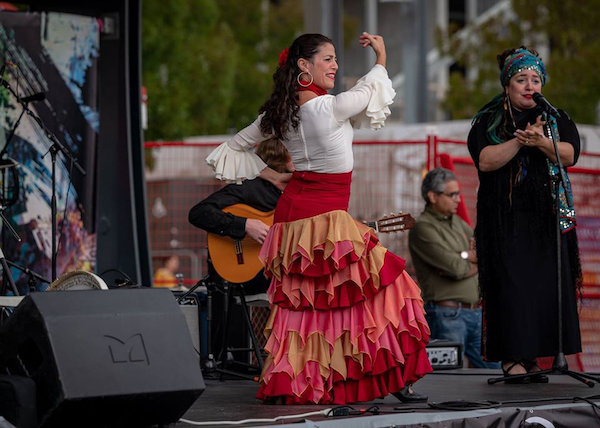
Lili Flamenco / Liat Har Lev performs two solos in the Dance Centre’s Open Stage Edition #3 on May 6, 8 p.m. (photo from Lili Flamenco)

The Scotiabank Dance Centre’s Open Stage Edition #3 on May 6 includes two solos choreographed and performed by Lili Flamenco / Liat Har Lev: We Shall Not Forget, dedicated to the six million Jews killed in the Holocaust, and Lemons, in the flamenco style Alegrias, which means “happiness” in Spanish.

“Although my family was not directly affected by the Holocaust, growing up in a Jewish family I heard and learned about it…. I created this piece with the hope that I and the audience will connect to the experience of the victims and survivors on a deeper level and remember what they endured just because they were Jewish,” Har Lev told the Independent.

In contrast, she said, “Lemons has an uplifting, joyful mood and a vibrant rhythm, harmony and pulse. It has more of a traditional flamenco flavour and will be performed with a guitarist [Peter Mole] and singer [Pat Keith]. It is inspired by my personal artistic journey and celebrates optimism and grit. I chose to perform it in conjunction with We Shall Not Forget because it has a lighter mood … and is completely different stylistically.”

Har Lev performed We Shall Not Forget last year as part of the Dance Centre’s International Dance Day events. (See jewishindependent.ca/a-celebration-of-dance.)

“I started developing We Shall Not Forget in 2020 during the pandemic with the support of the 12 Minutes Max program. I had access to support and feedback from facilitators, I received subsidized studio space at Scotiabank Dance Centre, and had the opportunity to participate in an informal public showing which, unfortunately, had to be featured on Zoom because of the pandemic. I never actually performed We Shall Not Forget to a live audience.”

In addition to Har Lev, Open Stage Edition #3 features dance works by Kiruthika Rathanaswami and Malavika Santhosh (in the classical Indian dance style of bharata natyam), Lili Shilpa Shankar (bharata natyam) and Voirelia Dance Hub (contemporary dance). For tickets, visit thedancecentre.ca.

Har Lev will also be performing at the Festival of Israeli Culture at the Jewish Community Centre of Greater Vancouver on May 14.

Format ImagePosted on April 28, 2023April 26, 2023Author Cynthia RamsayCategories Performing ArtsTags Alegrias, dance, Festival of Israeli Culture, flamenco, Holocaust, Liat Har Lev, Lili Flamenco, Scotiabank Dance Centre
Learn klezmer dancing

Learn klezmer dancing

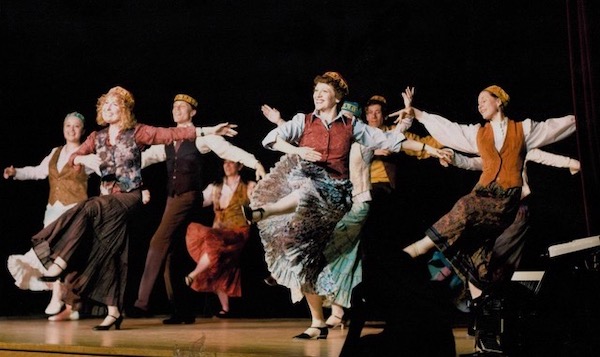
Kol Halev Performance Society in action. (photo from Kol Halev)

On May 7 at White Rock South Surrey Jewish Community Centre, Kol Halev Performance Society is holding a two-hour klezmer dance workshop, which is open to kids 8 and up, adults and seniors. And you don’t have to be Jewish to enjoy klezmer – this workshop is open to all!

In the workshop, participants will learn traditional and contemporary klezmer dances (traditional dances of Jewish celebrations originating in Eastern Europe) and read excerpts from The Kugel Valley Klezmer Band by children’s book author Joan Stuchner, in a joyous celebration of music, dance and storytelling. The instructors are Hadas Klinger (dance) and Tom Kavadias (theatre).

Klinger currently teaches recreational Israeli dance to adults at Richmond’s Congregation Beth Tikvah and at the Louis Brier Home, as well as jazz and Israeli dance instruction and choreography to K-6 kids and preteens. She has led Israeli dance workshops and drama workshops at a variety of youth summer camps, and has performed in Miami representing the Jewish Community Centre of Greater Vancouver as part of Maccabi Artsfest.

Kavadias has been involved in community theatre since 1985 as an actor and director, and he has worked with adults, teens and children. He has acted with Metro Theatre, Stage Eiren, Theatre North Van, and United Players.

There is no charge for the workshop, which takes place from 3 to 5 p.m., but registration is required by emailing [email protected] or via wrssjcc.org.

White Rock South Surrey Jewish Community Centre is located at 3033 King George Blvd. For questions about the dance program, call Sue Cohene at 604-889-4337. For other questions, call the WRSSJCC at 604-541-9995.

– Courtesy Kol Halev

Format ImagePosted on April 28, 2023April 26, 2023Author Kol Halev Performance SocietyCategories Performing ArtsTags dance, education, family, klezmer, theatre
Rabbi launches book at BI

Rabbi launches book at BI

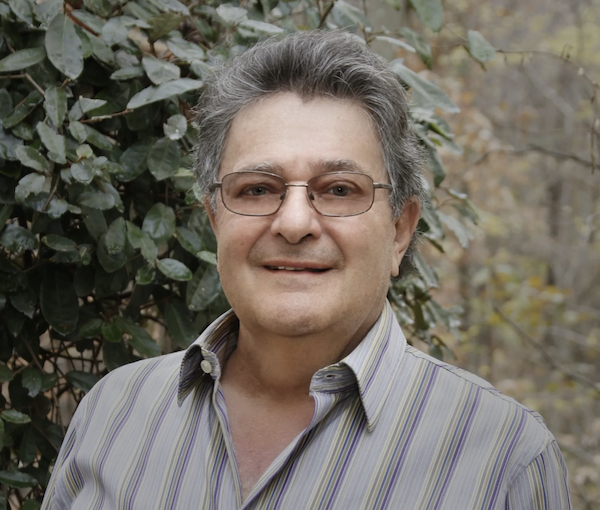
Rabbi Paul Plotkin returns to Congregation Beth Israel for the Canadian launch of his new book, Wisdom Grows in My Garden. (photo from AIA Publishing)

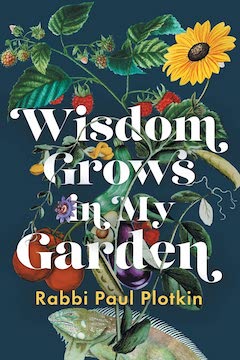
In part to fill his need to nurture – his kids off to college and his congregation less reliant on him – Rabbi Paul Plotkin took up gardening. Not only has he produced some of the most expensive tomatoes, taking into account all the capital that goes into every one that makes it into a salad or sandwich, but he has produced a new book: Wisdom Grows in My Garden (AIA Publishing). And he will launch that book in Canada on May 10, 7:30 p.m., at Beth Israel Synagogue, where he began his rabbinical career.

“I started in the summer of 1976 as Rabbi [Wilfred] Solomon’s first assistant, and he left for Israel after breaking his Yom Kippur fast on the way to the airport, and the 26-year-old ‘kid’ took over. Rabbi [Marvin] Hier was away from the Schara Tzedeck for most of the year preparing to build what was to become the Simon Wiesenthal Centre, so I was thrust into the position of often being the Vancouver non-Reform senior rabbi. It was quite a ride. It was a good thing I didn’t know what I couldn’t do, or I would have been paralyzed with fear. Instead, I jumped in and went to work.”

While BI was his first pulpit, Plotkin said, “I had been a youth director of my home synagogue while in college and in New York while at the seminary. I learned a lot about programming and leadership from those jobs and translated it into heading a synagogue.”

He admitted that the experience “was not without mistakes but what I couldn’t entirely appreciate was the menschlichkeit of my members. They appreciated my enthusiasm, my passion and my sincerity and pardoned most of my excesses and faults. It was a truly Canadian thing. I know now how special it was because my other two congregations in Florida were a lot different. Years later, I would share privately that my ‘worst critics’ in Vancouver treated me better than my good friends in Florida. By being thrown into the fire and succeeding – succeeding was a low bar, if the shul was still standing when Rabbi Solomon returned, I would have been praised – I learned of the potential people had for change, of their desire for knowledge, and that I could actually help transform people into greater commitment to mitzvot and the Jewish people.”

Plotkin was born and raised in Toronto, but has lived in South Florida for more than four decades. He is rabbi emeritus of Temple Beth Am and served on the Rabbinical Assembly’s committee on Jewish law and standards for some 20 years. He is the founding chair of its kashrut subcommittee and also is in charge of kashrut for Ben’s Kosher restaurant chain. He loves food and cooking. And Canada still holds a special place for him – he and his wife own a townhouse in Whistler, “primarily as a new summer cottage for after retirement,” he said. “We will be there for four months this summer.”

An avid writer, publishing articles in various newspapers and magazines, Plotkin has a blog on medium.com. He published a book some 20 years ago – The Lord Is My Shepherd, Why Do I Still Want?: Ancient Wisdom for the Modern Soul (Eakin Press) – but waited until retirement to write his second.

“First, in those days, I had to triage my time and creative mental energy. I also needed more age and seasoning for all of the pieces to melt together. Pirkei Avot teaches us to see wisdom in the elderly. Great red wine isn’t great in its first year. It takes years to develop nuance and subtlety. Creation of the book was no different.”

The idea came to him in a dream, he said.

“Unfortunately, I was still in my active work years, with an 1,100-family congregation. Finding time to breathe was hard, let alone write a book, so I made it a priority in retirement. Over the years after the dream, new ideas would come to me in the garden and I would jot them down and throw them into a file with the dream material.”

image - Wisdom Grows in My Garden book coverIn describing the book, Plotkin said, “Technically, it is a narrative memoir, because it is my story and told entirely from my perspective, but it is not in its heart a memoir. It revolves around the garden, but you won’t improve your tomato growing by reading the book. It is, in essence, a life lesson book (indeed, there are 25 life lessons in the book) that will help guide you to a better life. It is filled with humour and stories, two tools that featured prominently in 40 years of sermons. It will offer the reader some important guides to navigating a better life. I like to tell Jewishly knowledgeable audiences that the garden was my ‘Torah,’ my book is the Midrash.”

Plotkin said “gardening is a wonderful emotional and humbling pastime” and cited a recent article that “extolled its value as an alternative choice for exercising.”

“If you haven’t got time,” he said, “try a few herbs in a pot on the windowsill. If you have a black thumb, grow zucchini. In northern climates, everyone grows so many, they start to call friends they don’t have to offer them some. If you read the book, the irony of this last statement will become clear.”

Of the feedback he has received so far – from readers in his own demographic, as well as that of his mid-40s son, from Jews and non-Jews, from observant people and atheists – Plotkin said, “much to my shock, they all liked it and, yet, like a Rorschach test, they all found messages in my lessons that reflected their needs or interests. There is something in this book for everyone.”

Chapter 1 of Wisdom Grows in My Garden takes place at Beth Israel, said Plotkin. “I hope many readers and especially those who may remember me from their bar/bat mitzvahs and weddings that I officiated at will come out to the evening and say hello,” he said.

Format ImagePosted on April 28, 2023May 1, 2023Author Cynthia RamsayCategories BooksTags Beth Israel, education, gardening, lifestyle, Paul Plotkin
Celebration of Israeli culture

Celebration of Israeli culture

Mark your calendars for May 14. The Festival of Israeli Culture, a one-day free series of events at the Jewish Community Centre of Greater Vancouver, is a multicultural celebration of music, dance, art, sports, food and drink.

photo - Kids enjoying last year's Festival of Israeli Culture
Kids enjoying last year’s Festival of Israeli Culture. (photo by Galit Lewinski)

Get ready for community drumming by the Drum Café, Israeli dance, Mediterranean belly dancing, flamenco and the Israeli Choir, followed by a sing-along with well-known Israeli musician Elad Shtamer. And that’s not all! Join Maccabi-Mania with gym-based activities for all ages, the sassy sesame cooking workshop, intuitive painting, and calligraphy workshops.

photo - Dancers at last year's festival
Dancers at last year’s festival. (photo by Galit Lewinski)

For adults, there is a range of 19+ programs, including an Israeli wine tasting and cocktail party to sample some arak-based cocktails (arak is an alcoholic drink made primarily with aniseed and grapes) followed by an exhibition of video art from Bezalel Academy of Art and Design in Israel.

photo - Music is a part of the celebrations
Music is a part of the celebrations. (photo by Galit Lewinski)

In addition to the performances and activities, the festival will have a market featuring a variety of eats from local vendors and food trucks, along with hand-poured candles, jewelry, clothing, arts and crafts, Judaica, and more.

The Festival of Israeli Culture on May 14 runs from 11 a.m. to 5 p.m. at the JCC. While all events are free of charge, food donations to the Jewish Food Bank are encouraged. For more information, visit israelifestival.com.

– Courtesy Jewish Community Centre of Greater Vancouver

Format ImagePosted on April 28, 2023May 7, 2023Author Jewish Community Centre of Greater VancouverCategories Performing ArtsTags dance, food, Israeli culture, JCC, music
KDHS gala coming soon

KDHS gala coming soon

King David High School Golden Thread Gala co-chairs Heidi Seidman, left, and Sherri Wise. (photo from KDHS)

Heidi Seidman and Sherri Wise are excited to be back as co-chairs of the gala, which this year takes place May 18, 6:30 p.m., at Congregation Beth Israel. Having a combined three kids at the school, they recognize that Jewish high schools provide a unique environment for students to learn about their Jewish identity, while receiving an amazing education. An emphasis on values such as tikkun olam (repairing the world), social justice, community service, instilling a sense of responsibility and commitment to making a positive impact on the world, are just a few of the amazing things students learn.

This year, the annual Golden Thread Gala fundraiser celebrates 18 years of the school on Willow Street. For 18 years, the halls of KDHS have been filled with immersive Jewish and academic learning. This education is the golden thread that weaves the past and present together, shaping the next generation of students and alumni.

The gala evening includes dinner, entertainment, photo booth, silent auction, wine wall and raffle. For tickets, visit goldenthreadgala.com.

– Courtesy King David High School

Format ImagePosted on April 28, 2023April 26, 2023Author King David High SchoolCategories LocalTags fundraising, gala, KDHS

Posts pagination

Page 1 Page 2 … Page 5 Next page
Proudly powered by WordPress