Skip to content
  • Home
  • Subscribe / donate
  • Events calendar
  • News
    • Local
    • National
    • Israel
    • World
    • עניין בחדשות
      A roundup of news in Canada and further afield, in Hebrew.
  • Opinion
    • From the JI
    • Op-Ed
  • Arts & Culture
    • Performing Arts
    • Music
    • Books
    • Visual Arts
    • TV & Film
  • Life
    • Celebrating the Holidays
    • Travel
    • The Daily Snooze
      Cartoons by Jacob Samuel
    • Mystery Photo
      Help the JI and JMABC fill in the gaps in our archives.
  • Community Links
    • Organizations, Etc.
    • Other News Sources & Blogs
    • Business Directory
  • FAQ
  • JI Chai Celebration
  • JI@88! video

Recent Posts

  • Story of Israel’s north
  • Sheltering in train stations
  • Teach critical thinking
  • Learning to bridge divides
  • Supporting Iranian community
  • Art dismantles systems
  • Beth Tikvah celebrates 50th
  • What is Jewish music?
  • Celebrate joy of music
  • Women share experiences 
  • Raising funds for Survivors
  • Call for digital literacy
  • The hidden hand of hate
  • Tarot as spiritual ritual
  • Students create fancy meal
  • Encouraging young voices
  • Rose’s Angels delivers
  • Living life to its fullest
  • Drawing on his roots
  • Panama City welcoming
  • Pesach cleaning
  • On the wings of griffon vultures
  • Vast recipe & story collection
  • A word, please …
  • מארק קרני לא ממתין לטראמפ
  • On war and antisemitism
  • Jews shine in Canucks colours
  • Moment of opportunity
  • Shooting response
  • BC budget fails seniors
  • Ritual is what makes life holy
  • Dogs help war veterans live again
  • Remain vital and outspoken
  • An urgent play to see
  • Pop-up exhibit popular
  • An invite to join JWest

Archives

Follow @JewishIndie
image - The CJN - Visit Us Banner - 300x600 - 101625

Month: April 2018

Ballet BC brings back Bill

Ballet BC brings back Bill

Ballet BC artists perform Bill, by Israeli choreographers Sharon Eyal and Gai Behar, with musician Ori Lichtik. The company premièred the work in Vancouver 2016 and is bringing it back as part of Program 3 May 10-12 at Queen Elizabeth Theatre. (photo by Chris Randle)

What’s coming out of Israel is some of the “most exciting” dance, Ballet BC artistic director Emily Molnar told the Independent in a phone interview last week about the company’s upcoming program May 10-12, which includes the return of Bill, by Israeli choreographers Sharon Eyal and Gai Behar, with musician Ori Lichtik.

“It’s moved around the world in different generations, where the leading focus is coming from in dance,” said Molnar, “and I think that Israel is, right now, very much one of the major centres…. There is something about the way that the body is being spoken through the dance that’s coming out of Israel that is very relevant right now … it’s exploring more the sophistication and the rawness and the curiosity and the aliveness of using the body in dance.”

Ballet BC performed the Canadian première of Bill in 2016 and have since toured nationally and internationally with it, as part of an evening of female choreographers, along with Crystal Pite’s Solo Echo and Molnar’s 16 + a room. Given the response to Bill after its première here, Molnar said, “It was just one of those things that, to me, was obvious – this needed to come back to Vancouver audiences.”

And it will be a somewhat different performance than it was two years ago. “It’s more in the skin of the performers,” said Molnar. She explained that, having toured with it, the piece is “more familiar” to the dancers, “so they can take different forms of risk than they did before, when they first learnt it. And, each year, we’ve been bringing someone who is familiar with the work and close to Sharon’s work to come and work with us on it, so we keep tuning it each time we do it.”

Ballet BC has only recently returned from six weeks in Europe. The company toured the United Kingdom with the Dance Consortium, which works with their network of presenters to put together a touring circuit for international companies. “They only do two a year, and we were one of them,” said Molnar. “Then we attached that to two weeks in Germany.” In Germany, Ballet BC was the first Canadian company to be invited to perform in Wolfsburg, for the Movimentos Festival, she said.

“There are really a few festivals in Europe that really are landmarks or venues,” she explained, saying that Sadler’s Wells in London, England, where Ballet BC also performed, and Wolfsburg were two of them. “And, next year, we’re going to Luxembourg, so that’s another big one. And then we’re going to Madrid, and also to Tel Aviv, hopefully. More and more touring is coming up for the company, which is really great for us. We love being here at home, for sure, but to be able to have more shows and to diversify audiences, we get more information about what works … we learn more about what we’re trying to do.”

Touring is a relatively new phenomenon, said Molnar. When she danced with the company, they may have toured a week and, when she started as artistic director almost 10 years ago, they weren’t touring at all, she said. “Then we started touring maybe two weeks of the year, and now, this year, we’re out about six or seven, and next year could be even more. There will be a limit, because we have to build a certain amount of work in order to do each season, so we’re not going to be a company that’s constantly on tour because we have a subscription series and we love being three times a year here in Vancouver.”

In many Ballet BC programs, audiences can expect to see a piece choreographed by Molnar.

“I work very closely with the dancers, with the company,” she said of her creative process. “I will often start with proposing ideas or text or ‘what if you tried this’ … and then we start to build some vocabulary. From that vocabulary, I start to compound it and build a dictionary and, from that, I start to place it into some form of a world…. I’m not someone who goes in and shows every step; I definitely cultivate a conversation or way of thinking about a theme or a topic … and then we start to see what comes out of it. I work a lot with improvisation before I get to things that are often scored. But, when I do score something – in other words, when I set it choreographically – I do often still try to keep some things that might be improvisational, but that’s not always the case.”

She said, “It’s more about finding unusual timings, unusual possibilities in the movement. I think that, although I’m very attracted to the expression of the body … there is usually always a concept for me of what I’m working with in the way that I grid, the way that I compose.”

Where the music comes in depends on the work. Sometimes it comes first, and that is the case with the work she has created for this season’s Program 3 with Graeme Langager, conductor of the Phoenix Chamber Choir.

Molnar said that she and Langager had been looking for awhile at how they could bring Ballet BC and the choir together in a performance. “We have a lot of shared philosophy,” said Molnar, so it was a case of “when can we make this happen, and this program seemed like the right one.”

Langager proposed a few compositions, and Molnar was drawn to one by Peteris Vasks called Plainscapes. But it’s a short piece, so that has been part of the challenge of choreographing it – “it’s only 15 minutes,” she said, “and I’m working with the full company, as opposed to a duet or something like that.”

As well, she said, there are 30 voices in the choir, a cello and a violin. “It’s this very beautiful, very intimate, but driving piece of music that has a mysterious urgency to it and I took it as a reflection of a landscape of memory, this desire to want to hold on to remembering something…. The more we lose memory of something, the more we want it to exist.” In her choreography, she tries to communicate that feeling – the desire to hold on to life, on to our memories.

When putting together a triple bill, Molnar said she looks first for diversity “that will take the audience, as a full evening, on a certain type of journey, as opposed to the same tone.

“It is always a risk when we’re doing new work,” she said, “but we don’t always have new work on the program. So, for instance, in this program, I knew mine would be new, so that’s an unknown, but I knew what Bill was and I knew what Beginning After was, which is the first work of the evening, which is a piece by our resident choreographer Cayetano Soto … to the music of [George Frideric] Handel, a beautiful aria. So, all of the pieces have a certain vocal aspect to them…. That wasn’t what drew me to say, oh, this evening is about the voice, but there is a certain type of humanity because the voice is involved in the musical aspect of the show. But there are things that are very different within each of the pieces, and then there is this real attention to the individual but also to the collective throughout each of the pieces.”

Next year will be Molnar’s 10th as artistic director of Ballet BC. Even before she got the job, she said, she had hoped that “its presence as a contemporary dance company, which was very clear before I ever joined as a dancer or as artistic director, would get, not just recognition but that it would have life outside of its own city and be an ambassador for all the new work” it was creating.

“It was not as known within the community as I thought it could be,” she said, noting that, for it to become known, some barriers had to be broken down about “what it meant to walk into a theatre under the banner of a ballet company.

“There are so many ways that can be,” she said, “and I’ve been really trying to work on that, that it’s really about having a conversation and it’s about sharing and it’s about understanding what dance can be, and it’s not about ballet, it’s about dance, it’s about art, it’s about community – and these are not meant to be catchphrases. Seriously, when you bring people together in a live performance and you have a conversation that’s been meaningful for a group of artists and you try to meaningfully extend that over to an audience and they care about it, then there are a lot of really exciting things that can happen.”

And one such exciting thing will be announced at Program 3. Ballet BC will be one of the first companies to commission the work of an emerging female Israeli choreographer so that, next season, Ballet BC will be performing three Israeli works. “We have Ohad [Naharin] coming back,” said Molnar. “We have another work of Sharon’s, a new work for us, and then….” (The JI is not one to ruin a surprise.)

Program 3 runs May 10-12, 8 p.m., at Queen Elizabeth Theatre. Tickets run from $35 to $100 and can be purchased from ticketmaster.ca or 1-855-985-2787.

Format ImagePosted on April 27, 2018April 25, 2018Author Cynthia RamsayCategories Performing ArtsTags Ballet BC, British Columbia, dance, Emily Molnar, Israel
Brier biannual campaign

Brier biannual campaign

“Louis Brier is in a pivotal point in planning for the future through its redevelopment activities,” said David Keselman, chief executive officer of the home and hospital. (photo from Louis Brier)

The Louis Brier Home and Hospital was started in 1945 by what was then the Hebrew Men’s Cultural Club. The club dreamed of creating a home for Jewish seniors in Vancouver and, in 1946, opened its doors to accommodate 13 residents. Since that time, the facility has grown, changed locations and expanded its services. The Louis Brier is now home to 215 residents, is in contract with Vancouver Coastal Health and is part of a continuum of care known as the Snider Campus, which includes the Weinberg Residence next door.

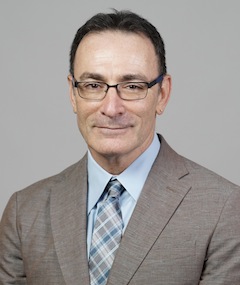
“Louis Brier is in a pivotal point in planning for the future through its redevelopment activities,” said David Keselman, chief executive officer of the home and hospital. “We are forging relationships with major funders, politicians and academic organizations to facilitate research and best practices.”

Keselman, a registered nurse by training, has been working in the healthcare industry for almost 30 years. He has held a range of progressively more complex and complicated roles, and has worked across the entire spectrum of care – from academia, to acute care, home and community care, public health, and long-term care.

Over the last couple of years, Keselman has been leading the Louis Brier’s efforts to become a leading force in elder care in British Columbia. To help achieve this goal, the Louis Brier Jewish Aged Foundation runs a biannual campaign to raise funds to support the Louis Brier’s work and activities.

“Louis Brier offers a range of services across a continuum of care and provides assisted living services as part of the Weinberg Residence,” explained Keselman. “With the exceptional and generous help of the foundation and with the auspice of a resident- and family-centred care philosophy, Louis Brier Home and Hospital offers a range of unique and significant culturally relevant programming … as well as recreational and rehabilitation activities that are available in very few, if any, other long-term care facilities, custom-tailored to the needs of the residents, their health goals and wishes.”

Regarding this year’s campaign, which started April 16 and runs to June 4, Keselman said, “Of course, we’d like to raise as much as possible. However, as this is a biannual campaign, the goal is to raise at least $1 million.”

He said that, “with the support of the Louis Brier board and the foundation board,” the home has been able to launch “unique and essential programs aimed at supporting the delivery of high-quality care, ensuring that we follow best practices and evidence-informed practice for the best outcomes. Examples of these programs are the quality and risk and resident experience portfolio, and the infection prevention and control practitioner…. We established both of these, signalling a significant change in focusing on the delivery of quality care.”

photo - David Keselman, Louis Brier Home and Hospital CEO
David Keselman, Louis Brier Home and Hospital CEO. (photo from Louis Brier)

The Louis Brier has also continued to develop their recreational, rehabilitation and chaplaincy services. It has purchased a range of equipment to ensure its residents are safe, including wander guard alarms, and it has improved the library and updated the furniture in its lobby and lounge.

“We continue looking for opportunities to enhance the resident experience at the Louis Brier, and are planning to renovate the clinical space, with specialty services provided, such as, dental, ophthalmology and podiatry,” said Keselman.

“There was also a significant investment in staff education and resident programming to ensure we deliver the best care possible and expose our residents to the best available resources, programs and activities,” he added.

Although the Louis Brier does not currently have any vacancies, it also does not have a waiting list.

Access to the home’s publicly funded beds is managed by Vancouver Coastal Health and, although Jewish residents do have priority for cultural and religious reasons, the beds are open to all elderly individuals who require the services and environment of a long-term care facility within Vancouver Coastal Health’s catchment area.

The Louis Brier “is an organization that lives its vision and mission daily and without any hesitations,” said Keselman. “And, despite limited resources, the Louis Brier can proudly say that its services, resources and activities are second to none while, through its foundation, board of directors, physicians, staff and leadership, it continues to search for ways to constantly improve and be a leader in elder care. I’m extremely proud of being the CEO and part of this organization.”

For more information, visit louisbrier.com and, if you go to the bottom right-hand corner of the screen, you can submit a request for a tour.

Rebeca Kuropatwa is a Winnipeg freelance writer.

Format ImagePosted on April 27, 2018May 2, 2018Author Rebeca KuropatwaCategories LocalTags fundraising, health, Keselman, Louis Brier, seniors
Talmud as film study prep

Talmud as film study prep

Filmmaker Jake Pascoe (photo from POV28)

The study methods of Jewish school have served Jake Pascoe well in his study of film at the University of British Columbia. His works will be among those featured in the Persistence of Vision Film Festival 28 (POV28) April 28 and 29.

The festival showcases the work of fourth- and third-year students in the film production program at UBC Theatre and Film, which is what brought Pascoe – born and raised in Toronto – to Vancouver in 2014. Now in the final year of his bachelor of fine art in film production, Pascoe is involved in many of the 21 short films being screened at POV28. He directed Genesis, was the producer of Snoop! and first assistant director on three films, With Love From God, It’s a Boy! and How Long?, as well as being key grip on two others and gaffer on yet another. Pascoe said that, for a student to be involved in so many productions is “completely usual.”

“In fact,” he told the Independent, “I have some currently exhausted friends who have been in several more roles this year than I have. The program really emphasizes getting as much exposure to the different departments as possible, which makes the production season of the school year a lot of fun; you and your friends working several long days in a row and having to figure out how equipment works on the fly since – hey, you’re suddenly our sound mixer now!”

Pascoe’s bio notes that, in addition to “a background in directing theatre, he’s won fiction and stage play awards and has had stories published in magazines.”

“Before I was ever interested in filmmaking, I loved writing, so that stage of the process will always feel a little sacred to me,” he said. “This year, I got my first opportunity to direct a large and legitimate set with a big, scary camera and lots of equipment. Directing a movie like Genesis has been an opportunity that’s sort of eluded me, so I didn’t know what to expect coming up to the shoot. My favourite directors, like David Fincher or Wim Wenders, have been almost holy figures to me but I haven’t had the chance to take on that role with any of the resources remotely similar to the movies I grew up watching. Just feeling part of that tradition was pretty special.

“It also just gave me a creative buzz I hadn’t really ever experienced before. There was a moment I had with my actors getting ready before a big scene and I listened as they were getting into character, talking about their fears and emotions and I got so caught up with them. It was really surreal sharing a creative process with so many people since writing is so solitary. Watching and working with them along with my producer Ayden Ross and cinematographer Sam Barringer was really inspiring.”

Pascoe said he will be taking some summer courses to complete his minor in English literature and he aims to graduate this fall. As for his plans after that, he said, “Directing is such a fun and almost addictive experience that I feel like I need to get back in the chair sometime soon, but what’s nice about writing is that you don’t need any money or equipment to do it. I’ve been writing fiction for my whole life so, immediately following graduation, I’ll be working on getting some of my writing published.”

Pascoe said he attended a Jewish day school until Grade 11, “so it was a very large part of my life growing up. In terms of how it comes into play now – it’s funny, I was just giving a little spiel about this at my family’s seders this year – it struck me recently just how strangely effective Jewish school was in preparing me to study film.

“There’s something really talmudic in the analysis and criticism of cinema and the application thereof to any filmic creative pursuits I’ve had at UBC,” he said. “I remember very vividly in long Grade 7 classes being given an excerpt from the Torah and having to take the ‘story’ and methodically comb through it for all the moral quandaries it presents, all of its impacts on daily life it posits, and all the laws within its lessons to follow.

“In a very similar way, when you watch a movie, you’re really being handed a puzzle in the form of a story and are expected to totally squeeze everything out of it and methodically ask different kinds of theoretical questions.” He spoke of walking out of theatres “with the movie nerds in my program, who are just, if not more so, as trivial and hairsplitting as any of the ancient rabbinical commentators I read in middle school.”

POV28 screenings take place at UBC’s Frederic Wood Theatre, and there are morning matinées and evening programs. For tickets and the full schedule, visit povfilmfestival.org.

Format ImagePosted on April 27, 2018April 25, 2018Author Cynthia RamsayCategories TV & FilmTags film, Jake Pascoe, POV28, UBC
Intimate portraits at the Zack

Intimate portraits at the Zack

The exhibit Painting Intimate, showcasing the work of penny eisenberg and Ray Ophoff, is at the Zack Gallery until May 11. (photo by Olga Livshin)

The exhibit Painting Intimate introduces Vancouver art lovers to two very different local artists: penny eisenberg and Ray Ophoff. Different in their approaches, their styles and their creative philosophies.

“I have always liked painting,” eisenberg told the Independent. “I painted as a teenager, then stopped for a few years. I resumed painting in my 20s, but I was a closet painter then. I had several jobs in those years, worked as a cook and in retail. I kept on painting as a hobby, but, when I was 30, I took a class at Emily Carr. The instructor liked my works and suggested I apply for a full-time program.” She did.

Graduating from Emily Carr in 1995, she has been a full-time artist ever since, working in various themes and in a range of sizes as she tried to find her niche. For her, there is a huge gap between the words “picture” and “painting.”

“People buy pictures and hang them on their walls,” she said. “But I’m interested in paintings, not pictures. I’m trying to learn what is painting in the 21st century, when there are so many pictures around.”

Lately, as this exhibition demonstrates, all her paintings have been small. “I like working on small canvases,” she said. “I want to figure out what I want, and the small size allows me to create more paintings, to experiment with different series and subjects. Sometimes, I even work on a few different series simultaneously.”

The current show displays several of her series. There are hazy cityscapes, pulsing with light. There are brightly textured flower bouquets. A number of the paintings are from her latest series.

“In this series, I’ve been exploring the history of women in the arts, how other artists painted their female models,” she said. From 18th-century artist Jean-Baptiste-Simon Chardin to fashion photographers of the 20th and 21st centuries, eisenberg has transformed other artists’ women through the prism of her own artistic vision. In her abstracted compositions, which follow the others’ outlines but express her own esthetic, eisenberg had made all the portraits small and intimate – and faceless.

“There are two reasons for all my figures being faceless,” she said. “When we identify emotions, faces are what we look at. I wanted to show emotions without the faces, through paints, colours and shapes. In this series, I also examined who influenced whom in the art history, and how it reflected in their female model paintings.”

The internet age is another reason for this approach. “I view the reality of contemporary culture as a series of faceless interactions through social media,” she said. “That’s what I wanted to express. Hence, the hashtag in the title of the series, #otherartistswomen.”

photo - Ray Ophoff has 15 paintings in this show, most of them flowers and landscapes in exuberant, uplifting colours
Ray Ophoff has 15 paintings in this show, most of them flowers and landscapes in exuberant, uplifting colours. (photo by Olga Livshin)

When Zack Gallery director Linda Lando suggested eisenberg apply for a show, the artist embraced the opportunity. “I wanted a show at the Zack, but it is a large space,” said eisenberg. “I couldn’t handle the stress of filling it all by myself. I asked Linda if I could invite a friend artist, Ray Ophoff, to share it with me.”

Like Eisenberg, Ophoff is a long-time participant in the East Side Culture Crawl. In fact, that’s how they met.

“Many years ago, I visited her studio during the Culture Crawl,” recalled Ophoff. “I had a painting – a landscape – in my own studio at the time, and I saw that she had painted the same place, but it was much better than mine. We started talking and became friends.”

Ophoff has never studied art formally, or taken classes. He is a salesman by profession and paints in his spare time. “I’m entirely self-taught,” he said. “But I read a lot about art. My yearly spending for various art magazines runs to $900.”

Ophoff has 15 paintings in this show, most of them flowers and landscapes in exuberant, uplifting colours. Blown-up to 10 times or more of their real size, his flowers attract viewers with their deceptively simple beauty and their graceful allure. They would gladden any space, and people appreciate the optimism of his imagery.

“I sell almost everything I paint,” he said. “Mostly it is through the Culture Crawl or the First Saturday project. People come to my studio. I don’t even have a website.”

For Ophoff, his art is the only outlet where all the decisions are his alone. “I paint what I want,” he said. “When I walk through the woods or parks or gardens, I take photos. I always know: this is the image I want to paint. Not the entire photo, just a small fragment of it. My painting is not a tree or a flower. It is about that tree or that flower, my version of that tree.”

He considers himself an editor of imagery. “I edit everything unnecessary out of the image,” he explained. “When I find the perfect image, I always know. It is almost like time stops. I know: this will be a great one. Maybe not my painting of it, but the image itself.”

Ophoff’s canvases tell stories. They animate the flora around us and invite our imaginations to unfold. Despite their larger size, his works are, in their own way, as intimate as eisenberg’s much smaller compositions.

For both Ophoff and eisenberg, Painting Intimate is their first show at the Zack Gallery. The exhibit opened on April 11 and continues until May 11.

Olga Livshin is a Vancouver freelance writer. She can be reached at [email protected].

Format ImagePosted on April 27, 2018April 25, 2018Author Olga LivshinCategories Visual ArtsTags art, painting, penny eisenberg, Ray Ophoff, Zack Gallery

The tough choices

The value of ahavat ha’beriot, the love of God’s creations, is open to broad interpretation. The animal world, the environment, as well as other people, can all fall under this crucial tenet of Judaism.

Like positive values and most good things, of course, this is easier in theory than in practice. We all want a clean environment and a better world, but we also want the convenience of automobiles, abundant and varied food, and the panorama of disposable consumer goods that we associate with the “good life.”

Awareness is, on the one hand, the most important factor in social change. On the other hand, it can overwhelm us to learn the full scope of our impacts on the world. Leave aside the huge looming catastrophe of climate change and consider for a moment the impact of a single, almost universal item of clothing: the cotton T-shirt.

Some bumper sticker wisdom urges us to “live simply, that others may simply live.” We do not always think of our wardrobe when considering our carbon footprint. Yet, after housing, food and transportation, for many people, clothing is one of the largest expenditures. Since voting with our wallets is one important way of making change, it is worth considering the impacts of our wardrobe choices. And what we wear on our backs says more about us than merely our fashion sense. It speaks (whether we know it or not) about our views on the environment and matters like child labour and fair wages.

To this end, one might think that a basic T-shirt would be a good choice. Yet it can take up to 2,700 litres of water to produce the cotton required for this simple garment, according to the World Wildlife Federation. Caring for the T-shirt over its lifespan takes further resources: each load of laundry takes more than 150 litres of water. Throwing it in the dryer (with a full load) consumes even more energy resources than the washing machine – about five times as much. Hanging it instead on a clothesline would reduce the shirt’s carbon footprint by one-third, but who remembers those? (Walk down a back lane in Vancouver a generation ago, and clotheslines snaked across almost every yard.) That few of us would be prepared to make this comparatively small shift indicates the glacial – to use an ironic term in the context – pace of human change in a time of rapid change in the environment.

Our food choices are even heavier with impacts. Researchers at institutions including the Weizmann Institute of Science calculated the use of land area, water and nitrogen fertilizer in animal food production. Potatoes, wheat and rice require half to one-sixth of the resources needed to produce pork, chicken, dairy and eggs in a calorie-for-calorie comparison. (Beef takes as much as five times the resources as chicken.)

Livestock for food are estimated to create about 20% of greenhouse gas emissions while using vast amounts of agricultural and water resources. Reducing or giving up meat consumption results in a huge reduction in resources. Producing a kilogram of protein from beef requires about 18 times more land, 10 times more water, nine times more fuel, 12 times more fertilizer and 10 times more pesticide than producing a kilogram of protein from kidney beans. But, again, many people love a steak or roast chicken and giving up these pleasures is not on the agenda.

This is not to instil hopelessness that even our simplest choices are leading to environmental disaster. Rather, it is to be aware of the power of small changes to have significant results.

We can extrapolate the outsized impacts of larger choices. When faced with the realities of carbon fuels on our environment (and health), most of us will not choose to sell our cars. But we might use them more judiciously. Or buy a more fuel-efficient vehicle. And, when it comes to making big political decisions that impact our environment and health, we might consider that, on balance, we should be moving toward investing in alternatives to fossil fuels, not pouring public or private billions into perpetuating deleterious and nonrenewable resources. We may not go cold turkey on gasoline and oil overnight, but our discrete choices should be leading incrementally in the right direction, not the wrong one.

Posted on April 27, 2018April 25, 2018Author The Editorial BoardCategories From the JITags climate change, environment, Judaism
Experiencing a renewal

Experiencing a renewal

More than 100 people came out to Burquest Community Association’s Purim carnival this year. (photo from Burquest)

At the end of a short, upward-sloping driveway in Port Coquitlam, what was originally a Jehovah’s Witness centre was converted into a Jewish community centre a couple of decades ago. The community the centre houses, Burquest, has been active since 1973. As the Jewish presence in the Tri-Cities grows, it is playing an increasingly essential role in providing services and connecting Jews to one another and to our culture and traditions.

The Burquest Jewish Community Association is dedicated to the “religious, social, cultural and educational needs of the Jewish population of the Fraser Valley,” with a membership of around 70 families, according to their website. The membership is diverse, with roots in five continents and a wide variety of Jewish backgrounds and interests, ranging in age from infants to grandparents. Yet, two years ago, the community’s future was uncertain – the board was considering continuing under the auspices of the Jewish Federation of Greater Vancouver, until Shoshana Szlachter stepped up to offer new leadership. She became board president just over a year ago.

“We were suffering from an onerous debt, it didn’t look like there was enough membership to keep it going,” Rudy Rozanski, Burquest vice-president, told the Jewish Independent. “A few of us got together, and Shoshana was at the head of that, and we decided that we do believe in the future of Burquest and we decided we did want to re-invigorate it. We had many ideas and they were instituted by Shoshana in a clear and positive way. We transformed it into a centre for Jewish learning, as well as being a community centre.”

Part of Burquest’s new success seems to lie in going back to their origins. “When I first joined Burquest, we were non-denominational, and then went Reform. But that didn’t work out as an experiment,” said Rozanski. “In a sense, we’ve returned to our roots.”

A year into Burquest’s renewal, things are looking up.

“Financially, we’ve come along really well,” said Szlachter. “When I came in, I thought, there’s still some life in this old donkey, let’s give it a kick and see what happens.”

The community reduced the cost of seats for the High Holidays and gave free memberships to those who bought tickets – this tripled membership. The centre has also gotten key grants, including from Federation, the Waldman Foundation and the City of Coquitlam. They have partnered with PJ Library to offer activities for children, as well as expanding their programming overall. For example, Burquest now has a Seniors on the Go program, covering yoga for seniors, mah jongg, art and piano gatherings, and a lunch-and-learn program on Jewish genealogy. There is a women’s class led by Devorah Brody, a teen club, Maccabee Kids (with optional Hebrew lessons) and a parent-and-tot drop-in program called Coffee and Knishes. Cantor Steve Levin leads religious services, and holiday events have been well-attended, with some 100 people joining the Chanukah and Purim celebrations.

“For a small community, our calendar is pretty full,” said Szlachter.

“I really enjoy the wide range of programming that Burquest is now offering,” said Sandra Hochstein, who has been involved with Burquest for 20 years. “When my daughters were young, I participated in all the child-oriented activities and am glad to see they are still there and going strong. Now that I am an empty-nester and newly retired, I love being able to participate in the adult activities, such as lunch-and-learn sessions and Monday morning yoga. I still appreciate the sense of community that I feel when attending Shabbat or High Holiday services.”

Asked about Szlachter’s role in Burquest’s “renewal,” Rozanski said, “Shoshana is an outstanding leader who is genuinely effective and concerned about our community, and her decisions regarding Burquest’s future have been unanimously applauded. Renewal is the right word for what our community is going through.”

More information about Burquest can be found at burquest.org.

Matthew Gindin is a freelance journalist, writer and lecturer. He is Pacific correspondent for the CJN, writes regularly for the Forward, Tricycle and the Wisdom Daily, and has been published in Sojourners, Religion Dispatches and elsewhere. He can be found on Medium and Twitter.

Format ImagePosted on April 27, 2018April 25, 2018Author Matthew GindinCategories LocalTags Burquest, family, Judaism, Rudy Rozanski, Sandra Hochstein, Shoshana Szlachter, Tri-Cities
Zwicker’s one-stop

Zwicker’s one-stop

Jordan Zwicker (photo from JZE)

If there’s one Jewish personality in Vancouver that almost everyone knows, it’s Jordan Zwicker. The man behind many of the city’s Jewish celebrations, Zwicker, 42, has been enlivening Vancouver parties since 2003, when he first arrived here from Toronto, seeking a change of pace. Recently, he rebranded his company as Jordan Zwicker Entertainment and is now exclusively offering interactive parties that promise to get everyone excited, and onto the dance floor.

Previously, Zwicker’s roster of services included DJ-driven events with music but no interactivity with guests. He has changed up the format, with positive results.

“The kids we’re entertaining at most Jewish events are age 12 and they need motivation to create atmosphere and have a great time,” he explained. “In a personality-driven show like ours we bring a motivator who creates an experience that engages everyone. By comparison, a purely DJ-driven event doesn’t lend itself to a great, engaging environment because, without anyone running the show, the kids don’t know what to do.”

Zwicker and his team – five DJs, two dancers and a party planner – have relaunched the company’s crew with a group of dancers from Dance Play who will lead the parties. “We’re coming up with the newest songs and creating our own choreographed moves to teach to kids at parties,” he said. “Every event will have at least one new flavour to distinguish it and we’re constantly coming up with new ideas for games and including them in our shows.”

Thanks to 25 years in the business, a passion for parties and a deep understanding of how they work, Zwicker knows how to engage kids and adults at a party.

“We look at an event as a produced show with lots of elements and coordination required,” he reflected. “There’s dinner, kids’ games, interactive dance sets, slide shows, speeches, dessert and more dancing. We’re always doing something because we’re running the party. We also offer other entertainment options, like photo booths with a magic mirror, a graffiti wall, an airbrush artist and a magician. Basically, we’re a one-stop shop where you can take care of everything with one call.”

Today, bar and bat mitzvahs constitute up to 60% of business, with weddings, corporate events, schools and private events comprising the remaining 40%. Zwicker works in Metro Vancouver, Victoria, Calgary and Winnipeg but says he loves the parties so much, he feels like he’s never worked a day in his life. Getting to know families in the Jewish community is an essential part of his work and one he thoroughly enjoys.

“As an entertainment company, we are friends with the parents and the kids, because the kids are our business. We take the time and effort to get to know them and learn their preferences because, when we do a party, we’re all in this together,” he said. “The kids appreciate the fact that we’re on their level and we ensure that they and their friends enjoy their event and that we don’t lose their attention. We charge what we charge for that very reason: there’s a value behind it – the experience and expertise that’s kept us as the entertainment leader in Vancouver.”

For more information, visit jzentertainment.ca.

Lauren Kramer, an award-winning writer and editor, lives in Richmond. To read her work online, visit laurenkramer.net.

Format ImagePosted on April 27, 2018April 25, 2018Author Lauren KramerCategories LocalTags entertainment, Jordan Zwicker, music, simchot
B.C. marks Yom Hashoah

B.C. marks Yom Hashoah

(photo from Vancouver Holocaust Education Centre)

Many child survivors of the Holocaust did not identify as survivors – and were not deemed so by other survivors, including their parents – until decades after the end of the Second World War. The emergence and evolution of the unique experiences of child survivors was the subject of the Yom Hashoah keynote address in Vancouver by Dr. Robert Krell, professor emeritus of psychiatry at the University of British Columbia.

Local survivors of the Shoah and their families, as well as the premier, cabinet ministers and other elected officials, joined hundreds more in Vancouver and Victoria to commemorate Yom Hashoah, Holocaust Remembrance Day, earlier this month. An event presented by the Vancouver Holocaust Education Centre took place at the Jewish Community Centre of Greater Vancouver on April 11 and another took place at the B.C. legislature in Victoria the following day.

In his presentation, Krell spoke about how he was liberated at the age of 5, having been a hidden child in the Netherlands. From the only family he knew, he was returned to the parents of his birth.

“My father and mother’s parents – my grandparents – and their brothers and sisters – my uncles and aunts – had all been murdered,” he said. “I learned about being Jewish at home, hearing stories from survivors who returned. They spoke of Auschwitz and other mysterious places in Yiddish, ably translated by my second cousin, 8-year-old Millie, who had returned from Switzerland with her parents. We heard things no child should hear and, therefore, listened all the more attentively.

“That was my introduction to Judaism, an unforgettable litany of horrors visited upon Jews that imprinted on my mind,” said Krell. “So far as I knew … being a Jew meant death, for everyone was dead, save one first cousin and Millie.”

Finding one’s way through the present with such a burden was an added challenge. “The task of being normal when you know you are not is all-encompassing,” he said. “What I did not realize then was how deeply affected we children were by the events of the Shoah and how intimately the traumatic consequences were entwined with our daily existence.”

While at UBC, in his small private practice, Krell began to see the children of Holocaust survivors. “And, from them, I learned of the impact of the Shoah on survivor families.”

During this period, he was spearheading Holocaust education initiatives in the province, including the Holocaust Symposium for high school students, which will have its 42nd iteration on May 2, and video recording survivor testimonies. “But there was one overriding issue that became the driving force of my preoccupations,” Krell said. “I discovered child Holocaust survivors. That may sound strange…. They did not need to be discovered. But they had disappeared from view. For almost 40 years, child survivors did not identify themselves as survivors. Immediately after the war, children were discouraged from talking about their experiences. In any case, said adults, you were too young to have memories, lucky you. Therefore, you did not suffer like we did.

“Other well-meaning adults urged children to forget in order to get on with their lives. That is not how it works,” said the psychiatrist. “Traumatic memories experienced in early childhood are not forgotten. They remain and they return.”

Throughout the 1980s, child Holocaust survivors began to speak with each other and to the public. In 1991, 1,600 people, primarily child survivors and their families, gathered in New York. “The workshops provided a safe environment in which participants gained self-awareness and much-needed relief,” said Krell.

Yom Hashoah corresponds to the 27th day of Nissan in the Hebrew calendar, the anniversary of the Warsaw Ghetto Uprising. This year marks the 75th anniversary of the uprising, which began on April 19, 1943. “The ghetto fighters were able to hold out for nearly a month,” said Vivian Claman, a member of the second generation at the Vancouver event. “On May 16, 1943, the revolt ended and a total of 13,000 Jews died. It was the largest single revolt of Jews during the Second World War.”

Jody Wilson-Raybould, federal minister of justice, also addressed the audience. “I want to say that we hear you, we honour your lived experiences and your stories, and we renew our commitment, and we reaffirm our vigilance to speak out against antisemitism, to speak out against xenophobia, to speak out against any form of racism or intolerance as unacceptable in this country and throughout the world,” she said.

Councilor Raymond Louie, acting mayor of Vancouver, read the proclamation from city hall. Kaddish was led by Chaim Kornfeld, a survivor. Eric Wilson played cello, and singers included Advah Soudack, Kathryn Palmer and Mia Givon. Wendy Bross Stuart played piano and, with Ron Stuart, were artistic producers. The ceremony ended, as is tradition, with “Zog Nit Keynmol,” the Partisan Song.

* * *

B.C. Premier John Horgan quoted Elie Wiesel: “To forget the dead would be akin to killing them a second time.”

“That’s why it’s so important,” said Horgan in the legislature’s Hall of Honour, “that, on Yom Hashoah, we acknowledge, as a society … that this may never happen again provided – provided – we don’t let time and the sands of history go through our fingers and we remember the words of the survivors that I was fortunate enough to hear today and we remember the millions and millions of lives that were lost because of hate, intolerance and because people didn’t stand up fast enough.”

Selena Robinson, minister of municipal affairs and housing, who is Jewish, emceed the commemoration. MLAs of all parties were present. British Columbia is the only province with a Yom Hashoah commemoration in the legislature.

“We are here today to think deeply on one of the darkest moments in human history so we can remember and, in our remembering, stop it from happening again,” she said.

Opposition MLA Sam Sullivan said, “It is only through knowledge and recognition of humanity’s worst capabilities, including the profound banality of evil, that we can strive for ensuring justice and good in the world and ensure that such heinous acts will not happen again.”

Judy Darcy, minister of mental health and addictions, shared the story of how her father hid his Jewishness with the intention of protecting his family after he survived the Second World War in Europe. Darcy shared the story with the Independent last year. (See the Feb. 24, 2017, issue.)

Temple Sholom’s Rabbi Carey Brown chanted El Maleh Rachamim and an adaptation of the Kaddish, also by Wiesel, which includes the names of camps and other places Jews were interned. Members of the audience spoke out names of places that they or family members came from or experienced.

MLA Nicholas Simons played Kol Nidre on the viola while Holocaust survivors Daniel Wollner, Alex Buckman, Rita Akselrod, Suzi Deston and Edith Matous lit candles. Another candle was lit by Nathan Kelerstein, a member of the second generation. A seventh candle was lit by representatives of other groups targeted by the Nazis, including people with disabilities, who were represented by Meyer Estrin and his mother Tzvia Estrin; Peter Csicsai of the Romani Canadian Alliance; and Jonathan Lerner, in memory of gender- and sexuality-divergent peoples. A group of young people, led by Hannah Faber, sang.

Micha Menczer, a Victoria lawyer who deals with First Nations and aboriginal rights, spoke as a child of a survivor of the Shoah. His mother, he said, spoke frequently of the non-Jews who risked their lives to save or help Jews.

“I learned also that, while Jews were a central target, others were attacked, deported and killed because of their race, political or religious belief, disability or sexual orientation,” he said. “Very importantly, my mother taught me that this does not diminish the memory of the Shoah or those who perished to give full recognition to the pain of other people and to the heroism of non-Jews who helped at great risk to themselves. It takes nothing away from our collective memory as Jews to honour those people and remember others who suffered.”

Format ImagePosted on April 27, 2018April 25, 2018Author Pat JohnsonCategories LocalTags British Columbia, child survivor, Holocaust, Robert Krell, Shoah, VHEC
Retracing family history

Retracing family history

(photo from Victoria Shoah Project)

The following remarks have been edited from a talk given at the April 15 Yom Hashoah commemoration at Victoria’s Jewish Cemetery, which was organized by the Victoria Shoah Project.

I recently saw a beautifully poignant play called We Keep Coming Back. It’s about a Jewish mother and her son who – in real life – travel to Poland, retracing the steps of her parents, who survived the Shoah. They documented their journey and now share their experience with audiences in theatres around the world. Their play triggered me on many levels.

I have yet to do my roots trip. I’ve been thinking about it, but haven’t done it yet. At the age of 30, I have done extensive traveling around the globe, yet somehow have always managed to avoid four places: Poland, Belarus, Japan and New Denver (the Slocan Valley camp where my Japanese-Canadian family was interned). After being exposed to this mother and son’s story and seeing proof that traveling to an historically hostile land can be done and that it can be a profound and life-changing experience for the better, I am finally at a point in my own life journey where I feel ready to start tracing the steps of my grandparents on both sides of my Second World War-torn family.

* * *

It was a sweltering hot summer day in Israel and I was 12 years old. I was helping my mom clean my grandparents’ gravesites in a Haifa cemetery, overlooking the Mediterranean Sea, located on Mount Carmel (after which I’m named). In this cemetery, in addition to the person’s name who is laid to rest, there are also the names of grave-less victims etched into the headstone of their one surviving family member. My maternal grandparents’ headstones are no different.

Shifra Atlasovich (my savta) was born in Bialystok, Poland, in 1917. She was the daughter of a wealthy businessman who owned a cooking oil factory. Before the war, she attended the Hebrew Gymnasium High School, enjoyed traveling and skiing, and was admired for her beauty, especially her blond hair and blue eyes. She married her high school sweetheart and seemed to have a picture-perfect life.

A year before the war broke out, her mother died of cancer, which, some say, was a blessing, considering what was to follow. When the war began, her father was deported by the Russians, who occupied eastern Poland and deported all capitalists and influential people to Siberia. He suffered an unknown fate.

Shifra, her husband and her brother were also deported by the Russians, but sent to Kazakhstan, where they spent the rest of the war. When the war ended, non-Russians were given an opportunity to return to their home countries. Taking advantage of this, Shifra left with her infant son and brother, leaving behind her husband (her sweetheart), who, after being tortured and brainwashed by the KGB, chose to stay behind and become a communist – she never saw him again.

Once back in Poland, Shifra handed her son to Catholic nuns while she and her brother searched for survivors. She went to their family home, which had been taken over by their gentile nanny, who said that, if Shifra did not leave the premises immediately and cease to claim the house, she would call the neighbours, who may kill her.

When Shifra went to pick up her son, he was warm, well-fed, settled and no longer on the run – but the nuns refused to return him. Only with the help of American officers was she able to get him back.

From Bialystok, they migrated to West Berlin, where they stayed in a refugee camp and she taught Hebrew to orphaned children. While there, her brother fell ill and, tragically, died at the age of 33 in a hospital in East Berlin from an infection of the lining of his heart, which today could have been cured by penicillin, a rare commodity back then.

Berel “Dov” Gottlieb (my saba) was born in 1914 in Drahichyn near Pinsk, Poland (today, Belarus), into a working-class family. He was a skilled carpenter by trade and married when the war broke out – he had to leave his pregnant wife when he was drafted into the Polish army, which quickly lost within several weeks to the Nazis. He later escaped to Russia, joining to fight with the Jewish Partisans.

Dov’s second-oldest brother, Mordechai, fled to Israel in 1938. After the war, Dov found out that most of his family, including his parents, five other siblings, as well as his wife and newborn daughter, were all sent to Auschwitz concentration camp and gassed to death.

Dov secured a visa to the United States – he had relatives in Chicago, who had emigrated in 1905 after pogroms in Eastern Europe – and made his way to a refugee camp in West Berlin to wait for his pending departure. It was there he met my grandmother, Shifra, and, instead of going to America, they headed to Israel on the first boat to enter the newly independent country in 1948. There, he was reunited with his brother, Mordechai.

Both Dov and Shifra became active members of the Irgun, an underground resistance movement headed by Menachem Begin.

* * *

In 1950, my mother, Dalia Gottlieb, was born in Haifa, Israel. During her days at Bezalel Academy of Arts and Design in Jerusalem, she fell in love with a Japanese-Canadian foreign exchange student, my father, Mineo Tanaka, and would follow him to Canada, eventually marrying him in 1976. My sister Talia was born in 1979 and I came along in 1987.

I remember spending many a summer in Israel visiting my grandparents. I didn’t know Hebrew well at the time or Yiddish or Polish, so, in the absence of a common language, I would play gin rummy – Shifra’s favourite card game – repeatedly with her. Boy, was she good at that game, and taught me to be just as ruthless. I’d give endless bear hugs to Dov and lick my plate clean at every meal to show them just how much I loved them and their matzo ball chicken soup.

Dov passed away in 1995, followed by Shifra in 2004, taking with them the chance for me to ask the questions to which I so crave answers: What was your life like before the war? What did you enjoy doing? Do I remind you of any of my relatives? What were my great-grandparents like? How did you survive? How did you find the will to live life? To start again? It’s questions like these that the child I was would not have thought to ask, but nor would I have understood the answers.

On that hot summer day visiting my grandparents’ final resting place, I noticed that the names of my grandfather’s first wife and first daughter (my half-aunt) were not written on his headstone. At this point, my grandmother was still alive and had been active in getting both his and her headstones engraved. In retrospect, I feel bad assuming my grandmother had something to do with the missing names on his headstone. When I spoke with my mother, she told me that she once asked her father about them and the sad truth was that he couldn’t remember his first wife’s name or what she looked like, and he never had the opportunity to meet his firstborn and learn her name. It was in this moment when I first learned about the impact of trauma and that there could be such a thing as repression in people who have gone through horrific loss.

* * *

Between the Holocaust survivors on my mother’s side and my interned Japanese-Canadian grandparents on my father’s side (a story for another time), I joke that there is enough post-traumatic stress disorder to go around in my family. But, pushing dark humour aside, I would like to draw attention to what has and continues to be a rather taboo topic at many Holocaust commemorations and symposiums – the topic of trauma, specifically intergenerational trauma.

When people tell me, “The Holocaust happened long ago … get over it … it’s time to move on,” I find it very hard to do so. Among other things, I have been raised and prepared my entire life for when the Nazis, or their equivalent, will return.

There are no longer survivors in my family to tell the world about what happened to them, and I am their voice now. I consider myself one of the lucky ones, as I know from my mom the survival stories of my Jewish grandparents – not everyone does. My personal post-Holocaust syndrome has thankfully, to my knowledge, not presented itself in the form of serious or debilitating mental illness or addiction; however, some of my family members have not been so fortunate. I speak candidly to break down these chains and to spread awareness within our own community and beyond – on the need for proper support for victims of trauma to ensure a brighter future.

I plan to drive to New Denver this summer and fly to Poland next year. My story is just beginning.

Carmel Tanaka is partnerships manager at the Centre for Israel and Jewish Affairs, Pacific Region, and former director of the University of Victoria branch of Hillel BC.

Format ImagePosted on April 27, 2018April 25, 2018Author Carmel TanakaCategories LocalTags history, Holocaust, Shoah, Victoria
A girl’s rite of passage

A girl’s rite of passage

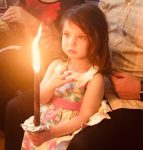
Mia holds a Havdalah candle. (photo by Miriam Leo Gindin)

Many Orthodox Jews wait until a boy’s third birthday before giving him his first haircut in a ritual called upsherin, a Yiddish word meaning to “cut off.” In recent years, this custom has spread outside of the Orthodox world to be embraced by other Jews and, as a recent upsherin in Vancouver showed, some are beginning to include girls in the custom as well.

On March 17, Noam and Val Dolgin invited family and friends to their house for the upsherin of their daughter, Mia.

“For me, this was an opportunity to connect with tradition. I love the lifecycle traditions of Judaism,” Val Dolgin told the Jewish Independent.

Noting that they had done the same thing for their son Erez, who is two years older than Mia, she said, “I think it’s really important for kids to see themselves as being a part of a multi-generational community that cares about them, that makes them feel safe; that they can know they’re part of something bigger than themselves, that there are lots of people around rooting for them to succeed. For me, it was a chance for Mia to be affirmed in her community, to mark a transition, and to connect with tradition in a way that’s meaningful.”

Val Dolgin’s parents, who did not grow up with the upsherin tradition, were present at the ceremony. “My parents are very proud that they have Jewishly involved children,” she said. “They had never been to an upsherin before Erez and Mia’s. For them, they enjoy any opportunity to celebrate their family.”

Traditionally, the upsherin marks when, at the age of 3, a boy officially begins his Torah education and starts to wear a kippah and tzitzit. It was first mentioned in Sha’ar HaKavonot by Rabbi Chaim Vital, a student of 16th-century kabbalist Isaac Luria. The ceremony’s origins are mystical, and it was seldom observed outside of the Orthodox world until recently. The traditional ritual includes the haircut (leaving peyot), eating cookies shaped like Hebrew letters and dipped in honey (to show learning is sweet) and the wearing of tzitzit and a kippah for the first time.

The idea of three years as the transition time derives from the mitzvah of orlah. The Torah says that if you plant a tree, all fruits that grow during the first three years are orlah, or off limits (Leviticus 19:23). Given the kabbalistic comparisons of people to trees, many Orthodox Jews leave a child’s hair uncut during the first three years.

“The ritual of upsherin was special for us on a few levels,” said Noam Dolgin. “First, the ecological connection, which reminds us that we are part of nature. Two, it marks an important transition from baby/toddler to child. And, lastly, it is an important moment when our child is old enough to start learning and internalizing Jewish and communal values and mitzvot.”

He added, “I believe the practice has even more significance today as we better understand child development and re-explore our ecological connections. And, of course, we would do it for our daughter – it’s just as relevant to her development and place in our community as it was our son.”

“The upsherin marks a Havdalah between freest babyhood and, at age 3, the first increment of teaching and training a child,” said Or Shalom spiritual leader Rabbi Hannah Dresner, who led the ceremony. “What a great ritual to promote and renew! For us, of course, it is an egalitarian marking of readiness. Traditionally, the first snip is taken from the centre of the forelock, the place of the third eye or of insight, the spot that will, someday, at the next big milestone of readiness, receive the tefillin shel rosh, the tefillin box that sits on the forehead. For those in progressive Jewish circles, kippah, tzitzit and tefillin are all ritual wear promoted for girls and boys alike. The upsherin can be a sweet, celebratory beginning of Jewish education and the beginning of mitzvah-doing in the lives of all our children.”

Matthew Gindin is a freelance journalist, writer and lecturer. He is Pacific correspondent for the CJN, writes regularly for the Forward, Tricycle and the Wisdom Daily, and has been published in Sojourners, Religion Dispatches and elsewhere. He can be found on Medium and Twitter.

Format ImagePosted on April 27, 2018April 25, 2018Author Matthew GindinCategories LifeTags Dolgin, Hannah Dresner, Judaism, upsherin

Posts pagination

Page 1 Page 2 … Page 5 Next page
Proudly powered by WordPress