Power of human spirit

Disarmed: Unconventional Lessons from the World’s Only One-Armed Special Forces Sharpshooter by Izzy Ezagui (Prometheus Books) is confusing, puerile, uneven, exaggerated, chutzpadik and strident – I loved it. I enjoyed every blessed moment involved in reading this extraordinary Proust-like jumble of words and ideas by an Israeli soldier who lost his left arm in a Hamas mortar shelling a decade ago when he was on duty near Gaza.

The unlikely protagonist of this memorable saga is a Sephardi Jew raised in Florida and Crown Heights (New York), and educated first in the public school system and, afterward, in a Lubavitch yeshivah, before making aliyah. His father and mother, whom he idolizes in this book, were complex parents who decided, while Ezagui was still very young, to become more serious about their Judaism.
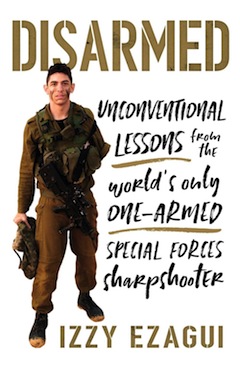
image - Disarmed book coverThis autobiography is among the few books available on the intricacies of the Israeli army’s training procedures for inductees into elite units – which Ezagui experienced not once but twice – and, as such, it provides an introduction to what it really means to become a member of Zahal, the Israel Defence Forces. The rigours of IDF training are equal or superior to American, British and Canadian special forces cadres.

When Ezagui’s tent was destroyed by the mortar blast that hit his unit bivouacked near Gaza, the young soldier did not at first realize what had happened to him, so great was the shock to his nervous system. The graphic description he provides of the wreckage to his left arm is not easy reading because it lies outside our normal anatomical parameters but Ezagui conveys quite adequately the physical and psychic damage he endured. It took hours before the extent of his personal catastrophe was fully known.

Ezagui’s comrades were able, once the dust had cleared, to transport him to an Israeli medical facility, where doctors stabilized the young soldier, along with others who had been injured by enemy fire. One of the most poignant parts of this journal is Ezagui’s attempt to speak to his mother on the telephone to impart the news about the loss of his left arm without provoking hysteria on her part.

Part of the treatment the author received from Israel’s medical cadres were heavy doses of very powerful drugs, including fentanyl, a narcotic, he notes, which is a hundred times more potent than morphine; it was the first drug administered to him when the severity of his injury was recognized. This is a relevant observation because, when Ezagui began to recover his sensibilities, he immediately declared that he intended to return to his combat unit. But he soon realized that he would have to go “cold turkey” before he could even think of rejoining his comrades. This he did by dint of unbelievable discipline in the face of incredible suffering from withdrawal.

During this crisis period in his slow recovery, Ezagui was confronted with the negative responses of army doctors, one of whom bluntly told him that his condition precluded the kind of camaraderie and fraternity among soldiers who depend on their peers to help them. That kind of subtle yet direct rejection ironically made Ezagui more determined in his pursuit of his former status as a soldier-sharpshooter. It did not help that he was continually hounded by his “phantom,” the curious physiological phenomenon when a severed limb asserts its presence despite its absence.

In his narrative, Ezagui gives us all the excruciating details of his retraining in the army – this time, with a limb missing. One of the greatest obstacles he encountered was mounting a wall with a rope anchored to it. In his previous incarnation, he had no problem, but one arm wasn’t enough to execute the onerous task. He finally realized that a contortionist’s skill was required to perform the feat and, through the use of his legs and other body parts, he was able to get over the wall.

Ezagui encountered a similar problem with his rifle. It jammed regularly when he tried to insert the shells into it. He overcame his frustration only when he realized that he had to dig his weapon into the ground, anchor it solidly and, then, with his one arm, load the instrument.

Ezagui passed all his retraining requirements and it was the doctor who had initially rejected his attempt to rejoin his unit who certified his reentry into the army.

Disarmed is a testimony to the resilience of one human being who beat the odds and conquered a disability, and Ezagui has become a symbol of what the human spirit is capable of accomplishing.


Arnold Ages is Distinguished Emeritus Professor at University of Waterloo, in Ontario.

Crocheting as work

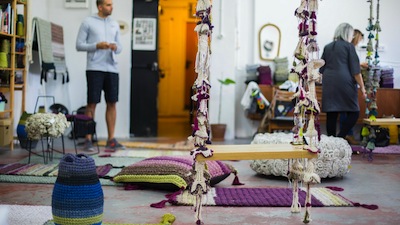
The label for an Iota rug and pouf hand-knit by Kefaya, a Bedouin woman. (photo from Iota)

Some of the best projects are born out of a desire for change – at least that was the case with Iota, an Israel-based textile company empowering unemployed women through the art of crochet.

Each one of the company’s rugs, pillows and home accessories is hand-crocheted by Bedouin women from their own homes, providing them with meaningful work and an independent source of income.

Bedouins are an Arab Israeli subgroup, located mainly in the south, with their own distinct culture and social norms. Historically, Bedouins lived a nomadic lifestyle, and many still herd livestock. Women traditionally tend to the house and children, resulting in high unemployment and poverty rates. A 2015 survey showed the employment rate among Bedouin women as 22%, compared to 32% for all Arab women.

Founded by Shula Mozes, an active social entrepreneur for more than 16 years, Iota aims to support the many women, all over the world, who are unable to work outside of the home due to cultural, religious and geographical reasons.

When she started the company in 2014, Mozes chose crochet, a self-taught hobby, as a means to create a business that could empower these women and fuel social change. With the help of creative director Tal Zur, she later discovered that not only is crochet a very versatile technique, but it has its own universal language that can be written and learned, like music notes.

“I realized that if I can learn to make things by crocheting small elements and putting them together, maybe we can teach women who don’t have work how to do the same,” Mozes said.

photo - Iota’s studio in Tel Aviv
Iota’s studio in Tel Aviv. (photo from Iota)

Iota now runs a small studio in Tel Aviv, where an all-female team of textile experts dreams up intricate designs. At least once a week, a member of the Iota team travels to Hura, a Bedouin village in southern Israel, to deliver raw materials to the women the company employs. Once complete, the finished products are transported back to Tel Aviv, each piece bearing a label signed by the woman who made it.

Currently, Iota employs three women in Hura, an intentionally small number, Mozes said, in order to maintain a strong commitment to each worker. “We have to respect their culture and empower the women slowly, so that they can work according to what they’re comfortable with,” she said.

Though centred on a 200-year-old technique, Iota’s designs are modern. The yarns used to create each piece are bespoke, developed in-house and produced in a local Tel Aviv factory. Mozes said that, by applying computerized designs, they’re able to create yarns that contain several different colours in the same thread, allowing the carpets to be made with one continuous string of yarn.

While Iota is currently only active in Israel, Mozes said she hopes to collaborate with other communities worldwide, which are experiencing high rates of female unemployment.

In January, Iota exhibited its collection for the third time at Maison & Objet, an international trade fair in Paris known for showcasing innovative design talents. The collection, ranging in price from 200 to 2,000 euros (from $315 to $3,150 Cdn), consists of colourful single-yarn rugs, oversized floor cushions, stools, one-of-a-kind swings and home accessories.

“I hope that, in the future, we will be able to take one of the women with us to an exhibition so she can experience the success of Iota firsthand,” Mozes said. “Without them, none of this would have happened.”

For more information, visit iotaproject.com.

Israel21c is a nonprofit educational foundation with a mission to focus media and public attention on the 21st-century Israel that exists beyond the conflict. For more, or to donate, visit israel21c.org.

The bond between Israelis

This photograph by Ziv Koren is from My Jerusalem: The Eternal City, a collection of reflections on the city by notable Israeli and Diaspora (mainly American) Jews edited by Ilan Greenfield and published by Gefen Publishing House last year.

I read a lovely quotation recently: “I met a hundred people going to Delhi. And every one of them was my brother.” I often feel that way in Israel. In the 40 years I have lived here, I have met saints and sinners, business tycoons and homemakers, and many, many others. But, by the very fact of them pulling up their roots, leaving behind their birthplaces and culture, here they become ordinary people leading extraordinary lives. I once had a friend, sadly passed on, who used to say that he stood on the corner and watched all the poems walk by.

Israel makes demands on us. We don’t just drift along acquiring more and more material possessions – a bigger home, a more luxurious car, a wardrobe of designer clothing. No matter how rich or poor we may be, when our children turn 18, they are expected to serve their country, either in the Israel Defence Forces or national service (Sherut Leumi). Almost everyone I know is a mother, father, grandparent, sister, brother, wife or daughter of a soldier, and there is always the fear for their safety, or of terrorist attacks that can occur anywhere, changing lives forever. And the six-day work week doesn’t leave much time for leisure, or keeping up with friends and family scattered around the country. Yet there is a resilience here. On the whole, we are optimists. It is almost a cliché that, if you live in Israel and don’t believe in miracles, then you are not a realist. We live on miracles and expect them – the Entebbe rescue and the Six Day War victory are just two examples.

Stand on the corner of any Jerusalem street and, in the space of 10 minutes, you can hear several languages. There might be a monk in a long habit; a soldier whose face is etched in weariness; a teenager with earrings and tattoos; tourists with cameras slung around their necks; a housewife trundling a shopping cart; a Charedi Jew with peyot; and everywhere people talking on their mobile phones. A gregarious lot contributing to the rich mosaic of our society. Each one unique.

They may be strangers, but Israelis won’t hesitate to speak to you … on a bus, waiting in a queue, sitting at your doctor’s office. They may ask you where you bought your shoes, where you work, how much you earn, and why haven’t you dressed your child warmly enough. One big family. It’s not just idle curiosity – they are really interested.

This is what’s so endearing about living in Israel. We all express our identity differently, in the way we dress and the words we speak, but, in the end, it’s a similar identity. We are bonded by birth, by choice or by belief and it creates a link – invisible perhaps but, when needed, we will help each other. It’s an unspoken commitment. How lucky we are!

Dvora Waysman is a Jerusalem-based author. She has written 14 books, including The Pomegranate Pendant, which was made into a movie, and her latest novella, Searching for Sarah. She can be contacted at dwaysman@gmail.com or through her blog dvorawaysman.com.

Too much food wasted

Millions more could be fed by the same resources if our diets changed. (photo from wis-wander.weizmann.ac.il)

About a third of the food produced for human consumption is estimated to be lost or wasted globally. But the biggest waste, which is not even included in this estimate, may be through dietary choices that result in the squandering of environmental resources. In a study published in the Proceedings of the National Academy of Sciences of the United States of America, researchers at the Weizmann Institute of Science in Rehovot, Israel, and their colleagues have found a novel way to define and quantify this second type of wastage. The scientists have called it “opportunity food loss,” a term inspired by the “opportunity cost” concept in economics, which refers to the cost of choosing a particular alternative over better options.

Opportunity food loss stems from using agricultural land to produce animal-based food instead of nutritionally comparable plant-based alternatives. The researchers report that, in the United States alone, avoiding opportunity food loss – that is, replacing all animal-based items with edible crops for human consumption – would add enough food to feed 350 million additional people, or more than the total U.S. population, with the same land resources.

“Our analysis has shown that favouring a plant-based diet can potentially yield more food than eliminating all the conventionally defined causes of food loss,” said lead author Dr. Alon Shepon, who worked in the lab of Prof. Ron Milo in the plant and environmental sciences department. The Weizmann researchers collaborated with Prof. Gidon Eshel of Bard College and Dr. Elad Noor of ETZ Zürich.

The scientists compared the resources needed to produce five major categories of animal-based food – beef, pork, dairy, poultry and eggs – with the resources required to grow edible crops of similar nutritional value in terms of protein, calories and micronutrients. They found that plant-based replacements could produce two- to 20-fold more protein per acre.

The most dramatic results were obtained for beef. The researchers compared it with a mix of crops – soya, potatoes, cane sugar, peanuts and garlic – that deliver a similar nutritional profile when taken together in the right proportions. The land area that could produce 100 grams of protein from these crops would yield only four grams of edible protein from beef. In other words, using agricultural land for producing beef instead of replacement crops results in an opportunity food loss of 96 grams – that is, a loss of 96% – per unit of land. This means that the potential gain from diverting agricultural land from beef to plant-based foods for human consumption would be enormous.

The estimated losses from failing to replace other animal-based foods with nutritionally similar crops were also huge: 90% for pork, 75% for dairy, 50% for poultry and 40% for eggs – higher than all conventional food losses combined.

“Opportunity food loss must be taken into account if we want to make dietary choices enhancing global food security,” said Milo.

Milo’s research is supported by the Mary and Tom Beck Canadian Centre for Alternative Energy Research, which he heads; the Zuckerman STEM Leadership Program; Dana and Yossie Hollander; and the Larson Charitable Foundation. Milo is the incumbent of the Charles and Louise Gartner Professorial Chair.

For more on the research being conducted at the Weizmann Institute, visit wis-wander.weizmann.ac.il.

Climate change heats up Israel

Israelis and tourists enjoy the beach in Tel Aviv on a hot summer day. (photo by Miriam Alster/FLASH90 via Israel21c)

A new study says that, by 2100, climate changes will extend the summer season in the eastern Mediterranean – an area that covers Israel, Egypt, Jordan, Syria, Lebanon and southern Turkey – by two full months. Winter, the rainy season, will shorten from four to two months.

The study, published in the International Journal of Climatology, was overseen by Prof. Pinhas Alpert and conducted by Assaf Hochman, Tzvi Harpaz and Prof. Hadas Saaroni, all of Tel Aviv University’s School of Geosciences.

“Pending no significant change in current human behaviour in the region, the summer is expected to extend by 25% by the middle of the century (2046-2065) and by 49% until its end (2081-2100),” Hochman said. “The combination of a shorter rainy season and a longer dry season may cause a major water problem in Israel and neighbouring countries.”

Other serious potential consequences include increased risk of brushfires, worsening pollution and altered timing and intensity of seasonal illnesses and health hazards.

“One of the main causes of these changes is the growing concentration of greenhouse gases emitted into the atmosphere as a result of human activity,” said Hochman.

The research team is currently exploring the possibility of establishing a multidisciplinary regional centre for climate adaptation.


עם או בלי נתניהו

קנדה תקלוט כאלפיים פליטים מישראל. (צילום: Wikimedia Commons)

ראש ממשלת ישראל, בנימין נתניהו, הוכיח שוב כי המדיניות שלו היא לא מדיניות באמת, וכי הוא משנה את דעתו על הזמן. וזאת בהתאם לכיוון שאליו נושבת הרוח. כך גם החלטתו האחרונה לשלוח למעלה משישה עשר אלף פליטים- מסתננים מאפריקה (ממדינות ארתיריה וסודן) שביקשו מקלט בישראל, למספר מדינות במערב. בהן לדבריו גרמניה, איטליה וקנדה. ולטענתו לאחר שכביכול הוא הגיע להסכם עם נציבות הפליטים של האו”ם בנוגע למשלוח המסתננים למדינות אלה, למרות שלהן לא היה ידוע על כך. מענין!

לפי ההסכם עם האו”ם 16,250 מבקשי מקלט מישראל יקלטו במדינות המערב. ישום ההסכם יבוצע בשלושה שלבים ויתפרש על פני חמש שנים תמימות. ובמקביל כ-16,250 מהפליטים יקבלו מעמד חוקי בישראל. הם יפוזרו באופן מאוזן ברחבי ישראל. וכן תוקם אף מינהלה מיוחדת שתעסוק בשיקום אזור דרום תל אביב הרעוע (וזאת על חשבון ההשקעה במתקן חולות לכליאת הפליטים שיסגר).

לאחר הודעתו כי הגיע להסכם ותוך שעות ספורות ביטל נתניהו בעצמו את החלטתו הקודמת, והחליט שלא לשלוח פליטים מישראל למדינות המערב. ומדוע? זאת לאור זעם במפלגות הימין בישראל שהביעו התנגדות נחרצת כי בעקבות החלטת נתניהו להעברת למעלה משישה עשר אלף הפליטים למערב, יקלטו במדינה השאר – כשמונה עשר אלף פליטים-מסתננים.

בקנדה החליטו שלא להמתין להחלטותיו התמוהות של ראש ממשלת ישראל וכיאה למדינה הקולטת כל הזמן הגירה ממדינות מצוקה, הוחלט לקלוט כאלפיים פליטים-מסתננים מישראל. וזאת במהלך עצמאי ללא בקשה של ממשלת ישראל, שהחליטה לפני מספר חודשים לגרש את הפליטים האפריקנים מישראל בחזרה לאפריקה. הארש ז’אסוול, עוזר מיוחד לשר ההגירה, הפליטים והאזרחות של הממשלה הקנדית, אחמד חוסיין, מסר את ההודעה הבאה בנושא: “הממשלה שלנו כבר הוכיחה שהיא מובילה עולמית לקבל בברכה פליטים שנמלטים ממלחמות ורדיפות. ישוב פליטים אלה הוא חלק בהמסורת ההומנטרית הגאה של קנדה. אנו מוכחים שוב כי יש לנו אחריות משותפת לסייע לאלה שנעקרו, שהם נרדפים ומרביתם זקוקים להגנה ועזרה. אנו עוקבים מקרוב אחרי המתרחש בישראל, ונמצאים בקשר ישיר עם ממשלת ישראל. הגענו להסדר עם הרשויות בישראל להשעות את גירושם ומעצרם של פליטים שהגישו בקשה לעבור לקנדה, בעזרת נותני חסויות פרטיות מקנדה – עד לשיושלם הטיפול בעניינם. אנו ממשיכים ביחד עם נותני החסויות הפרטיות שיתכן ובקשותיהם מושפעות ממה שקורה בישראל. נציגות של משרד ההגירה, הפליטים והאזרחות הקנדי בתל אביב, יספק מכתבים למבקשים בקרב הפליטים להגר לקנדה, במסגרת החסויות הפרטיות, כדי לאשר שבקשותיהם נמצאות בהליך של אישור על ידנו. הם יוכלו להציג את המכתבים האלה בפני הרשויות בישראל. נכון לשלושים ואחד בדצמבר אשתקד אנו מטפלים בקרוב לכאלפיים בקשות של פליטים אפריקנים לעבור מישראל לקנדה, כאמור במסגרת נותני חסויות פרטיות מקנדה. וללא קשר במקביל, אנו ממשיכים בהתאם להכרזת ממשלת קנדה, בקליטת כארבעת אלפים פליטים מאריתריה, עד לסוף הנה הנוכחית”.

לדברי סוכנות האו”ם לפליטים השוכנת באוטווה, יש הסכם שקנדה תקלוט השנה לא פחות מכעשרת אלפים פליטים. באופן כללי יתכן שחלקם של פליטים אלה יגיעו אפילו מישראל.

במרכז לענייני ישראל והיהודים בקנדה הזדרזו לברך את שר ההגירה, הפליטים והאזרחות הקנדי, אחמד חוסיין, על הסכמתו כביכול לקלוט פליטים מישראל. במרכז אמרו והוסיפו עוד כי: “ישובם מחדש של מבקשי מקלט מישראל, הוא אתגר בינלאומי המצריך פתרון בינלאומי. ואכן קנדה נטלה על עצמה תפקיד מוביל בנשיאה באחריות הבינלאומית לישובם מחדש”.