Settling Ukrainian newcomers

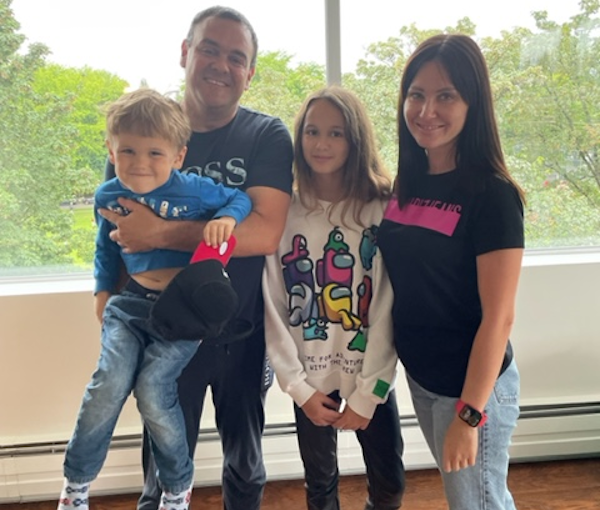
With the help of Jewish Family Services, Belmont Properties and others, the Zubrys family – Alexander, holding Artem, Sophie and Katrina – are getting settled in Vancouver. (photo from JFS)

For Oleksandra Liashyk and her family, who fled the Ukraine-Russia war last year, resettling in Vancouver was an opportunity for a new, though unexpected start. The family of three, who have an apartment and have enrolled their son in public secondary school, are learning English and navigating the ropes that come with resettlement. Still, Oleksandra admitted that it hasn’t been easy, that simply adjusting to a new culture, community and language has been a challenge. “This is absolutely another world,” she said.

It’s a sentiment shared by many of Vancouver’s newest immigrants from Ukraine. Fedor and Yulia, who came from wartorn Chernihiv with their two children, had good jobs as a real estate broker and a fitness instructor. While their children aren’t yet old enough to attend school, the kids are struggling with socialization. “The hardest thing to adjust for our children here was lack of communication with children of their age,” they said. “[E]verything looks quite unusual here.”

Like Fedor and Yulia, many others have left behind established businesses and jobs, professions that will be hard to restart in Vancouver. Lawyers, real estate brokers, accountants, social workers and business owners will need licences, education and a practised familiarity with Canada’s certification processes. But first, they need a place to live and a way to support their families.

According to Tanja Demajo, chief executive officer of Vancouver’s Jewish Family Services, the Ukrainian resettlement program was already in the planning stages when Russia formally announced its intended occupation of Ukraine in February 2022. Well-versed in creating programs to assist new immigrants, JFS knew the program would have to be versatile and able to address the many challenges faced by refugees on the move. Not all immigrants would be able to plan ahead before leaving Ukraine; many would arrive unprepared for their new home.

“Families reach out in many different ways,” Demajo explained. “Sometimes they call us from abroad and they are trying to understand the Canadian systems and how to actually come here. Sometimes we receive a call from other [Canadian] cities when families have already left [Ukraine] and they are thinking about relocating to the Lower Mainland. And sometimes we receive calls from families that are already here and are trying to navigate their next steps.”

According to Demajo, more than 80% of Ukrainian refugees enrolled in the resettlement program have advanced educations, but lack fluency in English, so JFS partnered with the B.C. Centre for Disease Control to provide its Food Skills program. In it, participants learned how to read labels in grocery stores and purchase food, which then became the ingredients for new Western-style dishes, which they cooked in the JFS Kitchen. “Throughout the cooking, they were also learning English,” Demajo said. “We also had childcare provided as well.” The classes were so successful that JFS is looking at expanding the program.

But the greatest challenge facing new immigrants to Vancouver has been the city’s housing shortage. Residential vacancy rates, which now stand at less than 1%, and the disproportionate cost of rental apartments have made it harder to find housing.
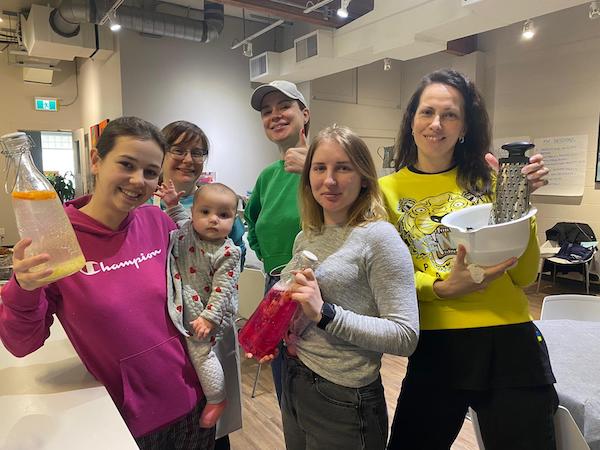
photo - JFS partnered with the B.C. Centre for Disease Control to provide a Canadian food education and cooking class that doubled as an English class for new immigrants
JFS partnered with the B.C. Centre for Disease Control to provide a Canadian food education and cooking class that doubled as an English class for new immigrants. (photo from JFS)

JFS settlement worker Tanya Finkelshtein helps connect new immigrants with “welcome circles” of volunteers that can help get them settled. “Housing is the number one problem in the Great Vancouver area, especially for newcomers. We [are] able to support some of our clients, but it is a serious issue,” said Finkelshtein, who works with about 70 Ukrainian families in JFS’s settlement program.

Affordable housing is key to creating adequate living conditions, including suitable employment.

“We have a family that was initially living outside of Vancouver,” Demajo said by way of example. The family’s efforts to connect with the Vancouver Jewish community were hampered by distance, as was their effort to find suitable employment. By connecting them with Tikva Housing and Temple Sholom Synagogue’s volunteer network, JFS was able to help the family resettle closer to employment opportunities and Jewish community programs. Tikva has since set aside two other units for JFS’s resettlement program.

But the search for housing continues to be a problem for new arrivals, so Demajo reached out to a property management company with well-known connections in the Jewish community. Shannon Gorski, whose family owns Belmont Properties, said JFS was looking for a couple of apartments that could provide temporary housing for Ukrainian immigrants. Gorski, who also serves on the JFS board and is the managing director of the Betty Averbach Foundation, reached out to Belmont’s board of directors “and then I learned … that they had been approached by someone in the rental world, Bob Rennie, and they had already stepped up to the plate.” Gorski said the board agreed to provide four units free of charge for four months.

The offer couldn’t have come at a better time for Alexander and Katrina Zubrys, who had been living out of a hotel since arriving from Kherson. The 1,200-square-foot apartment meant the couple could enrol their two children in a Jewish day school close by.

“The school is located 10 minutes from our house,” said Alexander, who acknowledged that, for his 5-year-old son Artem, “the biggest problem is English.” With the school’s help, Alexander said Artem and Sophie, 13, are adapting to their new surroundings and new language.

According to Gorski, the Zubrys family is the only one so far to request temporary housing from Belmont. “My concern is there are so many other families out there that don’t know that the Jewish community is here to help them,” she said. Thus, the challenge isn’t just finding available housing for current clients, but getting the word out to those arriving who don’t know who or how to ask for help.

As for finding new housing for the program, Gorski encourages other companies to get involved. “We are proud to be able to help the Zubrys family and we would like to help other families once identified,” she said. “And we challenge other property management families to step up as well.”

She is confident that, once alerted that Belmont Properties has donated temporary accommodations to the program, other property owners “would answer the call. I have no doubt that they would.”

Demajo said the settlement program wouldn’t have gotten off the ground without the assistance of the Jewish Federation of Greater Vancouver, which sent out an emergency appeal to the community to fund the project.

“Our community and our Federation have a history of responding quickly and generously whenever and wherever help is needed and we can be incredibly proud of the way our community responded to the crisis in Ukraine,” said Federation chief executive officer Ezra Shanken. “We didn’t spring into action the day the war broke out – we work year-round building communities and partnerships around the world and here at home so that we have the systems in place to make an impact.”

Demajo said Temple Sholom and Congregation Schara Tzedeck are playing a role in supporting new immigrants. Both run their own programs and have collaborated with JFS to make sure new arrivals are supported, she said.

“We continue to support these families now, helping some find vehicles, others looking for new jobs,” said Temple Sholom’s Rabbi Dan Moskovitz.

For the Zubrys family, the support system is what made the 9,100-kilometre migration possible. It’s Gorski’s “big heart” and the help of JFS and other volunteers that made it possible to finally find a new home, said Alexander.

For information about how to offer temporary housing and other help for Ukrainian refugees, contact Tanya Finkelshtein at 604-257-5151.

Jan Lee is an award-winning editorial writer whose articles and op-eds have been published in B’nai B’rith Magazine, Voices of Conservative and Masorti Judaism and Baltimore Jewish Times, as well as a number of business, environmental and travel publications. Her blog can be found at multiculturaljew.polestarpassages.com.
A double anniversary

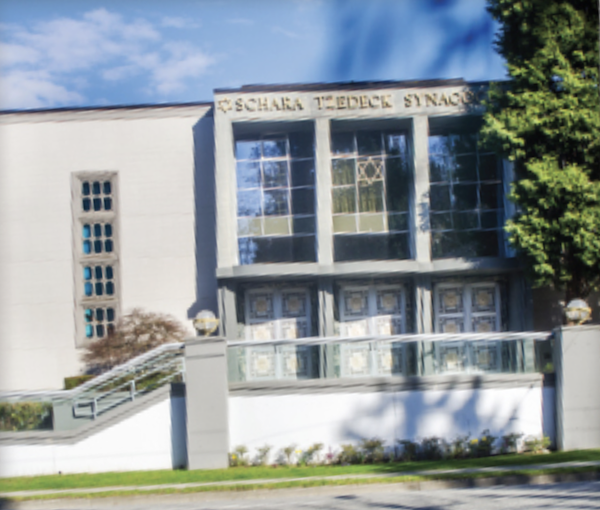
Congregation Schara Tzedeck is celebrating 20 years since Rabbi Andrew Rosenblatt and Dr. Cirelle Rosenblatt arrived in Vancouver, and 115 years as the city’s flagship Orthodox congregation. (photo from Schara Tzedeck)

Members of Congregation Schara Tzedeck are celebrating 20 years since Rabbi Andrew Rosenblatt and Dr. Cirelle Rosenblatt arrived in Vancouver. And, while gala festivities are slated for June 14, the rabbi wants members of his congregation and the larger community to focus less on the individuals than on the role the synagogue has played in the past – and could play in the future.

Schara Tzedeck, which is marking 115 years as the city’s flagship Orthodox congregation, has been a central institution of the community, though Rosenblatt balks at the word “institution.”

“It’s more than a registered authority with CRA,” he said. “It is more than an organization with a letterhead. It’s even more than the sum of its membership because plenty of people who feel a connection with Schara Tzedeck may not currently be paying members but they may have a historical connection. They may live elsewhere now but feel very close to Schara Tzedeck.

“The thing that I want our community to appreciate and to value and perhaps give more attention to is that they are part of this very long story and, if they treat it well, it can play a very important role in their lives,” the rabbi said. “It can play a very significant role in their future and in the security of their family and the emotional health of their family.”

While Rabbi Rosenblatt has been tending to the spiritual and other needs of his congregants, Dr. Rosenblatt has been tending to the medical needs of individuals with brain injuries. As founder and director of Advance Concussion Clinic, she is a leader in the field of neuropsychology and has applied interdisciplinary expertise in concussion as a neuropsychologist and consultant to amateur and professional athletes and teams, including in the Olympics, the National Football League and the National Hockey League.

Reflecting back on two decades, Dr. Rosenblatt believes that it was no accident they landed in Vancouver.

“The primary feeling I have is one of gratitude,” Dr. Rosenblatt told the Independent. “I’m really grateful – I guess it’s appropriate for a rabbi’s wife – I’m really grateful that we were guided to Vancouver. I have a very strong sense of faith and belief that we were meant to be here and that there was a plan in place for us. [I’m] really grateful that God led us to this place but really also to the community and for the community and for the opportunities that Vancouver specifically provided for us and for our family.”

 It is partly because of Dr. and Rabbi Rosenblatt’s scientific and theological intersections that the guest speaker for the gala, which is called Mosaic 2023, is Yeshiva University’s president, Rabbi Dr. Ari Berman.

“The reason that we thought it was such a good idea,” explained Rabbi Rosenblatt, “is that Yeshiva University’s motto is ‘Torah Ummada’ [‘Torah and Science,’ or secular knowledge]. The idea of sophisticated wisdom and intellectual disciplines coupled with Torah is going to be something that makes them both better on some level.”

Dr. Rosenblatt was educated in the Yeshiva University system from high school, through her undergraduate studies, to her doctoral work.

Rabbi Rosenblatt, a native of Baltimore, Md., received his smicha, rabbinic ordination, from Yeshiva University. He earlier completed an undergraduate degree in chemistry and English literature and a master’s in bioorganic chemistry at Columbia.

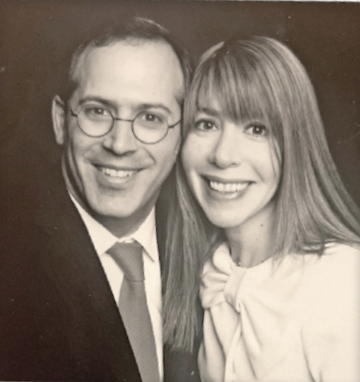
photo - Rabbi Andrew Rosenblatt and Dr. Cirelle Rosenblatt
Rabbi Andrew Rosenblatt and Dr. Cirelle Rosenblatt (photo from Schara Tzedeck)

The gala will celebrate the two decades of the Rosenblatts’ service to the community but also the much longer history of Schara Tzedeck, which began as B’nai Yehuda, in 1907, and has been at the heart of Jewish Vancouver almost as long as there has been a Jewish Vancouver. But the rabbi worries that social changes are affecting his congregation and all religious assemblies, and community groups more broadly. Among these are declining engagement at religious services, the omnipresence of social media, the alienation from community connections and related phenomena that author Robert D. Putnam outlined in his 2000 book Bowling Alone: The Collapse and Revival of American Community.

“Those kinds of group spaces, those kinds of community living, are extremely powerful for the need of the individual in terms of their emotional health,” he said. “That, too, is under threat.”

For 115 years, under successive rabbis, Schara Tzedeck has been much more than the sum of its parts, said Rosenblatt.

“You have this network, this community, this thriving ability to provide help and resources and support in a rotating fashion,” he said. “The value of this community has lent emotional and financial and physical and every other kind of support you can possibly imagine. That’s severely threatened now in the 21st century.”

Being spiritual leader of Schara Tzedeck is to play a leadership role in maintaining the infrastructure of Jewish life in the city, including the mikvah (ritual bath) and the cemetery, as well as what is, in the context of those two community assets, a far more recent addition: the 32-kilometre eruv, the spiritual boundary that allows observant Jews to carry certain items outdoors on Shabbat, which Rabbi Avi Baumol created more than 20 years ago.

Taking wisdom that has been passed down for millennia and making it “speak in a modern voice” is what Rosenblatt calls his stock-in-trade, with the late chief rabbi of the United Kingdom, Rabbi Lord Jonathan Sachs, being a model he cites.

“We also try to do things that are a little bit on the creative side in terms of how people can access these mitzvot, but have very long-standing or deep roots in the Torah,” he said, citing a “sukkah-raising” that allowed people to get involved hands-on in the tradition.

“I guess that’s the Jewish equivalent of a barn-raising,” the rabbi said with a laugh. But the congregation also took the opportunity of the ancient tradition of constructing a temporary shelter to discuss the very modern reality of housing security.

Food security is another area that Rosenblatt has emphasized. For years, volunteers from the shul were involved in a vegetable garden at Yaffa House, Vancouver’s Jewish group home and centre for adults with mental illness. The rabbi would take bar mitzvah classes to the garden and talk about the importance of food and sustainability. He also takes great pride in the long presence of members of the Schara Tzedeck community as volunteers in groups like Yaffa House, Tikva Housing and other agencies.

Rosenblatt has trouble believing his family has been here for 20 years, but that passing of time has a very physical manifestation, in the form of the youngest of the Rosenblatts’ five children, the daughter the rabbi calls their “anchor baby,” who was born a few months after the family’s arrival.

“It’s hard for me to believe that her entire life is here,” he said, noting that all five (now adult) children love Vancouver. “They think it’s a really special place.”

As come-from-aways themselves, the Rosenblatts understand the long history of newcomers arriving, often from inhospitable places, to start a new life here. In the days of Schara Tzedeck’s Rabbi Nathan Pastinsky, who began his long service in 1918 and continued until his passing in 1948, the spiritual leader would meet migrants at the train and set them up with a cart from which to sell wares and begin a career.

“I’m not giving people carts anymore,” said Rosenblatt. But he is still very much involved in easing the way for newcomers to navigate the immigration system, find a job and housing and settle into the community.

Shelley Rivkin, vice-president of the Jewish Federation of Greater Vancouver, is just one person with accolades for the contributions the Rosenblatts have made to their chosen home.

“Rabbi Rosenblatt is a consummate bridge-builder,” Rivkin told the Independent. “He is always willing to reach out and have a conversation with anyone regardless of religious practice and beliefs. When you attend his Zoom classes, you see participants from across the Jewish community who are actively engaged in what he has to say.

“Cirelle (Dr. Rosenblatt) is a role model for modern Orthodox women,” Rivkin continued. “She is very learned. She is a highly respected professional and successful businesswoman and she is the mother of five children. When she gives a class, she is able to effectively weave together Torah study with contemporary issues.”

Rabbi Rosenblatt, though, deflects back to the longer history of the shul.

“I want people to understand that the anniversary of this milestone is a moment to appreciate how valuable this institution is,” he said.

Deep, dangerous bias

The sale by George Soros of a (comparatively) modest holding in Elon Musk’s Tesla car company seems to have sent Musk into a Twitter tirade last week.

“He wants to erode the very fabric of civilization,” Musk tweeted in a reckles overreaction. “Soros hates humanity.”

The context of the smear is worth a moment of consideration. A man who sinks a chunk of his estimated $185 billion US pile into a space flight hobby says that a man who has donated (at a minimum) $32 billion US into building civil society in the former Soviet bloc and other countries “hates humanity.”

Beyond this context is a whole lot of subtext.

There is nothing essentially wrong with a public figure criticizing another public figure. If the target feels he has been libeled, there are legal recourses available. That’s not really the issue here.

As one of the world’s foremost funders of liberal causes, Soros draws criticism from plenty of people who don’t agree with his politics. Fair enough. But “Soros” has become a shorthand. Generations of people have used the name “Rothschild” to invoke a conspiracy of Jewish wealth and power. “Soros” is a 21st-century update of that conspiracy.

This is a bit dicey. It is fair to criticize someone who dumps billions of dollars into causes you disagree with. If the person happens to be Jewish, that doesn’t make you antisemitic. If you use that person’s name as a stand-in for a complex of ideas about Jews more generally manipulating events with wealth and the manipulative force that can come with it, that is antisemitic. But, of course, getting into the head of a suspected bigot is impossible. One person can accuse another of racism, the accused can deny it and neither is any further ahead. Sometimes the accused may not even be conscious of what they have done.

But Musk tipped his hand. He launched his outburst with: “Soros reminds me of Magneto.”

Magneto is a villain in the Marvel Comics franchise X-Men. Like Soros, Magneto is a Jewish survivor of the Holocaust.

The idea that Soros “hates humanity” is an especially laden accusation. It seems like a peculiar assertion – unless one is familiar with centuries of slander against Jewish people, which has posited that Jews are the embodiment of Satan, the enemy of all things good. In Christian theology, including official Catholic doctrine until the mid-1960s, Jews were accused of deicide, of literal God-killing, of destroying what is most sacred to humanity. To accuse a Jew in 2023 of hating humanity – and all that implies in the context of funding social change movements – is to invoke (intentionally or not) millennia of deadly ideas about Jewish evil-doing. To also invoke a (Jewish) cartoon villain in the process makes Musk’s playing to pervasive tropes about Soros, money, Jews and power seem more deliberate.

This is what is so confounding about racism and bigotry in general, and antisemitism in particular: it so often manifests not as outright intolerance and hatred but as unconscious or barely conscious bias that motivates our beliefs and actions without us knowing it. In some ways, this is the more frightening prospect. It is easy to identify and condemn the most overt acts of racism or hatred. Parsing and reproving harmful, unconscious ideas is much more challenging.

We are not all in a position (thankfully!) to have our Tweets or other late-night brainwaves analyzed by millions. Musk hosts a powerful platform and his speech can move financial markets and mobilize followers. Ideally, he may take time to reflect on whether he carries unconscious biases that need examining.

For us, there are at least two lessons. First, we are reminded that confronting antisemitism is not as easy as condemning those who exhibit the most obvious signs. Second, while we are critical of one of the most prominent people in the world letting slip what appear to be deep-seated conspiratorial ideas that project onto a single individual a host of negative characteristics attributed to the group to which he belongs, we would do well to consider how we use the platforms we each have in our daily lives in the service of justice, anti-racism and truth.

Honouring others in death

There’s nothing like a tree stump to put things in context. I walk the dog in an area full of mature trees and wildlife. Tucked in a bend of a river, we’ve got a lot of trees here. However, this enormous tree had died. I contemplated its huge stump and growth bands. My impatient dog pulled me towards her usual routine, so I didn’t manage to count the rings to learn just how long it lived, but likely it has existed since long before settlers claimed this land.

One gift I’ve gained from living in Winnipeg, where more than 15% of our population is Indigenous, is a better connection to and respect for the earth and living things. In my urban daily walks with the dog, I’ve seen woodpeckers, ducks, geese, hawks, deer, fox, and more. I’m filled with awe by the wild natural world around us and the contexts offered by Canada’s First Peoples.

However, I’ve also seen the traumas played out through what Canada has done to its Indigenous population. There are unhoused people nearby, living in camps along the riverbank in all kinds of weather. On a warm day, I saw a woman on the ground. I thought she was sleeping and went on my way. Then I struggled, wondering if I should have called for help. Perhaps it was an overdose or something worse. At the time, I promised myself that if she were still there when I returned, I would call for help. The whole walk, I debated whether it was better to involve police or not. Indigenous Canadians aren’t always treated fairly by law enforcement. She was gone by the time I returned. I felt relief because I hadn’t been forced to make a decision. Would sleeping on the ground in an area that was her people’s ancestral land result in an arrest or accusation of criminal behaviour?

This situation, of not being sure if a call to the police was safe, came to mind when hearing the latest news reports regarding the deaths of four women in Winnipeg. These women’s remains were left in multiple garbage bins in May 2022, according to police reports. Some of these dumpsters were sent to Prairie Green landfill on May 16. Jeremy Skibicki is accused of killing these Indigenous women: Rebecca Contois, Morgan Harris, Marcedes Myran and a fourth woman, unidentified, who Indigenous leaders have named Mashkode Bizhiki’ikwe, or Buffalo Woman.

Some of Contois’s remains were found at Winnipeg’s Brady Road landfill in June 2022; her remains were in at least two dumpsters, one of which was spotted before being picked up by the dump truck. The police didn’t find the other women’s remains and declined to do a search for them, saying it would be dangerous and expensive. They have arrested the man they think committed the crimes and said they didn’t need to find the bodies to press charges. Public outcry, along with the families’ voices, forced the government to do a feasibility study regarding a search of the Prairie Green landfill, which has now been released. It says it could take up to three years and $184 million to search for their remains.

Like many Manitobans, I was horrified by how this has unfolded. The idea that these women’s bodies should remain in the trash rather than have a proper, culturally sensitive burial, is abhorrent. I couldn’t imagine why anyone needed a feasibility study to determine that their remains should be found as soon as possible. I, like many others, couldn’t understand why a search didn’t commence immediately in June 2022. I wouldn’t be alone in saying that it seems as though the decision to not recover the bodies promptly seemed inherently flawed and racist.

Unfortunately, this isn’t a new situation. Jewish tradition is rich with historic detail. The Babylonian Talmud, codified by about 500 CE, has already described what to do about it. Even a kohain (priest), who normally must avoid the dead to avoid becoming “defiled” (unable to do Temple sacrifice, during the days when there was a Temple in Jerusalem) is commanded in the Talmud to bury any dead person he finds abandoned on a road. This is called a meit mitzvah. Today, it’s considered a special and important mitzvah (commandment) for all Jews to uphold: if we discover a dead person with no next of kin, we must do the right thing. We must tend to that dead person with respect and bury them properly.

In the Babylonian Talmud Tractate Sotah, on page 45b, we learn that we’re responsible for burying bodies that we find. We must find body parts and bury them together. There’s a rabbinic discussion about what the proper rituals and procedures are “if he was strangled and left in a garbage heap.”

Walking by that enormous tree stump with its yearly growth rings reminds me that we have only a set time here on earth to do the right thing. Jewish tradition teaches us to be upstanding while we’re here. The families who lost their loved ones in these awful crimes deserve to have their rituals around death observed. These include a proper burial and send off of their loved ones’ spirits. Deuteronomy 16:20 reminds us “Justice, justice shall you pursue.” That sometimes requires us to dig at a landfill, i.e. a modern-day garbage heap, to pursue it.

It’s sometimes expensive and hard to do the right thing. It’s even more expensive and harder to correct an error like this one, when someone believes certain bodies on a trash heap are somehow less valuable or important. The police force took an unacceptable approach – to stall, and then find excuses for why we shouldn’t treat every person equally, and value every life taken.

Joanne Seiff has written regularly for CBC Manitoba and various Jewish publications. She is the author of three books, including From the Outside In: Jewish Post Columns 2015-2016, a collection of essays available for digital download or as a paperback from Amazon. Check her out on Instagram @yrnspinner or at joanneseiff.blogspot.com.

Living under fire of missiles

Working from home, it was after 6 p.m. and my global Teams meeting had just started. Comfortably settled and talking about suppliers, delivery times and prices, my smartphone beeped incessantly – the Code Red missile warning app. More than 350 missiles fired at Israel over the last couple of days.

Rehovot has managed to dodge almost all the missiles. We could see them soaring overhead and hear the guided collision with our Iron Dome anti-missiles. And the nonstop news cycles informed us in real time where rockets were being intercepted.

Since terrorist Khader Adnan died from his hunger strike at an Israeli prison, Israel had been bracing for reaction from the Islamic Jihad in Gaza. In the same way my Canadian cousins warn their loved ones about a pending blizzard – Did you hear the weather report? It’s going to be a cold one. Potential white out. Bundle up. Hurry home. We do the same here but for different reasons – Did you hear the news? Adnan died. Might be terrorist attacks or missiles from Gaza. Be aware of your surroundings. Hurry home.

Sure enough, we felt the reprisals, with about 100 missiles fired from Gaza. Israel waited, preferring to respond at a time and place of its choosing. Our reaction came about eight days later, with the targeted assassination of three Islamic Jihad leaders; their names of no consequence, each responsible for reprehensible terrorist crimes over the years. And, with that, Operation Shield and Arrow began.

Back to Teams. Another siren went off. This one not only coming from my app, but also from outside. “Bruce!” my wife yelled. “Missiles!” “Hurry!” Not sure my European and U.S. coworkers understood when I shouted into my headset, “Missile siren! Gotta go!” Abruptly exiting my meeting, I darted to our TV room … er … reinforced safe room, which doubles as a den in quieter times.

We have about 75 seconds to reach our shelter before a missile hits or, preferably, gets knocked out of the sky – as apposed to the 15 seconds for those living closer to Gaza. Can’t imagine their stress during these times.

We just managed to close the heavy steel door and fortified iron window shutter when “BOOM!” The loudest boom we ever heard. My wife and I almost hit the ceiling, knowing this was more than the reassuring and softer crash of an Iron Dome antimissile intercepting an Islamic Jihad rocket high in the sky. No. This was something much closer, much more ominous.

Numerous calls from friends and family followed. Were we OK? Amazing how quickly news travels. My son texted from the safety of his dorm in the United States – a missile had landed next to his best friend Amit’s home. Then my daughter texted from the relative safety of her work north of Tel Aviv – a missile hit near the home of her best friend (and Amit’s sister) Shira. And on it went. With more chilling calls from neighbours.

I tried rejoining my Teams meeting, to create some normalcy. But I was too hyper, too distracted. Couldn’t focus on discussions about price variances and purchasing systems. I excused myself again, advising them the precariousness of the situation.

Rehovot had suffered a direct hit, due to the malfunction of our Iron Dome system. It was just around the corner, not far from Amit and Shira’s home. Curiosity being a strange animal, I walked the two blocks into what was literally a war zone. A chill engulfed my entire body as my skin crawled.

My favourite bakery nearby became a gathering place for the shocked. I considered buying cookies and cakes for our first responders, then thought better of it – didn’t want the action to be confused with the celebrating Palestinian street, which hands out sweets after such attacks.

The smell of sulfur, carbon and potassium nitrate dominated. A flash back to younger days of playing with cap guns … my mind looking for a safer place.

Time seemed to halt. Somewhat apocalyptic. Traffic snarled and jammed. Red-and-blue flashing lights from police vans, fire trucks and ambulances. Army sappers and Israel’s 669 search-and-rescue unit moving about in their yellow vests. Local and international news crews mustering about. ZAKA – the Orthodox volunteers who collect the remains of the wounded and dead after terror or missile attacks – were scouring the area. There were five wounded, one dead.

Alas, Israelis have learned to move on quickly. Within hours, the streets were reopened, the destroyed building draped with Israeli flags. And I joined another work meeting later that evening, this time much calmer. Again, in search of normalcy and routine. Echoing Herb Keinon from the Jerusalem Post, specific memories of these military operations – whether they last weeks, days or a weekend – quickly fade into the background. It’s difficult to differentiate one from the other: Rains, Summer Rains, Autumn Clouds, Black Belt, Breaking Dawn, Cast Lead, Pillar of Defence and, now, Shield and Arrow. The list goes on, unfortunately.

Israel takes maximum precautions to avoid collateral damage. We are known for our warning methods. Sometimes a “knock on the door,” unarmed missiles skimming the roofs as a warning of incoming rockets. Sometimes dropping leaflets advising of a pending attack. Missions are even aborted when civilians are spotted nearby. But our enemies indiscriminately shoot missiles – hundreds of them – towards Israel, hoping for maximum death, maximum damage. Fortunately, our missile defence system renders much of this arsenal ineffective. Until one gets through. As it did in Rehovot. My little shtetl. Paraphrasing from the Torah – may we be blessed with peace.

Bruce Brown is a Canadian and an Israeli. He made aliyah … a long time ago. He works in Israel’s high-tech sector by day and, in spurts, is a somewhat inspired writer by night. Brown is the winner of the 2019 AJPA Rockower Award for excellence in writing, and wrote the 1998 satire An Israeli is…. Brown reflects on life in Israel – political, social, economic and personal.

Laugh for good causes

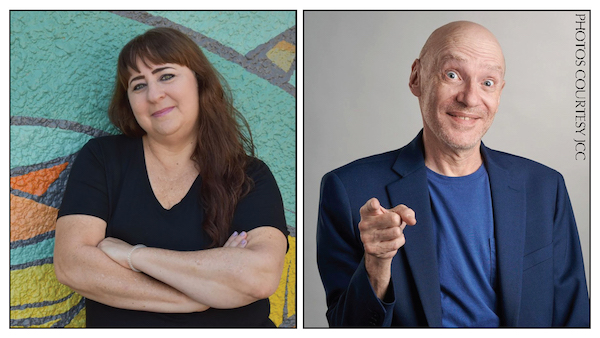
Helen Schneiderman headlines and David Granirer emcees the Stand Up for Mental Health show at the Jewish Community Centre of Greater Vancouver on June 1. (photos from JCC)

“There are many comedy shows out there, but not many like this one,” Kyle Berger told the Independent. “I keep saying that this will be the ‘feel-good comedy of the year,’ but it really will be. These comics will show us that we can laugh at just about anything and feel inspired at the same time – with all proceeds going to incredible causes. I can’t wait!”

Berger is the sports coordinator at the Jewish Community Centre of Greater Vancouver and the delegation head of JCC Maccabi. He is also a stand-up comic and a producer with Rise of the Comics. It is in all these capacities that he is participating in the Stand Up for Mental Health comedy show at the JCC on June 1, 7:30 p.m.

A joint fundraiser for the Stand Up for Mental Health (SMH) Comedy Society and JCC Maccabi Vancouver, Berger is producing the event, with the support of Stand Up for Mental Health, and will be performing a set himself. “It will be a huge honour for me to share the stage with this crew,” he said.

“This crew” includes SMH founder, counselor and comedian David Granirer.

“Stand Up for Mental Health is my program teaching stand-up comedy to people like myself with mental illnesses as a way of building confidence and fighting public stigma,” Granirer explained. “We have been around since 2004 and have trained approximately 300 comics and done hundreds of shows for government, corporations, the military, correctional facilities, medical schools, etc.”

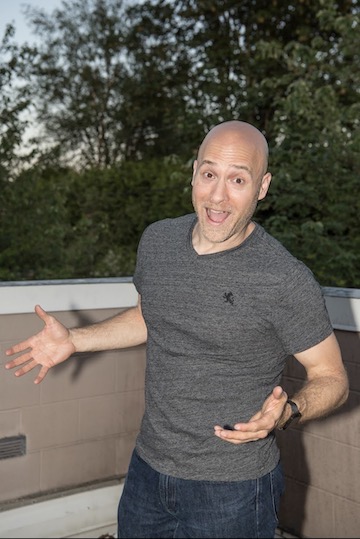
photo - Kyle Berger
Kyle Berger (photo from JCC)

Berger attended one of those performances last year, in which SMH Comedy Society showcased “their students’ incredible talents, and I absolutely loved it,” he said. “I knew some of the SMH Comedy board members from working together in the comedy scene and made the connection right away. They are always looking for venues and new audiences and I knew I wanted to do something with comedy as a JCC Maccabi Games fundraiser, so inviting them to team up seemed like a no-brainer to me.”

Also performing next week will be Helen Schneiderman, who headlines the show.

Schneiderman’s comic career began in 2018, when she took a comedy course at Langara College that was taught by Granirer. She said she did it, “mainly to get off the couch. I didn’t expect to love it so much, nor to continue doing it after the class. But, once I got my first few laughs, I was hooked. Over the past couple of years, I’ve gotten more comfortable sharing my experiences and perspectives, and I try to remember to always have fun up there.”

Being able to do stand-up comedy has influenced how Schneiderman navigates through life.

“I now see the world through ‘funny glasses,’” she said. “Every interaction and experience has the potential to be a joke – not always a good joke, but a joke nonetheless. My day job is delivering leadership training and so I get to have a captive audience, even at work.”

In addition to her day job and other involvements, Schneiderman has been on the board of SMH Comedy Society for four years, and board president for the past two years.

“I’m involved with the organization because it’s doing really important work to tackle the stigma of mental health,” she said. “It’s a fantastic program, and I am in awe of the comics who share their stories with so much vulnerability and smart humour.”

People can find out more about SMH at smhsociety.org. Post-pandemic, the society is once again holding live classes and shows, as well as continuing to put on Zoom shows. The pandemic, said Granirer, “made me realize that, by being creative on Zoom, we could reach people all over the English-speaking world. It also made me realize how much people need to have in-person contact in order to maintain their mental health.”

One of the reasons SMH is teaming up with JCC Maccabi Vancouver for this show, he said, is “because they’re a great organization and exercise is crucial to maintaining good mental health.”

The decision to partner was easy for Berger.

“As the delegation head for Vancouver’s JCC Maccabi squad, I am always looking for ways to raise money for scholarships so that anyone who wants to participate in the JCC Maccabi Games experience can do so,” he said. “At the same time, producing and performing stand-up is another hobby and passion of mine, so it always makes sense to me to raise money through laughter. I always love the opportunity to work with other causes or charities, and this one was a match made in heaven.”

The June 1 Stand Up for Mental Health show is being presented by JCC Maccabi Vancouver and Life is Still Funny, which Berger described as “a group of local comedians who might be considered, well, not particularly young, but still quite young at heart! Made up of locals like Helen, Ray [Morrison], as well as recent Canada’s Got Talent contestant Syd Bosel. They are all involved with SMH Comedy Society.”

In addition to Schneiderman, Berger and Granirer, Morrison will perform, as will a few SMH students. Tickets are $20 (plus fees) and are available at eventbrite.ca. There will be a cash bar and a raffle draw at the show. Berger said half of the proceeds will go to SMH Comedy Society and half to JCC Maccabi Vancouver.

Sizzlin’ Summer in June

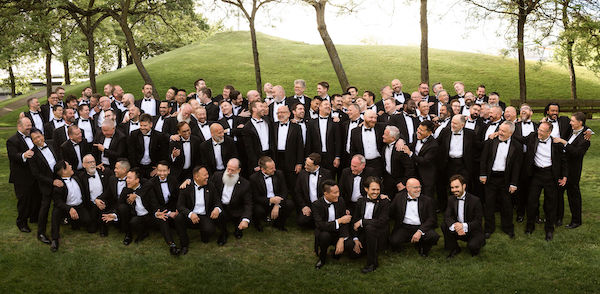
The Vancouver Men’s Chorus “brings such an effervescent joy to the shows and the spring season in particular is a big party for the chorus and audience alike.” (photo by Mark Burnham Photography)

The Vancouver Men’s Chorus (VMC) Sizzlin’ Summer concert promises to be a lively and entertaining experience.

“The VMC is more than just your average choral concert – we have the chops to pull off some pretty complex vocal arrangements, but we also like to mix that up with pure upbeat fun,” said Jewish community member Dr. David Rothwell, who is one of the choreographers of the show, which sees several performances June 9-17 at Performance Works on Granville Island. “The group brings such an effervescent joy to the shows, and the spring season in particular is a big party for the chorus and audience alike,” he said. “Whether it’s pulling out some disco moves for a nostalgic trip to ABBA’s heyday, or donning umbrellas after a hairy forecast from the Weather Girls, the choreography put together by myself and my fellow choreographers (Randy Romero and Jason Yau) helps tell the story of our music and elevates that entertainment factor even higher. We even get the entire chorus to join along in their own way.”

Humphrey Tam, VMC’s vice-president of marketing and communications, as well as a singer in the choir, shared a sneak peek at the repertoire.

“In Sizzlin’ Summer,” he said, “we have music ranging from your pop classics like ‘The Raining Men,’ ‘Girls Just Wanna Have Fun,’ ‘Summer Breeze,’ to new hits like ‘Summer Time Sadness’ by Lana Del Rey and ‘New Rules’ by Dua Lipa, to the world première performance of ‘Ocean Songs’ by composer Gerry Ryan (former arranger and first tenor of the VMC) who, sadly, passed away few years ago.”

Conducting Sizzlin’ Summer will be VMC artistic director Willi Zwozdesky, who has been with the chorus since its inception; resident accompanist Dr. Stephen Smith has been with the VMC since the 1990s.

“Both of them are instrumental in the success of the Vancouver Men’s Chorus,” said Tam. “In 2021, we expanded our musical team to include an assistant conductor, David Buchan, who brought in another layer to our sound. On top of that, we have a full orchestra band in our concerts!”

The chorus rehearses every Wednesday, except during July and August, when they take a break; there are also extra rehearsals on Sundays a month or two before a concert.

While VMC is an audition-required group, Tam said the “singers are a mix of people with tons of background in music and theatre to someone who has no previous musical experience. We welcome everyone to audition and, even if you can’t sing, there are plenty of opportunities to join the chorus as a volunteer to help out with productions.” He said he was, before joining the chorus, “one of those who had no musical background except for playing the clarinet for one year back in Grade 8.”

Rothwell, who used to teach dance before moving to Canada from Australia, is an animator by trade, so “movement is my bread and butter, whether on the stage or the screen,” he said.

“After moving to Vancouver in 2018 with my husband, we saw the VMC performing their hearts out in the annual Pride Parade. We were quick to reach out to see if they were taking new members and, five years later, we’re basically part of the furniture!” said Rothwell. “We both grew up immersed in music, and it’s been a perfect way to pursue our interests and build a network of vibrant, talented friends in Vancouver’s queer community.”

About Jewish community, Rothwell said, “My mum reconnected with our family’s Jewish roots when I was a teen, so while I wasn’t immersed in that side of my heritage until that point, I’ve grown to recognize and appreciate the tenacity, humour and joie de vivre that I feel is ingrained in the Jewish spirit, including my own. These days, I’ll gladly join a seder and keep everyone’s cups full to the brim!”

For VMC member Dr. Etienne Melese, much of his connection to Judaism also came from his mother. “When I was young,” he shared, “she taught me about all the Jewish traditions, holidays, and growing up in New York helped, too.”

Proud of being Jewish, he said, “I feel the history deeply.” While Melese’s paternal grandfather survived the Holocaust, other members of his family did not. “We still visit their memorial in Paris (Mémorial de la Shoah) every time we visit, and I think about the courage it took survivors to live through that time,” he said.

Melese, who earned his PhD in immunology from the University of British Columbia and is currently working in biotech on designing new therapeutics for diseases such as cancer, said, “I came to the Vancouver Men’s Chorus because I wanted the opportunity to sing again. I had spent six-plus years doing my PhD and, during that time, had not been singing in a choir, which I used to enjoy so much! Also, the community – I wanted to expand my network of friends.”

Melese has been in many choirs over the years. What draws him to singing, he said, is “being able to express yourself. I find, through music, I am able to access so many feelings that are hard to just put into words…. I find there is an energy to choirs that can really change your outlook that day.”

Knowing that such benefits can come from choral singing, the Vancouver Men’s Chorus remained active during the pandemic, albeit in different ways.

“It was a very difficult time for the chorus,” said Tam. “From a choir point of view, not being able to sing as a group and perform was a huge loss to us; but, on top of all things, the VMC is a huge support group for our members, it’s a huge chosen family. Every week when we meet, we share our stories and we socialize. Not having that bonding time with each other definitely was strange and hard for some of us. Luckily, despite not being able to sing together, we still continued to have Zoom activities throughout the entire 2020 and 2021, and we recorded two digital concerts to keep doing what we love. Starting September 2021, we rehearsed together again but with masks and social distancing, and performed our first in-person concert in two years with Making Spirits Bright 2021 (also with masks on). Thinking back, I really don’t know how we did that.”

The VMC is a diverse and inclusive group, with members ranging from 18 to 70+ years old, said Tam. “We have open rehearsals every September and January for anyone to come join us at our rehearsals and sing with us,” he said. “From there, they can see if we are a good fit for them and sign up for an audition.”

Rothwell is keen for more people to experience the choir. “In addition to our spring season in June, the VMC also is well underway in preparing for our December season, Making Spirits Bright,” he said. “As always, our music selection committee makes sure to include songs for all holidays of the season; celebrating Hanukkah continues to be a mainstay of our setlist, along with the winter solstice and more. We’re gearing up for another great show this December, so I’d also encourage readers to keep an eye out for our next show, Cheers!, later this year.”

But, returning to Sizzlin’ Summer, Melese shared his favourite song: “‘The Summer Nights,’ a play on Grease, so fun!”

For tickets and more information, visit vancouvermenschorus.ca.

Parker Art Salon on display

“Aqua,” by Violette Zohar Fiszbaum, who is one of the more than 50 artists participating in the Parker Art Salon exhibit at Pendulum Gallery. (photo from Violette Zohar Fiszbaum)

Pendulum Gallery in downtown Vancouver opened a new show on May 15 – What Moves You – by the Parker Art Salon. More than 50 artists, all having their studios at 1000 Parker St., presented one piece each for their annual exhibition. The art, including paintings, sculpture and photomontage, is inspiring and uplifting, brightening up the space around it.

While the exhibit is already open to visitors, the opening reception, and the launch of an online auction hosted by Waddington’s Auctions, will be held at the gallery on June 8, 6-8 p.m. Fifty percent of the auction proceeds will go to Beedie Luminaries, a scholarship program for students with potential who are facing financial adversity. To further promote the artists, there will be a Parker studios tour on June 10.

The Independent spoke with one of the Jewish artists participating in the show, Violette Zohar Fiszbaum, at Niche Art Gallery on Granville Island. She is one of Niche’s co-founders.

Fiszbaum grew up in Sao Paulo, Brazil. “I studied art as a teenager, but my parents thought you couldn’t make a living at art – they were right, it is tough. They wanted me to be a doctor or a lawyer or an engineer. After I graduated from high school, I studied chemical engineering. I also wanted to study astronomy and quantum physics, but, again, it is not easy to make a living. But it never stopped me. I always did some art and I keep up my interest in quantum physics, too. I read on it even now, when I can’t sleep.”

After she finished university, she went traveling: Europe, Asia, North America. “I studied Tibetan art restoration in Paris and I visited Tibet in the 1990s. Tibetan culture is exotic, yes, but very spiritual. It brought me closer to my Judaism, my spiritual roots. I think all spiritual cultures are connected,” she said.

Fiszbaum studied kabbalah. “I grew up secular,” she said. “My parents survived the Holocaust as children, got married in Israel, and then moved to Brazil. But Judaism came from the inside of me, from my studies and my travels. Zohar is my Hebrew name, and that’s how I sign my paintings.”

She visited Israel many times during her wandering days. One of her travels brought her to Vancouver, and she liked it here so much she decided to stay. “I worked in the movie industry for a time,” she said. “I wanted to act in movies, and I did.”

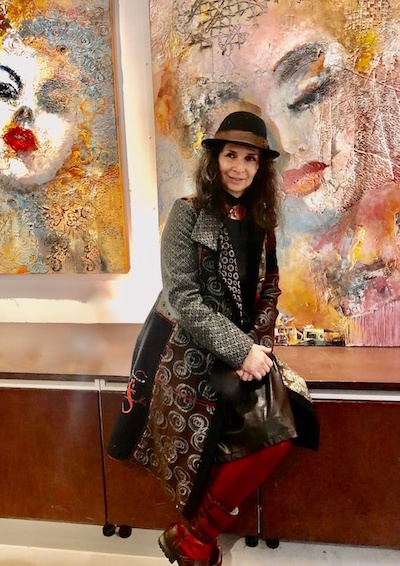
photo - Violette Zohar Fiszbaum
Violette Zohar Fiszbaum (photo from Violette Zohar Fiszbaum)

She also worked a lot at her art, and she continued studying art, as well. “In the last 10 years, I have been teaching art,” she said. “I teach mixed media. In the beginning, I was an assistant at Emily Carr [University of Art + Design]. Lately, I have had my own class at Olympic Village. It is a beautiful room. It faces the water. My students are all adults, and we are having fun together.”

Fiszbaum’s artistic interests are diverse. She plays piano. She dances. She enjoys photography. But, mostly, she paints. “I often paint with some music on. I turn on the music, dance and paint,” she said.

One of her preferred techniques is mixed media. “I like my paintings to have layers, to have a mystery, an intrigue. Using mixed media is like adding an archeological layer to the image, a depth,” she explained. “For example, I saw this old poster in Israel and I incorporated parts of it in one of my abstract paintings.”

Mixed media is also the technique that allows her to be successful at Niche, although commercial art has never been her focus. “I don’t paint just to sell,” she said. “I want to leave something beautiful behind. In the last two years, I sold and donated 100 pieces.”

She sells and markets herself through several venues. “My website, of course, Parker Art Salon, the East Side Culture Crawl – that is huge in Vancouver, the biggest annual art show in town. I use Instagram. Anywhere I go, really. I play tennis and I belong to a tennis club – I sold some of my paintings there. I like swimming, and I sold many of my Swimmers series paintings through my connections with other swimmers. My painting in the Parker Art Salon exhibition is one of my swimmers. I used to be a dancer, and the human body, its movements, always have fascinated me, both in the water and on land.”

But Niche Art Gallery is one of her favourite places. “It started as a pop-up store just before the COVID pandemic,” she explained. “Pop-up is a short-term lease, and it has been popular lately.”

After her pop-up term had expired, she teamed up with a few other artists and opened the gallery. “Many galleries on Granville Island closed during the pandemic, but Niche flourished,” she said.

Besides her paintings, Fiszbaum sells some unusual pieces at Niche, including funky denim caps. Each one is decorated with an assortment of mixed media: snatches of lace, old buttons and zippers, feathers, disassembled toy fragments, even an old phone keyboard. “It is fun to work on them,” she said. “I use only salvaged materials there. Now I want to make denim jackets.”

Fiszbaum likes working on commissions. “I enjoy the challenge,” she said. “I have created paintings to customers’ demands, both in size and in the colour palette. Sometimes, they wanted my paintings to match their couches and curtains; other times, their carpets and pillows; even a vase once. And I did it.”

Among the work for sale at Niche Art Gallery are Fiszbaum’s portraits. She returns to female portraits again and again. “My mother was beautiful, like Cleopatra,” she said. “I keep painting women’s portraits in order to capture her beauty, to share it with everyone.”

The show at Pendulum Gallery runs until June 16. For more information on the artists (who include many Jewish community members) and the auction, and to book your Parker studios tour, visit parkerartsalon.com.

Olga Livshin is a Vancouver freelance writer. She can be reached at olgagodim@gmail.com.

Helping animals and people

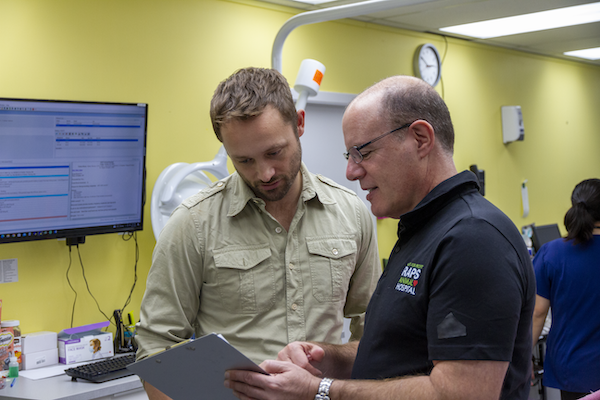
Pets & Pickers producer Tyson Hepburn confers with Regional Animal Protection Society chief executive officer Eyal Lichtmann during the film shoot.

The Regional Animal Protection Society (RAPS) in Richmond operates a cat sanctuary, a fostering network, thrift stores and a full-service animal hospital, along with an adoption and education centre. RAPS has grown into one of Canada’s largest and most innovative nonprofit animal-serving organizations – and it will be featured in the TV show Pets & Pickers, the second season of which airs Saturdays at 5 p.m. Pacific on Animal Planet.

RAPS began in the 1980s as the Richmond Homeless Cats Society. Driven by a small team of volunteers, it housed countless feral, abandoned and surrendered cats. In 2005, the organization pivoted to become the Richmond Animal Protection Society, extending its standard of care and no-kill animal policy to all of Richmond’s animals. In 2017, it became the Regional Animal Protection Society to better reflect the geographic diversity of its patient base.

For Jewish community member Eyal Lichtmann, executive director and chief executive officer of RAPS, “pets are part of the family.”

Lichtmann joined RAPS in 2016. His resumé before RAPS included a stint as executive director of the Vancouver Hillel Foundation, where he helped raise $10 million to build the University of British Columbia’s current Hillel House. With proven capabilities in fundraising, he was asked to lead a fundraiser with RAPS, and eventually became their CEO.

Lichtmann is passionate about “taking nonprofit organizations to the next level.” At RAPS, he created a new mission and vision for the organization, centred around helping both animals and their owners. He contends that saving more animal lives can be accomplished by helping individuals overcome any financial obstacles they may encounter in caring for their pets.

Recognizing that many pet owners cannot afford quality animal care, Lichtmann has made affordability a core focus of RAPS: “we are the only clinic we know of that offers interest-free payment plans based on the person’s ability to pay,” he said. In addition to giving annual community subsidies amounting to $1 million, he said, RAPS still generates profits, directing them towards the cat sanctuary, which houses more than 500 cats at the moment.

“Everyone is entitled to have a pet as part of the family,” said Dr. Joseph Martinez, one of RAPS’s veterinary staff. Martinez has been with RAPS since Lichtmann joined in 2016. His passion lies in treating exotic animals, such as reptiles and small mammals, an area not many veterinarians are knowledgeable about.

Having grown up on a farm in the Negev Desert in Israel and being the son of a farmer from Sicily, Martinez developed a deep love for animals. He even became a vegetarian at the age of 10, despite his family’s meat-loving Italian culture. Animal care is second nature to him, he said, noting that “animal welfare started in the Bible,” and has only been enhanced by modern-day science and technology. When he moved to Vancouver 30 years ago, Martinez was drawn to RAPS by a drive to help the less fortunate – “the idea is to not leave anybody behind in terms of funding,” he said.

“Jewish values are definitely ingrained in all of us,” said Lichtmann about his staff, many of whom followed his transition from Hillel to RAPS. Lichtmann said he is “programmed” by tikkun olam and views himself as part of a “Jewish family” at RAPS – even though not all the staff are Jewish, they are growing familiar with Jewish values and culture, he said. Last year, for example, 60 staff members attended a Passover seder with the organization. Lichtmann added, “my mother is cooking for the staff all the time,” treating the team to home-made matzah ball soup, hamantashen, challah and more.

photo - Ayala Dafni is assistant manager at RAPS
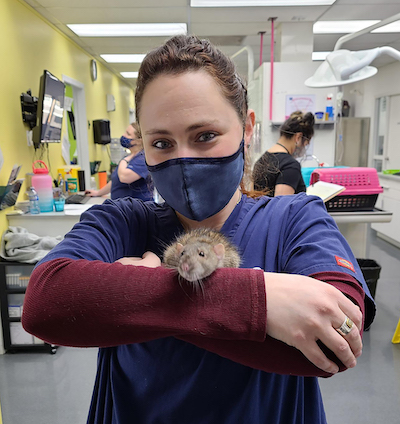
Ayala Dafni is assistant manager at RAPS. (photo from RAPS)

In addition to its subsidy programs, RAPS partners with organizations such as Jewish Family Services Vancouver, Tikva Housing Society, women’s shelters, homeless shelters, and senior care facilities. Martinez said veterinarians “should be open to different cultures,” to build positive relationships with pet-owning families.

Ayala Dafni, an Israeli animal technician and assistant manager at RAPS, has been “working with animals since forever,” aspiring to be a vet since the age of 4 – “everything that was legal to keep as a pet, I had growing up.” After getting her bachelor in animal science at Hebrew University, she went on to study animal assistant therapy, and manage a chain of pet stores in Israel.

Dafni is driven by “mitzvot,” she said, especially helping the community and donating to certain causes. At RAPS, she said, this translates to being compassionate and committed to understanding different perspectives. Dafni emphasized that “empathy is most important in this job” and, despite years of experience in the veterinary field, she still finds herself emotionally invested in difficult cases.

Lichtmann attributed RAPS’s corporate culture as part of the reason that Pets & Pickers was attracted to feature them. The unscripted series follows animals, their owners and the veterinarians who care for them.

To learn more about RAPS, visit rapsbc.com and tune into Season 2 of Pets & Pickers, which is also on Animal Planet in the United States. Season 1 can be streamed on Crave.

Alisa Bressler is a fourth-year student at Queen’s University in Kingston, Ont. She is an avid reader and writer, and the online director of the arts and culture publication MUSE Magazine. Bressler is a member of the Vancouver Jewish community, and the inaugural Baila Lazarus Jewish Journalism Intern.

New LGBTQ+ resource guide

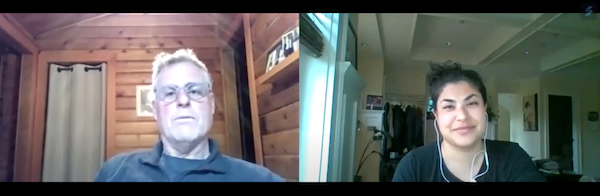
A screenshot of Jeff Kushner’s July 2, 2020, interview with Carmel Tanaka for the B.C. Jewish Queer & Trans Oral History Project, which can be found on YouTube.

JQT (Jewish Queer and Trans) Vancouver has compiled a resource guide in an effort to address the needs and concerns of older LGBTQ+ Jews.

With the financial support of the B.C. Community Response Network, the Province of British Columbia and Jeff Kushner of Victoria, JQT produced the B.C. Jewish Queer and Trans Seniors Resource Guide, which was launched in April. The guide can be accessed at jqtvancouver.ca, along with a series of eight videos that cover the main points in each of its chapters. The guide is conceived as a “living document based on info collected in 2023,” and visitors to the website are asked to “help keep it relevant by completing the short 4-min survey at the end of this resource guide.”

“This resource guide is meant for older Jewish queer and/or trans people over the age of 55, as well as for those who are caring for them,” it states in the introduction. “We recognize the stigma associated with the term ‘senior’ and define it as ‘persons over the age of 55.’ We do not want to isolate anyone, as a lot of content collected in this resource guide may be relevant for Jewish queer and/or trans people of all ages.”

In explaining why the guide was created, the introduction says: “You may be worried or trying to figure out how to manage changing care needs, now or in the future, for yourself or for someone else. Many of you will likely choose to stay in your home well after you require healthcare support. In addition to what you don’t know, you may have come across misinformation that can get in your way. This guide has been developed to reduce fears by providing reliable, useful and current knowledge that can help to protect you from potential discrimination and abuse, allowing you to live out your days with dignity.”

The publication and videos are part of the JQT Seniors Initiative, which is described on the website as “a community response network of Jewish, LGBTQ+ and seniors healthcare organizations,” and many people contributed to the resource guide.

The story of the JQT Seniors Initiative can be traced to the early days of the pandemic, when JQT began conducting the B.C. Jewish Queer & Trans Oral History Project, which primarily interviewed older adults across the province. Elders in the community discussed their fears of having to go back into the closet and/or hide their identity upon becoming more dependent on the healthcare system, such as through assisted living and long-term care.

“This feedback from interviewees birthed the JQT Seniors Initiative,” said Carmel Tanaka, the founder and executive director of JQT Vancouver.

According to Tanaka, the oral history project further revealed that Jewish Family Services (Jewish Family Services Agency at the time) had directed a Jewish LGBT community needs assessment, called Twice Blessed, in 2004. The report, which had been in the possession of former JFSA counselor Jacqueline Walters on Salt Spring Island, had not been released.

“Following her interview for the project, Jacqueline mailed me the envelope, which thankfully arrived, and this birthed Twice Blessed 2.0: The Jewish LGBTQ2SIA+ Initiative in partnership with JFS – a 2022 community needs assessment that compared needs to the 2004 assessment,” said Tanaka.

Included in the recent survey were questions on seniors care, which continues to help identify needs. While the assessment was intended to focus on Metro Vancouver residents, JFS’s geographical mandate, people from across the province participated.

After its homepage, the seniors initiative page is the next most visited page on the JQT website, and its resource guide has the highest views across JQT’s social media platforms: Facebook, Instagram and YouTube.

“This was definitely, without a doubt, exactly what our community needed, for people of all ages, because dying can happen at any age,” Tanaka said. “Navigating friction between civic and Jewish law is also at the forefront of this resource guide, particularly around intermarriage, MAiD [medical assistance in dying] and LGBTQ+ inclusion of trans and non-binary bodies in Jewish burial practices.”

An example of the preparations that should be made in advance is appointing a trusted person to ensure that final wishes, such as not being “misgendered” by healthcare professionals or the chevra kadisha (Jewish burial society), take place.

“This resource guide is also helping to build a stronger JQT community, connecting pockets of folx on the periphery who are working on elements touched on in this guide, such as ‘queering’ chevra kadisha, so that we are not doing the work in silos,” Tanaka said.

Tanaka lauded the positive response from numerous organizations and community groups. “Older Jewish queer and trans folx are feeling seen and grateful that such a guide has been resourced and put together,” she said.

As for her personal involvement in the initiative, Tanaka explained, “My mom is a gerontologist and, from a young age, I knew the limitations of seniors homes. So, in a way, it’s not surprising that I would end up working towards more inclusion. Also, my background is in public health, emergency and disaster management, and the lack of support for older queer and trans seniors is an emergency.”

JQT Vancouver was started in 2018, becoming a nonprofit – incorporated as the Jewish Queer Trans Folx of Vancouver Society (dba “JQT Vancouver”) – in 2023. A current objective for JQT is to obtain charitable status to secure core funding for its operations. Since it began, it has been an all-volunteer organization that operates solely on donations and grants.

JQT offers inclusion training to local Jewish community organizations, as well as partners with organizations on various projects. “We’re already in partnership with JFS, and will be offering a staff training session to the JCC [Jewish Community Centre of Greater Vancouver] later this month,” said Tanaka by way of example.

For more information on the JQT Seniors Initiative, visit jqtvancouver.ca/jqt-seniors-initiative.

JQT will unveil the B.C. Jewish Queer & Trans Oral History Project in a hybrid celebration at the Zack Gallery on May 28, 1 p.m. The following day, the exhibit will be available online.

Sam Margolis has written for the Globe and Mail, the National Post, UPI and MSNBC. Jewish Independenteditor and publisher Cynthia Ramsay is on the JQT Vancouver board.