חסן דיאב שוחרר

(צילום: justiceforhassandiab.org)

חסן דיאב שנחשד כי ביצע את הפיגוע בבית הכנסת בפריז בשנת 1980, שוחרר ממעצר בסוף השבוע. כך החליטו שני שופטים חוקרים של בית המשפט העליון בצרפת, שדחו את האשמות נגדו. דיאב חזר לקנדה והתייחד מחדש עם אשתו וילדיו. הוא ציין כי לא יתבע את ממשלת קנדה וכי הוא מבקש לחזור לימיו הקודמים.

דיאב נחשד באחריות לפיגוע בבית הכנסת הרפורמי (ברחוב קופרניק) ברובע ה-16 של פריז, בשמחת תורה (ב-3 באוקטובר 1980), בו נהרגו עורכת הסרטים בטלוויזיה הישראלית עליזה שגריר וכן שלושה אזרחים צרפתים. בנוסף ארבעים ואחד איש נפצעו. הפיגוע שנחשב אז לגדול ביותר נגד מטרה יהודית מאז מלחמת העולם השנייה, בוצע באמצעות מטען חבלה במשקל 10 ק”ג שהונח בתוך תיק, שהוצמד לאופנוע שחנה בסמוך לבית הכנסת. המטען הופעל זמן קצר לפני תום התפילה. ב-2007 בסיוע של המודיעין הגרמני והישראלי, אותר החשוד בפיגוע חסן דיאב בקנדה (לאחר שקודם לכן התגורר במשך שנים בארה”ב). דיאב הגיע לקנדה ב-1993 לאחר שקיבל אזרחות מקומית.

שני השופטים קבעו שהראיות נגד דיאב חלשות ולכן אין מקום להעמידו למשפט. התביעה הצרפתית הגישה מייד ערעור לבית המשפט נגד ההחלטה, וצפוי שגם נציגים משפטים של קורבנות האירוע ילכו בעיקבותיה ויבקשו לקיים לדיאב משפט.

דיאב (64) הוא אזרח קנדי יליד לבנון (בירות). בקנדה הוא שימש פרופסור לסוציולוגיה באוניברסיטת אוטווה. דיאב נאבק במשך שנים בממשלה הקנדית שעצרה אותו ב-2008 בשל החשדות החמורים נגדו. לטענת הצרפתים הוא היה חבר פעיל בארגון החזית העממית לשחרור פלסטין. מאז היה נתון לפיקוח ע”י השלטונות הקנדים (צמיד אלקטרוני הוצמד לרגלו) עד שהוסגר לצרפת לפני כשלוש שנים (באוקטובר 2014). מאז שהגיע לצרפת הוא שהה בכלא שמור בפאתי פריס.

לטענת התביעה הצרפתית דרכונו של דיאב נמצא בידי חברי החזית העממית לשחרור פלסטין ששהו באיטליה, שלושה ימים אחרי הפיגוע. ממצא זה הביא למעצרו. דיאב טען להגנתו כל הזמן כי הוא חף מפשע וכי בעת הפיגוע הוא היה סטודנט באוניברסיטת בירות. הוא ציין כל העת כי שלטונות צרפת בילבלו בינו ובין מישהו אחר.

ארגון הגג של יהודי צרפת כינה את החלטת השופטים לשחררו “שערורייתית וחסרת אחריות, וכן עלבון לקורבנות הפיגוע ונבי משפחותיהם”. לדברי ראשי הארגן שחרורו של דיאב יתפרש על ידי רבים ככניעה למעשי הטרור.

לטענת ערוץ 7 דיאב אמור היה להישאר בצרפת כיוון ששוחר למעצר בית בלבד על ידי בית המשפט. דרכונו היה שמור בבית המשפט בפריז אך הוא הצליח להוציא דרכון זמני משגרירות קנדה והמריא מייד לאוטווה.

אונר”א: קנדה תמשיך לתמוך בסוכנות בניגוד לארה”ב

קנדה מתכוונת להמשיך ולתמוך כספית באונר”א (סוכנות הסעד והעבודה לפליטי פלסטין), בניגוד לארה”ב. זאת לאור החלטת הנשיא דונלד טראמפ. ארה”ב ציינה כי תקטין במחצית את התמיכה הכספית בסוכנות. בשלב ראשון ארה”ב תכננה השנה להקציב לארגון כמאה עשרים וחמישה מיליון דולר, אך בפועל יועברו רק כשישים מיליון דולר. עד כה ארה”ב נחשבה לתורמת הגדולה ביותר של אונר”א (מימנה כ-30 אחוז מהתקציב הכולל), והיא הייתה מעבירה לה מדי שנה כשלוש מאות מיליון דולר. ואילו קנדה העבירה לארגון כחמישים מיליון דולר בשנתיים האחרונות, וכאמור היא תמשיך לעשות זאת גם בעתיד.

אונר”א פתחה במבצע לגיוס לא פחות מחמש מאות מיליון דולר לשם הבטחת השירותים שהיא מספקת לפלסטינים בשטחים, בעזה, ירדן, לבנון וסוריה.

Celebrating many milestones

Alexandra Gerson, centre, says a few words at a Jewish talent show put on by Radio VERA last year. (photo from Radio VERA)

“I have a dream: I want to bring together Russian-speaking and English-speaking Jews in Canada, to unite them into one seamless whole. All I do, my Radio VERA included, is serving that goal,” said Alexandra Gerson, a co-owner of VERA.

This year, VERA celebrates its 10th anniversary. Timed to coincide with that milestone, the radio station is helping bring the concert Le Chaim to Richmond’s Gateway Theatre on Feb. 3.

“VERA is an acronym of the words Vancouver Jewish Russian Association, in Russian,” Gerson explained. She said VERA’s roots lie in her previous radio program, Russian Voice, a pre-taped one-hour weekly show in Russian, which launched in 2001 with the financial support of David Stevens. The program had mostly Jewish content, but it didn’t last long. From its inception, Gerson said she received multiple antisemitic threats and her car was vandalized. Home-grown Russian extremists were not happy with a Jewish program called Russian Voice, she said, and they kept harassing her. Concerned for her young daughter’s safety, with the police urging caution, Gerson eventually closed the program, but she didn’t give up her love for radio. “You can listen to the radio anywhere, in your car, in your home or office, working or resting,” she mused.

Her radio work brought her into the midst of the Zionist movement in Canada. “I’ve lived in Canada for 24 years,” she said. “My father was a Zionist, and Jewish ideas are dear to me. I’ve always liked being a Jew. I work for the Jews of Canada. I’m an official representative of the World Zionist Organization in Canada, and my Radio VERA is an integral part of my work. It promotes Jewish ideas and is a pro-Israel station. I come to the studio every morning, turn on the microphone, and say, ‘Hello, Jews!’ And feel proud.”

photo - Alexandra Gerson, co-owner of Radio VERA
Alexandra Gerson, co-owner of Radio VERA. (photo from Radio VERA)

Gerson’s pride in her Jewishness pushed her towards attending seminars and workshops on Jewish leadership. During one of them, in 2003, she met Dmitry Shiglik, an American businessman and a dynamic figure in the Russian-Jewish world. He became a steady backer of her then-new endeavor, Radio VERA, which broadcasted its first show in 2008.

“VERA broadcasts live five days a week, Monday to Friday, 8 a.m. to 10 a.m.,” Gerson said. “It’s the most expensive time, when everyone is in their cars, heading for work. We exist because of our generous donors: Yosef Wosk, Alex Kivritsky of the HiFi Centre and, of course, Dmitry Shiglik, my co-owner.”

She stressed that VERA is not, and hasn’t been for a long time, a Russian radio broadcast. “It stopped being ethnic years ago. We do interviews about what is of interest to everyone. For example, North Korea is on people’s mind these days, so we did an interview with the editor of the Russian newspaper in Seoul.”

Every morning, listeners of VERA can expect relevant and time-sensitive interviews in two languages: Russian and English. “We do interviews in whatever language our guest prefers,” said Gerson. “Our hosts switch languages fluidly, as the situation demands. We’re the only radio station in Canada, maybe in the world, with such an approach. It’s not as easy as it sounds. Russian- and English-speaking people often have different mentalities, born in different cultures, so we have to use different techniques of conducting interviews.”

VERA, which is part of Fairchild Radio 96.1 FM, has interviewed most Canadian politicians, top people from the Russian and Israeli governments, international performing artists and athletes, writers and musicians. They usually conduct two interviews each show.

“At first, our listeners were almost exclusively local Russian pensioners, listening for the language,” said Gerson. “As we continued our bilingual policy, a middle-aged group joined in for content in both languages. Then we added overseas and non-Russian speakers, who regularly tune in to our programs. In a way, they know us better in the U.S.A. than in Canada. We have listeners in Israel, Russia and Europe. There are two ways to access our programs: live on the radio during the broadcast or online through our website, where we keep the archives of all the programs we’ve done in 10 years. Our site has up to 15,000 visitors a day.”

Despite the large amount of traffic and the work needed to produce a two-hour program five days a week, VERA has only three employees. “Pavel Manugevich and Denis Manzar are both my co-hosts, and Alex Kivritsky is our CEO,” Gerson said. Manugevich “has been with VERA since the beginning; he is a professional journalist. Denis Manzar has been co-hosting VERA programs for two years; outside the studio, he is a lawyer and a documentary filmmaker.”

Through her work on VERA, Gerson personifies a cosmopolitan blend of Jewish, Russian and Canadian. In 2014, she was named Russian-American Person of the Year in the media category. According to its website, the honour is presented by Universal Awards Management and the World Forum of Russian-Speaking Jewry, with support from the American Council for World Jewry. Gerson – the only Canadian to have received the honour – shared her award with American-Russian journalist Victor Topaller, who is also Jewish.

But Gerson isn’t resting on her accomplishments. She is always looking for ways to bring the Jews of Canada together, no matter their points of origin. As an example, three years ago, VERA started a new multi-faceted platform that goes beyond the radio.

“We have our annual sports day,” Gerson explained. “We organize the annual festival of Jewish children’s art and various Jewish holidays. Every year, we take 40 of our listeners on a trip to Israel, and we frequently promote concerts of Jewish performers.” It is in the latter regard that VERA is sponsoring the upcoming gala concert Le Chaim, which is the brainchild of Mikhail Gluz, artistic director of the Solomon Mikhoels Cultural Centre in Moscow.

“I’ve known Mikhail Gluz for several years,” said Gerson. “We first met in Moscow and, afterwards, regularly exchanged emails and swapped ideas. He told me about his new project, Le Chaim, a traveling show of Russian-Jewish performers from Russia, Israel and North America. He wanted to tour Le Chaim across Canada and the U.S., performing in any major city that would offer a venue, to celebrate the 70th anniversary of the state of Israel. It is the first such project in Canada organized by Russian Jews in celebration of Yom Ha’atzmaut.”

In addition to celebrating Israel’s Independence Day, the concert, which will also feature a documentary and historical footage, commemorates the 20th anniversary of the International Solomon Mikhoels Festival of Arts and is dedicated to International Holocaust Remembrance Day.

“When I heard about Le Chaim, I wanted to bring it to Vancouver, to coincide with the 10th birthday of Radio VERA,” said Gerson. “Mikhail was not eager at first. He said it wasn’t a commercially viable suggestion, the Vancouver Jewish community being much smaller than the other cities on their itinerary. But Yosef Wosk supported the idea and donated the money to make it possible.”

One of the performers in Le Chaim, Jewish jazz singer Alla Reed, has visited Vancouver before. “I loved it,” she said on the telephone from Russia. “Other cities have clean air or beautiful nature or thriving culture or receptive audience, but Vancouver has it all together. And it also has wonderful people, like Sasha [Gerson] and her Radio VERA. I look forward to meeting my friends and singing in Vancouver again.”

For more information on VERA, visit veracanada.fm. Tickets for Le Chaim on Feb. 3, 7 p.m., can be purchased via VERA or from Gateway Theatre at 604-270-1812 or gatewaytheatre.com.

Olga Livshin is a Vancouver freelance writer. She can be reached at olgagodim@gmail.com.

Klondike’s Jewish links

Entrance of the Jewish Cemetery in Dawson City, Yukon. The sign reads Bet Chaim (House of the Living). The photo was taken in 1961. (photo by Irving Snider; Dr. Irving and Phyliss Snider fonds; Jewish Museum and Archives of BC L.18992)

As visitors to the traveling exhibit The Jewish Presence During the Klondike Gold Rush 1897-1918 will learn, while the hope of striking it rich drew thousands upon thousands to the Klondike during the gold rush, most had left the region within five years, many as poor as when they arrived.

The exhibit, created by the Jewish Cultural Society of Yukon, is currently at Temple Sholom and will open at Congregation Beth Israel on Jan. 31, 7:30 p.m. The opening will feature a talk by Michael Schwartz of the Jewish Museum and Archives of British Columbia, and the exhibit will be on display at BI until Feb. 7.

The first panel, called “Gold Fever Strikes,” begins, “It was at Schwabacher’s dock on Seattle’s Elliott Bay that the steamer Portland arrived on July 17, 1897, with her ‘ton of gold’ that electrified the world and sparked the Klondike gold rush. Soon thousands would leave that dock and others on their way to Alaska.” It notes that the Schwabachers – Abraham, Sigmund and Louis – who founded their Seattle merchandising business in 1869, had been born “in Germany of Jewish heritage” and “they left to escape the oppression of Bismarck.” The rest of the panel highlights several Jews who were involved in supplying goods and transportation to Yukon.

The second panel – “Life in the Klondike” – relates some of the stories of successful, and not so successful, Jewish prospectors and merchants. For example, “Louis Brier, a native of Romania, followed the rush and provided grubstakes to prospectors on a percentage basis. He eventually left for British Columbia with what he called ‘a rather bulging bankroll,’” it notes.

One of the less happy outcomes is that of the Shudenfreis. Among the first Jews to arrive, in fall 1897 to Dawson City, Solomon and Rebecca Shudenfrei came to the Klondike without their children. By September 1898, Rebecca had left and, soon after a fire in March 1899 that destroyed many of the city’s homes and businesses, including Solomon’s hotel, Solomon also left. The loss of the hotel was a mixed blessing, according to a letter he wrote: “I only lost all I had, which is not much, and I was glad that the fire occurred so that I could get rid of all my bed-bugs, which I could not do otherwise … the loss is not so great when you come to consider that we would have to remove the building anyhow by May 1, and [that] would have been a great expense to me…. The whole town is on the buy, and all my acquaintances are not any better off than I. This is the only consolation we have.”

The second panel also touches upon other aspects of life at the time – religious observance, politics, the Jewish cemetery and crime (of which Jews, as much as anyone else, were among the victims and perpetrators). The third panel, “After the Gold Rush, Where Did They Go?” provides brief descriptions of where some 15 Jews went after the rush was over.

The exhibit includes a booklet, as well as four videos, each about eight minutes long. They centre on the finding and rededication of the Jewish cemetery in Dawson City in 1998. One video shows the finding of the cemetery, which was established in 1902 but fell into disrepair as the Jewish presence in the area disappeared; one video covers the cemetery’s restoration; and one the July 31, 1998, rededication ceremony, which included many guests, including then-deputy prime minister Herb Gray, who spoke at the ceremony. (Gray passed away in 2014.) The fourth video, explains the document about the exhibit’s setup, “is the CBC TV coverage of the arrival of a Torah, the first time in history that Shabbat services were held in Whitehorse, a little tour of Dawson City … and the rededication services.”

That Torah, in 1998, was only the second to have been brought to Whitehorse – the first having been brought during the gold rush. With the rededication, the Dawson City Jewish cemetery, Bet Chaim (House of the Living), once again became a place where Jews can be buried.

photo - Rick Karp, president of the Jewish Cultural Society of Yukon
Rick Karp, president of the Jewish Cultural Society of Yukon. (photo from JCSY)

“Cyril Leonoff’s book Pioneers, Pedlars and Prayershawls: The Jewish Communities in British Columbia and the Yukon was what started all of our research,” said Rick Karp, president of the Jewish Cultural Society of Yukon, in an email. Additional research was contributed by Dr. Brent Slobodin, who has a doctorate in Canadian history from Queen’s University and was the assistant deputy minister of advanced education in Yukon. Slobodin has been a member of a number of heritage advisory and volunteer boards.

Karp’s day job is president of the Whitehorse Chamber of Commerce, and Slobodin joined the chamber when he retired to manage its Partnering for Success Program, Karp told the Independent. “As an historian, he was fascinated with the work we were doing on the Jewish presence during and after the Klondike gold rush and we hired him to work on the research, design and preparation of the mobile display,” said Karp.

Now that the exhibit has been completed and displayed both within and outside of Yukon, Karp said the cultural society has two main priorities, the first of which is keeping “the display going across the country, so, after Vancouver, it will go to Edmonton, Calgary and Winnipeg. Then we will get it back here and it will go to Alaska and a few other cities in the U.S.”

The second priority is closer to home. “We are also educating the Yukon on what it is to be Jewish so, for example, we celebrate Passover and have the seder in the United Church meeting hall (about 40 people attended last year), and we are part of the interfaith community in Whitehorse,” said Karp.

“We also have more than 12 Israelis living in Whitehorse and have visits from Israel often,” he added. “For example, we have Dr. Wayne Horowitz coming … from Hebrew University and we will have him do presentations when he is here, and Dr. Paul Sidoun, as well, who is coming in February.”

Tikva has a lead role to play

Left to right: Linda Thomas (Tikva), Shirley Barnett, Shelley Karrel (Tikva) and Eldad Goldfarb (Jewish Community Centre of Greater Vancouver) at Tikva Housing’s annual general meeting on Dec. 7. (photo from Tikva Housing)

The following remarks have been slightly modified from the original talk given at the Tikva Housing Society annual general meeting on Dec. 7, 2017, which took place at the Jewish Community Centre of Greater Vancouver.

I am sure some of you, if not most of you, are wondering, “Why has Shirley been asked to speak tonight?” I wondered the same thing. So, with some trepidation, I accepted the invitation to say a few words, but will start off with a few disclaimers.

First of all, I really don’t know much about housing. I have never been a part of any task force on housing. I have never attended a conference on housing. Experts in the field are in the media every single day, exploring solutions and dealing with options to solve Vancouver’s escalating housing crisis. Ideas range from adding back the 13th floor of high rises, using that floor for public amenities, to establishing a $100 million fund to speed up development applications. Other ideas have surfaced that call for a complete change in our zoning regulations.

Today, I was at a luncheon and sat next to two women who live at the Performing Arts Lodge (better known as the PAL Housing complex), which is across from the Westin Bayshore. They live under an arrangement I had previously heard about, called a life lease, which sort of bridges renting and ownership. You pay an entry fee for the right of a lifetime lease or for a fixed long-term period. That’s your equity. The society invests the money and you get your money back when you leave.

I have also heard about SAMs, shared appreciation mortgages, where mortgages are granted in exchange for sharing in the profits when the property is sold. This idea has been used to make down payments. The City of Calgary in a partnership with the Province of Alberta established a program whereby forgivable interest-free loans are provided through a housing society they started, and owners remit some of the equity when they leave or sell.

In Vancouver, no matter what the underlying causes are of the “affordability” issue, the very word conjures up the image of ownership as a priority. If we can, let’s discard that vocabulary for a minute and look at some alternative models because the one thing the experts agree on is that there is a need to think differently. Recently, I read there is no “housing crisis” but that there is a “housing supply myth” and we are building beyond our population numbers. In light of this, the City of Vancouver has stated they are now looking at the demand and not the supply.

What is the demand for housing in our own Jewish community?

Time and time again, people have expressed concern about members of our community moving away from the Oak Street corridor. This is already a reality and it will continue. So, instead of talking about people moving out, let’s talk about people moving into new neighbourhoods.

During the 2017 annual campaign, Jewish Federation of Greater Vancouver’s theme was to connect people who live in other municipalities or cities near Vancouver to Jewish programs and services. Their slogan for this was, “We can’t afford to lose them.” I have learned that Federation has hired a community development worker to liaise with emerging Jewish communities and that they are contacting many Jewish people who live in Langley, Maple Ridge, Abbotsford and so on, to ascertain what Jewish components residents in these places want in their lives and in their children’s lives; what initiatives they want to start or enhance or with which they need help.

We know that when an initiative comes from the grassroots, it becomes an emotional experience and, when there is emotion in a group of stakeholders, there is motivation, action and progress. This is how the Burquest Jewish Community Association started, which now has more than 70 families drawn from Burnaby, New Westminster, Coquitlam, Port Moody and further east. The Chabad Centre for Judaism of the Lower Fraser Valley in Surrey started very small and also has grown tremendously. Closer to home, Or Shalom on Fraser Street, which used to be on the outskirts of Vancouver, is now in the city centre and is thriving. East Side Jews, a Temple Sholom initiative, recently had 80 people turn out for an event. And, last summer, 60 kids in outlying areas went for the first time to a Jewish summer day camp run by the Jewish Community Centre of Greater Vancouver. So, we know that Jewish communities can begin and grow outside of Vancouver’s “traditional” neighbourhoods.

If there were an incentive for 10 Jewish families to move somewhere, maybe there could be resources to help them – rental subsidies for house-sharing, help to start a new daycare centre or to open a satellite shul in someone’s basement. Maybe the next development for Tikva Housing should be in one of the smaller communities that is growing a new Jewish population.

But let’s return for a moment to the situation in Vancouver. And let’s explore the availability of the existing housing inventory. Dozens of Jewish families own hundreds of condos in this city. If one unit per building or even one unit per owner were made available for Tikva to manage, this would create an inventory of housing. Tikva manages the inventory; it becomes a clearinghouse for rentals. And Tikva’s rental subsidy program could kick in – it would ensure that these units remain affordable, while providing owners with rental income at market rates. Alternatively, the owners of these rental or condo buildings could donate a unit to Tikva or become major donors to the Esther Dayson Rental Subsidy Program. So many more families could be helped by the above ways – like interest, the success would be compounded so many times.

What about incentives to families willing to create new suites from their unfinished basements and assign those new units to Tikva to manage, again creating new rental stock? I am not sure if you need a permit to finish off your basement but you may need some financial help. Perhaps that is an area of lending for the Hebrew Free Loan Association.

With the major redevelopment of Oakridge Centre and across the street from the Vancouver JCC at the former transit centre and all along 41st Avenue, as well as the need to redevelop both the current JCC and the Louis Brier Home and Hospital, we are in for an exciting time. The entire area will be repurposed and densified, whether we like it or not, and we need to do our part in a new, different way.

This should be the time when Tikva works together with Yaffa Housing, with the Vancouver Jewish Building Society that, together with the Netherlands Association, has 133 units, and with the Shalom Branch of the Canadian Legion that has 102 units. It boggles the mind (or, at least, my mind) that, for a community as small as ours, there are four Jewish housing societies that, for the most part, do not work together. Imagine the benefits that could be accomplished if these agencies were merged or formed loose partnerships or even a central registry. Why should someone in need in our community have to deal with sorting out the various agencies and options? But that’s a topic for another meeting.

There are more and more newspaper articles about redoing the concept of single-family zoning areas. There is much discussion about how large homes can be repurposed. How many people really want or need a home in Shaughnessy, on Marine Drive or in Richmond with eight or nine bedrooms and the same number of bathrooms? Should the city allow the change of dozens of these homes into four or six units for purchase or rental? Of course. What about financial incentives for young Jewish families, empty nesters or seniors who would like to share a large home but can’t afford the renovations to do so?

There is a philosophy about “aging in place,” staying in your own home until such time as your health requires you to leave. What about when your finances require you to leave because you can’t afford to pay your taxes or for the home’s upkeep? A recent article in the Vancouver Sun stated that one-third of the senior population, mostly women, live alone, and many suffer from depression, financial need and social isolation. We need to rethink what it means to live at home. Many people have said they don’t want to live in complexes built only for people their own age. This is a huge factor in senior living.

The same Sun article quotes a study published by the Gerontologist Society of America, which argues we have to broaden our meaning of “place” from an individual home to mean a neighbourhood. It continues, “Home is a refuge, but it is as much the background of the home, the familiarity with the places and contacts around it that provide security, as any emotional attachment to the home itself.”

We know people can feel as isolated and as disconnected living in a condo as they would living alone in a house. Not only do we need amenities in buildings but inviting spaces, not just gyms but places where the coffee and the lights are always on, lobbies where people can meet and chat – a community within a building within a neighbourhood.

Let me illustrate this point with a great example of building a new neighbourhood without cost. Those of us who live in condos know that the key fobs to enter our units usually cannot be used on other floors; you can’t visit someone on another floor without going down to the lobby and buzzing back up. We know that the intention is greater security and preventing unwanted visitors, but Tikva used an innovative approach. When the 18 units of the Diamond Residences in Richmond were being built, the fobs to the units on the Tikva floors – floors 12, 13 and 14 – were calibrated to give access to all the Tikva floors. You don’t have to go outside the building and buzz someone to get back in to visit them or borrow a cup of sugar. Families can visit other residents on the other Tikva floors. Children can go back and forth from their own apartments to their friends or relatives. That’s building a new neighbourhood.

As I mentioned before, I have no experience in solving these types of issues but I do know that the solutions will take much more creativity than we have ever seen, creativity at many different levels, including from within our Jewish community. One of my favourite quotations is from Albert Einstein, who said, “No problem can be solved by the same level of consciousness that created it.”

I believe Tikva not only has a role in community development but also an expanded role. Our family feels good about this. We think we have chosen wisely to support the initiatives of Tikva because of their potential in being a leader in this area: affordable housing using many different models, but together with community development. My brother Philip Dayson and I are privileged to be able to participate in Tikva’s new project on Marine Drive – imagine 32 family homes in a new Jewish community in a land trust implemented by a group of nonprofit organizations together with the City of Vancouver. And we are very proud to say this complex will be named after our parents.

I cannot close without remembering the brilliance of Susana Cogan, z”l, and, thinking of her, we will recommit our support to Tikva Housing with the expectation that this organization will lead us down new pathways and, like Susana, show imagination, strength and leadership outside of anyone’s box.

***

More about Tikva Housing’s AGM

Tikva Housing had its annual general meeting on Dec. 7, 2017, at the Jewish Community Centre of Greater Vancouver, with approximately 50 people in attendance. The society provided an overview of its current housing capacity, the ongoing need for affordable housing and the challenges facing the Metro Vancouver Jewish community with regards to housing.

Tikva has 18 units in the Diamond Residences, in Richmond, which opened in September 2017; 11 units at the Danny Guincher Residences; and 32 units will be available at the Esther and Ben Dayson Residences, in Vancouver, opening in summer 2018. The society has the Esther Dayson Rent Subsidy Program, which supports approximately 40 recipients.

Tikva’s main partners are the Jewish Federation of Greater Vancouver, which maintained annual funding for Tikva’s operations for 2017/18; Jewish Family Services, which refers people who are in need of affordable housing; and Kehila Society, which links tenants living in the Diamond Residences with events and services in Richmond.

The units at Diamond Residences range from studios to three-bedrooms. Because of the Diamond Foundation, as well as the Irving and Phyliss Snider, Lohn and Zalkow foundations, which contributed to the capital costs, it is posible to offer rents set at 30% of household income.

The Esther and Ben Dayson Residences is a partnership of Tikva Housing with the Community Land Trust Foundation and City of Vancouver. Its townhouses, ranging from two- to four-bedrooms, will offer 16 units for families on income assistance and 16 units renting at 30% of household income. The Ben and Esther Dayson Charitable Foundation have committed to fund Tikva’s equity loan to the Vancouver Land Trust project.

– Courtesy of Tikva Housing Society

 

At controversy’s centre – Louis Brier

Louis Brier Home and Hospital has accused Dr. Ellen Wiebe, who specializes in medically assisted dying, of wrongdoing, for providing a medically assisted death to 83-year-old resident Barry Hyman, without the consent or knowledge of the care facility.

The home accused Wiebe of “borderline unethical” behaviour and has filed a complaint with the College of Physicians and Surgeons, but Wiebe is adamant that her actions were not unprofessional.

“By far the most important thing is the patient,” Wiebe told the CJN. “The second is the family. Mr. Hyman’s wish was to die in his home. People have all kinds of wishes and desires, but dying wishes are held to a higher standard than other wishes.”

Asked about the family’s agreement to abide by Louis Brier’s policies, and the dispensation given by the B.C. Ministry of Health for institutions to refuse the provision of services that go against their religious beliefs, Wiebe said, “I’m not part of those agreements. My agreement is purely with my patient, not the facility, and since I don’t have visiting privileges at Louis Brier like I do at Vancouver General Hospital, I am not required to abide by the agreement between Louis Brier and the ministry.”

Wiebe was invited into the facility by Hyman’s daughter, Lola Hyman, and his other immediate family members, who wanted to honour Barry Hyman’s long-held wish to die on his own terms. Disabled by a stroke and diagnosed with lung cancer, Hyman had asked to die at the care facility, which had become his primary residence. Lola Hyman had broached the topic with David Keselman, the chief executive officer of Louis Brier, who told her it was against their policy, which is formulated according to Orthodox Jewish law.

Lola Hyman told the Globe and Mail that she wanted to honour her father’s wishes in a place that was comfortable for him, not somewhere that would be unfamiliar to him.

On the night of his death, she said, “the room was very quiet. We just held his hand and stared at him. My sister was sobbing, just sobbing. I was a stone. A complete stone. My heart was racing that someone would open the door.”

The Supreme Court of Canada struck down the Criminal Code prohibition on physician-assisted dying in 2015 and the federal government passed legislation legalizing it in 2016. The court recognized that doctors should not be coerced into performing the procedure against their will, but did not specify whether health-care organizations could refuse to comply.

In British Columbia, the Ministry of Health made an agreement that allows members of the Denominational Health Association (DHA), which includes the Louis Brier, to refuse to provide services that are inconsistent with their religious values.

“Anyone who comes here knows what our policy is and, if they don’t like the policy, they should go somewhere else,” Mark Rozenberg, the chair of the ethics committee of Louis Brier’s board, told the Globe and Mail.

Keselman declined the CJN’s request for comment, saying that the board was in meetings to decide how to respond to the media exposure. The home’s rabbi, Hillel Brody, said he was not permitted to discuss Louis Brier’s policies with the press.

Shanaaz Gokool, chief executive officer of Dying With Dignity Canada, told the CJN that organizations like Louis Brier are not being asked to take part in medically assisted dying, but simply not to obstruct residents from a medical service to which they have a right.

“The doctors bring in their own equipment. The health-care facility has no involvement in the procedure. By not allowing this, they are undermining the rights of the residents of Louis Brier who call it their home,” Gokool said.

It is not clear if institutions that refuse to allow medically assisted deaths on their premises enjoy the same Charter-protected religious freedoms as individuals who refuse to provide the service, because the issue has not yet been tested in court.

A joint statement issued by Dying With Dignity Canada and the Canadian Association of MAID Assessors and Providers said, “We support health-care professionals who, as a matter of conscience and compassion, help their patients overcome unfair barriers to access.… And we will defend clinicians who are attacked or punished for their participation in the lawful provision of MAID (medical assistance in dying). These courageous individuals should be applauded, not penalized, for putting their patients first.”

Louis Brier is one of a number of faith-based organizations that are in a quandary: although the centre is run in accordance with Orthodox Jewish law, not all residents are religious Jews, and it also has non-Jewish residents.

A 2014 Ipsos-Reid poll conducted on behalf of Dying With Dignity Canada showed that 84% of Canadians were in favour of allowing physicians to help someone die, if that person is suffering and wishes to die.

There is also the issue of public funding, as “67% of the Louis Brier’s funding is public,” said Gokool. “They are funded by taxpayers and should abide by Canadian law.”

Lola Hyman told the Globe that she was left feeling distressed, both at the possibility of Wiebe suffering on account of helping her father, and at having upset the front-line staff at Louis Brier, who were shocked by Barry Hyman’s sudden death. She said that all of this could have been avoided if British Columbia went the way of Quebec and stopped allowing publicly funded organizations to obstruct the rights of their residents.

“Everyone is entitled to their religious beliefs and traditions and customs,” Hyman told the Globe. “But, when it comes to somebody who is very sick and dying, we need to have a different approach.”

Matthew Gindin is a freelance journalist, writer and lecturer. He writes regularly for the Forward and All That Is Interesting, and has been published in Religion Dispatches, Situate Magazine, Tikkun and elsewhere. He can be found on Medium and Twitter. This article was originally published by the CJN, cjnews.com.

A no-go zone for Jews?

Women and their allies across North America marched last Saturday in a massive show of feminist and progressive activism. It was the second annual such event, the first one coming the day after U.S. President Donald Trump’s inauguration last year.

At the Los Angeles Women’s March, actor Scarlett Johansson, who is Jewish, told the audience that she became part of the movement because she felt a rage in her on behalf of women who have been abused and because of things that have happened to her in the past.

“Suddenly, I was 19 again and I began to remember all the men who had taken advantage of the fact that I was a young woman who didn’t yet have the tools to say no, or understand the value of my own self-worth,” Johansson said.

Johansson’s experience is one of millions that have been shared in recent months since the advent of the #MeToo movement. But it was a message that was not heard by all.

Because Johansson was scheduled to speak at the event, Palestinian women’s groups boycotted it. One group accused Johansson of “unapologetic support of illegal settlements in the West Bank.”

The Palestinian groups’ complaint, ostensibly, is that Johansson was a spokesperson for SodaStream, which produces an at-home beverage carbonation system. The fact that SodaStream was based in Maale Adumim, a West Bank Jewish settlement, made it a target for BDS, the movement to boycott, divest from and sanction Israel.

The Palestinian American Women’s Association declared: “While her position may not be reflective of all organizers at the Women’s March Los Angeles Foundation, PAWA cannot in good conscience partner itself with an organization that fails to genuinely and thoughtfully recognize when their speaker selection contradicts their message.”

In a free country like the United States, anyone is free to boycott anything. The Palestinian women’s groups were fully within their rights to stay home. But the idea that Johansson was not a legitimate voice to be heard at the rally because she does not condemn Jewish settlements in the West Bank is a bit of a stretch.

If Johansson’s association with SodaStream was the real reason the Palestinian groups stayed home, as they say it is, it presents an opportunity to reflect on a bit of recent history. In one of their few successful campaigns, BDS managed to force SodaStream to close its West Bank plant, causing unemployment for 500 Palestinians who had worked there. Some achievement.

However, something potentially more significant may be afoot, which has nothing to do with SodaStream or settlements at all.

The Palestinian movement is trying to co-opt the progressive and feminist movements in the name of a nationalist movement that gives no indication that it would, if successful, reflect anything like what North Americans would consider a progressive or woman-friendly independent country.

One of the things that progressive people have come to accept, with much thanks to #MeToo, is that intent sometimes matters less than impact. We have come to accept, for instance, that what a man might call “persistent flirtation” can be experienced by women as coercion, intimidation or worse.

Palestinian groups – and the progressive and feminist groups they infiltrate – should be conscious that what is intended as criticism of Israel, whether they like it or not, impacts on Jews. Of course, not all Jews are Zionists. Nonetheless, when you attack Israel, Jews feel it.

Consider from where we’ve come. A few short years ago, most “pro-Palestinian groups” insisted they didn’t oppose Israel’s existence, they were merely criticizing certain policies of the Israeli government. Now, it is extremely common for people to express outright antipathy to Zionism. Indeed, Zionism is a dirty word among many of the people who organized and participated in the marches last weekend. This is a far step from criticizing certain policies. To oppose Zionism is to oppose the existence of a Jewish state.

The Palestinian movement is trying to kick the Zionists (and that includes most North American Jews) out of the progressive and feminist movements. Is that OK with progressives? Is that OK with Jews?

If both sides don’t do something about it, Zionists and Jews are going to have a sworn enemy on the left and the left is going to be known as a no-go zone for Jews and Zionists. Who thinks that’s OK?

Continually coping with our deficits

If you see me in the grocery store and I don’t recognize you, I’m sorry. I sometimes have a hard time remembering names and faces. Why? Well, it turns out that sleep deprivation can affect this kind of memory. Even though my kids sleep better now, for four-and-a-half years, they didn’t get through the night. Parents who have gone through this may know what I’m talking about. It’s embarrassing and depressing to feel like I’m losing my mind, but it’s lack of sleep! It’s not anything serious; just part of many families’ lives with young kids.

While I’m bemoaning this – I used to keep track of hundreds of students when I taught full-time – I can let you in on a little secret. Newsflash: we’re not perfect. Yup! Shocking, I know. We all have faults, challenges, difficulties and struggles. It’s normal. However, the secular New Year often comes with New Year’s resolutions and, right about now, they are testing people’s commitment everywhere. Only a few weeks ago, all around us, in the media and on the gym treadmills, many of us were committing to “fixing” our faults and making a big change(s). Some of us are, no doubt, already having trouble sticking to them. Don’t get me wrong, change, exercise, new promises – it’s all good.

When we look at the Torah portion for the beginning of the year (Jan. 6, Shemot/Exodus 1:1-6:1), we can enjoy both a good storyline and some thoughts about challenges. This is a portion that covers a lot of ground. The Reform Judaism Torah portion page summarizes it this way:

“The new king of Egypt makes slaves of the Hebrews and orders their male children to be drowned in the Nile River. (1:1-22)

“A Levite woman places her son, Moses, in a basket on the Nile, where he is found by the daughter of Pharaoh and raised in Pharaoh’s house. (2:1-10)

“Moses flees to Midian after killing an Egyptian. (2:11-15)

“Moses marries the priest of Midian’s daughter, Zipporah. They have a son named Gershom. (2:16-22)

“G-d calls Moses from a burning bush and commissions him to free the Israelites from Egypt. (3:1-4:17)

“Moses and Aaron request permission from Pharaoh for the Israelites to celebrate a festival in the wilderness. Pharaoh refuses and makes life even harder for the Israelites. (5:1-23)”

Here we are, looking at a portion about our leader, Moses. He’s likely confused about his identity, since he was nursed by his Jewish mother, but raised as an Egyptian in Pharaoh’s house.

Moses is a person who kills someone else in anger and then runs away. He also – according to Rashi’s commentary – has a speech impediment and stutters, so he needs his brother to help him communicate. There’s much here. The short version is that we have a model of a leader with serious faults and challenges – and that’s OK.

Why? Well, the Jewish take on this is that we have to continually work on ourselves. We don’t get to stop learning, seeking forgiveness, or trying to do better. We have to keep on keeping on. So, while a new year (any new year, go ahead and pick one!) might help remind us of this, it’s meant to be a daily exercise. It’s not supposed to be easy, either. The Torah offers us multiple narratives about struggle, challenge, defeat and renewal. It’s up to us to read it and draw conclusions.

In the popular media, there’s a whole self-help genre. This stuff is sometimes helpful and, on occasion, you see that the website, book, podcast or article was a waste of time. Reading it can also make us feel worse and fuel our anxieties. However, the Torah, the rabbis and centuries of Jewish liturgy are part of this self-help tradition – of how to make ourselves into better people. The difference, in my opinion, is the emphasis on perfection. If you get sucked into it, you’ll have yourself believing that your house should be as perfect as the staged ones on HGTV, or that if you just exercised, dieted, exfoliated or botoxed enough, you, too, would look like the “ideal” you.

Judaism may offer an alternate reality. There is no such thing as perfect. We may have struggles or challenges, disabilities or personality flaws. Our Jewish goal, in this context, is to try hard to be better people. We may not be perfect in our work lives. Our bodies may not look like airbrushed super models – and that’s OK. We’re offered a text that includes powerful, important leaders who are just people. People, like Moses, with identity issues, anger management problems, physical challenges and a lack of confidence. There are people who struggle with defiance, disobedience and authority, and all kinds of other folks, too.

I think it’s fair to say that all of us struggle sometimes, and give in to the bad feelings. It’s knowing we’re not where we want to be – personally, professionally, physically or socially. I feel embarrassed every single time that I bump into someone who knows me and I don’t know them or cannot remember their name. Instead of beating myself up about it, I try to smile, say hello and embrace the (sleepless) situation I’ve got, and that might be the key to a good resolution. We can keep working on it, no matter where we are. In this way, Dec. 31 is no different than Jan. 31.

Or, as one of my kids (in Grade 1) says, “I will keep learning more science. I will learn more addition! I will use new, bigger, better tools for art.” In this way, we aren’t committing to feeling badly about where we are. We’re just trying for more, with no start or end date in mind.

Joanne Seiff writes regularly for CBC Manitoba and various Jewish publications. She is the author of three books, including From the Outside In: Jewish Post Columns 2015-2016, a collection of essays available for digital download or as a paperback from Amazon. See more about her at joanneseiff.blogspot.com.

Singing adds to health

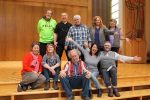
Choir director and singer Earle Peach, seated at centre, with members of Highs and Lows Choir. (photo by Kathleen Yang)

For more than 20 years, Highs and Lows Choir has brought music back into the lives of its members. Established as a four-part choral group in the mid-1990s, its mission is the mutual support of singers, in a way that nurtures mental health and wellness. Auditions are not required for new members; musical activities and instruction are built into their weekly rehearsals. The main thing, according to choir director and singer Earle Peach, is “the desire to participate and the willingness to learn.”

Accompanied by pianist Elaine Joe, the choir of about 20 voices practises a wide repertoire of songs, which it performs at numerous venues around Vancouver. In December, the songs were festive and drew on a range of traditions – songs from Christmas in Victorian England, and a Chanukah song from Spain called “Ocho Kandelikas.” Between the seasonal items, the choir performed the satirical “Parking Lots and Strip Malls,” “Blue Moon” and, a favourite with swing bands, “Jump, Jive and Wail.”

“We’ll sing music from any place or time period, as long as it has beautiful harmony and isn’t too difficult,” said Peach of the set list.

The atmosphere at rehearsals is buoyant, even amid the hard work of managing tricky intervals and rhythms, as in, for example “A La Ru,” a Spanish lullaby. The choir sings in a range of languages, performing works in English, Latin, French, Swahili, Ladino and Haitian Creole. The music is “challenging but manageable,” according to Jewish community member Rachel Mayer, an alto singer who is also a member of the choir’s board.

In the break, members talk about upcoming events in the community. In December, the calendar was full of choral visits around town, including two events at Douglas Park Community Centre and a lunch at Carnegie Community Centre. At the end of January, the choir will be singing for the Suzuki Elders and, in February, they will join other choirs at the Home Ground Festival in Oppenheimer Park in the Downtown Eastside.

Bass singer Kevin Elwell has managed or co-managed Highs and Lows Choir since 2003, and has been a peer support worker and English-as-a-second-language instructor with Vancouver Coastal Health since 2006. He has seen firsthand the tremendous difference the choir has made in the lives of its members: a difference recognized by the Mayor’s Arts Award, which was given to Peach in the fall of 2017, for community-engaged art. A conductor for three other choirs in the area, Peach is also a performer, teacher, producer and recording artist.

Alaric Posey (bass) described the choir as “the highlight of my week.” Having sung in children’s choirs, he had been away from music for many years before joining Highs and Lows in 2003. This opened the door to a life full of music, as he is now the choir’s assistant conductor and co-manager. He also teaches music and performs with a number of other groups around Vancouver.

The singers explain that, while singing is good for you, the social element is equally important. “There’s more of an effect the more people you sing with. You’re a community with a common purpose,” said Posey.

Academic research confirms the views of the singers. A 2016 article on the neuroscience of singing reports that social singing evolved to serve the needs of early humans. By singing and dancing together, groups shared important information, forged strong social bonds and fended off enemies. While we may not need to scare away predators, our modern brains still benefit from the endorphins released into our bodies as we sing. These endorphins make us happier, healthier and more able to think creatively. Choir librarian Dale Sweet (tenor) sets a good example with his commitment to singing in seven different choirs around town.

While the choir was founded to nurture the mental health of its members, the lows are left at home during rehearsal. The choir is a place to be task-oriented while making music and laughing at the endless stream of bad puns emanating from the conductors. Still, the members always know that others have their backs. True to the choir’s name, soprano, chair of the choir board and Jewish community member Penny Goldsmith observed, “People look out for each other. If someone doesn’t show up, we call them.” Aptly named, the choir helps the spirits of its singers take flight.

The choir sings weekly every Tuesday from noon to 1:45 p.m. at the Unitarian Church at Oak and 49th in Vancouver. New members are always welcome. More information about the choir can be found at highsandlowschoir.ca.

Shula Klinger is an author and journalist living in North Vancouver. Find out more at shulaklinger.com.

Leading Canadians in environment, music, mental health

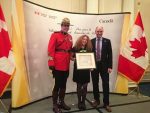
Liliana Segal with Green Chair Recycling’s 2017 Canada’s Volunteer Award.

Green Chair Recycling, founded by Liliana Segal, was recognized in 2017 as a business leader in British Columbia and the north by Canada’s Volunteer Awards. The awards, given by the Government of Canada, were presented in a ceremony held in Ottawa on Dec. 5, International Volunteer Day, to individuals and businesses across the country who contribute to and strengthen their communities.

The awards booklet noted, “Vancouver-based Green Chair Recycling is helping to keep waste of out landfills one event at a time. They work with their clients to create zero waste events, where 95% of event waste is recycled. They work with over 3,000 volunteers who are green ambassadors to track waste at their events, provide education outreach and give free presentations to any interested group. Their volunteers also run free educational field trips to landfill and recycling facilities to show students the reality of landfills and to learn how recycling happens in their communities.”

* * *

The Centre for Addiction and Mental Health (CAMH) is Canada’s largest mental health and addiction teaching hospital, as well as one of the world’s leading research centres in its field. CAMH Difference Makers – 150 Leading Canadians for Mental Health was a national movement that started in 2017. Its purpose is to encourage people to speak freely about mental illness because CAMH sees how these conversations help break down the stigma that prevents people from getting the care they need.

In April of last year, guided by a national committee of leading experts and advocates, CAMH launched a cross-Canada call for nominations of people influencing change in the area of mental health and giving us new reasons for hope. It invited Canadians to nominate a person with lived experience, a caregiver or family member, a health professional, a researcher, an advocate, a philanthropist – anyone making a difference in small or big ways; in local or international circles; in public or private lives. Nominations were open until July 1, and more than 3,700 names put forward.

Among the 150 selected as Leading Canadians for Mental Health were members of the B.C. Jewish community. In alphabetical order, they were David Granirer, Dr. Gabor Maté and Lorne Segal.

David Granirer

It’s hard to laugh when it seems the entire world is crumbling around you. That is what makes Granirer’s approach to dealing with depression so noteworthy. When he experienced depression as a teenager, Granirer saw his condition as something shameful. Today, he realizes shame is as bad as the illness itself.

As a staff member at the Vancouver Crisis Centre, Granirer began to use humour at work to help trainees get through stressful days. This led to a growing passion for stand-up comedy and to eventually founding Stand Up for Mental Health. The program teaches stand-up comedy to people living with mental illness to help them build confidence and break down stigma. Through Stand Up’s 500 shows so far – performed to mental health organizations, government, corporations, the military, schools and correctional facilities – Granirer has helped thousands see mental health in a different light. Through his unique program, Granirer helps people understand not only do we need to shed shame, but that a smile, a laugh and happiness can exist alongside the challenges of mental illness.

Dr. Gabor Maté

When Maté retired from medicine, he turned from using his insights on addiction, early childhood development and trauma to support society’s most marginalized, to inviting growing audiences in Canada and around the world into new dialogues on compassion. He is internationally known for his work on the mind/body unity in health and illness, on attention deficit disorder and other childhood developmental issues, and his breakthrough analysis of addiction as a psychophysiological response to childhood trauma and emotional loss. He is the author of four best-selling books published in 20 languages on five continents, including When the Body Says No: Exploring the Stress-Disease Connection and the award-winning In the Realm of Hungry Ghosts: Close Encounters With Addiction. His TED talks, YouTube videos and international speeches have helped focus attention on the mental health and trauma issues that underlie addiction. Maté shows humility and compassion, giving a sense of hope that, in a world where many people are shut down, defensive and fearful, there is a guiding light ahead and a new world of possibility.

Lorne Segal

Segal, a business leader and philanthropist, has been involved with Coast Mental Health’s Courage to Come Back Awards since their inception in 1998. At that time, the stigma surrounding mental illness was even more of a barrier to public engagement than it is today. During his almost two decades with the awards, including serving as chair for the past 12 years, he has helped transform the event into one of British Columbia’s premier mental health campaigns. Under Segal’s tenure, the number of guests has tripled to 1,500, with the awards also reaching more than a million people through television, print and other media. Segal has been instrumental in inspiring more than $15 million in support for mental health programs such as housing, employment and other support services to more than 4,000 people annually living with mental illness. His decision to start supporting the event at a time when mental health wasn’t popular was quite simple. He saw an issue that affected many and wanted to do something about it. Not only has he been successful in this, he has helped spread greater awareness and support for mental health in British Columbia.

* * *

image - Ruckus CD coverToronto-based band Beyond the Pale’s latest CD, Ruckus, reviewed in the Jewish Independent Sept. 15, 2017, was nominated for two Canadian Folk Music Awards last year, for World Music Group of the Year and Instrumental Group of the Year. While the band didn’t win a 2017 award, it has been nominated now for eight CFMA honours, and won four.

“Six of the 12 songs on Ruckus are originals, while the others are arrangements of traditional melodies,” noted the JI’s review (jewishindependent.ca/the-complexities-of-ruckus). “All of the musicians either composed an original piece or participated in the arranging. They are a tight ensemble who play around with tempo and style with such ease that the complexity of what they’ve created isn’t what you’ll first notice. And that’s what makes their music so good.”

Mystery photo … Jan. 26/18

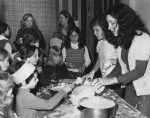
The Vancouver Jewish Community Centre doing a children’s baking program, Jan. 18, 1974. (photo from JWB fonds, JMABC L.11635) 

If you know someone in this photo, please help the JI fill the gaps of its predecessor’s (the Jewish Western Bulletin’s) collection at the Jewish Museum and Archives of B.C. by contacting archives@jewishmuseum.ca or 604-257-5199. To find out who has been identified in the photos, visit jewishmuseum.ca/blog.