
Tag: synagogue
Spreading joy on Purim
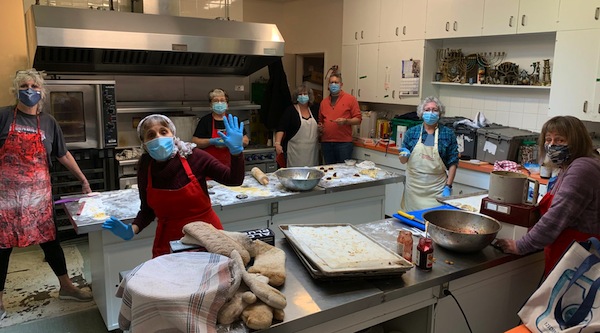
In the kitchen, left to right, are Stacey Kettleman, Leah Reghatti, Francie Steen, Deborah and David Freedman, Shelley Ail and Linda Rothberg. (photo from Beth Tikvah)
This Purim, Beth Tikvah Congregation packaged more than 240 holiday bundles, delivering one to every member household – spreading not only joy, but raising funds for the synagogue’s preschool and Hebrew school.
“As we enter the month of Adar, our tradition teaches, we must increase joy,” explained Rabbi Susie Tendler, the congregation’s spiritual leader. “The talmudic statement (Ta’anit 29a) is not specific about whose joy we are increasing, rather that it is incumbent upon us to spread joy and cheer, brightening these dark days. Communities around the globe have certainly been wrestling with how to deepen connections and spread joy this past year. Beth Tikvah decided to take the wisdom of our tradition and do so through festive and colourful mishloach manot, Purim packages, that went to every member family living in British Columbia.”
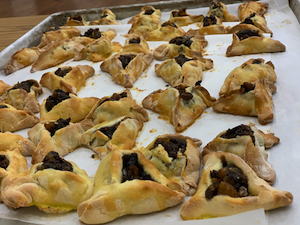
The effort was multigenerational. There were the volunteers in the kitchen, who made more than 1,000 hamantashen. B’nai mitzvah families and the congregation’s youth groups (USY and Kadima) helped assemble the packages. There were the volunteers who counted, sorted and put the finishing touches on the packages, and those who picked up and delivered the packages all over Richmond and Vancouver. And, of course, the whole endeavour would not have been possible without those who funded it.
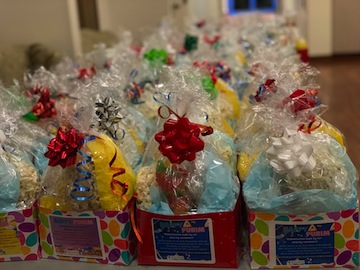
In addition to all the congregants who ordered the mishloach manot and volunteered in various ways, Isha L’Isha was a sponsor of the initiative, Leanne Hazon supported the program “relentlessly during all hours of the day,” Alon Sabi designed the ordering system, and BT program manager Yvette Sabi created the boxes.
“For me,” said Tendler, “particularly during COVID, the opportunity to hang a bundle from someone’s door, ring the bell, and then step back three metres or so, and wish someone a happy holiday personally was splendid. However, the joy did not stop there. We received an outpouring of communications from people testifying to the joy and surprise felt from these packages which, in turn, deepened the joy felt by all of the volunteers. It is true, sometimes the little things bring the biggest smiles, and one smile significantly sparks another smile.
Beth Tikvah welcomes rabbi
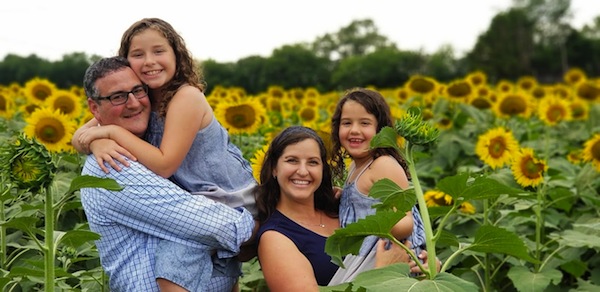
Rabbi Susan Tendler, her husband Ross Sadoff and their daughters Sofia and Daniella moved from Chattanooga, Tenn., to Richmond, where Tendler is the new spiritual leader of Beth Tikvah Congregation. (photo from Rabbi Susan Tendler)
Moving to a new city and starting a demanding and highly visible new job would be a challenge in the best of times. For Rabbi Susan Tendler, the recently arrived spiritual leader at Richmond’s Beth Tikvah Congregation, and her family of four, it was a little more complicated.
Not only has the COVID pandemic added complexity to every detail, the family was moving from the United States. This meant that, once they made it to British Columbia after a long, though enjoyable, drive across the continent, during which they took in some national parks and historical sites, they had to go into two weeks of quarantine in their new home.
The lemons of COVID were turned to lemonade by the reaction of the Beth Tikvah community. Tendler calls their reception “extraordinarily unbelievable.”
They arrived at the house, which had been equipped with bedding, toiletries, kitchenware and small appliances, a stocked pantry and refrigerator, and almost everything the new arrivals could want.
“People would from a distance greet us and somebody brought us dinner every single night that week. And people checked on us and would just drop off some milk or whatever we needed for the next week,” she said. While her husband, Ross Sadoff, returned to the States to collect their other vehicle, the rabbi and her daughters, 10-year-old Hannah Sofia and Daniella, who is 8, settled into quarantine.
“My girls and I sat in kind of a tent in our driveway,” she said, while congregants brought socially distanced greetings. “They drove by, honked at us and welcomed us. They had signs and balloons to make us feel welcome. The community, honestly, has gone above and beyond and really demonstrates what a caring community could be and just really made us feel welcome.”
The family moved from Chattanooga, Tenn., where Tendler had been rabbi for eight years at the Conservative B’nai Zion Congregation. She also served on the faculty of Camp Ramah Darom, in the foothills of Georgia’s Blue Ridge Mountains.
She grew up in Virginia and previously held positions in congregations there and in North Carolina. Her undergraduate degree from the University of Virginia is in religious studies with concentrations on Islam and Judaism. At the Jewish Theological Seminary of America, she received her rabbinical ordination and her master’s of education in informal Jewish education. She also completed a two-year rabbinic track at the Institute for Jewish Spirituality. She describes herself as “an ardent Zionist.”
Coming to Canada generally and Beth Tikvah specifically seems bashert. Tendler and Sadoff met at a wedding at the Richmond shul. In fact, that was one of three coincidental meetings that happened before Tendler decided maybe she should consider them an omen.
“I started thinking, wow, maybe I should pay attention to this,” she said. “Why do I keep running into him?”
She had first met Sadoff in New York, when she was en route to Israel and he was rooming with a friend of hers. On a different trip to Israel, for a cousin’s bar mitzvah, the pair met again. The Beth Tikvah meetup was third time lucky.
Relocating to Canada was not in the cards until recently, but it was something like a long-held dream.
“My husband used to say to me years ago, hey, do you think we can move to Canada?” Tendler recalled. “I’d say, Ross, I’m a female rabbi. The chance of that, at this point in time, is very slight. A decade ago, there were many fewer female rabbis in Canada.”
In fact, Tendler is the first female pulpit rabbi in a Conservative shul in British Columbia.
A few factors account for the family’s attraction to Metro Vancouver. For one thing, they wanted a Jewish day school, which Chattanooga has not had for a number of years.
“We are very excited about RJDS [Richmond Jewish Day School] because we think it will offer the flexibility that our kids will greatly benefit from,” she said.
The family loved Chattanooga, but even at one of the most diverse public schools in town, not being Christian was sometimes an issue.
“In some ways, we felt like we were undermining our family values,” said Tendler in the context of raising their kids. “We just wanted them to fully embrace and love who we were raising them to be and the values we were raising them to honour and realizing that, in some ways, we were undermining them constantly.”
A lockdown that took place after false alarms of a threat at the kids’ school made Tendler and her husband ponder school security and the prevalence of gun violence in their country.
“We say things are going to be different but nothing changes,” she said. “I went to Washington, D.C., after the shooting in [Parkland] Florida and we say things are going to change but nothing changes. At some point, you have to do something different. The lobbies are too strong and we can’t even talk in the States about gun safety. It’s all like, you’re taking away my rights. Well, what about public safety?”
Possibly above all, the family just thought that British Columbia would feel like home.
“I think that, in many ways, my family moved here for holistic health reasons,” she said. “We just wanted a place that felt healthier and was more aligned with our values.”
Even comparatively small things like an efficient recycling program make Tendler feel kinship with her new hometown. “It’s a small thing but, in general, I just feel that our values and what we want to teach our children are more in line with Canada, at least with British Columbia and Vancouver, with open-mindedness and, I would say, respect for other people.”
While the transition to their new hometown was complicated, they made the best of it. During the transcontinental road trip, they stopped at sites like the St. Louis Arch, the Badlands, Yellowstone and Mount Rushmore.
“We took some little hikes and saw bison and prairie dogs,” said Tendler. “It was fun.”
Kolot Mayim installs rabbi
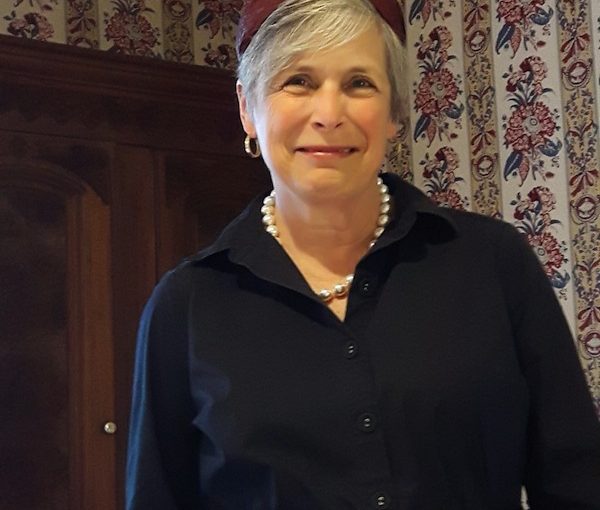
Rabbi Lynn Greenhough represents a series of firsts for the Victoria Jewish community. (photo from Kolot Mayim)
When Lynn Greenhough is officially installed as rabbi of Kolot Mayim Reform Temple in Victoria tonight, Sept. 6, she will bring with her a series of firsts to the city’s Jewish community: its first rabbi born on Vancouver Island, its first Canadian-born rabbi, its first full-time female rabbi with her own congregation and its first rabbi who was not born into Judaism.
A stalwart in Victoria’s Jewish life for nearly 30 years, Greenhough has been Kolot Mayim’s spiritual leader since 2017, while simultaneously completing her rabbinical studies at the program offered by the Jewish Spiritual Leaders Institute (JSLI) in New York.
For someone born and raised in Happy Valley – 15 kilometres west of Victoria – at a time when the area was still a farming community, the rabbinate was not a calling many in the community, or indeed on the Island, might have considered.
Her first taste of Judaism, and some of the recent history of the Jewish people, came in Grade 5, when she found a copy of William L. Shirer’s The Rise and Fall of the Third Reich in her schoolroom library, and her curiosity and sense of connection to Judaism ensued. She recognized that justice had tragically failed Jews during the Holocaust and she felt a need to be part of rebuilding a world where such a failure could never happen again.
“I consciously gravitated towards Judaism because of its inherent sense of justice,” Greenhough told the Independent. “At that early point, I realized, I would be a Jew.”
Life, jobs and family followed. She finished school, married and had a son, helped open Everywoman’s Books in Victoria and then worked for Canada Post as a truck driver for 20 years.
In the 1980s, Greenhough attended a few Jewish events at Victoria’s Congregation Emanu-El. She began to light candles and tried to build a sense of Shabbat into her week. She also looked for a Jewish partner who could help her build a Jewish home. Yet, it wasn’t until she was in her late 30s that she was determined – accompanied by now-husband Aaron Devor – to convert. Devor grew up in a Jewish neighbourhood on Long Island, but was not a regular synagogue attendee. Along the way, the couple became deeply engaged in Jewish life.
By 1992, Greenhough’s conversion was complete and, from then, it was full-on immersion to the point where she became a leader and educator. At Emanu-El, she guided historical tours, joined the board of directors, led services, including chanting Haftarot and Torah, joined the Chevra Kadisha (Burial Society) and served as a funeral officiant.
In 1996, she served as an instructor at the synagogue’s Hebrew school and then began teaching and coordinating b’nai mitzvah classes. In 1998, she began to teach Torah and Haftorah studies for adults and, in 1999, taught an introduction to Judaism course for those interested in conversion.
However, it was the Chevra Kadisha that became her passion. In 2000, Greenhough completed her master’s degree at Royal Roads University under the supervision of Dr. Rabbi Neil Gillman, z”l, from the Jewish Theological Seminary in New York. Her thesis – We Do the Best We Can: Chevra Kadisha in Small Jewish Communities in North America – looked at both the history of Jewish models for care of the dead, and present-day practices and training models from 16 different small Jewish communities.
This work led to further connections. Greenhough, along with Rena Boroditsky of Winnipeg, Man., and David Zinner of Maryland, worked together to organize the first of now 16 international conferences dedicated to learning about these burial practices.
Greenhough has also taught Judaism in the University of Victoria’s religious studies program (2007-09), was scholar-in-residence at Temple Beth Shalom in Phoenix, Ariz. (2009) and taught courses in academic writing at Royal Roads (2012-16).
In 2014, she joined Kolot Mayim as a member and led Torah studies and Shabbat and holiday services as needed, before becoming its spiritual leader in September 2017. Synagogue members are glowing in their praise of Greenhough as their choice.
“She brings a richness of experience as a born and raised ‘Island Girl.’ Indeed, she has attracted, and continues to attract, new members through her wisdom, spirituality, empathy, knowledge and quirky sense of humour,” said Sharon Shalinsky, president of Kolot Mayim.
Kolot Mayim was founded in 1998 by a small group of individuals and families, initially meeting monthly at the Victoria Jewish Community Centre. As the congregation grew, the frequency of services increased, ultimately to a weekly schedule. The synagogue has struggled to find a permanent rabbi and has, at times, been challenged in terms of membership recruitment and retention. The past year, though, it has seen a 70% increase in membership.
To mark the installation of a new rabbi at its westernmost location, Dr. Pekka Sinervo, the head of the Canadian Council of Reform Judaism, will be on hand at the ceremony, as will Rabbi Allan Finkel, who, along with Greenhough, is a 2019 graduate of the JSLI program and now leads services at Temple Shalom in Winnipeg.
Ahead of the occasion, Greenhough reflected, “This was not a career move, but the fulfilment of a dream.”
Sam Margolis has written for the Globe and Mail, the National Post, UPI and MSNBC.
Put down “the ducky” in shul
I chatted with a friend recently about what it was like in “the old days” when someone had to take a cellphone call during synagogue. This is when there were only big, clunky cellphones. I remember seeing a doctor on call pacing in the lobby. He – and it was usually a man – looked apologetic as he listened carefully. It was an emergency. It was a doctor who needed to attend to a patient, even though it was Shabbat and he was at services.
Given the circumstances, we recognized it was OK, because it was pikuach nefesh. He was helping save a life and that level of emergency is allowed, no matter how observant you are, on Shabbat. You put a person’s life above everything else.
The media has done many features where they reflect on research that shows how social media and being attached to a cellphone or other device has affected our health. It can keep us from interacting in the real world with other people, from sleeping or focusing properly. Social media increases our anxiety levels and, sometimes, it’s an addiction. Waiting to get that next update, from a friend or a news source, can sometimes seem more important than any actual person or event taking place in the same room.
My kids know the lesson from Sesame Street and the classic song, “Put down the ducky!” Ernie wants to play the saxophone, but Hoots the Owl tells him, “Put down the ducky if you want to play the saxophone!” It’s a lesson that we must break habits – like carrying a cellphone or the rubber ducky – to learn something new, make music and interact with others.
In the Jewish context, I see it everywhere. It’s at services, lectures, at the Passover seder or Shabbat table, at the kids’ events and play dates. It’s so pervasive that those doing it don’t even realize they are blocking out the world to engage with their electronics. It’s like a body part for those folks, while its noise means others can’t concentrate.
I was at a family service on Shabbat when we were interrupted with what sounded like a radio playing. It seemed to drift on and off and it was terribly distracting. Are we hyper-aware of such things? Absolutely. I am always tired and it makes me extra sensitive to noise and stimulation. There are some folks in my family who are also noise-sensitive. Too much noise and chaos often means we just have to leave. It’s too much.
Meanwhile, while the radio-like sound continued to compete with the prayers, adults in the back kept talking over it all. My husband, usually immune, looked bothered. I encouraged him to get up and ask someone to shut it off, since I sat with a kid on my lap. I thought it might be somewhere outside, but I was wrong. It was one of the talking adults, who failed to even notice that her phone was making the noise. Even when it was finally shut off, the adults continued to talk.
The interference was so pervasive and distracting that I couldn’t wait to leave. At Kiddush, at the end of the service, I heard someone say to a kid, “You can go ask the rabbi, he’s not praying now.”
That was it in a nutshell. I found myself wondering what the heck we were doing there. Are you coming to synagogue to play live-streaming radio and talk loudly? If you aren’t praying, or even sitting quietly, as a role model for kids, why bother coming to disrupt everyone else?
Some might say this is just an isolated incident, but it’s pervasive. On Yom Kippur, there was a grandfather who thought it was OK to hop up and snap photos with his phone during the service.
As I looked at the Torah portion, Behukotai, Leviticus 26:3-27:34, for the first week of June this year, I remembered this experience. It’s a portion that emphasizes all the amazing things offered by the Divine Presence “if you follow my laws and observe my commandments.” It’s a carrot-and-stick story, it clearly states the bad things that will happen to those who don’t follow the rules.
Our understanding of the laws and commandments may have changed, but social norms still exist. We live in a society with clear tension between individuality and the common good. If you judge someone else’s behaviour, you can be told that judgment is inappropriate – even when the individual isn’t behaving in a considerate or safe way for the community. If you feel uncomfortable with someone’s behaviour, we’re taught “we can only control ourselves and our response to it.”
You may not want to stop social media use on Shabbat or want to pray at services, and that’s your choice. However, it’s probably not your place to keep others distracted with your phone so they cannot concentrate on prayer. If you’re set on having it your way, and don’t want to think about others, why join a community Jewish event to do it? Stay home to use your cellphone instead.
Winnipeg prides itself on being a friendly place, and inspired other places to adopt a United Way campaign day of “conscious kindness.” It might be time to live the slogan and think of others – if you can’t put down the phone for your own sake, please do it for ours.
Joanne Seiff has written regularly for CBC Manitoba and various Jewish publications. She is the author of three books, including From the Outside In: Jewish Post Columns 2015-2016, a collection of essays available for digital download or as a paperback from Amazon. See more about her at joanneseiff.blogspot.com.
Seek peace and truth in 2019
My family recently traveled to northern Virginia for a bar mitzvah. We did it in a long weekend. We left Thursday afternoon and returned on Tuesday. It was the farthest we’ve ever gone in a weekend with kids. Afterward, I felt bleary and fuzzy around the edges. However, wandering through three airports in each direction and attending five or six big family events and meals exposes you to things you might not have noticed before.
My nephew became a bar mitzvah at my childhood congregation. Each weekend, they print a bulletin or program with information about services and upcoming activities. When services ended, my husband tucked his program into his tallis bag as a memento. I also took one for safekeeping, but I saw it as primary source material. Proof that, indeed, all these activities could happen at a healthy congregation.
Awhile back, I wrote a column describing a slate of weekend Jewish events, for every age group, at North American congregations. As one template, I used Temple Rodef Shalom, in Falls Church, Va. I’ll never forget some of the feedback I got. The loudest responses were from older men. One told me I must be making this up. Why would any congregation cater to special interests (children, teenagers, those with disabilities, women, Jews of colour, the needy, Jews by choice, and others) the way these ones did? This man stopped just shy of telling me I was writing fake news.
I don’t consider myself a journalist. I wasn’t trained as one. I usually write clearly marked opinion pieces, how-to articles and features. I don’t go to war zones, report on famine or natural disasters, but, apparently, that didn’t matter either. In a reply, I linked to two congregations’ calendars, including ones that had served as my template. The somewhat virulent response from this man targeted Reform Judaism, liberals and … no need to go on, you get the picture. No amount of valid information would likely sway him.
While going through the Winnipeg, Minneapolis and Washington National airports, I glimpsed newsstand magazine covers. Time magazine’s Person of the Year was not Trump. No, the 2018 people of the year were journalists killed or imprisoned for doing their job.
Journalists and, more generally, writers, have a job that requires them to observe, hear and listen to what’s going on around them. In a fast-moving world, a well-written piece can help readers absorb information or perceive a different point of view – ideally to help us understand a bigger worldview than we can find on our own.
I thought about this “fake news” response while I read the synagogue bulletin from the bar mitzvah. The congregation’s name, chosen in the 1960s – Rodef Shalom, Pursuer of Peace, referencing Psalm 34:15 – was carefully selected: “Depart from evil and do good. Seek peace and pursue it.” And, indeed, the congregation was doing many good activities in December. They examined issues concerning gun violence, Torah, politics and the life of the synagogue. On Dec. 25, they had a Mitzvah Day scheduled, working on creating “care kits” for the homeless, cooking and delivering hot meals and sandwiches to homeless shelters, and collecting, sorting and distributing winter clothing for those who needed it.
There are many Jewish angles to being a good journalist, writer or observer. Jews are People of the Book. We’re also primed, in the Sh’ma, to “hear these words, to speak them, to write them and to teach and listen to them.” In our efforts to understand who we are as Jews, we also must learn to hear, listen and communicate with others. We should know what it means to be a witness to events, whether we are journalists or not.
If one wants to, you can really shelter yourself these days into consuming (watching, hearing and reading) just the “feed” that caters to your sensibilities. That is, you can believe there is a border wall already being built between the United States and Mexico to keep out dangerous criminals instead of refugees. You can provide yourself a fake news narrative that somehow allows you to think that the white person who shot at synagogue-goers in Pittsburgh, or the one who killed so many in Las Vegas, is not as threatening as Al Sharpton or American Muslims.
I choose a different approach. In the airport, we smiled at others – no matter their skin colour or religious beliefs. We chatted with a young woman who attends Howard University (an historic and respected African-American institution) and I told her how great the campus was when I once took a teacher licensing exam there. One of my kids pulled a book out of a backpack for me to read them while we waited: a Scholastic book on Viola Desmond (who’s on Canada’s new $10 bill, by the way).
Time said they chose these journalists “for taking great risks in pursuit of greater truths, for the imperfect but essential quest for facts, for speaking up and for speaking out.”
Part of being Jewish is taking the time to hear and listen to what is around us, and to take risks to pursue truth and peace. We’re known as people who speak out for those who need compassion (Joseph helped the Jews in Egypt in time of famine) and justice (Moses spoke out against slavery). In that tradition, we have had modern leaders like Abraham Joshua Heschel, who spoke out on civil rights.
I take this one step further when I write it down and it gets sent to you in the newspaper. We’re lucky – as we start 2019, we have the power to choose to read, listen, learn and treat each other with love and an open heart and discern what is real. I have an actual printed bulletin to prove that synagogues can and do provide programming for many constituencies. I do fear hatred, lies, violence and fake news, but I don’t spread a blanket of fear where it doesn’t belong – not on top of people of colour (Jews or non-Jews) or others with predominantly moderate religious traditions like Islam.
Christians may talk about witnessing but, every day, Jews recite in the Sh’ma an obligation to hear and to listen, to read and communicate our values. When we truly pursue peace, we don’t accuse each other of making up the news. Instead, we make news for doing good things and being upright and honest with one another.
Let’s lift a glass to tolerance and good communication, too. Here’s to a loving, peaceful, civil and truthful 2019. L’chaim.
Joanne Seiff has written regularly for CBC Manitoba and various Jewish publications. She is the author of three books, including From the Outside In: Jewish Post Columns 2015-2016, a collection of essays available for digital download or as a paperback from Amazon. See more about her at joanneseiff.blogspot.com.
Unexpected Barbadian find
Nidhe Israel Synagogue is a UNESCO World Heritage Site. (photo by Tasha Nathanson)
One of the oldest synagogues in the Western Hemisphere is in Barbados. I was living in Barbados, working on a Canadian agricultural development project, when I tripped over this unexpected fact. I knew that the real estate agent who helped me find housing – and who, not coincidentally, became my neighbour – was Jewish, but I had assumed he was an anomaly here, in the most eastern island of the Caribbean. This was not the place I had anticipated a Jewish story to unfold.
The neighbour, Steven Altman, is reasonably well known in this small place where everyone seems to know most everyone. But many of the islanders I met inserted the comment, “he’s Jewish” into any mention of him, which reinforced my impression that being Jewish was unusual here. The Barbados I encountered in the seven months I lived there is a place that runs according to racial categories and everyone seems to be categorized according to skin colour and place of origin. Even though I’m half-Jewish, I was the white Canadian woman at work.
Curiosity prompted me to board a crazy ZR van headed into Bridgetown one day to find out more about Nidhe Israel Synagogue. ZR vans are semi-unregulated transport vehicles built to seat about 10 passengers, though I’ve been in them packed with more than 20 fellow travelers. People squish in, pressing up against each other with infinite stony-faced endurance. The soca music is generally blaring and often the driver has the flag of some neighbouring island pinned to the front, indicating where he lived before ending up in Barbados driving the public bus route in a private vehicle. The cost is always exactly two Barbadian dollars to ride and the experience is totally worth it.
The Synagogue Historic District is a UNESCO World Heritage Site in the Barbados capital city of Bridgetown. Originally built around 1654, it was destroyed by an 1831 hurricane, rebuilt in 1833 and restored from 1987 through 2017. Constructed by Sephardi Jews fleeing Recife, Brazil, after that colony passed from Dutch to Portuguese hands, these arrivals sought the relative safety of British-controled territory. The Jewish community was able to practise their faith openly here even before they regained that right in England.
The refugees settled into housing on Jew Street (now Swan Street) and brought with them knowledge and experience of the sugar cane industry. For this, I raise a glass of fine Barbadian rum, as this accident of history resulted in a terrific local finished product. By the mid-1700s, the Jewish community was 800 strong, which was the peak of Jewish settlement.
The hurricane in 1831 was a disaster that destroyed more than just the synagogue, resulting in an exodus to the United Kingdom and the United States. By the 1920s, only one Jewish resident, Edmund Baeza, remained, holding the keys to the building. When he, too, left, the synagogue was sold and deconsecrated.
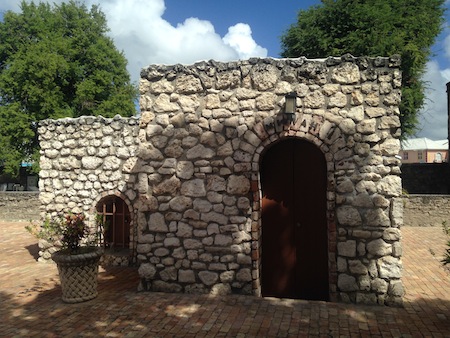
By the 1980s, the building was dilapidated, in use as a warehouse and destined for demolition, when a renewed Jewish community stepped in to begin the process of restoration. The synagogue officially reopened in April 2017, and it is a gorgeous, tranquil and instructive space.
When my neighbour Steven boasted that it was his family that was responsible for the resurgent Jewish community in Barbados, I filed away his comment with a few of his other questionable statements, such as when he had appealed for my company on the basis of needing someone to wash his laundry. Steven wasn’t even aware that I might take offence. Standards of male expression and behaviour are one of the more dubious cultural differences for a Canadian woman living temporarily in Barbados.
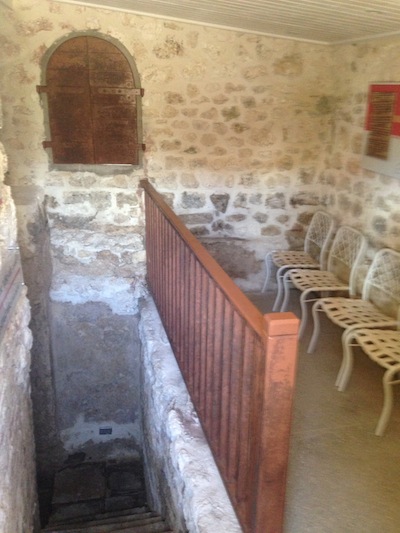
Despite my skepticism, however, the Altmans were indeed a primary element of the reconstruction effort and are longstanding pillars of the community, according to the plaques at the synagogue. Steven, when asked, wistfully described the tight-knit community of his childhood, drawn together to play games, fundraise for charity and visit each other’s homes, in addition to worshipping together. I grew to enjoy hearing Steven’s voice trailing out the windows of his home and through the tropical evening heat when he practised the prayers for services; it became a pleasant part of my experience of Barbados.
The second wave of Jewish Barbadians was Ashkenazi, mainly fleeing Europe, starting to arrive shortly after Baeza’s departure. My tour guide at the synagogue museum, curator Celso H. Brewster, described desperately seasick travelers bound for South America with skeins of cloth and other mercantile goods to start anew, stumbling out onto the solid ground of Barbados and refusing to go any farther. They set up shop in Bridgetown instead of continuing their journey.
As for Celso himself, he informed me that he was Baha’i but that he did have some Jewish roots as well. Those roots travel through his family line via a version of what was once a Jewish name, bestowed on a born-out-of-wedlock ancestor via a certain plantation holder with, shall we say, quite liberal application of his affections. I’ve heard various versions of this story from other Barbadians. Jews were not only merchants, but there were some Jewish pirates and, sadly, Jewish slave owners.
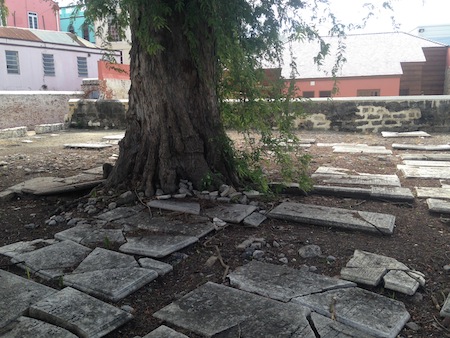
Nidhe Israel Synagogue and its grounds – which include the original mikvah, which was uncovered in 2008 to reveal a still-flowing spring; an extensive cemetery, as well as a museum – is a beautiful oasis for thoughtful reflection and learning.
The Synagogue Historic District is located on Synagogue Lane, Bridgetown, Saint Michael’s, Barbados. The museum is open weekdays, 9 a.m. to 4 p.m. It is free to enter the courtyard to look around; the entrance fee to the museum is $25 BDS (about $16 Cdn). To find out more, visit synagoguehistoricdistrict.com. Better yet, visit the synagogue.
Tasha Nathanson recently returned from a stint in the eastern Caribbean as gender equality and youth empowerment advisor on a World University Service of Canada project.
חסן דיאב שוחרר
(צילום: justiceforhassandiab.org)
חסן דיאב שנחשד כי ביצע את הפיגוע בבית הכנסת בפריז בשנת 1980, שוחרר ממעצר בסוף השבוע. כך החליטו שני שופטים חוקרים של בית המשפט העליון בצרפת, שדחו את האשמות נגדו. דיאב חזר לקנדה והתייחד מחדש עם אשתו וילדיו. הוא ציין כי לא יתבע את ממשלת קנדה וכי הוא מבקש לחזור לימיו הקודמים.
דיאב נחשד באחריות לפיגוע בבית הכנסת הרפורמי (ברחוב קופרניק) ברובע ה-16 של פריז, בשמחת תורה (ב-3 באוקטובר 1980), בו נהרגו עורכת הסרטים בטלוויזיה הישראלית עליזה שגריר וכן שלושה אזרחים צרפתים. בנוסף ארבעים ואחד איש נפצעו. הפיגוע שנחשב אז לגדול ביותר נגד מטרה יהודית מאז מלחמת העולם השנייה, בוצע באמצעות מטען חבלה במשקל 10 ק”ג שהונח בתוך תיק, שהוצמד לאופנוע שחנה בסמוך לבית הכנסת. המטען הופעל זמן קצר לפני תום התפילה. ב-2007 בסיוע של המודיעין הגרמני והישראלי, אותר החשוד בפיגוע חסן דיאב בקנדה (לאחר שקודם לכן התגורר במשך שנים בארה”ב). דיאב הגיע לקנדה ב-1993 לאחר שקיבל אזרחות מקומית.
שני השופטים קבעו שהראיות נגד דיאב חלשות ולכן אין מקום להעמידו למשפט. התביעה הצרפתית הגישה מייד ערעור לבית המשפט נגד ההחלטה, וצפוי שגם נציגים משפטים של קורבנות האירוע ילכו בעיקבותיה ויבקשו לקיים לדיאב משפט.
דיאב (64) הוא אזרח קנדי יליד לבנון (בירות). בקנדה הוא שימש פרופסור לסוציולוגיה באוניברסיטת אוטווה. דיאב נאבק במשך שנים בממשלה הקנדית שעצרה אותו ב-2008 בשל החשדות החמורים נגדו. לטענת הצרפתים הוא היה חבר פעיל בארגון החזית העממית לשחרור פלסטין. מאז היה נתון לפיקוח ע”י השלטונות הקנדים (צמיד אלקטרוני הוצמד לרגלו) עד שהוסגר לצרפת לפני כשלוש שנים (באוקטובר 2014). מאז שהגיע לצרפת הוא שהה בכלא שמור בפאתי פריס.
לטענת התביעה הצרפתית דרכונו של דיאב נמצא בידי חברי החזית העממית לשחרור פלסטין ששהו באיטליה, שלושה ימים אחרי הפיגוע. ממצא זה הביא למעצרו. דיאב טען להגנתו כל הזמן כי הוא חף מפשע וכי בעת הפיגוע הוא היה סטודנט באוניברסיטת בירות. הוא ציין כל העת כי שלטונות צרפת בילבלו בינו ובין מישהו אחר.
ארגון הגג של יהודי צרפת כינה את החלטת השופטים לשחררו “שערורייתית וחסרת אחריות, וכן עלבון לקורבנות הפיגוע ונבי משפחותיהם”. לדברי ראשי הארגן שחרורו של דיאב יתפרש על ידי רבים ככניעה למעשי הטרור.
לטענת ערוץ 7 דיאב אמור היה להישאר בצרפת כיוון ששוחר למעצר בית בלבד על ידי בית המשפט. דרכונו היה שמור בבית המשפט בפריז אך הוא הצליח להוציא דרכון זמני משגרירות קנדה והמריא מייד לאוטווה.
אונר”א: קנדה תמשיך לתמוך בסוכנות בניגוד לארה”ב
קנדה מתכוונת להמשיך ולתמוך כספית באונר”א (סוכנות הסעד והעבודה לפליטי פלסטין), בניגוד לארה”ב. זאת לאור החלטת הנשיא דונלד טראמפ. ארה”ב ציינה כי תקטין במחצית את התמיכה הכספית בסוכנות. בשלב ראשון ארה”ב תכננה השנה להקציב לארגון כמאה עשרים וחמישה מיליון דולר, אך בפועל יועברו רק כשישים מיליון דולר. עד כה ארה”ב נחשבה לתורמת הגדולה ביותר של אונר”א (מימנה כ-30 אחוז מהתקציב הכולל), והיא הייתה מעבירה לה מדי שנה כשלוש מאות מיליון דולר. ואילו קנדה העבירה לארגון כחמישים מיליון דולר בשנתיים האחרונות, וכאמור היא תמשיך לעשות זאת גם בעתיד.
אונר”א פתחה במבצע לגיוס לא פחות מחמש מאות מיליון דולר לשם הבטחת השירותים שהיא מספקת לפלסטינים בשטחים, בעזה, ירדן, לבנון וסוריה.
Thrilled by community
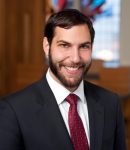
Rabbi Philip Gibbs is the new spiritual leader of Congregation Har El. (photo from Rabbi Philip Gibbs)
Rabbi Philip Gibbs, who took up the pulpit at Congregation Har El / North Shore Jewish Community Centre in July, had an unusually straight path to Judaism in many ways, at least for someone living outside the Orthodox world.
“Judaism was always part of my life,” Gibbs told the Independent.
Growing up in Marietta, Ga., he attended a Reform synagogue, went to Hebrew school and lived in a home life structured by Judaism. He found Judaism both comforting and intellectually engaging. He loved the thorny moral questions of Jewish tradition and studying Torah stories for guidance about how to live in the world. By the time he finished high school, he was on the regional board of the Reform Jewish Youth Movement (NFTY).
Being a leader in NFTY helped Gibbs see what it meant to bring others to and through the experience of Judaism – and the seed of a rabbinic calling was planted.
Gibbs went to college at Washington University in St. Louis, Mo., and graduated in 2012 with a double major in Hebrew and the humanities. He also attended summer programs for intensive Talmud study and, as he settled into “that place of serious learning about Judaism,” he felt at home. He was enamoured by how the Jewish community supported each other in times of crisis and celebration, giving a wider sense of meaning to even happy moments.
Gibbs attended the Jewish Theological Seminary (JTS), attracted “by its academic emphasis and its acknowledgment of the evolution of Judaism.” It also fit his personal level of observance.
He focused on Talmud and halachah (Jewish law) at the seminary and became the secretary of the committee on Jewish law and standards. He became passionate in his interest in halachah, both theoretically and as a “road to values.” He enjoyed taking ritual practice and explaining “the goal and meaning of it from a place of depth.”
Gibbs graduated with a master of arts in Talmud and received his rabbinic ordination earlier this year.
As a rabbinical student, he was engaged with global social justice and human rights issues, and became a member of Rabbis Without Borders. In his second year, after touring Hebron with T’ruah, a rabbinic human rights organization, he was featured in an article in the Forward about younger rabbis willing to grapple fully with the moral complexity of life in Israel.
Gibbs connected to Congregation Har El, which has been without a permanent spiritual leader for just over a year, through the JTS matching process for new rabbis. He had been to Vancouver before and looked forward to flying out for the interview.
“B.C.’s wilderness and outdoors activities are a big draw for me,” said Gibbs, who led the Jewish Outdoor Leadership Institute camp Ramah in the Rockies and is looking forward to the hiking and skiing opportunities available in the Vancouver area. “I grew up doing a lot of hiking in the southeast and led backpacking trips with Conservative movement summer camps. When I got here, I was also thrilled to find a community of very nice and caring people, a place that wanted depth in what they were doing.”
Gibbs said his main priority right now is getting to know the community before he begins putting together any new ideas. He is also getting to know Vancouver.
“It’s great,” he said. “One of the first things I did was get a bike – it’s a city very easy to get around in. My first view was before the forest fire smoke came in, and it was absolutely beautiful.”
Matthew Gindin is a freelance journalist, writer and lecturer. He writes regularly for the Forward and All That Is Interesting, and has been published in Religion Dispatches, Situate Magazine, Tikkun and elsewhere. He can be found on Medium and Twitter.

Mayor visits the Bayit
On Oct. 19, Richmond Mayor Malcolm Brodie, second from the right, joined the Bayit’s celebration of Sukkot. He is pictured here with, from the left, Michael Sachs, Bayit president; Miki Fadida, sponsor of the Fadida Family Sukkah; Rabbi Levi Varnai, spiritual leader of the Bayit; and Moshe Fadida. The mayor discussed the local Jewish community, as well as some of the challenges facing young families. (photo from the Bayit)