
Skip to content
  • Home
  • Subscribe / donate
  • Events calendar
  • Business Directory
  • FAQ
  • News
    • Local
    • National
    • Israel
    • World
    • עניין בחדשות
      A roundup of news in Canada and further afield, in Hebrew.
  • Opinion
    • From the JI
    • Op-Ed
  • Arts & Culture
    • Performing Arts
    • Music
    • Books
    • Visual Arts
    • TV & Film
  • Life
    • Celebrating the Holidays
    • Travel
    • The Daily Snooze
      Cartoons by Jacob Samuel
    • Mystery Photo
      Help the JI and JMABC fill in the gaps in our archives.
  • Community Links
    • Organizations, Etc.
    • Other News Sources & Blogs
  • JI Chai Celebration
  • JI@88! video

Recent Posts

  • SFU honours Gloria Gutman
  • Lifting people’s spirits
  • Wedding a ray of light
  • Indigeneity and Zionism
  • Rule of law broken: councilor
  • Football and its roles
  • The burden of defence
  • Fish Café returns after fire
  • All right in what goes wrong
  • Nuns & mermaids at TUTS
  • Camp offers holiday retreat
  • Students and mentors inspire
  • Once-in-a-lifetime trip
  • 100 dancers, one heart
  • Money for the sciences
  • What “Jewish food” means
  • Have a cookie, schnitzel too
  • Federation now across BC
  • Israel fighting for its existence
  • Deal strengthens Iran
  • Patriotic belonging diminishes
  • A campaign to engage
  • Upstanders’ first live event
  • Responding to Carney
  • Having your own home
  • Music a family tradition
  • Musical to warm heart
  • Community milestones … June 2026
  • Sharing her passion for Israel
  • Or Shalom reopens its doors
  • JFS from past to future
  • Need holistic approach
  • Sharing stories, advice
  • Journalist shares fears
  • Skills to live together
  • Road to independence

Archives

Follow @JewishIndie
image - CJN box ad Rockowers 2026

Tag: synagogue

A precious space in Ireland

A precious space in Ireland

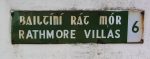
Machzikei Hadas can be found on Rathmore Villas in Dublin. (photo from jewishgen.org)

When my bride and I lived in Dublin, we were strangers in a foreign land. Our refuges were the synagogues of the tiny Jewish community. It was there we found instant acceptance. We were in Dublin, escapees from the harsh extremes of temperature in the places where we used to live. Original products of Winnipeg, we had left Ottawa to pursue a life of retirement in Ireland. Recently married, we were getting to know each other again after leading separate lives since acquaintance in our teen years.

In Ireland, we benefited from the welcoming embrace of the country’s cradle-to-the grave social system, in spite of being alien residents. Seeking community associations, we joined a synagogue, the Dublin Jewish Progressive Congregation. It had the merit of permitting men and women to sit together, important to us at the time. However, we found that environment less fulfilling, and I began to attend another, more orthodox, establishment. Although it was in the main synagogue in Dublin where we had our Orthodox marriage – we were married previously by a justice in Canada and a progressive rabbi in Jerusalem – in the end, we found it, as well, less welcoming than we liked. Finally, we became firmly attached to a shtiebel, which is the subject of this memoir.

When I attended, Machzikei Hadas had maximum capacity of about 50 male worshippers. It was located in the annex of a house. Among the benches for seating were tables, which were used, after the services, for food and drink. About a third of the space was devoted to seating for women, behind a barrier with a curtained screen. Alcoves at the back had a small kitchen and a children’s playroom, with a door providing a separate entrance for women. A pulpit stood in the centre of the main room on the traditional raised area, used for reading from the Torah. The cantor, a volunteer from the group, led the services. The room was bare. The only adornments were a decorated cover for the cubicle where the scrolls were kept in the front of the room, and an embellished covering on the pulpit where the Torah was read.

The synagogue is managed by a group of about 10 men, with the assistance of some of their wives. The total membership is small. Aside from holidays, the congregation convenes once weekly, every Saturday morning. Ritual (Ashkenazi) is strictly observed. Men and women sit separately except for the Kiddush. When the time comes to eat and drink, men and women are seated cheek by jowl. One of the abiding attractions of this place is the generous table that is set after services each week, complete with bottles of Irish whiskey. Rarely are these returned to the cupboard with any contents. The participants look to salvation in their spirits and I have many times departed this place elevated in spirit, but somewhat the worse for wear.

The men in this congregation are of an independent-minded cast. They have resisted the blandishments of the main congregation in Dublin for decades, to maintain their independence. Every Saturday involves a struggle to ensure that the necessary 10 men are assembled for a formal service. Each attendee is precious, and his arrival is greeted with appreciation for his presence, as a member of a select group. Each regular has his appointed place to sit.

A unique feature of services is that they are often unruly, as the members exchange news and discuss notable occurrences during the past week. All join in the service at the appropriate places, but otherwise the exchange of news and views continues, nearly unabated, during their time in this place. I gloried in the down-to-earth atmosphere.

Members are chosen each week to mount the central platform, to have their name, and their father’s name, celebrated, in reading portions from designated chapter in the Torah. I was always thrilled to be called up, to have my father’s name announced. To me, it was as if my father could hear his name called out and he could witness that I was keeping his memory alive. Each time I had the opportunity, I loudly exclaimed the requisite prayer, to awaken my father from his slumbers.

Each of the principals in the synagogue I grew to know was in some way markedly distinct from my experience with any other group to which I have belonged. Each, in his way, was key to the successful operation of the synagogue. Attendance, management, security, accumulation of food and drink supplies, almost everyone played a role, often supplementing needs from their own pockets.

David, the secretary, a young man, seemed to be a prime mover. He carried the concerns of the synagogue in his mind at all times. Inhabiting the rough-and-tumble world of classic car sales, he was nonetheless devout in his observance.

Michael, the president, seemed to perform his role under David’s prompting, taking everything with collegial grace. More “laissez-faire,” he was an enthusiastic participant in the consumption of Irish whiskey. He often brought his beautiful, wilful, but adorable 5-year-old son with him to synagogue.

The triumvirate was rounded out by Terry, the inveterate cantor. A convert to Judaism, he progressed through the prayer agenda, in spite of the babble behind him, and would cheerfully give up his place to visiting presenters. With his American wife, Karen, he was a mainstay of the synagogue, and a fierce defender of all elements of ritual observance. We looked over our shoulders to see if he was watching when we transgressed. We are hoping and prayerfully expecting the Deity to be more lenient in His judgments of us than was Terry.

Melvin, my seatmate, took care that I did not blunder in my observance, using the right book, reading the right page. Richard, an Irish convert who spent time on kibbutz in Israel, sat behind us. A civil servant, he has shared with me the mysteries and intricacies of Irish bureaucracy and politics. Sturdy participants in the demolition of many a whisky container, I would gladly have them by my side, anywhere, whatever I had to face.

Joe, a truly lovable mensch, sat across the aisle. He and his brother Robbie, many years in Ireland, still bear the accents they brought with them from Slovakia. Purveyors of parchment, they are the synagogue Cohens, necessary for the reading of the scrolls. Robbie is the synagogue treasurer, openly eager for a tip on the stock market.

Alec sits at the back. He is a retired person of the legal profession and the real brains of our outfit. He was usually at the centre of discussions, dispensing wisdom and wit.

Monty was my real favorite, and we had a meeting of the minds. With him, I shared my deepest secrets and my tendency to violent extremism in defence of Israel. He sat far forward in splendid isolation, focused on his worship. He did occasionally join us for a bite and a wee dram. I am regularly in contact with him to this day, years after I have departed the Emerald Isle.

Eddie was a more recent returnee, coming from some other Irish place. A Levi, he played a ritual role. He was our mellifluous cantor on many occasions, generous with his time and effort. Enthusiastic of voice and social commentary, he disapproved of our unruly behavior in the back of the room. He appeared to be discomfited by too much public attention to the Jewish fact and the attention garnered by Israel’s struggle to survive. We have different views as to Jewish public policy, but he was often a cheerful addition to our services.

There are too many others to enter into detail. What a pleasure it was to have been to be a part of all this! How can I express fully the depth of my feeling of kinship, the strength of my appreciation for having been made so welcome within this community? The participants may have seemed at times cavalier in observance, but they cling fiercely to their synagogue and its perpetuation. I have been moved to tears there by my readings in the scrolls, and filled with joy, my enthusiasm raucous, in singing some of the prayers together with my fellow Jews. When we sang out together, my voice roared – I wished to sing louder and louder so the Divine would hear – and my heart soared to be there with my brothers in that place.

A stranger, I was embraced and made to feel a part of this tribal fellowship. There, I felt free to worship in my own way. There, one’s foibles might be the subject of critical humor, but they were accepted. Some of my best times in Ireland were spent in that place. I am grateful and thankful for all those who made that precious corner of Jewish life what it was. It remains with me always as something I seek in other congregations. I celebrate it and its members. Am Yisroel chai!

Max Roytenberg is a Vancouver-based poet, writer and blogger. His new book, Hero In My Own Eyes, is forthcoming.
Format ImagePosted on October 28, 2016October 27, 2016Author Max RoytenbergCategories Op-EdTags Ireland, synagogue, travel
Acocas’ lasting legacy

Acocas’ lasting legacy

Rabbi Ilan and Rabbanit Dina Acoca and family have moved to New Jersey after 17 years with Vancouver’s Congregation Beth Hamidrash. (photo from bethhamidrash.com)

An era has come to an end in Vancouver with the departure of Rabbi Ilan and Rabbanit Dina Acoca and their family on Aug. 23. The Acocas were a friendly, dignified presence at Congregation Beth Hamidrash for 17 years, helping shape and strengthen the Sephardi community in Vancouver, as well as contributing to the wider Vancouver Jewish world.

The Acocas have headed to Fort Lee, N.J., where the rabbi will become the spiritual leader of a Sephardi congregation and the principal of Ben Torat Yosef, a Sephardi school which has 480 children in grades K-9. Speaking to the Independent, he was clearly excited about what awaited him in New Jersey. Many in Vancouver will no doubt miss his presence, though, and the feeling is mutual.

Acoca was born in Bat Yam, Israel, to parents from Morocco. In 1967, they left Morocco for France and then Israel. After his bar mitzvah, Acoca moved to Montreal, where a teacher at a Jewish high school, Rabbi Michael Seraf, ignited a passion for Judaism and the Sephardi tradition within him.

After his rabbinic ordination in 1999, Acoca heard of a job opening in Vancouver and applied.

Acoca is passionate about the value of the Sephardi heritage and the treasures it has to offer world Jewry. “Sephardic Judaism is halachic, strongly committed to traditional Jewish law, yet it is open-minded,” Acoca told the JI. “Sephardic sages were willing to think outside the box. They knew how to include as many people as possible while keeping the tradition authentic. This is an important lesson for Jews today.”

Acoca said he leaves behind a strong Sephardi community in Vancouver, though one not without its challenges. “All of Jewish Vancouver faces the problem of housing,” he said. “For the younger generation, this is a very serious problem. Yet, people believe in this place. If the community can find ways to meet this challenge together, it will survive and thrive.”

Asked what he particularly enjoyed sharing with the community, Acoca cited Talmud study and teaching unique Sephardi liturgy and traditions. “Together,” he said, “we were able to open up the talmudic mind, the mind of our sages. I also enjoyed studying the gems of Sephardic liturgical writing, masterpieces like L’Cha Dodi and Yedid Nefesh, as well as the Sephardic siddur and piyutim (devotional hymns). I enjoyed learning Sephardic liturgy from all over the world.”

Other highlights for the rabbi included sharing the wisdom of Sephardi sages like the Ben Ish Chai and the synagogue’s women’s group, which studied Moshe Chaim Luzzatto’s sophisticated theological work Derech Hashem. “We could spend hours looking at one line of Derech Hashem,” said Acoca. “This was one of my favorite things.”

The rabbi also enjoyed educating Jewish Vancouver about Sephardi traditions, but “we have to remember that we are one nation of different traditions of equal value,” he said.

The rabbi himself showed this type of openness a couple of years ago, when he encouraged Adrian Sacks, a Vancouverite who has since made aliyah, to teach Rebbe Nachman’s Chassidic masterwork Likutey Moharan at Beth Hamidrash. “There is much in common between the Chassidic tradition and Sephardic spirituality,” said Acoca. “For instance, both traditions emphasize the importance of being b’simchah, of living with joy and warmth.”

He said, “I wish the congregation and the wider Jewish community an abundance of success. It has been a wonderful journey for us – a journey of 17 years, which is tov in Jewish numerology, good. It has truly been tov. May God continue to bless the community.”

A farewell gala for the Acocas was hosted by the congregation at Schara Tzedeck Synagogue on Aug. 21, making use of Schara Tzedeck’s larger auditorium to accommodate those wishing to send off the family with their good wishes.

Those who miss Acoca’s teachings can comfort themselves with his The Sephardic Book of Why, which is upcoming this year from Hadassah Publishing.

Matthew Gindin is a Vancouver freelance writer and journalist. He blogs on spirituality and social justice at seeking her voice (hashkata.com) and has been published in the Forward, Tikkun, Elephant Journal and elsewhere.

Format ImagePosted on September 2, 2016August 31, 2016Author Matthew GindinCategories LocalTags Acoca, Beth Hamidrash, Judaism, Sephardi, synagogue

Judaism beyond shul

Despite being unsure about God, Lawrence Hoffman embarked on his journey as a student in a New York rabbinical school nonetheless. The now-longtime rabbi has since authored more than 40 books and has been teaching at the Hebrew Union College in New York since 1973.

HUC is a seminary for Reform rabbis and cantors. Hoffman teaches courses in liturgy, worship, ritual, spirituality and theology – and, increasingly, synagogue transformation.

The synagogue transformation endeavor has Hoffman traveling constantly, both addressing congregations throughout North America and as a consultant aiding in transformation issues.

photo - Rabbi Lawrence Hoffman
Rabbi Lawrence Hoffman (photo from huc.edu)

In 1995, Hoffman began to suspect that synagogues were not keeping up with the changes in North Americans’ views of religion and that, as a result, they were in for some hard times.

“This was already evident the generation prior, the generation after the baby boomers,” said the rabbi. “I became convinced that synagogues needed to become what I came to call ‘spiritual and moral centres for the 21st century.’

“I co-founded something called Synagogue 2000 … investigating how synagogues might transform themselves into this kind of synagogue. It would involve a new kind of spiritual affirmation and a focus on what a spiritual mission might be for the synagogue … what synagogue life might become for the new century.”

After experimenting with these concepts via Synagogue 2000, Hoffman began traveling from place to place to help synagogues undergo the process. This has become his main passion.

As the rabbi teaches at a Reform seminary, most of his current work is with Reform congregations, but he has worked across the spectrum. “After all,” he said, “the impact of the environment and the new age is felt equally across the ranks of all synagogues.”

A recent visit to Winnipeg’s Temple Shalom was part of Hoffman’s initiative to spread the word and help communities that would otherwise not be able to afford his normal rates as a scholar-in-residence.

Hoffman – who is originally from Kitchener, Ont. – included the stop in Winnipeg on his way to a Western Canadian vacation with his wife.

“All my life, I wanted to see Western Canada and never had, and I decided it was time,” he said. “I realized I hadn’t seen Winnipeg after having arranged the vacation out West. I knew there was a small synagogue [Temple Shalom].… I phoned them, offering to come to Winnipeg and give them a lecture and meet the community…. In return, they were willing to show me around and host me.”

The rabbi spoke briefly at the synagogue during the erev Shabbat service on May 27. His topic was Authentic Jewish Spirituality. He returned the following evening to speak again.

“The idea was to investigate what might be a kind of Jewish spirituality that would go deep into Jewish text and practice,” said Hoffman. “A lot of people think that spirituality is equivalent to meditation, silence retreats, yoga … all of which is fine … and there are Jewish versions of that, which I applaud, but I think there are forms of Jewish spirituality that are connected more deeply with things that are consistently found often quite uniquely in Judaism, as a series of sects, practices, Jewish traditions, a deep way of looking at Jewish spirituality.”

Hoffman believes we are living in the third revolution, with the first having brought rabbinic Judaism and the second having been the development of modern denominations. This current revolution, according to Hoffman, is courtesy of technology, the baby boomers and other general changes with respect to religion in North America.

“I explored the new revolution we are living through, the excitement of it, and the opportunities and positive nature of what might result,” said Hoffman of his talks in Winnipeg. “We ended up with well over 100 people, which was quite amazing to me. In fact, I was able to see, through them and through the people who were kind enough to host my wife and myself, the vitality of the Jewish community in Winnipeg in a way that I never would have anticipated.

“The Temple Shalom Jewish community, at the moment, doesn’t have a full-time rabbi, so services were actually led by lay people, but they did a spectacular job. I was very impressed.”

Hoffman spoke about what he means when he says transformation – that, until recent years, most Jews would not have moved into a town without joining a synagogue, referring to this as “a Jewish civic duty.” But, today, Hoffman said, “What’s happening in the new world is that people like that don’t necessarily belong to a synagogue anymore. They associate the synagogue with what they call ‘religion,’ saying they are not religious. Instead, they say, they’re spiritual. Spirituality is rising and the claim that people are not religious is rising, as well.

“Synagogues need to transform themselves into places of serious Jewish identity through identification, this search for meaning … [in] so far as people can find meaning in synagogue and they don’t just join for their kids, because they think it’s the Jewish thing to do, then synagogues will do well.”

The actual transformation, Hoffman conceded, is a serious, difficult task that does not occur overnight.

“People were very interested in what I had to say, finding it exciting to be living in a moment of opportunity,” said Hoffman. “Not all of them saw it as a moment of opportunity. Many felt it was a difficult moment. For example, intermarriage is rising – some people see that as almost a death to Judaism. In my perspective, it’s just the opposite. I think it’s an enormous opportunity for us to reach so many new people. If people actually are intermarrying and then coming to synagogue with their spouse, it’s a wonderful opportunity. I think people were intrigued by the possibility and by my optimism.”

According to Hoffman, many synagogues are growing rapidly via Jews by choice.

Another issue that was discussed was how young people are not coming to synagogue, but how this is changeable. It’s just that, at the moment, they do not see a reason to attend, said Hoffman.

“The problem that people have when they say, ‘I’m not religious’ – and I’m talking largely about people who aren’t in the Orthodox camp – is that they assume that religious means keeping all of Jewish law,” he said. “They know they don’t do that, so they assume they’re not religious, but they may be religious in other ways. They may do this, but not that. They may show up on Yom Kippur. They have their own way of keeping Judaism, so it would be wrong to say they are not religious.

“Secondly, a lot of people think that to be religious means to belong to the institution. I talk about a deeply understood sense of being religious, in a spiritual sense … a sense in which Judaism, as a religion, provides meaning for people’s lives.

“One has to reevaluate what we mean by religion and help people find a way to associate with Judaism’s depths to give their life meaning and direction,” said Hoffman.

Ruth Naomi Livingston, a member of Temple Shalom’s board of trustees and a past president, was one of the Hoffmans’ hosts.

“I was raised in a secular Jewish home, but had a very religious grandfather who lived with us,” said Livingston. “I identified as Jewish by culture, rather than by religion. The topic [discussed by Hoffman] that resonated most with me was when he explained the basic differences between Judaism, Christianity and Islam. They are Hellenistic religions and are faith-based. To be a good Christian, one must believe in Jesus as a God; not to do so makes one a bad Christian or not one at all.”

Livingston came out of the experience feeling energized and empowered to follow the teachings handed down from her grandfather about the need for action in fixing the world to be a good Jew.

Of Hoffman specifically, Livingston added, “He was the most passionate and dynamic speaker I have ever seen. He had the crowd of about 90 people in the palm of his hand. There were people from a variety of synagogues present as well as several non-Jews.”

Rebeca Kuropatwa is a Winnipeg freelance writer.

Posted on July 1, 2016June 29, 2016Author Rebeca KuropatwaCategories NationalTags Judaism, Lawrence Hoffman, spirituality, synagogue

Posts pagination

Previous page Page 1 Page 2
Proudly powered by WordPress