Some treats for Tu b’Shevat

(photo from pixabay.com)

Tu b’Shevat, the 15th of the Hebrew month of Shevat, begins at sunset Jan. 30. The Tu comes from the Hebrew letters tet and vav, which add up to 15, and the festival is also called the Holiday of the Trees and the Holiday of Fruit.

Tu b’Shevat is not mentioned in the Torah but in the Mishnah, the written combination of texts of Jewish oral traditions compiled in the third century CE. It is also mentioned in the Talmud, which is both the Mishnah and the Gemara, the elucidation of the Mishnah.

Beginning at the end of the 17th century, eating fruit became a custom associated with Tu b’Shevat, frequently the sheva minim, the seven fruits mentioned in Deuteronomy (Devarim), grown in Eretz Yisrael – wheat, barley, grapes, figs, pomegranates, olives and dates. It is also customary to eat nuts on the holiday. Here are some recipes to help you celebrate.

EASY ALMOND CAKE
8 servings

1 cup flour
1/2 tsp baking soda
1/4 cup soft margarine or 3 tbsp vegetable oil
1 cup sugar
1 tsp almond extract
2 eggs
1/4 cup buttermilk, yogurt or non-dairy creamer
2 tsp finely sliced almonds

  1. Preheat oven to 350°F. Grease a cake pan or a square pan.
  2. Stir together flour and baking soda.
  3. In a mixer, beat margarine or oil, sugar, almond extract and eggs. Stir in flour mixture alternately with buttermilk, yogurt or non-dairy creamer and blend.
  4. Pour into greased bake pan. Sprinkle top with almonds. Bake for 25 to 30 minutes or until a pick inserted into the centre comes out clean.

DATE NUT CAROB TORTE

1 cup chopped dates
1 cup ground nuts of your choice
1/4 cup carob powder
4 separated eggs
1/4 tsp cream of tartar

  1. Preheat oven to 375°F. Grease a cake pan.
  2. In a mixing bowl, toss dates and nuts with carob powder.
  3. Separate eggs, adding yolks to mixing bowl. Place whites in a separate bowl and beat with cream of tartar until they hold stiff peaks. Add to date-nuts-carob-egg yolk mixture and blend.
  4. Spoon into greased cake pan and place in oven for 15 to 25 minutes. Test every five minutes with a pick inserted into the centre until it comes out clean.

BAKED FIGS
8 servings

24 dried figs, with a horizontal slit part of the way in each fig
zest of 2 oranges, cut in strips
1 cup almonds
1 cup sweet wine

  1. Preheat oven to 375°F.
  2. Stuff each fig with one piece orange zest and one almond. Pack into a small baking dish that will hold them tightly in one layer.
  3. Pour wine over figs. Place another glass baking dish on top to weigh them down and to get the figs flat and covered in wine. Remove that dish, and then place the first baking dish into a second dish, then put in the oven. Bake 20 minutes.

Sybil Kaplan is a journalist, lecturer, book reviewer and food writer in Jerusalem. She created and leads the weekly English-language Shuk Walks in Machane Yehuda, she has compiled and edited nine kosher cookbooks, and is the author of Witness to History: Ten Years as a Woman Journalist in Israel.

The start of an ancient grove?

The date palm Methuselah “is a big boy now.” (photo from Arava Institute)

When I contacted Dr. Elaine Solowey, a California-born botanist of the Arava Institute for Environmental Studies at Kibbutz Ketura, for an update on the date palm Methuselah, she said, “He is a big boy now. He has flowered several times and his pollen is good. I hope to have some good news about companions for him.”

In honour of Tu b’Shevat in 2011, I wrote about Methuselah for the Jewish Independent and other publications. What best symbolizes the holiday known in the Talmud as Rosh Hashanah l’Ilanot, the New Year of the Trees, more than dates?

For that 2011 article, I interviewed London-born Dr. Sarah Sallon, director of the Louis Borick Natural Medicine Research Centre at Hadassah Medical Centre in Jerusalem, who is friends and colleagues with Solowey.

Sallon said that, in 2005, “we were interested in rejuvenating lost flora of Eretz Yisrael,” including the Judaean date. During a conversation with scientists about extracting DNA from ancient seeds, she wondered about the possibility of growing such seeds, and Masada came up.

In the early 1960s, during excavations of Masada – the fortress built by King Herod more than 2,000 years ago – archeologists Yigal Yadin and Ehud Netzer found date palm seeds. Under the custodianship of Netzer, the seeds were stored at Bar Ilan University in Tel Aviv.

At the Louis Borick Centre, Sallon directs research on complementary alternative and integrated medicine through the Middle Eastern Medicinal Plant Project. After studying medicines of Tibet, as an introduction to the ancient world of traditional medicine, the centre began to look at the medicinal plants of Eretz Yisrael, of which there are approximately 2,900 species. Sallon asked Netzer if she and her researchers could have a few seeds, and they were given five palm seeds, which Sallon took to Solowey.

photo - Methuselah in 2005
Methuselah in 2005. (photo from Arava Institute)

Solowey took three of the ancient seeds and planted them in January 2005. Other seeds were sent to the University of Zurich, Switzerland, for radiocarbon dating and other testing. The date palm, which can be male or female, was domesticated more than 6,000 years ago, and is used for lung disease, colds, heart disease, hair growth and other things.

After eight weeks, in March 2005, one seed successfully germinated and was named Methuselah, after the biblical person who was said to have lived 969 years. Initially, the leaves had white spots because of a lack of chlorophyll. At 15 months, the seedling was transferred to a larger pot. After 26 months, the plant showed normal development, and Sallon said Methuselah is accepted by Guinness World Records as the oldest seed cultivated.

In 2011, I saw a photograph of Methuselah on a computer when its location was secret. At that time, it was two metres high (about six-and-a-half feet) and in a “protected quarantine site,” due to its scientific and financial value. In April of that year, a white flower appeared on the inner part of the tree, indicating that Methuselah was a male date palm. And, on Nov. 24, 2011, Methuselah was planted at Kibbutz Ketura.

Today, Methuselah has a permanent home at the Arava Institute research park on Kibbutz Ketura. As I wrote this update, there was hope for Methuselah to be bred with a female tree to produce the same date variety eaten commonly in ancient Judea, where it was valued as much for its flavour as for its medicinal properties.

Solowey continues to work with palms and has grown other date palms from ancient seeds found in archeological sites around the Dead Sea, as well.

“I’m trying to figure out how to plant an ancient date grove,” she said. And, if she can succeed in bringing forth a modern grove of ancient trees, it would provide unique insight into history. “We would know what kind of dates they ate in those days and what they were like,” she said. “That would be very exciting.”

Sybil Kaplan is a journalist, lecturer, book reviewer and food writer in Jerusalem. She created and leads the weekly English-language Shuk Walks in Machane Yehuda, she has compiled and edited nine kosher cookbooks, and is the author of Witness to History: Ten Years as a Woman Journalist in Israel.

Military clothing seized at Ashdod

(photo from Ashernet)

Earlier this month, customs officials at the Ashdod port discovered a significant amount of military equipment destined for Gaza. Thousands of items of camouflaged military clothing, including coats, combat vests and boots, were due to be moved into Gaza via the nearby Kerem Shalom border crossing. This is one of the biggest collections of military clothing that has been intercepted on its way to Gaza.

בויל יופיע בבית המשפט

ג’ושוע בויל (צילום: cbc.ca)

הקנדי שהוחזק בשבי באפגניסטן ונעצר על ידי משטרת קנדה בחשד לתקיפה מינית כליאה, ואיומים ברצח יופיע בבית המשפט בסוף החודש

ג’ושוע בויל הקנדי שהוחזק בשבי באפגניסטן ופקיסטן במשך כחמש שנים ביחד עם אשתו קייטלן קולמן ושלושת ילדיהם (שנולדו בשבי), ונעצר ע”י משטרת קנדה בחשד לתקיפה מינית, כליאה ואיומים ברצח, יופיע בבית המשפט ביום שישי הקרוב (ה-26 בחודש). תהיה זו הופעתו הרביעית בבית המשפט בדיון המתנהל נגדו. הדיון יתקיים שוב באמצעות שידור ווידאו ממקום מבית המעצר באוטווה בו שוהה בויל מאז נעצר. בויל השתתף בראשית החודש בדיון הראשון בבית המשפט, גם כן מבית המעצר. הדיון שהיה בעצם שלב ההקראה והנאשם רק ציין את פרטיו האישיים. בויל כאמור נמצא במעצר מאז נעצר וכנראה גם לאחר יום שישי לא ישוחרר בערבות.

העברות הפליליות החמורות המיוחסות לו כוללות חמישה עשר סעיפי אישום ובהם: שני סעיפים של תקיפה מינית, שני סעיפים של כליאה בלתי חוקית, שמונה סעיפים של תקיפה, איומים ברצח, הכריח את הקורבן ליטול חומר רעיל והטעיית המשטרה.

בויל בן השלושים וארבע, אשתו והילדים הגיעו לקנדה ב-13 באוקטובר, ולפי כתב האישום העברות המיוחסות לו התרחשו כבר מייד למחרת, בין ה-14 באוקטובר עד ל-30 בדצמבר (שזה היום בו הוא נעצר על ידי המשטרה).

בשלב זה לא נמסר מידע נוסף על הפרשה המוזרה הזו ולא נחשפה זהות קורבנות התקיפה. עורך הדין של בויל שאישר בפני התקשורת שאכן הוא במעצר ציין, כי מרשו יטען לחפותו בבית המשפט. אשתו קולמן (שהיא אזרחית אמריקנית) מסרה בתגובה, כי הטראומה שהוא עבר עם הסבל הרב במשך השנים בשבי עשו את שלהם והשפיעו עליו לרעה. לדבריה ברור שהוא אחראי למעשיו והיא מקווה שיזכה לריפוי ולטיפול לו הוא זקוק. לאור תגובת אשתו והעובדה שמייד עם חזרתו לקנדה עבר את העברות המיוחסות לו, ניתן להניח שהקורבנות בפרשה זו הם בני משפחתו: אשתו וילדיו (או לפחות אחד מהם). באופן רשמי המשטרה לא מסרה עדיין שום מידע בנושא ובית המשפט אסר לפרסם את פרטי הפרשה.

בויל ואשתו שהו בשבי מאז 2012 לאחר שטיילו באפגניסטן (בעת שקולמן הייתה כבר בהריון). השניים טענו כי קולמן נאנסה בשבי ונאלצה להפיל את ילדה הרביעי. בנוסף הם טענו כי הם הוחזקו בתנאים קשים על ידי קבוצת טרור המזוהה עם הטאליבן. כל זאת עד לשיחרורם על ידי צבא פקיסטן. לאחר מכן המשפחה טסה לקנדה והחליטה להקים את ביתה כאן. כל זאת כמובן עד למעצרו של בויל שזכה לפרסום נרחב באמצעי התקשורת בעולם.

בשל העבודה שבויל עטור זקן וקולמן מכסה את ראשה כל הזמן, עולה הסברה כי השניים התאסלמו במהלך השבי.

טורוננטו עלתה לגמר: בין 20 הערים ברשימה של אמזון שמבקשת להקים מטה נוסף בשורה טובה לטורונטו ומחוז אונטריו: העיר משובצת ברשימת הערים הסופית שבאחת מהן יוקם מטה נוסף של אמזון. זאת במקביל למטה הנוכחי של החברה האמריקנית שנמצא בסייאטל. בשלב ראשון התמודדו 238 ערים מצפון אמריקה על הפרוייקט היוקרתי, בהן ונקובר.

אמזון החליטה כאמור כי בשלב הגמר יתמודדו 20 ערים: אחת מקנדה (טורונטו) ו-19 מארה”ב בהן ניו יורק, וושינגטון, בוסטון, שיקגו, לוס אנג’לס, מיאמי, אטלנטה, דלאס, דנוור, ניוארק, פילדלפיה, אוסטין, קולומבוס, פיטסבורג, ריילי, וירג’יניה הצפונית ונאשוויל.

המטה החדש של אמזון שיוקם באחת מהערים האלה יעסיק כ-50 אלף עובדים במהלך 10-15 השנים הבאות, וחברה תשקיע בפרוייקט כ-5 מיליארד דולר.

Praise for whistleblowers

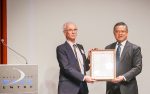
Alan Le Fevre, president of the Wallenberg-Sugihara Civil Courage Society, and Acting Mayor Raymond Louie, right, with the City of Vancouver’s proclamation of Raoul Wallenberg Day. (photo by Masumi Kikuchi)

“If we had a society that was free from embezzlement, free of theft, free of dishonesty, free of unethical conduct, we wouldn’t need whistleblowers. But, unfortunately, we are not a perfect society,” said Ujjal Dosanjh in his keynote address at the 13th annual Raoul Wallenberg Day event, which was held on Jan. 14 at the H.R. MacMillan Space Centre.

Dosanjh, a former federal cabinet minister, B.C. attorney general and the province’s 33rd premier, was, in 2015, the inaugural recipient of the Wallenberg-Sugihara Civil Courage Society’s Civil Courage Award. He was recognized for “his great courage in the face of escalating violence by extremists in the Indo-Canadian community that arose from conflicts that had erupted in India,” said WSCCS board member Ana Policzer in her remarks on Sunday.

The society hosts the annual Wallenberg Day event and, this year, they honoured Vancouver-based lawyer Alayne Fleischmann with the Civil Courage Award.

Fleischmann was born in Terrace, B.C. She got her bachelor’s degree in philosophy from the University of British Columbia, her master’s in international and comparative law from the Institute of International and Comparative Law, Cornell Law School and Université Paris (Sorbonne), and her juris doctor degree from Cornell. In 2006, she was working in quality control at JPMorgan Chase in New York. There, she discovered and tried to stop what she described as “massive criminal securities fraud” – mortgage operations similar to those of many other financial institutions, which led to the 2008 economic collapse. Her efforts resulted in a $9 billion fine being levied on JPMorgan Chase, but no one from the bank was ever prosecuted. She moved back to British Columbia in 2008.

In a 2014 Rolling Stone article, writer Matt Taibbi goes into great detail about Fleischmann’s experiences, the difficulties she faced in bringing the truth to light and the limited impact the truth played in whatever minor justice was carried out against all the banks guilty of mortgage-related wrongdoings. In effect, Taibbi argues, the U.S. department of justice “struck a series of historic settlement deals with Chase, Citigroup and Bank of America. The root bargain in these deals was cash for secrecy. The banks paid big fines, without trials or even judges – only secret negotiations that typically ended with the public shown nothing but vague, quasi-official papers called ‘statements of facts,’ which were conveniently devoid of anything like actual facts.”

The full Rolling Stone article can be accessed via wsccs.ca/wallenberg-days/2018. At the Wallenberg Day event, organizers screened a 2014 interview with Taibbi and Fleischmann by Democracy Now! WSCCS president Alan Le Fevre also spoke briefly about Fleischmann’s actions and why she was chosen to receive the Civil Courage Award. Unfortunately, Fleischmann could not accept the award in person because of the ongoing litigation.

In his remarks, Dosanjh saluted whistleblowers. “In Canada,” he said, “we don’t know too many of our own heroes…. But we have them. One that we have amongst us in Canada is the honouree tonight, Alayne Fleischmann.”

There are monetary costs to illegitimate or immoral actions, Dosanjh said, but such actions also “jeopardize the health, safety and well-being of the employees, the customers and the society of the institutions.”

Whistleblowers like Fleischmann set out to right a wrong, he said. They are morally compelled to the point where they take the “risk of losing their careers,” “being ostracized” and having rumours spread about them to “delegitimize the truth that they’re trying to tell.”

After such individuals come forward, he said, “life is never the same. You lose friends, you lose relationships, obviously you lose a job possibly, or you’re not promoted or you’re demoted…. And, sometimes, it can be dangerous physically. People have been known to be killed, at least across the border, for trying to expose the truth. Karen Silkwood comes to mind.”

Dosanjh warned that whistleblowers aren’t always correct, however, giving the example of eight B.C. health ministry workers who were found to have been wrongly dismissed in 2012, amid allegations of wrongdoing. “It’s a risky business,” he said. “You’re playing with your own life but you’re also playing with the lives of others you’re trying to expose.” So, you have to not only have the courage to speak up, he said, but the wisdom to know when to not do so, or when to investigate further before doing so.

Several audience members gave their take on corporate and government corruption in the question-and-answer period. Dosanjh said people need to get more vocal about these issues. “There is no silver bullet to deal with any particular issue,” he said. “It’s just a matter of becoming more active politically and raising your voices.”

To an audience member who decried greed as criminal, Dosanjh said, “If you say greed is the basic urge to make more money, that shouldn’t be a crime…. You want to make money, you want to work more … that’s what keeps the world going…. Illegal greed should be a crime – and it already is! The fact is we’re not prosecuting criminals, we’re not apprehending them, we’re not investigating them as much as we should, and we’re falling down in some respects.”

The afternoon event also included the reading by Acting Mayor Raymond Louie of the City of Vancouver proclamation of Jan. 14 as Raoul Wallenberg Day. He thanked event organizers and attendees for taking the time “to remember and to also recommit … with this ongoing effort to have a better world overall.”

The WSCCS is continually “seeking to identify people who, at significant personal risk, have helped to improve or save the lives of others by going against unjust laws or conventions.” For more information, visit wsccs.ca.

Ever-changing job landscape

Prof. Ilana Gershon’s latest book is Down and Out in the New Economy. (photo from Ilana Gershon)

An increasing number of people in their 50s and 60s are needing or wanting to find work – and are finding that next job elusive.

Indiana University anthropology professor Ilana Gershon has been researching the (often unsuccessful) ways in which job seekers look for work. One result of this research is her latest book: Down and Out in the New Economy: How People Find (or Don’t Find) Work Today (University of Chicago Press, 2017).

Long gone are the days that employers just want an extra pair of hands to do a job, said Gershon.

“We used to have an idea of ourselves as workers, in which we imagined we owned ourselves, as if we were property,” she explained. “This was the metaphor – that we were renting ourselves to an employer for a certain period of time and, when the time was over, we’d get ourselves back. The idea of renting ourselves as though we were property really affected the ways you could have particular ideas, of what was a just work relationship.

“So, you thought you could have arguments about whether you should have a 40-hour work week or not, about how much time you should be able to rent yourself to an employer … and people would have legal cases and legislation around the boundaries of work. Should people be paid for putting on a uniform that would make them be work ready or should they put on a uniform in their own time, and should employers only pay for them once they put on the uniform?”

Gershon said this metaphor very much shaped how people thought about what was appropriate and what was not.

“One of the other consequences of that is that unions were able to argue that, in fact, people were not just renting a portion of their day,” she said. “Unions argued that they were renting a portion of their lives and, as a result, the companies owed them health insurance or a pension … that they should be reimbursed for giving over a portion of their lives to the company.”

On the other side of the equation were the companies, which were very interested in ensuring there was some form of company loyalty.

According to Gershon, in the United States and the United Kingdom, after Ronald Reagan and Margaret Thatcher took power, respectively, things began to change. People began to imagine themselves as though they were a business – as a bundle of skills, assets, qualities, experiences and relationships that had to be consciously managed like a business. And, as a business, continual enhancement was required.

“When people are entering into an employment contract, that now means they are entering into a business-to-business contract, in which they are offering temporary solutions for market-specific problems a company experiences,” explained Gershon. “So, now you have all these self-help articles that talk about being the CEO of Me Incorporated.

“One of the other consequences of this is people now talk a lot about having a personal brand. Because, if you imagine yourself as a business, then you should have a personal brand, as businesses have brands. So, a lot of the ways in which people understand what the employment contract can now offer them is being shaped by this change in metaphor.”

book cover - Down and Out in the New EconomyGershon’s research on the topic began in 2012, with the interviewing of people around Indiana University and her attending one or two job search workshops available to undergrad students. In 2013/2014, while being a fellow at Stanford’s Centre for Advanced Study in the Behavioural Sciences, she did field work in the Bay Area in California.

Not everything regarding the job market is new, she said. “People already know a lot about hiring, because they participated in hiring in their previous workplaces … and they shouldn’t ignore everything that they already know.

“I was trying very hard not to make it a Silicon Valley project,” she said of her research. “I was very concerned about that, because, what I wanted to do was think about the hiring ritual in general. I interviewed people in the Midwest and East Coast about this – not as many people as I interviewed in the Bay Area, but I wanted to check if I saw any difference.

“The major difference I saw was that the people had a very different idea of how much time you should spend at a job. People in the Bay Area thought the ideal time you spend at a job was two to three years. And, in the Midwest, it was something more like seven to 10. On the East Coast, it was more like five to eight.”

According to Gershon, she worked hard to produce an “anti-advice book.” Her aim was to focus the book on the implications of thinking of yourself as a business and how that has changed hiring and affected what employment contracts have become. Further, she wanted to explore how one should present themselves as an employee, and what employers feel are desirable traits in candidates.

One of Gershon’s findings is that the new concepts are now standard fare in all job search workshops.

“People are being told to do this, but people in the trades and blue collar workers don’t seem to find this way of thinking terribly useful yet,” she said. “So, the people for whom it fits their situation best are going to be white collar workers for the most part.”

But, whether or not everyone finds the ideas useful, they are being encouraged.

“People working retail are constantly being told they have to brand themselves,” said Gershon by way of example. “I don’t think this particular way of trying to brand yourself constantly or imagine yourself as a business is making all that many people happy.

“If you haven’t been in the workforce for 15 to 20 years and you’re suddenly going to these job search places where they’re telling you everything is new and the ways you used to look for jobs no longer make sense … it’s all very confusing. I’m offering the context for that, explaining why things might seem new, and what’s genuinely new and what isn’t.

“I think figuring out how to get a job is actually something you have to do specifically for your particular industry,” she added. “People offer a lot of standardized advice, as though there’s a magic bullet that works in every context. What I’m talking about is how not to engage with that kind of standardized advice. Instead, figure out how to do the research so that you can understand those communities on your own.”

Rebeca Kuropatwa is a Winnipeg freelance writer.

NCJW pays tribute to Poliakoff

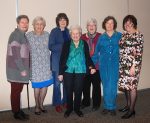
Left to right: former National Council of Jewish Women Vancouver section president Shirley Hyman; Gloria Hendin, tribute committee chair; Barbara Heller, longtime supporter of council; Marion Poliakoff, the guest of honour; Bonnie Gertsman, former Vancouver section president; Anne Melul, former Vancouver section membership chair; and Debby Altow, past president, Vancouver section. (photo by Joanne Emerman)

National Council of Jewish Women hosted a tea at Temple Sholom on Jan. 9 to celebrate Marion Poliakoff, a true Renaissance woman. At 94 years young, she continues to be an inspiration to council members past and present.

Poliakoff’s career and her personal life demonstrate the principles of NCJW: fostering multiculturalism, alleviating poverty among women and children, supporting family counseling in Israel through ALUMA, and cherishing music and family. Her commitment to clear and convincing communication has been a boon to many newsletter writers – and she continues to edit us closely.

Gloria Hendin, who chaired the event committee, welcomed everyone. Shelagh Stoller bought the gift for Poliakoff, which Shirley Hyman presented. Barbara Heller managed all the banner decorations, Bonnie Gertsman and Anne Melul organized the food, and Judy Stern greeted guests as they arrived. The entertainment came courtesy of Poliakoff’s daughter, Amy Poliakoff, who brought her flute from Boston. I delivered the tribute speech, which I share below.

Vancouver section president Catherine Stoller set the tone for the annual general meeting that followed the celebration. “Looking backward, we recall our ancestry. Looking forward, we confront our destiny,” she said. The board of directors was installed by Shanie Levin with those words ringing in their ears!

In preparing my remarks, I read Melul’s biographical notes on Poliakoff, Carol Weinstock’s article on NCJW in the Jewish Museum and Archives of British Columbia’s journal, The Scribe, and the book More Than Just Mrs.: Jewish Women’s Organizations in B.C., as well as the council’s cookbook. Of course, I also spoke with many council members who worked with Poliakoff, and reflected on my own personal experiences with her. With some minor editing, to reflect their publication after the event, my remarks follow.

Marion was born in the United States. Holding a bachelor’s from Simmons College in Massachusetts and a master’s in journalism from New York’s Columbia University, she married Mel Poliakoff in 1949, adopting Mel’s son Merrill at the same time. Although at first they were unable to live in Tenafly, N.J., because, as Jews, they could not buy a house there, nevertheless they did move there a few years later. She became the first Jew elected to public office, serving on the board of education.

In 1972, she moved to West Vancouver with her husband and their daughters Amy and Nan. They loved tennis, skiing and sailing. Sadly, Merrill and Nan are gone, but many of Marion’s family were able to join the council’s tribute.

When Marion met Bess Narod – Bess is from Ottawa; I knew her family back home – they went to an NCJW meeting, and that was the start of Marion’s connection with council. The first big item she worked on, the hearing screening project in schools, demonstrated council’s mission: identify a need, pilot a response, make it a success and turn it over to government. The Vancouver health department now runs it.

Marion also met Rita Weintraub, who became a lifelong friend. Together, they have worked to support the Isaac Waldman Jewish Public Library at the Jewish Community Centre of Greater Vancouver.

Meanwhile, Marion got another master’s degree – from the University of British Columbia’s School of Social Work – and, through a field placement at Britannia Community Centre, became interested in multicultural issues. Always the consummate writer, she contributed the Multicultural Corner column to the monthly newsletter of the B.C. Association of Social Workers; another column went into the Britannia newsletter, which was translated into Italian and Chinese.

The City of Vancouver grabbed Marion and she ran parenting groups for mothers in three community centres – using translators for Farsi, Chinese and Italian participants. In 1981, she received the Social Worker of the Year Award from the B.C. Association of Social Workers for her multicultural work.

I met her when I was the director of communications for the Canadian Cancer Society and she was a social worker at the B.C. Cancer Agency. I was working on breast cancer issues, with multicultural projects for Chinese and South Asian women. We found we had much in common.

Marion was also the one who called me every year to pay my NCJW dues, even though I was not an active volunteer in those years. She recruited me after I retired to join the board and, 13 years later, I’m still on it in one capacity or another.

In 1991, HIPPY (Home Instruction for Parents of Preschool Youngsters) was brought to Canada from Israel as a council initiative by Carol Slater. Ever alert to new connections, Marion linked Britannia, along with Simon Fraser University, to council as our community partners to launch the HIPPY project. She was intimately involved in establishing its work with immigrant mothers and their families. While its name has changed to the Mothers Matter Centre, HIPPY remains one of council’s programs, and Wazi Kapenda, its Western director, was in attendance at the tribute.

Marion’s volunteering extended to driving people to services at Congregation Har El, eventually donating her beloved baby grand piano to the shul, fundraising for the synagogue, and cooking and serving food weekly to needy and homeless people at Harvest House.

Later, she joined the North Shore Osteoporosis Society, organizing monthly speakers. I spoke at one gathering and there were more than 100 people attending – a not uncommon number!

Her commitment to ALUMA (formerly the Israel Family Counseling Agency) was, and continues to be, an inspiration. She fought for support for ALUMA in council, because the organization was dedicated to supporting people in Israel who could not afford professional counseling but who desperately needed it. And Judy Stern could always count on Marion to canvass for Friends and Angels, council’s only annual fundraiser.

Marion’s was a home where music was loved and valued, even after the piano was gone. She supported the Vancouver Symphony, the Vancouver Chamber Music Society and Music in the Morning. Music continues to be a tree of life for many of her family members. Her close friend Shirley Lecker is part of that tradition.

Do you see a thread unspooling here – with HIPPY, with anti-poverty issues, with a commitment to Jewish values, with a passion for family, with a professional eye for communication, with an abiding love of music? When I said Renaissance woman, the label is legitimate.

It is such an honour to acknowledge Marion for her work with council – and with many of us personally. It is beyond words. To simply say thank you is really inadequate. But, from the bottom of my heart, and from all of us, thank you, Marion.


Life-giving practice

On Feb. 1, Sarah Peyton speaks at Or Shalom on the topic Why Love is Not Enough: Family Heartache and the Path of Repair. (photo from Or Shalom)

Have you ever longed for someone who would be able to listen to you without judgment, to every concern, fear, yearning or hurt you might have? Someone able to hold you in gentle understanding and with deep compassion all the time? Such a person does exist – within yourself. And you can find out how to meet them through the work of Sarah Peyton.

Peyton is a neuroscience educator and certified trainer of nonviolent communication, which was pioneered by American psychologist Marshall B. Rosenberg. She will introduce the latest understanding of neuroscience and the part it plays in building social and family relationships in her talk at Or Shalom on Feb. 1, called Why Love is Not Enough: Family Heartache and the Path of Repair. Peyton will show how deep, resonant empathy for oneself and the other can connect conflicting parties, even as the conflict resides within one’s own inner voice of criticism.

I met Peyton in the summer of 2015. My husband was assisting in a nonviolent communication retreat, and I had been asked to facilitate a writing session as a part of it. At the last minute, I painfully withdrew. My mother’s death, less than two years before, had left me paralyzed and in deep grief and mourning. I was not up to the task of supporting anyone, not even myself. Tearfully, I watched as my husband left for the weekend. Miraculously, my husband forgot something he needed and returned home to retrieve it. “Come back with me,” he urged. “Don’t facilitate. Just sit outside, swim, write under the trees. Get well.” I said, “Yes.”

That weekend changed my life. Peyton warmly guided a group of participants in her process of resonant language and connection. Peyton, I would come to learn, had lost her beloved son just the year before. Given that, how was it possible that she could contribute with such presence?

Over the next two years, I worked privately with her, learning about resonant language and how to live it. Last year, Norton Press published Peyton’s first book, Your Resonant Self: Guided Meditations and Exercises to Engage Your Brain’s Capacity for Healing. I interviewed her recently, in anticipation of her Vancouver talk.

DAS: What began your work with resonant language?

SP: I began this work when my 33-year-old adopted son was dying. His death took a long time, eight years. His dying began when he had a reawakening of the trauma in his family. I was desperate to save him. I began to learn and practise a way to share life and our experiences, a way to enhance life. We were all sustained by this practice, through his dying and afterwards, through our mourning. Relational language allowed us to find each other through the dark cloud of loss and death. It took me five years to write the book. I began writing it in the last year of my son’s life.

DAS: What is resonant language?

SP: Our brain has two hemispheres, and the structures of each side are different. The language centres of the left brain are instructional-based. They help us to take action, plan and strategize…. Our right brain creates a relational language where you and I are experienced together. Relational language is resonant and is the language of poetry, metaphor, visual imagery, longing, dreaming. Warmth is a way to navigate to this resonant relational right brain and create connection to ourselves and others.

A lot happens in family when we live in a world of doing in our caring for each other. A different way of being together happens in a world of relational language and resonance. This work is the work of awakening remembrance of what it’s like to reclaim our birthright, the birthright of being relational beings in a world of warmth.

What stops us from engaging in this relational right-brain language is fear. We have made, early on in our lives, promises in our hearts to prevent pain or disappointment in and for ourselves. When we recognize our own fear and the ways that we closed our hearts, we’ve taken the first steps to remember what we have forgotten. We will be reminded of what we know and have lost. We’re learning what the “garden” in our brains needs. It needs warmth.

DAS: What is your hope for your work and our world?

SP: We’re looking at a world that is split between doing and being. Brain by brain, we can change our world and change our planet. We will look at a world that is not split.

I hope that those who come to our evening will be able to discover a way to listen and know themselves differently, and to discover the pathway to their own warm, beating hearts.

* * *

Though I will always miss my mother, the terrible grey numbing grief has lifted. My heartache has become touchable, a renewal in the richness of my life lived with her. I have learned that being able to touch heartache in its many guises provides us with life-giving renewal in our relationships. Peyton’s relational emotional language is one that continually restores me to compassion and connection, with myself and others.

Dael Adams Segal is a writer and a mentor of writers. She writes midrash and prayer and facilitates women’s-centred Torah study at Or Shalom Synagogue, where she is a member.

Hatikvah bursting at seams

Land-based activities at Camp Hatikvah form a large part of the summer experience. (photo from camphatikvah.com)

Like most everything, camp enrolment goes in cycles. And, for the past few years, Camp Hatikvah has had a waiting list for its first session, a full second session and has closed off the summers with the highly popular Family Camp experience that sells out within hours of registration opening in October the year prior. With the largest-ever single age group of campers rising through the ranks, Hatikvah is looking to expand its facilities to accommodate these campers as they move toward the counselor-in-training program.

Camp Hatikvah has a formula that seems to be working well. In order to fill every bunk, current board president Joanna Wasel worked closely with camp director Liza Rozen-Delman to make some changes in programming. In addition, they have brought the concept of camper care front and centre, and the programming is more flexible than the camp experience of yesteryear. As but one example, Hatikvah has been bringing in specialist instructors for activities such as tennis or mountain biking to run weekly sessions, and such initiatives are drawing campers. Once their interest is piqued, the kids tend to come back year after year.

“Liza does an excellent job ensuring that the campers are well cared for, safe and happy,” said Wasel. “I believe her reputation of providing exceptional camper care is the primary reason we are seeing the success we are today.”

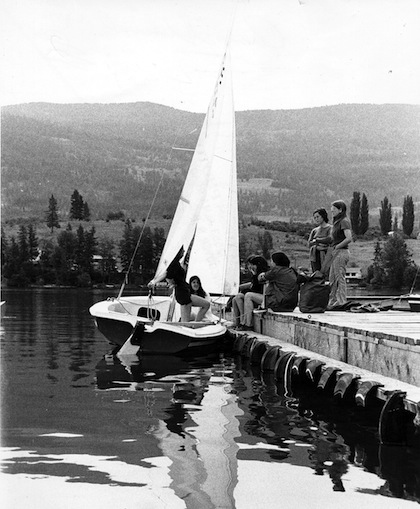
photo - Camp Hatikvah, 1972. Sailing was one of the writer’s favourite camp activities
Camp Hatikvah, 1972. Sailing was one of the writer’s favourite camp activities. (photo from Jewish Western Bulletin fonds, Jewish Museum and Archives of BC L.09596)

While Camp Hatikvah has been known for years as a watersport camp, the land-based activities have been overhauled during Wasel’s tenure as president. “We are now able to offer expert instruction from professionals in a plethora of land activities including tennis, football, basketball, fitness, yoga, dance and more,” she told the Independent. “The change has been dramatic and campers are now equally engaged on land and water.”

Those who remember their own experiences of the “good old days” of camp continue the tradition, and send their children, according to Rozen-Delman. “Many of our campers are second- or third-generation participants,” she said. “Our camp is rich in traditions and many of the programs we offer our campers today are based on programs their grandparents participated in during the ’50s and ’60s and their parents did in the ’70s and ’80s. We are very proud of this dedication to our roots and traditions and believe this makes our camp experience even more meaningful.”

The list of former campers reads a bit like a who’s who of the local Jewish community, something that shows the link between camp attendance and Jewish community involvement. Many of the children from Camp Hatikvah are already well ensconced within the community; many are students at Vancouver Talmud Torah. Rozen-Delman noted that campers also come from Alberta, Ontario, Washington and California. Hatikvah has combined a number of initiatives to draw a diverse group of campers, some of whom have no other connection with the Jewish community.

The effort to diversify and attract unaffiliated Jews this year has been aided by the Laskin Outreach Fund. This initiative, created and entirely funded by Elliot and Megan Laskin, provides $1,800 (almost the full fee) to first-time campers from British Columbia with little or no Jewish communal engagement to try Camp Hatikvah in its second summer session.

Both Wasel and Rozen-Delman stress that the programming at Camp Hatikvah is oriented toward helping children develop as members of the community. As a pluralistic camp, children from all sorts of Jewish backgrounds are introduced to and experience the camp’s motto: “Leadership by example.”

Although the programming for younger campers is focused on fun and socializing, with some Zionist and Jewish learning, it is the staff-in-training (SIT) program that begins the leadership training in earnest.

“This program is designed specifically to enhance the leadership abilities and traits of our campers. Participants engage in almost daily hadracha (leadership) sessions or discussions where they learn the importance of leadership, citizenship and community,” said Rozen-Delman of SIT.

Both Wasel and Rozen-Delman are alumna of Camp Hatikvah, with Wasel starting as a camper in 1988 and Rozen-Delman in 1979. Both have worked and volunteered within the Jewish community, in addition to their work at Camp Hatikvah.

While local Jewish life is part of the formula, Hatikvah’s Zionist roots are as strong as ever. Last summer, there were 14 Israeli schlichim (emissaries) on staff.

This year’s camp sessions are both looking like they will be full, said Rozen-Delman. For more information on the camp, subsidies to attend or the Laskin Outreach initiative, call the camp office at 604-263-1200.

Michelle Dodek is a freelance writer who spent one summer at Camp Hatikvah a long time ago and loved the sailing program.

Be an angel in February

Rose’s Angels provides hygiene care packages, nonperishable food items and warmth bundles to 1,000 Richmond individuals in need. (photo by Lianne Cohen Photography)

The month of February is special because it’s both Heart Month and the birthday month of Rose Lewin, after whom Rose’s Angels is named.

“The Kehila Society’s Rose’s Angels program is celebrating its fifth year this coming February,” said organizer and co-founder Courtney Cohen. “As the need for care packages has increased every year since our inception, and after receiving feedback and input from service agency’s and their recipients, we’ve been able to extend our outreach efforts this year. This program continues to honour Rose Lewin and Babs Cohen in the truest form of tzedakah and love for our Richmond community.”

Rose’s Angels provides hygiene care packages, nonperishable food items and warmth bundles to 1,000 Richmond individuals in programs such as Richmond Family Place, Salvation Army, Jewish Food Bank, Richmond Food Bank, Kehila Meals on Wheels and other similar Richmond outreach initiatives.

For the care packages, Rose’s Angels are looking for the following items: packaged dried fruit or nuts (raisins, trail mix, etc.); canned foods, such as soup and tuna; boxed foods, like macaroni and cheese, rice and pasta; individually packaged baked goods (granola bars, energy bars, cookies, oatmeal, pudding, Jell-O, etc.) that are still sealed; peanut butter; juice boxes, hot chocolate and tea; individually wrapped chocolates; toiletry items such as toothbrushes, toothpaste, deodorant, floss, soap, mini shampoo/conditioner and tissues; feminine hygiene products; beauty care products (hair accessories, lotion, makeup); gloves or mittens, both children- and adult-size; toques; and thermal socks.

If you would like to come out on Feb. 11 to assist in packaging the bundles or would like to donate items and/or funds or help with package deliveries, call the Kehila Society office at 604-241-9270 or email rosesangelsevent@gmail.com.