Perpetrators offers new insights

Who could shoot at close range two million children, women and men who were standing at the sides of graves they had just been forced to dig? And then, when this process proved inefficient, who could herd four million more into cement bunkers and drop cyanide pellets on top of them? Were they monsters?

“Monsters do exist,” Primo Levi once said, “but they are too few in number to be truly dangerous. More dangerous are the common men, the functionaries ready to believe and act without asking questions.”

Christopher Browning, in his famous 1992 study of Holocaust perpetrators, Ordinary Men, came to the same appalling conclusion: the killers were simple, middle-class working men, “believing Christians” from all walks of life (including thousands of priests and seminarians), just witlessly and anxiously “following orders” and blindly obeying peer pressure, not, in most cases, virulent antisemites.
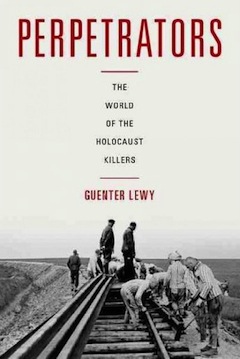
book cover - Perpetrators: The World of the Holocaust KillersThe controversial nonagenarian scholar Guenther Lewy, the author of Perpetrators: The World of the Holocaust Killers (Oxford University Press, 2017), and son of a camp survivor, begins his new study of Holocaust perpetrators with the same question: “How could such terrible deeds happen in the heart of Christian Europe and among a nation known for its poets and thinkers? What had converted so many seemingly ordinary people into killers, willing participants in what is the worst crime in modern history?”

Lewy’s study is the first English-language volume to make use of the 49-volume collection of 929 German trial records of Holocaust perpetrators recently published by the University of Amsterdam (it is not made clear why the records were not published in Germany). He also draws upon an enormous accretion of “previously untapped” sources such as the 50,000 letters and diaries of Wehrmacht soldiers recently released by German archives, as well as victim recollections and, most importantly, hundreds of trial records of Nazi functionaries, beginning in Nuremberg in 1945 and continuing to the present day. Of the 1,200 citations in the 25-page bibliography and the 600 footnotes, by far most of them are from the late 1990s to the present.

Lewy’s conclusion is similar to Levi’s and Browning’s: the perpetrators were not characteristically sadists or psychopaths, or even necessarily antisemites, but simply obtuse followers of orders, vassals to peer pressure, or simply “ordinary people” trying to advance their careers.

Lewy’s graphic details and conclusions will be familiar to readers of Saul Friedlander’s monumental Nazi Germany and the Jews, 1939-1945: The Years of Extermination (2007), but Lewy’s access to the most recent documentation brings some new and important facts to light.

First, the whole notion of a “clean Wehrmacht” can now be dismissed. Lewy proves conclusively that there was close contact between the Wehrmacht and the SS and particularly the 38 “Totenkopf” (“Death’s Head”) divisions of the Waffen-SS: new evidence shows that Jews were “squarely in the crosshairs of the Wehrmacht” and that the number of members of the Wehrmacht who took part in the murder of Jews “is in the tens of thousands.”

Second, Lewy’s close study of the new material available allowed him to conclude that “not a single person who asked to be relieved [from duty in the killing squads] was tried by a military court” and, in fact, “most of their requests were granted.” Lewy found 85 cases of Wehrmacht soldiers who refused to shoot civilians: all were simply transferred to other duties. The significance of this finding, of course, is that it puts the lie to the excuse frequently made by the killers that they “had no choice” and “had to follow orders.” (Lewy points out, significantly, that Yad Vashem has in fact recognized 45 Wehrmacht soldiers as “saviours of Jews.”)

In the sixth chapter of Perpetrators, “Flawed Justice,” Lewy makes his most significant mark. Here, Lewy reveals that, of the 200,000 or so former Nazi killers who, through 2005, were investigated by German authorities, fewer than 10% had charges brought against them; and, of these, only half were convicted. Light sentences were the norm; and only eight of the 2,000 former members of the Einsatzgruppen investigated received life sentences. Most of these examples of “flawed justice,” Lewy concludes, had to do with the fact that so many judges were “tainted” as former party members, and that German law (unlike Canadian law) distinguished between perpetrators and accomplices, usually finding the latter innocent, as they were “only following orders,” that they were only “tools” or were not “unseemingly zealous” in their murderous actions. (Two years ago, German courts finally adopted Canadian/American style “common design,” sharing the guilt between perpetrators and accomplices.)

In his final chapter, “Explaining the Holocaust,” Lewy concludes that nobody, ultimately, can simply give up his freedom. Situation, genetics, conditioning are all significant, but “they do not dictate or determine character.” In fact, recalling how anxiously in 1945 the Nazis strove to cover up what they had done led Lewy to conclude that “even Hitler and the members of his immediate entourage probably knew deep down that they were doing wrong.”

And, as Lewy concludes, in his last sentence, “The fact that so few avoided evil orders remains an ineradicable blot on an entire German generation and a cross that their descendants continue to bear.”

Perpetrators is a valuable addition to a long story, one which may never be conclusively told.

Graham Forst, PhD, taught literature and philosophy at Capilano University until his retirement and now teaches in the continuing education department at Simon Fraser University. From 1975 to 2010, he co-chaired the symposium committee of the Vancouver Holocaust Education Centre.
We should be more civilized

When we read Exodus, some people imagine what Egypt was like as an ancient civilization. If you’re a synagogue regular, you’re hearing the story unfold each week as the Torah is read. If you’re more likely at a Pesach seder at a relative’s dinner table, you’ve heard the same narrative. We imagine Joseph’s dreams and his esteemed position advising Pharaoh. There are the complicated family dynamics, the rise of a new ruler, the enslavement of the Jewish people, Moses’ ascension as a leader, and the plagues. We’re captivated in part because it’s compelling. There’s lots of tension, and that makes for good drama.

There are laws listed and proper ways to behave. There are also irrational and upsetting actions and behaviour that are completely out of bounds. Sure, one can approach a ruler and ask for something – or there’s darkness, frogs, lice and death. There’s a rational, law-abiding approach, and the emotional, gut-wrenching knee-jerk response. These are both fundamentally human reactions. When the plagues happened, I imagine that it must have felt like the end of the Egyptians’ world. The labour vacuum caused by the loss of slaves might have led to a collapse of functional Egyptian society.

I juxtaposed this familiar story with others that have crossed my mind. Over winter break, my kids (like most) and I were housebound for quite awhile. Due to a virus or two and the extreme cold, we weren’t going out. Mostly, the time passed without incident, but keeping siblings busy and out of trouble is no joke. When we weren’t one step ahead with the next round of button hockey or “Swedish scooting” (indoor games we made up as we went along), we’d turn our backs and a kid would be assaulting his brother.

As I pulled one kid off another, I imagined what the European settlers on the Prairies endured when they spent an entire winter in a one-room sod house with their children. I wondered how many kids killed one another. Many families also died of disease, starvation, or froze to death.

Meanwhile, my U.S. family sent my kids a homemade video of a gathering with friends. Everyone on the video joked about the dog’s squeaky toy, which resembled the current U.S. president. I struggled with this. In terms of behaving in a civilized way, it seemed too close to the bone of the matter. If we’re meant to respect the position but we can’t conscience the current president, how do we communicate this notion to our kids?

What’s our duty as upstanding people and as Jews? As a child growing up near Washington, D.C., I went to school with all sorts, including the children of politicians, diplomats, lawyers and civil servants. Back then, I remember how everyone worked hard to be civil to one another. Strom Thurmond, Jr.’s mother was a great volunteer in our classroom. Marilyn Quayle was a dependable carpool mom for my brother’s soccer team. Our political leanings were the polar opposite of Thurmond’s Dixiecrats or Dan Quayle’s, but, as elementary school parents, our respective parents could agree to disagree. Our parents modeled civility to one another, and that meant we too (mostly) treated one another with respect.

We teeter back and forth on a seesaw when it comes to behaving in an upstanding way. These days, anybody in D.C. would tell you that old-fashioned civility and common-sense manners are long gone. The current world political scene feels more like that period of plagues. Nobody knows what will strike us next.

Even so, we have choices when it comes to how we behave towards others. We can aim to be rational, thoughtful people who think through our actions and try to behave responsibly, as Hillel suggested. When someone who wanted to learn about Judaism asked Hillel to sum it up while standing on one foot, Hillel responded, “That which is hateful to you do not do to another; that is the whole Torah. The rest is its interpretation. Go study.” (Talmud: Tractate Shabbat 31A)

We may also behave impetuously, with emotional, irrational responses that seem more like sporadic and scary plagues. Jewish tradition would suggest we aim for Hillel’s behavioural model, though one can legitimate the name-calling and lack of civility, too. There are plenty of examples of non-rational biblical outbursts from which to choose.

It’s too easy to throw stones at each other based on our religious observance or our political views about Israel, Canada or world affairs. It’s much harder to behave with civility and agree to disagree. As I pull my twins apart and demand compromise, or suggest (again) to use please, thank you and you’re welcome, I spend a lot of time thinking about civilization and civilized behaviour.

When I student-taught high school in a rough D.C. neighbourhood, people often yelled on the street. Some yelled hello and smiled. Others sometimes yelled antisemitic, misogynist threats. A Grade 9 student nicknamed “Punkin” took to walking me to the train station. When the threats started, she’d pull herself up tall and holler right across the road, “Was you drug up in a barn?! Act civilized!”

Indeed, we weren’t brought up in barns. Punkin was from a good home, and the threats stopped when she broke the tension that way and called grown men out on their bad behaviour. I’m working hard to provide the same civilized model for my kids. We can treat each other better than that. We can agree to disagree without doing hateful things. I learned a lot from Punkin – and Rav Hillel, too.

Joanne Seiff writes regularly for CBC Manitoba and is a regular columnist for Winnipeg’s Jewish Post and News. She is the author of the book From the Outside In: Jewish Post Columns 2015-2016, a collection of essays available for digital download or as a paperback from Amazon. See more about her at joanneseiff.blogspot.com.

Iron Chef Chanukah 2017

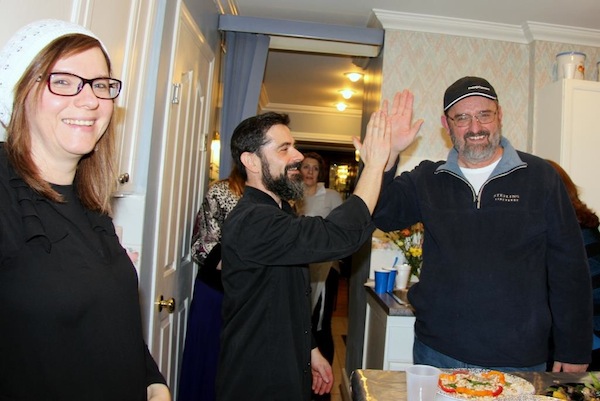
On Dec. 13, after the lighting of the menorah and a Chanukah party at the Centre for Judaism (C4J) in Surrey, participants in the Iron Chef Chanukah Competition filled the C4J kitchen. The excitement was palpable as the chefs and their teams quickly planned and executed the preparation of their dishes.

“It was really wonderful to see teenagers, millennials, parents and grandparents working together seamlessly and having so much fun,” said shluchah Simie Schtroks.

“The competition this year was taken to a whole new level,” said Rabbi Nuta Yisroel Shurack, who is one part of The Rabbi and the Chef, with chef Marat Dreyshner.

Although various prizes were awarded, all the participants agreed that dinner together at Rabbi Falik and Simie Schtroks would be the best way to celebrate another great championship.

photo - “It was really wonderful to see teenagers, millennials, parents and grandparents working together seamlessly and having so much fun,” said shluchah Simie Schtroks

photo - “The competition this year was taken to a whole new level,” said Rabbi Nuta Yisroel Shurack, who is one part of The Rabbi and the Chef, with chef Marat Dreyshner


Camp fosters independence

At Camp Shomria, it’s all “about equality and giving the power to the youth,” says one parent. (photo from Camp Shomria)

In Ontario, Camp Shomria was established based on the principals of Hashomer Hatzair (The Young Guard), with its Zionist and socialist principles, including that building a strong community is just as important as building strong individuals.

Camp director Uri Ron Amit is an Israeli who runs the only chapter of Hashomer Hatzair in Canada, which is based in Toronto. He comes from a background of working as an educator in international development and community management.

“The kids are from Grade 2 (7-year-olds) all the way up to Grade 11 (17-year-olds),” said Amit. “By Grade 12, they become first-year youth counselors in the movement. And then, later on, they can continue working to make an impact in the camp, either as youth counselors, as head of camping or as head of programs.”

Most families involved at the camp are from the Toronto area but some campers also come from the United States and a fairly large number come all the way from Israel. The camp is situated an approximately four-hour drive northeast of Toronto, and about an hour and a half southwest of Ottawa.

“Starting in Grade 2, the kids spend a week away from home at camp,” said Amit. “Grades 3 and higher stay at the camp for at least two weeks at a time, and sometimes for five weeks. Having young kids sent by their parents to be away from home … brings both opportunities and challenges. The further away you are, the more remote [it is, and] it can create a sense of independence and a different world for the kids and youth counselors.”

Hashomer Hatzair was established more than 100 years ago, he explained, “with the idea of having youth of different ages develop an independent youth community that stands for the ideals of humanistic Judaism and Zionism. The main difference in sending your kid to experience camp away from home is the added layer of independence – a level of ownership over the community … self-reflection and personality development.

“I think the main reason parents send their kids away from home for a couple of weeks with minimal communication with them is because they want them to go through a meaningful learning process that can help them pick up a strong group dynamic in the youth community.”

Amit described one particular child who came to the camp. This child had never been to a sleepaway camp before, and was dependent on his parents for almost everything. “After a couple days, this child became a star,” said Amit. “He became independent and took to different stages of sharing feelings and emotions…. We gave him the opportunity to lead discussions … with group members. His parents said it was a life-changing experience.”

Camper Zoe Friedman, 13, who lives in Toronto, started attending the camp last summer, choosing to do so after she learned that some of her friends from Israel go there.

“It’s a camp that really builds character,” she said. “And it gives you time to expand on things … expands character, responsibility and social skills. Every morning, we have something called toranuyot (chores), where we get split into groups and go clean up the camp…. So, we might clean the washroom, pick up trash, or something else that helps everybody. The theme of Shomria is socialism. We all do everything together and support each other. It’s a really good vibe.”

As for being away from her parents and home, Zoe said she felt it was sometimes very difficult, as, at night, it is extremely dark and you feel very far away from it all. But, at other times, she said, it is tremendously fun.

“It was really fun to disconnect from the outside world and focus on what’s in front of you,” she explained. “It’s just interesting to see how such a big group of kids can just disconnect from technology and focus more on social skills, responsibilities, and just on having a good time, without focusing on technology.”

Zoe and her family – mom Eilat Bakerman, dad David Friedman and younger sister Gaia, 9 – have been living in Toronto for the past 12 years, and are very involved in the local Jewish community. Bakerman heard about Shomria from friends and decided to send both Zoe and Gaia there.

“They thought it really helped to build kids’ character, and they support the values of what the camp aims for … about giving the power to the youth,” said Bakerman. “The camp is run by youth and they are leading other youth, a bit younger kids, in whatever they do. The only adults they have there are the operational staff – cooks, doctors, nurse, drivers, and so on. It highlights what you’d imagine a kibbutz life was like when it first started.”

According to Bakerman, one example of the unusual way in which the camp is run is how, when the kids first arrive at the camp, any money parents send with the kids is pooled together and everyone is given back an equal share. “Nobody feels they have more than others,” she said.

“When they go to Perth, which is the closest city,” said Bakerman, “everybody gets the same share of money – no matter how much they each may have brought into the camp – and that’s what they have for spending money.

“No matter if you came from a wealthy home, where you don’t need to do any chores, or not, at camp, in the morning, the kids decide what kind of chores they’ll do and everybody in the group does it,” she added. “Everybody is eating the same food. It’s about equality and giving the power to the youth.”

Bakerman also regularly sends her daughters to stay with family in Israel while she stays to work in Canada. The location of the sleepaway camp was not a deterrent.

“I think the kids are so engaged, it really doesn’t matter – the distance,” said Bakerman. “The distance is neither a barrier nor an excuse to come home or to call home. To me, it was about character and values…. The camp gave them independence and they have something to aspire to become. They’re really looking forward to next year.”

Rebeca Kuropatwa is a Winnipeg freelance writer.

Immersed in Hebrew

Friends at Camp Shomria show off the fresh vegetables they picked in the camp’s garden. The produce was used to make a salad for one of the meals. (photo from Camp Shomria)

It is said that there is no better way to learn something than by immersing yourself in it. And for kids who want to learn Hebrew in Canada, camp is one of the best and most accessible ways of doing that. But, while there are many Jewish camps in Canada that promote Hebrew language, Camp Massad in Manitoba is the only camp where all the activities and programming are carried out in Hebrew.

“They are not allowed to speak English outside the cabin,” said Danial Sprintz, the camp’s executive director. “Inside the cabin, they speak in whatever languages they want to. But, if they are outside, they are not allowed to speak in English to each other. The kids are all trying to speak Hebrew. So, when everybody’s doing it, you fall in line. Our camp is run completely in Hebrew and there isn’t any other camp that is doing that.

“Not all the kids that come to the camp can speak Hebrew when they arrive. About 50% of the kids don’t go to Hebrew day school, so they are learning Hebrew at camp. We don’t sit them down in a classroom, but we teach them the essentials they need to ask the basic questions. We teach Hebrew through song.”

With repetition, and everyone being together for three meals a day and programming, the kids start picking up the ability to communicate with each other as they go.

Most of the staff has grown up going to the camp and, each year, there are also a number of staff who come in from Israel.

The camp also prides itself on being 100% inclusive. No matter what a child’s situation – if they are autistic, use a wheelchair or are developmentally delayed, or if they are completely secular or ultra-Orthodox in Jewish observance – Sprintz said the camp is dedicated to finding a way to make the experience work for all campers.

Sprintz was executive director of Congregation Emanu-El in Victoria for a number of years, when he and his wife were going to school in British Columbia, before returning to Winnipeg and taking on his role at Camp Massad.

“When I arrived in Victoria, the rabbi was on sabbatical in Israel,” said Sprintz. “I approached the board about helping them with the programming while he was away, and then just stayed on after.”

This experience helped Sprintz develop ways of introducing the children at Camp Massad to Judaism. “We make it fun,” he said. “And we make it something the kids look forward to, as we make the tunes and the process of it all fun. We have tefillin club in the morning for kids who want to try something out, and for kids who need to. But, when it comes down to it, we provide all the religious and traditional cultural components that kids would need to come to camp, to a certain point – we don’t want to separate boys and girls, as we want everybody to be together.”

Camp Massad encourages the children to write their own songs and to put on plays for others in the camp – all in Hebrew.

Winnipeg’s Aviva Tabac has been sending her two daughters, Chaya, 15, and Sara, 13, to Camp Massad for the last three years.

“I didn’t go to camp growing up,” said Tabac. “My parents took us on a summer vacation each year, and the rest of the time was spent at the beach with family and friends. Since I didn’t grow up going to summer camp, I felt it would be a good idea for the girls to try it. Just from my immediate circle of friends who all went to Massad, there’s a special bond they have with one another that carries over into adulthood. All my friends still talk about their fond Massad days and I wanted to give the girls the chance to experience that for themselves.”

Both Chaya and Sara attend public school, so they do not get a lot of other opportunities to speak Hebrew. Tabac said, “When my girls return from camp, they continue to speak in Hebrew, sing Hebrew songs and reminisce. They hang onto their Massad memories and feelings for as long as they can.

“The Hebrew is a big component,” she continued, “but, more so, the celebration of Shabbat, day-to-day celebration of Jewish culture and being proud of being Jewish. The lov[ing], understanding and caring staff and councilors [are] amazing. My girls feel at home when they’re at Massad. They come back rejuvenated, independent and confident. I know that, when they’re there, I have nothing to worry about because they’re in good hands.”

Meanwhile, Lilach Golan moved with her family to Vancouver last fall. She has been sending her four daughters to Camp Shomria in Ontario for years, and plans to continue doing so. She does it with the hope of them picking up some of the values that she grew up with on kibbutz in Israel, including Hebrew.

“For us, the Hebrew language and culture were extremely important and it was very difficult to speak in Hebrew at home all the time … because, when children live in English, they want to speak English and want to be part of the culture around them,” said Golan.

While Camp Shomria operates in English, Hebrew is everywhere at the camp, and the different areas in the camp have Hebrew names, like the chof (beach), cheder ochel (dining room) and moadon tarbut (culture club). Hebrew is also spoken during many of the activities, which include singing and dancing, and at different presentations.

“They do have a lot of Israelis and people who speak Hebrew,” said Golan. “And that’s a big push for the Hebrew – kids love to talk Hebrew with them and the Israelis come every summer. And the songs they sing, there is a lot of language happening there.”

Sharon, 14, is Golan’s youngest daughter. For her, the best part of camp is getting to spend time with her kvutza (group).

“We use Hebrew terminology in contexts where they make sense to me and I can use them meaningfully,” said Sharon. “I also remember better what they mean when I’m not at camp anymore because I can remember the context in which we used them. Hebrew constructs a lot of what and how we do things at Camp Shomria and it’s that culture, atmosphere and values that make me want to come back.

“Even if the Hebrew we use at camp is not new to me,” she said, “it adds so much value to the camp environment and my experience of it. It helps me develop the connection to the three pillars of Hashomer Hatzair [The Young Guard, the Zionist-socialist youth movement] and the core values we share.”

Rebeca Kuropatwa is a Winnipeg freelance writer.

תוכניות לקהילה הישראלית

שנה חדשה: תוכניות בעברית בג’ואיש קומיוניטי סנטר לקהילה הישראלית

הג’ואיש קומיוניטי סנטר של אזור מטרו ונקובר מפרסם בימים אלה מספר תוכניות בשפה העברית לשנת 2018, במסגרת אירועי תרבות יהודית וישראלית, שמיועדים לקהילה הישראלית. את האירועים מארגנת רכזת התרבות של הג’ואיש קומיוניטי סנטר איילת כהן.

להלן מספר תוכניות:

מועדון ארוחת בוקר לנשים ישראליות מדי יום ראשון בשעה 11 בבוקר. האירוע מיועד לישראליות חדשות וותיקות והן ידונו במה שמשותף להן, תוך נסיון ליצור קשרים ביניהן ובן הקהילה.

“דלת הקסמים” – מחזמר לילדים המבוסס על מיטב שיריה של המוסיקאית נורית הירש. ההצגה (שמיועדת לילדים בגילאי 2 עד 8) תתקיים ביום ראשון ה-28 בחודש, בשעה 11 בבוקר.סיפור המחזמר: הילדה מיכל מנסה להשיג מתנה מקורית ומיוחדת ליום ההולדת של אמה. היא יוצאת למסע לממלכת הצלילים בעזרת חבריה, שהם דמויות משיריה של הירש, אותם היא פוגשת בדרך. בין השירים שבמחזמר: מקהלה עליזה, בוקר של זהב, ברבאבא, הבית של פיסטוק, דלת הקסמים, מחרוזת פים פם פה ומחרוזת דיג דיג דוג.

ערב שירה בציבור “שירים שאימצנו” ביום ראשון ה-28 בחודש, בשעה 7 בערב. באירוע משתתפים מרים בני בליווי משה דנבורג ויונה בר סבר. אירוע השירה הבא יתקיים ביום ראשון ה-29 באפריל גם כן ב-7 בערב.

קורסים של עברית לילדים מדי יום רביעי אחר הצהריים, החל מיום רביעי השבוע (ה-10 בחודש) עד ה-14 במרץ. השיעורים לתלמידי הגן וכיתה א’ יועברו בין השעות 4.30-5.30. ואילו השיעורים לתלמידי כיתות ב’-ד’ יועברו בין השעות 5.30-6.30. הקורסים כוללים שיפור העברית בקריאה, כתיבה, דיבור והבנה. כן יועבר חומר על חגי ישראל, המורשת יהודית-ישראלית, בשילוב פעילויות משפחתיות.

לא מומלץ לנסות: רקון אומץ על ידי משפחה והפך לבן בית

רקונים (דביבונים בעברית) הם בעלי חיים ממשפחת היונקים שמקומם בטבע. למרות יופיים בשל הפרווה היפה שמכסה אותם, רבים מעדיפים להתרחק ככל הניתן מהרקונים שרק עושים צרות בצרורות. בחיפושים אחר אוכל בעיקר בפחי אשפה כטורפי לילה – הרקונים הופכים למאוד ארגרסיבים. הם מסוגלים לטרוף אף חתולים או כלבים קטנים. ידוע על מקרים בהם רקונים נשכו גם בני אדם ובעיקר ילדים קטנים. ולכן מי שמבחין בהם בדרך כלל שומר מרחק.

למרות זאת משפחת הולמן שמחזיקה בחווה של בעלי חיים במזרח יוניאק שבמחוז נובה סקוטיה, החליטה לאמץ רקון והעניקה לו את השם ראמבו. הרקון נמצא כתינוק בודד ורעב כמעט למוות על ידי חבורה של ילדים. הם העבירו אותו לטיפולה של משפחת הולמן בשל ניסיונם הרב בטיפול בבעלי חיים כולל רקונים. הביבי רקון הסתגל מהר מאוד לחיי המשפחה והפך לחלק ממנה. ראמבו ישן בלילות בחווה והוא חופשי ללכת לאן שירצה אך למרות זאת הוא מעדיף להישאר עם ההולמנים ומסרב לחזור לטבע. בלית ברירה הוא אומץ על ידם והפך לחיית מחמד. בזמן שראמבו מטייל עם בני המשפחה מחוץ לבית הוא קשור לרצועה ממש כמו כלב. למרות זאת לא מעט מאלה שמבחינים בו מעקמים את הפרצוף, בשל המוניטין הרע שיש לרקונים שכאמור נחשבים לבעלי חיים מסוכנים מאוד.

מומחית לחיות טוענת שלמרות שראמבו הסתגל לחיי בית יש לשחרר אותו בחזרה לטבע ובהקדם, כיוון שרקונים כאשר הם בני שנה הופכים לאגרסיבים ומסוכנים ביותר. ההולמנים מרגישים כי זה כבר מאוחר מדי לשחרר את ראמבו בחזרה לטבע והוחלט שישאר עימם. הם מתכננים בקרוב לסרס את הרקון שלהם ואז לבקש רשיון מהמועצה המקומית להחזיק בו כחוק.

אנטישמיות בקנדה

המכתבים נשלחו למוסדות היהודים בערים הבאות: טורונטו (ארבעה בתי כנסת), מונטריאול (שני בתי כנסת), אוטווה, המילטון, קינגסטון, קלגרי ואדמונטון (שני בתי כנסת).

מחלקת פשעי שנאה של משטרת קנדה פתחה בחקירה לבדוק את זהות שולחי מכתבי השנאה לבית כנסת ברחבי המדינה. עד כה ידוע כבר על לפחות עשרה בתי כנסת שקיבלו מכתבי שנאה אנונימיים בימים האחרונים. המכתבים נשלחו למוסדות היהודים בערים הבאות: טורונטו (ארבעה בתי כנסת), מונטריאול (שני בתי כנסת), אוטווה, המילטון, קינגסטון, קלגרי ואדמונטון (שני בתי כנסת).

המכתבים כוללים ציור של צלב קרס על מגן דוד צהוב עם דם נוטף, בצרוף הסלוגן “היהודים חייבים במיתה” גן כן עם דף נוטף. בשלב זה לא ברור האם קמפיין השנאה היה קשור לחג החנוכה שחל באותם ימים, או להכרזתו החד צדדית של נשיא ארה”ב דולנד טראמפ, כי ירושלים היא בירת ישראל, או שמדובר בפעילות אנטשימית “רגילה”.

ראש ממשלת קנדה, ג’סטין טרודו, אמר בתגובה לפרשה החמורה: “למעשי שנאה ואנטישמיות אלה אין מקום במדינתנו ואנו לא נסבול זאת”.

בבני ברית קנדה מציינים כי בשנת 2016 נרשמה עלייה משמעותית בהיקף של עשרים ושישה אחוז בפשעי שנאה נגד יהודים במדינה (1728 מקרים בסך הכל), לעומת השנה החולפת (2015). בבני ברית מוסיפים עוד כי 2016 הוותה שנת שיא בפעולות האנטישמיות, מתוך 35 השנים האחרונות, בהן הארגון מנהל רשום בנושא.

כלבים כלבים בואו הביתה: נהגי משאיות מחזירים הביתה כלבים שהלכו לאיבוד ברחבי קנדה

מי אמר שלנהגי משאיות לא איכפת משום דבר חוץ מעבודתם. מתברר שבשנים האחרונות נהגי משאיות שנוסעים ברחבי המדינה הגדולה הזו מחזירים לביתם הרבה כלבים שהלכו לאיבוד. האיחוד מחדש עם בעלי הכלבים מרגש ביותר. הנהגים עושים זאת ללא שום עלויות וכולם שמחים.

מרגרט פוסטר-הייד (ממחוז אונטריו) שהייתה בעברה בעצמה נהגת משאית כבדה, החליטה שיש מקום לנצל את ההזדמנות שנהגי משאיות נוסעים בכל רחבי קנדה, לשם החזרת כלבים אבודים הביתה. היא הקימה לפני כארבע שנים רשת באינטרנט בשם “גיבורי הכביש מעופפים נודדים”, שמקשרת בין בעלי כלבים שאבדו וקיבלו מידע שהם נמצאו במרחק גדול מביתם, לבין נהגים שעובדים בכל רחבי קנדה. בעלי הכלבים ממלאים את פרטי הכלבים שאבדו, היכן הם אבדו, היכן נמצאו והיכן הם גרים. המידע נמסר לנהגים בשטח שמקבלים מידע מפורט היכן לאסוף את הכלבים שנמצאו. הם מעלים אותם לתא הנהג במשאיות שלהם ומסיעים אותם לאחר כבוד לנקודת המפגש עם בעליהם.

כאמור הנהגים כמו גם פוסטר-הייד לא גובים שום כסף על השרות המבורך שהם מספקים. בעלי הכלבים שלא נדרשים לשלם על החזרת כלביהם הביתה, בדרך כלל מכבדים את הנהגים במתנות וכרטיסי שי לשימוש בבתי קפה ומסעדות.

לדברי פוסטר-הייד עד כה הרשת של נהגי המשאיות עזרו בהחזרת לא פחות מארבע מאות כלבים לבעליהם המודאגים. רק בימים האחרונים נהג בשם סקוט סטיבנס, החזיר ממחוז בריטיש קולומביה למחוז אלברטה כלב בשם פרנקי. הכלב הלך לאיבוד לפני כחמישה חודשים (במהלך קיץ האחרון), נמצא בריא ושלם מרחק של לא פחות מ-1,200 ק”מ מביתו. מדובר בכלב טיפולי מיוחד שברח מהבייביסיטר שלו לאחר שזה שיחרר אותו מהרצועה, בזמן שבעליו אשלי פאור (אם יחידה לילדה קטנה בת שלוש) שהתה בבית החולים. פרנקי יודע להריח את רמת הסוכר בדמה של פאור וכן הוא עוזר לה להירגע מהחרדות הרבות שלה. סטיבנס שמח מאוד להחזיר את פרנקי במשאית שלו לבית בעליו. פרנקי במפגש עם פאור ובתה קפץ משמחה ולקיק את שתיהן ממושכות. אכן הוא שמח לחזור הביתה.