Skip to content
  • Home
  • Subscribe / donate
  • Events calendar
  • News
    • Local
    • National
    • Israel
    • World
    • עניין בחדשות
      A roundup of news in Canada and further afield, in Hebrew.
  • Opinion
    • From the JI
    • Op-Ed
  • Arts & Culture
    • Performing Arts
    • Music
    • Books
    • Visual Arts
    • TV & Film
  • Life
    • Celebrating the Holidays
    • Travel
    • The Daily Snooze
      Cartoons by Jacob Samuel
    • Mystery Photo
      Help the JI and JMABC fill in the gaps in our archives.
  • Community Links
    • Organizations, Etc.
    • Other News Sources & Blogs
    • Business Directory
  • FAQ
  • JI Chai Celebration
  • JI@88! video

Recent Posts

  • Story of Israel’s north
  • Sheltering in train stations
  • Teach critical thinking
  • Learning to bridge divides
  • Supporting Iranian community
  • Art dismantles systems
  • Beth Tikvah celebrates 50th
  • What is Jewish music?
  • Celebrate joy of music
  • Women share experiences 
  • Raising funds for Survivors
  • Call for digital literacy
  • The hidden hand of hate
  • Tarot as spiritual ritual
  • Students create fancy meal
  • Encouraging young voices
  • Rose’s Angels delivers
  • Living life to its fullest
  • Drawing on his roots
  • Panama City welcoming
  • Pesach cleaning
  • On the wings of griffon vultures
  • Vast recipe & story collection
  • A word, please …
  • מארק קרני לא ממתין לטראמפ
  • On war and antisemitism
  • Jews shine in Canucks colours
  • Moment of opportunity
  • Shooting response
  • BC budget fails seniors
  • Ritual is what makes life holy
  • Dogs help war veterans live again
  • Remain vital and outspoken
  • An urgent play to see
  • Pop-up exhibit popular
  • An invite to join JWest

Archives

Follow @JewishIndie
image - The CJN - Visit Us Banner - 300x600 - 101625

Month: May 2018

מכירת הבונדס תסתיים מחר

מכירת הבונדס תסתיים מחר

מפעל הבונדס ישראל יצא לדרך בסוף שנת 1950, כדי לסייע לישראל לאור הקשיים בהם נתקלה לאחר מלחמת העצמאות.

מחר (יום חמישי ה-31 בחודש) תסתיים מכירת הסדרה החדשה של אגרות החוב – בונדס ישראל של מדינת ישראל, המונפקים בקנדה לשנה זו. בוונקובר יתקיים מחר אירוע ביוזמת אגודת הידידים בקנדה של אוניברסיטת תל אביב ובונדס ישראל בקנדה, לקידום מכירת הבונדס של ישראל. אירוע דומה של ידי אגודת הידידים של האוניברסיטה מתקייים היום (יום רביעי) בקלגרי. ואילו אתמול הקיים אירוע בטורונטו. האירוע בוונקובר יתקיים במשרדים של חברת פשקן ברחוב בורארד בדאון טאון, בין השעות שמונה בבוקר לאחת אחר הצהריים. הוא יכלול ארוחת בוקר וארוחת צהריים. שלושת המרצים שישתתפו בו: ד”ר אוהד ברזילי מאוניברסיטת תל אביב, המשמש חוקר בתחום ניהול טכנולוגיה ומערכות מידע, שידבר על הפלטפרומה הדיגיטלית – ההגיון בעשייה של הכלכלה הדיגיטלית. פרופסור אוריה שביט מאוניברסיטת תל אביב, המשמש חוקר בתחום תאולוגיה ופוליטיקה באסלאם המודרני, שידבר על האסלאם הרדיקלי במדינות המערב. וכן פרופסור יניב אסף מאוניברסיטת תל אביב, המשמש חוקר במחלקה לנוירוביולוגיה, שידבר על הדור הבא של טכנולוגיית סריקת המוח.

ארגון בונדס ישראל בקנדה יקיים אירוע מיוחד להוקרת חיילים בודדים המשרתים בצה”ל בחודש הבא. האירוע יתקיים בטורונטו בבית הכנסת שערי שמיים ב-26 ביוני, בין 7.30 ל-9.30 בערב.

אגרות החוב של ישראל בונדס בקנדה מונפקים פעמיים בחודש: בראשון ובחמישה עשר. להלן התעריפים של אגרות הבונדס הבולטים בקנדה, שמחר כאמור הוא הדד-ליין לרכישתם. למי שמשקיע לפחות 25,000 דולר: שנתיים 2.58%, שלוש שנים 2.88%, חמש שנים 3.47%, עשר שנים 4.25% וחמש עשרה שנים 4.45%. למי שמשקיע לפחות 5,000 דולר: שנתיים 2.43%, שלוש שנים 2.73%, חמש שנים 3.32%, עשר שנים 4.10% וחמש עשרה שנים 4.30%.

הבונדס או בשמו הרשמי מפעל מלווה העצמאות והפיתוח הוא ארגון העוסק במכירת אגרות חוב של ישראל ליהודים בתפוצות. מפעל הבונדס יצא לדרך בסוף שנת 1950, כדי לסייע לישראל לאור הקשיים בהם נתקלה לאחר מלחמת העצמאות. את המפעל יזמו ראש ממשלת ישראל דוד בן גוריון, ביחד עם שר האוצר אליעזר קפלן ושרת העבודה גולדה מאיר. וכן עם שלושה מראשי קהילת היהודים בארה”ב: הפוליטיקאי הנרי מורגנטאו, איש העסקים, הפילנתרופ ומראשי המגבית היהודית המאוחדת שמואל (סם) רוטברג, ומנכ”ל המגבית היהודית המאוחדת והרב הרפורמי הנרי מונטור. בן גוריון זימן לישראל חמישים מנהיגים בולטים קרב קהילות היהודים בארה”ב ובארצות אחרות, והציע להם להקים את הפרוייקט שיאפשר מימון כספי לצרכים הדוחקים של המדינה. אגרות הבונדס החלו להימכר בארה”ב ב-1951, במדינות אמריקה הלטינית ב-1951, בקנדה ב-1953 ובמערב אירופה ב-1954.

בשנות השישים של ישראל הבונדס היה אחד ממקורות ההכנסה העיקריים של תקציב הפיתוח של הממשלה. הכספים שהגיעו מהיהודים בחו”ל עזרו להקמת מספר פרוייקטים לאומיים חשובים מאוד בישראל. בהם: המוביל הארצי, מפעלי ים המלח, תחנת הכוח אורות רבין בחדרה ופיתוח הנמל הימי בחיפה, הנמל הימי באשדוד והנמל הימי באילת. בשנות השמונים ולאחריהם שימשו הכספים של הבונדס כעזרה חיונית לפרוייקטים לאומיים נוספים. בהם: עליית היהודים מברית המועצת לשעבר, עליית היהודים מאתיופיה, הרחבת נמל התעופה בן-גוריון (ובניית טרמינל 3), שיפורים במערך של רכבת ישראל ותשתיות נוספות. עד סוף שנות השבעים מפעל הבונדס הצליח לגייס למעלה ממיליארד דולר. ומאז המפעל מגייס מדי שנה למעלה ממיליארד דולר. מדובר בסכום שהוא כמחצית ממה שישראל מגייסת ברחבי העולם כולו מדי שנה. עד היום מפעל הבונד גייס למעלה משלושים ושלושה מיליארד דולר.
Format ImagePosted on May 30, 2018May 31, 2018Author Roni RachmaniCategories עניין בחדשותTags Canada, Diaspora, economy, Israel Bonds, בונדס ישראל, כלכלה, קנדה, תפוצות
BGU finds key protein

BGU finds key protein

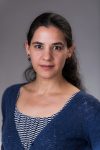
Ben-Gurion University’s Dr. Deborah Toiber will be part of a panel in Vancouver called Alzheimer’s, Dementia and You: Research, Risk Reduction and Resources. (photo from CABGU)

Alzheimer’s affects about six percent of people over the age 65 worldwide. For years, scientists have been searching for ways to treat it and to discover its roots, but without much success, until recently.

A group of Ben-Gurion University researchers, under the leadership of Dr. Deborah Toiber, is among those who have made breakthroughs. They have discovered that a certain protein, SIRT6, necessary for DNA repair, is largely missing from the brains of people with Alzheimeir’s. The absence of this protein and the gradual decline in its production by the human body as we age might be what triggers the disease.

On June 5, Toiber will be the keynote speaker at Alzheimer’s, Dementia and You: Research, Risk Reduction and Resources. She will be joined in a panel discussion by Laura Feldman from the Alzheimer Society of British Columbia and Joanne Haramia of Jewish Family Services; Simon Fraser University professor emeritus Dr. Gloria Gutman, one of the founders of SFU’s Gerontology Research Centre, will be the moderator. The event, which will be held at the Rothstein Theatre, is being presented by the Canadian Associates of Ben-Gurion University (CABGU) in partnership with the Jewish Independent, the Jewish Community Centre of Greater Vancouver’s Adults 55+ program, the Alzheimer Society of B.C., Louis Brier Home and Hospital, Jewish Family Services, Jewish Seniors Alliance, and L’Chaim Adult Day Care.

According to David Berson, executive director of CABGU, British Columbia and Alberta Region, “the purpose of the panel is to increase the awareness and understanding of Alzheimer’s disease, dementia and neurodegenerative diseases.”

“Deborah was coming to Canada to visit the community in Winnipeg for a similar event,” Berson told the Independent. “We had a wonderful opportunity to bring the young and dynamic researcher to Vancouver and we jumped at it…. Toiber’s research, as I understand it, is part of a race to discover, isolate and understand the characteristics, components and mechanisms of DNA that will allow us to identify and treat neurodegenerative diseases prior to onset.”

In her email interview with the Independent, Toiber talked about her work and her group’s discovery. She said that DNA deteriorate with age. “It is not something genetic or environmental,” she said. “We repair our DNA and continue going on, but the repairs are not perfect. Some DNA remain unrepaired. As we get older, unrepaired DNA accumulate, and their ability to produce proteins diminishes.”

She further explained: “If the DNA is damaged, and a cell feels it is too dangerous to continue with this damaged DNA, the cell may activate a self-destruct mechanism. If too many cells do this, the tissue with the dying cells will deteriorate, such as the brain.” Essentially, the deterioration of the DNA and the reduced production of SIRT6 protein mark “the beginning of the chain that ends in neurodegenerative diseases in seniors. In Alzheimer’s patients, SIRT6 is almost completely gone.”

Toiber said scientists should be focusing on how to maintain the production of SIRT6 and how to improve the repair capacity of the damaged DNA, because that is what causes Alzheimer’s and similar diseases. Unfortunately, it is impossible to introduce the needed protein directly into the brain. “There is a blood barrier that prevents things from passing into the brain,” she said. “But we are trying to find a way to increase the expression of the protein into the brain.”

Toiber has always been fascinated by the molecular biology of the human brain. “I chose this field because I wanted to understand in-depth how the brain works, to investigate what happens when things stop working,” she said. “I think that molecular biology is the answer to all those questions. It’s like being a detective on the molecular level.”

She realizes that a detective’s work is never easy or fast. “Results take years to build, as they are based on previous findings, ours and other scientists’. My current group, where I am the principal researcher, is about three years old. It is a new lab.”

The research is multifaceted and multidirectional. “We do basic science,” she said. “We use animal models and cells to understand what is happening as we age, what is the cause of disease and what can we learn from this to develop treatments or preventive actions. We also collaborate with medical professionals and other scientists to get a fuller picture of various aspects of aging and neurodegeneration, particularly Alzheimer’s disease.”

Toiber’s group doesn’t work on the pharmaceutical angle of how to introduce the protein into patients’ bodies. Instead, she explained, “We are interested in the molecular causes of aging, such as DNA damage accumulation, and how this leads to disease. We work in experimental biology. These experiments are expensive and difficult. It can take a long time to see and understand the results, but it is also rewarding. Molecular processes help us understand how our organisms work and what happens when things go wrong. We have to be optimistic and keep trying.”

Many scientists in related fields of study are interested in Toiber’s work. “I have talked about our research at the international neurochemistry meeting in Paris and at conferences in Crete and Israel,” she said.

To hear her speak in Vancouver, register at eventbrite.ca. There is no cost to attend.

Olga Livshin is a Vancouver freelance writer. She can be reached at [email protected].

Format ImagePosted on May 25, 2018May 23, 2018Author Olga LivshinCategories IsraelTags Alzheimer's, Ben-Gurion University, BGU, CABGU, Deborah Toiber, dementia, healthcare, science
Zack displays art and music

Zack displays art and music

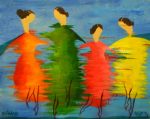
“Rikud” by Givon (photo by Olga Livshin)

The current exhibit at the Zack Gallery – the Festival Ha’Rikud group show, called Israeli Music through the Years – is a fundraiser. Every painting on display has a silent auction sheet beside it, and people can bid on the pieces they like. The bidding closes on June 1, with all the proceeds going to the gallery.

photo - “Babushka” by Carl Rothschild
“Babushka” by Carl Rothschild (photo by Olga Livshin)

Opening night on May 15 was a festive affair. Almost all of the 60 participating artists came to mingle and cheer one another on.

“The gallery offered all the artists boards of a universal size to paint on,” explained gallery director Linda Lando. “I sent the boards to the artists about three months ago to give them plenty of time. Every painting in the show is the exact same size, while the selection of the artists is eclectic. Some are professional artists I’ve had on my radar for years. Others are JCC members or their friends who learned about the show and applied. One entire wall of the show is dedicated to paintings created by Louis Brier’s residents attending art lessons. For many, it is their first show. Some never even painted before. It’s very brave of them to put their art out for everyone to see and judge.”

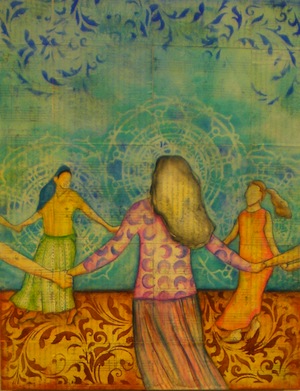
The paintings are as different as the artists themselves, although the theme is the same: music in one guise or another. Some artists lean towards Jewish mythology, like Penelope Harris’s mixed media “Miriam and her Sisters.” Three women dance in the painting, all wearing timeless clothing in soft colours.

photo - “Legacy” by Wing Yee Wong
“Legacy” by Wing Yee Wong (photo by Olga Livshin)

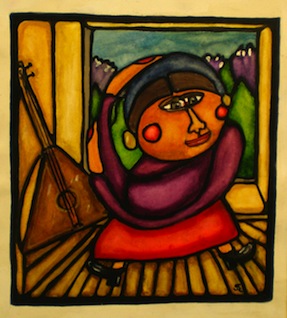
Dancing seems to be a popular subject. In the artist Givon’s painting “Rikud,” four stylized women dance, their colours and shapes flowing into one another, while “Babushka,” by Carl Rothschild, dances alone, exuding humour and sharp lines; her balalaika leans on a wall beside the dancer, adding a Russian flavour to the painting.

Nini Rostoker-Shipman’s “Let’s Dance” is all about shoes. In the subdued brownish image, a couple dozen pairs of worn shoes – sandals, slippers and flats – lie docilely side by side, like a collection. Only one pair of shoes stands out. These are high-heels with sparkly buckles – real shoes glued to the image. Perhaps some fashionable woman from the artist’s family danced in those shoes long ago? The shoes look impertinent enough to enjoy dancing.

Other works explore music’s players, the musicians, as well as musical notations or instruments. In this stream, Maggie Farrar’s portrait of Leonard Cohen attracts attention. The showman’s ubiquitous hat sits rakishly on his head, and the names of his famous songs scroll across the canvas.

photo - “Sabras Rejoicing” by Marlene Konyves
“Sabras Rejoicing” by Marlene Konyves (photo by Olga Livshin)

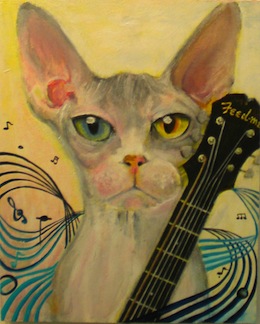
Below the portrait of Cohen hangs a piece by Wing Yee Wong called “Legacy.” The painting is popular with the auction bidders. It depicts an Abyssinian cat with its disproportionately big ears and haughty eyes, one yellow, another green. The cat is clutching a guitar and staring at viewers with contempt. There is an inscription on the guitar handle, demanding, “Feed me.” It’s hard not to smile while looking at it.

Musical instruments are also featured in “Where are the Ladies?” by Marion Eisman. In the mischievous painting, an all-male klezmer ensemble jams a merry tune on a shtetl street.

Another orchestra, in a piece by Alan Woolf using a pastel palette, is much more serious. These musicians perform a classical concert in the ruins of an ancient amphitheatre. The musicians’ tiny, delicate figures look like pencil sketches on the background of an azure Israeli sky.

photo - “Miriam And Her Sisters” by Penelope Harris
“Miriam And Her Sisters” by Penelope Harris (photo by Olga Livshin)

In contrast, Iza Radinsky’s instruments play by themselves. No people populate her bold painting, just bright colours and ringing notes.

Bright colours also characterize Marlene Konyves’ “Sabras Rejoicing” – a bunch of gleeful blooming cacti – and Jocelyne Halle’s collage, which incorporates several of her Israeli photographs. “It is my first attempt at collage,” said the well-known photographer, who has exhibited her work at the Zack before.

And then there are abstracts. A rhapsody in green in Claire Cohen’s painting hints at melodic skeins and vague instrumental shapes. Sidi Schaffer’s “Eli, Eli,” with its butterflies flitting across the joyful blue ether, is infused with faint sadness – the title of the painting is the same as the song that inspired it.

“I love that song,” said Schaffer. “It is well known in Israel. It was written by Hannah Szenes, a Hungarian Jew. She immigrated to Palestine and became a paratrooper during the Second World War. She was killed by the Nazis when she was only 23, but her poetry is famous in Israel.”

It is impossible to mention all 60 artists who are participating in this show, but it can be said that all of the work on display demonstrates a love of art and music.

Olga Livshin is a Vancouver freelance writer. She can be reached at [email protected].

Format ImagePosted on May 25, 2018May 24, 2018Author Olga LivshinCategories Visual ArtsTags art, Festival Ha’Rikud, painting, Zack Gallery

Human life v. politics

A dozen or so people gathered outside the Jewish Community Centre of Greater Vancouver Monday in a makeshift Yizkor service to commemorate the deaths of Palestinians killed by the Israel Defence Forces in recent weeks. (Click here for story.)

Each one of the people killed was, indeed, a full human being, with a full life, as Rabbi David Mivasair said of the Palestinian dead. And the loss of life is tragic. That is not something we will debate.

However, reports indicate that, of the 60 Gazans killed on May 14, for example, 53 were claimed as members by Hamas and Islamic Jihad. Given the IDF’s strategy of deterrence, which includes graduated steps from warning shots, to shooting to injure and, as a last resort, shooting to kill, it is likely that those who died were among the most aggressive and dangerous among the protesters, some of whom were armed with pistols, firebombs and other weapons.

While there were peaceful protesters among the thousands who marched on the Israeli border, depictions of the rally as a primarily peaceful protest are wrong. In some interpretations, unarmed protesters were there merely as human shields for the violent participants, whose aim, in the words of a Hamas leader, was to infiltrate Israel and tear the hearts out of the Jews. Hamas social media channels presented maps to guide people from the border to adjacent Israeli towns, encouraging those who might break through the frontier to head for civilian locations and presumably fulfil the orders of Hamas.

The deliberate strategy of the Gazan leaders, it seems, is to sacrifice their own people’s lives for their PR value. Col. Richard Kemp, a British military official who has become a vocal defender of IDF strategies, said of Hamas: “This is the first government in history that has deliberately sought to compel its enemy to kill its own people.”

In a Daily Telegraph article re-printed in the National Post, he went on to state that, had the thousands of protesters breached the border and headed for those Israeli towns, the bloodshed would have been exponentially worse.

There is no question that the entire situation is a tragedy. And there is blame to go around. The narrative purveyed outside the JCC Monday and in much of the media commentary – that the Israeli military wantonly kills human beings – is as unfair and inhumane an assessment as the alternative extreme, which finds satisfaction in the loss of life.

As for Monday’s gathering, the combination of a Jewish religious ritual with a political agenda that arguably makes common cause with those seeking the destruction of the Jewish state is a dubious choice, but this is a free country and Judaism is a big tent.

To be clear, the people of Gaza are suffering, due in part to the Israeli blockade, in part due to the repressive kleptocracy of Hamas and in part to their own self-defeating actions, like burning down the main border entry point for supplies.

Palestinians receive more humanitarian aid per capita than any other people in the world. Where much of that money ends up, sadly, is in the mansions of Hamas and Fatah leaders and in pensions and rewards to terrorists and their families. This fact, of course, does not bring the dead back to life.

Palestinians, Jews and everyone who cares about human life are struggling with recent events. Each of us is confronting the multiple dimensions of the violence, which seems to be a repetition of seven decades (or more) of recurrent conflict. Respect for human life – on all sides – should be what we seek. Tallying up the dead like they are goals in a sports match does not demonstrate respect. Indeed, it may be precisely what Hamas wants us to do and, as such, may encourage them to put at risk even more Palestinian lives.

Posted on May 25, 2018May 24, 2018Author The Editorial BoardCategories From the JITags conflict, Gaza, Great March, Israel, Palestinians

JFS integral to our “village”

In mid-April, I attended the Jewish Family Services (JFS) donor appreciation event. My husband and I have always supported JFS and I have always thought very highly of the organization. But, recently, I became more involved and, this year, I joined the board.

At my first board meeting, I was blown away by the information I received about what just one facet of the organization does for its clients – the family and adult resources program, which includes helping with food vouchers, medical support, housing, etc.

At the next meeting, another group of employees came to discuss their services to seniors, which range from individual home support and care to outreach programs reaching hundreds of vulnerable seniors.

Then followed the employees who took care of assisting clients with employment, and settling new immigrants. The list went on … clinical counseling, the Jewish Food Bank, mental health outreach, emergency and transitional housing support, to name a few. About six months in, I am truly amazed by the breadth of services JFS offers and the number of clients they reach, but that’s not even the story.

I went to the volunteer appreciation evening event with my husband, as a board member and supporter, the first one we have attended. Some of our friends were there, many of my parents’ friends, some employees and some volunteers of the organization, as well as my dad. A JFS recipient spoke about his experiences with the agency and how much they helped him. He spoke about receiving counseling for depression after the failure of a business, support he was given to find work and on how to prepare his resumé after not having done so for decades. He then described the help he was given to prepare for job interviews and on how to present himself. He also praised other JFS services, such as the food bank, help with finding new housing and counseling after his divorce, and said he felt supported through these difficult years. All of a sudden, it hit me!

I looked at my dad, who was standing behind me, hand on my shoulder, and I said to him, “Oh, my G-d! You are my JFS!”

It was true. My mom and dad, throughout my entire life, have been my Jewish Family Services. From putting a roof over my head, feeding me, helping me through school, assisting me in all my university applications, editing my resumés, introducing me to potential employers and coaching me for interviews, to counseling me through difficult times, and the list goes on and on. Not to mention the help they provided other family members. All the services required to care for my four grandparents at various times in their lives closely resemble the ones offered through JFS. My parents drove them to appointments, helped get groceries, provided in-house care when necessary, brought them meals, managed their medications and advocated for them. They drove them to and from our Shabbat dinners and all the events in the community, ensuring they could attend shul, family celebrations, holidays and fundraisers.

We are always reminded that it takes a village to raise a child. When I reflect on my childhood or on my children’s lives thus far, it couldn’t be truer. The people in our lives that we rely on – friends, family members, professionals – all have played such an important role in getting us to where we are today. If we take a minute to reflect on how dramatically different our lives would be without this support system, I think we would be amazed.

So many of us are so blessed to have this network, this “village.” However, many people in our community are not so lucky. Thankfully and fortunately, they can access the village that is Jewish Family Services. If your story resembles mine in any way, I believe it is our good fortune that finds us in a life of comfort and security. I feel privileged to be part of this amazing organization and to be able to donate time and money to help those who aren’t as fortunate, so they can have affordable access to JFS and all the wonderful services they provide.

Posted on May 25, 2018May 24, 2018Author Simone KallnerCategories Op-EdTags Jewish Family Services, JFS, philanthropy, volunteerism
Prayer, protest at JCC

Prayer, protest at JCC

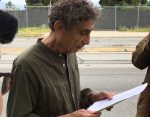
Gabor Maté reads the names of Palestinians killed by the Israel Defence Forces during the Great March of Return protests in Gaza. (photo by Matthew Gindin)

“Each one of them was a full human being, with a full life,” said Rabbi David Mivasair, addressing a dozen or so people, most of whom were Jews, outside of the Jewish Community Centre of Greater Vancouver on May 21, the second day of Shavuot, for Yizkor, the traditional memorial service for the dead.

Organized by Independent Jewish Voices, the group gathered to commemorate the Palestinian protesters who had been killed by the Israel Defence Forces during the Great March of Return protests in Gaza, which began on March 31 and ended May 15 (which Palestinians observe as Nakba Day). They gathered, according to the event’s Facebook page, for another reason, as well: “We will also publicly denounce the Centre for Israel and Jewish Affairs for its continual dishonest manipulation of Canadian political leaders and media sources to silence and minimize Israel’s brutality toward Palestinians and, in this case, shift the blame for the killings to the very people who were killed.”

Those present included Gabor Maté, a physician, author and member of the Jewish community. He and others took turns reading the names of Palestinians who had been killed. Afterwards, he told a story from an article that Uri Avnery, an Israeli peace activist, had written days before. In the article, Avnery described how he, as a teenage member of the Irgun, had done similar things to those of the Palestinian protesters when demonstrating against the then-occupying British forces for Israel’s independence, but the British shot over their heads, not at them. Maté also criticized the JCC for not being inclusive enough of all Jewish voices, saying that, in practice, it was more like “the Zionist community centre.”

“The confusion between Zionism and Judaism is a tragedy,” said Maté. “I’m just glad to be here to bear witness along with the rest of you.”

Shawkat Hasan, a member of the Palestinian community and the B.C. Muslim Association, whose family lost their home in the war of 1948, also spoke, emphasizing that the conflict was not between Jews and Muslims but between Zionism and its “victims,” and calling for widespread resistance to violence against Palestinians.

The group carried out their service peacefully. The idea for it came about only days before, and the organizing of it was rushed to coincide with Shavuot. One sign read, “Murdering innocents is not a Jewish value.” Some passersby stopped to join or listen, as members of the group chanted the names and recited Kaddish, and some to express their opposition.

Mivasair told those assembled that the location had been chosen to protest CIJA, who have their offices inside the JCC. CIJA had launched a campaign calling for Prime Minister Justin Trudeau to apologize for remarks Trudeau had made that the “reported use of excessive force and live ammunition is inexcusable” and his call for “an immediate independent investigation” after a Canadian doctor was shot by the IDF while treating protesters.

“Hamas has left Israel no choice but to use force to protect the tens of thousands of Israelis who live close to Gaza,” said Shimon Koffler Fogel, CIJA’s chief executive officer, in a statement May 16. “We are outraged and saddened that Hamas is again using civilian human shields. For Israelis and the Jewish community, Palestinian casualties are painful tragedies. For Hamas, Palestinian casualties are sickening public relations achievements.”

“Everything that CIJA says is contestable,” Mivasair told the Jewish Independent following the service. “The situation in Gaza is desperate enough, due to the policies of the Israeli government, to explain the actions of the Palestinian protesters without imagining that they were primarily orchestrated by Hamas, which they were not. Why are organizations that purport to speak for the Jewish community suppressing discussion in Canada about what is really going on?”

The Yizkor service at the JCC followed weeks of protests by Palestinian solidarity groups outside of federal Justice Minister Jody Wilson-Raybould’s Vancouver constituency office.

In the conflict at Israel’s border with Gaza, the IDF faced some 50,000 protesters. More than 100 Palestinians were killed and between 8,700 and 13,000 wounded, depending on the source of the data. The IDF’s actions, in particular the use of live ammunition, has been condemned by organizations including B’Tselem, Human Rights Watch and Amnesty International. According to Israel, most of those killed were members of the terrorist group Hamas, which, the Israeli government says, organized the protests.

Matthew Gindin is a freelance journalist, writer and lecturer. He is Pacific correspondent for the CJN, writes regularly for the Forward, Tricycle and the Wisdom Daily, and has been published in Sojourners, Religion Dispatches and elsewhere. He can be found on Medium and Twitter.

Format ImagePosted on May 25, 2018May 23, 2018Author Matthew GindinCategories LocalTags CIJA, conflict, David Mivasair, Great March, IJV, Israel, JCC, Palestinians
Looking to the future

Looking to the future

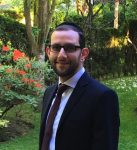
Rabbi Shlomo Gabay is the new spiritual leader of Congregation Beth Hamidrash. (photo from Shlomo Gabay)

“The Sephardic world has its own customs, its own personality – communicating that to the next generation is a priority for Beth Hamidrash,” Rabbi Shlomo Gabay told the Independent. “They needed someone who could guide the next generation in the Sephardic way.”

Gabay was explaining why he, a rabbi who most recently worked as a high school teacher in the Sephardi community of Gibraltar, was invited to take over the role of spiritual leader at Congregation Beth Hamidrash following the departure of Rabbi Ilan Acoca in August of last year.

Gabay was born in London, England, and attended yeshivah in Gateshead, a hub of Orthodox Jewish life in Britain. He married “the rabbi’s daughter,” Rachel, who works in graphic and web design, and the couple now has three daughters. Coincidentally, Rachel Gabay is the niece of another former Beth Hamidrash rabbi, David Bassous.

After the Gabays married, they spent some time in Israel, where Shlomo Gabay pursued training in kiruv, or Jewish outreach. He then landed his first job, in Gibraltar, where he worked as a teacher of Gemara and halachah at the Jewish boys high school. He also taught other classes and founded and directed the Shovavim Project, an annual six-week learning program, in Gilbraltar.

Gibraltar is a British territory on a peninsula jutting out of southern Spain, across the water from Morocco. The community is almost totally Sephardi and led by Chief Rabbi Ron Hassid.

“Gibraltar is very relaxed, it’s very beautiful,” said Gabay, who earlier this year posted on Beth Hamidrash’s Facebook page a video of himself and some monkey friends on the Rock of Gibraltar. “It’s a holiday place where everybody goes. The population is almost 30,000, but 11 million [tourists] … come a year. The streets are full all the time, you get to meet people from all over the world.”

Gabay sees some similarities between Gibraltar and Vancouver – the natural beauty, the many tourists and a more laid-back culture than London for example – although, obviously, there’s a considerable difference of scale.

Gabay and his family are settling in well and enjoying the West Coast, even the previous winter weather. “London and Vancouver,” he said, “have something in common as well – rain.”

During the interviewing process, the Gabays were invited to come for a trial Shabbaton and Beth Hamidrash decided they had a winner.

“One of the strong reasons we were chosen,” said Gabay, “was because Beth Hamidrash felt they needed to focus on the next generation. Sephardic culture is quite different from Ashkenazic culture – the food, the personality – they didn’t want it to be pulled away in a different angle from what the founders intended.”

Beth Hamidrash has been without a rabbi for a year and a half. Gabay said he is looking forward to reinvigorating what the community is known for – having a warm, family atmosphere, being a community social hub, as well as a place of culture and Torah learning. “We want everyone to be happy here,” he said.

Gabay offers Talmud classes on Tuesdays and has started a Sunday class after breakfast, which covers a different topic of discussion every week. Rachel Gabay is a trained teacher of Judaics, as well as having training in marriage counseling and preparation for marriage.

Matthew Gindin is a freelance journalist, writer and lecturer. He is Pacific correspondent for the CJN, writes regularly for the Forward, Tricycle and the Wisdom Daily, and has been published in Sojourners, Religion Dispatches and elsewhere. He can be found on Medium and Twitter.

Format ImagePosted on May 25, 2018May 23, 2018Author Matthew GindinCategories LocalTags Beth Hamidrash, Judaism, Sephardi, Shlomo Gabay
Collaborative housing options

Collaborative housing options

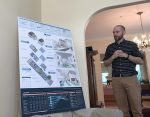
Travis Hanks of Haeccity Studio Architecture. He and his colleague Shirley Shen made a presentation at the launch of CoHo on May 12. (photo by Noam Dolgin)

A diverse group of people a couple of dozen strong, all looking for solutions to Vancouver’s housing crisis, met on May 12 to brainstorm and learn. The meeting was organized by CoHo BC, an organization founded by Jewish community member Noam Dolgin, which describes itself as “an initiative to support, encourage and simplify collaborative ownership of property in B.C.”

The gathering took place at the home of Celia Brauer, another Jewish Vancouverite who herself is looking at co-housing options. “I have been loving this house and surrounding green space for 18 years now,” she said in the press release about the meeting. “I would very much enjoy sharing this corner of paradise with someone, especially since it would allow me to remain here.”

After getting to know one another a bit, smaller groups were formed to share ideas of their ideal dwellings and produce a collaborative vision for a home that included them all.

It was clear that everyone present had already given the idea some thought. One team envisioned a shared home with a combination of private areas and shared spaces – such as a library, places where people could work and places kids could play, plus a carport for a shared vehicle – as well as a backyard. (All three mini-groups dropped the idea of a front yard as an unneeded encumbrance.) The other two teams came up with different visions: one imagined private houses sharing courtyards and outdoor spaces on the same lot; another saw a shared structure with self-contained living spaces within it.

Following this exercise, architects Travis Hanks and Shirley Shen of Haeccity Studio Architecture made a presentation on the firm’s Micro-op concept, which won the Urbanarium Missing Middle Competition. (Urbanarium is a registered nonprofit founded by a group of architects, planners and others committed to re-imagining the city.)

Haeccity’s “missing middle” project is about providing alternatives to houses on the one end, and high-rises and condos on the other. Hanks and Shen are exploring ways to increase density on lots that are in the “buffer zones” of major arterials, between single-family neighbourhoods and commercial areas.

Hanks and Shen described the concept: a three-storey building of six or seven housing units that would fit onto a single-family lot of about 33 feet by 122 feet without impinging on the space or esthetic values of adjacent single-family homes. It could be in two buildings, separated by a common courtyard, with the flexibility of a combination of one-, two- and three-bedroom units ranging in size from 525 square feet to 1,350 square feet.

Haeccity’s proposal imagines new urban policies that would provide both more affordable housing and more community-rich neighbourhoods. The housing would be purchased like in a co-op model, where tenants would buy shares in the community. Although this would make buying in more affordable, as well as potentially foster community, intergenerational connection and other benefits that come from long-term residents, many of those at the May 12 meeting were concerned about the lower return on investment such a community would entail, should residents decide to leave. Hanks and Shen were clear that there was a trade-off involved.

“If we’re going to get serious about affordability,” said Hanks, “we have to get serious about separating from the market.”

In his presentation on the CoHo project, Dolgin explained, “CoHo aims to be a portal for information. It is also a ‘matchmaking service’ for homeowners, buyers and sellers to find others with complementary housing needs.”

Dolgin said he plans to collect information that will make it easier to understand people’s needs and to connect like-minded people together. Citing a 2016 Ipsos Reid poll – which found that 11% of respondents would consider buying real estate with a friend or business partner and three percent would consider buying with a stranger – he said openness to co-housing is steadily growing in Vancouver, especially among millennials. What is missing, he said, is an infrastructure to help make it happen.

Brauer then briefly outlined the housing offer she would like to make and led interested guests on a tour. She is offering to sell 60% of her property to someone willing to share it so that she can stay within her community, in the neighbourhood she’s known for almost two decades. She would like to build her own small house in the back of the lot. The only access to her envisioned laneway house would be from the front street. In a kind of microcosm of the needs of the larger co-housing community in Vancouver, Brauer’s plan will be dependent both on finding the right shidduch (match) and on the city being willing to accommodate the project.

“The next step for CoHo BC involves building the community through a series of events, social media and networking,” said Dolgin. “We need to work together to spread the word about this organization and this housing type. People in B.C. are constantly searching for community and affordability, so I truly believe collaboration and some form of communal living or co-ownership is a viable option that would appeal to more than 10% of the population. Our job is to create the community and infrastructure to facilitate and encourage this type of housing.”

For more information, visit cohobc.com.

Matthew Gindin is a freelance journalist, writer and lecturer. He is Pacific correspondent for the CJN, writes regularly for the Forward, Tricycle and the Wisdom Daily, and has been published in Sojourners, Religion Dispatches and elsewhere. He can be found on Medium and Twitter.

Format ImagePosted on May 25, 2018May 23, 2018Author Matthew GindinCategories LocalTags affordability, Celia Brauer, Haeccity, housing, Noam Dolgin
Lelio’s film terrific

Lelio’s film terrific

Left to right: Rachel Weisz, Rachel McAdams and Alessandro Nivola in Disobedience. (photo from Bleecker Street)

Sebastián Lelio’s beautifully wrought Disobedience is some kind of small miracle. A close-up portrait of three 30-something British Jews grappling with their respective sexual and religious truths, it is a timeless saga that feels utterly contemporary.

It’s a film that probably couldn’t have been made even 10 years ago, because it assumes and addresses a world – or at least a generation or two – that is perfectly comfortable with the fluidity of sexual identity. Disobedience comes from a place where homosexual and bisexual relationships aren’t abnormal or unhealthy, even if they are still taboo in some subcultures.

Adapted from Naomi Alderman’s 2006 novel, Disobedience takes a familiar concept – the return of the prodigal child years after she left her Orthodox Jewish family and community – and spins it on a fresh and unexpected axis.

This type of drama has usually been framed as a dialectic between faith and secularism, and tradition and modernity. The emotional punch typically derives from sympathetic individuals bulldozed by a patriarchy portrayed as tyrannical and anachronistic.

The conflict in Disobedience isn’t between people on opposite sides of an irreconcilable philosophical divide – which would inevitably propel the viewer to identify with one protagonist and condemn the others – but within each person: who am I, and what hard choices do I need to make right now to live an authentic, satisfying life?

One refreshing consequence is there are no villains, whose roles are to constrain and injure the characters, in Disobedience. Furthermore, because the stakes are personal and individual, the film neatly sidesteps or backgrounds big-picture questions such as the modern world’s challenges and threats to the Orthodox community.

The movie opens with the elderly London rabbi of a small shul collapsing in mid-sermon. On the other side of the Atlantic, a dark-haired photographer (Rachel Weisz) shoots a man adorned with tattoos. The introduction of Ronit in conjunction with one of Judaism’s prohibitions instantly illustrates the distance she’s put between her upbringing and her current life. (In fact, if my hearing is accurate, in New York she dropped the “t” long ago and goes by Roni, an act of reinvention and assimilation.)

In a succession of quick shots, Ronit receives some bad news, has anonymous sex with a male stranger and, finally alone, tears her sweater in a Jewish gesture of mourning. The gifted Chilean filmmaker Lelio, who adapted the novel with British playwright Rebecca Lenkiewicz, immediately delineates a wild child who isn’t happy in the present nor reconciled to her past.

Ronit’s return to London for her respected father’s funeral isn’t welcomed by relatives and other members of the congregation, and we get the vaguest hints about the circumstances that led to her self-imposed exile. (Hers was the first act of disobedience, but it won’t be the last.) She receives a slightly warmer reception from the obvious heir to the late rav’s pulpit, the perpetually restrained Dovid Kuperman (Alessandro Nivola) and his demure wife Esti (Rachel MacAdams).

We expect the film to portray Ronit as a troubled heroine for choosing a “liberated” life and as the awkward outsider enduring a loss without much support. Lelio’s prior films, A Fantastic Woman (last year’s Academy Award-winning portrait of a grieving transgender woman) and Gloria (centred on an older woman who wilfully pursues a romance with a problematic man), conveyed his respect for women defying the judgment and rules of others.

However, Ronit behaves so selfishly and inappropriately that we are insulted along with the Orthodox characters. Disobedience is a form of rebellion, but people aren’t automatically entitled to hurt others – or to jeopardize their jobs and relationships – in the course of expressing their nonconformity. And that is the crux of Ronit’s entanglement with Esti and, to a lesser degree, Dovid. The great pleasure and power of Disobedience is the skill and subtlety with which Lelio interweaves their desires and responsibilities.

By the end of this terrific film, the various markers and labels that describe – and constrain – the characters have been scrubbed away. They are simply human beings, trying to do the right thing.

Disobedience opened May 18 at Cineplex Odeon International Village. The film is rated R for some strong sexuality.

Michael Fox is a writer and film critic living in San Francisco.

Format ImagePosted on May 25, 2018May 24, 2018Author Michael FoxCategories TV & FilmTags Disobedience, Judaism, LGBTQ, movies, Sebastián Lelio
Music helps body and mind

Music helps body and mind

Perla Barabak gave a music workshop on April 17 as part of Jewish Seniors Alliance’s Snider Foundation Empowerment Series. (photo from JSA)

The fourth session of this season’s Jewish Seniors Alliance Snider Foundation Empowerment Series was held with the co-sponsorship of Congregation Beth Israel on April 17. The theme of “Laughter and Music: Feeding the Soul” continued with a program entitled Perla’s Music Workshop.

About 65 seniors were present to enjoy the afternoon event, which began with the regular Tuesday seniors lunch provided by Jewish Family Services. Queenie Hamovich of JFS welcomed everyone and introduced Ken Levitt, president of JSA.

Levitt reviewed some of the JSA programs, including the peer support services. He asked audience members to consider joining JSA and encouraged them to think of volunteering for some of the peer support initiaves. He then introduced the speaker for the afternoon, Perla Barabak.

Barabak believes that music helps the body and mind to relax. It also touches the heart and soul, she said, making it easier for feelings to surface. Thus, music can provide multiple benefits.

Barabak began with some exercises, asking the audience to sound out their names musically. She began with her own name and many people joined in. She talked about active and passive listening; for example, listening at a concert as opposed to hearing background music in an elevator.

Throughout history, she noted, music has been used in communication, movement and at social events (weddings, b’nai mitzvah, banquets).

Songs represent a culture, she said. In this way, music is the song the heart sings. Songs remain with us into our senior years, when other memories may fade. Songs and singing can create pleasure and empowerment.

Barabak then did a guided meditation, getting everyone to close their eyes, listen to the music and imagine a colour. Barabak – who has used music in her work as a psychologist – pointed out how relaxing this is and how music balances our thoughts and feelings. She said she feels that, where there is life, there is music.

As the event ended, many in the audience got up and danced to the music being played.

The next Empowerment Series event – Music for Our Hearts and Songs We Love – will take place on June 25 at Beth Tikvah Synagogue. Caviar and Lace, with Michelle Carlisle and Saul Berson, will perform a mix of classic, jazz and folk songs.

Shanie Levin, MSW, worked for many years in the field of child welfare. During that time, she was active in the union. As well, she participated in amateur dramatics. She has served on the board of the Jewish Federation of Greater Vancouver and is presently on the executive of Jewish Seniors Alliance and a member of the editorial committee.

Format ImagePosted on May 25, 2018May 24, 2018Author Shanie LevinCategories LocalTags Empowerment, healthcare, JSA, music, seniors

Posts pagination

Page 1 Page 2 … Page 6 Next page
Proudly powered by WordPress