תוכנית הנשיא הרצוג

יושב הראש של הפדרציה היהודית של אזור מטרו ונקובר, עזרא שנקן, קורא לממשלת ישראל וראשי האופוזיציה, לקבל את מתווה הנשיא, יצחק הרצוג, לאור המשבר החמור הפוקד את ישראל בחודשיים האחרונים. זאת, על רקע החלטת ממשלת הימין של בנימין נתניהו, להחיל רפורמה משמעותית על מערכת המשפט בישראל, שתאפשר לכנסת להיות מעל בית המשפט העליון. רבים בישראל אמינים כי כל הרפורמה תכליתה אחת – לשחרר את נתניהו מכתבי הדין העומדים נגדו בבית המשפט, כך שיוכל להמשיך ולשלוט במדינה עוד שנים רבות

שנקן מציין כי הוא כמו רבים אחרים בקהילה מודאג ממה שמתרחש בישראל בעת הזו. בניסיון לאחד את הקרעים בעם ולהגיע להבנות בישראל, ארגון הגג של כל הפדרציות היהודיות של צפון אמריקה שלח בחודש שעבר מכתב אל ראש הממשלה, בנימין נתניהו, וראש האופוזיציה יאיר לפיד, לנהל משא ומתן בין הצדדים להגיע לפשרה – על סמך הצעות הנשיא הרצוג. במכתב נאמר עוד: “עקבנו מקרוב אחר הדיון החריף שהולך וגובר סביב הצעות הקואליציה הממשלתית, לערוך שינויים מהותיים ביחסים בין הכנסת ובית המשפט העליון. עקבנו במיוחד אחרי ההצעה לאפשר לכנסת לבטל החלטות של בית המשפט העליון (“פסקת ההתגברות”) ברוב קולות. אנו קוראים לכם לאמץ את ההצעות  שהציע הנשיא, יצחק הרצוג, לקביעת אפיק לבחינה ופתרון של הסוגיות שהזכרנו. לא משנה כיצד יפתרו סוגיות אלו, תהליך זה יבטיח שדעותיהם של כל בעלי העניין ישקלו במלואן. אנו קוראים לכם להבהיר שאין די ברוב של שישים ואחד של מצביעים בכנסת, כדי לבטל החלטת של בית המשפט העליון. מהות הדמוקרטיה היא מצד אחד הכרה בשלטון הרוב, אך פירושה גם הגנה על זכויות המיעוט. אנו מכירים בכך שכל מערכת האיזונים והבלמים תהיה שונה מאלה שבמדינות שלנו, אך לשינוי כה דרמטי במערכת הממשל הישראלית, יהיו השלכות מרחיקות לכת בצפון אמריקה, הן בתוך הקהילה היהודית והן מחוצה לה”

שנקן מבקש להדגיש שרק באמצעות הידברות בין הצדדים אפשר להגיע לפתרון הרצוי לכולם. לדבריו הפדרציה היהודית של אזור מטרו ונקובר, לא מביעה עמדת תמיכה בצד זה או אחר, והיא מאפשרת לשלל הדעות והגוונים השונים להשמיע את דעתם בנושא. “אנו לא ננקוט עמדה ספציפית בנושא ולכן גם לא נשתתף בהפגנות של חברי הקהילה היהודית בוונקובר, נגד הרפורמה של ממשלת נתניהו. לכל אחד יש זכות להביע את עמדותיו באופן חופשי. אם זאת כפי שאתה יכול לראות במכתב לראש הממשלה, בנימין נתניהו וראש האופוזיציה יאיר לפיד, אנו מודאגים מאוד מהיבטי הרפורמה החדשה”

קהילת היהודים המקומית מקיימת מדי יום ראשון בחודשים האחרונים הפגנת הזדהות עם אלה שרוצים לשמור על הדמוקרטיה בישראל, בניגוד לעמדת הקואליציה שרוצה כאמור לבצע רפורמה מרחיקת לכת במערכת המשפט, תוך הענקת עדיפות לכנסת על בית המשפט העליון. הפגנות נערכות בכיכר רובסון בדאון טאון (בצמוד לוונקובר ארט גאלרי) ומעטים מקרב הקהילה מגיעים לאירועים, בין עשרה לשלושים איש בסך הכל. זה אולי מתאים לפרופיל של אלה שגרים במערב צפון אמריקה לעומת אלה שגרים במזרחה. שם במזרח חברי הקהילה היהודית פעילים הרבה יותר. בכל מקרה ידוע שרבים מתושבי אזור ונקובר משלל הקהילות השונות, מעדיפים שלא להיות פעילים בקרב קהילותיהם אלה להתבודד

יו”ר הפדרציה היהודית של אזור ונקובר אומר כי ממש בימים אלה משלחת בכירה של חברי ארגון הפדרציות היהודית של צפון אמריקה נמצאת בישראל, בניסיון ליצור גשר של הידברות בין שני הצדדים הניצים, על בסיס תוכניתו של הרצוג. כשלושים מנהיגים הפדרציות של צפון אמריקה קיימו ביקור חפוז בישראל, לאור המהומה הקשה שפקדה את המדינה. לדברי נשיא ומנכ”ל הפדרציות היהודיות של צפון אמריקה, אריק פינגרהאט, הביקור הקצר ממחיש את הדאגה הכבדה בקרב הקהילה היהודית ממה שהוויכוח בישראל עורר. לדבריו זו הפעם הראשונה בהיסטוריה של הפדרציות בצפון אמריקה, שהן שולחות משלחת חירום לדון במדיניות הישראלית, עם מנהיגים בישראל

פינגורהט מציין כי משלחתו לא הצליחה להיפגש עם נתניהו, אך היא פגשה חברים בבכירים בקואליציה של ראש הממשלה, וכן את מנהיגי האופוזיציה והנשיא. המסר של המשלחת של ארגון הקהילות היהודית של צפון אמריקה לכל הצדדים הוא, שיש למצוא פשרה ולהרגיע את הרוחות לאור האווירה המקוטבת מאוד. ראש המשלחת ציין עוד כי יהודי צפון אמריקה נוטים להחזיק בעמדות פוליטיות ליברליות, ולהזדהות עם זרמים ליברלים ביהדות שנאבקו להכרה בישראל. חברי המשלחת מודאגים מחשש שזכויות המיעוט והפלורליזם הדתי עלולות להיחלש, בעקבות הרפורמה המשפטית המוצעת

יש לזכור שארגון הפדרציות היהודית של צפון אמריקה מכיל בתוכו למעלה מארבע מאות קהילות יהודית, בהן אחד עשר ברחבי קנדה. הקהילות מגייסות מדי שנה כשני מיליארד דולר לתמיכה בקהילות באוכלוסיות חלשות בארץ ובעולם

שנקן אומר כי תפקיד הפדרציה היהודית של אזור מטרו ונקובר הוא לאפשר לכל חברי הקהילה להתבטא באופן חופשי כרצונם. “אנו מנסים בימים קשים אלה לישראל להסביר את מה שקורה במדינה ומקיימים הדרכות בנושא. במקביל אנו מאפשרים לכל חבר הקהילה שלנו לומר את דברו בנושא. אך כפי שציינתי הפדרציה שברשותי לא תתמוך בשום צד בסכסוך הקשה זה, אלה רק תנסה לבנות גשר בין הניצים”

שנקן מסביר עוד כי: “יש דאגה רבה בקרב יהודית קנדה שנמנים על מאה ארבעים ושישה ארגונים שונים המסונפים לשתיים עשרה פדרציות. לראשונה נשמעים קולות חזקים מכאן בקנדה בנוגע למה שקורה בישראל. זהו תקדים שלא היה כמותו מאז נוסדה מדינת ישראל. זה רק מסביר לך את חומרת המצב ממה שקורה בישראל, ואת הדאגה העמוקה מכך של היהודים ברחבי קנדה”

לדברי שנקן אין זה חדש שישראל נמצאת במשבר קשה. בעצם הולדתה היה משבר גדול בה ובסביבה, במלחמת יום כיפור היה משבר נוראי, רצח ראש הממשלה יצחק רבין הביא למשבר גדול. ואכן גם הפעם הצעת הרפורמה של ממשלת נתניהו מביאה שוב משבר קשה לציבור ולחברה בישראל, וכן לקהילות היהודית ברחבי העולם. המשבר הישראלי מדגיש את הפערים בין הקבוצות השונות, אשכנזים וספרדים, חילונים ודתיים, יהודים וערבים, ימין ושמאל ועוד ועוד

“מה שקורה כיום בישראל קורה גם במקומות אחרים בעולם ואני מודאג מכך שאנשים לא מוכנים לדבר אחד עם השני, אלה רק צועקים אחד על השני. מוטל עלינו לדבר עם רעהו, ולהגיע להסכמות פשרות לאור חילוקי הדעות הקיימים בקרב אוכלוסיות השונות. לצערי כיום אי אפשר לדבר עוד ביננו אלה רק לצעוק ולריב וזו טרגדיה קשה מאוד לכולנו. הרפורמה בישראל מוסיפה שמן רותח למדורה בישראל, בזמן שמוטל על כולנו להתפשר ולקבל את תוכנית הנשיא הרצוג. אנו צריכים לעשות הכל כדי למצוא מכנה משותף בין הצדדים כי אין דרך אחרת”

יו”ר הפדרציה היהודית של אזור מטרו ונקובר מבטיח כי ארגוני יעשה הכל להסביר לקהילת היהודים כאן, מה בדיוק קורה בישראל ומה צריך לעשות כדי למצוא פתרון הולם למשבר החמור שנוצר לאור הצעת הרפורמה של ממשלת בנימין נתניהו
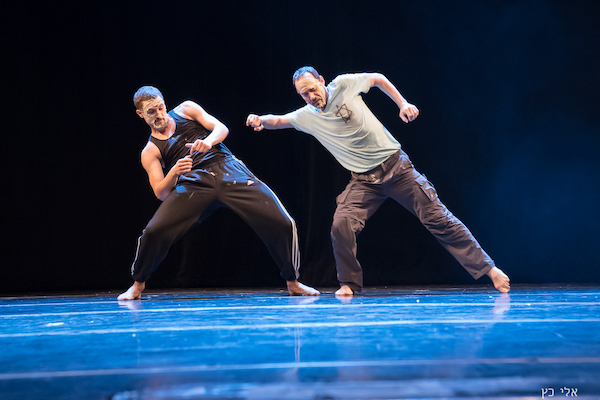

Who decides what culture is?

Mourad Bouayad, left, and Hillel Kogan in We Love Arabs, which is at the Dance Centre April 13-15. (photo by Eli Katz)

“I don’t have answers so I can only ask questions,” Israeli choreographer Hillel Kogan told the Jewish Independent. “If this is changing people’s political views, I doubt it, but at least what I’m trying to do is to put the questions on the table and make people, audiences, and myself see that art is not a separate sphere, that art is part of politics and social and cultural systems … and this is what I’m trying to expose in my pieces.”

The JI interviewed Kogan in advance of the Vancouver run of We Love Arabs, which is being presented at the Scotiabank Dance Centre by the Dance Centre and Théâtre la Seizième April 13-15. There will be both English- and French-language performances of this work, which also has Hebrew and Spanish versions. Kogan will dance the duet here with Mourad Bouayad.

We Love Arabs premièred at the 2013 Intimadance Festival in Tel Aviv. The brief outline for the piece, which Kogan has on his website, begins: “I address the audience, my name is Hillel Kogan. Some say that I do political art. I want to show you today how dance has the power to promote coexistence between Arabs and Jews in Israel. I invited an Arab dancer here….” The video teaser offers a glimpse of Kogan’s physicality, humour, tenderness, intelligence.

Born in Tel Aviv, Kogan has performed with and created for companies and choreographers around the world. At Batsheva Dance Company, he is director of educational programs. He is pursuing a master’s degree in cultural studies.

We Love Arabs garnered awards, and it has traveled to more than a dozen countries. The Vancouver show was postponed twice, said Mirna Zagar, executive director of the Dance Centre. First due to a scheduling conflict and then due to COVID. “However, I believe the work is just as relevant now as it was when we started,” she said. “It is an exceptional work that continues to engage audiences internationally.”

The Dance Centre often partners with other arts organizations, as a means of pooling resources and amplifying opportunities to show international artists. “This collaboration is along these lines,” she said. “I have known Esther Duquette, the now-outgoing artistic director at Théâtre la Seizième, for some years and the nature of this piece – multilingual and straddling theatre as well as dance – made it a perfect opportunity for our organizations to work together.”

The April 14 performance and talkback will be in French; the other two shows and the April 15 talkback in English. Kogan speaks six languages: Hebrew and Russian because his parents were born in the Soviet Union and he was born in Israel; he studied English in school; he learned French from working two years in Switzerland, and Portuguese and Spanish from working in Portugal for seven years. He doesn’t speak Arabic.

“This is interesting,” he said, “because this piece, We Love Arabs, is an autocritical peace that asks exactly this. Why am I facing the languages and cultures of the West and not the languages of my neighbours and of my co-citizens in Israel? Why don’t I read the books of Arabic writers? Why doesn’t Arab culture interest me, and why do I identify myself as ‘Western,’ which is a bit strange?”

It is both a geographic question, he said, living as he does in Israel, and a social, historical, cultural and political question. “And the piece deals with this question: who decides what the general culture is, and why I am – and why the Israeli art field, at least as I see it, is – so orientalist, which means looking at the Orient, at the Arab as inferior and wanting to impose on it the Western culture.”

The different versions of We Love Arabs resulted from Kogan’s wanting to perform the piece abroad, in the language the audience speaks. “I think it brings more this idea of relevance to the space,” he explained. “If I did the piece in Hebrew with subtitles, it would be more like a piece from Israel … and be framed as something local and in my perspective. The universality of the piece is one of the ideas – I want people to identify with it and, by choosing their own language, I feel there is more chance to make them sense that they are part of it as well.”

Kogan had no idea of how much impact We Love Arabs would have. “It was created for a small niche festival in Israel,” he said, and “for a specific audience who is already convinced in the political opinions that I hold. So, I didn’t imagine it ‘big.’… As I performed the piece out of Israel, I understood that the question of Jews and Arabs in Israel is just a microcosm of a more universal question: of the situation of power between minority and majority, and the way we see ‘the other’ – who is the master of the culture in any nation?”

In looking at the question, Kogan asks: “Who is invited to participate in creating a national identity, what is Israeli or what is Arab Israeli? It is not very different than the question of, I don’t know, for example, in Canada: who is invited, what is Canadian? Is it French? Is it American? Is it English? I don’t know the minority situation in Canada, but I know there is a history with Native Canadians. So, are they also invited to take part in culture? How much are they participating in mainstream dance, literature, music? How do we define what is high art and what is popular art? What is folk and folklore? And what is universal art?”

Initially dancing the duet with Kogan was Adi Boutrous, an Israeli Arab dancer who is also a choreographer and so not always available. Bouayad, who is French, danced in Israel in the Batsheva junior company. “This is how we met, so I invited him to perform with me,” said Kogan. “And, of course, it’s very different for an Israeli Arab to play the role of an Israeli Arab than for a French half-Arab person, because to be an Arab in France is different than to be an Arab in Israel.”

Not wanting to speak for Bouayad, Kogan noted that, while Bouayad may define “himself first as French, and his relationship with his Arab origins are just an extra part of his being,” for Israeli Arabs, he said, “I’m not sure that they are first Israeli and then Arab because of their own perception of themselves – but also the way the majority looks at them, the state looks at them, society looks at them, Jewish society looks at them.

“We often make the mistake even in the language, and we forget to say that Arabs are Israeli as well. We say Israelis and Arabs – even when we refer to Arabs who are citizens of Israel and who hold an Israeli passport, we call them Arabs, and we call ourselves, the Jews, Israelis…. We are both Israeli and the difference between us in definition is our religion. In a country like France, where it’s a republic and religion has at least formally not such an important role in the definition of citizenship and of nationality, then, of course, the change of cast is also changing the relationship.”

Kogan has no illusions that art can change the world. Elected politicians “are the ones who should change the world,” he said. For him, art is there to reflect, to inspire. “Art, for me, is a place for the imagination, for the possibility of not necessarily escaping reality, but giving an alternative to reality…. If art can feed the imagination and then, as an outcome of this feeding of imagination, can change the reality, OK, that’s great. But I think that … when artists try to change the world by their art – in history, at least as far as I see, it ends in political propaganda and just serves the hands of politicians.”

As many funny moments as there are in We Love Arabs, they have a profound purpose.

“I have anger towards some of the cultural systems, and the questions that I’m asking are involved with hard emotions. I feel that humour allows me to take some distance from the aggression and from being so emotionally involved,” said Kogan. “It allows me to laugh about myself as well. It allows me to invite people to laugh about a question without making it not serious. The laughing, I feel, is a tool to invite people to enter a conversation, to agree to criticize, to agree to ask questions … to see the bias, to be aware of the stereotypes, to be aware of the prejudgments that we have…. The laughter is just a means in order to speak about something very serious.”

For tickets to We Love Arabs, call 604-736-2616 or visit thedancecentre.ca.

Time of change at the Peretz

“I like to dabble in things, I like to learn about things, and I think that’s where Peretz really shines,” says Maggie Karpilovski, executive director of the Peretz Centre for Secular Jewish Culture. (photo from Peretz Centre)

At 78, the Peretz Centre for Secular Jewish Culture may be an old dog among community organizations. But it is enthusiastically trying new tricks. The institution has undertaken a strategic planning process to reconsider everything they do, and to make sure they are responding to what their community wants and needs. Not least among the changes is a new face at the helm.

Maggie Karpilovski has been executive director of the Peretz Centre since last June and brings a breadth of experience in the not-for-profit sector and academia.

At a time of significant change for the organization, Karpilovski is applying skills garnered as a senior manager at United Way of the Lower Mainland and as national director of community impact and investment for United Way Centraide Canada. Previously, after completing a master’s degree, she worked at the Surrey school board developing and overseeing programs for vulnerable children.

Born in Kyiv, Ukraine, Karpilovski moved with her family at a young age to Holon, Israel, where she received her elementary and secondary education. After her army service, she came to Vancouver to study cognitive science at Simon Fraser University.

Throughout her career, Karpilovski has merged research and practice.

“I really believe that practice has to be informed by research and research can’t be good research unless it’s grounded in practice,” she said.

The senior roles locally and nationally with United Way were fulfilling but Karpilovski got restless.

“Sitting in that kind of role – very, very high level, which was really interesting and very fulfilling, but we were talking about how to raise capacity for smaller organizations on the ground – I was saying, instead of teaching people how to do it, I wanted to get my hands dirty and do it myself,” she said. “I wanted to be closer to the impact.”

The planning process into which Karpilovski arrived resulted in the creation of several unique pillars within the centre. Notable among these is the creation of a distinct Yiddish Institute at the Peretz Centre, which is headed by Donna Becker, Karpilovski’s predecessor as executive director. Other pillars include art and culture, Jewish secular humanism, and Beit H’Am, which focuses on Israeli culture in Hebrew.

The Peretz is home to Western Canada’s most significant library of books in and about Yiddish. It hosts classes in Jewish culture, language learning, holiday celebrations and commemorations, a folk choir, and other offerings.

Karpilovski said the centre is committed to innovation while maintaining the roots of the organization, which originated in 1945 as the Peretz Schule. It is part of a network of schools, cultural centres, libraries and organizations honouring the legacy of Isaac Leib (I.L.) Peretz, one of the leading writers and thinkers of the Haskalah, the Jewish enlightenment.

Vancouver’s Peretz Centre was founded by a diverse group of Labour Zionists, socialists, communists and others who shared a goal of establishing a school to provide children with a nonpolitical, secular Jewish and progressive education. The shule’s first principal was Ben Chud who, in 1945, had just returned from the war and was active in the United Jewish People’s Order. He and his wife, Galya, were stalwarts of the centre, as is their daughter Gyda Chud, who currently sits on the board.

“We really try to balance the history as well as modernity and recognizing that, [for] people in 2023 in Vancouver, their connection to Judaism can be complex and interesting and multifaceted and we really try to meet people where they are at, to satisfy their curiosity and make sure we’re both providing a space of comfort and familiarity, as well as a space of stretch and of deeper interest and insight,” said Karpilovski.

Given that a majority of Jews in Metro Vancouver now live outside the city proper, the Peretz Centre, which is located on Ash Street near Cambie and 45th, is developing outreach programs and partnerships to reach those audiences. They have also removed their membership model, which may have acted as a barrier to access for some. The doors are open to all, she said.

They are partnering with like-minded organizations, including Camp Miriam and JQT Vancouver, the Jewish LGBTQ+ organization, offering space and learning to be supportive allies.

“What we really don’t want is to replicate efforts,” said Karpilovski. “We really want to find our niche and make sure that we are creating offerings that are unique and that complement and add to that broad constellation of things that are happening. We really see our space in Yiddishkeit as one that is not really offered anywhere else.”

One of the centre’s most unique offerings is its P’nei Mitzvah program, a two-year track for bar/bat mitzvah-aged young people to delve into Jewish history and culture, ancient and modern, but from a non-religious perspective. In addition to the overarching lessons, participants focus down into an area of particular interest for a major research project, which they then present at the graduation celebration.

This Passover, in addition to the traditional secular seder, a popular event that generally attracts more than 100 people, they are holding a family-friendly “un-seder” or “seder balagan.”

“We really turn the seder on its head and focus on activities, engagement, things like that,” she said. “Not something that is necessarily going to be offered at your traditional synagogue.”

An unexpected boon for the Peretz came from the redevelopment of the Oakridge shopping complex, which has turned a huge swath of the neighbourhood into traffic, construction and parking mayhem. The Oakridge branch of the Vancouver Public Library has taken up temporary quarters on the first floor of the Peretz Centre, which has provided the welcome influx of funds that enabled the centre’s strategic planning process. It also brought fresh walk-in traffic from locals, many of whom had no idea there was a Jewish space on the street and who are getting their first introduction to the centre.

“It takes a lot for an 80-year-old organization to turn itself into a learning organization and a curious organization and a brave organization,” Karpilovski said. “We might misstep, [but] we’re going to be brave and try something different. We’re going to listen to our community and not assume that we know everything. It’s a little scary, but it’s a lot exciting because there’s a lot of interesting spaces and interesting innovations that are happening.”

The time of change and exploration at the organization suits Karpilovski fine, she added.

“My own journey with Judaism has been complex and interesting and is incomplete,” she said. “I like to dabble in things, I like to learn about things, and I think that’s where Peretz really shines. There is no judgment. People are really welcome to come, experience, try things for size.”

For more on the Peretz Centre, visit peretz-centre.org.

Gallup poll concerning

A Gallup poll released last week shows that, for the first time, Democratic voters in the United States sympathize more with Palestinians than with Israelis.

Among Democratic voters contacted, 49% sympathize more with the Palestinians and 38% with Israelis. Among Republicans, sympathy for Israel remains overwhelming, at 78%.

The poll should raise concerns – but not only for the most obvious reasons.

Halie Soifer, head of the Jewish Democratic Council of America, hit the nail on the head when she told the Jewish Telegraphic Agency that the question paints a false dichotomy. (First, though, she noted that the Democratic Party’s leadership is overwhelmingly pro-Israel, whether that is reflected across the grassroots or not.)

“Democrats – from President Biden on down – strongly support Israel’s safety and security,” she said. But, crucially, she added: “There is no contradiction between being pro-Israel and supporting Palestinian rights, which is why Democrats continue to support a two-state solution to the Israeli-Palestinian conflict, as well as security assistance for Israel and humanitarian assistance to the Palestinians. The Israeli-Palestinian conflict is not a zero-sum game, and thus polling that presents it as a binary choice is inherently flawed.”

Calling people on the telephone at dinnertime to ask them how to solve an intransigent international conflict is not likely to advance the most constructive ideas for resolution. Simplistic formulations are inevitable, nuance flies out the door. Questions become self-reinforcing, a sort of unintentional “push poll.” (A push poll is an unethical strategy used sometimes in political campaigns intended not to gauge public opinion but to influence it: “If you knew that Candidate A had a history of drowning puppies and pulling wings off flies, would that make you more or less likely to vote for them?”)

This is not to blame Gallup, an established and respected polling firm. Their question unfortunately, reflects a common narrative, an either/or. That, as Soifer said, is a false dichotomy.

To be genuinely pro-Israel demands we be pro-Palestinian because finding a resolution to 75-plus years of conflict requires some sort of resolution to the statelessness of Palestinians. Equally, being pro-Palestinian demands we be pro-Israel, because compromise and coexistence is the only thing that will result in Palestinian self-determination.

Of course, acknowledging this is the easy part. How to behave in “pro-Israel” and “pro-Palestinian” ways is the muddy part. Those who call themselves “pro-Palestinian” often behave in ways that preclude the very thing they claim to advance. By denying Israel’s right to exist, for example, they ensure that compromise is taken off the table and, since that is the route to Palestinian self-determination, they betray the very definition of “pro-Palestinian.”

Those who are “pro-Israel” also need to temper their extremes. It is fair to say that, during the Oslo process, Israelis demonstrated a consensus toward coexistence that has understandably waned since the violence of the Second Intifada. But, for example, the common and senseless mantra we see from some commentators on social media that “there is no such thing as a Palestinian people” is a fruitless – and racist – squabble. Deny their history, reject the legitimacy of their land claims – there are still people there whose present and future demands a serious form of address and dignity.

To be clear: the sometimes-stated idea that the status quo cannot hold is simply not true. It has, by and large, held since 1967 and it could continue for another generation or more unless mutual compromise emerges to change that. The status quo arguably harms Palestinians more than it harms Israelis, which has led to an assumption that Israel must be in favour of the status quo. As a consequence, overseas activists have blamed Israel for the situation on the assumption that, as the perceived powerful party, it is the only one that can break the impasse. This is partly, if not mostly, untrue. Compromise must come from both sides and chants like “From the river to the sea …” and “Intifada! Revolution! There is only one solution!” the latter of which echoes Nazi slogans, will not “free Palestine.” They will, however, influence public opinion.

We should be concerned by the results of the Gallup poll – it indicates that decades of building multilateral support for Israel’s security among Americans (and, by extension almost certainly Canadians and Europeans) is failing. But, we should be concerned for another reason. It reinforces a false belief that we can only call ourselves pro-Israel or pro-Palestinian. Until we can legitimately call ourselves both, none of us deserves to call ourselves “pro-peace.”

What survey box to check?

Passover is coming. Its themes of freedom from oppression, the Exodus and Jewish identity stories are ready for the telling.

More Jewish people participate in Passover than many other holidays. A 2013 Pew Research study indicated that 70% of Americans who identified as Jewish attended a seder in the year, far more than any other Jewish practice, such as fasting on Yom Kippur, lighting Shabbat candles or attending synagogue services.

This statistic rings true for me, even though it’s a decade after the survey. I’ve hosted or attended many seders over the years where Jewish relatives or acquaintances turn up even if they’ve long since abandoned any other Jewish ritual. Some of these people hesitated to call themselves Jewish, even though they were raised Jewish or weren’t actively something else. How we identify is a complicated topic. It’s one I explore when I write a bio at the end of an article or introduce myself to someone at an event. As you might expect, the description provided by a writer is a shape-shifting event. I don’t advertise my religious identity in some publications. In others, I might mention where I graduated from university or what I write about.

I’ve told stories for a long time. Identifying as a writer came not long after. When the opportunity arose for me to go to the Young Writers’ Workshop at the University of Virginia as a teenager, at 13 or 14 years old, I was thrilled. I grew up in Virginia and Charlottesville wasn’t far away. My parents dropped me off. I stayed at the dorms. Mostly, I had a great experience and enjoyed myself. However, it was also the stage for some antisemitic moments that I haven’t forgotten.

I’d volunteered to set up chairs for a poetry reading, since a charismatic blond, older teen was also on the committee. Soon after arriving, he proceeded to tell antisemitic jokes, one after another. I silently kept setting out chairs as others crowded around, snickering. They snuck looks at me as I worked, ignoring him. That was the last time I chose the same committee as he did.

When this kind of bullying hate happens, oftentimes, the advice includes “Ignore it! His hate says more about him than it does about you.” That was little consolation for me. Despite the friends I made and all the learning experiences I had at that camp, it was also the source of several hate-filled moments. Later, I visited a camp friend at her home. I sat with her in the back of the family car. Her dad (much older than her mother) made languid conversation as he applauded Henry Ford’s union-busting and antisemitism. Then, he stopped to speak to “the boy” (a middle-aged, distinguished Black man) who managed his farmland. It was another moment I couldn’t erase from my memory, as my family believes strongly in unions and civil rights.

On Passover, we celebrate our identity and our journey, as if we, too, had been slaves in the land of Egypt. We use a story that shapes Jewish identity to help us coalesce into a grateful, free people. We discuss standing up for what we believe when it matters, the way Moses did.

All this came to mind when I took a research survey online. I agreed long ago to participate in occasional research surveys so that Canadian academics or government offices can learn how “ordinary Canadians” feel about things. This particular survey seemed to be about workplace psychological health. At the beginning, the authors gave their names, contact information and other details. By the end, lulled into complacency by harmless questions, I got to this question, which was something like: “We know that race is a cultural construct and isn’t genetic, but some people suffer on account of their race nevertheless. Please let us know how you identify for the purposes of this survey.”

What followed was a long list of categories, including “White, European descent” or “Middle Eastern, Arab” and various other categories, which you can probably imagine from your own survey experiences. I was stymied. In the past, I’d likely have ticked off “White, European descent” because, although my family has lived in the United States for the last 110 to 200 years, the places they came from were European. Yet, as anyone who has studied Jewish history knows, Europeans didn’t consider Jews to be in the same category as they were. Many centuries before the Second World War, Jews were being expelled from parts of Europe, murdered, raped and charged large extra taxes just to remain in some areas. The same can be said about much of the Middle East, where Jewish people have lived for millennia. Jews were heavily taxed, forced to wear identifying garments and had to cope with all sorts of other restrictions if they wanted to live as dhimmis, “under the protection of” Islam. Even in Virginia in the 1970s, Jews weren’t always considered “white.” We weren’t eligible for memberships in some social settings.

With current rising antisemitism, many slurs against Jews are conflated with issues surrounding Israel, our historic homeland. The Jewish population in Israel is in fact mixed, with Jews of all colours or races. Some Israelis are from families who have always lived in Israel. Also, yes, immigrants from all over the world have sought refuge by returning to Israel. Yet the antisemitic, race-driven comments online suggest that only white settlers from Europe “colonized” Israel.

That leaves a person with few options when the survey is about to “time out” online. One could just pretend and say “White/European” or “Indigenous” or “Middle Eastern,” “Asian,” “African,” or whatever one’s skin tone is. There’s often a “prefer not to say” category, which is a safe spot some choose. It offers anonymity, but it muddies the waters a bit for some research studies. This time, there was an “Other” category. Since the survey was aimed at an academic audience and anonymous, I checked off “Other” and in the box, I wrote Jewish, with a brief note that said, “In a time of rising antisemitism, please don’t leave us out.”

Was this the right thing to do? I won’t ever know. The Canadian Jewish population is very small. We’re only a little more than 1% of the population, based on recent Census numbers. Even so, if we are to tell our own story – the Exodus from Egypt, or the story of Jewish identity, we should have the chance to do so. Many people don’t feel safe enough to self-identify as Jewish. I certainly know the relief of blending in as “other.” Sometimes in risky surroundings, I feel safer with my nondescript last name and features that could be Greek or French but aren’t identifiably Jewish. We all have to decide when to tell our stories. Some seek freedom through erasing their ethnoreligious identities. Others relish the freedom that comes from proclaiming their “otherness” as Jewish.

I don’t have the answers here. I’m still wondering which survey boxes to tick off myself. In any case, have a wonderful Passover, with a delicious, meaningful seder where you can explore your identities, stories and life journey to freedom.

Joanne Seiff has written regularly for CBC Manitoba and various Jewish publications. She is the author of three books, including From the Outside In: Jewish Post Columns 2015-2016, a collection of essays available for digital download or as a paperback from Amazon. Check her out on Instagram @yrnspinner or at joanneseiff.blogspot.com.

The gift of sobriety

Pesach is approaching, and the connection to addiction is obvious  – we were slaves in Egypt, we are slaves to substances and behaviours to our detriment. Sadly, we hear daily about the perils of addiction – certainly the news of the toxic drug supply and deaths as a result are constant reminders of the struggle many face.

In the same way that Pesach teaches us that the possibility of redemption exists, that the oppressed can survive and ultimately triumph over their oppressors, so too can we remain hopeful that there is a pathway out of addiction. The struggle is hard, but with perseverance and critical support along the way, recovery is certainly achievable.

Our work at JACS is multi-faceted – we meet new people weekly who are looking for recovery support and those who are not sure yet they are ready to address the struggle. We meet people wherever they are.

While the challenge is real, we wanted to share what some of our clients have told us – the gifts of sobriety.

  1. Life is simpler – I used to have to steal to feed my addiction. It took time and I would wake up wondering when and where I would find my next “fix.” Now I celebrate each day knowing I am free of that struggle.
  2. I feel better about who I am – I no longer have secrets that I have to keep from those I love.
  3. I am present to my feelings – I recognize the urge to use drugs as just that – an urge. I am able to reach out for help as I need it.
  4. I feel physically better – I appreciate my physical, mental and emotional health. Yes, it has been work and I am worth it.
  5. I am part of a healthier community – the people I used to connect with were struggling with addiction as well. Now I surround myself with people who want to be healthy, living lives filled with meaning.
  6. I live with purpose – by helping others who may be struggling with this challenge, or just being present to whatever I am doing or whomever I am with.
  7. I feel the freedom to have fun – I enjoy a walk in the rain or the sun, I know that my joy and happiness is up to me.

We continue to be inspired by the clients we have the privilege of working with and supporting on their journey. May their courage and strength serve as inspiration to us all.

Wishing you a Pesach sameach!

Systemic change possible?

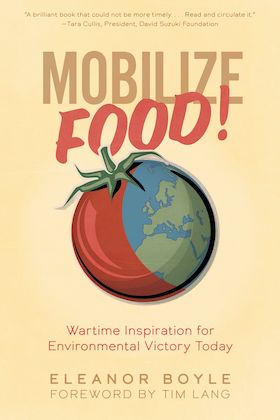
Eleanor Boyle’s Mobilize Food! Wartime Inspiration for Environmental Victory Today offers concrete ideas for how food systems can be transformed. (Julie Doro Photography)

I plan to make the Honourable Woolton Pie. Just for fun, not necessarily because I think it’ll taste wonderful, though it might. Named after Lord Woolton (Frederick Marquis), who was appointed minister of food in 1940 Britain, it represents several of the British government’s goals during the war years: it was “meatless, thrifty, filling, and made use of domestically produced in-season foods.” The recipe is in Eleanor Boyle’s latest book, Mobilize Food! Wartime Inspiration for Environmental Victory Today (FriesenPress, 2022). The book is the only reason I know who Woolton is. More importantly, the book offers many reasons to feel less naïve for mostly believing that humankind can save ourselves and the planet before we kill ourselves and the planet.

Mobilize Food! is an optimistic examination of Second World War rationing and other wartime policies in England and how the lessons from that period could help us counter the climate crisis by changing our food systems, to start. Lest one think that Boyle is a pie-eyed dreamer, she has solid credentials – a bachelor’s in psychology, a master’s in food policy and a doctorate in neuroscience. The Vancouverite also has been a journalist and she taught for many years. She wrote the book High Steaks: Why and How to Eat Less Meat (New Society, 2012).

image - Mobilize Food! book coverDespite all of Boyle’s education and experience, she still believes that radical change is possible. This is heartening in and of itself. But it’s the 42-page bibliography that I found more assuring. The recommendations Boyle makes in Mobilize Food! are based on extensive research. And they consider what individuals, governments and businesses are already doing, as well as what they could be doing more of (which is a lot). She is not arguing for a socialist utopia, or a utopia of any sort, though she does imagine more engaged, civic-minded communities than I think currently exist anywhere in the world. That said, she gives an example of a city that apparently has ended hunger – Belo Horizonte, Brazil, “which in 1993 declared access to food as every citizen’s right. It then implemented food price subsidies, supply and market regulation, supports for urban agriculture, education on food preparation and nutrition, and job creation in the food sector.”

How does this relate to Second World War Britain? As did Britain during the 1940s, Belo Horizonte set up state-subsidized restaurants that are open to everyone (to avoid stigmatizing people on lower incomes), it feeds kids in the public education system every day, it partners with private grocery stores so that they can sell cheaper fruits and vegetables, and it supports family farms, among other actions “that help democratize food.”

Boyle provides copious data and examples of how the food industry, as it stands, is contributing to climate change “by contributing at least a quarter of human-caused GHGs [greenhouse gases].” It does this through its use of fossil fuels, the cultivation of monocultures (“vast, unnatural acreages of single-species crops”) and destroying ecosystems by removing or burning vegetation, among other activities. One of the eye-opening stats is: “Some analysts calculate the contribution of livestock to overall anthropogenic GHGs as at least 30% and as high as 51%.”

Boyle argues persuasively that how we produce and consume food can be transformed. The first half of Mobilize Food! runs through all that Britain did to make significant changes, “from national agricultural policy to the family dinner plate. They didn’t wait for dire food shortages or society-wide agreement of exactly how to proceed. Even before war was declared, government set up a high-powered food committee to craft plans for making food systems crisis-ready.” They used multiple strategies and strived for general engagement using PR campaigns and other tools. “The programs were simple but transformational,” writes Boyle, “based on shifts toward domestically produced, plant-rich and minimally processed foods. Together those programs adequately fed the population – and, in many ways, better than prewar, by providing broader and more equitable access to food and enhanced health [reducing diabetes and heart disease, for example].”

The wartime measures also show that people can change how they eat and act, she notes. But leadership is key – Lord Woolton was very charismatic, it seems, and, on the larger scale, Boyle writes, “Only governments have the mandate for the public good, the oversight for national strategy and the legislative levers. Only public officials can do the necessary system-wide planning, coordinate sectors, forge agreements across regions, and make the tough decisions.” Lastly, such massive change relies on everyone participating: “We’ll need to think systems-wide and involve every segment of society, every community, every food-related business and civic organization, and every one of us.”

Boyle admits this all “sounds like fantasy. But, as the story of World War II Britain shows, such a transformation has occurred.” Am I personally convinced we have what it takes to mobilize so drastically? The larger whole is still too much for me to contemplate, but I can eat even less meat and fewer processed foods, buy more from local growers, invest in businesses that improve the environment and/or social outcomes, support politicians who are working toward a healthier and more inclusive society. No doubt, there is much more that I could be doing, but it’s a start.

I’m glad that I read Mobilize Food! Full of images (including awesome wartime PR posters), data and stories from people who lived through the war effort, it is engaging on many levels. It reminded me that what seems impossible may not actually be so. And the importance of hope – combined with action – cannot be overstated.

For more information, visit eleanorboyle.com.

Survivor breaks his silence

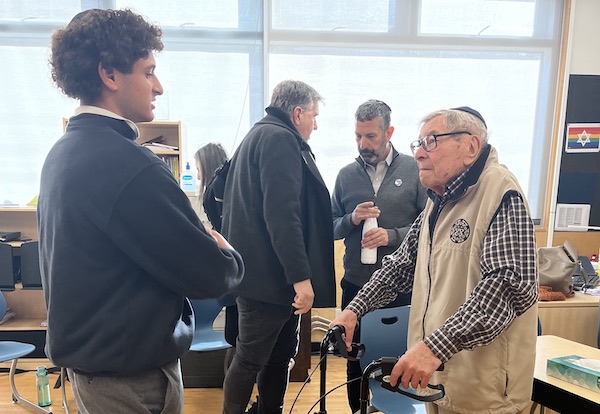
Emerich Klein speaks to a student following his recent talk at King David High School. (photo from KDHS)

For decades, Emerich Klein kept his story of survival during the Holocaust to himself. While raising two children in Vancouver and making a life, he shared nothing of what had happened to him after he, together with his family, was deported to Auschwitz.

After years of cajoling, Klein shared his experiences with Russ Klein, his son, who is principal of King David High School. In 2019, he also sat with interviewer Hodie Kahn and recorded almost four hours of testimony for the Vancouver Holocaust Education Centre.

On Feb. 14, with his son the principal at his side, Emerich Klein spoke of his survival story for the first time to an audience, addressing students in a Holocaust studies class. The students had viewed the recorded testimony in advance of the visit.

Klein was born in Uzhorod, Czechoslovakia, in 1930, and lived with his sister Judith and their parents Isidor and Rose on the site of the electric power plant where Isidor worked. They had a large extended family and Emerich remembers Shabbat dinners at his grandparents’ home, with throngs of cousins. His grandparents, who were very traditional, were in charge of the mikveh and his grandfather was a melamed, a teacher.

Emerich’s early childhood was largely uneventful, except for being taunted and beaten up on his way to and from school by non-Jewish kids. At one point, on the advice of a teacher, he loaded his school bag with rocks and took revenge on his tormentors. When one of the bullies dragged the police to the Kleins’ door urging assault charges, Emerich’s father explained how his son frequently returned from school bloody. The cop apologized and left. The father of the bully beat his own son – not for bullying, it would seem, but for being bested by a Jew.

While older people may have sensed the shifting social climate, for kids like Emerich, things seemed pretty good for a time. By 1941, though, Jewish businesses could operate only with an Aryan partner and so an uncle had to close his small bakery.

When Isidor was conscripted – first into the army and then, when Jews could no longer serve in the military, in a work battalion – the family’s fortunes suffered. His boss at the power plant eventually convinced authorities that he was an irreplaceable employee.

One day, a stranger showed up in town, speaking a language Emerich did not understand. The boy took the man to a rabbi and, after the rabbi shooed Emerich away, the man explained that he had escaped Poland and told the rabbi what was happening to Jews there. The man’s stories of ghettoization, forced starvation and worse was unimaginable to the Jews of Uzhorod.

Under the 1938 Munich Agreement, which British prime minister Neville Chamberlain signed with Hitler to partition Czechoslovakia, Uzhorod was returned to Hungary, to which it had belonged until the First World War. (It is now in Ukraine.) In 1944, the Nazis occupied Hungary, and things got much worse for the Jews living there. When they heard the word “ghetto,” the words of the Polish stranger who had shown up in town returned to them.

Emerich’s grandfather was stopped on the street, beaten up and had his beard cut off. Jews were ordered to report to a cordoned-off area but, because this ghetto was so small, it served mostly as a deportation area. The Kleins remained there only for a couple of days.

They were packed into railway cars, with only room to stand. One big drum served as a potable water supply and another as a toilet. Children were crying, people were moaning.

After several days – Emerich doesn’t know how long – the train stopped. People were banging on the outside of the cars and the doors were flung open. People in striped clothes screamed at them to get out. They had arrived at Auschwitz.

Once they got down off the train, the women and children were separated from the men. The old and sick were yanked across the tracks and packed into big waiting trucks. Rose pushed Emerich to join the men. The boy didn’t want to let go of his mother but she screamed at him to leave. He ran and found his father.

While waiting for the next step in their processing, Emerich saw what he thought were piles of cordwood but he soon realized they were human bodies. The new arrivals were taken to a building for a cold shower, then they were shaved, doused in disinfectant and handed clothing in random sizes.

When an army officer called for metal workers, Isidor volunteered and a fellow prisoner advised Emerich to step forward or risk being separated from his father. Despite his lack of knowledge in the field, Emerich passed himself off as an apprentice. Together, the father and son were separated from the rest of the group and transported out of Auschwitz, on a train again for days, until they arrived in France.

Isidor and Emerich worked at a mine in tolerable conditions, with survival rations for a time, until they were moved again, to a salt mine in Germany. There, they were joined by 1,000 inmates from Poland and Emerich and the others learned the horrors of what was happening further east.

At the salt mine, their job was to break boulders to make gravel and then level out the ground, so concrete could be pored over it. After a time, Emerich was put on burial duty, which was less physically onerous work. A Russian prisoner assured Emerich that the war would soon be over and to keep up his strength. He would move on to factory work, cleaning the floor and cutting aluminum.

In April 1945, the workers were forced on a death march. Planes were flying so low that the prisoners could see the pilots. As the march continued, Isidor insisted he couldn’t go on, but Emerich and two of their friends stuck together and forced the father to keep moving. Eventually, they were loaded onto a train and provided food for the first time in nine days. Then, in the midst of a great commotion, the incarcerated passengers realized that the German army was in full retreat. The guards abandoned the prisoners.

Emerich and his group walked into the nearest town, which was already overrun with freed prisoners. They were put up in a German army base that had been repurposed as a repatriation centre. Tables had been set up for each country and people registered their names and hometowns.

Emerich and Isidor eventually made it back to Uzhorod, but Emerich’s mother Rose and sister Judith never returned. All the extended relatives but two cousins were gone. Emerich spent most of the time crying.

After a few weeks, Emerich left by himself for Prague and registered with the Joint Distribution Committee, after which he was transferred to a displaced persons camp in Germany. He intended to go to Palestine with members of his youth movement, but word came that the British were halting migration.

A friend told him of an opportunity to go to Canada, so they signed up. Six months later, Emerich docked in Halifax and made his way to Toronto, where he stayed for two years. The Jewish community there was highly supportive and Emerich became an apprentice jeweler. Isidor, who in the new world would be known as Robert, and his new wife arrived during this time.

Isidor/Robert had remarried a fellow survivor from Uzhorod, who had a sibling in Chilliwack, B.C., so the family headed to the West Coast. Emerich met his wife, the Vancouver-born Jenny, in a bowling alley during a B’nai B’rith event.

In the King David classroom last month, students asked thoughtful questions and Klein responded. His son told students they were lucky to see the elder Mr. Klein at his most talkative, as getting a sentence from the soft-spoken senior is considered by family members to be an accomplishment.

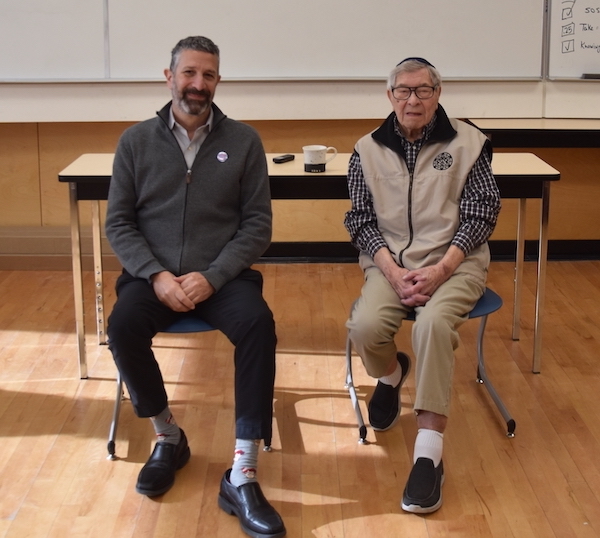
photo Russ Klein, principal of King David High School, and his father, Emerich Klein, who spoke to a KDHS class in February about his experiences during the Holocaust.
Russ Klein, principal of King David High School, and his father, Emerich Klein, who spoke to a KDHS class in February about his experiences during the Holocaust. (photo from KDHS)

A student asked if he ever lost faith that he would survive.

“Yes, definitely,” said Klein. “We lived not from week to week or day to day, but from hour to hour. Life didn’t mean a thing.”

About liberation, he said, “I felt wonderful. I felt that I’d been given a chance to live again, to be human again.”

Asked how his experiences under the Nazis and their collaborators had affected his attitudes toward religion, Klein was blunt.

“It sort of turned me against it,” he said. Nevertheless, he insisted that his two children attend Talmud Torah elementary school. Why?

“To learn about Judaism and to learn about the Holocaust,” he said, turning to his son. “I was not able to talk about it, but you had to know about it. That was the only way that I could get my children to learn about it. They couldn’t learn it through me.”

His decades-long refusal to discuss the past with his children was intended to prevent the next generation from anguish, he said.

“Why should they suffer my pain?” he asked. “That was a terrible thing to think about. Bad enough that I suffered, [why should] they suffer the same thing through me?”

Reflecting on his postwar return to Uzhorod, Klein was again straightforward.

“I went back to see who came back from the family. I spent a month, maybe six weeks there and then I left, never to return,” he said. “It was very difficult. I came up against reality there. Up until then, we did not know what happened to the rest of our family. We were separated and that’s all I knew. I had hopes that everybody was coming back. Nobody came back. So there was no point in me staying there.”

Coming to Canada was wonderful and difficult, he said.

“Wonderful just to get out of Europe – doesn’t matter where,” he said. “I just wanted to get out of that country that was soaked in Jewish blood.” But, he added: “It was difficult – difficult to get used to a new life, a new way of living, a new language, a new country. I was 17 years old. It was very difficult but you make do. You do the best you can. You adjust.”

Settling into life in Vancouver, Klein made family and stability his focus.

“A normal person would try to make a living and get themselves a better position, work your way up in life,” he said. “To me, that was not important. To me, the important thing was family. I concentrated on one thing only. Just to give you an example, all my friends went into business – I did not. They asked me, why don’t you go into business? I said … what happens if it doesn’t go right? These children cannot be hungry. I knew what hunger was. It was so important for me to stay just at a low level but make sure that my family will not go without. That was an effect of what happened to me.”

A student asked why, after all these years, Klein decided to speak.

“Because I was convinced after an awful long time that to be silent is being complicit in what happened,” he said. “You’ve got to talk about it, even if it hurts, you’ve got to talk about it.”

He is concerned by some of the political developments he sees in the world today.

“Most of humanity is very good,” he said. “There are parts of society that are not good. Let’s face it, people can be influenced very easily. If you get a charismatic person, [they] can convince people of almost anything they want.”

Burying sacred books

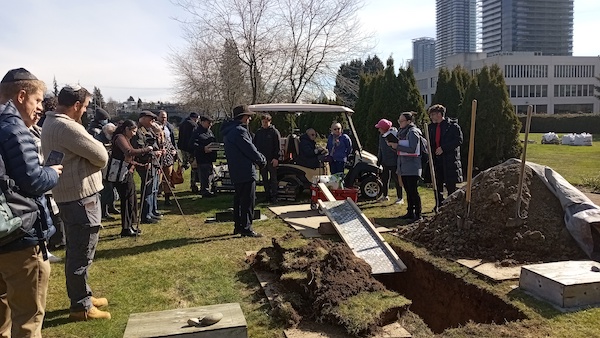
On March 9, community members gathered to bury sacred Jewish texts at Beth Israel Cemetery. (photo by Cynthia Ramsay)

According to Jewish law, no sacred texts and objects are allowed to be thrown out. This includes anything with God’s name printed on it. These texts and objects must be buried in a respectful way,” explained Rabbi Jonathan Infeld of Congregation Beth Israel in an email to the Jewish Independent about the March 9 Genizah Project ceremony at the synagogue’s cemetery. “Since a burial spot is not always convenient, people store their sacred material in a special place called a genizah until they can be buried.”

A few months ago, Infeld received a phone call from Eugene Barsky, a librarian at the University of British Columbia. Barsky was looking for a place to bury a considerable number of sacred books that were beyond repair. Infeld “immediately said yes.”

“But I wanted to do much more than just bury the materials,” the rabbi said. “I asked if he would be interested in a community-wide program, and Eugene also agreed. After that, we sought other interested parties including UBC Jewish studies, Hillel BC, King David High School, Peretz Centre and the Waldman Library.”

Representatives of these organizations were present on March 9, including students from KDHS and UBC. Infeld spoke about how sacred objects and texts not only give Jews a connection to our spiritual existence, but a social connection as well.

“And, no matter what differences we may have as a people, we are brought together within a rubric of study, of prayer, all connected to the written word,” he said. “For us, as a Jewish people, the book is sacred. For us, as a Jewish people, study is a sacred task, a sacred opportunity. And so, it only makes sense that, when we have studied, have brought a book to its conclusion, that’s literally falling apart, we don’t just throw it away, but the book, or the sacred object, has become our friend and become part of us. And so, according to Jewish tradition, we bury it.”

Barsky highlighted one of the many books being buried: a Pentateuch (the Five Books of Moses) published in Furth, Germany, in 1805. “I wish we could preserve these books, but some of them are molding,” he said. “We have a preservation lab at UBC but they reviewed them and some of them just could not be preserved.”

Barsky asked two members of the Vancouver Jewish Folk Choir – Stephen Aberle and Aurel Matte – to sing a couple of songs. The pair led “Hinei Ma Tov,” about how pleasant it is when sisters, brothers, all of us, gather together; and “Al Sh’loshah Devarim,” about the three things on which the world stands (Torah, divine service, acts of love) and by which the world endures (truth, justice, peace).

For UBC student Ellie Sherman, the burial ceremony was particularly meaningful, “as someone who spends every day reading more and more information, paying close attention to authors and narrators, and focusing on crafting assignments with correct references, to give credit where credit is due.”

She said, “The need for the genizah recognizes that the significance of words is beyond two-dimensional figures on a page, that the lessons we learn and the knowledge we gain from our books can be infinite, just as the meaning behind the words.”

Gregg Gardner, associate professor and Diamond Chair in Jewish Law and Ethics at UBC, shared how the name genizah came about. “The ancient rabbis of the first centuries tell a story about a king,” he said. “The king’s name is Munbaz. This king travels to Jerusalem, where there is drought and a famine. To provide relief, Munbaz gives away his fortune to the needy. Munbaz bizbez, Munbaz spends. His brothers confront him and demand an explanation as to why he’s giving away the family fortune…. Munbaz says that he does not bizbez the fortune … but rather he ganaz the fortune, he stores it, he saves it…. Munbaz explains that, by giving your money to charity here on earth, you do not waste your money … you save it in the world to come, in the afterlife.

“The word genizah literally means ‘storing’ and, in doing so, it can denote hiding from view,” he said. “Ancient Jewish traditions going back to the first centuries, the Second Temple period, talk about hiding many things, even the holy vessels from the Jerusalem Temple, and there are traditions in which the word ganaz is associated with storing valuables.”

Gardner said, “We are here at a cemetery, essentially taking these books out of use, laying them to rest, and yet, at the same time, going back thousands of years, the genizah has been a story not only about death, but about Jewish life.”

Richard Menkis, associate professor of medieval and modern Jewish history at UBC, picked up on this last aspect. During the planning for the burial, he said, there was a feeling towards solemnity, even mourning. But, he said, “there was a whole other sensibility that we could be bringing to it.”

He spoke of the Jews of Algeria, who would place items wherever they could around the synagogue and “several weeks later, they would carry them, the books, the other objects, in sacks. They’d escort them to the cemetery and bury them and, on that day, there would be a feast and special hymns for the occasion. There were similar customs in the community in Morocco of Meknes.

“The Sephardic Jews of Jerusalem had a custom of placing sacred objects and texts in the walls of the synagogue and, every three to seven years, would … joyously take them from the synagogues to a special section in one of the cemeteries in Jerusalem.”

The joy would come, said Menkis, from knowing that “the respect and honour that they were giving to these items would bring down upon them a variety of divine segulot, a variety of blessings. For some, it might be, we can call down rain. For others, it might be to prevent a plague.”

Menkis said, “I embrace the Genizah Project as the moral opposite of a horrible feature of modern life – the book burning. While the book burning denigrates ideas and discussion, the genizah shows reverence for ideals and aspirations.”

Those gathered were reminded of this reverence by Rabbi Kylynn Cohen, senior Jewish educator of Hillel at UBC, who led the service by the gravesite. As in the burial of a human body, she said, it is up to us to do the carrying when a person – or, in this case, the books – cannot go forth themselves.

Everyone helped transport the books from the chapel to the gravesite. Maiya Letourneau, head librarian of the Waldman Library, held up a book with gold embossing, another with lace embroidery. She said, “When we’re thinking about the memories that books create and the importance that they have in our lives, as a librarian, it can be really, really hard to take a book out of the collection, but it’s part of maintaining a healthy library, it’s part of making sure the library is useful for years to come, and it’s just an important part of what we do.”

After those gathered recited the Kaddish d’Rabbanan, the prayer that is said whenever a minyan of Jews finishes studying, Rabbi Stephen Berger, head of Judaic studies at KDHS, spoke about the class he brought to the ceremony, which has been studying Malachi, the Book of Kings. “It’s not just that we study to know,” he said. “The studying itself, opening the book and learning the book is a religious act in Judaism. And that’s why we treat it so carefully and so succinctly and sanctify it…. All these acts [serve to remind us] this is who we are, and we should live up to the title of the People of the Book.”

BI Rabbi Adam Stein concluded the ceremony with Eitz Chayim Hi, which most congregations sing when putting the Torah scrolls back in the ark at the end of a Torah service. It describes the Torah as a tree of life.

On being an Upstander

Pat Johnson, founder of Upstanders Canada. (photo from Upstanders Canada)

Pat Johnson, the founder of Upstanders Canada, addressed the importance of standing up to antisemitism during a March 5 Zoom lecture organized by Kolot Mayim Reform Temple in Victoria. Upstanders mobilizes non-Jewish Canadians to confront antisemitism and anti-Zionism.

Johnson writes for many media outlets, including the Jewish Independent, where he is also on the editorial board. Over the years, he has worked for many Jewish organizations. He was quick to stress that, as a non-Jew, he is not trying to tell Jews what is antisemitism, but rather share his experiences fighting and studying it.

Due to the complexity of the ways in which antisemitism and anti-Zionism may overlap, Johnson defined anti-Zionism – as opposition to the existence of a Jewish state, and not as criticism of Israel – and then moved on to his topic.

Of primary concern in recent years, he said, is the notion of non-Jews laying claim to the definition of antisemitism, thereby effectively telling Jews whether or not their experiences with antisemitism are valid.

“Jewish people are treated differently than every other group, even by people who self-define as anti-racist, and I argue that this is proof itself of a problem,” said Johnson.

He maintains that, on such issues as the definition of antisemitism as put forward by the International Holocaust Remembrance Alliance (IHRA), some people “are willing to devote more resources to fighting over the definition of antisemitism than they are to fighting against antisemitism.”

As a result, he said, there is a more contentious discussion around antisemitism than any other form of racism. Antisemitism is different from other forms of bigotry because Jews can be of any race, colour or identity; therefore, they do not conveniently fall into any racial categories.

“Fighting discrimination against Jewish people has to some extent fallen through the cracks, in part because many people simply do not understand it, cannot see it, deny it or simply wish it away,” said Johnson. “We are dealing overwhelmingly with unconscious biases. People do not even realize they carry them. So, when we call someone out for a statement that appears to us to be premised on antisemitic stereotypes, it just doesn’t resonate.”

Johnson then discussed how antisemitism is not a problem of Jewish making. Rather, it is a product of the antisemitic imagination, a caricature. “In a weird way, antisemitism has nothing to do with Jews, except that Jews are the collateral damage in a corrupt world poisoned by antisemitic ideas,” he said.

Antisemitism comes in myriad forms and is not simply a matter of people hating Jews, he said. “If we think it is, we will never overcome it.”

Johnson provided numerous examples throughout the past several centuries of Jews serving as scapegoats, as well as more recent examples, including the denial in various circles of hate crimes committed against Jews, the abundance of anti-Jewish hostility in Arab media and the inevitability in nearly all conspiracy theories that Jews are lurking somewhere in the background as the masterminds.

Johnson spoke about the manifestation of antisemitism in progressive movements, making it clear that his criticisms were not being made from a right-wing standpoint. “These are my people and I have seen it up close,” he said of the left.

Johnson said discrimination is often the result of economic circumstances. Jews, from a Marxist perspective, are seen as a privileged economic class and not as a disadvantaged minority. Therefore, if taken a step further, lowering the Jewish status a peg can be translated, by some, not as prejudice but the advancement of equality.

“It is a racist economic critique, but I am absolutely certain that this is a core underpinning of antisemitism and unconscious bias about Jews that we see on the left,” Johnson said.

Right-wing antisemitism tends to be more overt and fundamentally racial and so it is more easily identifiable, he said. Left-wing antisemitism, in Johnson’s experience, is different.

“Even Jeremy Corbyn, the former British Labour Party leader, whom I would argue is a bare-faced, dyed-in-the-wool antisemite, maintained enough plausible deniability that perhaps he himself believed he was free from antisemitic ideas. Antisemites on the right don’t bother deluding themselves about where they stand,” he said.

To Johnson, the left’s ambivalence to antisemitism is all the more dispiriting because it ignores the contributions Jews have made in building progressive movements.

“If most leftists are not engaged in antisemitism, they are not engaged in fighting it, either,” Johnson said. “Betrayal hurts most because it does not come from your enemies. To admit that antisemitism has gotten worse during our lifetimes offends our progressive values.”

Johnson believes there may be a long struggle ahead in confronting antisemitism, though he did mention lessons he has learned in this battle. These include being intellectually prepared with an argument before problematic situations arise, so as not to be overwhelmed by emotion in the moment, and not assuming ill will when ignorance may be more likely. He noted that, while calling out antisemites is crucial, calling in those who unknowingly say or do something antisemitic is as important.

For more information about Upstanders Canada, visit upstanderscanada.com.

Sam Margolis has written for the Globe and Mail, the National Post, UPI and MSNBC.