Skip to content
  • Home
  • Subscribe / donate
  • Events calendar
  • News
    • Local
    • National
    • Israel
    • World
    • עניין בחדשות
      A roundup of news in Canada and further afield, in Hebrew.
  • Opinion
    • From the JI
    • Op-Ed
  • Arts & Culture
    • Performing Arts
    • Music
    • Books
    • Visual Arts
    • TV & Film
  • Life
    • Celebrating the Holidays
    • Travel
    • The Daily Snooze
      Cartoons by Jacob Samuel
    • Mystery Photo
      Help the JI and JMABC fill in the gaps in our archives.
  • Community Links
    • Organizations, Etc.
    • Other News Sources & Blogs
    • Business Directory
  • FAQ
  • JI Chai Celebration
  • JI@88! video

Recent Posts

  • המלחמות של נתניהו וטראמפ
  • Zionism wins big in Vegas
  • Different but connected
  • Survival not passive
  • Musical celebration of Israel
  • Shoppe celebrates 25 years
  • Human “book” event
  • Reclaiming Jewish stories
  • Bema presents Perseverance
  • CSS honours Bellas z”l
  • Sheba Promise here May 7
  • Reflections from Be’eri
  • New law a desecration
  • Resilient joy in tough times
  • Rescue dog brings joy
  • Art chosen for new museum
  • Reminder of hope, resilience
  • The national food of Israel?
  • Story of Israel’s north
  • Sheltering in train stations
  • Teach critical thinking
  • Learning to bridge divides
  • Supporting Iranian community
  • Art dismantles systems
  • Beth Tikvah celebrates 50th
  • What is Jewish music?
  • Celebrate joy of music
  • Women share experiences 
  • Raising funds for Survivors
  • Call for digital literacy
  • The hidden hand of hate
  • Tarot as spiritual ritual
  • Students create fancy meal
  • Encouraging young voices
  • Rose’s Angels delivers
  • Living life to its fullest

Archives

Follow @JewishIndie
image - The CJN - Visit Us Banner - 300x600 - 101625

Tag: protests

Supporting Iranian community

Supporting Iranian community

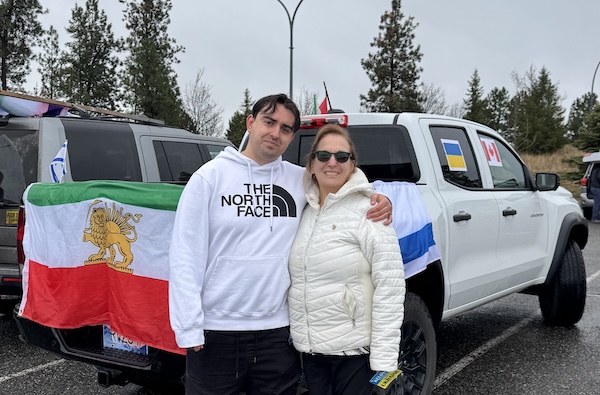
Harley Kushmier and his mother, Samantha Kushmier, at the March 8 Car Rally for Iranian Voices. (photo from the Kushmiers)

Members of the Kelowna Jewish community participated in the Car Rally for Iranian Voices on March 8.

photo - Harley Kushmier at the March 1 weekly rally in Kelowna in support of those protesting the Iranian regime
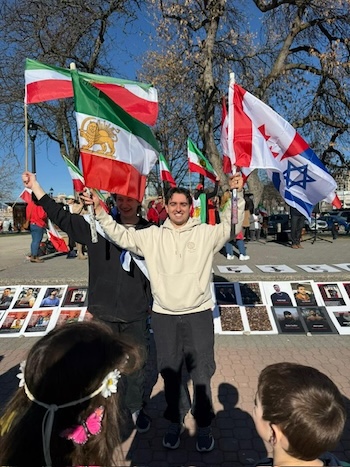
Harley Kushmier at the March 1 weekly rally in Kelowna in support of those protesting the Iranian regime. (photo from the Kushmiers)

Every Sunday in downtown Kelowna a protest is held in support of loved ones lost in the Shir-o-Khorshid (Lion and Sun) Revolution – the ongoing anti-regime protests in Iran – and of those who remain detained in Iran, subjected to unspeakable hardship. The protests ask that Crown Prince Reza Pahlavi be recognized as transitional leader of the country.

Rally organizers thanked Israel for its support and help, and asked the local Jewish community to attend the car rally. Organizers also reached out to the local Ukrainian community to join. 

Samantha Kushmier and son Harley Kushmier are part of the Okanagan Jewish community.

Format ImagePosted on March 27, 2026March 26, 2026Author Samantha Kushmier and Harley KushmierCategories LocalTags Iran war, Okanagan, protests, rallies, solidarity

The hidden hand of hate

Warren Kinsella has spent much of his career studying the darker corners of political life. A lawyer by training, author of about a dozen books and a longtime political strategist, he has written about Holocaust denial, far-right extremism and organized hate movements. 

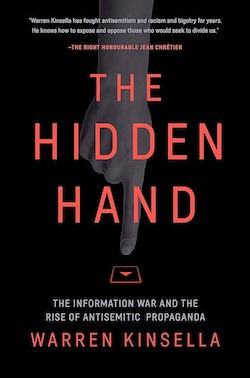
In his just-released book, The Hidden Hand: The Information War and the Rise of Antisemitic Propaganda, he follows these threads down the unseemly rabbit hole that has perplexed many observers since Oct. 7, 2023: the sudden and superficially spontaneous eruption of anti-Israel activism across Western campuses and cities in the aftermath of the horrendous atrocities of that day.

Kinsella’s thesis is straightforward and, to most readers of these pages, probably neither controversial nor surprising. The worldwide surge in anti-Israel protests, he argues, is not organic. Rather, it reflects a long-developed propaganda infrastructure – the “hidden hand” – involving the Iranian regime, Hamas, Hezbollah and a constellation of worldwide activist organizations that have spent years building networks capable of shaping Western public opinion.

Hamas, Kinsella argues, fights two wars simultaneously. One is the familiar military campaign conducted with rockets, bullets and suicide attacks. The other is an information war, waged through imagery, messaging and propaganda. Israel may well win the first war, he suggests, but the second – the battle for global public opinion – is far less certain.

The book opens with the immediate aftermath of the Hamas attacks of Oct. 7. While Israelis were still grappling with the scale of the massacre, demonstrations against Israel began sweeping Western campuses and cities. In the United States, a “national student walkout” took place within days of Oct. 7. Activists insisted these events were spontaneous expressions of outrage over the war in Gaza – but many of them took place before there was even a war in Gaza.

Many of the protests, Kinsella writes, appeared to have been organized rapidly with shared messaging, identical slogans and coordinated materials. Student groups that claimed to be independent grassroots organizations were often connected to larger activist networks. Manuals, posters and protest toolkits circulated almost immediately.

image - The Hidden Hand book coverThis pattern is central to the book’s argument. What looks like decentralized activism, Kinsella contends, often reveals indisputable signs of coordination.

One of the more striking anecdotes in the book involves Gary Wexler, a California professor who worked with the Ford Foundation on programs in Israel and Palestine during the Oslo peace process. Wexler recalls being warned by a leading Palestinian civil society coordinator that pro-Palestinian networks would one day rival – and surpass – the vaunted Jewish advocacy organizations in their ability to mobilize globally. Funding, the activist reportedly told him, would come from European institutions, Arab governments and wealthy donors.

Years later, Wexler began to see the prediction materialize in movements such as the push for boycott, divestment and sanctions (BDS), Israel Apartheid Week and international flotillas challenging Israel’s blockade of Gaza.

Kinsella stops short of claiming a single command centre orchestrating these movements. Instead, he suggests a looser ecosystem in which state actors, activist organizations and sympathetic nongovernmental organizations amplify one another’s messaging.

If there is a common theme running through the book, it is the power of narrative.

According to Kinsella, Hamas and its allies have been remarkably successful at shaping the language through which the conflict is discussed in the West. Terms such as “colonialism,” “apartheid” and “genocide” now dominate activist discourse, particularly among younger audiences. These ideas circulate widely on social media platforms, where emotionally charged content spreads faster than verified information.

The book devotes considerable attention to misinformation and the speed at which it travels. One example Kinsella cites is the widely circulated claim that Israel had bombed the al-Ahli Arab Hospital in Gaza, killing hundreds of civilians. The allegation ricocheted around the world within hours, sparking protests and diplomatic condemnations from the highest levels. Later evidence indicated the explosion was caused by a misfired rocket from Palestinian Islamic Jihad – and that the casualty figures had been exaggerated exponentially. The correction, of course, traveled neither as far nor as fast as the original claim.

Social media algorithms amplify this dynamic, Kinsella argues, pushing users toward increasingly extreme content. The phenomenon is not unique to Middle East politics. The same mechanisms drive conspiracy theories about vaccines, elections and countless other subjects. But, in the case of Israel, he suggests, the misinformation taps into something older and deeper: an antisemitic proclivity to believe the worst and most fantastical allegations about Jews.

In the contemporary context, antisemitic narratives often blend with modern ideological frameworks. In activist discourse, Jews are sometimes recast as embodiments of colonialism or “whiteness,” placing them on the oppressor side of social justice frameworks. The result, Kinsella suggests, is a rhetorical environment in which hostility toward Israel can slide easily into hostility toward Jews.

Polling data cited in the book underscores the generational divide in attitudes toward the conflict. Surveys in North America and Europe have found large numbers of younger respondents expressing sympathy for Hamas or believing that the 10/7 attacks were justified. Other polls show significant numbers of young people convinced that Israel is committing genocide. Such findings shocked even the pollsters who conducted them.

Kinsella argues that universities have played a significant role in shaping these attitudes. For decades, he writes, academic discourse has increasingly framed Israel through the lens of “settler-colonialism.” At the same time, foreign governments – particularly that of Qatar – have donated billions of dollars to Western universities.

The media also come under scrutiny. Western news organizations, he argues, routinely rely on casualty figures supplied by the Hamas-controlled Gaza Health Ministry, numbers that critical analysis suggests are inflated, particularly in terms of non-combatant casualties. Journalists reporting on what’s happening in Gaza frequently depend on local stringers who operate either directly under Hamas authority or in a context where anything but pro-Hamas reporting is existentially dangerous. This situation effectively grants terrorist propaganda the imprimatur of legitimate media platforms.

Because Kinsella is Canadian, The Hidden Hand is rife with Canadian content. This will be interesting to Canadian readers – and a meaningful contribution to the sad litany of incidents in this country – but it is additionally relevant because Canada has been among the worst places for these sorts of offences. Last year, an Israeli government report analyzing the problem worldwide called Canada the “champion of antisemitism.” So, while Canada may not be a major player in many of the world’s foremost competitions or concerns, when it comes to anti-Jewish discrimination, we regrettably find ourselves owning the podium. That makes what happens here – and how (or whether) we confront it – especially relevant.

The thesis of Kinsella’s book, of course, is that these problems know no boundaries (figuratively or literally).

Much of the evidence he presents is circumstantial rather than definitive. He has found no single document or intercepted communication that proves the existence of a centralized propaganda command. The accumulation of connections, coincidences and patterns is what gives the book its force, but Kinsella does not provide the proverbial smoking gun. This is partly understandable because, if there were incontrovertible proof linking ostensibly legal, legitimate activist groups in Canada and around the world with known terrorist entities, surely Western governments would have acted by now.

Ah, but there’s the rub. The very fact that someone like Kinsella, without, say, top-level security clearance, could amass such a damning catalogue of evidence begs the question of just how much effort governments and security services are devoting to this problem. That so many deeply problematic and potentially illegal cases in Canada, including here in British Columbia, have not resulted in charges or even, seemingly, any serious investigation, makes Kinsella’s book especially valuable. If there is this much smoke, where are the governmental and security agencies that are supposed to be the firefighters?

Whether one accepts all of Kinsella’s conclusions or not, The Hidden Hand forces readers to confront the possibility that the global conversation about Israel is shaped by forces far more organized and odious than many seem willing to believe.

If Hamas fights both with bombs and with words, as Kinsella argues, then the information battlefield may prove just as consequential as the physical one. And, on that battlefield, the outcome is still very much in doubt. 

Posted on March 27, 2026March 26, 2026Author Pat JohnsonCategories BooksTags antisemitism, books, government, media, propaganda, protests, rallies, The Hidden Hand, Warren Kinsella
Supporting the Iranian people

Supporting the Iranian people

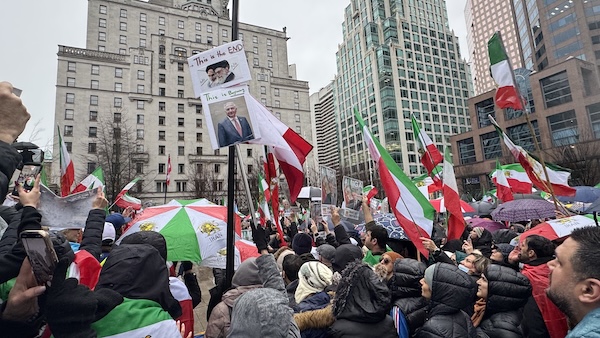
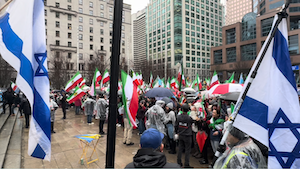
A huge demonstration filled the blocks around the Vancouver Art Gallery last weekend, part of a weekly presence of Persian and other Vancouverites calling for regime change and democracy for Iran. (photo by Richard K. Lowy)

As the street protests in Iran grow – and the death toll caused by the regime’s police and military crackdown increases – so do solidarity rallies worldwide.

A huge demonstration consumed the blocks around the Vancouver Art Gallery last weekend, part of a weekly presence of Persian and other Vancouverites calling for regime change and democracy for Iran. 

The global movement against the Islamic regime has coalesced around Reza Pahlavi, son of the late shah who was deposed in the 1979 revolution. Posters of the crown prince fluttered among hundreds of pre-revolutionary Iranian flags amid chants of “javid shah,” long live the shah.  

“I am Stephen and I am Jewish,” said one of the speakers at the rally a week earlier, on Jan. 10, who preferred not to use his surname. 

“I have attended almost all the Iranian rallies in recent years for one reason and one reason only: to tell the Iranian people loudly and clearly you are not alone,” he said. ”Anyone who knows what the Iranian people have suffered over the past 47 years can empathize, especially now.” 

He emphasized the ancient and contemporary relationship between Jewish and Persian peoples.

“When Israel was attacked on Oct. 7, 2023, the Iranian people came out in bad weather, in the rain and the cold and the snow, to march side by side with Jews all over the world. Why? Because they understand our pain, because it is their pain,” he said. “It is the collective pain of peoples who want what everyone wants: to live in peace and unmolested by those who want to control the world, who tell you what to think, what to wear, what to do, what to believe in.

photo - Several people at the rally carried an Israeli flag
Several people at the rally carried an Israeli flag. (photo by Richard K. Lowy)

“Persia was the first empire in the world, under Cyrus the Great, that brought people together and did not, did not oppress them,” he continued. “This is part of the Iranian historical identity. You can have all the Islamic revolutions you want. You will never erase this historical identity, with its great, great culture.”

He commended Iranian Canadians for their contributions to Canada and their devotion to democracy in their homeland.

“You here are Iranians who know what I talk about because you have been living in freedom in Canada and look how you’ve flourished. When people speak of Canadian Iranians, they do so with respect for a people that knows how to work hard and how to contribute to society, to give back, to become productive citizens of a free and open society,” he said. “Is that so much to ask for your brothers and sisters, mothers and fathers, sons and daughters in Iran?  And it is a blessing that, when Iran is finally free, many of you will return to Iran to help rebuild.”

He called Pahlavi “a man who understands the world.”

“He knows the Iranian people inside Iran and outside Iran. Anyone who questions his commitment to his people can read about how he has worked tirelessly throughout his life to pursue a free Iran and return independence to Iranian people.”

Hundreds are dying in the name of freedom, Stephen said. 

“The crackdown is brutal,” he said. “Many of us have seen the image of the older white-haired Iranian woman on the streets of Iran, bleeding from the mouth, her fist raised in defiance: ‘I am not afraid. I am not afraid. I have been dead for 47 years.’”

He commended US President Donald Trump and Israeli Prime Minister Binyamin Netanyahu for forcefully supporting the Iranian protests, and called for the leaders of Canada and other Western countries to express their support as forcefully.

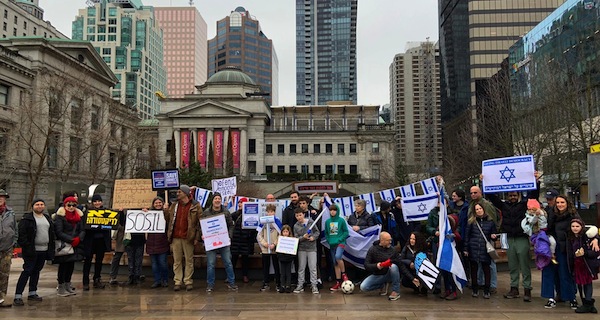
David Zacks was one of several people at the rally carrying an Israeli flag. The response, he said, was  “a hundred percent positive.” People were asking to take photos with him and thanking him for his presence. 

“Iranians and Jews have been great friends for thousands of years,” said Zacks. “Everybody I talk to says, once the regime falls, they’ll be great friends again.”

Format ImagePosted on January 23, 2026January 21, 2026Author Pat JohnsonCategories LocalTags democracy, Iran, politics, protests, rallies
Protests, picketing alarm Jews

Protests, picketing alarm Jews

Screenshot of Nelson City Council’s Oct. 22, 2023, meeting. Left to right, Topaz Zafrir, Yael Finer and Judy Banfield of the Kootenay Jewish Community Association present their concerns about the rise in anti-Israel and antisemitic events to the council.

Last October, as tensions in Canada were mounting over the Israel-Hamas war, three members of the Kootenay Jewish Community Association in Nelson paid a visit to the city council meeting to convey a request: that the council refrain from taking sides when it came to the emotionally charged protest rally that had taken place the day before. Nelson residents Judy Banfield, Yael Finer and Topaz Zafrir said they were also there to ask the police to continue its protection of Jewish community events, as it had in previous years. “We are very grateful for that,” Banfield said. “Right now, our community is frightened.” 

The week before the meeting, Hamas had called to its supporters for a “day of rage.” The response was swift in Nelson, a college town that has seen an escalation of pro-Palestinian sentiment and anti-Israel demonstrations in recent years. About a hundred people turned out to hear speakers who gave accounts of what they believed was happening in Gaza. According to Kootenay Jewish community leader Yael Finer, the presentations included assertions about Israel’s role in Gaza that had already been debunked. The purpose of the rally, she felt, was to incite antisemitism and anti-Israel sentiment in the city. Finer, an Israeli-Canadian who moved to Nelson in 2016, told the council that one of the speakers also made a pitch on behalf of Hamas.

“A final speaker said, ‘Don’t hate Hamas. They’re our brothers, our sons, our fathers,’” Finer recounted.

“The event was supposed to be about peace and education,” she said. “I actually reached out to the organizer, asking to speak at the event as one of the Israeli or Jewish [residents].”

Finer told the council that she empathizes with the Palestinian people and shares concern over the current situation in Gaza. She had gone to the rally to learn. She said her request to speak at the event was denied. 

Finer added that one of the speakers was a city council member, “creating a perception of legitimacy” for the demonstration. The mayor later released a statement clarifying that only the mayor’s office represented the views of the city government, including at public events.

Not a new phenomenon

Banfield, who is a former Selkirk College instructor and has lived in Nelson since 1990, said antisemitism isn’t a new phenomenon in the city. She said the planned speech in 2013 of Greta Berlin, an accused antisemite, put the community on edge. Eventually, the Nelson library rescinded the offer for her to speak, but she was later offered a venue at the United Church. Although the gathering remained peaceful, Banfield said anti-Israel and antisemitic behaviour have only grown more evident.

“I have been in Nelson a long time and we’ve always been very open that we’re here and inviting,” she told the Jewish Independent about the local Jewish community. She said that, until recently, religious celebrations used to be open to the Nelson public. However, a couple of years ago, demonstrators picketed a Jewish holiday celebration.

“People were picketing us, basically as being Jews, being responsible for what is going on in the Middle East,” said Banfield. Since then, she said, the community has had to ask for police protection at religious and other community events and to conceal their locations from the public. “We do not feel safe gathering together in an announced venue,” she told the Nelson council.

Last November, demonstrators held another rally, this time calling on the city to formally advocate for a ceasefire. According to several attendees, there were also calls for boycotting local businesses that were assumed or known to do business in or with Israel.

Jeff Shecter, another long-time resident and one of the Jewish community’s first leaders, said even more people turned out for that rally. He said the protests and “river to the sea” chants have unnerved the Israeli members of the community.  “[They] were more shocked than the rest of us who were maybe used to it,” Shecter observed. While he said he is not afraid, “to have a demonstration supposedly in support of Palestine without anyone, not a single soul, denouncing what happened on Oct. 7 was a travesty.”

Zafrir, one Nelson’s most recent arrivals from Israel, told the council that the community isn’t trying to stifle anyone’s voice. “We’re not asking you to take sides,” she said. “The Palestinians and whoever supports them have the right to protest, as we have to do so, and still feel safe in our community. Any person in Nelson should feel safe, despite disagreement or place of origin.” 

On Dec. 5, acknowledging that it had received numerous calls for action, the city issued a formal letter “calling for peace in Gaza” and appealing for a “cessation of hostilities from all involved parties.” While the information shared among council members briefly mentioned the Oct. 7 attack by Hamas, the letter that was disseminated to the public did not. Nor did it mention the death toll from the terror attack or that more than 240 people had been abducted by Hamas and most were still missing.

Banfield said she is sympathetic of the pressure that the city council is under. “I mean, they did end up passing a resolution promoting a ceasefire. And I know there was a lot of discussion about it on council and they made it as lukewarm as possible,” she said. “And I guess at this point, the biggest thing for us is that they have given us protection.”

Asked whether she felt the city council understands the Jewish community’s concerns about safety at this time, Finer shook her head. “No,” she said, adding that she had hoped others would understand that anti-Israel protests and picketing of Jewish sites is alarming. “[Even] though there was no direct threat to the Jewish people in the town, it was implied. And that makes me feel terrified,” Finer told the council.

Still, Finer hasn’t given up hope that things could change in Nelson. As the new leader of the Kootenay Jewish Community Association, she’s already thinking about ways to bridge differences and enhance dialogue with those who don’t know, or don’t understand, Nelson’s small Jewish community. 

Jan Lee is an award-winning editorial writer whose articles and op-eds have been published in B’nai B’rith Magazine, Voices of Conservative and Masorti Judaism and Baltimore Jewish Times, as well as a number of business, environmental and travel publications. Her blog can be found at multiculturaljew.polestarpassages.com.

Format ImagePosted on January 26, 2024January 24, 2024Author Jan LeeCategories LocalTags anti-Israel, antisemitism, British Columbia, city council, Nelson, Oct. 7, protests
Keep Israel Jewish and democratic

Keep Israel Jewish and democratic

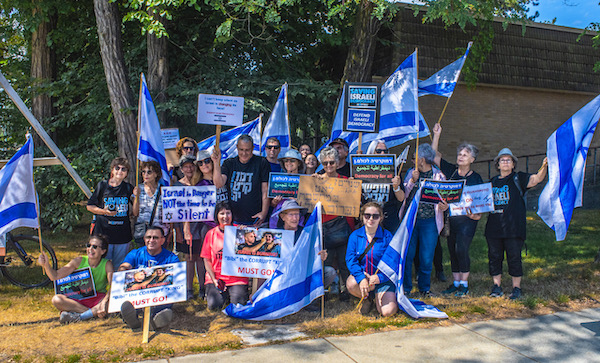
UnXeptable Vancouver has been rallying for Israeli democracy for 28 weeks. Here they are on 41st Avenue near Oak Street. (photo from UnXeptable Vancouver)

It has been many months since we first wrote to the Jewish Independent with our plea to voice our concern for democracy in Israel.

On Jan. 17, when the new government came to power, we saw the writing on the wall: the end of Israel as was envisioned in its Declaration of Independence – that Israel “will uphold the full social and political equality of all its citizens, without distinction of race, creed or sex; will guarantee full freedom of conscience, worship, education and culture; will safeguard the sanctity and inviolability of the shrines and holy places of all religions; and will dedicate itself to the principles of the Charter of the United Nations” – meaning Jewish and democratic.

Hundreds of thousands of Israelis have been going to the street for 31 weeks, holding flags and demanding democratia, democracy. And we have been echoing this outcry in Vancouver for 28 weeks – we joined 64 other cities around the world, as part of UnXeptable.

You might have seen us at Robson Square or, lately, around 41st Avenue and Oak Street. As we gather for our weekly rallies, holding Israeli flags, we try to hold onto the fabric of the Israel that we know and love. We try to hold onto one another in this ongoing rollercoaster, and we end each rally with Hatikvah (The Hope). We hope that Israel’s forces of liberty, freedom and diversity will overcome the agenda of this government – a government that is working towards its own personal interests rather than the good of the Israeli people.

We are fully aware of what happens when good people are silent, as bad things are happening. We cannot be silent as we see Israeli democracy crushed in front of our eyes. Dictatorship, orchestrated by a government that has lost its legitimacy, is turning out to be the biggest existential danger to our country.

We fear for Israel. We fear a civil war, as the rift and hatred that was stoked by the prime minister is growing. We fear for the security of Israel and its ability to defend itself, as soldiers no longer feel that they can commit to a government that does not adhere to the basic agreement, based on the accountability of the government to the judicial system.

The Knesset’s passing of the clause limiting the Supreme Court’s power to rule on the “reasonableness” of government decisions was a fatal blow to Israeli democracy. This clause provides the temporary majority of 64 members of the parliament (out of 120) the ability to legislate any unreasonable law. The government has more than 200 laws in its queue as the beginning of sweeping changes that will make Israel unrecognizable to us, or anybody that has any reference to Israel.

Day after day, things are getting darker for Israeli democracy. We fear that a constitutional crisis is looming. In the past week, the prime minister of Israel, Binyamin Netanyahu, when approached, would not guarantee to the Israeli people that he would obey the ruling of the court if this law were to be struck down.

What illuminates the darkness is the rising of the Israeli liberal forces, protesting and reviving the spirit that brought about the “Israeli magic” – Israel’s economic, political, cultural and scientific rise. Their nonviolent, spirited and creative protests, week after week, are the engine that drives the locomotive of hope. It carries the young and the elderly, Sephardim, Ashkenazim, religious and secular people to resist, sometimes facing the violent response of police acting under government orders. Our group seeks to resonate this protest and, at the same time, provide support to our families and friends in Israel.

After many efforts, the Jewish Federation of Greater Vancouver agreed to set up a meeting between chief executive officer Ezra Shanken and Nico Slobinsky of the Centre for Israel and Jewish Affairs and members of our group, UnXeptable, plus a limited number of people of the community at large. Our members addressed the meeting, illuminating different concerns we all share, as Israel is facing these contentious times. The meeting took place on July 24, just two days before Tisha b’Av, and we could hear the wings of history. We reiterated our two main requests:

  1. A town hall meeting, open to the whole community, not limited by the size of the room, with the objective of clearly bringing forth the complex issues Israel is facing.
  2. A clear and public statement from the Jewish Federation of Greater Vancouver to the community that outlines where they stand, as our leaders, on the judicial overhaul.

If not for the amazing protest movement, Israel would already be a dictatorship, a government in which a small group possesses absolute power without effective constitutional limitations.

UnXeptable voices Israel’s cry for democracy all over the world. Recently, the Philadelphia UnXeptable group, through its continued protests, succeeded in getting billionaire Arthur Dantchik – a main contributor to the Kohelet Policy Forum – to withdraw his donations to the organization, one of the designers of the judicial coup in Israel.

At the moment, 64 members of the Knesset are derailing Israel from being a strong country, of law and order, with a strong economy and a strong army, to being a dark, weak country – economically, militarily, internationally – ruled by a prime minister indicted on three charges, an MK convicted of bribery, Haredim trying to legitimize their refusal to serve in the army and, last but not least, religious zealots seeking to legitimize the occupation and to govern Israel by religious law. There have been warnings from all sectors, including the previous head of Israel’s General Security Service and Israel Defence Forces, banking professionals, the International Monetary Fund and many heads of state.

We believe that the Federation, based on its support of human rights and Jewish values, should take a stand supporting the protesters in Israel and the values they are trying to protect, helping us save the national homeland of the Jewish people, which was established, after thousands of years in exile, with a vision to be Jewish and democratic. In historian and philosopher Yuval Harari’s words: “either a messianic dictatorship will rise or a democracy for all [will be established]. It is in our hands.”

We call for our local leaders to stop sitting on the fence. Come to Israel’s defence to prevent it from becoming a messianic, poor state that discriminates against minorities. Help us protect and keep Israel Jewish and democratic as per the Israeli Declaration of Independence.

– The UnXeptable Vancouver team (Rina Vizer, Dalite Har Toov,
David Berson, Edna Leyland, Ornit and Ron Haber,
Noga and Gideon Levit, and Daphna Kedem)

Format ImagePosted on August 18, 2023August 17, 2023Author UnXeptable VancouverCategories LocalTags Binyamin Netanyahu, democracy, Israel, judicial reforms, protests, rallies

תוכנית הנשיא הרצוג

יושב הראש של הפדרציה היהודית של אזור מטרו ונקובר, עזרא שנקן, קורא לממשלת ישראל וראשי האופוזיציה, לקבל את מתווה הנשיא, יצחק הרצוג, לאור המשבר החמור הפוקד את ישראל בחודשיים האחרונים. זאת, על רקע החלטת ממשלת הימין של בנימין נתניהו, להחיל רפורמה משמעותית על מערכת המשפט בישראל, שתאפשר לכנסת להיות מעל בית המשפט העליון. רבים בישראל אמינים כי כל הרפורמה תכליתה אחת – לשחרר את נתניהו מכתבי הדין העומדים נגדו בבית המשפט, כך שיוכל להמשיך ולשלוט במדינה עוד שנים רבות

שנקן מציין כי הוא כמו רבים אחרים בקהילה מודאג ממה שמתרחש בישראל בעת הזו. בניסיון לאחד את הקרעים בעם ולהגיע להבנות בישראל, ארגון הגג של כל הפדרציות היהודיות של צפון אמריקה שלח בחודש שעבר מכתב אל ראש הממשלה, בנימין נתניהו, וראש האופוזיציה יאיר לפיד, לנהל משא ומתן בין הצדדים להגיע לפשרה – על סמך הצעות הנשיא הרצוג. במכתב נאמר עוד: “עקבנו מקרוב אחר הדיון החריף שהולך וגובר סביב הצעות הקואליציה הממשלתית, לערוך שינויים מהותיים ביחסים בין הכנסת ובית המשפט העליון. עקבנו במיוחד אחרי ההצעה לאפשר לכנסת לבטל החלטות של בית המשפט העליון (“פסקת ההתגברות”) ברוב קולות. אנו קוראים לכם לאמץ את ההצעות  שהציע הנשיא, יצחק הרצוג, לקביעת אפיק לבחינה ופתרון של הסוגיות שהזכרנו. לא משנה כיצד יפתרו סוגיות אלו, תהליך זה יבטיח שדעותיהם של כל בעלי העניין ישקלו במלואן. אנו קוראים לכם להבהיר שאין די ברוב של שישים ואחד של מצביעים בכנסת, כדי לבטל החלטת של בית המשפט העליון. מהות הדמוקרטיה היא מצד אחד הכרה בשלטון הרוב, אך פירושה גם הגנה על זכויות המיעוט. אנו מכירים בכך שכל מערכת האיזונים והבלמים תהיה שונה מאלה שבמדינות שלנו, אך לשינוי כה דרמטי במערכת הממשל הישראלית, יהיו השלכות מרחיקות לכת בצפון אמריקה, הן בתוך הקהילה היהודית והן מחוצה לה”

שנקן מבקש להדגיש שרק באמצעות הידברות בין הצדדים אפשר להגיע לפתרון הרצוי לכולם. לדבריו הפדרציה היהודית של אזור מטרו ונקובר, לא מביעה עמדת תמיכה בצד זה או אחר, והיא מאפשרת לשלל הדעות והגוונים השונים להשמיע את דעתם בנושא. “אנו לא ננקוט עמדה ספציפית בנושא ולכן גם לא נשתתף בהפגנות של חברי הקהילה היהודית בוונקובר, נגד הרפורמה של ממשלת נתניהו. לכל אחד יש זכות להביע את עמדותיו באופן חופשי. אם זאת כפי שאתה יכול לראות במכתב לראש הממשלה, בנימין נתניהו וראש האופוזיציה יאיר לפיד, אנו מודאגים מאוד מהיבטי הרפורמה החדשה”

קהילת היהודים המקומית מקיימת מדי יום ראשון בחודשים האחרונים הפגנת הזדהות עם אלה שרוצים לשמור על הדמוקרטיה בישראל, בניגוד לעמדת הקואליציה שרוצה כאמור לבצע רפורמה מרחיקת לכת במערכת המשפט, תוך הענקת עדיפות לכנסת על בית המשפט העליון. הפגנות נערכות בכיכר רובסון בדאון טאון (בצמוד לוונקובר ארט גאלרי) ומעטים מקרב הקהילה מגיעים לאירועים, בין עשרה לשלושים איש בסך הכל. זה אולי מתאים לפרופיל של אלה שגרים במערב צפון אמריקה לעומת אלה שגרים במזרחה. שם במזרח חברי הקהילה היהודית פעילים הרבה יותר. בכל מקרה ידוע שרבים מתושבי אזור ונקובר משלל הקהילות השונות, מעדיפים שלא להיות פעילים בקרב קהילותיהם אלה להתבודד

יו”ר הפדרציה היהודית של אזור ונקובר אומר כי ממש בימים אלה משלחת בכירה של חברי ארגון הפדרציות היהודית של צפון אמריקה נמצאת בישראל, בניסיון ליצור גשר של הידברות בין שני הצדדים הניצים, על בסיס תוכניתו של הרצוג. כשלושים מנהיגים הפדרציות של צפון אמריקה קיימו ביקור חפוז בישראל, לאור המהומה הקשה שפקדה את המדינה. לדברי נשיא ומנכ”ל הפדרציות היהודיות של צפון אמריקה, אריק פינגרהאט, הביקור הקצר ממחיש את הדאגה הכבדה בקרב הקהילה היהודית ממה שהוויכוח בישראל עורר. לדבריו זו הפעם הראשונה בהיסטוריה של הפדרציות בצפון אמריקה, שהן שולחות משלחת חירום לדון במדיניות הישראלית, עם מנהיגים בישראל

פינגורהט מציין כי משלחתו לא הצליחה להיפגש עם נתניהו, אך היא פגשה חברים בבכירים בקואליציה של ראש הממשלה, וכן את מנהיגי האופוזיציה והנשיא. המסר של המשלחת של ארגון הקהילות היהודית של צפון אמריקה לכל הצדדים הוא, שיש למצוא פשרה ולהרגיע את הרוחות לאור האווירה המקוטבת מאוד. ראש המשלחת ציין עוד כי יהודי צפון אמריקה נוטים להחזיק בעמדות פוליטיות ליברליות, ולהזדהות עם זרמים ליברלים ביהדות שנאבקו להכרה בישראל. חברי המשלחת מודאגים מחשש שזכויות המיעוט והפלורליזם הדתי עלולות להיחלש, בעקבות הרפורמה המשפטית המוצעת

יש לזכור שארגון הפדרציות היהודית של צפון אמריקה מכיל בתוכו למעלה מארבע מאות קהילות יהודית, בהן אחד עשר ברחבי קנדה. הקהילות מגייסות מדי שנה כשני מיליארד דולר לתמיכה בקהילות באוכלוסיות חלשות בארץ ובעולם

שנקן אומר כי תפקיד הפדרציה היהודית של אזור מטרו ונקובר הוא לאפשר לכל חברי הקהילה להתבטא באופן חופשי כרצונם. “אנו מנסים בימים קשים אלה לישראל להסביר את מה שקורה במדינה ומקיימים הדרכות בנושא. במקביל אנו מאפשרים לכל חבר הקהילה שלנו לומר את דברו בנושא. אך כפי שציינתי הפדרציה שברשותי לא תתמוך בשום צד בסכסוך הקשה זה, אלה רק תנסה לבנות גשר בין הניצים”

שנקן מסביר עוד כי: “יש דאגה רבה בקרב יהודית קנדה שנמנים על מאה ארבעים ושישה ארגונים שונים המסונפים לשתיים עשרה פדרציות. לראשונה נשמעים קולות חזקים מכאן בקנדה בנוגע למה שקורה בישראל. זהו תקדים שלא היה כמותו מאז נוסדה מדינת ישראל. זה רק מסביר לך את חומרת המצב ממה שקורה בישראל, ואת הדאגה העמוקה מכך של היהודים ברחבי קנדה”

לדברי שנקן אין זה חדש שישראל נמצאת במשבר קשה. בעצם הולדתה היה משבר גדול בה ובסביבה, במלחמת יום כיפור היה משבר נוראי, רצח ראש הממשלה יצחק רבין הביא למשבר גדול. ואכן גם הפעם הצעת הרפורמה של ממשלת נתניהו מביאה שוב משבר קשה לציבור ולחברה בישראל, וכן לקהילות היהודית ברחבי העולם. המשבר הישראלי מדגיש את הפערים בין הקבוצות השונות, אשכנזים וספרדים, חילונים ודתיים, יהודים וערבים, ימין ושמאל ועוד ועוד

“מה שקורה כיום בישראל קורה גם במקומות אחרים בעולם ואני מודאג מכך שאנשים לא מוכנים לדבר אחד עם השני, אלה רק צועקים אחד על השני. מוטל עלינו לדבר עם רעהו, ולהגיע להסכמות פשרות לאור חילוקי הדעות הקיימים בקרב אוכלוסיות השונות. לצערי כיום אי אפשר לדבר עוד ביננו אלה רק לצעוק ולריב וזו טרגדיה קשה מאוד לכולנו. הרפורמה בישראל מוסיפה שמן רותח למדורה בישראל, בזמן שמוטל על כולנו להתפשר ולקבל את תוכנית הנשיא הרצוג. אנו צריכים לעשות הכל כדי למצוא מכנה משותף בין הצדדים כי אין דרך אחרת”

יו”ר הפדרציה היהודית של אזור מטרו ונקובר מבטיח כי ארגוני יעשה הכל להסביר לקהילת היהודים כאן, מה בדיוק קורה בישראל ומה צריך לעשות כדי למצוא פתרון הולם למשבר החמור שנוצר לאור הצעת הרפורמה של ממשלת בנימין נתניהו

Posted on March 29, 2023March 22, 2023Author Roni RachmaniCategories עניין בחדשותTags Ezra Shanken, Herzog, Israel, Jewish Federation, Netanyahu, protests, Vancouver, הפגנות, הפדרציה היהודית, הרצוג, ונקובר, ישראל, נתניהו, עזרא שנקן
המשבר החמור בישראל

המשבר החמור בישראל

 למרות המשבר החמור מאוד בישראל והפגנות גדולות במדינה נגד הרפורמה המשפטית של הממשלה, שנמשכות כבר למעלה מחודשיים, בקהילה היהודית בוונקובר עומדים מהצד ולא נוקטים בצעדים מעשיים. מדי שבוע בימי ראשון נערכת הפגנת הזדהות של יהודים בוונקובר עם המאבק של מתנגדי הרפורמה בישראל,ובודדים בלבד מגיעים לאירוע שמתקיים בכיכר רובסון, בסמוך לארט גלרי של ונקובר. אני השתתפתי באירוע שנערך ביום ראשון האחרון של חודש פברואר, ובסך הכל הגיעו תשעה מפגינים לכיכר רובסון. זה היה פשוט מחזה מביש לראשות בודדים ביותר בקרב קהילת היהודים המקומית שבכלל אכפת להם ממה שקורה בישראל. האדישות היא לא במקום כאשר הבית בישראל בוער, אמר לי אחד המפגינים נגד הרפורמה המשפטית

המפגינים נשאו שלטים בעברית ובאנגלית בגנות ראש הממשלה בנימין נתניהו, ותוכנית הרפורמה המשפטית שלו, שנועדה בעצם להפסיק את כל ההליכים המשפטיים נגדו ולשחרר אותו מהאפשרות שישלם מחיר כבד על החשדות הפליליות נגדו. נישאו נאומים קצרים והמפגינים התפזרו לכל עבר תוך תקווה שבהפגנות הבאות יגיעו רבים יותר. הישועה לישראל השפויה כנראה לא תגיע מוונקובר

גם ראשי הקהילה היהודית כאן נוהגים באיפוק מוגזם ולא עומדים לצד המפגינים הרבים בישראל נגד הרפורמה של ראש הממשלה בנימין נתניהו וממשלתו הקיצונית, כפי שעושות הקהילות היהודיות בארצות הברית. הפדרציה היהודית של אזור ונקובר הוציאה הודעה לאור האירועים החמורים בישראל, שהיא בעצם ההודעה של של הפדרציה היהודית של קהילות צפון אמריקה. בהודעה נאמר כי הפדרציה היהודית של קהילות צפון אמריקה שלחה מכתבים לראש הממשלה בנימין נתניהו וראש האופוזיציה יאיר לפיד, ובהם היא מציינת את דאגתה מהיבטי הרפורמה של מערכת המשפטי החדשה, תוך שהיא קוראת לשני הצדדים מייד לנהל משא ומתן לפשרה. כל זאת על סמך ההצעות של נשיא המדינה יצחק הרצוג. בפדרציה היהודית של צפון אמריקה מדגישים עוד כי יש לבצע שינויים מהותיים בהצעת החוק לרפורמה במערכת המשפטת של ממשלת בנימין נתניהו. השוניים כוללים בין היתר את ההחלטה ברפורמה כי כנסת ישראל יכולה ברוב קולות להפוך ולשנות החלטות של בית המשפט העליון של ישראל. עוד מודגש בדברי הפדרציה היהודית של קהילות צפון אמריקה כי, אסור שהכנסת של ישראל ברוב של שישים ואחד קולות בלבד – תבטל את החלטות של בית המשפט העליון של המדינה ויש במפורש להכיר גם זכויות של המיעוט

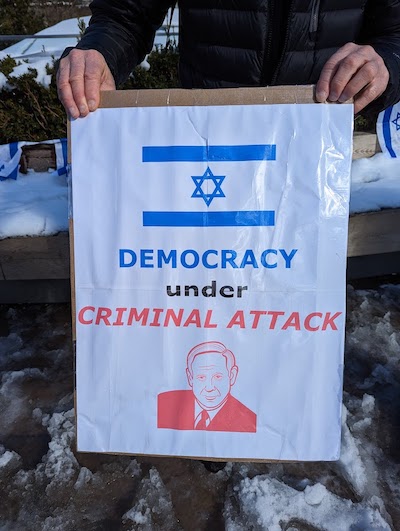
לדברי הפדרציה היהודית הקהילות של צפון אמריקה המכתבים שלה זכו לדיווחים נרחבים photo - Democracy under Criminal Attack poster בתקשורת הישראלית ולאור כך זמן קצר לאחר הפרסומים קרא ראש הממשלה בנימין נתניהו באופן גלוי להידברות עם האופוזיציה, כאשר ראש האופוזיציה יאיר לפיד, הסכים אף הוא עם עקרונות ההצעה של הפדרציה היהודית של קהילות צפון אמריקה. בפדרציה היהודית של קהילות צפון אמריקה מוסיפים עוד כי הם מעודדים מהצהרתו של ראש ממשלת ישראל בנימין נתניהו, ואכן מאמינים ששני הצדדים צריכים לפעול במשותף כדי להתגבר על ההבדלים הקטנים מאוד שנותרו, כדי להתחיל במשא ומתן בין הצדדים באופן מידי ביותר

יו”ר הפדרציה היהודית של אזור ונקובר עזרא שנקן, מציין בהודעתו השבועית לקהילה המקומית בין היתר, כי לבו נשבר לאור הפוגרום הקשה של המתנחלים בישוב הפלסטיני חווארה, שהוא מנוגד לחלוטין לאופן שבו הוא מאמין שמוטל אל אנשים להתנהג. כזכור המתנחלים שרפו בתים, מכוניות ורכוש של פלסטינים לאחר שמחבל הרג שני מתנחלים. מאש שנתניהו חזר לשלטון גדלו אירועי הטרור בישראל באופן משמעותי

Format ImagePosted on March 21, 2023March 21, 2023Author Roni RachmaniCategories עניין בחדשותTags Ezra Shanken, Israel, Jewish Federation, Netanyahu, protests, Vancouver, הפגנות, הפדרציה היהודית, ונקובר, ישראל, נתניהו, עזרא שנקן
Join rally to support Israeli democracy

Join rally to support Israeli democracy

The Vancouver action group UnXeptable has been rallying on Sundays, at noon, at Robson Square, as part of an international grassroots movement to save Israeli democracy. (photo from Daphna Kedem)

We are a group of Israelis and Canadian Jews watching the grim news from Israel closely and feel that Israel’s democracy is on a very slippery slope, without brakes. The judicial crisis is leading to a dramatic loss of checks and balances in a state that has been democratic since its inception. It is shaking Israel and tearing apart its very fabric. We are terrified that the road to dictatorship will be quick and abrupt.

Israelis have been going to the streets in masses for the last many weeks. The biggest demonstrations drew more than 300,000 people to the street, yet we don’t see reference to these events in our local community. It seems that Jewish organizations and leaders are choosing to be on the sidelines, by toning down the crisis. Some are choosing to be silent altogether.

We are utterly frustrated by this silence. We know very well the horrific consequences that silence can bring about. But we realize that unprecedented events have been unfolding. Israel has been our source of pride throughout changing times and because events are happening fast, leaders might feel lost, without a compass in an uncharted territory.

We would highlight the facts as we see them: the Israel that we have known has changed.

Recent elections brought to power a group of people with personal interests counter to the public interest. One is a convicted criminal (bribery) who wants to clear his way to be a minister. The religious parties seek to release religious young people from army service, which is compulsory in Israel. A messianic, racist party wants to spread its agenda. And the prime minister is a defendant in three indictments and, in our opinion, to get away from his trial, he is promoting a change of regime in Israel, a radical move that will eliminate the separation of powers and the independence of the Supreme Court. The legal system will become part of the ruling party.

Until now, the selection of judges to the Supreme Court required agreement between the representatives of the judges and the representatives of the government. But the coalition has voted on a series of laws that approve a change in the judicial system. According to the new proposal, only the representatives of the coalition will be able to choose judges for the court. It seems clear that a preliminary committee will appoint judges that will dismiss the defendant, Binyamin Netanyahu, from all his charges.

The core issue is that the Netanyahu we knew from his 15 years in power previously is not the same Netanyahu. In his previous terms, he defended the Supreme Court as an anchor for freedom and justice. The new Netanyahu’s trial is going into its third year.

Israel has no constitution and no other checks and balances. The Supreme Court is the sole judicial body that secures the rights and freedoms of individuals and minorities. We would like to encourage our local leaders and the community at large to address these issues that will no doubt influence the close and delicate relationship we have with Israel. We would like to encourage people to stand up in defence of Israel’s democracy – our family members in Israel, our friends and colleagues, and the democratic forces in Israel need our help.

We urge you to join the Vancouver action group UnXeptable – Vancouver, which is part of an international grassroots movement in more than 30 cities to save Israeli democracy. Rabbis and community leaders have come out to such rallies around the world to speak out and support the movement. We hope that you, too, will join us. Our next rallies will be held on March 12 and 19, at noon, at Robson Square in downtown Vancouver.

Format ImagePosted on March 10, 2023August 17, 2023Author Daphna Kedem and Rina Vizer and Dalite Har ToovCategories Op-EdTags democracy, Diaspora, governance, Israel, justice, Netanyahu, protests, rallies, UnXeptable
When to call in, call out

When to call in, call out

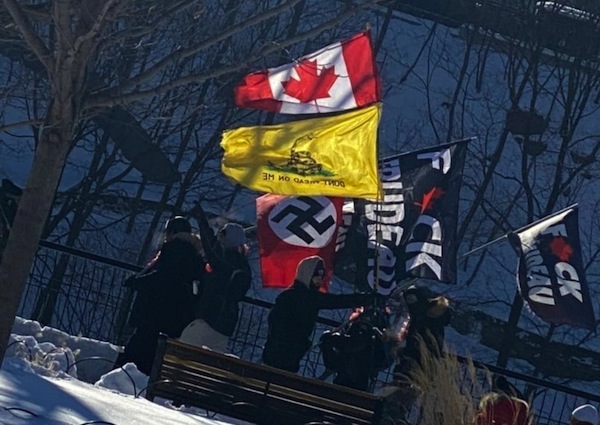
Truckers and others ostensibly contesting government pandemic responses have laid siege to downtown Ottawa. In reality, the protesters seem to have a panoply of grievances, many of which manifest as antisemitic, racist, sexist and just plain obnoxious.

Those noxious traits spread across the country last weekend, as satellite protests took place in Vancouver and other cities. In Toronto, a handbill was distributed declaring that “every single aspect of the COVID agenda is Jewish,” followed by a litany of other antisemitic declarations. This is on the heels of the appearance of swastikas and confederate flags at protests, the appropriation of Holocaust imagery by anti-vaxxers and other inappropriate expressions from COVID skeptics.

The defence, such as it is, from organizers and supporters is that these cases are incidental, represent a minority within the movement and, in effect, should be ignored.

Racism, antisemitism and other forms of hatred should never be dismissed or overlooked. Ideas and images like these must be identified, isolated and removed from any movement that wants to be taken seriously by Canadians. It is no less abhorrent to march alongside people carrying a swastika flag than it is to carry a swastika flag.

Some cases, like waving the Nazi flag, are clear cut and easy to call out and condemn as antisemitism. Other cases, like (we suspect) Whoopi Goldberg’s, are more nuanced. Goldberg’s statement that the Holocaust was not “about race” set off a frenzy. As if more fuel was needed, a jokey recipe she submitted to a cookbook decades ago, called Jewish American Princess Fried Chicken, conveniently resurfaced. All of this seems to have opened a floodgate of previously muted concerns about Goldberg’s appropriation of a Jewish last name and even Jewish identity. Goldberg was called out and suspended for two weeks by her producers.

In fact, Goldberg may have been expressing some combination of contemporary “progressive” understandings of race, which sees a hierarchy of oppression based on skin colour. Before we get too self-righteous about the state of racial dialogue today, remember that a couple of generations of Jewish Americans and Canadians have spent a great deal of effort to downplay differences between ourselves and the (white) majority. There is genuine confusion about Jewishness as a religion, a peoplehood and a racialized group. While it should not always fall on minority communities to school others on issues of identity, neither should our default be to assume ill-will when confusion or ignorance remain possibilities.

While people who wave swastikas may be irredeemable, people like Goldberg – who has expressed solidarity with the Jewish community to the extent that she has said, “I just know I am Jewish” – are a different story. She may be misguided about where Jews fit into today’s conceptions of race and identity, among other things, but her flailing in the midst of the controversy suggests she is confused, not hostile.

There is an alternative to “calling out.” There is a term – “calling in” – through which the opportunity is taken to educate someone who has made an unfortunate remark, to encourage them to learn and adjust their outlook. The process has the potential for turning enemies (or perceived enemies) into allies – and it has worked wonders in countless cases.

Acknowledging intent is critical. Goldberg’s words were poorly chosen and she needs some education. People who wave swastika flags are on another level. Putting on a yellow star because you are asked to vaccinate for the health of yourself and others is contemptible. Handing out flyers blaming COVID on the Jews is as antisemitic as words get. There is a time for calling in and a time for calling out.

The organizers and supporters of the trucker protests need to call out the bad seeds among them. The legitimacy of any movement – whether it be against vaccines, for the rights of a group of people, for protection of the environment, or for whatever other cause – depends on well-intentioned members acknowledging and addressing the presence of those who are motivated by less well-intended objectives, not ignoring them.

And this brings us back to us. It is fine, indeed correct, to call out the hypocrisies of our critics and those with whom we disagree. But we have all been in conversations around the dinner table, on social media, in private messages and emails, where our friends, relatives or guests have expressed unacceptable ideas about others, including fellow Jews who look different or who practise Judaism differently. Racism exists in every community.

If we ask other groups to be vigilant about intolerance in their communities – and to be willing to “call out” or “call in” various comments and actions – we should make sure our own house is in order. We cannot demand that others do this if we do not practise it ourselves. It applies to our critics and enemies. It also applies to ourselves and our friends.

Format ImagePosted on February 11, 2022February 10, 2022Author The Editorial BoardCategories From the JITags antisemitism, protests, racism, truckers, Whoopi Goldberg
Proudly powered by WordPress