The Louis Brier Jewish Aged Foundation announces David Zacks, KC, as chair of the 2023/24 The Brier, Their Home campaign.
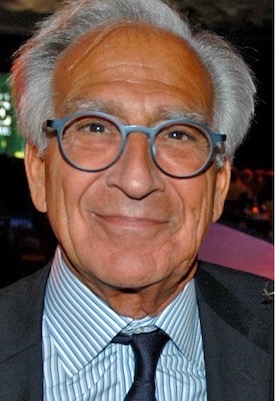
David Zacks (photo from Louis Brier Jewish Aged Foundation)
Born and raised in Vancouver, Zacks has been an active member of the Jewish community for more than five decades. He practised banking and finance law and was recognized globally for his professional achievements. He is a Life Bencher of the Law Society of British Columbia and was appointed King’s Counsel in 2002. In his retirement, Zacks is devoting time and energy to a variety of charitable causes, including the Louis Brier Jewish Aged Foundation. He is most proud of his two sons and their spouses and his five grandchildren.
The Louis Brier Home and Hospital is the home of 32 Holocaust survivors. The Brier understands the depth of the complexity of care to be delivered in providing clinical, spiritual and psychological attention to this sector of our community. Most residents come to Louis Brier older, frailer and with more complex health needs than ever before. Holocaust survivors are an especially fragile group because of their cumulative trauma. Aging, for them, can often be a time of severe crisis, and presents the risk of retraumatization.
The Brier is one of the most important and resource-demanding establishments in the Vancouver Jewish community. For more than 60 years, 24/7, 365 days a year, the home and hospital cares for the most susceptible and often extremely ill members of our community with both clinical and emotional support. They are carefully guided through their most vulnerable and difficult times by the staff, who know that caring for this generation means not only providing critical clinical care, but equally providing opportunities for enjoyment and engagement – the Brier strives to be a joyous place for elders to live.
The Brier campaign takes place every two years. It is the main source of funding, and the Brier Foundation’s main fundraising endeavour. The funds raised cover the basic annual needs of the home that are not funded by government. The needs of a Jewish home extend far beyond the basic human requirements provided – every Jewish component of the Louis Brier Home and Hospital is completely reliant on community donors. Examples include having a chaplain/chazzan, a fully kosher facility, a shul, Holocaust education for staff, and the celebration of all Jewish holidays. The Brier Foundation also supports extras that most other long-term care facilities cannot, such as full-time infection control, quality-and-risk practitioners, security, medical equipment, music, art, physio, rehabilitation, and occupational therapy.
It is thanks to the commitment and consistency of community donors that Louis Brier Jewish Aged Foundation provides the Brier with stability of funding that provides the best possible quality of life for residents, one of dignity and happiness. The board members and executive director of the Louis Brier Foundation, Ayelet Cohen, are acutely aware of the immense responsibility they hold, and thank everyone for sharing this responsibility with them over the years.
May 1 marks the start of this year’s campaign – The Brier, Their Home – which runs until June 16. The Brier Foundation, together with the leadership of Zacks, hopes to raise $1.8 million to keep up with the home and hospital’s needs. This amount will just allow the Jewish home to cover expenses through 2023/24. Over the last six years, the Brier Foundation’s funding responsibility has more than tripled in an evolving healthcare environment. It takes immense resources to manage such an operation. The needs are great and ever increasing.
The Brier Foundation works to fulfil these essential needs, but cannot do this without the community’s help. If it is not done as a community, there is the risk of losing the ability to provide a dignified and gratifying end-of-life process for Jewish seniors. It is our collective duty to care for our elders, those who built our community for us.
* * *
Chabad Richmond depends on a devoted team of volunteers. From delivering Light of Shabbat meals to assisting with programs, assembling Pesach packages, and so much more, Chabad’s cohort contributes not only their time but their enthusiasm. Leading the charge, along with Chabad Richmond co-directors Rabbi Yechiel and Chanie Baitelman, is the new board of directors, comprised of lay leaders who bring a multitude of talents to the table and have an ambitious vision for the future of Chabad.
New president Ed Lewin takes over from past president Steve Whiteside, and welcomes Phil Levinson as first vice-president and Jeff Wachtel as second vice-president and secretary. New recruits Gayle Morris and Brent Davis join existing board members Sheldon Kuchinsky, Shelley Civkin, Shaun Samuel (treasurer), Louise Wright and Yael Segal.
Lewin was born and raised in Vancouver, the middle child of Holocaust survivors. An avid sportsman and community worker, he has served on many nonprofit boards in the Jewish community and is past president of the Vancouver Holocaust Education Centre. He is proud to have represented Canada in basketball three times at the Maccabi Games in Israel, winning two bronze medals. He recently sold his business law practice in Vancouver and is currently associate counsel with Arora Zbar LLP. He moved to Richmond in 1987, and has been married to Debbie for almost 42 years. The Lewins have two children, both married, and a 1-year-old grandson, all of whom call Richmond home.
The board of directors supports Rabbi Baitelman’s dream of an expanded Chabad Centre in Richmond, recognizing the potential for growth in a community whose Jewish population is close to 4,000.
“The vision of a larger Chabad centre with increased capacity and a variety of amenities for all ages is on the horizon. With board and community support, it will become a reality,” said Lewin.
Chabad Richmond recently launched a young professionals group for 19-32-year-olds, and is expanding several of its programs.
“Education, community outreach and gathering as a community to celebrate Jewish holidays and lifecycle events are only part of what we currently do,” said Rabbi Baitelman. “We want to expand our reach and nurture every Jew in every way we can. We have much work ahead of us, but we’re blessed to have a steadfast and conscientious board who works to help us grow. Each one of them brings their unique talents to assist us in realizing our mission.”
Creating an endowment fund with the Jewish Community Foundation is not solely an enterprise taken on by high-net-worth individuals and families. (screenshot)
Established in 1989, the Jewish Community Foundation now has more than 350 endowment funds and $85 million in assets under management. Marcie Flom, the executive director of the foundation, told the Independent that creating an endowment is not solely an enterprise taken on by high-net-worth individuals and families – anyone with a desire to put a fund in place can do so.
“The foundation tries to impress upon individuals and families in the community the importance of perpetuating their lifetime of community participation and giving, so that their children and grandchildren will have a community centre, camps and day schools to go to,” Flom said.
The foundation offers many different options and works with a broad range of community members – each with their own economic circumstances – to establish an endowment fund. Together, they ascertain what is important to the community member.
“I have a personal meeting to try and understand what their objectives are, what they are trying to accomplish. Are they thinking about doing this in their lifetime or after their lifetime? And I would ask such questions as, would they want to involve their children during or after their lifetime? Is teaching tzedakah one of their objectives?” Flom explained.
To illustrate, if a person wanted to support a synagogue and ensure that the shul will still be economically viable for their children, they could set up a designated fund for that purpose. This would be done by making a bequest through their estate, meaning there would be no cash outlay during their lifetime.
There also are donor-advised funds, with which the foundation can help people direct support to issues and needs that are of concern to them. The fundholder is entirely in charge but the foundation can help match the holders’ interests to organizations addressing those issues and needs.
“We have a strong knowledge and understandings of what the needs are through our association with the Jewish Federation of Greater Vancouver, their planning council and the community-convening work that we do,” said Flom. “We can help donors make their philanthropic decisions and direct their support where it is really impactful and meaningful for them.”
Further, members can create unrestricted funds. Here, the foundation calls upon charitable organizations within the community to submit proposals for funding. This granting process provides timely support to a wide range of pressing, emerging and ongoing community interests and needs.
“When we were in COVID and were hit with unprecedented needs and change, those unrestricted funds were invaluable because we could respond in real time and put resources where they were most needed in the community,” Flom said.
Currently, with issues such as rapidly rising inflation, food insecurity and housing affordability affecting many in the community, unrestricted funds allow the foundation to be nimble.
“Unrestricted funds have the most flexibility for the foundation to work in partnership with the organizations that are delivering the services, such as Jewish Family Services and Tikva Housing,” Flom said.
The various funds can be created in numerous ways. For example, a person in their 50s on a modest income may have taken out a life insurance policy in their 30s. This person could decide that, upon their passing, the net proceeds of the policy should go to a legacy fund. There would be no cash outlay for them and they would receive an annual tax receipt for their premium payments.
Another choice is for a family to pledge $1,000 a year for 15 years to build up a fund. By making that donation, they would also be receiving a tax credit while the fund grows.
Or, individuals who consider themselves “asset rich but cash poor” could leave a bequest from their estate to add to the fund they started during their lifetime.
“We all care about our community and we all have a role to play in supporting and nurturing it, and the foundation provides a number of ways to do that. The foundation is in tune with the needs of the community and can help donors to really have an impact with their grants,” Flom said.
“We have so many people who are committed to maintaining and growing our community, to making sure it is really strong and healthy and that next generations are engaged in community. We are so fortunate to have a very generous community that helps sustain us,” she said.
According to the foundation’s website, more than $3.3 million in distributions were made in 2020/21, supporting a range of community organizations, programs and services. For more information, visit jewishcommunityfoundation.com, call 604-257-5100 or write info@jewishcommunityfoundation.com.
Sam Margolishas written for the Globe and Mail, the National Post, UPI and MSNBC.
Just For Laughs Vancouver and CBC have announced that original series The New Wave of Standup is returning for Season 3 beginning March 24 on the free CBC Gem streaming service.
The third season showcases 14 Canadian comedians with diverse backgrounds and unique comedy styles who perform standup sets that explore topics including dating, workplace politics, family dynamics and overall observations about life and finding the humour in it. Among the rising stars are Jewish community members Jacob Balshin and Laura Leibow.
Balshin was the winner of I Heart Jokes Awards Newcomer of the Year in Toronto and was later nominated for Breakout Comic of the Year. He has recorded sets for CBC’s Laugh Out Loud and Sirius XM. He is currently fresh off a month-long run of shows at the Edinburgh Fringe Festival in Scotland. His standup clips on TikTok have amassed millions of likes and a loyal group of fans who enjoy his personal, loose and free style of joke-telling.
In 2022, Leibow was chosen to be a part of New Faces at Just For Laughs at the Montreal and Toronto festivals and also did a taping for CBC Gem’s New Wave of Standup. She has a witty and laid-back comedic style, performing on the club circuit, in alternative rooms and in theatres. She has performed in clubs like the Improv and Micky’s in Los Angeles, and Gotham and Broadway Comedy Club in New York City. She is the editor of the comedy website Unoriginal and hosts two podcasts for the Canadian Jewish News. She can be heard frequently on SiriusXM and on 604 Records’ comedy compilation album The Great Canadian Comedy Rumble.
Laura Leibow is one of 14 comics on the third season of The New Wave of Standup. (photo by Emily Cooper)
The new season also features comedian Brendan D’Souza, a fast-talking non-binary comedian and podcaster. Travis Lindsay – an on-air correspondent and writer for CBC’s This Hour Has 22 Minutes – brings a mix of jokes and storytelling. Rachel Schaefer has been featured on CBC Radio’s Laugh Out Loud, and appears on the JFL Original’s comedy album Stand-Up BC: Yee-Haw Hell Yeah.
Courtney Gilmour has written for and made appearances on CBC’s The Debaters and Humour Resources. Using a rapid-fire joke style and laid-back demeanour, Bobby Warrener has performed standup at multiple festivals, on TV and on tours across Canada. Charles Haycock has performed at many festivals, as well.
Seán Devlin was a 2022 Juno nominee for his comedy album Airports, Animals, and was a consulting producer on Borat: The Subsequent Movie Film, as well as writer and director of the satirical feature film When the Storm Fades. Dino Archie made his network late-night debut on Jimmy Kimmel Live!, while Heidi Brander is a writer for CBC’s Son of a Critch, Baroness Von Sketch Show and Still Standing, who has served for three seasons as head writer of This Hour Has 22 Minutes.
Jackie Pirico has multiple Just For Laughs television tapings under her belt and a feature film (Sundowners); she also has made appearances on Viceland TV and Crave’s new mockumentary series New Eden. Malik Elassal is a stand-up comedian, actor and writer, performing in clubs across Canada and appearing on various TV shows, while Mike Green produces shows Secret Standup Series and Comedy At the Handsome Daughter, which is one of the longest running weekly shows in the country.
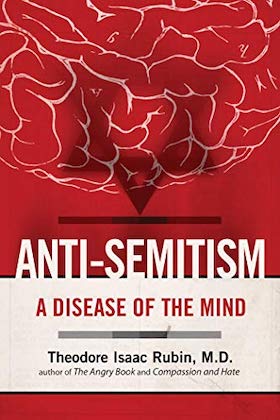
Next month marks the centenary of the birth of a psychiatrist whose work on antisemitism deserves a fresh reading. Theodore Isaac Rubin was born 100 years ago April 11. He died at 95, in February 2019. His 1990 book Anti-Semitism, A Disease of the Mind: A Psychiatrist Explores the Psychodynamics of a Symbol Sicknessposited that bigotry against Jews may be a mental disorder.
Rubin had a sprawling career, writing fiction and nonfiction. His 1961 novel Lisa and David, a love story of teenagers with severe mental illnesses, was made into a film the next year and garnered two Academy Award nominations. But Rubin’s work, in addition to his clinical practice in New York City, was primarily devoted to psychology and self-help, including weight loss. He has been credited with coining the term “comfort food.”
Rubin attributed antisemitism to “symbol sickness.” Human beings use symbols to represent objects in the world and to communicate how we feel through these symbols – love and hate being among the most familiar. Symbol sickness occurs when a symbol becomes so divorced from its original meaning that it takes on a distorted or pathological sense. Antisemitism can occur when the objective meaning of “Jew” is imbued with projections from the mind of a person we would call antisemitic.
“The symbol tends to take on increasing importance, and this can and often does reach a state in which there is obsessional preoccupation with it,” he wrote. “In projecting inner conflict to, let us say, Jews, what really happens is that Jews – the symbol – are assigned roles representing aspects of one’s own conflicts.”
Rubin saw envy and feelings of exclusion as central to antisemitism, particularly the idea of a people who the spectator perceives as inferior yet are, in theological terms, “chosen.” The perception that these “inferior” people have little or no interest in him can lead the antisemite into frenzies of rage.
“Even as [the antisemite] denigrates the Jews, he envies what he sees as separateness, clannishness and exclusivity,” he wrote. “He believes that Jewish lack of interest in him, let alone winning him over, is a form of rejection. His reaction to rejection is enormous self-hate and projected self-hate. He rejects and despises the Jew, salving his own hurt pride and disguising his secret admiration and envy. He further embroiders the disguise, twisting envied Jewish characteristics into threatening ones. Thus, he sees Jewish commonality and cohesiveness as arrogance and unwillingness to meld and cooperate with the larger society. Even more, he sees Jewish cooperation and lack of missionary zeal or their desire to assimilate as secretive, cabal-like machinations.”
Perceptions of Jewish achievement can be similarly problematic.
Jews “had to cooperate in order to survive,” wrote Rubin. “They connect the past, present and future, and connect to each other. They profit from the wisdom and experience of forefathers and the group. This makes Nobel Prize cooperative efforts possible. This also makes them the envy – often the malignant envy – of the self-disenfranchised (from self, others, and past and future) antisemite to whom they become prime objects of projected self-hate. The Jew is an intense cooperator. The antisemite’s philosophy confuses commitment, dedication, intense interest, involvement and optimism with sick competition.”
Waiting for the Messiah – who never arrives – is a lesson in the process of postponement of gratification, Rubin argued, offering a reason for collective success – but rational explanations are not accepted by an antisemite. “To the antisemite, Jewish achievements are not seen in this light at all. They are seen as the result of slimy manipulation and cabal-like insider cooperation, designed to frustrate non-Jews.”
For people who are oppressed by political leaders, theology, daily drudgery or any other factors, antisemitism offers a scapegoat. Jews are a symbol of freedom – even when they are oppressed by dictatorial regimes or violent neighbours – merely because they exist outside of the majority society.
Rubin goes to some lengths to address Christian antisemitism and how it may fit into his thesis of anti-Jewish bigotry as a mental disorder. Rubin suggests that Christians who traditionally have accused Jews of deicide are not expressing hatred for the perceived annihilation of their deity, but the opposite. Jesus the Jew, in the Christian narrative, is the conscience-giving entity, paralleling the role of Judaism as the wellspring of ethical monotheism.
“The Jew is hated for being a conscience-giver rather than a Christ-killer,” according to Rubin. “Even as they kill the hated conscience-giving part of Jesus symbolized by the Jew, they brag about love for Jesus and Christian brotherhood.”
The antisemite may venerate the loving, compassionate aspects of Jesus, but struggle against the strictures imposed by moral and behavioural principles that accompany the theology.
“I believe that rabid antisemites who have convinced themselves of the historical delusion that Jews killed Christ unconsciously really admire and envy them for doing so,” Rubin added. “They also are secretly grateful to the Jew for providing them with a symbol to which they can displace that hatred. Hating Jesus directly is terrifying indeed and threatens overwhelming guilt, unbearable self-hate and eternal damnation. Calling Jews ‘Christ-killers’ supports shaky identifications with Jesus and even more so with his teachings. This helps convince the victim that, as the Jews killed Christ, the hater of Jews loves Christ.”
Similarly, the ethical constraints that are inherent to most religions – but which a Christian might associate with the Jewish origins of their own theology – might lead to not only a lashing out against their own church or clergy, but a messy effort to improve one’s own self-worth by “proving” the moral failure of the followers of the antecedent religion.
“To be Jewish is to be righteous, ethical in the world,” Rubin wrote. Identifying and emphasizing examples of Jewish moral failing is a form of self-redemption, he argues. If the Jews, the apparent fountainhead of Christian morality, can be proven as hypocrites, one’s own shortcomings may seem less corrupt.
Like the bogeyman under the bed, the antisemite is terrified of a monster of their own creation.
“The antisemite assumes that he is hated by the Jew at least as much as he hates the Jew,” Rubin wrote. “He must keep the Jew powerless and in sight at all times and, if possible, obliterate him, because the secretive creature of secret cabals may have special powers, powers derivative of the God of the Old Testament.”
Jewish reverence for life – exemplified in the toast “l’chaim!” – may be another source of resentment for people who are taught that their reward will come after death.
“To the Jew the greatest courage is not related to death but rather to life. To live and to live an ethical, caring life is a courageous way of life,” wrote Rubin. “The antisemite and all bigots are essentially joyless, life-denying, disconnected, auto-digestive people.”
There may also be a foundation of misogyny in antisemitism, Rubin suggested, with Judaism portrayed as the “mother religion” of Christianity.
As a representation of motherhood, he wrote, Jews “then offer an easy target for displacement and projection. Hatred for the mother is repressed to the unconscious and projected to Jews on the conscious level. This projection would be fed by any disturbed relationship with parents or authority.”
Additionally, peace is traditionally symbolized as feminine and war as masculine. The Jewish quest for peace – “shalom!” – is juxtaposed with, to offer just one example, the Crusades, and Jews’ perceived passivity in the face of centuries of oppression may be interpreted as a feminine docility by those who esteem masculine aggression. (The inversion of this, in recent decades, through the perception of Jewish aggression in the form of Israeli military actions, could be seen as an eruption of envy or outrage over a people who “don’t know their place.”)
Lashing out at others as a response to (real or perceived) internal shortcomings may be a desperate response to perceived shaming, according to Rubin. “The saddest is a person whose feelings are blunted and even deadened,” he wrote. “This means that inflicting pain is a last-ditch attempt to have feelings vicariously oneself. Coupled with bullying tactics, the infliction of pain makes the sadistic bully feel momentarily alive and potent. This is compensation for feeling powerless, helpless and dead.”
Rubin’s assessments rest on the idea that the perpetrators of antisemitism are bullies who perceive themselves as bullied. This is a fundamental way that antisemitism differs from most forms of discrimination or bigotry, which tend to position the perpetrator as superior to the victim. An antisemite often imagines Jews as believing they are superior to others, which leads the antisemite to feel driven to bring Jews down a notch.
When Rubin wrote his book, in 1990, antisemitism, at least in North America, was largely believed to be a fact of history. Since it came roaring back, a decade later, we have struggled to explain and contain it. We generally fall to sociological explanations and Rubin’s unique approach – a psychological explanation – is an important one to help understand a phenomenon that, to be frank, we really have no firm consensus about how to confront.
Israeli journalist Yair Cherki (photo from Facebook)
Bravo Yair Cherki, the popular, ultra-Orthodox TV news reporter. He recently came out as gay in a wonderful social media post. In part, he said: “I write these words shaking, postponing to tomorrow. For next week. For after the holidays. Maybe it’s been 10 years since I’ve been writing and erasing…. And I write not because I have the strength to write but because I have no power to stay silent. I love men. I love G-d. It is not contradictory….”
His confession continues, “I live the conflict between my secular preference and my faith all the time. Some have solved the conflict for themselves by saying that there is no G-d, while others explain that there is no homosexuality. I know both exist. And I try to reconcile this contradiction within myself in various ways. These are things between G-d and me…. This is neither a fashion nor a trend nor a political statement. It is simply me….”
An intimate and intelligent statement.
* * *
Now, if this doesn’t take “blaming the Jews” to new extremes. In my previous article in the JI (jewishindependent.ca/land-of-milk-honey) I praised the historic maritime natural gas agreement between Israel and Lebanon, enabling both countries to drill for natural gas within their own territory. I truly wished Lebanon much success in hitting a gusher and creating their own Sovereign Wealth Fund.
Hezbollah’s leader Hassan Nasrallah sees it a bit differently, warning that any delay in Lebanon’s extracting gas from its own waters will be met by a punishing attack on Israel’s adjacent gas fields. Maybe Robert Frost’s poem “Mending Wall” will assuage Nasrallah: “I let my neighbour know beyond the hill…. And set the wall between us once again…. To each the boulders that have fallen to each…. He only says, ‘Good fences make good neighbours.’”
Nasrallah went on to threaten that if the United States continues spreading chaos within Lebanon – some conspiracy theory or other – that Israel will pay. Reminiscent of the Three Stooges slapstick routine when Curly slaps Larry for Moe slapping him.
Peace and prosperity for all, on both sides of the Fatima Gate. Otherwise known as the Good Fence!
* * *
Going once. Going twice. Do I hear $50 million? According to its website, “Sotheby’s is proud to offer … the earliest, most complete Hebrew Bible during this year’s marquee New York sales auction.”
The Codex Sassoon is more than 1,000 years old. According to Sharon Mintz, Sotheby’s senior Judaica specialist, in an interview with CNN, “this is the most important document to come to auction ever.” It’s expected to generate huge interest across the world from the wealthiest of bidders, with offers expected to reach as high as $50 million.
Other treasured documents fetching such modest amounts at auction include the Codex Leicester by Leonardo da Vinci (ostensibly his science diary) sold to Bill Gates in 1994 for about $31 million. And the first printing of the U.S. Constitution, bought by American hedge fund manager Kenneth Griffin in 2021 for about $43 million.
May 16 … save the date. And your shekels!
* * *
A few weekends ago, my wife and I drove south for the day to enjoy the year’s winter festival, Darom Adom, when the bright red poppies – a protected flower in Israel – come out in full bloom along the Gaza periphery. It’s another reason to celebrate with local handicrafts, seasonal fruit, local cheeses and wine, homemade Israeli cuisine.
Taking place not too far from Sderot, within the opened gates of local kibbutzim and moshavim (agricultural communities) and less than a kilometre from another good fence delineating the border between Israel and Gaza, the festival a testament to Israeli’s resilience – and longing for a peaceful coexistence.
Somewhat poetically, we purchased a beautifully handcrafted hamsa made by a young, local artist. This hand-shaped amulet is used for protection by both Jews and Muslims. In the Jewish faith, the five fingers of the hamsa represent the Five Books of Moses, or the Torah. The Muslim faith sees a hamsa as representing the Five Pillars of Islam (declaration of faith, prayer, alms, fasting, pilgrimage). In popular culture, the charm represents the five senses (sight, sound, smell, touch, taste).
* * *
Judicial reform. Judicial reform. Judicial reform. Sounds like Jan Brady whining about her sister getting all the attention, “Marcia. Marcia. Marcia,” from the 1970s sitcom The Brady Bunch. Judicial reform certainly has been getting all the attention lately.
Issues aside, we’ve had 10 weeks and counting of protests, with several hundred thousand Israelis protesting around the country every Saturday night against judicial reform. The protests are also aimed at the extreme, right-wing – even theocratic – makeup of the current coalition that is driving headstrong into judicial reform. And yet, the primarily secular, centre-left who comprise these thousands, waving Israeli flags and ending every protest with the singing of Hatikvah, respectfully wait until after Shabbat to begin their protests. How’s that for deep-bred regard for this Jewish tradition that crosses sociopolitical lines?
* * *
Bravo again to Yair Cherki. To come out in these turbulent, sociopolitical times for the Israeli LGBTQ+ community. With our far-right, xenophobic, theocratic and anti-LGBTQ+ government, Cherki’s post and testament to himself is nothing short of brave, beautiful and brilliant.
Bruce Brownis a Canadian and an Israeli. He made aliyah … a long time ago. He works in Israel’s high-tech sector by day and, in spurts, is a somewhat inspired writer by night. Brown is the winner of the 2019 AJPA Rockower Award for excellence in writing, and wrote the 1998 satire An Israeli is…. Brown reflects on life in Israel – political, social, economic and personal.
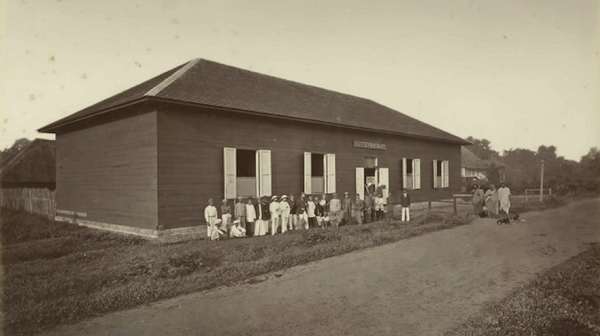
Hüttenbach in Medan in 1880s. (photo from KITLV Album Or. 27.377)
Jewish communities in Indonesia have always been tiny, though their history is long. Jewish merchants are recorded in Sumatra as early as the 10th century, and diasporic and Israeli newspapers regularly report on the very small groups of Jews now living in Indonesia. (A 2022 article estimated that there were only 50 Indonesian Jews, and perhaps 500 Jewish expatriates.) However, the largest communities with the most substantial record are those in the late colonial cities of Batavia (now Jakarta), Surabaya and Manado.
The digitization of Dutch archives, both from European publications and the colonial newspapers, has facilitated research about the history of Jewish groups in the Indonesian archipelago. In this article, we offer some notes towards a history of some Jewish merchants in Medan between the 1870s and 1940s, as tobacco plantations on Sumatra’s east coast developed.
The Deli region on the east coast of Sumatra was not developed until the mid-1860s, when a few Dutchmen accepted an invitation from the sultan of Deli to establish tobacco plantations in the area. By the late 1890s, it had become one of the most profitable parts of the Dutch empire.
Deli tobacco leaves were “thinner than cigarette paper, and softer than silk,” and quickly the plantation zone’s tobacco became highly valued. The result was a brown “gold rush” of Deli tobacco in the late 1870s, attracting German, Swiss, English and Polish planters, as well as Dutch, to the new “dollar land.” Planters, tolerated and sometimes abetted by colonial authorities, instituted a brutal and often murderous system of exploitation of imported Chinese and Javanese labour.
Before long, merchants established themselves to serve the European population’s taste for European goods and technology. Among these new arrivals were several Jews, including Ashkenazi Jews from the Netherlands, Austria and Germany, as well as others who relocated from existing Baghdadi Jewish communities in Penang and Singapore. There are also scattered accounts of Jews in the Dutch army serving in Sumatra.
Mercantile opportunities
We know very little about how many Jews tried their luck in the eastern coast of Sumatra, but we have not yet found any evidence of a synagogue (as in Surabaya) or a dedicated cemetery (as in Aceh). The most consistent record of the community available today is not from the colony but rather from Amsterdam’s Nieuw Israëlietisch Weekblad (New Jewish Weekly). The first mention we have found in that newspaper was a report of an August 1879 anonymous donation of 60 guilders originating in the Sumatra’s east coast and destined for the Dutch branch of the Alliance Israélite Universelle, an international Jewish educational charity.
Between 1899 and 1901 the NIW published letters from N. Hirsch, a non-commissioned officer initially writing from the fortress of Fort de Kock (now Bukit Tinggi). In his letters, when not speculating that some Indonesians might be descendants of the lost tribes, Hirsch is troubled by the challenges of Jewish life in the Indies, without religious or community institutions. Months after his first letter, Hirsch joyfully reported the arrival of a kosher butcher and, in 1901, having since moved to Padang, on holding the first religious services at his home.
However, the bulk of sources concern a few European Jewish merchants who became prominent in Medan. Among the first Europeans to come to Deli were members of the Hüttenbach family, an established and assimilated merchant family from the German Rhineland city of Worms. The eldest son, August Hüttenbach, began working for the German-Jewish company Katz Brothers in Penang in 1872 at the age of 22. Katz Brothers, which had arrived in Penang in 1864 at the height of the tin rush, invested in all kinds of business, including supplying ships for freight. When the Dutch-Aceh war broke out in 1873, the company provided logistics and supplies to the Dutch military, and the Hüttenbach family’s shipping business ran a regular service to the Aceh ports.
While August became a prominent merchant in the British Straits settlement colony port of Penang (now in Malaysia), his younger brothers Jacob and Ludwig Hüttenbach settled across the Strait of Malacca, in Deli. In 1875, they opened the first European store in the harbour settlement of Labuhan Deli to cater to all the needs and requirements of the Dutch government, plantations and industrial groups.
Gradually, the family firm developed into a general merchandise company supplying all sorts of goods from Europe, and even establishing its headquarters in Amsterdam and another office in London. With their own shipping lines at their disposal, they were for a time the only importer in Deli. When the Hüttenbach enterprise moved its Sumatran operations inland to the developing city of Medan in the 1880s, the street on which they established their business was named Hüttenbach Street (today Jalan Ahmad Yani VII).
Hüttenbach enterprises supplied all manner of goods and services, ranging from live water buffalos and Brazil nuts to Bordeaux wines. It furnished machinery, tools, motors, electrical goods, harnesses, saddles, guns, ammunition, watches and clothing, and served as an agent for brands including Ford, Cadbury, Heineken and Guinness Stout, as well as other European trading, insurance and manufacturing companies. In the 1910s, its annual imports totalled 1,200,000 guilders and it supplied across the whole of Sumatra.
At the turn of the 20th century, Jacob and Ludwig retired to Europe and left Heinrich Hüttenbach (1859-1922), the youngest of the brothers, in charge of the company. Heinrich, who had been a well-known planter in Malaya, moved to Medan to run the company. A small glimpse of the brutality of plantation life is visible in the German primer Heinrich wrote to provide instruction for Europeans learning plantation Malay (Anleitung zur Erlernung der Malayischen Sprache), including instructions such as: Lu orang bôhong. Lu bukan sakit. Lu malas sadja. Saja mau kassi pukul sama lu. (You are a liar. You are not sick. You are just lazy. I will hit you.)
Selling to the sultans
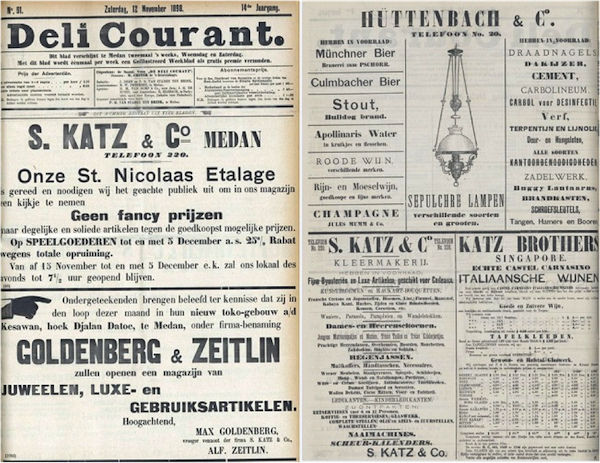
Medan’s growth attracted other Jewish merchants, who also opened stores selling European consumer items such as clothes and luxury goods. Two German Jews, Louis Kellermann of Leipzig and Max Goldenberg of Hamburg, opened the S. Katz & Co. shop in the Kesawan shopping street. The Katz Brothers, a prominent firm of Singapore and London, did not appreciate what appeared to be an appropriation of their name, and put a notice in the local newspaper, the Deli Courant, making clear that no connection existed. We cannot know whether Katz’s implication – that Kellermann and Goldenberg were seeking to capitalize on a familiar trading name for their profit – was correct.
Advertisements from S. Katz, Goldenberg & Zeitlin, and Hüttenbach in the Deli Courant, 1899. Katz Brothers was a well-known company in Singapore and S. Katz was a company in Medan not related to Katz Brothers in Singapore.
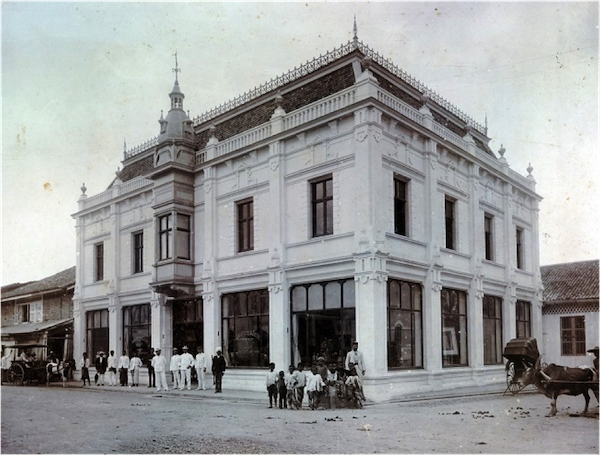
Among S. Katz’s employees was Russian-born Alfred Aron Arnold Zeitlin (1863–1938). Partnering with Goldenberg, Zeitlin opened a new store called Goldenberg & Zeitlin in November 1898, on the same main shopping strip, Kesawan Street. Majestic by all accounts, they specialized in the importation on luxury items such as jewelry, music boxes, typewriters, hunting rifles, glassware, curtains, suitcases, cigars and so on.
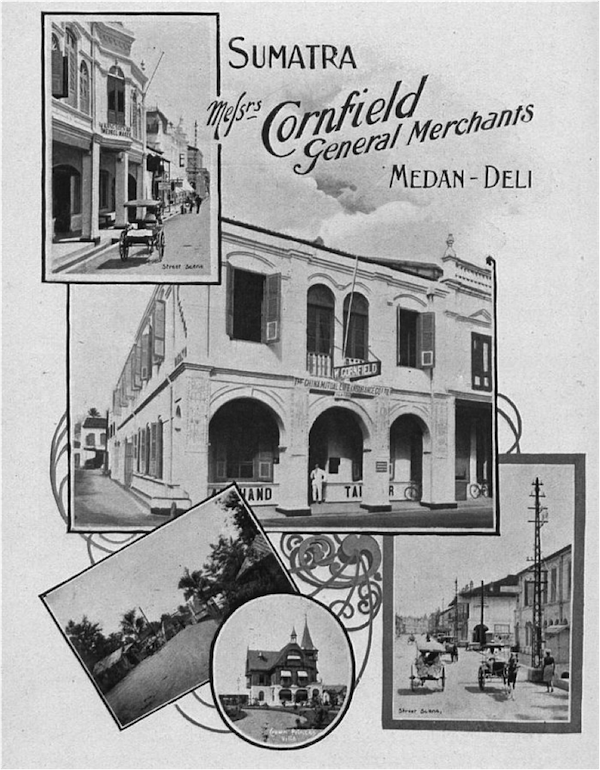
Other competitors were not far behind. An English-language travel guide to Sumatra in 1912 highlighted one of them: “A visit should also be paid to the establishment of Messrs. Cornfield. The firm are the official suppliers to the various sultans, and make a specialty of superior diamond jewelry of every description, although their stock includes well-selected continental fancy goods, pictures and also the latest modes.”
The Goldenberg & Zeitlin building at Kesawan around 1890. The company later became M. Goldenberg & Co. and was acquired by a German company. It was seized by the Dutch when Germany invaded Holland in 1940. The building has been demolished and turned into shophouses. (photo from Stafhell & Kleingrothe, KITLV 154472)
Wilhelm Cornfield (1862–1908), an Austrian Jew, had come to Deli in the 1880s, first working as a cutter at the S. Katz shop. In 1893, Cornfield started his own business as a tailor, offering European clothing with imported fabrics. Before long, he carried a complete range of clothes and luxury goods from London and Paris.
The first generations of merchants eventually left or passed away and were replaced by their children. When Wilhelm Cornfield passed away in 1908, his children expanded their father’s business. In particular, his son Isidore (1885-1923) became an investor in many luxury stores in North Sumatra, and also owned tea and coconut plantations on the east coast of Sumatra.
Heated competition
Jewish merchants competed to import European consumer goods, their firms merging, dividing and often clashing with one another. In 1915, the Hüttenbachs’ company split into a wholesaler business and the retail business. The retail business was managed by Isidore Cornfield while Heinrich Hüttenbach maintained the import interests. This split, however, caused a legal dispute between Hüttenbach and Cornfield about the management of the new department store. In the end, Cornfield won the case and opened Medan’s Warenhuis(Warehouse) in 1920, the first department store in Sumatra, the remains of which still stand. The Hüttenbach firm, on the other hand, was declared bankrupt in December 1921, after 46 years of business, due to the global financial crisis and mismanagement.
The bankruptcy resulted in Heinrich Hüttenbach’s return to Amsterdam. A few months later, he went missing on a passage from Amsterdam to London, and was declared dead five years later. The Cornfields, too, suffered great misfortune. Isidore and his wife, opera singer Henriette Zerkowitz, returned to Vienna, where he died of heart disease in October 1923 at the age of 38. By 1939, now run by his brother Adolf, the Cornfield fashion store, in financial trouble, was liquidated, closing its doors in July 1939 after more than 50 years of trading. Most likely, as the Depression caused a decline in demand for Sumatra tobacco, consumer luxury goods were no longer a viable business.
Cornfield advertisement in Isles of the East: An Illustrated Guide by W. Lorck, published by Royal Packet Steam Navigation Co. (KPM) in 1912.
Like many other German and Dutch Jews, most of these merchants were assimilated to European society and identified with national groups in the colony. They belonged to Dutch and German clubs and contributed to patriotic celebrations. Indeed, Hirsch complained of the European Jewish merchants that they represented themselves as Christians, were lost in bitter competition with one another, and were utterly lacking in piety. With many secular and/or assimilated Jews, there seems to have been little impetus to form Jewish institutions.
Dutch Jews and war
At the end of the First World War, there was high demand for expatriates to come to the Deli region to manage plantations and serve the colony. Many Dutch Jews responded and went to work for plantations, Dutch companies or the government; there are also a few examples of Jewish doctors. But newspaper archives suggest that numbers remained tiny, and only from the mid-1920s is it possible to speak of community activities.
One tantalizing biography from the 1920s is that of writer, painter and planter László Székely, born to a Jewish family in what is now eastern Hungary, with a birth name given as László or Smiel Ziechrman. Arriving in Sumatra in 1914, his life and work is rather overshadowed by an affair with a Dutch planter’s wife, Madelon Lulofs, that scandalized Deli colonial society. After divorce and remarriage to Székely, Lulofs, in works such as Rubber (1931), became one of the principal literary voices critical of Dutch colonial power. Székely also wrote literary sketches of his own, mostly for the Hungarian press. His novel, translated into English as Tropic Fever: The Adventures of a Planter in Sumatra (1937), provides a candid picture of colonial planters’ life in Sumatra, now considered an important social commentary on that vanished society. The couple settled in Budapest in 1930.
When Germany invaded the Netherlands in May 1940, the Jewish community raised funds to support relief efforts, but, by March 1942, Sumatra, too, had fallen to the Japanese. Some Jewish families found themselves under threat at both ends of the world: persecuted in Europe on the basis of their Jewish identity, and in the Indies as Dutch enemies of the Axis Japanese. Adolf Cornfield died in a Japanese internment camp. A Dutch Jewish physician who worked on the east coast of Sumatra, Dr. Hans Koperberg, was also captured and imprisoned by the Japanese. In a book of poetry titled Bittere pillen en scherpe pijlen (Bitter Pills and Sharp Arrows), he wrote about his experiences of being moved from one camp to another, dedicating his book “to my two sisters murdered by the Huns, Uncle Dr. Felix Catz and Aunt Brama and to all the friends murdered by the Japs.”
Our investigations have so far found little record of Jews in Sumatra after the Second World War. Survivors left for the Netherlands or perhaps Australia and, by 1958, Sukarno had expelled all Dutch citizens from Indonesia.
Budiman Minasnyis a professor of soil landscape modeling at the University of Sydney with an interest in Indonesia colonial history. Josh Stenberg is a senior lecturer in Chinese studies at the University of Sydney. An earlier version of this article was published in Inside Indonesia 146: Oct-Dec 2021.
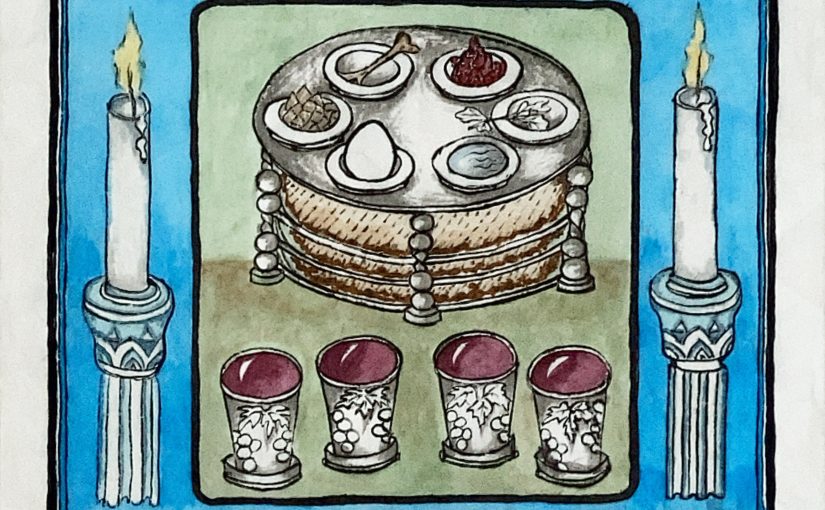
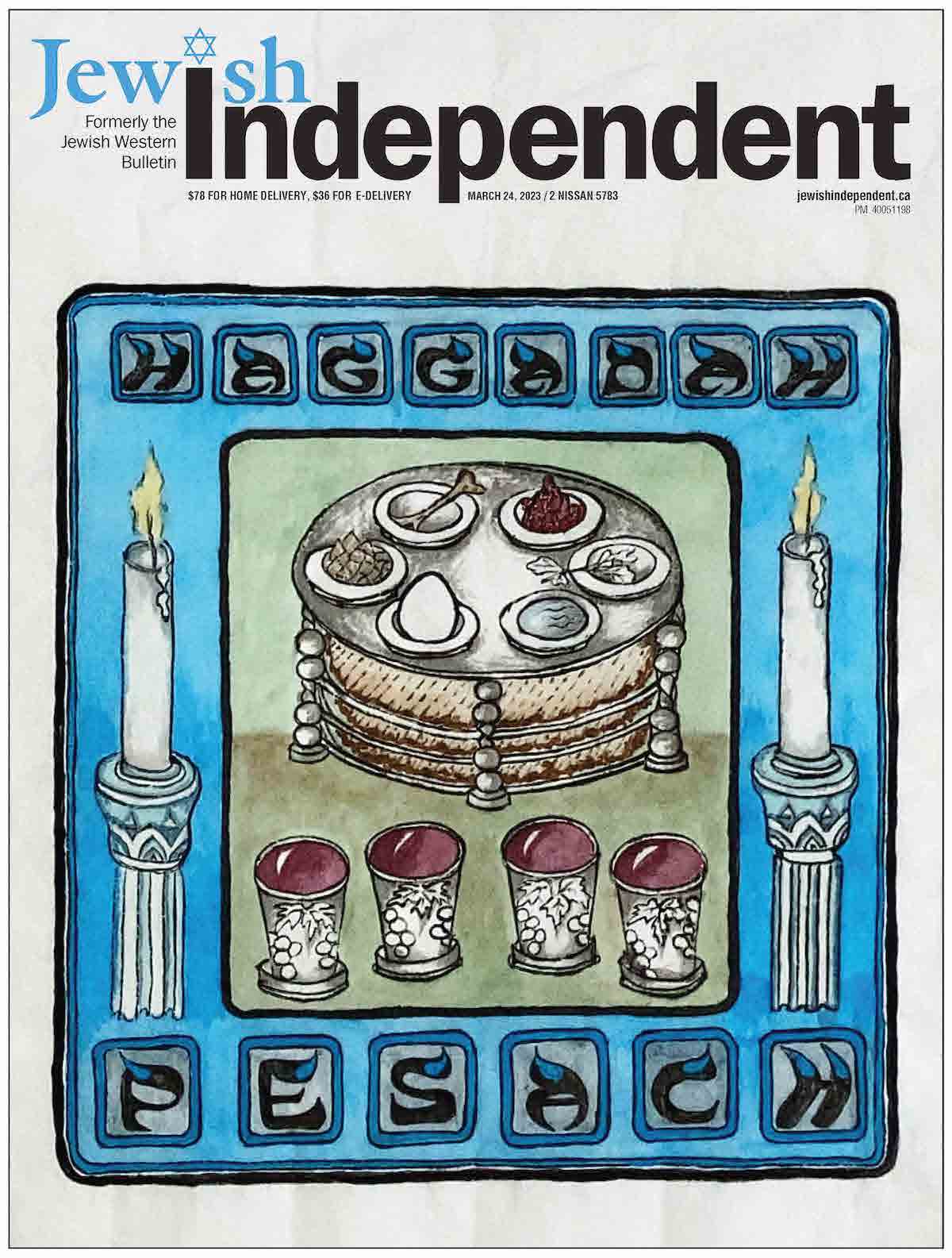
For the this year, Steveston, B.C., artist Merle Linde, chose to create a Haggadah cover that would look old and hand drawn. To achieve this authentic feeling, Linde used Taiwan linen paper, traditional Chinese watercolour paints and brushes.
The calligraphy letters in solid black Hebrew-like text feature peacock blue flashes, often seen in antique manuscripts. Yom Tov candles sit on candleholders that borrow their design from ancient Egyptian columns. The traditional Four Cups of Wine are inspired by a set of old silverware featuring raised grapevine leaves and grapes. And a silver seder plate holder has space for the three traditional shmura matzot, the shank bone, the burnt egg, haroset, bitter herbs, green vegetable and salt water for dipping.
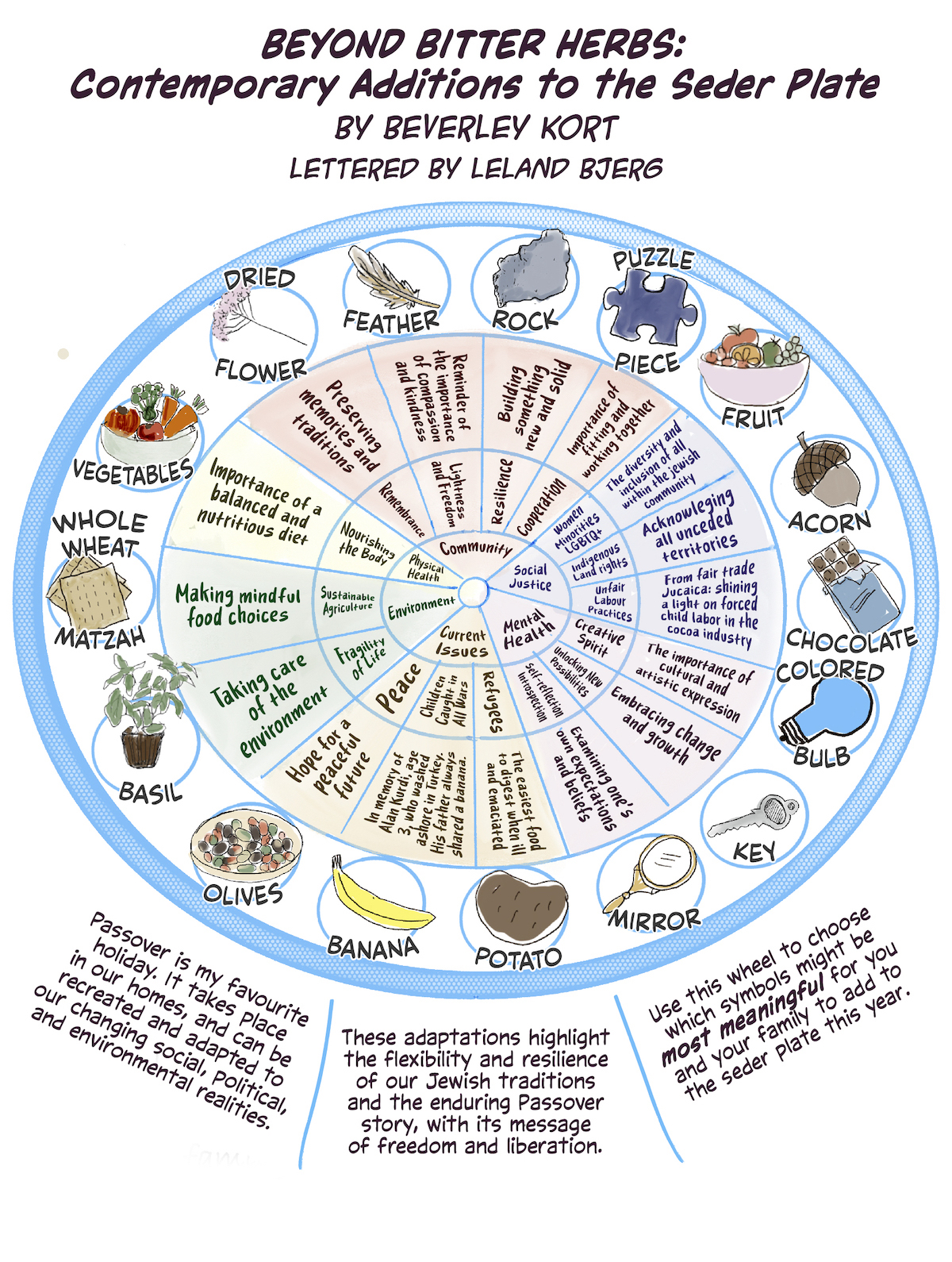
Beverley Kort is a registered psychologist by day and a cartoonist in her off hours; she has a private practice in Vancouver. Leland Bjerg is a freelance comic writer, editor and letterer; he lives in Kelowna with his wife and a swarm of dogs.
There are as many ways of celebrating Passover and the Pesach seder as there are Jews, and then some. Over the years, I have collected articles on different customs from around the world. Here are just some of the traditions surrounding food and the seder that I found unique.
Afghanistan
Haroset may contain walnuts, hazelnuts, almonds, pomegranates, apples, sweet wine and black pepper. The seder meal begins with arak-like liqueur, hard-boiled eggs, fruit, cucumbers, fried fish, cold omelette, lettuce and potato pancakes. The main course is meat soup with vegetables then fruit and nuts. The seder in Afghanistan was conducted with people sitting on carpets.
Belgium
Sedarim were communal in small towns, conducted according to Orthodox customs. Chickens and meat were killed according to kashrut, and live carp swam in the bathtub until it was time to make the gefilte fish.
China
Passover candy called pasla was made of minced prunes, boiled in honey with nuts dropped in. When it began to harden, it was rolled up, so there would be nuts on the inside and outside, and sliced.
Cuba
The oldest member held the seder for the entire family, with all the food home-made except for the matzah, which was imported.
Egypt
Haroset is made with raisins and dates or figs mixed with wine and chopped walnuts. Raisins were also used to make wine. For the meal, there would be fish with lemon sauce, meat casserole and matzah, as well as meat-and-leek patties.
Jews of Egyptian-descent wrap the matzot in a sack-like package, which is passed to each member of the seder. While each member holds the sack in turn, the other attendees ask him in Arabic: “Where are you coming from?” to which he replies, “From Egypt.” “What are you carrying?” they ask. “Matzot.” “Where are you going?” “Jerusalem.”
Ethiopia
Everyone made their own matzah consisting of wheat or legume flour, water and salt, baked in very thin slices and eaten almost immediately to eliminate the possibility of leavening. They also interpreted the Hebrew word hametz, to rise or leaven, to mean kept or not fresh, so they would only eat fresh produce, fresh milk and freshly slaughtered meat.
Since the Ethiopian Jewish community – believed to be either descendants of the Israelite tribe of Dan or progeny of King Solomon and the Queen of Sheba – practised a pre-talmudic form of Judaism, the Ethiopian seder was a less-structured affair with an informal, festival air, more like a springtime celebration. Events were focused on those in the Torah – the slaughtering of the paschal lamb, the Ten Plagues and Exodus itself. Since arriving in Israel, many families recount their own exodus from Ethiopia as part of the seder.
Germany
Men wore kittels for the seder. Sauerkraut was part of the meal along with kloesse, a dish made of soaked matzah, eggs and fried onions, made into a big ball and cooked in boiling water. This was eaten in place of potatoes, topped with brisket gravy.
Greece
Popular seder dishes include roast leg of lamb strongly flavoured with garlic; lamb pie with the animal’s heart, liver, lungs, kidney and intestines inside; and lamb stew with artichokes, served with an egg and lemon sauce.
India
The seder meal consisted of spinach baked with eggs, fried matzah with leeks and eggs, and a pudding made of matzah, meat and eggs. The seder plate was passed around the table, and each guest held it for a minute above their heads.
Iran
The youngest member of the family conducts the seder. When the plagues are mentioned, a pinch of salt is added to the wine. During the song “Dayenu,” long-stemmed onions are put together in a bunch and one person “whips” the person next to them and then passes on the bunch of onions, to be similarly used by all the guests, until the onions make their way around the table. Often family members act out the Exodus, sometimes in costumes.
Italy
Squares of matzah, soaked in capon broth, browned in goose fat and baked in alternating layers with cooked greens or poultry giblets was a seder favourite. Other unusual Italian dishes are rib chops from lambs, ground chicken or ground beef meatballs.
In Venice, the squares were cooked in a pan with legumes such as peas, fava beans or lentils. Venice was famous for unleavened cakes in the shape of snakes, unleavened cakes stuffed with marzipan and doughnuts rolled in sugar and cinnamon.
Passover pasta in broth, boiled meat with goose salami, salad and a marzipan or matzah meal dessert and quince preserves were part of the Urbino seder.
Boiled chestnuts were used in haroset in northern Italy. Tuscan Jews made matzah and egg cakes. Ferrara Jews made matzah fritters with egg, honey, cinnamon, candied citron, pine nuts and raisins. Jews in Rome made lemon sorbet, almond cookies and wet matzah, squeezed dry and fried in olive oil then served with pine nuts, raisins and heated honey.
The table is adorned with long-stemmed green onions. During the chorus of “Dayenu,” everyone picks up their onion and “whips” the wrist of someone adjacent to them. This is meant to represent the sounds of whips of the slave masters in Egypt.
Mexico
No dairy products are used during Passover, tea is drunk instead of coffee and the seder meal is hot and spicy.
Morocco
Matzah is handmade, placed in ovens and allowed to cook for only five minutes. Tagine with lamb and almonds, prunes, saffron, cinnamon, ginger and honey is a Passover mainstay, as are truffles.
The seder plate was held over each person’s head while the others at the table recited in Arabic, “Just as G-d took us out of Egypt and split the sea for us, so may he save us today.”
Based in kabbalah, Jewish mysticism, they divided the soft doughy matzah they eat into the shapes of the Hebrew letters daled and vav; daled stands for doorposts of Israel that G-d watched over and vav is a symbol for G-d’s name.
Netherlands
Prior to a seder meal, a dish of sauerkraut or chard mashed with potatoes and accompanied by cold corned beef was served. For the seder, matzah balls in soup and roast meat or chicken was served. Haroset was nuts, raisins, apples, sweet wine, cinnamon and sugar. A second seder meal was dairy with matzah, butter, cheese, sometimes fish cakes, coffee and cake of ground nuts or mashed potatoes. Matzah pancakes with apple sauce or pareve lemon cream was also served. Tongue with meatballs was part of some people’s Passover meals.
Rhodes
Romaine lettuce was used instead of horseradish. Fish with a Greek-style lemon sauce or cooked with tomato sauce, or with rhubarb and tomatoes, is served at the seder meal.
Syria
Seder foods include lamb shanks and rice; haroset made from dried fruits, sweet wine, cinnamon and crushed walnuts; spinach-mint soup; and flourless pistachio cookies.
Tunisia
Lamb stew with leeks, spinach, peas, fennel, carrots, artichokes, turnips, cabbage, celery, potatoes and zucchini are flavoured with cinnamon, nutmeg, allspice, salt, pepper, cilantro, dill and mint for Passover.
Yemen
The entire table is made into one big seder plate, with a border of parsley leaves all along the edges. The matzah resembles pita because they believe that, as long as the dough is continuously kneaded, it will not turn into hametz.
Sybil Kaplanis a Jerusalem-based journalist and author. She has edited/compiled nine kosher cookbooks and is a food writer for North American Jewish publications. She leads walks of the Jewish food market, Machaneh Yehudah, in English.
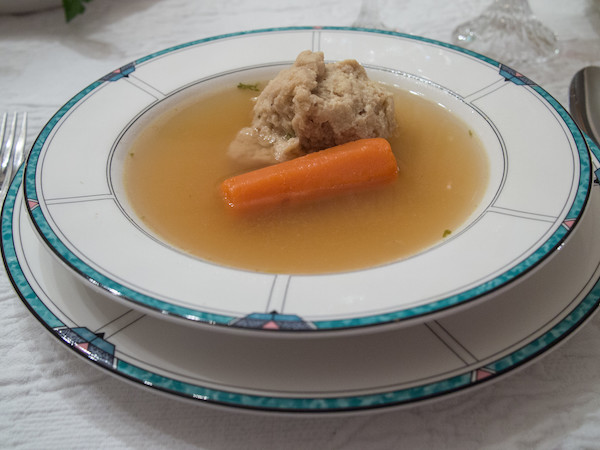
Leftover chicken can be used for more than matzah ball soup. (photo from flickr / Edsel Little)
There is a tradition of having chicken for the seder meal, as well as for dinners on other Pesach evenings. Here are some different ways of using the leftovers.
In a soup pot, place water and chicken soup powder or (1 1/2 cups chicken soup), celery, onion and carrots. Bring to a boil, then reduce and simmer until vegetables are partially cooked.
Remove chicken from bones and place in food processor. Process a few seconds. Remove to a bowl.
Add eggs, matzah meal and 1/2 cup chicken soup. Shape into balls. Add more matzah meal if balls don’t seem to hold together. Place in chicken soup with vegetables. Cover partially and simmer 30 minutes.
MINA DE PESACH (I always make a couple of Sephardi dishes during Pesach in tribute to my father’s family. This recipe came from The Recipe Table by Susan R. Friedland, 1994. It makes 6-8 servings.)
5 tbsp vegetable oil 2 cups chopped onions 3 tbsp minced garlic 1 1/2 cups thinly sliced mushrooms 3 cups bite-size pieces cooked chicken salt and pepper to taste 1 cup chopped parsley 5 lightly beaten eggs 5 to 6 matzot 1 cup chicken soup 3 tbsp vegetable oil
Preheat oven to 375°F. Grease a six-to-eight cup baking dish.
Heat five tablespoons oil in a large frying pan. Slowly sauté onion and garlic until translucent, about 10 minutes. Add mushrooms, sauté five minutes and cool. Stir in chicken, salt, pepper, parsley and eggs.
Dip two matzot in the stock until well moistened and lay in baking dish. Spoon half the chicken mixture on top. Cover with one more moistened matzah, the remaining chicken and two remaining matzot.
Pour two tablespoons oil on top and bake for 15 minutes. Sprinkle with remaining one tablespoon oil and bake an additional 15 minutes or until the top is a rich, crisp brown. Let cool for 10 minutes and serve.
CHICKEN-LEEK PATTIES (makes 6-8 servings)
3 leeks, cleaned and cut up 1 cup chopped onions 2 cups cooked, chopped chicken 2 eggs 1 cup mashed potatoes 1/2 cup matzah meal salt and pepper to taste 1 beaten egg matzah meal vegetable oil
Place leeks and onions in a saucepan with water. Bring to a boil. Reduce heat and simmer 30 minutes. Drain and chop in a bowl.
Add chicken, eggs, matzah meal, mashed potatoes, salt and pepper and blend.
Place beaten egg in one shallow dish and matzah meal in another dish. Form mixture into patties. Dip each in beaten egg then in matzah meal. Refrigerate for at least 30 minutes.
Heat oil in a frying pan. Fry until patties are brown on both sides. Drain on paper towels.
Sybil Kaplanis a Jerusalem-based journalist and author. She has edited/compiled nine kosher cookbooks and is a food writer for North American Jewish publications. She leads walks of the Jewish food market, Machaneh Yehudah, in English.