

Month: March 2023
המשבר החמור בישראל
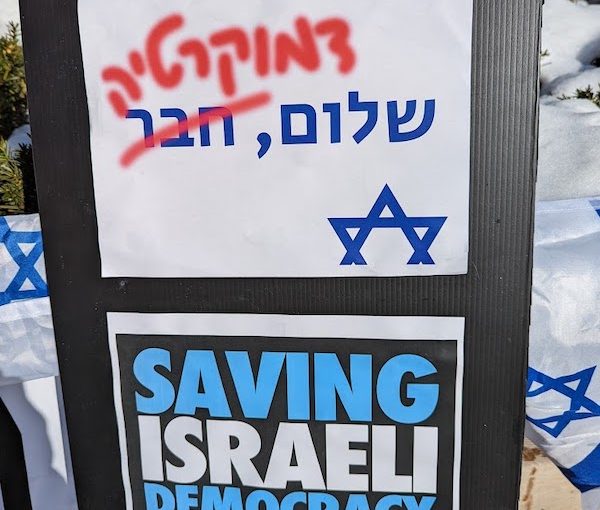
למרות המשבר החמור מאוד בישראל והפגנות גדולות במדינה נגד הרפורמה המשפטית של הממשלה, שנמשכות כבר למעלה מחודשיים, בקהילה היהודית בוונקובר עומדים מהצד ולא נוקטים בצעדים מעשיים. מדי שבוע בימי ראשון נערכת הפגנת הזדהות של יהודים בוונקובר עם המאבק של מתנגדי הרפורמה בישראל,ובודדים בלבד מגיעים לאירוע שמתקיים בכיכר רובסון, בסמוך לארט גלרי של ונקובר. אני השתתפתי באירוע שנערך ביום ראשון האחרון של חודש פברואר, ובסך הכל הגיעו תשעה מפגינים לכיכר רובסון. זה היה פשוט מחזה מביש לראשות בודדים ביותר בקרב קהילת היהודים המקומית שבכלל אכפת להם ממה שקורה בישראל. האדישות היא לא במקום כאשר הבית בישראל בוער, אמר לי אחד המפגינים נגד הרפורמה המשפטית
המפגינים נשאו שלטים בעברית ובאנגלית בגנות ראש הממשלה בנימין נתניהו, ותוכנית הרפורמה המשפטית שלו, שנועדה בעצם להפסיק את כל ההליכים המשפטיים נגדו ולשחרר אותו מהאפשרות שישלם מחיר כבד על החשדות הפליליות נגדו. נישאו נאומים קצרים והמפגינים התפזרו לכל עבר תוך תקווה שבהפגנות הבאות יגיעו רבים יותר. הישועה לישראל השפויה כנראה לא תגיע מוונקובר
גם ראשי הקהילה היהודית כאן נוהגים באיפוק מוגזם ולא עומדים לצד המפגינים הרבים בישראל נגד הרפורמה של ראש הממשלה בנימין נתניהו וממשלתו הקיצונית, כפי שעושות הקהילות היהודיות בארצות הברית. הפדרציה היהודית של אזור ונקובר הוציאה הודעה לאור האירועים החמורים בישראל, שהיא בעצם ההודעה של של הפדרציה היהודית של קהילות צפון אמריקה. בהודעה נאמר כי הפדרציה היהודית של קהילות צפון אמריקה שלחה מכתבים לראש הממשלה בנימין נתניהו וראש האופוזיציה יאיר לפיד, ובהם היא מציינת את דאגתה מהיבטי הרפורמה של מערכת המשפטי החדשה, תוך שהיא קוראת לשני הצדדים מייד לנהל משא ומתן לפשרה. כל זאת על סמך ההצעות של נשיא המדינה יצחק הרצוג. בפדרציה היהודית של צפון אמריקה מדגישים עוד כי יש לבצע שינויים מהותיים בהצעת החוק לרפורמה במערכת המשפטת של ממשלת בנימין נתניהו. השוניים כוללים בין היתר את ההחלטה ברפורמה כי כנסת ישראל יכולה ברוב קולות להפוך ולשנות החלטות של בית המשפט העליון של ישראל. עוד מודגש בדברי הפדרציה היהודית של קהילות צפון אמריקה כי, אסור שהכנסת של ישראל ברוב של שישים ואחד קולות בלבד – תבטל את החלטות של בית המשפט העליון של המדינה ויש במפורש להכיר גם זכויות של המיעוט
לדברי הפדרציה היהודית הקהילות של צפון אמריקה המכתבים שלה זכו לדיווחים נרחבים 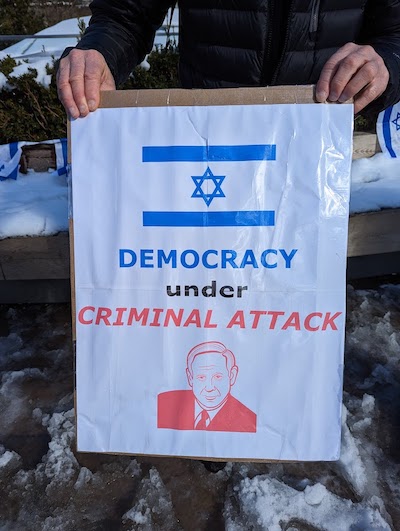 בתקשורת הישראלית ולאור כך זמן קצר לאחר הפרסומים קרא ראש הממשלה בנימין נתניהו באופן גלוי להידברות עם האופוזיציה, כאשר ראש האופוזיציה יאיר לפיד, הסכים אף הוא עם עקרונות ההצעה של הפדרציה היהודית של קהילות צפון אמריקה. בפדרציה היהודית של קהילות צפון אמריקה מוסיפים עוד כי הם מעודדים מהצהרתו של ראש ממשלת ישראל בנימין נתניהו, ואכן מאמינים ששני הצדדים צריכים לפעול במשותף כדי להתגבר על ההבדלים הקטנים מאוד שנותרו, כדי להתחיל במשא ומתן בין הצדדים באופן מידי ביותר
יו”ר הפדרציה היהודית של אזור ונקובר עזרא שנקן, מציין בהודעתו השבועית לקהילה המקומית בין היתר, כי לבו נשבר לאור הפוגרום הקשה של המתנחלים בישוב הפלסטיני חווארה, שהוא מנוגד לחלוטין לאופן שבו הוא מאמין שמוטל אל אנשים להתנהג. כזכור המתנחלים שרפו בתים, מכוניות ורכוש של פלסטינים לאחר שמחבל הרג שני מתנחלים. מאש שנתניהו חזר לשלטון גדלו אירועי הטרור בישראל באופן משמעותי
Not your parents’ Netanyahu
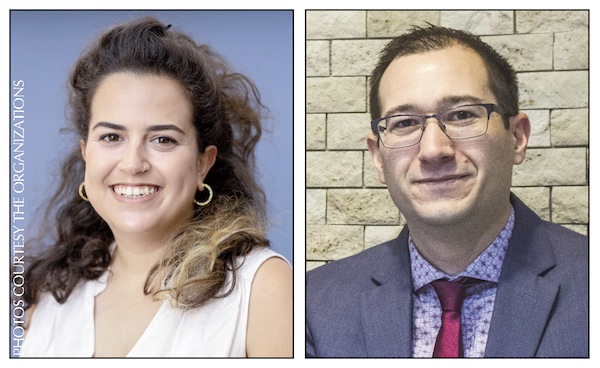
Lihi Shmuely of Israel Hofsheet and Ben Murane of the New Israel Fund of Canada. (photos from the organizations)
Binyamin Netanyahu is the longest-serving Israeli prime minister and should be a known quantity. The government he leads now, however, is unlike anything the country has seen in the past, according to a leading Israeli activist who participated in a cross-Canada speaking tour.
“This is different,” said Lihi Shmuely, deputy director of Israel Hofsheet. “This is completely new to us. This is a very extreme, radical government that we’ve never seen before.”
Israel Hofsheet (Israel Be Free) works to increase freedom and equality in the areas of religion and state, as well as Jewish pluralism in Israel, particularly focusing on civil options for marriage, gender equality, pluralistic Shabbat in the public realm and LGBTQ+ rights.
Even some voters who supported parties that are now in the governing coalition are expressing regret, she said. Many supported right-wing parties based on national security issues or a range of other policies.
“Now they understand that it comes as a whole package, that these people who promised national security … [are] not just racists but also chauvinists and homophobes and misogynistic people who are promoting legislation that will hurt the very core, the liberal and democratic core, of Israel,” said Shmuely.
She warned that people should take members of the new government seriously when they advance what appear to be extreme policy positions. To contextualize what is happening, she compared the reaction in the United States when the U.S. Supreme Court overturned Roe versus Wade, the precedent-setting reproductive rights case.
“We thought this was already set in stone, the Supreme Court has decided and that’s it,” Shmuely said. Returning to the Israeli situation, she warned that some people do not believe that the more extreme statements or policies – even the formally agreed-upon coalition agreements – will actually be codified in legislation or policy. “They will do what they say they’ll do. So, we need to take it very, very seriously.”
Evidence suggests many Israelis are taking it seriously. Rallies throughout the country against the range of legislation and proposals – most notably the subjugation of the Supreme Court to the elected Knesset, as well as women’s equality and LGBTQ+ rights, the status and rights of Palestinians in the West Bank, and encroachments of religion into the public sphere. People who have never been political in the past are getting involved and even attending the mass rallies that take place every weekend.
“We don’t have this privilege anymore, to say, I will not get involved,” Shmuely said, adding that Israelis are facing existential questions. “I feel like we are asking ourselves, what are we? Are we a Jewish state? Are we a democratic state? Are we a liberal democracy? Is there a contradiction between all of them? It feels like these days we are writing the rest of our history.”
Shmuely’s grandmother is a Holocaust survivor and, in recent months, has been saying, “This is not the country that I ran away from Europe for.”
While emphasizing urgency, Shmuely counters that it is not too late to alter course.
“I do think we are under terrible threat and I do think that it’s not too late,” said Shmuely. “It’s almost – but it’s not yet. We still have a lot to do.”
A major focus for opposition groups is this October’s municipal elections across Israel.
“These are sort of like the midterms in the States,” she said. Aside from this, municipal governments also have power to push back against national trends. For example, some municipalities have expanded transportation services to Shabbat.
Shmuely was supposed to be in Vancouver March 1 for a program at Or Shalom synagogue. However, she was stuck in Toronto after contracting COVID and appeared virtually. In person was Ben Murane, executive director of the New Israel Fund of Canada. His group supports civil society organizations in Israel that advance socioeconomic equality, religious freedom, civil and human rights, shared society and anti-racism efforts. Their Vancouver event was co-sponsored by Or Shalom, and the advocacy groups Peace Now and Ameinu.
Murane highlighted what he sees as recent positive developments.
“We couldn’t have anticipated that every Saturday there would be 100,000 protesters coming out – 300,000 last weekend,” he said. Security officials, business leaders, the heads of universities, lawyers, the press council and others who might previously have remained silent on contentious issues are speaking out, said Murane, and high-tech businesses are giving employees time off to attend protests.
“We couldn’t have anticipated that, in the past few weeks, major Diaspora voices who, between you and me, are usually the ones arguing against criticism of Israel, would be coming out saying, please criticize the government of Israel,” he said. “The Jewish Federations of North America issued a very surprising and precedent-breaking statement against the court override. You see individuals like [former Canadian justice minister] Irwin Cotler coming out, you see [former head of the Anti-Defamation League] Abraham Foxman and, for whatever it’s worth, Alan Dershowitz also saying something.”
He cited the resignation of Avi Maoz from cabinet last week as a positive outcome, partly due to public opposition. Maoz is head of the far-right Noam party, which advocates against equality for women and LGBTQ+ people. He resigned from cabinet, though not from the governing coalition, when he realized that Netanyahu was unlikely to implement numerous of his priorities.
“Avi Maoz came in with very bold intentions and then met all of this intense resistance and found that his agenda is not going to be as easily advanced,” he said. The rest of the coalition realized, according to Murane, that it would cost a great deal of political capital for the government to allow Maoz to get his way. “We are seeing them say, Avi, you’re not going to get everything you want, and he quits in a huff.… This is evidence that some of this is actually working, that it may appear a pyrrhic victory, but these are the dribs and drabs of what impact looks like in these moments.”
The role of groups like his and its partners on the ground in Israel is eternal vigilance, Murane said.
“Part of the role of civil society is to let nothing go unchallenged. Nothing,” he said. “Even if our odds of actually completely forestalling it are slim, part of the victory is to make an atrocious thing merely bad and to make the political powers that are advancing these initiatives expend a great deal of political capital in order to get what they want, by making them waste time and energy.”
Murane addressed the extraordinary violence that took place in the Palestinian village of Huwara Feb. 26, where rampaging Jewish settlers engaged in what has been called by some a “pogrom” that left one person dead, almost 400 wounded, and homes and businesses set afire. The attack was revenge for a terror attack the same day, in which Israeli brothers Hallel Yaniv, 21, and Yagel Yaniv, 19, were murdered.
“We’ve seen settler violence,” said Murane. “It’s been on the increase. It’s a real thing. It’s a fact of life for Palestinians from the territories. But to have dozens of settlers go into a village with impunity and commit the violence they committed, that is a new thing.”
He said civil society organizations must draw as much attention as possible to such incidents, including promoting the use of body cameras for police and wider availability of video cameras for civilians.
Incidents like these cloud the reality of evolving Israeli views on Arab-Jewish political cooperation, he said. Over the last several election cycles, opinion polls have indicated a steep increase in the proportion of Israelis who support Arab-Jewish political cooperation, from about 30% a couple of years ago to a majority today. The inclusion of an Arab political party in the last coalition government was groundbreaking.
“That’s a huge change in Israeli society that, a year ago, we didn’t even imagine it was possible,” Murane said. In the 2022 election, he said, “unless you are voting for the right-wing, you are implicitly voting for more Jewish-Arab political partnership.”
Or Shalom’s Rabbi Hannah Dresner introduced the event.
“I think it’s an important time for me to acknowledge that the democracy that I imagine as part of that beautiful place that I called Israel through my whole growing up and adulthood is really a selective democracy, a democracy for some and not for all,” she said. “That is a very important aspect of my concern at the moment – not just what happens with the loss of democracy but what is that democracy and how can it be a democracy that serves all who live in the land of Israel?”

Finding community in art
“Nostalgia” by Lovena Galyide (photo by Olga Livshin)
Community Longing and Belonging, the fifth annual exhibition in celebration of Jewish Disability Awareness and Inclusion Month, is now on at the Zack Gallery.
Curated by Leamore Cohen, coordinator of Jewish Community Centre of Greater Vancouver’s Inclusion Services, the participating artists demonstrate a range of artistic levels, abilities and social affiliations, but they all strive to answer the same questions in their artwork: What does community longing look like? How to find a place to belong in our ever-changing world?
Cohen has been the driving force of this show for five years. For her, an unjuried exhibition is the best way to honour the commitment to remove barriers and celebrate community members’ creativity. If an artist wanted in, they were in, professional artist or amateur, Jewish or non-Jewish, young or old. Cohen stressed that inclusion is the basic principle, and participation is what counts most.
Many artists in the current show have participated in the Inclusion Services exhibit before. Although most of the works on display are paintings, there are also photographs and drawings. There are portraits and landscapes, figurative and abstract imagery. Some items are for sale, while others are not.
Many of the portraits are disturbing in their naked emotional anguish. The faces are jagged or crooked, angular or cubical. One of them is clearly inspired by Picasso, but all of them portray loneliness, a search for belonging.
Most of the abstract images are similarly angry or sad. Very little figurative recognition manifests, but the emotions explode out of the pictures, multiplied by dark colours and sharp lines. They depict the pain of isolation, the desire for acceptance.
Not every work is bleak. Clare Palmer’s photograph “Red Maple” is full of natural serenity, as if the photographer found her community in nature and recommends it to everyone.
Roi Alexander M. Sanchez’s painting with a long and winding title starting with Clean Environment shows a man and a woman cleaning the land, collecting garbage into sacks, together with their friends in the background. The cleaning they are doing is obviously a community event, and the artist emphasizes this with bright colours and cheerful composition. The painting radiates gladness, with a child-like flare. The author seems to say: we clean our home together.
Togetherness also seems to be the main meaning of Aileen Leong’s untitled piece, where two hearts are pierced by one arrow. Connected by this arrow of love, the hearts fly above the mountains on the golden wings of joy.
Lovena Galyide, on the other hand, doesn’t speak of love in either of her two paintings. Both are larger than most of the others in the exhibit. Both feature a single woman. In one, called “Say Yes to Your Open Door,” a girl lifts the curtain of night above her head, allowing in the light of the morning. She welcomes a new beginning and abolishes darkness. The painting thrums with hope. The girl is alone, with her back to viewers, but maybe the new day will bring her a new friend. Or a new love is waiting for her on the sunny side.
Another of Galyide’s paintings is “Nostalgia.” It is less exuberant than the first. The woman in this canvas stands in the rain outside the window of a flower shop. The viewers are “inside,” looking out. All they see is a blurry female silhouette under an umbrella. But, inside the shop, flowers bloom. Is that pensive, lonely woman going to enter? Buy flowers? Or is she just passing down the street? So many stories could start with this painting, all going in different directions. It is up to viewers to finish those stories.
Flowers are also the focus of Sandra Yuen’s “Bias.” This painting is large, and the close-up flowers are accordingly huge and gloriously pink, blooming in splendid isolation on the blue background. The painting is reminiscent of Georgia O’Keeffe’s gigantic flowers, capturing the beauty and vastness of nature.
Unlike Yuen’s exposition of colour, another large painting, by Rodrigo Perez Parra, seems composed mostly of melancholy, echoed by its subdued, earthen palette. Its title, “The Dance in the Dream,” reflects its subject: a woman standing thoughtfully beside an open door. Does she dream of a dance in her past? Does she hope to dance again? Where is her partner? Only a hat, hanging beside the door, reminds us about them. Are they coming back? Again, stories abound from this painting, some of which might even have a happy ending.
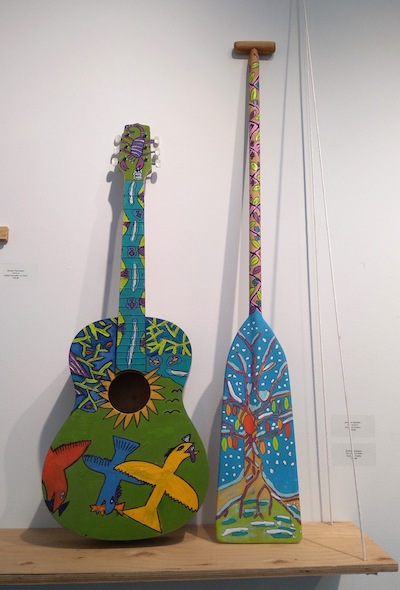
In the middle of all the images on the gallery walls, two 3-D exhibits stand out. Andrew Jackson’s “Folk Guitar” and “Tree of Life Paddle” are tongue-in-cheek, almost goofy. Both are real-life objects, painted in a distinctive folksy style. The guitar flaunts soaring gulls gobbling fish. The paddle is painted with the Tree of Life. Although the guitar lacks its strings, perhaps the artist considers music our inescapable community. Or sports (for the paddle)?
Another unique item on display is a small clay tablet called “The AHA Community.” The artists who created it belong to the Artists Helping Artists (AHA) collective. The plaque doesn’t list any names, but Cohen said each of the 11 little colourful figures placed on the tablet’s surface, all engaged in different artistic activities, were made by different members of the collective. They are merry self-portraits, making the tablet itself a representative of all the artists in this show.
According to their website, AHA is an art studio collective in Burnaby, where artists of all abilities and skill levels are encouraged to come together to make art – visual art, music, writing, anything goes. The studio provides space, affordable materials and the opportunity to pursue the individual artist’s aspirations. A large percentage of their membership is artists with complex needs.
Like the JCC Inclusion Services, AHA believes that art is a vital element in our lives, and that inclusion is mandatory. Their mandates are congruent – each invites people to share their feelings through art.
The Community Longing and Belonging exhibit runs at the Zack until March 28. To view the flipping book, visit online.flippingbook.com/view/836064016.
Olga Livshin is a Vancouver freelance writer. She can be reached at olgagodim@gmail.com.
Standing by our family
If a member of your family were in crisis, would you abandon them? Even if the crisis were partly self-inflicted, of course you would stand by them.
In a metaphorical way, this is the issue facing Diaspora Jews in considering Israel right now. Whether you agree or disagree with the direction of the new government, it is undeniable that Israel is in a crisis. Each weekend, for several weeks, between 100,000 and 300,000 people have marched in the streets in opposition to a range of government policies, particularly proposed judicial “reforms” that many critics view as a threat to the fundamental democratic character of the country.
Watching from afar, these events are discouraging and worrying – and these emotions mingle with what might already be a degree of ambivalence, disappointment and many other sentiments. It is not always easy to be a supporter of Israel overseas. We have struggled in the face of decades of condemnation, some legitimate, some outlandish exaggerations. It would be easier, for some of us, to walk away.
Israelis do not have the luxury of walking away. And if one looks at Israel today and says, “That does not reflect my Judaism, my politics, my values,” remember: it does not reflect the Judaism, politics or values of most Israelis either.
The Israeli government we see today is the result of a tail wagging the dog, a reality facilitated by coalition politics and the desperation of Binyamin Netanyahu to regain power at almost any cost.
In many instances, people who voted based on concerns about national security find themselves appalled at policies around women’s equality, LGBTQ+ rights, the place of minorities in the country, the treatment of Palestinians in the West Bank and, of course, the overriding threats perceived in the attempts to meddle with the infrastructure of the Israeli judiciary – the wellspring from which much of Israel’s liberal character has come.
Most Israelis did not knowingly vote for leaders who would see the settler violence against Palestinians in the village of Huwara and endorse it, vindicate the perpetrators and incite further, even more destructive and possibly murderous violence. This latter example – of politicians (or anyone else, for that matter) openly celebrating and inciting racist violence – should disgust everyone, no matter their political stripe.
Overseas organizations that are connected with Israel – not least the Jewish Federations of North America – have spoken out officially in ways that are unprecedented in the history of Israel-Diaspora relations. Some of these statements have been comparatively mild in the minds of many observers, who view this as genuinely a time for full-throated disapproval. The fact that they are speaking out at all, however, is significant.
One of the side effects of all this is the debunking of the popular accusations that the tendency to keep negative comments within the family reflects “uncritical support for Israel.” This idea, that Zionism is a form of congenital disorder unrooted in reason, has never been true but it is now discredited. For what that’s worth.
Relatedly, individuals and groups who for years have been slandering Israel with hyperbole are now learning that they have exhausted the arsenal of vocabulary when actual events call for some strong language.
There is some reason for optimism. Isaac Herzog, Israel’s president, who has been cast by events into a role unlike the relatively ceremonial function that the office usually carries, said this week that a compromise may be in the offing on the contentious judicial reforms. Moreover, the resignation from cabinet last week of Avi Maoz, a far-right extremist, appears to be evidence that the government is wearying of fighting a multiple-front war. It is believed that Maoz realized the government wasn’t going to impose his racist, misogynistic and homophobic policies and so took his marbles home. There are reports of more turmoil in the ranks, which could drag the government and the country back toward a little sanity.
On the one hand, this should not invite a slackening of the pressure. There is a movement afoot among Diaspora Jews (and others) to discourage world leaders from meeting with extremist members of the Israeli government. Whether or not that will have much effect on anything, it is a valuable expression of revulsion for people who, like Bezalel Smotrich, incited (and then walked back) his call to “wipe out” the Palestinian village where Jewish settlers recently attacked innocent civilians.
On the other hand, anyone who is considering walking away from Israel, of abandoning the emotional energies of this fight, should consider who it is they would be abandoning in the process. A government is fleeting – although the lasting damage a single government can do is significant. But, Israel is the embodiment of the Jewish people’s national self-determination. To walk away from that is to walk away from more than bad government policy. It is to walk away from history. To walk away from everything that one’s ancestors hoped for, prayed for and built.
More importantly, it is to abandon to their own devices the very people in Israel with whom we probably most closely agree, who are struggling nobly to preserve the vision of Israel that many or most of us believe to be an ideal.
When a family member is in crisis, we do not abandon them. We engage. We help. We confront and intervene, if necessary. We do not walk away. In fact, this is precisely the moment when we dig deepest into our resources and do everything we can to make right what is wrong.
Local heads new office
B’nai Brith Canada has returned to Vancouver. This time with a local office headed by Aron Csaplaros, who was born and raised in Vancouver.
B’nai Brith and its now-defunct newspaper the Jewish Tribune last made their presence felt here in 2009. In an interview with the Jewish Independent, Csaplaros emphasized “that our organization is not the B’nai Brith of the 1960s or 1970s, or the 2000s. Mr. [Michael] Mostyn took over control of our organization in 2014 as CEO and has created a ‘B’nai Brith 2.0.’ We are still heavily involved in affordable housing, feeding the vulnerable and seniors and social programming (something we hope to bring to B.C. as well in the future), but our main focuses have been advocacy and combating antisemitism.”
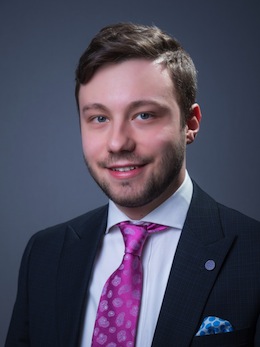
As regional manager, Csaplaros said, “My mandate is 100% focused on combating antisemitism in our province. This includes responding to incidents of antisemitic vandalism, liaising with Jewish organizations on university campuses regarding antisemitism, and also keeping tabs on antisemitic individuals and organizations active in B.C. and devising strategies, which can range from working with local police and Crown prosecutors on criminal charges, removal of their platform, which they use to spread hate, or other legal measures we can take. I am also working on having the provincial government and municipalities across B.C. adopt the crucial IHRA [International Holocaust Remembrance Alliance] definition of antisemitism.”
Csaplaros acknowledged that there are already organizations based in British Columbia that deal with antisemitism and discrimination.
“B’nai Brith’s goal, and my presence in B.C., is not to compete with, duplicate or replace the important work that other organizations do,” he said. “On the contrary, we plan to work together with other organizations when we can establish a united front against antisemitism and Jew-hate.
“The value that B’nai Brith, and my presence here, adds is our laser focus on fighting antisemitism and the legal acumen that B’nai Brith possesses to aid us in this goal. We have several staff lawyers with expertise in criminal law and constitutional law, and many of our staff members (including myself and our CEO, Michael Mostyn) have legal backgrounds in litigation. This gives the ability to devise creative strategies when dealing with antisemitic organizations and individuals, and allows us to work closely with police departments and Crown prosecutors.
“We also have a Canada-wide network of volunteer Jewish lawyers called the Matas Law Society,” he said. “These lawyers are available to assist us in anything from writing submissions for parliamentary committee hearings, to intervening in court cases that impact the Jewish community.
“We are also the only Jewish organization in Canada to have an anti-hate hotline and a mobile app with the same purpose, where people can report incidents of antisemitism or other forms of discrimination. In addition, we have produced an annual, comprehensive audit of antisemitic incidents in Canada, and this publication is used by, among other entities, Statistics Canada, the U.S. State Department and Tel Aviv University. B’nai Brith does not engage in Israel advocacy, and we only respond to issues concerning antisemitism in Canada affecting Canadian members of the Jewish community. We also have a lean but well-connected team working at our organization, which allows us to respond quickly to incidents as they arise.”
Csaplaros started his position as the B.C. regional manager for B’nai Brith in January, and has met with local leaders in the Jewish community, politicians, and leaders of non-Jewish organizations that are also involved in combating hatred and discrimination, he said.
Csaplaros was born to a family of Hungarian immigrants, with his grandfather having been the first to arrive in Canada, in the 1950s. His parents arrived in 1995.
“I was brought up in a traditional Jewish household, and my paternal grandmother is a child survivor of the Holocaust,” he said. “I grew up very close to Congregation Schara Tzedeck, the synagogue which I am a member of and still attend to this day with my wife. I sit in the same seat that my grandfather purchased over 30 years ago, and it gives me great pride to continue his legacy by sitting in his seat and regularly attending services and events at the synagogue.
“I attended Vancouver Talmud Torah all the way from preschool until graduating in seventh grade,” he continued. “I then spent a year at King David High School, before transferring to Pacific Torah Institute (PTI) [which is no longer in Vancouver] and completing high school there. I then spent three years in their post-high school program, before attending Yeshivas Chofetz Chaim in New York for a year, where I received my bachelor’s degree in rabbinical studies.”
Throughout his time at PTI and at the yeshivah in New York, Csaplaros said, “I was engaged in learning with community members and teaching how to read Jewish source texts in their original format. I was also involved in community outreach, spending time and studying with elementary and high school-aged students from disadvantaged backgrounds. I also served on the board of directors of PTI.”
After his bachelor’s degree, Csaplaros attended law school at the University of Calgary, completing his articles at Kornfeld LLP.
“I’ve always had a passion for research, advocacy and governmental affairs, and I regularly participated in debates organized by Federation,” he said. “Yeshivah studies also involve debate and plenty of research, so that is another reason I chose to pursue a yeshivah education for several years. I then decided that the best way for me to develop my advocacy skills and learn more about the structure of Canada’s government was to attend law school…. I knew from the beginning of my legal studies that I wanted to be a litigator and, in the future, focus on human rights and civil liberties matters. Throughout law school, I was involved in initiatives to increase access to justice for members of the Indigenous community.”
During his time at Kornfeld LLP, Csaplaros said, “I focused on litigation, including construction, real estate and general commercial litigation. I was fortunate to appear in court several times and run a small claims trial on my own.
“These experiences further strengthened my desire to be an advocate,” he said, “and, as my time as an articling student at the firm was coming to a close, I learned that B’nai Brith Canada was looking for a regional manager for B.C. whose main mandate would be advocacy and fighting antisemitism and hatred in all forms. I knew that B’nai Brith Canada is a leader in fighting antisemitism in Canada, and I also knew that I could use my knowledge of the legal system to help me further this goal.”
Csaplaros can be reached at aronc@bnaibrith.ca.
Hillel BC marks its 75th
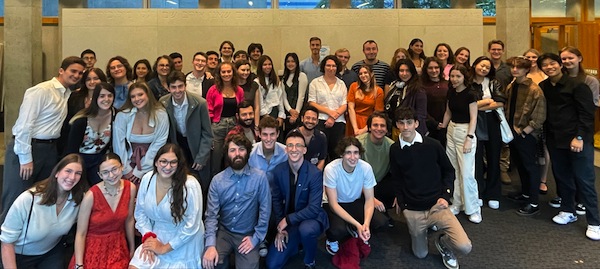
Attendees at UBC Hillel House’s Rosh Hashanah dinner to start the 2022/23 school year. (photo from Hillel BC)
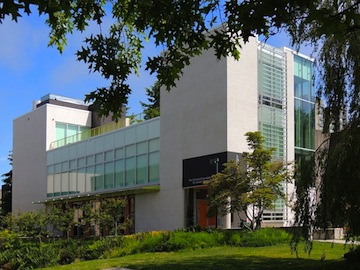
Hillel BC celebrates its 75th year with a celebration March 30 at the University of British Columbia Hillel House.
Hillel BC was founded in 1947, under the name B’nai B’rith Hillel Foundation, in the same spot on UBC’s campus where it still operates from today. This came from an understanding that Jewish students were being excluded from the main student clubs on campus and they needed a place to socialize and be Jewish.
The original space was an old, wooden one-room house that was at the outskirts of campus. Little did they know then that this location would become the heart of the campus as the university expanded.

In 2002, B’nai B’rith Hillel Foundation became Vancouver Hillel Foundation, the first Hillel International-affiliated program in Canada, which was followed by establishing space at both Simon Fraser University and University of Victoria. Eight years later, the current building was opened, solidifying Hillel’s space on the UBC campus and beyond. Today, Hillel BC continues to serve at UBC, UVic, SFU, Langara College, Emily Carr University of Art + Design and other post-secondary institutions as needed.
In addition to celebrating 75 years on campus, Hillel @ 75 on March 30, 7:30 p.m., will provide an opportunity to thank recent executive directors Rabbi Philip Bregman and Sam Heller. The Jewish Student Association, Israel on Campus Club and AEPi (Jewish fraternity) will offer the community an overview of their activities in dedicated tables, and a short presentation will be given by the board and current staff. Special guests include Deborah Buszard (UBC interim president), Joy Johnson (SFU president), Skip Vichness (Hillel International board chair) and Vancouver Mayor Ken Sim.
“We are very excited to have the community back in our building for this celebration of our 75th anniversary,” said Rob Philipp, executive director of Hillel BC. “Due to COVID, we missed a lot of important events worth noting, specifically the 10th anniversary of our UBC building, and the retirement of Rabbi Philip Bregman and Sam Heller. We want to take the opportunity to celebrate our successes and recognize some of the key people who helped lead us through some difficult times. The evening reception will be at our UBC building, attended by special guests, and it will host the first viewing of our promotional video.”
For more about Hillel BC and to purchase a ticket for the event ($75), visit hillelbc.com. A portion of the ticket price is tax-deductible.
– Courtesy Hillel BC
Give to increase housing
The Metro Vancouver Jewish community continues to struggle with housing insecurity. There is an urgent need for affordable, safe and stable homes, with more than 300 applicants on the Jewish Housing Registry’s growing waitlist. Of those, 71 are families with children and 65 are persons with disabilities.
Tikva Housing Society currently serves more than 300 people, with 100% occupancy in its 128 subsidized rental units, and by providing rent subsidies for those living in market rentals facing a temporary crisis.

“The only way that Tikva can address our community’s housing needs is through your generosity. Donations are crucial to help in achieving our mission to provide innovative and affordable housing solutions,” said Anat Gogo, executive director of Tikva Housing Society.
That is why, this month, the society is calling upon the collective power of the community’s compassion and generosity, as it launches Tikva’s annual fundraising campaign. Here is how you can help:
1) Plan. Mark your calendars for March 17 to March 27.
2) Give. Starting March 17, go to tikvahousing.org/donate and make your gift.
3) Inspire. Encourage your family and friends to join you in making a difference.
4) Share. Spread the word by sharing Tikva’s campaign posts on your social media and tag @TikvaHousing to expand its reach on Twitter and Facebook.
When you donate, you help provide a safe and secure home for Jewish community members, enabling them to put food on their table, buy medication and send their kids to camps. Dignity comes with the stability of shelter, as does the strength to fight for a better future.
– Courtesy Tikva Housing Society

Alegría a gratifying movie
Alegría screens at the Rothstein Theatre March 19, and online March 19-26. (photo from vjff.org)
You can pick your friends, the old saying goes, but you can’t pick your family. For Alegría, a prerequisite of adulthood is distancing from relatives and interacting with them on her terms.
The vital 40-something protagonist of Alegría, screening in the Vancouver Jewish Film Festival (vjff.org), has deliberately carved out a self-centred existence in her quiet hometown of Melilla, a small Spanish city on the northern coast of Africa. Alegría (Cecilia Suárez) Facetimes with her kibbutznik daughter and directs the young Muslim woman who cooks and cleans for her, relishing her independence.
Warm colours and inviting interiors, however, signal from the outset that Alegría is going to be a story of connection rather than isolation, of love supplanting loneliness and redemption trumping regret. In her satisfying and touching feature debut, Spanish director and co-writer Violeta Salama’s generosity extends well beyond Alegría to the young women who enter her orbit.
But none of that is on the table when Alegría gets a call that her Orthodox brother, sister-in-law and niece are coming to Melilla for the latter’s wedding to a local guy. They plan to stay at Alegría’s place – the house where she and her brother grew up – invading her space and brushing the cobwebs from her dormant Sephardi Jewish identity.
Alegría has literally sealed off the past – mezuzot, photos, furniture and menorot behind a locked door. Secular to the point of caustic irreverence, Alegría views her assimilation as an emblem of freedom and enlightened coexistence. Bit by bit, though, she will realize that she has denied a core component of her character.
Alegría doesn’t define herself in terms of or in reaction to men, and hasn’t for a long time. Yet the tough love, bordering on lack of empathy, that this stalwart feminist evinces for Yael, the bride, and Dunia, her part-time housekeeper, is shocking.
Yael is used to obeying her father but is beginning to doubt the merits of transferring that acquiescence to her soon-to-be husband. Dunia’s brother, the head of that household, stands in the way of her dream of studying drawing in Paris.
Women escaping the constraints, and embracing the ties, of family has long been the stuff of melodrama. But the filmmaker adopts a lighter tone with humorous bits that undercut the seriousness with which the characters take their respective situations.
“I’d cut my foot off before stepping into a synagogue,” Alegría proclaims in a seemingly unambiguous rejection of ritual, tradition and faith. But when she visits the rabbi to reserve the mikvah for the bride and Yael’s mother, their banter suggests that he and Alegría had a youthful romance (while opening the window to a potential future relationship). The synagogue, therefore, doesn’t represent a religious institution or unhappy family memories to Alegría. It’s just a reminder of who she used to be – or, more accurately, who she is.
One of the pleasures of Alegría is that it unfolds in a calm, civilized setting that feels like an oasis. No sirens or boom boxes jangle our nerves, and the family feudings rarely require the raising of voices.
Salama told an interviewer when she was completing the film in 2021: “To create Alegría’s world, I wanted to steer away from the realism of life in a border town, a major port, instead setting her down in the world of my childhood. I want to share the city as I see it, the city I carry inside me, and so I recreated certain moments where the focus is entirely on these seemingly very different women who share the same problems and contradictions.”
To that end, the centrepiece of the film is an overnight outing to Dunia’s grandmother’s house, just over the border in Morocco, where the women cook, dance and toss an impromptu bachelorette party for Yael. They are free to live on their terms, fully self-sufficient, with no men in sight.
Alegría offers some passing yet pointed critiques of patriarchal autocracy, and the male characters are relegated to the edges of the frame. This is what used to be disparagingly called a “woman’s picture,” because it centres women’s demands – to be who they want to be – and desires – to avail themselves of every opportunity. The most gratifying aspect, however, is that the movie’s spirit of cooperation and, yes, coexistence ultimately touches every character.
Michael Fox is a writer and film critic living in San Francisco.
Depictions of turbulent times
In March ’68, the shocking events of the Polish political and social crisis of that time are dramatized through the eyes of two families. Hania, a young woman who is Jewish, is in love with Janek, a boy whose father is a member of the nomenklatura, a senior official whose career is endangered by the political activism his son is dabbling in.
But careers are only one of the concerns for Jewish Poles, whose very identities as citizens of the country are in jeopardy, as the society spirals with a chilling and apparent suddenness into antisemitic frenzy. The blatant antisemitism is masqueraded as an “anti-Zionist” campaign and a defence against “non-Polish” elements.
Poland was in a financial panic, with wage reductions and assorted economic turmoil. Events spiraled after the expulsion from the university of political dissidents and the closure of a theatre presentation deemed anti-government. No prerequisites are required. The film, from director Krzysztof Lang, tells the viewer all they need to know about the history – and the petty and not-so-petty indignities of living under a repressive regime.
Through the braying voices of the country’s communist leaders and parallel street-level Jew-baiting, the status of Jewish Poles deteriorates rapidly and Hania’s family is faced with a choice for their future.
This Romeo and Juliet story is endearingly told against the heartbreaking backdrop of generational divisions that were tearing at families all over the world in 1968, a microcosm of the larger tumult. In Poland, these divisions were exacerbated by a social contagion that forced an exodus of much of the tiny remnant of post-Shoah Polish Jews, a disappearance that is emotionally depicted in black-and-white at the end of the film.
* * *
Lost Transport opens like a war-era cinematic news short, an elementary map of Europe being encroached by Allied forces from the West and Red Army movements from the east.
As the Soviets advanced, the Nazis selected from among the prisoners at Bergen-Belsen a few thousand of what they called Austauschjuden, “exchange Jews,” who they imagined to be of particular value to the Allies and who, as a result, the Nazis intended to barter for German prisoners of war or money. Almost 7,000 inmates, in three train transports, were being moved from the advancing front. A train bound for Theresienstadt (now in Czechia) encountered a blown-up bridge and was stranded near the German town of Tröbitz. Within days, the incarcerated passengers were liberated by the Red Army (and, later, by Americans).
Lost Transport demonstrates the chaos and confusion of liberation for the Jewish passengers and defeat for the German residents.
It seems a tactless quibble with these sorts of dramatizations to note that healthy actors are obligated to believably depict the victims of atrocities, but in this instance the task seems particularly stark, with almost all of the liberated people well-clothed, clean, remarkably well-groomed and bright-eyed.
The story is viewed primarily through the eyes of Isaac and Simone, a Dutch couple liberated from the train; Vera, a Russian sniper; and Winnie, a young German woman who sees her mother shot by the Red Army and her home taken over by the other main figures in the film. The characterizations are often cardboard – the individuals are rough stand-ins for their respective peoples – and the script ham-fisted. The three women eventually see one another’s humanity (even if the viewer struggles to do so) and the resolution is almost painfully perfect.
March ’68 and Lost Transport screen as part of this year’s Vancouver Jewish Film Festival. For tickets and the full festival lineup, visit vjff.org.