Skip to content
  • Home
  • Subscribe / donate
  • Events calendar
  • News
    • Local
    • National
    • Israel
    • World
    • עניין בחדשות
      A roundup of news in Canada and further afield, in Hebrew.
  • Opinion
    • From the JI
    • Op-Ed
  • Arts & Culture
    • Performing Arts
    • Music
    • Books
    • Visual Arts
    • TV & Film
  • Life
    • Celebrating the Holidays
    • Travel
    • The Daily Snooze
      Cartoons by Jacob Samuel
    • Mystery Photo
      Help the JI and JMABC fill in the gaps in our archives.
  • Community Links
    • Organizations, Etc.
    • Other News Sources & Blogs
    • Business Directory
  • FAQ
  • JI Chai Celebration
  • JI@88! video

Recent Posts

  • BGU fosters startup culture
  • Photography and glass
  • Is it the end of an era?
  • Taking life a step at a time
  • Nakba exhibit biased
  • Film festival starts next week
  • Musical with heart and soul
  • Rabbi marks 13 years
  • Keeper of VTT’s history
  • Gala fêtes Infeld’s 20th
  • Building JWest together
  • Challah Mom comes to Vancouver
  • What to do about media bias
  • Education offers hope
  • Remembrance – a moral act
  • What makes us human
  • המלחמות של נתניהו וטראמפ
  • Zionism wins big in Vegas
  • Different but connected
  • Survival not passive
  • Musical celebration of Israel
  • Shoppe celebrates 25 years
  • Human “book” event
  • Reclaiming Jewish stories
  • Bema presents Perseverance
  • CSS honours Bellas z”l
  • Sheba Promise here May 7
  • Reflections from Be’eri
  • New law a desecration
  • Resilient joy in tough times
  • Rescue dog brings joy
  • Art chosen for new museum
  • Reminder of hope, resilience
  • The national food of Israel?
  • Story of Israel’s north
  • Sheltering in train stations

Archives

Follow @JewishIndie
image - The CJN - Visit Us Banner - 300x600 - 101625

Month: November 2018

Legendary pianist to perform

Legendary pianist to perform

Yefim Bronfman performs Johannes Brahms’s Piano Concerto No. 2 with the Vancouver Symphony Orchestra at the Orpheum Dec. 6 and 8. (photo from VSO)

“I don’t think it can be overstated, the significance of having an artist like Yefim Bronfman, like Yitzhak Perlman, who’s coming later in the season, as well. These are living legends in our field,” said Misha Aster, vice-president, artistic planning and production, at the Vancouver Symphony Orchestra, in a phone interview with the Independent.

“It’s a testament to the city and to the orchestra that artists of this stature take the time to visit with us,” he said. “But it’s also an occasion for us to celebrate their presence here because it’s unusual – it’s a rare opportunity to hear artists of this calibre and of this experience perform works that are landmarks of the repertoire.”

On Dec. 6 and 8 at the Orpheum, Bronfman and the orchestra will perform Johannes Brahms’s Piano Concerto No. 2. The concert also features Richard Strauss’s Don Juan and Franz Liszt’s Les preludes.

Initial discussions for the December performances took place about two-and-a-half years ago. That’s a long time, said Aster, “but, for an artist of his calibre, that’s generally what’s required to get a date fixed in his calendar.”

While Bronfman is in tremendous demand, Aster said, “He loves Vancouver, which helps. Every visit he has made here in the past, he has reiterated his affection for the city, and for the orchestra.”

The upcoming concerts are not just a musical highlight of the VSO season, said Aster, “but one of the flagship statements of our season.”

He added, “The program he’s coming with, as well – the Brahms Piano Concerto No. 2 – is considered one of the Everests of the repertoire. It’s not frequently performed. It’s a very large piece, a very demanding piece for the soloist and for the orchestra, as well; it has a major solo cello part.”

The choice of music for a program with a visiting artist is “a discussion,” said Aster. “It’s a dynamic process between soloist, conductor and orchestra. There’s a need for balance between those elements.”

Bronfman has performed the Brahms before. “The combination [of Bronfman] together with Jun Märkl, who is a much-beloved conductor here with the orchestra, made Brahms a possibility,” Aster said.

The other compositions in the December program – Strauss’s Don Juan and Liszt’s Les preludes – will be played by the orchestra on its own. “They all fit within a certain genre,” noted Aster of the works. “It’s not coincidental programming, by any means.”

Brahms and Liszt were contemporaries, he explained, “but at opposite poles of the spectrum when it came to musical development of the later 19th century and the debate over what was considered ‘program music,’ that was music meant to tell a story, that was reflective of a certain kind of dramatic narrative, as opposed to purely abstract music or symphonic music that had its roots in the more classical esthetic.”

The latter was Brahms’ approach, said Aster, whereas Liszt was a champion of “this new kind of programmatic approach to music.” And Strauss “was considered an heir to Liszt with respect to that, so both of those tone poems – Les preludes and Don Juan – are narrative works of program music, and they’re juxtaposed with this massive concerto by Brahms, which is Brahms’ reiteration of his musical principles.”
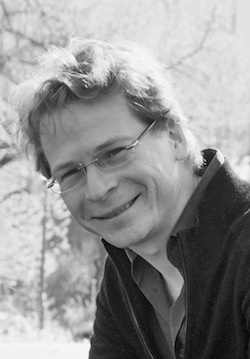
photo - Misha Aster is vice-president, artistic planning and production, at the Vancouver Symphony Orchestra
Misha Aster is vice-president, artistic planning and production, at the Vancouver Symphony Orchestra. (photo from VSO)

Aster arrived in Vancouver for his position at the VSO in mid-August. Born in Hamilton, Ont., he had been in Berlin almost 13 years. Prior to that, he was in Austria for a couple of years.

Aster trained as a violinist at the Royal Conservatory of Music in Toronto, and studied political science, history and dramaturgy at McGill University, the London School of Economics and Harvard University. In his career, he’s been based in Europe largely, but he has always kept in touch with Canada, he said, as his grandmother is in Toronto and his parents divide their time between Ontario and a base in Europe. Aster’s wife, Kinneret Sieradzki, is Israeli and the couple has a 2-year-old daughter, Laila.

In Germany, Aster was working as an executive producer at Deutsche Grammophon, the recording label Universal Music, and he maintains a role at the Gustavo Dudamel Foundation, where he was director of programs. His move to Vancouver marks the first time he has lived in Canada since he was a teenager.

“It’s a major orchestra in this country,” Aster said about what attracted him to the job with the VSO. “It’s a very important cultural player, certainly in Western Canada, and I remember, even growing up in Toronto, having a sense that important things were happening in musical life in Vancouver and that the VSO was a formidable force in Canadian music.”

Recently, the whole organization has undergone a significant transition, with longtime musical director Bramwell Tovey retiring. “It was the ending of an era and the beginning of something new,” said Aster. “I hadn’t met Otto Tausk, the new music director, before we began the process of discussing the possibility of my joining the team here but I was immediately impressed by him, by the integrity of his musicianship, by his vision for the orchestra.”

Aster also had a sense, he said, of Tausk “being very European in outlook, in disposition, in artistic values, in his connections and contacts.” This was a world with which Aster had been familiar for a long time, so he felt that “it would be an interesting opportunity” and that he “could be a helpful fit in that sense,” of being originally from Canada and having roots here, “but also, in a professional sense, of being very familiar with the environment from which Maestro Tausk comes. That chemistry was really the key.” Adding to that was the organization’s “ambition with respect to an artistic agenda but also what the orchestra intends to mean for the community.”

The VSO is “an incredibly busy organization,” said Aster. “We produce 150 concerts a year, which is a lot, in relative terms, compared to many other orchestras in the country. And it has to do with the fact that the orchestra has always had the mandate to address itself to a range of different communities and a range of different musical tastes in the city. Unlike many other major orchestras in the country, we perform in 15 different venues around Greater Vancouver through the season in various configurations, based out of our home in the Orpheum, where we have our major subscription series.”

Part of Aster’s job is to ensure that it’s “not just a functional run-out that we do to North Van or to Surrey with a program, but that what we’re trying to program for those communities and for venues in those communities reflects a point of access for them into the world of music that we represent.”

Tickets for Bronfman’s performance at the Orpheum range from $16.25 to $125 and can be purchased from vancouversymphony.ca.

Format ImagePosted on November 30, 2018November 28, 2018Author Cynthia RamsayCategories MusicTags Brahms, Misha Aster, piano, Vancouver Symphony Orchestra, VSO, Yefim Bronfman

Canada’s faith mosaic

Jewish tradition says that the chanukiyah should be illuminated in a window where it can be seen from the outside. This intersection of private celebration and public visibility is part of the holiday and, in places like Canada, where multicultural diversity is celebrated, this tradition fits nicely with the idea that we should all be proud of our various heritages.

The intersection of religiosity and public life, while not exactly parallel to this example, was addressed in a newly released study that threw a lot of accepted wisdom into doubt. The Vancouver-based Angus Reid Institute, in partnership with Cardus, a non-partisan, faith-based think tank, undertook a study on faith in the public square – and it appears almost everyone was surprised by some of the conclusions.

The study included a survey of 2,200 people across Canada, who responded to questions about their attitudes toward religion and its role in aspects of public life. The respondents divided quite neatly into thirds: the researchers identified public faith proponents (37% of the population), public faith opponents (32%) and the uncertain (32%).

Respondents were asked what they thought of the role of faith in areas such as education, social services, healthcare (such as hospitals, clinics and homes for the aged) and social justice causes (such as poverty, peace and overseas development). Overall, Canadians would like to see less faith-based involvement in these issues (56% of respondents say this), while 44% would like to see more influence. What surprised researchers, though, was who fell into the various categories.

“Notably, the results may challenge a traditional view of who Canadians within the proponent group are,” says the introduction to the study’s findings. “While one may assume this group is more likely to be made up of older and more Conservative-voting Canadians, this study finds proponents more likely to be younger, more highly educated, and largely Liberal-supporting.”

The authors continue: “This suggests that a range of Canadians – not just the highly religious – appear willing to accept certain elements of faith in public life. In fact, one-quarter of those who are most accepting of public faith have never read a religious text. Similarly, those with more strongly held religious beliefs may not necessarily be accommodating of the beliefs of others, or want to see them participating in the public discourse.”

The study’s authors seem to infer that some religious Canadians might seek to limit faith-based involvement in public life if it is extended to religious groups other than their own.

More interesting, perhaps, is the flip side: younger, more highly educated and apparently liberal (or, as the study categorized them, Liberal) Canadians who do not choose to participate in a religious tradition themselves can nevertheless see value in faith-based organizations doing good things for society. Why?

While we do not have the opportunity to probe the reasons for respondents’ answers, the surprise result might make more sense if we assume that, as multiculturalism has encouraged Canadians to recognize and celebrate difference in our heritages and traditions, a similar openness to difference has imbued itself in our attitudes to religious difference. Canadians, in general, may be less religiously affiliated, but we may, at the same time, be more open to accepting the presence of the religiosity of others – and their engagement in the delivery of public services.

Most people can probably understand that a person who has lived their lives observing Jewish traditions would, later in life, seek an assisted living or care facility that reflects their identity rather than one where the food choices, holiday celebrations and other cultural activities accentuate their difference and make them feel like outsiders. Similarly, it is natural, when in need, to seek help from an agency that is part of the community to which one belongs. Probably because we know that government cannot do all things for all people – perhaps in the roaring economy of the 1950s and ’60s we may have thought so, but those days are over – we recognize that, whatever theological differences we have, religious organizations are irreplaceable partners in caring for the sick, in-need and at-risk in our society.

Jews in North America, particularly in the United States, have been at the forefront of the movement to ensure the separation of church and state. There should certainly be vigilance against any creeping proselytization or overt theological mission within the delivery of public services. But we should recognize the difference between that and the positive impacts that people of various faith traditions have in dedicating themselves to good works. We call it tikkun olam and probably every religion has its parallel. Even as Canadians in general become less religious, it turns out we may be increasingly willing to see faith-based organizations deliver services that make our communities better.

Posted on November 30, 2018November 30, 2018Author The Editorial BoardCategories From the JITags Canada, interfaith, multiculturalism, social services, tolerance
A first of its kind in Canada

A first of its kind in Canada

The University of Manitoba is now accepting applications for its interdisciplinary master’s degree in human rights. (screenshot)

The first interdisciplinary human rights graduate degree program in Canada will be starting soon, spearheaded by the director of peace and conflict studies at the University of Manitoba, Dr. Adam Muller, who helped design it.

The new degree will be the first of its kind in the country. Offered by the faculty of law at the U of M, it will train students for careers in human rights work in collaboration with the university’s faculties of arts, education and social work, as well as the Centre for Human Rights Research. Up until now, students wanting an interdisciplinary education in human rights law, theory and qualitative research methods had to go to the United States or Europe.

“We’re going to be training generations of students to serve domestically and abroad in a way that’s deeply inflected by rights, culture and ideas of dignity and social justice that, I think, in some ways, is uniquely Canadian and importantly Canadian,” Muller told the Independent.

“It’s worth noting that, when South Africa transitioned from an apartheid to a post-apartheid state, and they needed to rewrite their constitution, and particularly their charter of rights and freedoms, they drew upon the Canadian model and used Canadian jurists to assist in that drafting process.”

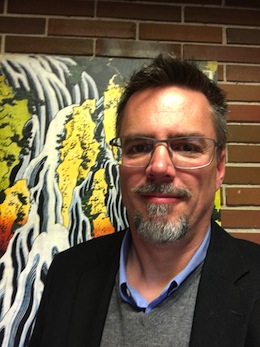
photo - Dr. Adam Muller spearheaded the new human rights program
Dr. Adam Muller spearheaded the new human rights program. (photo from Adam Muller)

Muller spent the first nine years of his life in South Africa. His family emigrated from there in the late 1970s in the wake of the Soweto Uprising, for political and other reasons. In addition to his position at the U of M, he is also the first vice-president of the International Association of Genocide Scholars.

Most of his work is about representations by artists of mass violence and atrocity, said Mueller. “So, I’m particularly interested in photographers, but also painters, musicians … people who try to give shape to unimaginable violence with the view of educating people about it.”

While there are other master’s of human rights programs in Canada, this is the first interdisciplinary master of human rights program in the country, said Muller.

The program will be housed in the faculty of law for a number of reasons, he said, the main one being that the language of human rights is first and foremost a legal language.

While other aspects of the program will look at the philosophical, sociological and anthropological discourses, Muller said, “There are different cultural inflections on the idea of human rights, partly because of the [perspective] that human rights practitioners have – an idea of a universal moral subject, which is complicated when you look at it anthropologically. Not all communities around the world share the same moral presuppositions, so those differences matter in terms of the understanding of global rights culture.”

While students will be encouraged to be human rights champions and advocates, the aim is that they not be so in a naïve way. “We want them to actually understand that human rights can be seen by other people as potentially unwelcome, super-impositions of a Western frame of reference over indigenous ways of thinking about the relationship with a person to the group,” said Muller.

In learning about what happened in genocides such as the Holocaust, students in the program will also be taught the continuing implications. For example, Muller wants the master’s students to go into the German studies class and learn, not just about the Holocaust, but about why it still matters in the German context today.

One of the unique aspects of this interdisciplinary program is that the courses available to students will vary from year to year, depending on what is being offered by the different faculties that have agreed to open up their classes to MHR students.

“We expect there to be, for example, considerable coverage of indigenous issues, just because there is a lot of that kind of work going on at the U of M,” said Muller. “We fully expect the MHR students to be both interested in and to become cognizant of the kind of debates surrounding human rights and indigenous people in the Americas.

“What we have is, I think, a healthy elasticity, in terms of the actual curriculum of the program,” he said. “So, there are three required courses, and then three courses students will be able to select from a vast range of options made available.”

Applications are now being accepted through the Centre for Human Rights Research at the U of M for admission in September 2019. It is not a prerequisite to have a degree in human rights.

Since the goal is to train students to become human rights professionals, the program will offer a practicum component for those students who prefer a hands-on approach.

Belle Jarniewski, who recently took on the role of executive director of the Jewish Heritage Centre of Western Canada and is probably most known for her work at the Holocaust Education Centre, which is an integral element of the JHCWC, is one of the scholars who was asked to review the MHR program proposal.

photo - Belle Jarniewski of the Jewish Heritage Centre of Western Canada was one of the scholars who reviewed the master’s in human rights program proposal
Belle Jarniewski of the Jewish Heritage Centre of Western Canada was one of the scholars who reviewed the master’s in human rights program proposal. (photo from Belle Jarniewski)

“I was quite honoured that Adam asked me to be one of the people across the country to review the proposal for the program and to submit a recommendation,” said Jarniewski. “I think that it’s very exciting to have a post-graduate human rights program offered. One of the things that I really like about it is that it really allows people to work in or concentrate on different areas of human rights.

“Certainly, I think human rights have always been important. But, in this particular time, where human rights are being abused in so many different countries, and where the mere understanding of what human rights are is being clouded, I think that a program such as this, that will produce scholars in this area, is of extreme importance.”

Jarniewski said Winnipeg is the perfect place to host such a program, with the Canadian Museum for Human Rights being in the city.

“Winnipeggers don’t fully appreciate the importance of it,” said Jarniewski. “When I go overseas, this museum has put us on the map. I think it’s just a logical city to host such a program, given that we have this wonderful museum, and our ability to access it for research purposes, as well as the ongoing work that they do in hosting lectures.

“I’m thrilled that this is happening, that it’s happening in Winnipeg, and that Winnipeg is taking on an important role in the area of human rights.”

For more information about the program, visit law.robsonhall.com/future-students/master-of-human-rights-mhr.

Rebeca Kuropatwa is a Winnipeg freelance writer.

Format ImagePosted on November 30, 2018November 28, 2018Author Rebeca KuropatwaCategories NationalTags Adam Muller, Belle Jarniewski, education, genocide, human rights, Winnipeg
A duty to play with language

A duty to play with language

(image by Jim Andrews)

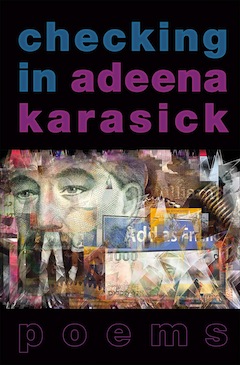
Almost half of Adeena Karasick’s latest volume of poetry, Checking In (Talonbooks, 2018), is comprised of whimsical Facebook status updates, most of which have deeper meaning on second and third thought. Together, they speak, as the book’s description notes, “to our seemingly insatiable desire for information, while acknowledging how fraught that information can be.”

“It was a totally compulsive exercise over four years, where literally everything I read or watched or where I went or what I heard was fodder for the text,” Karasick told the Independent about the faux updates’ origins. “And, I must admit, I threw away as many lines as I kept.

“Sometimes, it was just that I couldn’t get a song out of my head and then would just riff on it,” she said, giving as examples, “Ulysses is listening to Siren Song on Spotify”; “Gustave Klimt is listening to KISS”; and “Salvador Dali is doing the Time Warp. Again.”

Sometimes, she said, it was linguistically driven, such as, “E & G are saying F off” and “Bold italics are refusing to move into an upright position.” Or, “it was just pure, silly fun” to create updates like “William Wordsworth is wandering lonely on iCloud,” “Edvard Munch is watching Scream 3,” “Google is mapping the territory” and “Narcissus is using his selfie stick.”

“It was so obsessive,” said Karasick, “that even now that the book’s been published, my brain is so wired to creating those one-liners, I walk around the streets reading every sign and riff on them: ‘Thin Lizzy is watching her carbs,’ ‘Fatwa is doing a cleanse,’ ‘The Pre-Pesach Jew is clearing her cookies,’ ‘The Long, Long Sleeper is Woke.’”

Karasick’s sense of play is evident throughout Checking In. Even when describing heartbreak, confusion and other emotionally charged states, the joy she derives from words, from language and from constructing layers of meaning, is obvious.

“I think I’ve always had a really dark sense of humour,” she said, “and there’s something about taking that which is frightening or deeply disturbing and disempowering it – by not so much making fun of it, but ironically or parodically making it strange, decontextualizing it, hyberbolically defamiliarizing it.

“A lot of my work takes hard-hitting political issues, whether that be the Holocaust in Genrecide (Talonbooks, 1994) and superimposing it with the policing and massacring of language, or dealing with 9/11 in The House That Hijack Built (Talonbooks, 2004).… ‘There was a Big Building that Swallowed a Plane … How Insane to Swallow a Plane….’ A sense of jouissance (pleasure, play) really permeates all that I do. There’s nothing more exhilarating for me than playing inside language, finding unexpected liaisons, connections, sound clusters. It’s a type of erotics of the text that is for me very jewy; that jouissance, a jewy essence: all diasporic, nomadic, exilic, ex-static.

“I see this ‘play’ as operating with an ‘assimilationist’ brand of Jewish humour,” she explained, “not of bombastic neurosis, but one that threatens to unleash chaos, creates unsocialized anarchy, embodies unpredictability – impassioned, engaged, shticky, outrageous and earnest all at the same time – in a post-Woody Allen/Jon Stewart/ Sarah Silverman/Sandra Bernhardish kind of way. And, sometimes, it’s audacious, subversive, provocative and, in the true definition of ‘irony,’ explodes ontologically and cuts into the fabric of things; the smooth functioning of the quiet comfortability or the ‘homeyness’ of our world. That is the role of art.”

photo - Adeena Karasick
Adeena Karasick’s newest collection of poetry is Checking In. (photo by Safia Karasick Southey/talonbooks.com)

And one cannot separate Karasick’s art from her Jewish heritage – it’s “part of my DNA,” she said – and from her study of Jewish texts. With a PhD in kabbalah and deconstruction, it is not surprising that, in speaking about the concept of play, she pointed to 13th-century kabbalistic mystic Avraham Abulafia’s Science of the Combination of Letters, in which, she said, “we are instructed to play inside the language, using ancient practices of recombinatoric alchemy, gematriatic (numerological) substitution, combination, and, through lettristic ‘skips’ and ‘jumps’ slippage, meaning is infinitely re-circulated.

“According to kabbalistic thinking,” she said, “we are commanded to permute and combine the letters; focus on them and their configurations, permutations; combine consonants into a swift motion, which heats up your thinking and increases your joy and desire so much, that you don’t crave food or sleep and all other desires are annihilated. And nothing exists except the letters through which the world is being recreated, through a continual process of constructing and reconstructing borders, orders, laws, mirrors, screens, walls…. And, in accordance with the strictures of Abulafian play, to properly play is to travel inside the words within words, traces, affects, projections, sliding and slipping between the forces and intensities distributed through the texts’ syntactic economy. And this very play speaks both to how everything is infinitely interconnected – reverberant with our social, consumerist, communicative patterns – generating a contiguous infolding of meaning.”

She connected this type of play to “the actual conversation habits of Yiddish.”

“According to etymologist Michael Wex – in his Just Say Nu (Harper: New York, 2007) – Yiddish itself is inscribed in derailment, evasion, avoidance, where the norm is not to be ‘clear’ but to ‘seduce and lead astray,’ to say the reverse of whatever’s been said. For example, as we know, to say, ‘Hi, how are you,’ ‘Shalom aleichem,’ the answer is ‘Aleichem shalom.’ Answers are answered with a question, repetition, reversals, circumlocutions, interruptions, insertions (ptoo, ptoo, ptoo). Compliments are avoided in favour of their opposite. Or, like how you should never say what you mean because naming something (such as cancer, leprosy, pig) could bring it into existence.”

As for her own existence, Karasick said, “All my life, I’ve been fiercely drawn to all that seems enigmatic or paradoxical, and get great pleasure in connecting the unconnectable; drawing from different genres, lexicons or mediums and reveling in ways they inform each other in radical and innovative ways, inviting us to see the world anew.”

While she has spent years teaching philosophic and critical theory, and media and pop culture at various universities, as well as attending lectures on media ecology and ontology, she also watches “a lot of trashy TV,” she said. “I like classical jazz and MTV videos. I read [Louis] Zukofsky, [Slovoj] Zizek and Vogue magazine. And my favourite thing to do is to mash these language systems together into a kind of linguistic tzimmes; each flavour, taste, texture informing the other, expanding the palette.

“It’s especially exciting for me to break down that binary between high and low culture; draw from the music hall and the circus, erotics and spirituality; and play with ways all of this information erupts as a palimpsestic web of both sacred and secular echo-poetic referents.”

Karasick writes “on the road, on buses, trains, subways, boats; in motion,” she said. “I write best amid the bustle of life and, oddly, when I’m really busy is when I’m most inspired. I’m always hunting and gathering, drawing on the world around me. Though, I must say, when drenched in aching nostalgia, frustrated by contemporary politics or steeped in throbbing desire is when the work especially flows.”

Approaching the poetry

“Contour XLV: With Asura,” “Lorem Ipsum” and “In Cold Hollers” are all “homophonic translations, and so they all fall under the same rubric,” said Karasick of three of the poems in Checking In during a brief poetry lesson over the phone.

She explained, “Each of these [works] take the same sounds of an original poem by somebody else and I’ve translated them. I’ve done an avant-garde, post-modern translation by using the same sounds and rhythms of the original poems but changing all the words, so that if one read it simultaneously with the original poem, it would sound like the same poem, but it’s completely different. It’s a way of commenting on the previous piece; it’s translating it, moving through and across different modes.”

“In Cold Hollers” is a translation of Charles Olson’s 1953 poem “In Cold Hell, In Thicket”; “Contour XLV: With Asura” is based on “Canto 45 with Usura,” a poem by Ezra Pound, which Karasick described as a “famously antisemitic, women-hating, Jews and women are pigs kind of poem”; and “Lorem Ipsum,” which is in English, but plays on the sounds of the Latin of Cicero’s “De finibus bonorum et malorum” (“On the Ends of Goods and Evils”). “Lorem ipsum is the standard placeholder text used to demonstrate the graphic elements of a document or visual presentation,” writes Karasick elsewhere. “I am interested in exploring how the notion of ‘place holding’ gets reworked through an impossible relationship both in love and in language.”

image - Checking In book coverAs to how to approach a poem that you’ve never read before, Karasick said, “On one level, it depends on how deeply one wants to penetrate the text. The way I like to read is to not worry about what everything means per se, but rather … in reading, I think the most important thing is to feel the text, to go inside and feel its rhythms, its textures…. I work a lot with sound, so I’m really interested how sound itself communicates meaning and so, therefore, a lot of this type of work is about moving with the rhythms and the textures and some of that crazed emotion, how that bleeds through, just through the way that it sounds and feels in your mouth.”

Turning to the poem “Lorem Ipsum,” she said the words mean “pain itself.” She has translated Cicero’s treatise on the theory of ethics into a “passionate love poem” about the “difficulties and grueling angst that one traverses through that. Just like love itself, or pain itself, isn’t something that’s easily definable, so it is with the poem itself, which takes us through this journey of multiple ways that are easily comprehensible and other parts that are strangely defamiliarized and confusing because these very strong emotions are fiercely that…. Just like in life, you come across things that are completely foreign and impenetrable, so, similarly, the poem interweaves through the familiar and the defamiliar, the expected and that which completely takes you into new arenas of wonder and confusion.”

Karasick similarly takes Pound’s “Canto 45” and, playing with the Yiddish word asura, which means forbidden, and the English word usury, creates a new work that’s both a scathing commentary on Pound’s, as well its own poem, with its own meanings.

About “In Cold Hollers,” Karasick said she used the word “hollers” because it’s “homophonically related to hell, but it’s hollering in, calling back into Charles Olson’s original ’53 piece; and his original title, ‘In Cold Hell, In Thicket,’ refers to the opening of Dante’s ‘Inferno.’ What seems simple, it just has layers and layers and layers of history, literary history, philosophical history, as well.”

The title of Olson’s poem refers particularly to “selva oscura,” she said, “which is the dark wood that Dante wanders into in the middle of his life … so Olson’s poem, which riffs on that, is a similar excursion into a visionary experience, where he struggles to come up with a new understanding … from his own midlife … putting a voice to his own time. It is a personal drama of experience, conflict; it really speaks to the wrenching process of living and loving that, by turns, is grueling and funny and dramatic and trivial. My translation of that is dealing with all of those things and, in a way, it’s like, do you remember that old Gwen Stefani song, ‘I Ain’t No Hollaback Girl’? – I am a hollaback girl. I am hollering back, in cold hollers, to this cold hell, and basically calling into that history of both Dante and Olson, the history of post-modernism, 65 years later.”

In talking about Olson’s work and hers, Karasick said, “I sometimes like thinking of translation as trans-elation because you can never really translate anything because of culture and all the different references – in my piece, in my trans-elation, the attention is focused on a world of connected life, the personal, the political, the poetic as a system of relations. And, lastly … highlighting how the words themselves are imaginative participants; the words themselves are creating and recreating the sense of connecting the personal, the political, the poetic.”

And it’s not just the words, but how they are placed on a page that matters in poetry. So, for example, Karasick’s “In Cold Hollers” not only plays on the sound and meaning of Olson’s poem, but also mirrors its typography. “I wanted to keep it very much as he had it,” she said of where the lines break and other aspects of the formatting.

“The notion of the physicality and the materiality of where the words are placed on the page has just as much meaning as what they are communicating. We’re so often used to looking at the left margin … but I want the phrases to be moving and fluid, and that sense of how the white space between the words is equally as important as the words themselves. We can go back to kabbalah and the black fire on white fire, that the whole page becomes a series of fiery energy.”

Format ImagePosted on November 30, 2018November 28, 2018Author Cynthia RamsayCategories BooksTags Adeena Karasick, culture, Judaism, kabbalah, language, mysticism, poetry, social media, Yiddish
Empowering Negev women

Empowering Negev women

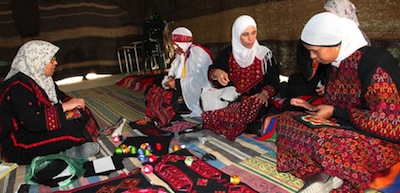
In Lakia, Israel, there are 160 women throughout the village who are responsible for designing and developing embroidery materials. (photo from Michelle Sitbon)

Our trip took us to the southern part of Israel, where we traveled to Beersheva. There is a small sign along the way, that you can miss quite easily, and it says Lakia. Lakia is one of the many Bedouin villages in this part of the country.

The Bedouins are a group of nomadic tribes who have lived in the Negev Desert for hundreds of years. Their heritage can be traced back to the traders along the ancient Spice Route, which happened to cross this region. Most traditional Bedouin hospitality experiences include camel riding, Bedouin food and staying inside a Bedouin tent overnight. However, in the village of Lakia, you are probably not going to find any of those things.

When you stop there, you are in for quite a different and unexpected experience. We arrived in Lakia in the middle of a hot summer day at the end of July and our main goal was to visit the Desert Embroidery. As we drove along the unpaved roads of the village, we quickly realized that Lakia might be small, but the Embroidery was extremely difficult to find. There was no sign telling us which direction to go, even though it is a tourist attraction.

When we finally found our destination, we got out of our vehicle and were warmly welcomed by Naama Al-Sana. She is the Bedouin woman who today runs the Desert Embroidery, and also founded the place together with other women from the community in 1996.

As we entered the visitor centre, we saw a display of beautiful art that was recently made by the local women. These women create the art in their homes in between their chores, and they use the money they earn from it to help support their families.

We were invited to sit inside a beautiful and colourful hand-woven tent, while Al-Sana offered us traditional Bedouin coffee that was scented with local spices. She was excited to hear that we had come all the way from Vancouver, as she has a sister who is currently in Canada, studying at the University of Toronto. Her sister often gives lectures about women in the Bedouin society, as a way to keep the history of this region alive.

The Desert Embroidery doesn’t offer the typical Bedouin tent experience, which includes being served a traditional meal. Instead, you will have the chance to contribute to the empowerment of Bedouin women in your own way. When you participate in one of the workshops or purchase any of their artwork, you will be actively improving the life, health and education of Bedouin women.

The Desert Embroidery was known as the Association for the Improvement of the Status of Women when it first began. The business has grown tremendously over the years and there are now 160 women throughout the village who are responsible for designing and developing embroidery materials. They also provide worker training and product marketing, and there is another group of women who work part-time to provide quality control checks on the products.

The system is very well organized. The women visit the Desert Embroidery twice a week to collect embroidery materials, drop off their finished items, learn about new patterns and designs, and participate in educational workshops and lectures. All of the women are allowed to choose how many hours they work, and they are paid by what they are able to produce within that time. A few of the women have chosen to preserve the traditional jewelry-making that was done by previous generations. They spent time learning how their mothers and grandmothers made jewelry and are now creating their own jewelry to include in the Desert Embroidery collection.

photo - With the help of the Desert Embroidery, Bedouin women in the Negev create the art in their homes, and use the money they earn to support their families
With the help of the Desert Embroidery, Bedouin women in the Negev create the art in their homes, and use the money they earn to support their families. (photo from Michelle Sitbon)

The Desert Embroidery is continuing to achieve its goal of providing employment and income for Bedouin women while empowering them and improving their self-confidence. More than 40 different artistic products can be found on display in the visitor centre, as well as other collaborations that help generate revenues for their work. An example of one of those collaborations is with Kibbutz Gan Masarik, which assists with strengthening the coexistence of Bedouin and Israelis.

The Desert Embroidery is also currently involved in improving the education and health of Bedouin children. And they want to expand to other Bedouin communities within the Negev, so that all Bedouin women can achieve economic independence. There are still so many challenges that women face in Bedouin society and this group is trying to help every woman overcome them.

The main reason I chose to visit Lakia was that I wanted to learn about this destination and the work that the Desert Embroidery is doing. My goal is to share what I have learned and to take other travelers to Lakia, so that they can see it firsthand. Of course, such activities aren’t only being done in the Negev region. In the northern part of the country, in the Galilee region, Israeli and Arab women also create traditional artwork to create a change in the lives of women.

I have made a visit to Lakia part of my itinerary in an upcoming small group tour to Israel, because I believe that travel can support and strengthen local communities. Since I am a travel agent who creates itineraries that are art-oriented, this is a perfect way to show everyone that they can appreciate art while making a difference in both children’s and women’s lives.

In the Mishnah Torah, Rambam organized the different levels of tzedakah, or charity, into a list from the least to the most honourable. Sometimes it is known as the “Ladder of Tzedakah.” The highest form of charity is to help sustain a person before they become impoverished, by offering a substantial gift in a dignified manner, by extending a suitable loan or by helping them find employment or establish themselves in business. These forms of giving allow the individual to not have to rely on others.

Projects such as those led by the Desert Embroidery can be found around the globe in places like Jordan, Mexico and Canada. When we travel, we know the many ways in which we benefit. However, I believe we should also try to find ways to benefit others as we travel, even in small ways. We should become more involved with local communities and support them in respectful ways that will, among other things, help them preserve their tradition and art.

Michelle Sitbon is an art travel adviser who organizes small group tours to Israel among other art-related destinations around world. For more information, visit yourartvoyage.com.

Format ImagePosted on November 30, 2018November 28, 2018Author Michelle SitbonCategories Israel, TravelTags art, Bedouin, embroidery, Empowerment, Negev, travel, women
JI awarded for its editorials

JI awarded for its editorials

The annual American Jewish Press Association’s Simon Rockower Awards recognize excellence in Jewish journalism. Once again, the Jewish Independent has been honoured with a Rockower for its work, winning first prize in its circulation category for editorial writing.

The JI’s editorial board – Basya Laye, Pat Johnson and Cynthia Ramsay – were recognized for the op-eds “How we memorialize the past,” “Sukkah more than symbolic” and “The year it all changed.” All of these editorials – and other opinion pieces and articles published by the JI can be found at jewishindependent.ca.

“The year it all changed” (June 2, 2017) discusses the turning point that Canada’s 100th birthday represented, when we “came into our own as a country,” and the significance of that year for Israel and Diaspora Jews: “The Six Day War, which began June 5, 1967, literally and figuratively reshaped Israel, the Middle East, Diaspora Jewry and global diplomacy.”

“How we memorialize the past” (Sept. 1, 2017) uses the racist rally in Charlottesville, Va., which “was ignited, ostensibly, by the removal (or threatened removal) of Confederate commemorative statues and plaques,” as a jumping off point to talk about how communities and societies commemorate the people and events of the past, including here in Canada.

Finally, “Sukkah more than symbolic” (Oct. 6, 2017) notes, “For most of us, the sukkah is but a symbol of our wandering in the desert all those years ago, a symbol to remind us to be humble, empathetic, grateful. However, for many living in Metro Vancouver, including members of our own community, homelessness is a reality.” It highlights some of the initiatives undertaken by Tikva Housing Society and the barriers to finding housing. It notes that indigenous people continue to represent the highest proportion of homeless, and that there are tens of thousands of people at risk of becoming homeless. It concludes, “there is a lot of work to be done.”

This year’s awards – honouring articles published in 2017 – were presented at the 37th Annual Simon Rockower Awards banquet, held in conjunction with the AJPA’s 2018 annual conference June 17-19 in Cleveland, Ohio. Second place in the under-15,000 circulation category went to the St. Louis Jewish Light, based in St. Louis, Mo. Winners in the 15,000-plus circulation category were the Forward (New York, N.Y.), taking first place, and the Jewish Standard (Teaneck, N.J.) placing second.

Format ImagePosted on November 30, 2018November 28, 2018Author The Editorial BoardCategories From the JITags AJPA, awards, Jewish Independent, journalism, newspapers, Rockower
Honorary degree, book and article awards, new GM at Green Thumb … community milestones

Honorary degree, book and article awards, new GM at Green Thumb … community milestones

Dr. Carol Herbert (photo from Western University)

Vancouver’s Dr. Carol Herbert, professor emerita of family medicine and adjunct research professor of pathology at Western University, was awarded an honorary doctor of science, honoris causa (DSc), at the Oct. 24 afternoon session of Western University’s 312th convocation. Herbert served as dean of the Schulich School of Medicine and Dentistry from 1999 to 2010. A pioneer in developing services for sexually assaulted adults and children in British Columbia, she was co-founder and co-director of the Sexual Assault Service for Vancouver from 1982 to 1988.

She spoke to graduates at the convocation, asking them to keep in mind one acronym: PROP (privilege, responsibility, opportunity and passion).

“Acknowledge your privilege. While you have been diligent in your studies, the fact that you and I are here today is evidence of our privilege,” she said.

With privilege, there is a responsibility to give back, she added. Graduates must reflect on what they have been given and remember to pay it forward and embrace opportunities to help others. “Be as passionate about ensuring the success of others as you are about yourself. Start small, but start contributing to your community.”

Herbert reminded graduates of the difficulties women in science continue to face today. “I want to encourage women scientists to hang in there,” she said, to juggle a career and family, to look for workplaces that support them and their complex lives, and to seek mentors. She encouraged all to work towards a level playing field in which women have equal opportunities.

For the full address, visit news.westernu.ca/2018/10/herbert-offers-props-graduates.

***

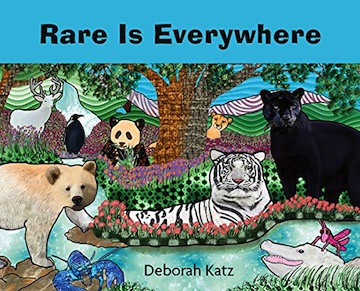
image - Of Rare is Everywhere book coverVancouverite Deborah Katz has won the 2018 Vine Award in the category of children’s literature. Of Rare is Everywhere (Miss Bird Books), which Katz wrote and illustrated, the award jury said, “Fun, exciting and such a different take on difference and diversity for our small children.”

The Vine Awards honour the best Canadian Jewish writers and Canadian authors who deal with Jewish subjects in four categories – fiction, non-fiction, history and children’s/young adult literature – each with a prize of $10,000. The 2018 jurors – Beverley Chalmers, Joseph Kertes and Lee Maracle – reviewed 59 entries this year.

The Koffler Centre of the Arts announced the 2018 winners at an awards lunch at the Windsor Arms Hotel in Toronto. The other winners were Laurie Gelman for Class Mom (Henry Holt and Co.) in the fiction category, Julija Šukys for Siberian Exile: Blood, War and a Granddaughter’s Reckoning (University of Nebraska Press) in the non-fiction category and Hugues Théorêt for The Blue Shirts: Adrien Arcand and Fascist Anti-Semitism in Canada (University of Ottawa Press) in the history category.

***

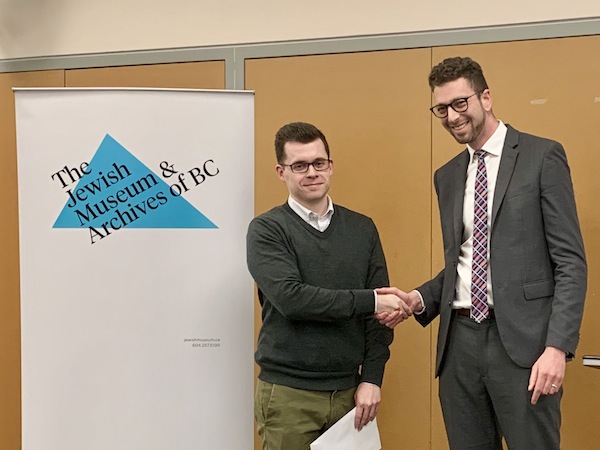
photo - Nathan Lucky, left, and the Jewish Museum’s Michael Schwartz
Nathan Lucky, left, and the Jewish Museum’s Michael Schwartz. (photo from JMABC)

The Jewish Museum and Archives of British Columbia awarded the inaugural B.C. Jewish History Research Prize to Nathan Lucky, for his article “British Columbia newspaper responses to Jewish persecution in Europe, 1938-1939: A call for refugees and a cause for civilization.”

This undergraduate essay explores relations between the Jewish community press and the mainstream press in British Columbia. It demonstrates the ways in which Jews in the province were alert to world affairs and worked to impact Canadian policies of immigration in response to unfolding tragedy abroad. Juxtaposing reporting and editorials published by the Jewish Western Bulletin (the predecessor of the Jewish Independent) with those of contemporary non-Jewish publications, the author documents the shifting waves of public discourse as new information arrived from Germany and Austria. The article makes substantial use of the B.C. Jewish Community Archives, particularly the Jewish Western Bulletin Collection, and it demonstrates how future scholars might also incorporate the collection, and the archives more broadly, into their research.

The prize was awarded on Nov. 21 at the annual general meeting of the Jewish Historical Society of British Columbia. Following the AGM, guests gathered to hear a lecture by Lucky, summarizing his research. This award and lecture will be an annual tradition of the JMABC in the coming years.

***

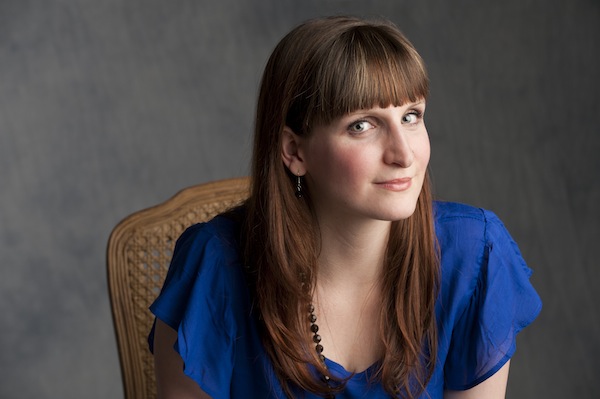
photo - Breanne Harmon
Breanne Harmon (photo by David Cooper)

Breanne Harmon (née Jackson) has been appointed general manager of Green Thumb Theatre, which has been bringing live theatre to young audiences for 40 years. Before taking on the role of general manager at Green Thumb, Harmon worked as the tour and education manager for two years.

Born and raised in Richmond, Harmon has trained and worked in theatre for most of her life. She graduated with honours from the University of British Columbia with a bachelor of fine arts in theatre production/design, where she was the recipient of the Norman Young Scholarship for Theatre and the Dean of Arts Scholarship, while also completing the fine arts program in visual arts at Langara College. At UBC, she was a member of the Jewish Students Association at Vancouver Hillel and sat on the Hillel board as alumni representative after graduation.

Harmon has worked as a stage manager, production manager and arts administrator for various companies across Canada, including the Shaw Festival, Arts Club Theatre Company, National Arts Centre, and Chemainus Theatre Festival, among many others. She has sat on the Jessie Richardson Theatre Awards Society board, the GVPTA’s Theatre Engagement Project Steering Committee, the Jessie Richardson Theatre for Young Audiences and Large Theatre juries and was a stage management mentor with the Cultch’s Ignite program.

She is also the very proud mother to her 1-year-old son.

Format ImagePosted on November 30, 2018November 28, 2018Author Community members/organizationsCategories LocalTags Breanne Harmon, Carol Herbert, children's books, Deborah Katz, Green Thumb Theatre, Jewish museum, JMABC, Nathan Lucky, Vine Awards, Western University
Good neighbours, good work

Good neighbours, good work

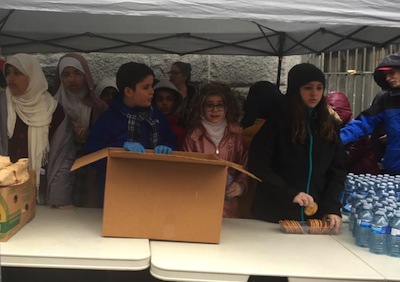
Students in grades 6 and 7 hand out sandwiches on the Downtown Eastside Nov. 15. (photo from RJDS)

On Nov. 15, 60 students from Richmond Jewish Day School and Az-Zahraa Islamic Academy went to the Downtown Eastside to meet the people in the neighbourhood and hand out food that had been prepared earlier.

photo - Students in grades 6 and 7 hand out sandwiches on the Downtown Eastside Nov. 15
Students in grades 6 and 7 hand out sandwiches on the Downtown Eastside Nov. 15. (photo from RJDS)

“The students, staff and administration of Richmond Jewish Day School have always been committed to doing what we can to improve the lives of those less fortunate among us,” said Reesa Pawer, student life coordinator at RJDS. “One of the ways we have done this is by actively participating in a week of Random Acts of Chesed.”

As part of Random Acts of Chesed Week, Grade 6 and Grade 7 RJDS students worked together with their neighbour school, Az-Zahraa, to put together 700 bags of food and more than 500 sandwiches.


Format ImagePosted on November 30, 2018November 29, 2018Author Richmond Jewish Day SchoolCategories LocalTags Az-Zahraa Islamic Academy, education, interfaith, multiculturalism, RDJS, Richmond Jewish Day School, tikkun olam
Action plan for your health

Action plan for your health

(photo from libreshot.com)

Most people are super-excited about starting some sort of a nutrition and wellness plan, especially leading up to a celebration such as a new year, and after all of the holiday indulgences many of us enjoy over Chanukah. But, no matter the strength of our intentions, soon after we start and a few months into the new year, our commitment tapers off.

The Talmud teaches, “the blind eat but are not satisfied.” What does it mean to be blind when it comes to eating?

We should start with asking ourselves, why do we place such importance on food and why should we be planning for healthier nutrition, and better wellness habits?

Are we conscious that nourishment is for spiritual, mental and moral clarity, purity and holiness, as well as to physically strengthen the body?

Choosing nutrient-rich foods is the first step to providing our body – and mind – with the nutrients it needs. And the way our foods are prepared and eaten can influence how well those nutrients are absorbed and used by our body.

The average human brain contains 10 billion nerve cells. And there are many studies showing how our choices of food affect our moods and brain function.

People often say they need to lose weight but then quickly forget what they said if they have travel plans or holiday celebrations. The reality is that eating healthier is a habit that has to be taken seriously and one that has to be a habit all year round regardless of season, travel plans or celebrations. Eating consciously is vital to our health and longevity.

We also shouldn’t remain blind to the supernatural dimension of eating. There are many blessings the practice of Judaism provides, and this kind of daily gratitude can help us derive greater satisfaction from life, including from our food.

There are two dimensions to a person’s eating – sustenance for our body and sustenance for our soul. Our body seeks nutrients, as does our soul. Most people live out their lives without ever really grasping the idea of eating or balancing their nutrition, suffering physically from overindulging and missing the most important lessons from and a spiritual relationship with G-d.

When it comes to food, people bounce between extremes. We go all in for stuffings, creamy dressing salads and huge cuts of meat, but then cut out entire food groups to compensate. People all of a sudden start talking about gluten-free, dairy-free, sugar-free diets and, of course, the ever-so-popular detox. Our bodies are made up to be a perfect system so, unless some of these foods are causing you real health issues, there’s no evidence that eliminating foods completely is better for you.

What makes sense is an action plan.

With so many fad diets, it’s not always easy to differentiate between truths. There are many diets we hear about from friends or friends of friends, that such-and-such has worked for them. But adherence to most of these diets is short-lived because they aren’t based in knowledge and aren’t sustainable or convenient for the individual. In many cases, diets eliminate highly nutritious, essential foods from your meals. As well, if you follow a very restrictive diet and then change your eating habits when you reach your ideal weight, you might find yourself starting to overeat, as you crave the foods you had eliminated, and now satisfy even some of those cravings.

Although no two people are alike and everyone’s nutrition needs vary, when it comes down to it, weight loss is fairly straightforward. Making better food choices, cutting out bad high-fat foods, empty-calorie refined foods, cutting back on calories in general, and getting more exercise pretty much sums it up.

If your goal is to maintain your weight, lose weight or, in some instances, gain weight, calorie quantities need to be adjusted. These varied options will mean different amounts of proteins and overall calorie intake, which, when coupled with an appropriate exercise program, will help you attain your healthy weight – and, in the process, learn how to eat healthily as a lifestyle instead of as a fad or resolution that lasts only a few months.

In general, it’s important to eat protein for every meal, and to keep a pattern of three meals and at least two snacks per day together with eight to 10 cups of water. It’s not recommended to skip meals and then double up at the next one. More evenly spaced meals will help keep your energy level up, and protein at each meal, as well as afternoon snacks, will help keep you from getting hungry.

Remember that the right food is medicine for body and soul, and a balanced diet is one of the simplest ways to better health, and exercise is the least expensive antidepressant.

Marat Dreyshner has more than 25 years of culinary experience and a passion for health, wellness and nutrition. He joined Herbalife Nutrition in 2016, and he and his wife Ella work together as nutrition and wellness coaches.

Format ImagePosted on November 30, 2018November 29, 2018Author Marat DreyshnerCategories LifeTags dieting, health, lifestyle
Mystery photo … Nov. 30/18

Mystery photo … Nov. 30/18

Selling bagel sandwiches at a Jewish Community Centre of Greater Vancouver Chanukah event, circa 1990. (photo from JWB fonds, JMABC L.18422)

If you know someone in this photo, please help the JI fill the gaps of its predecessor’s (the Jewish Western Bulletin’s) collection at the Jewish Museum and Archives of B.C. by contacting [email protected] or 604-257-5199. To find out who has been identified in the photos, visit jewishmuseum.ca/blog.

Format ImagePosted on November 30, 2018November 29, 2018Author JI and JMABCCategories Mystery PhotoTags Chanukah, history, JCC, Jewish Community Centre, Jewish museum

Posts pagination

Page 1 Page 2 … Page 8 Next page
Proudly powered by WordPress