The resilience of survivors

Peter Suedfeld and his mother. Taken at Vajdahunyad Castle, Budapest, Hungary, circa 1939/40. (photo from Peter Suedfeld)

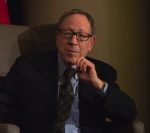
Dr. Peter Suedfeld has devoted his life to the study of how human beings adapt to and cope with challenge, stress and danger. Yet it was many years into his work that he acknowledged his choice of academic pursuit may be related to his personal life history as a survivor of the Holocaust.

Suedfeld, professor emeritus of psychology at the University of British Columbia, will deliver the keynote address at the Vancouver Holocaust Education Centre’s community-wide Yom Hashoah commemoration at the Jewish Community Centre of Greater Vancouver on May 4.

Through the years, he has often been asked if his research was influenced by his family’s experience in the Holocaust.

His mother was murdered at Auschwitz; his father survived Mauthausen. Suedfeld was a hidden child in Budapest, living as a Christian in an orphanage run by the International Red Cross.

“My answer always used to be no,” he said, “because my research for a long, long time was fairly straightforward experimental psychology, cognition, perception, memory, things like that.”

But, when he was interviewed for the VHEC’s survivor testimony project, he “put it all together,” he said. “I started to think that maybe there really is a connection, because almost all of my research – not quite all, but most of it – has to do with how people adapt under unusual, extreme, challenging, sometimes traumatic environments and situations.”

His early work focused on sensory deprivation, looking at how removal of external stimuli affects things like cognition, studying astronauts, cosmonauts and people who work in polar research stations.

“I also started looking at people who were under stress because they had to make really important decisions in stressful circumstances, such as political and military leaders,” he said. “I realized that might have had something to do with my own experiences. How do people face unusual, extreme and sometimes dangerous environments – which people who have survived the Holocaust have had to do, including me? But, I want to emphasize that, at the time I was doing this research, I never thought this way. People asked me why I do all these things, and I said something interests me and I do research on it, that’s all, and I have a wide range of interests. But then, I thought maybe this does have something to do with my personal history.”

At the Yom Hashoah event, Suedfeld will reflect on his personal experience, discuss the Holocaust more broadly and then address the issue of the long-term adaptation of survivors of the Holocaust, a topic on which he has conducted a series of studies.

Suedfeld has reviewed the psychological reports written soon after the war about the long-term potential of survivors to survive and thrive.

“In general, what I found is that the early reports of psychologists and psychiatrists about how permanently damaged survivors are were, to put it bluntly, wrong,” he said. “Yes, of course, some people were permanently damaged and some people could never put their life back together again. But there are a lot of people who did put their lives together or build new ones, who were quite resilient and still are, did well in their occupation or in education if they were young when they came here, have family lives that are certainly no less happy than anybody else’s, are proud of their kids and grandkids if they have any, don’t think about the Holocaust all the time, don’t let it ruin their life.”

Many survivors, he said, have some post-traumatic stress, but not post-traumatic stress disorder. “Disorder means it really interferes with normal life,” he said. “And very few have that.”

Reviewing the early literature and knowing what he knows from personal experience and acquaintance with many survivors, Suedfeld is more surprised by the early negative prognoses than by the remarkable resilience of survivors.

“What did surprise me was the negativity of the scientific reports, which overlooked or ignored or never got to see any of the people who were so resilient,” he said. “There is now a substantial and rapidly growing literature showing not only resilience but post-traumatic growth and people’s strength instead of just emphasizing the weakness. And, again, that’s not to deny by any means that there are some people who were so terribly affected that they haven’t recovered, but that is not the norm.”

Suedfeld also cautioned that every experience of survivors is unique.

“We talk about the Shoah as though everybody had pretty much the same experience,” he said. “I want to bring home to people that that is also a mistaken idea, that people experienced very different things, all of which are lumped under the label of Holocaust or Shoah, but that’s an incredibly wide diversity of experiences to which an incredibly wide diversity of people responded in an incredibly wide, diverse way, so you cannot talk about survivors or victims as an undifferentiated lump. They’re not.”

Pat Johnson is a communications and development consultant to the Vancouver Holocaust Education Centre, as well as a member of the Independent’s editorial board. This article first appeared in the VHEC publication Zachor.

Comic book radio show

The Intergalactic Nemesis: Target Earth comes to York Theatre April 30 and May 1. (photo from Jason Neulander)

The story takes place in 1933. And, were it not the full-color cartoon panels being projected onto a large screen, you might feel as if you were also back in 1933 while watching the live performance of The Intergalactic Nemesis: Target Earth at York Theatre April 30 and May 1.

Target Earth is the first instalment of a trilogy that follows “Pulitzer Prize-winning reporter Molly Sloan and her intrepid research assistant Timmy Mendez,” as they “team up with a mysterious librarian … named Ben Wilcott. Together, they travel from Romania to Scotland to the Alps to Tunis to the Robot Planet and finally to Imperial Zygon to defeat a terrible threat to the very future of humanity: an invading force of sludge-monsters from the planet Zygon!”

The dozens of characters are voiced on stage by three actors. They are joined by a Foley artist, who creates all of the sound effects, and a pianist/organist who provides the music soundtrack. The full-color comic book is projected onto a movie screen. In Vancouver, the actors will be Rachel Landon, Brock England and Jeff Mills, with Kelly Matthews in charge of the sound effects and Harlan Hodges on piano and organ.

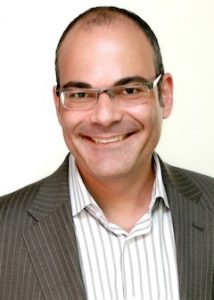
The series – comprised of Target Earth, Robot Planet and Twin Infinity – is produced and directed by Jason Neulander.

photo - Jason Neulander
Jason Neulander (photo from Jason Neulander)

Neulander grew up in New Jersey and went to college at Brown University in Providence, R.I., where he majored in theatre.

“Right out of school, I founded a company called Salvage Vanguard Theatre in Austin, Tex., where we developed and produced new plays. The Intergalactic Nemesis came out of that company, originally as a radio play,” he told the Independent.

“I ran Salvage from 1994 to 2008 and built the company up to a point where it’s now something of a local institution. They’re still going strong without me. In 2008, I decided to focus entirely on The Intergalactic Nemesis and got invited to bring the show to the Long Centre for the Performing Arts [in Austin]. The venue there was 2,400 seats and I felt like that was too big to house my little radio play. So, I came up with the idea of projecting comic book artwork to create a visual spectacle to fill the room. That version of the show premièred in 2010 and we’ve been on the road with it ever since.”

Based on an original idea by Ray Patrick Colgan, the touring show was adapted from the radio drama by Colgan, Neulander, Jessica Reisman, Julia Edwards and Lisa D’Amour. The comic-book artwork for Target Earth is by Tim Doyle with Paul Hanley and Lee Duhig; the sound effects were created by Buzz Moran; and Graham Reynolds was the composer. Others, of course, helped bring the whole production to fruition.

For his part, Neulander said his biggest inspiration for The Intergalactic Nemesis was his kids. “I wanted to make something that I could enjoy with them,” he said. “That’s actually worked out pretty well! Artistically, this show is all about pushing my own inner-kid buttons. I was 7 when Star Wars came out (the first one) and 12 when Raiders of the Lost Ark came out and I love that kind of storytelling.

“One of my favorite memories as a kid was watching the old Flash Gordon serials and the old Ray Harryhausen movies on TV with my dad on Saturday mornings. When I was a little older, I got really into golden-age sci-fi short fiction, like Bradbury and Asimov and those guys. When I was a young adult, I discovered golden-age Hollywood movies for myself – His Girl Friday hugely influenced our script. I kind of backed into both radio drama and comic books, so maybe those are actually a little less influential on the show than those other things.”

While there is no overt Jewish aspect to the story, Neulander said his sense of Jewish heritage played a role in its creation.

“This show is all about the heroes defeating the bad guys more through smarts than through violence,” he explained. “The main male character is a librarian, so I feel like there’s got to be some Talmud in there somewhere. But, more than that, I think my upbringing taught me that if you work hard, you can succeed against all odds. I’m not sure if that’s solely a Jewish thing, but it’s definitely what the story of this show is all about.”

And Target Earth won’t just take you to another time, but place.

“It’s so much fun!” said Neulander. “It’s like getting to watch an animated movie and seeing how they do it all at the same time. The visual images are just beautiful to look at and then you have three voice actors playing so many characters, often in the same scene, you have one person using all these unusual objects to make sounds you never thought they could make (my favorite is a trail from a box of mac and cheese), and the music just soars. You really do get taken to another world.”

While Neulander is taking a creative break from the Intergalactic world – “I’m just wrapping up a script for a thriller, which will be my film directing debut” – the series’ shows keep touring. This summer, said Neulander, “we are taking Twin Infinity to the fringe festival in Edinburgh in what we think will be a very splashy U.K. première.”

But first, Target Earth and target Vancouver.

“We’ve been itching to get to Vancouver for a few years now,” said Neulander. “I think that your city really is one of the ideal places for this show. I just think audiences are going to eat it up! Can’t wait to get there!”

Shows are April 30, 4 and 7 p.m., and May 1, 2 p.m. Tickets start at $25 from tickets.thecultch.com or 604-251-1363.

A continuing pursuit of justice

Irwin Cotler told those at the launch of the Pearson Centre for Progressive Policy’s Pursuing Justice Project on March 31 that his current focus is the Raoul Wallenberg Centre for Human Rights in Montreal. (photo by Dave Gordon)

Irwin Cotler was honored on March 31 for his dedication to human rights activism. Attendees at the Pearson Centre for Progressive Policy event learned how Jewish values drove, and intersected, with Cotler’s career in pursuing justice.

“My father used to say to me: the pursuit of justice is equal to all the commandments combined. This is what you must teach to your children,” said Cotler.

The gala at Toronto’s Omni King Edward Hotel served to launch the Pearson Centre’s Pursuing Justice Project, “which is focused on increasing the understanding of Canadians about justice, diversity and inclusion.” The centre describes itself as a centrist think tank, addressing policy issues related to justice, health and social services, with the goal “to engage Canadians in an active dialogue about a progressive future for Canada.”

Among the speakers offering introductory remarks at the launch were former prime ministers John Turner and, via video, Paul Martin.

“John Turner had the temerity to give me my first job out of law school,” Cotler shared.

In addition to serving as Liberal member of Parliament for Mount Royal in Montreal from 1999 to 2015, Cotler also served as federal minister of justice and attorney general during his career.

In a discussion with Indira Naidoo-Harris, Liberal member of the Legislative Assembly for Halton, Ont., Cotler spoke about a 10-year-old idea that never bore fruit, wherein justice ministers from Israel, the Palestinian Authority, Jordan and Egypt all agreed to convene with Canada’s justice minister, in Canada, to foster dialogue. A “justice summit” he dubbed it, “which I hoped would have a peace dividend.”

He would like the Trudeau government to revive the concept, because “educating each other in the culture of peace is important,” Cotler told the Independent. Palestinian incitement, in contrast, “is a threat to peace in the Middle East, threatens Palestinians’ right to self-determination … and glorifies terrorism.”

As an international human rights lawyer, Cotler served as counsel to many high-profile political prisoners, including South Africa’s Nelson Mandela and Israel’s Natan Sharansky, who was released from a decade in the Soviet gulag 30 years ago February, and became a member of the Knesset and an author.

Both former prisoners were beacons of “hope and the vision and the inspiration,” with respect to “two of the great human rights struggles of the second half of the 20th century,” Cotler remarked.

The release of political prisoners, he added, is “such an overriding commandment that you’re allowed to breach the Sabbath” to free them.

Cotler’s current undertaking is growing the Raoul Wallenberg Centre for Human Rights in Montreal, which he founded. Among its many objectives, he told the Independent, are “promoting human dignity, combating racism, hatred and antisemitism, and defending political prisoners.”

Dave Gordon is a Toronto-based freelance writer and the managing editor of landmarkreport.com.

Lifting up women’s voices

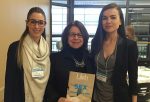
Left to right: Dana Chappellaz, Susan Weidman Schneider and Yelena Maleyev. (photo by Shayla Fink)

The first-ever Winnipeg Jewish Women’s Symposium was held at Rady Jewish Community Centre on April 9 and 10, bringing together women of all ages to explore the different ways in which women can make a difference in the Jewish and general communities.

The event was the inspiration of Rady JCC executive director Gayle Waxman and assistant executive director Tamar Barr.

“Gayle and Tamar approached me to co-chair the symposium on behalf of Rady in the fall of 2015, and it’s been a flurry of activity ever since,” said Lindsay Sawyer, a financial planner and a Rady JCC volunteer, who co-chaired the event with Yelena Maleyev, a product manager at Manitoba Telecom Service and a leader in National Council of Jewish Women (NCJW) in Winnipeg.

“We’ve taken great care to ensure that our speakers cover a wide range of topics to appeal to women of all ages in our community – from new volunteers to seasoned community leaders,” she said.

According to Sawyer, although women are talented, dynamic and committed people, they are still too often underrepresented at the board level of the Jewish community – something she and others involved in the symposium are setting out to change.

“If we don’t invite ourselves to shape the direction of the community we live in, we’ll wind up missing too many valuable voices at the table,” said Sawyer. “Our hope is to engage and inspire talented woman of all ages who, due to lack of opportunity, direction or support, may not yet be having their voices heard, while also celebrating the achievements of those who are playing key roles in their organizations.

“We are elated to have had Susan Weidman Schneider join us this year as our keynote speaker. Susan, an expat Winnipegger, is the founder and editor-in-chief of Lilith magazine, an award-winning Jewish women’s quarterly. It was our privilege to celebrate such an accomplished and dynamic talent and to be able to claim Susan as one of our own.”

Maleyev, who is Winnipeg NCJW’s treasurer as well as the creator of its young women professionals branch, also wants more women to get involved.

“We have seen successful events, such as SHE Day, grow over the years, and agreed that we should provide a similar opportunity for women in our community, but approach it from a Jewish perspective,” said Maleyev. “We aim to empower and educate the younger generation, while ensuring all women are involved and encouraged to remain involved. We want to match the energy of the younger generation with the experiences of those who have been in leadership roles for awhile now. Like Sheryl Sandberg mentions in her book Lean In – the more women help one another, the more we help ourselves. Acting like a coalition truly does produce results.

“We want to encourage the power of mentorship and how sharing our experiences at any age can help uplift one another,” she continued. “Women make up over half of the population and yet not even close to half the leadership roles in management or on boards. We need equal representation to ensure our voices are heard. We need mentors, sponsors, role models and supporters to help us achieve our professional goals, as well as balance in our personal lives.”

The symposium kicked off with Havdalah and a performing arts showcase on April 9 and, on April 10, the learning sessions took place. About 150 women attended.

“The performing arts showcase was absolutely exceptional,” said Sawyer. “It was honestly just an absolutely incredible experience to hear the stories of so many very talented and passionate women … about the importance of community and making sure our voices are heard. I left on Sunday with such incredible enthusiasm for both where our community is and where we’ll be going with the next generation of leadership coming into contributing volunteer positions.

“Certainly, at the top of my list, was one of the opening panels, with Dianne Glass, Debbie Hoffman, Laurel Malkin and Baillie Chisick. Their views of being a voice at the table and women in community leadership was so inspiring and uplifting.”

Sawyer also lauded Weidman Schneider’s keynote address about where women have come from and where they still need to make inroads.

“It’s my hope that this event will continue and that we can continue to reach out to our community and inspire others to join us in continuing to make our Winnipeg Jewish community a special and welcoming place,” said Sawyer.

Maleyev, who found the symposium “phenomenal,” said, “The panelists were all incredibly inspiring. They shared many personal and professional stories, and provided varied opinions and experiences…. Susan brought such good perspectives on the topic of feminism and urged us to be allies in our feminist journey. As well, attendees received many opportunities to mingle and network, and meet new people in the community.”

Maleyev is hopeful that, with support from women mentors, more young women will see that there is room for them to grow their skills and get involved with whatever organizations align with their values.

“Our very sincere thanks to the leadership of Gayle Waxman, Tamar Barr, Cindy Lazar [NCJW] and all our tremendously talented and dedicated volunteers in bringing this event to fruition,” said Sawyer.

Rebeca Kuropatwa is a Winnipeg freelance writer.

Focus on community safety

How safe is our community? That’s a question all of us ask from time to time, some of us on a daily basis as we come and go from our synagogue or community centre, or drop our kids off at school.

On April 4, dozens of members of the Jewish community across Canada participated in a webinar called Protecting Our People and Places: Redefining Risk, presented by insurance and risk management firm Arthur J. Gallagher Canada, which works internationally and has a significant presence in Canada. Speakers included Nir Maman, a krav maga expert with a background in security and policing in North America, Israel and elsewhere; Max Hazin of Northern Force Security; and Sam Feldman, Vishal Kundi, Justin Priestley and Paul Bassett of Arthur J. Gallagher. The webinar promoted the company’s insurance and risk management services, but also provided basic risk management information and a variety of community resources.

All of the speakers stressed that Canada is not immune to terrorist attacks and active shooter incidents of the kind seen in the United States and Israel. However, the webinar began with statistics that put the warnings into perspective: Between 2000 and 2006, Israel had suffered 27,905 terror attacks killing 1,116 Israelis and injuring 8,800; from September 2015 to the webinar date, 34 people have been killed in terror attacks and 400 injured.

Total casualties: 1,150 killed and 9,200 injured. Since 1973 until 2016, there have been 38 Islamic extremist terror attacks in the United States. Total casualties: 3,282 killed and 9,285 injured. Since December 1999, there have been four plots to carry out intended terror attacks in Canada and three perpetrated terror attacks. Total casualties: two killed and three injured.

Topics in the webinar included how to make a physical location an unattractive target to terrorists, how to create levels of resistance to a threat and how to handle an active shooter situation. Maman was critical of the security in place at most Jewish organizations as being more symbolic than effective, and stressed the need for training and education so as to empower people to protect and, if needed, defend themselves and their communities.

In his weekly email message on April 15, Jewish Federation of Greater Vancouver chief executive officer Ezra Shanken noted, “Over the past two years we have seen a rise in terrorist activity worldwide, some of which has targeted Jewish communities, such as in Paris and Copenhagen. While there has not been and is not currently an increased threat to our community, we should not assume that these types of events could never impact us.

“For many years, our Federation has taken a proactive approach to community safety and, in that vein, we have established the Community Security Committee, chaired by Bernard Pinsky, which is focused on identifying and assessing opportunities to enhance our collective safety. The committee will update the community about any security concerns, and will ensure community institutions have the appropriate protocols and technology in place to ensure maximum safety.”

Rabbi Dan Moskovitz of Temple Sholom told the Independent after the webinar that security is a way of life for modern Jewish communities, and will remain so for the foreseeable future. “This is just the way it is now,” he said. “In Europe, this type of security has long been the status quo. I remember one visit where you couldn’t enter a synagogue without someone in an orange jacket asking you what your bar mitzvah parashah was.

“Despite the lower risk level in Canada,” he continued, “cameras, security guards and security measures need to be in place both to deter attackers and to give people peace of mind. Many communities, like ours, have security committees, which receive training and actively protect the community. Many, some of whom have a background in the Israeli army or police training, see this as a sacred duty, as their calling in the community.”

For those who would like more information on safety protocols for the Jewish community, a number of useful resources can be found at chesedfund.com.

Matthew Gindin is a Vancouver freelance writer and journalist. He blogs on spirituality and social justice at seeking her voice (hashkata.com) and has been published in the Forward, Tikkun, Elephant Journal and elsewhere.

UNESCO a mockery

There are those who envision a future without Israel in it. No one knows what the future holds, yet there are some who, in their enthusiasm for a future without a Jewish state, are reinventing the past.

Last week, UNESCO, the United Nations Educational, Scientific and Cultural Organization, passed a resolution that effectively negates millennia of Jewish history at the Temple Mount in Jerusalem.

The holiest site in Judaism and the physical centre of the Jewish world, is the place where the first and second temples stood. The remnants of the Second Temple, the Western Wall, is the place on earth toward which Jews have prayed for 2,000 years when they have not been able to pray at the Wall itself.

The land is contested because, in the eighth century, Al-Aqsa Mosque was constructed on the site of the temples’ ruins. To be generous, the Jews may have been there first, but it is nevertheless a holy site for Muslims as well. Tell that to UNESCO. According to the wildly ahistorical resolution last week, Jewish claims of ancient connection to the place are bogus.

The resolution, which repeatedly refers to Israel as the “Occupying Power,” includes a litany of offenses allegedly perpetrated by Israel and Israelis, including “storming of Al-Aqsa Mosque/Al-Haram Al-Sharif by the Israeli right-wing extremists and uniformed forces,” and accuses Israel of “planting Jewish fake graves.”

In addition to pages of condemnations of Israel, the resolution repeats familiar accusations that deny any Jewish connection to Judaism’s holiest site.

The resolution was submitted by Algeria, Egypt, Lebanon, Morocco, Oman, Qatar and Sudan, countries that each have their own unique challenges that nevertheless do not detract from their obsession with imagined Jewish slights against Islam.

But the resolution was supported by numerous ostensible allies of Israel, including France, Spain and Sweden, as well as Russia. The United States, Estonia, Germany, Lithuania, the Netherlands and the United Kingdom voted against. (Canada is not on UNESCO’s executive board.)

This sort of nonsense spewed up from agencies of the UN, to say nothing of the General Assembly, further undermines the legitimacy of what could be the world’s most valuable international forum and makes a mockery of the vision of the UN’s founders. None of this matters, of course, to the inmates who are running the asylum.

Recording testimony

As every year passes, more firsthand accounts of the Holocaust are lost. Carleton University has launched a new initiative to help preserve these important accounts for future generations.

Led by Mina Cohn, director of the Centre for Holocaust Education and Scholarship (CHES) within Carleton University’s Zelikovitz Centre for Jewish Studies, this initiative is hoping to raise $7,500 using Carleton’s Futurefunder crowdfunding platform to record and preserve the testimonies of Ottawa Holocaust survivors as oral histories.

The project will ensure the preservation of Ottawa Holocaust survivors’ accounts and their experiences before, during and after the Holocaust. These recorded testimonies will become a powerful pedagogical tool to be used in any educational institution or setting and will allow Carleton professors and students to explore online the unique power of survivors’ memoirs. The recordings and associated educational materials will form the basis of a special Ottawa-based Holocaust memorial project and will become a public resource freely accessible on the CHES website.

Each survivor has a unique and personal story to tell. These eyewitness accounts unite personal experience with the history of the period in a powerful way, creating a feeling of immediacy to the events, and there is an urgent need to record and preserve survivor accounts before it is too late. CHES is in contact with local Holocaust survivors and is already working with those interested in participating in this project.

The $7,500 to be raised will help cover the cost of producing, editing and arranging a public launch of the video testimonies of Ottawa Holocaust survivors. In the first round, CHES will record up to 10 different survivor testimonies, in a professional studio environment with the help of professional videographers. If sufficient funding is available, it will produce thematic videos on associated topics, such as life before the Holocaust in certain locations, camp experiences, child survivors, Jews in hiding, etc. Recording is scheduled to start in June 2016.

The unedited recording and videotapes will serve as resources for scholars, students, educators and the public, and provide glimpses into the individual lives during the Holocaust that cannot be obtained from documents or written records. Such testimonies are also an excellent resource for the development of anti-racism educational materials.

To learn more, visit futurefunder.carleton.ca/project/ottawa-holocaust-survivors-testimony.

Where do Messianics fit?

Last month, the Jewish Independent received an email from a reader concerned about a new group for Messianic Jews being organized via meetup.com.

While the organizer did not respond to requests for an interview, the Independent followed up on the issue of Messianic Jews with, among others, Daniel Nessim, whose father, Elie, is the leader of Kehillath Tsion, a now 30-year-old Messianic centre in East Vancouver. His father, who is 84, has been handing over more of the leadership responsibilities to Nessim, who recently returned from 10 years in the United Kingdom.

“Our community consists of about 100 people, and around 80 show up every Shabbat for services,” he told the Independent in a phone interview. “Our congregation consists of both Jews and gentile Christians who are seeking to connect with Yeshua’s [Jesus’] Jewish roots.”

Members of the community observe the Sabbath, keep kosher, wear tefillin and tzitizit, and observe Jewish holidays in their way. The younger Nessim seeks to make his congregation “a more welcoming place for Jews.” Asked about the Jewish community’s general aversion to evangelizing, he replied, “God created us as Jews and intended us to remain as Jews. If I’m correct that Jesus is the messiah sent by God, He would want us to acknowledge that, but not to leave our Jewishness or our communities or synagogues. I’m happy even if a Jewish person doesn’t believe in messiah as I do, but becomes a better Jew in their own community.”

Most Jews do not see Messianic Judaism as a reasonable Jewish option, however. Rabbi Laura Duhan Kaplan, director of Inter-Religious Studies at Vancouver School of Theology, explained that different Jewish communities have differing levels of comfort about welcoming Messianics as Jews in their synagogues. “There are also theological issues,” she said. “Someone who affirms Jesus as a teacher or a messianic figure might not be beyond the pale as a Jew, even though other Jews might disagree with them. If they affirm Jesus as divine, or God incarnate, however, then, for most Jews, they have crossed a line into unacceptable beliefs for a Jew.”

Most Orthodox Jews view Messianic Jews as retaining their Jewishness, but as apostates who have lost their right to synagogue membership or participation in other aspects of Jewish community and ritual practice. The Conservative Rabbinical Council has ruled that Messianic Jews are still Jews, but should be considered “apostate Jews” and denied synagogue membership, participation in Jewish ritual and burial in a Jewish cemetery. The Reform movement also considers Messianic Jews as apostates, not to be excluded from “services, classes or any other activity of the community, for we always hold the hope that they will return to Judaism and disassociate themselves from Christianity. But they should be seen as outsiders who have placed themselves outside the Jewish community…. Such individuals should not be accorded membership in the congregation or treated in any way which makes them appear as if they were affiliated with the Jewish community, for that poses a clear danger to the Jewish community and also to its relationships with the general community.”

Several Jewish organizations work to combat the evangelization of Jews, notably Jews for Judaism. Based in Toronto, its stated mission is to respond “to Christian missionaries, cults, eastern religions and many other challenges to Jewish continuity, and connecting Jews to the spiritual depth, wisdom, beauty and truth of Judaism.”

While a 2013 PEW study showed 34% of American Jews as accepting of Jews who believe in Jesus as the messiah – a large percentage but half that of those accepting of Jewish atheists – the struggle against Messianic Jews has sometimes become violent. In Israel, for example, according to the Messianic organization Anachnu Israel, Orthodox Jews have threatened and even assaulted Messianic Jews and their families. And, in Toronto, there have been incidents where Messianic Jews have faced protests, jeers and insults, thefts, vandalism, as well as bomb and death threats.

Rabbi Dan Cohn-Sherbok, a British Reform rabbi and Jewish theologian, recently wrote a book-length treatment of Messianic Judaism and its place in the Jewish community, called Messianic Judaism: A Critical Anthology. In it, Cohn-Sherbok explains that Messianic Jews are bewildered by their exclusion from much of the Jewish community: “If Conservative Jews deny the belief in Torah MiSinai [the divinely revealed nature of both written and oral law…], Reform Jews reject the authority of the law, Reconstructionist Jews adopt a non-theistic interpretation of the faith and humanistic Jews cease to use the word ‘God’ in their liturgy, why should Messianic Jews alone be universally vilified?”

Cohn-Sherbok argues for the inclusion of Messianic Judaism within the pluralistic Judaism of today, writing that the continued rejection of Messianics “makes little sense”: “Messianic Jews are regarded as having committed the ultimate ethnic and religious betrayal. Yet, we have seen, Messianic Jews do not see their acceptance of Yeshua as a form of treachery. They enthusiastically embrace Jewish identity, which they inculcate in their children at home and in synagogues. They remain loyal to the Jewish people, even though they are universally rejected and condemned. They are vociferous supporters of the state of Israel. By their very way of life, they continually challenge the claim that accepting Yeshua as messiah is equivalent to abandoning Jewishness.” Cohn-Sherbok claims that, “in many respects, Messianic Jews are more theistically oriented and more Torah-observant even than their counterparts within the Conservative and Reform movements.”

New York-based Jewish Renewal Rabbi David Evan Markus welcomes Jews who have joined other religions to worship and learn with his community. Asked about Messianic Jews, he said, “I haven’t had to deal with that question yet. I think that if they came to the synagogue to learn about Judaism, to worship Jewishly, they would be welcomed, just as all authentic and respectful seekers are welcome. It’s a core mission of [our] spiritual community, and our roles as Renewal rabbis, to encourage spiritual engagement from a place of authenticity and integrity for all. The essential factor would be that they be committed to not proselytizing in the community. They would have to come in good faith to learn and worship with us as a Jewish community.”

There is a range of views in the Messianic community about proselytization. Nessim said he would be “very pleased” if the Jewish community accepted Messianic Jews into community life on the condition of refraining from active, organized proselytization within the Jewish community. “I think it would be ideal to aim for an agreement like that, as the fruit of respectful dialogue,” he said.

Matthew Gindin is a Vancouver freelance writer and journalist. He blogs on spirituality and social justice at seeking her voice (hashkata.com) and has been published in the Forward, Tikkun, Elephant Journal and elsewhere.

Diagnosing, treating ADHD

Why are boys three to four times more likely to be diagnosed with attention deficit hyperactivity disorder (ADHD) than girls, when studies have repeatedly shown that girls are just as likely to have it? According to psychiatrist Dr. Doron Almagor, this may be due to how it manifests differently in girls than it does in boys.

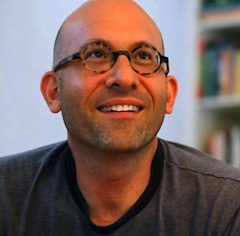
Almagor treats ADHD throughout the lifespan. He is also the president of the Canadian ADHD Resource Alliance (CADDRA), which is a Canadian body of physicians that sets the standards for treatment of ADHD in the country.

Dr. Doron Almagor
Dr. Doron Almagor (photo from Doron Almagor)

Originally from Israel, Almagor moved to Canada with his parents when he was 10 years old. During his training in child and adolescent psychiatry, Almagor became exposed to kids with ADHD.

“I found out, as I did my practice, that there was a really wide need for it,” he said. “It’s a very underserviced, under-recognized, underappreciated area within the Canadian health-care system and worldwide as well. I could see changes happening very quickly for people who may have been suffering for years and were then able to turn their lives around. So, that is something I became more involved in.

“I then became more involved with education over the years and really tried to promote the message that it’s something that’s under-recognized and easily addressed. Compared to other treatments in psychiatry, it tends to be much more effective, but underappreciated for being so.”

According to Almagor, one of the myths is that ADHD kids are hyperactive. The reality is that there are different types of ADHD, some of which have no hyperactivity associated with them at all. These used to be referred to as ADD (attention deficit disorder).

“When people hear ADHD, they may not identify themselves as having it or their children or family as having it, because they think hyperactivity has to be there,” said Almagor. “But, there are types of ADHD with no hyperactivity – that’s a more silent type and even more underappreciated.

“The problem with ADHD and all types of ADHD is that they’re defined by symptoms with attention, focus, and with the hyperactive-type problems, with hyperactivity and impulsivity. But these aren’t the real issues ADHD causes. The real issues are things like school failure, low self-esteem, social problems – things that evolve into other issues like depression and anxiety. It’s really the secondary effects of ADHD that are the real problems, rather than the pure attention or hyperactivity issues.

“If a child has ADHD and that causes self-esteem issues, they can’t focus, keep up with their peers, [they] have teachers who are negative about them, and people may say that they’re just being lazy and making careless mistakes. That’s going to be internalized into the child’s character. That will be part of their image of themselves. That’s going to affect how they relate to the rest of the world…. That’s going to be harder to fix as they get older. The earlier it can be addressed, the better.”

Learning disabilities often go together with ADHD. According to Almagor, when someone has been diagnosed with a learning disability, they should also be screened for ADHD, as 50% of those with a learning disability also have ADHD and vice versa.

If a parent is concerned about their child, his or her teachers are in a very good position to be able to gauge where the child is at, as they see them in a context of 30 other kids their age, he said.

“Often, parents may have a 7-year-old who can’t focus, but they may not know if that is the same as or similar to other 7-year-olds. Teachers are always consulted before making a diagnosis.

“Another good first step,” he continued, “is the child’s pediatrician, as many pediatricians are trained in the diagnosis and recognition of ADHD. Pediatricians may be able to diagnose it themselves or may have consultants they rely on, whether that is a child psychiatrist or specialist pediatricians (developmental pediatricians).”

Further testing may be needed to confirm an initial diagnosis, but this testing is covered by the public health-care system when prescribed by the child’s doctor. Psychiatric treatments may not be covered.

Another common misconception concerning ADHD is that medication is the only option, yet, that is only one of the potential treatments.

“Parents need to make sure the pediatrician is open and knowledgeable about ADHD,” said Almagor. “There are still some who don’t believe there is such a thing as ADHD or they’ll do a very quick assessment ruling ADHD out too soon without a full assessment.”

One of CADDRA’s missions is to educate physicians in making proper diagnoses, and providing proper treatment or referring people to the appropriate resources and experts.

CADDRA’s website provides a list of symptoms that people can access that might be helpful in trying to determine if you have a child with ADHD, but Almagor cautioned that these are all just initial screening tools that can only give an indication that further trained assessment may be needed.

“We can’t expect a 10-year-old to focus as well as a 19-year-old,” said Almagor. “Besides initial symptoms, like trouble focusing, secondary symptoms can include being very hesitant about being in school, being withdrawn about school and having low self-esteem about their abilities. These types of things are softer. They’d be good alerts that the child needs further assessment. Being behind in school is another one. But, it might not be ADHD. It might be a learning disability or something else, like depression.

“Girls tend to have the more silent type of ADHD – the inattentive type – so, not as visible. Inattention is internal – hesitancy, being withdrawn and being unsure of their abilities. These are often missed and that’s why girls are only diagnosed later in life.

“Often, when mothers bring in their daughters for assessment, they read about the diagnoses and they self-identify. I see a parent who will say, ‘Now that I’ve learned more about ADHD, my child has it and I realize I have it, too.’ It’s common as well because ADHD is about 80% genetic. So, often when there’s a child that has ADHD, one of the parents has it, too.

“I always ask and try to determine who else in the family might have ADHD and maybe encourage that they also seek out treatment, too. It’s important, as, if a parent is having ADHD symptoms themselves, it may make it harder for them to parent effectively and may make the child’s ADHD worse.

“Even when girls are hyperactive,” he continued, “they’re still often under-treated. They tend to be chatty girls in class and can’t sit still. Recent research from Denmark is showing that girls with ADHD have higher rates of effects of it than boys. So, they have higher rates of drug use and higher death rates, which may be because they’re not being treated.”

In early childhood, boys diagnosed with ADHD outnumber girls four to one, but the number of adult men and women are about equal. Overall, the number of people with ADHD has been steady for the past 30 years, according to Almagor, at around five percent. And, although Almagor said he sees many Jewish patients, he does not attribute this to there being higher percentages of Jews with ADHD as compared to the general population. Rather, he feels Jewish parents’ attentiveness to what is going on may be the cause of them bringing their kids in more often for treatment.

The way in which the condition and its treatment are perceived by the public, said Almagor, is one of the main problems, and it is a problem that may be causing harm to kids.

“I think people avoid treatment or avoid addressing it because of stigma, or they think the only option is medication,” he said. “They need to be aware that treatment for ADHD is what we call ‘integrated.’ We look at psychotherapy as well as medication choices. It can also be addressed without medication, which is often very helpful for the long-term well being of the child.”

Psychotherapy treatments may include a focus around self-regulation in cases with hyperactivity and impulsivity, or being able to learn to think before acting via exercises that include mindfulness and other ways to help children control their impulses. Other treatments for ADHD can include helping with executive functioning to improve organization, focus and the sequencing of tasks. For more information, visit caddra.ca.

Rebeca Kuropatwa is a Winnipeg freelance writer.

Ballet BC dances Bill

Ballet BC dancer Gilbert Small is among those who will perform Program 3. (photo by Michael Slobodian)

Ballet BC finishes this season with Program 3, which features the remount of artistic director Emily Molnar’s 16+ a room and of Finnish-born choreographer Jorma Elo’s I and I am You – as well as the Canadian première of Israeli choreographer Sharon Eyal’s Bill.

Already in Vancouver setting Eyal’s work for Ballet BC is Osnat Kelner, who has been choreographing since 2001. In addition to her own creations, Kelner is an assistant choreographer for Eyal and American-Israel choreographer Barak Marshall.

“I met both Sharon and Barak for the first time when I was dancing in the ensemble Batsheva in 2000 and they created pieces for the company,” Kelner told the Independent.

“I started setting Sharon’s pieces in 2005 after working with her again, this time as the rehearsal director of ensemble Batsheva, where she created another piece.

“I started working with Barak as his assistant in 2008. A year earlier, I met him in Israel, after his long absence. He discussed the option of coming to create a new piece, said he still remembered how great it was to work with me, and that he’d like me on his team.”

Eyal, who is based in Tel Aviv, is former resident choreographer of the Batsheva Dance Company. She currently is artistic director of L-E-V, a company she and Gai Behar formed. For Bill, she again collaborated with Behar and musician, drummer and DJ Ori Lichtik. In the work, notes Ballet BC, “Eyal combines dance, music and design into an instantly recognizable whole of raw, unexpected beauty created with equal parts ebb and flow. Premièred by Batsheva Dance Company, Bill showcases Eyal’s trademark shifts from large group to smaller ensemble, which, in turn, morph into breathtaking solos.”

“In order to set another choreographer’s pieces,” explained Kelner about her role in the production, “you firstly need their trust, you need a really good memory, the ability to see the big picture and the smallest details, and a way with people. It means you are responsible for passing information to dancers who have never worked with this choreographer before, and you try to stay as honest to that person’s vision as you understand it.”

Kelner also has her creative vision, which she focuses on more than one artistic endeavor.

“As a freelancer,” she said, “I do many different things. I choreograph, I stage other choreographers’ pieces, I work as rehearsal director for independent projects, I make costumes for dance and theatre, I sometimes perform myself and I’m the mother of a 19-month-old boy. I can’t imagine it any other way. I love being involved in many different projects, in different roles, and sometimes at the same time. I only grow and learn from it, as an artist and a person.”

Audiences at Program 3 will also see Molnar’s 16+ a room, set to music by Dirk Haubrich and inspired by the work of writers Jeanette Winterson and Emily Dickinson. According to the press material, it “displays Molnar’s unique choreographic language through a complex study of time, transition and stillness, where the space between is as important as the space occupied, where one is left with the feeling of both liberty and disappearance.”

Finally, Elo’s I and I am You, first performed by Ballet BC in 2013, features “Elo’s signature virtuosic vocabulary and lightning-fast musicality interspersed with moments of enormous intimacy and tenderness.”

Program 3 is at Queen Elizabeth Theatre May 12-14, 8 p.m. Tickets, which range from $30 to $90, can be purchased at 1-855-985-2787 or ticketmaster.ca.