Children in the Shoah

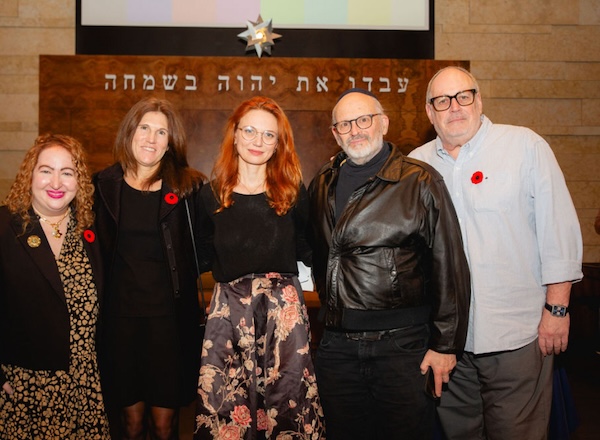
Left to right: Abby Wener Herlin, Lise Kirchner, Dr. Nataliia Ivchyk, Prof. Richard Menkis and Al Szajman at the community commemoration of Kristallnacht Nov. 7. (photo by Rhonda Dent)

The experiences of three Vancouver women who survived the Holocaust as children in Ukraine were highlighted at the community commemoration of Kristallnacht Nov. 7.

The event, which took place at and was co-presented by Congregation Beth Israel, marked both the 86th anniversary of the Kristallnacht pogrom and the 30th anniversary of the founding of the Vancouver Holocaust Education Centre (VHEC), which presents the annual commemoration. The Jewish Federation of Greater Vancouver and the Robert and Marilyn Krell Endowment at the VHEC were co-presenters.

The keynote address was by Dr. Nataliia Ivchyk, associate professor in the department of political science at Rivne State University for the Humanities, in Ukraine. Ivchyk is a visiting scholar at the University of British Columbia and has been studying the narratives of child survivors in the province.

About 1.5 million Ukrainian Jews were murdered in the Holocaust, while another million managed to flee before or near the beginning of the German-Soviet war, Ivchyk said.

“Genocide is ruthless, regardless of age or gender, and children are a special group of its victims,” she said. “Since children cannot fight back against their killers, they become a helpless and vulnerable group. The Holocaust claimed six million Jewish lives, 1.5 million of which were tragically children. Age became a vital marker of life or quick death for children during World War II and the Holocaust. Children were not seen as a separate group of victims, they were dependent on their parents, fathers, mothers and relatives, and so suffered and died with them too.”

Ivchyk quoted Malka Pischanitskaya, who was 10 years old when the Germans invaded her town of Romanov (now Romaniv), in Ukraine.

“I was brought into this world not by chance but I believe by destiny,” Pischanitskaya has said. “My destiny was to be born, to endure the sufferings that were yet to come.”

“During the genocide,” Ivchyk said, “Malka had no choice but to become an adult in order to survive.”

Another local survivor whose story Ivchyk told is Ilana, who asked that her last name not be shared. Ilana was born in 1938, just two years before Germany invaded the Soviet Union. Her father managed to evacuate the family, including Ilana, her sister, her mother and her maternal grandparents, to a Central Asian republic of the Soviet Union.

“Unfortunately, my father’s parents stayed in Kyiv and perished in Babyn Yar,” Ivchyk quoted Ilana, referring to the mass killing site that has become synonymous with the genocide in Ukraine. On Sept. 29 and 30, 1941, more than 33,000 Ukrainian Jews were killed, part of the genocide in eastern Europe known as the “Holocaust by bullets.”

Ilana has only fragmentary memories of the evacuation years. However, she remembered her sister, who cared for her, and her mother, who tirelessly worked to provide food, said Ivchyk. 

A third local woman who survived is Esfira Golgheri.

“Esfira does not recall the journey from one ghetto to another, but she remembers her mother feeding her, which was crucial for her survival as an infant,” Ivchyk said.

“There is something that the Holocaust could not take away: memory, personal memories and stories of relatives and friends and our collective memory [that] remind us by honouring the memory of those who are no longer with us. Those who lost their lives and those who fought to defend us, we keep them alive in our hearts,” Ivchyk said. “The stories of these women are stories of childhood, family and survival in the face of genocide and displacement. Each narrative is unique and personal, yet the memories of Esfira, Malka and Ilana … are like pieces of a puzzle that help reconstruct this tragedy. In addition to piecing together the events of the war in Ukraine during the Holocaust, we have the chance to understand the tragedy through the eyes of these adult child survivors. We can touch their memories and experience their truth for ourselves.”

At the commemoration, Taleeb Noormohamed, member of Parliament for Vancouver Granville, brought greetings from the federal government.

“The fight against antisemitism is not one for Jews alone,” said Noormohamed. “Quite the opposite. It is a fight that all of us have to take on together.”

Nina Krieger, until recently the executive director of the VHEC and elected as member of the BC Legislature on Oct. 19, brought greetings from the provincial government. 

“I know the premier of British Columbia and my colleagues in government join me in gratitude for the Vancouver Holocaust Education Centre and Congregation Beth Israel for presenting this evening’s program to mark the 86th anniversary of Kristallnacht,” Krieger said.

Vancouver Mayor Ken Sim, accompanied by Councilor Lenny Zhou, presented a proclamation from the city marking Kristallnacht Commemoration Day.

Sim spoke of how his home had been recently vandalized and how many people at that evening’s event had expressed sympathy. 

“The Jewish community sees this all the time and I should really be asking you how you are doing,” he said. “I obviously loved the community before, but you’ve captured my heart even more.”

He said his presence at Jewish community events is not about politics.

“If everyone was against us, we would still have your back. We are still here because we stand for what’s right,” Sim said.

Lise Kirchner, director of education at the Vancouver Holocaust Education Center, spoke on behalf of acting executive director Hannah Marazzi, who was out of the province, read greetings from Prime Minister Justin Trudeau and acknowledged elected officials from all levels of government, including incoming and outgoing members of the BC Legislature.

“As we come together this evening to commemorate the 86th anniversary of the Kristallnacht pogrom, we contemplate the dangers not only of state-instituted persecution and violence, but maybe more importantly the dangers of indifference,” said Kirchner. “We are reminded of the consequences of antisemitism which is not publicly condemned, especially at a time when we have seen the proliferation of this most pervasive and pernicious form of hatred around the world, across the country and in our own backyards.”

Prof. Richard Menkis, associate professor of Jewish history at the University of British Columbia, contextualized Kristallnacht as a turning point between the legislated antisemitism of the Nazi regime, notably the Nuremberg Laws of 1935, and the murderous violence of the Holocaust.

“The persecutions during and immediately after Kristallnacht resulted in the deaths of at least 90 Jews, the destruction of hundreds of synagogues, the vandalization of thousands of Jewish businesses and the imprisonment of over 30,000 Jewish men in concentration camps and elsewhere,” said Menkis.

Al Szajman, president of the Vancouver Holocaust Centre Society board, emceed the evening. Abby Wener Herlin, associate director of programs and community relations at the VHEC and granddaughter of survivors, introduced Ivchyk. Rabbi Jonathan Infeld thanked Ivchyk and reflected on her remarks. Cantor Yaacov Orzech chanted El Moleh Rachamim. Holocaust survivors lit candles at the beginning of the commemorative event.

Ivchyk spoke movingly of being welcomed into the community during her time in Vancouver.

“Coming from a wartorn country myself, you accepted me, understood me, opened the doors of your community and your homes, creating an incredibly warm and family-like environment that gave me a home away from home,” she said. “You have entrusted me with your history and the history of your families and your childhood experiences that you have kept in silence for many years. Every time you shared your stories, I could feel the sadness and pain in your eyes. You still feel for those who were taken by the Holocaust.” 
Blue Rodeo is thriving at 40

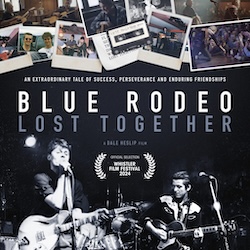
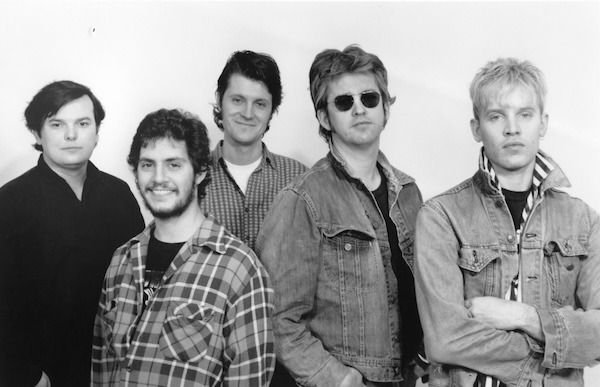
A 1989 PR photo for Blue Rodeo’s Diamond Mine album. Left to right are Bazil Donovan, Bob Wiseman, Jim Cuddy, Greg Keelor and Mark French. The documentary Blue Rodeo: Lost Together (left) has its world premiere at the Whistler Film Festival. (photo by Andrew MacNaughtan / bluerodeo.com)

The world premiere of Blue Rodeo: Lost Together, which gives viewers a glimpse into the rise of this iconic Canadian band, was so anticipated that the first screening of the documentary at the Whistler Film Festival sold out – a second screening has been added.  

The Whistler Film Festival runs Dec. 4-8, offering several programs, including feature-length films, shorts and its “Mountain Culture” series of films, après events and Q&As. The WFF24 Content Summit, which runs Dec. 4-7 in person and Dec. 10-12 online, presents speakers, panel discussions, workshops and other opportunities to learn and connect. 

Looking through the festival lineup, I came across Blue Rodeo: Lost Together and requested the screener for a few reasons. First, I grew up with Blue Rodeo’s music and knew many of their songs. Second, given the challenges of being recording and touring musicians – and Canadian to boot – I find it remarkable that the band is as popular as ever 40 years after high school friends Jim Cuddy and Greg Keelor started it. Lastly, founding members included Bazil Donovan (bass), Cleave Anderson (drums) and, most interestingly from my perspective, Bob Wiseman (keyboards). Wiseman is my second cousin and, though I’ve never met him, I have always been proud to let people know that I had a relative in Blue Rodeo. Wiseman was part of the group from 1984 to 1992.

image - Blue Rodeo: Lost Together posterBlue Rodeo: Lost Together delicately covers the comings and goings of musicians, and the sometimes-difficult friendship and professional collaboration of Cuddy and Keelor. It is frank about the band’s challenges in becoming a commercial success, starting as it did in the era of hard rock, but also dealing with some producers who had a different vision than Cuddy and/or Keelor of what would lead to that success. It is always fascinating to see how creative people balance their very personal drive with taking other people’s feelings and opinions into consideration (or not) and the need to feed and clothe themselves.

Overall, Blue Rodeo seems to have avoided any huge drama, though marriages and partnerships were tested by the rigorous tour schedule once the group broke into the international music scene. Some member partings were clearly amicable, such as when Anderson returned to his postman job after taking a five-year hiatus to play with the band – he had a family to support and wanted to be present for them. Other separations were more fraught: Wiseman wanted to leave a good year at least before he did, his unhappiness seeming to have started – from what I understand from the documentary – with the making of the album Casino, which was released in 1990. To make Blue Rodeo fit a more market-friendly mould, so it could become popular in the United States, Wiseman’s innate energy and expressive performance style was tamped down. “That was really traumatic for me,” he says in the film.

Despite creative differences and some tough times, all the interviewees in the documentary speak of one another and their experiences with great respect and gratitude. It is uplifting to see people treating one another kindly, even as they disagree. Hopefully, it isn’t just for show. Their affection seems genuine. The bonds these musicians have created between themselves and with their listeners seem strong. With all the bad that happens in the world, this is reason enough to watch this documentary – and, if you haven’t already, check out the music of Blue Rodeo.

At press time, there were tickets left for the Dec. 8 screening of Blue Rodeo: Lost Together. Of course, the festival features many other movies during its Dec. 4-8 run, including September 5 on Dec. 5 and 8. The thriller is based on the hostage-taking of Israeli athletes at the 1972 Munich Olympics. The description reads: “At the heart of the story is Geoff, a young producer eager to prove himself to his legendary boss, Roone Arledge. Teaming with Marianne, a German interpreter, Geoff unexpectedly takes the reins of the broadcast. As tensions rise, conflicting reports swirl and the lives of the hostages hang in the balance, Geoff faces difficult decisions that test his skills and moral compass.”

For tickets to the Whistler Film Festival and the full lineup of movies, visit whistlerfilmfestival.com. 

Hope for best outcomes

Every election leaves a portion of the electorate thrilled and another group disappointed. The more polarized the electorate, the more intense these emotions. Two elections recently were certainly examples of this – and they were elections that could hardly have been closer.

The British Columbia provincial election returned the New Democrats under Premier David Eby to office – but just barely. A single seat assured a majority government but that is a most precarious victory. Eby will need to be vigilant to ensure not a single member of his caucus steps out of line on a confidence vote or becomes disgruntled enough to bolt the party. This is almost certainly part of the reason Eby gave every member of his caucus a special title (along with added pay for the responsibilities). 

Eby has a reputation for centralizing power in his office – to be fair, almost every leader in our parliamentary system does, but apparently Eby is a master at micromanaging – and this is a double-edged sword. He does not lack the skills to keep potentially wayward sheep in line, but excessive domination tends to incite rebellion. 

Jewish voters especially will be watching a few things. The new mandatory curriculum for Holocaust education is to be rolled out next year. Given behaviours of the BC Teachers Federation and the potential for individual instructors to go rogue, the possibility exists for this curriculum to be weaponized against Jewish people. There are already dispiriting anecdotes about anti-Israel activism among some teachers. The introduction of mandatory Holocaust education could open the door to reactionary activism among those who think the Holocaust should not be privileged over other human catastrophes, as well as conversations that could turn in inappropriate directions because they lack the language or support for context. We hope that the province’s curriculum experts have anticipated this potential and worry that it is a nearly impossible task to monitor. We should be looking for various types of evaluation to guide these educational programs.

The back-from-the-grave BC Conservative Party, now the official opposition, has promised to introduce adoption of the International Holocaust Remembrance Alliance definition of antisemitism among its first acts in the new Legislature. This will put the Jewish community and our issues in the centre of political drama immediately – not a welcome or comfortable situation for our minuscule demographic; the debate is sure to engender opposition and recriminations.

In the broader scope of 2024 history, though, our provincial election will be a footnote next to the election that took place a few days later. The reelection of once and now future US president Donald Trump will almost certainly have exponentially more dramatic effects.

The reelection of Trump turned out to be not as close as every poll suggested, but also not as commanding as some commentators say it was. He won the popular vote this time by about 2.5 million votes, which, in terms of the raw vote margin, is the fifth-lowest since 1960 – but, compared to having lost the popular vote by almost three million votes when first elected in 2016, the 2024 margin points to a swing in the electorate that cannot be ignored.

Trump’s recent election seems to have been met by opponents with a fatalistic sense of déjà vu. His choices of cabinet appointees suggest his second term will be no less a circus than his first and quite possibly more damaging in many ways.

According to exit polls, Jewish voters in the United States supported the Democrat, Vice-President Kamala Harris, over Trump by a margin of almost four-to-one. (Israeli voters, if they could have voted, would have backed Trump by almost mirror-image landslide margins, according to at least one poll, a disparity that deserves discussion some other time.)

Support for Trump’s stated pro-Israel positions is premised on the presumption that what he says is what he will do. This is true for all politicians of course, but it is especially true for an individual as volatile and unpredictable as this one. (Whether his positions are actually good for Israel and Jews is also a topic for further analysis and discussion.)

Whichever parties or candidates we support, all of us should hope for the best outcomes. Much depends on it, if in significantly different magnitudes – the government of BC does not, for example, have nuclear weapons – but polarized partisanship does not serve the majority well. 

As a Jewish prayer for elected officials says, “May they be guided with wisdom and understanding to serve all its inhabitants with justice and compassion. Strengthen their resolve to protect freedom and promote peace, so that harmony and tranquility prevail among all who dwell here.” 

Against their best interests

Writers often get submission calls saying “Sorry, we cannot pay you, but our publication is widely distributed. You’ll get great exposure!” I don’t bother, thinking something like “No, thanks. I live in Manitoba, Canada. We can die of exposure.”

For most, writing isn’t lucrative. If I sell an article, sometimes the cheque covers the grocery bill. Years ago, I decided that I don’t work for free. I avoid residencies and literary submissions with reading fees. Even a well-appointed writer’s residency often costs money for travel, food or lodging. Meanwhile, I pay for utilities and care for my kids, so I write at home. It’s cheaper. Same for reading fees. Although small publications need support, if I pay them to read my submission, it conflicts with my goal to get paid. It’s common sense when trying to make a living.

In early November, I read Winnipeg Free Press editor Ben Sigurdson’s column about writers, books and awards called “Paper Chase.” The headline read “Authors, artists boycott Israeli cultural orgs.” It summarized a petition signed by “thousands” of writers, listing by name some with Manitoba connections. These writers choose to avoid working with Israeli cultural and literary institutions, publications and festivals because they are ostensibly “complicit in violating Palestinian rights.” The petition doesn’t mention Hamas, which governs Gaza. It doesn’t hold Hamas or Egypt accountable for their contributions to the crisis or mention Oct. 7. There’s no reference to the wider global conflict, which includes Iran and Hezbollah, among others.

By withdrawing their work, these authors want to punish non-political Israeli entities. They assume that, with their great literary fame, they’re important enough that their choice matters. They wish to deprive Israelis of hearing or reading their work. Due to their moral outrage, these authors won’t earn money from Hebrew translation rights, appearances at Israeli universities, conferences, festivals or book signings.

I noted that Sigurdson’s column removed the name of Jonah Corne, a Jewish University of Manitoba professor, from his list of Manitobans who boycott Israel’s literary scene. I don’t know why he did that.

Some suggest these protests are against Israel, where half the world’s Jewish population resides, but not against diaspora Jews. Why then leave a Jewish Manitoban off the “notables” who joined the boycott? Is it a mistake, or a tell? This protest conflates all Jews and Israelis, no matter one’s political beliefs or where one lives. 

Writers fail to look after their own self-interests, be they monetary or ethnic, with this type of activism. Signing a petition could bring an author’s work attention, assuming “any publicity is good publicity.” Yet not all Manitobans on the petition got that dubious editorial publicity. Omitting a Jewish Canadian from the list of Manitobans who signed the boycott smells fishy.

Sigurdson also didn’t mention the long list of authors and creatives who signed a counter-petition by the Creative Community for Peace. This group is against discriminatory cultural boycotts. They support free expression for all. This list includes many recognizable names, from popular and intellectual circles, including Ozzy Osbourne, Mayim Bialik, Bernard-Henri Lévy and Gene Simmons, among others. Professors, actors, directors, musicians, Pulitzer-winning journalists and Nobel Prize-winning authors populate this list. These creative communicators, against boycotts and for free speech, include Jewish writers, but also allies.

This connects to the commotion about Canada’s Giller Prize. Jack Rabinovitch started this prize in honour of his late wife, the journalist Doris Giller. This award is Canada’s largest literary fiction prize, which comes with $100,000. The prize highlights Canada’s diversity and literary excellence and is sponsored by Scotiabank. It’s now fashionable to protest the prize and Scotiabank’s investment in Israeli arms manufacturer Elbit Systems. The petition lists others, including Indigo and Audible. Many authors now protest and boycott the jury. Others pull their work from consideration and sign petitions against the Giller via “Canlit Responds.”

The Globe and Mail’s Marsha Lederman writes that, if Scotiabank were sufficiently pressured, it might withdraw sponsorship from the prize rather than fully divest from whatever financial investment offends the protesters. No other sponsor would be likely to take on a prize that comes with so much protest baggage. The largest Canadian literary fiction award would disappear. Have these protesting authors thought this through? If the Giller Prize collapses, Canadian fiction authors can no longer benefit from it.

Rabinovitch and Giller were Jewish Canadians. This prize celebrates Canadian literature. In 1972, Giller, as a Montreal Star writer, worked as a correspondent in Israel, but this couple lived in Canada. Protesters forget to be grateful. The generosity of this prize and the positive attention it brings Canada’s literary scene shouldn’t be underestimated. Lederman writes that protesters haven’t targeted other large literary awards with financial ties to Israel or many other businesses on the boycott list. Is this protest about financial ties to the Middle Eastern conflict, or is it about bias against Jews, even if they live in Canada? 

Practically, writers must make money if they want to work in their field. Publicity for political pet causes might make money from literary appearances, book signings, sales, or translations. But boycotting financial opportunities and suppressing access to books doesn’t help writers support themselves. Many readers support worldwide free expression and won’t purchase the books of those who boycott. Some readers won’t support those who hold Israeli cultural institutions, literary events or citizens responsible for a conflict that spans the Middle East. We don’t hold the Giller Prize, a literary award, responsible for North American political conflicts and policies. Why hold it and Israeli literary institutions responsible for a war started by Hamas and Iran?

In Canada, we celebrate diversity. The 2024 Giller Prize jury writes: “Writers of fiction imagine … what it means to be another: to be marginalized, to be suppressed, to be guilty – to be joyful! – or simply not seen.” Writers remain unseen and marginalized when readers don’t buy or read their work.

Further, Canadians have marginalized Jews, both in Canada and worldwide since Oct. 7, 2023, failing to condemn Hamas or antisemitism. For those who choose boycotts, that “othering” and marginalization of the world’s small Jewish population remains acceptable. Some now believe that, when it comes to the cultural contributions of Jewish Canadians, “none is too many.”

Cutting communication with the Israeli literary scene threatens Canadian cultural institutions. A political boycott also threatens half the world’s population of Jews, those in Israel. It doesn’t embrace free expression or bring peace. As Lederman suggests, it’s unlikely to help any Palestinians.

Boycotts allow writers to shoot themselves in the foot. Writers can’t pay for essentials when they aren’t paid for their work. Without big awards, even famous writers sometimes can’t pay for groceries. Limiting readership limits income. It’s noteworthy that, while past Giller winners protest, the media hasn’t reported on anyone returning that $100,000 prize.

Choosing diversity means including all Canadians, even Jewish Canadians who create opportunities like the Giller Prize. When it comes to how we behave, cause and effect still matter, even when writing and selling fiction. 

Joanne Seiff has written regularly for the Winnipeg Free Press and various Jewish publications. She is the author of three books, including From the Outside In: Jewish Post Columns 2015-2016, a collection of essays available for digital download or as a paperback from Amazon. Check her out on Instagram @yrnspinner or at joanneseiff.blogspot.com.

Book a cautionary tale

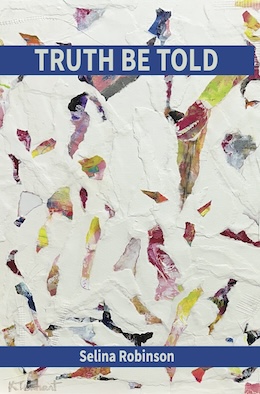
Selina Robinson will release her memoir, Truth Be Told, in a special launch event on Dec. 18. Robinson, who served in senior cabinet portfolios in British Columbia’s government, was fired earlier this year after offhand remarks about the land on which Israel was founded.

image - Truth Be Told book coverIn Truth Be Told, Robinson tells the behind-the-scenes story of what happened as she worked with the Jewish community to confront the antisemitism that erupted after the Oct. 7, 2023, Hamas terror attacks on Israel. Dubbing herself the “Jew in the Crew,” Robinson was the voice of the BC Jewish community in government.

Then, when anti-Israel protesters and a group of Muslim clergy threatened the government unless Robinson was fired, Premier David Eby called a meeting of the entire New Democrat caucus – except for Robinson herself – and immediately afterwards she was told that she needed to resign.

The book is a cautionary story of the dangers to ethnocultural communities, multiculturalism and democracy itself when leaders stay silent – or worse, capitulate – in the face of coercion and place expediency ahead of principles.

Robinson will launch the book in conversation with Global BC legislative reporter Richard Zussman at 7:30 p.m. on Wednesday, Dec. 18, in Vancouver. The specific location will be shared the morning of the event for security reasons.

There is no charge to attend the event, but registration is required at selinarobinson.ca. Copies of the book can be reserved on the website and will also be on sale at the event, with Robinson on hand to sign copies. 

– Courtesy Pat Johnson

In honour of Arnold Schoenberg

The Israeli Chamber Project ensemble (PR photo)

Celebrating the 150th birth year of Arnold Schoenberg, the Israeli Chamber Project ensemble presents a semi-staged production of his expressionist cabaret Pierrot Lunaire with soprano Hila Baggio as the sad clown. Stravinsky’s Petrushka and Ravel’s La Valse complete the exploration of early 20th-century masterworks.

Two Clowns: Pierrot Meets Petrushka, presented by the Vancouver Recital Society, is at the Vancouver Playhouse this Sunday, Dec. 1, 3 p.m. For tickets, visit vanrecital.com or call 604-602-0363.

– Courtesy Vancouver Recital Society


Join Pacific Theatre in Shire

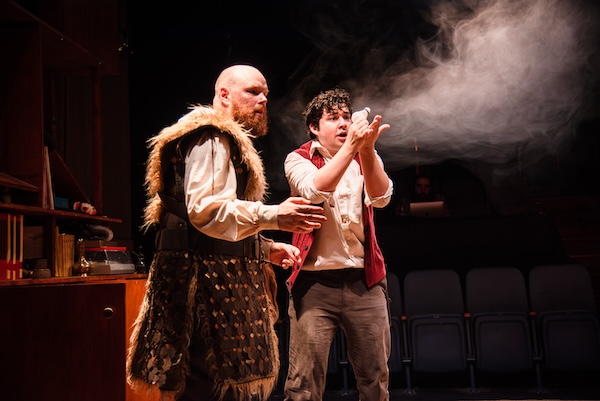
Peter Carlone, left, and Tim Carlson in Pacific Theatre’s production of The Hobbit (photo by Chelsey Stuyt)

Need a break from reality? On now at Pacific Theatre is The Hobbit, based on JRR Tolkien’s book, with all its adventure, wizardry, fantastical creatures, and more. The tale is brought to life by two actors “and a dragon’s hoard of theatre magic.”

A world premiere, Pacific Theatre’s The Hobbit was adapted by Kim Selody, with additional dialogue by Tim Carlson and Peter Carlone, the two actors who play multiple characters in the production. The Jewish Independent spoke with stage manager Julia Lank before the show opened on Nov. 15.

“We’re less than a week into rehearsal and already our performers, Tim and Peter, have made me tear up laughing with their creative solutions,” said Lank when asked what her most fun problem-solving moment had been so far. “Telling a story designed for dozens of characters with just two actors poses obvious challenges, and the entire team – including our designers – have jumped in with both feet,” she said. “The room is incredibly playful (this morning we were testing out rolling beer can ‘barrels’ down the aisles of the theatre) and our director, Laura [McLean] is also keeping the magic and wonder of Middle Earth at the forefront. The show is going to be full of surprises, and it feels great to be a part of creating something new together.”

photo - Julia Lank, stage manager of The Hobbit
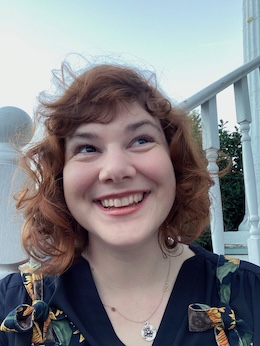
Julia Lank, stage manager of The Hobbit. (photo from Pacific Theatre)

Lank is a self-taught stage manager, though she does have a degree in film production and worked as a first assistant director for several years, which, she said, is the film world’s equivalent of a stage manager.

“Stage management is one of those niche jobs that won’t be on a high school career counselor’s radar, but it’s perfect for me – a mix of technical theatre magic, caretaking, and lots of spreadsheets,” she said. “If you’re interested in how the theatrical sausage gets made and you’re unflappable, stage management might be for you.”

Lank’s recent credits include other Pacific Theatre (PT) productions (Gramma and The Cake), as well as Tuck Everlasting (Arts Umbrella), On Behalf (Fringe), L’Elisir d’Amore (Burnaby Lyric Opera), Jasper in Deadland (Awkward Stage) and City of Angels (the PIT Collective), among others.

“I worked as PT’s marketing assistant and later marketing director from 2017 to 2023,” she said. “I left last June to pursue stage management full-time, but I consider Pacific a theatre home and love the work and people there dearly. I’m also a self-taught marketer, but it’s easy to advocate for an artistic space when you genuinely believe in the work they’re doing. Many of my favourite theatre experiences, both behind the scenes and as an audience member, have been at PT.”

How she prepares for a new project differs, but, in general, she said, “I like to familiarize myself with the script and score well before a show begins so I can anticipate areas that may need extra support or take more time to come together. The director will be doing this work, too, and you want to be in the best possible position to help them execute their vision. And you definitely don’t want to be in a position where you didn’t realize there was going to be a live goat onstage until the first read.”

A good follow-up question would have been whether Lank was referring to The Hobbit when talking about an acting goat, but the JI missed that opportunity. Instead, we asked about how The Hobbit fits into Pacific Theatre’s aspiration “to delight, provoke and stimulate dialogue by producing theatre that rigorously explores the spiritual aspects of human existence.”

“Tolkien was famously opposed to religious allegorical readings of his work, but the Pacific Theatre community has a fondness for his work that stems from his personal religious background,” explained Lank. “Regardless, if you’re a person of faith or not, I think the values of compassion, the rejection of greed and needless violence in favour of communal care and quiet contentment and imagination in this interpretation of the story make Hobbit a perfect PT show.”

As for Lank, she was raised in the local Jewish community and attends Or Shalom.

“Judaism honours my curiosity and taught me that questioning a system can only improve it,” she said. “My Jewish identity calls me to care for the vulnerable, stand up for communities whose voices have been suppressed, and honour the natural world. It’s very important to me.”

Turning back to less serious matters, Lank said of The Hobbit: “It’s going to be a marvelous, silly, scary adventure – you’ll be very welcome to join us in the Shire.”

The Hobbit runs to Dec. 21 at Pacific Theatre. Performance times are Wednesday-Thursday, 7:30 p.m.; Friday-Saturday, 8 p.m.; and Saturday-Sunday, 2 p.m. For tickets, which start at $20, visit pacifictheatre.org or call 604-731-5518. 

Looking for everyday heroes

The deadline to nominate someone for the 2025 Courage to Come Back Awards is Jan. 17. The awards, presented by Wheaton Precious Metals, pay tribute to everyday heroes who have overcome immense challenges and now give back to their community. They also raise funds so that Coast Mental Health can continue to provide community-based services for people living with mental illness in British Columbia.

“I really believe that having the opportunity to tell my story was something I had no idea I really needed,” said Rachel Goldman, who received a Courage to Come Back Award in the medical category last year. “It was the first time in my life that I had celebrated the part of myself that I always viewed as my greatest weakness. The ability to overcome challenges is always something to be celebrated. Courage is a superpower. I have no doubt that others would benefit from putting themselves or others forward, too. It is a gift that others should absolutely experience.”

photo - Rachel Goldman received a Courage to Come Back Award in 2023
Rachel Goldman received a Courage to Come Back Award in 2023. (photo from Coast Mental Health)

Goldman was born with CVID, common variable immune deficiency, which causes low levels of the proteins that help fight infections. Initially, she was uncomfortable about being nominated for the honour, as her illness was something she had only ever faced privately.

“That others would view this as both resilient and brave was not something I had really considered – that was just the way I chose to approach life,” she said. “The nomination showed me that resilience and bravery are something to be celebrated and that having the opportunity to shine a light on rare and invisible illnesses like mine is a privilege.”

Winning a Courage to Come Back Award has impacted Goldman’s life in a few ways.

“It opened the door to thoughtful conversation regarding my health and my life and allowed me the ability to really explain to those around me what it is like to live in my shoes,” she said. “It was not easy, but it began a healing journey to better understand my health needs. My hope is still to bring awareness to those that are suffering from diseases like mine and that research worldwide will continue towards helping those like me to live a more fulfilling and healthy life.”

The 2025 Courage to Come Back Awards are granted in four categories: addiction, medical, mental health and youth (ages 19-25). Recipients will be recognized in a celebration at the Vancouver Convention Centre on May 7. 

“As chair of the Courage to Come Back Awards, reading through the hundreds of nominations we receive every year is a moment I look forward to with great anticipation. All of them are true journeys of bravery, resilience and strength in the face of adversity. I am grateful to those that have the courage to share their stories with us,” said Lorne Segal, who is also president of Kingswood Properties Ltd.

To nominate someone and/or find out more about the process, visit couragetocomeback.ca/nominations. 

Security through peace

Noa in conversation with Rabbi Dan Moskovitz at Temple Sholom Oct. 30. (screenshot)

Israeli singer/songwriter and peace activist Achinoam Nini (Noa) was in British Columbia recently to do a Vipassana meditation. While here, she stopped at Temple Sholom Oct. 30 for a conversation with Rabbi Dan Moskovitz (which is on YouTube) and at Congregation Emanu-El Nov. 4 for a talk with Rabbi Harry Brechner.

Noa was born in Israel in 1969. She’s the fifth generation of her family in Israel, their presence dating back to the mid-1800s. They immigrated from Yemen.

“They came because they were persecuted at the time and they came to the only place they knew, that their heart drew them to, and that was Jerusalem and the Kinneret,” she said. “That was the two places. They walked across the desert and took boats and were smuggled by Bedouins. It’s a very dramatic story, how the family made it to the Holy Land.”

Noa’s father got a scholarship to study at the University of Rochester, so she spent the first couple of years of her life in Rochester, NY.

“When I went into first grade, my family moved to the Bronx, NY. My dad was now doing his PhD in Columbia University. And my parents decided to send my brother and I to yeshivah…. I was the only dark-skinned kid in the school, the only Israeli kid in the school, the only family that didn’t live in something that looked like a mansion. 

“My way of dealing was in two ways,” said Noa. “First, fortunately, I was a gifted student, so I had a scholarship to school that helped my parents…. And music. I started writing songs at a very young age…. I was interested in physics and mathematics, I loved history. I wanted to go to Harvard and do a PhD in physics and history, but that didn’t happen, obviously. Music … chose me.”

At age 17, on a summer vacation in Israel, Noa met a soldier on leave.

“I went back home,” she said. “I told my parents, I’m making aliyah. I said, you raised me to be a Zionist. We love Israel. I want to live in Israel.”

To this day, Noa is married to that man (Asher Barak, now a medical specialist and entrepreneur), and they have three children, two of whom are in the Israel Defence Forces, one in service, the other in the reserves.

Noa did her army service in a military entertainment unit, then started her music career. While at the Rimon School of Music, she met Gil Dor, who was one of her teachers. “He’s an extraordinary and amazing, brilliant musician and we’ve been working together now for 34 years,” said Noa.

They caught the attention of guitarist Pat Metheny, who produced Noa’s first album and brought it to David Geffen, who then signed Noa at Geffen Records.

“I started performing abroad and foreign journalists started asking me my opinion about the Palestinian-Israeli conflict and I’m like, I’m an artist, I don’t speak about things like that, don’t ask me questions like that.”

But she didn’t feel good about not responding. “And so, I started learning more and reading more and I became more and more depressed,” she said. “And then came Yitzchak Rabin and he started talking about peace. And I was like, yes, this is great!”

A believer in the Oslo Accords, Noa was the only leading Israeli musician to agree to perform at the peace rally where Rabin was murdered.

“I saw Rabin and I hugged him … and I walked down the stairs. Ten minutes later, he walked down the stairs and was killed…. I remember the rush and the cry and everybody running, and panic, and myself running and pushing to see what had happened,” Noa shared. “It was a trauma. I haven’t recovered, absolutely not. I haven’t recovered – and neither has Israel.”

At that moment, said Noa, “I said, OK, well, if this guy just paid with his life for our future, the future of Israel, the future of my children, then I, too, can do something. And then, maybe, I’ll pay a price and that’ll be OK because it’s the right thing to do. And that’s when I started becoming an activist for peace.”

There were two other life-changing events for Noa in the 1990s. She was invited to sing at the Vatican for Pope John Paul II and she was asked to write the lyrics and sing the theme song of the film Life is Beautiful (La Vita e Bella), which won an Oscar.

Among her many achievements, Noa represented Israel in the Eurovision Song Contest in 2009. She did so with Palestinian-Israeli singer/songwriter Mira Awad. “I wrote a song called ‘There Must Be Another Way,’ and we sang it in English, Hebrew and Arabic,” said Noa. “It made a lot of waves around the world and I have to say that, until today, it is taught in schools around the world.”

She related a story about that experience. 

“Mira, her mother is from Bulgaria and her father is Palestinian. She’s quite fair-skinned, with green eyes. My family is from Yemen…. I’m an Arabic Jew. And so, when we sat in front of media, I remember there was one day where they had BBC Iran, they had Al Jazeera, they had all kinds of media…. All the Arab media immediately came up to me in Arabic and to her in English, [assuming] she’s the Jew. And so, I told them, you see, that is the role of art – our role is to shake you up a little. You think you understand everything. Maybe you don’t. Maybe there’s another way of looking at it…. You can’t think that you understand everything about everything. No, it’s not black and white. And that’s, of course, very relevant to where we are today.”

That said, there has been progress towards peace, she contended.

“There’s a huge polemic about whether there should be or there shouldn’t be a Palestinian state,” she admitted, “but there is a conversation being had about it…. In the past, it was not even talked about at all. It was underground.”

She also pointed to the many organizations that work with and/or are staffed by Arabs and Jews. Noa is on the boards of the Arava Institute and the Umm el-Fahem Museum of Art, for example. She’s also involved with the Parents Circle – Families Forum.

“The world in general is not a great place for people who believe in peace right now,” she acknowledged. “I think that we are under attack by forces, if you like, forces of darkness from everywhere. But, like I always say, that’s not reason enough not to continue raising the voice…. I believe in peace. I don’t see any other way to live. Has the peace camp changed? It has transformed in many ways.”

She gave the example of a WhatsApp group called Voices of Solidarity. She said a lot of young people are doing things – “it’s either art, it’s underground theatre, it’s alternative music.” She mentioned the organization Standing Together.

“Yitzhak Rabin, when he started talking to [Yasser] Arafat, the terrorist, everyone was like, what, no way, forget it. Seventy-five percent of the Israeli public were against any kind of interaction with Palestinians but then he came [along] with his charisma and his leadership and his integrity and his honesty and his track record, and he started saying, we’re going to be doing this and this is the right thing and this is for Israel’s future, for our children, we’ve made enough wars…. And then, it was like a month later, the entire public opinion, it shifted towards being positive about the chances for peace.”

That could happen again. A change in circumstances, a particular leader’s personality, the right timing, she said.

For Noa, Israel is in a worse situation now than immediately after Oct. 7.

“The hostage situation … is a nightmare beyond words. I go every week, sometimes I go twice a week, three times a week, to stand with them [the families and others calling for the hostages to be brought home]…. They’re desperate. I don’t know how they are still sane…. And the fact that that their children are still there [in Gaza], that they haven’t been brought back, that not everything has been done to bring them back, is not anything that Israel will ever recover from.”

She is appalled that the government is still in power.

“Not only did they not resign,” she said, “they then turned around to blame everybody that saved Israel, including Brothers and Sisters in Arms, including all the organizations that volunteered, [and] to blame the hostage families for daring to want their children back…. It’s beyond words.”

She advised diaspora Jews to distance themselves from the government: “separate the Israeli government from the Israeli people, it’s not the same thing,” she said.

“If you are going to look at a lot of consistent polls, you’ll see that people – even people that voted for the present government – feel betrayed by what the government has eventually done. They don’t understand how the government is not taking responsibility. They don’t understand how the dictatorship coup keeps moving forward when we’re in such a stressful situation. They don’t understand how our relationship with the entire world has come to a complete collapse under the auspices of this government. The Israeli government right now is the enemy of the Israeli people. And you can say that…. We support the Israeli people, we support the country of Israel, but we do not support the government of Israel.”

She warned of the dangers extremists pose in any country, and asked people to “strengthen the moderates in civil society in any way you can.”

She added, “Throughout history, countries have fallen into terrible situations of leadership. Italy, my favourite country in the world after Israel, became a fascist country at some point, with Mussolini, and there was Franco [in Spain] and there were other people, other countries that came into [similar] situations. Does that delegitimize the country? No. It means that a certain combination of events led to the fact that a country was now held hostage by leadership that did not work in her benefit. That is what is happening right now to Israel, and we have to work through it together with the help of our friends, and you are our friends.”

Noa doesn’t just fault the Israeli government. “In my opinion,” she said, “everybody in the region is to blame for the horrible situation we’re in. Nobody made the efforts. The leadership did not make efforts to make peace, not Israeli leadership, definitely not Palestinian leadership.”

She believes Israel had to defend itself after Oct. 7.

“What were we supposed to do? Sit around [twiddling our thumbs] while our kids were being massacred and our women were being raped? Yes, Israel needed to go in. The war was legitimate. But – it was legitimate to the extent that there was a plan. There needs to be a plan. Say, we have to fight, but now, let’s see, we’ve attacked, we’ve retaliated, we’ve done this, we’ve shown that, we’re there for our people. But we have to bring the hostages back…. Second, we have to see, who are our allies? We’re a small country, we’re nine million people – whoa, we want to attack the entire world? No. Who are our allies? Who are our friends? How can we start progressing towards a solution to this? Not endless warfare. Who are the people that want to talk to us? The UAE, the Saudis, the Americans, the Europeans, let’s reach out to them. This is what the Israeli government should have done immediately.”

While acknowledging that Israel needs a strong army, Noa said, “at the same time, parallel institutions need to come in and do their job, the diplomatic job, to reach out to our friends … and make sure that Israel is secure. Our security will come with peace, only with peace, and we have to look at this as an opportunity to make peace. And are there partners? There are.”

She said, “As a woman who lives in Israel, loves Israel and sends her kids to the army…. We need to be able to look forward to a time when we will not be sending our children to the army. Is it possible? Yes.” 

Mobilizing against Jew-hatred

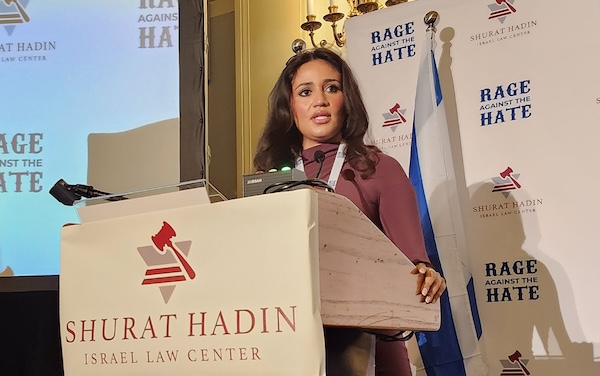
Ysabella Hazan said phrases such as “the West is next” imply “exactly what the enemies of Israel accuse us of – being a Western outpost in the Middle East, a settled body, which is not true.” (photo by Dave Gordon)

Rage Against the Hate in New York on Oct. 31 had the goal to “gather Jewish organizations, and to find ways to start fighting back, to retake the streets, to retake the campuses, to retake social media, to combat antisemitism in a way that we haven’t,” said Nitsana Darshan-Leitner, president of the Israeli nonprofit Shurat HaDin Law Centre, organizers of the full-day conference. 

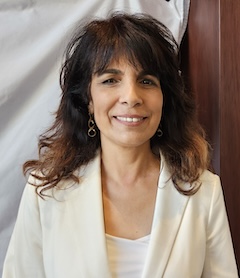
photo - Nitsana Darshan-Leitner, president of Israeli nonprofit Shurat HaDin Law Centre, which organized the Rage Against the Hate conference in New York Oct. 31
Nitsana Darshan-Leitner, president of Israeli nonprofit Shurat HaDin Law Centre, which organized the Rage Against the Hate conference in New York Oct. 31. (photo by Dave Gordon)

More than 30 organizations were conference partners and keynote speakers included radio host/author Dennis Prager, attorney Alan Dershowitz, actor Michael Rapaport, activist Shabbos Kestenbaum and NGO Monitor’s Gerald Steinberg.

Dershowitz, 86, said that after speaking to Jewish high school students, he was “stunned by their lack of knowledge” about Israel. To fill the void, he will be giving away a million copies of his latest book, The 10 Big Anti-Israel Lies and How to Refute Them with Truth, to 1,000 universities and high schools across the United States. He lambasted what he called the “educational malpractice” pervasive on college campuses, where professors “give disguise” to Jew-hatred through diversity, equity and inclusion policies, and oppressor-versus- oppressed beliefs.

“I offered $1,000 to anybody who could find me a single protester in any of these protests on university campuses that has ever called for a two-state solution. Nobody has taken me up on it. No protester wants to see an Israeli state,” he said to the audience of 300.

He added that “we are in a fight for our lives. We are in a fight for the future,” because these students will become politicians, corporate executives, media influencers and other types of leaders, and they will have all “been brought up with this kind of knee-jerk anti-Zionism.” 

Darshan-Leitner characterized Students for Justice in Palestine as a “propaganda arm of Hamas.” She believes their activity is “actually providing material support to a terror organization” and, in doing so, contravenes the Anti-terrorism Act in the United States.

Kestenbaum – who, last January, became the lead plaintiff in a lawsuit against Harvard University, alleging systemic antisemitism, and has testified before Congress about antisemitism on college campuses – told the Jewish Independent: “Jewish students are fighting a really remarkable fight with limited resources, with limited help and limited funding. It’s the Jewish nonprofits, who raise billions of dollars each year, who could be in a position to do a lot more. And so, I would encourage the Jewish nonprofits not to say, ‘What can the students be doing?’ but to ask themselves, ‘What can I be doing?’ to help students.”

“It is imperative that larger organizations actively support grassroots initiatives that can manoeuvre and mobilize quickly and efficiently, whereby large organizations cannot,” said Amir Epstein, director of Tafsik, a Jewish civil rights group that fights Jew-hatred in Canada and more broadly.

“Hundreds of millions of dollars are donated to large organizations, so it isn’t unreasonable for them to contribute considerable monetary aid to empower these grassroots efforts, so we can create a united front to combat the degradation of our Jewish community’s safety, and address the unprecedented antisemitism we face in universities, K-12 schools, media, politics and the arts,” said Epstein.

Montrealer Ysabella Hazan, who started the movement called Decolonized Judean, said phrases such as “the West is next” and “Israel is the only democracy in the Middle East” do not resonate with the younger generation. “They do not speak about us, convey our story or address the accusations that we are facing on the world stage,” she said. “And they indirectly prove exactly what the enemies of Israel accuse us of – being a Western outpost in the Middle East, a settled body, which is not true.”

Columbia business professor Shai Davidai, who has earned renown for calling out Jew-hatred on campuses, told the audience that antisemites have “created the new normal” by making students feel uncomfortable being visibly Jewish.” He said, “If we don’t fight back in the court of public opinion and in the court of law, we’re not going to win this war.”

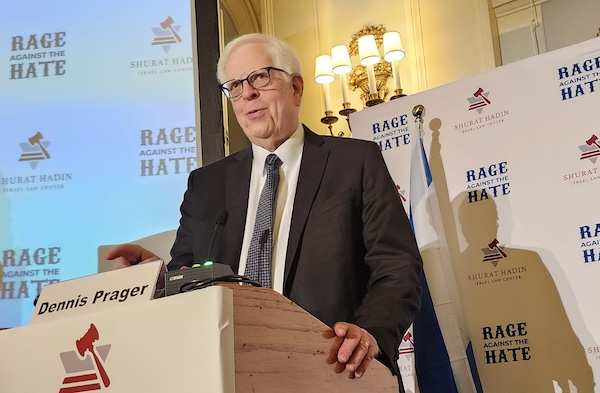
photo - At the Rage Against the Hate conference Oct. 31, Dennis Prager offered an idea of how to counter the delegitimization of Israel
At the Rage Against the Hate conference Oct. 31, Dennis Prager offered an idea of how to counter the delegitimization of Israel. (photo by Dave Gordon)

Prager, who did graduate work at the Middle East and Russian institutes of Columbia’s School of International Affairs, said, “I was basically taught by moral idiots, but they were giants compared to who’s teaching in Columbia today, or at Harvard or at Princeton.”

An argument he proposed to use against the delegitimization of Israel is to draw a parallel to the creation of Pakistan, born the same year as the modern Jewish state. “There were two Israels in history,” said Prager, “but there was no Pakistan in history. When it was created, it was wrenched out of India. Nobody ever challenges the right of Pakistan to exist.” 

Rapaport, known for his social media posts about Israel, advised: “Fight with your heart, fight with your prayers, fight with your genius, brilliant, Jewish, Zionist minds. Fight ferociously and do not take a step back,” he implored, while also encouraging Jewish education: “The more that I learn about our fantastic, magical history, the prouder I become.”

Journalist Douglas Murray, who is not Jewish, and Darshan-Leitner, shared a question-and-answer session.

Murray lamented how “very senior politicians” and “a generation of Americans” have bought into the “delusion that, if you were to solve the Israeli-Palestinian dispute, peace would break out, not just in the region, but around the world.” But a state of Palestine with Hamas leadership “will be another Iranian proxy state nearer to Israel,” he said, and it’s “an obscenity that more people don’t realize that.”

He also said this is “a great opportunity for alliance-building,” and reminded the audience “not to forget the Christian communities” and others “who have been so supportive of Israel.”

Winnipeg attorney Lawrence Pinsky told the Independent that the conference was “inspiring and helpful,” and he plans to create a community “situation room,” he said, “just so that we can have a multi-directional approach to any problem. These will be individuals who may or may not be parts of organizations, who actually want to do, and can do.” 

He said the conference helped him realize that activism should involve “no ego,” and that people should jump into action, not feeling they “have to reinvent the wheel.” 

Dave Gordon is a Toronto-based freelance writer whose work has appeared in more than 100 publications around the world. His website is davegordonwrites.com.