Skip to content
  • Home
  • Subscribe / donate
  • Events calendar
  • News
    • Local
    • National
    • Israel
    • World
    • עניין בחדשות
      A roundup of news in Canada and further afield, in Hebrew.
  • Opinion
    • From the JI
    • Op-Ed
  • Arts & Culture
    • Performing Arts
    • Music
    • Books
    • Visual Arts
    • TV & Film
  • Life
    • Celebrating the Holidays
    • Travel
    • The Daily Snooze
      Cartoons by Jacob Samuel
    • Mystery Photo
      Help the JI and JMABC fill in the gaps in our archives.
  • Community Links
    • Organizations, Etc.
    • Other News Sources & Blogs
    • Business Directory
  • FAQ
  • JI Chai Celebration
  • JI@88! video

Recent Posts

  • Eby touts government record
  • Keep lighting candles
  • Facing a complex situation
  • Unique interview show a hit
  • See Annie at Gateway
  • Explorations of light
  • Help with the legal aspects
  • Stories create impact
  • Different faiths gather
  • Advocating for girls’ rights
  • An oral song tradition
  • Genealogy tools and tips
  • Jew-hatred is centuries old
  • Aiding medical research
  • Connecting Jews to Judaism
  • Beacon of light in heart of city
  • Drag & Dreidel: A Queer Jewish Hanukkah Celebration
  • An emotional reunion
  • Post-tumble, lights still shine
  • Visit to cradle of Ashkenaz
  • Unique, memorable travels
  • Family memoir a work of art
  • A little holiday romance
  • The Maccabees, old and new
  • My Hanukkah miracle
  • After the rededication … a Hanukkah cartoon
  • Improving the holiday table
  • Vive la différence!
  • Fresh, healthy comfort foods
  • From the archives … Hanukkah
  • תגובתי לכתבה על ישראלים שרצו להגר לקנדה ולא קיבלו אותם עם שטיח אדום
  • Lessons in Mamdani’s win
  • West Van Story at the York
  • Words hold much power
  • Plenty of hopefulness
  • Lessons from past for today

Archives

Follow @JewishIndie
image - The CJN - Visit Us Banner - 300x600 - 101625

Tag: Holocaust education

Teaching about Shoah

Teaching about Shoah

Lise Kirchner, director of education of the Vancouver Holocaust Education Centre, demonstrates the online exhibition Fragments in Focus: A History of the Holocaust (photo by Pat Johnson)

The school year that begins next month is the first in British Columbia to include mandatory Holocaust education in the curriculum. As teachers throughout the province prepare to address this challenging topic in the classroom, the Vancouver Holocaust Education Centre has unveiled a wide-reaching online exhibit to both assist educators and to launch students into independent exploration on the complex network of moral and historical issues the subject raises.

In October 2023, the BC government announced that Holocaust education would be mandatory in the Grade 10 social studies curriculum beginning in the 2025/26 academic year. Many teachers were already addressing the topic as part of Social Studies 10, which covers the Second World War. An elective course, Genocide 12, also exposes students to the history of the Shoah. However, this is the first year that it will be impossible for a student to complete Grade 10 in the province without some exposure to the Nazis’ attempts to destroy the Jewish people and other groups they deemed undesirable.

While mandating that the topic be covered, the ministry of education’s guidelines for learning outcomes are extremely vague. Lise Kirchner, director of education of the Vancouver Holocaust Education Centre, said teachers have great flexibility in how to address the topic – and how much time to give it.  

“The teacher can choose to spend four minutes, four hours or four months on the subject,” she said.

Given that many teachers will be seeking trusted resources to teach this material for the first time, the VHEC’s exhibit promises to deliver everything educators need to address the subject effectively, no matter how much class time they allocate to it.

“Over the last 18 months, the VHEC has been working with the ministry of education to articulate this new learning standard for Social Studies 10 and also to develop teaching resources to support educators as they implement Holocaust education in the classroom,” Kirchner told attendees at the VHEC’s annual general meeting in June, where she demonstrated the new online resource.

The exhibition is called Fragments in Focus: A History of the Holocaust. It has been produced with the support of the Digital Museums Canada investment program and the financial support of the Government of Canada. The website is in English and French and meets accessibility standards for people with disabilities.

The online exhibit showcases more than 160 primary sources, including artifacts, survivor testimonies and archival records from the VHEC’s collections, presenting the history of the era through these items.

Fragments in Focus explores Jewish life in Europe before the war, the Holocaust and its impacts, and postwar Jewish life. Users can explore digital 3D models of artifacts, engage with an interactive map and hear from survivors – most of those featured settled in British Columbia after the war – adding human faces and stories to the artifacts and the broader history.

Accompanying the Fragments in Focus exhibit are 20 integrated learning activities and a comprehensive teachers’ guide, providing everything required to navigate the exhibit, construct a complete unit on the Holocaust or supplement existing lessons using unique primary sources, according to the VHEC.

The VHEC’s education team is also available to support educators as they prepare to cover these topics, offering training workshops throughout the province.

Textbooks, which earlier generations might associate with high school, are mostly a thing of the past. Online resources have replaced most hard copy resources, making Fragments in Focus both relevant and accessible.

Historical introductions to each of the exhibit’s sections lead into artifacts, and students can then pursue their own explorations by finding out more about the individual associated with the item, their experience of survival and their life after the war.

For example, students can view a recipe book created by Rebecca Teitelbaum while she was an inmate in Ravensbruck women’s concentration camp. Risking her life, she stole paper, pencils and thread to compile the collection of favourite foods. The tiny booklet became a source of comfort for the women in Ravensbruck, allowing them to imagine a future of well-being and plenty.

The late Alex Buckman, Teitelbaum’s nephew and himself a survivor of the Holocaust, inherited the recipe book, which he eventually donated to the VHEC. During speaking engagements to young audiences, Buckman would share his aunt’s recipe for gâteau à l’orange and some students would make the cake at home, while sharing with their families what they had learned at school.

With the new exhibit, students can explore the recipe book, expand the image to see the stitching that held the book together, and then read transcripts of the recipes. More than this, they can then dig deeper and learn about the family’s story, of Rebecca’s survival and her reunification with her husband, Herman, and daughter, Annie. They can hear Buckman’s story of how he survived but lost both his parents and was raised by the Teitelbaums.

Students also can see the correspondence Rebecca received while in hospital after the war, informing her that both Herman and Annie had miraculously survived.

These artifacts and records help put this almost inconceivable history into context, said Kirchner. 

“They now are reading these intimate letters between husband and wife, where they are dreaming of being together again with her daughter,” she said. “I think it brings a whole different dimension to how we understand history, the importance of these primary objects.”

The fact that almost all the objects have a BC connection adds richness to the experience, she said.

As director of education, Kirchner has led a team in bringing Fragments in Focus to fruition. Though the exhibit was in development before the province announced the curriculum change, the shift helped guide the VHEC team to make the resource especially responsive to the needs of educators and students.

Fragments in Focus is based on an earlier physical exhibit developed by former VHEC director of education Ilona Shulman Spaar, former executive director Nina Krieger and others, including Kirchner, who has been involved with the VHEC for about 25 years in various capacities.

“We mounted In Focus – we didn’t call it Fragments in Focus – as the first exhibition in the new renovated space,” Kirchner told the Independent, referring to a major upgrade to the museum in the Jewish Community Centre of Greater Centre, which substantially increased the capacity to display items from the collections. “It was kind of a celebration of the fact that we had just digitized our entire collection – that was a very big project. With the new visual storage facilities, it gave us the ability to actually have multiple artifacts on display, over 100, so that was a pretty big deal for us.”

The ongoing digitization of the VHEC’s entire archives allows global audiences to access its collections. For BC students, starting within days, Fragments in Focus will open doors for self-guided learning.

“We give them just enough information so they can put it in context, but also pique their curiosity a little bit so that they start to see themselves as the ones that ask these questions and start to make sense of this history and to give it meaning. It’s taking ownership of that history,” said Kirchner. “We are just planting seeds and making sure they have enough information to ask the right questions and to see the complexity of that history.”

The online exhibit launched Aug. 20 at fragmentsinfocus.ca and is available to everyone. 

Format ImagePosted on August 22, 2025August 20, 2025Author Pat JohnsonCategories LocalTags education, Holocaust education, teaching, VHEC

Community milestones … Marie Doduck, Poritz Freeman, Israel Emergency Campaign

Last month, Governor General of Canada Mary Simon made 88 new appointments to the Order of Canada, one of the country’s highest honours. Among those appointed as a member to the Order was Vancouver Jewish community member Marie Doduck.

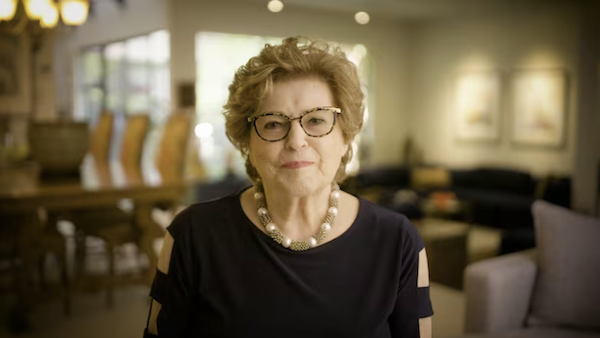
photo - Marie Doduck
Marie Doduck

For more than 50 years, Doduck has been a leader in Holocaust education and philanthropy. A child Holocaust survivor, she is a founding member of the Vancouver Holocaust Education Centre and has shared her history with tens of thousands of students and others. Her memoir, A Childhood Unspoken, was published in 2023 by the Azrieli Foundation’s Holocaust Survivor Memoirs Program. (See jewishindependent.ca/survivor-reflects-on-identity.) She champions various community engagement and fundraising initiatives. 

“Members of the Order of Canada are builders of hope for a better future,” said Simon. “Each in their own way, they broaden the realm of possibilities and inspire others to continue pushing its boundaries. Thank you for your perseverance, fearless leadership and visionary spirit, and welcome to the Order of Canada.”

New members will be invited to a ceremony at a later date to be invested and to receive their insignia.

* * * 

The US Department of State recently announced the selection of international education professional Freeman Poritz for an English Language Specialist project in Israel. The project is one of around 250 that the English Language Specialist Program supports each year.

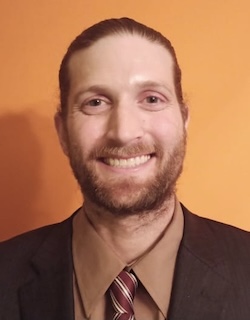
photo - Freeman Poritz
Freeman Poritz

Poritz, who is originally from Vancouver (and has written for the Jewish Independent), is a teacher trainer and conflict resolution practitioner with expertise in the Middle East, Africa and Latin America. Previously, he served as an English Language Fellow at the Institute of Rural Development Planning in Tanzania and at Haramaya University in Ethiopia, where he conducted professional development workshops for faculty, provided teacher trainings on differentiation, virtual facilitation and needs assessment, and taught academic writing courses to undergraduate and graduate students. In Israel, he will collaborate with a group of educational professionals to design an English language bicommunal youth peace and leadership curriculum for the Ministry of Education as part of Jerusalem Peacebuilders and Retorika for Multiculturalism’s EXCEL Teacher Training Institute for Partnership and Peace Leadership.

The English Language Specialist Program is an opportunity for leaders in the field of teaching English to speakers of other languages to enact changes in the way that English is taught abroad. Through projects developed by US embassies in more than 80 countries, English language specialists work directly with local teacher trainers, educational leaders and ministry of education officials to exchange knowledge, build capacity and establish partnerships benefiting participants, institutions and communities in the United States and overseas. The program is administered by the Centre for Intercultural Education and Development at Georgetown University in Washington, DC.

* * *

Last November marked a year since the Israel Emergency Campaign Committee began its work, allocating grants to organizations and partners across Israel who are dedicated to addressing the critical needs that emerged in the aftermath of Oct. 7, and the war that has been raging since.

The committee’s work over the summer and the fall demonstrated its continued mission to provide support to the evacuated communities of the Upper Galilee – in education, infrastructure and capacity building – while also supporting projects in the realm of rehabilitation, also in the north.

Broadly, during the first six months, allocations were designated to projects supporting the numerous emergency needs across Israel: $8,853,704 was deployed October 2023 to March 2024, to projects addressing emergency needs in mental health care, food and supplies for vulnerable populations, rehabilitation initiatives, educational frameworks and evacuation infrastructures.

In the spring to the fall, as the committee realigned its focus to supporting the northern communities, with special attention to projects in the realm of rehabilitation, April-October grants totalling $3,011,750 were distributed.

Over the summer and the holiday season, as war continued across the north, IEC grants focused on enabling safe and meaningful programming for youth, children and families, and supporting schools that were preparing for the opening of another school year away from home. These grants came alongside immediate, emergency deployment of funds in support of the Druze communities of the Golan, after the tragic attack on Majdal Shams in July.

With the ceasefire taking effect on Nov. 27, 2024, what was once coined “the urgency of the day after,” has become the emergency of today. Jewish Federation of Greater Vancouver’s partners in the Galilee are taking initial steps to plan their gradual return home, and the IEC committee remains aligned with this evolving reality.

A significant component of this strategy is a pan-Canadian initiative spearheaded by Sarah Mali, director general of JFC-UIA together with Jewish Federation’s executive team, in Israel and in Vancouver, and partner federations from across Canada. Earmarked to leverage collective funds to generate substantial healing and long-term impact in the north, this initiative is a central element in the IEC’s final rounds of allocations that will be developed over the coming months.

– Stephen Gaerber, chair, Israel Emergency Campaign Allocations Committee, Jewish Federation of Greater Vancouver

Posted on January 17, 2025January 15, 2025Author Community members/organizationsCategories LocalTags education, Freeman Poritz, Holocaust education, Israel Emergency Campaign, Marie Doduck, Order of Canada, Stephen Gaerber, survivor

Hope for best outcomes

Every election leaves a portion of the electorate thrilled and another group disappointed. The more polarized the electorate, the more intense these emotions. Two elections recently were certainly examples of this – and they were elections that could hardly have been closer.

The British Columbia provincial election returned the New Democrats under Premier David Eby to office – but just barely. A single seat assured a majority government but that is a most precarious victory. Eby will need to be vigilant to ensure not a single member of his caucus steps out of line on a confidence vote or becomes disgruntled enough to bolt the party. This is almost certainly part of the reason Eby gave every member of his caucus a special title (along with added pay for the responsibilities). 

Eby has a reputation for centralizing power in his office – to be fair, almost every leader in our parliamentary system does, but apparently Eby is a master at micromanaging – and this is a double-edged sword. He does not lack the skills to keep potentially wayward sheep in line, but excessive domination tends to incite rebellion. 

Jewish voters especially will be watching a few things. The new mandatory curriculum for Holocaust education is to be rolled out next year. Given behaviours of the BC Teachers Federation and the potential for individual instructors to go rogue, the possibility exists for this curriculum to be weaponized against Jewish people. There are already dispiriting anecdotes about anti-Israel activism among some teachers. The introduction of mandatory Holocaust education could open the door to reactionary activism among those who think the Holocaust should not be privileged over other human catastrophes, as well as conversations that could turn in inappropriate directions because they lack the language or support for context. We hope that the province’s curriculum experts have anticipated this potential and worry that it is a nearly impossible task to monitor. We should be looking for various types of evaluation to guide these educational programs.

The back-from-the-grave BC Conservative Party, now the official opposition, has promised to introduce adoption of the International Holocaust Remembrance Alliance definition of antisemitism among its first acts in the new Legislature. This will put the Jewish community and our issues in the centre of political drama immediately – not a welcome or comfortable situation for our minuscule demographic; the debate is sure to engender opposition and recriminations.

In the broader scope of 2024 history, though, our provincial election will be a footnote next to the election that took place a few days later. The reelection of once and now future US president Donald Trump will almost certainly have exponentially more dramatic effects.

The reelection of Trump turned out to be not as close as every poll suggested, but also not as commanding as some commentators say it was. He won the popular vote this time by about 2.5 million votes, which, in terms of the raw vote margin, is the fifth-lowest since 1960 – but, compared to having lost the popular vote by almost three million votes when first elected in 2016, the 2024 margin points to a swing in the electorate that cannot be ignored.

Trump’s recent election seems to have been met by opponents with a fatalistic sense of déjà vu. His choices of cabinet appointees suggest his second term will be no less a circus than his first and quite possibly more damaging in many ways.

According to exit polls, Jewish voters in the United States supported the Democrat, Vice-President Kamala Harris, over Trump by a margin of almost four-to-one. (Israeli voters, if they could have voted, would have backed Trump by almost mirror-image landslide margins, according to at least one poll, a disparity that deserves discussion some other time.)

Support for Trump’s stated pro-Israel positions is premised on the presumption that what he says is what he will do. This is true for all politicians of course, but it is especially true for an individual as volatile and unpredictable as this one. (Whether his positions are actually good for Israel and Jews is also a topic for further analysis and discussion.)

Whichever parties or candidates we support, all of us should hope for the best outcomes. Much depends on it, if in significantly different magnitudes – the government of BC does not, for example, have nuclear weapons – but polarized partisanship does not serve the majority well. 

As a Jewish prayer for elected officials says, “May they be guided with wisdom and understanding to serve all its inhabitants with justice and compassion. Strengthen their resolve to protect freedom and promote peace, so that harmony and tranquility prevail among all who dwell here.” 

Posted on November 29, 2024November 28, 2024Author The Editorial BoardCategories From the JITags antisemitism, British Columbia, David Eby, Donald Trump, elections, Holocaust education, Israel, politics, United States

Education a key issue

Students across British Columbia have returned to the classroom. On university campuses, the activism that had roiled those spaces during the last academic year has returned to a boil. Jewish students are facing more of the horrible same.

Even public high schools are not immune, with reports of harassment of Jewish students and inappropriate comments by teachers and other students.

About a year ago, the government of British Columbia announced that Holocaust education would become a mandatory part of the Grade 10 curriculum. This came as a surprise to many people, who were shocked that it is still possible for a student to graduate from the public education system in this province without encountering anything about the Holocaust. To be clear, this is probably not usually the case, but what a student learns about that dark history has been left to the discretion of teachers.

Starting next year, that will no longer be the case. Students will have to study the Shoah. This is a positive development in many ways. Holocaust education is an entry-point to critical discussions about human rights, dignity, oppression, genocide, totalitarianism and a vast range of crucial topics. 

From a Jewish perspective, at a time of increasing antisemitism, this is especially welcome. The dangerous potential of unchecked antisemitism is, of course, the ultimate and unique lesson of the Holocaust. Sensitizing young citizens to this message is an important part of addressing anti-Jewish racism. 

The curriculum is still in development and we trust that educating about the Holocaust will be done in the context of a larger history of antisemitism. It would be a mistake to let students conclude that antisemitism is a product exclusively of a different place (Germany) and time (1933 to 1945). The Holocaust, students must understand, was part of a much longer trajectory of anti-Jewish racism and it must not be seen as anomalous in this larger context.

While there was much satisfaction at the announcement that this history would become mandatory in the curriculum, there is cause for concern.

When dealing with issues of extraordinary sensitivity – gender, race, sexuality, religion, treatment of historical events – parents, elected officials and the broader society depend on the ability and integrity of teachers to deliver this content in appropriate ways. This is where we have reasonable apprehensions. 

While it is the government that mandates curriculum content, it is obviously teachers who deliver it. The teachers’ union, the British Columbia Teachers’ Federation, has a long history of disseminating anti-Israel materials and adopting biased approaches to the issues of Israel, Palestine and the conflict there.

This year, a group of (mostly Jewish) educators applied to the BC Teachers’ Federation to create a specialist group to help equip teachers to educate on the Holocaust. Astonishingly, the BCTF rejected the application for recognition – a recognition that is, apparently, almost rubberstamped for most other topic areas – without any suitable explanation. Given the history of the BCTF on this subject, many people have understandably come to their own conclusions about what was behind this rejection.

By the nature of their roles, teachers have a vast amount of leeway in transmitting information. The government will set out learning outcomes and expectations for this component, but the potential for inappropriate messaging in individual circumstances is great. Off the top of our heads, for example, we can imagine teachers equating the Holocaust to contemporary events and universalizing beyond the edges of what is reasonable given the uniqueness of the Holocaust in the context of antisemitism throughout the ages.

Not only does the government need to create a curriculum for the subject matter, it might do well to consider a curriculum for teachers to address appropriate and inappropriate ways of addressing the topics raised, including comments from students who have seen the inescapable propaganda accusing Israel of “genocide” and equating Israelis with Nazis.

In just over a month, British Columbians will elect a new government. Whichever party forms government will necessarily have to find a way to work with British Columbia’s teachers to ensure the useful delivery of this curriculum material.

When candidates call or knock on your door, it would be good to remind them that Holocaust education is an important issue for you (as are many other issues, addressed in the story here). Let them know that ensuring this new component of the curriculum is handled appropriately is something you will be watching for as a new government – NDP, Conservative or, given the bizarre upheavals in politics recently, some other group – sets course on this important initiative. 

Posted on September 13, 2024September 11, 2024Author The Editorial BoardCategories From the JITags antisemitism, BC Teachers' Federation, BCTF, curriculum, education, Election, history, Holocaust education, politics, racism
Holding faith at rallies

Holding faith at rallies

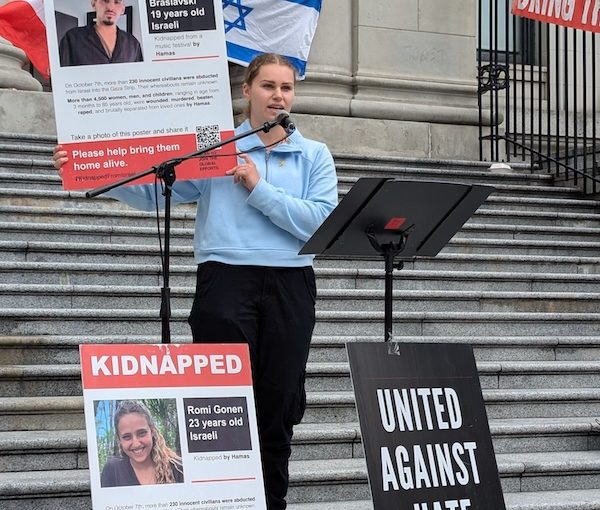
UBC student Zara Nybo, a non-Jewish ally, holds a poster of Rom Braslavski, as she speaks of his heroism before he was taken hostage to Gaza on Oct. 7. (photo by Pat Johnson)

As negotiations continued in Doha, Qatar, for the release of Israeli hostages, the weekly rallies in support of those held, their families and all Israelis continued Sunday, Aug. 18, at the Vancouver Art Gallery.

“As a university professor and as a Jew, I have been forced to witness the frontlines of a propaganda war to dehumanize and demonize Jews and to delegitimize the nation of Israel,” said Prof. Steven Plotkin, a University of British Columbia physicist.

The Hamas strategy is one of “asymmetric warfare,” he said, in which they bait Israel Defence Forces with attacks and hostage-takings, then use their own Palestinian civilians as human shields, knowing that the casualty numbers and horrible images will evoke sympathy in the West.

“And we’ve seen it,” he said. “The encampment and the protests at UBC quickly turned from advocating for the human rights of Palestinians to a call for the end of Israel.”

On campus, the messages he saw included the now familiar “From the river to the sea, Palestine will be free,” but others on the same theme, including “We don’t want your two states! Take us back to ’48” and “Resistance is justified when you are occupied.” Another common refrain, he said, is “‘Globalize the intifada.’ That means bring terrorism everywhere, including here in Canada.”

“Long live Oct. 7” was yet another slogan the professor saw on his campus. 

“Let that sink in,” he said. 

When reports of extensive sexual abuse by Hamas and other Palestinians who broke through the border on Oct. 7 became known, he said, “I saw posters at UBC that announced a discussion group for ‘the lies that Zionists spread about the sexual abuse that didn’t occur on Oct. 7.’”

Plotkin reflected back to the days after the 9/11 terror attacks in New York City, when people put up posters of their lost loved ones.

“Could you imagine what kind of person would think to tear one of those down? No one would have dreamed of it,” he said. “And now we’re seeing a world whose moral compass has completely lost its direction.”

Posters of Israeli hostages are routinely torn down at UBC, elsewhere in Vancouver and around the world. Plotkin shared a psychological hypothesis for why this desecration is so rampant.

In the identity-centred worldview of many activists, Plotkin said, morality is determined by one’s position in the hierarchy of oppression.

“The less powerful are pardoned, the more powerful must be guilty,” he said. Because Hamas is less powerful than Israel, Israel must be guilty, despite the evidence of Hamas murdering, raping and abducting Israeli civilians. 

“A hostage poster, however, throws a wrench into that framework because it forces them to cope with the idea that the people that they thought were oppressed could actually be in the wrong,” Plotkin said. “Their whole simplistic worldview of the blameless oppressed and the evil oppressor is undermined by the ugly facts contained in the posters. A hostage poster induces a cognitive dissonance and, rather than question their own worldview, it’s easier for them to see it as pro-Israel propaganda designed to elicit their sympathy for the Jews in Israel, the bad guys, and so they feel compelled to tear the poster down.”

Eyal Daniel, a Burnaby high school teacher who specializes in Holocaust and genocide studies and who is president of the Holocaust and Antisemitism Educators’ Association, spoke about how his group was denied recognition by the BC Teachers’ Federation. 

Representing close to 150 educators, the group applied to become one of the BCTF’s provincial specialist associations.

“Our application was rejected without any given reason,” he said. “Currently, there are no educational resources about the Holocaust and antisemitism for teachers in the province.”

Conversely, Daniel said, the province’s 50,000 teachers are bombarded by their union with materials promoting the elimination of the state of Israel.

The provincial government has mandated that Grade 10 students must receive Holocaust education beginning in 2025 and it is said to be working on curriculum materials. 

Despite the lack of recognition from the BCTF, Daniel’s group will continue to work “as if we had been approved,” he said.

“Therefore, these days, we are in the process of constructing a new website, developing useful, meaningful professional development opportunities for teachers, assessing and developing appropriate educational materials and working with the minister of education on the upcoming Grade 10 Holocaust education curriculum framework,” he said.

Daniel spoke of his family’s recent visit to Israel, where they visited the site of the Nova music festival.

“Stepping out of the car into the desert heat, we were immediately surrounded by the haunting silence,” he said, “but, yet, 364 voices called out from the ground: Where is the humanity? The Nova memorial site is a barren killing field where humanity ceased to exist.”

Rabbi Susan Tendler of Congregation Beth Tikvah, in Richmond, spoke of the need for dialogue.

“In civic discourse … we’re yelling more than we’re listening,” she said. “So many of us will talk about the need to listen to one another but instead we’re just angry and have an inability to actually talk to one another.”

She asked people to see the humanity of others as a starting point to dialogue.

“To be a Jew means to respect and understand that every single human being was created in the image of God,” she said. “Let us continue to work for peace in the region that so, so sorely needs healing.”

Zara Nybo, a fourth-year student at UBC, is an ally to the Jewish community, president of the Israel on Campus club, and an Emerson Fellow with the international advocacy group StandWithUs. She shared recollections of a training conference in Los Angeles from which she and scores of other campus activists recently returned. At an LA rally for the hostages, she heard profoundly moving testimonies from family members of those still held in Gaza.

“Most people around me, men, women, had tears streaming down their face,” said Nybo. “We were all holding each other in collective grief.”

The mother of Rom Braslavski spoke of how her son had been a security guard at the Nova music festival and took it upon himself to hide the bodies of murdered women, both so they would not be taken to Gaza and so that they would not be posthumously raped or mutilated, as he had seen other female bodies desecrated. Braslavski was taken hostage in Gaza.

As Nybo and her fellow students prepare for the new academic year, she emphasized the training they have undergone and the determination with which they will return to campus.

“I will tell you we are committed to this fight,” she said. 

Richard Lowy, who has provided vocal and guitar inspiration at almost every rally for months, spoke of the hope that a resolution will come through negotiation.

Event organizer Daphna Kedem recounted the rally in Tel Aviv the evening before and expressed hope that the hostages will be released soon and that the weekly rallies she has organized for 10 months will cease to be necessary.

Format ImagePosted on August 23, 2024August 22, 2024Author Pat JohnsonCategories LocalTags antisemitism, BCTF, Bring Them Home, Daphna Kedem, Eyal Daniel, Hamas terror attacks, Holocaust education, hostages, Oct. 7, rally, Richard Lowy, Steven Plotkin, Susan Tendler, terrorism, Zara Nybo
Teachers file rights complaint

Teachers file rights complaint

A screenshot of the Anti-Oppression Educators Collective’s resources page. The AOEC is a provincial specialist association of the BC Teachers’ Federation.

A group of BC teachers has filed a complaint against their union with the BC Human Rights Tribunal, alleging a culture of discrimination against Jews.

BC Teachers Against Antisemitism filed a complaint last week, after the BCTF rejected a proposal to create a provincial specialist association devoted to developing resources around antisemitism and Holocaust education.

The provincial government announced last year that Holocaust education would become mandatory in BC public schools for the first time in 2025. Provincial specialist associations within the BCTF develop and disseminate resources on areas of relevance, such as social studies, culinary arts and Aboriginal education. The proposal to create a PSA to develop the materials teachers will need when Holocaust education becomes a mandatory part of the Grade 10 social studies curriculum next year was rejected by the branch of the BCTF that vets the groups.

Paul Pulver, the lawyer representing the teachers, said this is only part of the complaint. He did not provide the text of the complaint to media, as he is adhering to the letter of the tribunal’s regulations and waiting for the quasi-judicial body to formally make the documents in the case public.

“There is a whole raft of allegations,” he said. “They involve the fact that pro-Palestinian or anti-Israel groups and members within the BCTF are able to, and encouraged to, state their position and lobby for their position and encourage change in support of their position, and those who do not agree with them are silenced and oppressed and discriminated against.”

The rejection of the PSA focused on antisemitism and Holocaust education is but one example, he said. 

One PSA, called the Anti-Oppression Educators Collective (AOEC), with the imprimatur of the BCTF, is publishing and distributing and disseminating materials Pulver calls “quite anti-Israel, anti-Zionist, frankly anti-Jewish.”

“It publishes false accusations about occupation and genocide,” he said. 

The TeachBC website, an official BCTF platform advertised as “your go-to site for free downloadable lesson plans, posters and classroom resources,” contains no materials about the Holocaust or about antisemitism, Pulver said, but includes “some really harsh anti-Israel, anti-Zionist, anti-Jewish materials,” including a poster that says “Zionists, f*** off.” After controversy around some of these items, the BCTF appeared to remove some of the AOEC’s materials from the website.

“As a teacher who isn’t interested in putting on a keffiyeh and lobbying for pro-Palestinian goals and objectives, or pro-Hamas goals and objectives as the case may be, you’re persona non grata, you’re a second-class citizen,” Pulver said. “And they are sick of it,” he said of his clients.

Rich Overgaard, director of BCTF’s communications and campaigns division, told the Independent, would not comment on the substance of the complaint.

“The Federation values the critical role of the Human Rights Tribunal in upholding the BC Human Rights Code and, in respect for this process, as well as any members that may be involved, will not comment before the tribunal has reviewed the matter,” he said in an email. 

Pulver does not expect a speedy resolution, although the BCTF could resolve the case by entering discussions to find a solution.

“But, if that doesn’t happen, it’s just like any other human rights complaint,” he said. “It goes to the Human Rights Tribunal and information is exchanged and, ultimately, there’s a hearing and they make a decision.”

If the complaint goes to a hearing, the process could stretch late into the year or further.

“Unfortunately, the wheels of justice within a number of administrative bodies in the province grind slowly and the Human Rights Tribunal is no exception,” he said. “We are looking at months, plural.” 

The teachers’ complaint is a tip of the iceberg, in one professional area, of what Jews in British Columbia and beyond are experiencing today, said Pulver.

“This is a microcosm of what’s going on in our daily life and in the daily work life of people who are Jewish or have pro-Israel or pro-Zionist views,” said the lawyer, who is a partner with Pulver Crawford Munroe LLP. “They are facing discrimination, they’re facing oppression, intimidation, they are being ostracized. In this case, they are being prevented from exercising democratic rights that, as union members, they ought to have and be able to exercise. They are in fear on a regular basis because they hold views or have origins that are not well-received in the current climate. I think anybody who cares about that sort of thing – which should be everybody – would look at this and say they deserve to be treated fairly, and they are not right now.” 

Format ImagePosted on July 12, 2024July 10, 2024Author Pat JohnsonCategories LocalTags BC Teachers Against Antisemitism, BC Teachers' Federation, BCTF, Holocaust education, human rights, law, Paul Pulver
Survivors play brings tears

Survivors play brings tears

On Oct. 29, six young actors offered a powerful rendering of Survivors, a play by Wendy Kout, at the University of Victoria’s Phoenix Theatre. The production will tour BC and other Western provinces. (photo by Peter Nadler)

On Oct. 29, six young actors offered a powerful rendering of Survivors, a play by Wendy Kout about 10 Holocaust survivors. The performance at the University of Victoria’s Phoenix Theatre had the audience, many of whom were decades older than the actors, reaching for handkerchiefs as the last words of the play, “never again,” were spoken in unison on stage.

The Victoria organizers, who have been given the rights to perform Survivors across the Western provinces, are hoping the play and its message will eventually reach, inform and educate students about the Holocaust and the dangers of hate.

Suitable for audience members from Grade 6 and up, Survivors is intended to provide students the ability to recognize the short- and long-term effects of prejudice, discrimination and, ultimately, genocide. Other objectives are to foster critical thinking in young (and older) people and impress upon them the importance of human rights and social justice advocacy.

The six actors – Julie McGuire, Ryan Kniel, Sarah-Michelle Lang, Nolan McConnell-Fidyk, Sophie Radford and Brandon Sugden – took on the roles of the 10 Holocaust survivors and dozens of other characters pertaining to their respective stories during the 65-minute performance.

Survivors progresses chronologically, portraying events leading up to, during and after the Holocaust, bringing to the stage the experiences of Jewish children and teenagers from Europe. The professional cast portrays the survivors, starting at innocence and continuing through the terrifying rise and rule of bigotry, xenophobia and violence, before they immigrate to America.

Among others, the play includes the stories of a teen who watched her boyfriend being taken away to a concentration camp, a girl who was separated from her parents and relocated to England through the Kindertransport, and a boy whose family struggled to escape to China.

Four of the 10 survivors on whom the play is based were still alive when the play premièred in New York in 2018. Though each story is unique, all the survivors “went through this horror and came through the other side to build meaningful, contributing, beautiful lives,” notes Kout. “We’re not just telling history. We’re telling history as a cautionary tale for the present and the future.”

Several prominent members of the public, such as MLAs Murray Rankin and Rob Fleming, were in attendance at the UVic performance. In remarks made after the show, Rankin suggested he would press the Ministry of Education and Child Care to bring Survivors to schools in the province.

Rankin’s comments preceded the announcement by Premier David Eby the following day, Oct. 30, that Holocaust education would become mandatory in high schools throughout British Columbia beginning in the 2025-26 academic year. The move made British Columbia the second province, after Ontario, to mandate study of the Shoah.

There is a tangible sense of urgency by the organizers of Survivors to have the play viewed as widely as possible.

“We need to capture young minds of young people at an early stage before hate and racism becomes normalized,” their literature states. “We need to do this in the schools, because that is where most young people can be reached and it’s an opportunity to educate children and engage teachers.”

Survivors, with its aim to educate young people about hate, comes at a time when clear evidence of the ignorance of history has been in the news. In September, Anthony Rota, the speaker of the House of Commons, stepped down after honouring a Ukrainian veteran who fought with a Nazi unit during the Second World War.

More broadly, the organizers of Survivors cite a report by the Azrieli Foundation, Yad Vashem and others, which found that 62% of millennials did not know that six million Jews were killed in the Holocaust, 22% of millennials had not heard or were not sure if they had heard of the Holocaust, and 23% of all Canadians believe that two million or fewer Jews were killed during the Holocaust.

The Victoria production of Survivors that played last fall in school auditoriums, theatres and libraries, and had four public performances was the first international tour of the play. (See jewishindependent.ca/survivors-a-cautionary-tale and jewishindependent.ca/theatre-that-educates.) There are other tours currently on both coasts of the United States, and Kout, along with the New York company that developed Survivors, is creating a documentary on how the play came to be.

Survivors was originally commissioned and developed by CenterStage Theatre in Rochester, NY, in 2017, when Kout was asked to write a Holocaust play about survivors who had immigrated to the city. Shortly thereafter, while watching neo-Nazis march in Charlottesville, Va., Kout expressed the feeling that she was not simply writing an historical play but also a “warning play.”

For the Victoria troupe, Zelda Dean, the director, said, “Our goal is to expand the tour to more of Vancouver Island, to Vancouver on the mainland, and to select schools in the interior. The following year we will expand to include more schools throughout BC and other Western Canadian provinces.”

To learn more about Survivors and to donate, visit holocausttheatre.com.

Sam Margolis has written for the Globe and Mail, the National Post, UPI and MSNBC.

Format ImagePosted on November 10, 2023July 21, 2025Author Sam MargolisCategories Performing ArtsTags Holocaust education, survivors, theatre, Wendy Kout, Zelda Dean
Proudly powered by WordPress