Skip to content
  • Home
  • Subscribe / donate
  • Events calendar
  • News
    • Local
    • National
    • Israel
    • World
    • עניין בחדשות
      A roundup of news in Canada and further afield, in Hebrew.
  • Opinion
    • From the JI
    • Op-Ed
  • Arts & Culture
    • Performing Arts
    • Music
    • Books
    • Visual Arts
    • TV & Film
  • Life
    • Celebrating the Holidays
    • Travel
    • The Daily Snooze
      Cartoons by Jacob Samuel
    • Mystery Photo
      Help the JI and JMABC fill in the gaps in our archives.
  • Community Links
    • Organizations, Etc.
    • Other News Sources & Blogs
    • Business Directory
  • FAQ
  • JI Chai Celebration
  • JI@88! video

Recent Posts

  • Story of Israel’s north
  • Sheltering in train stations
  • Teach critical thinking
  • Learning to bridge divides
  • Supporting Iranian community
  • Art dismantles systems
  • Beth Tikvah celebrates 50th
  • What is Jewish music?
  • Celebrate joy of music
  • Women share experiences 
  • Raising funds for Survivors
  • Call for digital literacy
  • The hidden hand of hate
  • Tarot as spiritual ritual
  • Students create fancy meal
  • Encouraging young voices
  • Rose’s Angels delivers
  • Living life to its fullest
  • Drawing on his roots
  • Panama City welcoming
  • Pesach cleaning
  • On the wings of griffon vultures
  • Vast recipe & story collection
  • A word, please …
  • מארק קרני לא ממתין לטראמפ
  • On war and antisemitism
  • Jews shine in Canucks colours
  • Moment of opportunity
  • Shooting response
  • BC budget fails seniors
  • Ritual is what makes life holy
  • Dogs help war veterans live again
  • Remain vital and outspoken
  • An urgent play to see
  • Pop-up exhibit popular
  • An invite to join JWest

Archives

Follow @JewishIndie
image - The CJN - Visit Us Banner - 300x600 - 101625

Month: July 2020

Paul hopes to make history

Paul hopes to make history

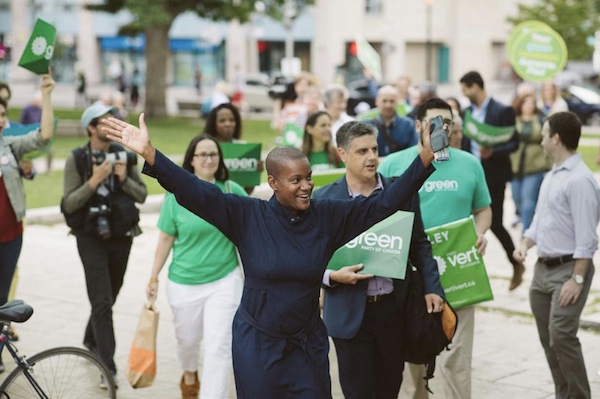
Annamie Paul is running to succeed Elizabeth May as leader of the Green Party of Canada. (photo from Annamie Paul)

Annamie Paul wants to be the first woman of colour and the first Jewish woman to lead a political party in Canada. But, in the process, the human rights lawyer and former diplomat who is running to succeed Elizabeth May as leader of the Green Party of Canada has been taken aback by the overt antisemitism thrown at her since it became widely known that she is Jewish.

“You almost can’t believe what you’re seeing,” said the Toronto native, who has worked extensively overseas. “There are very explicit comments questioning my loyalty to Canada because I am Jewish. There are those who have suggested that I am seeking to infiltrate the party on behalf of Zionist elements.”

Paul said what disappoints her most is the almost complete silence from others when antisemitic posts are made on social media, such as the Facebook group for Green party supporters.

“The comments were whispers at first, innuendo, and now they’ve become very explicit,” she said. “If people are allowed to make these comments unchecked, it really emboldens them and that’s definitely what I’ve noticed over the last week or two.”

Amid a litany of such comments – including items not directly targeting her but equating Israelis to Nazis on Green-oriented social media sites – only one single individual not on her campaign team has called out the offensive posts. At the urging of Paul’s campaign, moderators removed some of the most disturbing ones.

“It’s taken me aback,” she said. “It wasn’t something I was fully prepared for, to be honest.”

She differentiates between people who are deliberately provocative and those who are uninformed.

“I accept that there are a certain number of people who still need to be educated … and, while it’s perhaps not my responsibility to do that, I’m willing to do that because I think if I can create a little more understanding, then that’s important,” she said.

Paul spoke at a Zoom event organized by Congregation Beth Israel and moderated by Rabbi Jonathan Infeld on July 8. That conversation was primarily about Paul’s life, Jewish journey and career. In a subsequent interview with the Jewish Independent, she delved more deeply into policy and her experiences with antisemitism and racism.

Born in Toronto to a family from the Caribbean, she was among the first students in Toronto public schools’ French immersion program. Her mother, a teacher, and grandmother, a nurse and midwife, worked as domestics when they arrived in Canada. Her mother went on to get a master’s of education and taught in elementary schools for more than three decades; her grandmother became a nurse’s aide.

Paul credits her mother’s broad-mindedness and spiritual bent for the openness that led her to embrace Judaism in early adulthood. Paul was converted by the Hillel rabbi while completing a master’s of public affairs at Princeton University. She also has a law degree from the University of Ottawa. She chose Ottawa in part because its law faculty emphasizes law through an Indigenous lens. In addition to seeking at an early age to be an ally to Indigenous peoples – she started law school at 19 – she saw parallels between the Canadian situation and her own heritage as a member of the Black diaspora.

“We have been stripped of all of the things that Indigenous peoples are fighting for still in this country,” she said. “Through colonialism, we lost our identity, we lost our culture, our language, our religions. We really can’t tell you anything with any great degree of precision about our ancestors. When I saw other peoples fighting for those things, I understood intuitively how important it was.”

Paul has worked as a director for a conflict prevention nongovernmental organization in Brussels, as an advisor at the International Criminal Court in The Hague, and as a political officer in Canada’s mission to the European Union. She co-founded and co-directed an innovation hub for international NGOs working on global challenges and has served on the board and advised other international NGOs, including the Climate Infrastructure Partnership and Higher Education Alliance for Refugees. She is married to Mark Freeman, a prominent human rights lawyer and author. They have two sons, one in university in London, U.K., the other in high school in Toronto.

Returning to Canada after spending about 13 years abroad, Paul looked at Canadian politics with fresh eyes. While she had been courted to run provincially by the Ontario Liberal Party in the early 2000s, she opted to run federally for the Green party in 2019. She took about 7% of the vote in Toronto Centre, which was won by Finance Minister Bill Morneau. She is one of nine candidates running for Green leader.

She chose the Green party because, she said, “we don’t have time to fool around with the climate emergency.”

“I celebrate the compromise that is the spirit of Canadian politics,” Paul said. “This is the Canadian way. But there are some things that you simply have to do all the way or it really doesn’t work. One of those things is the climate emergency. If we don’t hit our targets, then we are setting ourselves up for disaster. The Liberals, the NDP, the Conservatives, they’re just not committed to that goal and so I wanted to make it clear that I was aligning myself with the party that was very, very committed to reaching those targets.”

COVID-19, for all the health and economic devastation it has wrought, also presents opportunities, said Paul. In Canada, federal and provincial governments came together and political parties set aside partisanship to an extent. Canadians who may have been skeptical that a massive challenge like climate change could be ameliorated see what concerted governmental action – and massive investments – can look like. “[Canadians] know that money can be found if it’s needed and they know that we can mobilize very quickly,” she said.

The billions of dollars being invested into the economic recovery should be directed toward projects that explicitly advance a green economy, she said, such as a cross-Canada energy grid that produces electricity from renewable sources to be shared throughout the country. This is just one of a range of opportunities that Paul sees emerging from this extraordinary economic challenge.

“For a country as wealthy and well-educated as Canada, if we want to be, we can really be first in line for all of this,” she said. “It’s exciting.”

The Green leader has limited constitutional authority in a party dedicated to grassroots policymaking, Paul said. If party members adopt a policy that challenges the leader’s core values, the leader may be required to walk away. Such a scenario emerged in 2016 after the party adopted a resolution to boycott Israel. Following a showdown, the resolution was rescinded and May carried the party into the subsequent election. As a result, Paul said, the party is on record supporting Israel’s right to exist and opposing the boycott, divestment and sanctions (BDS) movement.

Paul opposes the Netanyahu government’s Jordan Valley annexation plan because she believes it contravenes international law. But she also urged vigilance against those who might mask their antisemitism in anti-Zionism. And she stressed the unlikelihood of pleasing everyone on either side of the Israel and Palestine divide.

“I don’t feel that there’s anything these days that you can say in terms of that conflict where you’re not going to attract criticism that you were too soft or you were too hard,” she said. “It’s very difficult.”

But, while she doesn’t have the magic answer to resolve the longstanding conflict, her background in diplomacy and international law makes her confident in asserting that negotiated settlement is the route to any eventual solution.

“Dialogue always has to be the preferred option,” she said, adding that international law must be applied to all sides. “State actors, non-state actors, they are all subject to international law. Their obligation is to respect international law and to protect fundamental human rights. There are no exceptions to that.”

At a time when North Americans and others are facing our histories of racism and injustice, Paul finds herself at an opportune intersection.

“I’m very aware of what I represent as a candidate,” she said. “I’m a Black woman, I’m a Jewish woman.… I know people are very interested in my identities and I embrace that…. I would say, though, that [I hope] people will take the time to get to know me and not to create a one-dimensional image of me simply focused around those identities. I feel that I’m very prepared because of the work I’ve done, my academic studies, etc. I’m very well prepared to take on this role and all of the elements of this role.

“You’re not just an environmental advocate as the leader of the Green party, for instance, you also need to be able to talk about foreign policy, you need to be able to talk about economic theory, you need to be able to talk about rural revitalization and what are we going to do about long-term care and should we decriminalize illicit drugs. You need someone who is three-dimensional and I know that I’m three-dimensional and I hope people remember that.”

As a Jew of colour, Paul also has insights on antisemitism in the Black Lives Matters movements and racism in the Jewish community.

“The Black diaspora is not a monolith,” she said. “The Jewish community is not a monolith, either. Don’t ever take the actions of some members of the community as an indication of how the entire community feels.… I would just say don’t let that push you out of wanting to support the community in the way that you should. In terms of Black and Indigenous lives in this country, the statistics just take your breath away. Not just the criminal justice statistics but also health, education, life expectancy, they are really very troubling and those communities need as much help as they can get from people who really understand, who have suffered a great deal of persecution historically, as well, and have had to create opportunities and overcome barriers and still do.”

The leadership vote takes place Sept. 26 to Oct. 3. The deadline to join the Green party to vote in the election is Sept. 3.
Format ImagePosted on July 24, 2020July 22, 2020Author Pat JohnsonCategories NationalTags Annamie Paul, anti-racism, antisemitism, Beth Israel, Black diaspora, climate change, coronavirus, COVID-19, elections, environment, Green party, human rights, Israel, politics
Need for Courage increases

Need for Courage increases

Corey Hirsch is among the honorees of this year’s Courage to Come Back Awards. (photo from Courage to Come Back)

“Believe me when I say that the stories we share are true journeys of bravery, resilience and strength in the face of adversity. They will leave you inspired and optimistic – a weekly dose of courage that I believe we need now, more than ever,” Lorne Segal, longtime chair of the Courage to Come Back Awards, told the Independent.

While the annual gala event had to be canceled because of COVID-19, every week this month, one of the five award recipients is being announced, and a video of their stories shared.

“We’re also sharing videos highlighting some of the incredible work of Coast Mental Health’s frontline workers during COVID-19,” said Segal. These can be viewed at couragetocomeback.ca.

“Every year,” said Segal, “the Courage to Come Back Awards raise critical funds that support over 40 of Coast Mental Health’s programs, which provide food security, mental health support for youth, peer support services and so much more. They are vital to the recovery of vulnerable people living with mental illness.

“In community mental health, the only way to meet this crisis is to increase capacity – that’s where Coast Mental Health comes in. Coast provides shelter, a roof overhead, a support system of caring individuals, and the dignity of a job and training through employment opportunities, all for individuals, young and old, dealing with mental health challenges.

“This life-saving work would simply not be possible without the generous support we receive during the Courage to Come Back Awards,” he stressed. “I invite people to watch, and share these incredible videos of courage. Then, if you can, I’m asking you to join me in supporting Coast Mental Health as they prepare for the second wave of this pandemic, a mental health crisis potentially as devastating as the first wave of COVID-19.”

At press time, three of the award recipients had been announced: Corey Hirsch in the mental health category, Amanda Staller in the addiction category and Rumana Monzur in the physical rehabilitation category; the youth and medical categories are still to come.

Hirsch was the first honoree announced. While not Jewish, he said, his surname is and, that “[t]here is very much the possibility that I have Jewish ancestry; it’s just never been investigated.”

A former NHL goaltender and goaltending coach, Hirsch is a commentator with Sportsnet, as well as being a public speaker and an advocate for mental health and wellness. Born and raised in Alberta, he was drafted by the New York Rangers in 1991 and was a member of the team when they won the 1994 Stanley Cup. Also in 1994, he won a silver medal with the Canadian men’s hockey team in the Olympics at Lillehammer. In 1995, he was traded to Vancouver, where he began losing his struggle with mental illness, but eventually reached out for help, and was diagnosed with obsessive-compulsive disorder.

Of the Courage to Come Back Award, he said, “It was very humbling to realize that I was in that category of people. And it was probably the first time it opened my eyes to realizing that what had happened – with coming out with my story in the Players Tribune [in 2017] – made a colossal impact on the world of mental health.

“There were people that came before me,” he acknowledged, pointing to Sheldon Kennedy, Theo Fleury and Clint Malarchuk. “Their stories helped me get my story out and made me feel safe,” he said.

Kennedy and Fleury were both abused by a coach when they were in junior hockey. Malarchuk, a fellow goalie and a friend, struggled with post-traumatic stress disorder after his jugular vein was accidentally severed by another player’s skate, as well as with obsessive-compulsive disorder, even attempting suicide.

Hirsch also mentioned sports journalist Michael Landsberg. “I met with Michael and Clint before my story came out because I was just terrified. Those two guys really helped me,” he said. (For coverage of talks by Landsberg in Vancouver, see jewishindependent.ca/lets-talk-mental-health and jewishindependent.ca/illness-not-weakness.)

“OCD, typically, doesn’t start from childhood trauma,” explained Hirsch, adding, “Most people I know can tell you the time, place, where they were at when their brains just kind of broke. There could be childhood trauma with people, but, for me, [there wasn’t any]. I was on my way to the NHL, I had athletic talent as a kid, lots of friends, no real signs of mental health [issues]. I had anxiety issues, [but] a lot of kids do.”

Hirsch grew up in Calgary, with parents he described as loving, and an older brother. Sports were encouraged. “Hockey was something that, you know, it’s a religion in Canada,” said Hirsch who, at age 16, moved to Kamloops to play the sport. “I had a really good junior career, won a national championship. From there, I went on to the Olympics. Things were looking like I was going to make millions playing in the NHL. I was on the road.”

Hirsch describes in detail the type of OCD with which he struggles in his article on the Players Tribune media platform.

“I think that what people thought OCD was, was the hand-washers, someone that’s organized and all that. There was a misconception, through stigma and other things, about OCD and people thought it was that,” he told the Independent. “So, how bad is that? You wash your hands too much. They didn’t take it very seriously … because that’s how OCD was portrayed.”

Hirsch is concerned about overall mental health, not only OCD. “I want to change the stigma to all of it,” he said.

As to why the stigma remains, he said, “Well, people don’t like to look inside, afraid of what they might find out. But, what you find out is that there’s a better life out there and you learn things…. Fear keeps people from getting help, stigma keeps people from getting help. It’s a great built-in excuse to say that you’re a man and men don’t get help; it’s a great built-in excuse if you don’t want to look internally. I get a lot of that.

“I got help, I live a great life. I’m not perfect – I’ll never say I am – but I still play hockey. I can still drink beer, I can still fix cars, I can still do all those things that are considered manly – I haven’t lost any of that. And the people around me are better for it. It’s tough to look inside and a lot of people don’t want to, but I know now it’s the best thing I’ve ever done.”

One of the reasons Hirsch decided to open up about his experiences is that, back when he was at his worst, in the mid-1990s, there was no readily available information on what he was experiencing.

“I scoured bookstores,” he said. “I did everything I could to try and find some hope, or even self-diagnose or [determine] that I wasn’t going to be like this the rest of my life. I felt so alone. I found nothing…. Part of it was because I didn’t even know what to look for, and I always said to myself, if I got better, that, one day, I would tell my story.

“I didn’t tell anybody anything, other than people close to me, for 20 years. I kept it in my chest. [But then] I met another NHL player who was active, in my retirement, and I met him, and he was in rehab for drugs. We got to talking, and I know now that mental health and addiction go hand in hand, so I spilled my story to him. And he looked at me and he said, that’s exactly what I’m going through.”

That was when Hirsch realized his story could help others who are suffering. “I need to let them know that they’re not alone,” he said.

Vancouver-based Hirsch is waiting out the pandemic in Toronto with his girlfriend. He is writing a memoir about his life with OCD, he plays golf, and spends time playing his guitar. “I’m terrible,” he said. “But I love it,” he said. “It’s been incredibly freeing. Music is so powerful and great for mental health. Any kind of art, it’s a great way to express, therapeutically, yourself.”

He is continuing his work in mental health and would like to see it become part of the curriculum in schools.

“If I could have known what I had when it happened to me and I could have gotten help the next day, I would have never ended up making an attempt on my life,” he said. “I don’t know what my NHL career would have looked like, but I would have never suffered and gone through what I went through for all those years, because early diagnosis is crucial with mental health.

“It’s not hard to teach our kids in high school, middle school, about anxiety, depression, OCD, bipolar, those things. They need that information. Why are we withholding it from them?”

Hirsch pointed to a U.S. Centre for Disease Control study finding that the suicide rate among people aged 10 to 24 increased 56% from 2007 to 2017 (see cdc.gov/nchs/ data/databriefs/db352-h.pdf).

“It’s like anything – teach our kids in school and then give them the tools and then hopefully we can put a dent in it,” he said, citing a need for a countrywide curriculum in health class. “That’s where we’re going to end the stigma … and suicide needs to stop being a taboo topic, it really does. It’s real and it’s happening and pretending it isn’t happening doesn’t make it go away.”

Format ImagePosted on July 24, 2020July 22, 2020Author Cynthia RamsayCategories LocalTags Coast Mental Health, Corey Hirsch, coronavirus, Courage to Come Back, COVID-19, Hockey, Lorne Segal, mental health, NHL, philanthropy, tikkun olam

Redouble efforts

North American society, hobbled by the COVID pandemic and enflamed by police violence and the belated recognition of other forms of systemic racism, has now veered determinedly into a discussion of privilege.

Discussion of white privilege is an effort to address systemic racism not only from the perspective of the disadvantages experienced by people of colour but, conversely, via the advantages experienced by the white majority in places like North America. It is, of course, a necessary and worthy undertaking. When considering anti-racism along with antisemitism, however, this approach can cloud more than it elucidates.

While some Jews, including most in North America, are considered white in today’s culture and society, the effort to dismiss the particularity of the Jewish experience is an erasure that can feel particularly galling when it emanates from people who pride themselves on respecting the cultural and historical experiences of different peoples.

It may be folly to seek rational explanations for unreasonable biases, but the presence of antisemitism in movements ostensibly advancing human equality can perhaps be explained by the fact that, among the many and morphing characteristics of antisemitism is a depiction of Jews as powerfully monolithic, grasping and collectively economically advantaged.

The application of generalized stereotypes onto all members of any group is the definition of prejudice. When it comes to stereotypes about Jews, it can naturally lead to what has been called “punching up.”

Attacking people perceived as weaker (or less advantaged) than oneself is “punching down” and is, obviously, despicable. Yet, if one subscribes to the idea of powerful, controlling Jews, the inevitable “punching up” can be perverted into an heroic act of advancing equality. Rather than raising up those who are, or are perceived to be, disadvantaged, this aberrant approach strives to drag down those perceived to be advantaged. That those “advantaged” or “privileged” people happen to belong to that oldest of scapegoated groups can hardly be a coincidence.

In recent years, but particularly in recent days, we have seen prominent Black figures in the world of entertainment and professional sports get themselves into hot water over comments that are explicitly antisemitic or perceived as such. Some, like football star DeShawn Jackson, have apologized; others have dug in their heels. In Jackson’s case, he recanted after sharing on social media assertions that Hitler was not racist and other posts that claimed a Jewish plan to “extort America” and achieve “world domination.”

Similarly, a social media hashtag, #JewishPrivilege, was perpetuated by white supremacists and others – but was then co-opted by Jews themselves. Israeli activist Hen Mazzig, who is said to have started the counter-trend, wrote: “#JewishPrivilege is when my grandparents were violently forced out of Iraq and Tunisia for being Jewish with only the clothes on their back. Along with 850,000 other MENA Jews they arrived to Israel with nothing, only spoke Arabic, and lived in a tent/tin shack for years.” So many Jews tweeted their experiences of antisemitism that the hashtag trended again, but with new meaning.

Fighting antisemitism and fighting racism against Black, Indigenous and other peoples of colour can sometimes put a person at a confusing and contradictory crossroad. However, the solution is not to walk away. We don’t have that privilege. It is our moral responsibility and it is in our self-interest to redouble our efforts against racism and antisemitism and to educate anyone and everyone who does not see the interconnectedness of these two causes and their complexities – including ourselves.

Posted on July 24, 2020July 22, 2020Author The Editorial BoardCategories From the JITags #JewishPrivilege, antisemitism, DeShawn Jackson, education, human rights, privilege, racism

Stay home for the High Holidays

At its best, the Jewish community does amazing things in the spirit of pikuach nefesh, to save a life. At services, if someone faints, there’s silent networking. Within seconds, multiple medical professionals surge forward silently to attend those medical emergencies. I heard that one crack team included a gynecologist, a neurologist and a dermatologist – and a nurse who managed better than all the specialists together. In these situations, the Jewish priority is clear. It’s taking care of health and well-being first.

I was recently studying a page of Talmud, Shabbat 129a. It examines healthcare issues through a Jewish lens of 1,500-plus years ago. The rabbinic commentaries throughout the ages update medical practice as time passes.

There’s a section discussing when a woman in childbirth needs Shabbat to be desecrated. When a baby is born, it’s a potentially life-threatening situation. Therefore, halachah (Jewish law) is lenient. The people near a woman giving birth must do what she needs, even if it breaks the Sabbath. Depending on which rabbi you consult, this leniency can last awhile: from three to 30 days.

On the same page, the rabbis discuss bloodletting. We recognize today that this ancient medical treatment is almost never advisable. Bloodletting was seen then, though, as being both medically necessary and very dangerous. There’s acknowledgement in the Talmud that this is a difficult experience. Different scholars recommend how to recover best with food, wine, rest or being in the sun. It sounds awful. Over time, different commentators reflected their views on limiting this scary treatment. Maimonides advised against it in Mishneh Torah, aside from “when there is an extraordinary need for it.”

I thought about this as I read an online forum about High Holidays this year. It won’t be surprising to hear that, in many congregations, there will be services streamed online; brief, outdoor services; or some kind of limited, small group get-together. In the COVID-19 era, we know that social distancing, wearing masks and avoiding large gatherings are all important ways to avoid getting sick.

Jewish tradition emphasizes our need to gather as a community. For many, this is why we attend services. However, as I heard on this forum, congregations sought input from their communities, and some of the questions struck me as absurd.

What would you miss about High Holiday services? The list was long: hearing speeches from the synagogue board, receiving aliyot, seeing friends, saying Yizkor with the community, hearing the rabbi’s sermon, breaking fast together, doing Tashlich, and more. There were awkward questions: If only a small, socially distanced group (of 10, 25, 50, etc.) can gather, will you be upset if you aren’t included?

The questions, asked in various ways, were, “What will make this holiday meaningful for you? How can the congregation provide that?”

Everyone thinks something different is meaningful. If only one thing were meaningful, we could all do it and be done with services in 10 minutes. (Or whatever ritual event we’re considering.) For me? I would say “meaningful” is when your congregation doesn’t become a contagious hotspot for coronavirus.

For those who feel slighted about not being in synagogue, consider if only a small congregation is allowed. Think about what is more meaningful: experiencing the High Holidays differently, streaming services at home and knowing your congregation hasn’t endangered a single person’s health, or being there in person and risking everyone’s health by spreading the virus through the congregation?

To me, the most important thing we – as individuals and as a congregation – could do is to help everyone have a healthy, happy, meaningful year. If that means avoiding groups, we should pay for our customary tickets or synagogue dues and stay home.

If streaming doesn’t work because of your observance level or because you’re “Zoomed out,” you have options. Perhaps bake some honey cake, call up friends and family to catch up before the holiday, ask forgiveness, and wish them happy New Year. Then, pray alone or with your immediate family. Find some relevant books to read, take a hike in nature, etc. There are other ways to observe these holidays.

As a new mother, I explored this issue previously, when I had my twins and had no child care. Babies need what they need. They don’t care what day it is. I streamed some very good services and sermons while juggling twins through infancy, toddlerhood and preschool.

We’ve already observed a long series of holidays – many Shabbats, Passover and Shavuot – at home by now. Pre-pandemic, I found meaning in different ways: a summer Shabbat service, Shavuot ice cream, Simchat Torah dancing or sitting in my backyard sukkah.

Sometimes, just sitting still is the point. My twins are 9 now. They will “attend” services with us in our living room this year, just as we do on most Shabbats these days.

Watching my kids sing along at home as they set up Lego minyanim in preparation also has meaning. They debate where all their animals and robots should sit in their made-up congregation, directly in front of the iPad streaming services.

No one scenario has the market cornered on “meaning.” However, that Talmud page, Shabbat 129a, offers a window through which we can study how medical care changes and evolves. We no longer think bloodletting is a necessary procedure, but rather just a dangerous one. The underlying message about childbirth and health care is that the rabbis teach us to be lenient about any life-threatening situation.

We’ll learn more about this coronavirus as time passes. Meanwhile, while we need to acknowledge our feelings, we can’t let our personal upset be what’s important – that’s just selfish. I, too, miss being in the physical congregation space, but not enough to endanger a single immune-compromised or elderly person who might attend. Choosing a lenient position about how to fulfil our religious obligations in this dangerous time is key.

For some, it’s early to be dwelling on the fall holidays, but it’s not too soon to buy your “virtual services” ticket. Invest in your community’s future financial health and make a plan for how to make your observance special. Knowing we’ve prioritized pikuach nefesh first? That’s priceless.

Joanne Seiff has written regularly for CBC Manitoba and various Jewish publications. She is the author of three books, including From the Outside In: Jewish Post Columns 2015-2016, a collection of essays available for digital download or as a paperback from Amazon. Check her out on Instagram @yrnspinner or at joanneseiff.blogspot.com.

Posted on July 24, 2020July 22, 2020Author Joanne SeiffCategories Op-EdTags coronavirus, COVID-19, High Holidays, Judaism, lifestyle, pikuach nefesh
Recording LGBTQ+ history

Recording LGBTQ+ history

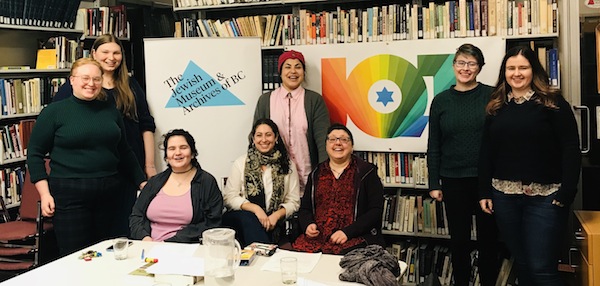
Embarking on a new archival project: left to right, Ye’ela Eilon-Heiber, Lily Hoenig, Mickey Morgan, Madison Slobin, Carmel Tanaka, Holly Steele, Avi Grundner and Alysa Routtenberg. (photo from JQT and JMABC)

The Jewish Museum and Archives of British Columbia (JMABC) and JQT Vancouver are seeking to document the history of local LGBTQ+ Jews through a joint initiative called On the Record: The BC Jewish Queer and Trans Oral History Project.

While the JMABC has an extensive – closing in on 1,000 – and diverse collection of oral histories, the experiences and stories of LGBTQ+ Jewish community members are not prominently featured. This is something the museum would like to change.

“We do a lot of oral histories and we typically target people in their 70s and 80s, for a number of reasons,” explained JMABC archivist Alysa Routtenberg of the process. “Generally, it’s a good age because people begin to feel reflective. They may have grandchildren with whom they would like to share their stories, they have wound their professional lives down and they are not yet suffering from memory or health issues.”

In addition, she said, given that a whole life history requires a significant story to tell, the interviews tend to feature older people.

And this might be one of the reasons why many of the oral histories of LGBTQ+ Jews have not yet been shared, according to Carmel Tanaka, JQT project coordinator.

“I have a friend who takes oral histories of LGBTQ seniors through UBC,” Tanaka told the Independent. “She says it’s hard to get people to stop talking about their lives once they get started. That is not the Jewish experience. We have a close-knit community and many older members fear being out in the Jewish community. They may be out in other aspects of their lives but not in the Jewish context, so many of them have remained silent.”

JQT (pronounced J-cutie) is a relatively new Jewish queer and trans group. Established in 2018, it aims to promote diversity and inclusion by “queering Jewish space and Jewifying queer space,” said Tanaka. The group approached the JMABC about the oral history project last year and interviewer training for the project was completed in January.

“We had six JQT members who trained as interviewers. They were ready to go and then COVID hit,” said Tanaka. “We had hoped to get 30 interviews done in three months. It’s been hard to get interviews done because the technology is difficult for some of our interviewees.”

Routtenberg agreed that people tend to prefer an in-person interview than one over the phone or via Zoom. “The interviews take between one and two hours,” she explained. “It’s a long time to be on the phone or in front of a computer.”

That said, a number of interviews have been completed, so the first phase of the project is underway, with the goal of 30 interviews conducted and transcribed. “Our objective is to reach a cross-section of LGBTQ Jews from across the province,” said Tanaka.

Both Routtenberg and Tanaka stressed that anonymity is provided for those who would prefer to keep their identities private.

The next phase of the project is to translate the interviews into a public program.

“What the interviews tell us will inform us as to the most appropriate form the material will take,” said Routtenberg. “Among our options are an online exhibition, a podcast, a physical exhibition…. There are so many possibilities. Hopefully, there will be many phases over many years.”

Routtenberg explained that the JMABC is always looking to build relationships with individuals and organizations both within and outside of the Jewish community. She said she was thrilled when Tanaka approached her to do this project together, and Jewish Family Services Vancouver is also helping, supporting the interview experience as needed.

Having the oral history of LGBTQ+ Jews as part of the JMABC records is helping accomplish the mission of JQT. “LGBTQ people have always been in our community,” said Tanaka. “This is an opportunity to make them feel included.”

For more information on how to participate in this project, or to nominate someone to be interviewed, contact Routtenberg at [email protected] or 604-257-5199.

Michelle Dodek is a freelance writer living in Vancouver.

Format ImagePosted on July 24, 2020July 22, 2020Author Michelle DodekCategories LocalTags history, Jewish museum, JMABC, JQT, LGBTQ+
New rabbi joins Victoria shul

New rabbi joins Victoria shul

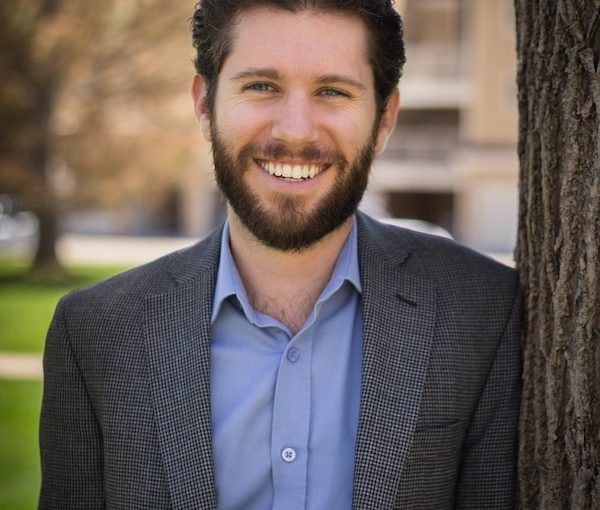
Rabbi Matt Ponak is the new education director and assistant rabbi at Congregation Emanu-El. (photo from AJNews)

Going as far back as his days with Northwest Canada Region of B’nai Brith Youth Organization, Matt Ponak has had a passion for the spiritual aspects of Judaism, and now he is bringing that passion to Victoria.

Having impressed the congregation as an interim rabbi during Rabbi Harry Brechner’s sabbatical, Congregation Emanu-El announced in mid-May that Ponak would be joining them on a full-time basis as education director and assistant rabbi. Officially, his position began last month, following his graduation – with a master’s degree in Jewish studies – and his June 7 ordination from Hebrew College in Newton, Mass.

Ponak grew up in Calgary, where he attended Jewish day school at Calgary Jewish Academy, and was a member of Beth Tzedec and Temple B’nai Tikvah congregations. Through high school, he was an active member of B’nai Brith Youth Organization and attended Camp BB Riback as a staff member. His ties to Vancouver Island are also strong.

“I grew up in Calgary and spent many summers on the Island growing up,” he said. “My mother is from Port Alberni and I have many relatives in the area.”

Although his spiritual education led him to American schools and life, Ponak said he is looking forward to planting roots back in Canada, and making Victoria his new home. “I’m so excited about this because I get to return to Canada and to live in an incredible city with a community of warm, embracing, open-minded and dedicated people,” he said.

Before rabbinical school, Ponak earned a master’s in contemplative religions at Naropa University, a Buddhist-inspired institution in Boulder, Colo. He earned an undergraduate multidisciplinary degree with a minor in religious studies from the University of Calgary, and also has a certificate in spiritual entrepreneurship through the Glean Network, in association with Columbia University.

During rabbinical school, Ponak interned with the Asiyah Jewish Community in Somerville, Mass.; the Common Street Spiritual Centre in Natick, Mass.; Temple Emanuel in Andover, Mass.; and the One River Foundation with author Rabbi Rami Shapiro. He also served as a curator of the Spiritual Paths Institute, working on an interspiritual website for people of all backgrounds who want to explore their inner lives more deeply. He is one of the founders of Or Chadash, the men’s group at Hebrew College.

Ponak’s capstone project, “Torah for the New Age,” focused on translating and commenting on Jewish mystical texts relevant to contemporary spiritual seekers of all backgrounds. With supervision from Hebrew College rector Rabbi Arthur Green, Ponak translated and commented on 42 mystical texts and used digital design layouts to make them look like Talmud pages. “It was an absolute pleasure working with Rabbi Green,” said Ponak. “He is one of the leading voices for Jewish mystical theology, commentary and translations in our era.”

Ponak is a talented banjo player. He specializes in leading niggunim, wordless melodies from the Jewish mystical tradition. During his first year of rabbinical school, he released a banjo niggun album entitled Bridges of Song. He is also a practitioner of qigong and focusing, using movement and body-centred contemplation to guide people through inner constrictions and into the emerging stages of their journey.

“I am a teacher, musician and lover of life,” said Ponak. “I help spiritual seekers follow the call of their soul. I am passionate about bringing forth ancient Jewish wisdom to meet the needs of today.”

Founded in 1921, Hebrew College is committed to Jewish scholarship in a pluralistic, trans-denominational academic environment, while Congregation Emanu-El is an egalitarian Conservative Jewish synagogue. At 157 years old, Emanu-El is Canada’s oldest synagogue in continuous use, and has been designated a national historic site.

Daniel Moser is editor of AJNews, where a longer version of this article was originally published. For more Alberta Jewish news, visit albertajewishnews.com.

Format ImagePosted on July 24, 2020July 22, 2020Author Daniel Moser AJNewsCategories LocalTags Calgary, Emanu-El, Judaism, Matt Ponak, Victoria

Community Recovery Task Force appointed

COVID-19 continues to impact our community. Jewish Federation of Greater Vancouver estimates that local needs may increase by 50% over the next year. Therefore, it has established the Community Recovery Task Force, chaired by Risa Levine.

The purpose of the task force is to examine the myriad operational and financial issues facing our community as a result of COVID-19, and to assist Jewish Federation in responding to these challenges and changes, both presently and in the long-term. Through consultation with Federation’s partner agencies, the task force will be assessing the consequences of the pandemic on vulnerable community members, as well as on the ability of community organizations to deliver their core programs and services. Task force members will be looking to new, innovative approaches to enhance community organizations’ capacity, and recommending solutions that will support a strong, resilient and financially stable recovery as well as future sustainability.

The task force members have all held leadership roles with a variety of community organizations, and collectively represent the diversity of our community in terms of geography and life stage. In addition to Levine, they are Andrew Altow, Jill Diamond, Michelle Gerber, Hodie Kahn, Candace Kwinter, Shawn Lewis, David Porte, Justin L. Segal and Isaac Thau.

The task force is an integral part of Federation’s response to COVID-19, as is its three-phase approach to recovery. In phase one, it released targeted emergency funds in the first few weeks of the pandemic to address immediate and urgent community needs. As a second phase, it is currently working closely with major donors to maintain their support through the next two annual campaigns and to consider making contributions above and beyond their campaign gifts to support community recovery. In the third phase, every community member will have an opportunity to make a difference in our community’s recovery through participating in the annual campaign, which officially launches in September.

To learn more about the task force, to read the latest annual report or to donate, visit jewishvancouver.com.

– excerpted from the weekly email message of Jewish Federation of Greater Vancouver chief executive officer Ezra Shanken

Posted on July 24, 2020July 22, 2020Author Ezra Shanken JFGVCategories LocalTags annual campaign, coronavirus, COVID-19, economy, Jewish Federation of Greater Vancouver, JFGV, philanthropy, tikkun olam
And the 2020 Jessies go to …

And the 2020 Jessies go to …

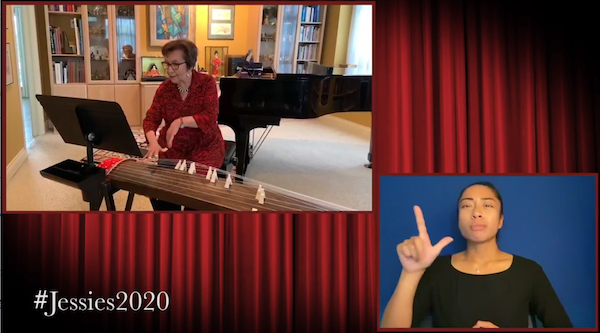
Wendy Bross Stuart accepted her GVPTA Career Achievement Award while playing the koto. (screenshot)

On June 29, the 38th annual Jessie Awards were celebrated virtually, with several Jewish community members among those being honoured.

  • The GVPTA [Greater Vancouver Professional Theatre Alliance] Career Achievement Award went to Wendy Bross Stuart, who gave her acceptance speech while playing the koto (a Japanese stringed instrument).

“Like most middle-class Jewish kids growing up in postwar New York City, I went to Broadway shows with my parents every few weeks,” she said. “I dreamed of conducting the pit orchestra and conducted many records in my living room on a regular basis.

“My first role was in Peter Pan – as Tinker Bell. I was 6 years old and three feet tall!

“I music-directed my first show – South Pacific – when I was 13, for a day camp in Tarrytown. I was given a script – no score – so I played it all by ear … in the preferred key for each of the teenage actors.

“Later, I went to a musical theatre training program in upstate New York, where I played scenes opposite a young man – named Stephen Schwartz.”

Bross Stuart did her graduate work in ethnomusicology, with a focus on Coast Salish music; research that was published, as was her later research on Northern Haida songs. She and her family lived in Japan for many years, where she continued studying traditional music for Japanese koto and shamisen, earning an advanced teaching licence.

“I’ve arranged and accompanied many Yiddish songs for voice and piano, producing four CDs with Claire Klein Osipov,” she said. “I’ve even arranged some Yiddish songs for koto and voice,” she added, noting “Yiddish was the language of my grandparents.”

“I love arranging and conducting choral music: 20 of my pieces have been published in the U.S. and Canada; most recently, an arrangement of my daughter Jessica’s composition,” she continued.

“For the last 15 years, we have co-produced and music-directed the annual Holocaust Commemorative Evening for the Vancouver Holocaust Education Centre.

“In theatre, I have thoroughly enjoyed working with you. Where? At Theatre Under the Stars, the Arts Club, the Electric Company, Touchstone Theatre, Famous Artists, Blackbird Theatre, Snapshots Collective, Presentation House, the Chutzpah! Festival and 25 years at Perry Ehrlich’s Gotta Sing! Gotta Dance!

“My husband Ron Stuart – anthropologist and filmmaker – has been with me on this journey. Our most recent collaboration is our film company: Cultural Odyssey Films. All eight of our most recent films were shot on location in South Africa over the last 10 years.

“Thank you very much for this special honour. I look forward to working with you in the near future!”

  • In the small theatre category, Itai Erdal and Amir Ofek won for outstanding lighting design and set design, respectively, for the Search Party’s production of The Father, while Warren Kimmel was part of the cast of Raincity Theatre’s Company, which won significant artistic achievement: outstanding innovative and immersive storytelling.
  • Nominees for this year’s awards included, in the large theatre category, Erdal for outstanding lighting of Savage Society’s Skyborn: A Land Reclamation Odyssey (presented by the Cultch) and Tara Cheyenne Friedenberg for outstanding choreography in Cipher, presented by Arts Club Theatre Company (in partnership with Vertigo Theatre); in the small theatre category, Stephen Aberle for outstanding performance by an actor in a supporting role for his role in Slamming Door Artist Collective’s The Sea; and, for outstanding original script, Deborah Vogt for Big Sister, presented by Rapid Pitch Productions.
Format ImagePosted on July 24, 2020July 22, 2020Author The Editorial BoardCategories Performing ArtsTags choreography, design, Jessie Awards, music, theatre, Wendy Bross-Stuart

JI’s 3-plus Rockowers

The 39th annual Simon Rockower Awards for Excellence in Jewish Journalism were presented virtually on July 2. Given by the American Jewish Press Association – whose membership consists of newspapers, magazines, websites, other electronic Jewish media organizations, individual journalists and affiliated organizations throughout the United States and Canada – the Jewish Independent garnered three prizes and an honourable mention for its work in 2019.

The JI competes in the 14,999-circulation-and-under division and swept that division in the Personal Essay category, winning first and second place. “Reflecting on my Jewish hero” by Becca Wertman about her grandfather (April 12, 2019) won first prize, while “Folk choir celebrates 40th” by Victor Neuman about the Vancouver Jewish Folk Choir’s 40th anniversary (May 10) placed second.

Neuman’s eight-part series on his life in Israel around the time of the 1973 Yom Kippur (Sept. 20 through Nov. 15) won first place in the 14,999-circulation-and-under division. And, in that division, Shelley Civkin’s Accidental Balabusta series received an honourable mention in the Excellence in Writing About Food and Wine category.

In the larger paper division, Canadian Jewish News, which closed its doors this year, won three first-place awards for its work in 2019. “A funeral for a survivor no one knew” by Zale Newman (Feb. 14) won the Award for Excellence in Personal Essay; “Navigating organ donation in Judaism” by Lila Sarick (June 6) won the Chaim Sheba Medical Centre Award for Excellence in Writing about Health Care; and “Rise of the vegan Jew” by Michael Fraiman (Oct. 3) won the Award for Excellence in Writing about Food and Wine.

To find out about all the other winners, visit ajpa.org/2020-competition.

Posted on July 24, 2020July 22, 2020Author The Editorial BoardCategories LocalTags AJPA, American Jewish Press Association, awards, Becca Wertman, Canadian Jewish News, Jewish Independent, Lila Sarick, Michael Fraiman, Rockower, Shelley Civkin, Victor Neuman, Zale Newman
A space for men to talk

A space for men to talk

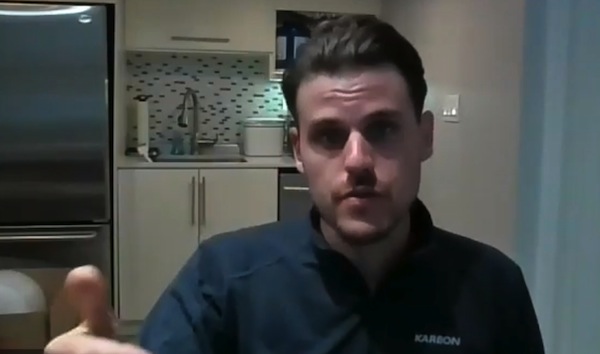
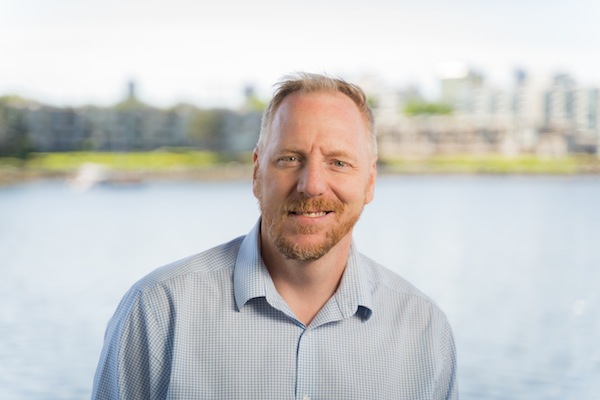
Matt Zerker, the founder and chief executive officer of tethr, spoke at a July 8 webinar organized by JNF Future. (screenshot)

Matt Zerker, the founder and chief executive officer of tethr, an online community for men aimed at promoting honest and open conversations about mental health issues, spoke at a July 8 webinar organized by JNF Future, a branch of the Jewish National Fund aimed at adults aged 25-45.

Called The (Not So) Hidden Men’s Mental Health Crisis, Zerker’s talk touched upon some troubling numbers and outdated beliefs still too prevalent within the male population. Citing a study, he said 40% of men feel they have nobody to turn to when they have a problem associated with mental health. He added that the vast majority of suicides are committed by men, and many men continue to believe it is not masculine to discuss personal problems with others or to go to therapy.

To illustrate his point, Zerker relayed an anecdote related to men who do seek help: “When a man goes to therapy, he tells the therapist, ‘Doc, I am not like other guys.’ ‘Why?’ asks the doctor. ‘Because I’m here,’ answers the man.”

A chartered financial analyst, Zerker worked for seven years as a portfolio manager at a hedge fund in Toronto. Despite his outward success, he felt unfulfilled in his life, with little motivation to work, and he struggled for years with his personal and professional relationships. He resorted to substance use and found himself deeply depressed.

In late 2018, a friend told him of a men’s group. “It was amazing because it did not deal with solving problems but with finding space for one another and listening to what I was going through,” he recounted.

In April 2019, he went on a men’s retreat. “The morning after the first night of the retreat, I woke up to a feeling of peace. The panic attacks and the tightness in my head and body I had experienced for months prior were gone,” he recalled.

He returned to work after the retreat and felt he did not belong in the office any longer, so he quit his job, with no fallback plan. Soon thereafter, the idea to build a platform where men could connect with one another and speak openly about the issues they were facing as men hit him “like a tidal wave.” Thus, tethr came into being.

“I felt there was a need to build a space where men feel comfortable talking about these issues,” he explained.

Since its inception, tethr has established partnerships with Men’s Health Research at the University of British Columbia; HeadsUpGuys, a resource for men battling depression; and Movember, a charity devoted to men’s health.

Quoting a study by Dr. Michael Kimmel, which stated that 93% of men do not identify with the way masculinity is portrayed in the media, Zerker contended that men are holding themselves to an impossible standard.

“The normative framework for masculinity in our culture is self-reliance, stoicism and the idea of being the unwavering provider. It is an outdated, heavily indoctrinated belief in us as to how we should act as men and is reinforced in movies and commercials,” he said. “As men, we are trained to out-alpha, out-male each other. There is the fear that, if we say something to another male, we will be seen as a ‘lesser man.’ Everything becomes about how we look as opposed to how we feel. We externalize things.”

This can lead, Zerker maintained, to a lack of connection with friends, family and, mostly, with oneself. Men become unable to be truly authentic, he said. For a lot of men, he argued, this can come out in anger and frustration. “You show me an angry man and I’ll show you a sad, wounded boy inside,” he said.

Zerker urged men to be softer, more caring and more reasonable with themselves, and to not set impossible standards. He also encouraged men to reach out to other men and find out how they are doing during the pandemic, i.e., making a plan with another man whom one can trust to have a conversation that is more personal than talk of politics or sports.

“Most men feel like they cannot be the ones who make the first step, but they are thankful when someone does,” Zerker asserted.

For more information, visit tethr.men or download the tethr app on an iPhone or Android device.

Sam Margolis has written for the Globe and Mail, the National Post, UPI and MSNBC.

Format ImagePosted on July 24, 2020July 22, 2020Author Sam MargolisCategories NationalTags Jewish National Fund, JNF Future, Matt Zerker, men, mental health, tethr

Posts pagination

Page 1 Page 2 Page 3 Next page
Proudly powered by WordPress