Skip to content
  • Home
  • Subscribe / donate
  • Events calendar
  • News
    • Local
    • National
    • Israel
    • World
    • עניין בחדשות
      A roundup of news in Canada and further afield, in Hebrew.
  • Opinion
    • From the JI
    • Op-Ed
  • Arts & Culture
    • Performing Arts
    • Music
    • Books
    • Visual Arts
    • TV & Film
  • Life
    • Celebrating the Holidays
    • Travel
    • The Daily Snooze
      Cartoons by Jacob Samuel
    • Mystery Photo
      Help the JI and JMABC fill in the gaps in our archives.
  • Community Links
    • Organizations, Etc.
    • Other News Sources & Blogs
    • Business Directory
  • FAQ
  • JI Chai Celebration
  • JI@88! video

Recent Posts

  • Story of Israel’s north
  • Sheltering in train stations
  • Teach critical thinking
  • Learning to bridge divides
  • Supporting Iranian community
  • Art dismantles systems
  • Beth Tikvah celebrates 50th
  • What is Jewish music?
  • Celebrate joy of music
  • Women share experiences 
  • Raising funds for Survivors
  • Call for digital literacy
  • The hidden hand of hate
  • Tarot as spiritual ritual
  • Students create fancy meal
  • Encouraging young voices
  • Rose’s Angels delivers
  • Living life to its fullest
  • Drawing on his roots
  • Panama City welcoming
  • Pesach cleaning
  • On the wings of griffon vultures
  • Vast recipe & story collection
  • A word, please …
  • מארק קרני לא ממתין לטראמפ
  • On war and antisemitism
  • Jews shine in Canucks colours
  • Moment of opportunity
  • Shooting response
  • BC budget fails seniors
  • Ritual is what makes life holy
  • Dogs help war veterans live again
  • Remain vital and outspoken
  • An urgent play to see
  • Pop-up exhibit popular
  • An invite to join JWest

Archives

Follow @JewishIndie
image - The CJN - Visit Us Banner - 300x600 - 101625

Month: February 2018

נגד “הרשימה השחורה”

נגד “הרשימה השחורה”

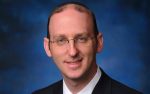
הרב אדם שאייר מנהיג קהילת ‘שער השמים’ במונטריאול יוצא נגד הרבנות הראשית. (צילום: מקהילת שער השמים)

הרב הראשי של קהילת ‘שער שמיים’ במונטריאול, אדם שאייר, יוצא בחריפות נגד פעילותה של הרבנות הראשית בישראל, שלדבריו פסלה אותו. הרב שאייר ביקר בישראל לאחרונה ואף השתתף בישיבת ועדת העלייה, הקליטה והתפוצות של הכנסת, כדי לשטוח את טענותיו הקשות נגד התנהלות הרבנות. הרב שאייר הוא הרב הבכיר הנמנה על “הרשימה השחורה” של הרבנות הראשית, הכוללת 160 רבנים מעשרים וארבע מדינות כולל ארה”ב, קנדה, אנגליה ודרום אפריקה. בהם רבנים אורתודוכסים בכירים ביהדות החרדית, ומחסידות חב”ד. הרבנים שנמנים על “הרשימה השחורה” לא הוכרו על ידי הרבנות לנושאי בירור יהדות ומעמד אישי.

דבר “הרשימה השחורה” שפורסמה בחודש יולי אשתקד עורר תגובות נזעמות בארץ ובחו”ל. יו”ר ‘עתים’ (עמותה המסייעת למי שנתקל בקשיים מול הממסד הדתי), הרב שאול פרבר, אמר כי “הרשימה השחורה” היא תעודת עניות להתנהלותה של הרבנות הראשית, מול יהדות התפוצות. הוא הוסיף: “אני תוהה מי הסמיך את הרבנות להחליט שרב של קהילה מסויימת בחו”ל אינו מקובל, ולפיכך חברי קהילתו אינם יהודים. הרבנות מנסה להפוך את עצמה לסמכות הבלעדית, והתנהגות זאת מביאה את העולם היהודי כולו לחשוש מן הבאות, ולגנות בתוקף את המגמה הפסולה הזו”.

הרב שאייר אמר בישיבת הוועדה: “אין לי אישור מהרבנות לחתן כיוון שהיא פסלה אותי. הרבנות גורמת לחלול השם. הם לא אמרו לי כי נדחתי, ורק שלחו לי מכתב שאולי אני לא יהיה מאושר. אני רב אמיתי והסמכתי לגיטימית. נפגעתי אישית מזה שהרבנות דחתה אותי ואת ההסמכה שלי. היא פוגעת ביכולת שלי לשרת את העם היהודי. המצב הקיים גורם לחוסר אמון ביני כמנהיג קהילה גדולה, לבין חבריה, החוששים לעלות לישראל ולהתחתן בה, מחשש שלא יוכרו בה כיהודים. זה פוגע במעמדי ובמוניטין שלי. הדבר הגיע לידי כך, שרבנים אחרים ממלצים לזוגות שלא לפנות אלי לעריכת חופה”. בדיון נכח גם מנכ”ל הרבנות הראשית לישראל, משה דגן. הרב שאייר הטיח בו: “בפעם הבאה לפני שאתם שוללים אותי, אני מזמין אתכם לבקר בבית הכנסת שלי. זו בהחלט תהיה חווית למידה”.

דגן אמר בתגובה כי הרבנות לא יצרה כביכול “רשימה שחורה” של רבנים בחו”ל. הוא הוסיף: “הדמגוגיה הזו שכביכול יצרנו רשימה של רבנים לא מוכרים, זה דבר שקר. הרבנות ובתי הדין אישרו את הרב שאייר, אך הם מחוייבים לבדוק את אמיתות המסמכים שהוצגו להם מטעמו. לא הספקנו לפנות לרב שאייר כיוון שיש לנו עומס עבודה רב. למחלקת האישות והגירות מגיעים כשלושת אלפים אישורים מדי שנה, ורק עובד אחד ושני סטודנטים מטפלים בכל הבקשות”. מנכ”ל הרבנות ביקש להוסיף עוד: “ההחלטות של הרבנות הוצאו מהקשרן. אני מיצר על פגיעה ברבנים כתוצאה ממה שהוצג על ידי אחרים “כרשימה שחורה”, ומתנצל על פירסומה. הטיוטה והקריטריונים להכרה ברבני חו”ל כבר גובשה, והיא נשלחה לארגוני הרבנים בעולם. לאחר קבלת התייחסותם, כמתחייב, הם ידונו ויאושרו במועצת הרבנות הראשית”.

הרב שאייר המשמש גם סגן נשיא ועד רבני קנדה, נחשב למקורב לראש ממשלת קנדה, ג’סטין טרודו. הוא אף ביקר עם טרודו באתר מחנה ההשמדה אושוויץ לפני כקרוב לשנתיים. הרב שאייר שימש גם כרבו של הזמר ליאונרד כהן, אף הוא חבר בקהילתו שנפטר אשתקד.

קהילת ‘שער שמים’ האותודורכסית נוסדה בשנת 1846 בווסטמאונט מונטריאול והיא מונה כיום כאלף וארבע מאות משפחות. הקהילה מחזיקה בבית הכנסת האותודוכסי הגדול ביותר בקנדה.

Format ImagePosted on February 28, 2018February 27, 2018Author Roni RachmaniCategories עניין בחדשותTags Adam Scheier, Chief Rabbinate, Disapora, Israel, Judaism, Shaar Hashomayim, אדם שאייר, הרבנות הראשית, התפוצות, יהדות, ישראל, שער השמים
לזכרם של הוריהם

לזכרם של הוריהם

אירוע מיוחד לזכרם של אדית ומייקל סימס התקיים החודש בבית הקפה שלהם צ’יזקייק. (צילומים: Roni Rachmani)

דן סימס (ביחד עם אשתו פטרישיה, הילדים סאם ופיטר ושאר בני המשפחה) קיימו ביום ראשון לפני כעשרה ימים (ה-18 בפברואר), אירוע לזכרם של הוריו, אדית ומייקל סימס, הבעלים של הקפה המיתולגי צ’יזקיק אצטרה. למעלה ממאה ושלושים חברים, ידידים, עובדים, שכנים ובני משפחה הגיעו לאירוע המיוחד שהתקיים בבית הקפה ברחוב גראנוויל.

האירוע שנמשך כארבע שעות תמימות כלל הופעות אין ספור של חברים, ששרו לזכרם, בליווי רביעייה של נגני ג’אז טובים. לא נישאו נאומים לבקשת הבן דן, אך רבים דברו בשבחם של הזוג הנעים שהביא לוונקובר הרבה שמחה, אושר וטוב לב. בשיחות בין האורחים עלו זכרונות מהעבר, מתי פגשו בהם לראשונה ואירועים בהם השתתפו ביחד עם אדית ומייקל. אצל כולם המוות הפתאומי של השניים היכה בהלם ללא רחמים והרבה הרבה שאלות נשארו ללא מענה.

בבית הקפה (שהיה סגור לקהל הרחב בזמן האירוע הפרטי) הוצגו תמונות של אדית ומייקל ושאר בני המשפחה, אלבום תמונות עב קרס מהבר מצווה של מייקל, וכן קטעי ווידאו מחתונתם, אירועים בהם השתתפו, נסיעות ועוד.

מותם הפתאומי של אדית ומייקל סימס שהחליטו לסיים את חייהם ביחד (אדית הייתה בת 77 ומייקל היה בן 79), ביום שני ה-27 בנובמבר, השאיר כאמור רבים בהלם. בחיים כמו במותם השניים תמיד היו ביחד: הם גרו ביחד, עבדו ביחד, טיילו ביחד, נפשו ביחד, נפגשו עם חברים ביחד, שהו עם המשפחה ביחד, הופיעו כמעט לכל אירוע ביחד, החזיקו במחשב אחד, באימייל אחד ובמכשיר סלולר אחד.

רבים רבים בוונקובר ובמקומות אחרים הצטערו לשמוע על מותם הפתאמי של השניים. לא תמצא אף אחד שיגיד משהו רע עליהם. עשרות הגיבו על פרסום הידיעה בעיתון הוונקובר סאן על מותם. כולם כתבו דברים טובים והביעו צער עמוק על הפרידה מהזוג האהוב. להלן חלק מתגובות הגולשים: “אדית ומייקל היו זוג נפלא ותמיד קיבלו בברכה, באהבה ובנוחות את הלקוחות”. “כמה היו נחמדים ונדיבים”. “איזה זוג מדהים. אבידה גדולה”. “זוג כל כך נחמד, אני שבור לשמוע את החדשות הרעות”. “צ’יזקייק היה מקום נפלא לעבוד בו בגלל אדית ומייקל”. “אהבתי את האווירה והמוסיקה. מאוד מאוד עצוב”. “אני בהלם לשמוע את החדשות הנוראיות. אדית ומייקל היו זוג כל כך נחמד, נעים וחם”. “הם היו נשמות יפות, נדיבים, מתוקים וטהורים. חיו בדרכם והיו מאוד מיוחדים”.

צ’יזקייק הזכיר בית קפה בפאריז בשל האווירה הרומנטית, האורות הנמוכים, התמונות בשחור לבן, הקירות באדום והנעימות ששררה במקום. מייקל ניגן נפלא ואהב לאלתר ג’אז. אדית אהבה לשיר וקול זהב שלה הזכיר מאוד את קולה של הזמרת הצרפתית הידועה אדית פיאף.

השניים היו יהודים: אדית ילידת סקוטלנד שגדלה בטורונטו ומייקל אמריקני יליד בוסטון. הם הכירו בישראל בשנת 1961 והתאהבו במבט ראשון. לאחר שנה הם החליטו להינשא בטורונטו. ולאחר מכן הזוג עבר לבוסטון ואחרי שנולד בנם יחידם דן, הם החליטו לעבור לוונקובר, שהפכה לביתם במשך כארבעים השנים האחרונות.

יום אחד בשנת 1979 אדית ומייקל מצאו חנות להשכרה ברחוב גראנוויל ובמקום נפתח קפה צ’יזקייק אצטרה. לאט לאט הקפה החל להתמלא ורבים באו לשמוע את מייקל מנגן ושר עם אשתו, ונהנו לאכול עוגת גבינה ברוטב תות שדה או שוקולד. תוך תקופה קצרה צ’יזקייק הפך לשם דבר והמקום שימש לעלייה במשך שנים וגם כיום – זה קרוב לארבעים שנה.

Format ImagePosted on February 26, 2018February 25, 2018Author Roni RachmaniCategories עניין בחדשותTags Cheesecake Etc., Edith Sims, Mike Sims, אדית סימס, מייקל סימס, צ'יזקייק
JCC site to be redeveloped?

JCC site to be redeveloped?

An aerial view of the proposed redevelopment of the Jewish Community Centre of Greater Vancouver site, looking south. (image by Acton Ostry Architects Inc.)

On Feb. 7, the Jewish Community Centre of Greater Vancouver was packed with community members, as well as some area residents. For the three-hour open house hosted by the City of Vancouver, visitors worked their way through the crowded atrium, reading the numerous poster boards about the proposed redevelopment of the centre site, and how that redevelopment fits in with the massive changes proposed for the Oakridge neighbourhood.

While it is still early in the process, the City is looking for public feedback by March 30 on the rezoning application it has received for 950 West 41st Ave., i.e. the JCC.

The proposed redevelopment comprises a nine-storey building to replace the current JCC, a 13-storey replacement for the Louis Brier Home and Hospital and a 24-storey residential building.

image - The rezoning application proposes that the redevelopment starts with the building of most of the new JCC on what is now the existing centre’s parking lot, then moves to the construction of the underground parking, followed by that of the new Louis Brier Home and ending with the residential tower and the rest of the JCC
The rezoning application proposes that the redevelopment starts with the building of most of the new JCC on what is now the existing centre’s parking lot, then moves to the construction of the underground parking, followed by that of the new Louis Brier Home and ending with the residential tower and the rest of the JCC. (image by Acton Ostry Architects Inc.)

According to the rezoning proposal, the new JCC would include “recreation space, including pools and gyms; ground-level commercial space; an Early Childhood Education Centre, including 104 private daycare spaces; cultural arts, auditorium and theatre space; [and] nonprofit office space.”

The new Louis Brier would have “266 senior assisted living, complex care and memory care beds,” and the residential building would have “160 secured market rental units,” including 64 studios, 40 one-bedroom units, 40 two-bedroom units and 16 three-bedroom units. “Underground parking, with 693 vehicle parking spaces and 250 bicycle parking spaces, is proposed.”

The rezoning application is being considered by the City under the Oakridge Transit Centre Policy Statement.

The City of Vancouver explains on its website that the Oakridge Transit Centre, across from the JCC, “was formerly home to 244 trolley and 182 diesel buses, and employed over 1,200 transit staff including drivers, mechanics and administrators…. With the completion of the Vancouver Transit Centre on the Eburne Lands in 2006, almost all services moved out of the OTC” within several years and TransLink determined that the OTC was no longer required as a transit centre. TransLink approached the City about the redevelopment of the site: “Council approved a cost-recovered planning program to create a policy statement for the site in February 2014 and the program was publically launched in June 2014.”

The statement was approved in December 2015, after “an 18-month process involving community engagement at key points, and technical planning and design work.” It guides “the rezoning and redevelopment of the Oakridge Transit Centre,” as well as that of the JCC, the Petro Canada Station at the corner of 41st and Oak, and Oakmont Medical Centre (809 West 41st).

The JCC rezoning application was coordinated by Acton Ostry Architects Inc., the JCC and the Louis Brier Home. In the application, which is on the City’s website, Acton Ostry explains that the “surrounding context is in a state of transition and transformation from a low-density semi-urban neighbourhood to a high-density urban centre. Transit is a driving force at the heart of the new town centre with the Canada Line on Cambie Street and a new B-line proposed for West 41st Avenue.” The document notes that King David High School, which is east of the JCC, on Willow Street, uses and “shares many spaces in the existing JCC and is intended to have a dedicated gym in the proposed new JCC, in addition to access and use of many other activity spaces.”

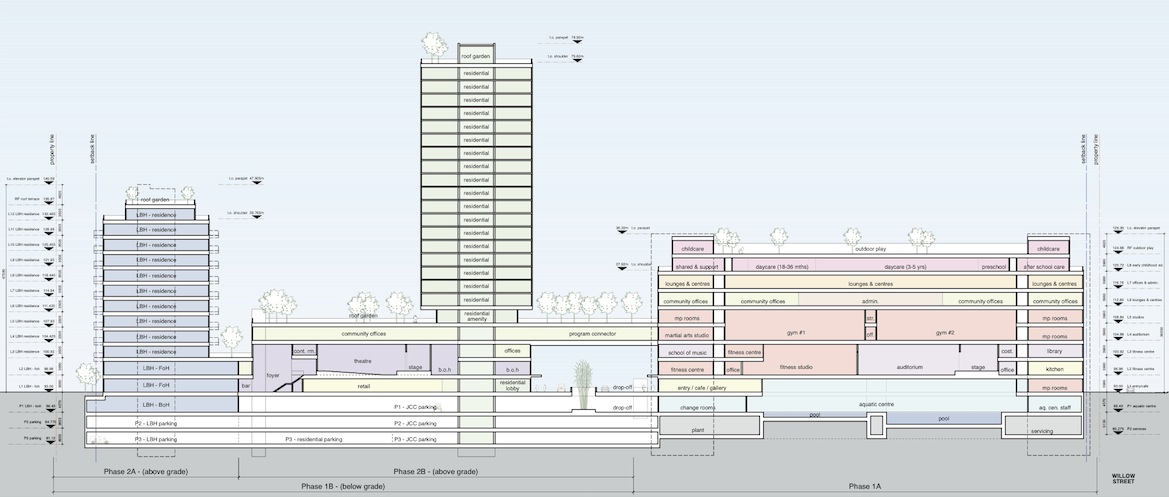
image - How the space in the three proposed new buildings might be used
How the space in the three proposed new buildings might be used. (image by Acton Ostry Architects Inc.)

According to the timeline on one of the posters at the February open house, there was a pre-application open house in November 2016 and the rezoning application was submitted in December 2017. With the City-led open house now having been held, there will be a public hearing, “pending staff review and feedback,” followed by a council vote, again “pending staff review and feedback.” If the rezoning is approved, “the proposal becomes a development application.”

Development and building permits would take months to years to procure, and the construction itself would also take a few years. Since the JCC cannot be non-operational for that long, the project is envisioned in phases. The existing JCC would remain in place as the main building of the new JCC is built on what is now the centre’s parking lot, followed by the construction of the new underground parking lot. Once the new JCC was operational, Phase 2 would start with the new Louis Brier Home, to be located at the opposite end of the development site, then move to the construction of the residential tower and the rest of the JCC, located in between the main JCC and Louis Brier.

The entire rezoning application can be found at rezoning.vancouver.ca. Feedback can be submitted online.

Format ImagePosted on February 23, 2018February 21, 2018Author Cynthia RamsayCategories LocalTags development, JCC, Oakridge, rezoning, Vancouver
Happy Purim 2018!

Happy Purim 2018!

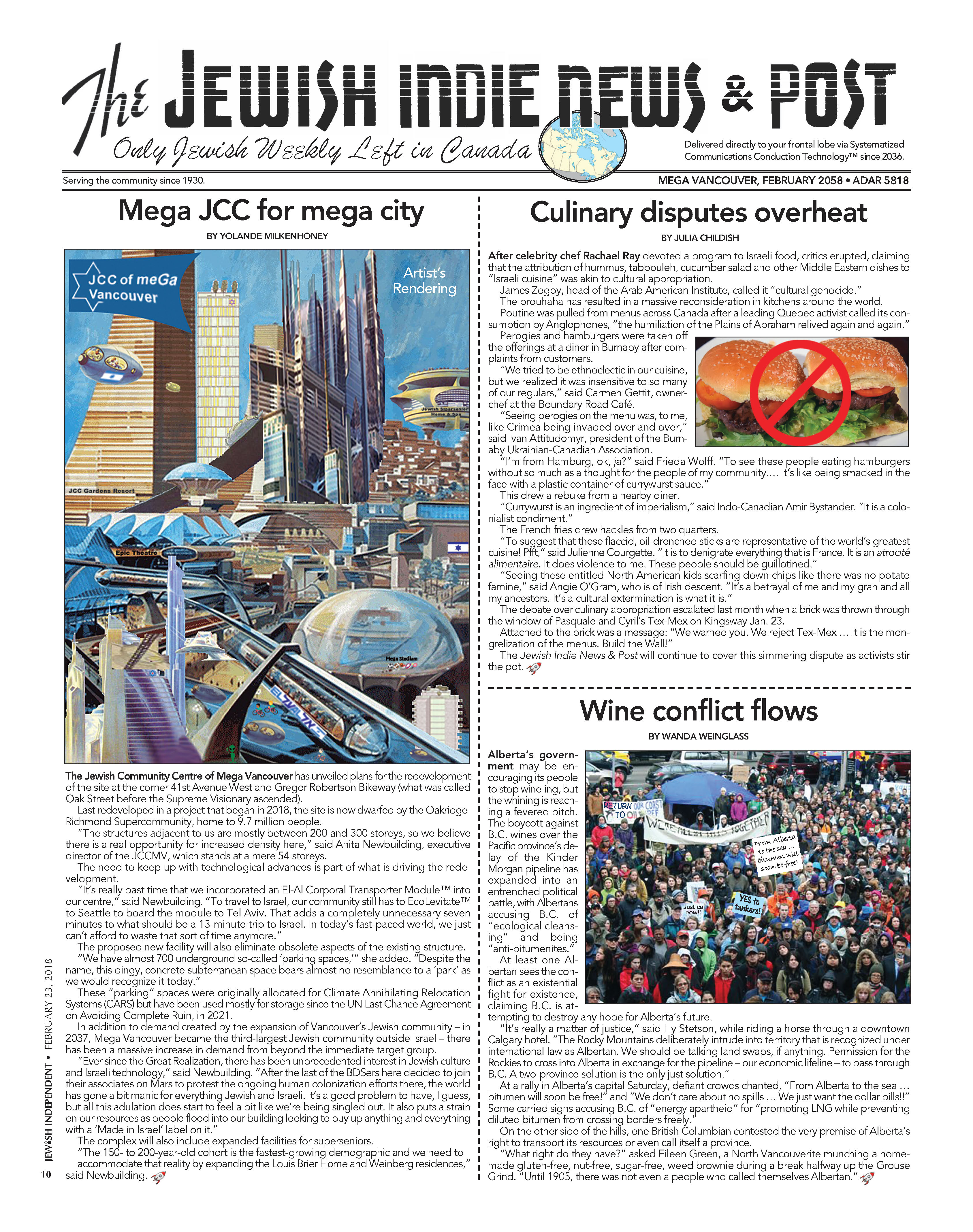
Purim spoof newspaper - Jewish Indie News & Post

Format ImagePosted on February 23, 2018February 27, 2018Author The Editorial BoardCategories Celebrating the HolidaysTags Alberta, British Columbia, cultural commentary, development, JCC, Kinder Morgan, Oakridge, Purim, spoof, Vancouver, wine
Filler doing it her way

Filler doing it her way

Deb Filler performs at the Chutzpah! Festival on March 4. (photo from Chutzpah!)

“I’ve performed all over the world, baked challah bread onstage, done shows everywhere, and this is the first time in all these years I am performing in Vancouver live. Delighted to be coming back to do a show! I hope there’ll be more,” Deb Filler told the Independent.

Filler, who will perform at the Chutzpah! Festival on March 4, lived in Vancouver for six months, starting in late 1979.

“I was tempted to stay but never did,” said the comedian, actor, musician, teacher and writer originally from New Zealand. “My career in North America started there. I had an agent and things were going well but New York called, Stella Adler and Uta Hagen, the great acting teachers I studied with. So, I drove across country and the rest as they say….”

While Filler left Vancouver for New York, she has lived in Toronto since 1995.

“I came for a film that was being made of my work, Punch Me in the Stomach, and I stayed and I fell in love,” she said. “Toronto is a terrific city for fun, culture. And it’s close to Europe and New York. I was in New York before that for 15 years, so I guess I’m a bit of a rightie not a leftie – coastie. Not politically, that’s for sure!”

Filler will be bringing her show I Did It My Way in Yiddish (in English) to the Rothstein Theatre for one performance only – March 4, 1 p.m. Described as a journey around the world, “jam-packed” with music (Filler on her guitar) “and a raft of loveable characters she creates,” the initial work was commissioned by the Jewish Community Centre London, called the JW3, as it is located on Finchley Road, NW3. The centre’s tagline is “The postal code for Jewish life.”

“It’s a fantastic modern facility in North London with cafés, art studios, a theatre, meeting places, gallery, classrooms, a school, a film space, a real cultural hub,” said Filler, who had worked with them before the commission. “I’d gotten a great response several times in the past and they were keen for me to come back for their U.K. Jewish Comedy Festival so asked me to perform a new show. I knew – because the stories I tell about meeting and befriending Leonard Bernstein, Leonard Cohen and another Jewish musician called Lenny – that London audiences would respond like audiences have all over the world. So, when they asked, I was delighted to agree, and now the show has been in New York, L.A., Sydney, Toronto, and is coming to Vancouver and D.C.”

Since the commission, the show has changed a bit.

“We made a short dramatic film of one of the stories, which is sometimes screened during the show as a multimedia segment, which Chutzpah! requested. Also, the name has changed to describe the show better than The Three Lennys.”

A March 2017 article on broadwayworld.com describes a bit of the show: “As Deb drives for a car service in New York City, she takes us on a truly incredible ride with Leonard Cohen, reducing the venerable Canadian folksinger to tears of laughter. Her story of meeting Leonard Bernstein as a teen, bringing him fresh challah bread from her father, a survivor of the Holocaust who heard Bernstein play Gershwin’s Rhapsody in Blue in a displaced persons camp after the war, is extraordinary. What happens next is truly unbelievable.”

One of the things that will happen next for Filler is a trip to Europe. “I’m being invited to Landsberg in Germany as guest of the reunion there of my father’s displaced persons camp, where Leonard Bernstein played and my dad saw him in 1948…. I’m also working on My German Roots Are Showing, which I read in London with actor Miriam Margolyes as my mother. She is fantastic!”

In a conversation a few years ago on Auckland’s Newsbeat (newsbeat.kiwi) with journalist Keren Cook, Filler spoke about Jewish humour and how her family provided a rich environment and offered many resources for her creative expression.

When the Independent asked her about how she takes into account her relatives’ feelings, Filler said, “There are red lines, nothing too personal, but my family are wonderful and amongst my biggest fans, so it’s been a pleasure to perform for them. One relative loved my show Punch Me in the Stomach, but somebody put a worm in her ear and she got defensive so I’ve taken her out of future shows to safeguard any feelings she may have about being exposed. It’s all done with love and admiration, and a bit of comedy of course. So, sometimes one must exaggerate for the laugh. But it’s all good.”

Filler taught at Brown University for 14 years in Providence, R.I., and she teaches at Humber College in Toronto and at Toi Whakaari (New Zealand Drama School), in addition to having private students. “I’ve recently started directing,” she said, “and just had a wonderful show open in Auckland for Pride Festival, called Random Shagger. It’s doing really well.”

She advises aspiring comics about to pick up the mic for the first time, “Be strong! Be brave! Have confidence in your persona. And do it for yourself, not for drunken college students who tend to populate comedy club audiences.”

For tickets to I Did It My Way in Yiddish (in English) and the full Chutzpah! Festival lineup, visit chutzpahfestival.com.

Format ImagePosted on February 23, 2018February 21, 2018Author Cynthia RamsayCategories Performing ArtsTags Chutzpah! Festival, comedy, Deb Filler

This year at Purim

Purim is a time when we play with identities, dress in disguises and revel in deceptions. There is an aspect of great fun to this holiday, and there are lessons that are deeply serious.

One of the timeless aspects of the Jewish calendar is that, while the dates and texts may remain the same – Purim again will start the night of 13 Adar and the Megillah will not have changed – we, the readers, are different than we were last year and the circumstances of the world we live in have changed since our last reading.

As with many Jewish holidays, Purim includes a lesson about the importance of continuity and survival against existential enemies. This is, sadly, an enduring reality.

Just this week, at the annual conference on international security policy, in Munich, Germany, Israel’s Prime Minister Binyamin Netanyahu reiterated the danger posed by Iran’s nuclear program and warned that regime not to underestimate Israel’s resolve in confronting it.

There are other threats, as well, in the form of growing antisemitism among far-right parties in Europe and in the British Labour Party, online and in the number of antisemitic incidents reported in North America and elsewhere.

We are still trying to uncover whether antisemitism played a role in the mass murder of 17 students and teachers at a Parkland, Fla., school last week. The tragedy led a white supremacist group to claim the perpetrator was one of theirs, but, despite being widely reported, this claim has been debunked.

Five of the 17 victims were Jewish – the high school is in an area with a significant Jewish population – and the murderer’s online rantings were teeming with hatred of African-Americans and Jews. In one online chat, he claimed that his birth mother was Jewish and that he was glad he never met her. Per usual, we are engaged in debating what motivated the perpetrator – easy access to guns, mental illness, pure evil or various combinations of these. As usual, we will engage in a nearly identical cycle of shock, grief, argument and ultimate apathy the next time this occurs, and the next time.

Threats of another kind are also top news right now, with charges recently laid against a number of Russian individuals and groups who are alleged to have interfered with the 2016 U.S. presidential election. The deception appears to have involved creating and stealing social media identities, as well as starting fake political pages intended to divide Americans. A rally against Islam, in Houston, Tex., in May 2016, was met with a counter-rally against Islamophobia. Both rallies, it now appears, were incited by Russian troublemakers.

More seriously still, the allegation is that deceptive and outright false statements were made in online posts and advertisements, which had the apparent impact of suppressing support for Hillary Clinton in key swing states, thus electing Donald Trump president. As each new allegation and example of proof has arisen, Trump has misrepresented reality, deflecting charges that his campaign (including members of his family) was engaged in collusion with the Russians, and claiming vindication at every turn.

A better president would pledge to get to the bottom of whatever is (or isn’t) real in the matter. Instead, this president plays partisan games and, unlike King Ahasuerus, does not take wise counsel willingly.

So, identity, disguises and deception are not only central to our Purimspiels, but woven through our news cycles and sensibilities every day, demonstrating again the eternal relevance of our narratives. Each year, on this holiday as on other days, we recognize and gird ourselves against the threats to our identity and existence. But we also celebrate our survival and rejoice in our not insignificant good fortune.

Posted on February 23, 2018February 23, 2018Author The Editorial BoardCategories From the JITags Iran, Israel, Netanyahu, politics, Purim, Russia, security, Trump, United States
Inclusion is our future

Inclusion is our future

At Share the Journey on Feb. 6, before the official program started, left to right: Carmel Tanaka, Leamore Cohen, Penny Gurstein, Shane Simpson, Alisa Polsky, Tammy Kalla and Clark Levykh. (photo from JCC inclusion services)

“Inclusion is the framework for our community’s future,” said Shannon Gorski, executive member-at-large of the Jewish Community Centre of Greater Vancouver board of directors, at Share the Journey: An Evening of Inspiration. “The JCC was my second home volunteering since childhood,” she said in her opening remarks. “We want to make sure the JCC grows to support all who depend on its presence.”

The Feb. 6 event at the Rothstein Theatre was one of several initiatives being led by the JCC during Jewish Disability Awareness and Inclusion Month (JDAIM). It featured a few speakers, including Shane Simpson, provincial minister of social development and poverty reduction, as well as the screening of a video of the Bagel Club’s trip to Israel last year and of the film My Hero Brother.

The Bagel Club is a JCC inclusion services program. According to the website, the group is “a social club for adults with diverse needs that focuses on social and recreational activities while promoting Jewish heritage, education and community engagement.” Activities include yoga, Israeli dancing, arts and crafts, outings and music appreciation. The Bagel Club also runs a community kitchen focusing on creating “delicious and nutritional kosher-style meals” together. Eleven Bagel Club participants were present on the night of Feb. 6, with Lyle Lexier offering a few remarks on the use of language regarding differing abilities and David Benbaruj introducing the film screening.

photo - Left to right: Kathleen Muir, Harriet Kositsky and Shannon Gorski
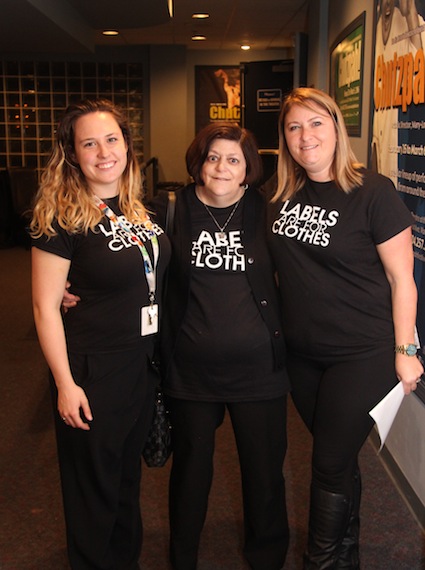
Left to right: Kathleen Muir, Harriet Kositsky and Shannon Gorski. (photo from JCC inclusion services)

Many at the event, including Simpson, when he took to the stage, were wearing the black T-shirt the JCC made for JDAIM, which says, “Labels are for clothes,” on the front. In his remarks, the minister spoke about the importance of inclusion and diversity work throughout all of the communities of British Columbia and highlighted the work of his own department, which focuses on community-building and poverty reduction within its greater mission.

Simpson shared some of the results of the fact-finding mission his ministry had recently undertaken in 28 communities in British Columbia. He highlighted the urgent situation in the province with regard to poverty and inequality: “678,000 people live in poverty in British Columbia,” he said, “which is 15% of the population. Forty percent of those are the working poor; one in five children live in poverty. If you are indigenous or have special needs, you are twice as likely to be poor.”

The minister said “social isolation is a key piece” that needs to be addressed throughout the province. “After people with disabilities in this province tell me they don’t have enough money, they tell me they want a job, they want to contribute,” he said. “When employers reach out and hire a differently abled employee, they tell me after they made the fit, they got a remarkable employee.”

Leamore Cohen, inclusion services coordinator at the JCC, introduced the video on the Bagel Club’s Israel trip. As Omer Adam’s “Tel Aviv Habibi” pulsed in the background of the video, the audience clapped to the beat.

Tammy Kalla and Penny Gurstein then read a list of Jewish Federation of Greater Vancouver Inspiring Inclusion grant recipients. Congregation Beth Israel was given funds to hire a tutor so that children with learning challenges could learn to read Torah; Beth Tikvah to hire the appropriate professionals to enable children and youth with invisible disabilities to participate fully alongside their peers in a range of programs; the JCC for a new program called Family Yoga Fundamentals; Richmond Jewish Day School to offer a fully inclusive music program; and Vancouver Hebrew Academy to instal a wheelchair ramp to the playground equipment that has been specially designed for children of all abilities.

The evening concluded with the 2016 Israeli film My Hero Brother, directed by Yonatan Nir. It follows a number of Israelis whose siblings have Down syndrome, as they take their brothers and sisters hiking in the Indian Himalayas. In introducing the screening, Benbaruj spoke beautifully about love, community and his wish that the inclusive communities we had learned about throughout the night could be a model for the world.

Matthew Gindin is a freelance journalist, writer and lecturer. He writes regularly for the Forward and All That Is Interesting, and has been published in Religion Dispatches, Situate Magazine, Tikkun and elsewhere. He can be found on Medium and Twitter.

Format ImagePosted on February 23, 2018February 21, 2018Author Matthew GindinCategories LocalTags Bagel Club, British Columbia, inclusion, Israel, JCC, Shane Simpson
Tensions trigger Insult

Tensions trigger Insult

Adel Karam as Toni, left, and Kamel El Basha as Yasser in The Insult. (photo from Cohen Media Group)

Ziad Doueiri was born in Lebanon, studied filmmaking at San Diego State and worked nonstop for more than a decade in Los Angeles as an assistant cameraman shooting Quentin Tarantino’s early movies, among others.

“One of my favourite films of all time, I looked at the film and said, ‘One day, I hope I make a movie like this,’ is Judgment at Nuremberg,” confided the impassioned director of Lebanon’s official Oscar submission, The Insult.

Inspired by Stanley Kramer’s 1961 courtroom drama, Doueiri set out to make a deeply felt moral saga using a familiar American genre that would connect with an international audience. The catalyst that sets The Insult in motion is an altercation on a Beirut street between a Lebanese Christian mechanic and a Palestinian construction supervisor. They are unable to resolve their disagreement for personal reasons – male ego and pride, to start – compounded by the overriding political context. The Insult unfolds against a backdrop of half a million Palestinians living as refugees in a country with a population of four million.

“The Palestinians came in 1948,” Doueiri noted in an interview during a visit to San Francisco late last year. “They never returned, they could not return. They were not given green cards. They were not given the right to settle in Lebanon, or the right to work.”

The Lebanese government’s logic, according to the Paris-based filmmaker, was and is “if we give you jobs, you’ll start making a good life. And if a Palestinian settles down in Lebanon and does not go to Palestine, the Israelis are happy.”

Meanwhile, the dispute between the antagonists escalates into a court case that, unexpectedly, turns into a penetrating historical inquiry exposing the depths of simmering resentment between the Lebanese and Palestinians. The elephant in the courtroom, of course, is Israel.

“The Insult is not about the Palestinian-Israeli conflict,” stressed Doueiri. “It’s a story of two people, one who is seeking justice and the other who doesn’t believe in it. The film is also about [how] you cannot have exclusivity on massacres. The Palestinians, in the last 20, 30, 40 years, they have kind of gained a monopoly on their suffering. The Insult is a way of saying, ‘You can’t blame Israelis all the time.’”

Doueiri acknowledged that his emigration to the United States in 1983 began a process of dissipating the hatred he grew up with for everything that’s Jewish and Israeli. Another important turning point was shooting The Attack – his first-rate thriller about a successful Arab surgeon in Tel Aviv whose world collapses after his wife commits a terrible crime – in Israel in 2011.

“The dedication of the Israeli crew on my film was fantastic,” Doueiri said with his characteristic intensity. “How could that not change you?”

Doueiri took a huge risk shooting The Attack in Israel.

“Not only is it a moral dilemma for the Lebanese that one of their compatriots went to Israel, it’s a legal problem,” he explained. “I violated Law 285. It is incontestable.”

When Doueiri flew to Beirut in September last year after premièring The Insult at the Venice Film Festival – where Kamel El Basha received the best actor award for his portrayal of Yasser – he was arrested at the airport. He claims he was released due to the direct intercession of the prime minister, but, regardless, he had to appear the next day before a military judge who specializes in cases involving Israeli collaborators and ISIS terrorists.

“The judge was really bothered by this case,” Doueiri said. “He knows that I did not collaborate with the Israelis. I did not share military information. I just went to do a movie. And I’m an American citizen.”

Fortunately for everyone concerned, Doueiri’s lawyer discovered a loophole: the five-year statute of limitations had expired.

“Isn’t it great?” Doueiri said with a smile. “This is how I was acquitted. It’s a movie. Isn’t it a movie?”

The Insult generated a lot of debate when it screened in Beirut in the fall, according to Doueiri. A truly happy ending would be if it gets a wide release in the Arab world.

The Insult opens Friday, Feb. 23, at Vancity Theatre (viff.org).

Michael Fox is a writer and film critic living in San Francisco.

Format ImagePosted on February 23, 2018February 21, 2018Author Michael FoxCategories TV & FilmTags Lebanon, Palestinians, refugees, Ziad Doueiri
Mothers embrace Mamatefet

Mothers embrace Mamatefet

Mamatefet’s first Mom and Babe Circle. (photo from Mamatefet)

Meirav Galili and her husband Itai moved to Vancouver with their two children from Israel five years ago. When their third child was born here, the family received lots of support from friends, something that helped make up for the fact that they have no extended family here.

When she heard about a plan to create a network of Israeli moms and moms-to-be, she was one of the first to sign up with Mamatefet.

Mamatefet, which has grown exponentially almost exclusively through word of mouth, is a mash-up of “mama” with the Hebrew word “maatefet,” which is a wraparound or embrace. The group welcomes those who want to be an otefet, an embracer, or a ne’etefet, an embracee. Except, the terms are not mutually exclusive.

“Sometimes it’s our turn to give and sometimes it’s our turn to get some help,” said Galili, adding that the success of the group surprised all involved.

“It was amazing because many, many people said, ‘me, me, me, me, me,’ and quickly we established something,” she said. Understanding the added burden of having and raising children without parents, aunts, sisters-in-law or other family around inspired many women to step forward.

Thanks to Mamatefet, one phone call or a WhatsApp message can put a team into action.

“The woman doesn’t need to ask even,” Galili said. “Everything is being done for her. She just needs to tell a friend, ‘My child is sick with me’ or ‘I have to stay at the hospital for tonight,’ and we’ll take it from there, and when they get home they have everything. It’s a very strong, warm feeling that we are not alone and we have this supportiveness.”

That is exactly what Rotem Regev had in mind when she and four friends conceived of Mamatefet in late 2016.

“It was one of those nights,” Regev recalled, “a few friends got together sitting around the coffee table chatting, recounting their individual – which we then realized were quite collective – stories of transition, to Vancouver, to motherhood, and how that intersected. What became really crystal clear to all of us is that we were feeling quite a bit of loneliness at that time, whenever that transition was, coming to Vancouver either pregnant or with a very little one, when there is not a school yet or any sort of structure to fit into…. To top that off, you would also be facing an extra challenge being away from your family and friends in a country that doesn’t yet quite feel like home and a language that doesn’t quite feel like home and a healthcare system that feels very, very different.

“We didn’t want any woman to feel the loneliness that we felt,” she said.

photo - Mamatefet offers moms like Osher Cohen support, including the occasional homemade meal, and friendship
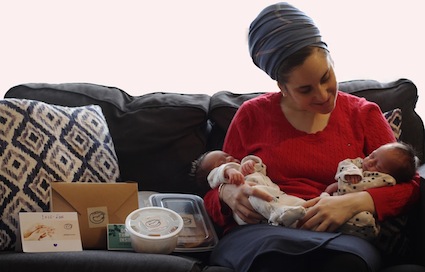
Mamatefet offers moms like Osher Cohen support, including the occasional homemade meal, and friendship. (photo by Lior Noyman)

When they decided to share their idea, they thought maybe five more women would join, perhaps seven. A few months later, they had 70 embracers and more than 40 embracees.

“The word spread out like wildfire really, because I think the need was so great,” said Regev, who is a clinical psychologist. There are a couple of similar groups in Israel and something sort of like Mamatefet in San Francisco and another in New Jersey, but, considering the evident need, it is a surprisingly rare initiative.

Regev and her Mamatefet co-founders Tamara Halamish, Yael Pilo Raz, Yael Mayer and Matti Feigelstock, have now seen their project expand from Vancouver to teams in Richmond, Ladner, Surrey, North Vancouver and East Vancouver-Burnaby, with a new team gearing up in Langley and the Tri-Cities.

In general, Mamatefet volunteers will deliver food, often including a Shabbat meal. There are regular meet-up groups for pregnant women and another for new moms. They are also on call in case of a crisis, like a miscarriage or a stillbirth.

But it’s the informal friendships that organically develop that are as important, said Marina Ingel. Being able to arrange play dates, exchange kids’ clothes, have a coffee with other new moms – this is an important outcome too, she said.

One of the reassuring things is talking to other moms about how the medical system in Canada differs from that in Israel.

“Here it’s totally different. Everything,” said Ingel. “In Israel, every time you’re going to the doctor, you’re doing an ultrasound. Here, you have maybe two the whole pregnancy. A bunch of things that they’re checking in Israel, they’re not doing this at all. But then you realize it’s fine and, if you have any problem, they will check it. Everything is OK, but the thing is that you’re worried about it, because it’s new to you.”

For Galili, cooking is both a hobby and a way to support other new moms.

“They send a message saying there is a woman who is about to come home with a baby and [asking] who is willing to participate,” she said. “I thought, OK, I need to prepare something anyway so I’ll just prepare something extra.”

Baking, homemade granola and yogurt, soups and a main dish, comfort food like chicken and rice, are the sorts of things she preps for new moms.

“If her mother were here, this is what she would probably make for her,” said Galili.

Mamatefet can be reached via facebook.com/mamatefet.

Format ImagePosted on February 23, 2018February 21, 2018Author Pat JohnsonCategories LocalTags childcare, children, Mamatefet, Rotem Regev, Vancouver, women
A new foundational resource

A new foundational resource

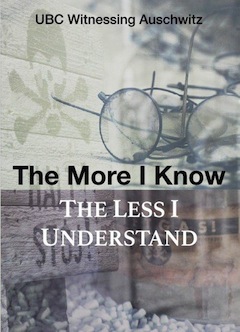
The book The More I Know, the Less I Understand (Auschwitz-Birkenau State Museum, 2017) summarizes the findings of University of British Columbia students in various fields of Holocaust research and the implications of Nazi German crimes committed in Central and Eastern Europe.

It is often claimed that, since the events of the Holocaust took place more than 70 years ago, most of the available information has already been collected and there is little chance of gaining new knowledge about what happened. This claim, often made without substantial questioning, has been debunked by, among others, a group of UBC students who traveled to Poland on the Witnessing Auschwitz Program from 2014 to 2016.

The young scholars conducted extensive fieldwork and consulted with world-class experts in Holocaust studies at the Auschwitz-Birkenau State Museum, the Emanuel Ringelblum Jewish Historical Institute and other organizations; they also used primary-source archival documents. Each of the student essays in The More I Know, the Less I Understand is accompanied by footnotes prepared by experts in the field. The essays show that many complexities of human life and politics, and historic processes associated with the Holocaust and the Second World War, remain understudied. Over the course of the Witnessing Auschwitz Program, the students found more questions to ask with every answer they were able to uncover.

The uniqueness of this volume and its substantial contribution to the market of knowledge rests on the comprehensiveness of the analysis – largely resulting from the diverse areas of expertise of the individual scholars. Furthermore, the authors in the book write on various subjects that have largely remained untouched in Canadian academia: the profitability of the work camps for the German economy; the artistic expression of prisoners; moral dilemmas, such as betrayal of others for the sake of survival; and complex emotions such as love.

book cover - The More I Know, the Less I UnderstandImportantly, various authors in this volume critique the methods by which the contemporary public is educated about events that took place before and during the Holocaust. For example, a common misconception exists, often reinforced through the education system and media, that the rationale for the crimes committed by the Nazi German regime was primarily rooted in ideological conviction. The essays in The More I Know, the Less I Understand collectively show that the motivations behind Nazi German actions prior to and during the Second World War were far more complex.

In early chapters, a number of the scholars correctly point out that the state of the economy was a major motivator for the leadership of the Third Reich. For example, Maria Dawson, in her chapter, “The Role of Food in the Development and Implementation of Nazi German Policies,” writes that the ethnic cleansing of Poles, commonly tied to the ideological motives of Nazi Germany, was substantially rooted in the perceived need of the Nazi regime for agricultural land to support their war effort. Joe Liu, in his chapter, “Deciphering Business Relationships in Nazi German-occupied Europe,” notes that the collection of data on prisoners entailed the development and modernization of mass data collection technology, particularly aided by IBM. The More I Know, the Less I Understand is full of such details, which are often surprising. The book not only breaks common misconceptions about the Holocaust, but provides a comprehensive picture of some of the real reasons behind Nazi crimes.

Because educating Canadian scholars and the public at large about the Holocaust will continue to be important for future generations, the methods of education on the subject must evolve. Helena Bryn-McLeod writes that, because of its importance in our daily environment, the Auschwitz-Birkenau State Museum recently joined various dominant social media networks. Since more people are using the internet than are reading books, social media is, as Bryn-McLeod identifies, “a new mode of remembering.”

Social media can also be an effective tool for the storage and capture of memories in an environment where there are fewer and fewer remaining survivors and other primary carriers of Holocaust memories. Moreover, Bryn-McLeod notes that social media conveys information to readers in similar ways as traditional forms of representation, such as journals and books – through photographs and other visuals – so little content will be lost with the transition to this new mode of memory. However, she acknowledges that, with the internet, new concerns have emerged, such as visitors taking offensive photographs in front of memorial sites and posting them. So, while the rise of fast-access media enables educators to reach a broader audience, Bryn-McLeod warns that ethical issues will continue to arise.

The More I Know, the Less I Understand holds valuable lessons. Notably, it highlights the dangers of adopting radical ethno-nationalistic positions, which, historically, have yielded catastrophic results. In his writing, Mark Twain brilliantly noted that “history does not repeat itself, but it does rhyme.” With the rebirth of populist political discourses in the West and elsewhere, the collection of works in The More I Know, the Less I Understand stresses that it is our responsibility, as a society, through education and awareness, to prevent certain chapters from history to rhyme with future chapters. Ultimately, this unique publication should be a foundational resource in Canadian scholarly environments – and elsewhere – where the subjects of the Holocaust and the Second World War are covered.

Dani Belo is a PhD student at the Norman Paterson School of International Affairs (NPSIA) at Carleton University in Ottawa, specializing in international conflict analysis and resolution. He is the editor-in-chief of the Paterson Review of International Affairs, associate editor at iAffairs Canada and contributing author in various publications for the NATO Association of Canada and the Canadian Global Affairs Institute. His area of research is international security, evolution of Russia-NATO relations, and inter-ethnic relations in the post-Soviet region.

***

The More I Know, the Less I Understand can be purchased at the UBC Bookstore or from the Auschwitz-Birkenau State Museum.

Format ImagePosted on February 23, 2018February 28, 2018Author Dani BeloCategories BooksTags Auschwitz-Birkenau State Museum, history, Holocaust, Nazi, UBC, University of British Columbia

Posts pagination

Page 1 Page 2 … Page 6 Next page
Proudly powered by WordPress