
Serving the Diaspora

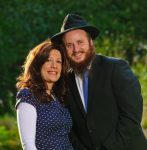
Ayala and Ariel Wilchfort are recent arrivals to Vancouver. (photo from Ariel Wilchfort)

Two years ago, Rabbi Gideon Osher Shmueli donated a kidney to a stranger, saving that individual’s life. These days, he works at Magen David Yeshivah in Brooklyn, N.Y., teaching Hebrew and bringing with that teaching the culture and values of Judaism and eretz Yisrael, the land of Israel.

To him, teaching about Judaism is akin to donating a vital organ. “Connecting Jews to Torah and mitzvot is no different from helping someone to live,” said Shmueli, 32, who, with his wife, Leore Sachs Shmueli, was matched with the school by Ohr Torah Stone’s Beren-Amiel Practical Training Program for Educational Emissaries, which trains educators who are sent to teach Judaic studies in both Orthodox and non-Orthodox schools throughout the Diaspora. A similar initiative, the Straus-Amiel Program for Rabbinical Emissaries, trains rabbis for synagogue postings in the Diaspora.

Like Shmueli, Rabbi Ariel Wilchfort is a recent arrival to his new post. He is city director for the National Conference of Synagogue Youth in Vancouver, following his participation in the emissary training at OTS’s Israel campuses.

“They guided me and helped me choose positions,” said Wilchfort, 33, who relocated to Vancouver with his wife Ayala and their two young children.

Wilchfort, who attended the emissary training from 2015 to 2017, said he found his current job when a representative for NCSY, the youth arm of Orthodox congregations in North America, visited with him and other emissaries.

Based in Israel, OTS is a modern Orthodox network of 24 institutions on 12 campuses, founded by Rabbi Shlomo Riskin with a mission in part to demonstrate that Judaism’s “laws and traditions remain profoundly relevant to the contemporary world,” Riskin has said.

As part of that mission, OTS has some 200 emissary families serving in more than 50 countries, according to Rabbi Eliahu Birnbaum, who directs the emissary programs. Shlichim (emissaries) serve on average five to six years, with some who have been at their posts as long as 18 years.

They serve not only in large Diaspora communities but also in places that are far afield and have few Jews, such as Quito, Ecuador; Guangzhou, China; Cochin, India; and Harare, Zimbabwe. “We believe that people need to work with people, and the only way to influence other people and strengthen their Jewish identity, as well as the community itself, is by having emissaries and creating personal connections,” Birnbaum said.

OTS annually receives at least 150 applications for the program, and chooses 25. “We accept only applicants who have advanced Torah knowledge and yeshivah background, high academic level and, most important, very good people and leadership skills,” said Birnbaum.

The training program consists of weekly classes with educators, rabbis, experts in halachah (Jewish law) and advisers. Shlichim assignments range from teaching positions, to youth directors to pulpit positions.

In a smaller Jewish community like Vancouver, Wilchfort occupies several roles on the community scene, mentoring young people at Congregation Schara Tzedeck and running a religious education program called Torah High, in which Jewish students can attend afternoon classes and gain a few credits toward earning their high school degree.

Originally from Englewood, N.J., Wilchfort’s family immigrated to Israel when he was a child, and he received his rabbinic ordination from Israel’s Chief Rabbinate at the same time that he was enrolled in the Beren-Amiel program. He said he was drawn to the initiative by a desire to serve Jews in the Diaspora and help them enrich their Jewish lives.

“I entered the program out of a care for other Jews, a love for our nation, and especially a love for our fellow Jews who have not had an adequate religious education,” he said.

Wilchfort has enjoyed settling into Vancouver, which he credits for having a vibrant Jewish scene. “Our community has a great infrastructure; it’s a very pro-Israel community here,” he said. “As for the area itself, it’s beautiful. In Vancouver, we live between forests and the ocean, and everyone is so health-aware, nature-aware.”

For Wilchfort, whose wife’s first language is Hebrew, not English, it’s a true cross-cultural experience. “It’s a new city, new country, new culture. It’s really an adventure, and we feel so excited to be here.”

The greatest Jewish novel?

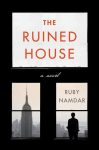
What strange quirk brought it about that what may be one of the greatest and most Jewish of Jewish novels should be written not by a Diaspora Jew, nor an Israeli Jew, nor a Diaspora Jew who had made aliyah, but rather an Israeli who relocated to New York?

Further stymying expectations, Ruby Namdar did not write this novel in English, but in Hebrew (it was recently translated by Hillel Halkin). “For who?” asked an audience member at the Cherie Smith JCC Jewish Book Festival event on Nov. 26, when I had the pleasure of interviewing Namdar in front of a small gathering. If Namdar wanted his novel, which he acknowledged to be soundly in the lineage of Bernard Malamud, Saul Bellow and Philip Roth, to be read by New Yorkers, why write it in Hebrew? If he wanted the novel to make sense to Israelis, why write it about a rootless Diaspora Jew with no connection to Israel?

“I don’t know what I was thinking,” said Namdar, “I don’t know who I was writing for, I just wrote.”

The Ruined House is not just a great Jewish novel or a great novel in modern Hebrew. It possesses a structure that is at once talmudic and kabbalistic, a structure that is deep and intricate yet carried off with such a sense of understatement and naturalness, effortlessly unfolding within Namdar’s lucid, lyrical and vivid prose, that most English-language reviewers thus far have not fully noticed it. This structure is what gives the novel its profoundly Jewish resonance, which is at once modern and ancient, rootless and anchored in the archetypal depths of Jewish experience and textuality.

Talmudic structure

The Ruined House is divided into seven books, with its seventh book being the culmination of an obviously Jewish numerical pattern. Each book follows the anti-hero, Andrew P. Cohen, over the course of one year of his life, as he enters what seems to be a midlife crisis from hell (or perhaps from heaven).

Cohen is a successful and wealthy professor of comparative culture, who lives in an idyllic Manhattan high-rise with a view of the river, a pristine Apollonian realm in the skies. He has a beautiful young lover, Ann Lee, and an adoring group of followers and acolytes. He cherishes his controlled, harmonious and detached existence, which he has gained through leaving his wife and two daughters years before.

At the end of the first six sections of the novel are a few pages of text designed to look like a blat Gemara, a page of Talmud. The central text in these inserts tells the story of a high priest preparing and executing the Yom Kippur sacrifices. While he does so, he is watched by Obadiah, a humble Levite who wonders whether the priest is truly pious or just a functionary in league with the elite. Encircling the narrative are passages from the Talmud, Mishnah and Tanakh, which describe the laws, folklore and spiritual significance of the high priest’s duty. They also feature key excerpts from Shaarei Gilgulim (The Gate of Reincarnation), a kabbalist text written by Chaim Vital (1542-1620) to expound the cosmology of his master, the Ari HaKodesh, Isaac Luria (1534-1572).

The insertion of these texts is deliberate and precise. Just as the narrative in the inserts is flanked by canonical Jewish sources, the narrative of the novel is surrounded by ancient Jewish forces. As the hidden, broken nature of Cohen’s life begins to surface, he begins to have intense, waking visions of the ancient Temple in Jerusalem. His dreams turn nightmarish, alternating between repressed guilt at his betrayal of his family and dreadful tableaus of the rape of Jerusalem by the Romans and the murder of Jews by the Nazis.

The structure of the story and the inserts are not the only mirrors in the book: Cohen’s life is cast as priest-like. His elite status; the pure harmonious realm in which he lives; his having separated from his wife like Moses to live in the skies; even the elaborate meat dinners he cooks up for his dinner guests alone in his perfect kitchen all point to it. His name, of course, highlights both the substance and the irony of his life as priestly metaphor. At one point, his daughter, Rachel, disgustedly mocks people who think that Jews named Cohen are descended from the priestly lineage: “Everyone knows they just gave out those names randomly at Ellis Island.”

As Cohen descends into apparent madness, a grotesque version of the priestly sensibility gets stronger in him. He becomes morbidly obsessed with the impure and averse to the physical, the decaying and the dead. He finds himself horrified by menstrual blood and semen. The explanation of this growing claustrophobic sensibility lies in the paragraphs of Shaarei Gilgulim, which are included in Namdar’s inserts.

Kabbalist elements

Shaarei Gilgulim describes the way that some souls, during the process of reincarnation, unite with other souls in order to complete their own tikkun (repair). In the first pages of The Ruined House, “one shining soul, the figure of a high priest” is suddenly visible above New York among the celestial machinations momentarily revealed as the veil is briefly sundered. The key to the priest’s identity lies in the kabbalist doctrine of ibbur, or impregnation, where a soul from beyond enters into an earthly person in order to help them, to complete their own mission, or some combination of the two. In Cohen’s case, as suggested in a last talmudic insert, he has been “impregnated” by the soul of the high priest in need of tikkun for feeling himself superior to Obadiah, the humble Levite. The high priest and Cohen share a sin in common: arrogance. Their collective confrontation and reckoning with it will be psychically violent and cathartic and come close to doing Cohen in.

Critique of Diaspora?

Some reviewers have read The Ruined House as a critique of the Diaspora Jew, viewing the narrative as a kind of punishment of Cohen, enacted on him by the rising tide of archaic Jewish intrusions into his life. Namdar said this is a moralistic distortion of his ambivalent, questioning text. Instead, Namdar pointed to the shatterings of the illusion of wholeness and perfection that happen in the book. “Where things are broken, there, seeds can take root and grow,” he said.

For example, Cohen’s harmonious life is an illusion that is shattered in the course of the book, leaving a “ruined house.” Yet the figure of the ruined house (bayit asher necharev in the original Hebrew, a phrase that comes from a poem by Yehuda Amichai) is also an allusion to another ruined house, that of the Beit Hamikdash, the Jerusalem Temple, whose pristine world of order and control, Namdar suggests, also was illusory.

The third ruined house is suggested by the timing of the events in the novel. The story begins in the Hebrew month of Elul (signifying its theme of repentance), on Sept. 6, 2000. After the narrative comes to a head on Tisha b’Av, the date of the destruction of the Temple, it jumps from Aug. 1, 2001, to Sept. 18, 2001, leaving a lacuna where Sept. 11, 2001, and the destruction of the Twin Towers, resides.

“I did not want Sept. 11 to appear in the narrative, thus making the novel reducible to being about that event,” said Namdar when I asked him about this. “Rather, I wanted the trajectory to point to its occurrence outside the frame.”

There is much more to talk about in this remarkable novel, which manages at once to be so Jewish, so Israeli, so American and so human. I did not touch here on the attention Namdar lavishes on the details of Cohen’s daily life or Namdar’s subversion of the lineage of Malamud, Bellow and Roth in his intense empathy with the female characters of the novel, and his unsparing deconstruction of Cohen’s narcissistic masculinity. I did not examine his vivid and hilarious slow-motion evocation of a grossly excessive bar mitzvah, or his brilliant parody of the Zionist clichés of a Birthright-like propaganda tour of Israel, and many other delights. I hope this introduction is enough to invite you to step into Namdar’s mesmerizing fusion of a talmudic-esoteric structure with an incandescent evocation of life in Manhattan, and discover what else he has hidden there, of which, I promise you on good authority, there is much.

Matthew Gindin is a freelance journalist, writer and lecturer. He writes regularly for the Forward and All That Is Interesting, and has been published in Religion Dispatches, Situate Magazine, Tikkun and elsewhere. He can be found on Medium and Twitter.

Gathering with community

Participants in last year’s Inclusion Journey at the Knesset in Jerusalem, in front of Marc Chagall’s painting “The Exodus.” (photo from JCC inclusion services)

The Jewish Community Centre of Greater Vancouver is part of the international network of Jewish communities celebrating persons with disabilities throughout the month of February. And, on Feb. 6, the entire community is invited to Share the Journey: An Evening of Inspiration, which will feature the screening of My Hero Brother, selected as the leading film for Jewish Disability Awareness and Inclusion Month. The event will also include remarks from the Hon. Shane Simpson, the provincial minister of social development and poverty reduction, and a slideshow and presentation by Leamore Cohen, coordinator of the JCC’s inclusion services, about the trip they led to Israel last year.

Many traditions exist within the Jewish community, and we must all work to ensure the accessibility of these traditions for all members of the community. It is within this context that the JCC’s inclusion services led the first-ever Canadian JCC diverse-ability and advocacy Inclusion Journey to Israel, with the support of the Jewish Federation of Greater Vancouver, the Gesher Chai Committee and community donors.

Jewish Disability Awareness and Inclusion Month reminds us of the importance of cultural connections, inclusive community and accessibility in all traditions and for all people. For its part, the JCC’s inclusion services has organized a number of awareness and visibility initiatives throughout February, including a Ronald McDonald House volunteer initiative with the JCC’s youth programs on Feb. 4 and a “Challa-Luyah” challah bake for the Jewish Food Bank with Axis Vancouver on Feb. 8.

Starting the month’s activities off is the Feb. 6, 6:30 p.m., screening at the Rothstein Theatre. For young Israeli adults, traveling after military service is a right of passage, and My Hero Brother emphasizes that such a right must be available for all young people. In drawing a parallel between local experiences and those highlighted in the film, the JCC hopes to bring attention to the abilities of all persons when community works together.

JCC inclusion services

***

The Jewish Federation of Greater Vancouver-organized Yom Ha’atzmaut celebration is the community’s biggest gathering of the year, and the committee, led by Pam Wolfman, has booked two Israeli performers to help us celebrate Israel’s 70th anniversary: Shlomi Shaban and Ninet Tayeb.

Shaban is performing at the upcoming Red Sea Jazz Festival, where he is described as having “the ability to create buoyant virtuoso harmony between classical music, rock and pop…. His characteristic straightforward sense of humour frequently moves on a fine line between black tie concert halls and sweaty smoky rock-n-roll stages.”

Tayeb was the winner of Kochav Nolad (Israeli Idol). Music critic Garreth Browne saw her perform in New York and wrote, “it’s safe to say that the entire audience was fixated and almost hypnotized by her presence.”

Tickets went on sale this week for the April 18 celebration. Visit jewishvancouver.com.

– Courtesy of Jewish Federation of Greater Vancouver

***

The Jewish Family Services’ 2018 Innovators Lunch guest speaker will be Leonard Brody. The award-winning entrepreneur, venture capitalist and bestselling author is co-founder and executive chair of Creative Labs, a joint venture with the largest sports and entertainment agency in the world, CAA in Los Angeles. His group is responsible for building new ventures for some of CAA’s most important film, TV and sports celebrities. He also happens to be a community member in Vancouver.

Brody will be talking about The Great Re-Write, his upcoming book in partnership with Forbes magazine, which addresses this unique social and economic moment in history. With rapid social and structural changes have come many challenges for communities, but also opportunities. How do we make the most of this time to invest in our community, uplift society as a whole and ensure we don’t leave people behind? He’ll encourage people to think as innovators to bring about meaningful and lasting social change.

The Innovators Lunch will be held on April 24 at the Vancouver Hyatt. For more details, visit jfsvancouver.ca/innovators.

– Courtesy of Jewish Family Services