Skip to content
  • Home
  • Subscribe / donate
  • Events calendar
  • News
    • Local
    • National
    • Israel
    • World
    • עניין בחדשות
      A roundup of news in Canada and further afield, in Hebrew.
  • Opinion
    • From the JI
    • Op-Ed
  • Arts & Culture
    • Performing Arts
    • Music
    • Books
    • Visual Arts
    • TV & Film
  • Life
    • Celebrating the Holidays
    • Travel
    • The Daily Snooze
      Cartoons by Jacob Samuel
    • Mystery Photo
      Help the JI and JMABC fill in the gaps in our archives.
  • Community Links
    • Organizations, Etc.
    • Other News Sources & Blogs
    • Business Directory
  • FAQ
  • JI Chai Celebration
  • JI@88! video

Recent Posts

  • Legal help for students
  • Revisiting myth of Lilith
  • Wrong person rebuked
  • Canada’s mixed messages
  • Questions for museum
  • Symposium on antizionism
  • Making soccer political
  • CJPAC lauds Pulver’s impact
  • City recognizes Vrba’s legacy  
  • Organ donation saves lives
  • Theodore’s March premiere
  • A healing Shabbaton
  • Supplying healthy food
  • A chime of metal tags
  • Yellowknife seder a first
  • Ishai energizes, unifies
  • A Lag b’Omer to remember
  • Expanding the healing
  • Hannah Senesh – a unique hero
  • Community milestones … May 2026
  • Sharing her testimony
  • Fall fight takes leap forward
  • The balancing of rights
  • Multiple Tony n’ Tina roles
  • Stories of trauma, resilience
  • Celebrate our culture
  • A responsibility to help
  • What wellness means at JCC
  • Together in mourning
  • Downhill after Trump?
  • Birth control even easier now
  • Eco-Sisters mentorship
  • Unexpected discoveries
  • Study’s results hopeful
  • Bad behaviour affects us all
  • Thankful for the police

Archives

Follow @JewishIndie
image - The CJN - Visit Us Banner - 300x600 - 101625

Month: January 2019

ראש ממשלת קנדה: אמשיך להתנגד לארגון הקורא להחרמת ישראל

ראש ממשלת קנדה: אמשיך להתנגד לארגון הקורא להחרמת ישראל

(צילום: Pixabay)

ראש ממשלת קנדה, ג’סטין טרודו, הודיע כי ימשיך להתנגד לארגון הבינלאומי הקורא להחרמת ישראל – הדי.בי.אס. דבריו של טרודו נאמרו בשבוע שעבר במסגרת כנס בחירות פתוח לכל שהתקיים בעיר סנט קטרינס שבמחוז אונטריו. ראש הממשלה השיב לאחד מהשואלים שביקש לבדוק האם הוא מתכוון להתנצל על כך, שגינה בעבר את ארגון הדי.בי.אס. טרודו אמר בתגובה לשאלה: “כשיש ארגונים כמו הדי.בי.אס שמחפשים להציג דמוניזציה ודה-לגיטימציה למדינת ישראל, וכשיש סטודנטים שמפחדים להגיע  לאוניברסיטאות ולמכללות בקנדה בגלל דתם, חייבים להכיר בכך שיש דברים שלא מקובלים כלל. אסור לאף אחד להפלות אם לגרום לאנשים להרגיש שלא בטוח בגלל הדת שלהם. וזה בדיוק מה שארגון הדי.בי.אס עושה. אנטישמיות הייתה קיימת ומוכרת בעבר. וגם היום המתקפות נגד העם היהודי מהוות אחוז גבוה בקרב פשעי השנאה בקנדה ובעולם כולו. עלינו להבין שחלק מהאנטישמיות כיום מנוהלת לא רק נגד יחידים, אלא גם נגד מדינת ישראל בכלל. עלינו להיזהר לכן שלא לתמוך באנטשימיות החדשה הזו – שמבקרת וקוראת לעשות חרם על ישראל”.

תסריט שעוסק בגזענות נגד יהודים עלה לגמר פסטיבל סרטי נעורים

שני אחים שעלו עם משפחתם מקנדה לישראל וגרים כיום באשקלון, זאת לאחר שהם ומשפחתם סבלו לטענתם מגל אנטישמיות. האחים החליטו לעשות על זה סרט. התסריט שהוא בעצם מתאר את סיפור חייהם המעניין, עלה לשלב גמר תחרות של פסטיבל סרטי נעורים ארצי בישראל. כעת הם ממתינים לתוצאות הגמר שיפורסמו קרוב לוודאי במהלך החודש הקרוב.

האחים חיים (בן השמונה עשרה) ומנחם (בן השבעה עשרה) לבית סמיערק, לומדים כיום במגמת תקשורת בישיבת צביה אשר באשקלון. התסריט שלהם משתתף בגמר התחרות הארצית של התסריט הטוב ביותר בפסטיבל סרטי נעורים, לזכרו של התלמיד מתן בד”ט שנפטר לפני שש עשרה שנים (שתיים עשרה שנים שנים לאחר שמוחו נפגע בצורה קשה מהלך תאונת צלילה באילת, כאשר היה זה בזמן טיול שנתי בכיתה י”ב). בגמר התחרות משתתפים בנוסף עוד ארבעה תסריטים נבחרים. זאת מתוך שבעים תסריטים שהגיעו לשלב הראשון בתחרות מכל רחבי הארץ.

התסריט אותו כתבו כאמור שני האחים עוסק בנושא גזענות כלפי יהודים בקנדה בכלל, וכלפי המשפחה שלהם בפרט. הגזענות לדבריהם היא זו שגרמה למשפחה לעזוב את קנדה ולעלות לישראל לפני כשנתיים.

האחים סמיערק נחשבים עדיין בישראל על תקן של עולים חדשים, לומדים כיום בישיבת צביה באשקלון. המשפחה כולה המונה שבע נפשות עלתה לישראל: שני ההורים, שני האחים ושלוש אחיות. הם בחרו לגור באשקלון.

בקנדה שני האחים למדו במגמת תקשורת ועתה הם ממשכים את לימודיהם באותה מגמה בישיבה באשקלון. אל הפרוייקט הקולנועי שלהם מצטרפים שני בוגרי מגמת התקשורת בישיבה (אביב סיאני ומאור מיכאלי) אשר יפיקו את סרט, עם יזכה במקום הראשון בתחרות. השופטים בגמר התחרות (בהם: נציגי עיריית רעננה, נציגי בנק מזרחי-טפחות ונציגי משרד החינוך) וכן גם נציגי המשפחות התרשמו מאוד מהתסריט והסיפור האישי של שני האחים.

חיים סמיערק אומר על הפרוייקט שלו ושל אחיו הצעיר מנחם: “אני חושב שזה תסריט ממש טוב. מדובר בסיפור האישי שלנו שחווינו בקנדה. חשוב לנו לספר זאת לכולם. נפלה בידינו ההזדמנות לעלות לגמר תחרות הסרטים. במידה ונזכה בתחרות וכך גם יתאפשר להקהל נרחב לצפות בסרט שלנו – תהיה זאת ממש גאווה בשבילנו”. במהלך החודש הקרוב יקבלו האחים תשובה אם התסריט שלהם זכה במקום הראשון בתחרות החשובה.

Format ImagePosted on January 30, 2019January 24, 2019Author Roni RachmaniCategories עניין בחדשותTags antisemitism, BDS, boycott, Canada, film, Israel, Justin Trudeau, youth, אנטישמיות, ג'סטין טרודו, די.בי.אס, ישראל, להחרמת, סרטים, פסטיבל סרטי נעורים ארצי בישראל, קנדה
Let’s talk mental health

Let’s talk mental health

Michael Landsberg will deliver the talk Darkness and Hope: Depression, Sport and Me on Feb. 13, as part of Jewish Family Services’ Family Life Education Series. (photo from JFS)

Michael Landsberg is a Canadian sports journalist and former host of Off the Record for TSN. He is also a passionate advocate for removing the stigma around mental illness, and will be coming to Vancouver next month to deliver the talk Darkness and Hope: Depression, Sport and Me. A Jewish Family Services (JFS) Family Life Education event, the talk will be held at Congregation Beth Israel on Feb. 13, with all proceeds going to support JFS mental health initiatives in the community.

Landsberg, who suffers from depression and generalized anxiety disorder, has in recent years been an ambassador for Bell Let’s Talk, an initiative that raises awareness and encourages dialogue about mental health. In 2013, his documentary, Darkness and Hope: Depression, Sports and Me, was nominated for a Canadian Screen Award for best history or biography documentary program or series. The Canadian Alliance on Mental Illness and Mental Health has named Landsberg one of its Champions of Mental Health. Landsberg is known for his Twitter hashtag #sicknotweak, which encourages discussion around mental health and creates a forum for those needing help.

“We’re thrilled and delighted to have Michael Landsberg come and do a talk at Beth Israel,” said Alan Stamp, clinical counseling director at JFS. “He has become an ambassador and a pioneer for mental health. He took a risk coming out about his struggles, [and] for him to come out and share his experiences is quite captivating. What he does best of all is he addresses stigma and, when someone in his role can speak out, it helps to lessen the suffering of the one in five Canadians – which is a conservative estimate in my opinion – who experiences a mental health concern over their lifetime.”

In Vancouver, Landsberg will be doing a one-hour talk with a question-and-answer period afterwards. He spoke to the Jewish Independent about helping people struggling with mental health issues.

“In general, sports mimics life,” he said. “When I speak about life and the stigma around mental health, I know we’re not as far ahead as we think we are. I don’t think we’re nearly as far ahead as we would want to believe. We’ve been working hard and it’s way better, yet I hear from people in the sports world all the time who are still in the closet, or they’re feeling shame.”

A major focus of Landsberg’s work is combating the idea that mental illness is a sign of weakness or is something “self-inflicted.”

“That is the arrogance of mental health,” he said. “Mentally healthy people sometimes believe that they would have been able to overcome the illness – they don’t understand the reality that people with mental health issues face, and how unchosen and beyond their control it can actually be. I try to educate the non-sufferer to better understand what mental illness is, and that it is like any other illness, no different from a physical ailment.”

There are a number of reasons why both Stamp and Landsberg feel sport is a good entry point for this discussion.

“I’m a huge believer that the best way to break people of the stigma is to find really strong people, like Clara Hughes, who have struggled with this, to talk about it,” said Landsberg.

Hughes, a Canadian cyclist and speed skater who has won multiple Olympic medals in both sports, has struggled with depression. “If [Hughes] was close at the end of the race, she would win. If you find that even a person of that strength and accomplishment can suffer from depression, it changes your perspective,” said Landsberg. “Everyone with depression feels that they are not understood, [but] when you hear someone else talk about it, then you know we all feel some things in common, and … that is incredibly empowering. Real-life examples are great.”

Landsberg has also partnered with firefighters who suffer from mental health issues, encouraging them to share their stories.

Landsberg and Stamp believe that reaching youth is key to changing the future, and sports can be key in doing that.

“We have to help younger people to understand that mental health concerns are a natural part of being alive,” said Stamp. “We have to do that much younger, like 6 or 7 years old. They need to know that when you feel distress, there is a way out.

“We have to start with language,” he said. “How do we describe somebody who is struggling? Children can be injured by the labels we use … we should be teaching youth and adults how to be listeners, how to approach someone and see if they need help. Having some education around a mental health problem is tremendously impactful. We need to be kinder, gentler and more empathic in our dealings with people.”

Tickets to hear Landsberg speak are $10 and are available from jfsvancouver.ca or 604-257-5151.

Matthew Gindin is a freelance journalist, writer and lecturer. He is Pacific correspondent for the CJN, writes regularly for the Forward, Tricycle and the Wisdom Daily, and has been published in Sojourners, Religion Dispatches and elsewhere. He can be found on Medium and Twitter.

Format ImagePosted on January 25, 2019January 24, 2019Author Matthew GindinCategories LocalTags healthcare, Jewish Family Services, JFS, mental health, Michael Landsberg, sports
Mary Kitagawa’s civil courage

Mary Kitagawa’s civil courage

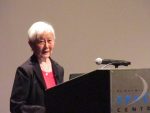
Mary Kitagawa was honoured with the Wallenberg-Sugihara Civil Courage Award on Jan. 20. (photo by Pat Johnson)

At a convocation ceremony at the University of British Columbia in 2012, a group of graduates stood out from the rest. Twenty-one elderly Japanese-Canadians, ranging in age from 89 to 96, were awarded honorary degrees in recognition of an historic injustice that had taken place 70 years earlier.

In the winter of early 1942, right after Japan’s attack on Pearl Harbour, the Government of Canada ordered all Japanese-Canadians to be relocated from the coast. This included students at UBC. For the next seven decades, the injustice went unrectified and largely unrecognized by the university until Mary Kitagawa, a community leader whose own family history was ruptured by the events of the war years, took up the cause. It was her tenacity that led the university to acknowledge and make some amends for its complicity in the injustice. It awarded honorary degrees to 96 students – most of them posthumously.

For this achievement, and others, Kitagawa was honoured with the Wallenberg-Sugihara Civil Courage Award on Sunday afternoon, Jan. 20. This was the 14th annual Vancouver commemoration of Raoul Wallenberg Day, which, since 2015, has coincided with the presentation of the Civil Courage Award.

In her remarks upon receiving the award, Kitagawa reflected on the social conditions that permitted the internment of Canadians of Japanese descent.

“This happened because those in power in Canada at that time forgot that this was a democratic country, sending her men and women to war to preserve our freedom,” she told a packed auditorium at the H.R. MacMillan Space Centre. “The excuse they used for incarcerating us was that we were a security risk. However, if you read all the newspaper headlines of the 1930s and ’40s, you will find that the B.C. politicians’ hatred of Japanese-Canadians was deep and abiding. They wanted to ethnically cleanse this one small group of people from the province.”

Kitagawa said that, at a January 1942 meeting in Ottawa to address “the Japanese problem,” a B.C. representative declared, “The bombing of Pearl Harbour was a heaven-sent gift to the people of British Columbia to rid B.C. of Japanese economic menace forevermore.”

“My family was swept away from our home in this storm of hatred,” Kitagawa said. From their home on Salt Spring Island, the family was transported to Hastings Park, in East Vancouver, which served as an assembly point for dispersal to the interior of the province.

“Our journey through incarceration was brutal and dehumanizing,” she said. The family was separated from her father for six months and they feared the very worst. Eventually, the family was reunited, but they were moved from place to place around the interior of British Columbia and in Alberta a dozen times during seven years of incarceration.

When the War Measures Act, under which the internment was justified, ceased its effect at the end of the war, Parliament passed successive “emergency” laws to permit the continued incarceration through 1947, and it was April 1949 before Japanese-Canadians were granted freedom of movement and permitted to return to the coast. Her father and mother, aged 55 and 50 respectively, took the family back to Salt Spring and began all over again.

“It wasn’t just the material things that they lost,” Kitagawa reflected. “They lost the dream for the future they had planned, their community, their opportunities, education for their children, their friends, their youth, their culture, language and heirlooms. But never – they never lost their pride nor their dignity.… My parents believed in forgiveness. Like Nelson Mandela, they believed that forgiveness liberates the soul. They refused to look back in anger. Instead, they chose to continue to move forward with the same resolve that helped them to survive their terrible experience.”

In 2006, Kitagawa read in the Vancouver Sun that a federal building on Burrard Street in Vancouver was being named to honour Howard Charles Green, a longtime Conservative member of Parliament from Vancouver and a leading advocate of Japanese-Canadian internment. “Immediately, I knew that I had to have that name erased from that building. To me, no person who helped destroy my parents’ dream and made them suffer so grievously was going to be so honoured.”

With help from a quickly mobilized group of activists and sympathetic media coverage, Kitagawa successfully had Green’s name stripped from the building, which was renamed in honour of Douglas Jung, another Conservative MP, but the first MP of Chinese-Canadian heritage.

Kitagawa also led an initiative that saw Hastings Park declared an historic site related to the internment.

In her talk on Sunday, Kitagawa emotionally credited an “unsung hero,” her husband Tosh, who, among other efforts he played in supporting Kitagawa’s activism, spearheaded the reprinting of the 1942 UBC yearbook to include information about the internment and biographies of the students affected. It was also through his persistence that they were able to track down the 23 living students and the families of those who had passed away.

The Civil Courage Award is presented by the Wallenberg-Sugihara Civil Courage Society, which was formed by members of the Swedish and Jewish communities in Vancouver.

Raoul Wallenberg was a Swedish architect, businessman, diplomat and humanitarian who became Sweden’s special envoy to Hungary in the summer of 1944, several months after the Nazi deportation of Hungarian Jews had begun. He issued protective passports and sheltered people in buildings that were declared to be Swedish territory, saving tens of thousands of Jews. He was taken into Soviet captivity on Jan. 17, 1945, and was never seen again.

Chiune Sugihara was a Japanese diplomat who served as the vice-consul in Lithuania during the Second World War. Acting in direct violation of his orders at great risk to himself and his family, he issued transit visas that allowed approximately 6,000 Jewish people from Poland and from Lithuania to escape probable death.

The award presentation was followed by a screening of the 1995 film The War Between Us, which dramatizes the events of the Japanese-Canadian experience through the lives of a single family.

Councilor Pete Fry, Vancouver’s deputy mayor, read a proclamation from the city. Consular officials from Sweden and Japan were in attendance.

Format ImagePosted on January 25, 2019January 24, 2019Author Pat JohnsonCategories LocalTags human rights, Mary Kitagawa, racism, UBC, Wallenberg Day, Wallenberg-Sugihara Civil Courage Award

Airing, rejecting bad ideas

Hundreds of thousands of women and allies marched in cities all over North America Saturday, bringing people from across the spectrum together to stand for equality and justice. It was the third annual network of women’s marches that sprang out of the shock and alarm after the election of U.S. President Donald Trump.

To ensure that the nearly spontaneous eruption of resistance to the direction of American (and world) politics was more than lightning in a bottle, a movement was solidified in the form of Women’s March Inc. This body, led by a small group of activists who quickly gained international fame and recognition, not only came to helm one of the most remarkable new grassroots movements in American history, they also became central figures in the cadre of leftist, socialist and progressive political activists that is loosely defined as “the resistance.”

Unfortunately – or, perhaps, fortunately, for reasons we’ll explain – the small group of Women’s March leaders has recently been beset by controversy. In a book-length analysis last month, Tablet magazine reconstructed accounts of the earliest hours of the march movement – including the marginalization of Jewish women who were there at the start and the assertion, apparently made in one of the earliest meetings, that “white Jews” were partly responsible for “white supremacy.”

Additionally, some of the leaders of Women’s March Inc. are associated with Louis Farrakhan, head of the Nation of Islam and an unrepentant Jew-hater and Hitler admirer who last month capped a career of antisemitic rhetoric by declaring Jews “satanic.” Tamika Mallory, one of the most visible faces of the march movement, has referred to Farrakhan as “the GOAT” – the greatest of all time.

These developments led march organizers in various cities to disassociate their marches from Women’s March Inc. While some figures tried to patch over or reconcile divergences within the movement, such efforts were undermined by top leaders, including Mallory, who appeared on national TV the Monday before Saturday’s marches. She defended her position on Israel and Palestine. She declared “the Palestinians are native to the land,” and that “there are people who have a number of sort of ideologies around why the Jewish people feel this should be their land. I’m not Jewish. So for me to speak to that is not fair.” She’s not Palestinian, either, her interviewer noted, yet she had no qualms defending Palestinians’ right to national self-determination.

At a time when another organization might aim for conciliation, Women’s March Inc. leaders seemed to double down on their troubles. In her keynote speech to the march in Washington Saturday, Linda Sarsour, another leading figure, expressed support for the BDS movement. While she had, earlier, finally rejected Farrakhan’s antisemitism and homophobia, her decision to use her limited time on stage to focus on BDS – an issue peripheral at best to the women’s movement – suggests she is not finished enflaming tensions with Jewish people.

Notably, attendance was down at rallies across the continent, including here in Vancouver. There could be a range of explanations – Trump-fatigue, weather – but certainly some Jewish and non-Jewish women were motivated to stay away because of the association of march leaders with bad ideas.

Within the loose affiliation of “resistance” figures, several of the individuals elected to the U.S. Congress in November’s midterm elections have made themselves known for statements about Israel and Palestine. One of the freshmen, Rep. Ilhan Omar, a Democrat from Minnesota, came under criticism for a 2012 social media post in which she wrote: “Israel has hypnotized the world, may Allah awaken the people and help them see the evil doings of Israel.” She has since said that she didn’t understand the implications in her choice of words.

Another new legislator, Rashida Tlaib, Democrat of Michigan, made her entry into Washington known by displaying a map of the world with a Post-it note with the word “Palestine” covering Israel.

These examples – and there are more – are disheartening. That these ideas have moved from the recesses of crackpot online discussion forums and into Congress, into one of the most significant grassroots organizations and, apparently, into a significant swath of the Democratic party, is certainly concerning. But there is a silver lining: it also allows us to openly confront the trend and, perhaps, to gain allies in opposing it.

When we talk about the need to shine light on dark crevices of bigotry, this is exactly what we mean. Social media has, for better or worse, allowed anyone with any views to broadcast them. In the chaotic network of the internet, there is no practical, central force for contesting bigotry and other bad ideas. When those ideas and expressions seep into institutions like Women’s March Inc., Congress or, even more noticeably, the U.K. Labour party, this presents an opportunity unavailable elsewhere. It is a chance to bring these issues out in the open and contest them in the light of day. Among other things, it forces people with power and influence to make a choice.

Among those who made choices in recent weeks – the choice to withdraw as sponsors of Women’s March Inc. – are prominent individuals and organizations, including the Democratic National Committee, the Southern Poverty Law Centre, the women’s political action group EMILY’s List, the LGBTQ advocacy group Human Rights Campaign, the pro-choice organization NARAL, the Centre for American Progress, and Amnesty International.

This is the kind of unified voice we need: a concerted rejection of antisemitism or Jew-baiting or Israel-bashing that has emerged as a force in important places.

Posted on January 25, 2019January 24, 2019Author The Editorial BoardCategories From the JITags anti-Zionism, antisemitism, Farrakhan, racism, women, Women's March

JNF Canada explains position

On behalf of JNF Canada (JNF), I wish to respond to allegations made by Independent Jewish Voices Canada, longstanding opponents of JNF Canada, as well as the opinion piece you published [“Tax troubles start year,” Jewish Independent, Jan. 11].

With regard to the substantive issues that have been raised about our projects in Israel we wish to reiterate our position.

• JNF has in the past carried out projects mainly of a charitable nature, such as parks, playgrounds and recreational facilities on land owned by the Israel Defence Forces. Our charitable funds never flowed to the IDF. The charitable funds were directed toward the hiring of indigent labourers to construct these projects. These expenditures represent under one percent of our expenditures over the past decade.

In your coverage, you suggest that we took action based upon an alert from the CRA. This, in fact, is not the case. Rather, it was our legal counsel who advised us several years ago that the indirect association with the IDF may be misconstrued or criticized by the CRA, so we ended our participation at that time. We have not for several years carried out projects located on IDF land, and we continue to operate in accordance with CRA regulations governing our status as a charitable organization. We stopped these projects on the advice of counsel well before this issue was brought to the public’s attention by a group trying to sensationalize it.

• With regard to projects located in disputed territory, JNF is committed to continuing to work with CRA to ensure we are in full compliance.

• Finally, in terms of governance and reporting, JNF operates in compliance with the Canada Income Tax Act. We have Israeli staff on site to direct our projects in Israel and regularly report on our activities.

Thank you for highlighting our work and for acknowledging that “Israel is Israel, is large part, thanks to JNF.” We take pride in having supported the building of water reservoirs, collaborated with dozens of educational institutions, built numerous recreational/educational facilities, planted millions of trees and supported pioneering research in green technology. Key projects for this year include supporting a trauma centre in Sderot, a project to feed Israel’s hungry, the rehabilitation of the Be’eri and Kissufim forests, and more.

JNF’s management and lay leadership are committed to improving our operations. For the past number of years, we have been making changes to strengthen our governance and controls. What will not change, however, is our commitment to helping build the foundations of Israel’s future. We will always stand shoulder to shoulder with the people of Israel to benefit the social service and environmental fabric of the state of Israel.

Lance Davis is chief executive officer of Jewish National Fund Canada.

Posted on January 25, 2019January 24, 2019Author Lance DavisCategories Op-EdTags CRA, IJV, Independent Jewish Voices, Israel, Jewish National Fund, JNF, taxes
NDPer sponsors anti-JNF bid

NDPer sponsors anti-JNF bid

Ayalon Canada Park in the Ayalon Valley is one of the projects JNF supports. (photo by Guy Asiag, KKL-JNF photo archive)

A member of Parliament has agreed to sponsor an e-petition that calls on the government to revoke the charitable status of the Jewish National Fund of Canada (JNF).

This is the first time an MP has lent support to an effort to rescind JNF’s tax-exempt charitable status in Canada and marks the latest development in a long-running battle by those opposed to the JNF’s charitable status.

Quebec NDP MP and national revenue critic Pierre-Luc Dusseault has agreed to sponsor petition E-1999, which, as of this writing [Jan. 21], had garnered more than 1,400 signatures. It went online on Jan. 9 and will close for signatures on May 9.

E-petitions are an official system whereby petitions that are sponsored by an MP and receive 500 signatures will be tabled in the House of Commons. The government must then respond within 45 days.

It was submitted by Independent Jewish Voices of Canada (IJV), which is considered an outlier within the Jewish community, due to its support for the boycott, divestment and sanctions movement against Israel.

On its website, IJV calls itself “a grassroots organization grounded in Jewish tradition that opposes all forms of racism and advocates for justice and peace for all in Israel-Palestine.”

The JNF was recently the subject of a scathing story by the CBC, which reported that the charity was under a Canada Revenue Agency audit for using charitable donations to build infrastructure for the Israel Defence Forces, “in violation of Canada’s tax rules.”

The JNF responded by saying that it stopped funding projects on Israeli military bases in 2016 and that the projects only “indirectly” involved the IDF, because they were for children and youth on land owned by the IDF.

In a subsequent interview with the CJN, JNF Canada’s chief executive officer, Lance Davis, said the charity is working with the CRA on its review and issued staunch defences of JNF’s financial transparency and donor accountability.

The e-petition, which is addressed to the minister of national revenue, says JNF Canada “engages in discriminatory practices, as its landholdings are chartered for exclusively Jewish ownership, lease and benefit, as noted by the United Nations, the U.S. State Department, a former attorney general of Israel and the JNF itself.”

It says evidence “strongly indicates” that JNF Canada violates the Income Tax Act, common law and Canada Revenue Agency policy over its IDF-related projects.

As well, it claims the charity violates Canadian and international law “by enabling physical changes within occupied territory, thereby helping Israel effectively annex land within occupied territory, and, in the case of east Jerusalem, deepen control over land already annexed illegally.”

“Notably,” it adds, “the JNF Canada-funded Canada Park was built on the lands of three Palestinian villages destroyed following the 1967 war in direct violation of the Fourth Geneva Convention.”

It also accuses JNF Canada materials of depicting “occupied territory as part of Israel, a representation that runs contrary to Canadian foreign policy and international law.”

It calls on the minister of national revenue to revoke JNF’s charitable status, if the charity is found to violate the Income Tax Act, or CRA guidelines and policies.

It was initiated by Rabbi David Mivasair, a longtime IJV activist now based in Hamilton, Ont. He called the e-petition “part of an ongoing process” to hold public officials accountable.

“It’s incontrovertibly factual that JNF Canada is in violation of Canada’s tax laws,” Mivasair claimed. “It has been for decades. It’s been reported for decades.”

This latest campaign “is not something that I take any pleasure in doing, but feel is morally necessary to be done,” he added.

According to guidelines for MPs, no debate is permitted when a member presents a petition. An MP “may make a brief factual statement (referring to the petition being duly certified, to its source, to the subject matter of the petition and its request, and to the number of signatures it carries), but members are not allowed to read petitions nor are they to indicate their agreement or disagreement with them.”

In 2017, IJV submitted an 85-page complaint about JNF Canada to the CRA and the national revenue minister. That followed many other campaigns designed to pressure federal officials.

This is the first time IJV has submitted a parliamentary petition and it’s “just one way of drawing public attention to this,” said the group’s national coordinator, Corey Balsam. “We’re assuming [officials] will look into it and not much more than that. [But] it’s definitely a big step for our campaign.”

He said Dusseault is “not someone who’s very engaged [in the issue], but he heard the concerns and saw the evidence.”

Dusseault did not reply to the CJN’s requests for comment.

In a statement posted to its website, JNF called the e-petition “as empty and scurrilous as earlier efforts to delegitimize the outstanding work of the JNF and, by extension, the existence of the state of Israel.”

JNF said its outreach suggests “that those who are applying any degree of critical thinking see the petition for what it is and are dismissing it as not worthy of engagement.”

For Jewish National Fund of Canada’s response to the Jan. 11 Jewish Independent editorial, click here.

Format ImagePosted on January 25, 2019January 24, 2019Author Ron Csillag CJNCategories NationalTags CRA, David Mivasair, IJV, Independent Jewish Voices, Jewish National Fund, JNF, Lance Davis, taxes3 Comments on NDPer sponsors anti-JNF bid
Seeing with the brain

Seeing with the brain

Prof. Amir Amedi of the Hebrew University answers questions from attendees at a Jan. 16 presentation. (photo by Pat Johnson)

A white cane has been used for generations to help guide the mobility of people who are blind. Researchers at the Hebrew University of Jerusalem created the EyeCane, which added technology that indicates to the user the distance to obstructions. From there, other technological advances were added to identify the types of items in the area – a couch, chairs, table, lamp – and convey the information to the user’s ear. Still not satisfied, the scientists combined the invention with artificial intelligence and complex auditory accompaniments so that the user could identify the size, shape, colour, brightness and other attributes of the space around them to get a full “picture” of their surroundings.

Presented by the Vancouver chapter of the Canadian Friends of the Hebrew University, Prof. Amir Amedi spoke at Schara Tzedeck Synagogue Jan. 16. Amedi is a professor in Hebrew University’s department of medical neurobiology and an adjoint research professor at the Sorbonne in Paris. He is currently a visiting professor at McGill University in Montreal.

The interdisciplinary marriage of computer science, neurology, philosophy, rehabilitation, physics and other fields is leading to unprecedented advances in aids for people with disabilities. Some of the foremost innovation is taking place at Hebrew University, where Amedi works with a large team across many faculties.

The EyeCane is just one example of the sorts of tools being developed in Amedi’s lab, items that are known as sensory-substitution devices (SSDs). The most common SSD is the written word, Amedi explained. For millennia, humans communicated only verbally. Written language is a device that substitutes two senses – speaking and hearing – into a different form: writing and reading.

Amedi discussed the development of agriculture, then cities, then written language, then printing, each of which took tens of thousands of years to evolve, allowing the human brain plenty of time to accommodate the changes. Today, though, new technologies come flying at us daily and the question this raises, according to Amedi, is how our brains are able to adapt so readily to such sudden changes – an issue Amedi refers to as a “real estate problem” in the brain.

“How can the brain, in the slow evolutionary process, adapt to more and more information, more and more technologies?” he asked.

One theory posits that parts of the brain get recycled to deal with cognitive tasks it has not previously confronted.

A parallel invention of Amedi’s lab is an auditory process that allows blind people to “see” with their brain. Sight is really a function of the brain, not the eyes, he said. The eyes are the conduit, but the brain does the cognitive work of seeing. Bypassing the non-functional eyes and going through the ears directly to the part of the brain where sight is computed, Amedi and his team have been able to create a complex musical language that allows blind people to absorb immense amounts of information about the environment around them.

In a demonstration, Amedi walked the audience through the first lesson users of the technology are taught. Simple sounds – similar to Morse code – represent lines. A musical scale going up or down represents stairs. A smile is depicted by a falling then rising tone. Pitch is added to determine height. Timbre is introduced to depict different colours. In a remarkably short time, blind people are able to ascertain immense awareness of their visual environments.

Significantly, Amedi added, brain imaging indicates that the part of the brain processing the information is identical, whether a sighted person is looking at something with their eyes or a blind person is “looking” at something using the auditory sensory-substitution process.

More information about Amedi’s work is online at brain.huji.ac.il.

Format ImagePosted on January 25, 2019January 24, 2019Author Pat JohnsonCategories LocalTags Amir Amedi, EyeCane, Hebrew University, science, technology, visual aids
Children are also stressed out

Children are also stressed out

The most important thing as a parent is to be able to identify when your child is stressed. (photo from Psychology Foundation of Manitoba)

Despite the numerous technological advances we have achieved to make our lives easier, we are more stressed than ever. Even children are affected.

American psychologist Dr. Robin Alter moved to Toronto in 1980 to work at the city’s mental health centres. Her focus is on children’s health and, over her 36-year career, she has helped treat more than 10,000 families.

“If you’re just in private practice, you don’t get to do that…. You can’t see that many people,” Alter told the Independent. “So, I started thinking that I really need to start writing down what I’ve learned from this incredible experience and try to give it back.

“A lot of the things I was learning on the ground, in those face-to-face meetings, were things I couldn’t read about. It was not written in the studies I was reading. My experience, and what works for people or doesn’t, is different than what was written in books or journals.”

In addition to numerous articles, many of which can be found on her website (docrobin.com), Alter is the author of the book Anxiety and the Gift of Imagination and The Anxiety Workbook for Kids.

When she was in university, Alter’s teacher, Judy Levy, helped steer her toward working with children.

“I loved talking with them and finding ways they could express themselves so we could understand what they were feeling and why they were behaving the way they were,” said Alter. “Then, I came to Canada. I walked into these children’s mental health centres and looked around and I found all these people who shared the same mission as me…. I was ecstatic, realizing that I’m not doing this by myself. I’m doing this with an army of people who are passionate, who are inspired to dedicate their lives and energy to helping children and families.”

When the system switched to providing such care in a hospital setting, Alter opted to work from the outside, to educate people about how changes in society are affecting kids.

According to Alter, the effects of stress start at infancy for many kids, as they are thrust into a daycare environment for eight to 10 hours a day.

“That’s very hard for kids if you think about it,” she said. “When you’re with your family, you can let your hair down, right? You can be yourself, be relaxed. You’re protected, cared for, special. When you’re in a large group of other kids – even if it’s a good place – they have a number of kids to look after … there is always stress involved, some kids who want the toy you want to play with.

“You don’t have the skills yet to figure out a compromise, so you’re just fighting over the toy or feeling left out. Everybody seems to be playing with somebody and you don’t have anybody to play with. And, you know, there’s not always going to be an adult who notices that you’re under stress.

“The children leave their home early in the morning, spend all day in a competitive environment, and [are] picked up at the end of the day just to have dinner, a bath and go to bed…. Going to bed, too, is stress-inducing for all of us, but especially for kids. And we wonder why they are having trouble keeping up.

“I think there’s an epidemic of sleep deprivation,” she added. “Kids really don’t know how to unwind at night, how to take their worries and put them aside. I know most parents have a fairly good bedtime routine, where they read to their kids and turn out the lights, but I think it can be improved. Kids need to learn how to turn off their minds and put the day to rest.”

Alter has conducted nearly 6,000 psychological assessments and continues to do more. For this, there is a form that parents fill out – in 90% of these assessments, parents identify problems with sleep.

According to Alter, Vancouver’s Dr. Gabor Maté, an expert on child development, believes that many kids who are identified as ADHD (attention deficit hyperactivity disorder) are really just sleep deprived and misdiagnosed. And, if they get diagnosed as having ADHD, they will likely get medication – medication that causes sleep deprivation, further intensifying the problem.

The most important thing as a parent, said Alter, is to be able to identify when your child is stressed. The key to doing this is paying attention mainly to what is not being said. “Look for the cues,” she said. “Kids have a different response, but, usually, it’s a change in behaviour. They stop and, sometimes, their eyes get wider. We can do things to alleviate that stress, explain things to them. For example, the other night, at dinner, I drank a little bit of water, and then I was talking to Lewis [her 2-year-old grandson] and he turned to me and said, ‘Baba, you just spit at me!’

“He looked horrified at that. Why would his grandmother spit at him? Something he’s learned in daycare is that you don’t spit. He looked like I had just done this horrible thing. We explained to him that I didn’t spit at him, that it was water that came off my lips and that I’d never spit at him. Then he became unstressed.

“So, sometimes, just explaining what’s going on; giving the kid a good explanation can alleviate the stress. Those are minimal stresses. But, sometimes, there are big stressors going on.”

While stress can be overwhelming, it is important to remember that we don’t want to completely eliminate it. “Stress is our passport, or what we need to have an interesting life,” said Alter.

We have to learn that stress is a part of life and that we need to learn ways to de-stress. This is a main focus of the Psychology Foundation of Canada program Kids Have Stress Too, for kids 3 to 5 years old.

One of the strengths of the program is that it relays that stress is normal, everybody gets stressed. “And, you know, you can identify it in other kids,” said Alter. “When other kids are stressed, you can identify it in yourself and you can help yourself to feel better…. You can learn how to come back, bounce back from stress.

“I was at a session, my own personal professional session with a mother. She was very stressed by her daughter, who was 5 years old and had been diagnosed with epilepsy. The mother was very stressed by the diagnosis and the symptoms. The kids were in the room.

“The 5-year-old heard her mother talking about how stressed she was – and the kid had actually been through the Psychology Foundation program Kids Have Stress Too. Her ears perked up at the word ‘stress’ and she said, ‘Mom, I know what to do when you get stressed.’ The mother said, ‘You do?’ And the kid said, ‘You sing a song.’ She had a song she learned in the program and she sang it to her mother, and it was very cute and helpful, and the mother laughed. Laughter is a good way to alleviate stress.

“Another good way of helping kids alleviate stress is to encourage them to be helpful to others. When we are kind to others, when we reach out and give people food, and share – all those things alleviate our stress.”

The Kids Have Stress Too program teaches children to be aware of when they are stressed. Some kids feel nausea or a rush, as if an alarm system is going off in their body. Some kids feel it in their tummies. Others feel it in their heads. Once they learn what these feelings mean, it normalizes it and then it is not so scary. So, they are able to take care of themselves and sometimes take care of others.

“If you see other kids going through the program, someone stressed, they sometimes put their arm around them and say, ‘It’s OK. Everything’s alright, so let’s go play, let’s go do something fun,’” said Alter. “And that’s what it’s all about.

“There are wonderful little techniques,” she said. “The one I like most is the cloud push. You stand up and put your hands up and push the clouds away, like you’re pushing all the stress away. You’re getting rid of all the things you don’t want. Push them into the sky. Let them fly away.”

Alter shared a story about visiting a junior kindergarten class, where she read the kids a book about animals having a bad day and getting stressed. She was taken aback by the responses she got from the 4-year-olds when she asked them if they had ever had a bad day.

“I turned to them and said, ‘Well, the orangutan is having a bad day. Have you ever felt that way?’ And, I look up to see this whole sea of faces, all shaking their heads as hard as they can, saying, ‘No. No. Never!’ And, I was shocked. I realized that, even at this age, the peer pressure of how we’re not supposed to feel that way, not supposed to admit to others that we feel bad, was already instilled so early.

“Then, they went to little tables independently. We gave them crayons and paper, and each one of them drew these amazing pictures of things in their life that stress them out. One kid drew a picture of his mom having cancer and going to the hospital. Another kid drew a picture of his father leaving the family. And, I realized that they got the message, what I was reading about. They were not going to admit it in the group, but they were very eager to talk about it individually.

“We need to help kids realize that they are not alone with these problems or feelings,” said Alter. “That’s one of the biggest strengths of the program – an adult can help kids, too, by talking about their stresses.”

Parents need to be sharing their feelings with their kids, and then showing them how we move past them, she said.

“Kids don’t so much listen to what we say as much as what we do,” said Alter. “Kids are more doers. And so, for example, getting them out to the yard and doing exercise – throwing a ball around or something – is a good way to alleviate stress.

“Many kids stop talking because we use words they don’t understand, and they just don’t understand what we’re talking about. But, they understand action and behaviour. So, doing things with them and encouraging them to do things is a lot more helpful. Also, laughing is a way to alleviate stress. So, telling a joke, being silly, or just letting … stress out that way is great.

“Kids need to know that when they are out there in the ‘jungle’ of school that their parents are behind them and that they are not alone in whatever is going on,” she said. “Our daughter had a lot of trouble in grades 4 to 6 – bullying, mistreating stuff. Every night, we’d strategize what she could do, have long conversations. None of them worked. She’d say, ‘I tried that. It didn’t work.’ She knew that we were behind her, that she wasn’t alone. She had a team who understood how difficult the situation was. I think all those things help.”

For more information on the Kids Have Stress Too program and more, visit psychologyfoundation.org.

Rebeca Kuropatwa is a Winnipeg freelance writer.

Format ImagePosted on January 25, 2019January 24, 2019Author Rebeca KuropatwaCategories NationalTags healthcare, lifestyle, parenting, Robin Alter, science
An unexpected journey

An unexpected journey

The author’s maternal aunt, Sara Basson (at age 23). (photo from Libby Simon)

It was the long, cold winter nights in Winnipeg that made me do it. With my husband working late and a preschooler asleep in her room keeping me housebound, what else could I do? I finally tackled the onerous task of sorting seemingly hundreds of musty, dusty family photos that lay scattered inside battered cardboard boxes saved by my parents, their lives obviously too busy living the moments.

Who were these people in these tattered and torn brown photos? Some, I had been told, were Aunt Lorna or Cousin Sylvia. Others were total strangers. The clothing and hairstyles against an unfamiliar backdrop told of another time and place in history. Places I had never seen nor been, yet vague memories from childhood floated in my mind. Some pictures had writing on the back in a foreign language I could not read or understand. Nonetheless, I carted these decaying remnants along with all the important household belongings wherever we moved. Why had I not discarded them?

I now painstakingly placed these memories of bits and bytes under protective sheets in photo albums, one by one. Organizing them in some fashion was just too daunting a task. For the moment, preserving them was the goal – for whom I did not know. That question wouldn’t be answered until many years later, when I received a letter that launched an unexpected personal journey.

Bold, black type on unfamiliar letterhead demanded my attention – Lois Feinberg, Financial Consultant, Hollywood, Florida. I was about to toss out what I thought was spam sent by snail mail when one short sentence leaped out at me: “I’m your second cousin on your mother’s side,” it read. “My grandmother and your grandfather were siblings.”

Maybe it was more scam than spam but I had to pay attention. What did she want? Credit card numbers? Bank account numbers? Transfer a million dollars out of some remote African country? I read further with guarded skepticism.

“In the process of my genealogical research,” she wrote, “I found our mutual cousin, Sylvia, who gave me your contact information. I would like the names and birth dates of your family in order to register this information with the Yad Vashem in Israel.”

Yad Vashem. I knew it as the memorial centre for the murdered six million Jews and a symbol of the ongoing confrontation with the rupture of families engendered by the Holocaust. My doubts began to dissipate as the letter took on a flavour of authenticity. After confirming its legitimacy with Sylvia, I provided Lois with the information she requested. I did not pursue further personal contact, however, because, frankly, I have not been blessed, or cursed, with the need to search out relatives who could be more of a blemish than a blossom on my family tree.

But things were about to change.

Circumstances arose the next winter that would take my husband and me to Florida. I contacted Lois and invited her for lunch. When I greeted this pretty, dark-eyed, dark-haired lady, we hugged each other warmly. She appeared similar in age, slim, well-dressed and refined in manner. Lois had been a teacher turned financial consultant, divorced from her doctor husband, with two grown children.

“I discovered two other cousins who live in Florida whose grandparents are also siblings of our grandparents,” she said. I was stunned. Two more family members – right here!

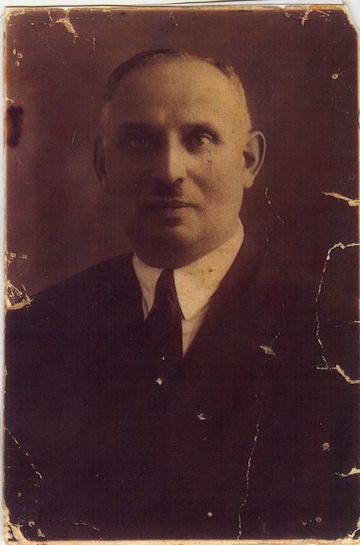
photo - The author’s maternal grandfather, Abraham Basson (at age 60)
The author’s maternal grandfather, Abraham Basson (at age 60). (photo from Libby Simon)

“I’ll arrange a brunch at my home so you can meet them,” she promised with a smile. And, true to her word, the cousins all gathered at her home the following week.

A strange mix of emotions coursed through me as the past and present began to meld. Until recently, we were totally unaware of one another’s existence. Suddenly, we had a common thread tying us together – our grandparents.

Lois told me that the grandparent siblings, including my maternal grandfather, had all come to the United States in the 1930s to escape Hitler’s rise to power, but he was the only one sent back, because of a leg deformity. Not from disease, mind you, but the result of an accident. In the course of operating his paper company business, a heavy object had fallen on his leg yet he continued to run a successful business. I was told he and several other relatives were among the six million Jews murdered in the Holocaust.

Like a seismic jolt of lightning, the brown pictures flashed across my mind. For the first time, my grandfather became more than a lifeless face on a faded old photo. Sadness and anger pulsed through me. He was my mother’s father – a living, breathing person whose life had been cut short. Not by a natural disaster like a tsunami, a flood or earthquake, but by a human-made catastrophe, the Holocaust. Nature’s cataclysmic events kill randomly but humans ravaged and murdered with deliberation and purpose. While we had been spared the agony of their deaths, history had changed the lives of those who lived, splintering family shards across the globe, many of which will never be repaired.

Yet it was heart-warming to meet Marty, the supervisor IRS lawyer in south Florida; Arnie, a retired businessman; and their wives. After a four-hour brunch came to a pleasant end, plans were discussed for “The Brunch” next winter, ensuring a future for this fractured family.

These images gradually transcended time and geography and were now transplanted into my world in the 21st century. They were channeled from a dismal and distant past to live again in the present. In fact, in April 2012, I learned the names of six of my maternal relatives who were murdered in the Holocaust. My Israeli family had listed their names at Yad Vashem in Israel. I have now added them to Winnipeg’s Holocaust memorial on the grounds of the Manitoba Legislature to further ensure they will never be forgotten.

The exciting promise of a journey of discovery still lies ahead, as traces of life continue to sprout new branches on this family tree – blemish or blossom. I knew now for whom these pictures were preserved. I preserved them for me and for future generations of Jewish history. L’dor v’dor.

Libby Simon, MSW, worked in child welfare services prior to joining the Child Guidance Clinic in Winnipeg as a school social worker and parent educator for 20 years. Also a freelance writer, her writing has appeared in Canada, the United States, and internationally, in such outlets as Canadian Living, CBC, Winnipeg Free Press, PsychCentral and Cardus, a Canadian research and educational public policy think tank. She wrote this piece with International Holocaust Remembrance Day (Jan. 27) in mind.

Format ImagePosted on January 25, 2019January 24, 2019Author Libby SimonCategories Op-EdTags family, history, Holocaust
Community milestones … new parents program and new CIJA co-chairs

Community milestones … new parents program and new CIJA co-chairs

Supporting new parents

The birth of a baby is a milestone and the Jewish Community Centre of Greater Vancouver acknowledges that this life-changing event requires validation and support for new parents. Judaism offers profound teachings about becoming a parent and raising a family.

The JCCGV’s new Shalom Baby group is a free program for parents and infants 0-18 months. The group provides a place to learn and grow, connect with other parents, share experiences and hear professional speakers address relevant subjects, such as feeding, sleeping, play, development, transition to motherhood and more. Becoming a parent can be overwhelming, and this program provides respite in a warm environment in which parents are nurtured, so they can nurture their babies, and help build strong and healthy family units in our community.

All of the meetings feature guest speakers. Speakers are community professionals, such as nurses, researchers, doulas, psychologists and speech and language specialists. And the group is always looking for accredited experts to contribute.

Shalom Baby meets twice a month on Mondays at 11:30 a.m. at the community centre in Room 102. The group is led and organized by a Shirly Berelowitz, JCCGV director of children, youth and camps, who welcomes the participants, books the speakers and sends weekly emails on upcoming programs.

The goals of the program are to strengthen emotional bonds between parents and children; inspire a shared learning experience to support growth and development during the early childhood years; provide support services and activities for families to raise healthy and happy children; and connect unaffiliated Jewish families with young children to the Jewish community through different programs.

For more information and to register, visit jccgv.com/early-childhood.

Appointments

The Centre for Israel and Jewish Affairs (CIJA) has appointed new members to its board of directors, including board co-chairs Joel Reitman and Jeffrey Rosenthal, succeeding David J. Cape.

Nominations to the CIJA board are guided by an independent nominating process, which examines the background, skills, experience and other relevant qualifications of prospective directors. A list of candidates is produced through consultations with federations and other stakeholders across the country. The independent nominations committee – comprised of federation representatives and ad personam members – consider all of the candidates and recommend a slate of directors to the CIJA membership (the “shareholders” of the organization). Special attention is given to achieving balance with respect to regional, gender and demographic attributes, as well as the qualities that candidates can leverage to advance the mission of the organization.

Reitman is the founder and president of Jillcy Capital ULC, a global investment firm, and is an active volunteer in the Jewish community and beyond, serving various organizations over the years in different capacities. Rosenthal is a managing partner of Imperial Capital Group, which he co-founded in 1989, and has a long history of volunteering and experience on boards of other organizations.

Format ImagePosted on January 25, 2019January 24, 2019Author Community members/organizationsCategories LocalTags CIJA, family, JCC, Jeffrey Rosenthal, Joel Reitman, parenting

Posts pagination

Page 1 Page 2 … Page 4 Next page
Proudly powered by WordPress