Skip to content
  • Home
  • Subscribe / donate
  • Events calendar
  • News
    • Local
    • National
    • Israel
    • World
    • עניין בחדשות
      A roundup of news in Canada and further afield, in Hebrew.
  • Opinion
    • From the JI
    • Op-Ed
  • Arts & Culture
    • Performing Arts
    • Music
    • Books
    • Visual Arts
    • TV & Film
  • Life
    • Celebrating the Holidays
    • Travel
    • The Daily Snooze
      Cartoons by Jacob Samuel
    • Mystery Photo
      Help the JI and JMABC fill in the gaps in our archives.
  • Community Links
    • Organizations, Etc.
    • Other News Sources & Blogs
    • Business Directory
  • FAQ
  • JI Chai Celebration
  • JI@88! video

Recent Posts

  • Legal help for students
  • Revisiting myth of Lilith
  • Wrong person rebuked
  • Canada’s mixed messages
  • Questions for museum
  • Symposium on antizionism
  • Making soccer political
  • CJPAC lauds Pulver’s impact
  • City recognizes Vrba’s legacy  
  • Organ donation saves lives
  • Theodore’s March premiere
  • A healing Shabbaton
  • Supplying healthy food
  • A chime of metal tags
  • Yellowknife seder a first
  • Ishai energizes, unifies
  • A Lag b’Omer to remember
  • Expanding the healing
  • Hannah Senesh – a unique hero
  • Community milestones … May 2026
  • Sharing her testimony
  • Fall fight takes leap forward
  • The balancing of rights
  • Multiple Tony n’ Tina roles
  • Stories of trauma, resilience
  • Celebrate our culture
  • A responsibility to help
  • What wellness means at JCC
  • Together in mourning
  • Downhill after Trump?
  • Birth control even easier now
  • Eco-Sisters mentorship
  • Unexpected discoveries
  • Study’s results hopeful
  • Bad behaviour affects us all
  • Thankful for the police

Archives

Follow @JewishIndie
image - The CJN - Visit Us Banner - 300x600 - 101625

Month: January 2019

A Nazi who saved Jews

A Nazi who saved Jews

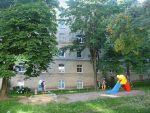
One of the apartment buildings at the HKP complex. (photo from Richard Freund)

Nearly three-quarters of a century after the Shoah ended, we are still learning about aspects of what happened. For example, the documentary The Good Nazi tells the little-known story of a Nazi from Vilna who tried to rescue more than 1,200 Jews. It airs on VisionTV Jan. 21, and again April 29.

In 2005, Dr. Michael Good sought out Prof. Richard Freund of the University of Hartford to tell him about Maj. Karl Plagge, a Nazi who oversaw a military vehicle repair complex that was used as cover for 1,257 Jews in Vilnius (Vilna). Good described how his father, mother and grandfather were saved within this complex, and later wrote about it at length in his 2006 book The Search for Major Plagge: The Nazi Who Saved Jews (Fordham University Press).

While interesting to Freund, who works within a department known for its Holocaust studies, nothing further came of that meeting. That is, until 2015.

By then, Freund had directed six archeological projects in Israel and three in Europe on behalf of the university, including research at the extermination camp at Sobibor, Poland. In 2015, he was in Lithuania doing research on a Holocaust-era escape tunnel, adjacent to the Great Synagogue of Vilna. He and his team had brought with them specialized equipment that enabled non-invasive examination of the ground and walls, and they offered it to anyone wanting to do such research. The Vilna Gaon State Jewish Museum came calling, and brought Freund to a site on the outskirts of Vilna, where he was told about Plagge.
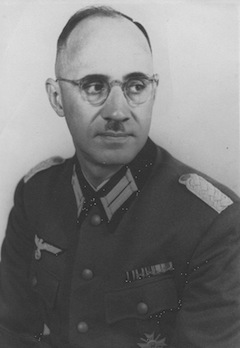
photo - Nazi Maj. Karl Plagge oversaw a military vehicle repair complex that he used to try and save 1,257 Jews in Vilnius
Nazi Maj. Karl Plagge oversaw a military vehicle repair complex that he used to try and save 1,257 Jews in Vilnius. (photo from Richard Freund)

Of that moment, Freund told the Independent, “I’m sitting there and I say, ‘Karl Plagge? I know that name!’”

Freund connected with survivor Sidney Handler, who was 10 years old when he hid from the Nazis in the work camp. After the Nazis left in July 1944, Handler was forced to move dead bodies, and could point out decades later where 400 Jews were buried.

“We could have gone through the entire 20 acres and not located exactly where that was,” said Freund.

Using scanners, thermal cameras, radar and other methods, Freund’s team discovered and recorded the various hiding places, also called malinas. Under Plagge’s plan, Jews had built malinas in building crevices, behind the walls, to keep out of sight when Nazis came to “liquidate” the complex.

The garage (repair shop) was dubbed HKP. It was on Subocz Street and is likely the only Holocaust-related labour camp left completely intact. Until recently, people had been living in the two six-floor buildings, which comprised 216 apartments.

Freund reached out to filmmaker Simcha Jacobovici, telling him how important it was to document the site, the story, and reveal it to the world. Things were made all the more pressing when Freund and Jacobovici discovered that developers were going to demolish the site. Fortunately, before this happened, Jacobovici took a film and photographic crew to HKP, in January 2018.

The Turning of Plagge

In 1941, Karl Plagge was placed in command of the HKP 562, a unit responsible for repairs of military vehicles damaged on the eastern front. Plagge experienced something of a pang of conscience – he hadn’t signed on to genocide. He made the decision to leverage his position and use Jews as “slave labour” for HKP, pleading the case to his superiors that, if Jews didn’t work there, there would be no one to fix the vehicles.

Virtually none of the 1,200 Jews was knowledgeable in fixing cars; they were accountants, lawyers, hairdressers, academics, cooks and others. They all learned various HKP tasks on the job, and Plagge somehow convinced the Nazi SS that every single one of them was necessary for HKP.

Even though the entire charade was met with a barely tolerated wink and nod by Nazi brass, Plagge had a deep (and correct) hunch that their patience would eventually wear thin.

Heinrich Himmler, the head of the SS, announced, in the summer of 1943, that he wanted every Jew in Eastern Europe eliminated, irrespective of whether they were contributing to the war effort in a work camp. So, with Plagge’s approval, his workers carved out malinas in the walls of the buildings and in attic rafters.

As the Soviet Red Army approached the outer edge of Vilnius in June 1944, it was a sign that the Allies were nearing victory. In this context, on July 1, 1944, Plagge made an impromptu announcement in front of an SS commander and the Jewish workers, who gathered to listen. He explained that his unit was being transferred westbound and, though he requested his labourers be allowed to join, his superiors wouldn’t permit it. All of this was code for the Jewish prisoners to take cover. Roughly half of the workers – some 500 of them – hid away in malinas or ran from the camp, while others decided to stay.
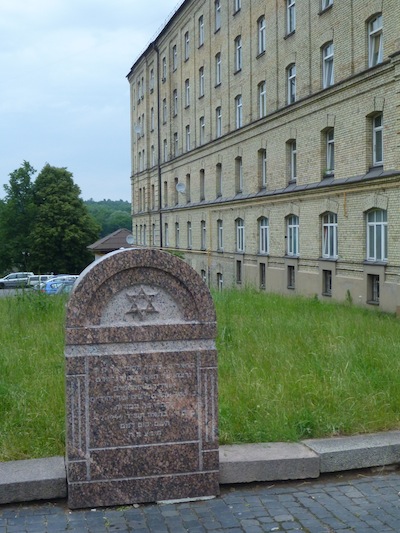
photo - A monument placed recently at the complex to honour Karl Plagge and memorialize the Jews who were killed at HKP
A monument placed recently at the complex to honour Karl Plagge and memorialize the Jews who were killed at HKP. (photo from Richard Freund)

When Nazi troops took over the camp two days later, 500 Jewish workers appeared for roll call, and were killed. It took the Nazis three more days to comb the camp and the surrounding area for any survivors, eventually finding roughly 200 Jews, all of whom were shot.

When the Soviets finally took over Vilnius later that week, approximately 250 of HKP’s Jews in hiding emerged.

When the war was over, Plagge returned home to Darmstadt, Germany, where, for the next two years he lived quietly, until he was brought to court as a former Nazi. Somehow, word traveled to a displaced persons camp in Stuttgart, a three-hour drive away, where many survivors of HKP had ended up. In Plagge’s defence, the survivors sent a representative to testify to the court in the hopes the charges would be overturned.

The testimony resulted in a favourable judgment, and Plagge received the status of an exonerated person. In 2005, after evidence and survivor testimony, Yad Vashem: The World Holocaust Remembrance Centre posthumously bestowed the title Righteous Among the Nations on Plagge.

The Good Nazi was produced in Canada for VisionTV by Toronto-based Associated Producers. Jacobovici was writer and executive producer, Moses Znaimer executive producer, Bienstock producer and co-director, Yaron Niski co-director and Felix Golubev line producer/executive producer.

Dave Gordon is a Toronto-based freelance writer whose work has appeared in more than 100 publications around the world.


Format ImagePosted on January 11, 2019January 17, 2019Author Dave GordonCategories TV & FilmTags documentary, Holocaust, Karl Plagge, Nazis, Righteous Among the Nations, VisionTV, Yad Vashem
How RGB got her start in law

How RGB got her start in law

Marty Ginsburg (Armie Hammer) and Ruth Bader Ginsburg (Felicity Jones) arrive at court in On the Basis of Sex. (photo from Focus Features)

A news flash for members of the tribe who’ve been kvelling over a Jewish woman on the U.S. Supreme Court for fully a quarter of a century: Ruth Bader Ginsburg long ago matriculated beyond a symbol of ethnic achievement.

Last year’s hit documentary, RBG, noted that Justice Ginsburg is an enormously popular role model for women in their teens and 20s, and she has achieved pop culture celebrity to boot. The latest film – released recently in Canada and, as of press time, still playing in Metro Vancouver – is On the Basis of Sex, which applies the Hollywood treatment to Ginsburg’s beginnings as a smart but struggling lawyer and situates her smack in the mainstream. To coin a Lincolnesque testimonial, now she belongs to the masses.

Director Mimi Leder and screenwriter Daniel Stiepleman (who happens to be Ruth and Marty Ginsburg’s nephew) frame On the Basis of Sex as an underdog saga. And, like a lot of underdogs in Hollywood movies, our heroine has a superpower that she only discovers – and masters – on her journey.

The movie is effective, and ultimately inspiring, in a way that doesn’t remotely challenge viewers other than to ask them to follow clever legal strategies.

The film opens with Ginsburg’s first days at Harvard Law School, where her husband Marty is in his second year. Immediately and repeatedly, she (and the viewer) is reminded of her second-class status as a woman in a man’s world.

It takes awhile to reconcile the confident Justice Ginsburg of public record with the somewhat skittish character that British actress Felicity Jones creates. On the one hand, as a wife and a mother who – like every other aspiring woman professional of the time – never wears pants, Ginsburg is plainly a grownup. But she’s patronized by everyone from the law school’s WASPy dean (a villainous Sam Waterston) to her husband (a stalwart Armie Hammer), and she risks being seen as a rabble-rouser (it’s the late 1950s) simply by standing up for herself.

Although the film does not conceal or finesse the Ginsburgs’ Jewishness, it presents casual misogyny and the entrenched old boys’ network, not antisemitism, as the obstacles Ruth needs to navigate. Consequently, she has to devise ways – both direct and elliptical – to raise the consciousness of every ally, including her devoted husband, before she can even challenge potential adversaries. While Marty certainly recognizes his wife’s brilliance, he’s a product of his upbringing and the times.

On the Basis of Sex or, as it’s referred to at your favourite corned beef dispensary, “RBG: The Early Years,” devotes considerable screen time to the couple’s relationship and, for many viewers, that will serve as the emotional heart of the film. Others will derive more pleasure from Ginsburg finding her footing and her voice as a scholarly attorney.

As Stiepleman noted in an interview during a recent visit to San Francisco, “Coming out of law school, [Ginsburg] had three strikes against her: she was a woman, she was a mother and she was a Jew. Any one of those things alone, law firms had taken the risk. It was the three together that made her unhire-able in their eyes.”

Unable to find a job practising law, she takes a teaching position. Through a combination of determination, persistence and luck, she comes across a unique case that addresses the inequities of gender discrimination. The complainant, who looked after his mother but was denied the tax deduction for caregivers, is a man.

Earlier in the film, there’s a crucial chain of events when her husband is diagnosed with cancer. Ginsburg not only took care of him (and their small daughter), but got them both through law school. That experience as a caregiver gives her both the empathy and the understanding to identify with and persuade her would-be client, as well as to research and argue the case.

The lengthy courtroom scene that comprises the film’s last 20 minutes or so is genuinely effective and even emotional, despite the formulaic staging and the fact that we know Ginsburg will prevail. At the pivotal moment, we witness a character coming into her own, grasping her abilities and realizing her destiny. And with that, the underdog becomes a superhero.

On the Basis of Sex is rated PG-13 for some language and suggestive content.

Michael Fox is a writer and film critic living in San Francisco.

Format ImagePosted on January 11, 2019January 9, 2019Author Michael FoxCategories TV & FilmTags history, law, RBG, Ruth Bader Ginsburg, women
Limiting screen time is vital

Limiting screen time is vital

Video Interaction Project coach Jenny Arevalo in action. (photo by Andy Reichsman/Ames Hill Productions)

With the ever-increasing number and variety of screens and gadgets grabbing our attention, pediatricians are asking us to take a step back. Some are even leading a counter-movement, warning parents and caregivers of the harm these technologies are inflicting on children.

Dr. Alan Mendelsohn, a general and developmental behavioural pediatrician, is an associate professor of pediatrics and population health at New York University’s School of Medicine and Bellevue Hospital Centre.

“The American Academy of Pediatrics published a statement designed to help pediatricians and parents think about toys for their children, in an era where toys have really evolved,” Mendelsohn told the Independent. “A very significant concern is that toys with bells and whistles, so to speak – with electronic gadgetry on the one hand or apps designed to engage children on the other – are likely to have very limited, if any, benefit to very young children.”

Mendelsohn has been working to use the pediatric primary care centre to support parenting activities most likely to help children’s development and school readiness. This has led to other programs, like Reach and Read and the Video Interaction Project, both of which teach parents the importance of reading and playing with their kids.

“We still have the same kinds of toys we’ve had in the past – simple, pretend kinds of toys,” said Mendelsohn. “But, at the same time, digital toys have become a high level of focus and priorities for many families. And, that’s in part as a result of the extensive messaging taking place about how electronics can be so important for children, and how apps and computers are going to help children learn.”

photo - Dr. Alan Mendelsohn
Dr. Alan Mendelsohn (photo courtesy Alan Mendelsohn)

According to Mendelsohn, there is limited or possibly even no good scientific evidence that screens can be beneficial for children under the age of 2 – with the possible exception of video chats in which the screen is functioning as an opportunity for interaction with family members that otherwise would not take place.

At the same time, he said, there is extensive data documenting that electronic add-ons, and screens more broadly, have a great deal of potential for harm.

“This is true for children of all ages, but it’s especially true for very young infants, toddlers and children who have not entered school yet … for whom that screen time … not only can lead to developmental challenges … but it can actually interfere with play and with parents being able to engage together with their children in the kind of rich, language-based interaction that advances children’s development,” said Mendelsohn.

The American Academy of Pediatrics recommends that children under 2 have no screen time, other than the aforementioned video chats. For children 2 and older, they recommend limiting screen time to one hour or less, and having that screen time be high-quality, i.e. educational, programming.

“This limited screen time should be used as an opportunity for interacting, rather than viewing it as an opportunity for babysitting, which is how it’s often used and viewed by parents,” said Mendelsohn.

“Parents using screen time as a distracter is not necessarily a bad thing…. The academy recognizes, and I think the pediatric community recognizes, just how hard it is to be a parent, especially of a young child. Parents spend the day working and come home to chores, housework and all kinds of things. Obviously, screen time can be very helpful to parents in that way. But, it’s important that parents realize the potential for harm to their children – recognize that screen time is unlikely to be beneficial for their children.”

Mendelsohn recommends that parents find opportunities to play with their kids and read books with them, as these activities are likely to improve their child’s development and help create a positive parent-child bond.

“The important thing here is that excessive screen time, regardless of age, has the potential to lead to problems and challenges for children by interfering with their capacity to pay attention once they start school, as well as by causing challenges with their capacity to regulate their own behaviour and learn in school,” said Mendelsohn.

Schools are using more and more screens and technology, and Mendelsohn doesn’t condemn the use of screens and technology in an educational, monitored setting. Rather, monitored use should extend into the home.

“Parents face a great deal of challenges as they seek to do that,” he said. “The important thing is for parents to be aware and to work, particularly as their children get older, to monitor their children’s screen time and to interact with their children when screen time is taking place, especially higher quality kinds of programming.

“Equally important is for parents look for opportunities to turn the screen off … to have those opportunities every day, whether through reading books together or playing together – always aiming to have quality time.”

Electronic games are not all created equal and those that are engaging and interactive, that foster playing with others – qualities many board games possess – are likely not harmful and might even be good.

“There are not clear answers,” said Mendelsohn. “But, what is clear is that screen time can be overwhelming in time, and that parents have difficulty limiting it. Limiting and monitoring it is the key to having screen time be one of many components of a child’s life as she or he grows into school age versus becoming the most prominent part of the child’s life.”

Mendelsohn suggested that parents ask their pediatricians for advice.

“Pediatricians are there as a resource for parents,” he said. “Parents should raise these issues with their pediatricians, and they’ll enjoy the conversations and guidance they receive.”

Rebeca Kuropatwais a Winnipeg freelance writer.

Format ImagePosted on January 11, 2019January 9, 2019Author Rebeca KuropatwaCategories NationalTags Alan Mendelsohn, healthcare, parenting, technology
Whisky’s ready to be poured

Whisky’s ready to be poured

Milk and Honey Distillery was established in 2012. (photo by Dave Gordon)

The Milk and Honey Distillery’s first three-year-old batch of whisky is about to be officially tapped, to appear in 150 locations across Israel, as well as the Netherlands, Belgium and Luxembourg. And plans are in the works to bring the product to North America. Current output is estimated at about a million bottles.

Milk and Honey’s founders sought to piggyback on what appears to be a trend of people wanting to try certain drinks from places that are not typically known for making them.

“Whisky consumption is seeing a big shift happening all over the world now,” Milk and Honey chief executive officer Eitan Attir told the Independent.

For decades, four countries have ruled the whisky industry – Ireland, Scotland, United States and Canada. But many customers are seeking uniqueness.

“It’s what we call a ‘new world’ whisky,” said Attir. “So, now you can find more and more countries, that never had a history of whisky, doing it.”

Proof of Israel’s new world whisky popularity was evident even before the first ounce of Milk and Honey’s product was officially available. In 2017, the distillery filled 391 bottles with its initial three-year-old whisky single malt. Head distiller Tomer Goren created the batch in his workshop, and it was aged in the distillery.

Bottles numbered 1 through 100 were sold on the Whisky Auctioneer website and more than 30,000 people bid on the bottles. The “number one” bottle was bought for $3,000 US and number two, about $2,500 US. The rest were sold for about $750 US each. Stock sold out in three months.

“That was a huge surprise, not only business-wise, but also the attention it got,” Attir said. Several media took notice: the New York Times, Boston Herald, CNBC and NBC, among others.

Fast forward a year to 2018, and the company’s “triple cask” – a combination of previously red wine, bourbon and Islay barreled whisky – won best in show and second place at Whisky Life Tel Aviv. Its competitors were 15-, 18- and 20-year-old beverages from many different popular brands.

How Milk and Honey got there was as much a blend of perfect ingredients as a premier blended whisky.

In 2012, the company was started by Gal Kalkshtein, Milk and Honey’s owner, and five friends, all previously in the Israeli tech and startup industry. With their million-dollar investment, the friends turned a former bakery into a distillery in 2014. (For more on the distillery, see jewishindependent.ca/israels-first-whisky-distillery.)

“We were the first ones here, so there really was no one to ask about how to build a distillery. So, they traveled all around Scotland and studied a lot,” said Gal Levin, manager of the visitor centre, who oversees business development.

Then came the parts: a tailor-made whisky pot still and a vintage still, each constructed in accordance with Scottish coppersmith tradition. The wash drum was found online, on a German website – it was sitting in a barn in Romania (Transylvania, to be exact).

“The guys traveled all the way there to see it and buy it,” said Levin. “They weren’t sure it was going to work. They bought it, brought it here, and fixed it. We still don’t know who made it and for what. It’s mysterious. It’s working, and that’s the most important thing.”

During renovations, they began tinkering with what recipes to use. In 2013, they hired two professionals. One was Scottish master distiller Dr. James Swan, who guided the company on research and development. His experience included advising distilleries and brands all over the world, from Jim Beam to Chivas. As well, he had expertise in aging and distilling in other hot climates, like Taiwan and India.

The second person hired was Goren, who was studying for his master’s distiller degree in Scotland. (He is also a judge at international whisky competitions.)

“We chose to adopt very strict regulations of the Scottish method, that allows us to connect with the Scottish tradition, and also so our whisky will be considered ‘whisky’ in many places around the world,” said Levin.

photo - Milk and Honey Distillery makes whisky, gin and a liqueur
Milk and Honey Distillery makes whisky, gin and a liqueur. (photo by Dave Gordon)

Whisky, by definition, is made with four ingredients: malted barley, yeast, water and the barrel. Milk and Honey maintains the tradition, with no added ingredients. Barrel selection included casks previously used for bourbon, a collection of new oak barrels, and former wine barrels (all kosher).

“We are aging for a minimum of three years before we call the product ‘whisky.’ That’s an important rule. Of course, in Scotland, the whisky is called ‘scotch.’ We don’t do that,” said Levin.

As an added plus, Israel’s climate allows for relatively quicker fermentation, up to two and a half times faster than that of Scotland, according to Milk and Honey. That means an Israeli three-year bottle might taste like a six-year bottle from the Highlands.

And Milk and Honey doesn’t only make whisky – they also produce gin and a liqueur.

The gin is spiced with and inspired by Israeli ingredients. The Levantine gin, for example, contains za’atar, orange slices, lemon peels, black pepper, cinnamon, chamomile and lemon verbena. The Roots liqueur has typical Holy Land flavourings: almond, savory, coriander, jasmine, tarragon, thyme and cardamom.

With all of this deliciousness, that’s something to say “l’chaim” to!

Dave Gordon is a Toronto-based freelance writer whose work has appeared in more than 100 publications around the world.

Format ImagePosted on January 11, 2019January 9, 2019Author Dave GordonCategories IsraelTags gin, whisky
Shalvi reaches the sky

Shalvi reaches the sky

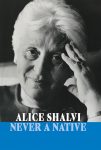
Alice Shalvi, an Israeli professor and educator, has played a leading role in progressive Jewish education for girls and advancing the status of women in Israel. Her autobiography, Never a Native (Halban Publishers, 2018), reads almost as a personal diary. Otherwise, how could this 92-year-old recall the most minute details of her life?

The youngest of two children, Shalvi was born in Essen, Germany, to Benzion and Perl Margulies, religious Zionists who owned a wholesale linen and housewares business. In 1933, soon after Hitler’s rise to power in Germany, their home was searched, prompting her father’s move to London, England. The rest of the family followed in May 1934.

In London, Shalvi’s father and brother imported watches and jewelry. When the Blitz began, they temporarily moved to Aylesbury, 50 kilometres north of London.

In 1944, Shalvi studied English literature at Cambridge University. In 1946, she was sent to the Zionist Congress in Basel as a representative of British Jewish students and, in 1949, after completing a degree in social work at the London School of Economics, she immigrated to Israel, settling in Jerusalem. She became a faculty member in the English department of the Hebrew University of Jerusalem and she earned her PhD there in 1962.

In May 1950, Shalvi met Moshe Shelkowitz (changed later to Shalvi), a recent immigrant from New York, whom she married in October of that year. They had six children between 1952 and 1967; Moshe Shalvi died in 2013.

The 25th issue of Nashim: A Journal of Jewish Women’s Studies and Gender Issues (fall 2003) was dedicated to Alice Shalvi, “who made the dream of a journal devoted to Jewish women’s and gender studies possible.” When the concept of Nashim was first presented to her, the special issue notes that Shalvi greeted it not only with enthusiasm but as an idea whose time had finally come – she and her friends, pioneers of second-wave Jewish feminism, had raised it long before. “Subsequently, as rector of the Schechter Institute (1997-2001), [Shalvi] added her voice to the approval process for the issue’s first publication. She has remained on Nashim’s editorial board ever since, contributing her wise and warm guidance on issues of editorial and academic policy and herself serving as consulting editor for our issue on Women, War and Peace.”

In an interview by Elana Maryules Sztokman for the Lookstein Centre at Bar-Ilan University some years ago – after Shalvi had been awarded the 2007 Israel Prize for life achievement – Shalvi commented: “I felt that, through the work we had done on behalf of women, an enormous change had occurred in the status of women, in the self-image of women, in the self-assurance of women and, most importantly – because that’s what the prize recognized – in the awareness of the importance and centrality of the subject of the status of women in society at large.”

Shalvi spoke about the Pelech School for Girls and the Israel Women’s Network. “The school has created a generation of young modern Orthodox women who are changing that entire social system within modern orthodoxy,” she said. “The other thing I’m proud of is the years at the network, which saw the largest number of legislative changes and reforms in women’s status because what I call the ‘alumnae’ of the network were so prominent in the Knesset.”

In her autobiography, Shalvi emphasizes “that it’s all about the home,” and acknowledges the impact her parents had on her. “What I saw at home,” she writes, “was an open attitude, observance but openness. My mother always used to set an extra place at the table on Shabbat in case my father brought home a stranger from synagogue, as was the custom in those days. And, in my family, I learned about tzedakah in the very best sense – always a readiness to help others, not only from my father, who did it on a both public and personal level, but also from my mother.

“The other thing I absorbed was Zionism. It was a strongly Zionist household, and my father was very active in the religious Zionist community. From very early on, I knew that I would come on aliyah one day. I didn’t know when, but it was definitely there in the future.”

When asked to convey one message to the next generation, Shalvi said, “Reach for the sky and don’t give up. Don’t ever give up. Even if you know you’ll never attain what you’re reaching for, persist. Keep at it. I like to quote Robert Browning’s ‘Andrea del Sarto’: ‘Aye, but a man’s reach must exceed his grasp / Or what’s a heaven for.’ Keep on striving because, even if you don’t attain that goal yourself, the chances are that, for the next generation, it will be easier.”

Sybil Kaplan is a journalist, lecturer, book reviewer and food writer in Jerusalem. She created and leads the weekly English-language Shuk Walks in Machane Yehuda, she has compiled and edited nine kosher cookbooks, and is the author of Witness to History: Ten Years as a Woman Journalist in Israel.

Format ImagePosted on January 11, 2019January 9, 2019Author Sybil KaplanCategories BooksTags Alice Shalvi, history, Israel, women
Some things better in person

Some things better in person

Union for Reform Judaism will be closing down their summer camp for teen leadership development: Kutz Camp, in Warwick, N.Y. (photo from onehappycampernj.org)

It’s that time of year again – when it’s too cold in Winnipeg sometimes to go to synagogue. For many folks, this never happens! For others, they never intended to go in the first place. Others would like to attend, but aren’t well enough to leave home when it’s frigid.

Once, my twins, age 2, wanted to go to a Shabbat family service when the temperature was ridiculously cold. With wind chill, it was below -40. We bundled them up, got outside (we don’t have a garage), seat belted them in and, though the cars were plugged in, car #1 wouldn’t start.

Our hands were stiff with cold as we took off our mitts, got the twins out of their car seats and into the other car, and then? Car #2 wouldn’t start either. Dang.

We grabbed the kids, rushed back indoors, and they screamed. No services. What would we do? We streamed a service from my parents’ Virginia congregation online. The screaming stopped. The kids were transfixed.

Sometimes, streaming services at home is the only answer. However, it’s not the same as being there. No one knows whether you stand up and sit down. And if you sing along? You’re all alone doing it. If the streaming has a hiccup, well, I’ve been known to give up. (I’d only “give up” in person if my kids disrupted things.)

So, it’s fair to say that technology offers amazing benefits, but it’s not being there in the flesh. There are rabbinic discussions on why streaming doesn’t fulfil certain mitzvot and, of course, it certainly doesn’t abide by the traditional things you can “do” on Shabbat.

Why bring this up? I recently learned that the Union for Reform Judaism will be closing down their summer camp for teen leadership development: Kutz Camp, in Warwick, N.Y. In the press release announcing its reluctant close, the Reform movement noted that, in its 54 years, the camp has been a living laboratory. Some of the best and most innovative Reform Jewish experiences happen there. However, today’s teens seek experiences closer to home, and at different times during the year.

As a camper for two years and a staff member for one, Kutz offered me the opportunity both to learn a marketable skill and to wrestle deeply with Jewish music, texts and tradition. The marketable skill, song leading, allowed me to earn money teaching music at summer camps, at religious schools and in adult education classes for years. It helped cover expenses during my undergraduate and graduate degrees. It offered me a great deal of joy and spiritual meaning. I helped create kid communities who sang their way right through services together.

I also joined a program called Torah Corps, which allowed me to study and learn Torah and commentary every camp day with other similarly motivated teenagers. It was a meaningful endeavour, and it gave me an opportunity to feel less alone about my passion for both Jewish text and prayer.

The people who attended Kutz Camp over the years went on to be real leaders, not just in their congregations, but also in the larger Jewish community and beyond. Every so often, I hear a name pop up and I remember someone from summer camp. These are people who make change in the world far beyond a single summer experience. For instance, Debbie Friedman (z”l), the famous song leader and Jewish musician, got her start at Kutz Camp.

Dr. Andy Rehfeld, the newly appointed president for the Reform movement’s seminary and graduate school, HUC-JIR, was an admired mentor and song leader of mine at Kutz Camp. For years, I toted around cassette tapes that recorded the entire NFTY Chordster, an encyclopedic “real book” for Reform Jewish song leaders. I used a Walkman, boom box and car stereo. I learned every single melody that Andy sang into that recording.

When I Googled Andy’s name, three or four other names from camp popped up – all are now rabbis, cantors, educators or other leaders. Kutz Camp was an incubator. It attracted teenagers from all over the United States, Canada, England, Israel and elsewhere. Through Kutz Camp, I had contacts all over the continent (and beyond) for quite awhile. When I went far away from home to attend Cornell University in upstate New York, I wasn’t alone! I went with several dear friends from camp.

I’m sad that Kutz Camp will close. It’s sited in a beautiful place, though the buildings were falling down even when I was there, around 30 years ago. However, just as online streaming has changed our options when it comes to attending services or Jewish learning online, it has also taken away the need for some families to send their kids away to camp.

But those face-to-face leadership incubators – Jewish summer camps – are priceless. I met people from all over the world at Kutz, just as I knew teenagers who did the same at USY, Habonim Dror and other camps.

We give up some things when we stay home. Maybe it’s the casual exchanges at shul that we miss. Or that we can’t hear everyone singing harmonies around us in the Kutz Camp congregation. Or perhaps it’s missing a lifelong friendship or even a spouse you might have met at camp. Sometimes, it’s just better to be there in person. (Assuming your car will start!)

Joanne Seiff has written for CBC Manitoba and various Jewish publications. She is the author of three books, including From the Outside In: Jewish Post Columns 2015-2016, a collection of essays available for digital download or as a paperback from Amazon. See more about her at joanneseiff.blogspot.com.

Format ImagePosted on January 11, 2019January 9, 2019Author Joanne SeiffCategories WorldTags camp, Judaism, leadership, technology
Wilderness helps youth heal

Wilderness helps youth heal

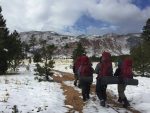
BaMidbar students hike in all weather conditions, learning to live and care for themselves in outdoor environments. (photo from BaMidbar)

When she was 15 years old, now-camp director Jory Hanselman had some family members who were struggling with mental illness and addiction. At the same time, a couple of close friends passed away in pretty quick succession. Hanselman was struggling to cope, until her parents sent her to a wilderness therapy program.

“It was an extremely transformative experience for me,” Hanselman told the Independent. “I was there over Passover and so, while the program I was at was not in the least bit Jewish, my identity as a Jew was really central to what I experienced and got from it.

“I really connected it to the narrative, and thinking about finding my freedom from narrow places and overcoming obstacles I’ve faced in life. So, I looked into how I could become more involved in wilderness programs.”

In college, Hanselman spent summers at Ramah in the Rockies and saw firsthand the beautiful integration of Jewish learning via meaningful, outdoor-based experiences. And, when Ramah in the Rockies started exploring the idea of opening a Jewish wilderness therapy program, their director reached out to Hanselman, knowing that she had been working in the field. Hanselman was asked to provide input on how to build a therapy program.

“They decided they would move forward and officially create BaMidbar and so I came on board at that time, in September 2016, to help move the program from a space of ideas to implementation and actuality,” she said.

One great thing about its location – literally, in the wilderness – is that it’s only an hour-and-a-half drive from Denver, Colo. However, said Hanselman, “To give you a perspective, we are an hour drive from cell service in any direction.”

The therapy retreat is for Jews from 18 to 28 years old who are struggling with mild to moderate social and behavioural challenges, including depression, general anxiety, social anxiety and more. The young adults in the program have reached the tipping point where the issues are getting in the way of their being able to fully engage with the people and things around them in life.

“We also see lots of folks who have co-occurring substance abuse disorders, who are also using substances in addition to working through challenges associated with other mental health challenges,” said Hanselman.

photo - Staff member Cliff Stockton teaches primitive fire building skills to students at BaMidbar
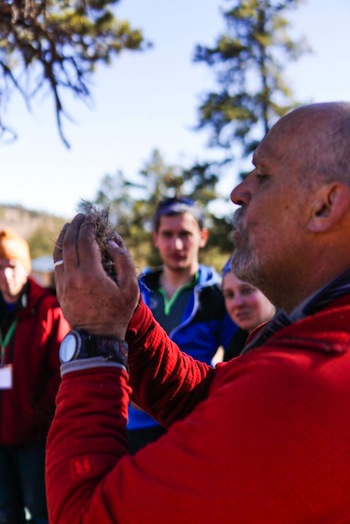
Staff member Cliff Stockton teaches primitive fire building skills to students at BaMidbar. (photo from BaMidbar)

“The idea of wilderness therapy (WT) is using wilderness- and adventure-based experiences as the vehicle for therapy, to grow. So, we joke a lot in the WT industry that it’s not about doing therapy in the wilderness, it’s about doing wilderness-based therapy. It’s not just going out and meeting with a clinician in a wilderness-based setting; it’s really using that experiential environment as a vehicle for working through different therapeutic concepts.”

The BaMidbar program involves the whole family. While students work with an individual therapist, their family is having weekly phone meetings with the therapist who, in turn, also works with the field staff to implement a treatment plan.

“So, our students are learning how to, for example, build a fire with friction, and they use this opportunity to build primitive skills to challenge themselves,” said Hanselman. “They learn what tools they need to work through and understand what they’re capable of.

“Wilderness-based experiences are used as metaphors and storytelling to support our students in connecting what is happening in the wilderness environment to life outside the program.”

The small-group environment at the camp is used as a way to help campers learn and rebuild communication skills and other tools.

“We provide feedback and strong support for them, as they determine how to have healthy emotional responses to different stressful situations, or anger management strategies, and things like that,” said Hanselman.

While there are many WT camps, BaMidbar is possibly the only one that uses a Jewish lens and framework in everything they do, including using the Jewish calendar as an opportunity to look at topics that are thematically relevant to campers.

“To give an example, for Passover last year, every day we had a theme we focused on that tied to the Passover narrative, as well as our student therapeutic journey,” said Hanselman. “Day One, we focused on our narrow place. Day Two, we talked about the story of Nachshon Ben Aminadav … jumping into the unknown and what it might look like to take a leap of faith and know that you need to change your situation, even if you don’t know what the future holds. Day Three, we looked at manna in the desert and talked about what sustains you physically, metaphorically, spiritually. Day Four, we talked about receiving the Torah on Mount Sinai and did a summit hike, talking about our personal value systems, what we live by, things like that.”

With BaMidbar being a kosher camp, Shabbat is a break from the routine, which, in this case, is wilderness. On Shabbat, they spend time in a cabin, while still studying texts through the lens of how they are relevant to one’s life. This is the perfect time, said Hanselman, to talk about family. For instance, “because, throughout Genesis, that revolves around challenging family dynamics…. I always joke that Abraham was the first wilderness therapy participant. He leaves everything he’s familiar with and goes off into the wilderness on this journey of self-discovery. So, we do a lot of programming around Shabbat.”

photo - BaMidbar’s program is rooted in Jewish ritual. Here the BaMidbar community celebrates Havdalah
BaMidbar’s program is rooted in Jewish ritual. Here the BaMidbar community celebrates Havdalah. (photo from BaMidbar)

BaMidbar (which means “in the desert” in Hebrew) is non-denominational and the organizers are dedicated to meeting every student where they are in their unique journey, recognizing and honouring that it can be very different for each individual.

“We are very dedicated to making sure that students understand that our goal is to explore meaning, values and purpose through a Jewish lens – not to tell them how to live Jewishly or what that ideal Jewish life might look like,” said Hanselman. “That’s not our goal. Our goal is to look at the wisdom Jewish tradition provides and to support students for whole health wellness.”

Participants can expect 10 to 12 weeks in the wilderness (Shabbat in a two-room cabin). Groups are small, with a current maximum of eight individuals, and the program runs year-round.

In winter, said Hanselman, “We fully outfit our students, so they receive all their gear from us. We make sure they have what they need to be safe and warm in a wilderness environment. We have a lot of staff practices around safety and support in that winter environment, and then we have tents that have wood stoves in them when it gets below a certain temperature.”

The camp fee is around $3,500 US per week. A nonprofit, the BaMidbar program offers scholarships and works with every family, regardless of their financial situation. Currently, about 75% of students receive scholarships provided mainly by private donors and foundations.

While BaMidbar has received many inquiries from Canadian families, they have not had any Canadian participants. “But, we can work with them – from Canada, or Israel, or other countries,” said Hanselman. “We just haven’t yet.”

For more information, visit bamidbartherapy.org.

Rebeca Kuropatwa is a Winnipeg freelance writer.

Format ImagePosted on January 11, 2019January 9, 2019Author Rebeca KuropatwaCategories WorldTags addiction, camp, healthcare, Judaism, wilderness therapy
קרן קיימת קנדה הפסיקה לתמוך בפרוייקטים צבאיים בישראל לאור חקירה של רשות המס הקנדי

קרן קיימת קנדה הפסיקה לתמוך בפרוייקטים צבאיים בישראל לאור חקירה של רשות המס הקנדי

(jnf.ca)

קרן הקיימת בקנדה הפסיקה להעביר תרומות לפרוייקטים צבאיים בישראל לאור חקירה מתמשכת של רשות המיסוי הקנדית (סי.אר.איי). זאת עלי פי תחקיר של רשת השידור הטלוויזיה של קנדה (הסי.בי.סי).

רשות המיסוי הקנדית בודקת מזה מספר שנים את פעילותה של קרן קיימת קנדה, לאור מידע שהתקבל לידיה כי הארגון עבר על כללי המס הקנדי למתן תרומות מצד קרנות צדקה. קרן קיימת קנדה כך התברר תרמה כספים לפרוייקטים הקשורים לצה”ל בניגוד לכללי המס בקנדה. במקרה כזה קרן קיימת קנדה לא זכאית לפטור במס, וכן גם התורמים שלה עצמם לא זכאים לפטורים במס.

יש לציין כי קרן קייימת קנדה לא העבירה תרומות לרכישת ציוד צבאי לצה”ל, אלה תמכה בעיקר פרוייקטים ותשתיות צבאיות, לשיפור הביטחון וחיי הקהילה של החיילים במדים ובני משפחותיהם, אך לפי חוקי המיסוי בקנדה גם זה אסור. מנכ”ל קרן קיימת קנדה לאנס דיוויס לא ענה על בקשתי באמצעות אימייל, לקבל את תגובתו בנושא המדובר.

דיוויס כן הודיע לכתב חדשות של רשת השידור הקנדית כי קרן קיימת קנדה הודיעה לתורמיה, כי היא הפסיקה לתמוך בפרוייקטים צבאיים בישראל כבר לפני כשנתיים. זאת, לאחר שהתברר לארגון כי הוא נמצא תחת ביקורת של רשות המיסוי הקנדית.

לפי מסמכים ופרסומים רבים של קרן קיימת קנדה, הארגון תמך לאורך השנים בפרוייקטים רבים הקשורים בצה”ל וחייליו. ובהם: פיתוח של בסיס הדרכה בנגב. פיתוח של כיתות לימוד, אולם אירועים וחדר הקרנות בסיס של חיל הים בבת גלים. שיפוץ והרחבת אולם אירועים ומועדון לחיילים בבסיסי חיל האוויר בפלמחים ונבטים. הקמת מגרש משחקים עבור ילדים (שמתגוררים עם בני משפחותיהם) בבסיס חצרים של חיל האוויר. שידרוג מרכז מבקרים, שיפוץ הכיכר המרכזית והמרכז ארצי לאימונים בבסיס צאלים. הקמת מתקני נוחות לחיילים בשדה תל נוף של חיל האוויר. עזרה בהקמת כביש ביטחוני בקדש ברנע (ליד הגבול המצרי) לשיפור הנגישות לכוחות הביטחון של ישראל. עבודות לשיפור כבישים ביטחוניים של כוחות הביטחון באזורי הגבול בנגב המערבי. בניית נקודות מפגש ירוקות בבסיסים צבאיים לאפשר לחיילים לראות את בני משפחתם בנוחות. וכן עזרה ותמיכה בצעירים בבתי הספר התיכוניים במסגרת הכשרתם הקדם צבאית (פרוייקט גדנ”ע).

עוד מתברר שקרן קיימת קנדה תמכה אף בפרוייקטים ששנמצאים מעבר לקו הירוק. ממשלת קנדה מתנגדת לבנייה ישראלית של התנחלויות כשטחים הכבושים לדבריה, שהן הפרה של אמנת ג’נבה הרביעית. עוד קובעת ממשלת קנדה כי: “ההתנחלויות הישראליות בשטחים הן המכשלון חמור להשגת שלום כולל, צודק ובר קיימא”. בית המשפט בקנדה קבע כי ארגוני צדקה קנדיים לא יכולים לפעול בניגוד למדיניות הציבור.

בין פרוייקטים בשטחים שמעבר לקו הירוק שקרן קיימת קנדה תמכה בהם: פיתוח החפירות הארכיאולוגיות של האולם המרכזי במנהרות הכותל בירושלים, העברה של תרומות לפני כארבע שנים לרכישת כלים להכנת הקרקע לבניית מאחז בגבעת עוז, שהוגדר אפילו על ידי ממשלת ישראל כבלתי חוקי. ופיתוח הפרוייקט הגדול ביותר של הארגון הקנדי בישראל – פארק קנדה ליד לטרון. רופא קנדי (בפנסיה) שנולד באחד הכפרים הפלסטינים עליו נבנה פארק קנדה, התלוננן פני רשות המיסים הקנדית על תרומות של קרן קיימת קנדה לפרוייקט.

יצויין כי במאי לפני כשנתיים ביקרה בישראל משלחת של קרן קיימת קנדה, ברשות דיוויס. חברי המשלחת ביקרו בין היתר בבסיס צה”ל בצהלים ובבסיס משמר הגבול במכמש, שאליהם הועברו תרומות מהארגון.

Format ImagePosted on January 9, 2019January 9, 2019Author Roni RachmaniCategories עניין בחדשותTags charities, CRA, IDF, Jewish National Fund, JNF, law, military, tax, מס, סי.אר.איי, צה"ל, קרן הקיימת בקנדה

Posts pagination

Previous page Page 1 … Page 3 Page 4
Proudly powered by WordPress