


BaMidbar students hike in all weather conditions, learning to live and care for themselves in outdoor environments. (photo from BaMidbar)
When she was 15 years old, now-camp director Jory Hanselman had some family members who were struggling with mental illness and addiction. At the same time, a couple of close friends passed away in pretty quick succession. Hanselman was struggling to cope, until her parents sent her to a wilderness therapy program.
“It was an extremely transformative experience for me,” Hanselman told the Independent. “I was there over Passover and so, while the program I was at was not in the least bit Jewish, my identity as a Jew was really central to what I experienced and got from it.
“I really connected it to the narrative, and thinking about finding my freedom from narrow places and overcoming obstacles I’ve faced in life. So, I looked into how I could become more involved in wilderness programs.”
In college, Hanselman spent summers at Ramah in the Rockies and saw firsthand the beautiful integration of Jewish learning via meaningful, outdoor-based experiences. And, when Ramah in the Rockies started exploring the idea of opening a Jewish wilderness therapy program, their director reached out to Hanselman, knowing that she had been working in the field. Hanselman was asked to provide input on how to build a therapy program.
“They decided they would move forward and officially create BaMidbar and so I came on board at that time, in September 2016, to help move the program from a space of ideas to implementation and actuality,” she said.
One great thing about its location – literally, in the wilderness – is that it’s only an hour-and-a-half drive from Denver, Colo. However, said Hanselman, “To give you a perspective, we are an hour drive from cell service in any direction.”
The therapy retreat is for Jews from 18 to 28 years old who are struggling with mild to moderate social and behavioural challenges, including depression, general anxiety, social anxiety and more. The young adults in the program have reached the tipping point where the issues are getting in the way of their being able to fully engage with the people and things around them in life.
“We also see lots of folks who have co-occurring substance abuse disorders, who are also using substances in addition to working through challenges associated with other mental health challenges,” said Hanselman.
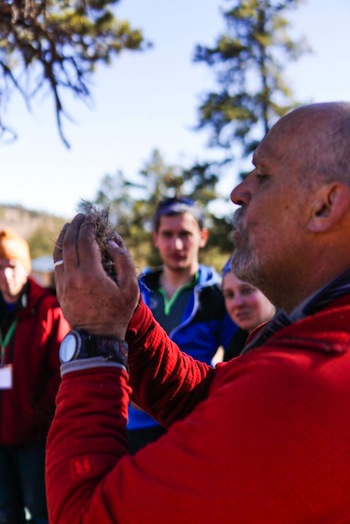
“The idea of wilderness therapy (WT) is using wilderness- and adventure-based experiences as the vehicle for therapy, to grow. So, we joke a lot in the WT industry that it’s not about doing therapy in the wilderness, it’s about doing wilderness-based therapy. It’s not just going out and meeting with a clinician in a wilderness-based setting; it’s really using that experiential environment as a vehicle for working through different therapeutic concepts.”
The BaMidbar program involves the whole family. While students work with an individual therapist, their family is having weekly phone meetings with the therapist who, in turn, also works with the field staff to implement a treatment plan.
“So, our students are learning how to, for example, build a fire with friction, and they use this opportunity to build primitive skills to challenge themselves,” said Hanselman. “They learn what tools they need to work through and understand what they’re capable of.
“Wilderness-based experiences are used as metaphors and storytelling to support our students in connecting what is happening in the wilderness environment to life outside the program.”
The small-group environment at the camp is used as a way to help campers learn and rebuild communication skills and other tools.
“We provide feedback and strong support for them, as they determine how to have healthy emotional responses to different stressful situations, or anger management strategies, and things like that,” said Hanselman.
While there are many WT camps, BaMidbar is possibly the only one that uses a Jewish lens and framework in everything they do, including using the Jewish calendar as an opportunity to look at topics that are thematically relevant to campers.
“To give an example, for Passover last year, every day we had a theme we focused on that tied to the Passover narrative, as well as our student therapeutic journey,” said Hanselman. “Day One, we focused on our narrow place. Day Two, we talked about the story of Nachshon Ben Aminadav … jumping into the unknown and what it might look like to take a leap of faith and know that you need to change your situation, even if you don’t know what the future holds. Day Three, we looked at manna in the desert and talked about what sustains you physically, metaphorically, spiritually. Day Four, we talked about receiving the Torah on Mount Sinai and did a summit hike, talking about our personal value systems, what we live by, things like that.”
With BaMidbar being a kosher camp, Shabbat is a break from the routine, which, in this case, is wilderness. On Shabbat, they spend time in a cabin, while still studying texts through the lens of how they are relevant to one’s life. This is the perfect time, said Hanselman, to talk about family. For instance, “because, throughout Genesis, that revolves around challenging family dynamics…. I always joke that Abraham was the first wilderness therapy participant. He leaves everything he’s familiar with and goes off into the wilderness on this journey of self-discovery. So, we do a lot of programming around Shabbat.”
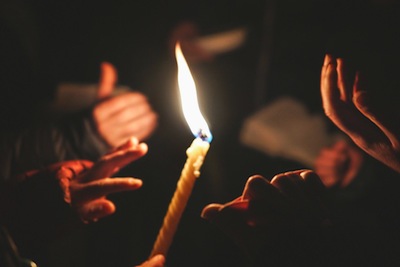
BaMidbar (which means “in the desert” in Hebrew) is non-denominational and the organizers are dedicated to meeting every student where they are in their unique journey, recognizing and honouring that it can be very different for each individual.
“We are very dedicated to making sure that students understand that our goal is to explore meaning, values and purpose through a Jewish lens – not to tell them how to live Jewishly or what that ideal Jewish life might look like,” said Hanselman. “That’s not our goal. Our goal is to look at the wisdom Jewish tradition provides and to support students for whole health wellness.”
Participants can expect 10 to 12 weeks in the wilderness (Shabbat in a two-room cabin). Groups are small, with a current maximum of eight individuals, and the program runs year-round.
In winter, said Hanselman, “We fully outfit our students, so they receive all their gear from us. We make sure they have what they need to be safe and warm in a wilderness environment. We have a lot of staff practices around safety and support in that winter environment, and then we have tents that have wood stoves in them when it gets below a certain temperature.”
The camp fee is around $3,500 US per week. A nonprofit, the BaMidbar program offers scholarships and works with every family, regardless of their financial situation. Currently, about 75% of students receive scholarships provided mainly by private donors and foundations.
While BaMidbar has received many inquiries from Canadian families, they have not had any Canadian participants. “But, we can work with them – from Canada, or Israel, or other countries,” said Hanselman. “We just haven’t yet.”
For more information, visit bamidbartherapy.org.
Rebeca Kuropatwa is a Winnipeg freelance writer.



