Skip to content
  • Home
  • Subscribe / donate
  • Events calendar
  • News
    • Local
    • National
    • Israel
    • World
    • עניין בחדשות
      A roundup of news in Canada and further afield, in Hebrew.
  • Opinion
    • From the JI
    • Op-Ed
  • Arts & Culture
    • Performing Arts
    • Music
    • Books
    • Visual Arts
    • TV & Film
  • Life
    • Celebrating the Holidays
    • Travel
    • The Daily Snooze
      Cartoons by Jacob Samuel
    • Mystery Photo
      Help the JI and JMABC fill in the gaps in our archives.
  • Community Links
    • Organizations, Etc.
    • Other News Sources & Blogs
    • Business Directory
  • FAQ
  • JI Chai Celebration
  • JI@88! video

Recent Posts

  • Legal help for students
  • Revisiting myth of Lilith
  • Wrong person rebuked
  • Canada’s mixed messages
  • Questions for museum
  • Symposium on antizionism
  • Making soccer political
  • CJPAC lauds Pulver’s impact
  • City recognizes Vrba’s legacy  
  • Organ donation saves lives
  • Theodore’s March premiere
  • A healing Shabbaton
  • Supplying healthy food
  • A chime of metal tags
  • Yellowknife seder a first
  • Ishai energizes, unifies
  • A Lag b’Omer to remember
  • Expanding the healing
  • Hannah Senesh – a unique hero
  • Community milestones … May 2026
  • Sharing her testimony
  • Fall fight takes leap forward
  • The balancing of rights
  • Multiple Tony n’ Tina roles
  • Stories of trauma, resilience
  • Celebrate our culture
  • A responsibility to help
  • What wellness means at JCC
  • Together in mourning
  • Downhill after Trump?
  • Birth control even easier now
  • Eco-Sisters mentorship
  • Unexpected discoveries
  • Study’s results hopeful
  • Bad behaviour affects us all
  • Thankful for the police

Archives

Follow @JewishIndie
image - The CJN - Visit Us Banner - 300x600 - 101625

Month: January 2019

Dealing with the water crisis

Dealing with the water crisis

An experimental date palm orchard in the southern Arava Valley, where water consumption and response to salinity is monitored. Based on data measured in these lysimeters, local farmers are advised on recommended quantities of irrigation water daily. (photo from Zehava Yehuda)

“Growing up in Israel, I have been aware of the water problem [since] quite early in my childhood,” said Dr. Zehava Yehuda. “When I graduated, however, the country was still relying mostly on rain. We could still expect rain-blessed years, and the Sea of Galilee to overflow occasionally.”

Over the last two decades, however, only once has there been a year with enough rain to allow for the opening of the Degania Dam, which regulates water levels in the Sea of Galilee (the Kinneret) and the lower Jordan River.

Yehuda spoke on Nov. 27 at a Winnipeg Friends of Israel event at the city’s Temple Shalom. She recently moved to Winnipeg with her family and is currently working at the local Jewish National Fund office as program and communications coordinator, while searching for a research position.

“I graduated from the Hebrew University, faculty of agriculture, department of soil and water, worked on iron uptake in plants, and did post-doctoral studies on phytoremediation of soils contaminated with heavy metals,” said Yehuda. “Phytoremediation is the use of hyper-accumulator plants that tolerate and are able to absorb high concentrations of specific metals.

“I worked as a lab manager and associate researcher at the HU, and as a soil and water researcher at the Centre for Agricultural Water Use Efficiency Research, Southern Arava Research and Development Experimental Station, Yotveta.”

According to Yehuda, soil and water are fundamental resources affecting all forms of life, food security and ecosystem sustainability.

Israeli water authorities have been streamlined to funnel through one office to simplify management and five large-scale desalination plants have been built, she said. Desalinated water now accounts for about 85% of domestic urban water. However, the plants were built late in the crisis.

“Israel is facing a five-year drought that is depleting the country’s most important bodies of water and deteriorating their quality,” said Yehuda. “Israel had not foreseen a sequence of arid years like this.

“The cumulative deficit in Israel’s renewable water resources before the current rain season amounts to approximately two billion cubic metres – an amount equal to the annual consumption of the entire state.

“There are many reasons for the current water situation,” she said. “First, Israel is situated in an arid region, where 60% of the county is desert. Meanwhile, population growth and standard of living have grown significantly.

“This not only has dramatically increased water consumption, but it has also aggravated the load on the coastal aquifer, one of the three major water resources in the country. Israel has also committed by peace treaties to transfer about 85 MCM [million cubic metres] to Jordan and the Palestinians … and, in fact, it transfers much more.

“Most of the water consumption in the world is used for irrigation. Israel has been recycling water for agriculture for decades. About 90% of fresh water is reused.
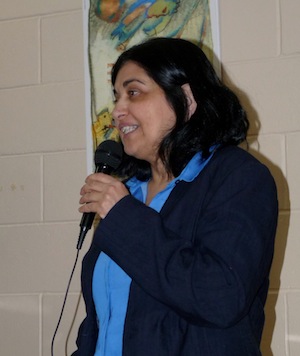
photo - Water scientist Dr. Zehava Yehuda speaks at a Winnipeg Friends of Israel event Nov. 27
Water scientist Dr. Zehava Yehuda speaks at a Winnipeg Friends of Israel event Nov. 27. (photo from Zehava Yehuda)

“Since the invention of drip irrigation in Israel, efforts have been directed to improving drippers, irrigation regimes and understanding plants’ actual water consumption to efficiently use water in agriculture.”

Further to this, Israel focused on innovative technologies to turn an older, expensive desalination solution into a more practical one, by improving the membranes that remove the salt and reducing the energy needed to run the plants.

“As of today, about 40% of drinking water in Israel is supplied as desalinated seawater, and this percentage is expected to grow even more,” said Yehuda.

Because the membranes also strip the water of other essential nutrients, she said Israel’s water authorities have been supplementing the desalinated water with, for example, “magnesium, a mineral critical for proper heart functioning, among other functions,” but it is expensive to do so and “[a]dding it to all desalinated water would significantly raise its cost.”

Another concern with desalination is that the brine (removed salt) is being returned to the sea, and the ecological implications for the sea are not fully known.

“With all this desalinated water available, both the population and the Israeli authorities wrongly assumed that Israel had solved her water problems, and that saving water was no longer a necessity,” said Yehuda. “The authorities have since changed their position back to the need to save water.”

Plans have recently been approved to build more desalination plants to better meet the growing need for water during the dry months and to redirect unused desalinated water during the winter months to the Sea of Galilee; in a sense, using the lake as a reservoir.

“The current crisis has led to the realization that a comprehensive master plan for policy and for institutional and operational changes is required to stabilize the situation, and to improve Israel’s water balance with a long-term perspective,” said Yehuda.

“Despite the fact that water pumping from the Kinneret was massively reduced, I do not expect water levels to return to what they were 15 years ago when Lake Kinneret – Israel’s biggest fresh water source – and underground aquifers were full. Hopefully, resources will not continue to deteriorate.”

Yehuda provided a rundown of the different water-related experiments with which she has been involved, including an experimental date palm orchard in the southern Arava Valley, where water consumption and response to salinity is monitored. Based on the data collected, local farmers are advised on recommended quantities of irrigation water daily.

Event attendee Carina Blumgrund said, “We all know that Israel is at the forefront of developing smart resources to irrigate, and that they had done drip systems and are always trying to research how to be proactive, like taking advantage of the heat to have off-season production and export to Europe … but we don’t really know about the details…. It was really interesting hearing about current issues. I had no idea about water levels…. And I didn’t know about the treaties, about sharing with neighbours.”

Rebeca Kuropatwa is a Winnipeg freelance writer.

Format ImagePosted on January 18, 2019January 16, 2019Author Rebeca KuropatwaCategories IsraelTags desalination, environment, water
Camp for those with aphasia

Camp for those with aphasia

Sea to Sky Aphasia Camp provides a three-day retreat to 30 campers and their family members at Zajac Ranch in Mission, B.C. (photo from Sea to Sky)

Aphasia is a communication impairment most often caused by stroke, but it can also be due to any brain injury. It impacts a person’s ability to speak, understand spoken language, and the ability to read and to write.

“It’s important to understand that, while communication is impaired, a person’s cognitive function is not,” said Eavan Sinden, a speech-language pathologist at the University of British Columbia, about the condition. “This is something Sea to Sky [Aphasia] Camp focuses on – that we can create a communicably accessible and supportive environment, while acknowledging the inherent competence.

“But, there are some prominent researchers in the world of aphasia now who are looking at expanding on [the] definition … so that it would include the impact of aphasia on a person’s life – the impact it has on a person’s identity, on a person’s ability to participate in social events, their ability to work, their ability to be in the role that we assume … mom, dad, daughter, whatever … changing the definition a little bit to include that impact.”

Out of the 100,000 people in Canada who will suffer a stroke this year, 35% of stroke survivors will live with some form of aphasia. Further to that, 62% of these survivors will experience depression after the stroke.

Sinden teaches and does research at UBC’s School of Audiology and Speech Sciences. One of her primary roles within the school is to coordinate the Sea to Sky camp every September. This fall, it will run Sept. 20-22.

The camp, which is entering its 10th year, provides a three-day retreat to 30 campers and their family members at Zajac Ranch in Mission, B.C., in a facility specifically designed for people with unique abilities and challenges.

To make the camp a reality, Sinden and UBC partner with Douglas College’s therapeutic recreation program, and March of Dimes Canada. “There’s a lot of support for this camp,” Sinden told the Independent. “In addition to being a camp for people with aphasia, those 30 campers come with family or friends, if they choose.

“We also have 36 healthcare-professional students who come for the weekend to learn a little bit more about what it’s like to live with a chronic impairment, such as aphasia. They are speech-language pathology students, audiology students, therapeutic-recreation students, nursing, pharmacy, dental hygiene and physiotherapy – a whole range of care students who opt, every year, to do this. Without them, we wouldn’t have enough support. It’s really great to have these layers of partnerships in the community. They really help create that communicably accessible environment.”

There is also a group of clinical leads, healthcare professionals in the community, who have been working with aphasia and who volunteer the weekend of the camp to work with the students.

A disturbing trend, according to Sinden, is that aphasia is affecting younger and younger people. “This is the frightening part,” she said. “We have people anywhere from 30 or 31 to their late 70s or early 80s, a real range, but the majority are in their 50s and 60s. It’s no longer something you’d think just happens to older people. The Heart and Stroke Foundation has written quite a few reports on that.”

At Sea to Sky, participants can do yoga, horseback riding, cooking, singing, dancing, campfires, basketball, swimming, arts and woodwork.

“A lot of our activities are run by people with aphasia, as well, who have come to the camp for many years and are now leaders in that way,” said Sinden. “The students also take a role in working on some of those activities.”

All accommodations and meals are included in the $250 cost for the weekend.

“It’s a really terrific way for people with aphasia in the community to come together, socialize and be with people who’ve been on similar journeys,” said Sinden. “Aphasia can be very isolating, so it can be incredibly powerful to meet people with whom you have a shared experience, who you can see that idea of, ‘OK, I can do this.’ Maybe, if I’m a little earlier on in my recovery and I see someone 10 years post doing something that I didn’t think would be possible … that can open up opportunities.

“We have a great core group who come year after year,” she added. “But, I have to say, especially this year, we had quite a number of newcomers, which is exciting. We’re always trying to extend our reach and support the community of people with aphasia.”

While the number of people suffering from aphasia has increased, the camp has been able to accommodate the demand – but just barely, due to space and funding.

“We’re fortunate in that March of Dimes, UBC and Douglas College support us with grants, but every year we hope to still get the funds,” said Sinden. “It’s never a sure thing. There’s a huge need for more community support. If we could take more campers or run more camps, we would also be happy to do that and it’s something on our wish list.”

This year, Sinden is starting a campaign called Sponsor a Camper, asking donors to give $250 so someone can attend the camp. Other support is raised via the Stroke Recovery Association of British Columbia and Fraser Health.

For more information, visit srabc.ca or aphasia.ca.

Rebeca Kuropatwa is a Winnipeg freelance writer.

Format ImagePosted on January 18, 2019January 16, 2019Author Rebeca KuropatwaCategories LocalTags aphasia, British Columbia, camp, Eavan Sinden, health
Preserving the environment

Preserving the environment

According to talmudic sages, “It is forbidden to live in a town which has no garden or greenery.” (Kiddushin 4:12; 66d) (photo by A. Christen)

Many contemporary Jews look upon Tu b’Shevat as a Jewish Earth Day, a day for contemplating our ecological heritage – and the multitude of threats our planet currently faces.

An ancient midrash has become all too relevant. “In the hour when the Holy One, blessed be He, created the first person, He showed him the trees in the Garden of Eden, and said to him: ‘See My works, how fine they are. Now all that I have created, I created for your benefit. Think upon this and do not corrupt and destroy My world, for if you destroy it, there is no one to restore it after you.’” (Ecclesiastes Rabbah 7:28)

Today’s environmental threats can be compared in many ways to the biblical 10 plagues, which appear in the Torah portions read on the Shabbats immediately preceding Tu b’Shevat. When we consider the threats to our land, water and air – pesticides and other chemical pollutants, resource scarcities, threats to our climate, etc. – we can easily enumerate 10 modern “plagues.” Unfortunately, like the ancient Pharaoh, our hearts have been hardened by the greed, materialism and wastefulness that are at the root of these threats. And, in contrast to the biblical plagues, modern plagues are all occurring simultaneously, and there is no modern Goshen as a refuge, where most of these plagues do not occur.

The talmudic sages express a sense of sanctity toward the environment: “The atmosphere [air] of the land of Israel makes one wise.” (Baba Batra 158b) They assert that people’s role is to enhance the world as “partners of God in the work of creation.” (Shabbat 10a)

The rabbis indicate great concern for preserving the environment and preventing pollution: “It is forbidden to live in a town which has no garden or greenery.” (Kiddushin 4:12; 66d) Threshing floors are to be placed far enough from a town so that the town is not dirtied by chaff carried by winds. (Baba Batra 2:8) Tanneries are to be kept at least 50 cubits from a town and placed only on its eastern side, so that odours are not carried by the prevailing winds from the west. (Baba Batra 2:8,9)

“The earth is the Lord’s.” (Psalms 24:1) And we are the stewards of God’s earth, responsible to see that its produce is available for all God’s children. Property is a sacred trust given by God; it must be used to fulfil God’s purposes.

The story is told of two men who were fighting over a piece of land. Each claimed ownership and bolstered his claim with apparent proof. To resolve their differences, they agreed to put the case before the rabbi. The rabbi listened but could come to no decision because both seemed to be right. Finally, he said, “Since I cannot decide to whom this land belongs, let us ask the land.” He put his ear to the ground and, after a moment, straightened up. “Gentlemen, the land says it belongs to neither of you but that you belong to it.”

The prohibition not to waste or destroy unnecessarily anything of value (bal tashchit, “thou shalt not destroy”) is based on concern for fruit-bearing trees, as indicated in the following Torah statement:

“When in your war against a city you have to besiege it a long time in order to capture it, you must not destroy its trees, wielding the ax against them. You may eat of them, but you must not cut them down. Are trees of the field human to withdraw before you under siege? Only trees that you know to not yield food may be destroyed; you may cut them down for constructing siege works against the city that is waging war on you, until it has been destroyed.” (Deuteronomy 20:19-20)

This prohibition against destroying fruit-bearing trees in time of warfare was extended by the Jewish sages. It is forbidden to cut down even a barren tree or to waste anything if no useful purpose is accomplished. (Sefer HaChinuch 530)

The sages of the Talmud made a general prohibition against waste: “Whoever breaks vessels or tears garments, or destroys a building, or clogs up a fountain, or destroys food violates the prohibition of bal tashchit.”  (Kiddushin 32a)

Rabbi Samson Raphael Hirsch, a 19th-century philosopher and author, states that bal tashchit is the first and most general call of God. We are to “regard things as God’s property and use them with a sense of responsibility for wise human purposes. Destroy nothing! Waste nothing!” He indicates further that destruction includes using more things (or things of greater value) than are necessary to obtain one’s aim. (Horeb, Chapter 56)

It has become customary to recite psalms on Tu b’Shevat, among them Psalm 104. This psalm speaks of God’s concern and care extended to all creatures, and illustrates that God created the entire earth as a unity, in ecological balance:

“You make springs gush forth in torrents; they make their way between the hills, giving drink to all the wild beasts; the wild asses slake their thirst. The birds of the sky dwell beside them and sing among the foliage. You water the mountains from Your lofts; the earth is sated from the fruit of Your work. You make the grass grow for the cattle and herbage for man’s labour, that he may get food out of the earth, wine that cheers the hearts of men, oil that makes the face shine and bread that sustains man’s life.” (Psalm 104:10-15)

Tu b’Shevat is indeed an appropriate time to apply Judaism’s powerful ethic of reverence for God’s creation, conservation and sustainability, to help move our precious, but imperiled, planet onto a sustainable path.

Richard H. Schwartz, PhD, is professor emeritus, College of Staten Island, president emeritus of Jewish Veg and president of Society of Ethical and Religious Vegetarians. He is the author of several books, including Judaism and Vegetarianism and Who Stole My Religion? Revitalizing Judaism and Applying Jewish Values to Help Heal Our Imperiled Planet, and more than 250 articles at jewishveg.org/schwartz. He was associate producer of the documentary A Sacred Duty: Applying Jewish Values to Help Heal the World.

Format ImagePosted on January 18, 2019January 16, 2019Author Richard H. SchwartzCategories Celebrating the HolidaysTags environment, Judaism, Torah, trees, Tu b'Shevat
The beauty of creation

The beauty of creation

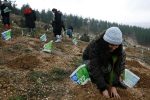
In Israel, Tu b’Shevat is a day for planting saplings. (photo from JNF via israel21c.org)

“Keep a green tree in your heart and perhaps the singing bird will come.” This lovely quotation is not from our sages, but is an old Chinese proverb. Nevertheless, it seems appropriate for Tu b’Shevat, the New Year of the Trees, which falls this year on Jan. 21.

Of course, we have our own Jewish sources. For example, “When you see handsome people or fine trees, pronounce the benediction, ‘Praised be He who created beautiful things.’” (Tosefta: Berakot 7:4) Trees have a great significance in Judaism and, long before “ecology” became a popular word, Jews were commanded, even in times of war, when besieging a city, to not destroy its trees. (Deuteronomy 20:19)

Trees were sacred to many people. Pagans believed that gods inhabited them and took their forms. They were druidic, rising out of the earth and tossing their hair. They cooled, sheltered and calmed. It is easy to understand reverence for the splendor and dignity of trees, but only Judaism has a new year for them, which falls on 15th day of the Hebrew month of Shevat (Tu b’Shevat).

In Israel, this date once marked the time from which to count the age of the tree for reasons of tithe or taxes, and also to indicate the maturation of the fruit of the tree. Even today, fruit cannot be eaten until the fourth year, so Tu b’Shevat standardizes the birthday of trees.

The holiday doesn’t commemorate any great historical event, and there are no special prayers in the synagogue. It is a lovely time, ushered in by blossoming white almond trees with their promise of warm summer weather.

Tu b’Shevat is traditionally a time for planting every variety of tree. The Talmud mentions “the joyous planting” on happy occasions. There was a delightful custom of planting a cedar when a boy was born and a cypress sapling at the birth of a girl. When a couple married, the wood of the trees would be used as poles to support the wedding canopy.

In Israel, it is a day for children and teens to go with their teachers into the hills and valleys and plant tens of thousands of saplings. There is also a custom to eat all the fruits of Israel – olives, dates, grapes, figs, citrus, apples, bananas, nuts and pears, which grow in great abundance.

Many scholars stay up late on the eve of Tu b’Shevat, reciting biblical passages dealing with the earth’s fertility. They read from Genesis how trees were created along with all the plants; from Leviticus how the Divine promised abundance as a reward for keeping the commandments; and from Ezekiel 17, the parable of the spreading vine, symbolizing the people of Israel.

Many people hold a special seder to celebrate the holiday, the New Year of the Tree of Life. They drink four cups of wine, beginning with white wine and ending with red, with the second cup a mixture more of white and the third more of red wine. It is rather like the landscape, as it changes from white (pale narcissus and crocus) to red (anemones and tulips) as Tu b’Shevat approaches.

As well as being a birthday, Tu b’Shevat is also a day of judgment for the trees, which ones will thrive and be healthy, which ones will wither and die. Chassidim pray for the etrogim, that they may grow in beauty and perfection for Sukkot.

Planting trees is very significant for Jews, the indestructible people for whom faith in the future is almost an emblem. We plant trees whose fruit we will not eat and in whose shade we will not sit. The one who fears that the world will end tomorrow or next year does not plant trees.

As well, Tu b’Shevat affirms that the soil of Israel is holy. The people and the land have a mystic affinity in Judaism, and the New Year of the Trees reminds us every year of the wonder of God’s creation.

Dvora Waysman is a Jerusalem-based author. She has written 14 books, including The Pomegranate Pendant, which was made into a movie, and her latest novella, Searching for Sarah. She can be contacted at [email protected] or through her blog dvorawaysman.com.

Format ImagePosted on January 18, 2019January 16, 2019Author Dvora WaysmanCategories Celebrating the HolidaysTags environment, Judaism, seder, trees, Tu b'Shevat
בועז מנור חזר

בועז מנור חזר

(pixabay.com)

 הישראלי-קנדי בועז מנור שנידון בעבר בקנדה לארבע שנות מאסר עושה זאת שוב. הפעם תחת השם שון מקדונלד הוא עמד מאחורי פרוייקט בלוקצ’יין טרנמינל האמריקני (באנגלית החברה נקראת: בי.סי.טי), שגייס שלושים ואחד מיליון דולר בהנפקת מטבע דיגיטלי. זאת כדי לפתח גרסת קריפטו למסופי המידע הפיננסי של חברת בלומברג האמריקנית. כך מדווח עיתון העסקים של ישראל גלובס. מנור בשמו החדש מקדונלד הצליח להערים על העובדים של הפרוייקט החדש, כמו גם על המשקיעים והלקוחות העתידיים של הסטארט-אפ. הואר ניצל את התנפחות הבועה של שוק הקריפטו בסוף שנת אלפיים ושבעה עשרה כדי לבצע את ההונאה הפיננסית הגדולה הזו.

בלוקצ’יין טרנמינל פעלה במשרדים בניו יורק והיא פיתחה גירסת קריפטו למסופי המידע של בלומברג. בנוסף החברה סיפקה אף עשרות מסופי מידע לקרנות גידור שונות. מדובר במוצר שסייע למשקיעים מוסדיים להשתלב בשוק המטבעות הדיגיטליים.

מנור ניהל את החברה כאמור תחת השם מקדונלד מבלי שאף אחד עלה על זהותו האמיתית. ברבעון הראשון של אשתקד הפרוייקט של מנור גייס כשלושים ואחד מיליון דולר ממשקיעים בהנפקת מטבע דיגיטלי, הנושא את שם החברה (בי.סי.טי). מטבע זה נועד להיות אמצעי התשלום עבור השימוש בטרמינלים של החברה. למרות גיוס ההון המרשים נשיא חברת בי.סי.טי בוב בונומו התפטר במפתיע בקיץ. לאחר מכן מקדונלד חשף את זהותו האמיתית והחברה הפסיקה לשלם משכורות לעובדיה. מנור נעלם ואולי ברח שוב לישראל. לטענת העובדים הוא יצר חלון ראווה מטעה וכל הפרוייקט הוא בעצם תרמית אחת גדולה.

מנור עבר מישראל להתגורר בקנדה (ביחד עם אביו דניאל מנור) לפני כעשרים שנה. הוא סיים את לימודי תואר ראשון במדעים באוניברסיטת טורונטו בשנת אלף תשע מאות תשעים ושש. לאחר מכן הוא החליט להשתלב בענף הפיננסי והצטרף לחברת סאות’וויו. שם ניפגש לראשונה עם מייקל מנדלסון והשניים הפכו להיות שותפים בעתיד. יצויין שאביו של מנור שהיה בוגר של הטכניון בחיפה ואוניברסיטת פרינסטון, עבד בישראל כמהנדס בפיתוח מערכות הגנה עבור צה”ל. ואילו בקנדה האב הקים את חברת אלקטרוניק אינטגרייד סיסטמס (באנגלית היא נקראת: אי.איי.אס).

מנור ומנדלסון הקימו יחדיו את חברת ההשקעות קיי.בי.אל קפיטל קורפ שהתמחתה בגיוס הון לסטארט-אפים. בשנת אלפיים לאחר התפוצצות בועת הדוט.קום עברו מנור ומנדלסון לנהל השקעות שונות בקרנות גידור. שלוש שנים לאחר מכן השניים הקימו את קבוצת פורטס שהפכה להיות אחת מקרנות הגידול הגדולות ביותר בקנדה בשעתו. פורטס ניהלה נכסים בהיקפים של שמונה מאות מיליון דולר ומספר הלקוחות שלה עמד על לא פחות מכעשרים ושישה אלף.

פורטס קרסה בשנת אלפיים וחמש ובעקבות חקירה פלילית במחוז אונטריו הוגשו כעבור שנתיים כתבי אישום נגד מנור ומנדלסון, בגין הונאה והלבנת כספים. מנור נמלט אז לישראל ואילו מנלדסון שעמד למשפט הודה בסעיף אישום אחד של הונאה, נשפט לשנתיים בכלא אך שוחרר על תנאי כבור חצי שנה. מנור הסגיר את עצמו לרשויות החוק בקנדה באלפיים ושמונה ועמד למשפט כעבור שנתיים. במסגרת עסקת טיעון הוא הודה בהלבנת כספים וכן בהפרת צו של בית המשפט. כתב האישום שלו היה חמור יותר משל מנדלסון: הוא נשפט לארבע שנות מאסר, החזיר קרוב לתשעה מליון דולר ללקוחותיו וכן נאסר עליו לעסוק עוד במסחר בניירות ערך, או לחילופין לשמש דירקטור או חבר הנהלה בחברה ציבורית כלשהי. מנור הפך בעקבות האישומים נגדו לאחד הנוכלים הפיננסיים הגדולים בהיסטוריה של קנדה.

Format ImagePosted on January 16, 2019January 11, 2019Author Roni RachmaniCategories עניין בחדשותTags Blockchain Terminal, Boaz Manor, fraud, hedge funds, Portus Group, Shaun MacDonald, בועז מנור, בלוקצ'יין טרנמינל, הונאה, לקרנות גידור, קבוצת פורטס, שון מקדונלד, שוק הקריפטו
Sharing their stories

Sharing their stories

Makeda Zook, left, and Sadie Epstein-Fine, editors of Spawning Generations. (photo from Demeter Press)

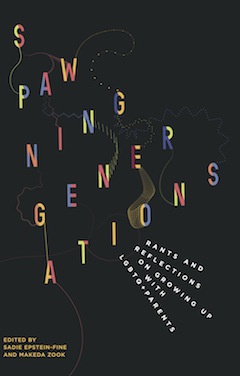
Sadie Epstein-Fine and Makeda Zook will be in Vancouver for the Jan. 17 launch of Spawning Generations: Rants and Reflections on Growing Up with LGBTQ+ Parents (Demeter Press, 2018), which they co-edited.

“It is really important to us that this book was written and edited by queerspawn. So often our stories are told for and on behalf of us by researchers, journalists and academics,” Epstein-Fine told the Independent. “Our intimate, personal family lives have been under the microscope for our entire lives, proving to the world that we turned out all right. By curating stories from our community, including our own stories, Makeda and I ensured that we were not, as we like to call it, airbrushing our stories, but that we were allowing our contributors to tell the nitty gritty, the details of their stories that they have never been able to tell.”

In the book’s introduction, Epstein-Fine and Zook explain that the term queerspawn to describe someone who has one or more LGBTQ+ parents was coined by Stefan Lynch, the first director of COLAGE, an American “network dedicated to connecting and supporting queerspawn,” which has one chapter in Canada (in Toronto).

book cover - Spawning Generations

“By giving a name to our identities and experiences, he laid the foundation for connecting and politicizing queerspawn; Lynch gave us a term to organize around,” they write, acknowledging that the term “is not without controversy. Although some people feel empowered by reclaiming both words (‘queer’ and ‘spawn’), others do not like the association with ‘spawn of the devil.’” Another term, “gayby,” also has its proponents and its critics, those who “find it infantilizing and only representative of people whose parents identify as gay,” note Epstein-Fine and Zook.

Ultimately, the editors chose to use queerspawn for the anthology because it is “unapologetic and bold.” As well, it is “the word most often used in Canada and the United States and, as such, it helps us find each other; it is a common word we can rally around. We often feel highly visible in straight communities and invisible in queer ones. The term ‘queerspawn’ creates a space for us, and helps us to feel strength in numbers and a sense of belonging at times when we feel all too visible. When we feel invisible, naming ourselves as queerspawn tells the queer community that we are still here, even if we have grown up.”

Epstein-Fine was born in Toronto in 1992 to two moms, in an activist home, “surrounded by 11 other women.” She carries on her family’s activist tradition and describes herself as a queer(spawn)-political theatre maker.

According to her bio, Zook “was born in Vancouver in 1986 to her two lesbian feminist moms. She was raised in a mixed-race family surrounded by anti-oppression politics and her OWLs (older, wiser lesbians).” She works in sexual health promotion for a feminist nongovernmental organization.

Epstein-Fine shared with the Independent how she and Zook came to be the editors of Spawning Generations.

“Demeter Press approached Makeda and I to edit the anthology because they saw a gap in their literature,” she explained. “They mostly publish books about motherhood, through a feminist lens, and they realized that, while they had a lot of literature about queer parenthood, they didn’t have anything from the children. This is a trend in the majority of queer parenting literature – we hear a lot from the parents, but rarely from the kids raised in queer households.

“Yes, it’s true, Makeda’s and my primary focus is not editing. Previous to editing this anthology we were both writers, which is how we got connected to this book. Our (queerspawn) community is small and disparate, there is not a plethora of options available. When Demeter first approached me with this project, I tried to think of folks who could do this project, and there was no obvious answer.

“Makeda and I learned to be editors in trial by fire,” she admitted. “We always say that we didn’t just grow alongside this project, but that this project grew us. After three years of working on this project, we now feel confident in our editing skills, which we didn’t feel previously.”

And the pair has done a commendable job in keeping the essays on point. The editing is such that each contributor maintains their own voice, which adds to the book’s readability and interest. Contributors range in age, from 9 years old, to teenagers, to 20-somethings and older queerspawn. And the writers come from all over the world, from as far away as London, England, and as close as Victoria; one was born in Vancouver but seems not to live here anymore. While all the contributors have being the child of one or more LGBTQ+ parents in common and have shared some similar experiences, each story is unique.

“There was a call for writers, which we spread as far as we could,” Epstein-Fine explained about how the essays for the anthology were chosen. She said they asked COLAGE and several organizations and people they know in Canada to publicize the call, which went out in the winter of 2015, with a due date of May 1 that year.

“We received 25 submissions and we took every single one,” she said. “We thought that each person had an interesting story to tell and we were committed to helping them tell their story the way they wanted it to be told. We initially thought that we wanted to be more selective and, if we had received more submissions, we would have been forced to be. However, the wonderful result of us taking everyone is that our book is not just filled with works from professional writers, but we have contributors with a range of experiences – from people who have never written a personal essay to professional writers. It gives a real scope of our community.”

The Spawning Generations book launch takes place Jan. 17, 7 p.m., at Massy Books, 229 East Georgia St., in Vancouver. For more information, visit facebook.com/spawninggenerations.

Format ImagePosted on January 11, 2019January 9, 2019Author Cynthia RamsayCategories BooksTags identity, LGBTQ, memoir, queerspawn
Organ donation awareness

Organ donation awareness

Left to right are panelists at a recent National Council of Jewish Women panel on organ transplants: Dr. Aviva Goldberg, Rabbi Yossi Benarroch, Marshall Miller and Na’ama Miller. (photo from NCJW)

On Dec. 11, the Winnipeg section of National Council of Jewish Women (NCJW) held an organ donation awareness event, featuring community members Rabbi Yossi Benarroch, Dr. Aviva Goldberg, and husband (organ recipient) and wife (organ donor) Marshall and Na’ama Miller.

Benarroch spoke first, after a welcome from organizers and a video about organ donation (youtube.com/watch?v=5cfaAWTH5zM).

“The short of it is, basically, that Jewish law permits organ donations,” he said. “There’s no question about that. Of course, when we talk about law, law is complicated and there are lots of opinions. There’s an ideal in Judaism, which is one of those foundations, and it’s called ‘pikuach nefesh doche hakol’ … which basically means that, in Judaism, there’s nothing more important than saving a life.

“I’m a very observant Jew and I keep kosher,” he said, “but if I had to eat something that wasn’t kosher – pork or whatever – in order to save my life, then Jewish law says you’re obligated to do that.”

Benarroch said it is written that, if someone saves a life, it is as if they have saved the entire world. Furthermore, he said, we are called to not stand idly by if another person is suffering. “We are obligated to intervene and actually obligated to help that individual,” he said.

Marshall Miller, who was diagnosed with progressive kidney disease more than 25 years ago, eventually required replacement therapy.

“Slowly, over time, my kidney failure began to get worse and worse,” he shared. “The disease progressed to the point where, a few years back, my GP at the time said, ‘Marshall, you’re now at the point where you have to go see a specialist because I can’t do anything more for you here … you need an expert to deal with your situation.’

“Everybody who suffers from kidney disease understands that, what kidneys do, among many things, is purify your blood. When your blood isn’t being purified properly, you can start to feel kind of lousy. I think my family can attest to the fact that I was starting to feel lousy. I think my whole family suffered along as I did, as I got sicker and sicker.”

When his kidney function was down to less than 10%, the specialist started talking seriously about replacement therapy. This involved dialysis three times a week until a matching donor could be found.

During the search for a donor, Na’ama Miller decided to find out if she might be able to help other people in her husband’s situation. As it turned out, she was a match for her husband.

“We were told it was a one hundred million shot,” she said. “And so, we were next faced with a bit of a dilemma … because it was scary for the kids. But Samantha and Maya were very much in favour of it, because they didn’t want me to be miserable anymore.”

She said, “People ask me, how I could do this … if it was hard. I give everyone the same answer. It was a no-brainer, a very easy decision for me. As Marshall said … we were all suffering along with him.”

“It’s worth it. You saved a life,” her husband added. “We hope this event here – even if only one more person signs up … hopefully, more and more people will choose to do it among the Jewish community after hearing the story.”

After the Millers spoke, a second video was screened, about a former Winnipegger who donated a kidney to save the life of a woman in California, who he has never met.

“Right now, in Canada, there are over 4,500 people waiting for an organ transplant – 4,500 Marshalls,” said Goldberg, who is the director of the Canadian Society of Transplantation and chair of the Transplant Manitoba kidney allocation review committee. “We don’t have 4,500 Na’amas. That’s why we need donors – both living and also deceased donors.

“That’s what we want to talk about today,” she said, “even if you don’t go forward to become a living donor, which is a really big deal. It’s not something that every person in this room is going to be able to do and that’s totally fair. But, there’s something that everyone in this room can do and that’s to sign up for organ donation after you’ve died – say that this is something I’d like to do, that you’d like to leave a legacy … you can save lives after you’ve died, either with organ or tissue donation. You can save lives by donating organs – heart, liver, lungs, pancreas, kidneys and even small bowel – but, also tissue donation.”

In some cases, people can donate their corneas to help improve the life of others. According to Goldberg, Manitoba, last year, was the fourth on the world list of most donors.

While Goldberg implored people to sign up as donors online, she further reminded them that talking to family about your willingness to be a donor is also very important – and not just immediate family, as they might be in the same car with you when you have a horrific accident, for example.

“The way that organ donation works in Canada, here, in Manitoba, is that after someone has died and they are potentially going to be an organ donor, their family is approached,” said Goldberg. “If you sign up for the registry, it’s a way of saying to your family, on the very worst day of their lives, that this is something your loved one wanted – wanted so much that they went to the registry, signed up, made that choice. It’s a hard discussion to have … [but] it’s so important to do.”

During the question-and-answer period, one attendee asked if there was an age limit for someone to donate an organ. The answer? “No.”

Another question was about the possibility of rejection and, to that, Marshall Miller shared his experience. “I suffered from a mild early rejection,” he said. “But, the ability to detect the rejection and be able to remedy it is incredible. They were able to treat me with medication instantaneously and, really, it was a non-issue for me. Even though there is a risk of rejection, it can easily be found if you attend your appointments and take your medication.”

For information on organ donation in British Columbia and to register, visit transplant.bc.ca.

Rebeca Kuropatwa is a Winnipeg freelance writer.
Format ImagePosted on January 11, 2019January 9, 2019Author Rebeca KuropatwaCategories NationalTags healthcare, Judaism, NCJW, organ donation

Tax troubles start year

In a perfect world, no country would need a military. Countries and people would live in peace; the kingdom of heaven, as promised by almost every religion, at last realized.

As ideal as that wish might be for the first editorial of a new secular year, it remains true that countries need militaries. Places like Canada, which have not been forced to wage war on home turf in 205 years, nevertheless maintain a military, with our soldiers serving various roles around the globe.

In Israel, on the other hand, the military is the one thing standing between the country’s citizens and oblivion. Like the militaries of every country, the Israel Defence Forces protects the country’s borders and citizens from external and internal threats. More controversially, as a result of Israel’s complicated history, the IDF also controls parts of the West Bank under a military rule that is the cause of much international criticism.

Some of this criticism comes from Canada, including from a Palestinian-Canadian, Ismail Zayid, who has been complaining for years to the Canada Revenue Agency (CRA) over his assertions that the Jewish National Fund of Canada has been in contravention of Canadian tax law for providing material support to the IDF.

Well, it’s more than assertions, actually. In stories splashed across Canadian media last weekend, there is plenty of evidence that JNF Canada was, until 2016, openly fundraising for projects that support infrastructure projects on Israeli army, air and naval bases. These include a “new planned IDF Training Base City in the Negev,” “helping the development of the Bat Galim training base complex area” and new mess hall-type facilities at two air bases. Funds raised at Edmonton’s Negev Dinner in 2014 were explicitly and openly allocated to developing parts of the largest military training facility in Israel.

In October 2017, according to the CBC, Zayid filed another complaint to CRA “in concert with an Ottawa professor, a Vancouver rabbi and a retired nurse.” The complaint is that JNF was ignoring rules that forbid Canadian charities from issuing tax receipts for contributions that go toward foreign militaries. CRA would not confirm details of the investigation to the CBC and JNF said only that they are engaged in confidential negotiations with CRA.

There is nothing stopping any Canadian from sending a cheque to Israel’s Ministry of Defence, news reports noted, but rules forbid doing so via a charity that provides tax receipts for it. This is admirable policy. Even if some Canadians would be perfectly happy seeing our tax policy support the IDF, would we be as pleased to see tax receipts issued for funds directed to the militaries of other countries with whom we don’t have as good a relationship?

Whatever one thinks about the morality of the IDF or its presence in the West Bank, the JNF appears to have made a naive or foolish mistake – not once but apparently about a dozen times. The head of JNF Canada said they stopped funding IDF projects after CRA alerted them to the issue in 2016. But how could an organization of this calibre have done so for so long, especially when it knew there were a series of complaints being lodged regularly around this very topic?

Since 1948, countless Jewish Canadians have supported Israel, including its military, in myriad ways. For four generations, young Jewish Canadians have enlisted, even in times of war, to serve in the IDF. Canadians of all ages have volunteered in the various roles the IDF offers to overseas friends of Israel. Most Jewish Canadians recognize the life-and-death necessity of a strong Israel, supported by a strong IDF.

The Jewish National Fund is the reason Israel is the only country on the planet that ended the 20th century with more trees than when the century started. Beyond reforestation, the number of extraordinary initiatives JNF carries out all over Israel makes it an integral part of the Zionist project. Israel is Israel, in large part, thanks to JNF.

Because of JNF’s critical importance, Canadian supporters must be confident that our support is going to an organization that is transparent and scrupulously adhering to relevant regulations. To ensure that the irreplaceable work the JNF does in Israel does not waver, JNF Canada must ensure that Canadians trust the decisions and leadership of the national organization.

Posted on January 11, 2019January 9, 2019Author The Editorial BoardCategories From the JITags Canada Revenue Agency, CRA, Jewish National Fund, JNF, taxes1 Comment on Tax troubles start year

Some thoughts on happiness

Some thoughts on happiness

How are you feeling today? Any aches and pains you wish would go away? Maybe a good night’s sleep will do the job because your health is basically in good shape. Or not. Are you and your partner getting along? Maybe you wish you had a partner or are sad about the one you lost? Is there love and affection in your life?

Are your efforts allowing you to make ends meet and to set a generous table in a place you are happy to be in? Do you have interesting things to do in your life that are making you feel fulfilled? And the kids, if you have any, are they well, and turning out how you had hoped? Are there things happening in the world that are so distressing they are making you unhappy? Is there anything you can do about it?

I am not looking for raging joy and ecstasy. We might look for moments like that sometimes in our lives. But that is unsustainable and we would burn out. It’s not the drug high we are looking for, it’s the quiet sense of satisfaction and accomplishment. It’s a feeling of well-being and comfort in your own skin and “all’s well with my world.”

There are so many things in life that can go wrong; it’s a miracle we ever have a happy moment. Something like the bodies we inhabit, we inhabit such a complex environment. There is the great potential for one of many of the things we face to go wrong. Or, for things to come out very differently from the way we might like things to work out. Fortunately, so many of the important things about our bodies are on automatic and are mostly made to last a lifetime. The lives we get to live are not like that. A lot of it depends on chance but a lot of it also depends on what we make of it.

I am well into my 80s, alive and in relatively good health. Retired, I have time to think about these things while many of you are out there sweating the 9-to-5. Without getting into too much detail, in my life I have worked hard and accomplished satisfying things that have benefited others as well as myself. I can conclude that life has treated me kindly. I have washed up on a friendly beach, and now the living is easy. Because I know I have earned my way, I don’t have to feel guilty about my good fortune, and I am grateful for what help I received along the way. I hope those of you out there at my age and stage feel the same way.

I can contrast that with the life my father lived. His father left the family when he was a child, coming to Canada to make his fortune. (My grandfather made his living in Canada with a horse and cart, collecting junk that he could sell to dealers.) My father’s mother died of typhoid, in Russia, and my father and his brother were shuttled around to relatives. His father, already in Canada, finally sent money for him and his younger brother to join him. My father never received any formal education.

When he arrived from Danzig to England, they found that my father had pink eye and the authorities took him off the boat. They were going to send him back to where he came from. Somehow, though, he evaded them (still a teenager) and he spent two years hiding out in London before he was able to come to Canada. I don’t know what he did when he arrived in this country, but, in the years I was growing up (I was born in 1934), he never seemed to have a steady job.

His big break came when the Second World War started and all the young men were called up as soldiers. My dad was hired to shovel coal into a furnace, the heat being used for drying eggs to be shipped to England. Because the engineers were drafted too, soon he was asked to study for papers that would allow him to replace the engineers. How did they know he could do it?

All my school years, my father was studying his books at the kitchen table. When I tried reading his stuff, it made my head spin. He became a full-fledged stationary engineer by the time the war was over. All three of us kids in my family got secondary educations. My father died at 67, still on that job. He was a happy man, I think. Compared to him, I had it easy.

So, what does it take to be happy? Isn’t it about having the right answers to some of the questions I asked when we got started? It sure helps if your health is good. It sure helps if the kids you had turn out healthy and self-sufficient. It sure helps if you have had someone in your life to love, and if someone has loved you. It sure helps if you have, or have had, fulfilling work. It sure helps if you know that you have done things that have benefited others as well as yourself. It sure helps if you have earned the means to meet your needs.

You don’t have to have them all. Just having some of these things, and the proper attitude, and you get to catch the brass ring. Having a sense of gratitude for the things you do have helps a lot, too. Be happy.

Max Roytenberg is a Vancouver-based poet, writer and blogger. His book Hero in My Own Eyes: Tripping a Life Fantastic is available from Amazon and other online booksellers.

Posted on January 11, 2019January 9, 2019Author Max RoytenbergCategories Op-EdTags happiness, lifestyle, philosophy
A rewarding trip to Siberia

A rewarding trip to Siberia

Several Vancouverites traveled to Siberia to see members of the Jewish community, which the Jewish Federation of Greater Vancouver helps support. (photo from Michael Moscovich)

Last September, a group of seven travelers representing the Jewish Federation of Greater Vancouver set off on an expedition to the far east of Siberia. Jews going to Siberia? Had to be a very good reason. And there was.

For more than a decade, the Jewish Federation, in partnership with the American Jewish Joint Distribution Committee (JDC), has been contributing to the support of Jews in need, wherever they may live in the world. Federation’s Israel and overseas committee chose to help the closest Jewish communities in abject poverty and those are in Siberia’s far east. Khabarovsk is the main city in the area and Birobidzhan is the capital of the Jewish republic, or oblast, of Russia. Jewish republic! Long story.

photo - The Russian city of Khabarovsk
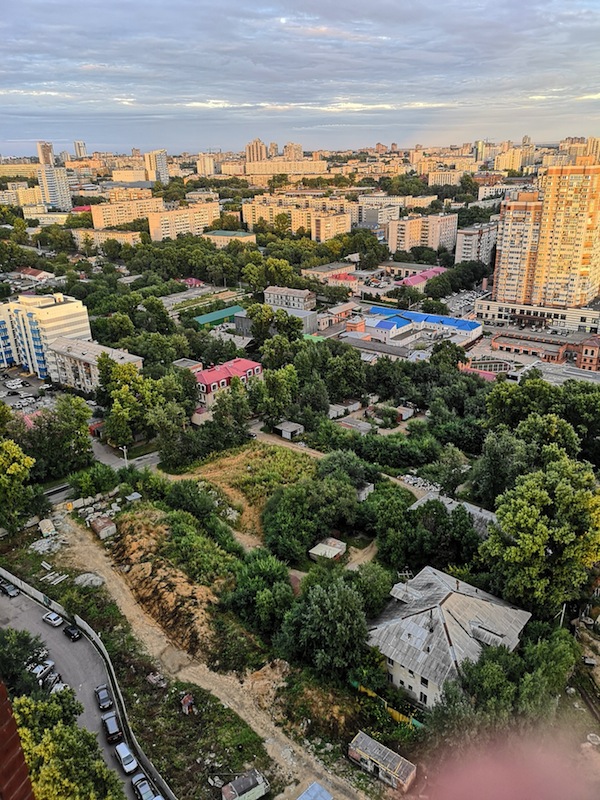
The Russian city of Khabarovsk. (photo from Michael Moscovich)

Khabarovsk is about the size of Winnipeg and the winters are about the same, only a little colder – when we were there in the fall, it was generally above 20°C. Birobidzhan has a population of only about 75,000 and both cities are located by very large rivers. Each has a new synagogue/community centre.

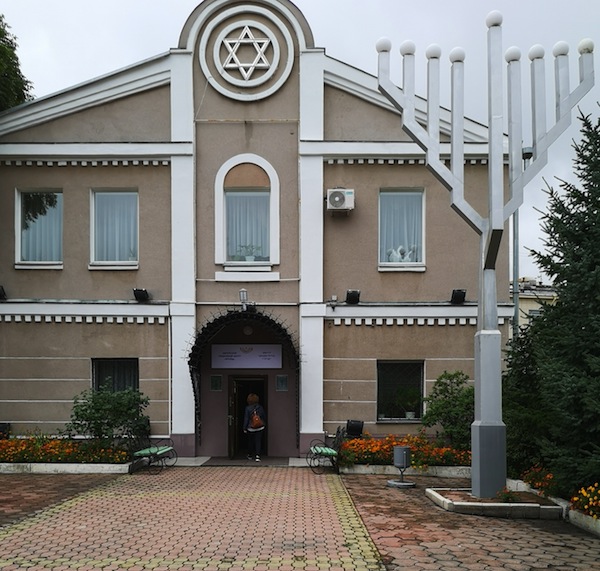
photo - The synagogue in Birobidzhan
The synagogue in Birobidzhan. (photo from Michael Moscovich)

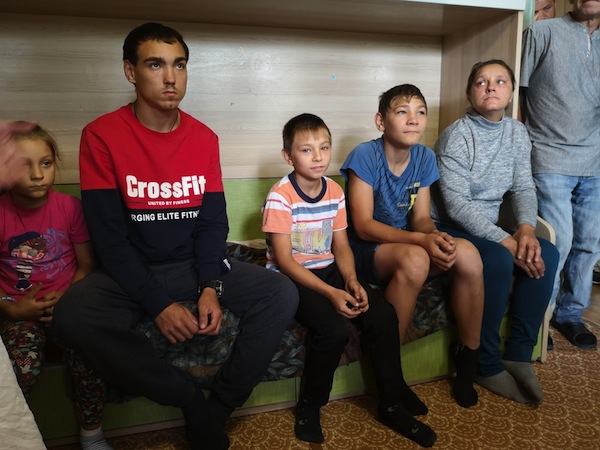
In Siberia, the younger people have jobs and seem to do well, but the pensioners are lost. Their pensions may have been adequate 20 years ago but the ruble has fallen to two cents. Their income is maybe $20 to $40 a month. Their choice is to feed themselves, heat their home or buy their medicines. Through the JDC, Federation makes it possible to do all three by supplementing their monthly income. It also supports people with disabilities who are unable to work.

I am a founding member of Federation and its Israel and overseas committee, and have visited Jewish communities in Poland, western Russia, Austria, Morocco and Cuba. No Vancouver representative had visited our Siberian partners before to see what we’re helping to accomplish. The trip was very rewarding. We saw signs of the rebirth of Siberian Jewish life.

The Russian city of Khabarovsk. (photo from Michael Moscovich)
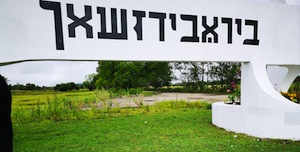
photo - Biribojan, in Yiddish
Biribojan, in Yiddish. (photo from Michael Moscovich)

Most of the people we met were not English speakers, but we had enough interpreters that language was never a problem. We were also bonded by Yiddishkeit, though the community had had no Jewish education or ceremonies for decades, since Stalin decided to ban the Jewish part of the Jewish republic. No one even spoke a word of Yiddish – this in a place where there was a thriving Yiddish-based culture until the 1950s. But the street signs in Birobidzhan are still written in Yiddish and there are other symbols of Jewish life, such as a menorah on the monument at the train station.

During our visit, we joined in baking challot and delivered them to elderly widows. Upon entering one home, our hostess staggered and almost collapsed. Subsequently, whenever she looked at me she blanched and teared up. I asked what was the matter and she said I looked so much like her father it was like seeing a ghost. She showed me pictures of him and, indeed, he was a handsome devil and doppelgänger.

There are maybe 15,000 Jews left in the area. All have the option of relocating to Israel and most have. However, one guy returned, as there was no ice fishing in Israel. Another returned as a Chabad rabbi to lead the Birobidzhan congregation. A young woman came back to be with her grandmother. So many stories.

The elderly spoke to us of the war and survival. I asked what happens to the non-Jewish people in similar circumstances with no outside support. They just died, was the reply. We are truly saving lives.

Format ImagePosted on January 11, 2019January 9, 2019Author Michael MoscovichCategories WorldTags former Soviet Union, FSU, JDC, Jewish Federation, Joint Distribution Committee, philanthropy, Siberia, tikkun olam

Posts pagination

Previous page Page 1 Page 2 Page 3 Page 4 Next page
Proudly powered by WordPress