עולים חדשים מארה”ב ומקנדה עלו בחודש אוגוטס לישראל בטיסה מיוחדת של אל על וארגון נפש בנפש המעודד עלייה של יהודים לישראל. כרבע מתוכם הם צעירים וצעירות שצפויים להתגייס לצה”ל כחיילים בודדים. לראשונה העולים עברו הליך קליטה מלא במהלך הטיסה, והוענקו להם תעודות העולה על המטוס
זו הטיסה השישים וארבע שהוציא עד כה ארגון נפש בנפש בשיתוף משרד העלייה והקליטה, הסוכנות היהודית, קרן קיימת לישראל וג’י.אן.אף בארה”ב. בסך הכל מדובר בכשבעים וחמישה אלף יהודים שעלו עד כה לישראל בפעילות זו
נוסעי הטיסה הזו מתווספים ללמעלה מאלף שלוש מאות יהודים מצפון אמריקה שעלו ארצה מתחילת השנה. הם הגיעו מרחבי מדינות בארה”ב וקנדה. מניתוח נתוני העולים החדשים עולה כי הערים המרכזיות בהן בחרו להתיישב הן: ירושלים, תל אביב-יפו, רעננה, בית שמש, חיפה ועוד. מקצועות התעסוקה המובילים בקרב העולים הטריים הללו הינם: רפואה, חינוך, הנדסה, הנהלת חשבונות, עבודה סוציאלית, ריפוי בעיסוק ועוד
לראשונה הוחלט לבצע את הליך קליטה המלא לכלל העולים במהלך הטיסה עצמה: הם מילאו את כל הטפסים הרלוונטיים ותעודות העולה ניתנו להם כבר על המטוס. ולפיכך הדבר חסך עבורם זמן רב וטרחה בירוקרטית עם הגעתם ארצה
מנכ”ל נפש בנפש, הרב יהושע פס, ציין כי זהו המשך הגשמת החלום הציוני, והוא צופה שהעולים בטיסה זו ישתלבו בפסיפס המדהים של מדינת ישראל. הטיסה הנוכחית מרגשת במיוחד כיווו שהיא כוללת עשרות צעירים שעזבו את החיים המוכרים מאחור, כדי לעלות בגפם לישראל. הם בחרו להתגייס לצה”ל, לצד אנשי רפואה מנוסים שיחזקו את תשתיות שירותי הבריאות במדינה, אנשי חינוך, תעשייה והייטק ועוד. ואילו שר העלייה והקליטה, אופיר סופר אמר כי הוא שמח לפגוש את העולים החדשים עם נחיתתם בישראל. לדבריו תמיד מרגש לראות משפחות עם ילדים, צעירים ומבוגרים, שבחרו לעשות ציונות ולעלות למדינת ישראל. הוא איחל לעולים הרבים הצלחה רבה וקליטה קלה ומיטבית בארץ, ברוכים השבים הביתה
בסך הכל השנה צפוויים לעלות לישראל כאלפיים יהודים מארה”ב וקנדה. בנוסף לטיסה זו חודש, צפויות עוד תשע טיסות השנה בהם יגיעו כחמישים עולים בכל פעם
לקראת גל העלייה הצפוי, ערך ארגון נפש בנפש שלושה אירועי הכנה חגיגיים בהם השתתפו כשש מאות מועמדים לעלייה מארה”ב ומקנדה. כאמור כולם עתידים לעלות לישראל עד סוף השנה הנוכחית. האירועים התקיימו בניו יורק, מיאמי וטורונטו. האירוע בניו יורקי התקיים בנוכחותם של מנכ”ל נפש בנפש, שר העלייה והקליטה, שר העבודה, יואב בן צור ומנכ”ל משרד העלייה והקליטה, אביחי כהנא. במסגרת אירועים אלו, למשתתפים ניתנה ההזדמנות להיפגש באופן עם צוות מקצועי של נפש בנפש במטרה לקבל מידע וסיוע אישיים לקראת עלייתם הקרבה
שר העלייה והקליטה אמר שהוא התרגש לברך באירוע את מאות העולים החדשים שיעלו בקיץ הקרוב. העולים שיוצאים לדרך חדשה קיבלו החלטה לא קלה, אבל הוא בטוח שהיא ההחלטה הטובה ביותר. כשר העלייה והקליטה, הוא רואה את משימת קליטת העולים החדשים כמשימה עליונה וחשובה ביותר. יחד עם משאבי המשרד, הם ידאגו לקליטה טובה עבור העולים
מנכ”ל נפש בנפש ציין שלחגוג עם מאות עולים עתידיים ומשפחותיהם, שהגיעו לאירוע, בתמיכה וגאווה של בני משפתחם, זהו ללא ספק רגע מרגש ומחמם. אנו זוכים להיות חלק מסיפור העלייה של אלפי עולים היוצאים למסע הזה ומצפים בקוצר רוח לקבל אותם בקרוב מאוד ובזרועות פתוחות בביתם החדש שבישראל
האם יכולה קנדה לשלוח את המגרים לאזורים רחוקים ולא לא מאוכלסים?
אנחנו מדינה חופשית. אנחנו לא יכולים לכוון את ההגירה ולומר למהגרים שהם צריכים לעבור למקומות מרוחקים, אומר בוב דילון, מייסד ומנכ”ל חברת הנדל”ן מיינסטריט אקוויטי מהעיר קלגרי, בעצמו מהגר. אנחנו יכולים לעודד מהגרים חדשים ולתת להם תמריצים כדי להתיישב באזורים שונים של קנדה במקום בערים הגדולות.
העיר שלו ממחישה את הבעיה. גם אחרי העלאות הריבית בשנה שעברה, מחירי הבתים חברת בוצ’י דיוולופמנט, קבלנית של דירות להשכרה בקלגרי, עברה מלהציע חודש של שכירות בחינם לפני שנתיים לרשימת המתנה ליחידות שלה, משום שהיא לא מצליחה לעמוד בביקוש, אף שהגדילה את יעד הבנייה. זינוקים מפתיעים כאלה מחייבים אותנו לחשב מסלול מחדש, אמר מייק בוצ’י, סגן נשיא בחברה. אני רוצה ודאות משעממת
טלטלות כאלה בשוק הנדל”ן מורידות את התמיכה בהגירה בקרב הקנדים, לדברי דיוויד גרין, פרופסור בבית הספר לכלכלה של אוניברסיטת ונקובר בבריטיש קולומביה. אנחנו פותחים את הדלת לבעיות מהסוג שאנחנו רואים במדינות אחרות, הוא אומר. הימין הקיצוני ינצלו את זה, ולפחות חלק ממה שהם יאמרו על שוק הדיור יהיה נכון. זה ייתן אמינות לשאר הנראטיב שלהם. זה משחק מסוכן מאוד. הוא אומר שהממשלה מנסה להתמודד עם הבעיות בעזרת צעדים כמו הפיכת תוכניות הקליטה לאזוריות, כך שמהגרים יופנו לאזורים שיש להם יכולת קליטה גבוהה יותר. בנוסף, לממשלה יש תוכנית להביא יותר אנשים בעלי כישורים במקצועות שיש להם ביקוש גדול, כמו רפואה ובנייה תמיכה הציבורית בהגירה ברוב האזורים בקנדה היא עדיין גבוהה.
החששות בנוגע לשינויים הדמוגרפיים בולטים במיוחד בקוויבק, המחוז השני מאוכלס ביותר בקנדה. המחוז, שבו שפת האם של רוב התושבים היא צרפתית, התנגד להעלאת יעד התושבים הקבועים שלו, והשאיר אותו ברמה שנמוכה במחצית מהיעד הממשלתי. הפרמייר של קוויבק, פרנסואה לגו, אמר שהמחוז לא יסכים לקבל עלייה במספר המהגרים בשיעור חד כמו בקנדה כולה, מחשש שזה יוביל לירידה במעמדה של השפה הצרפתית, גם אם משמעות הדבר היא לאבד את המשקל הדמוגרפי של המחוז בתוך המדינה כולה
בה בעת, ארגוני תעשיינים קוראים שוב ושוב להגביר את ההגירה ולהוסיף יותר עובדים קבועים לכלכלה. חברות בקוויבק נאלצות לגייס עובדים זמניים כדי לאייש משרות, ומספר העובדים הזרים הזמניים שבהן זינק בשישים וחמישה אחוז בשלוש השנים האחרונות. בקנדה כולה תהליכי הסמכה של עובדים מקצועיים זרים לא עומדים בקצב ההגירה. בשל כך, עובדים מקצועיים רבים שהיגרו למדינה נאלצים לעבוד בדרגים נמוכים או לחכות שיכירו בכישורים שלהם.
תר ממחצית מהמהגרים שהגיעו לאחרונה התקבלו תחת הקטגוריה הכלכלית, כלומר עובדים מקצועיים ויזמים שנבחרים על בסיס היכולת שלהם להתבסס כלכלית בקנדה. אף שהעובדים האלה הם קהל היעד העיקרי של מדיניות ההגירה לצד יישוב מחדש של פליטים מספר העובדים הזמניים זינק בשנים האחרונות, מה שגרר ביקורת על כך שהם עלולים לפגוע בצמיחה בשכר ולהגדיל את האי־שוויון בהכנסות.
עם זאת, קנדה זקוקה גם למשרות שדורשות בעלי כישורים מקצועיים גבוהים וגם למשרות לבעלי כישורים נמוכים. רובם הגדול של המהגרים תורם לכלכלה, לדברי קווין מקניקול, מנכ”ל משאבי אנוש שפעולת באלבטרה ושעוזרת למקומיים ולתושבים חדשים להשיג עבודה. זה לא משחק סכום אפס הוא אומר. הם לא לוקחים שום דבר מאף אחד. הם מוסיפים, והכלכלה שלנו צומחת למען כולם, מה שאומר שיש יותר עבודה, יותר משרות ויותר כסף.
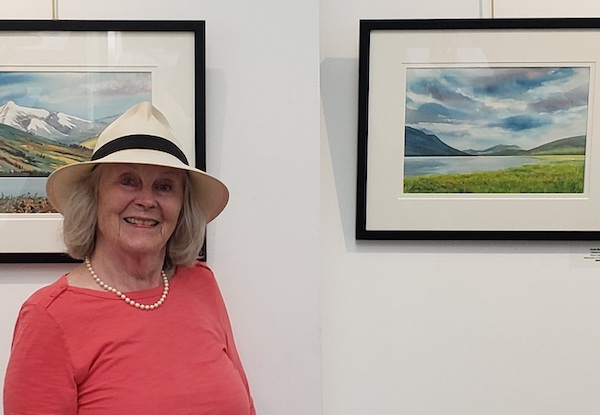
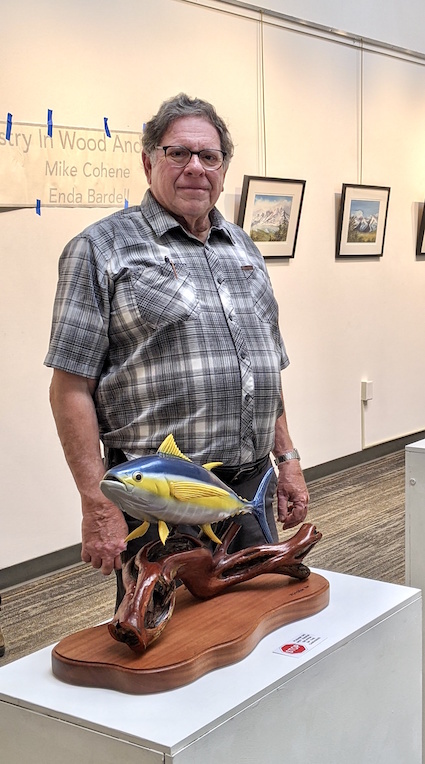
Creativity manifests itself in people’s lives in different ways and at different times. For Enda Bardell, various forms of art occupied her for decades, while Mike Cohene discovered woodcarving only a few years ago, on his way to retirement. Their double show, Artistry in Wood and Water, opened at the Zack Gallery on July 26.
Bardell told the Independent that she was born in Estonia. In 1944, when she was a young child, her family fled from Estonia, then occupied by the Nazis, to Sweden. Her mother worked at a paper factory there, and Bardell played with paper dolls she made herself. She also drew all the dolls’ colourful outfits. “I gave the dolls away to other girls, to make friends,” she recalled. “My first attempts at fashion design.”
A few years later, the family was forced to move again. The Russian communist government wanted the return of all the Estonians who had escaped the Nazis during the war, and Sweden was going to comply with that demand. But Bardell’s father didn’t want to live in communist Russia, so they became refugees again, this time ending up in Canada.
“In 1951, we came to Winnipeg,” said Bardell. “I went to school there and I desperately wanted to fit in. To belong. To be Canadian. I participated in many school clubs and activities. Entered an art class, too. My teacher praised me and recommended that I send one of my drawings to an interschool art competition. I did. And I won. I knew then that I was an artist.”
Interested in landscapes and abstracts, Bardell painted a lot as a teenager, but, after her high school graduation, she became deeply involved in fabric art. “I sold my batiks at craft fairs and house parties. People liked them, and someone suggested I should open my own store,” she said. “I did. I designed lots of different textile objects: skirts, pillowcases, aprons, etc. I felt that I needed a business course, in addition to my art education, so I took it. My store was very successful.”
But, as soon as the store achieved that success, running it lost its challenges. “I became bored,” said Bardell. “It was time for a change.”
She sold the store and did many other things in her professional life. “I always want to try something new, something I’ve never tried before. At one time or another, I was a lamp designer. I worked in banking. I was a realtor. I designed costumes for the Vancouver movie industry,” she said.
She also traveled a lot. “I have visited 38 countries. I like adventures, like it when I can’t speak the tongue. Then I have to express myself through body language. I have to be creative,” she said.
Art always shimmered on the periphery of her life, a constant creative supplement to her various commercial careers. First, abstract oils and acrylics, and, later, watercolours. Painting eventually metamorphosed into the focus of her existence. In the past two decades, she has participated in multiple solo and group exhibitions in Canada and abroad. In 2008, she even participated in an art show in her native Estonia, the Estonian Art in Exile exhibition at KUMU, the National Museum of Art in Tallinn. KUMU acquired one of her acrylic abstracts for their permanent collection; another of her paintings is in the Tartu Art Museum in Estonia. Her paintings are represented by many local galleries.
The current exhibition at the Zack is the result of a trip Bardell took to Yukon shortly before the COVID pandemic temporarily closed all travel. “My son lives in Yukon,” she said. At his prompting, she applied and was granted residency for one month at Ted Harrison Cabin in 2018. “We hired an RV and traveled there for two weeks,” she said. “Yukon was amazing: mountains, rivers, lakes. The place resonated with me. I took 1,400 photos during our travels. Based on the selection from those photos, I painted 40 watercolour pieces during my stay at the cabin. It was a privilege to stay in that wonderful place, especially because I had met Ted previously.”
Many of Bardell’s paintings in this series involve rivers and lakes. “I like water,” she said. “I have always lived on the water, except for one year in Winnipeg. I swim year-round here, summer and winter. Sometimes, I have seals swimming with me. It feels magical.”
When she submitted her Yukon series to the Zack Gallery, it was accepted, on the condition that it would be a double show, as gallery exhibitions must have a Jewish connection. Bardell’s Jewish connection became Mike Cohene, a local woodcarver. His colourful carved fish complement perfectly Bardell’s watercolours of Yukon’s rivers and lakes.
Unlike Bardell, Cohene didn’t do anything artistic until 2009. “I had a solid clothing business,” he said. “Awhile back, I started thinking about retiring and selling the business.”
Mike Cohene (photo by Linda Babins)
In the summer of 2009, Cohene visited Steveston Farmers Market. “They had a booth of the Richmond Carvers Society – I thought their works were outstanding,” he said. “I always whittled but I never considered myself artistic. I started talking to the man in the booth, expressing my admiration. He said anyone could learn to do it. He invited me to come to the club meeting in September. I went.”
Since that day, he has learned a lot about the artistry and the technique of woodcarving. His journey began with woodcarving classes at the society. Later, he took a course at Emily Carr University of Art + Design and enrolled in carving workshops.
“My first carving was a bear cub,” he said. “Then I made a dolphin. Then I started carving fish and birds…. I’ve always been a fisherman, but I never studied fish anatomy before. I caught a fish and tossed it into a bucket. Now, I catch a fish and study it: the fins, the tail, the scales, how the colours change. I look at fish from a new perspective.”
In 2017, Cohene participated in his first two-artist exhibition at the Zack Gallery, with photographer Joanne Emerman. Since then, his art has become even more refined. “I learned more sophisticated techniques and tools,” he said. “I got several residencies in B.C. and Oregon.” Three years ago, he began teaching woodcarving to other Richmond Carvers Society members.
To create his wooden creatures as life-like as possible, Cohene uses various reference materials. “Mostly I use my own photographs,” he said. “When other people photograph wildlife, they give it their own interpretation, but I want to follow my own vision.”
His statues of fish include rocks and corals, all carefully carved and painted in bright, realistic colours. “Sometimes, one statue takes up to 20 coats of paint – different wood parts absorb paint with different intensity,” he explained.
He also uses tree branches as mounting blocks – they are not carved, just sawed off, polished and lacquered. “I only use dead wood for my statues. I often walk along the beach and pick up interesting pieces of driftwood. I’ve never harmed even one living tree,” he said.
Recently, Cohene has started exploring First Nation carving. The motifs attract him, and he has several pieces on display at the gallery, including two decorative oars.
He also creates Judaica – mezuzot, chanukiyot and dreidels – some of which can be seen at the gallery. Cohene has been to Israel 34 times. “Once, I brought 12 kilograms of olive wood with me from Israel, and I make many of my Judaica pieces from the reclaimed Israeli wood,” he said. “Olive wood has such a beautiful texture. And dreidels are fun to make.”
Whatever he works on, Cohene always gives it his all. “For me,” he said, “woodcarving is a form of self-fulfillment.”
Artistry in Wood and Water runs until Sept. 5. To learn more, visit the artists’ websites: endabardell.com and mikecohene.com.
Olga Livshinis a Vancouver freelance writer. She can be reached at olgagodim@gmail.com.
“Children want to be heard and validated for what makes them unique at all ages, just like us adults. The old adage that children should be seen and not heard is exactly the opposite of what we need from kids today,” Ellia Belson told the Independent.
Ellia Belson, principal of Vancouver Hebrew Academy (photo from Ellia Belson)
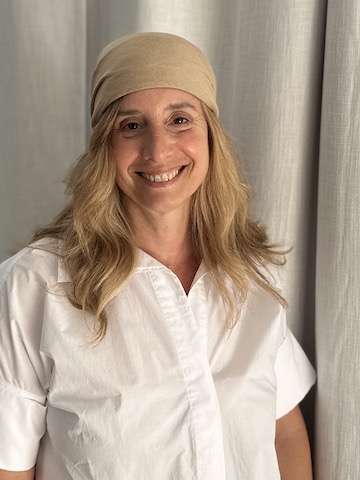
Belson is the new principal of Vancouver Hebrew Academy. She comes to VHA from King David High School, where she was the director of Jewish life, and has also taught at Vancouver Talmud Torah. “The experience gives me insight into the learning process and what motivates children to learn at different stages of their lives,” she said. “While a child in Grade 2 will be motivated by classroom activities, by the time they are 11, they are already starting to differentiate themselves from their parents and looking for ways to express their individuality.”
Belson takes over from the team of Ian Mills, Shannon Brody and Rivki Yeshayahu, who supported VHA while the school “looked for a principal who can lead an Orthodox Jewish school in such a unique city as Vancouver,” said Leslie Kowarsky, VHA board president. Prior to this trio, Rabbi Barak Cohen was principal for a year, after having taken the helm from Rabbi Don Pacht, who served as the school’s head for 17 years.
“We are thrilled to have secured Ellia Belson as our new principal,” said Kowarsky, noting that Belson has a master’s in special education from the University of British Columbia. Belson attained her teacher certification and bachelor’s from Simon Fraser University, and her resumé also includes Judaic studies for teachers from Bais Rivkah Seminary and Touro College in New York and Hebrew University in Israel, as well as other education training. In addition, she has more than 10 years’ experience at Energex Energy Management Systems Inc., a company started by her husband Rami.
“She is a Vancouver native, and many of our families remember fondly that her father, Sol Pavony, was himself the founding principal of what was then Vancouver Torah Academy,” said Kowarsky. “Mrs. Belson is already hard at work and is available to any prospective parents seeking an Orthodox Jewish education for their child.”
Belson’s education philosophy is focused on student-centred and inclusive learning.
“Students need multiple modes of learning to stay engaged and motivated. By providing students with multiple avenues to the curriculum and by offering choices, students feel a sense of control over their learning,” she explained. “For instance, a student might choose to read a storybook, a news article or a Gemara text to express their analysis on how one’s actions will have consequences. Then, they might choose to express this through writing, art or a PowerPoint. By recognizing a child’s individual learning style and offering different ways to access the information, you can provide opportunities for enrichment and academic achievement.”
For the coming year, Belson said the focus will be “on increasing our school spirit and joy for learning. We will be offering a new Judaic curriculum for Hebrew and Torah learning. We will be implementing a social-emotional program for all the classrooms, with opportunities for teacher growth through additional professional development. In addition, classes will enjoy extra teacher supports for those who need it.
“We want to emphasize the positives of our Judaism through experiential learning while keeping parents in the loop with consistent streams of communication coming home,” she said. “Our view is that a child’s academic and social learning happens as a team, which includes parents, students and teachers. We need to work together to reach our goals.”
VHA is also working towards expanding its existing daycare to open spots for infants and toddlers, “as there is a huge demand,” she added.
Belson’s ties to VHA are many. As Kowarsky noted, Belson’s father was the first principal of VHA’s predecessor, Torah Academy, which was started under the auspices of Rabbi Yitzchok Wineberg, head of Chabad Lubavitch BC.
About that family connection, Belson said, “It is an incredible feeling of responsibility to our VHA community. He was my mentor in every way and my inspiration for what a person should be. Humble, wise, attentive, full of love for every person – he was a true educator and authentic to his beliefs.”
While Belson herself was too old to attend VHA by the time it started – she attended VTT as a child – all four of her kids attended VHA.
“Each of our Jewish schools has a lot to offer our children and each has its own emphasis and values,” she said. “At VHA, the feeling is for living a Jewish life that is accepting of who you are no matter where you come from, your socioeconomic status or your level of religiousness. At VHA, the emphasis is on being your best self, with kindness to others and a cultivating a strong Jewish identity. Having a place to be accepted, whether Orthodox or not, was very important to me then and now.
“VHA has historically been a school known for its academic excellence and many of its alumni are, today, successful doctors, lawyers, teachers and rabbis. I took on this position,” she said, because “having no Orthodox school for our children would have far-reaching consequences to our wider Vancouver Jewish community.”
Belson concluded, “I’m excited and positive about contributing to VHA’s sense of excitement for learning. I think we have a bright future and an opportunity to implement modern teaching strategies within our ancient traditions.”
Israelis might be among the world’s most resilient people. Across 75 years of constant war or threats of war, terrorism, geopolitical isolation and global political assault, the Israeli people have built one of the world’s strongest democracies and most powerful economies.
Faced with an endless succession of external existential threats, not to mention internal divisions, Israelis have fought hard to survive and build the sort of state that accommodates, however imperfectly, the diversity of Jewish (and non-Jewish) identities encompassed by the population.
This is now under threat. The current government’s efforts to chip away at democratic structures is a grievous concern. And the political disruption is having demonstrative economic impacts as well. The “startup nation” has seen investment nosedive this year. In the first half of 2023, private financing fell 29% from the previous six-month period and 67% from the same period a year earlier.
While the economic numbers are the most tangible measure of the dangers of political instability and skirmishes, an opinion poll number stands out as at least as grave. A survey last month indicated that 28% of Israelis are considering leaving the country.
A recent feature story about a colony of expat Israelis who have made Hebrew a common sound on the streets of Thailand cited affordability and a laid-back lifestyle as among the draws that have brought more than 100 families to the town of Ko Pha Ngan in the last year alone. These families joined hundreds of Israelis who had already set up homes there. The Times of Israel reports most migrants cite Israel’s “pressure cooker” atmosphere as a leading reason for their move. We get that. People deserve to live the lives they want.
What is more challenging to understand is Israelis who are motivated to quit the country because they don’t like its political direction. The same opinion poll that said more than a quarter of Israelis are considering emigration showed that the current government would be headed for (by Israeli standards) a decisive defeat if an election were held now. Shouldn’t that count for something?
A plurality of Israelis seems poised to oust the government (if given the chance) and yet, rather than seeing this poll as a harbinger of hope, the children and grandchildren of those who persevered against enormous and impossible odds to rebuild the Jewish homeland are ready to give up the fight. (And, of course, we mean “fight” figuratively. Despite the fact that 56% of Israelis worry about civil war, the institutions the current government is attacking, though battered, are still strong and should not yet be dismissed as ineffectual.) If 28% of Israelis left, you can bet that the government that most of them oppose and which led them to abandon their homeland would be reelected in a landslide and be given a free hand to remake the country in the image they want.
We are worried by the apparent depth and breadth of the hopelessness. But hundreds of thousands of Israelis not only wish to change the government, they are taking to the streets every single week for many months to register their disapproval. Many of these are people who have never before engaged in politics. If the current government is traveling down untrodden paths of autocracy and iniquity, it is not meaningless that an enormous movement is amassing in response, potentially laying the foundation for a future sea change.
A lesson from close to home might be instructive. In the 1980s, British Columbia’s Social Credit government instituted a “restraint program” inspired by Reaganomics and Thatcherism that led to mass marches in the streets. Hopelessness gave way to one of the biggest mass mobilizations in the province’s history, in the form of Operation Solidarity. Long story short, that opposition movement, in a sense, emerged into the movement that is now dominant and that has transformed the province, the New Democratic Party having won one of the biggest majority governments in history, in 2020. John Horgan, the former premier who led the New Democrats to that huge victory, was inspired to get involved in politics during that tumultuous earlier time.
Presumably, an entire new generation of Israeli leaders are likewise being forged in reaction to the current developments. Whether they have the impact that British Columbia’s opposition movement-cum-government has had depends on whether they turn this moment into a lasting movement.
If we can point to any reason to lose hope, it is less the direction of the current government than, on the other side, the loss of hope and determination itself. If the policies of the current government seem un-Israeli to many of us, it seems no less un-Israeli to look at an existential challenge and give up.
Shay Keil, this year’s Jewish Federation of Greater Vancouver annual campaign chair, will share his story at the opening event on Sept. 10. (photo from Jewish Federation)
Gifts to the Jewish Federation of Greater Vancouver annual campaign inspire stories with direct human impacts, says Shay Keil, this year’s campaign chair. He’s knows – because he is one of those stories.
“There are real people behind those gifts and I am one of those people,” he told the Independent. “I was a beneficiary of generosity from this community in my earlier days, when my family required financial assistance in order for me to participate in Jewish life in Vancouver – that means being on subsidies to go to the Jewish day school and Jewish day camps. I will share my story of how their Federation gifts decades ago inspired my Jewish journey that would never have happened without their financial support.”
Keil will bring his personal experience to hundreds of community members at the annual campaign opening event Sept. 10. Keynote speaker for the evening will be Eric Fingerhut, president and chief executive officer of the Jewish Federations of North America. Prior to this role, Fingerhut was the head of Hillel International. He is also a former U.S. congressman.
The event’s musical centrepiece will feature vocal trio Citizen West, made up of Marc Devigne, Cody Karey and Omer Shaish. The trio is known for their multilingual repertoire and three-part harmony, which spreads the message that “we are all global citizens, and through music, we can connect with individuals of all cultures and backgrounds,” according to the group’s website.
Keil, who is a senior wealth advisor at ScotiaMcLeod, said the opening event will emphasize the importance of every individual’s contribution to the greater whole.
“The campaign only has success when we all come together,” he said. “Little gifts matter just as much as big gifts, and increases of all sizes really have impact.”
While he hesitates to put a number to his fundraising goal, Keil said he aims to meet or exceed last year’s campaign achievement of $10 million.
While the pandemic is largely behind us, challenges remain for major undertakings like the annual campaign, he acknowledged.
“The main one is the high cost of living [and] the financial challenges that come with higher interest rate costs,” said Keil. “Although that will affect some, it will affect others less so and our objective will be to continue to ask for increases among those who have the ability to do so.”
As someone who knows personally the impact of the annual campaign on its many beneficiaries, Keil is deeply devoted to the community in general and to the Federation campaign in particular.
“I remain committed to community and this is just yet another example of how I express that,” he said.
The campaign opening event takes place at 7 p.m., Sunday, Sept. 10, at Congregation Schara Tzedeck. Tickets ($18) are at jewishvancouver.com.
For the SOS – Starting Over Safely summer campaign at chwsos.ca on Aug. 22, donated funds will be matched three times. (photo by Ben Kelmer)
CHW (Canadian Hadassah-WIZO) is in the midst of its third annual SOS – Starting Over Safely – summer campaign, aimed at empowering victims of domestic violence in Canada and Israel. Building upon the success of last year’s campaign, CHW has expanded its support for Franny’s Fund, ensuring an availability of funding in Vancouver, Calgary, Ottawa, Montreal and Toronto. Franny’s Fund was created to fill gaps for urgent needs like therapeutic counseling and legal support for women and their children who are navigating the criminal justice system.
In Canada, where domestic violence remains a critical issue, one woman is killed in a violent act every 48 hours. The spike in domestic violence that began during the pandemic is not diminishing and instead continues to increase. In Canada, it has increased by 27% since 2019. Similarly, Israel has experienced an escalation, with a 50% increase in femicide in 2022 – 17 women have lost their lives to domestic violence in Israel in the first six months of this year.
SOS – Starting Over Safely focuses on three campaign priorities: Franny’s Fund in Canada, WIZO programs, and the Michal Sela Forum in Israel. The campaign goals include empowering at-risk women and children to break the cycle of violence, access to critical resources, provision of essentials and opportunities for economic independence, and the establishment of a supportive network for women in similar circumstances. Additionally, the campaign aims to fund specially trained canine protection and respite summer camp experiences for at-risk youth.
“CHW firmly believes in the right of every individual to achieve their full potential while living in safety and security,” said Lisa Colt-Kotler, CHW chief executive officer. “Together, we have the power to empower.”
Established in 1917 by Jewish women, CHW (chw.ca) is a non-political, non-partisan national network of volunteers that believes in the advancement of education, healthcare and social services, transcending politics, religion and national boundaries. To support the SOS – Starting Over Safely 2023 campaign, there have been events held across the country. The CHW Montreal Walk took place on Aug. 6 and the CHW Vancouver Walk on Aug. 13, at Jericho Beach Park. The CHW Calgary Walk will take place on Aug. 20 and Montreal’s Online Bridge Tournament on Sept. 6. On Sept. 10, people can empower victims of domestic violence by supporting the CHW National Garage Sale held in cities across Canada.
Most importantly, on Tuesday, Aug. 22, CHW will host a 27-hour online crowdfunding campaign, beginning at 9 a.m. PST. The fundraising target for the campaign is $400,000, with all donated funds being matched three times by a dedicated group of donors known as the “Matching Heroes.” To contribute or learn more about CHW’s initiatives, visit chwsos.ca.
“I think what we should all take away from this incident is that we need to move closer to the institutions and find ways to move forward that are more inclusive and diverse,” Maytal Kowalski told the Independent.
Kowalski was fired from her marketing and communications role at the Jewish Federation of Greater Vancouver on July 25, the day after she disagreed with Federation chief executive officer Ezra Shanken at a meeting that included seven people from Federation and the Centre for Israel and Jewish Affairs and 25 to 30 members of UnXeptable, a group started by expat Israelis who oppose the Israeli government’s proposed judicial reforms. Kowalski recorded both the gathering, even though attendees were asked not to, and her dismissal. She shared the recordings with the Independent and other Jewish media. The story was broken by Haaretz, and followed by a piece in the Canadian Jewish News. As they did for the Haaretz and CJN stories, Federation declined to comment when contacted by the Independent, responding: “We cannot comment on individual employee matters due to privacy considerations.”
“I chose to approach Haaretz [first] and specifically Judy Maltz because, while this specific story is Vancouver-focused, this is an incident within a broader context of diaspora Jewish institutions throughout North America, and that’s a subject area that Maltz covers,” said Kowalski. “I didn’t want to single out Vancouver, because this is a systemic problem within our institutions, and my hope was, through Haaretz, maybe someone in
Edmonton or Winnipeg or Phoenix would read it and feel brave enough to come forward with their own story, or feel compelled to push for positive change within their own Jewish federation.”
Kowalski, who describes herself as “someone who really cares about the future of our Jewish institutions and the role they play in our Jewish community,” said a lot of the support she has received “explicitly or implicitly calls for progressive Jews to distance themselves from the institutions, and I want to say to those people that I think that’s the wrong approach.”
Both New Israel Fund of Canada and JSpaceCanada – on whose boards Kowalski sits – have supported her and, she noted, “if you look at how both of those organizations addressed the situation overall, they have talked about how we need to work together as a diaspora Jewish community to do better and be better.”
She said, “I know people will probably expect that I’ll distance myself from the community, but I’m going to do the opposite. I’ve been pushed out by the community before – I am the child of an intermarriage, and my mother’s partner after her divorce was also not Jewish, so I’ve only known being an intermarriage kid, and that was more contentious within our institutions back when I was growing up than it is today.
“But I’ve always stayed connected and, while they can knock me down, I’ll always get back up. Because building strong diaspora Jewish communities is important to me, and if I choose to walk away in defiance now, then it allows a system of discrimination to persist…. I hope that, if someone is reading this and also feels that we need to work for change, that they reach out. Maybe we can have these conversations within our shuls or other spaces that are open to it, and talk about how we use this story as a catalyst for change. If someone is planning to donate to this year’s annual campaign, they should ask about what concrete steps the Federation is going to take to make those changes.”
Born in Winnipeg, Kowalski’s family made aliyah in 1994. She lived in Israel until she moved to Toronto to pursue a degree at York University. “I lived in Toronto until March 2021, at which point my husband and I moved to Vancouver,” she said. “I have always worked in marketing and communications in the nonprofit/charity sector, and was with the Vancouver Foundation prior to coming to the Federation.”
She was with Federation for just under a year, having initially applied for a job with Federation’s Connect Me In team. “I had worked at the Miles Nadal JCC in Toronto early in my career and really loved working in my own community and I wanted to get back to that,” she said. “I was already very involved in other Jewish organizations on a volunteer basis and wanted to also be involved professionally.”
About recording the July 24 meeting, Kowalski explained, “I recorded or transcribed incidents that I felt could become contentious later on, since I didn’t have any workplace protections such as a union, so I felt I had to find means to protect myself.”
Parts of the two recordings have been cited in both Haaretz and the CJN, including that Kowalski was accused of “screaming” at the UnXeptable gathering. In the dismissal meeting, Becky Saegert, vice-president, marketing and communications, at Jewish Federation, says: “So, I heard last night that the registered speakers were passionate and articulate and compelling and my understanding is that you didn’t register as a speaker, but that what happened is that you interrupted our CEO and began, as several people have characterized it to me, and used the words, ‘began screaming,’ and then only stopped when asked by the moderator to sit down.”
Listening to her remarks, Kowalski does interrupt Shanken and speaks with emotion, but she doesn’t seem to be screaming, and she stops speaking once she has made her point, which she does in less than a minute. For Kowalski, that her manager told her several people had characterized her remarks as “screaming” was particularly important.
“It’s like that quote, she said, ‘The only thing necessary for the triumph of evil is for good men to do nothing.’ It’s so hurtful to me to know that all those people were good people who did nothing in this situation, which allowed for this deceitful narrative about my actions to be cemented. So, I think this should also be a learning moment where we ask ourselves, when we see something happening in our community that is wrong or unjust, what action will we take?”
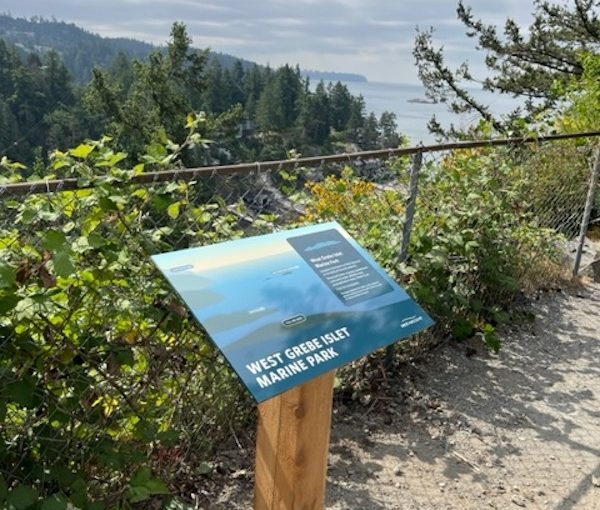
The Lando family donated to the federal government the islet that is now West Grebe Islet Marine Park. The park will be held in perpetuity for wildlife conservation and is off limits to people. (photo from Barbara Schloss)
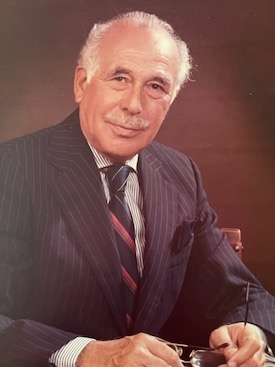
Barbara Schloss remembers the day in the 1970s when her father came home and announced, “Guess what I did? I just bought an island.”
Her father, Esmond Lando, was a familiar face in Vancouver’s Jewish community, known to everyone as Bud. Snapping up an island may have been a little out of the ordinary for most dads, but Bud Lando had a finger in all sorts of pies, his daughter recalls.
Neither the father nor, until recently, the rest of the family, though, had any idea of the value of the island – “islet,” to use the precise terminology – he had bought. And, while the tiny West Grebe Islet is located just off West Vancouver’s Lighthouse Park – and, therefore, a short kayak ride from some of the world’s priciest real estate – the value isn’t so much in dollars as in ecological biodiversity. So rich in bird and animal species is the one-third-hectare (about 0.8 acres) island that the federal government was delighted to accept the rocky outcrop from the Lando family through Canada’s Ecological Gifts Program.
The islet is known to some West Van locals as “Seal Rock,” due to the prevalence of the sea mammals hanging about on or around the place. But, according to North Shore News reporter Brent Richter, who wrote about it last year, birders have identified 89 different bird species that either inhabit West Grebe or drop in during migration, including black oyster catchers, turnstones, marbled murrelets and one of the highest densities of surf scoters in the region. A pair of eagles are routinely spotted on the Coast Guard light beacon.
Schloss, who is a longtime resident of Montreal, says she didn’t know the ecological richness of the place when she contacted the feds on behalf of her siblings and the family to offer it to the federal government. Now that she knows, she likes to think her late father had an inkling of the gem he rescued and preserved from development. The family will celebrate their father’s foresight this weekend at a dedication ceremony where a plaque will be unveiled acknowledging Esmond Lando’s contribution to preserving West Grebe.
But, there is a larger story.
The Landos lived in Shaughnessy – Schloss’s sister, Roberta Beiser, still lives in the family home – but Bud had a special connection with West Vancouver. That connection is a tale of discrimination and civil rights in British Columbia.
Jews were not welcome on golf courses anywhere in Metro Vancouver when the nine-hole Gleneagles Golf Course came on the market in 1951. It had been developed two decades earlier and named after the legendary links in Scotland.
Bud Lando and pal Dave Sears snapped up the golf course – and opened it to Jewish players. Golf courses would become a sideline for Lando, but only one of many.
“He really was like a Renaissance man,” said Schloss. “He loved creating, he was very creative. He painted, he sculpted – this was all on the side. At home, we had a kiln. He decided he was going to make wine, so he got a whole bunch of grapes somewhere and went to a distillery somewhere and made sure that that wine had ‘Esmond Lando’ on it. It was just another passion of his.”
Esmond “Bud” Lando (photo from Barbara Schloss)
Lando was a successful practising lawyer, and he partnered with friends in a vast range of entrepreneurial pursuits.
“If anyone would suggest something, he would look it over and, if it looked like a possibility, he was in it,” Schloss said of her father.
With a couple of friends, he launched Queen Charlotte Airlines, she recalled, as well as a box company, a lumber mill in Chilliwack and a trucking company. “He was into everything he could possibly find,” she said.
The golf sideline was important – not just because Lando loved to play, but because the discrimination rankled him. Sears and he soon sold Gleneagles so they could construct the full 18-hole course that is now the Richmond Country Club. Lando then developed courses in Delta and Surrey.
“Gleneagles was a very important purchase for my father, who was very plugged into the Jewish community,” said Schloss. “He was part of Canadian Jewish Congress and was very active in the Jewish community. Plus, he was on a council for Christians and Jews. He was very ecumenical, but Jews were very important for him. That’s why he got involved with Gleneagles.”
Bud Lando came by his entrepreneurial spirit and sense of adventure naturally. Bud was born in England and his parents, Lou and Sara Lando, trundled the family of six off to Prince Rupert, B.C., in 1911, when Bud was a tyke.
“That was supposed to be the metropolis,” Schloss said of the northern B.C. port town. “That was going to be where everything was happening.” She added with a laugh: “Didn’t happen.”
The family moved to Vancouver and got into the fur trade. They opened Lando’s Furs, opposite the Canadian Pacific Railways station (now Waterfront station, where Seabus and Skytrain meet).
Bud Lando graduated from law school at the University of Alberta and practised for decades, becoming Queen’s Counsel. He and his wife, Edith Mitchell Lando, originally from Winnipeg, raised four children. In addition to Schloss and Beiser, daughter Juli Hall now lives in Houston, Tex., and son Barry Lando lives in Paris. Barry was a producer for the American TV newsmagazine 60 Minutes. (Mike Wallace, the late longtime cohost of the program, said that, without Lando, “there would have been no 60 Minutes.”)
The four siblings, their children and grandchildren will gather this weekend at Gleneagles Golf Course to dedicate two plaques – one at the course itself and another a short walk away, from where the islet can be viewed.
“When my father passed away, we each took on part of the heritage of my father, whatever he left behind we divvied up and decided who would be in charge of what,” said Schloss. “I got Grebe. That was one of the things that I was involved with.”
It was Barry Lando who told her about the federal program and that the government might be interested in the property. Indeed, they were. The island was formally transferred to the federal government last year, but under an agreement with the District of West Vancouver, it will be cared for by the municipality and was officially designated as West Grebe Islet Marine Park earlier this year.
The islet will be held in perpetuity for wildlife conservation and is now off limits to bipeds in order to conserve its ecological value. Barry Lando and some of his family members are, therefore, among the few people to have set foot on the place. They once approached by boat and then swam up to the islet but its geography meant it was never a welcoming spot for casual visitors.
“My father would be so pleased and proud to know that he had the foresight to recognize a treasure and to save it from development,” said Schloss, adding that he would be happy knowing that his legacy and the island is preserved forever. “I think it would mean a lot to him to know this.”
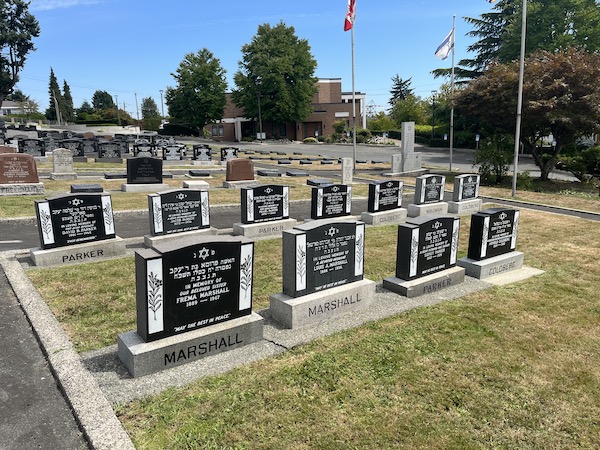
On Sept. 1, burial plot costs and funeral prices are set to increase. (photo from Schara Tzedeck Cemetery Board)
After Lorna Krangle’s husband, Larry, passed away last year, she determined to put her own final plans in place and not to leave funeral arrangements for her family.
“After burying him, I just thought, I’ve got to do something,” she told the Independent. “I’m not going to have all the kids being worried and putting money together or whatever. They’ve got their own families.”
Krangle, 87, has deep roots in Vancouver. She was born here, and grew up around the city, first on Main Street, near the Ivanhoe Hotel, and, later, at 19th and Cambie. She and Larry raised their six kids on the North Shore.
Larry and his brother, Jack, ran Regent Tailors, adjacent Victory Square at the heart of Vancouver’s downtown. Lorna was a ceiling-busting female saleswoman, taking orders from retailers and outfitting the Canadian Pacific Airlines female flight crews with their uniforms.
It was only recently, though, that she turned her attentions to a different kind of business: making final arrangements. Now, she is urging everyone to take the step. Krangle is a bit of an evangelist for pre-arranging.
Howard Jampolsky, executive director of the Schara Tzedeck Cemetery Board, agrees wholeheartedly. He is also urging people to consider taking the step before Sept. 1, when prices for both cemetery plots and funeral services go up significantly.
The cemetery board is the not-for-profit charity that operates Jewish burial facilities in New Westminster, Surrey and at the historic Jewish cemetery located in Vancouver’s Mountain View Cemetery.
Planning ahead can bring peace of mind to families, Jampolsky said, and it also presents the opportunity to spread the not-insignificant costs over an extended period. Without prepayment, costs of the burial plot and funeral services are due at the time of burial. Prepaying allows the fees to be spread out over months or years, with no interest or service fees. All funds, by law, are held in trust, he said.
The cemetery board now sells plots and funeral services as a package, which is a fairly new approach. It used to be common for people to prepay for the plot, but not the funeral.
“The fact of the matter is, if you pay for the plot and not the funeral, the funeral price is still going to continue to go up,” he said.
The term “pre-planning” is a common term in the funeral sector. However, it doesn’t really apply in this case, Jampolsky said. In other cities, Jewish funeral providers may be for-profit entities and offer a diversity of services. The Schara Tzedeck Cemetery Board’s philosophy is that the type or quality of a funeral should not be determined by the wealth of the deceased.
“There is really no planning for a Jewish funeral,” he said. “A Jewish funeral, as we provide one, is pretty much the same for everybody.” Unlike in other traditions or places, there is no music to choose, no flowers to select. The caskets Schara Tzedeck offers are simple pine boxes intended for speedy decomposition per Jewish tradition.
“We believe that everybody comes into the world equal, they should go out of the world equal and, to the best of our ability, that’s what we try to do,” he said.
There is another fundamental tenet of the nonprofit funeral provider, Jampolsky said: “Every Jewish person has the right to a full and proper Jewish burial.”
“If you do have financial constraints and you would like to discuss options available, certainly we can work something out,” he said. “That’s when I sit down and talk to people one-on-one and find something that works for them and works for us.”
The financial situation of a household is also a factor in considering prepayment. Preparing in advance is a good plan, he said – but not if it causes financial hardship.
“If people are struggling, if they are on a fixed income, I don’t want people to prepay their funeral and have to sit in the dark or not have their television or have to give up a vacation,” he said. “You have to live. Living is most important. But, for those who just want to get it out of the way and taken care of, it’s a great set-up.”
On Sept. 1, the cost for a plot at the New Westminster cemetery will rise to $14,000 from the current $12,500. Plots at Schara Tzedeck’s Surrey cemetery will go up to $7,500 from $6,500. There are still several dozen plots available at the old Jewish cemetery at Mountain View – Jampolsky acknowledges that some people may be under the impression the cemetery is full – and those prices are rising to $27,000 from $23,500, keeping in line with prices in the non-Jewish section of Mountain View.
Funeral services at all locations are increasing to $13,000 from $12,000.
Getting affairs in order ahead of time can make a sad and stressful time a little easier, said Jampolsky.
“I’ve seen this so many times when we are dealing with a family,” he said. “We’re talking about picking up their loved one and we’re talking about doing a burial tomorrow, because it’s so quick, and then we have to talk about the money and what it’s going to cost and they have to figure that out.”
Pre-arranging can take that element out of the mix for the survivors.
“It’s a very significant gift to give to your loved ones,” Jampolsky said. “You can remove that burden from the ones you love.”