Skip to content
  • Home
  • Subscribe / donate
  • Events calendar
  • Business Directory
  • FAQ
  • News
    • Local
    • National
    • Israel
    • World
    • עניין בחדשות
      A roundup of news in Canada and further afield, in Hebrew.
  • Opinion
    • From the JI
    • Op-Ed
  • Arts & Culture
    • Performing Arts
    • Music
    • Books
    • Visual Arts
    • TV & Film
  • Life
    • Celebrating the Holidays
    • Travel
    • The Daily Snooze
      Cartoons by Jacob Samuel
    • Mystery Photo
      Help the JI and JMABC fill in the gaps in our archives.
  • Community Links
    • Organizations, Etc.
    • Other News Sources & Blogs
  • JI Chai Celebration
  • JI@88! video

Recent Posts

  • Legal help for students
  • Revisiting myth of Lilith
  • Wrong person rebuked
  • Canada’s mixed messages
  • Questions for museum
  • Symposium on antizionism
  • Making soccer political
  • CJPAC lauds Pulver’s impact
  • City recognizes Vrba’s legacy  
  • Organ donation saves lives
  • Theodore’s March premiere
  • A healing Shabbaton
  • Supplying healthy food
  • A chime of metal tags
  • Yellowknife seder a first
  • Ishai energizes, unifies
  • A Lag b’Omer to remember
  • Expanding the healing
  • Hannah Senesh – a unique hero
  • Community milestones … May 2026
  • Sharing her testimony
  • Fall fight takes leap forward
  • The balancing of rights
  • Multiple Tony n’ Tina roles
  • Stories of trauma, resilience
  • Celebrate our culture
  • A responsibility to help
  • What wellness means at JCC
  • Together in mourning
  • Downhill after Trump?
  • Birth control even easier now
  • Eco-Sisters mentorship
  • Unexpected discoveries
  • Study’s results hopeful
  • Bad behaviour affects us all
  • Thankful for the police

Archives

Follow @JewishIndie
image - The CJN - Visit Us Banner - 300x600 - 101625

Month: July 2021

Hate not acceptable at SFU

Hate not acceptable at SFU

“Antisemitism is hate, and it is not acceptable at SFU,” said Simon Fraser University president and vice-chancellor Joy Johnson. (photo by Jeff Hitchcock / flickr)

The president of Simon Fraser University met with Jewish students recently and issued a statement condemning antisemitism on campus and directing those who experience anti-Jewish racism to appropriate resources.

After meeting with Jewish students, Joy Johnson, Simon Fraser’s president and vice-chancellor, tweeted on July 12: “Their experiences were deeply upsetting.”

“Antisemitism is hate, and it is not acceptable at SFU,” she added. “If you are experiencing discrimination or hate, help is available. Please reach out.”

The university, in consultation with the SFU Multifaith Centre and Hillel BC, created a resource for those who have experienced antisemitism. This includes links to campus chaplains, confidential counseling and critical incident support for significant events.

Like many university campuses, SFU has a history of anti-Israel activism that can often veer into antisemitic imagery and tropes. The latest eruption occurred at the first council meeting of a newly elected Simon Fraser Students Society. Occurring around the time of the most recent conflict between Hamas and Israel, the council meeting passed a resolution endorsing the boycott, divestment and sanction movement against Israel (BDS) in what Jewish students view as a biased and unfair meeting.

The student society’s resolution – titled “SFSS Response to the Israeli Colonization of Palestine” – accused Israel of “disproportionate violence,” claiming “worshippers at the Al-Aqsa Mosque were indiscriminately targeted by Israeli police forces” and condemning “the ongoing persecution of the Palestinian people by the government of Israel.” The resolution endorsed the BDS movement and expressed no parallel concerns about Palestinian terrorism, violence, incitement or human rights abuses. It also accused the United States and Canada of complicity in perceived Israeli misdeeds. The resolution passed unanimously.

The student society brought in Dalya Masri, a Palestinian activist, to provide “expert” testimony before the vote, said Katia Fermon, outreach coordinator for Hillel BC, the Jewish student organization.

“She gave a presentation, which was beyond hurtful for Jewish students,” said Fermon. Masri, she said, compared the First Intifada to the sort of peaceful rallies that happen on the streets of Vancouver.

“My students have family that died in the First and the Second Intifada,” Fermon said. “This is not a strange thing for us, and she just mentioned it like it was a rally.”

The presenter accused Israel of taking over territory in 1967, while eliding the larger facts around the Six Day War and other realities, she said.

Fermon said that, in preparation for the vote, the SFSS consulted with Independent Jewish Voices, but did not consult with Hillel.

“That fact is very hurtful,” she said. “Independent Jewish Voices is not a club on campus, however Hillel Jewish Students Association is. They pay their dues.… We are a part of that union. Those voices were not asked for or heard.”

Hillel BC issued a statement condemning the student society’s approach.

“Instead of supporting an open and extensive dialogue amongst students, the SFSS has chosen to perpetuate the agenda of a movement whose use of harmful terminology fails to address the root causes of the conflict, ignoring centuries of complex history in which power dynamics constantly shifted,” it reads. “This rhetoric further sows hate and division instead of helping work towards a peaceful two-state solution. The SFSS has decided to single out the state of Israel instead of opening a space for adequate dialogue between Jewish, Israeli and Palestinian students on campus wherein we may critique the policies of the state while being mindful of the hate that may result in endorsing certain statements, activists or movements.”

It added that BDS “openly traffics in antisemitic conspiracies and dog whistles” and noted that nearly two decades of BDS activism has not “freed Palestine from violence or oppression. Instead, it has been to stoke aggression and polarization online, in the streets and on campuses.”

In a statement to the Independent, Nico Slobinsky, director of the Centre for Israel and Jewish Affairs, Pacific region, said: “The statement by SFU’s president is an important step in denouncing the rising tide of anti-Jewish hate on campus. CIJA thanks president Dr. Joy Johnson for recognizing that SFU is not immune from antisemitism. Combating anti-Jewish hatred is not only about protecting Jews but also about protecting the very fabric of our society, on and off campus.

“CIJA appreciates the strong friendship and commitment shown by Dr. Johnson to creating a campus that is inclusive, diverse, safe and open to all students,” Slobinsky added. “CIJA looks forward to working with SFU alongside our campus partner, Hillel BC, towards ensuring a healthy campus environment.”

Students have been studying remotely for more than a year and so most of the discussion, which has included a litany of offensive comments, has taken place on official and unofficial online platforms, including the primary undergraduate forum.

One Israeli student, who asked to remain anonymous, said she was one of a few who spoke up in opposition to the prevailing bias in the dialogue.

“I didn’t expect it to go smoothly,” she said. “There was a lot of backlash in the moment and it is still going on.… A lot of comments are being deleted and monitored but there are a lot of hateful comments.”

The statements frequently included slogans such as “From the river to the sea, Palestine will be free” and other comments promising the annihilation of Israel. Israel was compared with Nazi Germany, Rhodesia, apartheid-era South Africa and plantation-owning slaveholders. Concerns about the safety of Jewish people were dismissed as efforts to “stifle” legitimate criticism of Israel.

“As an Israeli, I don’t want to believe they said them personally to me,” the student said. “I try my best not to take all those comments personally, but sometimes it gets there.”

As she and other students prepare to return to campus this fall for the first time in more than a year, she said she is not concerned for her personal safety, but she is worried about some of her friends.

“I was born in Israel and I have a little bit of Israeli inside of me so, for myself, I’m not that worried,” she said. “Obviously, it’s not a nice experience.” Whether the online threats and vitriol turn into real-time incidents remains to be seen, she said, but some of her Jewish friends are already taking cover.

“They are not wearing their Star of David,” she said. “They never say out publicly that they are Jewish: to not get into a conflict, to avoid any debate on the matter, they just decided not to. I think it’s a shame…. It is a shame that we live in Canada in the 21st century and people are choosing to hide part of their identity. For myself, it’s a big chunk of my identity, so I’m not going to hide it, but I can’t blame people who choose to. I empathize with them.”

Format ImagePosted on July 23, 2021July 21, 2021Author Pat JohnsonCategories LocalTags antisemitism, BDS, CIJA, hate, Hillel BC, identity, Israel, Israeli-Palestinian conflict, Joy Johnson, Katia Fermon, Nico Slobinsky, Palestine, SFU, Simon Fraser University, students
Listening and learning

Listening and learning

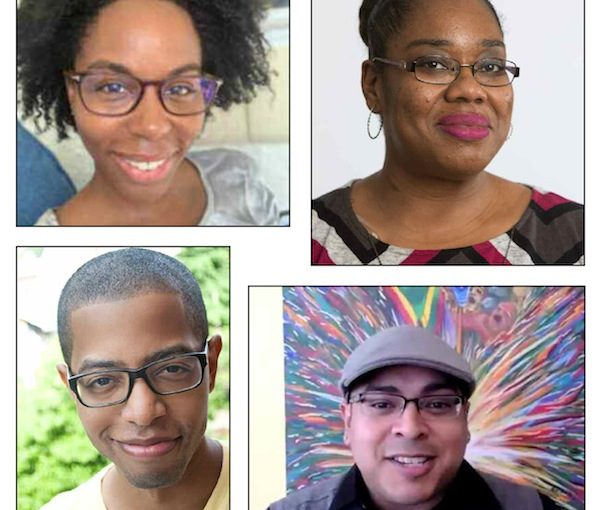
Juneteenth webinar panelists (clockwise from top left) Heather Miller, Dr. Tameika Minor, Rafi Forbush and Kendell Pinkney. (photos from internet)

The United Synagogues of Conservative Judaism (USCJ) held a webinar entitled Juneteenth Through the Eyes of Jews of Colour: Sharing Stories and Perspectives on June 17, the same day the United States declared Juneteenth (June 19) a federal holiday. Slaves were freed from Texas, the last Confederate state with institutionalized slavery, on June 19, 1865.

The objectives of the evening were to establish better dialogue, to create a space to honour the Jewish and Black communities, to learn about the challenges people of colour have in the Jewish community, and to find the means by which people of colour can feel welcome in the Jewish community. Marques Hollie, a theatre artist, storyteller and musician, led the evening with a rendition of the post-Civil War song “Oh Freedom.”

“Our people crossed the Red Sea. People of colour are still in Egypt. For Black people, freedom has not come fast enough and not in a straight line,” said Ruth Messinger, a former politician and head of the American Jewish World Service, in opening remarks that preceded the introduction of the panel discussion.

The four panelists were Heather Miller, Dr. Tameika Minor, Kendell Pinkney and Rafi Forbush. Rabbi Ari Lucas of Congregation Agudath Israel in Caldwell, N.J., moderated the event. Lucas encouraged the audience to listen before asking questions.

“In a lot of ways, I feel like I came out as a Black person last year,” said Miller, president of the Jewish Centre in Brooklyn and a future rabbi. “In the Jewish spaces I have been in, people have tried not to see my colour. The stakes are different for us than the majority of people in this Zoom room. I was afraid this would just be a moment for everyone else and that the world would go back to not seeing this stuff again after the pandemic. I was afraid of being left exposed without a community.”

Minor, a professor in clinical mental health counseling and rehabilitation counseling at Rutgers University, said she would like to see Juneteenth become a day of reflection and not just celebration. “Reflection of where we have come from and how far we have to go,” she said. “It’s not a day we should sit back and not look at the wealth gap, mass incarceration and police brutality. Now it is a federal holiday, and yet so many states are banning critical race theory in schools.”

“For me, the question isn’t what does Juneteenth mean to me now but what might it mean to us moving forward,” said Pinkney, a Brooklyn-based theatre writer, Jewish-life consultant and rabbinical student at the Jewish Theological Seminary. “The Jewish people are so, so good at crafting stories, creating rituals. What rituals might be created 20 years from now around Juneteenth? Which stories and voices will we finally open our ears to?”

He added, “I like to think of it more as a promise of what might be and what we might become as a Jewish community.”

Rounding out the panel was Forbush, youth director at Beth Jacob Congregation in Mendota Heights (St. Paul) and founder of the Multiracial Jewish Association of Minnesota, which focuses on creating space for Jews of colour to connect to one another, through the community, education and advocacy.

“If you had told me that our community would be having this conversation at the beginning of the pandemic, I would have laughed at you,” said Forbush. “There is a bright light in our community starting to see outside of ourselves. If we are a people and not a race, then we owe it to each other to get to know who we are. The idea here is, extend the tent and not move it to exclude somebody else.”

Like Pinkney, Forbush spoke of the potential the holiday holds for the future and the sense of inclusion it can bring to the entire community. He pointed out that young Jews of colour often feel excluded.

Throughout the webinar, the panelists touched on various points of exclusion they feel as part of a community – of not believing they are entirely heard and of the microaggressions that occur in Jewish spaces, such as being quizzed on aspects of Jewish life or being viewed as staff and not a member of the community. Understandably, these are the sorts of issues that drive Jews of colour away from synagogues and other Jewish institutions.

The hope was expressed that Jews of colour could achieve more positions of leadership within Jewish organizations. There was also a sense that the community as a whole is not achieving its full potential without engaging more actively and openly with Jews of colour.

“This year, as we expand upon the understandings of diversity and inclusion, we have, despite COVID, actively widened the doors to our tent so to speak,” said Rabbi Susan Tendler of Richmond’s Congregation Beth Tikvah, which has been promoting the recent USCJ webinars on reaching out to interracial families and building a larger sense of inclusion for all Jews.

“We have actively listened and considered with compassion the feelings of people who may want to enter and yet find barriers to feeling authentically accepted within the larger Jewish community,” she told theIndependent. “United Synagogue’s program on Juneteenth is one example of many in which we have taken the opportunity to listen and learn.”

Sam Margolis has written for the Globe and Mail, the National Post, UPI and MSNBC.

Format ImagePosted on July 23, 2021July 21, 2021Author Sam MargolisCategories WorldTags Beth Tikvah, Heather Miller, identity, identity issues, inclusion, Jews of colour, Juneteenth, Kendell Pinkney, Rafi Forbush, Susan Tendler, synagogues, Tameika Minor, United Synagogues of Conservative Judaism, USCJ

Lessons of Greens’ row

The ongoing squabbles in the Green Party of Canada stopped short of a bloodbath Monday, after opponents of leader Annamie Paul abruptly holstered their figurative weapons.

A litany of threats against the leader was dropped that day. These included a non-confidence vote by the party’s national governing body, which was to take place Tuesday. But the vendetta against Paul went further, with one faction on the national board taking steps to strip Paul of her membership in the party. Also, a $250,000 fund that had been allocated for Paul’s campaign in the Toronto Centre riding, where she hopes to gain a seat in the House of Commons, was apparently withheld.

Ostensibly, the turmoil was a result of Paul’s reaction to the conflict between Israel and Hamas last spring. At the time, the leader posted an innocuous message on Twitter calling for de-escalation and a return to dialogue. This was met with an outraged retort from Jenica Atwin who was, at the time, one of the Green party’s three MPs. Apparently not a big fan of de-escalation and dialogue, Atwin called Paul’s statement “totally inadequate.”

Matters escalated after Paul’s senior advisor responded with an impolitic rant of his own, accusing MPs of antisemitism and threatening to eject sitting Green MPs and replace them with Zionists.

At this, Atwin crossed the floor, joining the Liberal party. Within days, her new political masters had apparently read her the riot act and she recanted her words. The principles that led her to cross the floor could not, evidently, withstand the pressure from the prime minister’s office.

There is a great deal that this quick synopsis overlooks. Paul has been accused of being uncommunicative with Green MPs and other officials. In response, she has said that she is a victim of racism and sexism.

None of this should be a surprise, perhaps. Paul was always going to have an uphill battle. During the leadership contest when she was elected, less than a year ago, Paul was the subject of horrific racist online attacks based on her identity as a Jewish Black woman. During that campaign and since, she has walked a moderate line on foreign policy and her statement during the Gaza conflict was in keeping with a reasonable, balanced approach to the issue.

But there are people in the Green party for whom reason and balance on this issue are unwelcome. The candidate who Paul defeated narrowly on the final ballot is one of Canada’s most vocal anti-Israel campaigners. One almost suspects some members were merely waiting for an opportunity to pounce.

While the members of the party’s national council did not explain their actions in apparently backing down from the fight, it is likely that at least a modicum of common sense prevailed, with activists realizing that they were preparing to defenestrate their leader weeks, or even days, before a possible federal election call.

The whole fiasco has been disturbing. A leader with superb credentials in international affairs is thrown into turmoil because she refused to take a one-sided approach to a significant issue. To suggest Paul has been anything like a Zionist firebrand is nonsense. Her “crime” was not jumping on a bandwagon on to which too many of her grassroots members (and perhaps a couple of her MPs) have jumped.

She got a reprieve this week. Depending on how she does in the expected federal election, she may face the same opponents again afterward. On the other hand, could this represent a turning point?

Whatever your politics, Paul is an impressive individual. Her voice – especially on the never-more-relevant issues of environment and climate change – is needed in our politics. Whatever her gut views about Israel and Palestine, Paul is smart enough to know that a party that subscribes to an anti-Israel line is going nowhere fast.

Arguably the most successful Green party in the world is that in Germany. Annalena Baerbock, its candidate for chancellor in September’s election, is aiming to replace Angela Merkel and some opinion polls say she will win. Put mildly, Germany and its politicians have a unique appreciation of issues involving Jews and the Jewish state. But it is likely significant that, of all the world’s Green parties, Germany’s is perhaps the most open to Israel, in all its complexities. Thoughtful voters recognize that a reasoned approach to the Israel-Palestine issue is a sign of a party that is ready for prime time.

Advocating for Palestinian human rights is important and admirable – assuming it is genuine and not merely an excuse to excoriate Israel with no constructive impact on actual Palestinians. But spouting hateful slogans and libels about Israel does not instil confidence in ordinary voters. Annamie Paul knows this. It could save her party – if they let her.

Posted on July 23, 2021July 21, 2021Author The Editorial BoardCategories UncategorizedTags Annamie Paul, Green party, Israeli-Palestinian conflict, politics

Recalibrating our life route

In the summer, we read through Torah portions that sound like very weird vacation routes. As a Shabbat regular joked during our livestreamed service, it sounded like the old-fashioned CAA TripTiks.

In the days before GPS or MapQuest, you went to your local automobile association’s shop. A travel agent would hand you tour books for wherever you were traveling and create a personal set of maps, with highlighted routes, for your journey. With lots of tips for where to stop, eat and how to use your sightseeing time along the way, it was pretty useful. I used those tour books in years past, but my family eschewed the TripTiks; my parents insisted we could read maps on our own.

Considering the long list of places that the Israelites went during their 40 years in the wilderness, it could be compared to a family summer vacation gone wrong. Rather than the fastest, most direct route between two points, the Israelites wandered. In fact, it was their behaviour and relationship with G-d that had gone wrong. This exile and wandering was very much about the journey. In Numbers 32:13, it says: “The Lord was incensed at Israel and for 40 years He made them wander in the wilderness, until the whole generation that had provoked the Lord’s displeasure was gone.”

We often talk in platitudes, like “life’s a journey, not a destination,” but let’s be honest. Most of us want to get places in life – accomplish things and do things properly. We might enjoy hiking or meandering down country roads, but most of us don’t want to see our whole lives as a lot of meaningless wandering.

This issue hit home for me in my recent studying of Tractate Yoma, which is all about how Yom Kippur works. Towards the end of the tractate, on page 86A, the rabbis discuss repentance and the notion of “hillul Hashem” or “desecrating the name of G-d.” Their explanations don’t seem direct at first. Rav suggests it’s like when a public figure, such as him, goes to the butcher, takes meat and doesn’t pay immediately, thus setting a bad example. Rav Yohanan suggests that, if one walks a distance without Torah or tefillin, it indicates a lack of appropriate respect for the Divine.

The tractate continues with when someone’s friends are embarrassed by his reputation, and other examples. Then, finally, a really difficult one: “But one who reads Torah and learns Mishnah and serves Torah scholars, but his business practices are not done faithfully and he does not speak pleasantly with other people, what do people say about him? Woe to so-and-so who studied Torah, woe to his father who taught him Torah, woe to his teacher who taught him Torah. So-and-so who studied Torah, see how destructive are his deeds and how ugly are his ways.” (Tractate Yoma 86a)

There it is, the person who disgraces G-d’s name and struggles when seeking repentance on Yom Kippur. This is because, despite a clear road map of how to behave, he got very lost on his way.

All of the examples touch on how we behave in community, and how it reflects on us and affects others. Shaming oneself or harming others disgraces G-d’s name because, well, we’re all made in G-d’s image. We should know better.

Many of us are still taking summer adventures, but it was helpful for me to read about finding one’s way more existentially, and to consider Yom Kippur. It had remarkable relevance to something else that happened.

Recently, we were involved in what would have been a big real estate purchase for our household. My kids and husband were very excited. We made tons of plans and, like the careful tourists we are, we had the routes on our “roadmaps” highlighted. We knew which steps we had to get through, and how to proceed. This was to be our summer adventure.

However, the experience proved far more challenging than usual – and no map would have helped. In the end, we learned that the seller’s finances were so tangled and she owed so much money that the sale couldn’t go through. Like the story in Tractate Yoma, it felt embarrassing and upsetting. It’s hard to see a person fall off the path that most of us expect to take.

We don’t think of closing an open construction permit or paying property tax bills as being central to our life journeys. Yet, just like the poor behaviour that caused G-d to get angry at the Israelites, sometimes our missteps cause a lot of misery down the line, and to other people.

Being an upstanding person, who promptly pays bills and deals with the chores of adulthood, doesn’t just reflect on one’s own character. As the rabbis pointed out, behaving properly avoids embarrassing others or setting a bad example. It reminds us to talk about “Torah,” or generally upright things. We should apply what we learn – to behave kindly and ethically towards others all the time.

When someone doesn’t do this, it’s not just an issue of seeking individual repentance and everything is fixed. The ramifications go beyond an individual’s bad behaviour. It turns out that not paying taxes or taking care of household maintenance affects many others nearby in a community.

When this failed real estate deal happened, it wasn’t our fault. It felt, I explained to my parents, like we’d put our car in a parking lot with an invisible sinkhole. When the sinkhole opened up, all the cars, including ours, fell in. When we got to the (imagined) parking lot, all was lost, but there was nothing we could have done. We couldn’t have known that this experience would derail us from our journey.

I can’t lie. Being thrown off the highlighted route was disconcerting. I kept thinking about how the car’s GPS voice says “recalculating” when we’re driving and get lost. It’s taken me nearly a week to process the failed home purchase. Now, we must create a new metaphorical summer destination, with fun activities for our kids.

We can’t always control our path. Maybe that’s why those platitudes mention “the journey” instead. While we focus on our destination, the lake or camping or a staycation, it’s so important to think about how we behave and live along the way. Our actions can affect everybody.

I took a long walk with my dog on Shabbat, and spoke with three separate neighbours. They all needed the company and the conversation. Was this one of my new stops, on an entirely different path?

The Israelites wandered 40 years to get to the Promised Land. Sometimes, the things we do along the way are the most important part after all.

Joanne Seiff has written regularly for CBC Manitoba and various Jewish publications. She is the author of three books, including From the Outside In: Jewish Post Columns 2015-2016, a collection of essays available for digital download or as a paperback from Amazon. Check her out on Instagram @yrnspinner or at joanneseiff.blogspot.com.

Posted on July 23, 2021July 21, 2021Author Joanne SeiffCategories Op-EdTags COVID-19, Judaism, lifestyle, planning, real estate, Talmud, TripTiks

Action over words needed most

Action over words was what was most needed at this week’s National Summit on Antisemitism, hosted by the federal government. That was the consensus at a July 14 townhall in the lead-up to the summit. Hosted by the Centre for Israel and Jewish Affairs (CIJA), the virtual meeting drew about 1,300 Canadian Jews, some of whom expressed outright fear at spiraling antisemitism in their communities and on campuses.

The July 21 summit, and one on Islamophobia the following day, were announced earlier this month by Bardish Chagger, minister of diversity and inclusion, in the wake of a surge in antisemitic incidents this spring and the hate-driven murder of a Muslim family in London, Ont.

Addressing the townhall, Chagger listed Liberal achievements on fighting antisemitism, including Canada’s adoption in 2019 of the International Holocaust Remembrance Alliance (IHRA) working definition of antisemitism, and the appointment last November of former justice minister and human rights advocate Irwin Cotler as Canada’s first special envoy on preserving Holocaust remembrance and combating antisemitism.

In a statement announcing the summits, Chagger said invitations to attend were extended to her cabinet colleagues, members of Parliament “and officials throughout all orders of government to hear directly from Muslim and Jewish community leaders.”

The meetings were to assemble “a diverse group of community and political leaders, academics, activists and members with intersectional identities within these communities.”

Both summits were to be held virtually and take place “in a closed door environment to ensure the safety of those participating,” a spokesperson for Chagger told The CJN.

Live-streaming details had not been confirmed by press time, and a list of invitees had not yet been finalized, the spokesperson said, adding, though, that the federal Anti-Racism Secretariat is working directly with “community stakeholders,” while Chagger is working with MPs “to ensure a wide range of voices are represented” at the summit.

Cotler, who was to co-chair the national summit with Chagger, pulled no punches at the townhall, warning of an “old-new, global, escalating, virulent, sophisticated, and even lethal antisemitism” that reached “a tipping point” during the Israel-Hamas war in May.

He pointed out that last year saw the highest levels of antisemitic hate crimes since being measured, and that those numbers have already been eclipsed this year.

He cited “incendiary” antisemitic hate on social media, where, in one week this past spring, there were 17,000 tweets saying “Hitler was right,” or some variation of it. This makes the national summit “as timely as it is necessary.”

Cotler said the framework for an action plan would have to include a mandate to teach about the Holocaust and antisemitism in public schools; enhancing the adoption and implementation of the IHRA definition of antisemitism; fighting all hate crimes; holding social media platforms accountable for their content; zero tolerance of antisemitism in any political party; and to “appreciate that Jews alone cannot fight antisemitism. We need a constituency of conscience and of action.”

The summit was to provide “not only an opportunity to address antisemitism in words, but it must be what it is intended to be: an action summit, where words are translated into action, and not as a one-time [event] but as an ongoing combating of the scourge of antisemitism.”

An informal poll conducted during the townhall suggested that most respondents believe Jewish university students will feel excluded when they return to class this fall. Another poll during the townhall had 25% of respondents saying the rise of antisemitism here has caused them to consider leaving Canada, while a third question revealed that 39% of those answering said they have recently removed outward signs of their Jewish identity, such as Stars of David and kippot.

One participant spoke of keeping his passport up to date and handy just in case, while others wondered about the role governments can play in fighting antisemitism.

In his remarks to the townhall, Shimon Koffler Fogel, chief executive officer of CIJA, noted that what distinguishes the challenge Jews face is that they face hatred “from all sides”: the far left, far right, and from segments of the Muslim community.

“We have to challenge where necessary. We have to educate where the opportunity exists. But what we cannot do is surrender. We cannot be passive,” Fogel said.

The national summit’s focus was to be security and public safety, education and “civil society – issues of inclusion, acceptance, of not invalidating or delegitimizing the Jewish lived experience. We want the capacity to take increased ownership of our own institutional and community safety and security,” said Fogel.

He also hopes the summit will lead to a national campaign to enhance social media literacy. What’s most important, he added, is to see all levels of government work together to combat antisemitism. The “unprecedented” summit is not the end of the process, Fogel said. “If anything, it is simply the beginning.”

B’nai Brith Canada said it received in advance ideas for discussion at this week’s summit. They included:

  • Combating antisemitism must go beyond the principles enshrined in the federal Anti-Racism Strategy;
  • An emphasis on the importance of fostering Jewish life in Canada, recognizing the historical and contemporary contributions of Canadian Jews;
  • Promoting positive narratives about the contribution of the Jewish community to Canadian society;
  • Recognition that new forms of antisemitism are distinct from the traditional antisemitism to which Canadians are more accustomed;
  • Acknowledgement that anti-Zionism is a main driver of the new antisemitism and must be vigorously countered;
  • A commitment to mainstream the fight against antisemitism across all federal departments and agencies. This would include the Canadian Human Rights Commission and, by extension, involve provincial human rights commissions;
  • A commitment to create a national Holocaust, genocide and antisemitism advisory commission;
  • A commitment to implement the IHRA definition of antisemitism (and the IHRA definition of Holocaust denial and distortion) in a meaningful way and to actively promote adoption by the provinces/territories and municipalities;
  • And a commitment to convening a special forum and ongoing dialogue with the Council of Ministers of Education Canada to work with schools to develop effective methods to combat antisemitism.

In a statement, Michael Levitt, chief executive officer of Friends of Simon Wiesenthal Centre, also stressed that it’s important the summit “leads to real action, not words, including clear and defined next steps and funding to support initiatives to combat Jew-hatred, whether it’s in education, law enforcement, social media or another area.”

The townhall took place just as the Inter-Parliamentary Task Force to Combat Online Antisemitism released an interim report on how social media giants should handle online hate. Read more about it in Janice Arnold’s story for The CJN, which can be found at thecjn.ca/international-lawmakers-urge-action-on-online-anti-semitism.

– For more national Jewish news, visit thecjn.ca

Posted on July 23, 2021July 21, 2021Author Ron Csillag and Steve Arnold THE CJNCategories NationalTags Bardish Chagger, Canada, Irwin Cotler, National Summit on Antisemitism, The CJN

CHW empowers victims

COVID-19 isn’t the only global pandemic to worry about; the worldwide increase in domestic violence has been coined a “shadow pandemic” by the United Nations. Globally, an estimated one in three women lives with violence and fear. But the number of domestic violence complaints in Israel, for example, has increased by 800% since the beginning of COVID. True to its mission, Canadian Hadassah-WIZO (CHW) is leading the way to empower women by stepping up emergency support and services at this critical time.

CHW strongly believes that every human being deserves the right to achieve their full potential, while living in safety and security. CHW appointed its first chief executive officer, Lisa Colt-Kotler, who is spearheading a transition and new direction for the 100-year-old organization, with a history of support for women and children in Israel and Canada. This summer, CHW is launching a quadruple matching 24-hour crowdfunding campaign and proceeds will help empower victims of domestic violence.

image - S.O.S. – Starting Over Safely logoCHW’s summer campaign, S.O.S. – Starting Over Safely, has three priorities for projects in Israel: CHW Youth Villages, which provide a safe haven for at-risk adolescents and supports mental health through a variety of outlets; Essential Kits for Families, which provides the basic necessities needed to help each family start over safely after they leave an emergency shelter; and the Safety Net Program, which will empower women and their children by providing housing, financial help, social and personal support, employment support, and a network of other women in similar circumstances. Safety Net has nearly a 100% success rate of breaking the cycle of violence and preventing victims from re-entering a domestic abuse relationship.

Aug. 24-25, funds donated will be matched three more times by a loyal community of donors recognized as “Matching Heroes.” During the 24-hour campaign, which kicks off at noon in each centre across Canada, each gift donated on the website chwsos.ca will be quadrupled.

And, on Aug. 24, at 5 p.m. PST, CHW is hosting a free, star-studded, 90-minute virtual telethon experience during which viewers will learn more about how to help empower victims of domestic violence. To watch, just click on the link from the campaign website.

For more details, contact Irena Karshenbaum, CHW development officer for Western Canada, at [email protected] or 403-253-4612.

– Courtesy CHW

Posted on July 23, 2021July 21, 2021Author CHWCategories NationalTags CHW, domestic violence, fundraising, philanthropy, tikkun olam, women
JNF supports ALUT

JNF supports ALUT

(screenshot)

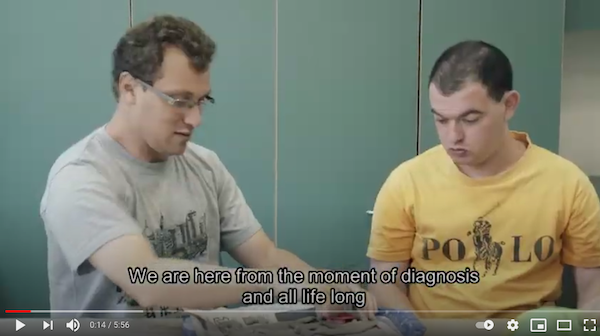
For this year’s Negev campaign, JNF Pacific Region has partnered with ALUT, the Israeli Society for Autistic Children, to renovate Aviv House, one of the first lifetime living facilities established by ALUT. ALUT has built and operates 18 “Homes for Life” in Israel, residences for individuals with autism who require supported living, that allow the residents to become integrated into the community to the greatest degree possible and provide for lifetime care in a family-type setting.

Aviv House (Beit Aviv) was established in 1992 in Jerusalem and the 14 residents have been living there since its inception. Their ages currently range from 35 to 49, and they all require assistance in almost all aspects of everyday life.

The physical house, now well over half-a-century old, is showing its age and has reached the point of risk. For example, the walls are crumbling and the sewage lines are regularly clogged; the building is not wheelchair accessible.

For more information and to watch a video from the campaign’s honorary co-chairs, Penny Sprackman and David Goldman, visit facebook.com/jnfvancouver. You can also contact the JNF office at 604-257-5155 or [email protected].

Format ImagePosted on July 23, 2021July 21, 2021Author JNF Pacific RegionCategories LocalTags ALUT, autism, David Goldman, fundraising, Jewish National Fund, JNF Pacific Region, Negev campaign, Penny Sprackman, philanthropy
Haas talks acting and BGU

Haas talks acting and BGU

Israeli actor Shira Haas was the featured guest at the Canadian Associates of Ben Gurion University of the Negev’s virtual gala July 7. (photo by Shula Klinger)

On July 7, the Canadian Associates of Ben Gurion University of the Negev held their second virtual fundraising gala. More than 1,200 participants logged on to the An “Unorthodox” National Virtual Gala event, which raised $850,000 for brain research at BGU’s Zlotowski Centre for Neuroscience.

The Zlotowski Centre is a group of researchers dedicated to finding cures and management tools for neurodegenerative diseases including Parkinson’s, Alzheimer’s, ALS and epilepsy.

photo - As part of the gala event, attendees received a special dinner package
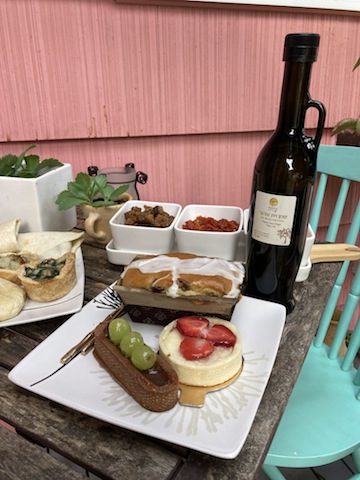
As part of the gala event, attendees received a special dinner package. (photo by Shula Klinger)

Months in the making, the virtual gala was the work of a countrywide team of BGU staffers and numerous volunteers. Every participating household in Metro Vancouver received sweet and savoury kosher treats from Café 41. The accompanying gift box also brought olive oil from the Negev, a copy of Deborah Feldman’s memoir, Unorthodox: The Scandalous Rejection of My Hasidic Roots (Simon & Schuster, 2012), appetizer dishes and a commemorative cutting board.

Danny Chamovitz, BGU’s president, spoke about the work of BGU’s academics in general, in disciplines ranging from public health to brain research. Canadian Senator Linda Frum conducted the feature interview – with multiple-award-winning actor Shira Haas.

Describing herself as “very, very shy” as a young person, Haas said she had considered psychology or graphic design as professions, until a casting director approached her on Facebook. Sixteen years old at the time, she said, with respect to that first project, “I understood that this is what I want to do, it was like the door to Narnia.”

Haas does not take her success or popularity for granted. “It was always a dream to work internationally, in different languages, for different audiences, but I never imagined it,” she said. “It was always about the work. I am very, very lucky to be in this position.” She added, “My parents deserve to be talked about! They are the most supportive and amazing parents.”

Known for taking on demanding roles, Haas approaches acting in a scholarly fashion. She studied musculoskeletal diseases to play a terminally ill woman in the film Asia, and researched Russian, Yiddish and Charedi culture for the series Shtisel and Unorthodox. She said she finds beauty in hard work, explaining that Asia was “challenging in the most beautiful way. It was a lot of physical and emotional work, and very personal for me.”

When playing a part, Haas said she is motivated by two things. First, she must be passionate about the role because “that’s what brings everything alive.” About Shtisel, she said, “I fell in love with it immediately.”

Her second principle is to portray “subjects that matter to me.”

Haas’s idealism was evident in the way she spoke about Asia. “It’s not really about death,” she said. “It’s about relationships, about appreciating the time we have and what we do with it. The highest form of art is to bring light to the darkness.”

About Unorthodox, she said, “It didn’t occur to me that it is about the Orthodox world. It was just a story about people who want to be loved, their doubts, desires and failures.”

And Shtisel, she noted, had a huge impact on people all over the world. The show helped change people’s view of Orthodox communities, she said: “It’s universal.”

Of her forthcoming portrayal of Golda Meir in her early years, Haas described a woman with “a very interesting life. She was very passionate, with many dreams and desires.”

Since David Ben-Gurion and Golda Meir were friends, she laughed, “this event was meant to be!”

Haas spoke of her personal connection to BGU. Her sister studied at the university and a close friend is there now. Haas wanted to participate in the gala for several reasons, including, she said, “I am Jewish, I am an Israeli. I want to keep on doing events like this! I am even more proud to do it for Ben-Gurion.”

As for the brain research being conducted at BGU, which the gala funds will support, there has already been groundbreaking progress. Claude Broski’s group has identified a protein that can slow down the degeneration brought on by Parkinson’s. The social robots developed by Shelley Levy-Tzedek and her team will have an impact on stroke patient recovery – the robots offer motivation, feedback and performance-tracking during the rehabilitation phase. Epilepsy researchers are developing wearable hardware and software that could alert patients to an oncoming seizure, an hour before it happens. And Deborah Toiber’s Alzheimer’s team is exploring questions about brain aging, such as, Why does the disease affect so many of us, when only 5% of cases are genetic?

David Berson, executive director of CABGU, British Columbia and Alberta, said, “It has been very gratifying to see how the Metro Vancouver community has embraced BGU students and faculty in recent years. Many new supporters have stepped forward during the last year to engage with us. We are especially grateful to our community partners, who helped us promote this Unorthodox event.”

Among the many contributors to the gala were board members Jay Eidelman and Si Brown. Rachelle Delaney helped Berson with the goodie boxes at the crack of dawn on July 7, while volunteer drivers delivered the boxes. Adrian Cantwell and I were co-chairs for the Metro Vancouver team.

Shula Klinger is an author and journalist living in North Vancouver. She was Metro Vancouver co-chair of the CABGU gala with Adrian Cantwell.

Format ImagePosted on July 23, 2021July 21, 2021Author Shula KlingerCategories WorldTags acting, Ben-Gurion University, BGU, CABGU, Camp David Accords, fundraising, gala, healthcare, philanthropy, science, Shira Haas, Zlotowski Centre

Community milestones … Federation, Koerner, Broca

The annual general meeting of the Jewish Federation of Greater Vancouver took place on June 21. Welcomed were five new directors: Gil Kimel, Dean Lederman, Lana Pulver (chair of the annual campaign), Michelle Pollock (chair of the Israel and global engagement committee), David Porte and Daniel Steiner. They join Bruce Cohen, Alex Cristall, Catherine Epstein (vice-chair), Jessica Forman (chair of the HR committee), Sue Hector, Hodie Kahn, Shay Keil, Rick Kohn, Candace Kwinter, Shawna Merkur, Kyra Morris, Lianna Philipp, Lisa Pullan, Stan Shaw and Diane Switzer.

Kwinter is the new board chair and, as such, her central challenge mirrors that of the community: how to navigate recovery and reopening in a time of great uncertainty.

“Over the past year, I have held a dual role as vice-chair of the board and chair of the Israel and global engagement committee, which has immersed me in our work,” said Kwinter in her remarks in the June 25 Federation Shabbat message. “And, through my position on our Community Recovery Task Force, I’ve gotten to know the organizations in our community and see how our community planning, convening, facilitating and fundraising functions create a valuable synergy. The health and strength of our local community is paramount, and it will continue to be a focus throughout my term.

“Israel also holds a very special place in my heart, and I am actively involved with our partner, the Jewish Agency for Israel’s board of governors, where I serve on three committees: antisemitism; unity of the Jewish people; and aliyah. In 2018, I was privileged to be part of a group of community leaders who traveled to Far East Russia to see the impact of our overseas work. As travel restrictions begin to ease, I hope we will have the opportunity to visit our partnership region in the Upper Galilee Panhandle and resume our Israel experience programs for young adults.

“At the same time,” she continued, “I remain connected to the work we do across the continent as part of JFNA [Jewish Federations of North America]. I have attended several General Assemblies over the years, and now is the perfect time for you to experience this epic gathering of Jewish leaders, because you can participate without the time and expense of traveling.

“Looking ahead, I know we have challenges to face, but this is also an exciting time in many ways. COVID has accelerated change and has prompted us all to look at new ways of strengthening our community. Rather than looking ahead to the ‘new normal,’ we need to work together to create the ‘next normal.’ That will be our collective journey over the next two years, and I am looking forward to the future we can build together.”

At the AGM, four community leaders were honoured. Jonathon Leipsic, who chaired the Federation annual campaign from 2018 through 2020, received the Harry Woogman Award, for his consistent and conscientious leadership and his long-standing and diligent campaign involvement. Yael Segal and Becky Glotmanreceived the Lou Zimmerman Award for their integral role in the revitalization of the Ben Gurion Society, a recognition society for young donors who give $1,000 or more to the Federation annual campaign. And Enav Zusman received the Young Leadership Award.

The 2020/21 annual report can be found at jewishvancouver.com/news-and-publications/annual-reports. In 2020, Federation raised $12.2 million from 2,600 donors: $8.8 million in the 2020 annual campaign; $2 million for community recovery; and $1.4 million in special project funding.

COVID-19 was a crisis that affected – and continues to affect – every aspect of the community. Because of donors’ generosity, Federation this year was able to direct more funding to its partners than ever before.

(British Columbia’s record-breaking heatwave has had devastating effects across the province. The tragic fire in Lytton was not the first that we’ve seen and likely will not be the last. With growing concerns for another wildfire season, Jewish Federation of Greater Vancouver has set up an emergency B.C. Wildfire Relief Fund to assist those affected by wildfires in our province. To donate, visit jewishvancouver.com/bcfire.)

* * *

On May 20, Junior Achievement British Columbia (JABC) inducted new members into its Business Laureates of British Columbia Hall of Fame, including Gordon Diamond. There was also the posthumous induction of 10 Pioneer Laureates, including Morris Wosk, z”l. Diamond and Wosk were featured in the June 25 Jewish Independent article “JA’s newest laureates.” The article accidentally overlooked another posthumous honouree, however: Dr. Walter Charles Koerner, z”l. Here is what the JABC highlighted of Koerner’s life.

Koerner was born in 1898 in what is now the Czech Republic. He developed his expertise in the forestry industry there, through his family’s lumber business.

photo - Dr. Walter Charles Koerner
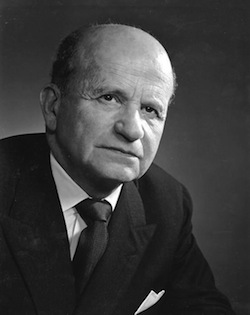
Dr. Walter Charles Koerner (photo from alchetron.com)

Koerner and his brothers immigrated to Canada in 1939 and founded the Alaska Pine and Cellulose Co., of which he was president. In 1957, the company became Rayonier Canada Ltd. and Koerner became president and later chairman of the board until his retirement in 1973.

Shortly after his arrival in Canada, Koerner made the University of British Columbia (UBC) a focal point of his philanthropy. He believed that a strong university was critical to building an engaged and successful society. He served as a member of the board of governors of UBC, as well as the chair. Not only that, he was the founding chair of UBC Hospital.

Koerner was also committed to preserving Indigenous art forms and supporting the re-emergence of Pacific Northwest Indigenous art. His multiple initiatives included supporting Indigenous carvers, repatriating Indigenous works from abroad and negotiating with then-prime minister Pierre Elliott Trudeau for financial support for the construction of the Museum of Anthropology, to which he donated his extensive collection. In recognition of his efforts in supporting Indigenous culture, the Haida Nation celebrated Koerner as an honorary chief of their nation.

Koerner was a notable philanthropist, who donated millions of dollars to educational institutions and other public organizations and endeavours. Among his many honours, he was a Companion of the Order of Canada, and held an honorary doctor of laws from UBC.

Koerner passed away in 1995.

* * *

Vancouver’s Lilian Broca is among the artists whose works comprise the From Canada exhibition at La Maison de la Mosaïque Contemporaine in Paray-Le-Monial, France.

Every year, La Maison de la Mosaïque Contemporaine organizes and hosts an international mosaic exhibition. The 2021 edition, the 24th, is uniquely devoted to a single country, Canada, through the works of 12 artists whose origins reflect the vast expanse of the territory. This is the first time in Europe that a mosaic exhibition has been dedicated to a North American country, and it is supported by the Canadian embassy in Paris, as well as several other organizations, government agencies and communities.

Joining Broca are artists Maria Abagis, also from British Columbia; Margo Anton, Chris Sumka and Erin Pankratz, all from Alberta; Sophie Drouin, Valerie McGarry, Heather Vollans and Julie Sperling, from Ontario; Suzanne Spahi and Ginette Lussier of Quebec; and Terry Nicholls of Newfoundland.

The exhibit was arranged by Sophie Drouin and Chantal Demonchaux. It opened this month and runs to Sept. 19. For more information, visit maisondelamosaique.org.

Posted on July 23, 2021July 21, 2021Author Community members/organizationsCategories LocalTags AGM, business, Candace Kwinter, fundraising, JABC, Jewish Federation, Lilian Broca, mosaics, philanthropy, Walter Charles Koerner, wildfires
Chance for podium?

Chance for podium?

Paralympic world champion rower Moran Samuel (photo by Detlev Seyb)

Israel is sending its largest-ever Olympic delegation – 89 athletes – to the Tokyo Olympics, set for July 23 to Aug. 8. And it’s sending 32 athletes to Tokyo for the Paralympics, which run Aug. 24 to Sept. 5. Do any of these competitors have a good chance of bringing home a medal?

Israel has won nine medals in 16 Summer Olympic Games: five bronze and one silver in judo, a bronze in canoeing, and a bronze and a gold in sailing.

In contrast, its Paralympic athletes have earned 123 gold, 123 silver and 129 bronze medals since 1964. However, the competition has gotten stiffer in recent years. At the London 2012 Paralympic Games, Israel won eight medals, including its first gold in wheelchair tennis. In 2016, the Paralympic team came home with just three bronze medals, won by Moran Samuel in rowing, Doron Shaziri in shooting and Inbal Pezaro in swimming.

Israel21c asked Jerusalem-based sports journalist Joshua “the Sports Rabbi” Halickman for his insights.

Olympic hopefuls

Like everyone else, Halickman has his eye on Linoy Ashram, 22. She won gold and bronze medals in the 2021 Rhythmic Gymnastics World Cup, among her many other medals. Last weekend, she won a further five gold medals at the Rhythmic Gymnastics Grand Prix in Tel Aviv – for ball, hoop, clubs, ribbon and all-around contests.

“Linoy is currently the world’s No. 1 rhythmic gymnast, based on competitions that took place in the past few months,” Halickman said. “She is one of the big hopefuls for the Israel Olympic committee.  She was really gearing for summer 2020 and there was a concern that she would lose that level of achievement, but, a year later, she’s only gotten better.”

However, he noted, Ashram will be up against the Russian twins Arina and Dina Averina, who are widely expected to medal. “So it won’t be easy,” he said. “You’ve got to have a perfect performance; one mistake and you’re finished.”

Ashram will do one of her routines to a version of “Big in Japan,” a song by Alphaville. Indeed, Halickman said, “I feel she is going to be big in Japan.”

photo - Judoka Sagi Muki
Judoka Sagi Muki (photo from Israel Olympic Committee)

In judo, Sagi Muki, 29, is the reigning world champ in his under-81-kilogram weight category and is coming into the Tokyo Games as a realistic medal contender. “But he has not performed as well as he would have liked to in the past half year,” said Halickman. “He’s taken medals at minor competitions but not up to par compared to before the pandemic.”

Israeli judoka Peter Paltchik, 27, “has been at the top of his game over the past half year and has maybe a better chance than Sagi,” said Halickman.

Aside from those three, Halickman mentioned a couple of athletes who could surprise everyone and win a medal. One is female judoka Timna Nelson–Levy, 27, who won the 2021 Tel Aviv Grand Slam in the under-57-kilogram category. Another is swimmer Anastasia Gorbenko, only 17, who won a gold medal at the 2021 European Championships.

“Anastasia will compete in a slew of different swimming events. It’s the first time in ages Israel has a swimmer taking part in so many different categories,” said Halickman.

photo - Swimmer Anastasia Gorbenko (photo from Israel Oly
Swimmer Anastasia Gorbenko (photo from Israel Olympic Committee)

Perhaps the most anticipated Israeli Olympic event, however, will be baseball. With only six teams in the competition, Team Israel has a 50-50 chance of winning a medal, Halickman pointed out.

“It will be a top-level competition because they’ll be playing against world heavyweights like the United States, Japan and Mexico,” he said.

“Whenever Israel goes to the Olympics, Jews around the world want Israel to succeed,” he added. “But baseball is unique because it’s so American and this team is primarily American immigrants. They understand it’s a huge responsibility to represent the Jews in the Diaspora.”

Bottom line? “Israel could walk away from the Olympics with a half dozen medals or none. Nothing is guaranteed in sports,” said Halickman.

Paralympic hopefuls

Just as in the 2016 Rio Games, Israel’s Paralympic team is anticipated to do well in shooting, rowing and swimming in Tokyo. In particular, said Halickman, shooter Doron Shaziri and rower Moran Samuel are expected to reach the winner’s podium.

Shaziri, 54, has won five Paralympic silver medals and three bronze medals over seven Paralympic Games. His teammate Yulia Tzarnoy, who won a bronze medal at the last World Championships, also has a reasonable shot (pun intended) at medaling in Tokyo.

Samuel, 39, who competes in singles rowing, won a bronze medal in Rio. She’s also a national wheelchair basketball champion.

In swimming, the ones to watch are world champions Mark Malyar, 21, and Ami Dadaon, 20.

In May, Dadaon set two world records in his disability class at the European Para Swimming Championships: the 100-metre freestyle and 200-metre freestyle. The following month, at the World Para Swimming World Series, he improved his time in the 200-metre freestyle by less than a second, setting another world record.

photo - Mark Maylar competing in Portugal
Mark Maylar competing in Portugal. (photo by Ron Bolotin / Israel Paralympic Committee)

Malyar set a world record at the 2021 World Para Swimming World Series Finale in the men’s 800-metre freestyle in his disability class, breaking his own record, set in 2019, by more than 13 seconds.

To help Israelis get pumped for the Paralympics, the Telma cereal company is featuring the photos and stories of three Paralympic athletes on a special edition “Cornflakes of Champions” package. They include swimmer Veronika Girenko, rower Achiya Klein and goalball player Roni Ohayon.

Israel21c is a nonprofit educational foundation with a mission to focus media and public attention on the 21st-century Israel that exists beyond the conflict. For more, or to donate, visit israel21c.org.

* * * 

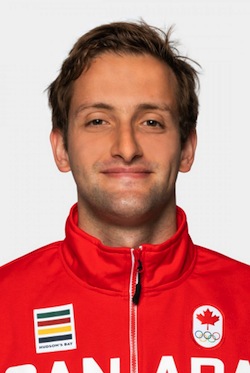
 Tel Aviv-born fencer Shaul Gordon, a former Richmond resident who now lives in Montreal, is part of Canada’s Olympic team. According to his bio on olympic.ca/team-canada, “Gordon made his senior fencing debut for Canada in 2013. He has since represented Canada at two Pan American Games and six FIE World Championships.

photo - Fencer Shaul Gordon
Fencer Shaul Gordon (photo from olympic.ca)

“Gordon earned his first career senior individual medal at the Pan American Championships in 2018, when he captured silver. Later that year, he won gold at an FIE Satellite event in Belgium.

“Gordon followed up his terrific 2018 with an even more successful 2019, starting with helping Canada bring home a third straight silver in team sabre from the Pan Am Championships. At the FIE World Championships, he advanced to the quarterfinals for the first time ever. At the Lima 2019 Pan Am Games, he also helped Canada to a team sabre silver, while winning a bronze in the individual sabre.

“Gordon fenced collegiately at Penn State for his freshman year before transferring to the University of Pennsylvania. He finished second at the NCAA Championships in 2013, tied for third in 2014, was a three-time All-American and finished his college career with an overall record of 143-30.”

For an interview with Gordon, in Hebrew, see jewishindependent.ca.

Format ImagePosted on July 23, 2021July 21, 2021Author Abigail Klein Leichman ISRAEL21CCategories WorldTags Canada, fencing, Israel, Japan, Olympics, Paralympics, Shaul Gordon, Tokyo

Posts pagination

Page 1 Page 2 Page 3 Next page
Proudly powered by WordPress