Goosefeather book set to launch

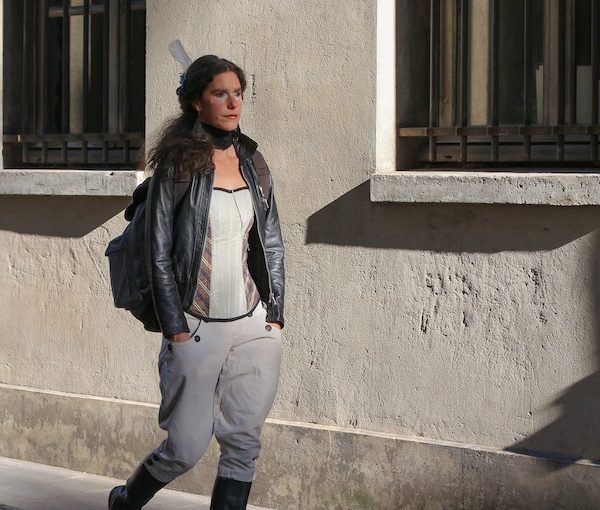
Storyteller Naomi Eliana Pommier Steinberg’s years-long Goosefeather journey has taken her around the world. This photo was taken in Paris in 2015. (photo © lineka)

A travelogue of observations and experiences from the unique to the mundane, the personal to the universal, a mix of prose and poetry, Goosefeather: Once Upon a Cartographic Adventure has arrived. Its journey, which started in 2011 when storyteller Naomi Eliana Pommier Steinberg interviewed her grandfather in Paris, will culminate in a book launch in Vancouver on June 9 that will stream live on Facebook and YouTube.

Vancouver-based artist Steinberg asked her maternal grandfather, who was not Jewish, more than 100 questions. In particular, she told the Jewish Independent in a 2018 interview, “I wanted to know how he had helped my Jewish grandmother survive the Second World War and why he was a collector of maps, weights and scales. Given his work with the metric system, I also thought it would be interesting for us to talk about measurements in general.” (See jewishindependent.ca/around-the-world-in-382-days.)

More than a year of research followed and, while she was able to show her grandfather pieces of what would become the performance work Goosefeather, he passed away before the work was completed. The JI saw the 2014 Vancouver Fringe Festival show, in which, the article notes, “Steinberg intersperses what she knows and learns about her grandfather with observations about the concept of measurement, of time and space. What do we measure? Our waists, our burdens? What are our favourite measuring tools? A yardstick, the position of the sun?” (See jewishindependent.ca/jewish-flare-at-fringe-festival.)

The idea that there is no such thing as an exact measurement is accented in the book Goosefeather, as an opportunity for readers to consider what they don’t know, to accept and embrace the unknown, and the fact that there will always be a margin of error, not just in our measurements, but in our perspectives and approaches to life.

“What I arrive at in the book is that: ‘Practising right-relation is predicated on allowing space for not knowing, space for humility, space for listening.’ It is a term borrowed from Buddhism,” Steinberg told the Independent in an interview last week.

“In Judaism,” she said, “there is kavanah, the stilling of self to prepare for entering the mystery. The setting of intention. Before ritual gestures, we centre ourselves, humble in the light of all there is, intending to practise peace. For some, the experience is made desirable and the longing for union acute through visualization. Then, I believe that tzedakah is one of the ways we can practise right-relation. With my own liberal interpretation and limited understanding, I could say that Judaism wrote laws to ensure the circulation of wealth, including, for example, tithing and taxation systems. Tzedakah, charity, is a mitzvah – a very important good deed. Finally, slichot [forgiveness prayers], the ability to recognize what is important … what needs to be let go, instead of focusing on negatives.”

The ability to adapt, to make quick decisions and to remain positive serve Steinberg well as a storyteller, no doubt. These attributes also helped on her travels, where things didn’t always go as planned, or were even left unplanned until the last minute. Her 382-day journey – by almost every mode of transportation except airplane – covered just under 56,000 kilometres and took her to many countries, including Canada and the United States, as well as Australia, China, Japan, Russia, Norway, England, Scotland, France, Switzerland and Belgium. She performed Goosefeather, as well as did other storytelling, along the way – 37 productions in all, according to the press material.

From countless experiences, Steinberg has created a concise account that is informational, philosophical, lyrical and thought-provoking. Some days, she records the details of her travels; other days, she ponders larger questions; yet other days, she simply notes how something smelled or sounded.

“An itinerant artist is a human on the road,” she explained. “There are ups and downs on life’s road. Parts of the 382 days on the road were uncomfortable or stretched out, long and slow. Well, we know it’s not all just fun and games in life. I wanted to keep it real. Much of what I was trying to do by sharing those moments was enter the banality of the day-to-day; to bring readers’ bodies there, evoking images, awakening senses, remembering experiences. That’s what storytellers do!”

Steinberg not only performed during her travels, but gave workshops, in which she offers her experience in crafting a story to communications professionals and other groups, stressing the importance of play and movement.

“The diaphragm is a great muscle that holds a lot of tension,” she explained. “It works super-hard every day, as does the heart, to maintain a flow of oxygen to all parts of the body. That’s amazing. We can practise gratitude towards our bodies every day! Sometimes, the tension in the diaphragm can be released through conscious breathing, laughter, certainly through yawning, and, probably, hopefully, through crying. These are four good ways to release the diaphragm. When we play, the diaphragm gets shaken up a bit and we can relax. Try it!

“Play is fun, charming, disarming. Play is guileless. Otherwise, you may as well call it manipulation and dress it up in propaganda’s clothes. Play can be surprising, logic threatening, synaptic gap leaping. These transformations in perspective can be subtle yet profound.”

Such thoughts come full circle back to the concept of margins of error and how our recognition of their existence could make us less quick to judge and more open to others’ ideas and perspectives.

Steinberg cited American writer and translator X.J. Kennedy, who, she noted, “says: ‘To leap over the wall of self, to look through another’s eyes – this is valuable experience, which literature offers.’

“Lateral movement is good for the body,” said Steinberg. “In theatresports, there is a game called space-jump – you literally leap in and out of scenarios, putting your whole self in an imaginary situation. Playing this feeds agility, spontaneity and willingness.”

photo - Goosefeather cover
(photo from goosefeather.ca)

Books, she said, are essential for many people, including, or perhaps especially during difficult periods, such as the COVID-19 pandemic we are currently experiencing. “Escaping into other experiences, or trying to understand what’s happening through the lens of historical accounts, can be a kind of lifesaver,” she said. “Books provide solace in challenging times. The act of writing can record, reflect and frame.”

Describing Goosefeather as “a memoir and travelogue with literary aspirations,” Steinberg said, “I have tried to bring my strength as an oral storyteller from the stage to the page. I hope the readers of Goosefeather feel included in a process of emergence and discovery. That a lightness and delight is found in the journey and that there is emotional resonance with humanity and with the planet. In some ways, I want to position the book as an antidote to the propagation of fear and the dangers of isolation.

“We are living a tremendous story of transformation,” she said. “The most gripping stories I’ve listened to or read, the ones that were somehow useful to my psyche, were the ones that gave insight into how a character might navigate difficulty, or might share their love and appreciation for what makes life wonderful. Listening, generosity, caring … these are manifest around the globe in a thousand small gestures and are giving shape to our emergent global culture. My hope is that Goosefeather’s story, her journey around the planet, contributes to this.”

And is that journey now complete?

“I like the idea that the performance is over, and need that for my own closure,” said Steinberg. “It ensures celebration of achievement. I can say, ‘Done’ – journey around planet as singular gesture towards time-space, ‘check!’

“Then there is the show, which I suppose could be performed again, but I’d have to relearn the text fresh and new. I’ve toyed with the idea of Goosefeather’s character doing a different stage performance, but, truth be told, I don’t actually know what comes next after this book! Maybe someone will pick it up and help with soft cover distribution? For now, I have 500 hardcover, first-edition, silver-gilded books for sale, and the desire to produce an interesting and entertaining live-stream launch event.”

To learn more, visit goosefeather.ca.

Financial hopes

In a Temple Sholom webinar May 6, ZLC Financial’s Garry Zlotnik, left, and Jon McKinney spoke on the topic Financial Planning in a Pandemic. (photos from Temple Sholom)

Reflecting on previous financial downturns – in 1987, 2000 and 2008 – Garry Zlotnik, chair and chief executive officer of ZLC Financial, admitted he felt worse now, during the COVID-19 pandemic, than in earlier recessions – not because of the economic implications but rather the health issues currently confronting the world.

“A year from now, two years from now, we’ll look back on this time and say, ‘Wow, that was just the most ridiculous, crazy thing in our lifetimes.’ But things will move forward in a positive way, with all the ingenuity that our population has,” Zlotnik said, adding that, as in any market, there are winners, such as Zoom, the web conferencing platform on which the webinar – called Financial Planning in a Pandemic – took place May 6.

Zlotnik was joined by Jon McKinney, ZLC’s president and portfolio manager, in the hour-long discussion, which was part of Temple Sholom’s Let’s Talk About It series.

McKinney holds overall responsibility for client relations, business development and administration at ZLC and has almost 30 years of financial sector experience in both portfolio management and accounting. Zlotnik, who has close to 40 years of experience as a chartered accountant and formed ZLC Wealth in 2000 – ZLC Financial was established in 1946 – also has served in numerous positions within the Jewish community, including as board president and chair of the Jewish Federation of Greater Vancouver, co-chair of the Vancouver JCC Maccabi Games, co-president of Vancouver Talmud Torah, treasurer of B’nai Brith Canada and president of the Richmond Country Club.

Though the spread of the virus has been flattening lately, the economic statistics – jobless claims, consumer spending – have been grim, with Canada’s economy further challenged by tense U.S.-China trade relations and a downward turn in the price of oil. According to McKinney, a silver lining has been the stimulus and bond buying by governments and central banks to prop up markets.

McKinney cited a Warren Buffett maxim from the midst of the 2008 recession: “Be fearful when others are greedy and be greedy when others are fearful.” If one had heeded that advice in late March of this year, he said, then April would have seen the best returns for equities since 1987, particularly as the U.S. Federal Reserve had been displaying its willingness to pump liquidity into the markets. The S&P 500 index, for example, gained 12.7% last month.

A principal message of the discussion was for investors to take a broad, long-term view. “Market timing is impossible,” McKinney cautioned. “But we can tell you there will be a bottom, and holding investments in companies that can weather this storm will be profitable long-term.”

In outlining ZLC’s own investment strategy, McKinney said, “We have reasonable diversification across different holdings and we pick good managers. We don’t just buy the index, and we look for companies that fly under the radar. We also invest in long/short funds and real estate.”

However, ZLC is concerned that there may be a retreat from the level the market is at now, as more bad news could filter through the system. Short-term, they believe, there could be a pullback and, if it comes, it will provide a great opportunity for investors.

“There are going to be some fairly volatile times ahead,” Zlotnik predicted, mentioning that it will take some time for people to get used to spending as they once did in pre-coronavirus times.

Oil and gas is one sector that has been beaten up in the past three quarters. It is, according to McKinney, contingent on the economy whether it rebounds, but many companies in the sector have seen strong gains through April and May.

“Every asset class has taken a hit,” Zlotnik said, though he sees opportunities in corporate bonds, which operate like a bond when a company’s price goes down and like equity when its price increases.

As for the Canadian dollar, McKinney forecasted the loonie either staying where it is or moving slightly higher after the recent rush to U.S. dollars, which tends to happen during economic crises.

For those with some money to put into the market, Zlotnik spoke of “dollar cost average strategy,” which means placing a fixed amount into a given investment on a regular basis. For example, if someone has $100,000 to invest, then they would place $10,000 in a given investment once a month for 10 months.

“It is important to know what one’s risk tolerance is and having a plan based on that,” he noted. Since March 2009, investment risk, for Vancouverites especially, has not been a factor, as both the equity and real estate markets have headed in an upwards direction.

A video of the webinar can be found on the Temple Sholom website: templesholom.ca/video.

Sam Margolis has written for the Globe and Mail, the National Post, UPI and MSNBC.

Big Sister available for rental

Those who missed the Vancouver performances of Deborah Vogt’s Big Sister, which is performed by her real-life sister, Naomi Vogt, can rent it online until June 11. (photo from JW3)

Former Vancouverite Deborah Vogt’s play Big Sister is available to rent on JW3’s website until June 11.

Vogt is the arts and culture programmer at JW3, which is described on its website as a “cross-communal hub for Jewish arts, culture, family programming, social action, learning and much more.”

“JW3 opened its doors in October 2013 with the mission to increase the quality, variety and volume of Jewish conversations in London and beyond,” said Vogt of the centre, which is located in north London, on Finchley Road.

“I grew up in Vancouver and lived there my whole life, but decided to move to London three years ago,” she said. “I miss the trees, ocean and sushi in Vancouver, but love the excitement and opportunities in London. I joined JW3 as an employee in September 2019.”

Big Sister is a one-woman show about Vogt’s sister’s 75-pound weight loss, told through Vogt’s perspective, but performed by her sister, Naomi Vogt. It played the Vancouver Fringe Festival in 2018. At that time, Deborah Vogt told the Independent that writing the play was a challenge.

“First of all,” she said in that interview, “it was difficult trying to find the balance between Naomi as my real human sister and Naomi as a character. We wanted this show to be entirely truthful, while still presenting a piece of theatre. And this show touches on painful aspects of both of our lives (in a funny way, of course), so trying to write that without overstepping my place or lying to the audience about what actually happened (two sides to every story, right?) was difficult to manoeuvre.” (See jewishindependent.ca/fringe-mixes-drama-comedy.)

The video that is available via JW3’s website is from a sold-out production at the Cultch in February 2020, said the playwright. Being available online means that the work will be able to reach more people.

“The run at the Cultch sold out by opening night, so there may be people that didn’t get a chance to see it then now have the option,” said Vogt. “Putting Big Sister online in this form also expands on one of our themes: vulnerability.

“We never meant to share our work this way,” she explained. “We filmed it for archival purposes, not for public viewing. The show is meant to be live, and intimate, and present. That’s not an option right now, so, instead, we get to experiment with what it’s like for people to experience Big Sister in their living rooms.

“It also means the show lives on. For both Naomi and I, the show changes as our relationship changes. The filmed show captures our relationship in one specific moment in time. I’m interested to see what the next iteration will be.”

When asked to clarify what she meant by that, Vogt said, “I am speaking about our real-life relationship as well as our work, because the two became intertwined during Big Sister. The show allowed us to talk about things we never knew about one another, so it has affected, and strengthened, our relationship. If we decide to put the show on again, we may have to rewrite parts of it to reflect our current relationship. I have an idea for a sequel, but I haven’t told Naomi yet.”

JW3’s presentation of Big Sister is part of a season of streamed theatre through its virtual platform, said Vogt.

The first released was Wot? No Fish!!, which explores “the issue of the ‘outsider’ as artist, immigrant or disabled family member,” said Vogt. It is available for rental until June 4. Becoming Electra – “a heart-warming and original one-woman drag show about a queer Jewish girl trying to find her voice” – is available until June 21.

“The fourth piece is a West End show that had to end the run early, and more info will be released soon!” said Vogt.

About the online theatre presentations, she explained, “When JW3 had to physically shut our doors, the whole team worked incredibly hard to adapt and continue bringing programming into people’s homes. This means classes are online, we have a brand new website, and have had to come up with other creative ways to provide community during this difficult time. While we figure out the next steps for theatre and performance, we wanted to share a season of filmed versions of shows that have a special relationship to JW3. Big Sister is the first time I’ve been able to share my own theatre work with my programming work.”

While JW3 closed its doors to the public in March, Vogt said, “The building is now being used as a food bank, cooking and delivering meals to vulnerable people in Camden. The team has delivered over 5,000 meals already. So, while the building has closed to the public, the space is still being used to support the community. And that reflects the aims of the wider organization: everyone is working really hard to provide entertainment, education, community and connection during these isolating times.”

To find out more about JW3 and its programming, including various arts and culture rentals, visit jw3.org.uk.

Politics in the pandemic

Clockwise from the top left are Amanda Blitz, Kathleen Monk, Amanda Alvaro and Chad Rogers.

Political pundits Amanda Alvaro, Chad Rogers and Kathleen Monk recently participated in an hour-long panel discussion on politics during COVID-19, examining how Canada’s leaders have fared since the start of the pandemic, what still needs to happen and how the coronavirus will shape the nation’s politics in the future. Hosted by the Canadian Jewish Political Affairs Committee (CJPAC), the May 14 webinar was emceed by its general counsel and director of communications, former news anchor Amanda Blitz.

The CBC Power & Politics regulars began, not with partisan jabs, but with kind words for the other sides of the political aisle. Alvaro, who frequently champions Prime Minister Justin Trudeau and the Liberals, paid a compliment to Premier Doug Ford of Ontario. “He’s really been able to connect well with Canadians. He’s delivered the news in a way people want to hear,” she acknowledged.

Rogers, a Conservative stalwart, praised Minister of Small Business Mary Ng as a person “who has done the hard work with a tremendous amount of humility and ability.”

And NDP proponent Monk lauded the work of the nation’s public servants, whose “yeoman’s efforts” have brought Canadians home from abroad and supplied them with stimulus cheques in a timely fashion.

Nonetheless, it took only a few seconds for Andrew Scheer’s name to appear on Alvaro’s list of those who have not performed well during the crisis. Rogers sprang to the Conservative leader’s defence, countering that it is exceedingly difficult for anyone on the right to watch a government spend as much as the Liberals currently are. “We’ve already allocated more money than we did in World War Two. For a Conservative, this is the worst horror movie ever written,” he asserted. “We are going to have things in this crisis that are going to be horrible missteps.”

Monk, meanwhile, criticized Quebec’s response to the pandemic but commended British Columbia’s. “It is amazing how good public policy can save lives. Never has it been more evident that we are a country of different governments, different territories,” she said.

Nobody on the panel could dispute the economic toll of the pandemic, including double-digit unemployment. Monk shone light on how women have been disproportionately affected, dubbing it a “she-cession,” as a higher ratio of women work in sectors brought down by COVID-19.

Both Alvaro and Rogers gave kudos to the federal government for providing emergency assistance to individuals quickly. However, Rogers claimed the Liberals were using “COVID-19 as a cover to put their boot heel to the throat of the oil and gas industry in Alberta. There is an extreme environmental agenda trying to pivot the Canadian economy into something it isn’t,” he said.

Of course, China was discussed.

“Despite the erosion of China’s image recently, we can’t avoid China,” Alvaro said. “There are many reasons why China can’t be written off, but many reasons why China is making it very difficult for countries to have a positive relationship with them.”

“The Chinese government is a totalitarian cult of death,” Rogers declared. “They could have aided the world by getting a week or a month ahead of the [COVID-19] curve. We should be very mindful every time we speak with them.”

“China has not done itself any favours with their management of the post-crisis phase,” Monk added.

In the midst of the pandemic, the Conservative party leadership race is taking place. All of the panelists steered clear of the Derek Sloan method of populism – which questioned the patriotism of Dr. Theresa Tam, Canada’s chief public health officer – and saw it more as a contest between Erin O’Toole and Peter MacKay.

All also agreed that it is remarkably challenging to campaign without being able to press the flesh and make stump speeches. However, Alvaro said, while people are at home, politicians do have a captive audience if they “can tap into the digital space that is less time-consuming than going door to door.”

On the topic of leadership, Rogers predicted that Trudeau will, as the crisis subsides, give consideration to his future as leader and ultimately decide it will be time to step down before the next federal election.

“It will give him an honourable exit, after establishing himself as essentially a wartime leader and not having to face a caucus that has lost faith in him,” Rogers said.

As the discussion wrapped up, Monk postulated that a potentially positive outcome from the crisis would be an increase in trade closer to home, i.e., within North America.

Alvaro said there will be many questions to follow: “Much of this will obviously be judged on how the recovery comes about, and how we fix the things we have fundamentally ignored, like long-term-care facilities.”

Rogers appealed to all in attendance to make a charitable donation, as nonprofits have been struggling for funds during the pandemic; a request that was backed by all the panelists.

For more information about CJPAC, visit cjpac.ca.

Sam Margolis has written for the Globe and Mail, the National Post, UPI and MSNBC.

Favourable position

British Columbians, like others in much of the world, are stepping gingerly into what may be a post-pandemic period – or an “inter-pandemic” phase, if the predicted second wave bears out. Our daily briefings from Dr. Bonnie Henry, the provincial health officer, and Health Minister Adrian Dix are cautiously optimistic, tempered with the reality that some people, given an inch, will take a mile. Confusion around, or contempt for, changing social distancing guidelines has meant numerous instances of inappropriate gatherings.

All in all, though, British Columbians have so far experienced among the lowest proportions of COVID-related illnesses and deaths than almost any jurisdiction in the developed world. Each death is a tragedy, yet we should be grateful for those who have recovered and the fact that so many of us have remained healthy so far. Thanks should go to all those who have helped others make it through, including first responders, healthcare professionals and also those irreplaceable workers we used to take for granted: retail and service employees and others who have allowed most of us to live through this with comparatively minimal disruptions.

In our Jewish community, so many individuals and institutions have done so much, from delivering challah to providing emergency financial and other supports for those affected by the economic impacts of the pandemic.

Canadians, in general, seem to be making it through this time as well as can be expected. Polls indicate that Canadians are overwhelmingly supportive of the actions our governments have taken during the coronavirus pandemic. How the federal and provincial governments manage the continuing economic repercussions and the potential resurgence of infections in coming months will determine long-term consequences both for us and for their popularity.

In signs that things are returning to something akin to pre-pandemic normal, Binyamin Netanyahu, Israel’s once-and-still-prime minister, is complaining about a “left-wing coup” and asserting that “the entire right” is on trial. In fact, it is not an entire wing of the Israeli political spectrum that is on trial, but Netanyahu himself, for bribery, breach of trust and fraud. He is accused of exchanging favours to friends and allies in return for hundreds of thousands of dollars in trinkets like cigars and champagne, and favourable coverage in media. Whatever strategy his team has for inside the courtroom, his PR strategy is pure deflection: blame the media, the court system, political opponents. He’s fighting two trials: the one in the justice system and the one in the court of public opinion. Netanyahu has managed to save his political hide thus far, through three successive elections and a year of coalition-building and horse trading. Predicting what might happen next is a popular but fruitless pastime.

More signs that things are not so different came from U.S. President Donald Trump on the weekend. As the death toll in the United States approached 100,000, Trump took time off from golfing to deliver Twitter rants, including retweets calling Hillary Clinton a “skank” and smearing other female Democrats for their appearance. Trump also insinuated that MSNBC TV host Joe Scarborough is a murderer.

Sitting (mostly) comfortably in our homes watching such things from afar, it’s no wonder Canadians are feeling good about the way our various governments – federal and provincial, of all political stripes – are behaving these days.

PORCHpics Project

Lianne Cohen prepares to take a “PORCHtrait” of the Gorski family. (photo from Kehila Society)

As a fundraiser for Kehila Society of Richmond and/or Pathways Clubhouse, professional photographers Lianne Cohen, Jocelyne Hallé and Adele Lewin are volunteering their time (in a safe way) to photograph your family in front of your home. Dress up, stay in your PJs, hold a sign, whatever you feel like – be creative, have fun! These photos are intended to be a positive memory, to serve as a reminder of all the time you got to spend with your families in quarantine. The photographs are by a suggested minimum donation of $54 to kehilasociety.org/content/make-donation-kehila-society-richmond or pathwaysclubhouse.com/donate. A full tax receipt will be provided, along with your photographs. Bookings are available until June 7. To register, email kehila@kehilasociety.org or call 604-241-9270.

JFS uplifts with enewsletter

In the first eight weeks of Jewish Family Services Vancouver’s COVID-19 emergency response program, more than 400 calls were received, 1,500 meals and groceries were delivered, and 672 hours of service was provided on the Community Care Hotline. In addition to the challenges, JFS has also witnessed many stories of hope and gratitude, and has recently launched the enewsletter JFS Uplift, which every week will share highlights of what inspires JFS staff and volunteers to do the work they do. The lead story in the inaugural issue was on the new JFS Breakfast Club program.

On May 11, JFS staff came together to pack grocery bags full of healthy breakfast items and packets of Play-Doh as part of the club program. Fifty-eight families in several cities across Greater Vancouver received their goodies thanks to the help of volunteers.

“We realize parents are under much more stress during this time of uncertainty, especially given their added roles as teachers and ‘playmates.’ The Arnold and Anita Silber Family Foundation approached Tanja Demajo, the chief executive officer of JFS, to see where we could help. Together, we came up with the JFS Breakfast Club,” explained Arnold, Anita and Stacey Silber, sponsors of the club. “Breakfast is one of the most important meals of the day, so now healthy items are delivered to families. This is a great opportunity for us to get involved in supporting the health of young families. We hope to give parents one less thing to worry about during this difficult time.”

New families can register for the JFS Breakfast Club at jfsvancouver.ca/jfsbreakfastclub (some restrictions apply) and people who are interested in volunteering for JFS can email Kristina Moser at volunteer@jfsvancouver.ca or visit jfsvancouver.ca/emergencyvolunteer.

To subscribe to the JFS newsletter or for other information about JFS, visit jfsvancouver.ca.

Song of healing is a hit

Israeli artists Yair Levi and Shai Sol sing Moses’s prayer to heal his sister Miriam of leprosy. The song, “Refa Na,” has resonated with people during the pandemic.

The song “Refa Na” (“Heal Her Now’”) by Israeli composer Yair Levi, together with vocalist Shai Sol, has become a global hit during the current COVID-19 pandemic.

Based on Moses’s prayer to heal his sister Miriam after she contracted leprosy, the song was released on Levi’s Facebook page April 6. The lyrics include the words, “O Lord, heal her now. O Lord, I beseech thee. Then we will be strengthened and healed” (Numbers 12:13) and Levi’s original is in multiple languages: Hebrew, as well as English, Spanish, French, German, Chinese, Arabic, Russian, Hindi and Swahili. The song has been picked up in dozens of covers, from Lebanon to Argentina.

When Levi’s grandmother fell ill, he composed a tune incorporating Moses’s prayer for his sister’s wellbeing. The song has resonated throughout the world during the current pandemic, garnering hundreds of thousands of views and shares.

“My grandmother had an illness unrelated to coronavirus, but the pandemic obviously affected everyone, myself included,” Levi, 31, told Ynet news portal. “Due to the epidemic, I received the names of people in need of prayer and a list of about 20 names accumulated on my fridge. Every day, I would say a prayer for the sick, and I searched for words and a tune related to medicine.”

Then Levi remembered the “Al na refa la” prayer in Numbers.

“I took my guitar and composed the music for it on the spot and, since I have a recording studio in my home, I recorded the song within a week.”

Levi then approached Sol, a vocalist with Miqedem, a band that composes and sings Psalms all around the world.

“In quarantine and with no way to actually meet, she recorded herself,” Levi said.

After posting the song on social media, he said, “It was amazing. We received many responses and translations. Immediately after we released the song, it was shared online by evangelist Christians, Jewish communities, and even the Friends of the IDF organization.”

But not only the obvious audiences were enthusiastic.

“We have received cover versions from all over the world, including from a Lebanese singer, and, on Saturday evening, I received three new covers from Namibia … India and a Brazilian singer, Fortunee Joyce Safdie, who performed the song live on her Instagram page,” he said.

“Getting so many messages from people all around the world is incredible,” he added. “If I have the privilege to spread prayer around the world, to me, it’s just crazy. When people from all over the world translate and sing a prayer for health, it feels like it is literally the End of Times.”

During his three-year service in the Israel Defence Forces, Levi – who grew up in Israel’s secular mainstream – became intrigued by traditional Judaism. A turning point in his life came on May 31, 2010. Serving as a naval commando, his elite unit stormed the MV Mavi Marmara, one of six ships in the Gaza Freedom Flotilla attempting to breach Israel’s blockade of the coastal enclave. Nine Turkish activists were killed in the incident, while 10 IDF soldiers from Levi’s unit were wounded. After the sea battle, Levi was determined to join an IDF officer course. But, at the age of 26, he decided to pursue a musical rather than military career.

“I spoke with my commander, who told me people often regret what they had not done,” Levi said. “It opened my eyes and I realized that the flotilla incident pushed me in the direction of the course, but my real dream was to make music and become a singer.”

Levi has released two albums, Breathing Again (2016) and Let Go (2017).

“People see me as a religious person but I don’t like labels,” he said of his oeuvre.

To hear more of Levi’s music, visit yairlevi.bandcamp.com/releases.

Gil Zohar is a writer and tour guide in Jerusalem.

Surviving the Gulag

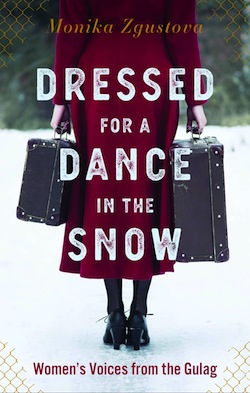
Dressed for a Dance in the Snow: Women’s Voices from the Gulag by Monika Zgustova (Other Press, 2020) is the first book to focus exclusively on women who lived in the Gulag. It is an intimate look at nine women, who shared their experiences with Zgustova. Regrettably, several of them passed away before the book was published.

The word Gulag is the acronym for Main Administration of Camps (in Russian), which was the government agency in charge of the former Soviet Union’s forced-labour camp system, which started under Vladimir Lenin. The system continued through Joseph Stalin’s rule and the term is also used to refer to any forced-labour camp in the former Soviet Union, including camps that existed in post-Stalin times. The camps housed a wide range of people, from actual criminals to political prisoners.

Zgustova was born in Prague. In the 1970s, her parents took her and her brother on a trip to India. Instead of returning to Prague, they went to the United States, where she studied at the University of Illinois and the University of Chicago. She taught Russian in several American universities before moving to Barcelona, where she works as a writer and translator.

The book’s translator is Julie Jones, who is a professor emeritus of Spanish at the University of New Orleans.

In 2008, Zgustova traveled to Moscow, learned about the women of the Gulag and decided to interview some of them. To do this, she also traveled to Paris and London.

image - Dressed for a Dance in the Snow book coverZgustova writes in the book’s introduction that she wants her readers to learn about the Gulag “through the stories of the nine intelligent, sensitive and strong women [she] had the honour of interviewing.”

“What these women found in the Gulag was their hierarchy of values, at the top of which were books and invulnerable, selfless friendship,” writes Zgustova.

Zayara Vesyolaya, her sister and their friends were celebrating her sister’s successful thesis defence in 1940, when Vesyolaya was arrested, imprisoned and sent to Siberia. The people there would compose and memorize poetry and recite it at night to develop their minds through literature.

Susanna Pechuro was sentenced to 25 years in a forced labour camp for ostensibly belonging to a group of Jewish dissidents. She was in 11 prisons and seven work camps.

Ella Markman was part of an anti-Stalin group and sentenced to forced labour in the mines of the Arctic Circle.

Elena Korybut-Daszkiewica came from a Polish family, spent the war in Ukraine but was arrested as a collaborator and sent to work in the mines above the Arctic Circle, where she kept a Pushkin book that was passed from person to person.

Valentina Iyevleva was imprisoned after having an affair with an American and having his daughter.

Natalie Gorbanevskaya was arrested and sent to a psychiatric hospital because she went to a demonstration and was a well-known dissident.

Janina Misik, a Polish woman with a half-Jewish father, was sent to a work camp.

Gayla Safonova was born in a labour camp and raised there.

Irina Emelyanova is one of the most interesting of the women interviewed for the book, and the best known. Her mother was Boris Pasternak’s last love and the inspiration for Lara in Doctor Zhivago. She and her mother were sent to the Gulag after Pasternak’s death because of their connections to him.

Each woman’s story is moving and the theme running through all the oral histories is their strength in surviving. Zgustova also includes their struggles after their release. It is a remarkable book to read.

Sybil Kaplan is a journalist, lecturer, book reviewer and food writer in Jerusalem. She created and leads the weekly English-language Shuk Walks in Machane Yehuda, she has compiled and edited nine kosher cookbooks, and is the author of Witness to History: Ten Years as a Woman Journalist in Israel.

Kugel comforts during COVID

Yerushalmi kugel by Jamie Geller. (photo from jamiegeller.com)

If I’d known the world was going to be locked down because of the COVID-19 pandemic, I would have stocked up on toilet paper, disinfecting wipes and pasta much sooner. Of course, only one of those is edible.

Desperate measures call for desperate times and, when so many restaurants have closed, cooking has become mandatory. As has self-isolation. Sure, we could order takeout, but I’m still slightly paranoid about who cooks my food. After all, you’re only as healthy as the last person you were in contact with. I rest my case.

I’ve tried to be creative in the kitchen, but, when you’re used to eating sushi at least once a week and shopping for fresh food every day, it gets challenging during a lockdown. Now we eat more pasta. Way more pasta. My husband Harvey loves it. Me, not so much.

Harvey does a Costco run every so often to stock up, but I’m loathe to send him out into the dangerous spittle-filled world of COVID coughs right now. And the regular stores are often out of the basics, at least until recently. To be completely frank, I’m sick of cooking. So, what’s an accidental balabusta to do?

I’ll tell you what I did. I handed Harvey my mother’s tattered Jewish Council Cookbook the other day and pronounced: “Make something!” So, what does he choose from all those geshmak recipes? Tuna noodle casserole. You know the one – it’s composed of Campbell’s cream of mushroom soup, Kraft Dinner and a can or two of tuna. If you want to get really fancy shmancy, you can grate some aged cheddar cheese on top. It’s the quintessential comfort food. Minus the sushi. Or, in Harvey’s case, minus the tuna.

My first dip of the fork into the ooey-gooey goodness of the tuna noodle casserole elicited a squeal of surprise. It was actually delicious. Processed deliciousness, but nonetheless yummy in the extreme. The tummy wants what the tummy wants. After a few bites, I expressed my perplexity that I didn’t taste the tuna. Harvey said it had probably sunk to the bottom, so I did a deep dive to the base of the casserole dish, and … bupkis. Harvey had a go at it and, likewise, nada. He humbly walked over to the fridge, opened it, and sheepishly admitted that he’d forgotten to put in the tuna. So, we were eating KD with mushroom soup and a crusty topping of melted cheddar. It was still superb, in a plebian sort of way. Does this count as accidental balabatishness? I didn’t think so. Even if it did, I wasn’t the balabusta who made it.

I’m not proud of what we ate. But I’m sure other people have eaten worse. Much worse. Think fried Spam. Or headcheese (whatever that is). Nobody is going to raise their hand and cop to either of those atrocities, but, trust me, I know where the bodies are buried.

In the end, a casserole that I thought was going to feed us for two nights lasted three. Kind of like a tuna-based Chanukah miracle – the “excess” tuna gave its life for a couple of sandwiches, to boot. The real victory was that I didn’t have to cook for three whole nights.

Don’t think I can’t hear you yelling, “What’s the matter with you people? Haven’t you ever heard of salads?!” Well, yes, as a matter of fact, I have. And, as much as I love salads, it’s not a mutual admiration alliance. Harvey buys pre-bagged salads for himself as a side dish, but rarely do we eat a jacked-up salad for the main course. It could very well land me in the hospital, and I choose not to take that chance. Digestion issues.

By rights, I should probably have scurvy by now, but I have thankfully dodged that bullet. To get some colour in my food, I put steamed or roasted carrots in everything. Sometimes, I even eat broccoli. Is my diet restrictive? Sure. Am I relatively healthy, nonetheless? Yes – the operative word being relatively. My body happens to do well on protein. Lots and lots of protein. Animal protein. I’ll own it: I’m a card-carrying carnivore. Don’t judge me. In case you care, I used to switch things up with more varied restaurant food before COVID-19 came calling. But now that I’m relegated to my own culinary wits, things have gotten kind of serious. And not in a good way.

I am jonesing pretty bad for some agedashi tofu and salmon sashimi, but I don’t dare eat that now. I heard that, if you get takeout food, the first thing you should do is transfer it to your own dishes and reheat it in the microwave to kill off any viruses or bacteria. That’s fine for cooked food, but I believe that eating sashimi during a COVID-19 pandemic is like sticking a hand grenade in your mouth and hoping to have a pleasant day.

Desperate for some variety, I dug through my recipes and came across one for Jerusalem kugel. It still counts as pasta, but I view it as a more cultured, genteel pasta. Usually a side dish, I knew I could convince Harvey that it’s a main (especially if I served him enough of it). I figure I’ll follow it up with a roasted carrot/yam chaser. This particular kugel is satisfyingly savoury and sweet, and the recipe is by Jamie Geller.

SWEET AND PEPPERY JERUSALEM KUGEL

1 (12 ounce) package thin egg noodles
1 cup sugar
1/3 cup oil
4 eggs
1 tsp salt
1/4 tsp to 1 tsp ground pepper

  1. Preheat oven to 350˚F.
  2. Bring a pot of water to a boil. Cook noodles according to package instructions. Strain and set aside.
  3. Add the sugar and oil to a large pot on low heat. Stir until sugar is dissolved and a deep golden caramel colour, but not burnt. This can take 20 minutes or more.
  4. Turn off the heat and add the noodles into the pot of sugar. Immediately stir with a big spoon until the noodles are coated in the caramel. Don’t worry if the sugar hardens into blobs – it will melt in the oven.
  5. Allow the mixture to cool for about 10 minutes. Mix in the eggs, salt and pepper. (Make sure it’s cool so the eggs don’t cook.)
  6. Pour the mixture into a greased springform pan or baking dish. Bake for one hour.

May this COVID-19 pandemic be over with soon. In the meantime, as Dr. Bonnie Henry says: “Be kind. Be Calm. Stay safe.” As for the Accidental Balabusta, figuring out what to cook every night should be my worst problem. Ever.

Shelley Civkin, aka the Accidental Balabusta, is a happily retired librarian and communications officer. For 17 years, she wrote a weekly book review column for the Richmond Review. She’s currently a freelance writer and volunteer.