Skip to content
  • Home
  • Subscribe / donate
  • Events calendar
  • News
    • Local
    • National
    • Israel
    • World
    • עניין בחדשות
      A roundup of news in Canada and further afield, in Hebrew.
  • Opinion
    • From the JI
    • Op-Ed
  • Arts & Culture
    • Performing Arts
    • Music
    • Books
    • Visual Arts
    • TV & Film
  • Life
    • Celebrating the Holidays
    • Travel
    • The Daily Snooze
      Cartoons by Jacob Samuel
    • Mystery Photo
      Help the JI and JMABC fill in the gaps in our archives.
  • Community Links
    • Organizations, Etc.
    • Other News Sources & Blogs
    • Business Directory
  • FAQ
  • JI Chai Celebration
  • JI@88! video

Recent Posts

  • Sharing her testimony
  • Fall fight takes leap forward
  • The balancing of rights
  • Multiple Tony n’ Tina roles
  • Stories of trauma, resilience
  • Celebrate our culture
  • A responsibility to help
  • What wellness means at JCC
  • Together in mourning
  • Downhill after Trump?
  • Birth control even easier now
  • Eco-Sisters mentorship
  • Unexpected discoveries
  • Study’s results hopeful
  • Bad behaviour affects us all
  • Thankful for the police
  • UBC needs a wake-up call
  • Recalling a shining star
  • Sleep well …
  • BGU fosters startup culture
  • Photography and glass
  • Is it the end of an era?
  • Taking life a step at a time
  • Nakba exhibit biased
  • Film festival starts next week
  • Musical with heart and soul
  • Rabbi marks 13 years
  • Keeper of VTT’s history
  • Gala fêtes Infeld’s 20th
  • Building JWest together
  • Challah Mom comes to Vancouver
  • What to do about media bias
  • Education offers hope
  • Remembrance – a moral act
  • What makes us human
  • המלחמות של נתניהו וטראמפ

Archives

Follow @JewishIndie
image - The CJN - Visit Us Banner - 300x600 - 101625

Month: September 2019

Vancouverite’s novel on trail

Vancouverite’s novel on trail

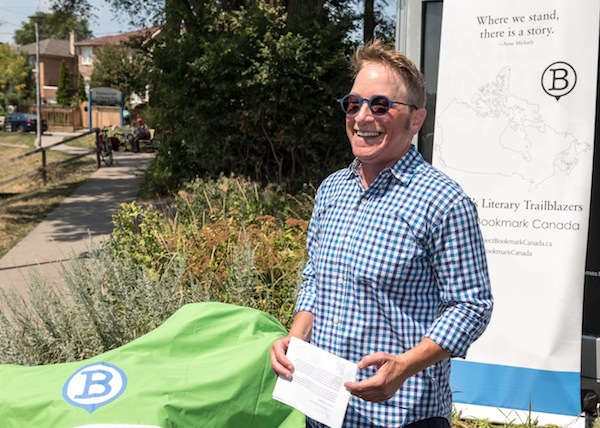
Vancouver writer Aren X. Tulchinsky at the Aug. 16 unveiling in Toronto of Project Bookmark Canada’s plaque honouring his novel, The Five Books of Moses Lapinsky. (photo by Lisa Sakulensky)

The Canadian Literary Trail has a new bookmark – one honouring The Five Books of Moses Lapinsky by Vancouver writer Aren X. Tulchinsky. The 25th such plaque to be erected by Project Bookmark Canada across the country, the unveiling took place Aug. 16 in Dominico Field at Barton Avenue and Christie Street in Toronto. Tulchinsky took part in the ceremony.

“Last October, I received a phone call from Laurie Murphy, executive director of Project Bookmark Canada, letting me know my historical novel The Five Books of Moses Lapinsky was nominated for a bookmark,” Tulchinsky told the Independent. They chose to unveil the plaque on Aug. 16 because it is the day on which the 1933 riot in Christie Pits took place.

Surprised and thrilled to hear that Project Bookmark Canada and the City of Toronto would be erecting the plaque in honour of his book, Tulchinsky said, “I was particularly struck by the timing, when, right now, we are all being called upon to make sure that dark chapters of our history do not repeat themselves.”

He explained, “My novel is about a fictional Jewish Russian immigrant family, living in the Kensington Market neighbourhood in the 1930s and ’40s. The main character, Sonny Lapinsky, is a Jewish boxer. He is 9-years-old … when the riot in Christie Pits occurs and, on that night, he discovers he has boxing talent and goes on to become a professional boxer. That same night, tragedy strikes the Lapinsky family.

“Many Canadians are not familiar with the 1933 riot, which involved 15,000 people and is the largest race riot ever to occur in Canada. A group of British- and German-Canadian young men, members of the Swastika Club, set off the riot when they unfurled a huge, black and white swastika flag in Christie Pits during a packed amateur league baseball game on a hot August night. The Project Bookmark plaque in Christie Pits will bring greater awareness to this piece of Canadian history and, of course, to my novel.”

Project Bookmark Canada was founded by writer Miranda Hill in 2007, with the first plaque being unveiled in 2009 – for Michael Ondaatje’s In the Skin of a Lion, at the Bloor Street Viaduct in Toronto. There are bookmarks from British Columbia to Newfoundland. Vancouverites have easy access to Bookmark No. 12, which commemorates Wayson Coy’s The Jade Peony, at the southeast corner of Pender Street and Gore Avenue in Chinatown.

“Visitors are encouraged to read their way across Canada, online and in person,” said Project Bookmark board of directors president Hughena Matheson in the press release about Tulchinsky’s honour. “A launching place for conversation, collaboration and learning, the bookmarks provide a unique reading experience and a deeper understanding of the country and its people.”

“I think Project Bookmark Canada is an important organization,” said Tulchinsky. “Their goal is to get people to read Canadian books. It is vital to celebrate our unique Canadian history and, sadly, our country is constantly in the shadow of the U.S., with American books filling our bookshelves. With the loss of small independent bookstores across the country who used to promote Canadian authors, and with people buying books online from huge American corporations, many excellent Canadian books go unnoticed. As a Canadian and as a writer, I applaud the work Project Bookmark Canada is doing to bring Canadian stories to the forefront.”
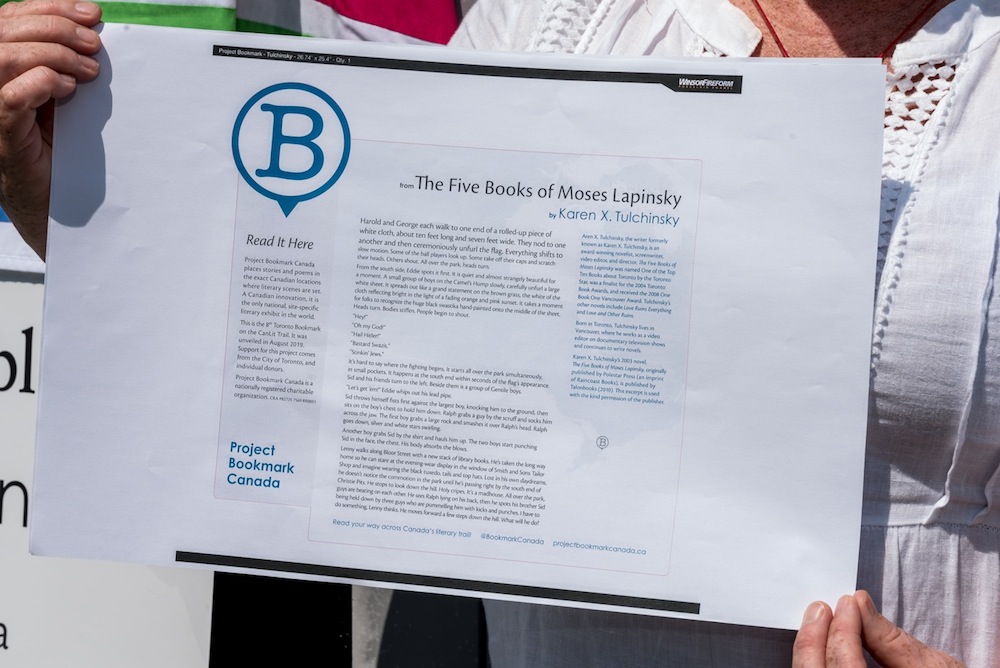
photo - The Five Books of Moses Lapinsky bookmark text
The Five Books of Moses Lapinsky bookmark text. (photo by Don Oravec)

At the Aug. 16 unveiling, Tulchinsky read the excerpt of his novel – published under the name Karen X. Tulchinsky – that appears on the plaque. “It is the moment when, in 1933, the Swastika Club unfurled a huge swastika flag at the ninth inning of an amateur league baseball game in the park. All summer, the Swastika Club had been bullying Jews on the beaches of Toronto. On this day, they upped the ante and brought their antisemitism to the west side of town, which was mostly Jewish and Italian immigrants. After a summer of being kicked off the beaches, young Jewish men fought back. And, interestingly, the Italian men in the park joined the Jews in fighting against the Swastika Club and their allies, in what became the largest race riot ever to occur on Canadian soil.”

“Our past president, Don Oravec, spoke at the unveiling and said the novel was on his radar as a potential bookmark,” Project Bookmark’s Murphy told the Independent of how The Five Books of Moses Lapinsky was selected. “When Daniel Gelfant made an official submission to us to consider the book and its variety of Toronto settings as potential bookmarks, the wheels were set in motion. The board’s national bookmark advisory committee reviewed the proposal and approved it for development. Councilor Joe Cressy made a motion to the City of Toronto to provide funding in support of a bookmark for the Christie Pits ball field, on the anniversary of the riots in 1933. It was approved, and subsequently developed. Additional funds were raised by individual donors attending a bookmark fundraiser on Aug. 15, complete with a boxing demonstration by the author and the Toronto Newsgirls Boxing Club at Jazz Bistro.”

When he first started writing the novel, Tulchinsky, who was born in Toronto, said it “was loosely based on stories my grandfather had told me about his escape from Russia before the Second World War and his early days in Toronto, where his first home in Canada was in the Kensington Market area.

“When I started researching the Jewish community in 1930s Toronto, I discovered the riot that pitted young Jewish men and their Italian allies against the Swastika Club and their gentile allies…. As a Canadian Jew, I knew immediately that I would tell my story against this backdrop, an important piece of our history that had not yet been told in fiction. So, I created a fictional family, with four sons, all of whom get involved in the riot in different ways. On the night of the riots, one of the brothers is permanently injured in a way that shatters the family, especially the main character, Sonny, whose guilt over what happened to his brother causes a rift between him and his father, that sends the family into turmoil.

“The Five Books of Moses Lapinsky, which takes place … when Hitler first came to power in Germany, and continues through the Second World War years, is about antisemitism in Canada,” he said. “It’s about how hatred only leads to more hatred and violence. At the risk of sounding like the Vancouverite I am, I believe the only cure for hate is love. Sadly, history tends to repeat itself and, today, in 2019, we are seeing a rise in hate crimes in Europe, the U.S. and here in Canada against Jews, Muslims, South American migrants and the LGBTQ community. We are witnessing the president of the United States taking children away from their asylum-seeking parents and imprisoning them in what can only be called concentration camps. The themes in my novel, sadly, are just as relevant today as ever. I hope people see the parallels in the fascism that swept the world in the 1930s with what is happening today. I just keep hoping that humans will find a better way forward that does not repeat the mistakes of our past.”

And Tulchinsky continues to examine that past.

“I am currently working on a new novel, set in 1930s Berlin, in which I follow fictional characters (Jewish and non-Jewish) as Hitler first comes to power. In the story,” he said, “we watch as the Jewish characters are systematically stripped of their civil rights, then their livelihoods and, eventually, their lives. For my research, I have read hundreds of books on the Holocaust and the rise of the Nazis in the 1930s and I can tell you there are many policies the Trump administration is pursuing in the U.S. that are taken directly from Hitler’s playbook. In the current climate, with antisemitism, racism and homophobia on the rise, I feel particularly driven to finish and publish this new novel.”

To find out more about the Canadian Literary Trail, visit projectbookmarkcanada.ca.
Format ImagePosted on September 27, 2019September 24, 2019Author Cynthia RamsayCategories NationalTags antisemitism, Canadian Literary Trail, CanLit Trail, Christie Pits, historical fiction, history, Project Bookmark Canada, racism, Toronto, Tulchinsky
Dealing with adversity

Dealing with adversity

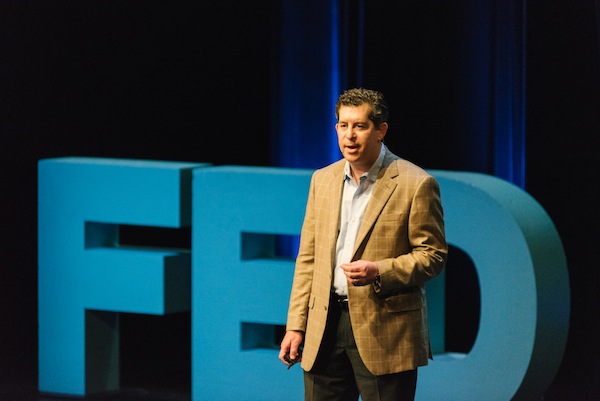
Houston Rabbi Brian Strauss lost both his family home and his synagogue to Hurricane Harvey, but the story he brought to FEDtalks Sept. 9 was an uplifting one. (photo from JFGV)

A time-lapse video showed the unrelenting advance of Hurricane Harvey. The security camera at Houston’s Jewish community centre captured the natural disaster’s impact on the building’s interior from the moment the first drops of water came through the front door until the deluge reached the ceiling. Furniture became unmoored and began to swirl around the building’s lobby.

The Category 4 hurricane made landfall in August 2017, slamming Texas and Louisiana with catastrophic flooding and dozens of fatalities. Material damages were estimated at $125 billion US, mostly in Houston and southeast Texas.

The Jewish community of Texas had to rebuild. Synagogues, the JCC, the Jewish seniors home and one in every 13 Jewish family homes were ruined.

Rabbi Brian Strauss, who spoke in Vancouver Sept. 9, lost both his family home and his synagogue. The issue was not merely flooding. Any flooding damages property, but the area’s topography meant that Houston was submerged in toxic bayou water, rendering everything it touched toxic. Added to this, the humidity of Houston caused mold to grow immediately. Houston received 52 inches of rain in three days – equivalent to its average annual rainfall. (By contrast, he noted, Vancouver gets 46 inches of rain annually.)

But the story Strauss brought to the Vancouver Playhouse – he was one of four speakers at FEDtalks, the opening event of the Jewish Federation of Greater Vancouver’s annual campaign – was an uplifting one.

Volunteers from around the world descended on Houston. The federal government provided resources to rebuild synagogues, homes and communal facilities. Especially notable: Israel donated $1 million to a Diaspora community struggling with crisis. Strauss juxtaposed the phenomenon of Jewish giving, which for decades flowed from the Diaspora to Israel, with the reality that Israel is now in a position to help a community in crisis abroad.

Also speaking at the campaign launch event was Risa Alyson Cooper, executive director of Shoresh. She shared her journey into Jewish spiritual and ethical issues around food. Shoresh is an Ontario-based organization that “inspires and empowers our community to take care of the earth by connecting people, land and Jewish tradition.”

“Eating is an ethical act,” Cooper said. By engaging community members “from seed to harvest,” the organization reduces the stigma of receiving “donated” foods.

“It’s not a handout,” she said. People are involved in creating their own food sustainability.

Cooper’s journey of exploration began during a trip in Nelson, B.C., a story she shared in an article the Independent ran in advance of the event. (See jewishindependent.ca/b-c-inspires-activists-work.)

Also at FEDtalks, Isaac “Bougie” Herzog – who chose to sit out not one but two Israeli elections this year – spoke about his role as head of the Jewish Agency for Israel.

Herzog is Israel’s former leader of the opposition and former head of the Labour party. In contextualizing his role as chairperson of the world’s largest Jewish organization, an agency that has been central in creating and building the Jewish state, he spoke of continuing a family legacy.

His grandfather, Rabbi Yitzhak HaLevi Herzog, who was the first Ashkenazi chief rabbi of Israel, went on a rescue mission in 1946 to find hidden Jewish children in churches and monasteries throughout Europe, bringing thousands of them to Palestine. Herzog’s father, Chaim, who went on to become president of Israel, served with the U.K. army, landed in Normandy, fought in the Battle of the Rhine and was among the first to enter the Bergen-Belsen concentration camp. Abba Eban, the legendary Israeli diplomat and statesman, was an uncle.

“I’m fulfilling the orders of my forbearers,” said Herzog, who was introduced by Karen James, immediate past board chair of the Jewish Federation and a member of the board of the Jewish Agency. The Independent also interviewed Herzog in advance of his visit. (Read the story at jewishindependent.ca/building-jewish-future.)

The most emotional presentation of the night came last. Dr. Gillian Presner recounted how she was invited to join the Federation movement’s National Young Leadership Cabinet. When she was told the commitment was five years, she replied: “That’s the rest of my life.”

Presner was diagnosed with a brain tumour in 2016, while pregnant with her third daughter. Nine days after the baby was born, she suffered a stroke.

Despite the challenges of raising a very young family while enduring terminal brain cancer, she accepted the invitation to join the cabinet because, she said, “I refuse to die before I’m dead.”

She added: “I am full of hope, but I am also a realist.”

She understands that she needs to leave a legacy of vibrant memories to her daughters – the family took a trip to Israel together, certain it would be her only chance – but she also knows that her daughters will “have to learn about me by hearing about what Mommy did.”

By continuing to devote herself to philanthropic causes, she is “showing my daughters what I truly value.”

Ezra Shanken, chief executive officer of the Jewish Federation, closed the evening, noting “our most precious commodity we have here is our time.”

Alex Cristall, chair of the board of Federation, welcomed the audience, acknowledging in particular 150 people in their 20s and 30s whose presence was made possible through a contribution by Jonathon and Karly Leipsic. Jonathon Leipsic is the annual campaign chair for the second consecutive year.

“It is a pleasure to have you,” Cristall said. “We need you.”

Jonathon Leipsic spoke of Theodor Herzl’s dream of Jewish self-determination and noted: “Our generation has never known a generation without emancipated Jewish freedom.”

He urged the audience to go to YouTube and find Chaim Herzog’s speech to the United Nations in 1975 against the motion that equated Zionism with racism.

“It will send shivers down your spine,” he said.

Members of Parliament Joyce Murray, Don Davies, Jody Wilson-Raybould, Randeep Sarai and Hedy Fry were in attendance, the latter of whom spoke from the podium and brought greetings from the prime minister. Also present were Selena Robinson, British Columbia’s minister of municipal affairs and housing; George Heyman, minister of environment and climate change strategy; George Chow, minister of state for trade; and Anne Kang, member of the Legislative Assembly. Vancouver city councilors Melissa De Genova, Colleen Hardwick, Sarah Kirby-Yung and Pete Fry attended, as did the consuls general of France, Germany and the United States, and Vancouver Police Chief Adam Palmer.

O Canada and Hatikvah were sung by the King David High School Choir.

To donate to the campaign and watch videos of all the FEDtalks speakers, visit jewishvancouver.com.

Format ImagePosted on September 27, 2019September 24, 2019Author Pat JohnsonCategories LocalTags FEDtalks, Jewish Federation, JFGV, philanthropy, tikkun olam

Self-image to be tested

It was all decorum and politeness at an election forum Sunday sponsored by the Centre for Israel and Jewish Affairs and SUCCESS, the United Chinese Community Enrichment Services Society.

The comparative decorousness of the event – although interrupted at one point by an impassioned outburst related to the mistreatment of indigenous peoples – will likely be an anomaly as the neck-and-neck campaign proceeds. Desperate measures will likely be employed as Liberals and Conservatives battle for a majority – and as New Democrats and Greens spar in what seems destined to be a down-ticket race of its own.

And all of this is playing out against the potentially upending news that the People’s Party of Canada’s Maxime Bernier has been admitted to the national debates on Oct. 7 and 10 organized by the official Leaders’ Debate Commission.

The new party – started by the breakaway former Conservative from Quebec – has attracted a range of malcontents, including extremists of various sorts being involved in or peripheral to his party. While the four “mainstream” parties have all tread relatively lightly around super-charged racial issues, Bernier – and perhaps less predictably, his fellow 337 candidates across the country – seems prone to exploit and exacerbate racial divisions.

On this and many other issues that will form the meat and potatoes of the rest of the campaign, Canadians will now hear the perspective of Canada’s answer to the populism that has taken root in the United States, Europe and elsewhere. The degree to which these ideas and Bernier’s rhetoric catches on will tell us much about our country and ourselves. Canadians have liked to imagine that we are immune to the phenomenon of xenophobia that seems to be gaining ground globally. But, then, we haven’t had, in recent history, a chance to vote for a party that represents such ideas.

One of the things that has been notable during the aftermath of Prime Minister Justin Trudeau’s recently revealed repeated donning of deeply problematic costumes, including blackface/brownface, is what seems like a divergence between the official voices and the unofficial voices.

Elected officials utter pieties about respect for diversity. Representatives of multicultural and anti-racism organizations speak of challenges and opportunities. Yet, in radio call-in programs and online comments – those voices of “ordinary” people – the responses seem quite different. Many complain that the blackface controversy is all a sideshow that diminishes focus on issues like the economy and the environment. Others suggest a tempest in a teapot or political correctness run amok.

In a few days, Canadians will get our first look at all the party leaders side by side, including Andrew Scheer and Jagmeet Singh, who remain somewhat unknown quantities, and Bernier, who will bring some genuinely outside-the-establishment perspectives to the debate. How far Bernier pushes the envelope – and how Canadians respond to his ideas – will tell us just how accurate our self-perception as an open, tolerant society really is.

Posted on September 27, 2019September 24, 2019Author The Editorial BoardCategories From the JITags Bernier, democracy, federal election, politics, racism, Scheer, Singh, Trudeau
When Afula road went quiet

When Afula road went quiet

The author was in the banana fields, working on the irrigation system, when the war started. (photo from Victor Neuman)

In this eight-part series, the author recounts his life in Israel around the time of the 1973 Yom Kippur War. The events and people described are real but, for reasons of privacy, the names are fictitious.

Part 2: The War Begins

Sometimes, war begins with a whimper and not a bang. It was Oct. 6, 1973. I was back on the kibbutz that I had been on with Suzanne, except Suzanne had never returned from Paris.

I was in the banana fields, working alone on the irrigation system, when I began to feel a strangeness in the air. At first, I couldn’t put my finger on what was different. I was alone – just me and my tractor – but that was nothing new. The bananas were not ready for harvesting, so no one else was supposed to be around. The pruning of new shoots was over with and the stripping of dead leaves had been done a couple of weeks before.

Not being able to determine what was bothering me in that moment, I went back to pondering the meaning of my life. I had been to Israel on a previous trip, spent a year or so on three different kibbutzim, done archeology in the Negev at a site called Tel Beersheva, worked on construction of a chemical pipeline near Arad, gone back to Canada to get my master’s in English literature, and now I was back in Israel, at the age of 28. I still had no clue as to what I wanted to do. Go back to Canada? Teach English at the University of British Columbia? Stay in Israel? Become a member of the kibbutz?

Skewing my thought process was my relationship with a kibbutz Sabra named Tamar. By all I hold dear, Tamar was the most beautiful creature I had ever laid eyes on. When I met her, I was gob-smacked and smitten. When I found out she kept an Uzi in her flat, I was gob-smacked, smitten – and careful. She had become an officer during her two years of military service. On her bookcase, there was a photo of her looking rather sternly at her platoon. They were standing stiffly at attention while she inspected their weapons. Definitely not a gal to be trifled with.

Complicating things more was the fact that Tamar was 26 and the first child born on the kibbutz after it was founded in 1949. She was the darling of the kibbutz and, at the same time, a big concern to everybody. After all, she was already 26 and, by the standards of the day, she was on the cusp of becoming an elderly single. She had a problem common to many kibbutz youths. Who was there to get it on with? Our kibbutz, like many others, had what’s called a beit yeladim (children’s house). All babies that are weaned are taken and put in the children’s house; there, they are raised until they are of high school age. They visit with their parents frequently but, at the end of the day, they return to their communal home to sleep and live. The result is that they grow up feeling that their peers are like their brothers and sisters. Romantic feelings are hard to come by and their best chance of finding a partner is to match up with somebody from outside the kibbutz.

The kibbutzniks liked me. I worked hard. I had a university education. I always volunteered when extra work needed doing and I had applied for membership. Everybody was pulling for me and Tamar. I told my kibbutz friend Aaron that my dating Tamar was still a thing in its early stages. He was having none of it. To make his point more emphatic, he switched to English and called me by my kibbutz nickname, Kanadi. “No, no, no, Kanadi. You marry 26!” It was a romance in a goldfish bowl but I didn’t mind. She was gold to me.

When my mind returned to what was happening in the banana fields, it hit me. The constant hum of traffic on the Afula road was missing. This road was a major corridor just below our fields and it was constantly abuzz with trucks, tractors and cars. Israelis called it the “Ruler Road.” As they put it, “It is straight as any school ruler and it even has a hole in the end – Afula.” (There was never much respect for the town of Afula.) But now the road was silent. I drove the tractor to the top of a hill to get a better look and was surprised to see the road deserted. Something was going on.

Suddenly, there was a horrific racket from above. A helicopter gunship roared overhead, heading straight up the Afula road at just above treetop level. It was so close I could see the barrels of guns bristling from every port on its side. In another second, it was gone. Then, a second gunship barreled through. Same height and same direction. I started to worry.

I hopped on my tractor and booted it back to the kibbutz. Same story all along the way. No traffic on the roads. Nobody working any of the fields. Nobody walking around. Just me. As I drove into the parking lot, the roads and walkways were deserted. It was as if a mysterious virus had devastated the earth and I was the only one left. I was starting to feel like I was living in an episode of The Twilight Zone.

Then, I heard voices coming from the dining hall, so I walked in that direction. When I entered, everyone was there. The voices had dropped off and now there was only one voice dominating. It was Gidon, our designated commander.

Gidon was a recent immigrant and a South African Jew. It never surprised me that he would be in charge of our defence. Every South African immigrant I met in Israel was trained in the military. Not by Israel but by South Africa. The British won the Boer War but the Afrikaners were running the show and they were determined to never let the blacks get the upper hand. It seemed that most South Africans knew one end of a gun from the other, even the many who were disgusted with the brutality of apartheid and had left the country. So, while most Jews immigrating to Israel were novices when it came to the art of war and had to be extensively trained, the South African Jews I met had come prepared.

Gidon’s voice wasn’t the loudest I’d ever heard but, in the hush of that room, it was loud enough. Thankfully, his Hebrew was as far along as mine and I understood everything he said: “… and there will be no more swimming in the pool. The swimming pool is now our emergency drinking water supply. All tractors and vehicles are to be filled up with fuel and oil. All tractors and vehicles are to be scattered around the kibbutz and not parked in one place. The bomb shelters are no longer discothèques. The kids have to clear out all the records, strobe lights and disco stuff.

“Before the day is over, I want white lines painted on all the shelter pathways. We are blacking out the kibbutz and we have to be able to find our way to the shelters in the dark. No lights on after dark in the rooms unless there is black plastic taped to the windows. Patrols by the shomer leila [night guard] around the kibbutz perimeter are to be carried out seriously. I don’t want to hear of any guards hanging out in the kitchen having food and coffee. They can pack their lunches and eat them as they do their rounds. No, we can’t double the patrols. They’ll just end up shooting one another. That is all. We are at war. Are we understanding? Then go do your jobs.”

I looked across the room at Tamar. She looked back and her expression was serious. We were at war.

(Next Time: Dating, Israeli Style)

(Previously: “Learning the lay of the land”)

Victor Neuman was born in the former Soviet Union, where his family sought refuge after fleeing Poland during the Second World War. The family immigrated to Canada in 1948 and Neuman grew up in the Greater Vancouver area. He attended the University of British Columbia and obtained a BA and MA with majors in English literature and creative writing. Between 1968 and 1974, he made two trips to Israel, one of which landed him on a kibbutz at the time of the 1973 Yom Kippur war. Upon his return to Canada, he studied Survey Technology at BCIT and went on to a career of designing highways for the Province of British Columbia. When he retired, he reconnected with his roots in creative writing and began writing scripts for Vancouver Jewish Folk Choir concerts and articles for the Jewish Independent. Neuman and his wife, Tammy, live in southeast Vancouver and enjoy the company of friends, their extensive extended family and their four sons.

Format ImagePosted on September 27, 2019October 30, 2019Author Victor NeumanCategories IsraelTags Diaspora Jews, history, Israel, kibbutz, memoir, Yom Kippur War
Search for biological father

Search for biological father

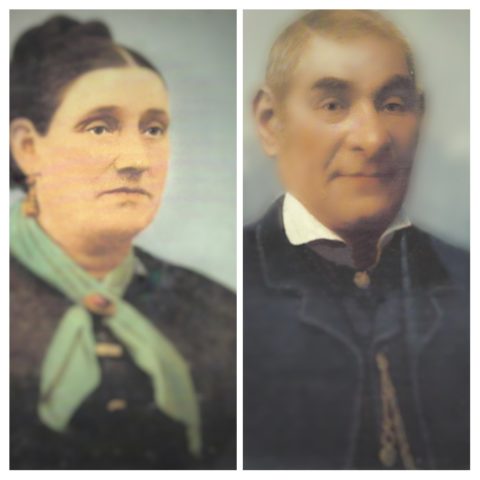
(photos from Mark Loudon)

Apart from an ambiguous hint dropped by his mother just after his father died in 1990 – and subsequently denied – Mark Loudon, a Brit of Scottish, English and Irish ancestry (so far as he knew), had no idea that the man he grew up with was not his biological father. A DNA test in May 2017 revealed a completely different DNA profile than what he was expecting – instead of Scottish paternal heritage, it showed an Eastern European Jewish and Spanish one.

With only a third cousin DNA match to a stranger in Chicago and some childhood memories from his aunt, who was only 8 years old when he was born, Loudon set out on a search for closer relatives. This involved not only family history records, but diving into planning records and old photographs for clues. One such photo, shown here, is of Henry Naftali-Hirts Hart and his wife Elizabeth Mendoza.

Loudon will discuss his journey to discover his biological father and its impacts at the next meeting of the Jewish Genealogical Society of British Columbia (jgsbc.ca) on Oct. 1, 7:30 p.m., at the Peretz Centre. All are welcome to attend.

Format ImagePosted on September 27, 2019September 24, 2019Author Jewish Genealogical Society of BCCategories LocalTags DNA, genealogy, history, JGSBC, Mark Loudon
Mystery photo … Sept. 27/19

Mystery photo … Sept. 27/19

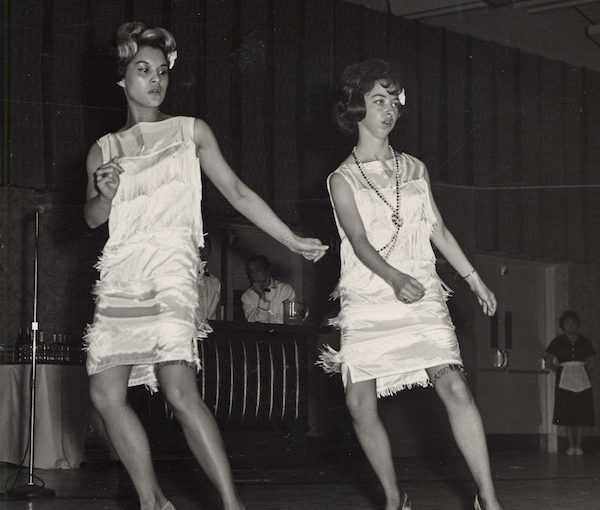
Two women dancing, 1965. (photo from JWB fonds, JMABC L.13986)

If you know someone in these photos, please help the JI fill the gaps of its predecessor’s (the Jewish Western Bulletin’s) collection at the Jewish Museum and Archives of B.C. by contacting [email protected] or 604-257-5199. To find out who has been identified in the photos, visit jewishmuseum.ca/blog.

Format ImagePosted on September 27, 2019September 24, 2019Author JI and JMABCCategories Mystery PhotoTags history, Jewish museum, women
פרשת הריגול

פרשת הריגול

קמרון אורטיס (nationalpost.com)

בימים אלה מתנהל דיון בבית המשפט בדלתיים סגורות על פרשת הריגול החמורה ביותר בתולדותיה של קנדה. קמרון ג’י אורטיס (בן הארבעים ושבע), ששימש מנהל בכיר במערך הביטחון של המשטרה הפדרלית הקנדית (האר.סי.אם.פי), והחזיק ברמת הסיווג הביטחונית הגבוהה ביותר, מאושם שמכר חומר ביטחוני רגיש לגורמים עוינים משנת אלפיים וחמש עשרה ועד אשתקד. רשויות המודיעין בארה”ב בראשות האף.בי.איי הן אלה שסיפקו את המידע על פעילותו של אורטיס שהביאה למעצרו בקנדה. אורטיס נעצר על ידי המשטרה הפדרלית בשתיים עשרה בחודש ומאז הוא במעצר והדיון המשפטי בעיניינו צפוי להימשך תקופה ארוכה ביותר.

בפועל האף.בי.איי , האר.סי.אם.פי והמשטרה האוסטרלית, עסקו במרץ אשתקד בחקירת וינסט ראמוס, לשעבר יו”ר חברת פאנטוס סקיור קומיוניקיישן מוונקובר, שמכרה טלפונים סלולרים מוצפנים לסוחרי סמים, ומי שהלבינו כספים בעולם הפשע. השימוש בטלפונים (תוצרת בלקברי) שכללו אימיילים מוצפנים מנע מכוחות המשטרה לנהל מעקבים אחרי חברי ארגוני הפשע. ראמוס הראה לחוקרי אף.בי.איי אימייל שקיבל מאורטיס אשתקד, שהציע לו מידע מסווג תמורת כסף. ואז האף.בי.איי. פנה לחוקרי האר.סי.אם. פי. ומסר להם מידע בדבר אורטיס. האר.סי.אם.פי החל לחקור נמרצות את הפרשה (במשך חודשים ארוכים) שהובילה בסוף למעצרו של אורטיס, לפני למעלה כשבועיים. במסגרת החקירות נמצא שאורטיס היה שרוי בחובות של למעלה ממאה אלף דולר. ראמוס שהודה בהאשמות החמורות נגדו כראש ארגון פשע, צפוי לשבת בכלא האמריקני למשך תשע שנים. הוא ביקש כנראה להקל בעונשו ומסר את המידע החשוב בדבר אורטיס לחוקריו מהאף.בי.איי.

כתב האישום החמור נגד אורטיס כולל שבעה סעיפי בהם: הפרת אמונים, העברת מידע רגיש על מבצעים מודיעניים בינ”ל וקבלה ואכסון מידע רגיש ביותר כדי להעבירו לישות זרה או לגופי טרור. באם יורשע הוא צפוי לקבל עונש של עד שלושים ושבע שנים בכלא.

בכירים במערכת הבטחון ובמשטרה הקנדית נמצאים בהלם לאור חשיפת הפרשה בנוגע אורטיס, שכביכול העביר חומר רגיש לגורמים זרים. חוקרי המשטרה (שאין להם רמת סיווג כה גבוהה כמו לאורטיס) מצאו ברשותו חומר מודיעיני רגיש ביותר שכלל: רשימה של שוטרים סמויים שעבדו בחקירות ומבצעים שונים, מידע על כל החקירות המתנהלות בקנדה, מידע על תיקי מודיעין ותיקים פליליים. ולא פחות חשוב מידע על חקירות ומבצעים מודיעינים בינלאומיים שנוגעים למדינות החברות בברית “חמשת העיניים” (בנוסף לקנדה): ארצות הברית, בריטניה, אוסטרליה וניו זילנד, וכן למדינות החברות בברית נאט”ו.

אורטיס יליד אבוטספורד שבמחוז בריטיש קולומביה שדובר גם סינית (מנדרינית) עבד במשטרה הפדרלית כאזרח, במשך שתיים עשרה השנים האחרונות (מאז אלפיים ושבע). תחילה עבד במחלקות מחקר מבצעים ובמינהל חקירות פיליליות-ביטחוניות. לאחר מכן התקדם ועבר למחלקת מרכז תיאום מודיעיני. הוא סיים לימודי דוקטורט במדע המדינה באוניברסיטת בריטיש קולומביה, וההתמחות שלו עסקה באזור מזרח אסיה שכולל את המדינות סין וצפון קוריאה.

ראש ממשלת קנדה, ג’סטין טרודו, פירסם הודעה קצרה בעקבות פרשת מעצרו של אורטיס. טרודו אמר: “קנדה עובדת עם בעלות בריתה ומנסה להרגיע אותם לאחר המעצר של הבכיר במערך המודיעין המשטרתי, שהדליף סודות”. ראש הממשלה הוסיף: אנו נמצאים בתקשורת ישירה עם בעלות בריתנו בנושאי הביטחון. אנו גם עובדים עימן בכדי להרגיע אותן. וכן אנו רוצים להבטיח שכולם יבינו שאנו לוקחים את המצב הזה ברצינות רבה”. דובר שגרירות ארה”ב בקנדה מסר כי ארה”ב הציעה את מלוא תמיכתה לקנדה בנושא”.

Format ImagePosted on September 25, 2019September 24, 2019Author Roni RachmaniCategories עניין בחדשותTags Cameron Ortis, espionage, investigation, Vincent Ramos, וינסט ראמוס, חקירת, קמרון ג'י אורטיס, ריגול
When Chabad turns up

When Chabad turns up

A still from The Rabbi Goes West: one of Chabad-Lubavitch Rabbi Chaim Bruk’s goals is to see a mezuzah on the door of every Jewish home in Montana.

In their documentary The Rabbi Goes West, filmmakers Gerald Peary and Amy Geller have succeeded in a difficult task – providing a balanced, respectful and entertaining glimpse into what happens in a state with a small, minimally affiliated Jewish community when Chabad-Lubavitch arrives.

A branch of Chassidism, Chabad-Lubavitch was started some 250 years ago in White Russia, in what is now Belarus. After the Holocaust, the movement began its outreach in earnest, trying to reach non-religious and unaffiliated Jews almost literally everywhere in the world. There are now approximately 5,000 Chabad emissaries in more than 90 countries.

While emissaries may receive some seed funding to start a new centre, they must raise their own funds to stay active. In 2006, Chabad Rabbi Chaim Bruk ventured from Brooklyn, N.Y. – Chabad headquarters is in Crown Heights – to Bozeman, Mont., to scout it out. Encouraged by the growing population and the amount of tourism, Bruk returned to Crown Heights to get the OK to set up a centre there. Given the green light, he and his wife Chavie did just that in 2007. The rabbi’s goal? To ensure that every one of Montana’s 2,000 Jewish families has a mezuzah on their door. One of the ways in which he makes headway on this task is by traveling all over the state, asking safe-looking strangers (who are the vast majority, he says) whether there are any Jews in the area and then, when he finds them, boldly introducing himself and his purpose.

As charming and open as Bruk seems, his presence, the ultra-Orthodox Judaism to which Chabad adheres and the movement’s expansionist mission – two more Chabad centres have opened since the Bruks arrived – are not universally welcomed by the Montana Jewish community. The Rabbi Goes West includes interviews with fellow rabbis Francine Roston (the first Conservative woman rabbi to lead a large congregation), who came to Montana from New Jersey in 2014; Allen Secher (co-founder of Chicago’s first Jewish Renewal congregation), who came to Montana after he retired in 2000 but retook the bimah when he found out he was the only rabbi in the state at the time; and Ed Stafman (a former trial lawyer), who came to the state from Florida. The film also includes commentary from local Jews from all four congregations.

While Bruk has limited involvement with the other congregations and rarely, if ever, joins their events – he contends that most of them violate some aspect of Judaism, such as the laws of kashrut, for example – the Jewish community does unite, along with other religious and secular groups and individuals in the state, when faced with neo-Nazi threats and cyberattacks.

The Rabbi Goes West is a documentary well worth seeing, both for its content and the way in which that content is presented. Sponsored by the Vancouver Jewish Film Centre, it screens at the Vancouver International Film Festival Oct. 7, 6:30 p.m., at Cinémathèque, and Oct. 8, 11:30 a.m., at International Village 10. For the full festival lineup, visit viff.org.

Format ImagePosted on September 20, 2019September 17, 2019Author Cynthia RamsayCategories TV & FilmTags Chabad, Chaim Bruk, documentary, Judaism, lifestlye, Montana, Vancouver International Film Festival, VIFF

Religion and politicians

In an interview with the CBC last week, federal Green party leader Elizabeth May was asked who her personal hero is. She responded, “Jesus Christ.” Almost immediately, she apologized, saying that she had responded while failing to “self-edit.”

Canadians, by and large, are not so open to publicly discussing matters like religion, politics or other things that could be perceived as controversial. But political leaders should be prepared to discuss things in their lives that have shaped them. In fact, religion seems likely to be more central in this election than it has been in decades.

New Democratic Party leader Jagmeet Singh felt compelled to address his religion in an ad (notably aimed at Quebec voters) about how his identity as a Sikh influences his worldview.

While Quebec’s Bill 21, which bans the display of religious symbolism in the public service, means Singh would not be permitted to teach in the province or hold certain roles in the civil service, he managed to finesse the issue quite neatly. He found a sort of common ground by acknowledging that Bill 21 is an effort by Quebecers to protect and preserve their identity, the importance of which he acknowledged paralleled his own pride in his identity and the importance it holds in his life.

Over the weekend, he also managed to continue discussing the topic while having a few laughs, which rarely hurts. Singh, who has struggled to connect with voters in the pre-election period, may come out of this round a winner by making Quebec voters and other Canadians take a good look at him for the first time.

Meanwhile, Liberals are trying to portray Conservative party leader Andrew Scheer as having a hidden agenda, based on his Catholic religious beliefs, on issues like reproductive freedom and equal marriage.

Scheer and Prime Minister Justin Trudeau, both Catholics, have taken similar approaches, asserting that their religious views will not dictate party or government policies. However, there is probably a different calculation being made on each side. Trudeau’s policies are probably more liberal than the teachings of his church, so segmenting the two prevents an undesirable schism with his church. Scheer is probably calculating that his beliefs in the teachings of his church are not shared by the majority of voters; therefore, segregating his political and religious positions may have a hint of political expediency. In both cases, Trudeau and Scheer have been vague and both have attempted to move past the topic. (This is tougher for Scheer, whose grassroots supporters, in many cases, are more religiously conservative than the average voter. Working on not alienating them while courting middle-of-the-road voters places him in a bit of a bind.)

The reticence by Trudeau and Scheer to enthusiastically discuss their religious views, and May’s odd flip-flop on Jesus, may be a consequence of a root misunderstanding around the separation of church and state: the concept is that religious institutions should not unduly influence, or be influenced by, governments. It does not mean that individual elected officials should neuter their religious views as they cross the threshold into the legislature. If one’s deeply held religious beliefs and values are what make up a person’s identity, worldview and morality, these are things that should very much be on the table for people seeking the public’s trust. By example, there is plenty in biblical literature that May could have cited as motivators for her environmental priorities. That kind of openness would be refreshing. Singh tried it. We’ll see what happens.

If religious adherence is an important part of who a candidate is, it would be nice to think that they would not be embarrassed or shy to share these perspectives with us. Canadians would perhaps understand our leaders better – including when they say that they personally believe one thing but would not legislate it on the country, which is an entirely legitimate position.

What likely makes voters suspicious or skeptical is when a politician seems to be hiding something, is ambiguous about how their beliefs might guide policy positions, or is ashamed of who they are.

Posted on September 20, 2019September 17, 2019Author The Editorial BoardCategories From the JITags Andrew Scheer, Elizabeth May, federal election, Jagmeet Singh, Justin Trudeau, politics, religion
Much going on for songwriter

Much going on for songwriter

Harriet Frost performs at Jacob’s Ladder Festival in Israel last May. (photo from Harriet Frost)

How best to describe Harriet Frost’s music? “Impressionistic poetry, witty wordplay, music that is intimate and universal,” is what CBC Radio had to say. “Folk rock with a jazz funk twist,” read another recent write-up ahead of a performance at the renowned Jacob’s Ladder Festival in Israel this May.

“My music explores personal, topical, political and spiritual landscapes. They can be humorous, joyful, painful, ironic, beautiful and not so beautiful. It’s poetry, folk, jazz, rock, spoken word, ancient and postmodern,” she says in her own words.

What is not open to interpretation is that the Vancouver singer, songwriter and musician has had a busy spring and summer. In addition to her Israeli performance, she has been organizing local house concerts in town and working on a new album.

Music is an integral part of what she does outside of being on stage or in a studio, as well. Her work at the Louis Brier Home and Hospital has shown the therapeutic effects music has on people regardless of their age. “You can reach people, even those in deep states of dementia, through music,” she said. Frost also teaches Judaic studies, trains youth and adults to chant from Torah, and has been exploring cantorial music.

The Israel connection

Jacob’s Ladder is more than a music festival to Frost – it is the title of a song she wrote and dedicated to her father, who escaped Nazi Germany for Palestine in 1939. He witnessed the birth of the Israeli state in his decade living there. The song is featured in the Lucy McCauly documentary film Facing the Nazi Era.

Canada ultimately became home for the Frost family, yet the connection with Israel remained. When it was time for university, Harriet chose four years at Hebrew University in Jerusalem – a student by day and a musician playing in the cafés at night. She was the musical director of the groundbreaking theatre troupe, the Gypsies, made up of Palestinian, Israeli and North American artists who performed peace-themed musicals for Israeli and Palestinian youth. Her personal musical biography is so resonant with Israeli content that when a friend told her last year about Jacob’s Ladder and urged her to look into it, she couldn’t resist. The invitation from its organizers came a few months later.

Founded in 1976, Jacob’s Ladder is the longest and most established music festival in Israel, featuring a wide selection of folk genres and international music presented each spring and fall. Located in the north, on the Sea of Galilee, Frost said her first feeling upon arrival was like being at the Vancouver Folk Festival at Jericho Beach Park, due to the proximity to the water.

“It was 45 degrees,” she recalled. “I had no idea what to expect. When I was first introduced as a Vancouverite and the only Canadian performing at the festival this year, people started cheering. It was so welcoming and fantastic.”

She played in an air-conditioned 250-seat hall filled to capacity with an audience comprised of Americans, Israelis, Europeans, Canadians and fellow musicians “of all ages,” she said, “teenagers, families with kids, millennials, a full arc of generations.”

At the Ginosar Kibbutz and Hotel, which hosts the famous event, she met numerous performers who had come to the festival and were playing music in the hotel lobby between their own sets. It was an extraordinary opportunity to connect with some of the country’s most notable folk musicians, she said.

Concerts and album

Through November and beyond, along with other venues, Frost is organizing a series of house concerts, given the positive response to one she held in April in advance of her Jacob’s Ladder appearance. As the name suggests these are concerts hosted in someone’s home, where, according to Frost, “musicians have an opportunity to present their original material in a concert situation, unlike in a café or club where folks may be eating, drinking and socializing.

“There is an intimate concert vibe that is created in the home. You have the freedom to play a full night’s worth of material and really connect with a small audience (between 30 and 50). People attend specifically to listen to new music.” Currently, Frost has been collaborating at these concerts with Vancouver multi-instrumentalist Martin Gotfrit.

And a new album is in the works. Working title: Jacob’s Ladder.

For more information about the album and upcoming concerts, visit harrietfrost.com.

Sam Margolis has written for the Globe and Mail, the National Post, UPI and MSNBC.

Format ImagePosted on September 20, 2019September 17, 2019Author Sam MargolisCategories MusicTags Harriet Frost, Israel, Jacob's Ladder

Posts pagination

Page 1 Page 2 … Page 6 Next page
Proudly powered by WordPress