Skip to content
  • Home
  • Subscribe / donate
  • Events calendar
  • News
    • Local
    • National
    • Israel
    • World
    • עניין בחדשות
      A roundup of news in Canada and further afield, in Hebrew.
  • Opinion
    • From the JI
    • Op-Ed
  • Arts & Culture
    • Performing Arts
    • Music
    • Books
    • Visual Arts
    • TV & Film
  • Life
    • Celebrating the Holidays
    • Travel
    • The Daily Snooze
      Cartoons by Jacob Samuel
    • Mystery Photo
      Help the JI and JMABC fill in the gaps in our archives.
  • Community Links
    • Organizations, Etc.
    • Other News Sources & Blogs
    • Business Directory
  • FAQ
  • JI Chai Celebration
  • JI@88! video

Recent Posts

  • האלימות בישראל מורגשת בהרבה מגזרים
  • טראמפ עוזר דווקא לנושא הפלסטיני
  • New rabbi settles into post
  • A light for the nations
  • Killed for being Jewish 
  • The complexities of identity
  • Jews in time of trauma
  • What should governments do?
  • Annie will warm your heart
  • Best of the film fest online
  • Guitar Night at Massey
  • Partners in the telling of stories
  • Four Peretz pillars honoured
  • History as a foundation
  • Music can comfort us
  • New chapter for JFS
  • The value(s) of Jewish camp
  • Chance led to great decision
  • From the JI archives … camp
  • עשרים ואחת שנים להגעתי לונקובר
  • Eby touts government record
  • Keep lighting candles
  • Facing a complex situation
  • Unique interview show a hit
  • See Annie at Gateway
  • Explorations of light
  • Help with the legal aspects
  • Stories create impact
  • Different faiths gather
  • Advocating for girls’ rights
  • An oral song tradition
  • Genealogy tools and tips
  • Jew-hatred is centuries old
  • Aiding medical research
  • Connecting Jews to Judaism
  • Beacon of light in heart of city

Archives

Follow @JewishIndie
image - The CJN - Visit Us Banner - 300x600 - 101625

Tag: Yom Kippur War

היהירות הישראלית עולה ביוקר

בתור אחד שגר בישראל ארבעים וחמש שנים אני מכיר מקרוב את היהירות הישראלית שרק הולכת ומתעצמת כל הזמן. הישראלים יודעים הכל, הם מבינים הכל, ישראל היא המדינה החשובה בעולם, והישראלים יכולים להסביר בקלות ללא ישראלים: מה צריך לעשות, כיצד לפעול, מה חשוב באמת ועד כמה הישראלים הם מה שבאמת חשוב

נראה לי שהניצחון הגדול במלחמת ששת הימים שהפך את ישראל למעצמה צבאית עליונה, כאשר כל מדינות העולם מכירות בהצלחתה הגדולה, היא נקודת הציון המשמעותית, כאשר מאותה עת היהירות בישראל הלכה וגדלה, הלכה והתעצמה

אנו זוכרים היטב את הכבוד הגדול לו זכרו הבכירים בצבא לאור הניצחון במלחמה שארכה רק שישה ימים. כל הדלתות נפתחו בפניהם, כולם רצו להיצמד אליהם וליהנות מחברתם. מאז גם מדד השחיתות בישראל החל לעלות וכיום הוא נוגע בשמים

תוצאות המלחמה הביאו את ישראל לשלוט בשטחים הכבושים ומאז נולדה תנועת המשיחיות שהקימה התנחלויות באזורים אלה ופגעה קשות באזרחים המקומיים הפלסטינים. גם אצל המתנחלים שמספרם הולך וגדל במשך השנים, היהירות היא תכונה בולטת אשר גורמת לנזק גדול למדינה ואזרחיה

בין הבודדים שיצא נגד חגיגות הניצחון במלחמה היה פרופ’ ישעיהו ליבוביץ’, שטען כי הניצחון ובעקבותיו אחזקת השטחים הכבושים יביאו נזק גדול לישראל בהמשך הזמן. נביא הזעם ליבוביץ’ צדק וישראל הולכת בכיוון הלא נכון, אזרחיה מפוצלים ללא אפשרות של איחוד, ממשלתה מושחתת והיא מבודדת יותר מתמיד בעולם

לאור היהירות הישראלית בעקבות תוצאות מלחמת ששת הימים, ישראל לא הייתה מוכנה וחטפה על הראש מהמצרים והסורים במלחמת יום כיפור. לממשלה, לצבא ולאזרחים בכלל היה ברור כי אף אחד לא יוכל על ישראל ואין סיכוי שהיא תופתע. המציאות הוכיחה אחרת

אחרי מלחמת יום כיפור ועדת החקירה הממלכתית, חשבנו לרגע שתהיה ירידה משמעותית במדד היהירות הישראלי אך טעינו. לא מעט ישראלים ירדו מהמדינה לאור השבר הגדול שנוצר אז, אך בחו”ל הם המשיכו לנהוג ביהירות ושחצנות לא פחותה מזו שבישראל

ואם לא הספיק המחדל הנוראי של מלחמת יום כיפור, כעבור חמישים שנה שוב היהירות והשחצנות הישראלית, הביאו את המחדל הקשה ביותר בתולדות המדינה והוא של השבעה באוקטובר. בישראל חשבו שהצבא מוכן, שהמודיעין יודע, שהגדר האלקטרונית תגן על ישראל ובעיקר יודעת הכל ממשלת נתניהו היהירה והמושחתת – וכמובן כל המערכות קרסו מול מחבלי החמאס הנוראים

אייר קנדה לא חוזרת לישראל

אייר קנדה חברת התעופה הקנדית, שהייתה אמורה לחדש את טיסותיה לישראל במהלך חודש יוני הודיעה על דחייה נוספת וצפויה לחדש טיסותיה רק בספטמבר. זאת בעקבות המצב הביטחוני והטיל ששוגר מתימן ונחת בשטח נמל התעופה בן גוריון

מנכ”לית אייר קנדה בישראל, רות בן צור, אומרת כי לאחר בדיקה מעמיקה עם גורמי הביטחון, הוחלט בחברה שלא לחדש את הטיסות לישראל. אייר קנדה מחוייבת לישראל ולהמשיך לטוס אליה, כי שהיא עושה כבר למעלה משלושים שנה. כמובן החברה מחוייבת גם ללקוחות הרבים שלה. אייר קנדה תמשיך לפעול בנחישות כאשר יתאפשר לה לחדש את הטיסות לישראל, ולספק את השירות המקצועי והאיכותי שהלקוחות רגילים אליו. אליו הערכים החשובים לאייר קנדה

כזכור אל על הפסיקה את הטיסות הישירות לקנדה במהלך חודש אוקטובר לפני כשלוש שנים. באל על הסבירו את ההחלטה על רקע חוסר כדאיות כלכלית, והמטוסים הוסטו ליעדים רווחים יותר. מדובר בהחלטה תמוהה במקצת לאור כך שבקנדה יש את אחד מהריכוזים הגדול של יהודים וישראלים בעולם

Posted on June 25, 2025June 11, 2025Author Roni RachmaniCategories עניין בחדשותTags Air Canada, El Al, Hamas terrorists, history, Israel, Netanyahu, Oct. 7, Six Day War, Yom Kippur War, אייר קנדה, אל על, היסטוריה, השבעה באוקטובר, ישראל, מחבלי החמאס, מלחמת יום כיפור, מלחמת ששת הימים, נתניהו
Creating a life of inspiration

Creating a life of inspiration

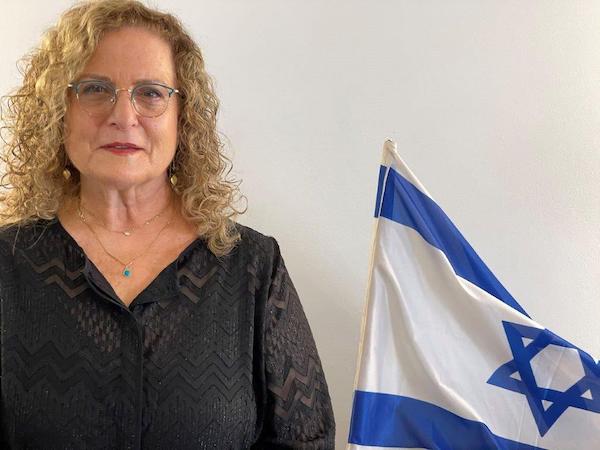
Near-fatal war injuries led Anat Yahalom to decades of mutual support for injured soldiers and others. (photo from Jewish Federation)

In 1973, when the Yom Kippur War broke out, Anat Yahalom was a young Israel Defence Forces recruit in the Battle of the Sinai.

“I was 18-and-a-half years old and the state of Israel was 25,” she said. “We were both young and at the beginning of our lives.”

A sudden Egyptian air attack changed her life forever.

“When they rushed me to the rescue helicopter, badly injured and bleeding, hovering between life and death and begging for my life, I used my last remaining strength to mumble, ‘Don’t let me die,’” Yahalom recounted in an email interview with the Independent. “That desire to remain alive and to live has always been with me. Over the years, every time that I’ve faced a crisis, I am reminded of that moment, and again I have that incredible desire to live – to never give up.”

Yahalom is to share her story of near-death, recovery and a life of dedication to others as part of the Israel@75 celebration in Vancouver. She will speak at Congregation Beth Tikvah, in Richmond, on Friday, April 28, 6 p.m., with an Israeli-style Shabbat dinner.

“Being wounded in battle is very different to being injured in an accident,” said Yahalom. “Many of the shrapnel pieces and explosives that caused my injuries have remained inside my body and will accompany me for the rest of my life. Being wounded in battle causes injuries that are external and internal, resulting in a complete breakdown of the body’s system, and to extensive scar tissue that needs a long, slow and complex rehabilitation.”

Shrapnel that remains in her body can cause recurring infections that require regular treatments to allow her to function.

In the decades since her injuries, Yahalom has founded Etgarim, an association supporting the integration of disabled children through sports, and the IDF women with disabilities forum. She is an athlete, hand-bike marathon rider for people with disabilities, wife and mother of three sons.

“Israel has a large proportion of people who have been wounded in battle and disabled,” she said. “Because of this, Israel’s healthcare system has developed the most innovative and effective medical treatments that have allowed many of the injured to return to society, to their families, to work. This is the essence of rehabilitation. Rehabilitation is not only physical, but also emotional. While these are very different, they are equally important. Most of the time, society doesn’t differentiate between the two. Emotional injuries are often initially expressed in the form of depression, anger, impatience. Later on, they are also expressed by smaller things such as slamming doors, raised voices, threatening language, or senses that recall the battlefield. For me, the height of this was when my sons joined the IDF. I began experiencing an endless and overwhelming anxiety. Every small thing could trigger a huge reaction in me – from deep anger, to complete withdrawal.”

Yahalom said that those, like her, who were injured in battle found that the best way to deal with challenges and thrive was through social rehabilitation.

“We came to support and rely on one another like family,” she said. “We involved each other in all the small details, offered and received help of any and every kind. But, mostly, we made sure to meet regularly, to talk, to listen, to offer and seek advice. It was this process and this starting point that the idea of establishing centres for wounded IDF veterans was born, recognizing that social rehabilitation was the very essence of our strength.”

The messages of her life and of the organizations she has founded, she said, are unequivocal: “We can recover from any crisis if we stand together.”

“War is a terrible crisis, being injured is an endless struggle, and being disabled is with you forever,” she said. “Sometimes it is extremely difficult, and sometimes a little easier. But it is always there, a companion for life. A reminder for me that life and the desire to live is more important and can conquer anything.

“My family, the one that I created following my injury, my friends that are my chosen family, and the family of Eretz Israel, all accompany me throughout my life,” said Yahalom. “They allowed me to return to the world of the living, they help with the rehabilitation of my friends, and it is them that makes me continue to want to help in every way possible, to embrace, to encourage and to fill my heart and theirs with hope and faith that every crisis will pass.… This is the message that I bring to your community. In these stormy days of upheaval and crisis at home in Israel, I know that even this storm will pass and we will still be there. We will remember that life is more important, more precious and stronger than anything else. I’ve known this since that fateful day, Oct. 6, 1973, when I was given my life back – and I received it as a gift.”

Yahalom’s visit is one of many events taking place through May marking Israel’s 75th anniversary. The celebrations culminate in the Yom Ha’atzmaut, Israel Independence Day, concert May 14 at Queen Elizabeth Theatre, featuring the band Teapacks. Full details of all events are at jewishvancouver.com.

Format ImagePosted on April 14, 2023April 12, 2023Author Pat JohnsonCategories Israel, LocalTags Anat Yahalom, Israel, veterans, Yom Kippur War
A day that changed my life

A day that changed my life

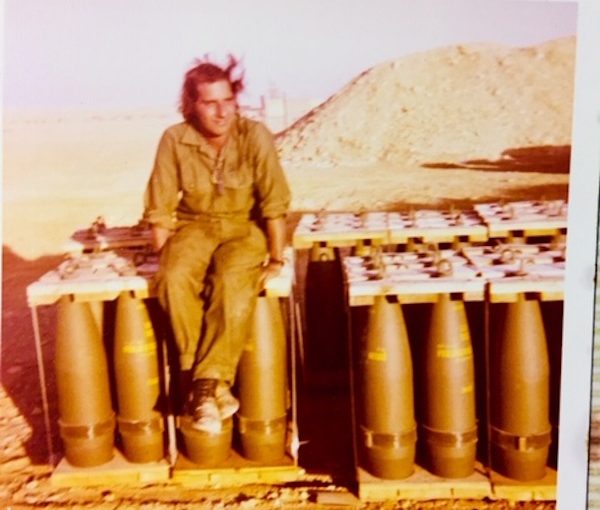
The author in the Sinai in October 1973, before his unit was attacked by two Iraqi planes, which caused the unit’s ammunition supply to explode, killing some soldiers and wounding others. (photo from Yom Shamash)

I would like to say that an event that happened 46 years ago left no marks on me and that I am over it. But then, I would not be honest. In fact, the experience left an indelible mark on my life and changed me completely.

In 1971, I returned to Israel – the country of my birth and early childhood – from Brazil with a Zionist youth group, to Kibbutz Zikim. I remember very well the prevailing thinking in Israel then. Four years after the victory of 1967, Israelis were quite confident. Egypt, the most powerful enemy Israel had, was neutralized. We were strong. We had conquered the Sinai, Gaza, the West Bank and the Golan. All in six days. I had absorbed this attitude and felt secure in my little world.

And then the war of 1973 exploded.

I served in the Sinai before the war; I was in a Nahal Brigade unit in which part of my service was spent on a kibbutz. On Oct. 6, 1973, I was on the kibbutz. It was Shabbat, Yom Kippur. Because Israel was caught off guard, there was no time to set up the unit in an orderly manner. As soon as we arrived at our position behind a high dune in the Sinai desert, we started shooting. My tank had a long-range cannon; we could not see what we were hitting 30 kilometres away.

Because my job was to pull the cannon’s trigger with both hands, I could not block my ears with my fingers, as all my tank mates did. As a result, I have a significant and permanent hearing loss.

On Oct. 13, 1973, our unit was decimated by two Iraqi planes. There had been a lull in the fighting and we had been resting on the sand. Suddenly, the two planes swooped from the sky, dropped bombs and disappeared in a matter of seconds. Very quickly, our own ammunition started to explode. Pieces of shrapnel started flying. The only thing to do was to run away from this inferno. Some soldiers were wounded, some died, and all who survived were traumatized.

Looking back now from the vantage point of 2019, many of us wonder about the heavy loss of young lives. Israel lost about 2,700 soldiers in that war. What did they die for? Defending the Sinai? Those of us who served in the Sinai know well that there isn’t much there except sand, stretching for miles; there isn’t much there to defend. What I didn’t know in 1973 was that, for several months prior to the war, Israel’s then-prime minister Golda Meir had rejected numerous initiatives by Egypt’s then-president Anwar Sadat to negotiate a peace accord. Was it worth it holding on to the Sinai? Especially since, in the end, Israel wound up returning the Sinai anyway?

The same could be said about Lebanon – more than 1,200 Israelis lost their lives in Lebanon from 1982 to 2000. Was it worth it? We must ask this question of the parents of those soldiers who lost their lives. I wonder what they would say.

I am afraid that one day the West Bank and the Golan will return to their rightful owners, the Palestinians and the Syrians, and, years later, we will ask ourselves what the hell we were doing in these places, and in Gaza.

Two million Palestinians in Gaza and two-and-a-half million in the West Bank, who do not have the right to vote in Israel, will not disappear, and I see no reason why Israeli soldiers should be controlling the movements of Palestinians traveling within the West Bank and those wanting to leave or enter the Gaza Strip. If I told you that Israelis traveling from Tel Aviv to Haifa have to pass through Palestinian checkpoints, you would say this is absurd. And I would agree, but it is no less absurd than Palestinians going from Ramallah to Nablus having to pass through Israeli checkpoints.

And why are settlers in the West Bank consuming 10 times more water than the indigenous Palestinians? And why are Israeli soldiers protecting settlers – who should not be there in the first place – some of whom do not serve nor send their children to serve in the army?

There can be no peace in Israel until there is peace in Gaza and the West Bank. The occupation is a recipe for continuous wars and insecurity for all.

I recall clearly, at the end of the Yom Kippur War, returning my equipment at the army base. I pledged that I would never again wear a green uniform.

For a long time, I did not understand how and what changed inside me that October. No one talked about post-traumatic stress disorder; no one talked about personal feelings. But the recurring nightmares never stopped. The fear and anxiety stayed. Right after the war, I sought out a psychiatrist friend, who told me to leave Israel for awhile – I had planned to study in Jerusalem, but he said leave and decide later. I left. I came to Canada, started a new life, married, studied, had four kids, remarried, had a good career and am enjoying life with my wife, children and four grandchildren.

Since leaving Israel in 1974, I have been back twice for visits, in 1998 and 2008.

What happened on Oct. 13, 1973, changed me and shaped my views, my values, my activism, my appreciation for what is important in life. Perhaps one of the most important lessons I learned is that war is never the best option to resolve conflicts. Taking land from others is never a way toward peace. Military strength is not a guarantee of security.

I wish I could be optimistic about the future of Israel, but I am not. For me to have any optimism at all, at a minimum, the occupation would have to end.

Yom Shamash was born in Israel. At the age of 6, his family moved to Brazil. He returned to Israel as a member of the Hashomer Hatzair group and settled in Kibbutz Zikim, south of Ashkelon. In British Columbia, he worked as a public school teacher in Surrey and, since retirement, he has been working as a translator and babysitter.

Format ImagePosted on November 22, 2019November 19, 2019Author Yom ShamashCategories Op-EdTags IDF, Israel, military, politics, Yom Kippur War

On return to Canada, life changes

Victor Neuman (photo from Victor Neuman)

In this eight-part series, the author recounts his life in Israel around the time of the 1973 Yom Kippur War. The events and people described are real but, for reasons of privacy, the names are fictitious.

Part 8: Epilogue

In a backhanded, minor way, I was a casualty of the war, too. The lack of help during the conflict meant I had to work alone trying to preserve the banana crop. One day, on my tractor, I was in a hurry, carrying several sacks of fertilizer to the fields. They had to go into the distribution tank before the irrigation timers flipped a switch and began irrigating another field. Someone at the kibbutz had helped me load them onto the hood of the tractor, with the idea that, at that height, I could drop them easily into the tank at the other end.

It didn’t work out that way. I hit a rut in the road and all the sacks slid to the ground. As fast as I could, I reloaded all the bags – which were 50 kilos each – lifting them from the ground to the tractor hood, and carried on. I felt OK at the time but I had herniated a disc in my back. The pain started later that day and got worse over the next few days. I saw a doctor in Hedera and got a daunting prognosis. My back might need surgery but no surgery would be possible in the near future. Wounded soldiers had priority, so only life-saving procedures were available to civilians. Had I been lucky enough to have been shot as well, they could have done something for my back.

I had to return to Canada to get the operation and, although I didn’t realize it at the time, my time in Israel was coming to an end. My plan was clear in my head. I would go home, get the surgery, return to Israel cured, become a kibbutz member, marry Tamar and live happily ever after. As the saying goes: “Man plans and God laughs.”

Away from Tamar in Canada, I had the growing realization that I wasn’t going back to Israel. The best explanation I can give is to repeat what a friend once told me.

He was a rude bugger but he had the right of it when he said, “Millions of years of evolution have turned men into slobbering idiots around women. Our problem is that we’re always thinking with the wrong head.”

Whatever Tamar and I had going on, it wasn’t happening between my ears. As beautiful as she was, I couldn’t imagine spending my life with her and I had to end things. And, if I ended things, I could never return to the kibbutz after jilting their darling firstborn-on-kibbutz child. And that particular kibbutz was the only place in Israel where I could imagine a life for myself.

It was over in every sense and way. I wrote a painful letter to Tamar. She wrote an even more painful letter back to me, using English expressions I didn’t know she had. She hated me. That made two of us. Lost another woman. Lost a country. Lost my purpose in life. How careless can you get?

Ironically, my back injury, which had started the whole process of turning my life on its head, simply healed itself. No surgery and no pain after just a few months. My life had completely changed direction because a few sacks of fertilizer fell off a tractor. Once again, life turning on a dime.

As much as I loved English literature, I still had no notion of how to use my master’s degree. Teaching wasn’t my thing and, with that degree, there wasn’t much else. I had to change gears – drastically. Then I recalled something from my time doing archeology.

While we tourist-volunteers struggled in the heat and dust, digging endlessly to uncover the ruins of Tel Beersheva, a surveyor stood over us and used his instrument to map out the location of walls as they were discovered. To do it, he spent most of his time staring through his instrument at his survey assistant – a woman in a two-piece bathing suit who was holding the survey rod. I started thinking an archeological surveyor was the job for me. You may think of me as a shallow person. In my defence, I am.

To make a long story short, I began studying survey technology at the British Columbia Institute of Technology. That morphed into surveying fish hatcheries, which morphed into surveying logging roads, which morphed into designing logging roads, which morphed into a lifelong career designing highways for the Province of British Columbia and an engineering firm called Binnie Engineering Consultants. Nowhere along the line did I ever do archeological surveying, and the only survey assistants I ever had wore flannel shirts, jeans and hiking boots.

In time, my road design work left me feeling a little parched, culturally. I decided to join the Vancouver Jewish Folk Choir. There, I met the gal who has been the love of my life for the past 31 years and counting. After meandering through life for what seemed like an eternity, what I wanted was crystal clear to me. I wanted her. And I learned something about finding my purpose in life. The main deal is to find the right person. The rest is just commentary.

We had our first date on New Year’s Eve. We were engaged by February and planning to be married by May. Her family was apoplectic about the timeline so we pushed the marriage date to September. I’ve stuck by her and she is stuck with me. And so, more than 30 years after puberty, I was finally all grown up. And you know what? By all I hold dear, she is the most beautiful creature I’ve ever laid eyes on.

Time is a river, they say, and this river may have almost run its course to the sea. But I remember the stream that became that river. I can never get Israel out of my mind, after all this time. And my leaving that country to lead the easy, secure life in Canada will always haunt me. It was 1974 and I still remember, clear as a bell, the sign I passed in Lod airport on the way to my plane home. In Hebrew and English, it said: “Will the last one to leave the country please turn off the lights.” Even believing I was soon coming back, I felt like a traitor.

A long time ago, when I was courting the dear lady I married, I did something very old-fashioned. I wrote her love poems. She may have married me because of them or in spite of them, I’m not sure which. I reread one of them recently and something dawned on me. It wasn’t a poem just for my beloved. It was also a poem for everybody in that land; everybody trying to hold onto their place in the sun or everybody trying to find it. It’s called “Magic”:

On this shattered summit / Over plains flooded red by sunfall / Where insect armies sullen, blooded / Crawl craters in search of victim’s missed / We perch uneasily / And wonder at a lethal world

But then, conjured by you / I felt for one bedazzled, high moment / We were magicians such as none before / And with our silk top hats / And our crimson capes, love-woven / We could pluck rabbits out of a hat / Launch birds out of a box / Or trick the world into decency.

(Previously: “Learning the lay of the land”; “When Afula road went quiet”; “Tending the banana fields in war”; “Weapon training begins”; “Near tragedy on guard”; “Fighters return to kibbutz”; “The fire-like impacts of war”)

Victor Neuman was born in the former Soviet Union, where his family sought refuge after fleeing Poland during the Second World War. The family immigrated to Canada in 1948 and Neuman grew up in the Greater Vancouver area. He attended the University of British Columbia and obtained a BA and MA with majors in English literature and creative writing. Between 1968 and 1974, he made two trips to Israel, one of which landed him on a kibbutz at the time of the 1973 Yom Kippur war. Upon his return to Canada, he studied Survey Technology at BCIT and went on to a career of designing highways for the Province of British Columbia and the firm of Binnie Civil Engineering Consultants. When he retired, he reconnected with his roots in creative writing and began writing scripts for Vancouver Jewish Folk Choir concerts and articles for the Jewish Independent. Neuman and his wife, Tammy, live in southeast Vancouver and enjoy the company of friends, their extensive extended family and their four sons.

Format ImagePosted on November 15, 2019November 13, 2019Author Victor NeumanCategories IsraelTags Diaspora Jews, history, Israel, kibbutz, memoir, Yom Kippur War

The fire-like impacts of war

Life for many kibbutz members changed after they served in the war. (photo by Victor Neuman)

In this eight-part series, the author recounts his life in Israel around the time of the 1973 Yom Kippur War. The events and people described are real but, for reasons of privacy, the names are fictitious.

Part 7: The Ceasefire

The ceasefire came on Oct. 25, 19 days after the war had begun. It was a short war, if you look at it one way. In another way, it was a short episode in a long war going back to 1948 and stretching forward to a distant and indiscernible point. With the Yom Kippur War, we came to realize that Israel’s enemies could fight and lose many wars and still exist, while Israel could not afford to lose even one.

Still, we were grateful for the end of hostilities and longed for the return of all of those who had gone to fight from the kibbutz. Remarkably, they all survived to return. Remarkable because kibbutz soldiers had a reputation for aggressive leadership and devotion to duty. At that time, the statistic most often referenced was that only five percent of the population of Israel lived on kibbutzim but 20% of the officers in the Israeli military were kibbutz members. Correspondingly, they routinely made up a high percentage of war casualties.

But, just because no one was dead did not mean that nothing had died.

Tzvie and Ari seemed unfazed by the experience. They were back in the bananas with me and back to their joking ways. We were all sitting around having lunch, heads down in our plates when Tzvie popped up, threw a banana peel at Ari and then pretended to be eating like everybody else. Ari first faked a return throw and then threw it in earnest, hitting Tzvie on the side of the head.

“Hey! Why do you think it was me?” said Tzvie.

“I didn’t know at first so I just pretended to throw back. Only you ducked. The one who ducks is the guilty party.”

When they weren’t pranking each other, they were happily preparing for their return to Europe. The kibbutz had voted to give them another vacation to replace the one they had cut short to help in the war.

Others who returned were not the same. Yossi, a quiet youth, was a medic in the war. I had never worked with him nor had a close friendship with him, though, as I did everybody on the kibbutz, I saw him around a lot. Now, I was not seeing him around much. Not in the dining hall, not in the recreation room, not in any of the places kibbutzniks normally gathered. I passed by his flat and noticed a tray of food outside his door. When I asked a friend of his what was going on, he told me that Yossi hadn’t come out of his room since coming back. His friends decided that, if they couldn’t coax him out, at least they could make sure he didn’t starve to death. They would leave a food tray and he’d retrieve it when no one was around, and then put the empty tray out to be picked up. This went on for two weeks before Yossi finally began to appear and made the attempt to begin living again.

Yossi on the one hand, Tzvie and Ari on the other. I suppose war is a fire that can melt some metals and harden others.

Then there was Aryeh, one of our youngest who went to fight. He was still undergoing the three-year service requirement when the war broke out.

Aryeh drove an armoured personnel carrier and had been patroling in his vehicle near the ceasefire lines in the Golan. Night-driving conditions on the border required that headlights be cut or suppressed to reduce the vehicle’s visibility to the enemy. A member of Aryeh’s crew pestered him to let him drive the vehicle. The man was not an experienced driver but Aryeh let him take over the wheel. In a short time, the new driver lost control of the carrier and rolled it off the side of the road – Aryeh’s neck was broken and he was rendered a quadriplegic.

Aryeh was released from the hospital when they had done all they could for him. He required ongoing care but his doctors felt he needed to be home, where his family and friends were. They equipped his bed and room with every gizmo known to mankind and left him to make what he could of his life.

We all were horrified by what had happened to him and it became a kind of required pilgrimage to visit Aryeh and pass some time with him. Tamar was particularly determined to be at his side as much as she could. When we visited him, we were all so damned cheerful.

“Try to keep his spirits up,” we told ourselves. So, we joked, we gossiped, we kibbitzed, we pretended. Tamar was better at it than I was. She was naturally talkative, inherently upbeat and she carried on beautifully.

Aryeh was like Tamar – relentlessly cheerful. He never complained about his condition, never even talked about it. Those were conversations that were kept in his own head and I could only imagine the price he paid for what he couldn’t say.

Thinking about it later, I came to realize I’d do the same in Aryeh’s situation. Here you are, 20 years old, with no working arms or legs, no future to speak of. Perhaps no wedding or kids or life. All you have are your friends. Do you really want to drag them into your abyss to the point where they start avoiding you? Lose the last thing that gives you any semblance of contentment? And so, you let the tears flow when you are alone and the jokes flow when you have company. As I said, relentlessly cheerful.

Our next door neighbour, Shmuel, came home to his wife and two kids. I was incredibly glad to see him. When Shmuel was called up, he was in the middle of a birthday party for one of his two daughters, the 9-year-old. He finished the party, got into his uniform, grabbed his gun and then stopped in to see me before he headed north.

“I have a favour to ask, Kanadi.”

I knew that, in two hours, he would be on the front lines in the Golan. And that, three hours after his daughter’s birthday party, he could be dead. I was ready to give him any damn thing he wanted.

“I understand your parents in Canada shipped you a crate with a stereo system – the one you have on Tamar’s bookshelf. I was wondering if I could get the wood crate from you. I want to make a wagon for my kids.”

“Yes, take it,” I said. “And take the stereo, too.”

He treated it as a joke but I was only half-kidding. In that moment, there wasn’t enough I could do.

But Shmuel came back. I wanted to give him a bear hug when I spotted him walking up the path but his family called dibs.

The war was over. Or, to put it more accurately, this war was over.

(Next Time: Epilogue)

(Previously: “Learning the lay of the land”; “When Afula road went quiet”; “Tending the banana fields in war”; “Weapon training begins”; “Near tragedy on guard”; “Fighters return to kibbutz”)

Victor Neuman was born in the former Soviet Union, where his family sought refuge after fleeing Poland during the Second World War. The family immigrated to Canada in 1948 and Neuman grew up in the Greater Vancouver area. He attended the University of British Columbia and obtained a BA and MA with majors in English literature and creative writing. Between 1968 and 1974, he made two trips to Israel, one of which landed him on a kibbutz at the time of the 1973 Yom Kippur war. Upon his return to Canada, he studied Survey Technology at BCIT and went on to a career of designing highways for the Province of British Columbia and the firm of Binnie Civil Engineering Consultants. When he retired, he reconnected with his roots in creative writing and began writing scripts for Vancouver Jewish Folk Choir concerts and articles for the Jewish Independent. Neuman and his wife, Tammy, live in southeast Vancouver and enjoy the company of friends, their extensive extended family and their four sons.
Format ImagePosted on November 8, 2019November 13, 2019Author Victor NeumanCategories IsraelTags Diaspora Jews, history, Israel, kibbutz, memoir, Yom Kippur War
Fighters return to kibbutz

Fighters return to kibbutz

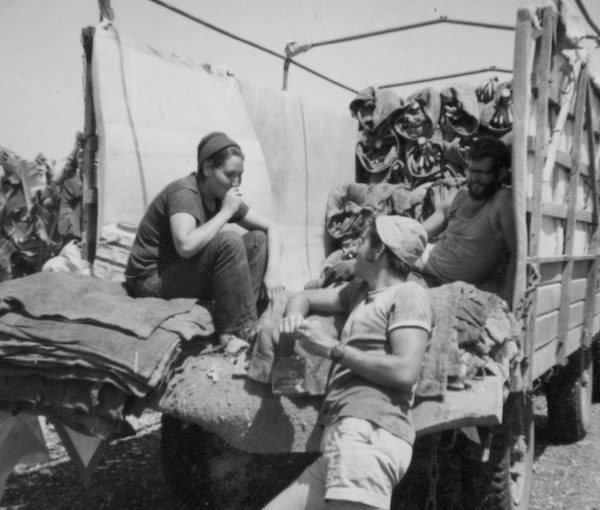
Stacking the banana bunches in the wagon required a type of superpower. (photo from Victor Neuman)

In this eight-part series, the author recounts his life in Israel around the time of the 1973 Yom Kippur War. The events and people described are real but, for reasons of privacy, the names are fictitious.

Part 6: War Comes Home

My first inkling of how fighting is done in this region of the world came in 1969, when I was working on the pipeline near Arad. Our crew was encamped at a motel and so were some Israeli soldiers. At that time, there were infiltrators crossing from Jordan into Israel and planting bombs wherever vehicles were likely to pass. Tourists like myself were warned to hitch rides while standing on the paved part of the road – never the soft shoulder. Similarly, the cars picking you up never pulled over; they simply stopped in the travel lane and waited.

The Israeli patrols were setting up ambushes in wadis in the area. When they came back to the motel to warm up, I talked with them about what they were doing.

As darkness came, the soldiers drove out to a wadi that showed signs of human activity, positioned themselves and waited. It was damn cold, they told me, especially when you had to remain still for a long time. Their jackets and leggings kept most of their bodies warm but their hands became very cold. You can’t properly operate a weapon with gloves on.

“So, what did you do to keep your hands warm?” My question got laughter in response.

“Shall we tell him?”

“Yes, who cares? Tell him.”

“Well, if you must know, we all sit around with our hands in our crotch. That’s the only way to keep them warm.”

Still the greenhorn, I asked them if they had any luck or taken any prisoners. Again, they looked at each other – in more seriousness this time.

“It’s dark and you can’t see what they have in their hands even when their hands are in the air. We just kill them all.”

I had no more questions.

Now, it was 1973 and the war had been going on for two weeks. The tide had turned. Syria had been pushed back from the Golan and Egypt had been cut off in the Sinai. To the relief of all of us on the kibbutz, Jordan’s only contribution to the war had been to send some soldiers to fight alongside the Syrians. There was no Jordanian third front in the war.

A trickle of kibbutz members – mainly the older reservists – began returning from the front lines. One of them was a good friend and a fellow banana worker named Moti.

Moti’s talent in the fields showed itself during our time of kateef (cutting, or harvesting). Moti received the bunches and quickly stacked them in the wagon, usually about eight rows high. His superpower was being able to do this in a way that the row would not collapse before the next row shored it up. I tried it once and produced a banana avalanche. It was one of those things that is funny in hindsight – at the time, we had to empty the whole wagon and start over. Time was wasted, bananas were bruised, Lev was pissed.

Moti told me he hadn’t been on the front but had heard stories from those who were. They told him that they had retaken outposts that were overrun in the first days of the war. They found Israeli soldiers tied to the four corners of their bunk with their bellies cut open. I asked him if he had seen any of this; he told me he hadn’t. They were just stories he had heard, but he believed them.

Having Moti back was like old times. Moti, Lev and I were all back in the bananas, along with a number of tourist-volunteers. We were able to properly tend the fields again and we wished to think that life was returning to normal.

Still, the war came home whenever someone else came back on furlough and brought their stories. Next to return were Tzvie and Ari – good friends who, in peacetime, worked the fields together and, in wartime, shared a tank. Just before the war, they had completed their three years of military service and were off on a tour of Europe. No one on the kibbutz could afford to do such things, so the kibbutz rewarded everyone who completed their army stint with an all-expenses paid trip to Europe. It was a once-in-a-lifetime chance to see the world before settling down and all the kibbutz kids dreamed of their time abroad.

Tzvie and Ari were two weeks into their trip when the news reached them that Israel was under attack. Ari wanted to carry on with the tour, arguing that the war would be over before they got home, but Tzvie would have none of it. He told Ari that he would go insane if he were walking around Europe while his country was at war and he became so agitated that Ari agreed to return.

One of the war stories they shared was that, on one of their forays, their tank was hit by a wire-guided missile – a portable device enabled the operator to fire the missile and control it in flight by means of a wire that played out as the missile flew on its path. The Egyptian army had many of these missiles and they took a deadly toll on Israeli tanks in the opening days of the war.

When Tzvie and Ari’s tank was hit, it was immediately disabled and the entire crew had to abandon it quickly. With the enemy nearby, they couldn’t exit from the top of the tank so they dropped the hatch at the bottom and escaped using their tank’s track-and-wheel assembly as cover. They were tripping and stumbling over anti-tank wires from an earlier battle but managed to haul their guns and a box of ammunition to a nearby hill. They were grateful to be alive but less so when they realized they had brought the wrong ammunition; it was compatible with one of the tank’s machine guns but none of the weapons they were carrying. In despair, they hunkered down and waited to be attacked. Then they began to notice how quiet it was. In fact, there was no one around but them. They came down from the hill to investigate and found that their tank had actually hit a land mine.

Ari said of the experience, “Yes, it was scary, but at least our job is driving a tank. It’s worse to be a paratrooper. There they tell you that, if your chute doesn’t open, point yourself head down toward the ground. That way they can reuse your boots.”

At this point, Ari and Tzvie smacked each other on the back and laughed their heads off. Seeing our cue, we all laughed as well.

Now I had the whole range of it. War, murderous and savage. War as slapstick.

(Next Time: The Ceasefire)

(Previously: “Learning the lay of the land”; “When Afula road went quiet”; “Tending the banana fields in war”; “Weapon training begins”; “Near tragedy on guard”)

Victor Neuman was born in the former Soviet Union, where his family sought refuge after fleeing Poland during the Second World War. The family immigrated to Canada in 1948 and Neuman grew up in the Greater Vancouver area. He attended the University of British Columbia and obtained a BA and MA with majors in English literature and creative writing. Between 1968 and 1974, he made two trips to Israel, one of which landed him on a kibbutz at the time of the 1973 Yom Kippur war. Upon his return to Canada, he studied Survey Technology at BCIT and went on to a career of designing highways for the Province of British Columbia and the firm of Binnie Civil Engineering Consultants. When he retired, he reconnected with his roots in creative writing and began writing scripts for Vancouver Jewish Folk Choir concerts and articles for the Jewish Independent. Neuman and his wife, Tammy, live in southeast Vancouver and enjoy the company of friends, their extensive extended family and their four sons.
Format ImagePosted on November 1, 2019November 6, 2019Author Victor NeumanCategories IsraelTags Diaspora Jews, history, Israel, kibbutz, memoir, Yom Kippur War

Near tragedy on guard

Patroling the kibbutz perimeter. (photo from Victor Neuman)

In this eight-part series, the author recounts his life in Israel around the time of the 1973 Yom Kippur War. The events and people described are real but, for reasons of privacy, the names are fictitious.

Part 5: Night Guard Duty on the Kibbutz

Lev, the banana boss, was in his early 30s and a miracle worker. He was back on the kibbutz and strolling toward me. He had talked the army into releasing him so he could save his banana fields. I was not surprised he had pulled it off. Lev was originally from the United States and a dedicated Zionist. He had long ago concluded that the only proper place for a Jew was in Israel and so he immigrated. Always determined in what he wanted, he bulldozed his way through kibbutz apprehensions to single-handedly create the banana crop as a major branch of our agricultural sector. And he was fearless to a fault.

“Fearless to a fault” may sound like a contradiction. It’s not. The right amount of fearlessness is courage. The wrong amount is stupidity. In my opinion, Lev was sometimes at the wrong end of that equation. Here’s an example.

Before the war, Lev was fed up with the theft from our banana fields and had no confidence that the village police from the nearby Arab town would take any action. The culprits were likely from the town and might even have been relatives of the cops. I had to agree with Lev – the only time I had seen any action from these police was when they drove up to the kibbutz to extort chickens for their next village wedding.

One day, Lev had six of us arm ourselves with clubs and do a stakeout in the banana fields. We had a German Shepherd named Ledie to help take down anyone we caught. Before long, two Arab teenagers appeared, checking for ripe bananas. They came toward where I was hiding. I jumped up but I had moved too early and they raced for their village. Only Lev, the dog and I were near enough to give chase. It was a farce. The teens were lean and fast. Lev smoked two packs a day. Our dog was never trained to be aggressive and was an older dog as well. So, it was the two teenagers way in front, me next, Lev a distant fourth and the dog in last place – tail wagging madly the whole time. I gave up and stopped, but Lev ran past me and yelled, “Come on!”

By the time we arrived at the village, the two thieves had vanished and our dog also had disappeared, likely returning to the kibbutz. I wanted to go back, too, but Lev wasn’t done and I couldn’t leave him on his own. Like a gunslinger minus the gun, he walked us right into the first building we came to. It was some kind of coffee house, full of locals sitting at tables sipping their drinks. All conversation and sipping ceased when we barged in. They all stared at us. I felt like I was in a bad Spaghetti Western. I was convinced Lev was going to get us killed.

Lev stomped around, demanding to know if anybody had seen the two boys. Heads were shaking. Not satisfied, he gave a description of what they looked like and the clothes they were wearing. Heads kept shaking. He then demanded that everybody keep an eye out for these banana thieves and report them to our kibbutz. To my astonishment, heads nodded. I think we had caught them by surprise and then Lev’s pure chutzpah had won the day. Walking out in one piece was a win for me, while Lev was angry at not catching anybody; surviving was not one of his concerns.

Now you know what I mean by “fearless to a fault.” And now, here was fearless-to-a-fault Lev walking up to me.

“Shalom, Victor. I’m back so I’ll be taking over the irrigation. I wanted to keep you on it, but Gidon says he needs you for guard duty. You better see him. And thanks for looking after the bananas. I expected half of them to be dead but they are all good. Nice job.”

High praise from Lev, who rarely expressed gratitude to anybody. The bananas were like children to him and I was the babysitter who, surprisingly, hadn’t murdered any.

Gidon told me I was to patrol the kibbutz from dusk to dawn for the next week at least. He gave me an ammunition belt, a flashlight and a first-aid kit with pressure bandages to patch up anybody I shot inappropriately. He also gave me Chauncy, the English guy. Chauncy was one of those hapless tourist volunteers who came to experience kibbutz life and was experiencing more than he bargained for. Though he wasn’t Jewish, he gamely agreed to be my assistant on patrol.

Our first patrol had a slow start. Chauncy begged me to let him hold the Uzi long enough to get his picture taken. I didn’t want to, but figured it would be better to get it out of his system. I removed the ammunition clip and handed him the Uzi. He gave me his camera and I took a half-dozen pictures of him, empty gun at the ready, looking steely-eyed and staring into the dark. I was thinking he was an idiot but then remembered the photos I had made Tamar take when I first got my weapon. She thought I was an idiot. Israelis would never think of getting this kind of snapshot, as Canadians wouldn’t think of getting their picture taken in their kitchen holding a spatula. Why record it? In this country, everybody has a spatula.

We walked the perimeter for about a week. Early evening was the best, as kibbutz members stopped to chat and the time went quickly. Adding to our duties was the requirement that we join others in checking cars that were coming up the driveway and searching them for bombs. I was particularly happy to intercept the village police who had come on another of their chicken runs. We made them get out of their car and stand around while we did a thorough, very slow check of their vehicle. The chicken-stealing cops were not nearly as annoyed as I had hoped. I was thinking we’d need to do a strip search next time.

As the night wore on, everybody went to sleep and it was just Chauncy and I walking the perimeter. As per Gidon’s instructions, we didn’t go to the dining hall to scrounge for food and thus take ourselves away from our rounds. We carried our lunches and ate under the security lights. I was always conscious of how dark it was beyond the reach of those lights and how impossible it would be to see anyone coming. On the other hand, Chauncy and I, walking directly under the lights, were highly visible from far away.

It became a nagging question in my mind as to how effective night guard duty was when Chauncy and I were always in plain view while the bad guys were always hidden. I confronted Gidon about it one day and his reply was, “When you are shot, it will alert the rest of the kibbutz.” I wished he had had a grin on his face, but he didn’t. I was just thankful he hadn’t ended with “Are we understanding?” We were not.

I never told Chauncy about that conversation but I think he detected my increased wariness. A certain morbidity came over me. In trying to come to terms with the possibility of death, I tried to control the fear by embracing the notion. I decided one night we would have our meal in the kibbutz cemetery. Chauncy was freaked but I put it to him that the dead were dead and gone. Also, I argued, the headstones made good back rests for eating in comfort. To pass the time, I read the Hebrew on some of the stones; the easiest part to grasp being the date of death and age of the departed. Many were in their 20s and had died in 1948, likely in the War of Independence. They were close to my age and Chauncy’s. It made me think of how endless the fighting was in this land. The dead of one war pondered by participants in another, with two other conflicts in between. We only had lunch in the cemetery that one time.

I never had to shoot anybody during my stint as night guard but I did come close once. Chauncy and I were in the area of the mechanical shop at around two in the morning when we heard noises coming from the shop and saw the lights were on. The kibbutz was generally very quiet at night. There was no shift work besides guard duty so everyone should have been in bed.

I told Chauncy to stay behind me as we entered the shop to investigate. For the first time in all my guard duty, I slid the thumb switch of my Uzi from safety to automatic.

Chauncy whispered, “Jesus!”

We got as close to the noise as we could and then I stepped around a corner with my Uzi leveled.

It was a kibbutz teenager named Uri. Apparently, Uri had a bout of insomnia and decided he might as well go to the shop and keep working on his project. He was trying to make a go-kart out of discarded tractor parts. Uri had almost gotten a permanent cure for his sleeplessness. I had almost shot a 15-year-old kid.

(Next Time: The War Comes Home)

(Previously: “Learning the lay of the land”; “When Afula road went quiet”; “Tending the banana fields in war”; “Weapon training begins”)

Victor Neuman was born in the former Soviet Union, where his family sought refuge after fleeing Poland during the Second World War. The family immigrated to Canada in 1948 and Neuman grew up in the Greater Vancouver area. He attended the University of British Columbia and obtained a BA and MA with majors in English literature and creative writing. Between 1968 and 1974, he made two trips to Israel, one of which landed him on a kibbutz at the time of the 1973 Yom Kippur war. Upon his return to Canada, he studied Survey Technology at BCIT and went on to a career of designing highways for the Province of British Columbia and the firm of Binnie Civil Engineering Consultants. When he retired, he reconnected with his roots in creative writing and began writing scripts for Vancouver Jewish Folk Choir concerts and articles for the Jewish Independent. Neuman and his wife, Tammy, live in southeast Vancouver and enjoy the company of friends, their extensive extended family and their four sons.

Format ImagePosted on October 25, 2019October 30, 2019Author Victor NeumanCategories IsraelTags Diaspora Jews, history, Israel, kibbutz, memoir, Yom Kippur War
Weapon training begins

Weapon training begins

During the Yom Kippur War, the author had to learn how to fire an Uzi and other weapons. (photo by Victor Neuman)

In this eight-part series, the author recounts his life in Israel around the time of the 1973 Yom Kippur War. The events and people described are real but, for reasons of privacy, the names are fictitious.

Part 4: Training Day

We were two or three days into the war and the news was chilling. Egypt had overrun the defences along the Suez Canal and was pouring into the Sinai. Syria had breached the outposts in the Golan and was within striking distance of Tiberias. We were in shock to think that, a scant six years after the pummeling of the Six Day War, these countries were able to go to war again.

I think the nation was in disbelief as well. Soldiers, in large numbers, had been sent home to observe Yom Kippur with their families. The government had effectively demobilized much of the Israel Defence Forces prior to the attack. The trust in Moshe Dayan and Golda Meir would never be the same.

At first, the response of the average Israeli was cocky. Tamar thought the attack was stupid. “We beat them in six days … now it will be five.” Then, as the news came in, the optimism vanished. Kibbutzniks came around to ask me if I was tuned in to the BBC. They didn’t trust the government to give them the truth of what was going on. It was wartime after all and, at such times, every involved government lies through its teeth. There was not much to listen to, though. Everything was so sudden that the international news services hadn’t caught up with what was going on.

Then Gidon came by. The next day, I was to receive weapons training along with three other volunteers who had just enough Hebrew to say “Halt! Who goes there? Who are you? Stop or I’ll shoot.” The basic wartime jabber.

I don’t recall ever being asked if I wanted to join the fight. As a candidate for kibbutz membership, it was a given that I would step up and do anything required to help. And so it was. This was now my home and these people were my family. Not doing everything I could was never a question in my mind. But, truth be told, to me the fighting seemed far away and unreal and I had no real sense of personal danger. More oblivious than brave might be the way to put it.

Next day, the four of us and Gidon met in a field behind the kibbutz. Gidon had set up a target that consisted of a plywood board on two metal rods that were banged into the ground. There was a rise behind the target to stop the bullets from straying. On a table to the side, he had weapons. There was an Uzi, a bipod sniper rifle and three Second World War relics. Gidon apologized for the older guns, saying they were there just to give us the hang of things and he expected we would have better weapons soon. But, first, he addressed us with a sombre face.

“As you know, our kibbutz is located on Wadi Ara. This valley connects the West Bank territories to the coast of Israel. The military tells me that, if Jordan enters the war and opens a third front, there is a good chance they will come right down Wadi Ara and we are the first Israeli settlement past the West Bank. If that happens, I am told, we have to hold out for six days without help from the army. They are fully occupied in the Golan and the Sinai and will not be able to help us until they have solved their problems over there. Are we understanding?”

“We are,” we all said, a little unenthusiastically. I was thinking, “Worst pep talk ever, Gidon!”

Then came the practice shooting and I learned stuff that no graduate in English literature needed to know.

When sniping with a rifle, lie flat with elbows well anchored. The right leg should be extended back in a line with your rifle and your body to absorb the shock of the recoil. Your left leg is splayed out to the left for stability. Don’t breathe, take aim and squeeze the trigger. Our accuracy was rough, then better. But my main recollection is the kick of those rifles. We were basically lying in fine dirt and, when the round went off, the force pushed our whole body two or three inches backwards. The movement after every shot caused a small cloud of dust to rise up around us and we had to wait a moment before we could see well enough to shoot again.

An Uzi has 32 rounds in its clip. The sliding switch by your thumb has three positions: safety, single shot and automatic. Gidon told us to forget about the first two positions. In battle, you had to be quick. You had to be in automatic mode and learn to shoot from the hip without aiming. The dumbest thing you could do was to hold the trigger down. Doing that would empty your clip in three seconds and the recoil would twist your arm and body up and to the right. Gidon taught us that we had to squeeze off short bursts of around three rounds, see where they hit and adjust accordingly.

Our shooting with the Uzi was fairly awful. Shooting from the hip is really tricky. There were puffs of dust halfway up the hill behind the target, in the dirt just metres in front of us, way off to the left and right of where we were trying to aim. I thought the safest place to be on that range was standing in front of the target.

I had a little better luck than the rest. High with the first burst. Low with the second. Then I adjusted again and hit the target with a burst that knocked the whole thing over.

That evening, Gidon marched us into one of the bomb shelters and gave us all our assigned Uzis. Then he showed us how to disassemble them. We had to disassemble and reassemble our Uzis over and over again until we could do it in a matter of seconds. We were feeling pretty good about ourselves until suddenly Gidon turned off the lights and we had to do the whole thing in pitch dark. A bomb shelter, of course, has no windows. So, when the lights are out, you might as well be spelunking in the world’s deepest cave. We eventually learned to do it using only our sense of touch.

Training ended and so did my date nights in the banana fields with Tamar. She was needed elsewhere and I was approved for carrying a weapon, so I was on my own for going out to the fields at night and dealing with the irrigation. A scary business. Alone in the dark, banana trees making the fields look like a jungle, shadows everywhere and the possibility of infiltrators from the West Bank. I felt like I never breathed until I was in the Willis, job done and heading back to the kibbutz. Back at the kibbutz, I signed in to prove I was still alive. Sometimes I even looked at my own signature to make sure.

When I returned to our flat at 2 a.m., Tamar would be fast asleep. In another world, my girlfriend would leap out of bed and throw her arms around me, overjoyed at my safe return. Tamar would half-waken and say, “Shalom, shalom sweetie,” then go back to sleep. And I understood. It wasn’t that she didn’t care about me. This was Israel. The Yom Kippur War was not their first rodeo.

(Next Time: Night Guard Duty)

(Previously: “Learning the lay of the land”; “When Afula road went quiet”; “Tending the banana fields in war”)

Victor Neuman was born in the former Soviet Union, where his family sought refuge after fleeing Poland during the Second World War. The family immigrated to Canada in 1948 and Neuman grew up in the Greater Vancouver area. He attended the University of British Columbia and obtained a BA and MA with majors in English literature and creative writing. Between 1968 and 1974, he made two trips to Israel, one of which landed him on a kibbutz at the time of the 1973 Yom Kippur war. Upon his return to Canada, he studied Survey Technology at BCIT and went on to a career of designing highways for the Province of British Columbia. When he retired, he reconnected with his roots in creative writing and began writing scripts for Vancouver Jewish Folk Choir concerts and articles for the Jewish Independent. Neuman and his wife, Tammy, live in southeast Vancouver and enjoy the company of friends, their extensive extended family and their four sons.

Format ImagePosted on October 11, 2019October 30, 2019Author Victor NeumanCategories IsraelTags Diaspora Jews, history, Israel, kibbutz, memoir, Yom Kippur War
Tending the banana fields in war

Tending the banana fields in war

Tamar on a visit to Canada. (photo from Victor Neuman)

In this eight-part series, the author recounts his life in Israel around the time of the 1973 Yom Kippur War. The events and people described are real but, for reasons of privacy, the names are fictitious.

Part 3: Dating, Israeli Style

After our kibbutz commander, Gidon, had given everybody their marching orders, Tamar and I went back to her flat and started hanging black plastic on all the windows. It was late afternoon. Darkness was on its way and it was going to be our first night of wartime blackout. I didn’t bother hanging plastic in the shack I was originally assigned. Days before the war, Tamar and I had begun living together at her place. I got the girl of my dreams and a room upgrade all at the same time.

As a kibbutz volunteer from abroad, I was on the lowest rung of the accommodation ladder. All such volunteers were given a room of their own but it was in a sreef (shack), which was no more than an old wooden cabin left over from the first days of the kibbutz. These were the slap-dash shacks occupied by the kibbutz founders, intended for shelter only until the kibbutz was able to get on its feet. Once crops were sold and the money was flowing, housing was built out of concrete and tile. Who got into the new units was purely a matter of seniority. You could hold the highest position in the hierarchy (kibbutz secretary) but you’d still live in a shack until it was your turn to upgrade.

Our kibbutz had around 250 members and all the members had newer homes that were on the small side, but clean, solid and agreeable. None of them had a tub. Too much of a waste of water and space. Instead, there were narrow-stall kerosene showers for those who preferred not to use the communal hot showers down the path. Tamar had one of these. You would start a kerosene fire at the base of the water tank and go away for 20 minutes while your water heated. Then you’d come back, turn off the kerosene and enjoy your three minutes of hot water. If you wanted to push it, you could leave the kerosene burner on while you showered and squeeze a couple of more minutes out of the hot water supply. There was a down side to that, however. Though the burner was screened from the shower water, things could go wrong. During one of my showers, water got into my kerosene burner. It overflowed and I had the disconcerting experience of washing my upper end while flaming drops of kerosene landed around my feet.

The evening we were hanging the black plastic, Lev, the banana boss, came by to tell me he was being called up to the war and I would have to do everything I could to maintain irrigation on my own. The rains hadn’t come yet and the bananas wouldn’t recover if an irrigation cycle was skipped. He was going to try to get an exemption from the army on the grounds that the all-important banana crop stood in danger of being devastated in his absence, but he was not sure if it would come through. It wasn’t a cop-out. It was true. Lev was a banana guru and he was single-handedly responsible for the establishment of the kibbutz’s most important cash crop. Without him, there was nobody to be the banana whisperer and make the damn things thrive the way he did. I could do irrigation on my own but, for the rest, I always looked to Lev for direction.

Irrigation was done around the clock. With several fields to supply and only enough pressure for one field at a time, I would have to be changing taps, cleaning filters and dumping fertilizer at various times of day and night. I would have to catnap between sessions and try to be awake enough to stay on top of the schedule. I told Lev I could do it and he went away satisfied. Tamar looked at me as if I was crazy to agree but she was an Israeli, she understood. Then Lev came back and told me I could use the Willis and I was much happier. The jeep would get me to the fields a lot faster than the tractor. More time to rest. More time to sleep.

But not that night. The war was edging closer to our ordinary lives and, all night long, vehicles of all kinds were coming and going. There was the noise of a truck pulling up, the sound of boots pounding past our window, loud voices giving orders, the truck driving away, then silence. The same sequence repeated over and over again.

By morning, the kibbutz wasn’t the same place. All our trucks and buses were gone and so were all the young men and some of the young women. Why not all the young women? Because, while the Israeli army gave weapons training to both sexes, there were still some traditional attitudes toward women in war. The women all knew how to handle weapons but, somehow, when push came to shove, they never ended up on the front lines or in tanks or in planes. In war – at that point in time – their duties were confined to nursing, communications and secretarial work. Most of the young women reservists, like Tamar, remained on the kibbutz, along with the older folks. With them was a ragtag bunch of hapless tourist-volunteers wishing they had picked another time to experience life on a kibbutz. And then there was me: a volunteer worker who had become a candidate for kibbutz membership. And now we were running the show.

Gidon dropped by to talk to me.

“Are you going to the fields after dark?” he asked.

“Yes, I have to change the taps.”

“Two things then. First thing. You have to sign out when you leave and sign in when you come back. Second thing. You have no weapons training, so you have to take Tamar with you as your guard. Are we understanding?”

“We are.”

Conversations with Gidon were never anything but straight to the point and businesslike. He never had much of a sense of humour at the best of times and he now had the safety of 250 people in his hands. He felt the weight of it deeply and I wasn’t about to make his job any harder.

The next night, Tamar and I signed ourselves out and headed for the fields. I drove. She sat next to me with her Uzi resting on her lap. When I got to the irrigation pipes, I got out and, in the glare of the jeep’s headlights, I cleaned the filters, dumped sacks of fertilizer into the tanks, reset the flow timers and hopped back into the vehicle. All the while, Tamar kept her weapon at the ready and scanned the shadows of the banana trees for trouble.

There was a beautiful full moon out. A lover’s moon, just for the three of us. A guy, a gal and her Uzi. This was dating, Israeli style.

(Next Time: Training Day)

(Previously: “Learning the lay of the land”; “When Afula road went quiet”)

Victor Neuman was born in the former Soviet Union, where his family sought refuge after fleeing Poland during the Second World War. The family immigrated to Canada in 1948 and Neuman grew up in the Greater Vancouver area. He attended the University of British Columbia and obtained a BA and MA with majors in English literature and creative writing. Between 1968 and 1974, he made two trips to Israel, one of which landed him on a kibbutz at the time of the 1973 Yom Kippur war. Upon his return to Canada, he studied Survey Technology at BCIT and went on to a career of designing highways for the Province of British Columbia. When he retired, he reconnected with his roots in creative writing and began writing scripts for Vancouver Jewish Folk Choir concerts and articles for the Jewish Independent. Neuman and his wife, Tammy, live in southeast Vancouver and enjoy the company of friends, their extensive extended family and their four sons.

Format ImagePosted on October 4, 2019October 11, 2019Author Victor NeumanCategories IsraelTags Diaspora Jews, history, Israel, kibbutz, memoir, Yom Kippur War
When Afula road went quiet

When Afula road went quiet

The author was in the banana fields, working on the irrigation system, when the war started. (photo from Victor Neuman)

In this eight-part series, the author recounts his life in Israel around the time of the 1973 Yom Kippur War. The events and people described are real but, for reasons of privacy, the names are fictitious.

Part 2: The War Begins

Sometimes, war begins with a whimper and not a bang. It was Oct. 6, 1973. I was back on the kibbutz that I had been on with Suzanne, except Suzanne had never returned from Paris.

I was in the banana fields, working alone on the irrigation system, when I began to feel a strangeness in the air. At first, I couldn’t put my finger on what was different. I was alone – just me and my tractor – but that was nothing new. The bananas were not ready for harvesting, so no one else was supposed to be around. The pruning of new shoots was over with and the stripping of dead leaves had been done a couple of weeks before.

Not being able to determine what was bothering me in that moment, I went back to pondering the meaning of my life. I had been to Israel on a previous trip, spent a year or so on three different kibbutzim, done archeology in the Negev at a site called Tel Beersheva, worked on construction of a chemical pipeline near Arad, gone back to Canada to get my master’s in English literature, and now I was back in Israel, at the age of 28. I still had no clue as to what I wanted to do. Go back to Canada? Teach English at the University of British Columbia? Stay in Israel? Become a member of the kibbutz?

Skewing my thought process was my relationship with a kibbutz Sabra named Tamar. By all I hold dear, Tamar was the most beautiful creature I had ever laid eyes on. When I met her, I was gob-smacked and smitten. When I found out she kept an Uzi in her flat, I was gob-smacked, smitten – and careful. She had become an officer during her two years of military service. On her bookcase, there was a photo of her looking rather sternly at her platoon. They were standing stiffly at attention while she inspected their weapons. Definitely not a gal to be trifled with.

Complicating things more was the fact that Tamar was 26 and the first child born on the kibbutz after it was founded in 1949. She was the darling of the kibbutz and, at the same time, a big concern to everybody. After all, she was already 26 and, by the standards of the day, she was on the cusp of becoming an elderly single. She had a problem common to many kibbutz youths. Who was there to get it on with? Our kibbutz, like many others, had what’s called a beit yeladim (children’s house). All babies that are weaned are taken and put in the children’s house; there, they are raised until they are of high school age. They visit with their parents frequently but, at the end of the day, they return to their communal home to sleep and live. The result is that they grow up feeling that their peers are like their brothers and sisters. Romantic feelings are hard to come by and their best chance of finding a partner is to match up with somebody from outside the kibbutz.

The kibbutzniks liked me. I worked hard. I had a university education. I always volunteered when extra work needed doing and I had applied for membership. Everybody was pulling for me and Tamar. I told my kibbutz friend Aaron that my dating Tamar was still a thing in its early stages. He was having none of it. To make his point more emphatic, he switched to English and called me by my kibbutz nickname, Kanadi. “No, no, no, Kanadi. You marry 26!” It was a romance in a goldfish bowl but I didn’t mind. She was gold to me.

When my mind returned to what was happening in the banana fields, it hit me. The constant hum of traffic on the Afula road was missing. This road was a major corridor just below our fields and it was constantly abuzz with trucks, tractors and cars. Israelis called it the “Ruler Road.” As they put it, “It is straight as any school ruler and it even has a hole in the end – Afula.” (There was never much respect for the town of Afula.) But now the road was silent. I drove the tractor to the top of a hill to get a better look and was surprised to see the road deserted. Something was going on.

Suddenly, there was a horrific racket from above. A helicopter gunship roared overhead, heading straight up the Afula road at just above treetop level. It was so close I could see the barrels of guns bristling from every port on its side. In another second, it was gone. Then, a second gunship barreled through. Same height and same direction. I started to worry.

I hopped on my tractor and booted it back to the kibbutz. Same story all along the way. No traffic on the roads. Nobody working any of the fields. Nobody walking around. Just me. As I drove into the parking lot, the roads and walkways were deserted. It was as if a mysterious virus had devastated the earth and I was the only one left. I was starting to feel like I was living in an episode of The Twilight Zone.

Then, I heard voices coming from the dining hall, so I walked in that direction. When I entered, everyone was there. The voices had dropped off and now there was only one voice dominating. It was Gidon, our designated commander.

Gidon was a recent immigrant and a South African Jew. It never surprised me that he would be in charge of our defence. Every South African immigrant I met in Israel was trained in the military. Not by Israel but by South Africa. The British won the Boer War but the Afrikaners were running the show and they were determined to never let the blacks get the upper hand. It seemed that most South Africans knew one end of a gun from the other, even the many who were disgusted with the brutality of apartheid and had left the country. So, while most Jews immigrating to Israel were novices when it came to the art of war and had to be extensively trained, the South African Jews I met had come prepared.

Gidon’s voice wasn’t the loudest I’d ever heard but, in the hush of that room, it was loud enough. Thankfully, his Hebrew was as far along as mine and I understood everything he said: “… and there will be no more swimming in the pool. The swimming pool is now our emergency drinking water supply. All tractors and vehicles are to be filled up with fuel and oil. All tractors and vehicles are to be scattered around the kibbutz and not parked in one place. The bomb shelters are no longer discothèques. The kids have to clear out all the records, strobe lights and disco stuff.

“Before the day is over, I want white lines painted on all the shelter pathways. We are blacking out the kibbutz and we have to be able to find our way to the shelters in the dark. No lights on after dark in the rooms unless there is black plastic taped to the windows. Patrols by the shomer leila [night guard] around the kibbutz perimeter are to be carried out seriously. I don’t want to hear of any guards hanging out in the kitchen having food and coffee. They can pack their lunches and eat them as they do their rounds. No, we can’t double the patrols. They’ll just end up shooting one another. That is all. We are at war. Are we understanding? Then go do your jobs.”

I looked across the room at Tamar. She looked back and her expression was serious. We were at war.

(Next Time: Dating, Israeli Style)

(Previously: “Learning the lay of the land”)

Victor Neuman was born in the former Soviet Union, where his family sought refuge after fleeing Poland during the Second World War. The family immigrated to Canada in 1948 and Neuman grew up in the Greater Vancouver area. He attended the University of British Columbia and obtained a BA and MA with majors in English literature and creative writing. Between 1968 and 1974, he made two trips to Israel, one of which landed him on a kibbutz at the time of the 1973 Yom Kippur war. Upon his return to Canada, he studied Survey Technology at BCIT and went on to a career of designing highways for the Province of British Columbia. When he retired, he reconnected with his roots in creative writing and began writing scripts for Vancouver Jewish Folk Choir concerts and articles for the Jewish Independent. Neuman and his wife, Tammy, live in southeast Vancouver and enjoy the company of friends, their extensive extended family and their four sons.

Format ImagePosted on September 27, 2019October 30, 2019Author Victor NeumanCategories IsraelTags Diaspora Jews, history, Israel, kibbutz, memoir, Yom Kippur War

Posts pagination

Page 1 Page 2 Next page
Proudly powered by WordPress