קשה להאמין חלק שני

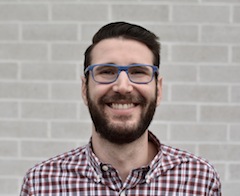
קשה להאמין שאדית ומייקל סימס בעלי הקפה המיתולגי צ’יזקייק הלכו לעולמם. (צילום: רוני רחמני)

בעת התיישבו בוונקובר לפני כארבעים שנים תחילה מייקל התפרנס מהופעות בבתים של אנשים באירועים כמו ימי הולדת, ובכל אירוע בו יכל לנגן ולשיר. ואילו אדית הכניסה כסף הביתה ממכירות של חפצים משומשים. יום אחד הם מצאו חנות להשכרה ברחוב גראנוויל, הקרובה מאוד לגשר גראנוויל שמקשר בין הדאון טאון לחלקה המערבי של ונקובר. הבעלים הקודם של המסעדה ששכנה במקום נאלץ לסגור את העסק, כיוון שבעותה עת פרצה שביתה במערכת עיתון הוונקובר סאן שהייתה ממוקמת ממול, כך שלא היו קליינטים. אדית ומייקל סימס קפצו על המציאה והשקיעו את כל הכסף שהיה להם (כ-14 אלף דולר) – וכך נפתח קפה צ’יזקייק אצטרה. מייקל אמר לי בשעתו כי הוא בסך הכל חיפש מקום לנגן, וללא שום תוכנית עסקית התגלגל הרעיון לפתוח את הקפה ולמכור בו עוגות גבינה איכותיות לפי מתכון שהוא מצא. השניים נהגו בחוכמה כאשר החליטו לפתוח את הקפה בשעות הערב החל משבע, בזמן ששאר בתי הקפה נסגרים. המקום פעל עד אחת אחר חצות. כך שהיום היה פנוי עבורם לכל מה שרצו וחפצו לעשות. למיקום הספיציפי של הקפה (מחוץ לדאון טאון) היה יתרון משמעותי כיוון שתמיד אפשר היה למצוא חנייה לידו.

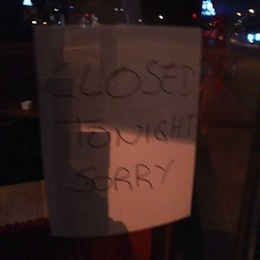
photo - Cheesecake Etc. closedבשבועות הראשונים הקפה היה ריק אך לאחר מכן לאט לאט המקום החל להתמלא. צעירים ומבוגרים כאחד באו לשמוע את מייקל מנגן ושר עם אשתו, ונהנו לאכול עוגת גבינה ברוטב תות שדה או שוקולד. תוך תקופה קצרה צ’יזקייק הפך לשם דבר והמקום משמש לעלייה לרגל עד היום. קרוב לארבעים שנה בית הקפה מלא מדי ערב. הוא פתוח בכל ימות השנה ורק בערב חג המולד הוא סגור לבקשת עובדים שרוצים לשהות עם בני משפחותיהם.

במהלך השנים חלו מספר שינויים והתאמות בקפה אך בעקרון רוח המקום נשמרה עד היום. צ’יזקייק היה ממקומות הבילוי הראשונים בוונקובר שבו נאסר על הלקוחות לעשן.

לפני מספר שנים הזוג סימס רכשו את הבניין של הקפה וצרפו לצ’יזקייק את שתי החנויות שמצדדיו, כך שבימים עמוסים המקום מכיל עוד מקומות ישיבה לאורחים. במקביל הבן דן לקח את מושכות הניהול לידו ואדית ומייקל היו יותר חופשיים לטייל ולנוח.

אני הייתי נוהג לפגוש את הזוג מעת לעת. בדרך כלל היינו נפגשים בערבים בקפה ונהנים משיחות נפש וכן מנהלים דיונים עמוקים בנושאים פוליטיים ואחרים. לפעמים היינו נפגשים בסטודיו מאחורי הקפה בו אדית ומייקל נהגו לשהות לעיתים. או שנפגשנו בדירה היפה שלהם בקול הארבור. לעתים היינו נפגשים לפני הצהריים לברנץ’ בצ’יזקייק שהיה סגור באותן שעות, או בבית קפה בולגרי בווסט אנד שהיה חביב על בני הזוג.

תמיד היה לנו על מה לדבר, בין אם בנושאים משפחתיים, נושאי היום יום או כאמור בנושאים פוליטיים. בשנים האחרונות לחייה אדית גילתה רגישות גדולה יותר לנושא היהודי והיא החלה לחשוש יותר לגורלם. אני ניסיתי להרגיע אותה שהכל בסדר וישאר בסדר, אך כנראה שהגיל עשה את שלו והיא הייתה מאוד מודאגת. מייקל לעומתה תמיד נשאר אופטימי ונראה לא ממש מודאג ממה שקורה בעולם. הוא תמיד האמין בפתרונות חיוביים לכל בעייה וסכסוך.

אני מתקשה להאמין שאדית ומייקל סימס שייכים לנחתל העבר ולא אראה אותם עוד. ממש בלתי נתפס בעיני. מכל מקום הם ישארו בזכרוני ובמחשבותי ואזכור עד כמה היו נחמדים, שמחים וטובים לכל. יהיה זכרם ברוך.

Completing the Tanya

Rabbi Binyomin Bitton (photo by Noam Dehan)

On Dec. 4, Chabad of Downtown Vancouver, led by Rabbi Binyomin Bitton, held a siyyum, a celebration to mark the conclusion of studying the entire book of Tanya, sometimes called “the Bible of Chassidic thought.”

The siyyum also celebrated Yud-Tes Kislev, the 19th day of the Jewish month of Kislev, which began this year on the evening of Dec. 6, and is known as “the New Year of Chassidism,” due to the release of the founder of Chabad and author of the Tanya, Rabbi Schneur Zalman of Liadi, known as the Alter Rebbe, from prison in czarist Russia on that date in 1798.

The Tanya is a guide to the pursuit of righteousness and the meaning of Jewish religious life from a Chabad Chassidic perspective. It is known for its counsel on how the intellect can transform the emotional life, and its teachings on how contemplating the nature of God and the soul can inspire and focus spiritual life. The Tanya also asserts that the height of the spiritual life lies paradoxically in the simple actions of human beings, and that the highest expression of God’s intention in creation is in the human doing of a mitzvah (religious commandment, good deed).

Bitton opened the siyyum by noting his pleasure that it happened to fall so close to Yud-Tes Kislev, when Jews all around the world start a new cycle of Tanya learning. He then welcomed Adina Ragetli, a descendant of the Alter Rebbe, to play the niggun (sacred wordless melody) of the Alter Rebbe, “Arba Bavos,” on the harp.

“We are all very happy tonight,” said Bitton afterwards, “except one person, whose name I won’t say, but I’ll tell you the letters of his name, Samech-Mem-Alef-Lamed [Samael, an evil angel, whose name is not spoken by Chassidim]. You know what the letters of his name stand for? Siyyum masechet lo aseh [the completion of a book you will not do].”

Rivka Arieli read the final section of Tanya with which they completed the book, and then the rabbi invited a series of students to speak of the meaning of the text to them. First to talk were Eduardo and Gabrielle Sonnino, who spoke of their discovery of the meaning of Judaism through the Tanya after coming to Canada from Brazil three years ago. They spoke humorously of their adoption of Jewish observance as a result, teasing Bitton that, in getting them to “leave their cheeseburgers,” he had ruined their lives.

Shirley Hirsch and her husband, Gabriel, had learned previously with Rabbi Lipa Dubrawsky, z”l, the educational director of Chabad-Lubavitch BC for 15 years until his passing in 2013. His wife, Dena Dubrawsky, urged the Hirsches to contact Bitton, and soon they were taking on Tanya every Monday. Hirsch spoke of the uniqueness of the Tanya in conveying the highest mystical truths of Judaism in a form that anyone can understand.

Robert Elias shared how the study of Tanya and its differentiation between the egoic and divine elements in the person had helped him improve his marriage, mend broken friendships, improve his relations with his co-workers, and remove the sense of ennui he was experiencing in his otherwise successful professional life.

Ragetli closed the celebration with another piece of music. Rabbi Yechiel Baitelman of Richmond Chabad also attended the siyyum.

Matthew Gindin is a freelance journalist, writer and lecturer. He writes regularly for the Forward and All That Is Interesting, and has been published in Religion Dispatches, Situate Magazine, Tikkun and elsewhere. He can be found on Medium and Twitter.

Celebrating chai, community

Cynthia Ramsay, publisher of the Jewish Independent. (photo by Alan Katowitz)

The JI Chai Celebration on Dec. 6 at the Rothstein Theatre was a sold-out event. The high-achievers and community-minded individuals who won the JI’s 18 Under 36 Awards were the highlights of an evening that included world-class entertainment and the launch of a brief video explaining the history of the Jewish Independent, which began its newspaper life as the Jewish Western Bulletin.

In my remarks at the celebration, I noted, “For 88 years, this newspaper has been bringing this community together. And yet, in all that time, there has never been an event – to my knowledge – where people have come together – literally, in the same room, like we all are tonight – to celebrate or acknowledge the existence of our community newspaper.

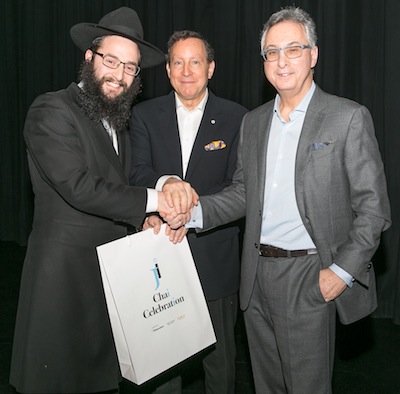
photo - JI’s 18 Under 36er Rabbi Levi Varnai, left, with JI Chai Celebration presenting sponsors Lorne Segal, centre, and Gary Segal
JI’s 18 Under 36er Rabbi Levi Varnai, left, with JI Chai Celebration presenting sponsors Lorne Segal, centre, and Gary Segal. (photo by Alan Katowitz)

“It’s funny to think how many annual general meetings, how many lectures, how many Negev Dinners, Innovators Lunches, JCC Sports Dinners, book festivals, film festivals, social, intellectual, religious events of every description, that the paper has covered in these decades. Yet the community has never before gathered together to turn our gaze toward the newspaper. In 88 years, there has never been an event like tonight’s.”

The JI Chai Celebration was presented by the Jewish Independent with the generous sponsorship of the Joseph and Rosalie Segal family and the Chutzpah! Festival. Both Gary Segal and Lorne Segal presented awards, as did Jewish Federation of Greater Vancouver board chair Karen James and CJPAC B.C. Region director Kara Mintzberg, who was the external adjudicator of the awards. The winners, in alphabetical order, were Rebecca Baron, Ezequiel Blumenkrans, Erin Brandt, Marcus Brandt, Ayelet Cohen Weil, Courtney Cohen, Aaron Friedland, Sam Heller, Talya Mallek, Ariel Martz-Oberlander, Logan Presch, Maya Rae Schwartz-Dardick, Mike Sachs, Allie Saks, David Schein, Rotem Tal, Carmel Tanaka and Rabbi Levi Varnai.

Several community members stepped up as sponsors – Gary Averbach, Shirley Barnett, David Bogoch, Tzipi Mann, JB Newall Memorials, Olive+Wild, Mark James and Red Truck Beer, Vancouver Learning Centre, Byron Sheardown and Web exPress and Yosef Wosk. And all of the performers – Amanda Hartley, Lisa Ehrlich, Goldie Hoffman, Vitaly Beckman, Jacob Samuel, Roller Dance Owl, Barbara Adler, Ron Samworth, Warren Kimmel and Wendy Bross Stuart – donated their time, and the Jewish Museum and Archives of British Columbia created a photo exhibit especially for the occasion. There were dozens of auction and prize donors. Under the direction of Bonnie Nish, JI staff and volunteers helped make the night the success it was.

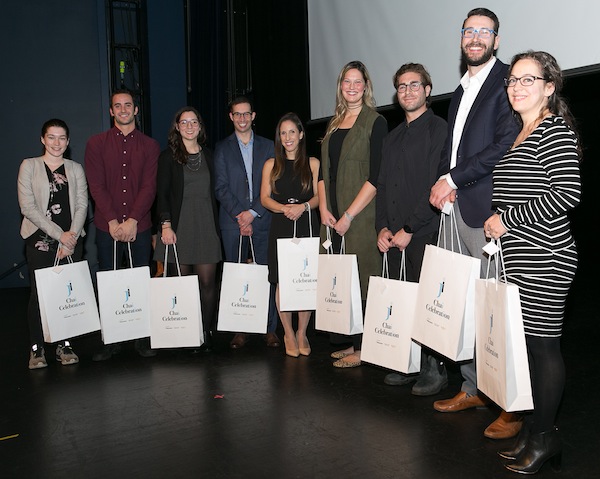
photo - Left to right, JI’s 18 Under 36 Award winners Rebecca Baron, Ezequiel Blumenkrans, Erin Brandt, Marcus Brandt, Ayelet Cohen Weil, Courtney Cohen, Aaron Friedland, Sam Heller and Talya Mallek
Left to right, JI’s 18 Under 36 Award winners Rebecca Baron, Ezequiel Blumenkrans, Erin Brandt, Marcus Brandt, Ayelet Cohen Weil, Courtney Cohen, Aaron Friedland, Sam Heller and Talya Mallek. (photo by Alan Katowitz)

“I hope we agree on the importance of having a Jewish community newspaper,” I said at the event. “I hope, further, that most of us would like one that represents all segments of the community and most opinions – we do have our red lines, I will admit.

“If we agree, I’m asking you to keep supporting the paper. And, I’m asking those of you who are new to the paper through this event, to subscribe, to advertise your business or organization, or to donate every so often if you prefer to just check out the website or pick the paper up for free at one of our 40 depots.

“And, I’m asking all of you to pass this message on to your friends. This newspaper is our collective record, our community’s mirror and its voice.”

photo - Left to right, JI’s 18 Under 36 Award winners Ariel Martz-Oberlander, Logan Presch, Allie Saks, David Schein, Maya Rae Schwartz-Dardick, Rotem Tal, Carmel Tanaka, Mike Sachs and Rabbi Levi Varnai
Left to right, JI’s 18 Under 36 Award winners Ariel Martz-Oberlander, Logan Presch, Allie Saks, David Schein, Maya Rae Schwartz-Dardick, Rotem Tal, Carmel Tanaka, Mike Sachs and Rabbi Levi Varnai. (photo by Alan Katowitz)

I acknowledged, “Of course, our community has many needs. We have so many superb organizations doing crucial work. And the Jewish Independent can’t give tax receipts like most of the others can. But we’re not a charity – we are your community asset … And we need your support.”

I concluded, “Thank you to everyone who has supported this paper for the past 18 years. In fact, there are some who have supported the paper for most of its 88 years. May I ask you to support us to 120 – and then may it be your grandchildren’s problem.”

To watch the video The Jewish Independent: 88 Years … and Counting!, click here.

School bars Chanukah

The chair of Vancouver Board of Education (VBE) and even the provincial minister of education waded in after Jewish students at a Vancouver elementary school went public with concerns that they were being made to feel excluded by exclusively Christian holiday symbolism.

Students Maya Sontz and Rebecca Weinberg went public last week after asking the principal of General Gordon Elementary, Hope Sterling, to add some Chanukah decorations to the Christmas trees, wreaths and other Christmas decorations up around the school. The girls said they were rebuffed by the principal, who claimed the Christmas decorations were not religious symbols, while a chanukiyah or other Chanukah items would be. The holiday concert was to include songs about Santa, reindeer and trees, which the principal defended as being “cultural” symbols, not religious ones.

The principal’s position drew rebukes over the weekend from Janet Fraser, chairperson of the board of education. “The VBE sincerely regrets any practices at General Gordon Elementary that have negatively impacted a sense of inclusion and representation for students and parents within our school community,” she wrote. “As chairperson, I apologize on behalf of the board to the students and their families who did not feel welcomed and included at their school. We acknowledge that, in the interpretation and implementation of our policies, there has been confusion about what is permitted as part of upcoming winter celebrations, including Chanukah. The board chairperson and school district staff will be meeting with members of the families … to ensure that their children, as well as all others, are included and represented in their school.”

In response to Fraser’s statement, Rob Fleming, B.C. minister of education tweeted: “ALL children, regardless of ethnicity, religion or gender should feel and be welcome to celebrate who they are in every single one of our #bced schools.… Thank you for your leadership upholding inclusive schools @VSB39 and @janetrfraser.… Let’s #celebrate diversity this year!”

Administrators were to meet with school officials, parents and students Monday to address the issue.

“It is called a public school, so, if you’re going to invite everybody, you’ve sort of got to include everybody,” 11-year-old Maya Sontz told CTV news.

Games with capital

Last week, U.S. President Donald Trump recognized Jerusalem as the capital of Israel. There are a number of issues to unpack in his (un)diplomatic announcement.

First, rioting by Palestinians and others around the Middle East, as well as potentially related attacks on Jewish institutions in Sweden, are acts of violence that deserve to be condemned, with no excuses or legitimation.

Second, as for the president’s decision, we can leave aside partisanship from the mix. Former presidents Bill Clinton, George W. Bush and Barack Obama have all made effectively the same statement: Jerusalem is the undivided capital of Israel.

But we need to separate the ethical from the pragmatic. For whatever else it is – home to holy sites of three religions, a multicultural, multifaith, multilingual metropolis – it is Israel’s capital. Tel Aviv may be the economic heart of the country and the first modern Jewish city, but it has always been toward Jerusalem that the national aspirations of the Jewish people have been directed. But, the fate of Jerusalem is considered one of the core issues to be addressed in any permanent peace agreement that results in a two-state solution. Whether or not recognizing Jerusalem as Israel’s capital is the morally right action, the pragmatic truth is that the president’s move was not inspired by a desire to do right.

The most charitable thing we can say about the president’s Jerusalem decision is that he kept his promise to evangelical Christian voters. He was unequivocal before the election on this issue and, unlike those who came before, he appears to be following through. The same can be said on many other fronts where conventional observers assumed a cooler head would prevail once the weight of the office descended on the showman. The provocations around immigrants, the racism, the assaults on even members of his own party – none of these has eased since he moved into the White House. While Congress has ensured the president has so far passed no legislation of consequence – though a sweeping and irresponsible tax bill is on the horizon – the president has behaved just as he did when he was a candidate, esteem for the office, personal dignity and respect for others be damned.

Again, there may be disagreement on whether moving the embassy is a good thing, a bad thing, ill-timed or overdue. But let us not pretend that the president was moved by any ethical, theological or political morality. This was just the latest in a succession of provocative actions through which the president thumbs his nose at anyone with a modicum of nuance, diplomacy or sense of the larger geopolitical reality.

Trump likes to stir things up and this time he did it using Jerusalem. This is no favour to the Jewish people or Israel. We may, in fact, suffer its consequences alongside many in the Palestinian territories who may lose their lives in riots and skirmishes precipitated by this thoughtless edict. All of us are just the tools in another of his childish, and very dangerous, games.

Being kosher in today’s world

On Dec. 7, Temple Sholom Sisterhood hosted a discussion on the relationship, history and relevance of today’s kosher practices. The panel aimed to “explore, broaden and in some cases challenge the term kashrut” and “explore integrating values such as ethics, community and spirituality as it relates to food.”

The panelists were Rabbi Lindsey bat Joseph, executive director of the Centre for Jewish Excellence; Michael Schwartz, director of community engagement at the Jewish Museum and Archives of British Columbia; and Noam Dolgin, a Jewish environmental educator and “sustainable realtor.”

As participants ate baked organic apples – sourced locally and made with gluten-free oats – Dolgin began at the beginning, discussing the Garden of Eden and asking the audience to name the first mitzvah (commandment) given to human beings alone. Although many people think it was “be fruitful and multiply,” that commandment was given to animals as well. The first human commandment, Dolgin said, was to “work and protect” the garden. After leaving the hunter-gatherer society of the garden, we became farmers able to produce surplus food and wealth, he explained, and so came the laws around our relationship to the land and to other people, which aimed to promote justice towards the earth and to each other.

Dolgin gave an overview of the development of Jewish law in relation to land, animals and people, touching on such core rabbinic laws as ba’al tashchit (do not waste) and ba’al tzarei chayyim (do not be cruel to animals). Dolgin said, although there are biblical laws protecting the land, there has been a shift in recent years from an emphasis on immediate human concerns – “don’t pollute upwind,” for example – to deeper ecological concerns, such as “don’t pollute at all.”

Schwartz spoke about how Jewish culinary traditions go beyond the legalities of kashrut. He focused on the home as the locus of cultural preservation, and noted the museum’s recent initiative to collect and share Jewish cultural stories around food. As part of this project, he said, one Jewish woman talked of her memories of food from Second World War-era Bangalore, India; another spoke of her Mizrahi Jewish family who had lived in China for years and were more comfortable in Vancouver’s Chinatown than in other parts of the city, including Jewish institutions.

Schwartz also discussed efforts to bring Jewish ethics to bear on food, describing the community’s creation of a food bank, and of other food-justice-related organizations.

“The alert among you will notice that I have made it this far into my talk without mentioning the word kosher,” he said. “That is not an accident. The reason for this is that I wanted to demonstrate that there are many ways that food can preserve our identity and inform our morals.”

Rounding out the discussion, bat Joseph explored the architecture of kosher law and the way it was built out of biblical law. She explained how kosher laws are traditionally considered to be transrational, or beyond human understanding. She said, despite our not understanding the details, the Torah suggests two primary purposes of kashrut: to make us distinct from the nations around us and to promote a holy lifestyle, to encourage mindfulness and “a sense of priestliness in the most mundane things.” She debunked the commonly held idea that kosher laws may have had a connection to health.

A wide-ranging question-and-answer period included humourous stories of trying to live kosher, different family traditions, and the struggle to balance inclusivity both among Jews and between Jews and non-Jews while observing kashrut.

Matthew Gindin is a freelance journalist, writer and lecturer. He writes regularly for the Forward and All That Is Interesting, and has been published in Religion Dispatches, Situate Magazine, Tikkun and elsewhere. He can be found on Medium and Twitter.

How to treat siblings, others

When you have twins, many people ask questions, particularly about “when” you will separate them. When did they sleep in separate cribs, rooms, go to different activities, or have separate school classes? The answers for every family are different, of course.

My kids arrived at the same time, but they’re fraternal twins. That means, they’re brothers and they’re the same age. From the beginning, we tried to make Jewish connections to this: part of their Hebrew names are Ephraim and Menashe, and their dad is named, in part, Yosef. (And his father’s name is Ya’akov.) In the Bible, Ephraim and Menashe were brothers, not twins.

Twins have a special bond. My kids slept in the same crib for about nine months, and then in cribs across the room from each other. I met another parent of twin girls once. He described how the two toddlers would be placed in their separate, but adjoining, cribs to sleep. Inevitably, someone climbed into the other crib. When their parents went to get them, they both were sleeping in the same place.

Even now, one of my twins begs the other for a “sleep over” and what he means is, “Can I go climb into your bed with you?” (We say no, as it ends up keeping everyone in the house up.) My kids also shared something else – they didn’t sleep through the night until they were 4½ years old. It wouldn’t be an overstatement to say: we value sleep and bedtime, perhaps much more than togetherness.

The Torah portion of Vayeshev (Genesis 27:1-40:23) is a difficult story about brothers. It’s essentially about favouritism and sibling rivalry – when Joseph’s older brothers decide to gang up on him and get rid of him, because he is their father’s favourite.

I asked my kids what they thought about it, and they mentioned how great it was to have a brother, and a twin. They didn’t have toys that were “too old” or “too little kid” for them and they always had someone with whom to play. They love each other. They are best friends. They chose to take baths together in our claw foot bathtub until they were too big to fit comfortably.

At the same time, they also fight, get very jealous of anything seen as “unfair” – all the normal sibling things. However, instead of reading only rabbinic commentaries this time, I thought about my kids’ responses. This is valuable, too. They’re learning to take turns and take care of each other, and are establishing these bonds for life.

My husband shared a room with his brother throughout their childhood. In adulthood, despite managing young families and living in different countries, they still communicate often, about everything and nothing.

A teacher recently suggested I might separate my kids so they could develop their “individuality.” Instead, I reflected on the teenagers I met when I lived on a kibbutz in Israel. They were raised in children’s houses, all together. Though not twins, they were raised as a group. While this model isn’t common anymore, kibbutzniks produced great leaders for the state of Israel: many brave volunteers, military leaders and strong politicians. The kids I met answered questions as a class: their favourite game was soccer, their favourite foods were chips (French fries), ice cream and salad. The strength these kids had together and their camaraderie were powerful. We chose to keep our kids together, to nurture a deep feeling that someone has their back.

Part of sharing everything is learning together what’s safe and acceptable, and what isn’t. I want to raise my kids in Jewish ways – and that includes working on raising boys who know how to respect others. My kids love the newspaper cartoons, but require an adult to read and interpret them and, lately, political cartoons about celebrities and sexual assault are more frequent. This is a “touchy” subject for 6 year olds.

The rabbis teach us that everything is worth examining, and open to interpretation and extrapolation. Whether it’s the Torah portion’s lessons about how to treat siblings or a cartoon at the breakfast table, we need to think critically and learn from what is presented to us. This morning, we covered another lesson – “This man touched other people without permission. No one wanted to be touched that way. He lost his job. Now people are saying how wrong this behaviour is – in the cartoons and news.”

North American society puts a strong emphasis on being rugged individualists; people who know their minds and act independently. However, being a good Jewish person, a mensch, involves knowing how to behave among others – people you love, and strangers, too. Often, life isn’t fair – your youngest brother gets a fancy handmade coat, like Joseph. Yet, what matters is where the rubber hits the road; how we use derech eretz (the right way to behave) to cope with what life gives us. How we behave and treat others, no matter who they are, is what counts. In Jewish tradition, it’s how we act that matters.

Sometimes, the Torah portion of the week reminds of how we shouldn’t behave. When we read about Joseph’s “Technicolour Dreamcoat,” we’re reminded to examine how we behave: as parents, as siblings, and as people. We don’t live completely independently of our families and communities, even if we see ourselves as individuals. When I used to teach full time, I often had to stop students from doing something inappropriate, and I’d ask, “What would your mother or grandmother think of this?”

My twins know the Jewish thing to do – your mother wants you to keep your hands to yourself, to take care of each other and … don’t act like Joseph’s brothers did!


Joanne Seiff writes regularly for CBC Manitoba and is a regular columnist for Winnipeg’s Jewish Post and News. She is the author of the book From the Outside In: Jewish Post Columns 2015-2016, a collection of essays available for digital download or as a paperback from Amazon. See more about her at joanneseiff.blogspot.com.

Changes in community

Jewish Family Services CEO Richard Fruchter with Karen James, who received the 2017 Naomi Gropper Steiner Visionary Award. (photo from JFS)

At Jewish Family Service Agency’s 81st annual general meeting on Nov. 29, Richard Fruchter, chief executive officer, announced that the agency will be shortening their name to Jewish Family Services. The organization has also launched a new logo and website at jfsvancouver.ca. JFSA has been in a period of growth over the past four years,” said Fruchter. “However, when it came time to looking at our website and logo, we knew they had difficulty connecting with current audiences.

“In response, we created a marketing task force that consisted of some key community members and professionals to guide us in refreshing our look and giving us the tools to present ourselves in a more vibrant and professional way.

image - The AGM also featured the unveiling of JFS’s new logo
The AGM also featured the unveiling of JFS’s new logo.

“As we discussed the logo, we naturally talked about our name,” he said. “We’ve been known in this community as Jewish Family Service Agency since 1958, but ‘agency’ is repetitive. Other Jewish organizations dropped that extra word from their name awhile ago and we felt that it made sense to do the same. We’re now referring to ourselves as Jewish Family Services or JFS. ‘Services,’ rather than ‘service agency,’ more accurately reflects the remarkable breadth of what we do.”

In addition to the new logo and look, Fruchter said, “We also have a new tag line, ‘Uplifting Lives.’ It’s exactly what we do here – we uplift the lives of families and individuals in our community who need our help. It works both ways, though – we also uplift the lives of our members and donors who are participating in tikkun olam and gemilut hasadim – repairing the world through acts of loving kindness.

“We’re proud to present these marketing initiatives on behalf of JFS to our community. We feel it’s a refreshing representation of who we are and the work we do, which is grounded in the values and mission of our organization.

“As we look ahead to the future,” he said, “our vision is to be a leader in the Jewish and broader communities, transforming the lives of individuals and families through quality services and innovative programming that responds to evolving community needs. With a new look, logo, name, tagline and website, we are more prepared than ever to do just that.”

The new website is now live at jfsvancouver.ca. JFS will be phasing out its old logo and branding materials by the end of 2017.

At the AGM, Karen James received the Naomi Gropper Steiner Visionary Award, given to a past board member who went over and above in their duties. She stepped into the top volunteer job at the agency at a critical time and guided JFSA to provide significantly more services to the community.

Shelley Ail received the Paula Lenga Award for her major volunteer contribution over a decade to the Jewish Food Bank and her commitment to coordinating volunteers and organizing JFSA’s annual Friends Campaign phone-a-thons.

Schara Tzedeck Congregation received the Community Partner Award.

JFS’s Volunteer Appreciation Award recipients were Ros Calof, for her work with the seniors lunch program, and Lina Moskaleva, for supporting its mental health outreach program.

The work of the staff was also celebrated – Staff Term of Service Awards went to Alan Stamp (10 years), Zanna Linskaia (10 years), Naz Gurbuz (five years) and Tanya Skovorodnikova (10 years).

Bill Kaplan, JFS board chair, introduced the new board members: Judith Cohen, Shannon Gorski, Peter Hotz, Simone Kallner and Michael Kaplen. Along with the nominating committee, Kaplan recruited a strong and talented group of community members.

***

The board of directors of Hillel BC Society has unanimously approved the appointment of Sam Heller as the next executive director of Hillel BC. The appointment will be effective July 1, 2018.

photo - Sam Heller will be the next executive director of Hillel BC
Sam Heller will be the next executive director of Hillel BC.

Over the years, Heller has repeatedly exhibited exceptional leadership skills in a variety of positions. While attending the University of British Columbia, where he received a bachelor’s in political science, he led the fight against antisemitism and anti-Israel activities on campus.

In an effort to make an even more significant contribution to the Jewish community, Heller moved to Israel and joined the Israel Defence Forces, where he achieved the rank of sergeant, Infantry Brigade, and earned an honour of excellence.

Heller returned to Vancouver and was hired by Hillel in 2015 to be the program/outreach coordinator responsible for directing social, cultural and educational programming at seven universities in the province. His ability to communicate with people of all ages, combined with his keen understanding of the campus and Vancouver Jewish communities, fluency in Hebrew and proficiency in social media marketing, have made him an invaluable member of the Hillel team. In recognition of these qualities, he was promoted to program director in 2016 and to managing director in June 2017.

Rabbi Philip Bregman will continue in a part-time basis as Hillel rabbi, whose duties will include Jewish chaplaincy and fundraising.

A history of Jewish humour

Matthew Gindin takes a pause in his talk, The History of Jewish Humour. (photo from Jewish Seniors Alliance)

On Nov. 24, the first session of the 2017-18 Empowerment Series started with a bang. Almost 80 people came out to launch the series’ season, which has the theme of Laughter and Music: Feeding the Soul. This first meeting was co-sponsored by Jewish Seniors Alliance and Sholem Aleichem Seniors of the Peretz Centre for Secular Jewish Culture, and it took place at the centre.

Featured speaker Matthew Gindin spoke on the topic The History of Jewish Humour. Gindin is a journalist, lecturer and teacher, and a regular writer for the Jewish Independent.

Gyda Chud, coordinator of Sholem Aleichem Seniors and vice-president of JSA, began the session by introducing JSA president Ken Levitt, who spoke briefly about JSA, and urged those who hadn’t yet joined, to become supporters and members.

Gindin began his talk by posing the questions, Why speak of Jewish humour; why do these words go so well together? He then proceeded to answer the question.

Jews have been over-represented in the comedy scene. At one time, they comprised 75% of the comics in America, while they were less than three percent of the population, he said.

Humour has a long tradition in Judaism dating back to biblical times. The name Yitzchak, Isaac, means “he will laugh,” explained Gindin. The prophet Elijah said that two jesters in the marketplace already had a place in the World to Come because they made people laugh. Reb Nachman of Bratzlav, the founder of the Chassidic movement, preached about the importance of happiness. Sigmund Freud also spoke of happiness and humour in his book Jokes and Their Relation to the Unconscious.

Jews are known for making fun of themselves, said Gindin. They have used humour as a means of preparing for things that could go wrong. It was a method of coping with the many negative experiences in their lives. He pointed out that this type of humour was mainly a product of Ashkenazi culture.

Gindin described several different types of humour. For example, jokes about assimilated Jews trying to fit into non-Jewish society, Chassidim telling jokes about themselves, Jewish folk humour, jokes told under Nazism and communism in order to relieve tension, and jokes about Israeli life. An example of folk humour can be found in Sholem Aleichem’s glossary of his stepmother’s curses. For example: “May you grow so rich that your wife’s second husband never has to work for a living.”

In the United States, Jewish humour became popular in theatres and comedy routines starting in the Borsht Belt, said Gindin. Much of this humour was self-deprecating. The comedians focused on such themes as Jewish-gentile differences, Jewish family dynamics, the stereotype of the Jewish mother, Jewish professions, the diminished role of the rabbi. An example is a joke about waiting for Moshiach (Messiah) – “at least it’s steady work.”

Gindin told many stories and had the audience in stitches. He then asked if there were questions or comments and if anyone had any good stories. The audience responded with many amusing jokes of their own.

Chud thanked Gindin and commented on how well he wove the theme of humour into its time and places and how well he explained how the words Jewish and humour went together. She then invited everyone for coffee and dessert.

The second session in this season’s Empowerment Series will take place on Jan. 24, in cooperation with Jewish Community Centre Seniors and will feature the film Broadway Musicals, A Jewish Legacy. This documentary, by Michael Kantor, narrated by Joel Grey, explores the unique role of Jewish composers and lyricists in the creation of the modern American musical.

There will be three more sessions on the Laughter and Music theme: March 21, with Temple Sholom seniors; April 17 with Beth Israel seniors, in conjunction with Jewish Family Services’ lunch program; and June 25, with Kehila Society in Richmond. For more information, visit jsalliance.org.

Shanie Levin, MSW, worked for many years in the field of child welfare. During that time, she was active in the union. As well, she participated in amateur dramatics. She has served on the board of the Jewish Federation of Greater Vancouver and is presently on the executive of Jewish Seniors Alliance and a member of the editorial committee.


Play faces our mortality

Kelly Sheridan and Peter Wilson in The Realistic Joneses. (photo by Nancy Caldwell)

The unfortunate truth is that we are all going to die some day. How we cope with our mortality defines our approach to life. Playwright Will Eno encapsulates this concept in his award-winning play The Realistic Joneses, produced by the Mint Collective and currently running at the Vancouver Culture Lab at the Vancouver East Cultural Centre until Dec. 17.

The New York Times has called Eno, “a Samuel Beckett for the Jon Stewart generation.” His life view comes through an intellectual lens of verbal dexterity and abstract projections that, at first blush, seem disjointed and oddly out of place, but eventually morph into a revelatory and provocative perspective on death and dying. Eno is a wordsmith but it takes some time and mental effort to understand exactly what is happening on stage.

The play had its debut at Yale Repertory Theatre in 2012 and then went on to a successful Broadway run in 2014, including a Drama Desk Award Special Award.

Next-door neighbours, both with the surname Jones, live in smalltown America. Bob and Jennifer, middle-aged longtime residents, are the foils for the newly wed 30-somethings John and Pony, whose lives intersect through the tragedy of the male side of each couple having the same degenerative neurological condition that affects memory and speech. Both men are undergoing experimental treatments from a local specialist. Each knows there is no cure and deals with this reality in his own way. Their coping mechanisms define the play and expose the vulnerability and pathos of those with terminal conditions.

The action is portrayed in a series of vignettes, snapshot moments in the lives of these two generationally divided families as they forge an uneasy friendship in the dance towards death. These people are real, albeit a little weird. The dialogue is witty and fast-paced – in this play, “the words are the thing.” Despite the dark nature of the subject matter, there are some very funny moments.

Joan Bryans is brilliant as Jennifer, the long-suffering and brave wife who has given up her career to become her husband’s caregiver and tries to give his deteriorating life a sense of normalcy. Community member Charles Siegel plays Bob with an almost childlike, naive demeanor as his memory slowly fades. As the younger couple, Peter Wilson plays John, the quirky doting husband, in a maniacal sort of way and Kelly Sheridan is the scatterbrained Mrs. Jones Junior.

The intimacy of the black-box Culture Lab adds to the audience experience. The divided set is simple: one half is the backyard of the older Joneses, the other half is the kitchen of the younger duo. Lighting and sound design complement the simplicity of the production. It is smalltown in anywhere America on a summer’s eve, replete with chirping crickets, hooting owls, barking dogs and chiming church bells.

There is no easy resolution at the end of the play, no happy ending tied up with a shiny bow to send audiences on their merry way out into the night, just the thought that this is the reality of life, with all its complications, and maybe, just maybe, that’s OK.

Tickets and more information can be found at thecultch.com or by calling 604-251-1363.

Tova Kornfeld is a Vancouver freelance writer and lawyer.