Haim Peri honored for bravery

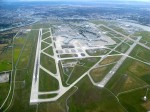
An aerial photograph of the Vancouver International Airport. (photo by Alejandro Erickson via en.wikipedia.org)

On Oct. 21, Governor General of Canada David Johnson awarded Haim Peri, a member of the local Jewish community and a former Israeli, with the Canadian Medal of Bravery. Five other heroes from the Greater Vancouver area received the award along with Peri – all for saving passengers from a burning airplane that crashed at the Vancouver International Airport three years ago, in October 2011.

In an interview with the Jewish Independent, Peri talked about that afternoon, when he and the others witnessed a plane crash and participated in the rescue of its seven passengers.
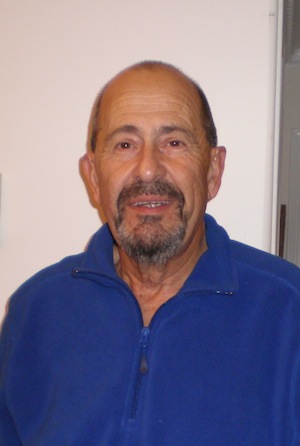
photo - Haim Peri received the Canadian Medal of Bravery for his heroic actions in October 2011 to rescue passengers from a burning plane at Vancouver International Airport
Haim Peri received the Canadian Medal of Bravery for his heroic actions in October 2011 to rescue passengers from a burning plane at Vancouver International Airport. (photo by Olga Livshin)

“It happened about 200 metres from where I work. I’m a driver for Amre Supply. I just finished my workday and took a smoke outside when I saw the entire thing happen right before my eyes. As I later learned, the plane took off for Kelowna and immediately encountered a mechanical problem. It had to turn back. The pilots tried to land the plane on the runway but couldn’t. I remember hearing the engines struggle. They roared. The plane was too low and coming down at great speed. One of the wings clipped a lamp post, and then the whole thing made a sharp left turn and hit the ground. The cockpit was instantly engulfed in flames. There was choking black smoke, and spilled jet fuel could ignite at any moment…. It was as cinematic as it was horrific, and then there was silence.”

According to the reports later available to the media, several people saw the crash and tried to get away as fast as they could. The fire was spreading, the heat was intense and an explosion could have occurred at any moment. Despite the imminent danger, Peri and the other rescuers rushed towards the burning plane.

“I didn’t know how many people were on board, or who had survived the crash, but letting people die was not an option,” he recalled. “There were no fire fighters or medics there. They all arrived a few minutes later, but a few minutes is a long time in such situations.”

He remembered running towards the plane the moment it crashed. “By the time I arrived, the door had just been opened, and someone was already trying to drag out a passenger. He was struggling, and I told him we could lift her together.” He stepped into the plane to pick up the passenger’s legs, while his partner lifted her shoulders. They carried the injured woman some distance from the wreckage.

“I had had first-aid training so I checked her for bleeding first,” he said. “There was none, but she was in terrible pain, and I feared she may have suffered internal injuries and broken bones. By that time, other rescuers had stepped in to get the remaining passengers off the plane, so I focused my attention on the woman, talked to her, tried to make her as comfortable as possible.”

Six weeks before the plane crash, Peri had received sad news: his 30-year-old daughter was diagnosed with cancer. “As I sat with the woman I saved, I prayed to G-d,” he said. “I told him: ‘I’ll take care of this woman. Please, you take care of my baby, help her.’ He did. She is better now, free of cancer. She recently had a new baby, my eighth grandchild.”

Eventually, emergency crews arrived and took control of the crash scene, and the injured were taken to the hospital. “And I walked back to work across the street,” Peri recalled.

That daring rescue wasn’t the first in his life. When he served in the Israeli army in his youth, he was a landmine specialist, trained to spot and disarm mines, as well as plant them. He and a group of others were assigned to rebuild a barbed-wire fence in the Golan.

“The Syrian military had planted thousands of mines on the Golan Heights,” he said. “We were told that the area was already clear of the mines, but I decided to look around anyway. That’s when I saw the spherical shape of the top of an anti-tank mine. ‘Don’t move!’ I shouted to the others. They all held still. I slowly retraced my footsteps back to the main road. One by one, I had the other soldiers follow my tracks, until all 15 of my men were out of harm’s way. I later discovered four additional landmines were buried along the same path.”

The events of that day and the plane crash of 2011 were separated by more than 30 years, but the man was still the same, keeping others safe. While both pilots unfortunately died in hospital, all of the passengers survived because of the rescuers’ swift actions.

“The City of Richmond presented all of the rescuers with the awards for bravery,” Peri said, displaying his medals. “The recognition continued with the Lions Club’s Medal of Merit and the RCMP award. And now, Canada’s Medal of Bravery. It has my name on it.”

The other five B.C. recipients of the Canadian Medal of Bravery were Peri’s fellow rescuers, who ventured into the burning aircraft with him on that autumn day in 2011 to save its seven passengers: Jeremy Kerr, Lonney Lee, Shawn Nagurny, Francis Nand and John Redmond.

Olga Livshin is a Vancouver freelance writer. She can be reached at olgagodim@gmail.com.

Lokash cast in musical’s title role

Julian Lokash plays the title character in Carousel Theatre’s James and the Giant Peach. (photo by Tim Matheson)

When asked how long he’s been an actor, 11-year-old Julian Lokash didn’t hesitate. “Since I was born!” was his immediate response.

The young actor is the star of the upcoming Carousel Theatre production of James and the Giant Peach. As James, he’s in every scene, which has meant that he has been in rehearsals for two months, from 9-5 each day, except on Mondays, when he has the chance to go to school like other children his age. He is in Grade 6, in the French immersion program École Jules Quesnel in Point Grey.

Julian is not only an actor. He is what the theatre world calls a triple threat. “I dance and sing as well,” he said. “When I was just 1 or 2 years old, I was always dancing around and singing, even before I could talk,” he explained when asked about how his parents knew he was interested in the performing arts.

Julian shook his head emphatically (perhaps even a bit theatrically) when asked whether anyone else in his immediate family has any talent for musical theatre. He did say that his father’s cousin works for Dreamworks and that his dad also has an aunt who played in an orchestra but, as far as Julian is concerned, he’s an anomaly in his family.

Looking outside of the family for performance role models, Julian said he is a big fan of many of the actors on the TV show Glee because he thinks they have great voices. He also loves the Disney movie Frozen and, specifically, Idina Menzel, the voice of Elsa.

When he was younger, Julian was involved in Stage Coach, a theatre arts program that developed his interest and talent for musical theatre. More recently, he spent his last two summers in the Jewish Community Centre of Greater Vancouver’s Gotta Sing! Gotta Dance! musical theatre summer school run by Perry Ehrlich. “Perry was the one who told me to try out for James and the Giant Peach,” said Julian. “He’s sort of like a musical theatre agent because he’s watching out for things for me.”

In fact, Julian has had an acting agent in the past. Through that agent, he did a commercial for Crayola. “I’m at a pause right now because I don’t have time for TV or commercials right now,” he said. He admitted that, at this point in his life, he prefers musical theatre but thinks that, in the future, he may have to do some TV. He’s confident that he’s found his calling and already has part of his acceptance speech ready for his Tony or his Oscar. “My friends wanted me to tell you that they are really supportive. My family is so supportive, too,” he said.

With theatre such a big part of his life, Julian does ballet, tap and jazz dancing, as well as voice lessons. The busy schedule of rehearsals, not only for James and the Giant Peach, but for any production, requires strong family backing. Luckily, his parents are happy to see their son doing what makes him happy.

It’s not all about the arts, however. Julian likes to be active and he gets that through dance as well as regular family ski weekends at Whistler. “I love to ski but I think this winter my brother and I are both going to tone it down and maybe only ski Saturdays,” he said. He admitted that he’d like a bit more time to spend with his friends.

Despite his busy schedule, Julian has found time to participate in a Jewish education class organized by a number of parents in his neighborhood. All of the students are kids living in Point Grey who attend public school and whose parents want their children to have some Jewish education without formalizing a connection to a synagogue. He mentioned that he’s not very religious but he does like to celebrate the Jewish holidays.

James and the Giant Peach tickets are available through Carousel Theatre for Young People. The musical adaptation of Roald Dahl’s classic children’s novel is at the Waterfront Theatre on Granville Island from Dec. 6 to Jan. 4, after which Julian will return to the life of a regular, but talented, Grade 6 student.

Michelle Dodek is a freelance writer and community volunteer living in Vancouver.

Thousands of B.C. archeological sites

Hartley Odwak holds a 1,000-2,000-year-old stone projective point recovered from one of the sites on which he has worked. (photo from Hartley Odwak)

What is fascinating and striking is that it’s largely unknown to most Vancouverites and British Columbians that there is a plethora of documented archeological sites in and around the Lower Mainland and all over B.C. – quite literally, thousands,” said archeologist Hartley Odwak.

Odwak, 48, grew up in Winnipeg and earned his bachelor’s (with honors in anthropology) at the University of Winnipeg (U of W), before moving to Vancouver for graduate school at Simon Fraser University (SFU), and later moved to London, England, for his PhD. He now calls Vancouver home.

“All the houses at Locarno Beach and south, up the hill a block or so, are on top of one of the most important archeological sites in the province – the Locarno site – which dates to at least 3,300 years ago,” said Odwak. “There are 45 archeological sites in Stanley Park. I don’t believe any are marked by interpretive signage, which makes knowing about them all the more unlikely. The same is true for all of the major cities, towns, villages and Gulf Islands in B.C., from Victoria to Nanaimo, Saltspring Island, Pender Island, Sechelt and Campbell River.”

According to Odwak, there are many archeological consulting firms in British Columbia – 30 or more – some very large and some very small. As for what types of archeological sites exist in the province, he said they include everything from winter and summer villages to seasonal camps, fortification sites, hunting sites, sacred sites, resource-gathering sites and rock art sites. “All these sites document the traditional use of the lands and waters of B.C. by First Nations people back several thousands of years … and we keep finding older and older sites.”

Road to archeology

After completing his BA, Odwak sought a graduate program with a strong human evolution component for his master’s. Although he felt he had received excellent training from Chris Meiklejohn at the U of W, there was no U of W graduate program at the time and the University of Manitoba also did not have a strong human evolution component.

“At the time, SFU’s archeology department had one of the best programs in the country and, as I wanted to stay in Canada, I thought it would be an interesting place to live and study,” said Odwak. “I’m not sure of the exact moment I decided to become an archeologist or if it was entirely intentional.”

At U of W, Odwak was drawn to anthropology, particularly the very early prehistoric periods and human evolution. Anthropological training gives a broad background in many sub-areas, such as archeology, biological anthropology (prehistory and evolution), linguistics and cultural anthropology. Odwak focused on biological anthropology and archeology and, early in his academic career at U of W, held summer jobs with Parks Canada as an archeologist. This provided him with diverse experiences, including traveling to excavate in the Yukon and in Saskatchewan (at Batoche).

When Odwak moved to Burnaby for his MA in 1990, he specialized in human evolution. As part of his thesis, he went to Israel to conduct research and excavations. At SFU, he said he hoped to do what every student of human evolution dreams of – “excavate at an early human site in the old world … and, given [his] Jewish background, love of Israel and grasp of Hebrew, Israel was [his] obvious choice. Israel contains many famous prehistoric archeological sites and fossils critical to the story of human evolution.”

According to Odwak, the oldest sites in Israel are nearly 400,000 years old (before the appearance of modern humans) and several sites contain evidence critical to our understanding of the appearance and evolution of modern humans.

Starting up a firm

When Odwak was hired by B.C. archeological consulting companies, he began working with local First Nations to collect archeological information from their territories.

“I felt an instant connection with the First Nation communities,” said Odwak, who was on his way to becoming an academic biological anthropologist, specializing in prehistory and human evolution in Israel, before his consulting career took on a life of its own.

“It really almost happened by accident,” he said. “When I was doing my MA at SFU, I needed to make some money and was asked by a colleague to help him on a very small archeological project on the Gulf Islands of B.C.”

This led to another project, and another, and, eventually, Odwak was hired by other firms to do work around the province. In 1997, one of the First Nations on Vancouver Island, with whom Odwak had been in the field earlier, asked if they could retain him exclusively. He accepted and, with a partner, started up the firm Sources Archeological and Heritage Research Inc.

Most archeological consulting in Canada, including Odwak’s, involves assessing proposed development areas for the presence of archeological sites. The firms locate, record and map sites to protect them during construction and development.

Making a new home

Coming from a tight-knit community in Winnipeg, it took Odwak a little while to get rooted in Vancouver but, once he and his wife, Anthea Lee, settled down in the Commercial Drive area in the early 2000s, he started to feel more comfortable.

“It’s a very diverse, welcoming neighborhood where, in my experience, you get recognized by the ‘people in your neighborhood,’ as the Sesame Street saying goes, more than other places I’ve experienced here.”

When the couple had children they became more connected to the Jewish community and have since made some very good friends through their kids – sons Noah and Sam – being enrolled at the Jewish Community Centre of Greater Vancouver day care.

Odwak’s sister, Mindy, moved to Vancouver shortly after he did and now lives a few blocks from them. She and her partner, Nina, are loving aunts to Noah and Sam.

Having outgrown day care, Noah, 6, is now active in after-school programs and classes at the JCCGV, while Sam, 2, has been at the day care for several months. “It’s an absolutely wonderful program,” said Odwak. “Noah and Sam’s growth, development and strength of character gained so much from the teachers, administrators and overall day-care philosophy. This has helped our children develop an early group of community-based friends who, including their parents, are becoming very much like extended family to us.”

Rebeca Kuropatwa is a Winnipeg freelance writer.

“Jewish state bill” should be nixed

A proposed “Jewish state bill” may be up for a Knesset vote next week. An amalgamation of previous drafts, the bill would, among other things, enshrine in Basic Law Israel’s Jewish identity, reserve the right of national self-determination to Jews only, institutionalize Jewish law as the basis for Israeli law, and de-list Arabic as an official language, relegating it to “special status.”

Passed by a 14-6 majority of cabinet ministers on Sunday, the bill – which includes some 14 principles – still requires Knesset approval. With Yesh Atid and Hatnua threatening to leave the coalition government in reaction to the proposal, the Knesset vote was postponed until the middle of next week, at least.

“The vote set off a stormy cabinet session in which two of his most centrist coalition partners voted against the proposed bill and voiced fierce opposition, claiming that at this sensitive juncture it would likely just escalate tensions,” reported CBC.

President Reuven Rivlin is against the bill, saying it undermines the country’s Jewish character and calls into question the success of Zionism. Attorney General Yehuda Weinstein also has come out against the bill, writing a legal opinion that was published in Hebrew on Walla, indicating, according to various news reports, that the planned proposal features “significant changes in the founding principles of constitutional law as anchored in the Declaration of Independence and in the basic laws of the Knesset, which can flatten the democratic character of the state.”

Despite these and many other criticisms and concerns expressed within Israel by Israelis, Prime Minister Binyamin Netanyahu has said he is determined to pass the bill, “with or without consensus.” He confusingly added, “I don’t know a country that is more democratic, or a more vibrant democracy than Israel in the world, certainly not in our region.” Yet this point of pride would no longer exist if the bill passed.

Outside of the country, the United States State Department cautioned that Israel should “stick to its democratic principles.” This warning was roundly rejected by Jewish Home party MK and Economic Minister Naftali Bennett, who reportedly said, “We will manage the affairs of the state of Israel. We have to deal with the ramifications of what sort of state we want. In the end, this is our problem, an internal problem, and I don’t think anyone has the right to wade into it.”

Just what kind of state this bill is proposing is not clear. Not to wade into it too deeply but we find ourselves agreeing with the U.S. State Department and the Anti-Defamation League’s Abe Foxman, who made a statement about how “well-meaning” (we’re not sure about that) and “unnecessary” the bill is, the latter being an opinion expressed by many of those that lean to the right in Israel. We even find ourselves agreeing, at first blush, with those on the left in Israel who are calling the bill racist.

In his Nov. 25 Haaretz column, Bradley Burston writes, “Listen to the words of Mahmoud Seif, uncle of sergeant-major Zidan Nahad Seif, the Druze Arab Israeli policeman slain … as he fought to stop the terrorist murder of Jews at prayer in a Jerusalem synagogue…. ‘The “nation-state law,” is saying, in other words: “Only the Jews should remain here.”’

“‘What about the Druze? What about the many, many Arabs who are loyal to the country?’ he asked on Army Radio this week.

“‘What are they going to do now? This is a law for Jews only.’”

Twenty percent of Israel’s population – one in five – is not Jewish.

All logic, all compassion, all pragmatism – everything! – cries out against this bill. Please, Knesset, vote it down.


Unique, fun and giving gifts

Lisa Pozin’s co-op features changing vendors, constant quality, available at the store and online. (image from givinggifts.ca)

Owning a small retail business may seem unconnected to making our planet a better place, but each purchase made in Lisa Pozin’s gift shop makes a positive difference in someone’s life.

Pozin started the company Giving Gifts about four years ago online. “I have been working at Temple Sholom as a program director since I was at university,” she said in an interview with the Jewish Independent. “I dreamt about having my own store before but I’m not a risk taker. I had a job, then I had three kids in three years. When I was on maternity leave with my youngest one, I decided it was time. Renting a retail space is expensive, and I wasn’t sure it would work, so I started online.”

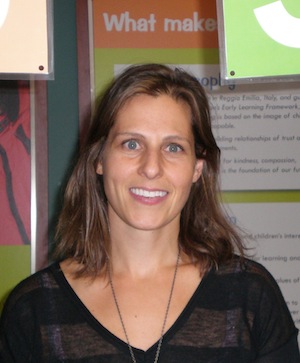
photo - Lisa Pozin owns Giving Gifts & Co. at 4570 Main St
Lisa Pozin owns Giving Gifts & Co. at 4570 Main St. (photo by Olga Livshin)

Although her university degree in criminology and anthropology never prepared her for entrepreneurship, her job at Temple Sholom gave her practical business experience. “I got involved with the Temple’s gift shop. I liked it, liked finding artists and producers of interesting items. It appeared I have a good eye for what other people would want to buy.”

For Temple Sholom, of course, the items for sale have to have a Jewish connection (sholomjudaica.ca), but for her own shop, Pozin concentrated instead on selling only fair trade and eco-friendly gifts.

“I’ve always been a conscientious shopper myself. I think it’s part of being Jewish – trying to make a difference. I wanted to contribute to changing the world through shopping. There is this movement ‘Buy to Change’; I wanted to be part of it, wanted people to find special products in my shop, products which help the world. I sell things that help someone make a better life.”

Each product line has meaning. “We have necklaces called Giving Keys,” Pozin offered as an example. “They are keys with a word engraved on them, ‘strength’ or ‘courage.’ They’re meant to be passed on. When you get this key, you must give it away at some point to a person who needs the message on the key. The necklaces are made by formerly homeless people in L.A.”

Giving Gifts carries scarves made in Ethiopia by women transitioning out of the sex trade. It sells a series from Barefoot Books, a small children’s book company run by two mothers.

Each of Pozin’s vendors contributes to charities and, through them, so does Pozin. Ten percent of every sale made in the store is donated to various charities. “Mostly, they are children’s charities,” said Pozin. “A couple years ago, I started a donation campaign and we built a school in Kenya.”

When she finally opened a physical shop about a year and a half ago – Giving Gifts & Co. at 4570 Main St. – Pozin set it up as a co-op. “It’s a new concept in retail,” she said. “Giving Gifts is a permanent vendor at the store. The other vendors change. Each vendor rents a space from me for a certain amount of time – one day a week or some such – and sells his products and everything else in the store. This way, I don’t have to be in the store all the time and I help local artisans, jewelry and clothes makers, to sell their things. One of my vendors is a florist. Another is a perfumer. We have a wonderful community.”

Pozin offers shoppers both variety and convenience. She maintains an online presence (givinggifts.ca) and her services include shipping. “We ship almost every day. People shop online for gifts from small towns all over B.C. Even in Vancouver, they sometimes don’t have time to come to the store during working hours, so we ship to them.”

The shop manages to sustain itself. Pozin spends two days there and the rest of the week she still works at the synagogue.

“I love my work as a program director at Temple Sholom,” she said. “I work with families and teens. I run a seniors yoga class. It’s wonderful to work there, but I love my store, too. I’m excited when people buy from me. Together, we make a difference. We support good values and benefit the planet. There are more and more stores like that coming up everywhere. I hope the store will be successful at some point soon.”

In less than two years, Giving Gifts & Co. has acquired an excellent reputation. Earlier this year, it was a nominee in City of Vancouver’s first annual Awards of Excellence, which were presented in June, and it also made it into the latest edition of the Lonely Planet tourist guide.

“From Bakelite antiques to artisan chocolate bars and handmade kids wear, it’s well worth a browse if you’re in the neighborhood,” reads the guide entry. “The vendors are changed every few months to keep things lively, so there’s almost always something tempting to buy.”

Olga Livshin is a Vancouver freelance writer. She can be reached at olgagodim@gmail.com.
 

On being a Sar-el volunteer

Gerald Lecovin on the production line at Matzrap Army Camp this past October. (photo from Gerald Lecovin)

Matzrap Army Camp, October 2014: It’s 8:15, time to work. Breakfast and flag raising are over. The Henna Hannahs are already on the job. This is the name I have given to the seven or eight elderly ladies who have been bused in from a senior citizens home, the color of their hair belying the rest of their bodies. They sit at a table, shmoozing while they place various combinations of medical supplies in small plastic bags, which are then sealed and placed in containers going out to the troops. They work steadily till lunch, which they are given before being bused back to their home. This is their – and our – contribution to Israel’s welfare.

We are 30 Sar-elniks, mostly Canadian, whose job it is to open containers, packs and medical vests coming back from the front. We empty them out, remove items that are no longer useable, replace the items and then repack everything. Containers are then sealed in plastic bags, put on pallets and shipped out. While they are replaced by more containers and the process repeats itself, there is a feeling of accomplishment every time a pallet leaves.

On this tour of duty, we were helped by groups of young solders training to be medics. There were 18-year-old women and, later, men who were from an elite Seal unit. The women were a reflection of Israeli society; Ashkenazim, Sephardim, Russians. Each with the ubiquitous cellphone. One day, one of the soldiers played songs for us by her favorite singers: Satchmo and Tony Bennett. Go figure! Comparing them to our kids of similar age was edifying.

Lunch is from 11:45 to 1:15. This is the big meal of the day. Salads, choice of hot meat entrée or vegetarian. By this time, the camp is jumping and we are eating with soldiers and staff. We return to work till 3 or 4 p.m., depending on the workload. Supper is at 5:45, and sometimes we have a lecture in the evening. This is our routine. Once a week, they plan an outing and we are bused to some site of interest.

Sar-el, which is an acronym for “service to Israel,” was conceived by General Aharon Davidi in 1983 when there was a need for laborers to bring in the crops as the soldiers were away fighting. Through his contacts in the United States, he managed to get 600 volunteers. Since that time, more than 50,000 people, of which 35 percent are Christian and 65 percent Jewish, have volunteered. About 3,500 from 60 countries come each year.

Originally, the age limits were 18 to 65, but when the general himself reached 65, he removed the upper limit. The oldest of our group was 92. People come for an average of two to three weeks; some for months. Of our group, only two were first timers. One was returning for his 100th time. I was a relative neophyte: this was my third time.

The feeling of being able to contribute to Israel in a meaningful way, and not just financially, is a strong magnet. I know this because I interview those volunteers that come from the West Coast and many of them contact me upon their return to share their thoughts.

For more information about Sar-el, visit sarelcanada.org.

Gerald Lecovin is a longtime resident of Vancouver, and has been active in community affairs. For the last 10 years, he has been Sar-el’s representative on the West Coast.

Netanyahu makes time for MDA Vancouver

On a private visit to Vancouver, Israeli First Lady Sarah Netanyahu took time to meet with local Magen David Adom volunteers. (photo from MDA Vancouver)

Israeli First Lady Sarah Netanyahu was in Vancouver recently for a private visit. As a means of recognizing both Vancouver’s all-volunteer efforts in support of Magen David Adom and the outstanding work of MDA itself in Israel, which also relies heavily on volunteers, Netanyahu expressed great pleasure at the opportunity to pose for a photo honoring the organization. MDA has been ranked by residents of Israel as the second most-beloved organization, with an approval rating of 86.8 percent, following the Israel Defence Forces, which scored a rating of 90 percent (see t-r-i.co.il/news/ni_131.pdf).

In a brief meeting with Netanyahu, there was discussion of her tour of MDA facilities and the time she spent with volunteers in Israel during Operation Protective Edge, including youth from the Greater Vancouver area who are serving with MDA in Israel as volunteer medics and were active during the operation. These volunteers include Bar Frenklach, Benjamin Mamon, Camille St-Cyr and Gal Ziv.

Netanyahu also learned of the ambulance recently inscribed with a dedication to Canadian Prime Minister Stephen Harper, whereupon she praised Canada as being a country with a very special place in her heart.


Local joins fight against ISIS

Vancouverite Gillian Rosenberg, 31, is the first foreign woman to join YPG, the Kurds’ dominant fighting force battling the Islamic State in northern Syria.

Rosenberg, who calls White Rock home, attended Maimonides Secondary School, where she was valedictorian in her graduating year, 2001. Shoshana Burton, one of her teachers at the time, remembers her as a shy young woman who “became very passionate when she recognized opportunities to be involved with the school’s annual mitzvah day, where we volunteered in the community. She was compassionate and was fascinated with Israel,” Burton said. “She was a good kid and I am really hoping that she is safe.”

Rosenberg studied aviation at the British Columbia Institute of Technology, where she graduated from a 64-week airport operations program in December 2003, according to Dave Pinton, spokesperson for BCIT. “It’s a course on how to run airports,” he said, adding that after completing it she enrolled in a part-time management degree program in 2004. She did not complete that course, he said, and the last course she took at BCIT was in January 2006. Sometime after that, Rosenberg moved to Israel and enlisted in an Israeli army search-and-rescue unit. On her Facebook page, she lists her experience as a former instructor at that Israel Defence Forces unit.

In 2009, Rosenberg was among 11 people arrested in a U.S. criminal case for her involvement in an international phone scam. An FBI statement from that year described it as a “phoney ‘lottery prize’ scheme that targeted victims, mostly elderly.” At that time, Israel’s NRG news site reported that Rosenberg had tried in vain to join the Mossad, Israel’s spy service. She was estranged from her parents and had landed in financial straits.

Extradited to the United States, Rosenberg served approximately four years in prison under a plea deal, according to court documents. At the time, she was represented by Israeli lawyer Yahel Ben-Oved. Speaking to Reuters, Ben-Oved said she had no knowledge of Rosenberg joining the Kurds, though they had spoken recently. “It is exactly the sort of thing she would do, though,” said Ben-Oved.

Former high school friends in Vancouver expressed mostly shock and concern for Rosenberg’s safety when they learned she had joined YPG. Another teacher who had known her in high school contacted the Canadian Jewish News with the hope that the Jewish community could coax her home.

On her Facebook page, Rosenberg posted photographs taken at Erbil International Airport in Iraq Nov. 2. Another, taken Nov. 5 from a vehicle en route to Sulaymaniya, a city in Iraqi Kurdistan, she said “kinda looks like anywhere in middle America.”

Lauren Kramer, an award-winning writer and editor, lives in Richmond, B.C. To read her work online, visit laurenkramer.net. This article was originally published on cjnews.com.      


Israelis buy more guns

Yoram Issachar, who owns a contracting company in Jerusalem with his father and two brothers, has carried a Baretta 765 for the past 25 years. He works in Jewish communities on land Israel acquired in the West Bank, employing 15-30 Palestinian laborers, and carries the gun for his protection. Now, after the attack in Jerusalem that killed four worshippers and a police officer, he plans to upgrade to a larger gun. Immediately after that attack, he said, he took out his gun and cleaned it to make sure it was ready for use.

“I want to buy a Glock because each bullet is larger, and it shoots faster,” he said. “It will give me more security if I need it.”

He’s only used the gun once. In 1992, several young Palestinians threw stones at his car as he drove through the Palestinian town of El-Bireh, damaging his car although he was not hurt. Angry, he jumped out of the car and pursued them, opening fire at their legs, although he did not hit them.

In the wake of a series of attacks that have left 11 Israelis dead over the past weeks, Israelis are lining up to get a gun licence. Those who already have licences are carrying their guns with them more often. The Israeli government has asked everyone who has a gun to carry them in public, to help reinforce Israel’s security situation, and some who would leave their guns at work, such as security guards, are urged to bring them home.

“People are nervous after recent events, and anyone who has a gun should carry it around rather than leave it at home,” Yakov Amit, the director of the gun licensing department for the Ministry of Public Security, told the Media Line. “We want as many people as possible to be able to respond to an attack.”

Amit said there are about 300,000 guns held legally in Israel – half of them by individuals such as Issachar who carry them for self-protection, and the other half by security guards at public institutions. Israelis must demonstrate a need for the gun, and pass a psychological test as well as a shooting test before they receive a licence. The licence must be renewed every three years.

In the past decade, there have been a series of incidents in which people have been killed by guns at home, either in accidents or intentionally. At least 16 women have been killed by their partners using licensed guns, since 2002, according to women’s groups. Yet, Israelis who carry guns say they make them feel safer.

“When I moved to Israel in 1976 from Memphis, Tenn., I brought two hand guns with me,” said Alon Kirschner, a physiologist. “In Tennessee, if you don’t have a gun by the time you’re 8, you’re considered a sissy.”

Read more at themedialine.org.