Skip to content
  • Home
  • Subscribe / donate
  • Events calendar
  • News
    • Local
    • National
    • Israel
    • World
    • עניין בחדשות
      A roundup of news in Canada and further afield, in Hebrew.
  • Opinion
    • From the JI
    • Op-Ed
  • Arts & Culture
    • Performing Arts
    • Music
    • Books
    • Visual Arts
    • TV & Film
  • Life
    • Celebrating the Holidays
    • Travel
    • The Daily Snooze
      Cartoons by Jacob Samuel
    • Mystery Photo
      Help the JI and JMABC fill in the gaps in our archives.
  • Community Links
    • Organizations, Etc.
    • Other News Sources & Blogs
    • Business Directory
  • FAQ
  • JI Chai Celebration
  • JI@88! video

Recent Posts

  • Sharing her testimony
  • Fall fight takes leap forward
  • The balancing of rights
  • Multiple Tony n’ Tina roles
  • Stories of trauma, resilience
  • Celebrate our culture
  • A responsibility to help
  • What wellness means at JCC
  • Together in mourning
  • Downhill after Trump?
  • Birth control even easier now
  • Eco-Sisters mentorship
  • Unexpected discoveries
  • Study’s results hopeful
  • Bad behaviour affects us all
  • Thankful for the police
  • UBC needs a wake-up call
  • Recalling a shining star
  • Sleep well …
  • BGU fosters startup culture
  • Photography and glass
  • Is it the end of an era?
  • Taking life a step at a time
  • Nakba exhibit biased
  • Film festival starts next week
  • Musical with heart and soul
  • Rabbi marks 13 years
  • Keeper of VTT’s history
  • Gala fêtes Infeld’s 20th
  • Building JWest together
  • Challah Mom comes to Vancouver
  • What to do about media bias
  • Education offers hope
  • Remembrance – a moral act
  • What makes us human
  • המלחמות של נתניהו וטראמפ

Archives

Follow @JewishIndie
image - The CJN - Visit Us Banner - 300x600 - 101625

Month: April 2020

מקרי הרצח המוני הקשה ביותר בקנדה

מקרי הרצח המוני הקשה ביותר בקנדה

השוטרים איתרו לפנות בוקר (ראשון) את בת הזוג שדיווחה להם, שוורטמן לבש מדי שוטר ונהג בניידת שניראתה כמו ניידת משטרה לאחר שעזב אותה.
(RCMP)

מקרה הרצח ההמוני הקשה ביותר בתולדות קנדה התרחש בלילה שבית שבת לראשון לפני כשבועיים, עת טכנאי שיניים הרג עשרים ושניים תושבים בהן שתי אחיות של בית חולים ובית אבות, זוג סוהרים ושוטרת וותיקה בשם היידי סטיבנסון (נשואה ואם לשני ילדים). שוטר נוסף שנפצע והועבר לטיפול בבית החולים שוחרר כבר הביתה. במשטרה הפדרלית של קנדה קבעו שלא היה מדובר באירוע טרור, אלא שהרוצח סבל כנראה מבעיות נפשיות. מדובר בחקירה מסובכת שכוללת שש עשרה זירות רצח, בהן חמישה בתים שרופים ושתי מכוניות שרופות.

גבריאל וורטמן (בן חמישים ואחד) יצא למסע הרצח הנוראי בישוב כפרי קטן ומרוחק שנקרא פורטפיק, במפרץ קובקוויד, שבמרחק כמאה ק”מ מהליפקס – עיר הבירה של מחוז נובה סקוטיה במזרח המדינה. שכנים ציינו כי היה לו בית כפרי בישוב ולעיתים לן בו. בשבת בערב בילו וורטמן ובת זוגתו במסיבה אצל השכנים, למרות שהדבר נאסר לאור תקנות החירום. במהלך המסיבה נתגלע סכסוך בין וורטמן לבת הזוג שהלך והסלים. השניים עזבו את המסיבה וורטמן היכה את זוגתו וקשר אותה. לאחר מכן עזב את המקום ויצא למסע הרצח. בת הזוג הצליחה להימלט והסתתרה ביער.

בשלב ראשון הרוצח חזר לבית בו נערכה המסיבה והרג את כל חבריו. לאחר מכן המשיך לרצוח כל מי שנקרא בדרכו – כאמור בסך הכול עשרים ושניים איש. למשטרה ברור כי וורטמן נערך מראש למבצע הרציחות בשל הבגדים שלבש, הרכב בו נהג וכלי הנשק הלא חוקיים בהם החזיק. הרוצח נמלט מבית החברים ההרוגים בטרם הגיעו השוטרים שתיארו את זירת הפשע “ככאוטית”. השוטרים איתרו לפנות בוקר (ראשון) את בת הזוג שדיווחה להם, שוורטמן לבש מדי שוטר ונהג בניידת שניראתה כמו ניידת משטרה לאחר שעזב אותה. היא אף סיפקה להם תמונה שלו (שפורסמה לאחר מכן באמצעי התקשורת להזהיר את האזרחים באזור). בדרך בריחתו המשיך וורטמן להרוג חפים מפשע שבמקרה נקרו בדרכו. הפעם עשה זאת בצורה ספונטית ללא תכנון מראש, כולל שריפת בתים על יושביהם. בסך הכל מסע בריחתו הרצחני התפרש על פני כמאה ק”מ. לאחר מרדף של יותר משתיים עשרה שעות נתפס וורטמן ע”י השוטרים ליד תחנת דלק בראשון בצהריים. המשטרה מסרה תחילה שהחשוד בידיה ולאחר מכן התברר שהוא נהרג על ידי השוטרים.

לוורטמן לא היה עבר פלילי אך הוא היה מוכר למשטרה לאור תלונה על תקיפת מישהו בעבר (המשטרה לא מסרה פרטים של האירוע). הוא החזיק בשתי קליניקות ובת זוגתו עבדה עימו. כן היו ברשותו ארבעה בתי מגורים כשאחד כאמור בפורטפיק. אלה שהכירו אותו בהם לקוחותיו נדהמו ממעשיו והם אינם מבינים את הסיבה לכך. כתלמיד תיכון וורטמן חלם לעבוד במשטרה הפדרלית. אחד מחבריו לכיתה סיפר שוורטמן “הוקסם” מכלי נשק והשניים לעיתים נהגו לירות באקדח בסמוך לביתו. סטודנטית שלמדה עימו באוניברסיטה מציינת שהוא נחשב לבודד ורוב חבריה לא אהבו אותו. היא הוסיפה: “לא חשבתי שהוא מרגיש נוח בעור שלו אבל האמנתי שיתבגר הוא יסתדר. היה בו משהו עצוב אך אני בשוק מכך שפגע באנשים אחרים”. אחד מלקוחותיו מציין כי וורטמן סיפר לו שרכש שתי ניידות משטרה ישנות במכירה פומבית, ולאחר מכן תיקן אותן. מתברר שלרוצח הייתה אובססיה לציוד משטרתי. שכנה שלו מסרה כי הוא התנהג בצורה מוזרה לגבי בת הזוג שלו והיה מאוד קנאי.

Format ImagePosted on April 29, 2020June 30, 2020Author Roni RachmaniCategories UncategorizedTags Gabriel Wortman, mass murder, Nova Scotia, גבריאל וורטמן, נובה סקוטיה, רצח המוני
Global Yom Ha’atzmaut

Global Yom Ha’atzmaut

Pam Wolfman and Ezra Shanken talk with the JI about how Jewish Federation and our community are facing the challenges of COVID-19. (photos from JFGV)

This year’s Yom Ha’atzmaut community celebration will feature international singers, actors, chefs and politicians. And the audience will also be from around the world.

On April 29, 11 a.m. PST, the Jewish Federations of North America (JFNA) is hosting a one-hour virtual celebration for Israel’s 72nd birthday, which will be followed by other programming. With the theme of “What Israel Means to Me. What Israel Means to Us,” the hour-long event will include Matisyahu singing a medley of “One Day” with representatives from the

Jewish Agency for Israel’s Partnership2Gether communities and other Jewish leaders sharing messages of hope and celebration; actor Joshua Malina talking about Israel’s battle against COVID-19; singing brothers Ben, Henry and Jonah Platt; chefs debating the merits of falafel and cookbook author Adeena Sussman teaching how to make it; Isaac Herzog sharing a story about Israel’s War of Independence and paying tribute to former Israeli president David Ben-Gurion; footage of Israel’s official Independence Day Ceremony on Mt. Herzl and a message from Israeli President Reuven Rivlin; and the singing of Hatikvah.

Normally, of course, our community would be marking the occasion locally, but COVID-19 changed all of that.

“The Yom Ha’atzmaut event is complex to organize, from the standpoint of searching for the artists who will perform, fundraising and marketing, and other logistics. We usually start planning the event almost as soon as the day after the prior year’s celebration, so there was a lot of work to un-do,” Pam Wolfman, chair of the local Yom Ha’atzmaut committee, told the Independent. “Everyone involved in our event planning has been extremely supportive, and we were able to cancel our event without any significant financial penalty.

“If there is a silver lining to be found, it is the opportunity to be able to join together with JFNA and Jewish communities from all over the world to celebrate ‘with’ Israel. It’s definitely something to look forward to!”

Thanking If’at Eilon-Heiber, Jewish Federation’s director of overseas and Israel affairs, and the whole Federation team, Wolfman said, “I also want to express my gratitude to our Yom Ha’atzmaut sponsors, donors, community partners and those who purchased tickets before the event was changed for all their support.”

For Wolfman, the annual event is important for several reasons.

“I’ve always felt so grateful to live in Vancouver, in large part because we have such a vibrant and diverse Jewish community,” she said. “Jewish Federation’s annual Yom Ha’atzmaut event allows everyone in our community to come together to celebrate and unite around Israel – the beautiful country, her people, the wonderful music and culture – and to simply have an evening of fun!

“When it became clear that we would have to cancel our original plans due to COVID-19, it was very disappointing for all of us on the Yom Ha’atzmaut committee and Jewish Federation staff. And we all felt strongly that it was vital to continue this cherished tradition for our community. Joining Jewish Federation of North America’s online event was a great solution.”

“Our community is experiencing tremendous upheaval and, at the same time, we have seen signs that we are more resilient and connected than ever,” Ezra Shanken, chief executive officer of the Jewish Federation of Greater Vancouver, told the Independent about the current situation.

“Our community organizations have been hit very hard – the challenges they are experiencing are unprecedented. Nearly all of them were forced to close their physical doors, and they remain closed for the foreseeable future,” he said. “Many of them have lost their sources of revenue, be it rental or programming income, or from having to cancel scheduled fundraising events. And, many of the people they serve have increased needs during this crisis and are turning to the Jewish Family Services Community Care Hotline for assistance.

“It is heartening to see how swiftly and effectively many of our community organizations have pivoted,” he said. “The day schools have transitioned quickly to online learning, while the JCC, synagogues and other organizations have introduced a wide variety of online programs and services. Young adults have stepped up to volunteer to help seniors.

“Our advocacy agent, the Centre for Israel and Jewish Affairs, is working with all levels of government to secure support for nonprofit organizations, and has played a major role in achieving success on that front – not just for the nonprofits in our community, but for nonprofits across Canada.”

Jewish Federation is monitoring the community’s health and the impacts of COVID-19, said Shanken. “We are in constant contact with our partner agencies, and responded quickly to address urgent increased community needs by releasing more than $500,000 in targeted emergency funding to see them through the first 30 days of impact. We know that this is but a first step, and that more vital financial, operational and emotional support will be needed. We’ll continue to work closely with our community agencies and organizations to assess their needs, identify opportunities for collaboration, and determine where best to focus our short- and long-term support for the greatest impact.

“I see the strength of our community every day,” he added. “While there are many challenges to overcome, if we continue to stick together and care for each other, I believe we will emerge from this crisis stronger than ever. Ultimately, it’s up to all of us to define where our community will be.”

Shanken has joined various efforts on the ground, helping deliver seder meals with Lubavitch BC, for example.

“Anytime we are able to bring warmth and connection into people’s lives is extremely valuable, especially at times like these,” he said. “Delivering food and medicines, calling people to see how they are holding up – these points of connection can make an incredible difference in someone’s life.

“The COVID crisis, while extremely challenging in so many ways, has prompted many of us to pause to check in with loved ones, friends, colleagues or someone we might know in the community, to get back to basics and remember what is truly important. The tremendous outpouring of support that I have witnessed on so many levels has been inspiring, and a shining example of klal Israel.”

Jewish Federation has a COVID-19 resources page on its website, jewishvancouver.com, which will “help community members easily find information about the many programs and services that are available through community organizations and government agencies,” said Shanken. “We’ll continue to provide the community leadership, planning and crucial planning assistance that our community relies on, as we navigate this pandemic together. It’s what we’re here for.”

He stressed, “Even though we are all physically apart, it is easier and more important than ever to connect.”

As for our local annual Yom Ha’atzmaut celebration, Shanken said it “has always been a special opportunity to bring our community together and show our support for Israel. We are reminded daily that Israel is also in a time of crisis. This year, with our participation in JFNA’s virtual celebration, it will be even easier for people to take part in the event. Every year, we think about other Jewish communities that are also celebrating Israel’s independence. This year, we can literally celebrate with them, in real time. It will be a great show of solidarity at a time when we especially value connection.”

In addition to the Yom Ha’atzmaut celebration, this year’s commemoration of Yom Hazikaron will also take place online. “As bereaved families live with their loss daily, we gather once a year to recognize their grief and pain, and to give them a communal hug,” said Geoffrey Druker, chair of Jewish Federation’s Yom Hazikaron committee, in a release.

From April 26 to 28, community members will be able to light virtual candles for fallen soldiers and victims of terrorism, and there will be a remembrance ceremony on Zoom on April 27, 7:30 p.m., which will include poems, readings, songs and a moment of silence. To be a part of the gathering, register at jewishvancouver.com/yhk2020.

To register for the April 29 Yom Ha’atzmaut celebration, visit jfeds.org/yomhaatzmaut; you can also sign up for alerts leading up to the live global event at jewishtogether.org/yomhaatzmaut. For more information on the ways in which our Jewish Federation is helping the B.C. Jewish community, visit jewishvancouver.com/news/community-support-2020.


Format ImagePosted on April 24, 2020April 24, 2020Author Cynthia RamsayCategories LocalTags Ezra Shanken, Jewish Federation, Jewish Federations of North America, JFNA, Pam Wolfman, Yom Ha'atzmaut, Yom Hazikaron
Security, magic in gardening

Security, magic in gardening

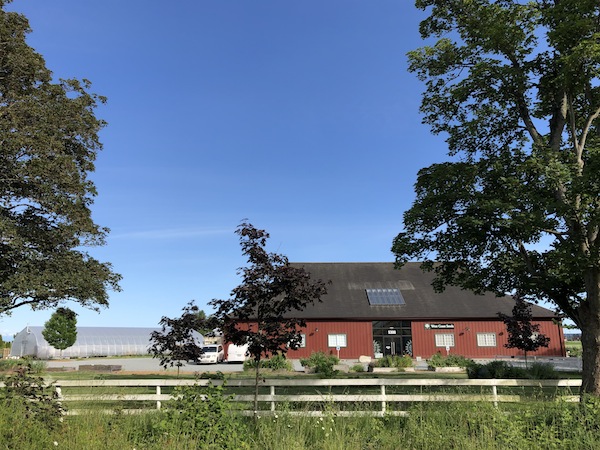
While temporarily closed to the public, West Coast Seeds is still getting seeds to gardeners via garden centres, grocery stores and the mail. (photo from West Coast Seeds)

The pandemic and its associated social and economic impacts have focused attention on food security, as well as the therapeutic benefits of gardening in times of turmoil.

This is part of the message from a local company specializing in organic seeds. West Coast Seeds, a Delta-based company that was founded in 1983 and bought by Craig Diamond a half-dozen years ago, has a mission to “encourage sustainable, organic growing practices through knowledge and support … eating locally produced food whenever possible, sharing garden wisdom, and teaching people how to grow from seed.”

photo - Aaron Saks is West Coast Seeds’ director of finance
Aaron Saks is West Coast Seeds’ director of finance. (photo from West Coast Seeds)

Aaron Saks, the company’s director of finance and son-in-law of Diamond, said getting back to basics, like growing your own food, seems to be one of the responses to the social isolation associated with the COVID-19 pandemic.

“We’ve seen a big push toward food security,” said Saks. “Both ensuring that you know where your food is coming from and getting healthy produce when it might not be readily available other places.”

While so many things are off limits – public parks, basketball courts, beaches – those with backyards can still get in the soil and be in touch with Mother Nature, said Saks.

West Coast Seeds is a pioneer in organic and non-genetically-modified agriculture. Since the Diamond family took over the company, they have refurbished a heritage barn in a rural part of Ladner to be their headquarters, where they have their warehouse and a retail operation, which is temporarily closed to the public. The products are also distributed wholesale to garden centres and grocery stores and they do a large mail order business, which has been ideally suited to adapting to the new reality of the pandemic.

The Diamonds are a fourth-generation British Columbia-based family, notes the West Coast Seeds website: “Since Craig’s grandfather, Jack Diamond, came to Canada in 1927 as a young man and purchased his first business in 1940, the Diamonds have been engaged as leaders in business. They continue to follow the principles of community and philanthropy set by Jack, and further exemplified by his son, Charles. The values of West Coast Seeds resonate deeply with the Diamond family and they are committed to uphold this tradition.”

The values of repairing the world that underpin the Diamond family ethos and the West Coast Seeds mission, Saks said, are being demonstrated globally right now as individuals step up to help their neighbours in this challenging period.

“I think everybody has seen the propensity of society to want to give back at this time,” he said. “One of the pillars of our company is actually tikkun olam.”

The company donates seeds for class projects, school gardens, community education and nonprofit organizations.

The company is balancing the safety of warehouse employees with the need to get seeds to the public, said Saks, expressing gratitude to the staff team for distancing, while still getting product to customers.

“We’re thrilled that they’re able to get seeds, that they’re able to grow, that they can support their local garden centre, support growing their own food and be able to get healthier foods, live healthier lifestyles, as a result of gardening. That’s what we’re trying to do. We’re trying to give back wherever we can and create joyful moments,” he said.

When times are tough, said Saks, something comparatively simple like putting a seed in the ground can help people through.

“That mystical thing about gardening,” he said. “Every time it germinates, it’s just a crazy thing, like magic.”

For more information, visit westcoastseeds.com.

Format ImagePosted on April 24, 2020April 24, 2020Author Pat JohnsonCategories LocalTags Aaron Saks, Craig Diamond, food security, gardening, health, West Coast Seeds

Yom Hashoah online

Like everything else in this time of pandemic, Yom Hashoah, which took place this week, was not normal.

On Monday, at 10 a.m. Pacific time, viewers worldwide, including here in British Columbia, tuned in online to watch the state ceremony marking the start of Holocaust Martyrs’ and Heroes’ Remembrance Day, taking place in Israel at Yad Vashem. Later that day, a cross-Canada commemoration took place, presented by a number of national bodies and with the Vancouver Holocaust Education Centre as a contributing organization.

The eerily vacant hall at Yad Vashem was interspersed with video recordings of remarks from Israel’s president, prime minister and chief rabbis, as well as six survivors, who shared their stories of loss and survival. The Canadian commemoration a few hours later was similarly moving, with video interspersed with thoughtful reflections from a member of the third generation who served as host and a message from the prime minister, stories of survivors, and candlelighting by families across the country. (See coverage next issue.)

No doubt the organizers of these events would have preferred to hold them in person. The proximity of family, friends and community strengthens survivors and the successive generations. Being in proximity provides crucial emotional, psychological and intellectual means of conveying the historical importance of that time and its lessons for social justice and human rights today.

The use of digital technology to mark Yom Hashoah was perhaps a little less startlingly odd, given that Jewish people worldwide recently experienced an unprecedented Passover, engaging in “zeders” – virtual seders on Zoom or other videoconferencing platforms – to get together with family over the holidays. The contortions some of our family members went through to make these celebrations happen was cause for some laughs, as well as some tsuris, and Passover 5780 will not be soon forgotten.

This was hardly an ideal way of celebrating – and many in the Orthodox community couldn’t even do this much – but it was necessary given the social isolation required of us during this pandemic.

Yet, while it is important to come together for happy occasions, this time is particularly difficult for those experiencing grief and loss. Having to up-end the ancient Jewish rituals that serve to sustain and strengthen mourners, those who have lost loved ones are left with minimal funeral attendees and shivahs conducted by telephone and computer; hugs only from those who share a household, none of the important reinforcement – and comfort – that comes from the physical proximity of a broader community. Even this sad situation fulfils a mitzvah, though. As painful as it is to be remote from our loved ones in times of grief, it is pikuach nefesh, an act of saving a life, the highest Jewish value and one that overrides almost every other law. During a pandemic, we remain apart from our loved ones because we love them.

Yom Hashoah commemorations often take a sombre tone and include some of the rituals we perform at a funeral, which made viewing the events in seclusion especially isolating. Yet, conversely, there was something uniquely appropriate about this alternative form of marking Yom Hashoah.

While we were fortunate to have survivors participate via video in these and other online commemorations of the day, the undeniable reality is that this was among the last such commemorative days where successive generations will be able to hear firsthand from the mouths of survivors their stories of loss, resistance and survival. Finding ways beyond first-person witness testimonies is the unavoidable way forward for Holocaust education and remembrance. Organizations dedicated to this mission have recognized this reality and have been developing impactful ways to augment and, eventually, replace in-person survivor testimony.

Remembering and, using that memory as motivation, ensuring that the promise of “Never again” is taken up by the next generations is also a Jewish value. It took an admirable mobilization of our local, national and international communal organizations to ensure that the pandemic did not cause us to ignore Yom Hashoah this year. It was precisely the sort of flexible, responsive action that will be required to meet the demands of Holocaust remembrance and education in the decades to come.

Necessity is the mother of invention and the unusual yet deeply moving commemorations this week should encourage us that, whatever challenges and changes the future holds, we remain determined to memorialize and educate about the Holocaust in ways appropriate to the times in which we live.


Posted on April 24, 2020April 24, 2020Author The Editorial BoardCategories From the JITags commemoration, Holocaust, memorial, Yom Hashoah

Open letter to the community from the JI

Dear Reader,

I hope this letter finds you well, and that you are finding ways to cope with the new reality that COVID-19 has brought on all of us so suddenly. I’ll admit to moments of struggle in maintaining a positive outlook but, mostly, I am determined that, together, we will get through this crisis and return to some variation of normalcy.

For more than 20 years, I have owned and published the Jewish Independent, which started its life as the Jewish Western Bulletin in 1930. For nine decades, the paper has recorded our community’s stories, as well as news and commentary about the wider world. We have reported on the ordinary and the extraordinary, fleeting trends and paradigm shifts. We have covered happy and sad occasions, and promoted the work and activities of countless individuals and organizations. Past issues of the paper comprise a distinctive archive of our community in this place over time.

I am determined to continue this vital calling. Ensuring continuity and the thriving of Jewish life here in Canada and worldwide is no less urgent or relevant than it was in 1930. These are difficult times for many people, organizations and businesses and, among the many closures in recent days, the Canadian Jewish News ceased publication and Winnipeg’s Jewish Post & News suspended its print version indefinitely.

I firmly believe that the Jewish Independent is one of our community’s invaluable resources and that we have an important role to play during the pandemic, both in keeping the community up to date on one another’s events, initiatives and well-being, as well as offering some respite from the at-times overwhelming bad news.

For years, this publication has been a labour of love for me and a dedicated staff of a few employees and a cadre of freelance writers. As we face the coming weeks or months of increasingly dismal advertising revenues, I am making an unprecedented appeal for support from you, our readers.

I am proud to produce independent Jewish journalism that has been recognized internationally by scores of awards and accolades. I am proud that, on a very modest budget, we have managed to produce a regular publication that informs, inspires, engages, exasperates, amuses, entertains, provokes and reflects in ways that unite Jewish British Columbians across all religious, cultural, political and social divides.

You subscribe to this paper or pick it up for free at a local depot, I hope, because you see the value in this, which is why I am asking for your help through this deeply challenging time. Please consider supporting the paper through one or more of the following actions:

  1. Renew your subscription – or start subscribing. When you receive your annual subscription notice, please renew as quickly as you are able, as the fewer reminder notices I have to mail, the less expensive the process. If you pick up the JI at one of our many depots, please seriously think about subscribing or donating to help fund the creation, printing and distribution of the paper you now hold in your hands.
  2. Consider an esubscription instead of a traditional subscription. You’ll still receive the full contents of the paper, just in digital form. It saves you money and it’s more economical for us, too. (However, if you still like to hold the paper in your hands and pass it around the house, please continue to get the print edition!)
  3. Give a gift subscription. For generations, B.C. families have stayed connected to one another and our community through the pages of our newspaper. Keep the tradition alive with gift subscriptions to younger family members.
  4. Advertise with us. We know that your business or organization needs support, too. The most effective, affordable way to reach our community is through these pages, as it has been for 90 years.
  5. Send a greeting. You can send a message in any issue of the paper. Birthday, bar/bat mitzvah, wedding, anniversary, graduation greetings – any time is a good time to celebrate our loved ones. But now it is especially welcome. Something as affordable as a business card-size insertion is a fun way to mark a special occasion – and it sends a double message: you support thriving, independent Jewish journalism.
  6. Make a donation. This is the easiest and most immediate way you can help. It’s true, we’re not a charity. I can’t give you a tax receipt. But, as I’ve said, this has been a labour of love for a small group of dedicated individuals. We need you now more than ever.

You can subscribe or contribute online at jewishindependent.ca/support-the-ji via PayPal, by making an etransfer to [email protected] or by calling the office at 604-689-1520.

On behalf of the staff and freelancers of the Jewish Independent, thank you to everyone who has reached out and helped the JI over the years, including recent weeks, and to all of you for taking the time to consider these words. Please stay safe and healthy.

Sincerely,

Cynthia Ramsay, Owner/Publisher
[email protected]
PO Box 47100 RPO City Square, Vancouver, B.C. V5Z 4L6
604-689-1520 • jewishindependent.ca

Format ImagePosted on April 24, 2020April 24, 2020Author Cynthia RamsayCategories From the JITags COVID-19, economy, Jewish Independent, journalism, newspapers, philanthropy

Choose to be and to do good

As Jews, we’re acutely aware of our core Jewish values: help others, perform mitzvot, respect human dignity and life, love your neighbour as yourself, act morally, save lives, repair the world. But do we actually do those things? As we’ve heard before, it’s the duty of every single person to leave the world better than he or she found it.

During this unprecedented time, when the world is reeling from the COVID-19 pandemic, now, more than ever we need to remind ourselves of Jewish morals and ethics. And be better Jews.

Exceptional times typically bring out both the worst and the best in people. I’m choosing to focus on the best, though. For instance, folks around the world going outside at a set time every day to make noise and show their gratitude for frontline workers – and not just the doctors, nurses and caregivers, but also grocery store cashiers, letter carriers, pharmacists, delivery people, tradespeople, chefs and taxi drivers. Anyone and everyone who puts themselves in harm’s way each day, to keep us safe, fed and healthy.

If we don’t, as a society, learn the value of showing gratitude and generosity in desperate times, we become a society without a soul. If we think only of ourselves, we become lacking in conscience and void of morality.

What I know for certain is this: if a Jew needs something, another Jew should always step up and help out. It’s what we are supposed do. It’s what we’ve always done, most of the time. It might even be embedded in our DNA. In fact, we’re commanded to do it. Here are some tips for being a better Jew during COVID-19 (and always):

  • Take care of yourself so that you can take care of others. This may sound trite and over-used, but it’s true: your health is everything. I have suffered a long and serious illness and it’s shown me that nothing is more important than having your health. Unless it’s faith.
  • Be an active participant in life – this is not just a long lunch break. There is more to life than Netflix and reading (says the retired librarian). There are meaningful things you can be doing with all your spare time now. Think about where you can be of service, and whom you can help.
  • Practise random acts of kindness, compassion and loving care for your fellow human being – remember the Golden Rule. It can be something as simple as thanking a healthcare worker or letter carrier you see walking on the street. It doesn’t take much to show someone that they’re needed and appreciated.
  • Practise generosity – share, don’t hoard. Surprise a family member or friend with a meal or small gift that might just make their day. It can be something as simple as an extra few rolls of toilet paper or a container of disinfectant wipes (COVID-19 gold). Something that lets them know you’re willing and happy to share. Just remember physical distancing! A friend of mine recently brought me some extra face masks she had on hand (again, coronavirus gold).
  • Offer to do errands (grocery shopping, picking up a prescription, walking a dog, etc.) for family, friends or acquaintances in need. Be someone’s hero. People won’t always be comfortable asking for help, so be proactive and offer, if you can.
  • Cultivate faith (emunah) and trust (bitachon) in G-d, that everything will be OK. Life is easier when you have a higher power on your side and understand that there are many things you can’t control.
  • Check in regularly with single friends and seniors, in particular. Isolation can be devastating, especially when it’s ongoing. Even if you can just wave to a friend or family member through a window, that might just be their only human connection all day (or all week). It costs nothing and it’s priceless. Small gestures can have big impacts. Help people feel part of their community.
  • Show gratitude every day, because there is always something for which to be grateful. Whether it’s big (your good health) or small (cherry blossoms on the trees), appreciate the abundance in your life. It’s everywhere you look. Just keep your eyes open. And get out there at 7 p.m. every day and clap your hands or bang your pots and pans, to show your thanks to all the frontline workers who turn up for us every single day to make our lives easier. We are one big family – show the love!
  • Keep in mind the social and economic impacts the COVID-19 pandemic is having on everyone. Be sensitive to the situations of those less fortunate than yours. If you can, offer financial help, food or any other kind of assistance when you see the need.
  • Volunteer your time delivering food or supplies to others if you’re healthy and able. Contact and get involved with your local synagogue, Jewish Family Services, the Kehila Society or any other organization, Jewish or non-Jewish, working to alleviate the many needs right now.
  • Stay positive – for yourself and others. Positivity is the best medicine during this stressful time.
  • Be your best self. Let your innate goodness shine through. Remember we each have a tiny piece of divine soul within us.
  • Do mitzvot – tip the scales for good.
  • Give tzedakah. You don’t have to be a millionaire to make a difference in someone’s life. Every little bit helps.
  • Study a bit of Torah or other spiritual texts, if you’re so inclined.
  • Recite Psalms, if you’re so inclined. (I have a copy that includes English commentary, and this makes it so much more meaningful when I read them. It started out slowly for me, but now I find huge comfort in reading Psalms. Why not give it a try?)
  • Participate in some online classes or listen to speakers via Zoom video presentations. There’s a lot of inspiration and new perspectives to be gleaned, and goodness knows we could all use some of that right now.
  • Keep busy by finding purpose in your life. This is so important, especially right now, when there is so little to distract us from the devastation of COVID-19. Try to look for the good in every situation – it will serve you well. I’ve been on both sides of that wall and believe me when I say that staying positive will make your life much easier.

Here are some simple rules to live by (unknown source): help others without being asked; help people who cannot help you; help without the expectation of return; help many people; do the right thing the right way.

Remember that, every second of every day, we make choices. Choose to be good and do good. You can’t go wrong with that.

Shelley Civkin is a happily retired librarian and communications officer. For 17 years, she wrote a weekly book review column for the Richmond Review. She’s currently a freelance writer and volunteer.


Posted on April 24, 2020April 24, 2020Author Shelley CivkinCategories Op-EdTags coronavirus, COVID-19, health, Judaism, lifestyle

Find comfort in music

Vancouver singer-songwriter Haley K. Turner will release her first full-length album on May 29.

“I have gone back and forth questioning whether now is the right time to release a new album,” she told the Independent. “But here’s the thing. Long before our lives were turned upside down, I titled my album in from the dark and, if right now is not the time to bring each other back in from the dark, I don’t know when is. This record was written with the intention of leaving people feeling a little more understood and a little less alone, myself included. So, while it feels like I am taking a huge leap of faith, releasing it while people may be too overwhelmed to notice, it also feels like I don’t have much of a choice. We don’t know what the future holds, and I happen to be fortunate to have completed the recording back in January. I want to share it with anyone who might find it comforting right now.”

A couple of singles from the album will be released earlier in May. Notably, “Loved You Perfectly” will come out May 8 for Mother’s Day that weekend. For the song video, Turner asked people to send in a short recording about their mom.

“Being privy to the sweet messages people have sent in for their moms is such a wonderful feeling,” she said. “I’m pretty sentimental, and it’s more of the thought about the moms’ reactions than the video itself that gives me little heart flutters.

“‘Loved You Perfectly,’” she explained, “is a song about motherhood, or at least my experience with it. With all the doubts and worries and mistakes, there is just as much love and growth and connection. I know I can’t be the only one who feels like I mess up all the time. And this song is my way of acknowledging that we can’t get it all right all of the time, but, even though we aren’t perfect, we love our kids perfectly. It felt like a good song to release around Mother’s Day.”

Speaking of motherhood, the Independent last spoke with Turner when she entered that phase of her life. “I went into labour with my son at 4:45 a.m. the same morning you interviewed me [by email] for my debut EP,” she said. “A couple years later, my daughter was born.” Her son is now 8, her daughter, almost 6. (For the article about the EP Ready or Not, see jewishindependent.ca/oldsite/archives/april12/archives12april06-29.html.)

“Making music and writing has always been a part of how I process emotions,” said Turner. “If I am not writing, I am usually bubbling up inside with some uncomfortable feeling and that never ends well. While it took me awhile to pick up the guitar and really get back into preparing for an album after starting a family, I was always writing in my head, even if it never made it onto a piece of paper.”

Having kids has changed her approach to life. “Well, I have a deeper admiration for my own mom now,” she said. “Yes, Mom, you! I have a greater understanding of the complexity of a mother and child relationship. I have spent the last couple of years processing who I was before kids and who I am now (hint, I’m still figuring that out) but, while a lot has changed, the really neat thing I have discovered is that, when it comes to making art, my intentions are still pretty much the same. Having little ones reinforced my ideas about media and made me more determined to create content that, hopefully, leaves this world better and not more wounded.”

The album in from the dark is more edgy than the EP Ready or Not. Last fall on Facebook, Turner posted what she described as a more cheery song than she had in awhile, but “Hey You” didn’t make the cut to the album.

“In order for me to commit to recording a song, I need to feel really connected to it,” she explained. “When I am writing, I often get emotional during the beginning of the songwriting process and that’s how I know it’s something I can stand behind. The lyrics mean everything to me, and it’s something I spend a ridiculous amount of time agonizing over.

“If I could have, I would have made a 20-song record because I have so many more songs I wish I could have included…. This album was about artistic exploration for me and testing out a few new sounds, stepping out of my comfort zone and letting my curiosity be the driving force even when my self-doubt wanted to weigh in. ‘Hey You’ felt like it would fit better on a different album, perhaps a future collection of songs for my kids, as a way to share with them all the emotions that come with parenting, along with my hope for them in this world. It felt comfortable to sing and play and I wanted to choose things that felt a bit more unsafe.

“Also,” she added, “in this recording process, my producer, Tom Dobrzanski, listened to all my demos and we chose songs that we both connected to. I believe that people have to be into what they are working on or it will be forced. So, we selected songs that felt right to both of us.”

In addition to Dobrzanski – who has worked with Said the Whale, and who used to be in the Zolas as a musician – on keyboards, Turner worked with several other notable musicians on in from the dark: Marcus Ambramzik, bass (the Belle Game, the Matinee); Brian Chan, cello (Jordan Klassen, Heis, Zaac Pick); Niko Friesen, drums (Hannah Georgas, Jane Siberry); Stephanie Chatman, violin; Julien Amar, piano on “For the Win”; and Adrian Glynn, vocals (solo artist as well as his band, the Fugitives). Turner is the lead singer and plays the acoustic guitar.

“I am beyond lucky to have had so many wonderful humans on this project,” said Turner, who reached out to Glynn a couple of years ago at an open mic.

“At the time,” she said, “I didn’t have any actual plans in the works to record, but I asked him if he would be up for singing on a song in the future. I have always loved male and female vocals together and it was on my bucket list.”

Through Glynn, she connected to Dobrzanski, who owns Monarch Studios, and, she said, “before I was even ready, I had committed to making an album!” She credits Dobrzanski for bringing “in an amazing team of Vancouver-based musicians who he had worked with before.”

Most of songs on in from the dark were written over the past few years, “and some even within the weeks leading up to recording,” said Turner. “‘Better’ is an older one of mine and it surprises me how relevant it still is. ‘Better’ is my way of processing how deeply women are affected by the expectations we have of them, specifically in our appearances. It’s about how we show up for each other, and expresses my desire to help create a world where we aren’t so hard on each other and hard on ourselves. I wrote it in my early 20s, before kids, and I am furious that it feels like it is taking forever to make these positive shifts.

“I have a background in TV and film and the constant critiques on my image and weight were damaging to say the least,” she explained. “When I released my debut EP, I had just stepped back from pursuing my career in acting because I wanted to be in creative control of the image and content I was putting out. I was so upset that I couldn’t do that as a 20-year-old actress – that it was always about looks and physique and never about my work – and so I decided to rebel by not putting my face on my album. I didn’t want that to weigh into whether people listened or not.”

Of all the songs on the album, Turner said, “‘Stay With Me (Jacob’s Song)’ holds a special place in my heart. It is dedicated to someone I loved dearly who passed away unexpectedly at the age of 8. It was the hardest song to record on the album because its essence is out of my control. I don’t think it will ever be good enough in my eyes, but I sure tried. I know that talking about people who are no longer here often brings pain and sadness to the surface. It was my hope to make a song that created space to honour and reflect and remember.”

Amid the pandemic, Turner is trying “to stay hopeful and focus on the blessings that will come out of this,” she said. “I’m processing the experiences slowly and watching for the creation and innovation that will help us heal.

“Prior to COVID-19, I was trying to engage in conversations with people, many of whom were women, about isolation, although I wasn’t phrasing it like that. Motherhood can be terribly isolating – beautiful and wondrous and lonely. Pretty much anyone anywhere can feel alone even with people swarming around them. I have been mulling over that thought for quite some time, so I ask myself, what’s different now?

“What’s different is that almost everyone is experiencing it in some form now, and perhaps it won’t be so hard to talk about it after things settle and people are able to integrate themselves back into their communities. I don’t think this feeling of isolation is new, I just think there is less to distract us right now. I really believe that, if we can be more transparent as humans, we will feel more connected. So, that’s what keeps me positive, I guess. If we felt alone before all these unexpected changes, the blessing is that we will come out with a stronger sense of what was missing and how to fulfil that for ourselves and others.”

She added, “I also have a greater appreciation for those who have shown up and worked hard to bring people together, like our teachers and artists everywhere and people in all types of service industries. Sometimes you don’t realize how much you rely on someone or something until it’s not accessible anymore. I have a better understanding of the different skill sets people have, and how I value them will be forever changed.”

For more information on Turner and her music, visit her website, haleykturner.com.



Posted on April 24, 2020October 18, 2021Author Cynthia RamsayCategories MusicTags COVID-19, Haley K. Turner, in from the dark
Emanuel busy making music

Emanuel busy making music

Megan Emanuel of the band Hello Victim. She and bandmates Adam Wilson and Spencer Daley released the single “Out of It Alive” on April 2. (photo from Megan Emanuel)

Megan Emanuel released a new single this month with her band Hello Victim and, last month, she launched a bi-weekly virtual concert series with fellow Jewish Vancouverite Andy Schichter, co-owner of Park Sound Studio.

“The concerts benefit local artists who have lost their income due to COVID-19 gathering restrictions,” Emanuel wrote in an email to the Independent. “Our weekly goal is $1,000 to split amongst the artists … to cover things like groceries and basic bills. Anything over $1,000 is donated to the Greater Vancouver Food Bank.”

The next concert will be live on Instagram (@parksoundbc) on May 2.

“Of course, the money isn’t the only important thing,” Emanuel noted, “and some of our favourite feedback from audience members has been their appreciation of the ability to feel somewhat ‘normal’ for a couple of hours, like there’s still a vibrant arts culture in Vancouver.”

Schichter has co-owned Park Sound Studio in North Vancouver with Emanuel’s fiancé, Dan Ponich, since 2017.

“When the pandemic hit, it was immediately apparent that musicians were going to be hit extremely hard,” Emanuel told the Independent. “Many artists work service industry jobs in order to maintain a lifestyle that allows for gig work and touring, and the rug was just pulled right out from under them and there seemed to be a need for relief. I contacted Andy because he is an organizational phenom and pretty familiar with putting shows together since Park Sound was hosting monthly showcases prior to all of this. We pulled the first virtual concert off days after chatting about it and were able to raise $1,200 overnight. Things have taken off immensely since.”

In addition to helping others, Emanuel is working on her own musical career. Hello Victim – comprised of Emanuel, Adam Wilson and Spencer Daley – released the single “Out of It Alive” on April 2. Produced and mixed by Ben Kaplan of Fader Mountain Sound (Mother Mother, Five Alarm Funk, Ninjaspy), the song is described as “a dramatic anthem for survivors of abuse.”

“We’ve all met the person this song is about,” Emanuel says in the press release, “That person who gives you a creepy ‘something about this is very wrong’ feeling in your gut.”

Ultimately, the song has a positive message. She explains in the release: “For those of us who are unlucky enough to become entangled with these types of people, times can get pretty scary and that toxicity stays with you for some time, even after they’re gone from your life…. This song is kind of like the phoenix’s flight; it’s the catastrophic rebirth from that very dark place when you realize that none of us gets out of this life alive, and the only justice that is in our individual power to serve is choosing to reject toxicity, move on from these people, and stop letting them live rent-free in our heads.”

Emanuel told the Independent that she first met Wilson in February 2018, while on an early-days date with her now-fiancé. As co-owner of Park Sound Studio, Ponich had been hired to handle sound for a music event at Luppolo Brewery, she said. “He texted me at some point during the night because my place was about a 10-minute walk away and, when I got there, I was introduced to a couple of his friends, one of whom was Adam (who he was playing in a band with at the time). Serendipitously, I’d made a Facebook post a matter of days prior along the lines of ‘girl seeks guitar player to write tell-all album with.’ I had just gotten out of a less-than-ideal relationship and I was at this point where I was ready to pull an Adele and sing about it where everyone could hear…. It took about five months for us to start working on music together.”

Emanuel liked the electronic compositions Wilson was creating for his Instagram stories, so she asked him if she could write a vocal melody and some lyrics for his music and, she said, “it took off from there and we went on writing remotely for awhile, sending each other voice notes of ideas over WhatsApp. When we started writing our song ‘Feel Slow,’ which we released back in July of 2019, Adam suggested we talk to his other bandmate Spencer about helping us out with writing a bass line. After working with him on that one tune, it was pretty clear he belonged in the band.”

Soon after the trio had finished a few songs, they were offered a spot at the Railway Club, which they accepted. “That ended up being my first live performance in eight years!” said Emanuel of that early 2018 gig.

“I learned a little while ago that I suffer from severe generalized anxiety disorder, so jumping back into live shows was a massive hurdle I had to figure out how to jump quite quickly,” she said. She attributed some of her ability to overcome that hurdle to Wilson and Daley, who, she said, “are not only incredible musicians, but amazing human beings who consistently make me feel safe and confident on stage.”

Emanuel has been in music since she was a kid, “with piano and voice lessons beginning at around 9. Pat Covernton taught me piano and Wendy Stuart was my voice teacher – both taught me for about 10 years. I also spent many, many summers in Gotta Sing! Gotta Dance! at the JCC and participated in the Jewish Federation’s events for Yom Ha’atzmaut, Yom Hazikaron and Yom Hashoah.

“Since I can remember,” she said, “being a musician is literally the only thing I’ve ever been able to identify as my ‘dream.’… I started writing music when I was 14 and went on to play small venues throughout Vancouver. In my last year of high school, I participated in the JCC’s Battle of the Bands and became the first and only solo, non-rock artist to win first place.

“After high school, I began traveling – first to Israel, then New York, then Melbourne – which meant that I put performing my music on hold, but continued to write in the absence of an audience.”

Emanuel attended both Vancouver Hebrew Academy and King David High School.

“I think my Jewish day school upbringing shaped the questions I’m looking to answer when I write music,” she said. “I wouldn’t say that my music is religious in any sense, but there’s such a distinct method of thinking within the Jewish community that I think is probably the product of generations of Talmud study, and I often find myself hearing it most when I’m writing. What’s the truth? What’s the point? Why are we here? How can I connect?”

For more information on the band and to watch the video for “Out of It Alive,” visit facebook.com/hellovictimofficial. To find out about the next virtual Park Sound Studio concert, visit parksoundstudio.com.


Format ImagePosted on April 24, 2020April 24, 2020Author Cynthia RamsayCategories MusicTags COVID-19, fundraising, Hello Victim, Megan Emanuel, Park Sound Studio, philanthropy
No barriers to music

No barriers to music

Victoria composer Ari Kinarthy. (photo from Ari Kinarthy)

Victoria composer Ari Kinarthy has not let spinal muscular atrophy (type 2), a condition that has confined him to a wheelchair since the age of 6, inhibit his ability to create music. In fact, the very movements he makes in the wheelchair go into producing his music.

Using Soundbeam, an interactive hardware and software system that forms sounds from movements, Kinarthy’s music is recorded into multimedia platforms. For example, movements closer to the recording device establish lower notes and movements away spark the higher notes.

“I create all my music entirely with the computer. Sometimes, I will have access to a guitar player or singer but normally the music will be all done by the samples I use. I usually start with just piano and sometimes will write out a score. I think of a melody and/or harmony and continue from there. I love making themes,” Kinarthy, 30, told the Independent.

“I got into music at age 16 with music therapy sessions. I loved creating music. I started with remixing songs and then creating my own from scratch. I wanted to see what I could create and it just continued from there,” he said.

Starting out at the music therapy department at Canuck Place in Vancouver in 2006, he moved to the Victoria Conservatory of Music in 2007, where, over time and under the tutelage of music therapist Allan Slade, Kinarthy became adept at mastering the intricacies of his device.

The Soundbeam device, which looks like a large red microphone, is stationed in Kinarthy’s studio. It transmits ultrasonic sound, i.e., sound that is inaudible to the human ear, which, in turn, intersects with motion. This then transforms the resulting sound into MIDI, a digitized protocol for electronic instruments.

In 2012, Kinarthy released his first album, A Lion’s Journey, a play on his Hebrew name, Ari, which means lion. It featured an eclectic blend of many genres, including jazz and rock, mixed through the assistive technology. Though he is inspired by several music styles, he admits to loving orchestral music, specifically what one hears in Hollywood films, with Hans Zimmer and John Williams among his favourite composers.

When Soundbeam held an international competition to mark the company’s 25th anniversary in 2013, Kinarthy was one of two winners selected by a jury of musical heavyweights, which included Led Zeppelin bassist and keyboardist John Paul Jones, conductor Charles Hazelwood and composer Edward Williams.

“Pain E Motion,” the composition he presented, was lauded by the jury. Of it, Jones said, “A very interesting idea of performing live with a pre-recorded composition. A very good piece of work in its entirety.”

It was at that moment when Kinarthy decided he would devote himself further to studying music. He enrolled in the Berklee College of Music’s online program and received his certification in orchestration and music composition in film and TV in 2017, but not before releasing his follow-up album, A Lion’s Roar, which also delved into his extensive musical interests.

Judaism, too, has an important role in Kinarthy’s creative process, and his faith has been a source of inspiration. “I recently created a piece of music to honour my local temple. Creating music to share with my congregation made me very happy. I would say that Judaism has helped me share beautiful music,” he said.

After the High Holidays last year, Kinarthy wrote a song called “Kolot Mayim,” with lyrics in Hebrew and English, taken from the Book of Psalms.

His physical challenges have not infringed on his ability to perform live, which he has done on several occasions throughout Victoria.

Presently, Kinarthy is looking for people who might need original music for their project, as well as focusing on promotion and small personal pieces for family and friends.

“I don’t know if it will ever be a reality, but composing for visual media would be a dream come true, be it film, TV or even a commercial. Other than that, I just keep composing music and maybe take some more music classes. There’s always more to learn,” Kinarthy said.

“I never thought I would be able to not only create beautiful songs but also perform them live! That’s all thanks to the technology I have in my home studio.”

To learn more about Kinarthy and hear some of his music, visit facebook.com/arikinarthymusic.

Sam Margolis has written for the Globe and Mail, the National Post, UPI and MSNBC.

Format ImagePosted on April 24, 2020April 24, 2020Author Sam MargolisCategories MusicTags Ari Kinarthy, music therapy, Soundbeam, Victoria
Community milestones … Lubavitch seders, JCC Jewish Book Award nominees

Community milestones … Lubavitch seders, JCC Jewish Book Award nominees

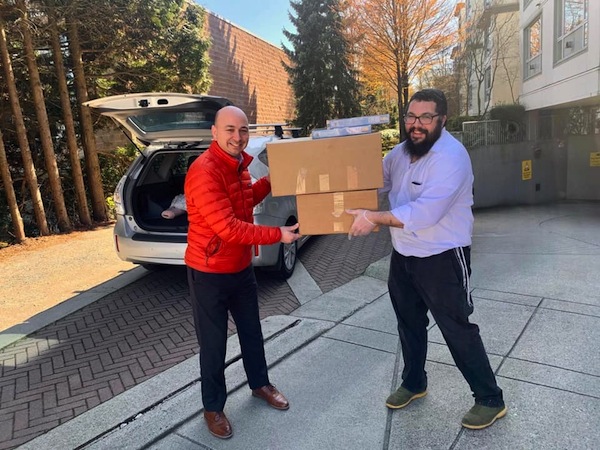
Ezra Shanken, executive director of Jewish Federation of Greater Vancouver, and Rabbi Chalom Loeub, chaplain of Chabad Jewish Student Centre, Vancouver, help with the delivery of seder meals. (photo from Lubavitch BC)

Lubavitch BC had its largest communal seder ever, with more than 1,000 participants. Families in Vancouver, Richmond, Surrey, Langley, Coquitlam, Burnaby, the North Shore and other areas of the province, enjoyed a complete seder with all the trimmings. And now is the time to say thank you to everyone who made this happen.

Firstly, Rabbi Yitzchak and Henia Wineberg, Rabbi Schneur and Shainy Wineberg, Rabbi Dovid and Chaya Rosenfeld thank Chabad of Richmond and the Community Kollel for partnering with Lubavitch BC to ensure that this project reached the largest number of people; Maple Grill, FortyOne Catering, Miriam Sklar and Lizzy Vaknin for their help with the organization and logistics; Sklar and Meir Jerbi for their help with packing and distribution; David and Diana Benjamin, Ezra Shanken, Glenn Berlow and numerous others for their help with the deliveries; and Rabbi Falik and Rebbetzin Simie Schtroks for coordinating the Langley and Surrey pickups and deliveries.

This project was not easy to accomplish in a short time. Extra amounts of matzah, wine, Haggadot, seder plates and Kiddush cups had to be sourced; ingredients and merchandise had to be purchased; and 1,000 meals had to be cooked and packed under the strict protocols of health and safety during COVID-19. Dozens of heartfelt notes of appreciation were received from members of the community, who shared how the project allowed them to have a wonderful Pesach under these difficult circumstances.

* * *

A program of the JCC Jewish Book Festival, the Western Canada Jewish Book Awards celebrate excellence in writing on Jewish themes and the achievements of authors from Western Canada. The shortlist for the 2020 honours was recently released. The winners were to be announced at a ceremony April 23, but that celebration has been postponed till later in the fall. The nominees are as follows.

  • The Nancy Richler Memorial Prize for Fiction: Daniel Goodwin (The Art of Being Lewis), Alex Leslie (We All Need to Eat) and Rhea Tregebov (Rue des Rosiers).
  • The Pinsky Givon Family Prize for Non-Fiction: Allan Levine (Seeking the Fabled City), Naomi K. Lewis (Tiny Lights for Travellers) and Heidi J.S. Tworek (News from Germany).
  • The Diamond Foundation Prize for Children/Youth: Jackie Mills (Little Synagogue on the Prairie), Ellen Schwartz (The Princess Dolls) and Harriet Zaidman (City on Strike).
  • The Lohn Foundation Prize for Poetry: Alex Leslie (Vancouver for Beginners), Dave Margoshes (Calendar of Reckoning) and Tom Wayman (Helpless Angels).
  • The Kahn Family Foundation Prize for writing on the Holocaust: Olga Campbell (A Whisper Across Time), Susan Garfield (Too Many Goodbyes) and Martha Salcudean (In Search of Light).
Format ImagePosted on April 24, 2020April 24, 2020Author Community members/organizationsCategories LocalTags books, JCC Jewish Book Festival, Jewish Community Centre, Lubavitch BC, Passover, tikkun olam, Western Canada Jewish Book Awards

Posts pagination

Page 1 Page 2 … Page 5 Next page
Proudly powered by WordPress