Skip to content
  • Home
  • Subscribe / donate
  • Events calendar
  • News
    • Local
    • National
    • Israel
    • World
    • עניין בחדשות
      A roundup of news in Canada and further afield, in Hebrew.
  • Opinion
    • From the JI
    • Op-Ed
  • Arts & Culture
    • Performing Arts
    • Music
    • Books
    • Visual Arts
    • TV & Film
  • Life
    • Celebrating the Holidays
    • Travel
    • The Daily Snooze
      Cartoons by Jacob Samuel
    • Mystery Photo
      Help the JI and JMABC fill in the gaps in our archives.
  • Community Links
    • Organizations, Etc.
    • Other News Sources & Blogs
    • Business Directory
  • FAQ
  • JI Chai Celebration
  • JI@88! video

Recent Posts

  • Sharing her testimony
  • Fall fight takes leap forward
  • The balancing of rights
  • Multiple Tony n’ Tina roles
  • Stories of trauma, resilience
  • Celebrate our culture
  • A responsibility to help
  • What wellness means at JCC
  • Together in mourning
  • Downhill after Trump?
  • Birth control even easier now
  • Eco-Sisters mentorship
  • Unexpected discoveries
  • Study’s results hopeful
  • Bad behaviour affects us all
  • Thankful for the police
  • UBC needs a wake-up call
  • Recalling a shining star
  • Sleep well …
  • BGU fosters startup culture
  • Photography and glass
  • Is it the end of an era?
  • Taking life a step at a time
  • Nakba exhibit biased
  • Film festival starts next week
  • Musical with heart and soul
  • Rabbi marks 13 years
  • Keeper of VTT’s history
  • Gala fêtes Infeld’s 20th
  • Building JWest together
  • Challah Mom comes to Vancouver
  • What to do about media bias
  • Education offers hope
  • Remembrance – a moral act
  • What makes us human
  • המלחמות של נתניהו וטראמפ

Archives

Follow @JewishIndie
image - The CJN - Visit Us Banner - 300x600 - 101625

Month: April 2020

Sidewalk Seder

Sidewalk Seder

(photo by Avi Dolgin)

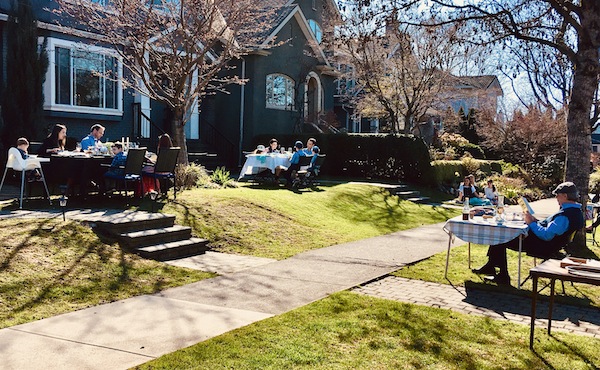
Families on 23rd Avenue in Vancouver found an innovative way to celebrate Passover. Each family brought their own meal and, while there was no sharing of dishes, everyone participated in reciting the blessings, reading from the Haggadah and singing together. The gathering was organized by Talia and Josh Bender, top left with their children, and Elana and Brian Jacobson, top right with their children.


Format ImagePosted on April 24, 2020April 24, 2020Author The Editorial BoardCategories Celebrating the HolidaysTags COVID-19, Passover
Sisterhood building bridges

Sisterhood building bridges

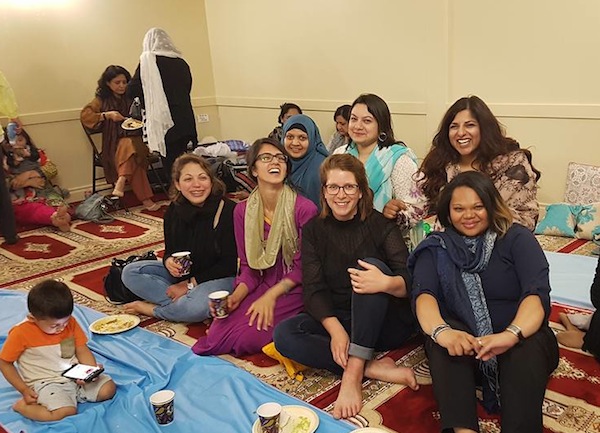
Members of Sisterhood of Salaam Shalom enjoy a Ramadan Iftar dinner together at a local mosque. Naz Qureshi is at top right and Rabbi Gila Caine is seated in the front row, second from the right. This photo was taken before the COVID-19 crisis. (photo from Naz Qureshi)

Sisterhood of Salaam Shalom, which works with Jewish and Muslim women to combat hate, stereotyping and prejudice, has chapters in the United States, England and Canada. After a trip to Israel in 2017, Naz Qureshi, who is Muslim and whose parents are from Pakistan, decided to start up a Salaam Shalom chapter in her own city, Edmonton.

“I’ve been to Israel/Palestine twice,” Qureshi told the Independent in a recent interview. “It’s one of my favourite places to go. I love to see the political dynamics, because … I can weave in and out of both sides. I’m Muslim, so the Palestinians get me. But yet, I’m very Western, so the Israelis get me, too. I don’t wear a hijab. I’m not seen as a threat. I can see it from both sides. I think that, because I’m also a South Asian Westerner, of course, the conflict is near and dear to my heart and I’m passionate about it, but I’m not as invested in it as a Middle Easterner would be.”

During Qureshi’s 2017 visit to Israel, she said, “Completely by chance, this Orthodox rabbi and I started talking about religion and we ended up becoming extremely good spiritual friends. We realized that our faiths have so much in common.”

On her way back to Edmonton, via Toronto, Qureshi happened upon an ad for Sisterhood of Salaam Shalom and reached out when she got home. She contacted Temple Beth Ora’s Rabbi Gila Caine.

“Gila was completely interested,” said Qureshi. “I said, ‘OK, this is perfect, because you’re a rabbi and you can bring the Jewish women, and I can bring the Muslim women.’”

Each leader managed to find a half dozen interested women from their communities, and they began meeting on a monthly basis in homes and places of worship.

“Initially, you don’t broach the Israel-Palestine topic, because you’re just going to have a breakdown of communication right there,” said Qureshi. “Instead, we started with similarities. And it’s not just like, ‘OK, let’s eat some baklava and hummus.’ No. You delve into really interesting topics, like our holidays, our festivals. Salaam Shalom provides you with a whole binder if you’re not able to work on your own topics. They’re really good at guiding you.”

By eliminating stereotypes and hate, and developing friendships, participants begin seeing the other’s points of view and standing up for one another.

To help create intimate friendships, chapters are kept small. “You can’t hate somebody who you end up liking,” said Qureshi. “And then you think, ‘Wow, this person is a lot like me.’

“I think that when that happens – I’ve seen it over and over again from both sides – it creates really interesting dynamics. When you see that wall fall, it’s like the Berlin Wall cracking and this realization that, ‘Oh, my God … this person is not evil, they’re really interesting and fun to be around.’”

At one of the meetings, members were asked to share a personally meaningful story from their faith tradition. “I remember one, I think it was my favourite,” said Qureshi. “We were at Gila’s house and Gila shared about the Kiddush cup. I’d brought zamzam water (Muslim blessed water) and explained its significance. We ended up toasting zamzam water in the Kiddush cup and it was amazing…. When we left, we all had that warm fuzzy feeling in our hearts.”

Just before the coronavirus outbreak, the group had planned to have an event to assess participants’ interest in continuing, but the gathering had to be postponed.

“What I really like about Salaam Shalom is the intimate, smaller group discussions,” said Qureshi. “You get past the formalities, past your name and what do you do, and you delve into real issues and gain an appreciation and learning from one another.

“There is so much Islamophobia and antisemitism on both sides and I really wish that people would just go out and make a Muslim or Jewish friend, and then you can see this closeness that exists.

“I think it’s maybe also so important for women especially to be doing this work because it’s easier for us … no matter where you fall on the spectrum, liberal, conservative … we tend to be more open.

“We can portray Muslims not in this negative stereotypical light, too,” she added. “We’re not all terrorists, we’re not all crazy…. It’s really important to sow those seeds wherever you can.

“Going back to my Israeli friend, the Orthodox rabbi, he feels so close to Palestinians he knows now … whereas before, he was a completely different person. Now, I think, from knowing me and when we talk about religion and the shared stories and our deep love of God and respect, he feels this closeness to Palestinians.”

After Qureshi’s phone interview with the Jewish Independent, she shared a message she received from her rabbi friend, which read: “The other day, when I came home after one of my rounds, I tried to park the minibus in the usual spot and there was this guy who told me that he cannot clean the area because I park there, so I parked somewhere else. Later, I go over to him and ask what days he comes to clean, so I know when not to park. He was a Muslim and he said, ‘I like you.’ He said he recognized me from before. Apparently, he used to sweep the area some time ago and remembers that I used to compliment him and say a good word. Anyway, he literally kissed me! It took me by complete surprise! Who would think of [a Muslim] kissing a Jew? Anyway, we exchanged numbers and now there’s another Muslim friend added to my list.”

Qureshi reflected, “Hearing this message made my Monday morning. I got off the train feeling elated and walked the remaining blocks to work. The sun shone a little brighter and the cooling breeze appeared to be sent directly from the heavens above! The scene was playing over and over in my mind. ‘Who would kiss a Jew?’ Why, a Muslim could and would kiss a Jew! And what had elicited such a strong emotional response? That a Jew could and did act kindly to a Muslim.”

Rebeca Kuropatwa is a Winnipeg freelance writer.

Format ImagePosted on April 24, 2020April 24, 2020Author Rebeca KuropatwaCategories NationalTags Edmonton, interfaith, multiculturalism, Naz Qureshi, peace, Sisterhood of Salaam Shalom
Israel’s soldiers not forgotten

Israel’s soldiers not forgotten

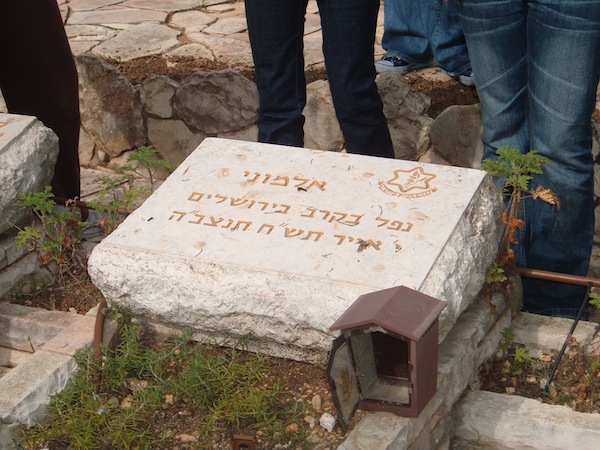
The grave of an unknown soldier on Mt. Herzl in Jerusalem. (photo by Deborah Rubin Fields)

As of Israel Independence Day last year, 23,741 Israeli soldiers had died during their service. The country has come to memorialize its fallen soldiers in one of three ways: 1) most commonly, it provides a grave and a headstone in a military cemetery, with information provided on the soldier, 2) when there is no official grave (that is, when no one really knows where the body of the deceased is), it inscribes the name either on a memorial wall or marker, and 3) it furnishes a grave and a headstone, but little or no information about the deceased is engraved on the stone.

Today, when a soldier dies, the following identification is to be established: the name of the soldier, their army identification number, national civilian identification number, army rank and army unit, as well as their job in the army. When they are buried, the headstone notes the full name of the deceased, their parents’ first names, country of birth (if outside of Israel), date of birth (according to both the Hebrew and Gregorian calendars), aliyah date, date and place of death and age at the time of death. The stone also contains the emblem of the Israel Defence Forces. In a military cemetery, the tombstone’s content reflects a high degree of uniformity. One monument pretty much contains the same details as the next one.

In pre-state Israel and in the War of Independence in 1948, these practices were not yet in place. Young men and women – many of whom had just survived the Holocaust – fought to establish the state. They (and all other soldiers) had little military training. They might not have known Hebrew very well. Not uncommonly, they were the only survivor of their families.

Times were tense, at times verging on the chaotic. The fighting left limited time for socializing, for establishing relationships. So, if a soldier died, it was not surprising to have known them only by their first name. Under the circumstances, most fellow fighters would not have been acquainted with the soldier’s parents, would not have even known their names.

At the end of the War of Independence, about 1,000 of the 4,500 fallen were considered missing. It was the chief rabbi of the IDF, Rabbi Shlomo Goren, who initiated an intensive project of identifying the dead. The establishment of military cemeteries helped the identification process move forward, but, even after that, there remained anonymous soldiers, and headstones with missing information.

Recognizing this situation, Dorit Perry and Uri Sagi started Giving a Face to the Fallen. The organization has been in existence fewer than 10 years. Its team of some 52 volunteer investigators and activists comes from a variety of backgrounds. It includes bereaved family members, friends of fallen soldiers, judges, former career army officers and others. As the organization’s website states, all volunteers believe there is “a duty to remember and, in so doing, to … repay the debt we owe to those who gave their lives for the establishment of the state of Israel.”

All of the volunteers are in a race against time, trying to piece together information on 500 soldiers who fell fighting either in pre-state Israel or in the War of Independence. They ask the following questions: Did you (or maybe your grandfather or an older neighbour) know the fighter we are researching? Maybe you fought with such person either before the creation of the state or in the War of Independence? Maybe you still have pictures of your fighting unit?

The volunteers also try to fill in blanks by asking to see old photos of youth movement activities, aliyah preparation groups (aliyah registration cards have provided investigators with correct birth dates and with the names of relatives, see blog.nli.org.il/en/baumgarten) and family albums. Some soldiers do not even have a photo on file.

Besides trying to find people still alive who were acquainted with these fallen soldiers, volunteers search archives. It is real detective work. When successful, there is the rededication of a tombstone with the added information. To date, out of the more than 800 “untraceable” soldiers, they have pieced together the missing information for 120 of them.

The stories of the fallen soldiers of this period are poignant. Take the example of Tobias Marmolstein, who came from Bitshekov, Czechoslovakia. His father had died in Tobias’s arms at Mauthausen concentration camp. Twenty-year-old Tobias was killed as his Haganah unit fought to open the road to Jerusalem. He had been in Israel for just nine days. He is buried on Mt. Herzl.

Each life story has its twists and turns. For instance, over two decades passed before Shaul Yekutiel Urbach came to be buried in Israel. He arrived in Palestine in 1939 to visit Tel Aviv relatives. When the Second World War broke out, he was unable to return to his large family in Kielce, Poland, so he volunteered to fight for the British. The British sent him to fight in Greece. There, the Germans took him prisoner. The Nazis sent him to do hard labour in Schlesien, Germany. In a revolt against a Nazi camp officer, Shaul was wounded, and he died in a German hospital. After the war, his only surviving brother, Raphael Fishel – the rest of the family had been murdered at Treblinka – tried to have Shaul’s remains brought to Israel. For 22 years, the British stalled in releasing his body from their military cemetery. Finally, in 1967, Shaul was reinterred, on Mt. Herzl.

Uri Sagi has maintained that a blank headstone or one that is missing information makes the soldier invisible. A fallen soldier, Sagi said, should not be invisible.

As time passes, it becomes harder and harder to find acquaintances and family who can fill in the blanks with firsthand testimony. For more information on Giving a Face to the Fallen, visit latetpanim.org.il.

Deborah Rubin Fields is an Israel-based features writer. She is also the author of Take a Peek Inside: A Child’s Guide to Radiology Exams, published in English, Hebrew and Arabic.

Format ImagePosted on April 24, 2020April 24, 2020Author Deborah Rubin FieldsCategories Celebrating the HolidaysTags Giving a Face to the Fallen, IDF, Israel, memorial, soldiers, terrorism, Yom Hazikaron
Culture & accessibility

Culture & accessibility

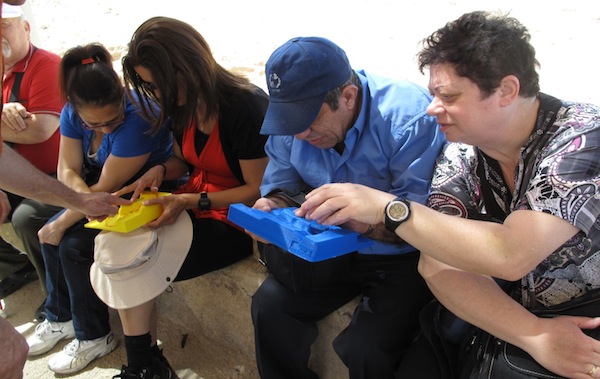
Visitors to Masada learn more about the site through Gadi Mathov’s miniature model of the landmark. (photo from Mathov Design)

What would it take to make museums, cultural sites and tourist attractions more accessible to people with visual, intellectual or developmental disabilities? For the past 25 years, Israeli professional miniaturist Gadi Mathov has been working on solving this problem using models.

At Masada National Park, for example, people with visual impairment can understand the site’s unique topographical structure and history through Mathov’s 3D tactile models.

“We also created for them miniature models of siege vessels that illustrate the Roman siege of Masada,” he explained. “The way I define it, a model is a physical representation of a product or an idea. A model is a medium that allows people to communicate and pass along ideas between them.”

Mathov Design models are used in leading cultural institutions such as the Israel Museum and sites managed by the Israel Antiquities Authority and the Israel Nature and Parks Authority. Mathov also cooperates with the Commission for Equal Rights of Persons with Disabilities, the National Insurance Institute and the Access Israel nonprofit organization.

Mathov Design’s 100-square-metre model of Jerusalem, featuring the Temple Mount, the Tower of David, the Knesset, the new Jerusalem Light Rail and other iconic structures, can be seen in Times Square in New York City as part of the Gulliver’s Gate project.

Birdwatching via models

Agamon Hula, a must-visit birdwatching and natural beauty attraction in northern Israel, is also enhanced by Mathov’s models. Here, he cooperated with Pnina Ceizler, Keren Kayemeth LeIsrael-Jewish National Fund’s northern region projects and accessibility coordinator, and KKL-JNF’s chief ornithologist Yaron Charka to make the site’s research station a place of interest for people with disabilities – visitors can see and/or feel models of the birds that migrate in the area, as well as special globes and maps that highlight migratory routes.

“There are quite a few models that we’ve created to enhance the experience for people with visual impairments,” said Ceizler. “We see that it’s useful for everyone, also for children with disabilities or with autism.”

The accessible experience at the research station has proved to be a huge hit, she told Israel21c. She tried it out on a group of people with visual impairments before opening it up to private visitors and organized trips for schools and people with special needs.

“They enjoyed this whole experience up close. They were impressed and admired everything,” she said of the accessible centre’s first visitors.

Back to the future

Mathov has worked in his profession for 37 years, but it came about quite by accident. “It was a temporary job while I was an architecture student, and then I found out that I liked it better,” he recounted.

Decades later, he’s still in love with the job. “They’ll have to take me out of here in a coffin,” he joked, speaking of his workshop in the central city of Lod.

Along with cultural institutions, his clients include the defence establishment and medical instrumentation companies.

Mathov is not worried about work drying up in the age of technological advancement. “There’s nothing more comfortable or clearer than a model,” he said. “There are dozens if not thousands of uses.”

Lately, it’s become much easier and cheaper to create a model. “The biggest development was the introduction of what we call computerized production,” Mathov explained, citing 3D printers, lasers and CNC (computer numerical control) machines. “Each of these technologies helps us create a much more complex and higher-quality product in less time and for a cheaper price.”

Mathov hopes that, one day, people will be able to print out models at home of the places they’re planning on visiting. “Today, no one goes to the store to buy music; no one goes to Blockbuster to watch a movie. I imagine that, when you’ll want a miniature model, you won’t go to a miniaturist. You’ll be able to download them and print them by yourself,” he explained.

However, printing is only the end of a process that begins with human creativity. Mathov said a model should contain “the human spark of the soul of the person who created it.”

And, while he mourns the disappearance of craftsmanship, Mathov is a firm believer in advancement. “You have to keep on looking forward,” he said. “To understand what the technologies are and where they’re heading; how to adopt them or compete against them or circumvent them.”

For more information, visit mathov.co.il/English.aspx.

Israel21c is a nonprofit educational foundation with a mission to focus media and public attention on the 21st-century Israel that exists beyond the conflict. For more, or to donate, visit israel21c.org.


Format ImagePosted on April 24, 2020April 24, 2020Author Naama Barak ISRAEL21CCategories IsraelTags accessibility, culture, education, Gadi Mathov, inclusion, Israel, tourism
Israeli start-up’s Beehome

Israeli start-up’s Beehome

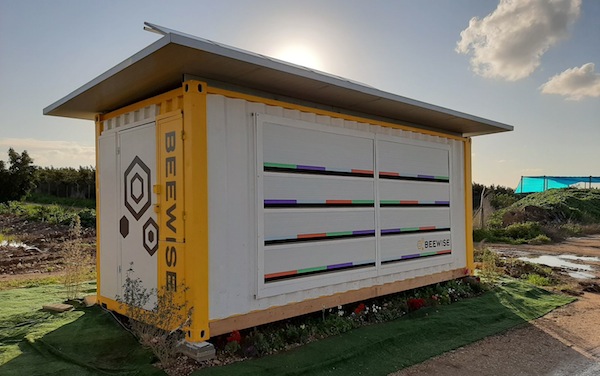
Beewise wants to replace traditional, wooden hives with high-tech, autonomous ones. (photo from Beewise)

What do cucumbers, avocados and coffee all have in common? Aside from being absolute necessities (yes, avocados, too), they’re all crops pollinated by bees. And, if things keep heading in the current direction, we’re screwed.

Bees are extremely important. About one-third of all plants and plant products consumed by humans are dependent on bee pollination. Unfortunately, the combination of modern demand and natural stresses such as climate change, pests and illness mean that the global bee population is dying at a dizzying rate, endangering our diets and well-being.

To combat this, efforts are being made to rehabilitate the bee population. In Israel, these endeavours are given a very Start-Up Nation twist, complete with computer vision, artificial intelligence and precision robotics, which are all part of the world’s first autonomous beehive, developed by Israeli start-up Beewise. Called Beehome, it’s a device that can house up to 40 bee colonies – that’s two million bees – and take care of their health and upkeep through an app on the beekeeper’s phone or tablet.

“It’s what’s called a disruptive innovation,” said Beewise chief executive officer Saar Safra. “We’re coming to replace all the beehives in the world.”

photo - Beewise chief executive officer Saar Safra
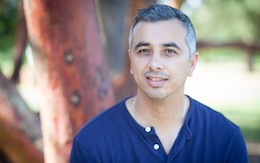
Beewise chief executive officer Saar Safra. (photo from Beewise)

The idea for an autonomous beehive came from Safra’s business partner, Eliyah Radzyner. A beekeeper by profession, Radzyner was aghast at the fact that beekeeping methods have not progressed for ages. He was convinced that a computer, machine or robot could do a much better job, and joined forces with Safra, a serial entrepreneur.

At present, most beehives around the world look like they did some 150 years ago – plain wooden constructions whose upkeep requires beekeepers to dress in full hazmat mode and light a smoker before opening them up, taking care of pests, supplying the bees with food and water and harvesting the honey. All this extensive manual labour means that commercial beekeepers, who take care of most of the bees in the world, only get to each hive about once every few weeks. Lots of bees are lost in between rounds to illness, pests and other problems.

“If you manage to identify the problem at the outset and take care of it in a specific manner, then, first off, it will be a lot less invasive; second, you’ll resolve the problem before it becomes a concern; and, third, you’ll save the bee,” Safra explained.

“We built a beehive that knows how to do these things,” he said, listing its three main components: artificial intelligence, computer vision and precision robotics.

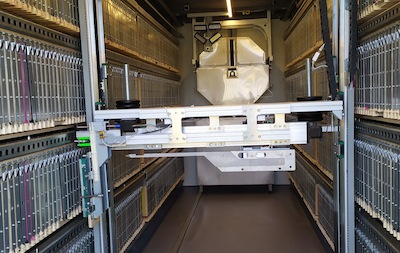
The first, he said, is in charge of recognizing and identifying problems at the very outset. A real-time response is then carried out using computer vision to detect and monitor the situation, with precision robotics executing the required solution. The only things in the autonomous hive that require a human hand are filling the water and food and collecting the honey, which is harvested by machine.

photo - In Beewise's hives, even the honey is harvested by machine
In Beewise’s hives, even the honey is harvested by machine. (photo from Beewise)

While there are other companies trying to take care of bees amid the crisis, no one else has built an autonomous beehive. Currently in beta stage, Beehome is now being used by some commercial beekeepers.

“At first, there’s skepticism, because it’s so left-field,” Safra noted. “The moment we show people the device and that it works, there’s unbelievable excitement.

“There are beekeepers who are second, third or fourth generation. The beekeeper sees how his business is disappearing before his eyes, on his watch,” he added. “Then you suddenly show him this technology, this solution, and he sees that it works. Imagine what a relief that is.

“The idea that we’re saving bees using technology is an amazing thing,” Safra said. “When you take AI and apply it to traditional industries that haven’t been touched in 150 years, the yield is incredible.”

The funding for Beewise came from venture capital funds, as well as from European and Israeli grants. And doing business in Israel has been wonderful, said Safra, who returned to the country some two years ago after 15 years in the United States.

“The ecosystem in Israel is amazing. It’s simply optimized for start-ups,” he said. “There’s also a crazy infrastructure in terms of services and everyone knows how to work in startup mode.”

Beewise aims to be the new standard, Safra said. “There are 90 million beehives around the world. They’re all wooden beehives that don’t work anymore.

“We’re doing well by doing good,” he concluded. “Every hive that I create and which functions and succeeds – the result is more bees alive.”

For more information, visit beewise.ag.

Israel21c is a nonprofit educational foundation with a mission to focus media and public attention on the 21st-century Israel that exists beyond the conflict. For more, or to donate, visit israel21c.org.


Format ImagePosted on April 24, 2020April 24, 2020Author Naama Barak ISRAEL21CCategories IsraelTags Beewise, conservation, environment, Saar Safra, start-ups, technology

Thank you to all our Israel issue advertisers!

image - Save On Foods ad April 24 issue

image - JFS ad April 24 issue
image - ZLC ad April 24 issue
image - Dexter - Liebernab & Robertson ad April 24 issue
image - Shay Keil ad April 24 issue
image - Nesters ad April 24 issue
image - Weinberg ad April 24 issue
image - Latham's ad April 24 issue
image - Dexter ad April 24 issue
image - JMABC and JBN ads April 24 issue
image - Campbell Saunders ad April 24 issue
image - Transworld ad April 24 issue
image - Web exPress ad April 24 issue
image - Imperial Paddock ad April 24 issue
image - Sar-El ad April 24 issue
image - JNF ad April 24 issue
image - Admiral Insurance ad April 24 issue
image - Glotman Simpson ad April 24 issue
image - Temple Sholom ad April 24 issue
image - Famous Foods ad April 24 issue
image - Kahn Zack Ehrlich Lithwick ad April 24 issue
image - Kierszenblat ad April 24 issue
image - CCW ad April 24 issue
image - Nancy Stern ad April 24 issue
image - United Elevator ad April 24 issue


Posted on April 24, 2020May 28, 2020Author The Editorial BoardCategories From the JITags JI, journalism, philanthropy
הוויכוחים על חבישת מסכות בחוץ

הוויכוחים על חבישת מסכות בחוץ

כאן אצלנו רבים מהאזרחים שומרים על החוק ולא מתלוננים נגד ההחלטה על הטלת הסגר, שפוגעת קשות בחיי היום יום שלנו, אך מצילה חיים של רבים מאיתנו.
(רוני רחמני)

עוד שבוע עבר בצל משבר הקורונה וכמעט שום דבר לא השתנה. נשארנו לכודים בתוך הבתים, שמענו את אותן חדשות ישנות מכל מקום בעולם, חיפשנו תקוות והתרגלנו כמעט לשמוע חדשות לא טובות. בקיצור שעמום רבתי.

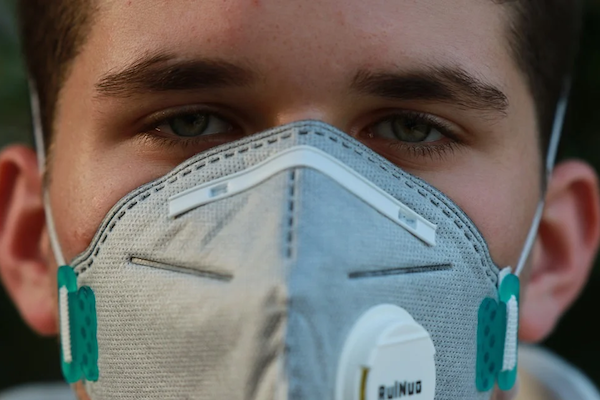
מדי יום מתרבים הוויכוחים על הצורך בשימוש במסכות למיגון הפנים בעת שיוצאים החוצה ובעיקר כאשר עושים קניות בחנויות האוכל. רבים מהמומחים טוענים שמסכות רגילות (שאינן אן תשעים וחמש) לא יגנו עלינו מהווירוס הנורא, אם כי הן יכולות למנוע מאיתנו אולי מלהפיץ אותו לאחרים, כאשר אנו כבר חולים. אך הלחץ והפניקה של הציבור עושים את שלהם. יותר ויותר מנהיגים בעולם מבקשים מהאזרחים שיחבשו מסכות בעת הם יוצאים החוצה. לדעת רופאים בכירים השימוש במסכות יכול להיות מסוכן כיוון שרבים לא יודעים כיצד להתשמש בהן ובעיקר כיצד להוריד אותן מהפנים. וכן יש לא מעט שחושבים שעם המסכות הם מוגנים ואינם זקוקים עוד להמשיך ולבצע את הפעולות הבאמת חיוניות יותר להגן על עצמם, בהן רחיצת ידיים ושמירת מרחק.

ובהקשר זה: שר התחבורה הקנדי, מארק גרנו, הודיע כי כל הטסים אל קנדה וממנה מחויבים לכבוש מסכות החל מראשית השבוע הנוכחי. זאת כיוון שבביקורת הגבולות לא ניתן תמיד לשמור על מרחק פיזי בן שני מטרים, בין נוסע אחד למשנהו. ההחלטה נוגעת גם למי שמגיעים לקנדה בטיסות קונקשן. מי שלא יחבוש מסכה לא יוכל להעלות לטיסות ההמשך. השר גרנו אמר במסיבת העיתונאים לאמצעי התקשורת : “על אזרחי קנדה להמשיך ולעקוב אחרי ההנחיות בנושא בריאות הציבור ולהישאר בבתים במידת האפשר. אך אם בכל זאת צריכים לטוס, כיסוי הפנים במסכות הוא אמצעי נוסף להגן על נוסעים אחרים שנמצאים מסביב, במיוחד במצבים בהם לא ניתן לשמור על הנחיות של הריחוק הפיזי”.

בעיתות משבר ניתן ללמוד רבות על התנהגות בני האדם ואלו שאמורים להנהיג אותנו. במשבר כה קשה כמו הנוכחי – מגיפת הקורונהת שאנו סובלים ממנו כל יום, דבר נכון שבעתיים. אנו יכולים לראות בבירור את ההבדלים למשל בין אזרחי קנדה לארצות הברית, ובין מנהיגי שתי המדינות. כאן אצלנו רבים מהאזרחים שומרים על החוק ולא מתלוננים נגד ההחלטה על הטלת הסגר, שפוגעת קשות בחיי היום יום שלנו, אך מצילה חיים של רבים מאיתנו. לעומת זאת אצל השכנה מדרום המצב שונה. יש לא מעט אמריקנים שמצפצפים על השלטונות וממשיכים לבלות בחוץ ובעיקר במסיבות חוף. רבים יוצאים בימים האחרונים להפגין נגד המנהיגים המקומיים שמבקשים להמשיך ולשמור על הסגר. אצלנו ראש הממשלה ג’סטין טרודו, זוכה להערכה וכמנהיג רציני הוא ממשיך יום יום לעדכן אותנו במה שקורה ובמה שנדרש מאיתנו. אין לו כמעט אופוזיציה בימים אלה. לעומתו נשיא ארה”ב, דונלנד טראמפ, ממשיך בהתנהגות החסרת אחריות שלו – מה שמאפיין אותו מדי יום בתקופת שלטונו. טראמפ מעודד בימים אלה את המפגינים שיוצאים נגד ההחלטה להמשיך ולשמור על הסגר, ובעצם יוצר דה-לגיטמיצה למנהיגים של אותן מדינות. זהו אותו טראמפ שטען בתחילת המשבר שארצו שולטת במצב והחיידק יחלוף תוך שבועות בודדים. טראמפ כרגיל מאשים את המפלגה הדמוקרטית בכל ובעיקר את קודמו בתפקיד, ברק אובמה.

בהקשר יחסי קנדה וארה”ב יש לציין שטרודו וטראמפ החליטו יחדיו להאריך את מצב סגירת הגבול היבשתי בין שתי המדינות לחודש נוסף, עד העשרים ואחד במאי. זאת למעט מי שצריך לעבור בין שתי המדינות בהם משאיות עם ציוד ואוכל.    

Format ImagePosted on April 22, 2020June 30, 2020Author Roni RachmaniCategories UncategorizedTags border, Canada, coronavirus, Doug Ford, Justin Trudeau, masks, Ontario, Trump, United States, אונטריו, ארה"ב, ג'סטין טרודו, גבול, דאג פורד, ווירוס הקורונה, טראמפ, מסכות, קנדה
חיים חדשים שלא היינו רוצים בהם

חיים חדשים שלא היינו רוצים בהם

הכל שקט וכמעט דומם בוונקובר.
(רוני רחמני)

כשאני יושב לכתוב שורות אלה אני מנסה להיזכר איזה יום הוא היום. ומדוע? כיוון שכל הימים נראים אותו הדבר, הכל שקט וכמעט דומם, החדשות הן אותן חדשות והן עוסקות רק בנוגע למשבר הקורונה הנוראי, לא פוגשים חברים, כן מדברים עימם בטלפון לשיחות ארוכות. כמעט ואין שינויים בחיי היום יום שלנו גם כאן בוונקובר.

העולם הפך להיות דומה, בשיחות הטלפון עולה אותה תמונת מצב עגומה. נראה שכמעט כולנו ממתינים בסבלנות שהולכת ופוקעת לחדשות טובות לשם שינוי. כן נמאס לנו להיות נעולים בבתים במרבית שעות היום, כאשר לחלק לא מבוטל אין בכלל אפשרות לצאת החוצה ולנשום קצת אוויר צח. מה כבר ביקשנו?

למדתי בשיחות הטלפון הרבות שאני עושה מדירתי שבדאון טאון ונקובר ללכת תוך כך שאני מחזיק את הטלפון. כך אני צובר לפחות קילומטר בכל שיחה ארוכה. החברים שואלים מה חדש? ואין לי מה לחדש להם. אני יכול רק לספר על הקשיים בעבודה, הפגיעה הקשה במעט החסכונות שיש לי. שום דבר חיובי בעצם. אני יכול לספר להם על ההליכות בחוץ שאני עושה כשהכוונה להגיע לכעשרה ק”מ מדי יום. האם זה באמת מעניין מישהו? כשאני עובר לשלב השאלות התשובות של חברים דומות מאוד לאלו שלי. לפעמים לכן אני אומר לבת זוגתי שאין טעם בכלל לדבר עם חברים או בני משפחה בימים טרופים אלה, כאשר אין לנו ממש דברים לחדש בהם? בנימה סקרסטית אני אומר כי כיום כולנו באותה סירה אך בסירה יש גם מספר חורים.

נזכרתי הבוקר כאשר התעוררתי לאור השקט המדהים בחוץ והלווואי והיה נובע מהסיבות הנכונות, בביקורי בישראל בסוף פברואר. זה נראה כי הוא התקיים לפני חודשים ארוכים מאוד לאור מה שקרה וקורה בחיינו מאז. אני עוד הספקתי לטוס מקנדה לישראל לפני שהמדינות נעלו את שעריהן. כשחזרתי בראשית מרץ עוד לא נדרשנו אז להיכנס לבידוד עצמי של שבועיים. ניצלתי בעור שיני אני אומר לעצמי כדי לעודד קצת את רוחי הקודרת.

הביקור בארץ הקודש ארך בדיוק שבוע ימים. נחתי בשישי בלילה בנתב”ג כדי שלא אפגוש בחרדים והמראתי בשבת בבוקר מאותה סיבה. כך אני מספר לחברים. אך בעצם נחיצותי בעבודה היא שקבעה את לוח הזמנים הקצר לביקור במולדת הרחוקה.

מה הסיפקתי לעשות שם: קודם כל להיות עם הורי בתל אביב שעברו כבר את גיל התשעים ומצבם בסך הכל לא רע. הם נשואים רק שבעים שנה וכנראה ישברו את שיא גינס. במקביל פגשתי מספר חברי משפחה נוספים בהם אחי. יצאנו לארוחת צהריים טובה במסעדה יוקרתית ליד בתי המשפט בתל אביב, כאשר הפעם לשם שינוי הוא לא איחר אלא אפילו הקדים.

במהלך כל השבוע נשארתי רק בתל אביב ולא מצאתי סיבה לבקר בעיר הולדתי ירושלים. לא אוהב את מה שקורה שם ומעדיף שלא לראות את זה מקרוב.

בסך הכל הצלחתי לדחוס לשבוע הישראלי לא פחות משש עשרה פגישות. רובן עם חברים וכן עם עמיתים לתחום המדיה בו עסקתי במשך שנים רבות. השיחות היו מעניינות ועסקו בנושאים שונים. במשך השנים הצלחתי לשמור על קשר עם מרבית חברי הטובים. עברנו ביחד הרבה וזה טוב לדעת שגם כשעוברים למדינה רחוקה מאוד אפשר להמשיך ולהישאר בקשרי ידידות.

שמחתי עד מאוד לחזור הביתה לוונקובר הנעימה. בת זוגתי קיבלה אותי בחמימותה ולשאלתה היכן אני מרגיש בבית? עניתי ישירות: בוונקובר.

Format ImagePosted on April 17, 2020June 30, 2020Author Roni RachmaniCategories UncategorizedTags Canada, coronavirus, home, Israel, Vancouver, בית, ווירוס הקורונה, וונקובר, ישראל, קנדה
משבר הקורונה: סכסוך ראשון

משבר הקורונה: סכסוך ראשון

סכסוך ראשון נתגלע בין קנדה לארה”ב בנוגע ליצוא מסכות אן תשעים וחמש לקנדה

(pixabay.com)

סכסוך קשה ראשון נתגלע בין קנדה לארצות הברית בעידן משבר הקורונה. זאת לאור החלטת נשיא ארצות הברית, דונלד טראמפ, לעצור את יצוא מסכות אן תשעים וחמש עבור קנדה. מדובר במסכות הרפואיות הנחוצות למערכת הבריאות בקנדה. המנהיגים במערכת הפולטית הקנדית זועמים של החלטתו חסרת התקדים של טראמפ. יש לציין שטרמפ ניצל את חוקי החירום שעומדים לשרותו ואסר על חברת ‘שלוש אם’, שמייצרת את האן תשעים וחמש, לייצא אותם לקנדה. בסך הכל יש שתי יצרניות של מסכות רפואיות אלה בארה”ב ולכן הנזק למערכת הבריאות בקנדה נחשב למשמעותי.

ראש הממשלה של קנדה, ג’סטין טרודו, סירב לציין בשלב זה כמה מסכות אן תשעים וחמש קנדה צריכה מארה”ב. הוא הדגיש כי קנדה מקבלת בימים אלה משלוח של מיליוני מסכות אן תשעים וחמש דווקא מסין. קנדה מחזיקה במחסן גדול בסין שעוזר בקליטת ציוד החירום והטסתו למדינה.

‘שלוש אם’ שבסיסה במניסטוה מייצרת כמאה מיליון מסכות מדי חודש. כשליש מיוצר בארה”ב והשאר במקומות אחרים ברחבי העולם. החברה מציינת כי טאמפ אוסר עליה לייצא את המסכות הרפואיות לקנדה, ויהיו לכך השלכות הומנטריות משמעותיות. הדבר יכול לגרום בעצם למדינות כמו קנדה לעשות את אותו הדבר לארה”ב – ולהפסיק לייצא אליה מוצרים חיוניים בעיקר בעת המשבר הנוכחי.

טרודו טוען כי כל העת מתמשכות השיחות עם ארה”ב לשמירה על זרימת הסחורות והשירותים הדו-כיווניים. זאת לאחר שהגבול הארוך בין שתי המדיניות נסגר לנסיעות לא חיוניות. טרודו: “אנו מקבלים אספקה ​​חיונית מארה”ב, אך גם ארה”ב מקבלת אספקה ​​ומוצרים חיוניים. וכן אנשי מקצוע בתחום הבריאות מקנדה בכל יום ויום. יש לזכור שאלה דברים שהאמריקאים מסתמכים עליהם, וזו תהיה טעות ליצור חסימות או להפחית את כמות הסחר הלוך ושוב של סחורות ושירותים חיוניים, כולל סחורות רפואיות, מעבר לגבולנו. זו הנקודה שאנחנו מסבירים באופן ברור מאוד לממשל האמריקני ברגע זה”.

טראמפ ניצל את הוראות החירום הפדרליות שעומדות לרשותו וכאמור הודיע ל’שלוש אם’, לספק מעתה את המסכות הרפואיות אן תשעים וחמש רק לשוק האמריקני. זאת לאור ביקורת קשה המוטחת בנשיא האמריקני כמעט כל יום על כך, שציוד רפואי חיוני חסר בבתי החולים ברחבי ארה”ב.

יועץ המסחר של הבית הלבן, פיטר נווארו, ציין בהקשר זה כי במהלך הימים האחרונים החליט ממשל טראמפ לדאוג שייצור הציוד הרפואי בארה”ב יעמוד לראשות המערכת הרפואית המקומית, ויגיע למקומות הנכונים. נווארו: “אז מה שהולך לקרות, שעם החתימה על הצו הזה, אנחנו הולכים לפתור את הבעיה. ככל הנראה עד מחר ייסגר העסק כיוון שאנחנו לא יכולים להרשות לעצמנו עוד להפסיד ימים או שעות, אפילו דקות בתוך המשבר הזה”.

סגן ראש הממשלה הקנדית, כריסטיה פרילנד, הצביעה על כך שהיא מבינה כמה חשוב להמשיך ולהעביר הזמנות לקנדה ובמקביל גם לארה”ב, מכיוון שיש הרבה סחר שחוזר קדימה ואחורה בשירותים חיוניים, וזה יכול בסופו של דבר לפגוע באמריקאים, כפי שזה יכול לפגוע בנקדה. היא מקווה שהקשר בין שתי המדינות ימשיך להיות חזק ויציב ולא יהיו הפרעות בשרשראות האספקה לשום כיוון.

הפרמייר של מחוז אונטריו, דאג פורד, הודיע כי הוא מאוכזב מאוד מהנשיא האמריקני ולעולם לא יסתמך עליו יותר. פורד: “אני לא יכול להדגיש עד כמה אני מאוכזב מהנשיא טראמפ בגלל קבלת ההחלטה הזו. אני לא מתכוון לסמוך שוב על טראמפ”.

Format ImagePosted on April 8, 2020June 30, 2020Author Roni RachmaniCategories UncategorizedTags border, Canada, coronavirus, Doug Ford, Justin Trudeau, masks, Ontario, Trump, United States, אונטריו, ארה"ב, ג'סטין טרודו, גבול, דאג פורד, ווירוס הקורונה, טראמפ, מסכות, קנדה
Illustrating Holocaust stories

Illustrating Holocaust stories

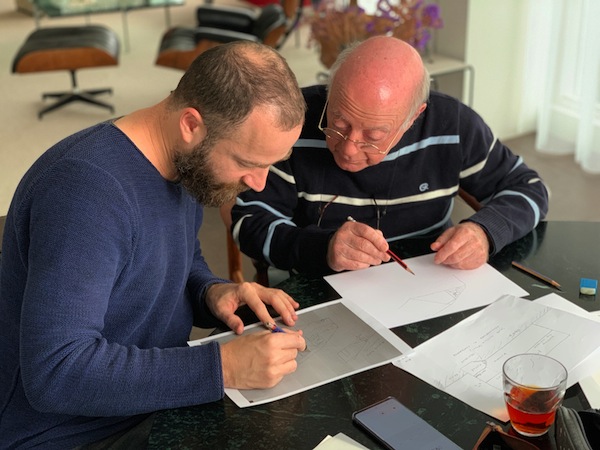
Gilad Seliktar, left, and Rolf Kamp in Amsterdam. They are drawing the last hiding place of Nico and Rolf Kamp in Achterveld, which was liberated in April 1945 by Canadian troops. (photo from UVic)

A University of Victoria professor is orchestrating an international project that links Holocaust survivors with professional illustrators to create a series of graphic novels, thereby bringing the stories of the Shoah to new generations.

Charlotte Schallié, a Holocaust historian and the current chair of UVic’s department of Germanic and Slavic studies, is leading the initiative, which connects four survivors living in the Netherlands, Israel and Canada with accomplished graphic novelists from three continents.

The project, called Narrative Art and Visual Storytelling in Holocaust and Human Rights Education, is supported by the Social Sciences and Humanities Research Council of Canada. Its aim is to teach about racism, antisemitism, human rights and social justice while shedding more light on one of the darkest times in human history.

UVic is partnering with several organizations in the project, including the Canadian Museum for Human Rights in Winnipeg, the Anne Frank House in Amsterdam and the Vancouver Holocaust Education Centre.

Many historians of the genre have argued that the rise of graphic novels as a serious medium of expression is largely due to the commercial success of Art Spiegelman’s Maus in 1986. Maus, the first graphic novel to win a Pulitzer Prize, depicts recollections of Spiegelman’s father, a Shoah survivor, with Jews portrayed as mice, Germans as cats and Poles as pigs.

Schallié told the Independent that the idea for the project came from observing the interest her 13-year-old son has in graphic novels and the appeal Maus has had among her students, who have continually selected it as one of the most poignant and memorable materials in her classes.

“Though a graphic novel, Maus could hardly be accused of treating the events of the Holocaust frivolously,” she said from her office on the campus of the University of Victoria.

As most survivors are now octogenarians and nonagenarians, the passage of time creates an ever more compelling need to tell their stories as soon as possible.

image - Barbara Yelin’s illustration of Emmie Arbel, now
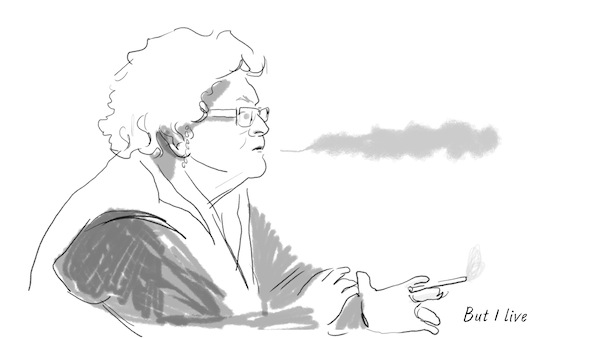
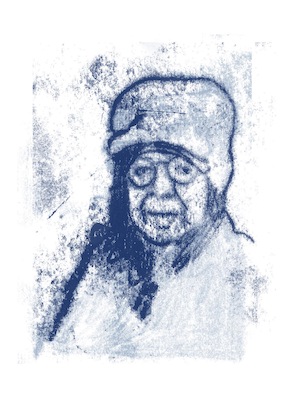
Barbara Yelin’s illustration of Emmie Arbel, now. (image from UVic)
image - Barbara Yelin’s illustration of Emmie Arbel, then
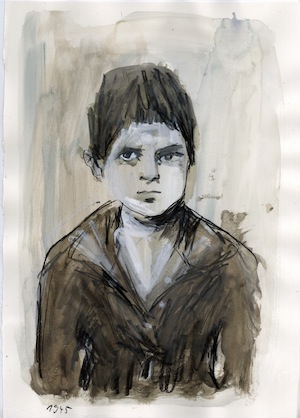
Barbara Yelin’s illustration of Emmie Arbel, then. (image from UVic)

“Given the advanced age of survivors, the project takes on an immediate urgency,” said Schallié. “And what makes their participation especially meaningful is that each of them continues to be a social justice activist well into their 80s and 90s. They are role models for the integration of learning about the Shoah and broader questions of human rights protection.”

The visual nature of a graphic novel allows it to bring in elements or depict scenes that are not possible with an exclusively written work, according to Schallié. A person may describe an event in writing but leave out aspects of a scene that might add more to the sense of what it was like to be there at the time.

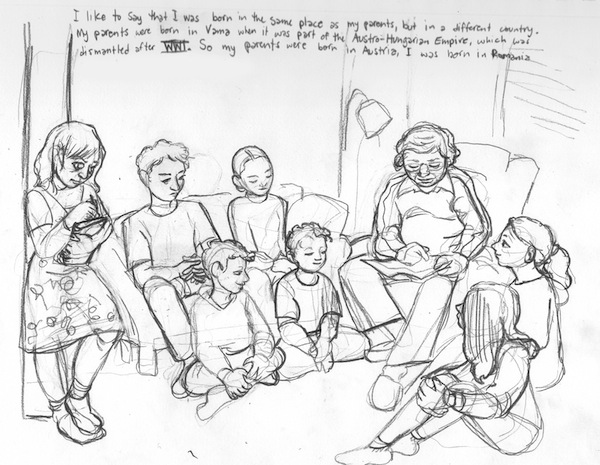
One of the survivors participating in the project, David Schaffer, 89, lives in Vancouver. He is paired with American-Israeli comic artist Miriam Libicki, who is also based in the city. The two met in person in early January so that Libicki could learn the story of how he survived the Holocaust as a child in Romania.

In 1941, Schaffer was forcibly sent with his family to Transnistria, on the border of present-day Moldova and Ukraine, by cattle car. There, they suffered starvation and were subjected to intolerable and inhumane living conditions.

image - One of the illustrations by Miriam Libicki, who is working with survivor David Schaffer
One of the illustrations by Miriam Libicki, who is working with survivor David Schaffer. (image from UVic)

“The most important thing is to share the story with the general population so they realize what happened and to avoid it happening again. It’s very simple. History has a habit of repeating itself,” said Schaffer.

Libicki, who was the Vancouver Public Library’s Writer in Residence in 2017, is the creator of jobnik!, a series of graphic comics about a summer she spent in the Israeli military. An Emily Carr University of Art + Design graduate, she also published a collection of essays on what is means to be Jewish, Toward a Hot Jew. (See jewishindependent.ca/drawing-on-identity-judaism.)

“The more stories, the better. The wiser we can be as people, the more informed we can be as citizens and the more empathy we can have for each other,” Libicki said. “Graphic novels are not just a document in the archives; they’re something people will be drawn to reading.”


image - Gilad Seliktar drew this sketch of Rolf Kamp
Gilad Seliktar drew this sketch of Rolf Kamp. (image from UVic)

The other illustrators are Barbara Yelin, a graphic artist living in Germany, and Gilad Seliktar, who is based in Israel. Yelin is the recipient of a number of prizes for her work, including the Max & Moritz Prize for best German-language comic artist in 2016. Seliktar has illustrated dozens of books – from publications for children to adult graphic novels – and his drawings frequently appear in leading Israeli newspapers and magazines.

Brothers Nico and Rolf Kamp in Amsterdam and Emmie Arbel in Kiryat Tiv’on, Israel, are the other three survivors who are providing their accounts of the Holocaust.

The books will be available digitally in 2022. A hard copy version of each book is planned, as well. When finished, the graphic novels will be accompanied by teachers guides and instructional material designed for schools in Canada, Germany, Israel, the Netherlands, the United Kingdom and the United States.

UVic hopes to match a larger number of survivors with professional illustrators in the future. To learn more, contact Schallié at [email protected]. You can also visit the project’s website at holocaustgraphicnovels.org.

Sam Margolis has written for the Globe and Mail, the National Post, UPI and MSNBC.

Format ImagePosted on April 3, 2020April 1, 2020Author Sam MargolisCategories BooksTags art, Charlotte Schallié, David Schaffer, graphic novel, history, Holocaust, Miriam Libicki, survivors, University of Victoria, UVic

Posts pagination

Previous page Page 1 Page 2 Page 3 … Page 5 Next page
Proudly powered by WordPress