Skip to content
  • Home
  • Subscribe / donate
  • Events calendar
  • News
    • Local
    • National
    • Israel
    • World
    • עניין בחדשות
      A roundup of news in Canada and further afield, in Hebrew.
  • Opinion
    • From the JI
    • Op-Ed
  • Arts & Culture
    • Performing Arts
    • Music
    • Books
    • Visual Arts
    • TV & Film
  • Life
    • Celebrating the Holidays
    • Travel
    • The Daily Snooze
      Cartoons by Jacob Samuel
    • Mystery Photo
      Help the JI and JMABC fill in the gaps in our archives.
  • Community Links
    • Organizations, Etc.
    • Other News Sources & Blogs
    • Business Directory
  • FAQ
  • JI Chai Celebration
  • JI@88! video

Recent Posts

  • Sharing her testimony
  • Fall fight takes leap forward
  • The balancing of rights
  • Multiple Tony n’ Tina roles
  • Stories of trauma, resilience
  • Celebrate our culture
  • A responsibility to help
  • What wellness means at JCC
  • Together in mourning
  • Downhill after Trump?
  • Birth control even easier now
  • Eco-Sisters mentorship
  • Unexpected discoveries
  • Study’s results hopeful
  • Bad behaviour affects us all
  • Thankful for the police
  • UBC needs a wake-up call
  • Recalling a shining star
  • Sleep well …
  • BGU fosters startup culture
  • Photography and glass
  • Is it the end of an era?
  • Taking life a step at a time
  • Nakba exhibit biased
  • Film festival starts next week
  • Musical with heart and soul
  • Rabbi marks 13 years
  • Keeper of VTT’s history
  • Gala fêtes Infeld’s 20th
  • Building JWest together
  • Challah Mom comes to Vancouver
  • What to do about media bias
  • Education offers hope
  • Remembrance – a moral act
  • What makes us human
  • המלחמות של נתניהו וטראמפ

Archives

Follow @JewishIndie
image - The CJN - Visit Us Banner - 300x600 - 101625

Month: April 2020

Thank you to frontline

There are many new routines in this unusual time. Social media feeds suggest baking has become the comforting go-to for many of us. Binge-watching shows and finally getting to the books we’ve been meaning to read is another. Cleaning those closets that were filled with mismatched sheets sets and nearly empty rolls of birthday wrapping paper was a long-overdue task.

But, at 7 p.m. each night now for a couple of weeks, another, less solitary routine has emerged. Metro Vancouverites – and people further afield – take a step outside, onto their balconies or into their driveways, and make like it’s New Year’s Eve. Clanging pots and pans, applauding, shouting cheers and generally making as much noise as possible for a minute, the behaviour is not merely burning off steam by a people holed up and stir crazy. It is a heartfelt act of solidarity and gratitude for the frontline healthcare workers, first responders and others whose responsibilities to protect the public require them to remain at their posts. It is also a way for us to say hello to our neighbours, and to receive reassurance that, while the streets and stores may be almost empty, humanity has not been wiped out, just relegated to our homes.

The nightly event was given steam by Rory Richards, a member of the Jewish community who understands the meaning of the power of one. Several years ago, at the height of the refugee crisis in the Mediterranean, she traveled to Greece and helped welcome those fleeing their homelands, while mobilizing support for the effort back home via social media. In this time of need, she saw what others were doing in the world to express themselves, while staying in quarantine, and brought the practice to her West End neighbourhood. And it has resonated with many – so many that the Vancouver Park Board has decided to change the firing time of Stanley Park’s Nine O’Clock Gun to 7 p.m. until the end of April.

The noisemaking trend is still relatively new, but already we hear of the emotional impact it is having on exhausted and anxious frontline workers. As is the solidarity at 7 p.m. nightly of their fellow emergency workers – fire trucks, police cars and ambulances driving the streets around their local hospitals, flashing their lights and sounding their sirens.

Mostly unsung are other frontline workers, those whose jobs, until this crisis, were not considered dangerous or irreplaceable: grocery store workers, cashiers, fruit and vegetable store operators, bakers, letter carriers, parcel delivery personnel, bank tellers, people maintaining the internet, bus drivers, garbage and recycling collectors, city workers who are making sure the traffic lights and other essential services remain operational, employment insurance office staff and other bureaucrats who are rushing to put aid programs into place. The list goes on. These people are continuing their work of keeping the world functioning at the level it must, without the luxury of sheltering in place.

In the Jewish community, agencies and individuals are stepping up. Jewish Family Services continues to deliver its vital programs, knowing that the physical, emotional and economic toll this crisis is taking is not yet at its peak. Jewish Federation of Greater Vancouver has launched a fund to help the community address the crisis, with specific emphasis on food security, housing support and subsidies to ensure that the economic impacts of the pandemic do not prevent individuals and families from participating to the greatest extent possible in Jewish communal activities. The Centre for Israel and Jewish Affairs has mobilized, creating a COVID-19 resource guide that is a clearinghouse for related information nationally and in each province. And organizations such as the Canadian Council for Reform Judaism and Reform Rabbis – which sent a letter to the federal government last week – are working to ensure that relief efforts centre on the most vulnerable, “including those who are homeless or housing insecure, migrants or refugees, living in underserved indigenous communities, being held in detention facilities or at risk of domestic violence.”

Locally and internationally, synagogues, day schools and community organizations have turned on a dime to use online platforms as an alternative meeting space for virtual services and gatherings. Some senior Sephardi rabbis in Israel are releasing opinions that would allow observant Jews to leave Zoom running for Passover seders, so that separated families can join together to celebrate our Festival of Freedom.

How many of us, three weeks ago, had heard of Zoom? An old long-distance telephone ad declared, “It’s the next best thing to being there,” which is true of this new technology, but we can’t deny that the shmoozing before and after (and during) services and events isn’t quite the same. Humans are likely to take for granted anything we receive almost as soon as we have it, so it is worth taking a moment to consider the incredible good fortune that allows us to have technology that we could barely dream about 30 years ago to keep us virtually together when we are, most of us, actually apart.

There’s no question that the emotional toll of our separateness will be keenly felt next week as the seders that, for our entire lifetimes, have meant the coming together of extended families and close friends, will be massively different than in the past. There will be a seat at the table for Eliyahu, but many others also will be there only virtually, and they will be missed.

When we participate in the 7 p.m. clangfest, or even if we just watch it from our homes, let’s consider the clapping, hollering and pan-banging as a testament to our admiration for medical and other frontline personnel, including the people who never imagined that they would be so crucial a part of maintaining our society’s functioning but who are, irreplaceably, ensuring that many of us are able to shelter in place in relative privilege and comfort.
Posted on April 3, 2020April 1, 2020Author The Editorial BoardCategories From the JITags coronavirus, COVID-19, frontline workers, gratitude

Emergency services available in community

The Jewish Federation of Greater Vancouver has released $400,000 to address the immediate needs of its local partner agencies over the next month. The funds will address needs in the key areas of food security, to increase the capacity of the food bank and other food distribution programs in our community; housing support, subsidies for community members unable to make their rent payments; seniors services, to help them stay safe, healthy and connected to community while they are self-isolating in their homes; tuition support so that families with children in Jewish day schools can keep their children enrolled; subsidies for Jewish programs, daycare, summer camps and part-time educational programs; and support so that Jewish supplementary schools can provide alternatives to classroom learning and maintain uninterrupted delivery of Judaic studies to the children and families they serve.

For more on Federation’s response to the COVID-19 crisis, as well as what other community organizations are doing at this time, visit jewishvancouver.com/covid-19-updates.

***

With the support of Jewish Federation, Jewish Family Services (JFS) has launched the JFS Community Care Hotline as an emergency response resource. It is available from 9 a.m.-9 p.m., seven days a week and staffed by JFS to provide emergency essential services. Priority services include meal or food bank grocery delivery; counseling/emotional support; and friendly phone “visiting.”

There are three ways to contact JFS for help: call 604-558-5719, email [email protected] or complete the form at jfsvancouver.ca/jfs-cares.

If you know anyone who needs to lean on JFS at this time, please share this information via your social media networks and other forms of communication. JFS also has a volunteer registration page, as many people have offered to help.


Posted on April 3, 2020April 1, 2020Author The Editorial BoardCategories LocalTags coronav, coronavirus, COVID-19, Jewish Federation, JFS
1,300 survivors found refuge

1,300 survivors found refuge

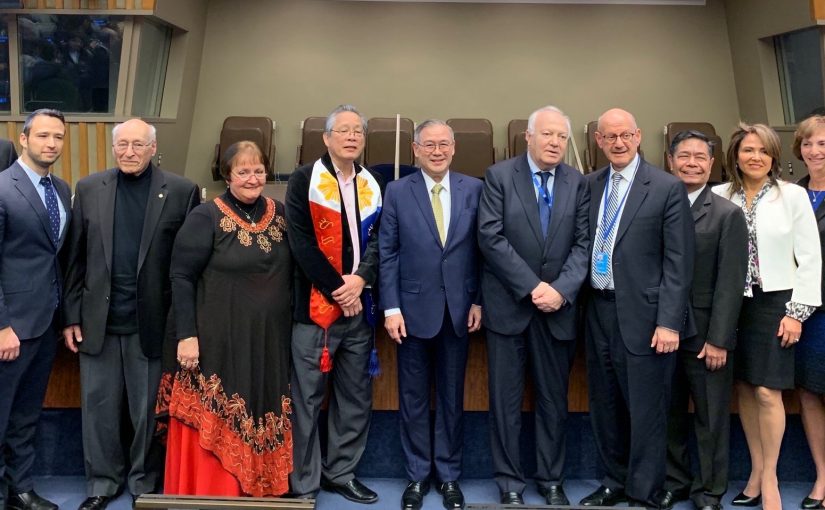
On Holocaust Remembrance Day, Jan. 27, B’nai Brith International (BBI) honoured former Philippine leader Manuel L. Quezon with a special panel discussion at the United Nations in New York City. BBI chief executive officer Dan Mariaschin is fifth from the right. (photo from BBI)

On Holocaust Remembrance Day, Jan. 27, B’nai Brith International (BBI) honoured a former Philippine leader at the United Nations building in New York, for having saved Jews during the Holocaust.

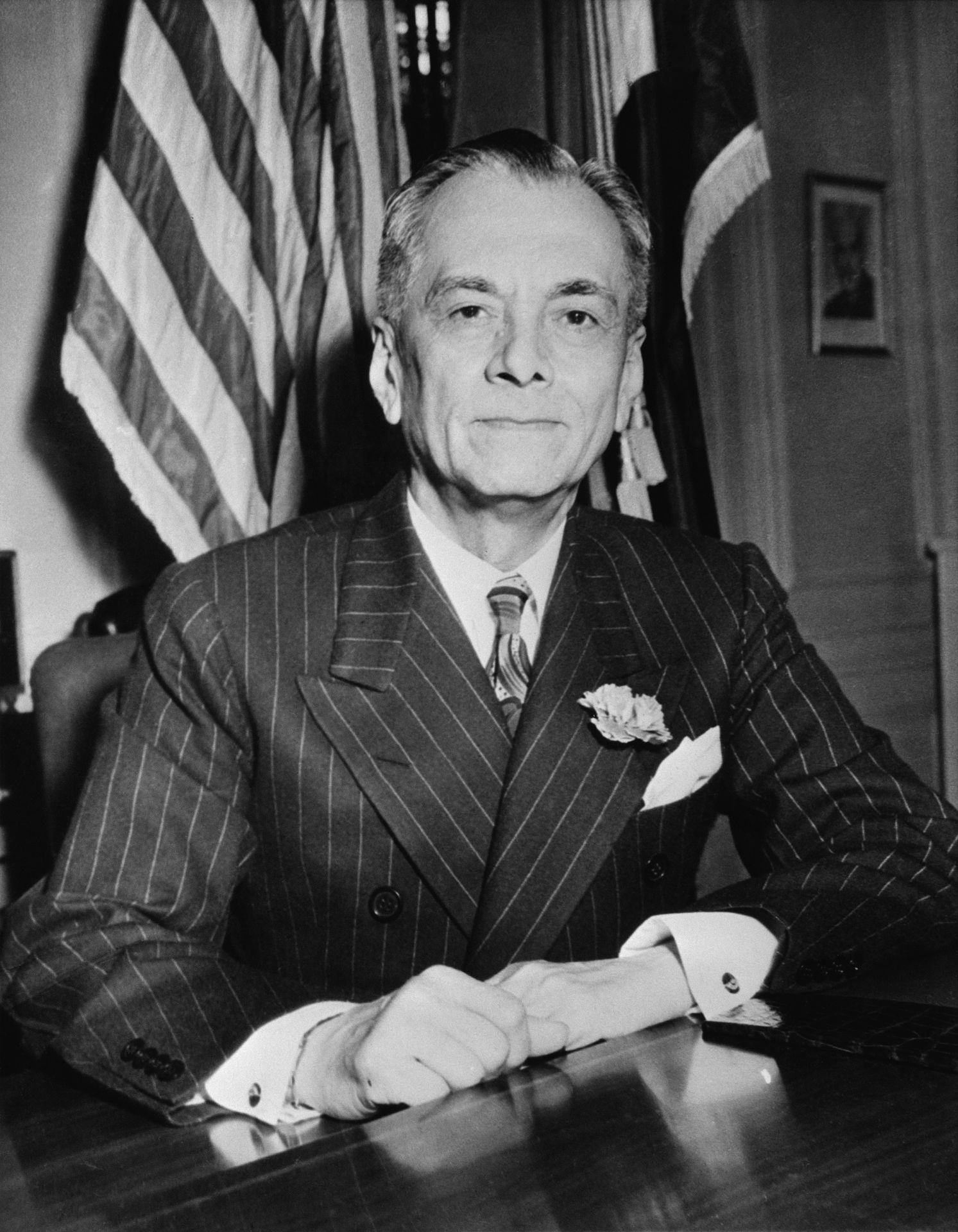
At a time when the Philippines was still under American sovereignty, the appointed Philippine president, Manuel L. Quezon, invited and welcomed 1,300 refugee Jews who were fleeing Nazi persecution.

Quezon, who was born in 1878 and died in 1944, was a statesman, soldier and politician. He served as president of the Commonwealth of the Philippines from 1935 to 1944.

According to Philippine Secretary of Foreign Affairs Teodoro Locsin, the reason why Quezon chose to help when many other world leaders refused to do so, is that he acted in the tradition of “Do unto others as you would have done unto you.”

Not only did Quezon welcome as many Jews as he could get visas for, he also offered them his private land to grow food and develop a kibbutz.

“I think it’s a case of, there are individuals who, I’m a firm believer in this, whose moment comes at the most opportune time,” said Daniel S. Mariaschin, BBI chief executive officer. “In the case of Manuel Quezon, I think he was a good-hearted individual. There was nothing in this for him.

“He really was a compassionate person who heard this story, thousands and thousands of miles away, and was moved to act. And now we are finding out, as more becomes known, that he was willing to save many, many more … and was, unfortunately, not able to do so. I think he stands very high … as one of the Righteous Among the Nations, who acted to save Jews.”

At that time, from 1937 to 1941, as news reports were revealing Hitler’s plans, Quezon secured the necessary visas from the American visa office for a Jewish-American family by the name of Frieder, who manufactured cigars in Manila.

Photo - Former Philippine President Manuel L. Quezon invited and welcomed 1,300 refugee Jews who were fleeing Nazi persecution
Former Philippine President Manuel L. Quezon invited and welcomed 1,300 refugee Jews who were fleeing Nazi persecution. (photo from U.S. Library of Congress LC-USW33-019075-C)

“I think the family, together with the president, were able to get word out, they were able to get those visas … although, again, unfortunately, when he wanted to save more, the ability to get more visas was just not available to him,” said Mariaschin.

Years later, the Philippines was the only Asian nation to vote for the Partition Plan in 1947, to form the state of Israel in 1948, which continued to pave the way for the positive relations Israel has with the Philippines to this day. In 2009, in Rishon Lezion, a monument was erected to honour Quezon.

The BBI event in January was well-attended and included remarks from Locsin, Mariaschin, historian Bonnie Harris, and Hank Hendrickson, who is the executive director of the U.S.-Philippines Society and a refugee who was personally saved by Quezon.

In between the various speakers, director Noel (Sunny) Izon, who made the documentary about Quezon called An Open Door: Holocaust Haven in the Philippines, shared a clip from the film. According to Izon, some 11,000 descendants of the refugees Quezon saved owe their life to him and Izon is one of them. He explained that one of the refugees Quezon saved was a doctor who saved his father’s life soon after arriving in Manila.

Another highlight of the January event was having refugee Ralph Preiss present. Preiss had been saved by Quezon, and shared his experience with attendees.

While no one from Quezon’s immediate family attended, nearly half the attendees were of Filipino descent who now live in New York.

Mariaschin said, while the event was in recognition of Quezon, it was, by extension, “in recognition of the Philippines.”

“The books, the films, the documentaries and the stories will live on from this point, forever,” said Mariaschin about other recent recognitions of Quezon’s actions. “That’s the best tribute you can have, that, rather than have this be just considered a footnote of history, it’s now becoming an important piece of the story … of the courageousness, the humanitarian impulses, of a relatively few individuals.”

According to Mariaschin, Quezon is on equal standing with the handful of other leaders who had a hand in saving Jews during the Second World War, and he said we need to continue highlighting their stories before we lose our few remaining survivors.

“I think we have to do this while there are still survivors who are living,” said Mariaschin. “Unfortunately, the clock is running down on that. In the lifetimes of those people who they saved, it’s extremely important that we say thank you.

“And we were fortunate, as I said, to have one refugee at our program, to have them say thank you and to talk about their story. It’s something that really we need to do every year now and in between, in order to memorialize those who saved Jews.”

Five years ago, the International Raoul Wallenberg Foundation posthumously bestowed Quezon with the Wallenberg Medal, which also acknowledged the Philippines as a whole for having saved Jews during the Holocaust. In Winnipeg, the local B’nai Brith branch is working to organize an event, together with the Winnipeg Filipino community, to honour the former president.

To view the video of the BBI event in New York, visit webtv.un.org and do a search for “Safe Haven: Jewish Refugees in the Philippines – Panel Discussion.”

Rebeca Kuropatwa is a Winnipeg freelance writer.

Format ImagePosted on April 3, 2020April 5, 2020Author Rebeca KuropatwaCategories WorldTags B'nai B'rith, Daniel S. Mariaschin, Holocaust, Manuel L. Quezon, Philippines, Teodoro Locsin, UN, United Nations
Kind Café offers vegan food

Kind Café offers vegan food

Samantha Emerman opened Kind Café last year. While closed during the COVID-19 pandemic, they are operating a pickup service twice a week. (photo by Olga Livshin)

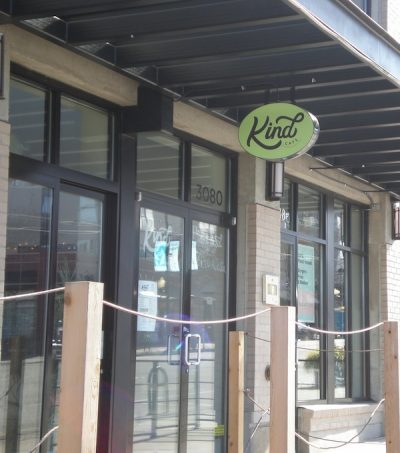
Kind Café is a warm, airy space, a place for friends to meet and eat together. Or, at least it will be a welcoming meeting place again, after the coronavirus pandemic is over. In the meantime, the restaurant is offering takeout service only.

Jewish community member Samantha Emerman, with her father, Marvin Emerman, opened the café in August 2019. The main idea behind it was threefold: no meat, no dairy, no waste.

“I became a vegan in 2013. I went to a nutritionist college here, in Vancouver. I learned where our meat and milk come from, so I stopped eating them,” Samantha Emerman told the Independent in a recent interview.

Initially, she opened an online business, ran some seminars on healthy eating habits and offered nutrition coaching. She supplemented her income by working at local restaurants and coffee shops.

“Do you know how much garbage Starbucks produces?” she said by way of but one of many possible examples. “In a busy location, they take out the garbage every hour. I wanted to create a space for people to enjoy their meals, while generating no garbage at all. It’s a much kinder way to feed people – kinder to the environment, to our planet.”

Emerman started doing research on what kind of restaurant she wanted. “There are other vegan restaurants in Vancouver. Being vegan has become trendy, but there is no other vegan café, except ours,” she said. “And no eating establishment in the city offers the ‘no waste’ policy, except ours.”

The next important decision was where to set up shop.

“I researched for a long time. We looked into downtown locations,” she said, “but most people in downtown rely heavily on their daily to-go coffee. We checked out the suburbs, like White Rock. In the end, we decided that the best location for our café would be Main Street, with its diverse people.”

And, last August, Kind Café opened its doors on Main Street.

“We offer a vegan menu and we don’t generate any garbage. We don’t even have a garbage can inside,” Emerman said proudly. “We don’t have any plastic or any single-use items here. Everything is reusable.”

The zero-waste initiative extends to all areas of eating, including the takeout aspect of the business. The café doesn’t have paper coffee cups or foam containers for to-go orders.

Before the coronavirus hit, Emerman said, “If people want[ed] takeout, they should come in with their own containers. It took awhile for the people to get used to that idea, but now, most of our customers who want a takeout come with their own containers.”

She called this policy BYOC (bring your own container). “We are passionate about BYOC,” she said. “When you dine inside, we have you covered with metal cutlery, ceramic plates, mugs and glasses. Otherwise, instead of the disposable plastic utensils, paper cups and single-use food containers that are polluting the environment, we kindly ask our customers to bring their own.”

Even with the COVID-19 restrictions, Emerman isn’t sacrificing her environmental beliefs. Instead, she is extending the practice of “renting” containers, which was in place before the virus. The café is temporarily suspending its BYOC policy and is now only offering customers food served in new glass containers for which there is a monetary deposit that will be returned to the customers at a later date, when they return the container so that it can be washed and reused.

“We’re trying to shift the focus away from the single-use mindset altogether,” she said. “Why use any product only once and throw it away? We are here to shake up the food industry, change people’s behaviour pattern, and to make BYOC the norm.”

The demographics of Kind Café are as diverse as the Main Street population. “About 60% of our customers are regulars who work or live in the area,” Emerman said. “Most of them are between 14 and 40, professionals and students. The rest are walk-ins. All kinds of people, really. And people are still discovering us.”

photo - Kind Café opened its doors on Main Street last August
Kind Café opened its doors on Main Street last August. (photo by Olga Livshin)

As a way for people to discover the new café, Emerman has been offering the space for events and seminars on healthy eating. One of the events that fit the café’s no-waste strategy was a clothing swap. “It’s the same principle,” she said. “You don’t want this sweater, but someone else might want it. No throwing away anything.”

The no-waste guidelines apply to the restaurant’s suppliers as well.

“We don’t accept the products in plastic bags. We have our own large containers for the supplies we use,” said Emerman. “The only bags we do accept are paper and reusable. But it took some time to find suppliers who share our beliefs. That’s why we have 11 suppliers for different products, not two or three, like Starbucks.”

The café is a family business. “My father is my partner and mentor,” Emerman said. “He taught me a lot. Most of the recipes are our family recipes or my own, although now that we hired a chef, he contributes, too. My sister is the office admin. My mom does everything that needs to be done. We are a very close family.”

Of course, they have some hired staff, all of whom happen to be, like the Emermans, vegan. “It is not a requirement for working here,” she stressed, “but our staff want to work for us. There are not too many vegan places in the city.”

The majority of work falls to Emerman herself. “Owning this café is the hardest thing I’ve ever done. I do everything. I bake. I manage front and back. I look for suppliers. I do advertising on social media – Facebook and Instagram. It’s a 24/7 job and the most rewarding I’ve ever done.”

To order takeout and for more information on the café, visit kindcafe.ca. The website notes, “We know that getting your hands on certain groceries, specifically vegan food, during this time can be challenging. Although we do not currently have a delivery service, we will be open for a small window, of three hours, twice a week, for you to come pick up orders!”

They request that customers preorder by Friday, 10 a.m., for Saturday pickup and Monday, 10 a.m., for Tuesday pickup. There is an online form to fill out, and an invoice will be provided once your order is confirmed.

Olga Livshin is a Vancouver freelance writer. She can be reached at [email protected].

Format ImagePosted on April 3, 2020April 1, 2020Author Olga LivshinCategories LocalTags coronavirus, COVID-19, Kind Cafe, restaurants, Samantha Emerman, takeout, vegan
Honestly Jewish and radical

Honestly Jewish and radical

Listening to Geoff Berner’s Welcome to the Grand Hotel Cosmopolis will break your heart one minute and stir you to historic rage the next. (photo by Mischa Scherrer)

In November 2019, myriad Chutzpah! Festival and Geoff Berner fans (not always the same bedfellows) and I crowded into the WISE Hall in Vancouver to be introduced to Berner’s new album, Welcome to the Grand Hotel Cosmopolis. The hotel is a real place in Augsburg, Germany. The liner notes describe it: “half the space is living quarters for refugees and asylum seekers, and half of it is a beautiful, inexpensive hostel…. It’s a wonderful thing for me, as a Jew, to see this project in Germany, where ordinary Germans are committed to truly welcoming traveling people in trouble, who are seeking help and a new home.”

The title of the first song on the album, “Not the Jew I had in Mind,” comes from a lecture by Thomas King called “You’re Not the Indian I had in Mind.” Berner wrote to King to get permission to use the title, and King responded, “Don’t need my permission…. Nice thing about words (except for the ones the corporations try to corral) is that they’re free…. So go for it … and no need to credit me.… Maybe I’ll run into one of your songs and craft a novel around one of the lines.”

image - Welcome to the Grand Hotel Cosmopolis CD cover

The album catches at being Jewish in ways that are profoundly political and not always specifically Jewish – the song, “Why Don’t We Just Take the Billionaires’ Money Away,” for example. Berner’s lyrics and melodies will break your heart one minute (“What Kind of Bear Am I”) and stir you to historic rage (“Zog Nit Keyn Mol”) the next. When I heard “Would You Hide Me” for the first time at the launch, I burst out laughing. And then looked around warily. I had thought it was only me who wandered around occasionally wondering this.

The music is klezmer punk but not always punk. “Vilne,” for example, is a beautiful song about displacement. Berner is dynamite on the accordion and is accompanied by a stellar group of musicians. Dancing is a must: as the lyrics to “The Drummer Requests” say, “Dancing in your chair is part of please continue dancing.” Berner also provides seamless translations for those of us who are sadly not fluent in Yiddish.

I’m sure I’m not the only Jew who takes this album personally – my grandfather was born in Lithuania (“Vilne”) but I’m not alone in that. As I continue to listen to the songs, I am encouraged that I can be part of a movement that is about being both honestly Jewish and radical. The music is a powerful testament to the kind of Judaism that I’m always looking for and often can’t find.

Buy the album – you will be supporting Berner and the other musicians. And read the liner notes while you’re listening to the songs. They are some of the most interesting I’ve ever read.

You can find more information about Welcome to the Grand Hotel Cosmopolis at grandhotel-cosmopolis.org/de and Berner’s website is geoffberner.com.

Penny Goldsmith sings with the Solidarity Notes Labour Choir, the Highs & Lows Mental Health Choir and, occasionally, with the Vancouver Jewish Folk Choir. She is the owner of Lazara Press, a small, independent publishing house in Vancouver.

Format ImagePosted on April 3, 2020April 1, 2020Author Penny GoldsmithCategories MusicTags Geoff Berner, klezmer punk, Welcome to the Grand Hotel Cosmopolis
Musician tries to offer hope

Musician tries to offer hope

Montreal-based musician Elizabeth Leslie has a new EP out, Brave Animal, which, among other topics, tackles climate change. (photo from Eric Alper PR)

It had always been musician Elizabeth Leslie’s dream to visit Scotland, which her Sephardi ancestors had made their home. For years, she had envisaged hiking the Highlands, reveling in its beauty and experiencing the misty, “dreary” British weather that she had heard so much about.

Learning about the Leslie clan and their lives as Jews intrigued the young Canadian musician, who had been raised in Eastern Canada and is now based in Montreal. But so did the idea of experiencing a truly Scottish spring. So it came as a rude shock, she said, when she finally arrived to the British Isles to be greeted by a drought of parched hillsides and 25˚C weather. Her image of Scotland’s Highlands, she admitted, appeared to be sorely out of date.

“It wasn’t green rolling hills anymore. It was just glaring sun,” said Leslie. “I was peeling off layers and [there was] yellow grass and rampant tourism.”

That experience became a seminal moment for the musician, who attributes the erosion of the Highlands to humanity’s greed and the unrealistic goals of 21st-century capitalism. “Capitalism affects everything,” she told the Independent. “It’s a selfish beast and it’s unsustainable.… Capitalism mixed with climate change and the fact that climate change is a product of capitalism, [makes it] glaringly obvious that we need to completely reimagine the way we live.”

image - Brave Animal EP coverHer recently released EP recording, Brave Animal, speaks to that urgency. Its lead song, “To the Next,” is the summation of what she sees for future generations left to navigate the impacts of a warming planet. Its dark-wave melody is as hypnotic as its lyrics:

“There is only one place left to go / And I’m afraid that it is far / If you listen close / You will soon hear / All their words / Are full of fear.

“Men might be masters of this world / But little girl / We’re going to the next / Men might be fighting against this world / But little girl / We’re fighting for the next.”

According to Leslie, the song was written before Swedish climate change activist Greta Thunberg rose to notoriety. Still, its refrain hits to the heart of a question that is commonly voiced these days.

“When I wrote this song,” Leslie said, “Greta wasn’t around … but [she is] exactly the kind of girl I am speaking to in the song and she is metaphorically what that little girl is.”

Leslie added, “I mean, who is there to comfort Greta Thunberg? Why is there a teenager fighting [against] climate change and why aren’t the older guys in suits doing it with their millions of dollars?”

In Leslie’s eyes, change is motivated by leadership, and she believes there is a dearth of examples for young people to follow these days.

“There’s really no adult role models out there who are really standing up – at least in music,” or none willing to tackle a topic that is already defining a generation’s social and environmental expectations, she said. “I am just trying to give them some glimmer of hope, I guess.”

For this artist, probing difficult questions seems to come naturally, even when the questions are unpopular with those around her. When she learned some years ago that her Scottish ancestors were Jewish, she searched for more information and unearthed stories of the Leslie clan – started by a Jew who had served in a distinguished position for Mary, Queen of Scots, and was a Knights Templar – despite warning from her mother about antisemitism.

Although her mother wasn’t Jewish, she was concerned about her daughter taking on an identity that had been subjected to persecution throughout millennia. The warnings, though, didn’t deter Leslie, who later converted to Judaism.

“My mom had like 10 cups of tea per day and my dad drinks scotch every other night and my uncle plays the bagpipes and all that stuff, so it was a huge surprise in a lot of ways,” said Leslie about discovering her Jewish heritage. “But, for some reason … I always had a feeling about it.”

Although Leslie said her visits to shul are more infrequent these days, she sees a parallel between the values she was raised with and the ethics that Judaism espouses. Fairness and protecting the environment are at the heart of both her identity as a Jew and as a musician, she said. As is social justice. She said she was incensed when she found a book about the Leslie clan and learned that her ancestors were forced to convert to Christianity.

“That connection with the culture and values and also a really deep need to right the wrongs of the past” were key to her decision to convert, she said. “I just found it so unrighteous that my family was forced into this religion [of Christianity]. We already had a religion. I just felt it was so unfair and I wanted to turn back the clock.”

Her identity as a Jew has also been shaped by her relationships. Leslie, who self-describes as a non-binary queer person, was first introduced to Judaism when she dated a woman who had been raised Charedi and maintained a Jewish household. Leslie said the exposure to Jewish traditions was both fascinating and “extremely familiar.”

“I think one thing I love about Judaism is … we have never forgotten who we are,” said Leslie. “And I think that sort of cultural preservation is really important, especially in the face of recent antisemitism, in face of capitalism and climate change and everything, that sort of centreness is a power. And I think it is really important.”

Leslie’s music can be purchased through a number of online venues, including Spotify or by connecting through her Facebook page.

Jan Lee’s articles and blog posts have been published in B’nai B’rith Magazine, Voices of Conservative and Masorti Judaism, Times of Israel, as well as a number of business, environmental and travel publications. Her blog can be found at multiculturaljew.polestarpassages.com.

Format ImagePosted on April 3, 2020April 1, 2020Author Jan LeeCategories MusicTags climate crisis, Elizabeth Leslie, environment, Judaism
On brink of radical change

On brink of radical change

Prof. Shlomo Hasson was slated to bring a pessimistic forecast for the Middle East’s future to a Vancouver lecture March 31, but his visit was canceled due to the coronavirus crisis. (photo from CFHU Vancouver)

The Middle East is in a time of historical change and geopolitical shifts. The outcome is unknown and, for Israel, there may be good and bad consequences.

This is a core message from Prof. Shlomo Hasson, a professor at the department of geography, School of Public Policy, and Leon Safdie Chair at the Institute of Urban and Regional Studies at the Hebrew University of Jerusalem. Hasson was to speak in Vancouver March 31 at an event organized by the Vancouver chapter of Canadian Friends of the Hebrew University, but the lecture was canceled due to the coronavirus crisis. The Independent spoke with him by telephone about what he intended to discuss.

“We are in the midst of turmoil in the Middle East because we have this havoc with Iran and the intensifying tension between the United States and Iran,” he said. “We have the ongoing conflict within the Middle East, especially in Syria, the war now between Turkey and Syria. We have the recent events in Libya, we have a worsening situation in Yemen. I’m not optimistic about the Middle East and, when it comes to the Israeli-Palestinian case … the peace talks were stalled for a long time and now it seems that [U.S. President Donald] Trump’s initiative, in a way, helps to revive the issue but did it in such an awkward way that I’m not optimistic at all about the consequences of this initiative.”

The warming of relations between Israel and Saudi Arabia, as well as with some Gulf states, is cause for limited hope, he said.

“This is indeed a good reason to celebrate because there has been a change, even a significant change, between the Gulf states and even Saudi Arabia, and Israel because [they] are facing the same adversary, which is Iran,” Hasson said. “Israel supports Saudi Arabia because it supports them in containing Iran. In that sense, I think there is something to celebrate but this is very modest, because … the public in Saudi Arabia, for example, does not support Israel. It’s sort of an alliance between the rulers of the countries, but the public is not there yet.”

An additional crisis is climate change, which is hitting the region especially hard and will continue to do so, although this also presents opportunities for Israel to build bridges.

“We face the problem of water scarcity and droughts and flooding,” Hasson said. “I think that, especially in this crisis, Israel can help a lot because we have the technology, we’ve mastered the know-how and we can help the Middle East and Africa, while coping with this issue.”

Speaking before the most recent Israeli elections, Hasson predicted that, regardless of the outcome, they wouldn’t play a significant role in the bigger Middle East picture.

“Israel is not the central actor here,” he said. The central actors are Saudi Arabia and Iran, with China, Russia and the United States intervening from outside.

“Israel is in a position of reacting to these global, regional and intra-state developments,” he said. Even if Blue and White had won, said Hasson, it is still a right-wing party and the Israeli populace is developing a rightward consensus. “I don’t think that these elections are going to present a significant change in Israel’s political behaviour.”

He compares this moment in Middle East history to the pivotal epochs of the past.

“About 100 years ago, we still had the Ottoman Empire and, after that, we had the colonial regimes, the Sykes-Picot regimes, and then we have the nation-state regimes. The Middle East is at the brink of a change, a radical change, and nobody knows for sure what’s going to happen to the Middle East,” said Hasson. “But, in a way, it’s going to affect everything, it’s going to affect the global structure, it’s going to affect the relationships between the United States, China and Russia.”

Format ImagePosted on April 3, 2020April 1, 2020Author Pat JohnsonCategories WorldTags CFHU, elections, Hebrew University, Israel, Israeli-Palestinian conflict, Middle East, peace, politics, Shlomo Hasson
Motivating people to change

Motivating people to change

Tzeporah Berman is international program director for Stand.Earth. (photo from Tzeporah Berman)

There is no silver bullet when it comes to responding to the climate crisis, according to Tzeporah Berman. The 25-year veteran of environmental activism and international program director for Stand.Earth said it needs a multi-pronged approach.

“A lot of people like to say it’s negotiations or policy work or protests, but, in my experience, the most effective campaigns that have made change have been the ones where there has been a diversity of tactics and approaches,” Berman told the Independent. “The most effective initiatives are the ones that are not just about educating, but are about motivating people to take action on an issue…. What we need to try and do is motivate people to make change.”

Berman was among those who started Stand.Earth (formerly ForestEthics) about 20 years ago. According to the website, the group “designs and implements strategies that make protecting our planet everyone’s business. Our current campaigns focus on shifting corporate behaviour, breaking the human addiction to fossil fuels and developing the leadership required to catalyze long-term change.”

In the 1990s, Berman was an organizer of the Clayoquot Sound logging protests that contributed to agreements to prevent clearcutting. More than two decades later, as construction of the then-Kinder Morgan-owned Trans Mountain pipeline expansion ramped up, Berman participated in the sit-ins on Burnaby Mountain.

“The War in the Woods … it was this tipping point moment on the issues and Canadian history, where people were engaged from all walks of life,” she said. “Whether or not the rainforest should be clearcut was a conversation around everyone’s kitchen table. I think that’s true today of climate change and pipelines, that it’s one of these rare moments in history where it is a populist issue, where everyone is engaged in the conversation, and I think that’s why you see, in both circumstances, such a diversity of people showing up.”

Last year, the concern reached a fever pitch in Canada and elsewhere, with unprecedented numbers of people marching in the streets calling for climate action. Asked what Berman thought of elected officials such as Prime Minister Justin Trudeau or NDP leader Jagmeet Singh participating in marches like last September’s global climate strike – that, at their heart, target leaders such as them to address climate change through policy decisions – she said she believes they show up with good intentions.

“We’re living in this strange moment where our elected officials are starting to understand the urgency and importance of climate change, but that is not yet translating into their policy proposals,” she said. “It’s like there’s a time lag and they’re saying the right words about urgency and joining marches, but their policies represent the best thinking on what climate policy should be from 10 years ago. I don’t think they’re being disingenuous when they join a protest … but one of the big problems that we have is that so many people believe that they’re doing enough and other people need to do more. We like to celebrate how progressive we are, but we have a very mixed record. Canada is among the worst in terms of G7 countries with our climate plan.”

Despite estimates of more than one million people in Canada marching in climate strikes last year, Berman said the environmental movement is sorely outnumbered resource-wise in comparison to the oil and gas industry lobby. In a tweet sent at the beginning of this year, Berman spelled out 10 tips for successful activism.

“Do stuff that makes the world respond. Don’t just respond to the world,” she wrote. She expanded, telling the Independent that advocates need to be sure they are the ones setting the agenda, not governments and corporations. “Campaigners and campaigns are not proactive enough, we just respond to what decision-makers are doing. Instead of doing that, what if, months before, you looked at what you think needs to happen in order to protect the climate, our water, the air, produced a report with recommendations for policy, and then held a press conference and a public information night. Then you’re putting a proposal out there of what you think needs to happen in the world.”

Last November, Berman presented to 400 people at Temple Sholom, giving an overview of the scientific evidence of climate change and the role of nations and individuals moving forward. She spoke of the loss of the “culture of engagement.”

“Today, we have a weak civil society engagement muscle and an overextended hyper-consumer muscle,” she said during the presentation.

“We got lazy,” she explained to the Independent. “We live in a democracy, we assume it’s functioning, and leave it up to the politicians…. I’m not exactly sure how it happened, but I think it’s a culture that was eroding over the last generation. Growing up, it was expected in our community that you volunteer – for your synagogue, for your church. We don’t really have that culture now and the result is we’re not engaging in our communities as much as I think we used to. I notice now that we’re starting to see it more as a result of the more active student movements, but I think that’s because they’re scared.”

The role of community groups such as religious institutions should not be underestimated, she added. “People are going to be more willing to engage in the issues if they feel safe, if they feel a sense of common purpose, if they trust the people they’re organizing with. It’s one thing to hear scientists, or read an article. It’s a very different thing to sit down with people in your community … and organize. A lot of people right now are searching for what they can do. [Institutions] should be providing leadership and structure.”

Berman continues to be a leader in her own right. Late last year, she was awarded $2 million US from the Climate Breakthrough Project to fund her efforts to limit new oil and gas development globally to align with the United Nations Paris Agreement goals of a safe climate. The project will be housed within Stand.Earth.

Shelley Stein-Wotten is a freelance journalist and comedy writer. She has won awards for her creative non-fiction and screenwriting and enjoys writing about the arts and environmental issues. She is based on Vancouver Island.

Format ImagePosted on April 3, 2020April 1, 2020Author Shelley Stein-WottenCategories LocalTags activism, climate crisis, environment, ForestEthics, Stand.Earth, Tzeporah Berman
Modern matchmakers

Modern matchmakers

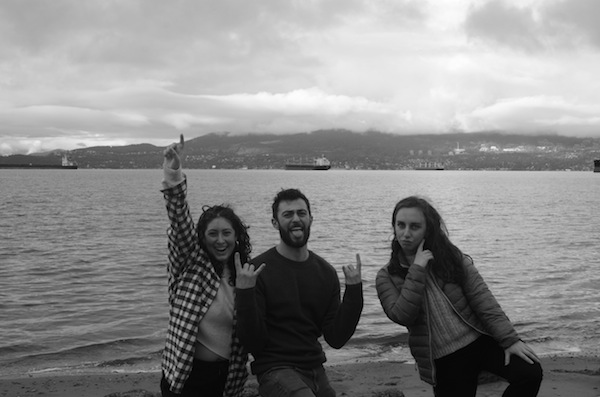
YVR Yenta is the brainchild of Madison Slobin, left, Ben Eizenberg and Ariel Martz-Oberlander. Adapting to the realities of dating during the coronavirus crisis, they have introduced the online meetup Love in the Time of Covid: Virtual Single Mingle. This photo was taken before physical distancing was required. (photo by Madison Slobin)

Three young Jewish Vancouverites have set up a collective to help their friends – and their friends’ friends – find a romantic match “using old traditions to find modern love.”

YVR Yenta is the brainchild of Madison Slobin, Ben Eizenberg and Ariel Martz-Oberlander. The three believe that their old country methods, with the application of 21st-century technology, can procure a better match than any computer algorithm. Describing meaningful connections as “the antidote to capitalist alienation,” the matchmakers see a need to fill in a city where “finding the perfect view is easy, but finding someone to share it with can be challenging,” according to their introductory material.

The matchmaking collective was just getting up and running when the coronavirus crisis hit, but that hasn’t set them back. They resorted to technology to organize Love in the Time of Covid: Virtual Single Mingle, where anyone is welcome to join an online group chat, then tell the yentas of anyone they might like to be introduced to for virtual (and, perhaps later, in-person) meetups.

The idea of incorporating old world matchmaking practices with 21st-century singles is a growing trend.

“I would love to claim it as an original idea but, honestly, I spent the last three-and-a-half years on the East Coast, living in New York City, so I have been quite connected to young Jewish community there,” said Slobin. “It was something that I kind of knew was happening in different places on the East Coast. I heard that there was one happening in Minneapolis and it seemed to me like a new trend that was popping up, which is young, secular matchmaker collectives.”

In an age when Jdate and other online dating apps are a swipe away, why the need for the personal intervention?

For a certain segment of young people, Slobin said, Jdate isn’t cool. The other reality is that apps tend to be based on looks or instant attraction.

“I think a lot of people go on dates based on that and then don’t find success because they may not share anything other than that mutual attraction and so this is an opportunity to go a little bit deeper,” she said.

YVR Yenta invites clients – it’s all free and there’s no profit motive – to complete a comprehensive questionnaire about their religious affiliation and how important that is, whether they want a match of their own religious tradition, their political views, preferences, interests and a host of other attributes.

“We accept anyone into our dating pool who belongs to any religion, any race, any sexuality, any gender,” she said.

As clientele numbers increase, the yentas write to potential matches, “so will the quality of our matchmaking, seeing as we will have more match options to choose from! Please help us spread the word to your friends and family, either through word of mouth (as was done in the old country) or by sharing our Instagram page (as is done in the 21st century).” They are on Instagram at yvr.yenta.

“This is something that I would want for myself,” Slobin added. “I think it’s a very cool idea and I wanted to make it happen for all the people around me because I feel like I know so many amazing people who are looking for partners. So we decided to volunteer our time to make it happen. Really, it’s quite fun, so it doesn’t feel like work.”

Format ImagePosted on April 3, 2020April 1, 2020Author Pat JohnsonCategories LocalTags Ariel Martz-Oberlander, Ben Eizenberg, dating, Madison Slobin, matchmaking, Vancouver, Yentas
A busy year for local artist

A busy year for local artist

“Midnight Sun” by Monica Gewurz, who was to show her work at Art Vancouver, which has been postponed. (image from Monica Gewurz)

The Jewish Independent last spoke with Vancouver artist and Jewish community member Monica Gewurz when she participated in Art Vancouver in 2018. She was to be a participant in this year’s international art fair, which has been indefinitely postponed because of the coronavirus pandemic.

“As a professional artist,” said Gewurz, “it is important to exhibit at high-calibre international art exhibition shows. Art Vancouver provides me with a platform to display my works as well as sell them – this will be my fifth time exhibiting there.”

Gewurz was to share a booth with fellow contemporary artist Pam Carr. Previous Art Vancouver fairs have drawn more than 10,000 art appreciators and collectors to the Vancouver Convention Centre. The annual event is billed as “Western Canada’s largest contemporary art fair.”

“In the past year,” Gewurz told the Independent, “I have successfully increased the number of juried exhibitions in B.C. and the U.S., including one in Singapore. My sales and my collector base has increased, as well.”

Gewurz’s artwork can be found in corporate and private collections throughout Canada, the United States, Europe, Mexico, Peru, Australia, New Zealand, China and Japan.

photo - Vancouver artist Monica Gewurz
Vancouver artist Monica Gewurz.

Artistically, she said, for this past year, “the focus of my work has become more introspective and philosophical, with less emphasis being put on the literal depiction of the landscape and more on the feelings evoked by the experience.

“The expansiveness and the quiet energy of coastal British Columbia are strongly evident in the imagery and the palette of my recent paintings, which are meant to be a transformative interpretation rather than a literal rendering of the coastal landscape,” she explained. “Using mixed media and metallic paints and foils has allowed me to develop a personalized style that translates and interprets nature and iconography through layers of transparent glazes.”

Another new development since the Independent spoke with Gewurz is that her art is featured on both a wine bottle and on a line of skincare products. While she has always created wearable art, such as jewelry, this foray into commercial art is different.

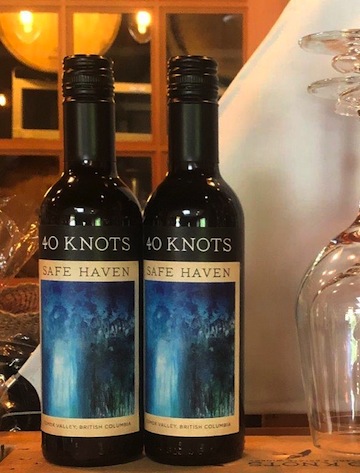
“‘Ebbing’ was chosen through a juried competition to become the label of Safe Haven fortified wine of the 40 Knots winery,” she said. “A portion of the wine sales goes to support the Kus-kus-sum salmon habitat restoration by Project Watershed, an NGO. Because I am a supporter of environmental causes, I donated the artwork.”

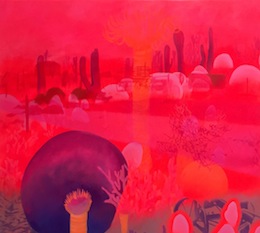
photo - Monica Gewurz’s painting “Ebbing” adorns the label of 40 Knots Vineyard and Estate Winery’s Safe Haven fortified wine
Monica Gewurz’s painting “Ebbing” adorns the label of 40 Knots Vineyard and Estate Winery’s Safe Haven fortified wine. (image from Monica Gewurz)

The vineyard also produces its own line of skincare products and, said Gewurz, “The owner of the 40 Knots winery commissioned the artwork ‘Waves of Tranquility’ to be featured in all VinoSpa product labels, using some of the lees of their red wines. The painting was created to capture the feeling of and tranquility and restfulness provided in all VinoSpa skincare lines and their associated spa.”

The winery website explains that Gewurz mixed the lees from the fortified wine with acrylic gels and paints to create the colours of “Waves of Tranquility.” It notes, “Influenced by Turner, ‘the painter of light,’ and Asian traditional painting, Monica’s abstract landscapes aim to reflect truthfully the moods of nature. Captured on canvas or in silver, her work draws on the exceptional landscape of the Pacific West Coast.”

Gewurz was to bring a new collection of work to this year’s Art Vancouver. Her bio noted, “She is excited to share her highly textured, iridescent, colourful acrylic and oil abstract paintings, often worked with a palette knife, unconventional tools and metallic patinas.

“Texture and thin layers of colour are two key elements in her work, as she aims to blur the line between painting and sculpture. She invites you to touch the work, by integrating natural and man-made repurposed materials, including textiles, paper and plastic, each layer of colour and medium allowing you to experience the paintings – perhaps sparking memories, perhaps freeing your mind to wander, imagine and dream. Through materials and her own travels and life experiences, she strives to make work that can be understood across cultures.”

For more on Gewurz, see jewishindependent.ca/inspired-by-cultures-nature, and her website is mgdesigns.org. For updates on Art Vancouver, visit artvancouver.net.

Format ImagePosted on April 3, 2020April 1, 2020Author Cynthia RamsayCategories Visual ArtsTags 40 Knots, art, Art! Vancouver, Monica Gewurz, winery

Posts pagination

Previous page Page 1 Page 2 Page 3 Page 4 Page 5 Next page
Proudly powered by WordPress